Letter of transmittal
The Hon Luke Hartsuyker MP
Minister for Vocational Education and Skills Parliament House
Canberra ACT 2600
Dear Minister
We are pleased to provide the report on the Australian Skills Quality Authority’s (ASQA’s) national strategic review of training in equine programs in Australia.
This strategic review was initiated by ASQA Commissioners in response to the tragic death of a young student, Ms Sarah Waugh in 2009, in a horse riding accident during training at a Technical and Further Education (TAFE) New South Wales institute and the systemic safety issues identified in the
subsequent New South Wales Coroner’s report.
This national strategic review relied on audits of registered training organisations, surveys of registered training organisations and stakeholder feedback for its findings. The review confirmed the concerns in the Coroner’s report about the content and conduct of the equine training, policies and procedures for assessing horses to be used in training, and the adequacy of trainer and assessor competencies and currency of industry experience.
The results have indicated that most registered training organisations have difficulty complying with assessment requirements; the equine training environment while small is very diverse; short duration courses in horse riding and handling are potentially undermining safety; and changes are required to national qualifications to address safety and quality issues.
This strategic review was guided by a management committee drawn from key stakeholders from industry, employers, unions and government and chaired by ASQA’s Chief Commissioner.
ASQA’s Commissioners are grateful for the invaluable contribution of the management committee— both collectively and individually—and also for the active support and contribution from other stakeholders.
Key recommendations of this review address the need for:
changes to training packages to address safety and quality issues in equine training
a consistent approach for managing work health and safety risks in the horse industry across Australia
training packages to include minimum benchmarks around the amount of training required for units of competency and VET qualifications
the quality of assessment to improve
greater clarity in training packages in relation to assessment evidence
adequate provision of training and assessment in an actual or simulated environment, and trainers and assessors to gain and maintain vocational competence.
ASQA considers the implementation of the strategic review’s recommendations will strengthen considerably the quality and safety of equine training and assessment provided to learners. This is particularly important not only for the integrity of the VET sector but also because safe practice and effective risk management is critical to training in the equine industry.
We commend this report and its recommendations to you. Yours sincerely
Christopher Robinson
Chief Commissioner and Chief Executive Officer
Dr Dianne Orr
Deputy Chief Commissioner and Commissioner Regulatory Operations
Professor The Hon Michael Lavarch AO Commissioner Risk, Intelligence and Regulatory Support
Key findings
Horse riding and horse handling activities occur in a range of income earning, professional and amateur sport, and recreational settings cutting across all age and ability groups. They
encompass diverse professional, amateur and recreational organisations and industry regulators.
The single unifying theme across all settings is that there is risk in these activities requiring a focus on safety and active risk identification and management.
Data indicates there are a significant number of injuries, hospitalisations and fatalities that occur during horse riding and handling.
While there are voluntary codes or guides for the horse industry, including one developed by Safe Work Australia, there is no consistent approach for managing work health and safety risks in the horse industry across Australia.
As a result of the diversity of settings and activities, there are numerous equine units of competency spread across five industry training packages and many equine VET accredited courses.
As VET is training for work and many horse-related activities are sport and recreation based, a large amount of training also occurs outside the VET system.
This training landscape makes the market confusing for potential students, who may find it difficult to identify training that matches their needs and skill levels.
Contents
Letter of transmittal ... i
Key findings ... iv
Executive Summary ... 8
Chapter 1
Introduction ... 23
1.1
Background ... 23
1.2
Changes to the regulatory framework commencing in 2015 ... 24
1.2
ASQA strategic reviews ... 24
1.3
Management committee and methodology ... 25
1.4
Structure of this report ... 28
Chapter 2
Background to the review into training in equine programs ... 29
2.1
The death of Sarah Waugh ... 29
2.2
Developments in VET following the New South Wales Coroner’s report ... 29
Chapter 3
The horse riding and handling industry ... 34
3.1
Initiatives in safe horse riding and handling ... 34
3.2
The size of the horse riding and horse handling industry ... 38
Chapter 4
The nature of training in the horse-riding industry ... 43
4.1
The diversity of VET equine programs... 43
4.2
Survey findings ... 45
Chapter 5
Stakeholder consultation ... 51
5.1
Selection of horses ... 51
Chapter 6
Analysis of the levels of compliance of training quality in equine training
and assessment ... 58
Chapter 7
Findings ... 78
Glossary
... 92
References ... 96
Appendix A: List of Steering Committee representatives ... 101
Appendix B: Review methodology ... 102
Appendix C: Volume of learning—an explanation ... 108
Appendix D: Definitions—principles of assessment and rules of evidence ... 110
Appendix E: Reconsideration of a decision by ASQA (Fact sheet) ... 112
Appendix F: Equine related qualifications, units of competency and accredited courses
... 116
List of tables
Table 1: Course duration - total of all certificate II qualifications in equine training ... 48
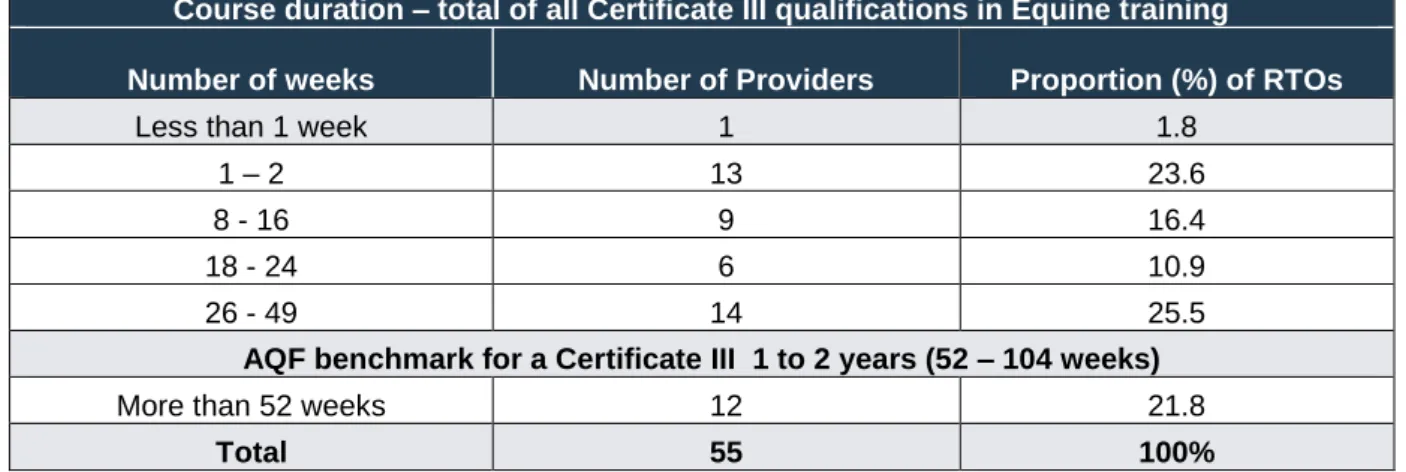
Table 2: Course duration – total of all certificate III qualifications in equine training ... 48
Table 3: Course duration – total of all certificate IV qualifications in equine training ... 49
Table 4: Number of qualifications issued in 2014 ... 49
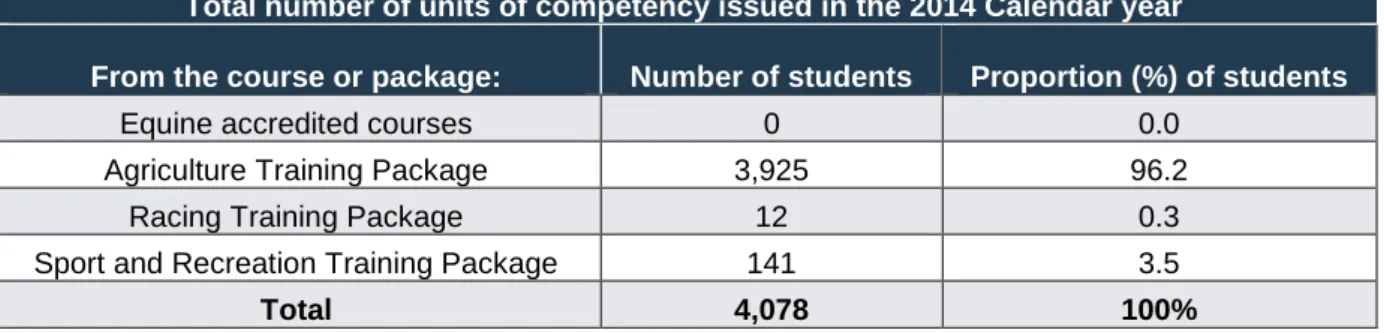
Table 5: Number of units of competency issued in 2014 ... 49
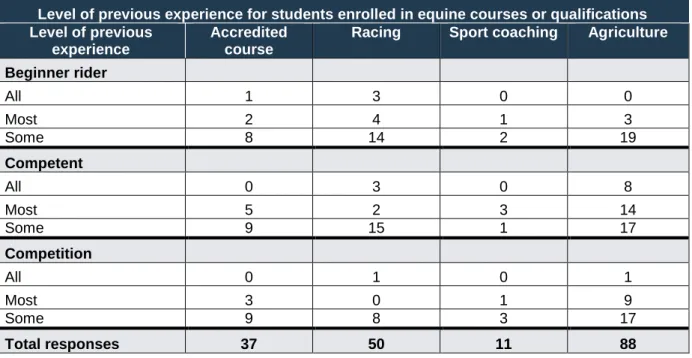
Table 6: Level of previous experience for students enrolled in equine courses or qualifications
... 50
Table 7: Delivery modes used by the 20 RTOs audited for this review ... 61
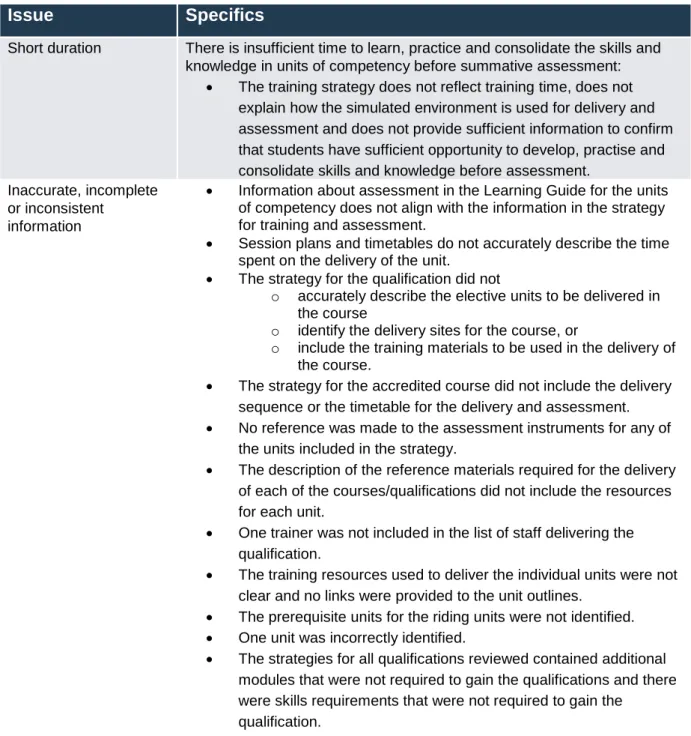
Table 8: Summary of issues for non-compliance with Standard 15.2 ... 64
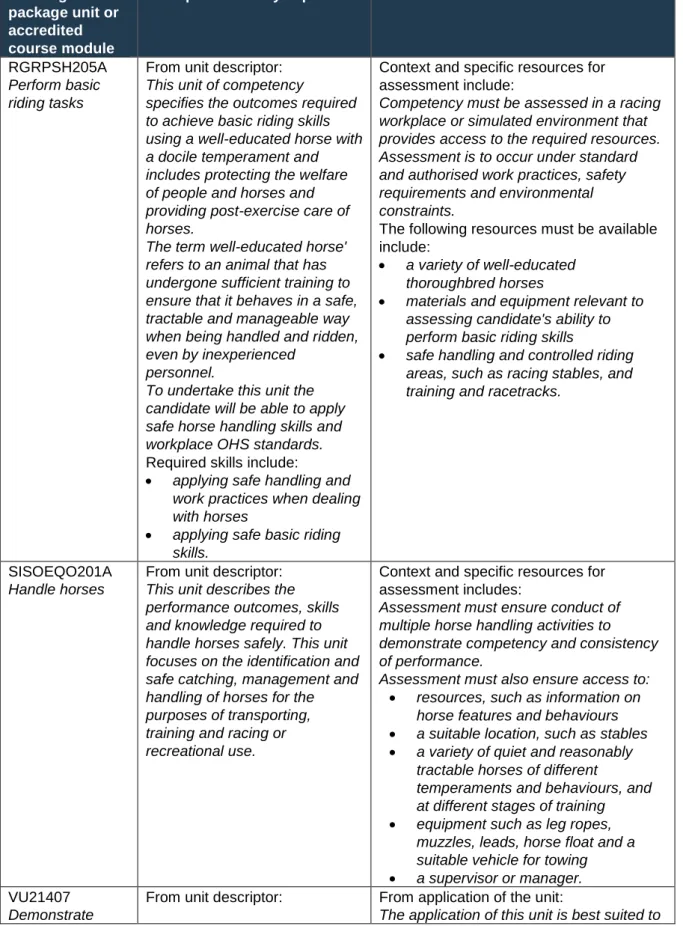
Table 9: Unit/module extracts from training package qualifications and accredited courses -
safety and assessment context/resources ... 67
List of figures
Figure 1: Regulators of Australia's RTOs ... 23
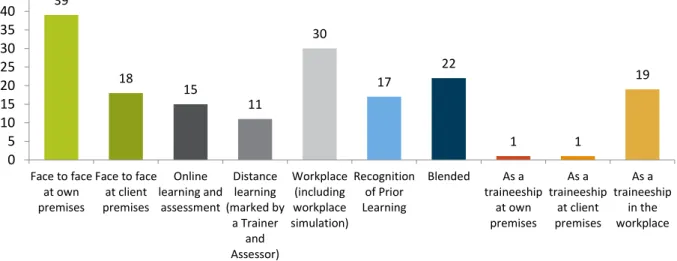
Figure 2: Delivery mode used by RTOs ... 47
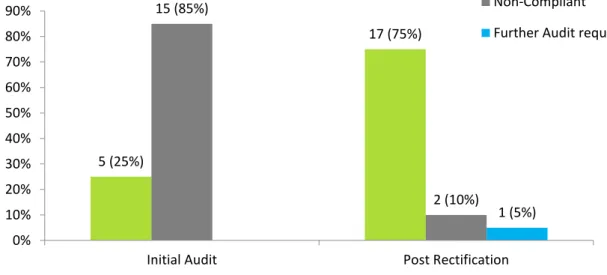
Figure 3: Summary of compliance outcomes, at initial audit and following rectification period,
for 20 audits conducted during this review ... 59
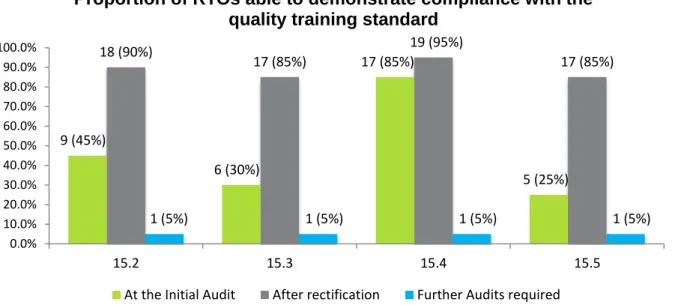
Figure 4: Proportion of RTOs able to demonstrate compliance with the quality training and
assessment standard at initial audit and following rectification. ... 60
Executive Summary
The Australian Skills Quality Authority (ASQA) commenced operation as the national regulator for Australia’s vocational education and training (VET) sector on 1 July 2011.
ASQA regulates courses and training providers to ensure nationally approved quality standards are met so that students, employers and governments have confidence in the quality of vocational education and training outcomes delivered by Australian registered training organisations (RTOs).
Under the National Vocational Education and Training Regulator Act 2011 (the Act), ASQA can conduct reviews of any area of concern in training provided by RTOs, to identify systemic poor practice and propose solutions.
The tragic death of a young student, Ms Sarah Waugh in 2009, in a horse riding accident during training at a Technical and Further Education (TAFE) New South Wales institute and the systemic safety issues identified in the subsequent New South Wales Coroner’s report were the primary reasons for ASQA’s initiation of this strategic review into equine training.
The New South Wales Coroner expressed concerns about the content and conduct of the equine training, policies and procedures for assessing horses to be used in training, and the adequacy of trainer and assessor competencies and currency of industry experience.
There have been a number of actions taken in relation to VET equine programs in response to the New South Wales Coroner’s findings, including changes to policy and procedures across all TAFE New South Wales institutes delivering equine programs and a commitment by the current training package developer AgriFood Skills Australia to review all equine qualifications. However, the review found that the VET market for equine training is complex and confusing and there are a number of areas that require systemic responses to address ongoing safety concerns.
The strategic review focused on a broad sample of qualifications and units to ensure adequate coverage across the key sectors of agriculture, racing, sport and recreation, and animal care and management. Audits also sought to cover both horse riding and horse handling in all settings given the complementarity of these skills and the injury rates in both riding and handling. The analysis focused particularly on the issues which are common to all horse riding and handling regardless of setting, that is, risk identification, management and control, and implementation of safe practices.
Overall audit results
Audits of 20 RTOs were conducted by ASQA in 2014 against the Standards for NVR Registered Training Organisations 2012. Since these audits were conducted, new Standards [(Standards for Registered Training Organisations (RTOs) 2015) (the Standards for RTOs 2015)] came into effect for organisations applying to become an RTO on 1 January 2015 and for existing RTOs on 1 April 2015.
Twenty RTOs across six jurisdictions were specifically audited for this review. This represents 51.3 per cent of the 39 RTOs that confirmed to ASQA that they had delivered some equine programs in 2014. Of the 20 RTOs specifically audited for this review, 15 (75 per cent) were not able to demonstrate full compliance at the initial audit. The non-compliances ranged from minor to very serious non-compliance in relation to one or more of the standards audited. It was of concern that the highest rates of
non-compliance were in relation to the standard relating to training delivery and assessment, which is the core business of an RTO.
The RTOs that were found not to be compliant with the required standards at the initial audit were given 20 working days to respond to the non-compliances found.
Following the 20 working day rectification period, 17 (85 per cent) of the RTOs were found to be compliant with the standards.
Since then two RTOs have subsequently been able to demonstrate compliance.
Training package development
There are two training package developers responsible for five training packages that contain equine units of competency.
Agrifood Skills Australia is the training package developer for the AHC10 Agriculture, Horticulture and Conservation and Land Management;
the
MTM11Australian Meat Industry; the RGR08 Racing and theACM10 Animal Care and Management Training Packages.
Service Skills Australia is the training package developer for the SIS10 Sport, Fitness and Reaction
Recommendations
Eleven recommendations are made in this report. They focus on particular areas of concern identified through the research undertaken for this review, stakeholder consultations, and the audits that were conducted.
Many of the recommendations require changes to be made to national qualifications to address critical safety and quality issues at a time when the VET system is in transition as it undergoes major reforms, including changes to the organisations responsible for training package development and how this process occurs.1
The Australian Industry and Skills Committee has been established to provide industry input on improving the quality and relevance of vocational education and training, to guide the training product development process, to prioritise and schedule training product development, and to endorse products managed by training package developers.2 To ensure the recommended changes are actioned urgently during the period of reform to the training package development process, a recommendation has been made to the training package developers to include the recommended changes and to prioritise the scheduling of this work.
In the interim, pending the changes being made to the qualifications and given the urgency of elevating safety in equine training, it is recommended that ASQA take a number of immediate actions in key areas. Recommendation 1
It is recommended that the training package developers:
make the changes to training products proposed in Recommendations 4, 5, 6, 8, 9, and 10 in this report, in consultation with industry, and
in their scheduling of training product development work, to ensure safety and quality issues are urgently addressed, give priority to scheduling the training product
development work proposed in Recommendations 4, 5, 6, 8, 8 and 10 and, once the
Standards for Training Packages have been amended, in recommendation 7.
Recommendation 2
It is recommended that the Australian Industry Skills Council ensures that the training packages approved have appropriately incorporated the recommendations from this report.
Embedding safe practice in the training environment
Horse riding and horse handling activities occur in a range of income earning, professional and amateur sport, and recreational settings, cutting across all age and ability groups and encompassing diverse professional, amateur and recreational organisations and industry regulators.
1
The Government has announced a new contestable model for training package development and maintenance. The Government has invited proposals from organisations to provide support to Industry Reference Committees which will oversee training packages with a view to a new model being in place by January 2016. This may mean that another body (or bodies) is awarded the responsibility for the training packages referenced in this report. In recognition of these potential changes the report uses the term ‘training package developer’.
2
Australian Government Department of Education and Training (April 2015), New Arrangements for Training Product Development for Australian Industry, accessed 29 June 2015 at http://docs.education.gov.au/node/37079. The Government has announced a new contestable model for training package development and maintenance. The Government has invited proposals from organisations to provide support to Industry Reference Committees which will oversee training packages with a view to a new model being in place by January 2016. This may mean that another body (or bodies) is awarded the responsibility for the training packages referenced in this report. In
recognition of these potential changes the recommendations in this report will refer actions in relation to the training package to ‘the training package developer’.
However, the single unifying theme across all settings is that the risk associated with these activities requires a focus on safety and active risk identification and management. Data cited by Safe Work Australia shows that between 1 July 2008 and 30 June 2011, a total of 11,635 hospital admissions were recorded for horse-related incidents and between July 2000 and June 2012 there were 98 horse-related deaths.
The extent to which RTOs place safety at ‘front and centre’ of their delivery and assessment and proactively manage the inherent risks of interacting with horses has therefore been explored during the review.
This is particularly important in equine programs as not only are RTOs responsible for delivery and assessment of competencies related to safe horse practice, they are also responsible for ensuring a safe learning environment and a safe workplace in a high risk context.
The review has found that there are a number of resources that cover risk assessment and safety in horse riding and handling, but overall it appears that these resources, which could support RTOs to be more systematic and holistic in their risk assessment and management, are not being accessed and used as much as they could. More widespread adoption of these resources would inform practice and promote proactive attention to safety with respect to horses, riders, staff, site, equipment and operations.
As there is no single protocol, code or set of tools and checklists, it is more complex for RTOs to know about and utilise resources which could support their practice.
The most comprehensive resource for the training and assessment environment is the Procedures for the Delivery of Horse Industry Training. This document is published and made freely available by the
Australian Horse Industry Council and was adapted from the TAFE New South Wales procedures, developed as a result of the New South Wales Coroner’s report into the death of Ms Sarah Waugh. All parties in the training industry agree having ‘fit-for-purpose’ horses, that is, horses suitable for the training needs of students, matching individual horses to each student commensurate with their
riding/handling experience, and having clear lines of responsibility for determining this suitability/matching are essential first steps to safety. Integral to this process are pre-activity risk assessments which need to consider factors such as equipment, premises/sites, and students’ prior riding experience.
The Procedures for the Delivery of Horse Industry Training includes templates for comprehensive pre-activity risk assessment, horse suitability audits and participant self-assessment checklists.
It is self-evident that if a training package or accredited course unit requires access to a horse, the RTO has a responsibility under Standard 1 of the Standards for Registered Training Organisations (RTOs) 2015 (the Standards for RTOs 2015) to ensure the horse is fit-for-purpose and the student can safely handle and where necessary, ride the horse while training. The horse suitability template in the
Procedures for the Delivery of Horse Industry Training includes the requirement to clearly identify each horse and its history. This is a critical prerequisite to enabling effective risk assessment. However, as noted in this review, data on horses and horse owners in Australia is limited and there is no national register, sometimes making valid identification difficult. This makes the requirement for a comprehensive horse suitability assessment even more essential.
It is therefore proposed that ASQA issue a General Direction3 that all RTOs delivering equine programs must demonstrate completion of a horse suitability audit and checklist, such as those in the Procedures for the Delivery of Horse Industry Training as part of their compliance with the assessment requirements of Standard 1 of the Standards for RTOs 2015. It is also recommended that the audit occur before the first time the horse is used for an activity and that it is subsequently kept current by updating it after each use, noting that the initial risk assessment of the horse will impact on the extent and depth of the audit
3
that is required after each use. It is also proposed that the risk assessment documents be retained for a period of six months from the date of the student assessment to which the horse and rider risk
assessment is relevant. This requirement is in accordance with ASQA’s General Direction – Retention requirementsfor completed student assessment items.4
It is also proposed that pending changes to training packages to specify the level of rider proficiency required for participation in training for horse riding units (see recommendation 5), ASQA’s General Direction will include a requirement that all RTOs delivering such units evaluate and document each student’s level of rider proficiency and suitability for participation in the training programs, prior to the commencement of training.
The new General Direction will ensure that in the interim period prior to the changes to the training packages recommended by this review, critical aspects of risk management and safe practice in horse riding and handling can be implemented immediately.
There is currently no way to legally mandate adoption and use of the Procedures for the Delivery of Horse Industry Training by RTOs. However, when the training package developer reviews equine qualifications and units, consideration can be given to mandating use of the key risk assessment templates included in the Procedures using the provisions of the Standards for Training Packages. This will need to be done in close collaboration with industry and technical experts to ensure the templates are customised to reflect the diverse industry settings and to integrate a continuous improvement process through regular reviews of the templates and their use.
The training package developer for the rural and related industry, AgriFood Skills Australia, has advised that the Procedures for the Delivery of Horse Industry Training is expected to be included as a reference documentin the Companion Volume it develops to support implementation of new equine qualifications. While inclusion in the Companion Volume is likely to increase awareness and use of the procedures, it would not form part of the endorsed component of the training packages which is auditable. Nevertheless inclusion in the Companion Volume is likely to increase awareness and use of the Procedures.
Recommendation 3
It is recommended that ASQA issue a General Direction under section 28 of the National Vocational Education and Training Regulator Act 2011 requiring that:
delivery of each qualification, unit of competency and accredited course requiring the use and access to a horse, must be preceded by completion of a horse suitability audit and checklist for each horse by a qualified trainer
o before the first time the horse is used for an activity, and o updated after each use so the suitability remains current
each RTO delivering training that involves horse riding evaluates and documents each student’s level of rider proficiency and suitability for participation before such training commences, and
such risk assessment documents must be retained by the RTO for six months from the date of the student assessment to which the horse and rider risk assessment is relevant.
4
http://www.asqa.gov.au/media-and-publications/retention-requirements-for-completed-student-assessment-items.html
Recommendation 4
It is recommended that, in their review of all equine qualifications and units of competency, training package developers collaborate with industry to consider any additional templates from the Procedures for the Delivery of Horse Industry Training that should be specified in the range of conditions or
assessment conditions fields of the units as mandatory for use by RTOs in their training and assessment strategies.
Embedding safe horse riding and handling practice in training packages
Many stakeholders expressed the view that there needs to be a stronger focus on safety in the training packages. Currently qualifications include safety matters in different units and modules, but it is not considered to be sufficient in cohesion or depth. Stakeholders noted that the variability in approaches to safety in units and course modules makes it more challenging for RTOs to interpret and assess
consistently.
Stakeholders suggested that training needs to initially focus on basic safety, including interpreting horse behaviour, described as how to ‘read’ the horse. Some stakeholders regard basic equitation skills as a prerequisite to any actual riding skill development. This would provide students with current knowledge on this developing science as it applies to safety, for example, the way riders provide cues to a horse to ensure control.
This would develop an understanding of the psychology and behaviour of horses, drawing on already existing evidence-based approaches to assessing behaviour and temperament, such as that used with assessment of police horses.
Stronger integration of safety, especially in lower level qualifications, is seen as even more important with the increased popularity and prevalence of equine units being delivered through VET in schools.5
There are concerns that some students may be achieving a certificate II level equine qualification with limited access to horses. Stakeholders commented that this increase in the delivery of certificate II through VET in Schools means it cannot always be assumed that those entering jobs with horses have a background in or experience with horses. This makes assessment of the students’ level of experience and competence at the outset of training even more critical.
The risk posed by limited exposure to horses is exacerbated in the context of training for the racing industry where safe riding of horses and fast riding (whether in training the horse or in a race), while not mutually exclusive, do pose some challenges. An apprentice jockey or track work rider must safely ride a horse that has been fed a special high energy diet, designed to give it what has been called ‘explosive energy’. Jockeys ‘ride short’, with less knee contact than a recreational rider might employ.
Not all jurisdictions require trainees or apprentices in the racing industry to have completed a lower level qualification, where basic handling and riding skills could be comprehensively assured. In the Review of
5
VET in Schools is a program which allows students to combine vocational studies with their general education curriculum. Students participating in VET in Schools continue to work towards their senior secondary school certificate, while the VET component of their studies gives them credit towards a nationally recognised VET qualification. VET in Schools programs may involve structured work placements. Source: National Centre for Vocational Education Research (2013) Glossary of VET, accessed 29 June 2015, http://www.voced.edu.au/glossary-vet, p 116.
apprentice jockey recruitment training and welfare6, it was noted that new apprentice jockeys have less equine experience and exposure to horses and all-round horse skills than in the past.
It is noted that the current training package developer for this industry, AgriFood Skills Australia is undertaking a review of all equine qualifications and that an entry level certificate II qualification which covers basic horse riding and care7 is being developed offering a number of streams as a pathway into employment in a range of equine sectors, including racing, breeding, agriculture and recreation. It is proposed that irrespective of the streams, each unit has a strong and consistent focus on safety in riding, handling, care, and in understanding horse behaviour. This will ensure that regardless of each student’s eventual job outcome, they will have achieved competency in the core component of safe practice.
It is also proposed that those learners who are identified as novice or inexperienced in horse riding or handling should complete the core units of the new certificate II qualification as part of any qualification related to horse riding, care or handling that they undertake. The core units currently proposed in the draft qualification are:
work safely in the horse industry handle horses
provide basic care for horses perform daily horse enterprise tasks participate in workplace communications provide first aid.
Those learners who are novice or inexperienced in horse riding/handing and who wish to achieve a horse riding outcome from their courses should also be required to complete an additional two units from the new certificate II which are mandated to achieve riding competency. The two units currently identified in the draft certificate II are:
Perform horse riding skills at walk and trot, and Perform horse riding skills at walk, trot and canter.8
This proposal acknowledges that there will be learners with appropriate experience that can be recognised through Recognition of Prior Learning (RPL) and provides the flexibility for the units to be undertaken as part of a range of qualifications, rather than simply mandating that the new certificate II be completed. It will provide a safeguard that whether students select a job pathway in racing, breeding, agriculture or recreation, all graduates will have safety at the core of their equine practice.
In addition it is recommended that when the training package developer reviews the qualifications, it specifies the level of rider proficiency required for participation in training for horse riding units, that is, the minimum rider competence required. This will ensure that beginner riders are not placed inappropriately in units requiring a higher skill level. This can be done by using the ‘entry requirements’ field of each qualification under Standard 9 of the Standards for Training Packages which permits the specification of the knowledge, skills or experience required by the learner to commence the qualification.
6
Review of apprentice jockey recruitment training and welfare 2011-2012 Racing Queensland p5 7
The Certificate II in Horse Care is the proposed title. 8
Unit titles are as titled in the draft ACM20115 Certificate II in Horse Care at 15 May 2015, provided by AgriFood Skills Australia.
Pending these changes and given the urgency of addressing safety, it is recommended that ASQA issue a General Direction requiring RTOs to evaluate rider proficiency prior to commencement of any training involving horse riding (see Recommendation 3).
Recommendation 5
It is recommended that training package developers in their review of equine qualifications and development of a new entry level Certificate II in Horse Care:
ensure that regardless of the vocational stream, each unit has a strong and consistent focus on safety in riding and handling and in understanding of horse behaviour
specify the level of rider proficiency required for participation in training for horse riding units, and
ensure that for all learners identified as novice or inexperienced in horse riding or handling, the core units of the new Certificate II must be completed as part of any qualification/accredited course relating to horses and that in addition, such novice or inexperienced learners who wish to achieve a horse riding outcome, must complete the following two units:
o Perform horse riding skills at walk or trot, and o Perform horse riding skills at walk, trot and canter.
Embedding safety in the workplace
This review has focused on VET equine programs which include a safety component as opposed to state and territory work health and safety requirements. However, it is noted the two are complementary. RTOs as workplaces and as employers where students may undertake workplace training and assessment have obligations under work health and safety laws. Taking work health and safety issues into
consideration may help strengthen the outcomes of this review which include improving safety in equine training.
In June 2014, Safe Work Australia published a Guide to Managing Risks When New and Inexperienced Persons Interact with Horses (the SWA Guide) to provide practical guidance for work activities where workers and others interact with horses. The SWA Guide also advises that it is also useful for other people who interact with horses at a workplace, such as teachers, volunteers or visitors at a workplace. The SWA Guide is a useful resource for RTOs as workplaces as well as other workplaces such as racing stables where VET students are undertaking workplace training and assessment. The SWA Guide provides detailed advice on who has duties in relation to interaction with horses, how to identify hazards, assess and control risks and review control measures.
New South Wales and South Australia have implemented the SWA Guide. The implementation of the Guide in the other states and territories would provide a more consistent approach across Australia for duty holders who manage risks when new and inexperienced persons interact with horses. It is proposed that jurisdictions that have not implemented the SWA Guide be encouraged to implement it in their jurisdictions and promote it as a resource for the horse industry. However, the SWA Guide can still be used as practical guidance by anyone working and interacting with horses, regardless of whether it has been implemented in that jurisdiction.
Given the data shows evidence of extensive injuries, hospitalisations and fatalities during horse riding and handling, it is proposed that there needs to be a greater awareness of work health and safety
obligations by RTOs and employers, where students may undertake workplace training and assessment. It is therefore recommended that the training package developers collaborate with industry to consider the contents of the SWA Guide, to determine whether any aspects of the hazard and risk assessment and control measures should be embedded into the equine units of competency and qualifications to complement the templates drawn from the Procedures for the Delivery of Horse Industry Training as outlined in Recommendation 4.
Embedding the information from the SWA Guide into VET equine programs, where appropriate, will help ensure duty holders understand how to manage the risks that are likely to be faced by new or
inexperienced workers and others when interacting with horses.
Finally, it is proposed that whether or not the SWA Guide is embedded into the equine qualifications and units in the training packages, the training package developers in collaboration with state and territory work health and safety regulators and ASQA, should consider measures to improve safety in equine training programs.
Recommendation 6
It is recommended that:
jurisdictions that have not implemented the SWA Guide to Managing Risks When New and Inexperienced Persons Interact with Horses give consideration to itsimplementationin their jurisdictions and promote it as a resource for this industry
the training package developers in their review of equine qualifications consider the contents of the Guide to Managing Risks When New and Inexperienced Persons Interact with Horsesin collaboration with industry, to determine whether any aspects of the hazard and risk
assessment and control measures should be embedded into the equine units of competency and qualifications, and
the training package developers, in collaboration with state and territory work health and safety regulators and ASQA, consider measures to improve safety in equine training programs.
Short duration courses
Stakeholders suggested that there needs to be more rigour and detail in volume of learning or amount of training measures in training packages as quality RTOs are being undercut by those offering shorter training. The major concern related to volume of learning is that substantially shortened courses may lead to poor quality outcomes, providing insufficient time for students to achieve competence, and in the case of horse riding and handling can potentially undermine safety.
This review has found that a number of course durations advised by RTOs fell significantly below Australian Qualifications Framework (AQF) requirements for certificate II and III qualifications. The full-time volume of learning measure for a certificate II according to the AQF is typically 0.5 to one year (600 to 1200 hours) full-time equivalent, and for a certificate III, one to two years (1200 hours to 2400 hours) full-time equivalent. All Australian Government, state and territory ministers for training agreed that these benchmarks should be implemented by 1 January 2015 with training package developers and accrediting
authorities9 to have policies and processes in place in time to ensure implementation by the required date.
The New South Wales Coroner queried whether the volume of learning in the training provided to Sarah Waugh, was sufficient for a beginner rider to demonstrate controlling and working educated horses via mustering exercises.10 This was reiterated by other stakeholders during consultations, one of whom suggested that mandatory hours for the basic riding units should be set at 120 hours.
However, volume of learning under the AQF is set at qualification rather than unit of competency level. This raises the question of whether a minimum number of hours need to be set within the training package for beginner riding units to assist RTOs to develop appropriate training and assessment strategies.
Previous ASQA strategic reviews have found that short duration courses are a systemic problem in the VET sector. It is therefore proposed that there is a systemic solution across all training packages to address this critical quality issue.
Standard 1 of the Standards for RTOs 2015 specifies that an RTO’s training and assessment strategies, including the amount of training they provide must be consistent with the requirements of training packages and VET accredited courses. However, training packages remain largely silent on this issue leaving RTOs to interpret what is needed rather than having explicit industry requirements.
The short duration of a high proportion of courses remains an ongoing concern to ASQA and industry stakeholders, as it poses a significant risk to the quality of VET. ASQA is of the view that the training packages need to include explicit guidance to RTOs on this issue to ensure that they are fully aware of the requirements and ASQA’s ability to regulate against the Standards is strengthened.
ASQA has made a submission to the Australian Government’s Review of Training Packages and Accredited Courses11 and included advice on the need to address this issue. The outcome of this process is expected to be announced in the near future.
It is proposed that the Standards for Training Packages be amended to require all training package developers to specify minimum amount of training benchmarks in the endorsed components of training packages together with descriptions of appropriate variations to the benchmarks, to reflect the
acceptability of shorter courses when there are relevant learner characteristics, such as learners who already have relevant and recent experience. In relation to equine qualifications and units, this would mean minimum benchmarks would be specified for the safe development and assessment of basic riding and horse handling skills.
9The Australian Qualifications Framework (the AQF) defines accrediting authorities as ‘either authorised under legislation or has been given the responsibility to accredit programs of learning leading to AQF qualifications and/or to register providers to issue AQF qualifications’. The AQF defines ‘authorised issuing organisations’ as including registered training organisations (RTOs) authorised by the Australian Skills Quality Authority and the government accrediting authorities in Victoria and Western Australia to issue AQF qualifications in vocational education and training.The list of accrediting authorities in place at the time of the AQF 2nd edition which is the current version includes the National Skills Standards Council responsible for the endorsement of AQF qualifications in national training packages. The National Skills Standards Council has been replaced by the Australian Industry and Skills Committee which now has responsibility for endorsement of national training package qualifications. See Australian Qualifications Framework, Second Edition, (January 2013), accessed 27 July 2015, at
http://www.aqf.edu.au/resources/aqf/, pp21, 22, 91, 103.
10 State Coroner’s Court of New South Wales (23 December 2011), Inquest into the death of Sarah Waugh 2990/10, 11
It is proposed that once the Standards for Training Packages has been amended in relation to this systemic issue, the Australian Industry and Skills Committee in its role to provide industry oversight of the quality and relevance of training, prioritises the work of training package developers to revise training packages as a priority to comply with the new requirements.
Recommendation 7 It is recommended that:
the Standards for Training Packages be amended as a matter of urgency to include a mandatory field in the qualification and unit templates that specifies the ‘minimum amount of training benchmark’ and describes appropriate variations to the minimum amount of training benchmark to reflect the acceptability of shorter courses when there are relevant learner characteristics, such as learners who already have relevant and recent equine experience, and after the amendments have been made to the Standards for Training Packages, the Australian
Industry and Skills Committee prioritises the work of training package developers to revise training packages to comply with the new requirements.
Assessment
It is a requirement that an RTO must only issue a VET qualification to persons it has assessed as
competent in accordance with the requirements of the training package or VET accredited course. Where assessment is unreliable, the validity of the qualifications issued is questionable and critically, in relation to equine qualifications, the safety of graduates and others could be compromised. The highest levels of non-compliance during initial audits were against Standard 15.5 of the Standards for NVR Registered Training Organisations 2012 (Standard 1.8 of the Standards for RTOs 2015).
Stakeholders noted that assessment consistency can be difficult in the equine industry and because it requires documenting observed practical skills, competency is not always done well.
The audits found that RTOs were frequently not compliant against this Standard because they provided inadequate information about practical tasks and the performance indicators to ensure reliability and validity of assessment judgements. In addition, insufficient assessment evidence was provided to substantiate a judgement that the student was competent.
Concerns were also expressed by stakeholders and confirmed by audits that there was significant use of third party reports on assessment tasks and assessors with the required qualifications were not always present to directly observe and make judgements about the student’s competence.
The review found that the detail of assessment requirements in units of competency and VET accredited course modules varies. Some specify assessment must take place in the workplace or in a simulated workplace. Others specify that assessment must ensure ‘conduct of multiple horse handling activities’ and that there must be access to ‘a variety of quiet and reasonably tractable horses’.
It was suggested that the training packages need to provide guidance on how students should progress through different ‘levels’ of horses, with increasing exposure of students to more challenging horses. The training packages need to be more specific on the number of horses on which a student needs to
demonstrate competency.
Some stakeholders expressed concern about use of the online mode of delivery. While many students enrolled in training via the distance or online mode were pleased with the knowledge they developed through the course, others were concerned that practical skills were not as well developed. The theory of loading a horse onto a float, hitching it to a vehicle and towing it was presented as an example, where no practical demonstration of student skill was required.
Where delivery was by distance or online, some stakeholders felt that the authenticity of assessment was questionable and queried whether self-assessment is reliable. Some students felt that there was
insufficient observation of skills. A related concern was the lack of visits by trainers to the training ‘venue’, which in some delivery modes was the student’s farm, with all contact with the RTO being via online technology.
It is noted that as the training package developer reviews the equine qualifications, they will develop the revised qualifications to comply with the Standards for Training Packages which permit industry to specify much clearer performance evidence, knowledge evidence and assessment conditions than has
previously been permitted in training package design. This could include providing mandated templates for valid skills observation documents and assessment tools in the performance evidence and
assessment conditions of units of competency, and specifying where it is required that there be direct observation of competency by a qualified assessor.
It is noted that this could also potentially address concerns expressed during the review about the supervision arrangements of apprentice jockeys. Many horse trainers and jockeys who have exceptional horse skills are good mentors and workplace supervisors, but do not have experience in training people. Increased clarity in the training package about performance and knowledge evidence and assessment conditions could also clarify the respective responsibilities of VET trainers and assessors, racing stable trainers and jockeys for the safety, training and supervision of apprentices in the racing industry. It is expected that inclusion of clear specifications in the training packages of industry’s assessment requirements will give clarity to RTOs about industry expectations and enable ASQA to target audits in this area of poor quality practice identified by the review.
Since 2014 when the audits were conducted, the Standards for Registered Training Organisations (RTOs) 2015 (the Standards for RTOs 2015) came into effect, from 1 January 2015 for organisations applying to become an RTO and from 1 April 2015 for existing RTOs. The Standards for RTOs 2015 include a strengthened assessment standard which ASQA expects will lead to improvement in this area. Finally, given the high level of non-compliance with the assessment standard at the initial audit (17 or 85 per cent of 20 RTOs audited for this review), it is important to note that the qualification TAE40110 Certificate IV in Training and Assessment does not include TAEASS502BDesign and develop assessment tools, as a core unit. Achieving competency in this unit would build higher level skills in assessment. This issue has been referred to the training package developer who has responsibility for development and maintenance of this qualification (currently Innovation and Business Skills Australia). Current core units in TAE40110Certificate IV in Training and Assessment are:
TAEASS401B Plan assessment activities and processes TAEASS402B Assess competence
TAEASS403B Participate in assessment validation
TAEDEL401A Plan, organise and deliver group-based learning TAEDEL402A Plan, organise and facilitate learning in the workplace TAEDES401A Design and develop learning programs
TAEDES402A Use training packages and accredited courses to meet client needs
Trainer and assessor skills
Many comments were made through the interviews conducted at audit that trainers and assessors need coaching accreditation or instructional skills, as holding a TAE40110 Certificate IV in Training and Assessment and being experienced in horse skills is insufficient for the purposes of instructing others.
As a result of the New South Wales Coroner’s report, TAFE New South Wales requires that all trainers and assessors involved in the conduct of units involving horse handling and riding in all its institutes must hold national qualifications in instruction in horse riding and handling skills, as evidence of experience in leading and supervising groups of riders and in trail riding and open field work.
The audits found that the majority of RTOs’ trainers and assessors do already hold additional competencies or were in the process of obtaining them.
Most trainers and assessors also hold first aid qualifications/competencies.
Almost half of the RTOs audited had some or all of their trainers and assessors holding level 1 or 2 National Coaching Accreditation such as that offered through Equestrian Australia.12
Some RTOs have trainers and assessors who are either undertaking or possess: Horse Safety Australia accreditation as instructors
senior instructor or instructor skill sets from the SIS10Sport, Fitness and Recreation Training Package, or
a statement of attainment for SISOEQO414AInstruct horse riding and handling skills. The current training package developer for this industry, AgriFood Skills Australia, has indicated it is considering the issue of appropriate trainer and assessor qualifications for equine programs in its current review of all equine qualifications. In view of the high levels of risk in equine training, trainers and
assessors in equine programs should be required to possess qualifications in coaching or instruction of others in horse riding and handling skills.
Recommendation 8
It is recommended that training package developers in their review of equine qualifications:
provide clearer and more specific requirements for performance evidence, knowledge evidence and assessment conditions for each unit of competency
specify, where required, the direct observation of competency by a qualified assessor
consider whether specifications of mandatory templates for valid skills observation documents and assessment tools should be included in the performance evidence and assessment conditions of units of competency, and
specify in assessor requirements that assessors must have qualifications in instruction or coaching of horse riding/handling, noting that there is currently a range of such qualifications in use and that these should be reviewed to consider their suitability.
12
See Equestrian Australia, EA Education Courses, accessed 30 March 2015 at http://www.equestrian.org.au/Coaching-courses
Recommendation 9
It is recommended that the training package developer in its current review of the TAE40110Certificate IV in Training and Assessment to determine whether TAEASS502B Design and develop assessment tools, should be included as a core unit.
The VET market
The review has found that as a result of the diversity of settings and activities in which people work with horses there are numerous equine units of competency spread across five industry training packages13 and many equine VET accredited courses.
In addition, as VET is training for work and many horse-related activities are sport and recreation based, a large amount of training also occurs outside the VET system. There is also significant crossover
between the sectors as the audits found that many trainers and assessors maintain involvement in bodies such as Pony Club and Equestrian Australia and have coaching or instruction qualifications obtained through these bodies.
However, the diverse training landscape makes the market confusing for potential students who may find it difficult to identify training that matches their needs and skill levels. Given the unifying theme of safety and effective risk management that is common to both the VET system’s equine training and non-VET equine training, there is potential for the sectors to learn from each other. This could include exploring the adoption of similar safety codes or guides and considering whether the requirements for non-VET
coaches could be adapted as the basis for a skill set for VET sector equine trainers and assessors. This could potentially simplify the currently complex training offerings, and provide access for
participants/learners and trainers/assessors/coaches in the VET and non-VET sectors to a body of training with safety and risk management at its core.
It is proposed that the training package developers’ review of equine qualifications should include a scan of all accredited courses to determine whether the training package can meet the needs currently included in those courses, with the view to ultimately making them redundant and reducing the volume of offerings that are contributing to the confusing landscape.
It is also proposed that key bodies involved in non-VET equine sectors be included in the training
package review process to facilitate the cross-sector communication and the potential to learn from each other’s experiences in horse riding and handling activities, particularly around approaches to safety and risk management.
Finally, as ASQA administers the Standards for VET Accredited Courses 2012 it can, in relation to future applications, ensure that the safety elements which have been embedded into training packages are replicated by any course developers who submit initial applications for a new accredited course or renewal applications for existing courses. This will assist to embed safe practice and effective risk management across all equine programs.
13
The five national training packages containing equine units of competency are: AHC10 Agriculture, Horticulture and Conservation and Land Management, RGR08 Racing, ACM10 Animal Care and Management, MTM11
Australian Meat Industry, SIS10 Sport, Fitness and Recreation. Further information about the diversity of VET equine programs is in chapter 4.
Recommendation 10
It is recommended that training package developers in their review of equine qualifications:
scan all current VET equine accredited courses to determine whether the training packages can meet the needs currently included in those courses and if so, to include those competencies in the training packages, and
include key bodies from the non-VET equine sectors in the review process to ensure their experiences in safety and risk management inform the development of the revised qualifications.
Recommendation 11
It is recommended that ASQA, in exercising of its responsibilities under Part 3 of the National
Vocational Education and Training Regulator Act 2011, including in its application of the Standards for VET Accredited Courses2012 made under that Act, ensures that the specific changes to training packages to make safety explicit and to specify volume of learning as outlined in Recommendations 5, 7 and 8, are appropriately and satisfactorily addressed by course proponents in applications for accreditation of proposed equine programs or course renewal applications.
Chapter 1
Introduction
1.1 Background
The Australian Skills Quality Authority (ASQA) commenced operations as the national regulator for Australia’s vocational education and training (VET) sector on 1 July 2011.
ASQA regulates courses and training providers to ensure nationally approved quality standards are met so that students, employers and governments have confidence in the quality of vocational education and training outcomes delivered by Australian registered training organisations (RTOs).
The Authority is the regulatory body for RTOs in:
Australian Capital Territory New South Wales
Northern Territory South Australia Queensland Tasmania
ASQA is also the regulatory body for RTOs in Victoria and Western Australia:
that offer courses to overseas students, and/or
offer courses to students (including through offering courses online) in the Australian Capital Territory, New South Wales, the Northern Territory, South Australia, Queensland, or Tasmania. The total number of RTOs in Australia is 4590. ASQA regulates 3948 (86 per cent) of these RTOs, as shown in Figure 1.
Figure 1: Regulators of Australia's RTOs
Source: www.training.gov.au 1 June 2015
Australian Skills Quality Authority 86.0%
Victorian Registration & Qualifications Authority 7.0%
1.2 Changes to the regulatory framework commencing in 2015
The Council of Australian Governments Industry and Skills Council is responsible for endorsing VET standards for RTOs. The purpose of these standards is to:
describe the requirements that an organisation must meet in order to be an RTO in Australia, and ensure that training delivered by RTOs meets industry requirements (as set out in the training
package or accredited course).
All RTOs regulated by ASQA are responsible for ensuring they fully comply with the standards at all times as a condition of their registration.
The standards describe outcomes RTOs must achieve, but do not prescribe methods to achieve these outcomes. This non-prescriptive approach:
allows RTOs to be flexible and innovative in their VET delivery, and
acknowledges that each RTO is different and needs to operate in a way that suits their clients and learners.
The standards are enabled by the National Vocational Education and Training Regulator Act 2011 (the Act), the Act under which ASQA operates.
On 26 September 2014, the Council of Australian Governments Industry and Skills Council agreed to new regulatory standards for training providers and regulators. The Standards for RTOs 2015 were implemented from 1 January 2015 for organisations applying to become an RTO and from 1 April 2015 for existing RTOs.
This review of training in equine programs was commenced in 2014 when the Standards for NVR Registered Training Organisations 2012 applied. Hence, where a specific reference is made to a 2012 standard the report also includes in parenthesis the standard that applies from 2015. ASQA has published a mapping summary, which maps the Standards for NVR Registered Training Organisations 2012 to the Standards for RTOs 2015.
1.2 ASQA strategic reviews
As the national regulator, ASQA is committed to maintaining world-class vocational education and training standards across Australia. Section 35 (2) of the Act states that ‘the National VET Regulator may review or examine any aspect of an NVR registered training organisation’s operations to determine any systemic issues relating to the quality of vocational education and training’.
Under this section of the Act, ASQA initiated three strategic reviews in 2012-13 targeting training ’hot spots‘ where intelligence had identified risks to the quality of outcomes achieved by training delivery and assessment. The three strategic reviews undertaken in 2012-13 were:
training and assessment for the aged and community care sector
the entry-level occupational health and safety training required to work on construction sites in Australia, commonly known as the White Card, and
ASQA strategic reviews conduct in-depth analysis of a particular issue, sector, qualification, unit/s, courses or method of delivery. The focus is on examining the systemic issue leading to poor practice and identifying appropriate actions to address the poor practice across the system, not just to resolve issues with individual RTOs.
ASQA applies a proportionate and risk-based approach to regulation. For ASQA, proportionate means that regulatory focus is concentrated on RTOs of concern (those that are not delivering quality training outcomes). Similarly, regulatory interventions are minimised for RTOs that consistently deliver high quality training outcomes.
Risk-based regulation means targeting resources to areas that pose the greatest risk to the delivery of quality vocational education and training—and therefore the greatest risk to the reputation and economic strength of Australia’s training and international education and industries. This approach also means that for high-quality RTOs, the burden of regulation can be minimised.
ASQA implements this proportionate and risk-focused regulation through several key methods: the application of an agency-wide risk model that utilises data and intelligence to identify,
evaluate and treat risks, and influences every aspect of the regulation of RTOs, from application to audit to enforcement
identifying and addressing major systemic risks through a program of strategic reviews, targeted at problematic sub-sectors of the training industry, and
using complaints about regulated RTOs as a key source to gather data and inform how those RTOs are regulated.
In January 2014, ASQA announced that training in early childhood education and care, security, and equine programs would come under the microscope in 2014-2015. The media release can be accessed from www.asqa.gov.au/news-and-media/training-regulator-to-review-key-sectors-of-the-economy.html. For the purposes of this report, the term ‘equine’ is used to refer to horses and any activities involving their riding, handling or care.
1.3 Management committee and methodology
The review has been overseen by a management committee chaired by ASQA’s Chief Commissioner, which included representatives from:
the Victorian Registration and Qualifications Authority the Western Australian Department of Education Services Rural Skills Australia
AgriFood Skills Australia’s Racing Standing Committee Racing and Wagering Western Australia
Horse South Australia Safety in Focus Safe Work Australia
Service Skills Australia, and
the Australian Government Department of Industry (subsequently replaced by the Australian Government Department of Education and Training).
The management committee’s role has included:
providing advice on the methodology adopted for the review
offering expert advice throughout the review and overseeing progress advising on consultations and providing a conduit to stakeholders, and providing input into the report and its recommendations.
The management committee advised that:
the sample of qualifications and units to be covered by the review should be quite broad, to ensure an adequate sample across the key sectors of agriculture, racing, sport and recreation and animal care and management
the units should cover both horse riding and horse handling in all settings given the complementarity of these skills and the injury rates in both riding and handling, and
the audits should be informed by an industry expert given the highly technical nature of the horse industry.
Taking into account the advice of the management committee, the diversity of equine qualifications, the large number of units and the relevance of safety across all sectors, the review has focused on a sample of units from the following training package qualifications:
From the AHC10 Agriculture, Horticulture and Conservation and Land Management Training Package:
o AHC20110 Certificate II in Agriculture
o AHC30110 Certificate III in Agriculture
o AHC30310 Certificate III in Horse Breeding.
From the RGR08 Racing Training Package:
o RGR20108 Certificate II in Racing (Stable hand)
o RGR30208 Certificate III in Racing (Advanced Stablehand)
o RGR30108 Certificate III in Racing (Trackrider)
o RGR40208Certificate IV in Racing (Jockey).
From the SIS10 Sport, Fitness and Recreation Training Package: o SIS30713Certificate III in Sport Coaching.
The review has also included a number of VET accredited courses. Accredited courses address skill requirements for industry, enterprises and the community where these are not covered in nationally endorsed training packages.14
ASQA regulates VET accredited courses and modules in accordance with the Standards for VET Accredited Courses 2012. ‘Accredited’ means the course has met national design standards and is nationally recognised and that the training provider can issue a nationally recognised VET qualification or statement of attainment following its full or partial completion.15 There are VET accredited courses in horse industry practice, management, operations, breeding and equine studies.
14
See the Standards for VET Accredited Courses 2012, VAC 4, accessed 3 March 2015 at http://www.comlaw.gov.au/Details/F2013L00177
15
ASQA, Standards for VET Accredited Courses, accessed 3 March 2015 at
The review has included the following VET accredited courses: 22246VIC Certificate II in Equine Studies
91183NSW Certificate II in Horse Industry Operations (Performance Horse)
10229NAT Certificate III in Horse Industry Practice (Performance Horse)
69797 Certificate III in Horsemanship (Riding, Handling and Behaviour)
22139VIC Diploma of Horse Breeding (Stud Management)
10230NAT Diploma of Horse Industry Management (Performance Horse).
Audits focused on the following units of competency and modules from VET accredited courses, following an analysis of the relevance of these units and modules to issues of safety and risk management in horse riding, handling and care across the diverse sectors in which people engage with horses:
Units of competency from training packages:
RGRPSH201A Handle horses
RGRPSH205A Perform basic riding tasks
AHCLSK212A Ride horses to carry out stock work
AHCHBR304A Educate, ride and care for horses and equipment
SISOEQO201A Handle horses
SISOEQO202A Demonstrate basic horse riding skills
AHCHBR202A Handle young horses
AHCHBR305A Handle and care for stallions
SISOEQO409A Train and condition horses.
Modules from VET accredited courses:
TIGURG308A Undertaking riding at the appropriate skill level
TIGEGT301A Equine groundwork and transportation
NSWTEQU414A Manage the re-education of horses
VU21407 Demonstrate basis horse riding or driving skills
NSWTEQU206A Ride performance horses for exercise in an arena
NSWTEQU410A Interpret equine behaviour
NSWTEQU303A Care for performance horses
NSWTEQU411A Implement and monitor equine health and welfare strategies
NSWTEQU205A Lunge performance horses for exercise
NSWTEQU305A Prepare for attend and participate in events/activities.
Further information about the range and diversity of equine training products (which is used collectively to refer to qualifications and units as well as VET accredited courses and modules) is provided in Chapter 4. In summary the methodology for the strategic review has included:
reviewing various reports, environmental scans and data consulting with key stakeholders
surveying all RTOs delivering the relevant qualifications
interviewing a number of students, employers and RTO representatives in the equine industry analysing complaints received in relation to RTOs delivering the relevant qualifications, and auditing 20 RTOs between 15 October 2014 to 12 December 2014 that had confirmed that they
had delivered one or more equine units of competency or modules during 2014.
Based on the management committee’s advice ASQA engaged a highly qualified industry expert to accompany auditors for a sample of audits to provide technical advice about issues such as risk identification and management in relation to horses, rider skills, gear and equipment and training sites. Further detail about the methodology is included in Appendix B.
1.4 Structure of this report
Chapter 2: Sets out background to the strategic review, including the tragic death of Ms Sarah Waugh in a horse riding accident during training at a TAFE New South Wales institute and the systemic safety issues identified in the subsequent New South Wales Coroner’s report.
Developments in VET that have occurred in response to the New South Wales Coroner’s findings are also outlined.
Chapter 3: Provides detail about the horse riding industry and activities, including a snapshot of initiatives to increase safety in horse riding and handling and information about the size and injury rates in different sectors of the industry.
Chapter 4: Outlines the nature of training for the equine industry, including the diversity of equine training programs, the number, type and background of RTOs delivering equine training, student numbers, the number of qualifications and units relevant to the review that are being delivered and the results of the RTO survey undertaken for this review.
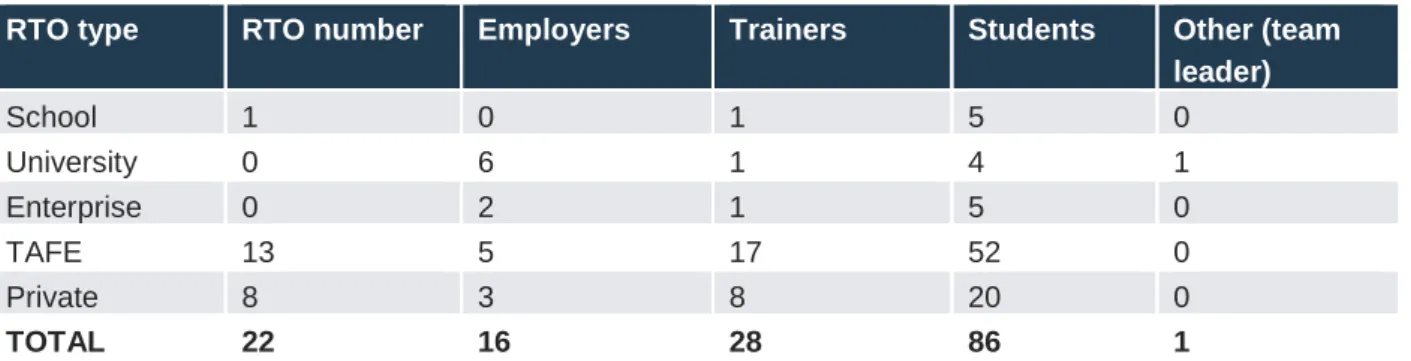
Chapter 5: Provides a summary of stakeholder consultations, including the issues raised in roundtable discussions, comments provided by RTOs during the survey conducted for the review and insights gathered from interviews with employers, trainers and students of the sample RTOs audited.
Chapter 6: Analyses the compliance of RTOs offering equine training with the requirements of the relevant standards for RTOs. Compliance with training and assessment standards, the adequacy of the training resources provided by RTOs, the qualifications and required industry competencies of trainers, the quality of assessment, and the provision of appropriate information by RTOs to students are examined.
Chapter 7: Presents a summary of the main findings of the review together with recommendations and a discussion of the way forward.