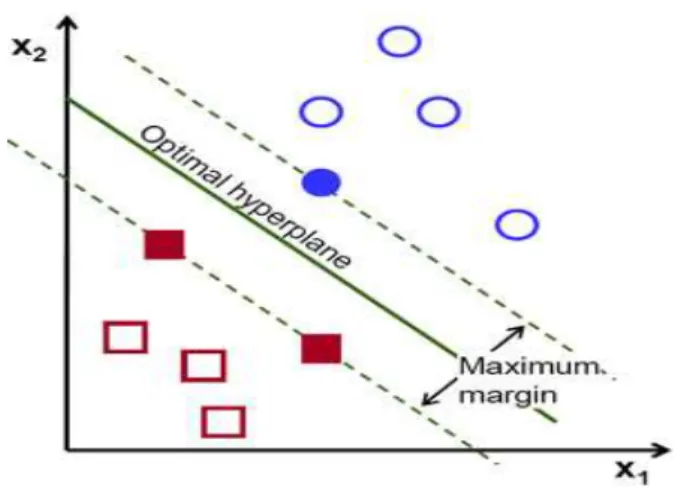
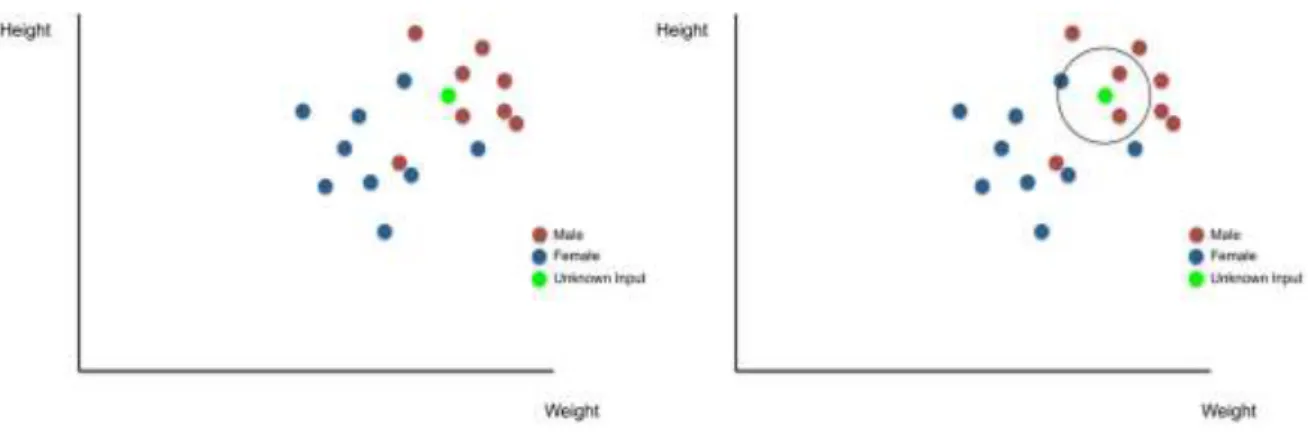
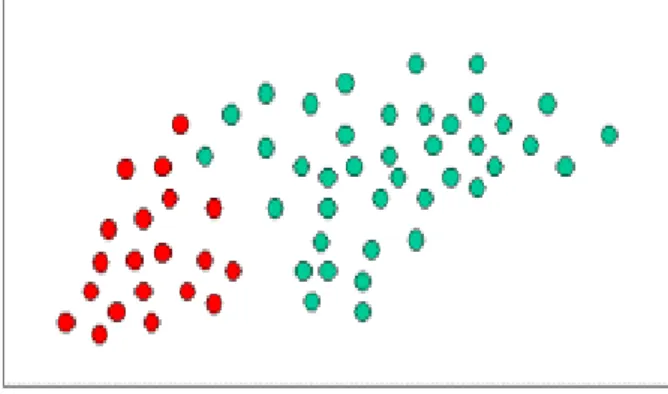
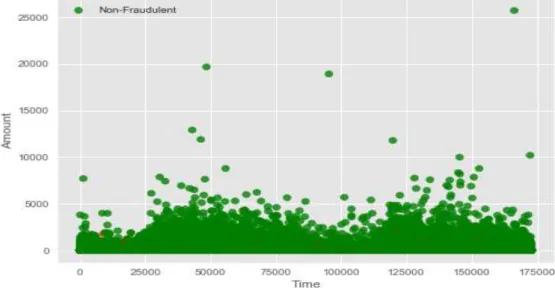
DIFFERENTIAL EVOLUTION TECHNIQUE ON WEIGHTED VOTING
STACKING ENSEMBLE METHOD FOR CREDIT CARD FRAUD
DETECTION
by
KGAUGELO MOSES DOLO
submitted in accordance with the requirements for
the degree of
MASTER OF SCIENCE
In the subject of
COMPUTING
at the
UNIVERSITY OF SOUTH AFRICA
SUPERVISOR:
Prof Ernest Mnkandla
SUMMARY
Differential Evolution is an optimization technique of stochastic search for a population-based vector, which is powerful and efficient over a continuous space for solving differentiable and non-linear optimization problems. Weighted voting stacking ensemble method is an important technique that combines various classifier models. However, selecting the appropriate weights of classifier models for the correct classification of transactions is a problem. This research study is therefore aimed at exploring whether the Differential Evolution optimization method is a good approach for defining the weighting function.
Manual and random selection of weights for voting credit card transactions has previously been carried out. However, a large number of fraudulent transactions were not detected by the classifier models. Which means that a technique to overcome the weaknesses of the classifier models is required. Thus, the problem of selecting the appropriate weights was viewed as the problem of weights optimization in this study.
The dataset was downloaded from the Kaggle competition data repository. Various machine learning algorithms were used to weight vote a class of transaction. The differential evolution optimization techniques was used as a weighting function. In addition, the Synthetic Minority Oversampling Technique (SMOTE) and Safe Level Synthetic Minority Oversampling Technique (SL-SMOTE) oversampling algorithms were modified to preserve the definition of SMOTE while improving the performance.
Result generated from this research study showed that the Differential Evolution Optimization method is a good weighting function, which can be adopted as a systematic weight function for weight voting stacking ensemble method of various classification methods.
ii
DECLARATION
Name: Kgaugelo Moses Dolo
Student number: 58527141
Degree: Masters of Science (Computing)
Exact wording of the title of the dissertation as appearing on the copies submitted for examination:
Differential Evolution Technique On Weighted Voting Stacking Ensemble Method For Credit Card Fraud Detection.
I declare that the above dissertation is my own work and that all the sources that I have used or quoted have been indicated and acknowledged by means of complete references.
I further declare that I have not previously submitted this work, or part of it, for examination at UNISA for another qualification or at any other higher education institution.
________________________ _____23/ 12/ 2019_____
iii
KEYWORDS
Differential Evolution; Weighted Voting; Stacking Ensemble Method; Class Distribution; Data Distribution; SMOTE; Safe-Level SMOTE; Machine Learning; Big Data; Credit Card Fraud.
iv
Table of Contents
SUMMARY ... i
DECLARATION ... ii
KEYWORDS ... iii
TABLE OF FIGURES ... viiviii
TABLE OF TABLES ... viiiv
ACRONYMS ... x
CITATION MANAGEMENT AND REFERENCE METHOD ... xviii
1. Chapter 1: Introduction ... 1 1.1. Background ... 2 1.2. Problem Statement ... 6 1.3. Research Questions ... 8 1.4. Research Aim ... 9 1.5. Research Objectives ... 9 1.6. Limitation ... 10 1.7. Ethics Considerations ... 11
1.8. Significance of the Research ... 12
1.9. Layout of the Dissertation ... 12
2. Chapter 2: Literature Review ... 14
2.1. Background on Big Data ... 14
2.1.1. Volume ... 14
2.1.2. Velocity ... 15
2.1.3. Variety ... 15
2.1.4. Veracity ... 15
2.2. Credit Card Fraud Trends ... 16
2.2.1. Online Credit Card Fraud ... 16
2.2.2. Offline Credit Card Fraud ... 18
2.2.3. Credit Card Application Fraud ... 19
2.3. Information and Data Security ... 20
2.3.1. Data Protection ... 20
2.3.2. Access to Data ... 20
2.3.3. Consent and Disclosure of Sensitive Information ... 21
2.3.4. Cross Border Data Transfer ... 21
2.4. Machine Learning Historical Foundation... 22
2.4.1. Supervised Learning ... 22
v
2.6. Types of Data Analytics... 23
2.6.1. Descriptive Analytics (What’s happening?) ... 23
2.6.2. Predictive Analytics (What is likely to happen?) ... 24
2.7. Stacking Algorithm ... 24
2.7.1. Weighted Voting Method ... 25
2.8. Differential Evolution Algorithm ... 25
2.8.1. Initial Population ... 26
2.8.2. Mutation ... 26
2.8.3. Recombination ... 26
2.8.4. Selection ... 27
2.9. Challenges Associated with Detection Techniques ... 27
2.9.1. Skewed Distribution ... 27
2.9.2. Noise ... 29
2.9.3. Overlapping Data... 29
2.9.4. Choosing Parameters ... 29
2.9.5. Feature Selection ... 30
2.10. State-of-the-Art and Background Theory ... 31
2.10.1. Logistic Regression (LR) ... 32
2.10.2. Support Vector Machine (SVM) ... 33
2.10.3. Artificial Neural Networks (ANN) ... 34
2.10.4. K-Nearest Neighbour (KNN) ... 36
2.10.5. Decision Tree (DT) ... 37
2.10.6. Naïve Bayesian (NB) ... 38
2.11. Related Works in Fraud Prevention Technologies... 39
2.12. Summary ... 42
3. Chapter 3: Research Methodology ... 43
3.2. Data Preparation ... 44
3.5. Feature Selection ... 46
3.6. Imbalanced data ... 46
3.7. Visualisation ... 47
3.8. Explanatory Data Analysis ... 48
3.9. Data Model Selection and Training ... 52
3.9.1. Artificial Neural Network (ANN) Method ... 52
3.9.2. Support Vector Machine (SVM) Method ... 53
3.9.3. Decision Tree (DT) Method ... 53
vi
3.9.5. Naïve Bayesian (NB) Method ... 54
3.9.6. Stacking Model ... 55
3.10. Evaluation of Data Models ... 56
3.11. Tool Selection ... 58
3.12. The Final Model ... 58
3.13. Summary ... 59
4. Chapter 4: Algorithm Design ... 60
4.1. Balancing the Dataset ... 61
4.1.1. SMOTE vs Safe-Level-SMOTE ... 64
4.1.2. Modified SMOTE Algorithm ... 66
4.1.3. Modified Safe-Level-SMOTE Algorithm ... 67
4.2. Feature Selection Method ... 68
4.3. Weighted Stacking Ensemble Method of Classifiers ... 71
4.3.1. Artificial Neural Network (ANN) Method ... 71
4.3.2. Support Vector Machine (SVM) Method ... 73
4.3.3. k-Nearest Neighbours (KNN) Method ... 74
4.3.4. Naïve Bayesian (NB) Method ... 75
4.3.5. Decision Tree (DT) Method ... 77
4.4. Predictions Data Dictionary ... 78
4.5. Stacking Ensemble of Base Models ... 79
4.6. Probability Data Dictionary... 81
4.7. Differential Evolution Optimization Method ... 82
4.8. Summary ... 84
5. Chapter 5: Data Analysis... 85
5.1. SMOTE vs Safe-Level-SMOTE ... 85
5.1.1. SMOTE vs New SMOTE ... 86
5.1.2. SL-SMOTE vs New SL-SMOTE ... 87
5.2. Stacking Ensemble Base Models ... 90
5.2.1. Artificial Neural Network (ANN) Method ... 91
5.2.2. Support Vector Machine (SVM) Method ... 91
5.2.3. k-Nearest Neighbour (KNN) Method ... 92
5.2.4. Naïve Bayesian (NB) Method ... 92
5.2.5. Decision Tree (DT) Method ... 93
5.3. Performance of Base Models ... 93
5.3.1. Accuracy of Base Models ... 94
vii
5.4. Optimized Stacking Ensemble Base Models ... 97
5.4.1. True Accuracy of Base Models ... 99
5.4.2. True Confusion Matrix ... 100
5.5. Stacking Ensemble Method ... 101
5.5.1. Stacking Ensemble Method Accuracy ... 102
5.5.2. Confusion Matrix of Stacking Ensemble. ... 102
5.5.3. Confusion Matrix Statistics of Stacking Ensemble... 103
5.6. Differential Evolution Method ... 105
5.6.1. Differential Evolution Accuracy ... 106
5.6.2. Differential Evolution Confusion Matrix ... 106
5.6.3. Differential Evolution Confusion Matrix Statistics ... 108
5.7. Differential Evolution Method vs Stacking Ensemble Method ... 109
5.8. Summary ... 111
6. Chapter 6: Discussion and Conclusion ... 112
6.1. Discussion ... 112 6.2. Conclusions ... 117 7. References ... 120 8. Appendix ... 134 8.1. Ethical Clearance ... 134 8.2. Turnitin Report ... 136 8.3. Editorial Certificate ... 137
viii
TABLE OF FIGURES
Figure 2.1: Logistic Regression ... 32
Figure 2.2: Support Vector Machine ... 34
Figure 2.3: Artificial Neural Network ... 35
Figure 2.4: K-Nearest Neighbour ... 37
Figure 2.5: Decision Tree... 37
Figure 2.6: Naïve Bayesian ... 38
Figure 3.1: Correlation between the transaction amount and Time ... 48
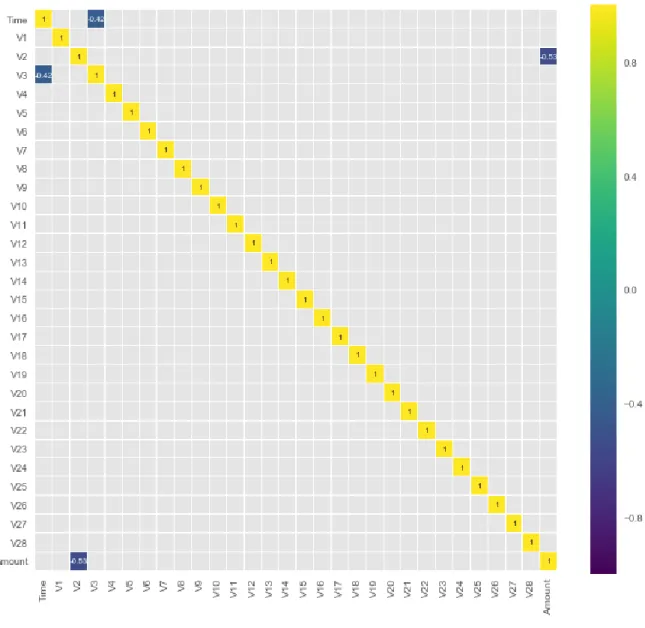
Figure 2.8: Heatmap of Feature Correlation. ... 49
Figure 2.9: Correlation between the transaction amount and V2. ... 50
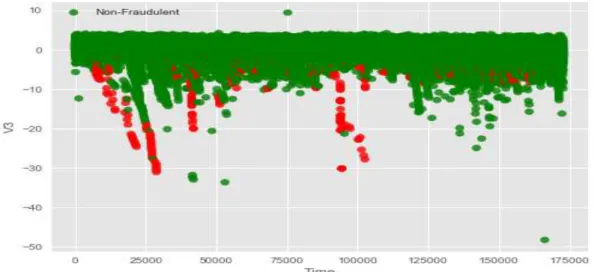
Figure 2.10: Correlation between the V3 and Time. ... 50
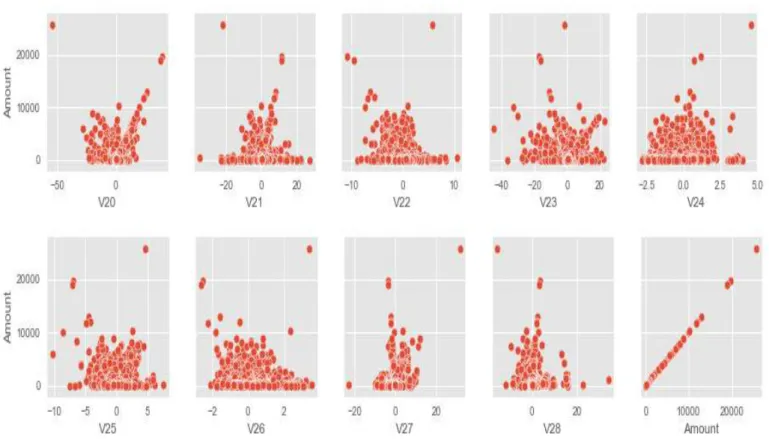
Figure 2.11: Scatter plot correlations between Amount and all other features. ... 52
Figure 2.12: Credit card fraud model ... 59
Figure 2.13: Original Data Instances VS Original SMOTE Instances. ... 86
Figure 2.14: Original Data Instances VS New SMOTE Instances. ... 87
Figure 2.15: Original Data Instances VS Original Safe-Level SMOTE Instances. ... 88
Figure 2.16: Original Data Instances VS Original New Safe-Level SMOTE Instances. 889 Figure 2.17: Scores by SMOTE groups ... 90
Figure 2.18: True Positive/Negatives of Stacking Ensemble vs Differential Evolution Methods. ... 109
Figure 8.19: False Positive/Negatives of Stacking Ensemble vs Differential Evolution Methods. ... 110
Figure 8.20: False Negatives of Stacking Ensemble vs Differential Evolution Methods. ... 111
ix
TABLE OF TABLES
Table 5.1: Confusion Matrix ... 88
Table 5.2: Confusion Matrix Statistics ... 88
Table 5.3: True Confusion Matrix ... 88
Table 5.4: True Confusion Matrix Statistics ... 88
Table 5.5: Confusion Matrix of Stacking Ensemble ... 88
Table 5.6: Confusion Matrix Statistics of Stacking Ensemble ... 88
Table 5.7: Differential Evolution Confusion Matrix ... 88
x
ACRONYMS
ANN Artificial Neural NetworkCSV Comma-Separated Values
DE Differential Evolution
DT Decision Tree
EDA Explanatory Data Analysis
FN False Positive
FP False Negative
KNN k-Nearest Neighbour
ML Machine Learning
NB Naïve Bayesian
NIBSS Nigerian Inter-Bank Settlement System
NFL No Free Lunch
P Probability
PCA Principal Component Analysis
SA South Africa
SABRIC South African Banking Risk Information
SL SMOTE Safe Level Synthetic Minority Oversampling Technique
SMOTE Synthetic Minority Oversampling Technique
SVM Support Vector Machine
TN True Negative
TP True Positive
xi
CITATION MANAGEMENT AND REFERENCE METHOD
References were managed electronically with the word document citation manager. Word document sources manager offers approximately 12 citation styles. For consistency, the University of Cape Town Harvard method (UCT Harvard) of referencing was used throughout this dissertation (De Jager & Steele, 2015)
1. Chapter 1: Introduction
The need for big data analytics in the banking sector is directly related to the need for complexity of analytical tasks for fraud detection. That is, as the need for big data analytics in the banking sector is becoming more and more important for supporting
business operations and financial transactions (Altayar & Almoqren 2016, pp. 1 - 8),
the need for complex analytical tasks for fraud detection is also becoming crucial for security of business operations and financial transactions. Banks normally derive data for data analysis from sources such as, but not limited to, credit card activities, loan repayments, loan applications and account transactions (Altayar & Almoqren 2016,
pp. 1 - 8). For this reason,this study is focused on the credit card activities in order to
determine fraudulent activities that negatively affect the banking sector.
The data derived from bank source systems are complex and cannot be processed by
traditional data application systems (Altayar & Almoqren, 2016, pp. 1 - 8). Big data is
a term that refers to a complex dataset that cannot be stored and processed using traditional data processing application systems (Flood, et al. 2016, pp. 1 - 20). Banks in South Africa are making huge investments in the adoption of big data and the move from data analytics to data insights (TCI 2015). Data insights refers to the use of advanced analytics methods that deal with complex analytical problems and are capable of predicting future outcomes (i.e. predictive analytics). Predictive analytics refers to many types of statistics and data mining methods that analyse current and historical facts for the classification of unknown future events (Monk 2016, pp. 1 - 3).
The accurate and comprehensive methods used for filtering algorithms that perform data analysis for a given dataset of historical credit card transactions of the customers play a crucial role in determining the efficiency of algorithms that perform data mining and predictive data analysis (Mitik, et al. 2016, pp. 552 – 559; Wang, et al. 2010, pp. 215 - 218). Identifying fraudulent factors associated with credit card transactions in the banking sector is one of the important tasks to perform that enables the data mining activity to uncover fraudulent patterns (Babu & Rajeshwari 2016, pp. 439 - 444). The NO-FREE-LUNCH (NFL) theory suggests that no machine learning method can perform well for all measures in every application (Macready & Wolpert 1996, pp. 67 - 82). Therefore, an evaluation of algorithms is essential for the quality of machine
2
learning methods for revealing predictive data insights to prevent fraudulent transactions of credit cards in South Africa (SA).
Fraud data sourced from the South African Banking Risk Information (SABRIC) suggest that almost 4.5 billion was lost in South Africa (SA) to credit and debit card fraud since the year 2010. In analysing the 2010-2016 period, a 3.5% (44.5% in 2015 and 48.0% in 2016) was seen in credit card fraud loss in SA (Writer, 2015). Banking fraud in the continent is not confined to SA. For example, data released by the Nigerian Inter-Bank Settlement System (NIBSS) indicates that malicious transactions in the banking sector peaked in 2016 (John, et al. 2016, pp. 1186 - 1191). Since SA has the most advanced banking sector in the continent, it goes without saying that more complex analytical tasks for fraudulent transactions detection are required to expose fraudulent activities within the SA banking sector.
1.1. Background
According to the Legal Information Institute (LII), fraudulent credit card transactions are a form of identity theft whereby unauthorized users take credit card information of victims with the sole aim of removing funds from the accounts of the victor or to charge purchases to the accounts of the victims. The credit card fraud level has escalated from being performed by just the fraudsters to being performed by fraud rings that use complex and advanced strategies that take over the control of accounts and to perform frauds that are not noticeable (John, et al. 2016, pp. 1186 - 1191). In the world of effortless expenditure, this leads to an accelerated increase in online transaction fraud.
More fraudulent transactions performed in a day in relation to more non-fraudulent transactions result in less skewed data distribution, which implies that the chances of frauds being noticeable are high. Thus, since fraudsters use advanced methods to commit crime in a manner that is not noticeable (John, et al. 2016, pp. 1186 - 1191), it implies that less fraudulent activities are performed than non-fraudulent activities, and in the context of big data this would result in a highly skewed distribution. Thus, more complex and efficient analytical tasks to handle highly skewed distribution are required.
Credit card fraud has caused serious damage to both service providers and the credit card users, and was predicted to get worse in future (Pushpa & Malini 2017, pp. 255 -
3
258). Thus, to handle the highly skewed big data for classification or prediction of future credit card fraudulent transactions, more advanced machine learning techniques to reduce variance and biasness in data are required in order to adequately predict future values of credit card transactions. Given the large number of datasets available, development of methods for the identification of fraudulent groups and exploration of behavioural patterns of fraudulent groups have become very important for purpose of data mining (Yu, et al. 2017, pp. 1 - 6).
Descriptive and predictive data analysis provides a complete solution for understanding the nature and scope of the data of financial institutions sourced from different systems. Descriptive data analysis is more focused on the question of “what has happened?” (Patwardhan 2016). Knowing what has happened without knowing what could happen, sets knowledge limitations and biasness of financial institutions to make informed decisions. On those group, the need for predictive data analysis is justified since it answers the question of “what could happen?” (Patwardhan 2016).
When building a classification data model to solve the problems of descriptive and predictive data analysis with a dataset that is highly skewed, the best-fit line that separates the classes of data would try to balance the dataset by drawing a line that represents the average of the dataset of the class of the minority data observations and the class of the majority data observations. However, given a lower number of fraudulent transactions relative to non-fraudulent transactions, the average dataset would be in favour of the non-fraudulent transaction class. Therefore, to control the best-fit line to the right position that equally represent both classes, an oversampling of minority class to generate new synthetic instances is required.
Synthetic Minority Oversampling Technique (SMOTE) is a sampling method that oversamples the minority class by computing median features vectors between nominal features sample and its potential nearest neighbours through Euclidean distance of standard deviations (Chawla, et al. 2002, pp. 321 - 357). Duplicating minority training samples to reduce biasness of data distribution introduces high variance of data distribution. Therefore, SMOTE is an important over-sampling method that reduces variance of data distribution. The synthetic instances generated influence a decision-making model to create small and less specific decision regions.
4
With that said, positive influence can be learned far better in general regions than positive instance subsumed around negative instance. This means that the SMOTE method suffers from a problem of generalization whereby the region of a majority class is blindly generalized without considering the minority class (Bunkhumpornpat, et al. 2009, pp. 475 - 482; Meidianingsih, et al. 2017, pp. 1167 - 1171). The generalization challenge associated with the SMOTE method is normally visible in places of highly skewed class distribution since the class of the minority data observations is thinly scattered in relation to the class of the majority data observations. As a result, the probability of class mixture is very high. To keep the SMOTE method efficient and effective, an improvement of the algorithm is required.
Borderline-SMOTE is an oversampling technique designed to improve the performance of SMOTE oversampling method (Bunkhumpornpat, et al. 2009, pp. 475 - 482; Gosain & Sardana 2017, pp. 79 - 85). The performance is improved by
separating the positive instances into three regions namely borderline (1
2𝐾 ≤ 𝑛𝑢𝑚 <
𝐾), noise (𝑛𝑢𝑚 = 𝐾), and safe (0 ≤ 𝑛𝑢𝑚 <1
2𝐾) (Bunkhumpornpat, et al. 2009, pp.
475 - 482; Gosain & Sardana 2017, pp. 79 - 85). The three regions are separated while considering the instances that are negative in the k-Nearest Neighbours. The borderline SMOTE uses the same oversampling method as SMOTE.
However, borderline SMOTE oversamples only the borderline data observations of the minority class rather than oversampling the entire data observations of the minority class. Logically, the two consecutive data observations are obviously not different are instead separated into two regions (borderline and noise) whereby the first data observation is selected for oversampling and the other data observation is declined oversampling.
That being so, the Safe-Level-SMOTE method is the SMOTE method that creates safe-level synthesis of minority class (Bunkhumpornpat, et al. 2009, p. 475 - 482;
Meidianingsih, et al. 2017, pp. 1167 - 1171; Gosain & Sardana 2017, pp. 79 - 85).The
synthetic instances are placed closer to the safe level; this means that the safe level closer to K is nearly noise. The safe level is the number of positive data observations within k-Nearest Neighbour but not equal to k-Nearest Neighbour (Bunkhumpornpat, et al. 2009, pp. 475 - 482).
5
The Safe-Level SMOTE is a promising algorithm for achieving a positive impact. For this reason, this algorithm will be used in this study to oversample the data observations of the minority class of the dataset and thus control the best fit line to an optimum place that equally represent malicious transactions and non-malicious transactions. A dataset with equal representation of malicious transactions and non-malicious transactions makes it easier for a classification model to learn data of the two classes well.
Stacking is an ensemble method that uses different machine learning algorithms to generate new dataset that is used in a combiner machine learning method (Smolyakov 2017). The combiner machine learning voting method is computed to predict the output. Majority voting is when every model makes a prediction of a transaction and the class value with more votes is produced as final output. Weighted voting is voting that is undertaken by counting the predictions of better models to predict the output of each transaction. In this study, it is suggested that weighting voting of the classification models requires an optimization of weights to produce good results.
Differential Evolution algorithm is a subset of evolution programming designed for continuous domain optimization problems (Brest, et al. 2006, pp. 646 - 657; Srinivas,
et al. 2018, pp. 216 - 217; Madathil, et al. 2017, pp. 1 - 5). Since it is normal for the
base models of the stacking ensemble method to have weak classifiers, Differential Evolution is used in this study to learn the weak classifiers in each evolution stage and correct the weights (Madathil, et al. 2017, pp. 1 - 5). Differential Evolution has an advantage over genetic algorithms because it is fast, robust, easy to use, and simple in structure (Brest, et al. 2006, pp. 646 - 657; Srinivas, et al. 2018, pp. 216 - 217; Madathil, et al. 2017, pp. 1 - 5).
Genetic algorithms use selection mechanisms to produce a sequence of population, and thereafter use mutation and crossover as search mechanism. Unlike Genetic algorithms, the only search mechanism of Differential Evolution is mutation, and the search is guided towards the prospective regions inside a feasible region through the use of selection (Kalajac, et al. 2018, pp. 883 - 886). The main difference between Differential Evolution and Genetic algorithms is that whereas Genetic algorithms are more dependent on a mechanism of probabilistic, a crossover, and an exchange of
6
information in solutions to better locate solutions, Differential Evolution strategies are dependent more on mutation as a mechanism for the primary search.
When features of customer’s data on historical credit card transactions that are relevant for data mining are available, the explanatory data analysis plays a crucial role when determining the efficiency of the dataset in the data mining and the
predictive data analysis (Todd & Harvey 2015, pp. 474 – 489; Liu & Dash 1997, pp.
131 – 156; Chezian & Devi. 2016, pp. 161 - 165). That being so, feature selection and dimension reduction are important for minimizing the complexity of the predictive data analysis models to improve the classification speed.
Fraud detection refers to the process of detecting fraudulent activities where no prior tendency of fraud exists (John, et al. 2016, pp. 1186 - 1191). To improve the performance of predictive data analysis methods, more advanced performance optimization methods for boosting performance while retaining low variance and low biasness of data are required for the detection of credit card fraudulent activities and thus exposing of hidden fraudulent transactions. The performance optimization methods that can adequately optimize parameters of predictive data analysis methods in massive data are becoming more important than ever due to the amount of data being produced in the current era.
The most challenging part of fraud detection involves uncovering fraudulent activities in a complex dataset that has a high number of non-fraudulent transactions and a low number of fraudulent transactions (Pushpa & Malini 2017, pp. 255 - 258). The dataset complexity in an environment of rapidly growing data introduces inefficiency in fraud detection systems, and the inefficiency acts as an agent that motivates and accelerates the rate of increase of fraudulent transactions in the banking sector. Hence the banking sector must make a huge investment in complex and efficient analytical systems that detect fraud activities to prevent losses.
1.2. Problem Statement
According to the Trade Conferences International (TCI 2015), SA banks are making huge investments in big data adoption and are intended on moving from data analytics to data insights by 2020. Notwithstanding available data analytics models for the detection of fraudulent transactions, the rate at which fraudsters continue to commit
7
fraud is growing continuously. This implies an existence of means that there is an unknown gap between knowledge of customers and techniques that fraudsters take advantage of when committing fraud.
Currently available systems of fraud detection are capable of uncovering fraudulent activities after one, two or more fraudulent transactions have been performed (Wang, et al. 2015, pp. 354 - 359). This suggests that the advanced analytics techniques require strategies that overcome the weaknesses of classifier models. Stacking is an ensemble method that uses a variety of base models to predict the output of each transaction (Smolyakov 2017).
The stacking ensemble method is an important technique that combines various classifier models such that a weak classifier model for a particular instance is assisted by strong classifier models through weighted voting of a class value (Zirpe & Joglekar 2017, pp. 1 – 5; Verma & Mehta 2017, pp. 155 – 158; Cheng, et al. 2012, pp. 755 - 759). The weights for classifier models per transaction must be high for a class that performs well, and low for a class that does not perform well. Reasoning from this fact, the selecting of the appropriate weights of votes for each class per classifier is very important. On this basis, the problem of selecting the appropriate weights for voting the correct output class of each transaction is viewed as the problem of weights optimization in this research study.
For detection systems, the standard machine learning algorithms that achieve high accuracy tend to classify a higher percentage for the class with the majority of data observations compared to a percentage of the class with the minority of data observations (Mitik, et al. 2016, pp. 552 – 559; Dehghan, et al. 2017, pp. 124 - 134). This means there are overlapping data points between the class with minority data observations and the class with majority data observations. Oversampling the minority class by duplicating the minority class data observations when there are overlapping data observations may not solve the problem of high skewedness of class distribution. Using SMOTE oversampling method to create the synthetic observations of the class with minority data observations when there are overlapping data points of the class with majority data observations result in synthetic instance generated from a fraudulent transaction and non-fraudulent transaction. Therefore, a need exists for the
8
development of an oversampling method that generates synthetic instances at the safe level of the minority class.
1.3. Research Questions
Since the South African banking sector is migrating from data analytics to data insights, this research study intends to explore the following main research question:
Is the differential evolution optimization method a good approach for defining the weighting function to predict the outcome of future credit card fraudulent transactions?
The sub research questions that support the main research question of this research study are as follows.
1. Does the Safe-Level-SMOTE oversampling method (on the minority classes) when used in combination with an under-sampling method eliminates duplicate data samples of the majority class have a positive impact on reducing the high skewedness of the class distribution than the SMOTE oversampling method (on the minority classes) when used in combination with the under-sampling method (also eliminates duplicate data samples on the majority class)?
2. Does Safe-Level-SMOTE oversampling method and the under-sampling method (that eliminates duplicate data samples of the class with majority data observations) reduce or eliminate the problem of overlapping data samples between fraudulent and non-fraudulent classes?
3. Does manual stacking of feature selection methods that are diverse on the Principal Component Analysis (PCA) transformed features to hide the actual feature names, select enough good features to solve the problem than just selecting a feature engineering technique?
4. Does the stacking of supervised base models have an impact on predictive accuracy given the under-sampling technique to remove the duplicate data
9
observations on the majority class, and the Safe-Level-SMOTE oversampling method?
5. Will the proposed data model for fraud detection efficiently detect credit card fraudulent activities?
1.4. Research Aim
This study aims to develop and optimize a detection method for credit card fraudulent transactions that is efficient and effective in the detection of malicious behaviours within the minimum number of attempts or the first time the fraudster attempts to commit fraud. The developed model is also expected to overcome the weaknesses of the classifier models that fraudsters take advantage of when committing credit card fraud.
The continuation of credit card fraud results in monetary losses for customers, merchant stores, investors, the banking sector and various other parties. Therefore, it is envisaged that the development of such a model will add value to the knowledge economy of SA and the banking sector through successful implementation of data insights. Furthermore, the development of an efficient and effective method for the detection of credit card fraud will serve to discourage the continuation of activities association with malicious credit card crime. In particular, this research study will have an impact on the successful implementation of data insights.
1.5. Research Objectives
The main research objective is to obtain optimum data analytics algorithms that perform data insights to reveal fraudulent data patterns in order to prevent future fraudulent transactions. The sub objectives are:
1. To determine whether if Safe-Level SMOTE oversampling method when used in combination with under-sampling method has a positive impact on reducing the high skewedness of the class distribution than the SMOTE oversampling method when used in combination with the under-sampling method. This objective will be implemented by running a SMOTE algorithm
10
and a Safe-Level SMOTE algorithm on the class of minority data observations, and a down-sampling algorithm on the class of majority data observations.
2. To investigate whether the Safe-Level SMOTE oversampling technique and the under-sampling technique reduce or eliminate the problem of overlapping data observations of fraudulent and non-fraudulent classes. This objective will be implemented by running a Safe-Level SMOTE on the class of minority data observations and an under-sampling algorithm on the class of majority data observations.
3. To determine whether manual stacking of diverse feature selection methods on the PCA transformed features to solve the problem than feature selection method. This objective will be implemented by running univariate selection algorithm, recursive feature elimination algorithm, and feature importance algorithm on the entire dataset.
4. To investigate how the stacking of supervised machine learning algorithms have an impact on predictive accuracy, considering the down-sampling technique that eliminate duplicate data samples on the class of majority data observations, and the SMOTE oversampling method. This objective will be implemented by running both the differential evolution optimization and stacking algorithms on the classifier models.
5. To determine the efficiency of the proposed data model for fraud detection in the detection of activities relating to credit card fraud. This objective will be implemented by running both the differential evolution optimization and the stacking algorithm on the classifier models.
1.6. Limitation
The limitation of this research study is the inability of the researcher to use a largely sized data sample drawn from the population of credit card users in SA banks. The inability of the researcher to use a dataset implies that large data cannot be applied in
11
this research study. For confidentiality and security reasons in the SA banking sector, this research study is unable to get credit card dataset from any bank in the country for experimental purposes. However, the study will use the credit card dataset designed for experimental purposes, which is obtained from the Kaggle machine learning data repository (kaggle 2018).
Due to field names having been transformed for hiding the actual field name of the dataset, the data mining of new knowledge and for uncovering the unknowns becomes challenging. Although correlation among different fields can be performed and the findings can be interpreted, the findings cannot be understood for further data analysis due to hidden field names. On that premise, the explanatory data analysis section presented in this study, which is of interesting to this research study, is rudimentary and cannot therefore be analysed further to derive meaningful interpretation of the data. However, the dataset is stable enough to achieve the desired research objectives.
Due to different cultures found in SA banks and the approach adopted by the researcher for conducting the research, the applied techniques may produce different results when experimenting with credit card dataset obtained from Kaggle machine learning data repository. However, traditional data mining algorithms for uncovering new knowledge and predictive data analytics algorithms for predicting future outcomes are more likely to remain the same if they are used appropriately. Consequently, the data model proposed in this research study must be edited appropriately to produce the desired outcomes.
1.7. Ethics Considerations
Considering the pertinent banking sector rules, regulations, and norms that govern the industry, the data mining and prediction data model in the banking sector may raise ethical and legal questions. This research study is therefore focused on computational analysis of credit card dataset designed for experimental purpose from the Kaggle machine learning data repository, and would therefore not breach any research ethics for the banking industry and its customers.
Although this research study does not involve experimentation using humans and animal subjects, ethical approval for the undertaking of this research study was
12
nevertheless requested in writing from the Research Ethics Committee of the University of South Africa (UNISA). To get the gist of the approach adopted by the researcher for executing this research study, the reader is referred to sub-sections 1.4 and 5.1 relating to research aims and methodological approach and experimental design respectively. The dataset used for this experiment is credit card data that was anonymised by Principal Component Analysis (PCA) method for hiding the private and confidential information of the bank users.
1.8. Significance of the Research
The findings of in this study contribute to the knowledge economy of South Africa and the banking sector in general. Safe-Level SMOTE for the detection of malicious activities relating to credit card fraud is significant in a case of overlapping class data because oversampling of the minority class in a highly skewed distribution with overlapping class data does not achieve 50:50 binary class distribution. That is to say, one problem is being solved by introducing another problem.
A method for ensemble feature selection for unknown features that are transformed to hide the original meaning is significant to guide conclusion in terms of features selected, which are suggested by this study.
An ensemble data model with diverse base models that is based on weighted voting method is significant since a weak base model cannot be given the same weighting as a strong base model. The optimization of the weighted voting method of base model is also significant since an improvement of predictive accuracy needs to be undertaken. The optimization of the weighted voting method is performed by using the differential evolution algorithm.
The biasness reduction of data distribution within a class and a class distribution plays a significant role since duplicate data samples are eliminated while information about the dataset is preserved as much as possible.
1.9. Layout of the Dissertation
The remainder of the dissertation presents a review of the relevant literature in Chapter 2. This is followed by Chapter 3, which discusses the research methodology adopted for the execution of this research study. Therefore, Chapter 4 provides details of the
13
algorithm design for this research study. In Chapter 5 data is analysed ending with Chapter 6, which presents the conclusion of the study. Following an analysis of the relevant data, the dissertation ends with chapter 6, whereby the conclusion of the study is presented.
14
2. Chapter 2: Literature Review
In this section, literature relevant to the research study is reviewed. The section starts by giving background information on big data, and how big data is defined in the current era. Thereafter, reference is made to different types of credit card fraud experienced on a daily basis by the banking industry. In addition, the information and personal data security as an enforcement in Section 14 of the Constitution of South Africa (1996) is discussed. Finally, the state-of-the-art credit card fraud detection techniques for preventing fraudulent transactions are also chronicled before discussing the challenges associated with credit card fraud detection techniques.
2.1. Background on Big Data
Big data described as large amount of data depending on who is discussing it. The type of data regarded by the likes of Google or Amazon as being huge may be totally different from the huge data of a small or medium sized organization. The history of big data does as far as 1663 when John Graunt dealt with huge amounts of data when studying the bubonic plague (Keith 2017). To describe and understand big data in this study, four V’s (namely Velocity, Volume, Variety and Veracity) are used.
2.1.1. Volume
The volume describes the size of dataset (Nyikes & Rajnai 2015, pp. 217 – 222;
Trelewicz 2017, pp. 1 - 3). For big data, volume describes the large sized data collected for uncovering the unknown factors that will enable business questions to be answered. In the world of effortless expenditures, the high number of credit card users translates into a higher number of daily translations. As a result, the concomitant reporting and data analysis of the daily data credit card transactions tallied over a period of a month is also high.
Since banks in South Africa have been operating for years, the amount of credit card data collected over the years is just too complex to be handled by traditional data processing applications. Therefore, complex data analytical tools are required for the processing of the processing of this type of data.
15
2.1.2. Velocity
The velocity is mostly associated with the rate at which data is generated, accumulated or must be processed (Nyikes & Rajnai 2015, pp. 217 – 222; Trelewicz 2017, pp. 1 - 3). Given the high number of credit card users, it is realistic to think that a substantial majority of these users have mobile phones. The high usage and advancement of mobile banking applications to support the daily banking transactions has led to an insanely high rate of generation of data motivated by effortless expenditure. This suggests that complex analytical tasks are therefore needed for daily credit card data analysis and reporting.
2.1.3. Variety
The variety is mostly associated with the format in which data is stored (Nyikes & Rajnai 2015, pp. 217 – 222; Trelewicz 2017, pp. 1 - 3). Data can be stored in multiple traditional formats such as excel, databases, and comma-separated values (csv),
among others. Data is not always stored in traditional formats; instead, it can also be
stored in other formats such as video, PDF, SMS, MMS, email and others.However,
in this research study, the same format is used for the credit card data that was collected. This is because data in the same format is easy to rearrange. It should however be noted that real-world data is not always in the same format. Complex analytical tasks are required for the analysis of data stored in an unstructured format.
2.1.4. Veracity
The veracity is mostly associated with the trustworthiness of the data (Nyikes & Rajnai 2015, pp. 217 - 222). The quality and the usability of data is highly dependent on the source system. Therefore, not all data is good for analysis. The accumulated data that is mined to uncover the meanings and unknowns in the data must be meaningful to the problem to be analysed.
In consideration of the four V’s, big data can be defined as a complex and fast-growing data composed of different data formats that cannot be processed by traditional data
management applications to maintain the security and the integrity of data. In the
section that follows, credit card fraudulent activities that negatively affect the banking industry are discussed.
16
2.2. Credit Card Fraud Trends
When credit card holders make online or offline payments, fraudsters use sophisticated methods to capture credit card details of card holders that are ignorant of suspicious activities. Fraudsters take advantage of the ignorance of the card holder by making as many clean transactions as possible. Fraudsters can either commit online or offline credit card fraud.
2.2.1. Online Credit Card Fraud
Online credit card fraud regarded as Card Not Present (CNP) fraud whereby credit card details are stolen without stealing the physical credit card (Hsu & Chao 2007, pp. 1 – 4; Babu & Rajeshwari 2016, pp. 439 - 444). The information in the stolen credit card such as card number, expiry date and card verification value (CVV) allows the card to be used even when it is not physically present (e.g. in internet purchases).
Online credit card fraud such as CNP continues to grow globally due to advanced data analytics strategies used by credit card fraudsters. In this study, it is argued that fraudsters are innovative experts using sophisticated strategies that utilize weaknesses of standard machine learning strategies. In a nutshell, fraudsters take advantage of weak classifier models. To deploy a successful online credit card fraud solution, a technique that overcomes the weaknesses of classifier models is required.
The other types of online credit card frauds are as follows.
Site Cloning
Site cloning arises when a legal and official website is cloned by fraudsters to mislead clients into placing an order with them (Babu & Rajeshwari 2016, pp. 439 – 444; Rajak & Mathai 2015, pp. 1 - 4). The cloned website looks similar to legal and official website, and unaware clients would normally enter their credit card details on the cloned website to complete the online purchase. Upon receipt of the credit card details of the client, the fraudsters can make unauthorised fraudulent purchases until the customers and/or the bank becomes aware of the fraudulent credit card activities.
17
False Merchant Sites
This type of fraud is committed through websites that require customers to confirm their personal information by using credit card information (Babu & Rajeshwari 2016, pp. 439 – 444; Rajak & Mathai 2015, pp. 1 - 4). Such website owners can commit credit card fraud by themselves or by selling information of credit card-holders to fraudsters who will then commit the credit card fraud.
Phishing
This is the fraud through which fraudsters send out misleading e-mails to users in order to gain access to their personal information (Babu & Rajeshwari 2016, pp. 439 - 444). Fraudsters use very intelligent and legitimate methods to convince users into believing these e-mails. Example of such methods include providing users with links to websites asking these users to enter their personal information.
Friendly Fraud
This is when the fraudster is the credit cardholder that uses the card for offline purchases at actual stores or online purchases and later report the card as stolen or lost in order to claim for reimbursement from the bank (Babu & Rajeshwari 2016, pp. 439 - 444).
A successful implementation of the proposed model that overcomes the weaknesses of weak classifier models will reduce the level of online credit card fraud is committed. The stacking ensemble method, which combines two or more classification models, is used to vote an output of each transaction. The vote of an output is based on weights of classification model per transaction. This means that a classification model that predicts an output of a transaction badly would have a vote with lesser weight for predicting the final output of a transaction. Therefore, weak classifier models that fraudsters take advantage of would not contribute much in the prediction of the final output of a transaction. The next subsection provides a detailed discussion of offline credit card fraud.
18
2.2.2. Offline Credit Card Fraud
Offline credit card fraud is the type of fraud through which a physical card is stolen to
make purchases at the actual physical stores (Babu & Rajeshwari 2016, pp. 439 –
444; Rajak & Mathai 2015, pp. 1 - 4). Offline credit card fraud is less common since there is a higher possibility of failure, and fraudsters normally prefer clean moves where stolen credit card is used to commit fraud without the fraudster being caught. In a case of credit card being stolen and not reported, some banks hold credit cardholders responsible for the losses suffered should illegal transactions occur.
An advanced solution for offline credit card fraud could be the usage of biometric systems for authorizations of credit card transactions. However, the biometric solutions are outside the scope of this study. In this study, the deployment of a successful offline credit card fraud solution is directed towards addressing a need for a technique that overcomes the weaknesses of classifier models. Classes of offline credit card are as follows.
Card Skimming
Fraudsters normally use special skimmer devices to capture credit card information stored in the magnetic stripes of the physical credit card (Hsu & Chao 2007, pp. 1 – 4; Babu & Rajeshwari 2016, pp. 439 - 444). Fraudsters can use captured credit card information to make duplicate copies of physical credit cards in order to make purchases either offline at the actual stores or online.
At the ATM machine, fraudsters can place skimmer devices and micro-cameras to record the entered card pins when transaction are performed (Hoffman 2017). Card skimming can also be performed by corrupt employees that swipe customers’ cards on skimmer devices during payments at merchant stores (Writer 2015).
Credit Card Generators
This is a type of fraud through which automated programs that use bank algorithms to generate credit card numbers arbitrarily and apply try and error techniques and other methods to research generated credit card numbers that
19
correspond to real credit card accounts from the actual banks (Rajak & Mathai 2015, pp. 1 - 4).
Since there is a high likelihood of failure for offline credit card fraud, a successful implementation of the proposed model that overcomes the weaknesses of weak classifier models will discourage fraudsters from attempting to perform offline credit
card fraud. Thus, therate at which online credit card fraudulent activities are performed
will reduce. A stacking ensemble method that combines two or more classification models to vote an output of each transaction. The vote of an output is based on weights of classification model per transaction. On that premise, a classification model that predicts an output of a transaction badly would have a vote with lesser weight to predict the final output of a transaction. As a result, weak classifier models that fraudsters take advantage of would not significantly contribute to the prediction of the final output of a transaction. In the next sub-section, a detailed discussion on credit card application fraud is presented.
2.2.3. Credit Card Application Fraud
Credit card application fraud refers to when false information is used by fraudsters to apply for a credit card at the bank. The application fraud of credit card is associated with identity theft and chain of trust fraud. This type of fraud occurs very rarely since fraudulent behaviour can be detected during the application process when checking or verifying personal information.
An advanced solution for credit card application fraud could be the use of biometric systems to verify the personal information through genetic information such as finger prints, voice pattern, and eyes pattern. However, biometric solutions are outside the scope of this study. In this regards, data analytics methods for anomaly detection can only be used to prevent the continuity of credit card application fraud. Below is the discussion of offline credit card fraud, which can be eliminated by successful implementation of data analytics methods for anomaly detection. An aspect of credit card fraud that can be eliminated by successful implementation of data analytics for anomaly detection is identity theft, which is defined as follows:
20
Identity theft involves fraudsters obtaining personal information such as, but not limited to, identity number, gender, e-mails and address from other people in order to open new accounts or to access existing accounts with the aim of
committing fraud (Babu & Rajeshwari 2016, pp. 439 - 444). This is the type of
fraud through which a fraudster commits credit card application fraud by using an identity that is not real or by stealing other people’s identity with intensions of committing secondary fraud (Hsu & Chao 2007, p. 1 – 4; Babu & Rajeshwari 2016, pp. 439 - 444).
A fraudster that uses false identity and manages to get the credit card from the bank would normally use the credit card and later not pay the bill at a great loss to the bank. In a case whereby a fraudster uses the identity details of a real person and thereafter manages to get a credit card from the bank, the real person is liable for the payment of the bill unless the real person is able to provide proof of identity theft to the bank.
Since application fraud behaviour can be detected during the application process when checking or verifying personal information, the chances of failure are high. The successful implementation of the stacking ensemble method will discourage fraudsters from attempting to commit credit card application fraud.
2.3. Information and Data Security
2.3.1. Data Protection
Section 14 of the constitution of South Africa (1996) is designed to protect the privacy of the citizens of South Africa through limited rights to privacy. The Protection of Personal Information Act (POPI) Act was enacted to regulate access and use of personal information. The eight POPI principles are defined to govern lawful use of personal information (Government 2013).
2.3.2. Access to Data
Public sector agencies in South Africa normally have access to important and useful information about citizens (Chase 2018). The personal data from trusted public sector agencies can be used by South African banks to verify information of applicants for loans. Section 14 of the constitution of South Africa and the POPI Act limits banks
21
from having complete access to individual’s personal data, which on the other hand motivates a rapid growth of identity theft related fraud (Eurofinas & ACCIS 2011).
2.3.3. Consent and Disclosure of Sensitive Information
When an applicant applies for a credit card at the bank, an applicant’s provided
information must be verified by the bank. For verification of applicant’s information, banks must define a clear and a transparent privacy policy for handling sensitive information, and a consent in writing that shows the data subject that specify the intended usage of the data. The collection of sensitive information from public or private sectors (that of the same level of data protection as the bank under the privacy rules) must be lawful, it must be collected for lawful purpose, and it must be collected for only the intended purpose for which it has been collected for (Ahluwalia & Mahajan 2011).
When banks require sensitive information about credit card applicants, a lawful contract that permits disclosure of sensitive information must be present before disclosing of any sensitive information by private or public sector to any bank, unless such disclosure is required by the law (Ahluwalia & Mahajan 2011).
2.3.4. Cross Border Data Transfer
Sensitive information of international applicants in South Africa can be verified by South African banks. According to (Ahluwalia & Mahajan 2011), banks normally transfer sensitive information across the border if the entity to receive the information ensures the following:
The same level of data protection as the bank under the privacy rules.
The transfer is under a lawful contract between bank and the data subject.
A person has signed a consent that gives an authority to transfer their sensitive
information across the border.
An advanced analytics strategy for complex data analysis and verification of information of the credit card applicants in banks include machine learning, which is discussed in the next section.
22
2.4. Machine Learning Historical Foundation
Previously, computers were primarily used for searching information in large databases (Woodford 2017) while complex mathematical calculations were performed using calculators (Ball & Flamm 1996). The computer storage and capabilities were increased to accommodate an increase in the size of industrial data (Woodford 2017). For decision making, the increase in data needed to be analysed to support industrial processes.
The tools used for data analysis were used for regular tasks(Woodford 2017) and not
for automatic classification of information or other machine intelligence tasks. The introduction of machine intelligence algorithms that can make decisions without intervention of humans became important for the management of complex computation. Hence, machine learning became a strategy for allowing machines to learn and act from data without being explicitly programmed (Andrew 2017).
Knowledge discovery and classification and prediction are two fundamental areas of machine intelligence (Zaza & Al-Emran 2015, pp. 275 - 279). A decision support system caters for possible decisions based on the patterns that are found in data. To this end, data mining is the machine intelligence that identifies the important patterns for prediction. One of the types of learning for data models is supervised learning; and it is discussed below.
2.4.1. Supervised Learning
This is the machine learning type in which the learning of models is guided by the class values (Brownlee 2016). The class values are either 0 for legal transactions or 1 for illegal transactions. A supervised machine learning data model must be supplied with credit card historical data that it must learn from in order to be in a good position to predict the outcomes of future transactions. The prediction labels of future transactions are done through the classification process by using machine learning classification algorithms. The classification is discussed in the next section.
2.5. Classification
This is one of the most widely used functionality category methods in machine learning. The application of classification methods includes fraud detection analysis,
23
medical diagnosis analysis, spam detection analysis, and risk assessment analysis. The main goal of classification methods is to classify an output (y) into a category given some values of x (Peng, et al. 2017, pp. 1 – 7; Cui, et al. 2018, pp. 1 - 11). That is to say, based on prediction of attributes for prediction, a classification method assigns variable to the target category. For the prediction of attributes, the classification method uses some statistical, mathematical and computational algorithms such as, but not limited to, Artificial Neural Network, Regression, Nearest Neighbour, Decision Trees, and Support Vector Machine (Cui, et al. 2018, pp. 1 – 11; Liu, et al. 2018, pp. 1 - 13).
This research study involves classification, whereby data analytics algorithms are trained to separate credit card fraudulent transactions from non-fraudulent transactions. Fraudulent transactions are grouped together as one class by labelling predicted output as 1, and non-fraudulent transaction are grouped together as another class by labelling predicted output as 0. In the next sub-section, the types of data analytics are discussed.
2.6. Types of Data Analytics
2.6.1. Descriptive Analytics (What’s happening?)
This is an analytic that provides insight into the data by describing the past (Gomes, et al. 2016, pp. 1 – 5; Haneem, et al. 2017, pp. 1 - 6). The past in this case may refer to an occurrence of an event that is one minute ago, a week ago, or a year ago. Descriptive data analysis is important and useful for enabling people to understand and learn from past behaviours in order to understand how future outcomes might be influenced.
Mathematical and statistical methods such as, but not limited to, averages, sums, and percentages are normally used for performing aggregations of filtered columns of data to generate information such as year over year changes in an organization and total stock, average money spent by each customer. Common examples of descriptive
analytics provide historical insight on the company’s data such as production,
24
2.6.2. Predictive Analytics (What is likely to happen?)
Predictive analytics are statistical and machine learning algorithms that dig into the historical data obtained from systems such as customer relation management (CRM), enterprise resource planning (ERP), human resource (HR), re-organise the data and categorize the data to perform the forecasting of the insights about the future based on the collected data (Queiroz, et al. 2016, pp. 1 – 6; Toporek, et al. 2011, pp. 1 – 4; Li, et al. 2017, pp. 1 - 6). Predictive analytics provide the financial industry with actionable insights based on collected data.
Predictive analytics can be used in the banking industry to forecast purchasing patterns, customer behaviours, and to produce credit score. Predictive analytics is based on probabilities to estimate the likelihood of future outcomes. Probability is the subset of statistics; hence, statistical algorithms cannot predict the future outcomes with 100% certainty. Predictive analytics is, therefore, an analytical method that answers the question of what is likely to happen in the future. Challenges associated with detection techniques are discussed in the next section.
2.7. Stacking Algorithm
There is no machine learning method that performs well for all measures in every given application according to the NO FREE LUNCH (NFL) theory (Macready & Wolpert 1996, pp. 67 - 82). Stacking is an ensemble method that uses various machine learning algorithms to construct a model that is used to generate new dataset that is used in a combiner machine learning algorithm (Smolyakov 2017). In the context of classification stacking models, different classifier models are trained with the dataset and produce an output that is either 0 or 1.
The output column (dependent variable) of base classifier models are used as features of the stacking model. The stacking ensemble technique is used to generate the output value based on the voting method. For each data observation, the stacking model uses either the majority voting method or the weighted voting method for the prediction of the final output value. Majority voting refers to when all base models vote a prediction class of each transaction. On the other hand, weighted voting involves the voting carried out by counting the predictions of better models to predict the output of
25
each transaction. In this research, the weighted voting has been adopted for use in the stacking ensemble model for the classification of the output of each transaction.
2.7.1. Weighted Voting Method
It is assumed 𝛿1, 𝛿2, 𝛿3, … , 𝛿𝑛 is be the weight of transaction, and β1, β2, β3, … , β𝑛 is the
output values of transactions, where β is the output of transaction, 𝛿 is the weight of
transaction, and 1,2,3, … , 𝑛 is the transaction number from 1 until transaction n. The
term “non-fraudulent” is the opposite of fraudulent. Mathematically, the term “opposite” can be represented by the negation. If the fraudulent transaction is represented by 1, the non-fraudulent transaction can therefore be represented by -1.
For weighted voting, the study replaces the output 0 of base models with -1 since direction is important. If the output value of Weight_Voting is positive then the transaction is fraudulent, and if the output value of Weight_Voting is negative then the transaction is non-fraudulent. The formula for Weight_Voting is defined as follows:
Weight_Voting = β1𝛿1+ β2𝛿2 + β3𝛿3+ … + β𝑛𝛿𝑛 (2.1)
Furthermore, in this study, it is proposed that weighted voting for the classification models require an optimization of weights to produce good results. Thus, differential evolution algorithm is a stochastic method to be used for optimization of the weights of transactions in this research study. Differential evolution method is discussed in the next sub-section.
2.8. Differential Evolution Algorithm
This is an optimization technique of stochastic search for a population-based vector, and it is powerful and efficient over a continuous space for solving differentiable and non-linear problems. This algorithm was introduced in 1996 by Storn and Price. The algorithm is an evolutionary method composed of five sequential stages, namely: population initialization, mutation, recombination, selection, and termination criteria. If the data observation does not meet the termination criteria, the data observation evolves to the next generation where the weight is readjusted. If the data observation meets the termination criteria, the data observation is an optimal solution.
26
Consider the optimization problem f(x) where X = [𝑥1, 𝑥2, 𝑥3, … , 𝑥𝐷], and D is the number
of variables. For the population size N and a generation G, the population matrix is defined as 𝑥𝑛,𝑖𝐺 = 𝑥𝑛,1𝐺 , 𝑥
𝑛,2𝐺 , 𝑥𝑛,3𝐺 , … , 𝑥𝑛,𝐷𝐺 .
The five sequential stages of the evolutionary method are discussed in the following sub-sections.
2.8.1. Initial Population
The random generation of the initial population between lower bound and upper bound is defined by the following equation:
𝑥𝑛,𝑖 = 𝑥𝑛,𝑖𝐿 + 𝑟𝑎𝑛𝑑() ∗ (𝑥𝑛,𝑖𝑈 − 𝑥𝑛,𝑖𝐿 ), 𝑖 = 1,2,3, … , 𝐷 𝑎𝑛𝑑 𝑛 = 1,2,3, … , 𝑁 (2.2)
where 𝑥𝑖𝐿is the lower bound of the variable 𝑥𝑖, and 𝑥𝑖𝑈is the upper bound of the
variable 𝑥𝑖.
2.8.2. Mutation
For each parameter vector, three other vectors 𝑥𝑟1𝑛𝐺 , 𝑥𝑟2𝑛𝐺 𝑎𝑛𝑑 𝑥𝑟3𝑛𝐺 are selected
randomly and the weighted difference of two of the vectors is added to the third
𝑥𝑛𝐺+1= 𝑥
𝑟1𝑛𝐺 + 𝐹(𝑥𝑟2𝑛𝐺 − 𝑥𝑟3𝑛𝐺 ) (2.3)
where n = 1,2,3, …, N. 𝑥𝑛𝐺+1 is called a donor vector and F is a user supplied value
that is taken between 0 and 1.
2.8.3. Recombination
The trial vector 𝑈𝑛,𝑖𝐺+1 is derived from the donor vector 𝑉𝑛,𝑖𝐺+1 and the target vector 𝑥𝑛,𝑖𝐺 in accordance with the following equation.
𝑈𝑛,𝑖𝐺+1= {𝑈𝑛,𝑖
𝐺+1 𝑖𝑓 𝑟𝑎𝑛𝑑( ) ≤ 𝐶𝑝 𝑜𝑟 𝑖 = 𝐼𝑟𝑎𝑛𝑑 𝑥𝑛,𝑖𝐺 𝑖𝑓 𝑟𝑎𝑛𝑑( ) > 𝐶𝑝 𝑎𝑛𝑑 𝑖 = 𝐼𝑟𝑎𝑛𝑑
(2.4)
𝑖 = 1,2,3, … , 𝐷 𝑎𝑛𝑑 𝑛 = 1,2,3, … , 𝑁
where 𝐼𝑟𝑎𝑛𝑑 is an integer random number between I and D, and Cp is the