Permission to make digital or hard copies of all or part of this work for personal or classroom use is granted without fee provided that copies are not made or distributed for profit or commercial advantage and that copies bear this notice and the full citation on the first page. To copy otherwise, to republish, to post on servers or to redistribute to lists, requires prior specific
permission.
© 2012 Higher Education Academy
Programming the programme:
pacing the curriculum in architectural education
Mr Peter Holgate (1) and Mr Steve Roberts (2)
(1) Director of Learning and Teaching, Department of Architecture Engineering and Construction
(2) Senior Lecturer, Second Year Leader, BA Architecture Programme
School of the Built and Natural Environment, Northumbria University, Ellison Building, Newcastle upon Tyne NE1 8ST
[email protected] [email protected] www.northumbria.ac.uk
Abstract
Constructive alignment in project based learning provides the opportunity to ‘entrap
students in a web of consistency’ (Biggs, 1999). While the central design of a curriculum can incorporate the core elements of a syllabus for successful alignment, consideration of pace and timing of content delivery, assessment and learning opportunities can enhance student engagement and satisfaction.
This paper draws upon a case study of the second year architecture curriculum at Northumbria University. The curriculum has been designed to provide an authentic and engaging learning experience for the student body, incorporating peer-learning, real-world assignments, and group working to produce a varied portfolio of student work. Principles of constructive alignment are also incorporated into the curriculum design to bring relevance and interest to the student’s learning. Pace of delivery and differentiated learning have also been considered in the aim of encouraging creativity. In this respect, curriculum design reflects a much broader view than the transmission of a syllabus; the satisfaction and well-being of students, as well as academics and other staff members provide key drivers in planning the curriculum to ensure engagement, variety and manageability, and to avoid burn-out, clashes and withdrawal.
Keywords
1. Introduction
‘…the core elements of architecture – learning to design within constraints, collaborative learning, and the refining of knowledge through the reflective act of design – have relevance and power far beyond the training of future architects.’ (Boyer & Mitgang, p. xv)
The architecture programmes at the School of the Built and Natural Environment at Northumbria University have achieved notable attention and plaudits in recent years. In particular, National Student Satisfaction scores for both the undergraduate and
postgraduate programmes have achieved between 97% and 100% for the last three years. Amongst the possible reasons for this success is staff engagement with the critical evaluation and creative scheduling of the programmes. Staff members in the department have actively engaged with pedagogic research in recent years, and educational theory underpins both courses. This paper seeks to examine the development and delivery of a curriculum for the second year of the undergraduate programme, an academic year which has particular issues and potentials. Whilst the first year provides an introduction to the subject, and the
third year is clearly aligned to the final award, the second year for many students lacks relevance and focus.
2. Curriculum theory and Seaton Delaval
Flexibility of the curriculum plan is bounded by the need for compliance with the learning criteria of the Architects Registration Board (ARB) and the Royal Institute of British Architects (RIBA). The joint ARB/RIBA criteria are grouped into five categories; Design;
Cultural Context; Technologies and Environment; Practice and Management; Communications. The
architecture programmes at Northumbria University are modularised, and the individual modules are aligned with, and address the joint criteria. ‘Design‟ modules – generally in the form of studio based projects – account for 50% of the weighting of each academic year.
2.1Constructive alignment:
At Northumbria, design is considered to be a holistic process rather than the aggregated sum of its individual constituent parts. A foundation of designing architecture programmes at Northumbria is ‘constructive alignment’ of the modules; by focusing the content and assessment of the non-design modules on the central design project, students are ‘entrapped in a web of consistency’ (Biggs, 1999).
The portfolio outputs of the design modules usually comprise plans, sections, elevations, perspectives, models, diagrams and text. The design proposals provide opportunities for the explicit integration of learning from the other four categories. For example, ideas and learning from Cultural Context modules can be manifested in a design which references historical building precedents; the syllabus of Technology and Environment may become
apparent in the constructional methods employed in the Student designs; Practice and
Management can be evidenced in the design’s compliance with building codes and other
regulations; Finally, the curriculum of Communications modules concerns the successful description of the students’ intentions by means of graphical, electronic, oral and written media.
At Northumbria, it was felt that while the third year curriculum of the undergraduate course had been constructively aligned, thereby achieving excellent results, this structure had not yet been effectively implemented in the lower years. A restructuring of the second year delivery allowed the programme to be reconsidered in the light of third year best practice and staff members’ educational research.
Figure 1: Seaton Delaval Hall, John Vanburgh (photo credit: authors)
2.2Design
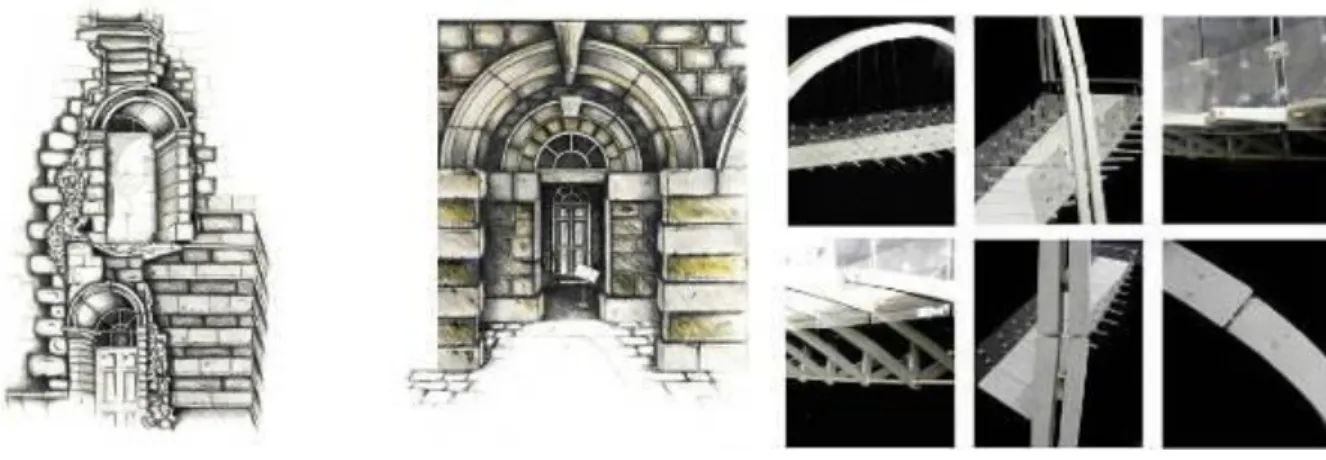
Authenticity and complexity in assignments are seen as key conditions to successful assessment for learning. A collaborative venture between the National Trust and Northumbria University provided an ideal opportunity to engage in a variety of design projects centred on the local grade 1 listed Seaton Delaval hall and its surrounding estate. The first projects, ‘Frame’ and ‘Object’, engaged the students with this context by means of intensive observation, research, and graphical recording; ‘Investigation’ provided a short, practical vehicle for group work, with students collaborating on a demountable bridge design to improve accessibility to the estate’s mausoleum; the remainder of the first
semester was devoted to the individual ‘Theatre’ project, concerning the creative re-use of this mausoleum. Seaton Delaval Hall also formed the basis of the second semester design curriculum, enabling deeper student engagement with the context and its themes. The National Trust kindly allowed repeat visits for students to engage fully with the site.
2.3Cultural context
Seaton Delaval Hall provided an exemplary case study for the second year history and theory module. The second year studies seek to develop a deeper understanding of, and engagement with the historical development of architecture. The teaching of neo-classical principles was given immediate relevance by the choice of Seaton Delaval insofar as the architect, Sir John Vanbrugh was influenced by the works of Andreas Palladio (particularly the Villa Foscari) in his design of the great hall.
2.4Technologies and environment
A comprehensive technological and environmental module supports second year student learning. With respect to Seaton Delaval, specific lectures were delivered centred upon the re-use of existing buildings, drawing upon the practical experiences of the lecturers in dealing with similar buildings. Other lectures considered the sustainability aspects of dealing with existing structures, touching on issues such as embodied energy and temporary
interventions. The ‘Investigation’ project (Fig. 2) provided a group work vehicle for the learning of structural principles, reflecting authentic collaborative practice in the profession.
Figure 2: ‘Frame’ and ‘Investigation’ example projects (student credit: Joe Ecob)
2.5Practice law and management / communications
Practice, Law and Management teaching is generally concentrated in the third year studies at Northumbria. However, the use of Seaton Delaval provided ideal opportunities, through the design and technologies modules, to discuss aspects of planning and listed building legislation with the students. Imaginative two and three dimensional communication of concepts, designs and proposals was encouraged via experimentation in the ‘Frame and Object’ assignments; engagement with a real building also provided students with first-hand experiential appreciations of scale, patina and materiality.
3. Curriculum design and theories
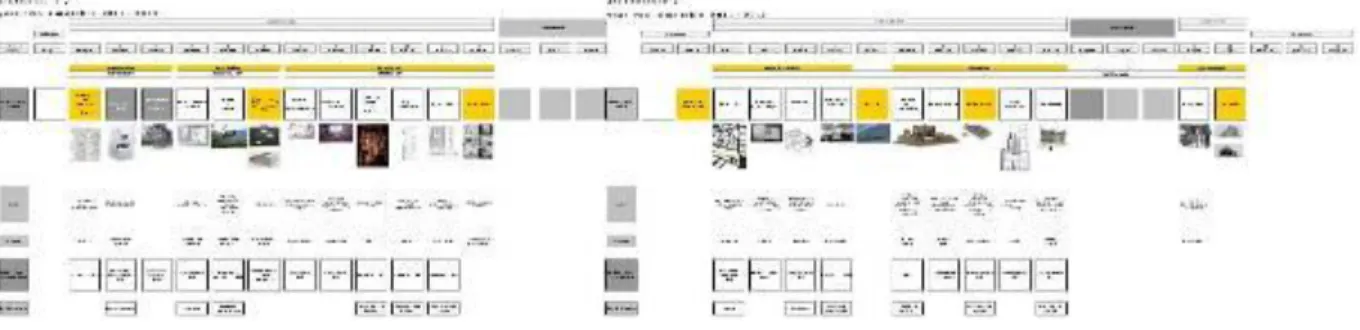
Figure 3: Curriculum Plan for 2nd Year Seaton Delaval Project
3.1Curriculum planning
The second year structure adopts the strategy that; „…the curriculum is the totality of the
experiences the pupil has as a result of the provision made.‟ (Kelly, 2009). The key aim of the
semester curriculum plan was to align studio design, subject content, and independent learning in a framework which would engage students in creative learning. This was guided by the intention to move from the teaching of declarative knowledge (i.e. rote learning) towards the learning of functioning knowledge, which can be constructively applied to
student projects. Weekly task sheets, with clearly defined outputs, directed student learning towards a set of achievable outcomes which formed the foundation for the following week’s work.
At Northumbria, informal feedback is provided on a weekly basis in group and individual tutorials. Programmed reviews provide key targets and gateways whereby students can assess their progress against the programme and their peers; studio working encourages peer learning, review and support. This rich blend of meaning, practice, community and identity establishes an effective ‘community of learning’ in the architectural studio (Wenger, 2003). Extensive formative feedback provides the information to allow students to direct their own learning; reviews, tutorials and studio attendance and practice allows students rich opportunities for peer learning and self-assessment.
3.2Student well-being
In recent years, staff members in the architecture programmes at Northumbria have considered issues of student time management in depth (Holgate & Jones, 2011). This is in recognition of the normative practices and workload models of architectural education which encourage working long, unsociable and unhealthy hours (Bachman & Bachman, 2006, AIAS, 2002, Boyer & Mitgang, 1996).The semester one curriculum therefore avoided clashes of coursework submission dates where possible, and provided a variety of pace in the multiple studio assignments. Where students chose to work extended hours, it was
designed to be by choice rather than necessity; “Activities we love fill us with energy even when we are physically exhausted. Activities we don‟t like can drain us in minutes, even if we approach
them at our physical peak of fitness” (Robinson & Aronica, 2009)
3.3Creativity and the journey from teaching to learning
Mastery of a discipline is commonly believed to take at least a decade to achieve (Simonton, 2008), a fact which should be considered with a profession such as architecture which has its roots in a craft tradition that pre-dates the modern university (Schon, 1985) However, the professionalization of the discipline, coupled with a production-line approach to target driven higher education, means that learning by making – and in particular, learning from mistakes – is being squeezed out of the modular curriculum. A key challenge is therefore how students ‘learn how to learn’ and it could be argued that Schon’s concept of the reflective practitioner is contingent upon the academic space and time for reflection. The Northumbria curriculum therefore seeks to allow variation in pace and ‘down-time’, in order to avoid a tread-mill approach to learning. This is doubly beneficial when considering recent research regarding learning and creativity; “…intellectual understanding itself often benefits from this gradual, soaking-it-up-through-the-pores approach. Really „getting your brain round‟ a topic seems to depend at least as much on the slower processes of „mulling over‟ and
„cogitating‟ as it does on being mentally busy” (Claxton,1998)
3.4Integrated curriculum programming
University teaching and administrative support teams are often under extreme pressure with regards to the successful delivery of academic programmes. Assignment marking, handling, timetabling, quality assurance procedures etc. often undermine effective teaching. Regrettably, centralised planning of such activities often prioritises managerial systems over student experience and learning (timetabling being a particular issue in recent satisfaction surveys). An ongoing project at Northumbria is the development of an integrated
curriculum plan which centres the student learning experience at its core, and pursues the holistic alignment of the curriculum with these administrative functions to allow students, academics and administrative staff to all perform efficiently and creatively.
4. Discussion
Initial student feedback has indicated that the detailed planning of the second year
curriculum incorporating significant learning goals (Fink, 2007) has paid dividends in student engagement, the development of a strong learning community, and independent learning and creativity. Although studio space is financially prohibitive, the lessons of retaining a cohort in a single space hold particular value in establishing discipline identity and a community of learning (particularly for part-time students).
Although the body of knowledge regarding curriculum planning, particularly for primary and secondary education, is extensive, policies consideration of the pacing and creativity of curricula in higher education appears thin. With modularisation of programmes, increased pressure on resources in higher education, and moves towards the concept of the student as ‘customer’, there appears to be an uncritical move towards filling the notional hours of the curriculum with as much directed teaching, contact and assessment as possible (HEFCE, 2012). If the avowed aim is to nurture self-directed, independent learners at the point of graduation, students should be afforded the ‘academic space’ for reflection and self-development (Bandura, 1997). Consideration should also be made of the enjoyment of studies, with the means to ensure that enthusiasm and creativity are developed in architecture and other STEM subjects, in lieu of ‘chalk and talk’ supported by repetitive assessment. Finally, students should be allowed the time to develop external interests and social skills, which are as important to the student and the wider community (not least in grounding learning and innovation within an authentic social context) as the singular pursuit of scholarship. In this respect, the staff at Northumbria endeavour to shape the curriculum in order to encourage student self-efficacy in the learning activities, as well as designing the timing and pace of the academic year to allow students to engage with their external pursuits and interests.
5. References
The American Institute of Architecture Students (2002) The Redesign of Studio Culture: A
Report of the AIAS Studio Culture Task Force. Available at: http://www.aiasnatl.org
Bachman, L. & Bachman, C. (2006) ‘Student Perceptions of Academic Workload in Architectural Education.’ In: Journal of Architectural and Planning Research. 23:4 (Winter, 2006), pp. 271-304
Bandura, A. (1997) Self Efficacy: The Exercise of Control. New York: Freeman
Biggs, J. & Tang, C.(2009)Teaching for Quality Learning at University. 3rd edn. Maidenhead:
Boyer, E.L. & Mitgang, L.D. (1996) Building community: a new future for architecture education
and practice: a special report. Princeton; The Carnegie Foundation for the Advancement of
Teaching
Claxton, G. (1998) Hare Brain Tortoise Mind: Why Intelligence Increases When You Think Less.
London: Fourth Estate
Fink, L.D. (2007) ‘The Power of Course Design to Increase Student Engagement and Learning’. In: Association of American Colleges and Universities peerReview, Winter 2007, pp.13-17
HEFCE (2012) ‘Key Information Sets’. Available at: http://www.hefce.ac.uk/learning/infohe/kis.htm
Holgate, P. & Jones, P (2011) „Care of the Self: Embedding Well-being in Architectural Education‟: Available at: www.biad.ac.uk/research/wellbeing2011/index.php
Kelly, A.V. (2009) The Curriculum: Theory and Practice. 6th edn. London: Sage
Robinson, K. & Aronica, L. (2009) The Element: How Finding Your Passion Changes Everything.
London: Penguin
Schon, D.S. (1985) The Design Studio: An Exploration of its Traditions and Potential. London: RIBA Publications
Simonton, D.K. (2008) ‘Creative Wisdom: Similarities, Contrasts, Integration, and Application.’ In: Craft, A., Gardner, H., Claxton, G. (eds.) (2008) Creativity, wisdom, and
trusteeship: exploring the role of education. London; Sage Ltd.
Till, J. (2009) Architecture Depends. Cambridge, Mass.; MIT Press
Wenger, E. (2003) Communities of Practice: Learning, Meaning, and Identity. Cambridge: Cambridge University Press