
Medicaid Disease Management Programs
Findings from Three Leading US State Programs
Jeann L. Gillespie
1,2and
Louis F. Rossiter
31 The National Pharmaceutical Council, Reston, Virginia, USA
2 Department of Pharmacy Administration, College of Pharmacy, University of Illinois, Chicago, Illinois, USA 3 Chironet, LLC, Richmond, Virginia, USA
Disease management emphasizes prevention of disease-related exacerbations and complications using
Abstract
evidence-based guidelines and patient empowerment tools. It can help manage and improve the health status of a defined patient population over the entire course of a disease.
More than 20 states in the US are developing and implementing Medicaid disease management programs. While most are in an early stage of development, a small number of states were pioneers in disease management and have already gained much insight. Among them, three states – Florida, Virginia, and West Virginia – provide some significant lessons.
In the late 1990s, Florida’s Medicaid agency authorized development of disease management programs for patients with asthma, diabetes mellitus, HIV/AIDS, hemophilia, hypertension, cancer, end-stage renal disease, congestive heart failure, and sickle cell anemia. However, an analysis of results in 2001 showed significant problems (e.g. inefficiency, inconsistent care, a failure to address problems of patients with multiple diseases). These problems likely resulted from Florida trying to implement too many programs at once, using contracts with multiple vendors.
The Virginia Health Outcomes Project was shown to be effective in reducing use of emergency and urgent care services by Medicaid patients with asthma (average 42% reduction in the third to fifth quarters after introduction of the program) and increasing the appropriate use of asthma medications. It was also shown to be cost effective, with projected direct savings to Medicaid of $US3–5 (2002 values) for every incremental dollar spent providing disease management support to physicians.
The goals of the West Virginia Health Initiatives Project were to deliver quality care, improve health status and quality of life, and ensure the efficient and appropriate utilization of resources for Medicaid patients with diabetes. The model program had two critical components: (i) adaptation of clinical treatment guidelines that are in the public domain to blend the highest quality of care with the best practical management strategies; and (ii) feedback reports that provide real-time data about patients’ utilization of services to all providers involved in their care. Participating physicians and other providers received training and reimbursement for their efforts to comply with guidelines.
It would be a mistake to attempt to draw firm conclusions about disease management programs for low-income elderly or physically disabled patients in the US Medicaid program given their current stage of development. However, credit should be given to the states that are experimenting with cutting-edge programs to tackle not only their fiscal issues, but perhaps more importantly, the issue of ensuring high-quality, cost-effective healthcare for the patients they serve.
The purpose of this paper is to provide a review of the general
•
identification of patient populations approaches to disease management in Medicaid in the US and the•
use of evidence-based practice guidelinesvalue of disease management as a cost control option that can help
•
support of adherence to evidence-based medical practice guide-states manage their primary care case management and lines by providing practice guidelines to physicians and other fee-for-service patient populations. Nine early Medicaid disease providers, reporting on the patient’s progress in compliance management programs are identified, and the findings from three with protocols, and providing support services to assist the states are highlighted. Three generalized disease management physician in monitoring the patientmodels that states can use in fee-for-service Medicaid populations
•
provision of services designed to enhance patient self-manage-are discussed. The problems that states may encounter when ment and adherence to the patient’s treatment planimplementing a disease management program are also discussed,
•
routine reporting and feedback to the healthcare providers and so that states can be aware of potential problems as well as to the patientsolutions. The paper concludes with growth projections for disease
•
communication and collaboration among providers, and be-management in the states, the reasons for growth, andrecommen-tween the patient and the patient’s providers dations to healthcare administrators.
•
collection and analysis of process and outcome measures, along with a system to make necessary changes based on the findings1. Concepts of Disease Management of the process and outcome measures.
Disease management programs are used widely for many The Centers for Medicare and Medicaid Services (CMS,
for-chronic diseases, but the most common diseases include asthma, merly known as the Health Care Financing Administration),
locat-congestive heart failure, HIV/AIDS, diabetes mellitus, and hyper-ed in Baltimore, Maryland, USA, and the Disease Management
tension. Considerations in selecting a disease for disease manage-Association of America, based in Waltham, Massachusetts, define
ment often include:[2,3]
disease management as a system of coordinated healthcare
inter-•
availability of treatment guidelines with consensus about what ventions and communications for populations with conditions inconstitutes appropriate and effective care which patient self-care efforts are substantial.[1,2] Disease
manage-•
presence of generally recognized problems in therapy that are ment supports the clinician-patient relationship and plan of care,well documented in the medical literature and emphasizes prevention of disease-related exacerbations and
•
large practice variation and a range of drug treatment modali-complications using evidence-based guidelines and various patientties empowerment tools.[2] Disease management also evaluates
clin-•
large number of patients with the disease whose therapy could ical, humanistic, and economic outcomes on an ongoing basis withbe improved the goal of improving overall health.[2,3] Disease management
•
preventable acute events that often are associated with the programs can help manage and improve the health status of achronic disease (e.g. emergency department or urgent care defined patient population over the entire course of a disease.[4]
visits) The more specific goals of disease management include:[5]
•
improving patient self-care through patient education, monitor-•
outcomes that can be defined and measured in standardized and ing, and communication[6] objective ways and that can be modified by application ofappropriate therapy (e.g. decreased number of emergency
de-•
improving physician performance through feedback and/orre-partment visits or hospitalizations) ports on patient progress in compliance with protocols[7]
•
improving communication and coordination of services among•
the potential for costs savings within a short period (e.g. less patient, physician, disease management organization, and other than 3 years).providers[8] Two major US not-for-profit organizations whose mission is to
•
improving access to services, including prevention services and promote quality healthcare have recognized the contribution of prescription drugs as needed.[9] disease management activities to quality healthcare byestablish-The following functions are the main components of disease ing disease management certification or accreditation programs. management:[2,3] The Joint Commission on Accreditation of Healthcare
Organiza-tions (JCAHO, central office based in Oakbrook Terrace, Illinois), ized education about the disease, whereas the healthcare provider an independent organization and the nation’s predominant would learn more about the appropriate outcome measures that standard-setting and accrediting body in healthcare, offers disease- need to be addressed. For the treatment of diabetes, a nutritionist specific care program certification. Program certification is based or a certified diabetes educator (CDE) should be involved as part on an assessment of compliance with consensus-based national of the disease management team to help the patient learn more standards, effective use of established clinical practice guidelines about proper nutrition and regulating his or her blood glucose to manage and optimize care, and activities for performance levels and insulin requirements.[19]
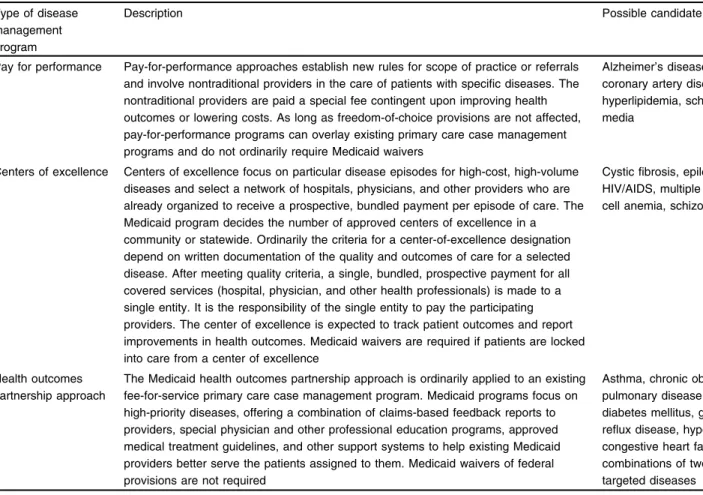
measurement and improvement.[10] The National Committee for Table I describes common types of disease management
pro-Quality Assurance (NCQA) in Washington, DC, also has begun grams and the diseases for which they are generally used. Such accrediting disease management programs on the basis of stan- programs are now widely used in managed care and other health-dards that are patient oriented, practitioner oriented, or both. It care settings and have come to the attention of Medicare and offers organizations certification for program design (i.e. content Medicaid officials because of their potential to improve quality of development), systems (i.e. clinical information and other support care and reduce costs. According to published research evaluations systems), and patient contact (e.g. nurse call centers and other in scientific journals, disease management programs can reduce organizations without comprehensive activities).[11] costs in a Medicaid population by as much as 33% (cost savings
were due to reductions in emergency room visits and urgent care Disease management programs have been adopted by managed
visits), with measured improvement in health outcomes.[5,20] Many
care plans and states because of a general movement toward
studies[5,8] have demonstrated great benefits from disease
manage-preventive health, the reduced cost of obtaining data to implement
ment programs; however, other studies may suffer from regression disease management interventions, and a desire to improve the
to the mean1 and may overstate the impact.
coordination of care that has become more complex to
deliv-er.[12,13] There are a myriad of papers that cite the value of implementing
disease management programs and the potential they have to Initial efforts of disease management included simple tools
reduce costs in other healthcare settings.[6,8,17] One early example
such as reminders to patients for diagnostic and monitoring
that laid the groundwork for other disease management programs tests.[14] Reminders also helped patients improve adherence to
was a program developed by a managed care organization and a complicated medication regimens. Then, customized health
edu-pharmaceutical company.[21] The program built protocols around
cation materials and self-care manuals were added to programs to
eight infectious diseases and developed treatment algorithms fo-help patients better understand their disease and promote
empow-cused on patient outcomes. After the infrastructure of the program erment. Clinical protocols for disease-specific care were
devel-was developed, merged medical and pharmacy claims databases oped and implemented, followed by extensive case management
were used to identify changes in antibacterial prescribing and to interventions for high-cost illnesses to help reduce or limit future
determine cost savings. costs. Ultimately, these types of tools were refined and packaged
together as the early disease management programs.[15-17] Today, The prospect of a disease management intervention that can
what constitutes a disease management program varies widely, lower cost and improve quality is more important than ever before. and how each disease is managed needs to be tailored for the Medicaid programs have seen their expenditures rise approximate-provider and patient. For example, for the treatment of asthma, it ly 28% since 1995, with an 11% cost increase in 2001 alone.[22] In
would be important to ensure that both the patient and healthcare the current economic climate (created in part by the declining provider receive appropriate education about the use of inhalers economy), many states anticipate that their Medicaid enrollment and nebulizers.[18] In addition, the patient would receive custom- will rise and compete with demands for increased funding for
1 Regression to the mean refers to the tendency for a group of patients to include some patients who are sick and get well and other patients who are well and get sick. A disease management program that enrolls a certain number of individuals (panel) who are identified because they had an adverse event should find that some of them will improve, regardless of whether a disease management intervention was in place. Similarly, a disease management program will not enroll other individuals who did not have an adverse event at the beginning of a disease management intervention, and the health of some of these individuals will decline. Given enough time, studies show that one can almost never rule out regression to the mean among a high-risk and low-risk panel of Medicaid patients selected for study.
Table I. Common types of disease management programs in the US
Type of disease Description Possible candidate diseases
management program
Pay for performance Pay-for-performance approaches establish new rules for scope of practice or referrals Alzheimer’s disease, arthritis, and involve nontraditional providers in the care of patients with specific diseases. The coronary artery disease, HIV/AIDS, nontraditional providers are paid a special fee contingent upon improving health hyperlipidemia, schizophrenia, otitis outcomes or lowering costs. As long as freedom-of-choice provisions are not affected, media
pay-for-performance programs can overlay existing primary care case management programs and do not ordinarily require Medicaid waivers
Centers of excellence Centers of excellence focus on particular disease episodes for high-cost, high-volume Cystic fibrosis, epilepsy, hemophilia, diseases and select a network of hospitals, physicians, and other providers who are HIV/AIDS, multiple sclerosis, sickle already organized to receive a prospective, bundled payment per episode of care. The cell anemia, schizophrenia Medicaid program decides the number of approved centers of excellence in a
community or statewide. Ordinarily the criteria for a center-of-excellence designation depend on written documentation of the quality and outcomes of care for a selected disease. After meeting quality criteria, a single, bundled, prospective payment for all covered services (hospital, physician, and other health professionals) is made to a single entity. It is the responsibility of the single entity to pay the participating providers. The center of excellence is expected to track patient outcomes and report improvements in health outcomes. Medicaid waivers are required if patients are locked into care from a center of excellence
Health outcomes The Medicaid health outcomes partnership approach is ordinarily applied to an existing Asthma, chronic obstructive partnership approach fee-for-service primary care case management program. Medicaid programs focus on pulmonary disease, depression,
high-priority diseases, offering a combination of claims-based feedback reports to diabetes mellitus, gastroesophageal providers, special physician and other professional education programs, approved reflux disease, hypertension, medical treatment guidelines, and other support systems to help existing Medicaid congestive heart failure, comorbid providers better serve the patients assigned to them. Medicaid waivers of federal combinations of two or more of the
provisions are not required targeted diseases
emergency and antiterrorism preparedness. Consequently, the the long-term financial solvency of the program.[25] Faced with
need to explore disease management and other potential cost- projected spending increases ranging from 13.6–16%, employers saving programs is more pronounced now than ever. are considering disease management programs among a number of options to address rising costs.[26] A study by Hewitt Associates, a
human resources management consulting company located in
2. Growth of Disease Management Programs in
Lincolnshire, Illinois, revealed that 92% of 1020 major US
em-US States
ployers surveyed offered some kind of health promotion program in 2001, up from 88% in 1995.[27] Approximately 71% of
employ-In addition to Medicaid disease management programs, the
ers in the study reported that they were considering or already had CMS has solicited proposals and recently awarded disease
man-in place some type of disease management program to help reduce agement contracts for Medicare beneficiaries with advanced-stage
healthcare costs and keep workers healthy and productive. Most congestive heart failure, diabetes, or coronary artery disease.[23]
employers were looking to their health plans for assistance in this Congressional Budget Office Director, Dan Crippen, proposed
area.[27] Disease management companies’ revenue was expected to
that Medicare establish a disease management program that could
reach $US630 million in 2002, reflecting a 30% increase over “obviate the need for a universal Medicare pharmaceutical
bene-2001. This revenue increase was part of expected overall growth, fit.”[24] CMS Chief Operating Officer and Deputy Administrator
making disease management a $US10–15 billion industry.[28,29]
Ruben King-Shaw told members of the US House of
Representa-tives’ Ways and Means Subcommittee on Health that disease Disease management program information reported in the liter-management programs could improve the quality of care provided ature shows that there are net savings over time. For example, the to seniors enrolled in fee-for-service Medicare and help strengthen US National Jewish Center for Immunology and Respiratory
Medicine noted that its asthma disease management program fee-for-service Medicaid in the US, with a goal to develop a model resulted in an 83% reduction in hospitalizations, 82% fewer hospi- program to enhance the quality of care and reduce the overall cost tal days, and 45% fewer emergency department visits.[30] The New of care for patients in Virginia’s primary care case management
England Journal of Medicine reported a 76% reduction in risk of program (Medallion I).[35] VHOP attempted to help physicians and
diabetes-related retinopathy with a diabetes disease management patients avoid less effective medical treatments and more expen-program that was part of the Diabetes Control and Complications sive settings for asthma, such as inpatient hospital services and Trial.[31] Cardiac Solutions, proprietary disease management com- emergency department visits.
pany based in Buffalo Grove, Illinois, USA, has shown a 70% Based in part on the positive results and success of VHOP, reduction in readmission rates of patients with congestive heart other states began to slowly adopt disease management programs. failure.[32] The Commonwealth of Virginia in the US implemented Florida implemented an extensive statewide disease management
a disease management program for asthma, and researchers found effort in 1998 with programs addressing nine diseases; this effort an average 42% reduction in the expected rate of asthma emer- was implemented in two separate phases. A pilot program was gency claims.[5] undertaken in 2000 and 2001 in West Virginia to manage patients
The Tufts Center for the Study of Drug Development, in with diabetes. In addition, many other states are considering Boston, Massachusetts, recently reported that 42% of disease disease management implementation. More than 20 states are now managers surveyed claimed that increased spending on pharma- engaged in developing and implementing Medicaid disease man-ceuticals leads to a net cost savings across all healthcare cost agement programs for their primary care case management and components.[4] An additional 37% of disease managers said that fee-for-service populations.[36,37] These programs vary widely in
increased drug spending has no net effect on total healthcare scope, provider involvement, and impact. Most of these programs spending. Separately, 75% of survey participants commented that are in an early stage of development, and some states continue to increased drug use increases outpatient and physician visits while assess their data and resources to determine the best program to lowering inpatient costs. The survey included disease managers at implement. However, a small number of states were pioneers in 19 of 25 leading disease management organizations in the US, disease management and began implementing programs in the representing 55% of the approximately 1.5 million individuals 1990s, and have already gained much insight.
covered by disease management programs.[33]
Despite the current popularity of disease management, the 4. Medicaid Disease Management Programs for science of reporting its outcomes and accurately determining the Various US States
true value of the outcomes is still in its infancy. As the outcomes of
additional programs are evaluated, researchers may find that some This paper reviews the major disease management efforts in programs do not show savings over time. Health care administra- nine states: Florida, Maryland, Mississippi, North Carolina, Texas, tors need to evaluate the outcomes that are reported in the litera- Utah, Virginia, Washington, and West Virginia (table II). Virginia, ture cautiously to determine what the true impact may be for their Florida and West Virginia provide some significant lessons for state or healthcare plan. other states about how to implement successful disease
manage-ment programs.
Each state is at a different point in its disease management
3. Medicaid Implementation of Disease
implementation, and it is too early to know what long-term impact
Management Programs
these programs will have. However, many of these states show short-term net savings and better management and outcomes in Given the positive outcomes reported by the private sector with
their patient population. disease management programs in the early 1990s, Medicaid
offi-cials have been implementing similar programs in the hope they Although disease management programs vary by design, they provide similar results for the Medicaid population, which is usually include some combination of patient self-care education, poorer, has less education, and is more likely to be physically counseling, call centers with a patient support system managed by disabled than the general population.[34] The Virginia Health Out- nurses, appointment and medication reminder systems, programs
Table II. Examples of state Medicaid disease management programs in the US (reproduced from Wheatley,[38] with permission)
State Disease(s) Dates Findings
Florida Asthma, HIV/AIDS, CHF, 1998–present Programs generally reduced inpatient hospital costs but often increased other costs, hemophilia, ESRD, diabetes especially pharmacy spending
mellitus, hypertension, pre- Net reductions in spending were generally offset by DM program costs diabetes, depression Results varied considerably depending on which baseline measure was used
Programs produced improvements in care quality
Maryland Diabetes 1991–1997 Average annual spending decreased by $US1738 for aid to families with dependent children recipients but increased by $US1147 for those eligible for supplemental security income
ER visits declined; physician visits increased (for both)
Program privatized to Medicaid managed care organizations in 1997
Mississippi Asthma, diabetes, 1998–present Preliminary findings (very small asthma sample) indicate a 96% reduction in hospital hyperlipidemia, coagulation costs and a 58% reduction in ER costs
disorders Pharmaceutical and medical costs were not measured HbA1c values in patients with diabetes decreased significantly Immediate savings were harder to obtain for other two diseases
North Carolina Asthma, diabetes 1998–present 67% of pediatric patients with asthma received asthma control medication in Access II/ III programs, versus 53% in HMOs
Texas Diabetes 1999–2001 Cost effectiveness was not determined due to low participation
Surveys showed measurable improvements in enrollee self-management skills and lifestyle
Utah Hemophilia 1998–present Blood factor utilization decreased by 134 000 units (first year) Expenditures increased by $US140 000 during that time With case management, ER visits now ‘minimal’
Virginia (1) Asthma 1995–1997 There was a 41% reduction in ER visits for patients with DM-trained physicians (vs an 18% reduction for other physicians)
Dispensing of recommended drugs increased by as much as 25%
There was an estimated $US3 in savings per $US1 spent (net $US659 in savings per physician trained vs $US235 in training costs)
Virginia (2) Diabetes, CHF/hypertension, 1997–2002 Vendor estimated $US700 000 in hospital savings and a sizable reduction in ‘hits’
asthma/COPD, depression, (indicating problems in patient care)
GERD Overall savings were limited, according to the state State will expand the program by adding new diseases Request for proposal released in summer 2002 West Virginia Diabetes 2000–2001 Participation in pilot was very limited
The state is seeking to extend statewide program with additional diseases in 2003, but the budget is limited
Washington Diabetes 1999–present Patients experienced improved blood glucose and blood pressure control
The state is now contracting with two vendors (McKesson and Renaissance) to target DM services to Medicaid recipients with asthma, diabetes, CHF, and renal disease The state anticipated net savings of more than $US600 000 (2000 values) statewide
CHF = congestive heart failure; COPD = chronic obstructive pulmonary disease; DM = disease management; ER = emergency room; ESRD = end-stage renal disease; GERD = gastroesophageal reflux disease; HbA1c = glycosylated hemoglobin; HMO = health maintenance organization.
feedback systems to alert healthcare providers to problems that program; or (iii) work with pharmaceutical companies to develop could result in serious adverse events or an emergency room net savings strategies, which often include disease management visit.[4,5] initiatives. Some states use a combination of the approaches, and
vary the model depending on the patient population and disease States have choices when implementing a disease management
(e.g. for a more complicated disease with which the state may not program. A state can (i) purchase a disease management program
a disease with which it has a lot of expertise, the state may choose so these extra tasks are assigned to already-existing personnel who to build a program). may not be trained to manage the disease management process.
4.3 Working with Pharmaceutical Companies 4.1 Purchasing a Disease Management Program
Pharmaceutical companies are willing to develop or fund cost-Purchasing a turn-key disease management program allows a
saving strategies that include disease management programs. state to contract with companies that specialize in developing a
Pharmaceutical companies prefer to improve health through the program instead of building their own, which can be costly and
appropriate use of pharmaceuticals, which can cause an initial consume a great deal of time. The purchasing option can save
increase in cost for the state in pharmaceutical spending. time, which allows the state to begin saving money more quickly
as well as allowing it to select multiple vendors depending on its
5. Leading US State Disease Management
needs. States can choose vendors that may specialize in
imple-Program Experiences
menting a disease management program for certain diseases. States also can implement a disease management program with
The following section outlines three US state disease manage-little funding since vendors are willing to put 100% of their fees at
ment programs, discusses each state’s experience, and provides a risk. Furthermore, states can also ask vendors to absorb start-up
general summary of findings if available. Complete program study costs of a program over the course of implementing the program.
results are reported where they are available. However, states choosing the purchase option face the
chal-lenge of finding a vendor with the appropriate blend of services.
5.1 The Florida Experience Moreover, contracting can be time consuming, and state rules
governing how contracts can be awarded vary widely. Once a
In looking for ways to adopt new quality improvement ap-contract is awarded, someone needs to ensure that the vendor is
proaches to care while achieving better cost efficiencies, Florida meeting expectations and goals.
Medicaid officials thought the use of disease management pro-grams for selected diseases might provide the solution. They 4.2 Building a Disease Management Program retained a healthcare consulting firm to invite all interested parties from across the nation to a series of open meetings to share ideas Building a disease management program can be a more labor- about disease management that might apply to Florida Medicaid. intensive process than purchasing a disease management program; These ideas were evaluated in light of an analysis of Florida however, this option allows states to partner with their providers to Medicaid claims data for selected high-priority diseases. In 1997, improve and develop relationships. Building a program also al- Florida’s Medicaid agency was authorized by the state legislature lows states to create programs that meet the specific and unique to develop a disease management program for patients with asth-needs of the state, instead of inserting an existing disease manage- ma, diabetes, HIV/AIDS, and hemophilia (table III).[39] Legisla-ment program that may not be ideal for a population. To ensure tion passed in 1998 expanded the initiative to include patients with adherence to evidence-based guidelines, some states train their hypertension, cancer, end-stage renal disease, congestive heart providers in specific strategies to improve health outcomes. Other failure, and sickle cell anemia. Competitive bids were invited from states make a more comprehensive effort to restructure the Medi- vendors willing to accept performance-based contracts to improve caid delivery structure and establish partnerships among the health outcomes and lower costs.
department, social services, Medicaid, and providers.
5.1.1 Florida’s Program Structure and Timeline
The build option requires that states hire or assign program
administrators and healthcare personnel to design programs. Data Florida uses a disease management approach that aggressively experts and technology personnel are needed to design and man- applies state-of-the-art techniques to outcomes improvement age measurement systems, and information technology systems through a group of vendors with specialized expertise in the are needed to measure patient progress. Some states are not able to diseases they are responsible for managing (table IV). Various afford to hire additional personnel or contract out these services, approaches to disease management are used by these vendors,
Table III. The legislative direction of Florida’s disease management initiative[30]
Fiscal year Legislative authorization related to disease management Anticipated savings ($US, 1997 values) 1997–1998 Implement programs for asthma, diabetes mellitus, HIV/AIDS, and hemophilia 4.2 million
1998–1999 Continue programs for initial disease states 24.7 million Implement programs for congestive heart failure, end-stage renal disease, 14.7 million hypertension, cancer, and sickle cell anemia
2000–2001 Improve program efficiencies 23.0 million
Expand initiative to include other diseases and population management 46.1 million
2001–2002 Allow value-added programs, including disease management, in lieu of Part of 227 million prescribed drug
supplemental rebates budget reduction
including case management, physician education on best-practice negotiations with the state, taking into consideration specific crite-guidelines and community outreach efforts. ria (e.g. use of a multipronged program approach with patient and The state Medicaid agency coordinates outreach efforts with provider interaction), administrative fees, program infrastructure, physicians and other providers. The disease management organi- ability to provide in-kind resources, and staffing. A cost-saving zations receive a list of physicians who treat patients with the methodology was developed through the review and procurement selected diseases. Physicians with eligible patients, who are identi- stages of the bid process and varies by vendor.
fied using claims data, are contacted and their help is enlisted in
Disease management contracts with pharmaceutical manufac-encouraging eligible patients to voluntarily enroll in the disease
turers, including Bristol-Myers Squibb and Pfizer, were developed management program. Program materials are written at or near the
as an alternative to providing the price reductions on products fourth grade (9 or 10 years of age) reading level and in several
sought by Governor John Ellis ‘Jeb’ Bush and the legislature in different languages (e.g. English, Spanish, Haitian-Creole).
exchange for inclusion in the Medicaid formulary. Pfizer provided the state with funds to hire 60 case workers to manage a target
5.1.2 Florida’s Vendor Selection Process and Structure of
patient population of 55 000 of the 1.5 million Florida Medicaid
Vendor Relationships
patients with asthma, congestive heart failure, diabetes, or high Table V lists the vendors selected and the diseases they were
contracted to manage. Original vendors were selected following blood pressure in Broward County. Of this group, 12 000 patients Table IV. The Florida disease management timeline[39-41]
March 1997 Medicaid Reform Task Force formed
May 1997 Legislative authorization obtained for HIV/AIDS, asthma, diabetes mellitus, and hemophilia September 1997 Contract with the Lewin Group, a healthcare consulting firm
May 1998 Legislative authorization obtained for ESRD and CHF June 1998 Asthma agreement established
August 1998 Invitation to negotiate for HIV/AIDS, diabetes, and hemophilia completed November 1998 Invitation to negotiate for ESRD and CHF completed
April 1999 Diabetes contract established
June 1999 HIV/AIDS (excluding Dade and Broward counties) and hemophilia contracts established May 2000 Legislative authority obtained to expand program to other diseases as necessary August 2000 COPD contract established
September 2000 ESRD and CHF contracts established
May 2001 Legislative authorization obtained for value-added programs June 2001 Pfizer agreement established
September 2001 Bristol-Myers Squibb agreement established
December 2001 University of Florida Center for Autoimmune Disorders agreement established
figure included money that had not been saved by February 2001).[43]
According to OPPAGA, the state Medicaid agency failed to address significant problems that impeded the initiative. The re-port stated that the initiative design did not adequately address problems of the chronically ill (who often experience multiple diseases), was inefficient due to the multiple vendors involved, and fostered inconsistencies in the care provided and the adminis-trative management. As a result, OPPAGA recommended that the state legislature direct the agency to:
•
redesign the initiative from a disease-specific to a patient-focused or holistic approach and contract with fewer vendors•
establish a defensible methodology to determine cost savings and ensure that overpayments were recovered•
report on initiative progress in meeting performance expecta-tions, including health outcomes and cost savings•
require OPPAGA to complete a second review of the initiative by December 31, 2002, which reports on whether legislative expectations regarding cost savings and program outcomes are met.Florida finalized its contract for disease management programs with pharmaceutical manufacturers in 2001. As a result, the state Medicaid agency revised estimates of cost savings to about $US42–49 million [table VI].[41] It is too early in the progression
Table V. Structure of disease management vendor relationships in Florida[39-41]
Contractor Disease Area of coverage Pfizer Health Solutions Diabetes mellitus, Statewide
asthma, hypertension
Pfizer Health Solutions CHF Areas 8–11 Bristol-Myers Squibb Diabetes; mental Proposed counties:
illness; breast, cervical, Broward, Dade, Lee, and lung cancers; HIV/ Manatee, Pasco AIDS
LifeMasters Supported CHF Areas 1–7 Self Care, Inc.
RMS Disease ESRD; chronic renal Statewide Management, Inc. insufficiency
AIDS Healthcare HIV/AIDS Statewide (except
Foundation Dade and Broward
counties) Caremark, Inc. Hemophilia Areas 1–6 University of Florida Autoimmune disorders Statewide Center for
Autoimmune Disorders
Coordinated Care Diabetes Statewide Solutions
Cybercare COPD Contract ended
December 2001 Accordant Health Hemophilia Areas 7–11 Services
CHF = congestive heart failure; COPD = chronic obstructive pulmonary disease; ESRD = end-stage renal disease.
with the most severe illness were assigned case workers for help with lifestyle behavior changes, medication management, and follow-up clinic visits. Pfizer has guaranteed $US33 million (2000 values) in savings to Florida’s Medicaid program over 2 years.[40]
Bristol-Myers Squibb reached an agreement with Florida in September 2001 to develop community-based health management and disease management programs targeted to breast, cervical, and lung cancers, depression, and HIV/AIDS, guaranteeing $US16.3 million (2001 values) in savings to Florida’s Medicaid program over 2 years.[42]
5.1.3 Results to Date and Future Steps with the Program
At the start of the disease management programs, Florida state officials projected a $US112.7 million (2001 values) cost savings from the disease management initiatives. According to a May 2001 Florida Office of Program Policy and Analysis and Govern-ment Accountability (OPPAGA) report, the initiative had cost Florida $US24.1 million (2001 values) by February 2001 (this
Table VI. Florida’s projected cost savings ($US, 1997 values) from disease managementa
Disease No. of Cost per Expenditures Projected currently member per savings eligible monthc patientsb Asthma 32 520 258 86 443 416 5 618 822 Diabetes 15 291 780 120 618 420 7 840 197 mellitus HIV/AIDS 6694 2365 162 208 650 10 608 562 Hemophilia 129 5400 7 182 000 466 830 ESRD 3693 1700 64 722 400 4 206 956 CHF 5027 1117 57 888 525 3 762 754 Hypertension 30 000 540 160 920 000 10 459 800 Total 93 354 697 660 983 411 42 963 922 a Disease management guarantee of savings was 6.5% annually. b Includes patient recipients served through value-added programs. c Average per member per month spending for Medicaid-eligible patients
with conditions.
5.2.2 Virginia’s Program Structure
of Florida’s disease management program to draw conclusions
about its success in improving quality of care and providing cost VHOP had three main components: the disease selection pro-savings. The state’s next steps with the program include: cess, the intervention, and the research to determine the program’s
•
refining the method of savings reconciliation effectiveness. A key element of VHOP was to develop asystem-•
using a third party for savings reconciliation atic process for identifying the most appropriate diseases for the•
using value-added programs financed by drug manufacturers program using Virginia Medicaid data (claims records, enrollment•
integrating disease management and service delivery files, and provider records) and clinical knowledge of disease•
introducing program innovations patterns and treatment. Expert opinions from clinicians providing•
increasing provider buy in services were used to assess community perceptions of problems,•
strengthening program evaluations—health outcomes and fi- practical barriers, and potential for improvement. Final disease nancial impacts.[39] selection was made by a group representing all parties working onObservers of the Florida experience believe that its rough start VHOP implementation based on attributes of the disease, the study and subsequent redesign were due to attempts to implement too group, and the population.
many programs for too many diseases simultaneously, using
mul-5.2.3 Virginia’s Intervention Model and Educational Messages
tiple vendors. Even detractors acknowledge that the state’s efforts
were well intentioned. They caution others to move forward one The VHOP model was designed around the ‘HUB’ and step at a time and appreciate that, in the long run, programs will ‘SPOKE’ concept; the HUB consisted of the basic communication have to become more patient-centered and accommodate comor- skills training portion of the program, and the SPOKE consisted of bid conditions.[44]
the clinical treatment plan for a specific disease. The disease management intervention involved (i) training physicians in the 5.2 The Virginia Health Outcomes Project
appropriate use of state-of-the-art asthma therapy; and (ii) training those physicians and other healthcare providers in proven commu-The VHOP[5] was the first disease management effort in
fee-nication methods for teaching patients how to effectively control for-service Medicaid. It began in 1993 with a proposal by the
their asthma. Approximately 33% (65 of 200) of the physicians Virginia Department of Medical Assistance, also commonly
known as Virginia Medicaid, and the National Pharmaceutical treating asthma in an area designated as the intervention com-Council (NPC, based in Reston, Virginia). Virginia used a combi- munity (where 85% of all asthma claims were generated) volun-nation effort: it built its own disease management program while teered to receive training on disease management and communica-partnering with the pharmaceutical industry. Leaders at Virginia tion skills.
Medicaid and NPC were looking for an alternative to prior drug
authorization. The Virginia Medicaid agency also wanted an alter- 5.2.4 Virginia’s Research and Outcomes Measurement
native that would improve drug dispensing and effectiveness. It To assess program effectiveness, the program’s research com-sought to create a partnership between Medicaid and its profes- ponent measured patient health status and medical care utilization sional provider community. Virginia Commonwealth University by using Medicaid payment data. In the pilot part of the program, was recruited to start the program. Eventually the Virginia General the measurement tools used were the patients’ general health Assembly, through budget language, requested a program that status, patients’ asthma-specific health status, inpatient hospital would involve physicians and pharmacists. stays, and emergency and urgent care visits. Measurements were made at baseline in both intervention and control communities.
5.2.1 Virginia’s Program Goals
Health status was measured using a household survey with stan-The program goals of VHOP were to:
dardized, validated questions administered via telephone before
•
improve patient health outcomes by improving the general andand 6 months after the intervention.[45] The use of Medicaid claims
disease-specific communication skills of physicians and other
data to measure outcomes had several advantages: there were no healthcare providers
extra costs for the data collection, and the data were directly
•
increase physicians’ use of established practice guidelines andrelevant to policy decisions. appropriate pharmacotherapy for specific disease states.
5.2.5 Summary of Results from the Virginia Health with NPC in a public-private partnership to support a disease
Outcomes Project management program. The goals of the program were to deliver
VHOP showed that improving the management of asthma quality care, improve health status and quality of life, and ensure reduced use of emergency and urgent care services by Medicaid the efficient and appropriate utilization of resources for patients patients and increased the appropriate use of asthma medications. with diabetes within the Medicaid Physician Assured Access The results from the program are among the first to demonstrate System (PAAS) program. PAAS is a primary care case manage-that disease management benefits Medicaid patients, many of ment model program developed by the two bureaus in 1991 to whom have chronic illnesses with the potential to respond well to improve access to quality healthcare while controlling rising disease management interventions. Researchers found an average Medicaid costs; 15.8% of the state’s Medicaid patients were 42% reduction in the expected rate of asthma emergency and enrolled (70 000 individual recipients) as of September 2000. urgent care claims (compared with the same quarter a year earlier)
in the third to fifth quarters after the introduction of the disease 5.3.1 West Virginia’s Disease Management Program Summary management pilot program. The rate for the third quarter alone A pilot program, known as the West Virginia Health Initiatives was 47% lower than expected. Project (WVHIP), focused on eight counties (Morgan, Berkeley, There were 2145 patients with moderate or severe asthma in Jefferson, Mineral, Hampshire, Grant, Hardy and Pendleton) intervention communities and 4182 patients in comparison com- known as the Eastern Panhandle and Potomac Highlands areas of munities on average during the 2-year pilot study. Although only West Virginia. These counties were selected because they are 33% of the eligible physicians participated in the training, com- geographically contiguous and are part of the West Virginia Rural munity-wide effects on emergency visits and asthma drug use Health Education Partnership, a program funded by the state were observed. Emergency visits declined 6% relative to the legislature to train health professional students in rural areas. In comparison community among patients with moderate to severe the spring of 1999, WVHIP:
asthma, while the dispensing of some reliever drugs recommended
•
identified a stakeholders group representative of a broad spec-for asthma increased 25% relative to the comparison community. trum of healthcare professionals and others interested inex-A cost-effectiveness analysis projected direct savings to Medi- panding their understanding of disease management
caid of $US3–5 (2002 values) for every incremental dollar spent
•
formed an advisory group composed of a subset of members providing disease management support to physicians, based on from the stakeholders group to assist with policy decisions and $US839 saved per trained physician (not including drug costs) and to make recommendations for changes within the provider $US235 spent for training costs. Asthma drug costs rose $US180 practice communityper trained physician in the intervention area. If VHOP had been
•
convened a diabetes work group (WVHIP internal work group) implemented statewide for all primary care case management to study the burden of diabetes; develop or recommend clinical physicians during the five post-intervention quarters, it could have practice guidelines, patient case management, and intervention saved as much as $US1.2 million in spending for emergencyprotocols; design provider education and training materials; claims. and monitor patient participation. This group is composed of The VHOP approach engenders a supportive, consistent rela- staff of the West Virginia Department of Health and Human tionship between patient and provider that promotes patient self- Resources, the Bureau for Medical Services, the Bureau for care and has long-term benefits. The results of VHOP demonstra- Public Health, the West Virginia University Office of Health ted the potential that this type of program has for improving Services Research, and NPC.
healthcare provided through primary care case management net- A strategic research project was conducted in 2000 to aid in the works and for managing costs of Medicaid programs in other
development of WVHIP, with two focus group sessions to deter-states.
mine the medical community’s perceptions regarding the manage-ment of patients with diabetes.
5.3 The West Virginia Experience
Diabetes was selected because it is a common, serious, chronic In 1999, the West Virginia Department of Health and Human disease in West Virginia. Medicaid claims data from 1996 were Services’ Bureaus for Medical Services and Public Health joined used to identify 6482 recipients with diabetes. The average annual
medical care cost was $US25 358 per diabetic recipient, a total of
•
training PAAS providers and their staff to use clinical guide-over $US164.3 million, compared with the average annual cost per lines recommended by the West Virginia Diabetes Advisory nondiabetic recipient of $US3161 (1996 values). Claims data Committee. These guidelines were based on national clinical further revealed that the Medicaid population has diagnostic ex- guidelinesaminations and receives medical care less frequently than is re-
•
reimbursing these PAAS providers for their efforts to comply commended by the American Diabetes Association (ADA).[46] In with these guidelines, which included completing the extensive1996, only 9.4% of diabetic Medicaid recipients in West Virginia documentation required of them by the project (e.g. a diabetes had an eye examination, despite an ADA recommendation for assessment, individualized care plan, flow sheet updates), care annual eye exams for patients with diabetes. Only 34.1% had any management services, and referral to a CDE to get more exten-type of blood test for short- or long-term glucose control (e.g. sive diabetes education. Providers were reimbursed $US54.37 fasting blood glucose) in 1996 despite ADA standards calling for per patient-hour for individual training and $US32.39 (2001 measurement of glycosylated hemoglobin (HbA1c) – a measure of values) per patient-hour for group training
long-term blood glucose control – two to four times per year.
•
ensuring patient referrals to CDEs to improve patient self-management skills5.3.2 West Virginia Health Initiatives Project (WVHIP) Goals
•
providing feedback reports to PAAS providers that containedThe WVHIP mission is to implement a disease management current data about patients’ utilization of medical services, program that integrates various healthcare services for Medicaid including patient-specific cost information about each of the patients who have chronic illness or disease to produce the best provider’s diabetic patients; average costs for emergency room treatment outcomes in a cost-effective manner by demonstrating services per patient in the last quarter, compared with costs for quantifiable and measurable results. The WVHIP goals are to: patients of other providers in the geographic region and state;
•
identify the best scientific evidence regarding diagnostic and average number of emergency room visits per patient in the last therapeutic procedures in order to achieve optimal outcomes quarter, compared with the number for patients of otherprovi-•
identify the population of patients for whom the intervention ders in the geographic region and state; average number of works best inpatient days per patient in the last quarter, compared with the•
assemble multidisciplinary teams, including but not limited to number of inpatient days for patients of other providers in the physicians, nurses, pharmacists, health educators, and disease geographic region and state.specialists Primary care providers reviewed reports to identify patients
•
enhance communication between practitioners and patients with diabetes who demonstrated a pattern of high resourceutiliza-•
promote feedback necessary for behavior modification and tion, and scheduled follow-up office visits to improve blood reinforce behaviors learned by patients and practitioners glucose control.•
measure the effectiveness of interventions in terms of quality,5.3.4 WVHIP’s Intervention Model and Educational Messages
outcomes, and utilization of resources.
Four educational seminars were held in the summer of 2000.
5.3.3 West Virginia’s Program Structure Invitations were sent to approximately 90 PAAS provider sites in
The West Virginia Disease Management Model embraces two the designated eight-county area. Physicians, nurses, nurse practi-critical components: tioners, and physician assistants from these PAAS provider offices
•
the adaptation of clinical treatment guidelines that are in the were invited. In addition, selected community health profession-public domain to blend the highest quality of care with the best als, including medical residents, diabetes educators, and pharma-practical management strategies cists, were invited to participate in the provider training. A total of 57 providers participated in the initial 6-hour training session. Two•
feedback reports that provide real-time data about patients’additional sessions were held in November 2000. utilization of services to all providers involved in their care (i.e.
practice and theory put into reality). Training focused on familiarizing practitioners with evidence-The PAAS physicians in the eight-county area of the pilot study based, nationally and locally accepted clinical guidelines for the were recruited to participate in WVHIP. Functions consisted of: treatment and monitoring of diabetes. The need for regular testing
5.3.6 Results of the WVHIP to Date
of HbA1c, retinal (eye) exams, foot exams, and nutritional
man-The WVHIP has been a tremendous collaborative effort in the agement was emphasized. The seminar also included a discussion
hope of improving diabetes care for Medicaid recipients enrolled of communication techniques that could be used to encourage
in the West Virginia PAAS program. With project implementation patient self-management or to enable the physician to recognize
completed, the community at large looks forward to receiving the patient behavioral signs that might indicate problems with
follow-results of the project evaluation. through on appropriate and consistent self-care. A component
reviewing medication management was also included.
6. Limitations Associated with Implementing Disease Management Programs
5.3.5 WVHIP’s Research and Outcomes Measures
The project ran for 1 year, from October 2000 to September There are some limitations states should consider as they imple-2001. The evaluation used both patient medical record reviews and ment and evaluate a disease management program. Often, because Medicaid claims data, focusing on clinical outcomes, cost, and states have huge data infrastructure limitations, data can be inade-process measures. quate and appropriate disease management populations cannot be properly identified. States need to work with physicians and other The clinical outcome measure is HbA1c values. Because
labor-health facilities to screen and refer patients directly into the disease atory test results are not included on claims, the data will be
management programs. extracted from medical records. The average HbA1c value for all
Data and infrastructure limitations can affect research design patients tested before the pilot will be compared with the average
which can affect appropriate analysis and understanding of the level after the initiation of the pilot. Laboratory results from
impact of disease management. For example, the statistical issue patients in the pilot counties and sites will be compared with those
of regression to the mean should be addressed early in a state’s of patients not in the pilot study.
disease management program due to the heavy burden of disease Process improvements include:
among Medicaid recipients. It is especially important in Medicaid,
•
percentage of diabetic patients with two or more HbA1cmea-where patients are at high risk and tend to have frequent changes in surements per year, before and after the pilot study. Medicaid
eligibility. Researchers may observe only the improved side of claims data will reveal this information
regression to the mean and falsely attribute an improvement that
•
percentage of patients receiving diabetes education, either inwould have happened anyway to disease management efforts. the office or provided by a CDE. The medical records will be
The appropriate way to address regression to the mean is to the source of these data
capture the total effects on both those above and below the mean
•
percentage of patients who have had retinal exams, foot exams, when the disease management program begins. This can be done and blood pressure testing before and after the pilot study. The by carefully designing the sample selection so that the total Medi-data will be obtained from both the medical records and the caid program is characterized over time, and carefully selecting an claims database appropriate comparison group. The Virginia study of asthmainter-•
percentage of physician offices that have adopted the use of ventions appropriately addressed regression to the mean. How-flow sheets, treatment plans, and referrals to CDEs. This infor- ever, many studies suffer from regression to the mean because mation will be gleaned from the medical records. they select one group of high-risk patients for a disease manage-For all measures, comparisons are being made with control ment program and follow only those patients and their outcomes groups, including PAAS providers in the same eight counties who through time. A certain number of the patients would have im-did not participate in the pilot provider training; selected PAAS proved anyway. Thus, to ensure that the improvement of health providers in other counties matched to pilot providers by variables outcomes and measured effect is a result of the disease manage-such as population, education, and social and health profiles; and ment intervention and not regression to the mean, data on the low-PAAS providers in three counties where intensive interventions risk patients should be added to the disease management program. were undertaken by the West Virginia Comprehensive Diabetes As time goes on, these data should be compared with data from an Program, funded by the Centers for Disease Control and Preven- appropriate comparison group of patients not receiving disease tion. management. These should be compared in total. Regression to themean is a common phenomenon in studies of chronic disease, but guidance and financial support for implementation. As a result, a it can be addressed in any study with careful selection of the number of states are on the sidelines.
sample of patients to be studied and the appropriate comparison Nevertheless, a growing number of states are beginning legisla-group. tive and administrative studies, pilot disease management pro-grams, and expansion of existing programs. A recent report from Physicians and patients may resist participating in the disease
the Kaiser Family Foundation, Menlo Park, California, indicated management program, so states must partner with physicians in
that 19 states were planning or had implemented Medicaid fee-for-designing disease management strategies and provide incentives
service disease management programs.[37] This is due to the
under-such as continuing medical education credit. Medicaid patients
lying drivers of growth in disease management programs for the also experience multiple diseases, and their diseases need to be
states – state budget deficits and cautious Medicaid directors aside managed concurrently as best as possible. The disease
manage-– such as: ment programs that are developed need to ensure that multiple
diseases can be managed and that patient life issues are addressed
•
the size and growth of the aged, blind, and physically disabledappropriately. Medicaid population
Although these potential problems may seem overwhelming,
•
the enormous burden of chronic disease in the Medicaid pro-many states have already addressed them successfully. By review- graming and understanding the solutions that other states have applied
•
the shifts in the site of care away from hospitals and nursing to their problems, states can avoid making unnecessary mistakes homes toward newer effective medications and home and com-and have an easier course when implementing their disease man- munity-based servicesagement programs.
•
the pace of information technology growth, which enables use of disease management tools such as decision support systems7. Conclusions for analyzing claims,[48] predictive modeling,[49] and Internet
and telephone interventions for patients with chronic dis-ease.[50]
Despite the states’ bleak budget picture, disease management
programs are expected to grow in 2003 and the coming years. Disease management programs are still evolving in fee-for-service Medicaid. There is no single, correct way to implement US states are facing the worst revenue picture they have seen in
programs across patient populations. Two completely different 20 years according to the National Governors Association and the
diseases can be identified as priority diseases in adjoining states, National Association of State Budget Officers.[47] Sales and
in-let alone states in different parts of the country with markedly come tax revenues are down and in 48 of 50 states, fiscal year
divergent ethnic and racial characteristics, as well as eligibility revenues fell behind projections. New money to launch disease
requirements for Medicaid. Additionally, local provider and management programs obviously is not available and is not going
medical market characteristics vary widely. In one state, the physi-to be a driver of disease management program implementation in
cians would welcome any help they can get from a disease the near-term.
management vendor, and in another they would resent any in-At the same time, many state Medicaid officials are playing a
volvement of a disease management vendor with their patients. game of watchful waiting. They hear and know about the progress
The experience to date in just the states discussed in this paper of leading states such as Virginia, Florida, West Virginia, and
illustrates that disease management programs have to be custom-others, and are using the experiences of the leading states to assess
ized to meet each state’s own unique needs and circumstances. whether to move forward with implementing disease management
Just as in other settings,[51] lessons can be learned from the
programs in their own states. States may also accept the current
Medicaid disease management programs that have experienced conventional wisdom that we do not know enough about disease
problems. Difficulties for Medicaid disease management pro-management programs, and the savings are too long-term to meet
grams include: current budget emergencies. Meanwhile, federal officials have
been verbally supportive of disease management programs in
•
having a political, economic, or social priority rather than Medicaid, but have not made it a major initiative with federal improvement in health outcomes as a priority•
noncontinuous eligibility of patients enrolled in programs,•
developing definitive measures for clinical, economic, and leading to a high turnover rate and an unstable population base quality-of-life outcomes•
holding vendors accountable for results•
insufficient time for vendors, providers, and patients toestab-lish the trust-based relationships needed to implement pro-
•
using pilot program successes to expand disease managementgrams to other populations with different diseases
•
having access to needed data (e.g. medical and pharmacy•
starting too big with a lack of clear differentiation among aclaims databases and potentially the medical records from a large number of vendors, diseases, and geographies.
wide number of physician offices and pharmacies, often in In 2003, there are new challenges for state disease management
large geographic areas) programs, including:
•
collaborating with researchers who are skilled in diseaseman-•
increasing the focus on patient decision making (especiallyagement research design and data analysis. challenging with a low-income population), using applied
State Medicaid programs face additional challenges beyond knowledge of evidence-based medicine
those encountered in the private sector because of the large burden
•
designing structures to manage comorbid conditions andmulti-of chronic disease among Medicaid recipients and the fragmented ple disease states, which are common in the Medicaid
popula-nature of the benefit package for dually eligible patients covered tion
by Medicaid and Medicare. In fact, if there is any reticence on the
•
increasing Medicaid program enrollments because of theecon-part of Medicaid directors to jump into something so obviously omy
geared toward better health outcomes and lower costs, it might
•
defining and improving risk-contracting relationships byclear-derive from the problem of what to do with dually eligible patients. ly defining and administering vendor contracts when risk
con-There might be a message for US federal policy makers in Wash-tracts or performance payments are involved
ington, DC and CMS in this regard. With Medicare prescription
•
standardizing data analysis to demonstrate results, includingdrug coverage looming as a federal initiative and uncertainty about decreased costs, increased patient satisfaction, and
workforce-how it will coordinate with Medicaid coverage, the states need to related outcomes.[29]
have a better understanding of how any new Medicare drug Our analysis of three US state disease management programs
coverage will work. To the credit of the federal government, for fee-for-service Medicaid populations shows that the results of
important disease management demonstrations are under way, these programs have been variable. This makes it difficult at this
using the center-of-excellence protocol.[1] The three Benefits
Im-time to conclude that disease management programs can always
provement and Protection Act of 2000 demonstrations are con-provide across-the-board cost savings and quality-of-care
im-cerned with disease management of the chronically ill; significant-provements. The results for a state will depend upon the way the
ly, they include Medicare coverage for prescription drugs. Three disease management program is implemented, the model used, the
disease management vendors have been selected for three dis-diseases selected, and the ability to implement purely voluntary
eases: heart failure, diabetes, and coronary heart disease. Progres-efforts or programs with strong incentives and outcome-driven
sive states will want to establish their own disease management approaches.
pilot programs and demonstrations to meet the changes in Medi-Specifically, the structural elements that appear necessary for care drug coverage that are sure to occur at some point in the success include: future. The changes could include financial support and expansion
![Table II. Examples of state Medicaid disease management programs in the US (reproduced from Wheatley, [38] with permission)](https://thumb-us.123doks.com/thumbv2/123dok_us/9409609.2422715/6.918.49.849.175.935/examples-medicaid-disease-management-programs-reproduced-wheatley-permission.webp)
![Table III. The legislative direction of Florida’s disease management initiative [30]](https://thumb-us.123doks.com/thumbv2/123dok_us/9409609.2422715/8.918.47.864.178.359/table-iii-legislative-direction-florida-disease-management-initiative.webp)
![figure included money that had not been saved by February 2001). [43]](https://thumb-us.123doks.com/thumbv2/123dok_us/9409609.2422715/9.918.49.436.198.663/figure-included-money-saved-february.webp)
