• No results found

Secondary Data Methods:

N/A
N/A
Protected

Academic year: 2021

Share "Secondary Data Methods:"

Copied!
21
0
0

Loading.... (view fulltext now)

Full text

(1)

PART TWO

Chapter 3

Secondary Data Methods:

(2)

Chapter Objectives

After reading this chapter, you should be able to:

Define the nature and scope of secondary data.

Analyse the advantages and disadvantages of

secondary data

Evaluate secondary data.

Describe the different sources of secondary data.

Discuss the syndicated sources of secondary data

collected from households/consumers and industrial

and business.

Explain the need to use multiple sources of secondary

data and describe single-source data.

Discuss the application of the Internet in researching

secondary data.

(3)

Primary vs Secondary Data

Primary data

Originated by the research for the specific

purpose of addressing the problem at hand.

eg. Interviewing respondents to determine their

satisfaction with their Internet Service Provider

Secondary data

Data which has been collected for purposes

other than the problem at hand.

eg. ABS data reporting the proportion of

Australian households who have access to the

Internet.

(4)

Comparison of Primary and Secondary data

Primary Data

Secondary Data

Collection

purpose

Collection

process

Collection cost

For the problem

at hand

Very involved

[6 Steps]

High

For other

problems

Rapid and easy

(5)

Identify the problem

Better define the problem

Develop an approach to the problem

Formulate an appropriate research design

Answer certain research questions and test some

hypotheses

Interpret primary data more insightfully

Exhaust all appropriate secondary data sources

before proceeding to undertake primary data.

(6)

Criteria for Evaluating Secondary Data

Specifications: methodology used to collect data

Size and nature of sample

Response rate and quality

Questionnaire design and administration

Procedures used for fieldwork

Data analysis

(7)

Criteria for Evaluating Secondary Data cont.

Error: accuracy of data

Currency: when the data were collected

Objective: purpose for which the data were

collected

Nature: the content of the data

Dependability: how dependable are the data?

Expertise, credibility, reputation and trustworthiness

of source

(8)

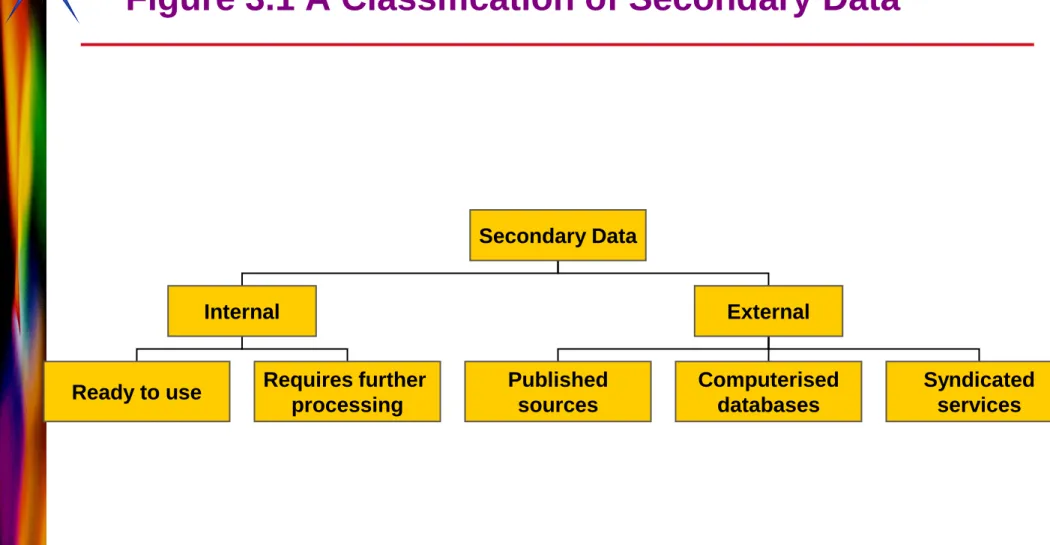
Figure 3.1 A Classification of Secondary Data

Secondary Data

Internal

External

Ready to use

Requires further

processing

Published

sources

Computerised

databases

Syndicated

services

(9)

Internal Secondary data

Data generated within the organisation for which

the research is being conducted.

[sales invoices, Annual reports, CRM]

(10)

External secondary data

Data generated by sources outside the

organisation.

Examples

Published secondary data [general business &

Government sources]

Computerised data bases

Syndicated data from households

(11)

General Business Data

Information published by business

Examples

Guides

Directories

Indexes

(12)

Government Sources

Information published by Government

Examples

census data

(13)

Example of Census Data

(14)
(15)

Computerised Databases

Information made available in computer-readable

form for electronic distribution.

Advantages

Current information

Faster data search

Low cost

(16)
(17)

Examples of Computerised Databases

ABI/Inform

Academic Search Elite

Annual Reports

AusStats

Business Source Premier

Emerald Fulltext

Factiva

Market Comparative Analysis

(18)
(19)

Syndicated Services

Nielsen/

NetRatings

Quantum Market Research

YouthSCAN

Roy Morgan

Single Source Data

Grey worldwide

Eye on Australia

Roy Morgan

MindSets

(20)

Combining Information from

Different Sources

Single-source data

Measure lifestyles, attitudes, media consumption, brand

and product use, purchase intentions, retail visits, and

recreation and leisure activities.

[Roy Morgan single-source data]

Computer mapping

Combines geographic and demographic information to

develop thematic geo-demographic maps.

(21)

WWW for Secondary Research

Search engines

Yahoo!, Google, AltaVista

Internal secondary

Intranets

General business sources

BRW, Forbes, Wall St Journal

Government data

www.abs.gov.au

www.yahoo.com/Government/Statistics

Computerised databases

www.roymorgan.com

www.acnielsen.com

Syndicated sources if information

www.dnb.com

Organisations and associations

Figure

Figure 3.1 A Classification of Secondary Data
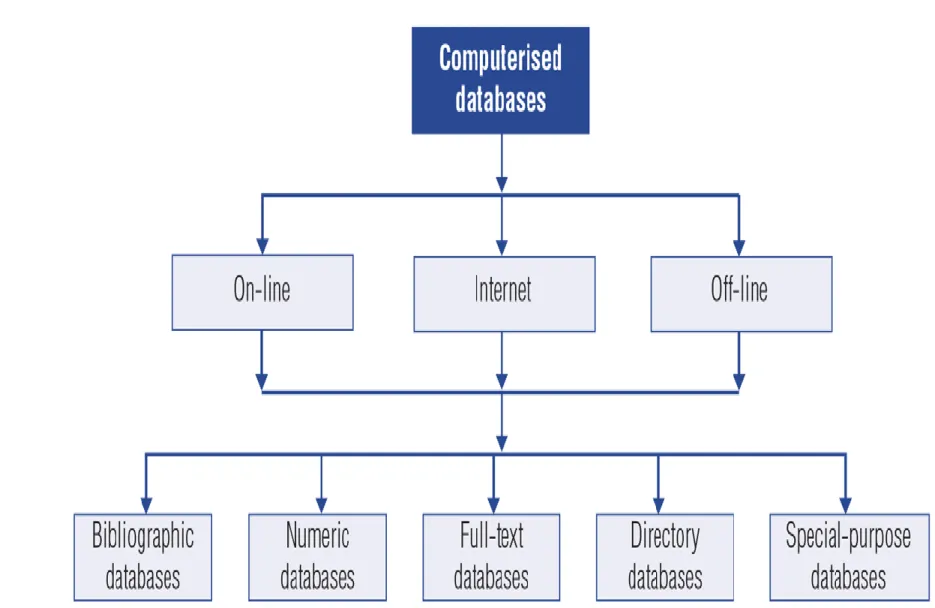
Figure 3.5 A Classification of Computerised Databases

References

Related documents

17 Templates for Drilling Class 900 Pipe Flanges and Flanged

We report on the use of a Stochastic Optimization Framework (SOF; Fink, SPIE 2008) for the autonomous self-configuration of Artificial Neural Networks (i.e., the determination

Incorporating port-centric warehousing, a modern, multi-purpose rail terminal and an unrivalled carbon-efficient fleet of trucks for nationwide container transport and

3a, greater increases in positive parent–child relationships were related to greater longitudinal decreases in ventral striatum activation to rewards over time, suggesting that

• Could draw people who otherwise would not seek treatment (DHS : > ½ of children with suspected malaria seek no treatment).. • What does this mean for ACT targeting to malaria

Thus a pavement is designed to withstand certain number of standard axle load repetitions (E80’s) that will result in a certain terminal condition of deterioration. ii)

The current Trust Framework description does not clearly establish framework asset ownership and secure access requirements/conditions for such assets by framework

Nixxis is a professional software publisher specialized in call/contact center and customer interaction solutions. Nixxis was created in 2006 based on a strong specialized team