Scholarship@Western
Scholarship@Western
Electronic Thesis and Dissertation Repository
8-19-2015 12:00 AM
The Learning of Human Ingenuity Within a Formal, Environmental
The Learning of Human Ingenuity Within a Formal, Environmental
Education Program: A Case Study of Two Secondary School
Education Program: A Case Study of Two Secondary School
Programs
Programs
Brian D. Smith
The University of Western Ontario
Supervisor
Dr. Ronald Hansen
The University of Western Ontario Graduate Program in Education
A thesis submitted in partial fulfillment of the requirements for the degree in Master of Education
© Brian D. Smith 2015
Follow this and additional works at: https://ir.lib.uwo.ca/etd
Part of the Curriculum and Instruction Commons
Recommended Citation Recommended Citation
Smith, Brian D., "The Learning of Human Ingenuity Within a Formal, Environmental Education Program: A Case Study of Two Secondary School Programs" (2015). Electronic Thesis and Dissertation Repository. 3178.
https://ir.lib.uwo.ca/etd/3178
This Dissertation/Thesis is brought to you for free and open access by Scholarship@Western. It has been accepted for inclusion in Electronic Thesis and Dissertation Repository by an authorized administrator of
PROGRAMS
(Thesis format: Monograph)
by
Brian Douglas Smith
Graduate Program in Education
A thesis submitted in partial fulfillment of the requirements for the degree of
Master of Education
The School of Graduate and Postdoctoral Studies The University of Western Ontario
London, Ontario, Canada
ii
Abstract
This thesis explores the implementation of creative pedagogies to determine how
creativity as a disposition and learning outcome is pursued in Ontario classrooms. Its focus
falls within a broad context of growing interest in Environmental Education and increasing
demand for problem-solving skills in the workforce and beyond. The study draws upon
participant experiences to examine how creative problem-solving is realized. A case study
approach was employed, using multiple data sources in two High School Environmental
Leadership Programs. Findings from this research suggest that teachers prioritize the
building, comprehension and application of facts and concepts over the use of instructional
strategies that develop creative problem-solving and higher-order thinking skills such as
synthesis, analysis and evaluation. Students preferred creative instructional strategies and
wanted them more often. The study calls for renewed teacher commitment and additional
professional development for instructional strategies that nurture student creativity and
expand teachers’ pedagogy. Furthermore, policy recommendations call for environmental
education to become a multidisciplinary subject of its own, considering the broad scope of
content and skills from which it draws and the urgency to solve environmental problems.
Keywords
Creativity, Human Ingenuity, Environmental Education, Experiential Learning, Problem
iii
Acknowledgments
I would like to specially thank my thesis advisor, Dr. Ron Hansen, for many years of
guidance, interest and patience. You made a huge difference and I am grateful that you were
on this journey with me. I would also like to thank Dr. Robert Sandieson and the other
members of the examination committee for their recommendations that strengthened this
thesis.
A few teacher colleagues deserve thanks and recognition: Chris Q., who started me
on this constructivist leadership path with his inspiration, professionalism and energy for
teaching; Sharon, for modelling a passionate commitment to protecting our environment, and
for your contagious exuberance; and The Moderns – Shannon, Heather, Celeste and Judi –
who were always welcoming, fun and engaging, and made 214 my workday refuge.
Dad, Julie, Wendy and Ma: Thank you for your ongoing encouragement and support,
and everything else that a loving family provides.
To Maria and Kira, the lifelong learners at home, who patiently listened to my
theorizing, challenged my ideas, discouraged my frequent “tangentalizing” and did so much
more than words can ever say. I can’t do any better than “As Big As The Sky.”
And, finally, for Mom and Pa, who were constant, always available to talk and so
iv
Table of Contents
Abstract ... ii
Acknowledgments... iii
Table of Contents ... iv
List of Tables ... vii
List of Appendices ... viii
Chapter 1 ... 1
1 Introduction and Context... 1
1.1 The Importance and Place of Formal Education ... 7
1.2 Research Questions ... 8
1.3 Summary ... 9
Chapter 2 ... 10
2 Literature ... 10
2.1 Theoretical Framework ... 11
2.1.1 Constructivist Pedagogies ... 12
2.1.2 Problem Type ... 14
2.1.3 Group Creativity ... 15
2.1.4 Bloom’s Taxonomy ... 16
2.2 The Current Times in Ontario Education... 18
2.2.1 The Ministry of Education ... 18
2.2.2 Key Education Stakeholders ... 20
2.3 Summary ... 21
Chapter 3 ... 23
3 Methodology ... 23
3.1 Research Design... 23
v
3.2.2 Rural Site ... 27
3.3 Data Collection ... 28
3.3.1 Stages of Data Collection... 30
3.4 Data Analysis ... 31
3.5 Summary ... 31
Chapter 4 ... 32
4 Compilation of Data ... 32
4.1 Questionnaire Data... 32
4.2 Creativity and Creative Problem-Solving ... 39
4.3 Student Outcomes in Creative Problem-Solving Challenges ... 42
4.4 Instructional Strategies... 44
4.5 Creative Activities ... 58
4.6 Questioning the Status Quo and Critical Thinking ... 62
4.7 Innovation and Real Environmental Event Activities ... 63
4.8 Influences on Teachers to Develop Creativity ... 65
4.9 Bloom’s Taxonomy ... 67
4.10Rural and Urban Comparison ... 69
Chapter 5 ... 71
5 Interpretation and Synthesis ... 71
5.1 Introduction ... 71
5.2 Theme 1: Teaching Methods That Promote Creativity... 72
5.2.1 Subtheme 1: Creative Instructional Strategies ... 72
5.2.2 Subtheme 2: Higher-Order Thinking ... 78
5.3 Theme 2: The Importance of Creative Problem-Solving ... 81
vi
5.4.2 Contextualizing Learning With Real Environmental Events... 84
5.5 Summary ... 87
Chapter 6 ... 88
6 Reflections and Discussion ... 88
6.1 Understanding Creative Problem-Solving ... 88
6.2 Implications... 90
6.2.1 Implications for Practice ... 90
6.2.2 Implications for Policy ... 91
6.2.3 Implications for Future Research ... 94
6.3 Summary and Recommendations ... 95
References ... 97
Appendices ... 106
vii
List of Tables
viii
List of Appendices
Appendix A: Comprehensive Questionnaire Data ... 106
Appendix B: Letters of Information and Consent; UWO Ethics Approval ... 116
Appendix C: Student Questionnaire ... 123
Chapter 1
1
Introduction and Context
My thesis is that the ingenuity needed to solve existing and future environmental
challenges may require the purposeful implementation of creative pedagogies in formal
education systems in North America. In 2008, the Human Ingenuity Research Group
(HIRG) conducted a case study of six inventors in southern Ontario. That preliminary
study led to a series of inquiries into the role of formal education and its association with
creativity and culture (www.edu.uwo.ca/hirg). Human ingenuity was defined as the
aptitude and ability to solve problems through experience with originality and
imagination. The purpose of this HIRG-inspired study was to determine how Ontario
schools are addressing the need for creative thinking skills in adolescents in a Specialist
High Skills Major – Environment (SHSM-E) program if, indeed, the schools are
addressing the need.
Environmental Crisis
No longer is the question asked whether an environmental crisis exists. The
world has far surpassed this often-asked question of the 1990s when strong
anti-environmental efforts by “conservative think tanks, political commentators, and political elites” openly downplayed scientific evidence of the seriousness of issues (Dunlap, 2008,
p. 14). Subsequently, thewidespread public scepticism resulted in delayed action to
remediate the issues. Since that time, the number and potency of these issues has been
exacerbated to the point that a litany of global and domestic issues is now part of our
global consciousness. Considering the number, interdependence and urgency of
environmental issues, the enormity of the overall global environmental situation can seem
overwhelming. Macy (1989; as cited in Clover, 2002) speculates that a duality between
powerlessness and high awareness may be hindering action. Some experts believe that
the situation is grim and that the time to act is now, even suggesting that waiting for more
environmentally active younger generations to reach adulthood is too late (National
It is now accepted that human activities (e.g., the overuse of carbon producing
fossil fuels, uncontrolled pollution, poor waste management, and the destruction of
nature) have contributed to this dire situation. The controversy is to what degree.
Whereas some posit it to be minimal, others have swung to the other extreme, indicating
that the extent of our influence on the environment has led to the identification of a new
age on the Geological Time Scale, the Anthropocene Age, in which human activity has
been deemed to be changing the Earth, permanently (Zalasiewicz, Williams, Steffen, &
Crutzen, 2010). The scope of human activity is considered to be on par with such
Age-defining events as full glaciation, a dinosaur extinguishing meteor strike and continent
colliding earthquakes of millennia past.
Two serious issues, global warming and fresh water shortage, demonstrate that
human actions are changing the environment. These pressing issues have negative
environmental effects as well as socio-political ramifications.
The availability of clean drinking water is fast approaching a crisis, primarily
through the pollution of surface water (for instance, 80% of China’s surface water is
polluted beyond use), the paving over of green space that cleanses water through
transpiration, and the failure of some urban centres to clean their used municipal water
which is simply dumped into seawater (Barlow, 2008). According to Maude Barlow
(2008), the Canadian founder of the Blue Planet Project, “pollution, displacement and mismanagement” of water is not only a result of climate change but it is contributing to
it. Globally, most governments and communities are failing to see their involvement in
this causality. The State of California, for instance, has planned a massive increase in
bio-fuel production to reduce the use of greenhouse gas-producing fossil fuels without
recognizing the incredible demand on its scarce water supply (Barlow, 2008).
Global warming, the alarming increase in temperature of the earth’s atmosphere
and oceans as a result of the greenhouse effect of airborne pollutants, has been part of our
lexicon for decades. The results of global warming are far ranging, from the melting of
glacial ice, causing ocean levels to rise and the loss of sea ice for polar bear survival
(Lovgren, 2004), to the need for air-conditioners for indigenous peoples of the Arctic
(Zabarenko, 2007), and the deterioration of vital coral reefs (Handwerk, 2003). Dyer
result in human conflict as nations attempt to protect and hoard precious upstream fresh
water for their own populations.
The brief description of these two issues is only a part of the environmental crisis.
Our anthropocentricism – seeing humanity as the centre of all things – has brought us to
the point that we take and take without noticing the effect (Russell & Bell, 1996). We
see the environment solely as a resource (Clover, 1999). Yet, the environmental crisis is
forcing some of us to realize our responsibility and the need to respond to it.
Positive environmental actions are in their primacy. Until now, these actions have
been largely downloaded to and borne by individual citizens in the form of behaviour and
attitude changes. In North America, well accepted and media-promoted practices include
Blue and green box recycling, reducing water and other utility usage, and taking
alternative transportation. Other technologies and actions, such as the use of wind
turbines and solar panels, are novelties, often shunned by “not in my backyard” attitudes.
Business, industry and government have begun to take action, primarily for
economic gain and positive public relations. However, insufficient changes have been
made to products, services and policies to address increasingly serious environmental
challenges. While the lack of environmental action and accountability may be attributed
to factors such as low profitability, minimal regulation without enforcement, and sparse
public demand beyond special interest groups, it may instead be due to inability. In other
words, it may be that environmental problems are not being addressed because the
creativity and innovation required to find solutions is lacking in the workforce. Business,
industry and government may be motivated to act in an environmentally conscious way
but the people working in these organizations may not be able to act without the creative
aptitude and ability to critically solve micro, let alone macro, level environmental
problems across a vast array of economic, social and environmental possibilities. Human
creativity may be the missing catalyst that translates interest in environmental
responsibility into action.
Defining Creativity
Creativity is a commonly bandied about term in society and K-12 schools. In
academia, a search of scholarly literature reveals extensive and ever-increasing interest
teaching have been elusive for decades (Treffinger, Renzulli, & Feldhusen, 1971;
Baldwin, 2010). A starting point to begin this discussion must be to define creativity.
Perusing educational research literature reveals a plethora of definitions situated in
numerous theories and models, correlating to a mixture of factors (such as intelligence,
adaptability, discovery, and serendipity, among others) and varying according to
pervasiveness and expected outcomes. The result is much overlap and ambiguity (Runco,
2007), often with only the minutest distinctions. However, the focus of this study is not
to investigate, explore or evaluate definitions and theories but to critically examine how
Ontario schools are addressing the need for creative thinking skills in adolescents in an
environmental program. In order to do so, though, a definition of creativity is required.
For the purpose of this study, then, creativity is defined as the process of problem-solving
or thinking that constructs useful and original outcomes (Runco, 2008).
This definition recognizes four characteristics of creativity. It also needs to be
framed within this study’s educational context; that is, for children who are developing
their creative potential (Runco, 2003). Firstly, outcomes are the result of creativity, and
are primarily tangible products or performances (Runco & Kim, 2011). For students who
cannot yet create products, Runco (1996) suggests that all students are capable of
constructing “original interpretations of experience”; that is, they can make meaning and
understanding of their experiences. Original interpretations are intangible and
independent of a measurable product. The second and third characteristics are that these
outcomes must be useful and original, which are the key determinants common to most
definitions of creativity (Barron, 1955; Runco, 1988, as cited in Runco, 2008). In order
to assist teachers and students to understand and identify student originality, a tripartite
categorization can be employed. Originality can be: “individual” in comparison to a
student’s previous outcome; “relative” in comparison to outcomes of a student’s peers;
and “historic” if an outcome is new in comparison to any originator (National Advisory
Committee on Creative and Cultural Education [NACCCE], 1999, p. 30). The fourth
characteristic, problem-solving or thinking, addresses the process of creativity. For
students who are developing their creative potential, problem-solving and thinking focus
on the method which underlies creative ideation, which will be the same process that they
instructing all students in this process, teachers signal the inclusion and participation of
students with a wide range of visible and latent ability, unlike theories which recognize
creativity as the purview of geniuses (Simonton, 2004) and creative artists in music,
dance, literature and visual arts, among others (NACCCE, 1999; Runco, 2008).
Developing creative potential in children does not guarantee that students will eventually
create useful and original outcomes to some extent, or any at all, but it does develop the
necessary skills and knowledge to implement and participate in the process in school and
the workplace.
The use of the terms creative problem-solving and creative thinking occur
throughout this thesis. The inclusion of the adjective creative differentiates creative and
non-creative problem-solving or thinking. That is, not all problem-solving is creative
(Runco, 2007), nor is all thinking creative (Runco, 2011). Consider, for example,
thinking that is useful, but not original: following instructions, routinized tasks, and
habitual behaviours of everyday life. Problem-solving or thinking must construct both
useful and original outcomes to be creative. For this reason, I refer to creative
problem-solving and creative thinking to distinguish them from non-creative problem-solving and
non-creative thinking.
Another term used throughout this thesis is human ingenuity, which Hansen
(2008) defines as “the aptitude and ability to solve problems through experience, with
originality and imagination.” Homer-Dixon (1995) refers to human ingenuity as ideas
that solve practical problems. Hansen (2008) distinguishes the two terms by stating that
creative problem-solving/thinking “contemplates” and human ingenuity “acts.” This
distinction is much more complex, but for the purposes here, it is sufficient. Human
ingenuity implies physical, hands-on actions such as doing, building, fixing, or
dismantling. In an educational context, teachers plan and present lessons and learning
activities for students to develop the knowledge and skills of thinking (creative
problem-solving/thinking) and acting (human ingenuity). Students are expected to demonstrate
both thinking and acting, particularly in the formal, environmental program examined
here. Because of this strong connection between creative problem-solving/thinking and
Current Interest in Creativity
There is evidence to suggest that creativity is in serious decline and without
significant acknowledgement by public institutions of its importance, particularly in
North America. In a sample of almost 300,000 children and adults from K-12, Kim
(2011) discovered a significant decline, or the start of a significant decline, in creativity
scores, particularly for K-3 students, across all subscales of the Torrance Tests of
Creative Thinking (TTCT) from 1990 to present. Interestingly, Flynn (2007, as cited in
Kim, 2011) reported that intelligence scores are consistently rising. Assuming IQ tests
measure what they purport to measure, intelligence may not be a factor in the lack of
environmental solutions.
Globally, large scale efforts have signalled a raised awareness of the need for
greater creativity. In the United Kingdom, British secondary school curriculum was
revamped in 2008 to emphasize creativity, idea generation and the assessment of progress
with Torrance Test scores (Bronson & Merryman, 2010). Reforms were based upon a
highly publicized white paper by the NACCCE (1999) outlining the development of a
national strategy for creative and cultural education, formal and informal. The European
Union designated 2009 as the European Year of Creativity and Innovation to promote
creativity and build capacity for innovation. For formal education, this meant responding
to calls for the replacement of traditional, direct instruction with student-focused teaching
approaches that actively involved students in order to develop creativity and innovation
skills (see http://www.create2009.europa.eu/index_en.html). China, too, is implementing
a similar approach to instruction as part of extensive educational reform (for instance, see
Chan, 2010; Song, Kwan, Bian, Tai, & Wu, 2005).
Northern Ireland has taken creativity a step farther. “Unlocking Creativity,” the
first paper of a three-part strategy, asserts that “the future prosperity and well being of
Northern Ireland will depend increasingly on the creativity and adaptability of all of its
people” (DCAL, DE, DETI, DHFETE, 2000, p. 6). Responding to the business
community’s needs, the availability of technology and the demands of a new
knowledge-based global economy, the importance and learning of creativity has been raised to a
the current curricula. The goal in Northern Ireland is not only economic but to “unleash [our] personal potential” (DCAL, DE, DETI, DHFETE, 2004, p. 5).
A large, 2010 IBM study, surveying 1,541 international CEOs and business
leaders from small to large-sized companies across 33 industries, further articulates the
need for creativity. These business leaders recognize “escalating complexity” as their
primary business challenge because more and more frequent “events, threats and opportunities” are less predictable, converging towards interdependence and becoming
unique situations that require unique solutions (IBM, 2010, p. 4). As a result, 65% of
CEOs identified creativity as the most important leadership quality, outranking integrity
(52%) and global thinking (35%) (IBM, 2010, p. 24). According to the CEOs, creative
leaders move beyond the status quo by experimenting and innovating – despite ambiguity
– with ideas, leadership styles and communication. They take more calculated risks and
assist others to eliminate outdated methods. Overall, the CEOs find their businesses in a
situation that demands “unprecedented degrees of creativity,” yet they struggle to find
leadership to meet this demand (IBM, 2010, p. 4).
1.1 The Importance and Place of Formal Education
The need for more creative solutions to current environmental issues, combined
with the widespread recognition that more creative workers are required, leads to the
question: What role is education to take in embracing these macro- and micro-level
needs in the classroom? How do current learning experiences nurture creativity in
Ontario students, if they do at all?
On the surface, Ontario educational priorities appear to complicate, rather than
facilitate, the development of student creativity. In classrooms, standardized testing
compels educators to focus efforts on content driven curricula, ostracizing the
development of creativity. All elementary and secondary subject specific curriculum
documents expressly stipulate the use of creative thinking skills and/or processes (i.e.,
problem-solving and inquiry) throughout, but informal teacher discussions reveal it is
seldom considered, or even known to be documented. Strategies that inspire creativity,
like problem based learning and experiential learning, appear to be rarely used.
seem to contradict the compelling need for creativity. Davis (1999) and Torrance (1963)
found that teachers dislike some characteristics of creative students (as cited in
Aljughaiman & Mowrer-Reynolds, 2005). Highly creative students cause more
disruption in comparison to other students (Scott, 1999). On a school district level,
directives to assess creativity are essentially non-existent. Yet, a number of assessment
tools are available, including the TTCT, the most popular of divergent thinking tests,
considered the “gold standard” (Clapham, 2011, p. 460). In summary, it is unclear how
the teaching of creativity is pursued in Ontario classrooms despite the acknowledged
importance of developing innovative approaches to meet challenges (Ontario. Ministry
of Education and Training [MET], 2010).
1.2 Research Questions
The main question that I pose is: “To what extent do educational programs (e.g.,
the Specialist High Skills Major – Environment (SHSM-E) program) address human
ingenuity?” Issues that more specifically focus and structure my research are:
a. What “school-based” pedagogies and instructional practices, such as
problem-based learning, divergent thinking and inquiry, are being used as methods in
formal education?
b. What field-based, experiential learning practices such as outdoor education,
local field trips and co-ops are being used?
c. What limitations and curriculum supports/barriers, professional development,
procedures and leadership do teachers encounter in trying to address human
ingenuity?
d. Do students have opportunities to develop Bloom’s higher levels of learning
(i.e., Analysis, Synthesis, Evaluation) for creative thinking (see Shaunessy,
2000)?
e. Are learning conditions, such as collaboration or independence to explore
personal interests, encouraged for students?
f. Are human ingenuity-fostering attributes, such as the valuing of experience,
ambition, independence, norm doubting, autonomy, non-conformity (see
g. Is creative problem-solving or human ingenuity acknowledged in provincial
and school district documents as an educational outcome?
1.3 Summary
Calls for greater and more universal creativity skills which respond to pressing
economic, political, social and environmental issues, are growing. Evidence of declining
creativity on standardized assessments and weak creative problem-solving skills in the
workplace have raised concern from leaders across sectors. Increased demands have
been placed on the formal education system for an appropriate response. Educators from
the Ministry of Education, school districts, administration and classrooms all have
differing roles to play in assessing the current state of creativity development and, then,
implementing reforms. The focus of this study is school-based, examining the creative
potential and human ingenuity among adolescents in an environmental program. The
following chapter will outline the theoretical foundation of the study and the current
Chapter 2
2
Literature
In Chapter 1, creativity was defined as the process of problem-solving or thinking
that constructs useful and original outcomes (Runco, 2008). K-12 students can learn the
creative process to develop their creative potential, even if they cannot or may not yet be
able to construct useful and original outcomes. Human ingenuity, too, was defined, as
“the aptitude and ability to solve problems through experience, with originality and
imagination” (Hansen, 2008). Simply put, creative problem-solving/thinking is
“contemplative”; human ingenuity is “action.” Both concepts may be required to prepare
students for the 21st century.
With definitions of creative problem-solving/thinking and human ingenuity
clarified, the teaching and learning of them needs to be addressed. In the literature,
propositions abound as to how to develop creative abilities (see, for instance, Lin, 2011).
The intention of this thesis is to narrow those myriad propositions by focusing
exclusively on examining the learning activities that engage students in developing
creativity and creative potential, in an environmental program context. Choices about
those instructional activities, in formal education, are the teacher’s responsibility, as are
appropriate decisions about curriculum. In the context of this study, two related
questions are investigated: What instructional activities were implemented by the
teachers, and how did teachers and students respond to those choices? The aim is to
enhance understanding of classroom practice, through the experiences of teachers and
students in the development of meaningful creative problem-solving.
In this chapter, a theoretical framework will be established, starting with
Constructivism. This will be followed by a discussion of the teaching and learning of
creativity and how it is made operational through student-centred, constructivist
instructional strategies. The location of instructional strategies on a continuum of
ill-structured vs. well-ill-structured problem type will also be examined. Bloom’s Taxonomy
will be briefly discussed as a model of classifying thinking and how its utilization for
effective questioning nurtures creative problem-solving. And finally, the study will be
2.1 Theoretical Framework
This thesis draws on Constructivism as a theoretical framework. In its simplest
form, Constructivism is a student-centred approach whereby students actively participate
in the construction or discovery of knowledge (e.g., Bruner, 1961; Phillips, 1995; Piaget
1967). In contrast, a direct instruction approach depends on the teacher to provide all
required concepts and procedures (Kirschner, Sweller, & Clark, 2006). Constructivist
learning can be characterized as inductive, in that students make broad generalizations
from their specific observations. It is incremental, by building on a priori knowledge;
socially interactive by virtue of the sharing of ideas and the interplay of conflicting
interpretations from within a specific context; and authentic, meaning realistic or useful
in a student’s life (Good & Brophy, 1991).
Minimal guidance from the teacher surrounding disciplinary or procedural
knowledge seeks to encourage student participation, an internal locus of control and
self-efficacy. The importance of the student participating in forming the purposes of learning
activities (Dewey, 1938) is emphasized in the sharing of learning decisions between the
teacher and student. Minimal teacher guidance and greater student involvement can also
encourage creativity, as students must use problem-solving to determine original
(individual or relative) and useful procedures, required knowledge and purposes of
learning. It is uncertain how direct instruction approaches deal with student originality.
Baer & Garrett (2010, p. 18) assert that an idea cannot be creative if it has been “moved
into the student” by the teacher. In this sense, direct instruction may severely limit the
creative problem-solving/thinking that can occur when the teacher supplies all required
concepts, procedures and purposes of learning without student involvement.
This is not to say that all instruction should be constructivist. Direct instruction is
highly appropriate for some purposes, such as the learning of factual information,
effectively correcting misconceptions, organizing knowledge and addressing incomplete
information (Kirschner et al., 2006). Where on the constructivist-direct instruction
continuum that teaching is most appropriate depends on the teacher’s understanding of
the “capacities, needs and past experiences” of students and the degree of freedom
1938, p. 71). A teacher’s suggestions may initiate planning, but students and the teacher
together need to negotiate the development of the learning plan.
As an epistemology, Constructivism the creation of knowledge through the
interaction of experience and ideas underlies the pedagogies of experiential learning,
inquiry learning and problem-based learning.
2.1.1
Constructivist Pedagogies
Experiential Learning Theory
Experiential Learning Theory states that learning is a process of creating
knowledge through the “transformation of experience” (Kolb, Boyatzis, & Mainemelis,
1999, p. 2). Ideas are created then re-shaped with each experience (Kolb, 1984). Dewey
(1961) maintained that active learning through experience made education personally
meaningful by allowing students to reflect on the consequences of their actions.
According to Dewey, a valuable experience must have continuity, linking it to a past
experience and affecting an experience in the future, and interaction, linking learners and
their environments. While Illeris (2007) acknowledges that these two principles are
necessary for experiential learning, a more exacting definition is required, whereby
experiential learning involves “content, incentive and interaction . . . in a subjectively balanced and substantial way” (p. 94). Thus, experiential learning occurs when students,
who are ready and willing to learn, strongly connect with interesting and personally
significant content, which leads to emancipation (Illeris, 2007). Self-direction and
student centeredness are important requirements that strengthen that connection.
Kolb’s Experiential Learning Theory (Akella, 2010) describes a sequential and
cyclical four-stage model in which students engage in a Concrete Experience (CE),
reflect and make observations on the experience (Reflective Observation - RO), connect
the observations to curricular concepts using reasoning and logic to understand the
experience (Abstract Conceptualization - AC) and finally, test their generated theories for
future use and prediction (Active Experimentation - AE). Reflection is a necessity, as
Boreham (as cited in Healey & Jenkins, 2000, p. 89) clarifies: "The term 'learning from
that, ideally, learners would engage in the “experience, reflect, think and act” process
repeatedly to create new knowledge.
Problem Based Learning
The distinguishing feature of Problem Based Learning is an authentic problem,
case or scenario that is presented to students prior to conceptual learning, a reversal of
typical formal education which demands mastery of basic concepts as a foundation of
learning before application to problems (Hung, Jonassen, & Liu, 2008). In K-12
education, varying degrees of conceptual learning are presented to, and acquired by,
students prior to engaging in Problem Based Learning, depending on the skills and needs
of learners. Younger students are commonly taught many concepts prior to a Problem
Based Learning activity while secondary students are provided with few concepts, if any.
Problem Based Learning generally follows a series of steps. The teacher presents
a rich, concrete problem with basic background information to groups of students, who
individually assume roles as real stakeholders to enhance ownership in the authentic task.
Together, they decide how to tackle the problem by extracting key information, searching
for connections to other disciplinary and prior knowledge, and defining the problem.
Students generate and evaluate hypotheses, engage in task-specific research to determine
missing information and determine their best possible solution. Student self-direction
and self-assessment are ongoing and essential, with teacher guidance available to assist as
needed, for issues such as group dynamics and task management.
Inquiry Based Learning
Inquiry Based Learning involves experimentation and hands-on investigations in
which the majority of procedural components (e.g., topic, hypotheses, procedures, data
collection, data analysis, conclusions) are determined by students. Students are
introduced to Inquiry Based Learning by controlling and completing a single component.
More components are added as students develop pertinent skills and knowledge, until
control over the entire process is suitable and beneficial.
Students learn to brainstorm areas of interest and then choose a single topic;
determine and formulate hypotheses; enumerate and communicate a sequential
conclusions. The Inquiry Based Learning process used by professionals in various
disciplines can be similarly implemented by students to discover and build new student
knowledge: This similarity gives real meaning to a learning activity as an authentic
experience. Inquiry Based Learning is frequently used in science education (Pedaste et
al., 2015), but can be utilized for any query across the curriculum that can be answered
through student experimentation or hands-on investigation.
2.1.2
Problem Type
Instructional strategies and pedagogies are presumed to provide students the
opportunities to develop their creativity. Pedagogies that inspire creativity, according to
Stokes (2010), can be linked to ill-structured, or non-structured, tasks while
well-structured task are linked with traditional methods that inspire less creativity. An
ill-structured problem is a task in which the problem statement, process or solution may not
be immediately apparent and the learner must identify it in addition to tackling the task,
whereas a well-structured problem provides all the necessary information required to
solve a problem, uses one evident algorithm and results in a single, correct solution
(Jonassen, 2000). Contrasting the simplicity of well-structured problems is the potential
for variability of ill-structured problems: Learners require various skills and abilities.
Concepts and processes to be used are unclear. Solutions and paths to those solutions can
be multiple and divergent. Beyond these basic components of the two types of problem,
Jonassen (2000) identifies other dissimilar characteristics. Firstly, well-structured
problems are often associated with a single subject knowledge base while ill-structured
problems are multidisciplinary. Secondly, ill-structured problems are situated in
everyday issues and events as “typically emergent dilemmas” (p. 68). As a result, they
are thought to hold greater interest, relevance and meaning for students. Thirdly, the
transferability of skills for well-structured problems is limited to similar types of
problems and not to solving problems situated in everyday contexts, as is commonly
assumed. Finally, ill-structured problems call for students to make judgements and
defend them, analyze information and data, and synthesize new information.
Ill-structured and well-structured problems can also be seen as endpoints on a
address different needs of learners. Well-structured problems are prolific in schooling:
They are commonly found at the end of textbook chapters and readings as a means of
assessing students’ ability to apply recently learned concepts, algorithms and procedures.
Ill-structured problems are rarely found, particularly in K-12 settings, as a result of their
complexity and uncertainty, the difficulty in designing instruction to develop the skills to
solve them (Jonassen, 2000), and the need for students to experience real life situations
(Hong, 1998). The benefits of ill-structured problems outweigh the challenges, in Stokes
(2010) view, particularly if students are to learn creativity. Stokes (2010, p. 91) states
that creativity is “only possible with incompletely defined, ill-structured problems." The
skills required to solve well-structured problems are not sufficient and “preclude” the
learning of creativity (Stokes & Fisher, 2005, as cited in Stokes, 2010).
Specific teaching strategies and instructional formats that are ill-structured and
can lead to improved creativity include hands-on projects (Shymansky & Penick, 1981;
Mackin, 1996), open ended tasks (Schamel & Ayres, 1992), and investigations (Sallam &
Krockover, 1982). For purposes of this study the ill-structured, creative instructional
strategies include Experiential Learning, Problem Based Learning, and Inquiry Based
Learning.
2.1.3
Group Creativity
Another instructional strategy that has been included in this analysis of creative
instructional strategies does not have an ill-structured nature. Class Discussion, also
known as group creativity, is thought to inspire creativity because students work together
to stimulate, positively criticize and build on creative ideas voiced by others in the group.
Paulus (2000) states that most people believe group creativity is effective, generates more
ideas than when people work alone and is perceived more positively by participants who
work together than when they work alone (Simonton, 2004; Paulus, Dzindolet, Poletes, &
Camacho, 1993, as cited in Paulus, 2000). In other words, more people working together
will produce more ideas and, subsequently, more creativity. However, strong opposition
to group creativity identifies many potential issues, including groupthink, diminished
accountability and peer pressure by students who monopolize idea input and make harsh
from the long standing belief that creativity is the product of the solitary genius
(Weisberg, 2010). Individualism continues to be the fundamental assumption of more
current research such as Simonton’s (2004) proposition of creativity as a combination of
logic, chance, zeitgeist and genius, and Weisberg’s (2010) CHOICES model, among
others. Group creativity research acknowledges a social component to the theory that
individuals are creative, noting that the “group” comes from connections to an
intellectual community rather than individuals physically gathering.
In short, group creativity continues to be a highly contested concept. However,
sufficient supportive research, which is “increasing” according to Nijstad and Paulus
(2003, p. 5), and the prevalence of a common belief that discussion within a group
inspires creativity, suggests it be investigated in this study.
2.1.4
Bloom’s Taxonomy
Bloom's Taxonomy is a model of classifying thinking. It has been utilized
pervasively pedagogically and is the “de facto standard” to classify thinking (Forehand,
2005, p. 3). The model orders thinking in the cognitive domain according to multi-tiered
levels of complexity from concrete to increasingly abstract (Krathwohl, 2002). The six
levels – Knowledge, Comprehension, Application, Analysis, Synthesis, and Evaluation –
are hierarchical, most often represented in a tower-like formation, in which each level is
built on the proficiency of the previous lower levels. The three lower levels have been
grouped as lower-order thinking; the remaining three levels, higher-order thinking. The
profound importance of higher-order thinking is that it calls for the transformation and
manipulation of ideas in order to construct knowledge (Queensland. Department of
Education, Training and Employment as cited in Ramos, Dolipas, & Villamor, 2013).
Without these higher-order skills, in this view, creative problem-solving cannot occur.
Bloom’s Taxonomy is thought to order the effective questioning that is essential
to the development of creativity and higher-order thinking (Pollack, 1988; Shaunessy,
2000; Wilhelm, 2014). In oral and written formats, questions need to be utilized at all six
levels, particularly for higher-order thinking in order for useful and original student ideas
can be constructed. For teachers, thorough coverage of the Taxonomy begins with
oral questioning and task assignment with students. For students, Schwartz and Millar
(1996, p. 2) petition for the “deliberate teaching of questioning” as a means to improve
self-questioning, which reinforces the importance of learning the process of creative
thinking, not just arriving at answers. Because of the complexity of each level of the
Taxonomy, question cues in the form of sentence starters greatly assist teachers and
students in the formation of effective questions. These prompts, with the corresponding
levels of the Bloom’s Taxonomy (Bloom, Engelhart, Furst, Hill, & Krathwohl, 1956) are:
a) Knowledge: observation and recall of information; knowledge of dates, events,
places; knowledge of major ideas; mastery of subject matter. Question
Cues: define, describe, identify, label, list, name, quote, show, tabulate
b) Comprehension: understanding information; grasp meaning; translate
knowledge into new context; interpret facts; compare; contrast; order;
group; infer causes; predict consequences. Question Cues: associate,
contrast, describe, differentiate, discuss, distinguish, estimate, extend,
interpret, predict, summarize
c) Application: use information; use methods, concepts, theories in new
situations; solve problems using required skills or knowledge. Question
Cues: apply, calculate, change, complete, classify, demonstrate, discover,
examine, experiment, illustrate, modify, relate, show, solve
d) Analysis: seeing patterns; organization of parts; recognition of hidden
meanings; identification of components. Question Cues: analyze,
arrange, classify, compare, connect, divide, explain, infer, order, select,
separate
e) Synthesis: use old ideas to create new ones; generalize from given facts; relate
knowledge from several areas; predict; draw conclusions. Question Cues:
combine, compose, create, design, formulate, generalize, integrate, invent,
modify, plan, prepare, rearrange, rewrite, substitute, what if?
f) Evaluation: compare and discriminate between ideas; assess value of theories,
presentations; make choices based on reasoned argument; verify value of
conclude, convince, decide, discriminate, explain, grade, judge, measure,
rank, recommend, select, summarize, support, test
In 2001, an updated version of Bloom’s Taxonomy was published as the Revised
Bloom’s Taxonomy (Anderson & Krathwohl, 2001). Amongst other changes, each level
was renamed from a noun to a more action-oriented verb. The relevance of the revision
for this thesis was the re-ordering and renaming of the top two levels of higher-order
thinking (Forehand, 2005) 1 into Evaluate and Create. The required complexity and
abstraction moved Create to the top level of the cognitive processes. The change in
terminology to Create from Synthesis broadened the definition to include the “active
processes of constructing meaning” (Krathwohl & Anderson, 2010, p. 64). The top-level
change complements this study’s definition of creative problem-solving/thinking as an
active process of constructing useful and original outcomes and elevates the importance
of creativity in classroom instruction. It may also speak to the distinction between being
contemplative and action-driven.
2.2 The Current Times in Ontario Education
2.2.1
The Ministry of Education
Ontario provides elementary and secondary education for over 2 million students
and employs about 123,000 teachers, early childhood educators and administrators in
4,891 schools. While not the largest school system worldwide, several international
assessments have recently ranked Ontario as one of the best (Fullan, 2013). McKinsey &
Company’s “How the World’s Most Improved School Systems Keep Getting Better”
gave Ontario public education its highest ranking, “Great to Excellent,” only one of five
education systems globally to receive such a ranking (Mourshed, Chijioke, & Barber,
2010). According to the report, Ontario’s consistent increases in student performance
across multiple curriculum areas for over five years made it a “sustained improver”
(Mourshed et al., 2010, p. 17). Fullan (2013, p. 1) calls Ontario “the best school system
in the English-speaking world.” Ontario’s journey began in 2003 when its newly elected
1
provincial government embarked on strong educational reform that continues today. At
the outset, improving teaching practice was identified as the key to success so reform
centred on nurturing a process at the school level in which educators determined and then
enacted the instructional changes required (Mourshed et al., 2010). Standardized testing,
still disparaged by some teachers due to perceived validity issues of early tests, monitors
progress in student achievement and informs instructional practice in a milieu of
collaborative practice and improvement. This low-stakes testing environment pales in
comparison to the uncertainties and complexities of high stakes’ punishment, reward,
compensation and grade promotion. Some practitioners have difficulty recognizing the
value of testing and how it can inform their practice.
Declining enrolment is a recent issue that is expected to continue indefinitely due
to a reduced provincial birth rate (Ontario. Declining Enrolment Working Group 2009, p.
4). Ongoing Ministry adjustments, unpopular with education stakeholders, are required
to re-think funding and re-allocate resources. The fears are that fewer programming
options will be available for students, staffing changes will result in job loss, and schools
may be closed in some communities. Meanwhile, the supply of new teachers exceeds the
demand created by teacher retirements by about 7,200 annually and, as a result, 80% of
new teachers cannot even find supply work (Ontario College of Teachers, 2013).
Factoring in the cumulative effect of oversupply for longer than a decade, a large cohort
of new teachers faces years of unemployment and extensive underemployment prior to
full employment. Some new teachers find jobs in private schools, in other provinces,
internationally, or leave teaching altogether (Ontario College of Teachers, 2013).
Creativity in Ontario Ministry of Education Curriculum Documents
The development of creativity is supported within the educational reform that has
been occurring in Ontario. All Ontario Ministry of Education, subject area curriculum
documents make frequent reference to creative/critical thinking skills, problem-solving
and inquiry skills. However, creative/critical thinking skills are conceptually disparate
and never discussed separately or formally defined.
Examining the recently revised Grade 11 and 12 Geography curriculum (Ontario.
Ministry of Education, 2015), the basis of senior level environmental education, reveals
investigation process is outlined and teachers are responsible for helping students
approach inquiry “with openness and creativity” (p. 20). Perhaps, the most revelatory
comment comes from a statement about instructional approaches:
Students must be given opportunities to see that inquiry is not just about
finding what others have found, and that they can use the inquiry process
not only to uncover knowledge but also to construct understandings and
develop their own positions on issues. Learning should be seen as a
process in which students monitor and reflect on the development of their
knowledge, understandings, and skills (Ontario. Ministry of Education,
2015, p. 45).
The words construct understandings do not address the concept of creative
problem-solving but imply self direction. Although originality or usefulness are not expressly
mentioned, a teacher who utilizes inquiry as an instructional strategy could interpret this
statement as an endorsement of creativity and pursue the development of creative
problem-solving. Alluding to self-monitoring also supports the notion that students could
learn the process of creative problem-solving as they move towards the eventual
construction of tangible creative achievements (Runco, 2008).
2.2.2
Key Education Stakeholders
Teachers
In addition to a positive collaborative environment and a politically supportive
government, teachers are generally pleased with their influence on and relationships with
children, excellent wages and benefits, and the availability of professional growth and
leadership opportunities (Jamieson, 2006). However, they are cautious and uncertain
about parental support of their efforts and public opinion of the profession. Some
teachers are significantly stressed by other issues, such as parental interaction, politics at
work and teacher performance appraisals (Ontario College of Teachers, 2006). Formal
and informal discussions with my teacher colleagues indicate that many feel
overwhelmed by perceived curricular overload. The need to engage in meaningful,
the continual demands to address non-pedagogical issues such as mental health,
anti-bullying and safe schools, is extensive.
Students
From Junior Kindergarten to Grade 12, students are keen to engage in exciting,
meaningful learning opportunities that include social interaction and developing peer
relationships. Attitudinally, students display an increasing sense of entitlement and have
high expectations for the future, which are sustained by adults, including educators, and
media messages around them. As they approach high school graduation, students face
new pressures surrounding the dichotomy between an abundance of career opportunities
and the stress in making a career path decision that meets parental, societal and personal
expectations of valuable work for excellent compensation. Some senior students begin to
gain a sense of the obstacles that they could potentially encounter – extensive training or
post-secondary education, stiff competition, poor job prospects, etc. – but believe they
can personally overcome or avoid these obstacles (Kolm, 2013).
2.3 Summary
This literature review has focussed on establishing the theoretical framework of
Constructivism in the teaching and learning of creativity/human ingenuity. From within
this framework, teachers are asked to implement this theory into classroom instruction in
two ways. Firstly, the continuum of well-structured to ill-structured problem type
proposes that more creativity results when students must solve tasks in which part of the
problem, process or solution is not apparent. Particular instructional strategies, such as
Inquiry Based Learning or Problem Based Learning, are ill-structured. The strategy of
Classroom Discussion, while not ill-structured, suggests that group creativity also
inspires creativity/human ingenuity, although there are critics of this claim. Secondly,
the hierarchical classification of Bloom’s Taxonomy divides thinking into lower-order
and higher-order, the latter of which teachers can develop by engaging students in the
analysis and evaluation of ideas and, ultimately, in the construction of knowledge. Thus,
creativity is the highest level of the Revised Bloom’s Taxonomy.
The development of creativity/human ingenuity is referenced, albeit indirectly,
Ranked as one of the best school systems worldwide, the current educational climate
strongly encourages the improvement of teacher instruction through school-based
Chapter 3
3
Methodology
In this chapter, the case study research design will be outlined, including an
explanation of its application to this thesis. The rationale for site location and a general
description of the project participants will follow. The chapter concludes with details of
data collection and, finally, the method of analyzing the data.
3.1 Research Design
The case study approach for this naturalistic study was chosen for several reasons.
The purpose of case study research is to discover, understand, and interpret (Merriam,
1988) by concentrating on a single phenomenon; in this case, the development of
creativity/ human ingenuity. Case studies examine a “bounded system” (Smith, 1978, as
cited in Merriam, 2002, p. 178), characterized by clear boundaries that define what is
included and what is excluded in the study (Stake, 1978). The case is purposefully
selected because particular characteristics that pique the interest and curiosity of the
researcher have been identified. Subsequently, the researcher acts as the “primary
instrument of data collection and analysis,” employing inductive investigation in order to
provide a rich description of the case (Merriam, 2002).
The aim of case study research is to explore a topic in depth and with
completeness (Birley & Moreland, 1998), not determine cause and effect. This
exploration examines the process – the interaction of significant factors – rather than the
outcome. These factors, or variables, are not manipulated or controlled in an attempt to
evaluate. Whereas identifying many of the variables is possible, it is difficult if not
impossible, to identify all of them in advance.
The failure of qualitative research to generalize findings is often raised as a
weakness. In particular, case studies focus on one, single unit of analysis (Merriam,
2002). They do not attempt to represent larger populations as quantitative research does.
Analytic generalization, a popular but under-recognized practice, is utilized though (Yin,
2011). In this two step process, researchers demonstrate how the results of their research
research might be pertinent. In other words, analytic generalization addresses the
implications that case study findings may have on other similar cases in a field of study.
In response to statistical generalization comparisons, Merriam (2011) suggests that
generalization occurs as a result of the reader’s interpretation, application and
contextualization of the findings. Readers determine and transfer the knowledge
garnered from the case study that will inform understanding and practice in their own
similar situation.
The approach of this study, then, aims to increase understanding of education
policy and practice through discovery, while improving educational practice as an
important underlying goal. My basic assumption is that participants in this study bring
multiple realities, based on each individual’s perception, rather than one single, objective
reality. Perceptions are based on beliefs, not on measureable and constant facts. This
subjective understanding of reality requires the researcher to discover participants’
perceptions in order to understand and interpret the phenomenon in context. The
participants’ understandings of the phenomenon and how they make sense of their
experience must be mediated through the investigator, thus making the researcher
indispensable to collecting and analyzing data (Merriam, 1988). Subsequently,
individual understanding and meaning can be used to construct the phenomenon through
induction, propositions and theoretical categorizations.
In order to determine the learning of human ingenuity/creativity in a formal
environmental education program, case studies were conducted in two high schools,
purposefully selected to determine innovative practice and explore pedagogical and
program ingenuity. Choosing the two sites was based largely on evidence from an earlier
study that showed statistically significant differences between children’s creativity scores
in rural and urban elementary schools (Dishke Hondzel, Hansen, Sørebø Guilliksen, &
Lindfors, 2014). This HIRG research study investigated how the creativity of 8-year old
students was influenced by culture; that is, a student’s home environment, nationality,
and community structure. A Torrance Test of Creative Thinking (TTCT) was given to
Canadian, Norwegian and Finnish children who attended schools in rural, town and urban
communities that represented small, medium and large population sizes. The results
research design compares two programs rather than the individual creativity scores of 8
year old children in rural and urban settings, I was intrigued to see if HIRG's findings
could be substantiated among adolescents at the secondary school program level where
daily, observable environmental education was certain to be occurring.
Because rural high schools with an environmental program were much more
uncommon than urban schools, finding a rural school willing to participate in the study
became the main priority. Once that rural school was found, an urban school within the
same school district seemed most desirable as it would allow for the comparison of local
environmental issues, educational policy and instructional practices of creative
problem-solving. Unfortunately, no urban and rural environmental schools existed within the
same school district. An urban, environmental school within the co-terminus school
district became a viable alternative. The lead teacher at each school was eager to
participate in the study and expressed a willingness to fully accommodate the scheduling,
data collection and time commitment of the research. Ethics approvals were obtained
from the UWO Non-Medical Research Ethics Board (NMREB) and the two school
districts invited to engage in the study.
The two schools offered students a specialty program in Environmental
Education. The Ontario Ministry of Education launched the Specialist High Skills
Majors (SHSM) in September 2006 to allow students to earn a high school diploma and
focus their learning on a particular economic sector in order to gain specific skills and
knowledge in leading to a post-graduation pathway of apprenticeship training, college,
university, or the workplace. The Specialist High Skills Major – The Environment
program (hereafter called SHSM-E) was created due to an increasing number of
environmental jobs as well as real and projected labour shortages. As of 2012, eighty-six
SHSM-E programs were located in Ontario high schools across the province, according
to the Ontario Ministry of Education (see http://www.edu.gov.on.ca/
morestudentsuccess/SHSM.asp). The SHSM-E program is a senior level program,
consisting of a bundle of Grade 11 and 12 credits including four environment major
credits, certifications and training courses (e.g., First Aid, GPS, WHMIS), experiential
learning activities, and career exploration in a chosen pathway. Students develop
and expertise that may not be available in their school” (Ontario. Ministry of Education,
2010, p. 106).
Several advantages emerged to suggest studying the participants in the SHSM-E
program was preferred. Firstly, ingenuity would have an opportunity to be used and to
flourish within a program that had such a specific environmental focus. Secondly, the
students, presumably, were interested and committed to Environment Studies having had
to apply and be admitted to a restricted program. Thirdly, the timetabling of classes in
high schools was regimented so data collection opportunities were more manageable,
which maximized the use of my time when visiting a school site. Environmental Studies
at the Elementary level are embedded in other subject areas rather than being taught as a
distinctive subject. As a result, Elementary environmental studies may have been sparse,
intermittent and limited in scope. And lastly, the SHSM-E program included experiential
learning and older children, which connected with my interest in Adult Education
learning principles.
3.2 Project Participants
3.2.1
Urban Site
Site A was an inner-city high school located in a conservative, well-established
city of approximately 500,000 residents. This site was considered urban because it was
located within a Larger Urban Centre as designated by Statistics Canada (n.d.). The
school population was over 1,000 students and drew most students from a geographical
area of approximately 55 km2, excluding specialty programs. Families at this school had
modest wealth, although out of boundary students in specialty programs brought greater
affluence and influences from the outlying areas to this downtown core school.
The SHSM-E program was well-established, running for over ten years as the
Environmental Leadership Program. Teacher A had taught the program for over 5 years.
Students were together as a group for the whole day for one semester. Class enrollment
was 20 students. An application process was required to enter this program due to the
3.2.2
Rural Site
Site B was located in a small town of approximately 1,500 residents, within a
municipality of just over 5 000 residents, which was designated a Rural and Small Town
(RST) area by Statistics Canada (n.d.). This high school drew both rural and small town
students from boundaries covering an area over 600 km2. The community was stable and
family wealth, in general, was modest. Driving through the town felt like a rural
community; the streets were typically quiet and deserted. The occasional car, pickup
truck or farm vehicle was controlled at one main, all-way, flashing red traffic signal.
Farms surrounded the 18 blocks of buildings that comprised the town.
The SHSM-E program was in its first year of existence and, as a result, interested
students were scarce and guidance counsellors actively recruited from the school
population in order to enroll enough students to make the course viable. Students chose
to enter the program, but no application was required. In the end, nine students were
enrolled in the class. Similar to Site A, the course was also known as the Environmental
Leadership Program. Teacher B was an experienced teacher. Students took other credit
courses in the morning and joined together as a group for the last two periods of the day
for both semesters.
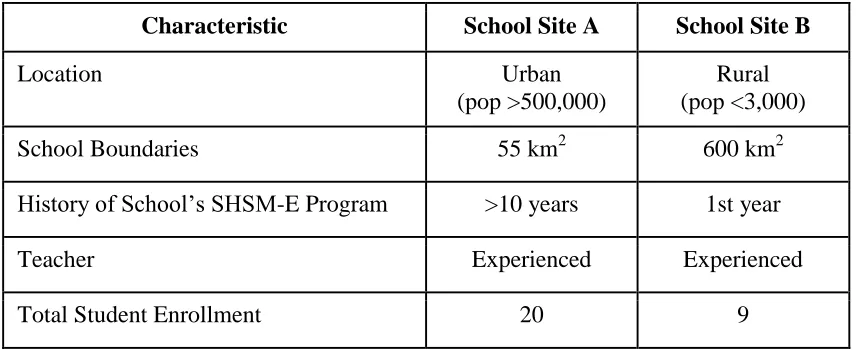
Table 1 presents the participant demographics of each site.
Characteristic School Site A School Site B
Location Urban
(pop >500,000)
Rural (pop <3,000)
School Boundaries 55 km2 600 km2
History of School’s SHSM-E Program >10 years 1st year
Teacher Experienced Experienced
Total Student Enrollment 20 9
3.3 Data Collection
This study drew upon multiple sources of information: documents/archival
records, teacher and student questionnaires and interviews, and direct and participant
observation of classroom activities (Yin, 2003). Multiple sources of data allowed for
triangulation of the data in order to corroborate the evidence. When data from different
sources conflicted, interview data took precedence over all other sources, following the
dominant-less dominant model of Creswell (1994 , as cited in Creswell, Plano Clark,
Gutmann, & Hanson, 2003). First-hand participant accounts and the opportunity for me
to clarify responses during interviews provided the most accuracy and detail.
The documents/archival records examined were teacher unit and lesson plans,
student workbooks and assignments, the textbook, and student work displayed around the
classroom. In-classroom observation occurred during regular class time over five days,
for periods of 2-4 hours. Both document examination and observation were looking for
similar evidence. Evidence of instruction in the process of creative problem-solving,
creative thinking, or the construction of useful and original outcomes, was sought. I also
searched for additional evidence on the use of Bloom’s Taxonomy, ill-defined and
well-defined problems, contextualized learning in real events, questioning the status quo, and
learning activities synonymous or well-associated with creativity, such as divergent
thinking or being an inventor (which I called creative activities). From a student’s
perspective, the search for evidence focused on demonstration of creative
problem-solving or thinking, and its outcomes, as well as self-directed learning of the creative
problem-solving process and self-questioning using Bloom’s Taxonomy.
Two questionnaires were used at each site in this study in order to explore the
experiences of both student and teacher participants. A teacher questionnaire was
designed to retrieve information associated with environmental leadership, instructional
decision making, and general citizenship. A survey by Wideen, O’Shea, Pye and Ivany
(1997), which tracked classroom practices, formed the basis of the teacher questionnaire.
To this survey, three constructivist instructional strategies were added. Two items were
removed and one open-ended question was included. Completing the five-page teacher
questionnaire were questions exploring constraints and supports, activities synonymous