Abstract
HARRIS III, JOHN LEROY. Seismic Analysis and Design of Type FR Steel Frames Using Displacement-Based Design and Advanced Analysis. (Under the direction of Mervyn J. Kowalsky.)
Current design office methodologies for seismic design of steel moment frames include forced-based methods for calculating equivalent lateral forces and a static elastic analysis. Research has revealed erroneous assumptions in forced-based methods and proposes that displacement-based methods, due to modeling inelastic systems, result in more reasonable lateral force distributions. Additionally, LRFD1 member design interaction equations implicitly account for geometric and material non-linear effects. This philosophy does not satisfy compatibility between actual inelastic member response and the elastic system as assumed by a conventional elastic analysis.
The goal of this research is to advance the validity and accuracy of displacement-based design methods and Advanced Analysis for the engineering of seismic resistant steel moment frames. This research will allow the development of alternate seismic analysis and design procedures, as well as refined practical methods that can be incorporated in a design office.
SEISMIC ANALYSIS AND DESIGN OF TYPE FR STEEL
FRAMES USING DISPLACEMENT-BASED DESIGN AND
ADVANCED ANALYSIS
by
JOHN LEROY HARRIS III
A thesis submitted to the Graduate Faculty of North Carolina State University
in partial fulfillment of the requirements for the Degree of
Master of Science
CIVIL AND ENVIRONMENTAL ENGINEERING
Raleigh
2002
APPROVED BY:
_________________________________
Tasnim Hassan
_________________________________
James Nau
________________________________
Chair of Advisory Committee
Unquestioned answers are more dangerous than unanswered questions
Unknown
Dedicated to
Biography
John Harris was born August 8, 1970 in Rome, NY and spent his childhood years in Chicago, IL, and Raleigh, NC. After completing his Bachelor of Science degree in Civil Engineering at North Carolina State University in 1994, he worked as a Structural Engineer in Raleigh, NC, Atlanta, GA, and New York, NY, with special interest in steel structures. Additionally, John is a registered Professional Engineer and an active member of AISC, SSRC, and ASCE. For the past several years, he has participated with various industry committees, most
notably, Committee on Manuals and Textbooks for AISC and Task Group #29 – 2nd Order
Inelastic Analysis for SSRC. It was the experience with these groups that led John to return to North Carolina State University with an interest in researching Advanced Analysis techniques for steel structures. While at NCSU, John met Mervyn Kowalsky, who strengthened John’s concentration in earthquake engineering, and began researching displacement-based seismic design and Advanced Analysis of steel frames. John completed his Master of Science degree in August 2002.
Acknowledgements
I am sincerely grateful to the following while preparing this document.
• God, for giving me the ability to think, though at times incorrectly.
• My family and friends, whom without their support I would be a starving musician.
• Brian Lanier, Kirk Stanford, Randall Wilson, Joel Howard, Todd Garrison, Scott
Wirgau, and Tyler Durden, for putting up with my raving discussions, most notably, the ones concerning my ironic views that people should not live in severe earthquake prone regions. For the scientific exploration, I do submit.
• My mentor and friend, JC Smith, for the ability to see the truths in his vision.
• My committee members, Jim Nau and Tasnim Hassan, for their support, wisdom,
guidance, and their ability to let go at 4:30 on Friday.
• My committee chair, Mervyn Kowalsky, for showing me the light and then
Table of Contents
List of Tables x
List of Figures xv
List of Symbols xxvi
List of Abbreviations xxxi
PART 1 INTRODUCTION, SIMPLIFICATIONS AND ASSUMPTIONS 1
1.0 Introduction 2
1.1 Current Research 4
1.2 Simplifications, Assumptions, and Constant Variables 7
1.2.1 Simplifications 7
1.2.2 Assumptions 8
1.2.3 Constant Variables 9
PART 2 DISPLACEMENT-BASED DESIGN 11
2.0 Introduction 12
2.1 SEAOC Specification on Performance-based Design 12
2.1.1 Ductility 16
2.2 Section Curvature 16
2.2.1 Yield Curvature 16
2.2.2 Equivalent Plastic Curvature 18
2.2.3 First-yield Curvature 21
2.2.4 Curvature Reduction for Combined Load Effects 22
2.2.4.1Reduction for Axial Compression 22
2.2.4.2Reduction for Shear 26
2.2.4.3Reduction for Torsion 27
2.2.5 Material Overstrength Factor 27
2.3 Member Rotation 29
2.3.1 Stability Functions
(No Transverse Loads – No Support Displacement) 29
2.3.2 Stability Functions
(No Transverse Loads – Support Displacement) 32
2.3.3 Stability Functions (Transverse Loads) 34
2.3.4 Column-to-Beam Stiffness Factor 39
2.3.5 Summary of Plastic Rotation Capacities 42
2.4 Global System Response 43
2.4.1 Design System Displacement 46
2.4.2 System Ductility 47
2.4.3 Effective System Damping 48
2.4.4 Effective System Period and Stiffness, and Base Shear 50
2.4.5 System Analysis and Elastic Displacement Profiles 52
2.4.5.1Equivalent Yield Analysis 54
2.4.6 System Overstrength and Capacity Design 58
2.4.6.1Material Overstrength Factors 59
2.4.6.2Performance Overstrength Factors 59
2.4.6.3Capacity Design 65
2.4.6.4Member Design 69
2.4.6.4.1 Beams 70
2.4.6.4.2 Columns 70
2.5 Displacement-based Design 73
2.5.1 FR-4 79
2.5.2 FR-4-W21 94
2.5.3 FR-4-W24 97
2.5.5 FR-4b 109
2.5.6 FR-8 116
2.5.7 FR-8-W27 126
2.5.8 FR-16 136
PART 3 ADVANCED ANALYSIS 152
3.0 Introduction 153
3.1 Advanced Analysis 155
3.2 Advanced Analysis Methods 156
3.2.1 Material Non-linearities 157
3.2.2 Geometric Non-linearities 161
3.3 Advanced Analysis and Displacement-Based Design 162
3.3.1 FR-4 165
3.3.2 FR-4-W21 166
3.3.3 FR-4-W24 167
3.3.4 FR-4a 168
3.3.5 FR-4b 169
3.3.6 FR-8 170
3.3.7 FR-8-W27 171
3.4 References 173
PART 4 VERIFICATION 174
4.0 Introduction 175
4.1 FR-4 176
4.1.1 Displacement Profiles 176
4.1.2 Base Shear 189
4.2 FR-4-W21 194
4.2.1 Displacement Profiles 194
4.3 FR-4-W24 200
4.3.1 Displacement Profiles 200
4.3.2 Base Shear 205
4.4 FR-4a 206
4.4.1 Displacement Profiles 206
4.4.2 Base Shear 211
4.5 FR-4b 213
4.5.1 Displacement Profiles 213
4.5.2 Base Shear 218
4.6 FR-8 220
4.6.1 Displacement Profiles 220
4.6.2 Base Shear 231
4.7 FR-8-W27 234
4.7.1 Displacement Profiles 234
4.7.2 Base Shear 239
4.8 FR-16 241
4.8.1 Displacement Profiles 241
4.8.2 Base Shear 252
4.9 Sources of Variation 255
PART 5 CONCLUSION AND FUTURE RESEARCH 263
5.0 Conclusion 264
5.1 Future Research 267
PART 6 APPENDIX AND REFERENCES 269
A Design Response Spectrums 270
A.1 Acceleration Response Spectrums 271
A.2 Displacement Response Spectrums 272
B Time-Histories 277
B.1 TH-1 Design Response Spectrums (Artificial) 277
B.2 TH-2 Design Response Spectrums (Artificial) 279
B.3 TH-3 Design Response Spectrums (El Centro) 281
B.4 TH-4 Design Response Spectrums (Kobe) 283
B.5 TH-5 Design Response Spectrums (Loma Prieta) 285
B.6 TH-6 Design Response Spectrums (Cape Mendocino) 287
B.7 TH-7 Design Response Spectrums (Tabas) 289
B.8 TH-8 Design Response Spectrums (Petrolia) 291
B.9 TH-9 Design Response Spectrums (Vina Del Mar) 293
B.10 TH-10 Design Response Spectrums (Northridge) 295
B.11 TH-11 Design Response Spectrums (Tokachi-Oki) 297
B.12 TH-12 Design Response Spectrums (Taft) 299
List of Tables
Table 1.1-1 Frame description 4
Table 2.1-1 Structural performance levels 13
Table 2.1-2 Design level earthquakes 14
Table 2.1-3 Basic safety performance objective 15
Table 2.2.3-1 Recommended design magnitude of compressive
residual stresses 21
Table 2.2.5-1 Recommended material overstrength factors 28
Table 2.2.6-1 Recommended equivalent plastic curvatures 29
Table 2.3.3-1 Elastic fixed-end moments 38
Table 2.3.5-1 Recommended equivalent plastic rotation capacities 42
Table 2.3.5-2 Recommended equivalent plastic rotation capacities
with axial force 42
Table 2.4-1 Recommended target interstory drifts corresponding to rotation
demands 44
Table 2.4-2 Inelastic Displacement Profiles 44
Table 2.5-1 Frame descriptions 73
Table 2.5-2 Target interstory drifts per performance level 74
Table 2.5-3 Target peak ground accelerations per performance level 75
Table 2.5.1-1 Floor equivalent plastic rotations (FR-4) 81
Table 2.5.1-2 SP-1 target displacements (FR-4) 83
Table 2.5.1-3 SP-2 target displacements (FR-4) 83
Table 2.5.1-4 SP-3 target displacements (FR-4) 83
Table 2.5.1-5 SP-4 target displacements (FR-4) 84
Table 2.5.1-6 SP-1 SDOF system properties (FR-4) 85
Table 2.5.1-7 SP-2 SDOF system properties (FR-4) 85
Table 2.5.1-9 SP-4 SDOF system properties (FR-4) 86
Table 2.5.1-10 SP-4 effective system properties (FR-4) 88
Table 2.5.1-11 SP-3 effective system properties (FR-4) 88
Table 2.5.1-12 SP-2 effective system properties (FR-4) 89
Table 2.5.1-13 SP-1 effective system properties (FR-4) 89
Table 2.5.1-14 Equivalent static lateral forces (FR-4) 90
Table 2.5.4-1 Floor equivalent plastic rotations (FR-4a) 101
Table 2.5.4-2 SP-1 target displacements (FR-4a) 103
Table 2.5.4-3 SP-2 target displacements (FR-4a) 103
Table 2.5.4-4 SP-3 target displacements (FR-4a) 103
Table 2.5.4-5 SP-1 target displacements (FR-4a) 103
Table 2.5.4-6 SP-1 SDOF system properties (FR-4a) 104
Table 2.5.4-7 SP-2 SDOF system properties (FR-4a) 105
Table 2.5.4-8 SP-3 SDOF system properties (FR-4a) 105
Table 2.5.4-9 SP-4 SDOF system properties (FR-4a) 105
Table 2.5.4-10 SP-4 effective system properties (FR-4a) 106
Table 2.5.4-11 SP-3 effective system properties (FR-4a) 106
Table 2.5.4-12 SP-2 effective system properties (FR-4a) 106
Table 2.5.4-13 SP-1 effective system properties (FR-4a) 106
Table 2.5.4-14 Equivalent static lateral forces (FR-4a) 107
Table 2.5.5-1 Floor equivalent plastic rotations (FR-4b) 110
Table 2.5.5-2 SP-1 target displacements (FR-4b) 110
Table 2.5.5-3 SP-2 target displacements (FR-4b) 110
Table 2.5.5-4 SP-3 target displacements (FR-4b) 111
Table 2.5.5-5 SP-4 target displacements (FR-4b) 111
Table 2.5.5-6 SP-1 SDOF system properties (FR-4b) 112
Table 2.5.5-8 SP-3 SDOF system properties (FR-4b) 112
Table 2.5.5-9 SP-4 SDOF system properties (FR-4b) 113
Table 2.5.5-10 SP-4 effective system properties (FR-4b) 113
Table 2.5.5-11 SP-3 effective system properties (FR-4b) 113
Table 2.5.5-12 SP-2 effective system properties (FR-4b) 113
Table 2.5.5-13 SP-1 effective system properties (FR-4b) 113
Table 2.5.5-14 Equivalent static lateral forces (FR-4b) 114
Table 2.5.6-1 Floor equivalent plastic rotations (FR-8) 117
Table 2.5.6-2 Elastic SP-1 target displacements (FR-8) 118
Table 2.5.6-3 SP-2 target displacements (FR-8) 118
Table 2.5.6-4 SP-3 target displacements (FR-8) 118
Table 2.5.6-5 SP-4 target displacements (FR-8) 119
Table 2.5.6-6 Elastic SP-1 SDOF system properties (FR-8) 120
Table 2.5.6-7 SP-2 SDOF system properties (FR-8) 120
Table 2.5.6-8 SP-3 SDOF system properties (FR-8) 121
Table 2.5.6-9 SP-4 SDOF system properties (FR-8) 121
Table 2.5.6-10 SP-4 effective system properties (FR-8) 122
Table 2.5.6-11 SP-3 effective system properties (FR-8) 123
Table 2.5.6-12 SP-2 effective system properties (FR-8) 123
Table 2.5.6-13 Elastic SP-1 effective system properties (FR-8) 123
Table 2.5.6-14 Equivalent static lateral forces (FR-8) 123
Table 2.5.7-1 Floor equivalent plastic rotations (FR-8-W27) 127
Table 2.5.7-2 Elastic SP-1 target displacements (FR-8-W27) 127
Table 2.5.7-3 SP-2 target displacements (FR-8-W27) 128
Table 2.5.7-4 SP-3 target displacements (FR-8-W27) 128
Table 2.5.7-5 SP-4 target displacements (FR-8-W27) 128
Table 2.5.7-7 SP-2 SDOF system properties (FR-8-W27) 130
Table 2.5.7-8 SP-3 SDOF system properties (FR-8-W27) 130
Table 2.5.7-9 SP-4 SDOF system properties (FR-8-W27) 131
Table 2.5.7-10 SP-4 effective system properties (FR-8-W27) 131
Table 2.5.7-11 SP-3 effective system properties (FR-8-W27) 131
Table 2.5.7-12 SP-2 effective system properties (FR-8-W27) 131
Table 2.5.7-13 Elastic SP-1 effective system properties (FR-8-W27) 132
Table 2.5.7-14 Equivalent static lateral forces (FR-8-W27) 132
Table 2.5.8-1 Floor equivalent plastic rotations (FR-16) 137
Table 2.5.8-2 Elastic SP-1 target displacements (FR-16) 138
Table 2.5.8-3 SP-2 target displacements (FR-16) 139
Table 2.5.8-4 SP-3 target displacements (FR-16) 140
Table 2.5.8-5 SP-4 target displacements (FR-16) 141
Table 2.5.8-6 Elastic SP-1 SDOF system properties (FR-16) 143
Table 2.5.8-7 SP-2 SDOF system properties (FR-16) 144
Table 2.5.8-8 SP-3 SDOF system properties (FR-16) 145
Table 2.5.8-9 SP-4 SDOF system properties (FR-16) 146
Table 2.5.8-10 SP-4 effective system properties (FR-16) 146
Table 2.5.8-11 SP-3 effective system properties (FR-16) 147
Table 2.5.8-12 SP-2 effective system properties (FR-16) 147
Table 2.5.8-13 Elastic SP-1 effective system properties (FR-16) 147
Table 2.5.8-14 Equivalent static lateral forces (FR-16) 148
Table 4-1 Selected time-histories 175
Table 4.1.1-1 FR-4 Displacements at effective height 178
Table 4.1.2-1 FR-4 Maximum base shears 189
Table 4.2.1-1 FR-4-W21 Displacement at effective height 196
Table 4.3.1-1 FR-4-W24 Displacement at effective height 202
Table 4.3.2-1 Base shears (FR-4-W24) 205
Table 4.4.1-1 FR-4a Displacement at effective height 208
Table 4.4.2-1 FR-4a Base shears 211
Table 4.5.1-1 FR-4b Displacement at effective height 215
Table 4.5.2-1 FR-4b Base shears 218
Table 4.6.1-1 FR-8 Displacement at effective height 222
Table 4.6.2-1 FR-8 Base shears 231
Table 4.7.1-1 FR-8-W27 Displacement at effective height 236
Table 4.7.2-1 FR-8-W27 Base shears 239
Table 4.8.1-1 FR-16 Displacement at effective height 243
Table 4.8.2-1 FR-16 Base shears 252
List of Figures
Figure 1.1-1 Building plan 5
Figure 1.2.1-1 Member Force-Displacement graph of structural steel beam 7
Figure 1.2.1-2 Cyclic behavior of structural steel with Baushinger Effect 8
Figure 2.1-1 System Force-displacement graph 12
Figure 2.1-2 Graphical representation of structural performance levels 13
Figure 2.1-3 Structural Performance Objectives 14
Figure 2.2.2-1 Normalized moment-curvature graph 19
Figure 2.2.2-2 Elasto-perfectly plastic moment-curvature graph 19
Figure 2.2.3-1 Plastic flexural behavior of wide-flange with residual stresses 21
Figure 2.2.4.1-1 Idealized interaction diagram for steel beam-column 25
Figure 2.3.1-1 Beam-column subjected to end moments and axial force 30
Figure 2.3.2-1 Beam-Column subjected to end moments, axial force, and
support displacement 33
Figure 2.3.3-1 Beam-Column subjected to end moments, axial force, and
transverse load 34
Figure 2.3.3-2 Moment comparison 38
Figure 2.4-1 SDOF representation of actual system 43
Figure 2.4-1 Recommended Inelastic Displacement Profiles 45
Figure 2.4.3-1 Effective damping vs. ductility graph 50
Figure 2.4.4-1 Displacement Response Spectra 50
Figure 2.4.4-2 System force-displacement graph 52
Figure 2.4.5-1 Displacement profile ranges of frames 54
Figure 2.4.5.1-1 Non-linear yield displacement profile at SP-1 performance level 56
Figure 2.4.5.1-2 Normalized target drift to EQ level comparison 57
Figure 2.4.6.2-1 System Force-Deformation Graph including System Overstrength 64
Figure 2.4.6.3-1 Reduced cross-section at plastic hinge length 68
Figure 2.5-1 EQ I Displacement Response Spectrum
(PGA Reduction Factor = 0.125) 76
Figure 2.5-2 EQ II Displacement Response Spectrum
(PGA Reduction Factor = 0.45) 76
Figure 2.5-3 EQ III Displacement Response Spectrum
(PGA Reduction Factor = 0.8) 77
Figure 2.5-4 EQ IV Displacement Response Spectrum
(PGA Reduction Factor = 1.0) 77
Figure 2.5-5 Equivalent damping vs. displacement ductility 78
Figure 2.5.1-1 Frame schematic (FR-4) 79
Figure 2.5.1-2 Target displacement profiles (FR-4) 84
Figure 2.5.1-3 Equal displacement approximation 87
Figure 2.5.1-3 System force-displacement graph (FR-4) 89
Figure 2.5.1-4 System force-displacement graph (FR-4) 92
Figure 2.5.1-5 Final frame schematic (FR-4) 93
Figure 2.5.1-6 SP-1 displacement profile (FR-4) 93
Figure 2.5.2-1 System force-displacement graph (FR-4-W21) 95
Figure 2.5.2-2 Final Schematic (FR-4-W21) 96
Figure 2.5.2-3 SP-1 displacement profile (FR-4-W21) 96
Figure 2.5.3-1 System force-displacement graph (FR-4-W24) 98
Figure 2.5.3-2 Final schematic (FR-4-W24) 98
Figure 2.5.3-3 SP-1 displacement profile (FR-4-W24) 99
Figure 2.5.4-1 Frame schematic (FR-4a) 100
Figure 2.5.4-2 Beam Rotation Chart 101
Figure 2.5.4-3 Beam rotation ductility chart 102
Figure 2.5.4-4 Target displacement profiles (FR-4a) 104
Figure 2.5.4-6 Final frame schematic (FR-4a) 108
Figure 2.5.4-7 SP-1 displacement profile (FR-4a) 108
Figure 2.5.5-1 Frame schematic (FR-4b) 109
Figure 2.5.5-2 Target displacement profiles (FR-4b) 111
Figure 2.5.5-3 System force-displacement graph (FR-4b) 114
Figure 2.5.5-4 Final frame schematic (FR-4b) 115
Figure 2.5.5-5 SP-1 displacement profile (FR-4b) 115
Figure 2.5.6-1 Final frame schematic (FR-8) 116
Figure 2.5.6-2 Target displacement profiles (FR-8) 119
Figure 2.5.6-3 Elastic and pseudo-elastic non-linear displacement profiles 122
Figure 2.5.6-4 System force-displacement graph (FR-8) 124
Figure 2.5.6-5 Final frame schematic (FR-8) 125
Figure 2.5.6-6 Elastic SP-1 Displacement Profile (FR-8) 126
Figure 2.5.7-1 Target displacement profiles (FR-8-W27) 129
Figure 2.5.7-2 System force-displacement graph (FR-8-W27) 133
Figure 2.5.7-3 Final Frame schematic (FR-8-W27) 134
Figure 2.5.7-4 Elastic SP-1 Displacement Profile (FR-8-W27) 135
Figure 2.5.8-1 Final frame schematic (FR-16) 136
Figure 2.5.8-2 Target displacement profiles (FR-16) 142
Figure 2.5.8-3 System force-displacement graph (FR-16) 149
Figure 2.5.8-4 Final frame schematic (FR-16) 150
Figure 2.5.8-5 Elastic SP-1 Displacement Profile (FR-16) 151
Figure 3.2.1-1 Two-surface stiffness degrading plastic hinge interaction diagram 158
Figure 3.2.1-2 Parabolic plastic hinge stiffness degradation function 159
Figure 3.2.1-3 CRC tangent stiffness degradation function 160
Figure 3.2.1-4 Normalized axial force-strain relationship 160
Figure 3.2.2-2 Comparison of strength curves 162
Figure 3.3.1-1 FR-4 System Force-Displacement Graph 165
Figure 3.3.1-2 FR-4 SP-1 Displacement Profile 165
Figure 3.3.2-1 FR-4-W21 System Force-Displacement Graph 166
Figure 3.3.2-2 FR-4-W21 SP-1 Displacement Profile 166
Figure 3.3.3-1 FR-4-W21 System Force-Displacement Graph 167
Figure 3.3.3-2 FR-4-W24 SP-1 Displacement Profile 167
Figure 3.3.4-1 FR-4a System Force-Displacement Graph 168
Figure 3.3.5-1 FR-4b System Force-Displacement Graph 169
Figure 3.3.5-2 FR-4b SP-1 Displacement profile 169
Figure 3.3.6-1 FR-8 System Force-Displacement Graph 170
Figure 3.3.6-2 FR-8 SP-1 Displacement Profile 170
Figure 3.3.7-1 FR-8-W27 System Force-Displacement Graph 171
Figure 3.3.7-2 FR-8-W27 SP-1 Displacement profile 171
Figure 4.1.1-1 FR-4 Maximum displacement envelopes (SP-1:EQ I) 176
Figure 4.1.1-2 FR-4 Maximum displacement envelopes (SP-2:EQ II) 177
Figure 4.1.1-3 FR-4 Maximum displacement envelopes (SP-3:EQ III) 177
Figure 4.1.1-4 Maximum displacement envelopes (SP-4:EQ IV) 178
Figure 4.1.1-5 FR-4 Nodal displacements as function of time (TH-1:EQ I) 180
Figure 4.1.1-6 FR-4 Interstory drifts as function of time (TH-1:EQ I) 181
Figure 4.1.1-7 FR-4 Nodal displacements as function of time (TH-1:EQ II) 182
Figure 4.1.1-8 FR-4 Interstory drifts as function of time (TH-1:EQ II) 182
Figure 4.1.1-9 FR-4 Nodal displacements as function of time (TH-1:EQ III) 183
Figure 4.1.1-10 FR-4 Interstory drifts as function of time (TH-1:EQ III) 184
Figure 4.1.1-11 FR-4 Nodal displacements as function of time (TH-1:EQ IV) 184
Figure 4.1.1-12 FR-4 Interstory drifts as function of time (TH-1:EQ IV) 185
Figure 4.1.1-14 FR-4 Maximum interstory drift envelopes (SP-1:EQ I) 187
Figure 4.1.1-15 FR-4 Maximum interstory drift envelopes (SP-2:EQ II) 187
Figure 4.1.1-16 FR-4 Maximum interstory drift envelopes (SP-3:EQ III) 188
Figure 4.1.1-17 FR-4 Maximum interstory drift envelopes (SP-4:EQ IV) 188
Figure 4.1.2-1 FR-4 System force-displacement graph 190
Figure 4.1.2-2 FR-4 Maximum story shear envelopes (SP-1:EQ I) 191
Figure 4.1.2-3 FR-4 Maximum story shear envelopes (SP-2:EQ II) 191
Figure 4.1.2-4 FR-4 Maximum story shear envelopes (SP-3:EQ III) 192
Figure 4.1.2-5 FR-4 Maximum story shear envelopes (SP-1:EQ I) 192
Figure 4.1.2-6 FR-4 story shears as function of time (TH-1:EQ III) 193
Figure 4.2.1-1 FR-4-W21 Maximum displacement envelopes (SP-1:EQ I) 194
Figure 4.2.1-2 FR-4-W21 Maximum displacement envelopes (SP-2:EQ II) 195
Figure 4.2.1-3 FR-4-W21 Maximum displacement envelopes (SP-3:EQ III) 195
Figure 4.2.1-4 FR-4-W21 Maximum displacement envelopes (SP-4:EQ IV) 196
Figure 4.2.1-5 FR-4-W21 Maximum interstory drift envelope (SP-1:EQ I) 197
Figure 4.2.1-6 FR-4-W21 Maximum interstory drift envelope (SP-2:EQ II) 197
Figure 4.2.1-7 FR-4-W21 Maximum interstory drift envelope (SP-3:EQ III) 198
Figure 4.2.1-8 FR-4-W21 Maximum interstory drift envelope (SP-4:EQ IV) 198
Figure 4.2.2-1 FR-4-W21 System force-displacement graph 199
Figure 4.3.1-1 FR-4-W24 Maximum displacement envelopes (SP-1:EQ I) 200
Figure 4.3.1-2 FR-4-W24 Maximum displacement envelopes (SP-2:EQ II) 201
Figure 4.3.1-3 FR-4-W24 Maximum displacement envelopes (SP-3:EQ III) 201
Figure 4.3.1-4 FR-4-W24 Maximum displacement envelopes (SP-4:EQ IV) 202
Figure 4.3.1-5 FR-4-W24 Maximum interstory drift envelope (SP-1:EQ I) 203
Figure 4.3.1-6 FR-4-W24 Maximum interstory drift envelope (SP-2:EQ II) 203
Figure 4.3.1-7 FR-4-W24 Maximum interstory drift envelope (SP-3:EQ III) 204
Figure 4.3.2-1 FR-4-W24 System force-displacement graph 205
Figure 4.4.1-1 FR-4a Maximum displacement envelopes (SP-1:EQ I) 206
Figure 4.4.1-2 FR-4a Maximum displacement envelopes (SP-2:EQ II) 207
Figure 4.4.1-3 Fr-4a Maximum displacement envelopes (SP-3:EQ III) 207
Figure 4.4.1-4 FR-4a Maximum displacement envelopes (SP-4:EQ IV) 208
Figure 4.4.1-5 FR-4a Maximum interstory drift envelope (SP-1:EQ I) 209
Figure 4.4.1-6 FR-4a Maximum interstory drift envelope (SP-2:EQ II) 209
Figure 4.4.1-7 FR-4a Maximum interstory drift envelope (SP-3:EQ III) 210
Figure 4.4.1-8 FR-4a Maximum interstory drift envelope (SP-4:EQ IV) 210
Figure 4.4.2-1 FR-4a System force-displacement graph 211
Figure 4.5.2-2 FR-4a Maximum story shears (TH-1) 212
Figure 4.5.2-3 FR-4a Maximum story shears (TH-2) 212
Figure 4.5.1-1 FR-4b Maximum displacement envelopes (SP-1:EQ I) 213
Figure 4.5.1-2 FR-4b Maximum displacement envelopes (SP-2:EQ II) 214
Figure 4.5.1-3 Fr-4b Maximum displacement envelopes (SP-3:EQ III) 214
Figure 4.5.1-4 FR-4b Maximum displacement envelopes (SP-4:EQ IV) 215
Figure 4.5.1-5 FR-4b Maximum interstory drift envelope (SP-1:EQ I) 216
Figure 4.5.1-6 FR-4b Maximum interstory drift envelope (SP-2:EQ II) 216
Figure 4.5.1-7 FR-4b Maximum interstory drift envelope (SP-3:EQ III) 217
Figure 4.5.1-8 FR-4b Maximum interstory drift envelope (SP-4:EQ IV) 217
Figure 4.5.2-1 FR-4b System force-displacement graph 218
Figure 4.5.2-2 FR-4b Maximum story shears (TH-1) 219
Figure 4.5.2-3 FR-4b Maximum story shears (TH-2) 219
Figure 4.6.1-1 FR-8 Maximum displacement envelopes (SP-1:EQ I) 220
Figure 4.6.1-2 FR-8 Maximum displacement envelopes (SP-2:EQ II) 221
Figure 4.6.1-3 FR-8 Maximum displacement envelopes (SP-3:EQ III) 221
Figure 4.6.1-5 FR-8 Nodal displacements as function of time (TH-1:EQ I) 223
Figure 4.6.1-6 FR-8 Interstory drifts as function of time (TH-1:EQ I) 224
Figure 4.6.1-7 FR-8 Nodal displacements as function of time (TH-1:EQ II) 225
Figure 4.6.1-8 FR-8 Interstory drifts as function of time (TH-1:EQ II) 225
Figure 4.6.1-9 FR-8 Nodal displacements as function of time (TH-1:EQ III) 226
Figure 4.6.1-10 FR-8 Interstory drifts as function of time (TH-1:EQ III) 227
Figure 4.6.1-11 FR-8 Nodal displacements as function of time (TH-1:EQ IV) 227
Figure 4.6.1-12 FR-8 Interstory drifts as function of time (TH-1:EQ IV) 228
Figure 4.6.1-14 FR-8 Maximum interstory drift envelope (SP-1:EQ I) 229
Figure 4.6.1-15 FR-8 Maximum interstory drift envelope (SP-2:EQ II) 229
Figure 4.6.1-16 FR-8 Maximum interstory drift envelope (SP-3:EQ III) 230
Figure 4.6.1-17 FR-8 Maximum interstory drift envelope (SP-4:EQ IV) 230
Figure 4.6.2-1 FR-8 System force-displacement graph 231
Figure 4.6.2-2 FR-8 Maximum story shear envelopes (SP-1:EQ I) 232
Figure 4.6.2-3 FR-8 Maximum story shear envelopes (SP-2:EQ II) 232
Figure 4.6.2-4 FR-8 Maximum story shear envelopes (SP-3:EQ III) 233
Figure 4.6.2-5 FR-8 Maximum story shear envelopes (SP-4:EQ IV) 233
Figure 4.7.1-1 FR-8-W27 Maximum displacement envelopes (SP-1:EQ I) 234
Figure 4.7.1-2 FR-8-W27 Maximum displacement envelopes (SP-2:EQ II) 235
Figure 4.7.1-3 FR-8-W27 Maximum displacement envelopes (SP-3:EQ III) 235
Figure 4.7.1-4 FR-8-W27 Maximum displacement envelopes (SP-4:EQ IV) 236
Figure 4.7.1-5 FR-8-W27 Maximum interstory drift envelope (SP-1:EQ I) 237
Figure 4.7.1-6 FR-8-W27 Maximum interstory drift envelope (SP-2:EQ II) 237
Figure 4.7.1-7 FR-8-W27 Maximum interstory drift envelope (SP-3:EQ III) 238
Figure 4.7.1-8 FR-8-W27 Maximum interstory drift envelope (SP-4:EQ IV) 238
Figure 4.7.2-1 FR-8-W27 System force-displacement graph 239
Figure 4.7.2-2 FR-8-W27 Maximum story shears (TH-2) 240
Figure 4.8.1-1 FR-16 Maximum displacement envelopes (SP-1:EQ I) 241
Figure 4.8.1-2 FR-16 Maximum displacement envelopes (SP-2:EQ II) 242
Figure 4.8.1-3 FR-16 Maximum displacement envelopes (SP-3:EQ III) 242
Figure 4.8.1-4 FR-16 Maximum displacement envelopes (SP-4:EQ IV) 243
Figure 4.8.1-5 FR-16 Nodal displacements as function of time (TH-1:EQ I) 244
Figure 4.8.1-6 FR-16 Interstory drifts as function of time (TH-1:EQ I) 245
Figure 4.8.1-7 FR-16 Nodal displacements as function of time (TH-1:EQ II) 246
Figure 4.8.1-8 FR-16 Interstory drifts as function of time (TH-1:EQ II) 246
Figure 4.8.1-9 FR-16 Nodal displacements as function of time (TH-1:EQ III) 247
Figure 4.8.1-10 FR-16 Interstory drifts as function of time (TH-1:EQ III) 248
Figure 4.8.1-11 FR-16 Nodal displacements as function of time (TH-1:EQ IV) 248
Figure 4.8.1-12 FR-16 Interstory drifts as function of time (TH-1:EQ IV) 249
Figure 4.8.1-14 FR-16 Maximum interstory drift envelope (SP-1:EQ I) 250
Figure 4.8.1-15 FR-16 Maximum interstory drift envelope (SP-2:EQ II) 250
Figure 4.8.1-16 FR-16 Maximum interstory drift envelope (SP-3:EQ III) 251
Figure 4.8.1-17 FR-16 Maximum interstory drift envelope (SP-4:EQ IV) 251
Figure 4.8.2-1 FR-16 System force-displacement graph 252
Figure 4.8.2-2 FR-16 Maximum story shear envelopes (SP-1:EQ I) 253
Figure 4.8.2-3 FR-16 Maximum story shear envelopes (SP-2:EQ II) 253
Figure 4.8.2-4 FR-16 Maximum story shear envelopes (SP-3:EQ III) 254
Figure 4.8.2-5 FR-16 Maximum story shear envelopes (SP-4:EQ IV) 254
Figure 4.9-1 MCE (EQ IV) Design displacement response spectrums
(5% damping) 255
Figure 4.9-2 MCE (EQ IV) Design displacement response spectrums
(10% damping) 256
Figure 4.9-3 MCE (EQ IV) Design displacement response spectrums
Figure 4.9-4 MCE (EQ IV) Design displacement response spectrums
(20% damping) 257
Figure 4.9-5 MCE (EQ IV) Design displacement response spectrums
(25% damping) 257
Figure 4.9-6 Displacement variations at effective system height (FR-4) 258
Figure 4.9-7 Displacement variations at effective system height (FR-8) 259
Figure 4.9-8 Displacement variations at effective system height (FR-16) 259
Figure 4.9-9 Range of effective system periods (FR-4) 260
Figure 4.9-10 Range of effective system periods (FR-8) 261
Figure 4.9-11 Range of effective system periods (FR-16) 261
Figure A.1-1 EQ I Acceleration Response Spectrum 271
Figure A.1-2 EQ II Acceleration Response Spectrum 271
Figure A.1-3 EQ III Acceleration Response Spectrum 272
Figure A.1-4 EQ IV Acceleration Response Spectrum 272
Figure A.2-1 EQ I Displacement Response Spectra 273
Figure A.2-2 EQ II Displacement Response Spectra 273
Figure A.2-3 EQ III Displacement Response Spectra 274
Figure A.2-4 EQ IV Displacement Response Spectra 274
Figure A.3-1 EQ I Velocity Response Spectra 275
Figure A.3-2 EQ II Velocity Response Spectra 275
Figure A.3-3 EQ III Velocity Response Spectra 276
Figure A.3-4 EQ IV Velocity Response Spectra 276
Figure B.1-1 Time-History (TH-1) 277
Figure B.1-2 Acceleration Response Spectra (TH-1) 277
Figure B.1-3 Displacement Response Spectra (TH-1) 278
Figure B.1-4 Velocity Response Spectra (TH-1) 278
Figure B.2-2 Acceleration Response Spectra (TH-2) 279
Figure B.2-3 Displacement Response Spectra (TH-2) 280
Figure B.2-4 Velocity Response Spectra (TH-2) 280
Figure B.3-1 Time-History (TH-3) 281
Figure B.3-2 Acceleration Response Spectra (TH-3) 281
Figure B.3-3 Displacement Response Spectra (TH-3) 282
Figure B.3-4 Velocity Response Spectra (TH-3) 282
Figure B.4-1 Time-History (TH-4) 283
Figure B.4-2 Acceleration Response Spectra (TH-4) 283
Figure B.4-3 Displacement Response Spectra (TH-4) 284
Figure B.4-4 Velocity Response Spectra (TH-4) 284
Figure B.5-1 Time-History (TH-5) 285
Figure B.5-2 Acceleration Response Spectra (TH-5) 285
Figure B.5-3 Displacement Response Spectra (TH-5) 286
Figure B.5-4 Velocity Response Spectra (TH-5) 286
Figure B.6-1 Time-History (TH-6) 287
Figure B.6-2 Acceleration Response Spectra (TH-6) 287
Figure B.6-3 Displacement Response Spectra (TH-6) 288
Figure B.6-4 Velocity Response Spectra (TH-6) 288
Figure B.7-1 Time-History (TH-7) 289
Figure B.7-2 Acceleration Response Spectra (TH-7) 289
Figure B.7-3 Displacement Response Spectra (TH-7) 290
Figure B.7-4 Velocity Response Spectra (TH-7) 290
Figure B.8-1 Time-History (TH-8) 291
Figure B.8-2 Acceleration Response Spectra (TH-8) 291
Figure B.8-3 Displacement Response Spectra (TH-8) 292
Figure B.9-1 Time-History (TH-9) 293
Figure B.9-2 Acceleration Response Spectra (TH-9) 293
Figure B.9-3 Displacement Response Spectra (TH-9) 294
Figure B.9-4 Velocity Response Spectra (TH-9) 294
Figure B.10-1 Time-History (TH-10) 295
Figure B.10-2 Acceleration Response Spectra (TH-10) 295
Figure B.10-3 Displacement Response Spectra (TH-10) 296
Figure B.10-4 Velocity Response Spectra (TH-10) 296
Figure B.11-1 Time-History (TH-11) 297
Figure B.11-2 Acceleration Response Spectra (TH-11) 297
Figure B.11-3 Displacement Response Spectra (TH-11) 298
Figure B.11-4 Velocity Response Spectra (TH-11) 298
Figure B.12-1 Time-History (TH-12) 299
Figure B.12-2 Acceleration Response Spectra (TH-12) 299
Figure B.12-3 Displacement Response Spectra (TH-12) 300
List of Symbols
f
b Flange width
c Distance from extreme compression fiber to neutral axis
d Section depth
g Acceleration of gravity
sys eff
h System effective height
i
h Floor height
n
h Total frame height
w
h Height of web (inside of flange to inside of flange) (also dw)
n Number of stories
r Radius of gyration
f
t Flange thickness
w
t Web thickness
w Uniform load
o
y Distance from extreme compression to centroidal axis
g
A Gross cross-sectional area
E Nominal Modulus of Elasticity
L
F Nominal yield stress including residual stresses
r
F Nominal compressive residual stress
x
F Lateral force
y
F Nominal material yield stress
ye
F Material yield stress including material overstrength (AISC)
G Stiffness ratio of interconnecting columns to beams
x
I Moment of inertia about major axis
K Slenderness factor
sys eff
K System effective stiffness
sys el
K System elastic stiffness
L Member length
Lb Beam length
Lc Column length
M Applied moment
B A
M , Moment at end A or B
sys eff
M System effective mass
EQ
M Moment due to earthquake
G
M Moment due to transverse load(s)
i
M Floor mass
n
M Nominal section flexural resistance
o
M Total section plastic moment capacity
p
M Section plastic moment capacity
pc
M Reduced section plastic moment capacity for presence of axial force
ps
M Reduced section plastic moment capacity for presence of shear force
pt
M Reduced section plastic moment capacity for presence of torsion
pr
M Reduced section plastic moment capacity
r
M Section plastic moment capacity
T
y
M Section yield moment capacity
P Applied axial force (compression or tension)
n
P Nominal section axial resistance
u
P Ultimate axial force (compression or tension)
y
P Axial plastic nominal material yield stress
R Force reduction factor
y
R Material overstrength factor (AISC)
1
S One (1) second period spectral acceleration
F
S Shape factor
ii
s Beam-column stiffness coefficient
S
S Short period spectral acceleration
x
S Elastic section modulus about major axis
T Period
sys eff
T System effective period
p
T Section plastic torsion capacity
pt
T Reduced section plastic torsion capacity for presence of torsion
V Shear force
b
V Base shear
n
V Nominal section shear resistance
p
V Plastic shear capacity
u
V Ultimate shear force
i
W Floor weight
x
s
α Plastic moment capacity reduction factor for shear
β Ratio of SP-4 lateral force to performance level lateral force
∆ Displacement
i d
∆ Design, or target, nodal displacement
sys d
∆ System design, or target, displacement
sys p
∆ Post-yield system displacement
y
∆ Yield displacement
sys y
∆ System yield displacement
y
ε Nominal material yield strain
'
y
ε Nominal material first-yield strain
λ Column-to-beam stiffness factor
o
λ Total member overstrength
B A,
θ Member rotation at end A or B
d
θ Design joint rotation
G
θ Member rotation due to transverse load(s)
p
θ Equivalent member plastic rotation capacity
T
θ Target joint rotation
y
θ Member yield rotation capacity
φ Curvature
y
φ Section yield curvature
p
φ Equivalent section plastic curvature
'
y
x
φ Resistance factor
o m
φ Material overstrength
o ph
φ Member overstrength from plastic hinge sequencing
o i ph
φ Floor member overstrength from plastic hinge sequencing
o sys ph
φ System member overstrength from plastic hinge sequencing
o s
φ Member overstrength
o sys s
φ System member overstrength
o sf
φ Overstrength from shape factor
o sh
φ Overstrength from strain hardening
o i s
φ Floor member overstrength
o sr
φ Overstrength from strain rate
σ Stress
c
σ Compressive Stress
t
σ Tensile Stress
i
Ω Floor performance overstrength
sys
Ω System performance overstrength
µ Ductility
∆
µ Displacement ductility
sys
∆
µ System displacement ductility
θ
µ Rotation ductility
ς Damping
sys eff
List of Abbreviations
AISC American Institute of Steel Construction
ARS Acceleration Response Spectra
CRC Column Research Council
DBD Displacement-based Design
DFRD Demand and Resistance Factor Design
DRS Displacement Response Spectra
EPP Elasto-perfectly Plastic
EQ Earthquake
EYA Equivalent Yield Analysis
FBD Force-based Design
FEMA Federal Emergency Management Agency
IBC International Building Code
LRFD Load and Resistance Factor Design
MCE Maximum Considered Earthquake
MDOF Multi-degree-of-freedom
NEHRP National Earthquake Hazards Reduction Program
PBSE Performance-based Seismic Engineering
PGA Peak Ground Acceleration
SDOF Single-degree-of-freedom
SEAOC Structural Engineers Association of California
SP Structural Performance Level
1
PART 1
I
I
N
N
T
T
R
R
O
O
D
D
U
U
C
C
T
T
I
I
O
O
N
N
,
,
S
2
1.0 Introduction
The objective of this research is to outline an alternate seismic engineering philosophy to the current codified force-based design (FBD) approach for seismic resistant steel moment frames known as Performance-based Seismic Engineering (PBSE). Performance-based engineering is any design methodology in which the final analytical outcome is measured against a performance limit state. These limit states can be quantitatively measured by forces, strains, rotations, or displacements, and are representative of member or system damage levels. It is the limit state form that delineates the design methodology into respective performance-based groups. Since displacements are the most convenient practice of system and member evaluation, the analytical method employed in this research to achieve PBSE is Displacement-based Design (DBD).
3
Furthermore, current seismic codes limit inelastic story drifts to 0.02 or 0.025 depending on the initially “assumed” 1st mode period. These values are based on early research reporting that steel beams can accommodate post-yield rotations in the range of 0.01 to 0.015 radians – assuming an elastic rotation capacity of 0.01 radians (AISC Seismic Provisions, 2000). These rotation values have been subsequently revised based on later research; however, the codified inelastic drift requirements have not been similarly revised. As a consequence, code drift limits tend to reduce design ductility levels to values significantly less than what can actually be accommodated (Priestley and Kowalsky, 2000). Ultimately, the system will not be able to accommodate the full ductility demand (assumed equal to the force reduction factor by current seismic codes). Thus producing higher than expected seismic forces and possibly leading to either unexpected damage or damage levels in excess of desired. Furthermore, FBD procedures were developed based on the results from early scale model research and current research is noting that those results are not appropriate for determining or predicting the behavior of larger complex systems.
4
1.1 Current
Research
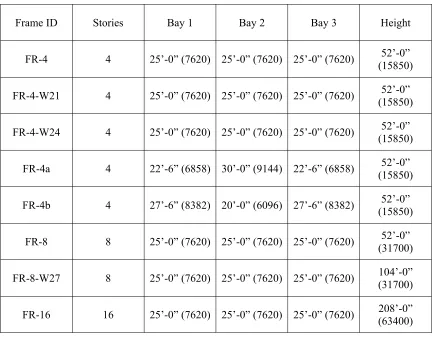
In this document, eight (8) fixed base steel moment frames, listed in Table 1.1-1, will be analyzed and designed in accordance with the proposed DBD method (Part 2).
Frame ID Stories Bay 1 Bay 2 Bay 3 Height
FR-4 4 25’-0” (7620) 25’-0” (7620) 25’-0” (7620) 52’-0”
(15850)
FR-4-W21 4 25’-0” (7620) 25’-0” (7620) 25’-0” (7620) 52’-0”
(15850)
FR-4-W24 4 25’-0” (7620) 25’-0” (7620) 25’-0” (7620) 52’-0”
(15850)
FR-4a 4 22’-6” (6858) 30’-0” (9144) 22’-6” (6858) (15850) 52’-0”
FR-4b 4 27’-6” (8382) 20’-0” (6096) 27’-6” (8382) 52’-0”
(15850)
FR-8 8 25’-0” (7620) 25’-0” (7620) 25’-0” (7620) 52’-0”
(31700)
FR-8-W27 8 25’-0” (7620) 25’-0” (7620) 25’-0” (7620) 104’-0” (31700)
FR-16 16 25’-0” (7620) 25’-0” (7620) 25’-0” (7620) 208’-0” (63400)
Table 1.1-1. Frame description
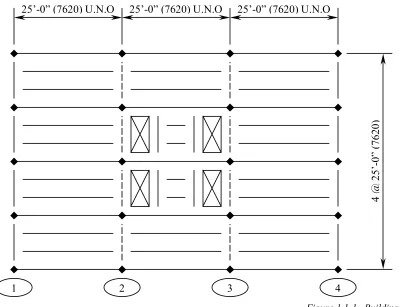
The selected test frame is the center frame (left to right) in the building plan shown in Fig. 1.1-1 (neglecting the floor openings).
5
Analysis, for the design of multi-story frames where the “yield” displacement profile is non-linear.
Figure 1.1-1. Building plan
Additionally, a limit state second-order inelastic static analysis, or “Advanced Analysis” will be used to analyze the frames designed by the proposed method (Part 3). The distinct difference between Advanced Analysis and a standard elastic analysis, including a push-over analysis, besides the obvious inclusion of inelastic response, is that all design uncertainties and imperfections inherent in current steel design interaction equations are included in the analysis. Thus eliminating the incompatibility between elastic analysis demands and inelastic capacities. The analysis results will be compared to the predicted values not necessarily as an acceptance analysis of the proposed method but to outline the initial use of Advanced Analysis techniques for the design of seismic resistant steel frames.
Finally, the frames will be analyzed in a second-order inelastic dynamic analysis subject to twelve (12) time-histories representing a wide analytical range of ground motions (Part 4). Two of the time-histories are artificially generated to approximate the MCE design
4
@
2
5’-0
”
(76
20
)
25’-0” (7620) U.N.O
25’-0” (7620) U.N.O 25’-0” (7620) U.N.O
6
acceleration response spectra developed in accordance with current IBC/NEHRP seismic provisions. Whereas the other actual time-histories are intensity normalized to the MCE design acceleration response spectra. The predicted, or “as designed”, response from the proposed method will be compared to the analysis results for applicability and to highlight future research needs.
This research represents the fundamental procedures outlining the preliminary development of Displacement-Based Design of steel moment frames. The analysis and design, including behavior, of steel structures increases in complexity as the number of joints increase. Behavior of steel frames is separated from analysis and design, though correlation exists, to emphasize the fact that in DBD the final behavior of the system justifies the analysis and design, not vice versa as in current force-based design procedures. Hence, several simplifications and assumptions have been used, outlined in Section 1.2, more for assistance in the basic understanding of steel response than for accuracy in the early development of the proposed procedures. It is the hope of the author to continue this research forward, continually revising the process for accuracy and simplicity, in order to develop a systematic design procedure.
7
1.2 Simplifications, Assumptions, and Constant Variables
The following items are used throughout this document, unless specifically noted otherwise.
1.2.1 Simplifications
1. Member Behavior
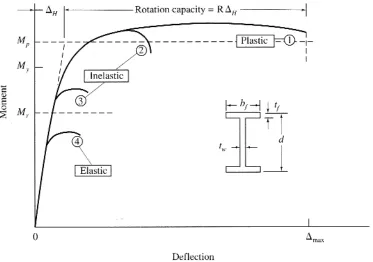
The bi-linear elasto-perfectly plastic approximation of the actual force-displacement response, shown in Fig. 1.1.1-1, is used as the hysteretic function. It is understood that structural steel exhibits the Baushinger Effect during loading/unloading, shown in Fig. 1.1.1-2; hence, the Ramberg-Osgood hysteresis is a more accurate approximation. However, for simplicity in the early development of the proposed method, the EPP approximation is used.
8
Figure 1.2.1-2. Cyclic behavior of structural steel with Baushinger Effect (Uang et al, 1998)
1.2.2 Assumptions
1. All elements are initially straight and prismatic, and plane cross-sections remain plane after deformation. (Chen and Kim, 1997)
2. Local buckling and lateral-torsional buckling are not considered. All members are assumed to be fully compact and adequately braced to prevent out-of-plane deformations. (Chen and Kim, 1997) Hence, full plastic moment capacity is achieved (with reductions for the presence of axial and shear forces).
3. Large rigid-body displacements are allowed, but member deformations and strains are small. (Chen and Kim, 1997)
4. The element stiffness formulation is based on conventional beam-column stability functions, including axial and bending deformations, but not those associated with shear. Element bowing effects are neglected. (Chen and Kim, 1997)
9
6. Plastic hinges can sustain inelastic rotations only. Strain hardening and stiffness degradation is not considered. (Chen and Kim, 1997)
7. All members are fabricated from isotropic homogeneous material
8. No composite action is considered.
9. All joints are assumed perfectly rigid and complete force transfer is assumed.
10. Vertical accelerations are small and are neglected.
11. Demand Factor and Resistance Design (DRFD) is not utilized. That is allowable service level displacements are not factored for uncertainties in analysis, construction, and design in suit with the LRFD philosophy.
12. Panel zone effects are neglected.
13. Soil-Structure interaction is not considered.
1.2.3 Constant Variables
1. Nominal Material Properties
50
=
y
F ksi (345 MPa)
29000
=
E ksi (200 GPa)
001724 .
0
= =
E Fy
y
ε
11200
=
G ksi (77.2 GPa)
2. Design Response Spectrum
10
Soil Type D
684 . 1
=
S
S in/sec2 (43 mm/sec2)
60 . 0
1 =
S in/sec2 (15 mm/sec2)
% 5
=
ς (Viscous Damping)
T = 4 seconds – DRS is considered constant
3. Gravity Loads
Dead Load = 100 psf (4.8 KPa)
Live Load = 100 psf (4.8 KPa)
(30% is considered in the total weight of the structure)
Node Type 1 = 30.5 kips (135.7 kN) – Exterior Joint
Node Type 2 = 60.8 kips (270.4 kN) – Interior Joint
11
PART 2
D
12
2.0 Introduction
The majority of material presented herein is based on preliminary DBD procedures outlined by the SEAOC committee on PBSE and introduced in the SEAOC Recommended Lateral Force Requirements and Commentary, 1999 Edition, in Appendix I, Tentative Guidelines for Performance-Based Seismic Engineering. Several procedures not outlined by SEAOC will be additionally incorporated in subsequent sections. Due to complexities and variations in frame analysis procedures, the reader is referred to the numerical implementation of DBD procedures in Section 2.5 for additional information not discussed in detail in prior sections (2.1 to 2.4).
2.1 SEAOC Specification for Performance-Based Design
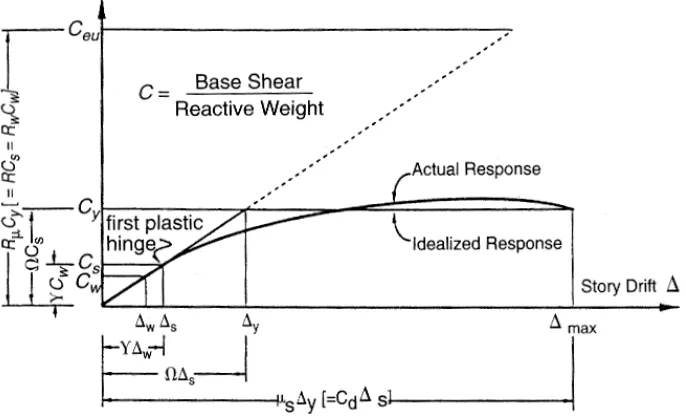
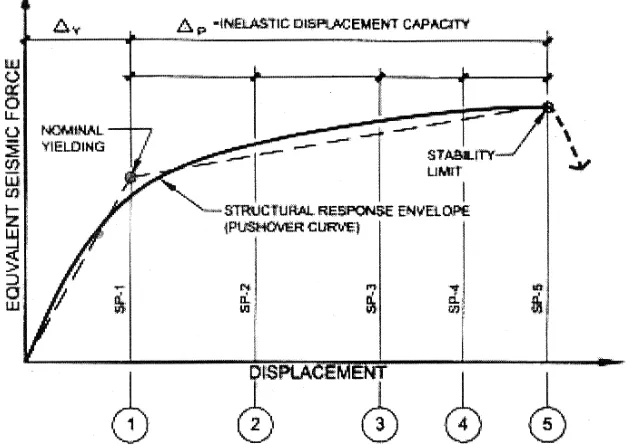
Fig. 2.1-1 shows a complete system force-displacement graph from which all codified seismic design principles, including limit states, are based.
Figure 2.1-1. System force-displacement graph (Uang, 1991)
13
the structural integrity of a system at various stages along the force-displacement curve. The proposed limit states are defined in Table 2.1-1 and graphically represented in Fig. 2.1-2.
Performance Level Qualitative Description Definition
SP-1 Operational (Service) Yield mechanism; damage is negligible
SP-2 Occupiable Damage is minor to moderate;
some repair is required
SP-3 Life Safe Damage is moderate to major; extensive repairs are required
SP-4 Near Collapse Damage is major; repairs may be uneconomically feasible
SP-5 Collapse Collapse is imminent
Table 2.1-1. Structural Performance Levels (SEAOC Blue Book, 1999)
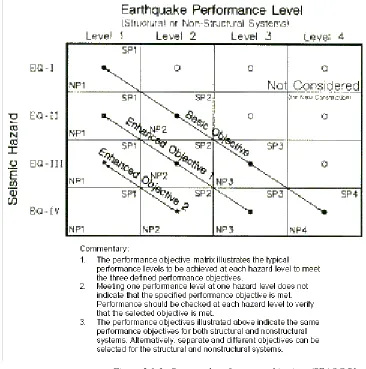
Figure 2.1-2. Graphical representation of structural performance levels
(SEAOC Blue Book, 1999: modified: Harris)
14
The design engineer selects the design performance objective of the system in accordance with damage level requirements and assigns earthquake levels, based on mean return period and annual probability of exceedance, to each respective performance level.
Figure 2.1-3. Structural performance objectives (SEAOC Blue Book, 1999)
15
For this research the Basic Safety Objective (BSO) is selected, hence, the performance levels with associated earthquake levels are indicated in Table 2.1-3.
Performance Level Earthquake Level
SP-1 EQ I
SP-2 EQ II
SP-3 EQ III
SP-4 EQ IV (MCE)
Table 2.1-3. Basic safety performance objective
In truth, the design engineer can associate any earthquake level with any performance level. For example, if the system were required to remain “operational” (SP-1) at the maximum considered earthquake (MCE), then EQ IV would be associated with the SP-1 performance level. Hence, all other performance and earthquake levels (I, II, and III) can be neglected. Though this example might be uneconomical, it emphasizes that a selected performance level and respective earthquake level are initially independent. As will be shown subsequently, once the controlling design performance level is determined, performance levels and earthquake levels are in fact dependent. This dependence will allow the design engineer to design a system to respond in accordance with the complete performance objective and not just match one performance level (controlling).
In accordance with the current PBSE code, the design engineer constructs the design response spectrums associated with each earthquake level based on specified effective peak ground accelerations. It should be mentioned that this procedure is slightly revised in this document as discussed in Section 2.5.
16
2.1.1 Ductility
Ductility, µ, represents a damage level indicator and can be quantified by the ratio of response to yield response. This response action can be measured by section curvature, member rotation, element strain, or displacements. However, these ductility actions typically do not generate the same results. That is curvature ductility will not equal displacement ductility. Though it is assumed by current seismic codes that displacement ductility is equal to rotation ductility, which is similarly equivalent to the force reduction factor, R, employed in force-based design. Since displacements are the easiest form of measurement for the design engineer to visualize and evaluate, it is the preferred choice of ductility measurement and the main quantifier in displacement-based seismic design.
y ∆
∆ =
∆
µ (2.1-1)
where
y
∆ = Yield displacement (in, mm)
Prior to discussing the global design procedures encompassing DBD once the performance objective has been selected, the relationship between member and system response needs to be addressed. That is section curvature and member rotation play an important role in predicting the global response of a system subjected to strong ground motion and, ultimately, the quantitative measure of the frame ductility capacity.
2.2 Section
Curvature
2.2.1 Yield Curvature
From mechanics, the section curvature, φ, for a beam subjected to a bending moment about the major centroidal axis is defined as
x EI
M
=
17 where
M = Applied moment (k in, N mm)
E = Nominal Modulus of Elasticity (ksi, MPa)
Ix = Moment of Inertia about the major centroidal axis (in4, mm4)
Evaluating Eq. (2.2.1-1) at full yield (i.e. all extreme compression and tension fibers are yielding), we have
x y y
EI M
=
φ (2.2.1-2)
where
My = Section yield moment capacity (k in, N mm)
Eq. (2.2.1-2) can be further expanded using the following known classical relationships.
y o m x y S F
M = φ (2.2.1-3)
2
d
yo = (2.2.1-4)
o x x
y I
S = (2.2.1-5)
E Fy y =
ε (2.2.1-6)
where
Sx = Elastic section modulus (in3, mm3)
Fy = Nominal yield stress (ksi, MPa)
18
d = Depth of section (in, mm)
εy = Nominal yield strain from Hooke’s Law
o m
φ = Material overstrength factor (discussed in Section 2.2.5)
Substituting Eqs. (2.2.1-3) through (2.2.1-6) into Eq. (2.2.1-2), the section curvature of an element subjected to pure bending at yield is
d EI F S EI M y o m x y o m x x y y ε φ φ
φ = = = 2 (2.2.1-7)
Evaluation of Eq. (2.2.1-7) shows that the yield curvature is dependent only on section geometry, independent of strength (Priestley and Kowalsky, 2000). Furthermore, evaluation of Eq. (2.2.1-1) in the whole range of member behavior concludes that stiffness is proportional to strength. The proportionality between strength and stiffness contradicts the FBD assumption that an initial stiffness, and, ultimately, the elastic system period, can be determined independent of strength. That is the action of allocating strength between members also changes the stiffness from the initial assumption, and, hence, implies an iterative analysis procedure (Priestley and Kowalsky, 2000). Furthermore, the determination of a non-dimensional section yield curvature indicates that the yield drift of frames might possess the same independence (Priestley, 2000).
2.2.2
Equivalent
Plastic Curvature
Eqs. (2.2.1-1) and (2.2.1-2) outline the moment-curvature relationship of an elastic section represented by the straight line in Fig. 2.2.2-1. Post-yield section curvatures can be determined by Eq. (2.2.2-1) and similarly graphed in Fig. 2.2.2-1.
y y
F M
S
M
− = 2 3 1 1 φ φ (2.2.2-1) where
19
Figure 2.2.2-1. Normalized moment-curvature graph (Chen et al, 1995: modified: Harris)
Due to the iterative nature of an exact non-linear analysis, the bi-linear idealization, shown in Figure 2.2.2-2, is recommended for its simplicity. In this elasto-perfectly plastic idealization, the element is assumed to behave elastically up to the plastic moment, where all plastic rotations occur at a zero length plastic hinge and the plastic curvature increases indefinitely with constant plastic moment capacity (Chen et al, 1995)
Figure 2.2.2-2. Elasto-perfectly plastic moment-curvature graph
20
This idealization results in a considerable simplification of the analysis procedure without significant compromise in the accuracy of the computed plastic limit load (Chen et al, 1995).
Similar to the previous derivation of the section yield curvature, we substitute Eqs. (2.2.2-2) and (2.2.2-3) into Eq. (2.2.1-1).
y o m x p Z F
M = φ (2.2.2-2)
x x F S
Z
S = (2.2.2-3)
where
Mp = Section plastic moment capacity (k in, kN mm)
Zx = Geometric plastic section modulus (in3, mm3)
Hence, the equivalent plastic section curvature in accordance with the bi-linear approximation, represented by point A in Figure 2.2.2-2, can be expressed as
d d
S EI
M o y
m y
o m F
x p p
ε φ ε
φ
φ = = 2 ≈ 2.28 (2.2.2-4)
The shape factor, SF, for North American wide flange sections can be approximated as 1.14
in lieu of the actual value. However, in some cases it will be necessary for the design engineer to include a modification factor during the member design stage representing the ratio of actual to assumed shape factor, discussed subsequently in Section 2.4.6. Again, it shall be emphasized that Eq. (2.2.2-4) is the equivalent plastic section curvature of an element subjected to pure full plastic bending (i.e. no axial load effects). Furthermore, the
equivalent plastic section curvature replaces the yield curvature, φy, in the determination of curvature ductility.
p φ
φ
21
2.2.3 First-Yield Curvature
An additional curvature that needs to be discussed is the curvature at first-yield. As a result of the cooling process steel inherently contains residual stresses. The magnitude of these stresses varies depending on section geometry. Fig. 2.2.3-1 shows an example of residual stress distribution and its effect on the behavior of a wide-flange section.
Figure 2.2.3-1. Flexural behavior of wide-flange with residual stresses (Uang et al, 1998)
In accordance with AISC specifications, the design magnitude of compressive residual stresses, Fr, is shown in Table 2.2.3-1.
Fy Fr Ratio
36 ksi (250 MPa) 10 ksi (69 MPa) 0.72 50 ksi (345 MPa) 16.5 ksi (114 MPa) 0.67
Table 2.2.3-1. Recommended design magnitude of compressive residual stresses (AISC)
Similar to the previous derivations,
L o m x r S F
M = φ (2.2.3-1)
E FL y' =
22
y
y ε
ε ' ≈0.7 (2.2.3-3)
where
Mr = Section elastic moment capacity at first-yield (k in, kN mm)
FL = Fy - Fr (ksi, MPa)
Fr = Nominal compressive residual stress (ksi, MPa)
'
y
ε = Nominal first-yield strain from Hooke’s Law
Hence, the section curvature at first-yield can be expressed by
d d
EI
M mo y mo y
x r y
ε φ ε
φ
φ 2 ' 1.4
' = = ≈ (2.2.3-4)
Although, residual stresses can be large, they have no impact on the plastic moment capacity of a section (Uang et al, 1998)
2.2.4 Curvature Reduction for Combined Load Effects
2.2.4.1 Reduction for Axial Compression
The previous sections derived the section curvature of an element subjected to pure bending. However, the application of an axial force affects the yield curvature by reducing the allowable magnitude of the applied moment. From mechanics, the stress distribution for a member subjected to combined loading is
g x A
P S
M ±
=
σ (2.2.4.1-1)
For axial compression, the stress at the extreme compression fiber at yield is
y g x
c F
A P S
M + =
=
23
Similarly, at the extreme tension fiber, the flexural stress from Eq. (2.2.4.1-2) is
g y x t A P F S
M = −
=
σ (2.2.4.1-3)
Substituting Eq. (2.2.4.1-3) into Eq. (2.2.4.1-1), we have
g y g g y g x t A P F A P A P F A P S
M − = −2
− = − =
σ (2.2.4.1-4)
Applying
y g y A F
P = (2.2.4.1-5)
the resulting tensile stress can be expressed as
− = − = − = y y y y y g y t P P F P PF F A P
F 2 2 1 2
σ (2.2.4.1-6)
Since the overstength factor, o m
φ , is included in the final curvature calculation, it should not be additionally included in the previous equations.
Applying Hooke’s Law and evaluating the strain distribution, we have from similar triangles
c d P P c y y y − − = 2 1 ε ε (2.2.4.1-7)
Solving Eq. (2.2.4.1-7) for c, the distance from the extreme compression fiber to the neutral axis, we have
24 By trigonometry and including o
m
φ to denote the variation in material strength, the section yield curvature for a member subjected to bending and an axial force can be expressed as
− = y y o m y P P d 1
2φ ε
φ (2.2.4.1-9)
It can be seen from Eq. (2.2.4.1-9) that the reduced yield moment capacity is dependent on the magnitude of axial load and can be expressed as
y y
yc M
P P
M
−
= 1 (2.2.4.1-10)
It should be mentioned, as similar notations will be used subsequently, that the 2nd subscript denotes the load effect causing the reduction.
Similarly, the equivalent plastic and first-yield curvatures become respectively
− ≈ − = y y o m y y o m F p P P d P P d S 1 28 . 2 1
2 φ ε φ ε
φ (2.2.4.1-11)
− ≈ − = y y o m y y o m y P P d P P d 1 4 . 1 1 2 ' ' ε φ ε φ
φ (2.2.4.1-12)
The reduced plastic moment capacity can similarly be expressed by Eqs. (2.2.4.1-13) and (2.2.4.1-14) and graphically shown in Fig. 2.2.4.1-1.
For 0≤P≤0.15Py
p pc M
M = (2.2.4.1-13)
For 0.15Py ≤P≤Py
p y
pc M
P P
M
−