Does Binding of Complement Factor H to the Meningococcal Vaccine
Antigen, Factor H Binding Protein, Decrease Protective Serum
Antibody Responses?
Dan M. Granoff,aSanjay Ram,bPeter T. Beerninka
Center for Immunobiology and Vaccine Development, Children’s Hospital Oakland Research Institute, Oakland, California, USAa
; Division of Infectious Diseases and Immunology, University of Massachusetts Medical School, Worcester, Massachusetts, USAb
Factor H binding protein (fHbp) is a principal antigen in a multicomponent meningococcal vaccine recently licensed in Europe for prevention of serogroup B diseases. The protein recruits the complement downregulator, factor H (fH), to the bacterial sur-face, which enables the organism to resist complement-mediated bacteriolysis. Binding is specific for human fH. In preclinical studies, mice and rabbits immunized with fHbp vaccines developed serum bactericidal antibody responses, which in humans predict protection against developing meningococcal disease. These studies, however, were in animals whose fH did not bind to the vaccine antigen. Here we review the immunogenicity of fHbp vaccines in human fH transgenic mice. The data suggest that animals with high serum human fH concentrations have impaired protective antibody responses. Further, mutant fHbp vaccines with single amino acid substitutions that decrease fH binding are superior immunogens, possibly by unmasking epitopes in the fH binding site that are important for eliciting serum bactericidal antibody responses. Humans immunized with fHbp vaccines develop serum bactericidal antibody, but achieving broad coverage in infants required incorporation of additional antigens, in-cluding outer membrane vesicles, which increased rates of fever and local reactions at the injection site. The experimental results in transgenic mice predict that fHbp immunogenicity can be improved in humans by using mutant fHbp vaccines with de-creased fH binding. These results have important public health implications for developing improved fHbp vaccines for control of serogroup B meningococcal disease and for development of vaccines against other microbes that bind host molecules.
VACCINE POTENTIAL OF MENINGOCOCCAL FACTOR H BINDING PROTEIN
A
pproximately one-third of cases of meningococcal disease inthe United States (1), and an even higher proportion in
Eu-rope (2,3), are caused by serogroup B strains. These strains are
also responsible for a disproportionate number of cases in infants
⬍1 year old (4) and can cause epidemics, such as the ones that
occurred in New Zealand in the 1990s (5) and, more recently, in
France (6). The serogroup B polysaccharide consists of␣(2¡8)
N-acetylneuraminic acid, which is an auto-antigen (7). Use of this
polysaccharide as a vaccine target therefore raised safety concerns. Alternative approaches for vaccine development against sero-group B strains used detergent-treated outer membrane vesicles
(OMV) (8–10), native outer membrane vesicles (NOMV) from
mutants with genetically attenuated endotoxin (11–13), or
puri-fied noncapsular antigens (reviewed in references14–17). Specific
examples of recombinant protein antigens include NspA (16),
Neisseria heparin binding antigen (18) (also referred to as
GNA2132 [19]), NadA (20), PorA (21), transferrin binding
pro-tein A (22), Opc outer membrane protein (23,24), and factor H
binding protein (fHbp; previously referred to as GNA1870 or LP
2086) (25,26). One of the most promising protein antigens is
fHbp, which is part of a multicomponent meningococcal vaccine recently licensed in Europe for immunization beginning at 2
months of age (27).
fHbp is a surface-exposed lipoprotein expressed by nearly all
Neisseria meningitidisstrains (28,29). The protein recruits the
complement downregulator, factor H (fH), to the bacterial
sur-face (30), which enables the organism to evade innate immunity
(30,31). The vaccine antigen can be classified into two subfamilies
(28) or three variant groups (25) based on cross-reactivity and
amino acid sequence similarity. In infants and toddlers, antibod-ies to fHbp have complement-mediated bactericidal activity only against strains expressing an fHbp from the homologous subfam-ily or variant group closely matched to that of the vaccine antigen (32–34). In adolescents and adults, serum bactericidal antibody responses to fHbp vaccines appear to be broader than those in
infants or toddlers (35,36). In humans, serum bactericidal activity
is the serologic hallmark of protection against developing
menin-gococcal disease (37).
Anti-fHbp antibodies bind to the bacterial surface, activate the classical complement pathway directly, and block binding of fH
(38). With less bound fH, the bacteria become more susceptible to
anti-fHbp complement-mediated bacteriolysis because there is
greater amplification of the alternative complement pathway (39).
In many strains, fHbp is relatively sparsely exposed on the
bacte-rial surface (38). Binding of anti-fHbp antibodies to these strains
results in insufficient immune complex and, consequently,
insuf-ficient Fc density for efinsuf-ficient C1 complex engagement (38). As a
result, complement activation via the classical pathway does not proceed to bacteriolysis in the absence of inhibition of fH binding
and alternative pathway amplification (39,40).
In 2009, we reported that binding of fH to fHbp was specific for
human fH (41). Since preclinical fHbp immunogenicity studies
Published ahead of print5 June 2013
Address correspondence to Dan M. Granoff, [email protected]. Copyright © 2013, American Society for Microbiology. All Rights Reserved.
doi:10.1128/CVI.00260-13
on August 17, 2020 by guest
http://cvi.asm.org/
had been done in mice and rabbits, the effect of binding of human fH to the vaccine on immunogenicity was not known. In previous studies, most mouse anti-fHbp monoclonal antibodies (MAbs) with bactericidal activity also inhibited binding of fH to fHbp, which suggested that the fHbp epitopes overlapped with the fH
binding region in fHbp (42,43). Conceivably, in immunized
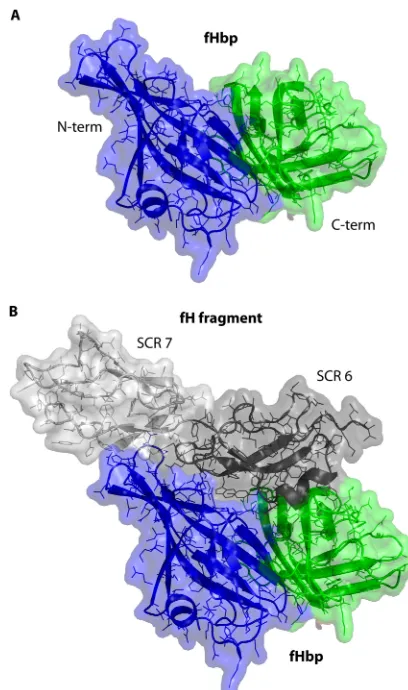
hu-mans, fH forms a complex with this region of fHbp and masks important epitopes. A crystal structure of a fragment of fH in complex with fHbp subsequently provided a structural basis for
the specificity of binding human fH (44) (Fig. 1).
The hypothesis that binding of a host molecule to a vaccine
antigen impairs immunogenicity (45) can be tested by comparing
vaccine immunogenicities in wild-type (WT) mice whose fH does not bind to the vaccine and human fH transgenic mice whose fH
binds to the vaccine (46–48). Further evidence is provided by
comparative immunogenicity studies in transgenic mice testing mutant fHbp antigens engineered to have decreased fH binding
compared with the corresponding antigen that binds fH (46–48).
The purpose of this article is to review data that address
whether binding of human fH to fHbp impairs fHbp vaccine im-munogenicity and whether mutant fHbp vaccines with decreased fH binding can overcome this impairment. Two published studies reported that mutant fHbp vaccines consisting of either a recom-binant protein or native outer membrane vesicles elicited superior serum bactericidal antibody responses in human fH transgenic mice compared with the respective control fHbp vaccines that
strongly bind fH (46,47). A third recently published study
sug-gested that binding of human fH to fHbp did not attenuate
im-munogenicity (48). In this review, we highlight the differences in
methodology and interpretations of these studies to understand better the seemingly disparate observations. As noted above, re-combinant fHbp antigens that bind fH are part of vaccines li-censed or being developed for prevention of meningococcal
dis-ease (33, 34, 49). If fH binding impairs immunogenicity, the
effectiveness of these fHbp vaccines in humans can be improved by introduction of amino acid substitutions that decrease or
elim-inate binding of fH (47,48,50). Understanding the effects of these
substitutions, therefore, has important scientific, clinical, and public health relevance to the design of optimally immunogenic meningococcal fHbp vaccines.
HUMAN fH TRANSGENIC MICE HAVE LOWER SERUM BACTERICIDAL ANTIBODY RESPONSES TO fHbp VACCINES THAT BIND HUMAN fH THAN DO WILD-TYPE MICE WHOSE fH DOES NOT BIND TO THE VACCINE
To investigate the effect of fH binding on fHbp immunogenicity, we used a human fH transgenic mouse model that was developed by Peter Rice and colleagues at the University of Massachusetts
Medical School (47). These mice were generated by
microinject-ing BALB/c mouse embryos with a recombinant DNA molecule
containing a cytomegalovirus (CMV) enhancer, a chicken-actin
promoter, cDNA encoding the full-length human fH protein, and
a rabbit-globin poly(A) sequence. Sera from mice containing
the transgene expressed the full-length human fH protein by
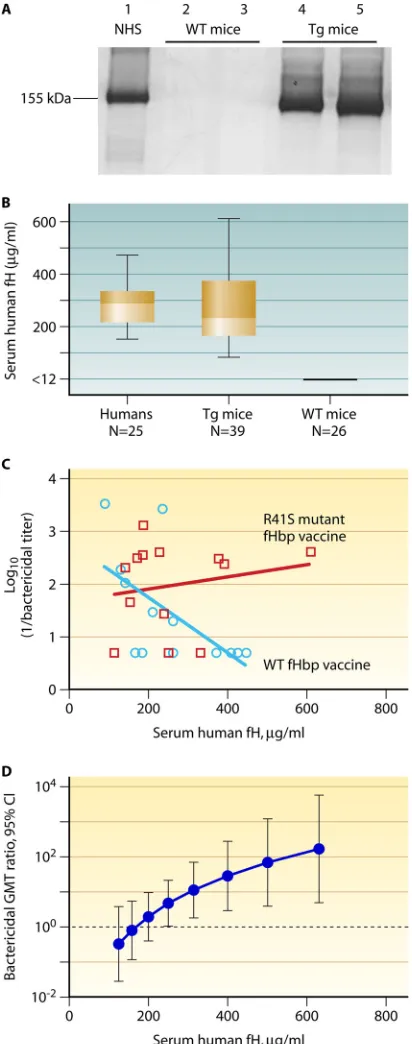
Western blotting (Fig. 2A). The CMV enhancer and chicken
-ac-tin promoter were used to achieve high levels of human fH expres-sion to approximate the serum fH concentrations of humans. Using an fHbp capture enzyme-linked immunosorbent assay
(ELISA) (47), the median concentration of human fH in the
mouse sera was 235g/ml, which was similar to that of control
human sera assayed in parallel (291g/ml;P⫽0.22,
Mann-Whit-ney test) (Fig. 2B). However, the range of human fH
concentra-tions in the transgenic mouse sera was greater than the range of fH
levels in human sera (Pvalue of 0.008 for differences in the
respec-tive variances). Note that in previous studies, the mean fH con-centrations in normal human sera or plasma ranged from 210 to
516g/ml (51–54), a range which was consistent with the
concen-trations in the control human sera measured by the fHbp capture ELISA.
The BALB/c transgenic mice expressed both mouse and
hu-man fH (Table 1). The mice appeared to be generally healthy and,
when immunized with a control meningococcal serogroup C polysaccharide-protein conjugate vaccine, had serum anti-capsu-lar and anti-carrier protein IgG antibody responses and bacteri-cidal antibody responses similar to those of control BALB/c mice
whose sera were negative for human fH (47). In contrast, when the
transgenic mice were immunized with an fHbp vaccine that bound fH, the geometric mean serum bactericidal titers in two replicate studies were 4- to 8-fold lower than those of the control
FIG 1Structural models of fHbp. (A) Model of fHbp alone illustrating two domains, N-terminal (blue) and C-terminal (green). Mouse or rabbit fH does not bind to fHbp. In immunized mice or rabbits, epitopes in the fH binding site that are important for eliciting bactericidal antibody are exposed. (B) Model of fHbp in a complex with a fragment of fH (short consensus repeats [SCR] 6 and 7, gray). In humans, the vaccine antigen would be expected to be in a complex with fH and, possibly, mask epitopes in the fH binding site. Models are based on the coordinates of the published crystal structure (44).
on August 17, 2020 by guest
http://cvi.asm.org/
mice whose sera were negative for human fH (study 1,P⫽0.03;
study 2,P⫽0.05) (47). Further, in the transgenic mice, there was
an inverse correlation between the serum fH levels and the mag-nitudes of the vaccine response: the higher the serum human fH concentrations, the lower were the serum bactericidal titers to the fHbp vaccine that bound human fH (Pearson correlation
coeffi-cient,r⫽ ⫺0.65;P⫽0.02) (Fig. 2C, blue line).
In a subsequent study, we immunized human fH transgenic and wild-type mice with a NOMV vaccine prepared from a mu-tant meningococcal strain with attenuated endotoxin (LpxL1
knockout) and overexpressed fHbp that bound fH (46). In the
normal mice whose fH did not bind to the fHbp vaccine, two doses of the NOMV vaccine with overexpressed WT fHbp elicited higher serum bactericidal anti-fHbp antibody responses than did three doses of the same vaccine given to the human fH transgenic
mice whose human fH bound to the vaccine (compareFig. 3Aand
B). Thus, in two studies with different fHbp vaccines that strongly
bound fH, the human fH transgenic mice had lower serum bacte-ricidal responses than normal mice whose mouse fH did not bind to the vaccines. In contrast, as noted above, the transgenic and normal mice had indistinguishable serum bactericidal antibody responses to a control meningococcal serogroup C conjugate
vac-cine (47). Therefore, the impairment of the responses of the
trans-genic mice was specific for the fHbp vaccine that bound human fH. These data supported the hypothesis that binding of a host molecule to a vaccine antigen impaired immunogenicity.
MUTANT fHbp VACCINES WITH DECREASED fH BINDING ARE SUPERIOR IMMUNOGENS IN HUMAN fH TRANSGENIC MICE WITH HIGH SERUM HUMAN fH CONCENTRATIONS
We also immunized human fH transgenic mice with a mutant fHbp vaccine containing a single amino substitution (Arg at resi-due 41 was replaced by Ser; R41S), which resulted in substantially
decreased binding of fH (Fig. 4) (47). In human transgenic mice,
FIG 2Immunogenicity of mutant and WT fHbp vaccines in human fH trans-genic mice in relation to serum human fH concentrations. (A) Detection of human factor H in sera from fH transgenic (Tg) mice by Western blotting. Lane 1, normal human serum (NHS; diluted 1:100); lanes 2 and 3, individual normal (BALB/c) mouse sera (diluted 1:25); lanes 4 and 5, individual trans-genic mouse sera (diluted 1:25). Membrane was probed with affinity-purified goat anti-human fH (Complement Technology Inc.) that recognized human, but not mouse, fH. The image is from a replicate experiment, which was per-formed as part of a previous study (47). (B) Concentrations of human fH in mouse sera measured by a capture ELISA. Positive mice had human fH con-centrations of⬎90g/ml, and negative mice had concentrations of⬍12g/ ml, which was the lower limit of detection in the assay. For comparison, con-centrations of human fH were measured in parallel in stored sera from 25 healthy adult humans. The boxes in the graph extend from the 25th to 75th
percentiles. The lines in the middle represent the median values. The whiskers extend from the lowest to the highest value. Data points used to calculate the plots are from Beernink et al. (47). (C) Relationship between serum bacteri-cidal antibody titers measured against serogroup B strain H44/76 and serum human fH concentrations of transgenic mice. The blue circles represent the bactericidal antibody responses of mice immunized with the wild-type control fHbp vaccine that strongly bound fH, measured against serogroup B strain H44/76. The inverse correlation with serum fH concentrations was significant (r⫽ ⫺0.65;P⫽0.02; Pearson correlation coefficient between log10
[1/bacte-ricidal titer] and log10[fH concentration]). The red squares represent the
corresponding bactericidal responses of transgenic mice immunized with the R41S mutant fHbp vaccine. The correlation with the serum fH concentrations was not significant (r⫽ ⫹0.18;P⫽0.58). The respectivervalues for the two vaccines were significantly different (P⫽0.03). The plots were calculated from previously published data of Beernink et al. (47). (D) Effect of serum human fH concentrations on the ratio of bactericidal antibody responses of transgenic mice immunized with an R41S mutant fHbp vaccine to those of mice immu-nized with a control fHbp vaccine that strongly bound human fH. The ratios of the geometric mean bactericidal responses of the group immunized with R41S fHbp vaccine to those of the group immunized with control fHbp vaccine were significantly greater than 1 (in favor of the mutant fHbp vaccine) for all human fH concentrations of⬎250g/ml by general linear regression (P⬍0.05) and for human fH concentrations of⬎316g/ml (P⬍0.01) (47). (Originally published in P. T. Beernink, J. Shaughnessy, E. M. Braga, Q. Liu, P. A. Rice, S. Ram, and D. M. Granoff. 2011. A meningococcal factor H binding protein mutant that eliminates factor H binding enhances protective antibody re-sponses to vaccination. J. Immunol. 186:3606 –3614. Copyright © 2011 The American Association of Immunologists, Inc.)
on August 17, 2020 by guest
http://cvi.asm.org/
the fHbp mutant with decreased fH binding elicited antibodies with greater bactericidal activity than the control fHbp vaccine that bound fH. Overall, the increase in the geometric mean titer (GMT) was only 3-fold. However, in contrast to the results with the fHbp vaccine that bound fH, with the mutant vaccine that did not bind human fH, there was no significant correlation between the serum human fH concentrations and bactericidal responses
(Pearson correlation coefficient,r⫽0.18;P⫽0.57) (Fig. 2C, red
line). The test of equality of the two Pearson correlation coeffi-cients showed that the respective correlations between the vaccine
groups were significantly different from each other (P⫽0.03).
Thus, the reason for the relatively small overall increase in the titers elicited by the mutant vaccine likely was the lack of impair-ment of serum bactericidal antibody responses to the control fHbp vaccine that bound fH when the serum human fH
concen-trations of the transgenic mice were low (Fig. 2C). Indeed, using
general linear regression, we found a statistically significant effect on enhanced immunogenicity of the fHbp, with decreased fH binding only in transgenic mice with serum concentrations of
human fH ofⱖ250g/ml (P⬍0.05) (Fig. 2D). The model
indi-cated⬃5-fold enhanced immunogenicity of the mutant fHbp
vac-cine compared with that of the vacvac-cine that bound fH when the
serum human fH concentration was⬃250g/ml and⬃28-fold
enhanced immunogenicity when the serum human fH
concentra-tion was⬃400g/ml (P⬍0.01). We also found that the
anti-fHbp antibodies elicited by the mutant anti-fHbp vaccine had greater inhibitory activity for fH binding to fHbp than fHbp anti-bodies elicited by the control fHbp vaccine that strongly bound fH
(47). Thus, unmasking epitopes in the fH binding site of the
mu-tant vaccines appears to affect the anti-fHbp antibody repertoire, and the higher bactericidal activity elicited by the mutant vaccines may have resulted from antibodies with greater fH inhibition, which resulted in less fH bound to the bacteria.
In the second study with NOMV vaccines, we immunized hu-man fH transgenic mice with a NOMV vaccine with genetically attenuated endotoxin activity and overexpressed WT fHbp, which
bound fH strongly, or overexpressed R41S mutant fHbp, which
had decreased fH binding (46). The two vaccines had similar levels
of fHbp expression. The transgenic mice immunized with the NOMV vaccine with the R41S mutant fHbp had a 19-fold-higher serum bactericidal GMT than the transgenic mice immunized with the control NOMV vaccine with WT fHbp that bound
hu-man fH (Fig. 3A). The test strain had a PorA heterologous to that
of the vaccine (Table 1), and by antibody depletion studies, the
serum bactericidal activity was shown to be directed against fHbp
(46). In this second study, we immunized transgenic mice with
only serum human fH concentrations of 250g/ml or greater.
This selection criterion likely contributed to the larger overall in-crease in immunogenicity of the NOMV vaccine containing the mutant fHbp that did not bind human fH compared to that ob-served in our first study with the recombinant mutant fHbp
vac-cine (47).
Our hypothesis is that the enhanced immunogenicity in hu-man fH transgenic mice of mutant fHbp vaccines with de-creased fH binding was not a result of inde-creased
immunogenic-ity of the mutant fHbp vaccines per se but from decreased
immunogenicity of the fHbp vaccines that bound human fH when serum human fH concentrations were high. Note that in normal BALB/c mice in which mouse fH did not bind to the control or mutant fHbp vaccines, the NOMV-fHbp vaccine with the R41S mutation had decreased serum bactericidal an-tibody responses compared to those of the control
NOMV-fHbp vaccine without the mutation (P ⫽ 0.003) (Fig. 3B).
Thus, in the absence of human fH, introduction of the R41S amino acid substitution decreased vaccine immunogenicity. This moderate loss of immunogenicity of the mutant fHbp vaccine, which was evident only in normal mice, was more than compensated for in human fH transgenic mice by the greater effect of human fH on decreasing immunogenicity of the NOMV vaccine containing the control fHbp that bound hu-man fH.
Based on protein phylogeny, fHbp variants can be subclassified
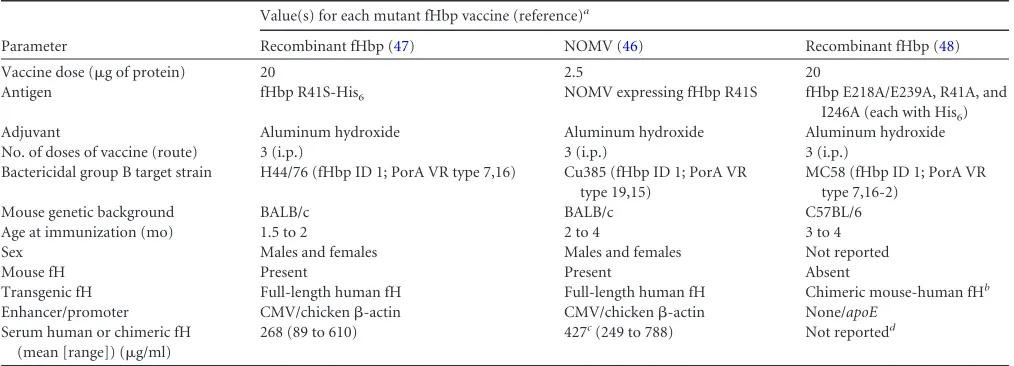
TABLE 1Comparison of the methods used to investigate mutant fHbp vaccines in studies using transgenic mice
Parameter
Value(s) for each mutant fHbp vaccine (reference)a
Recombinant fHbp (47) NOMV (46) Recombinant fHbp (48)
Vaccine dose (g of protein) 20 2.5 20
Antigen fHbp R41S-His6 NOMV expressing fHbp R41S fHbp E218A/E239A, R41A, and
I246A (each with His6)
Adjuvant Aluminum hydroxide Aluminum hydroxide Aluminum hydroxide
No. of doses of vaccine (route) 3 (i.p.) 3 (i.p.) 3 (i.p.)
Bactericidal group B target strain H44/76 (fHbp ID 1; PorA VR type 7,16) Cu385 (fHbp ID 1; PorA VR type 19,15)
MC58 (fHbp ID 1; PorA VR type 7,16-2)
Mouse genetic background BALB/c BALB/c C57BL/6
Age at immunization (mo) 1.5 to 2 2 to 4 3 to 4
Sex Males and females Males and females Not reported
Mouse fH Present Present Absent
Transgenic fH Full-length human fH Full-length human fH Chimeric mouse-human fHb
Enhancer/promoter CMV/chicken-actin CMV/chicken-actin None/apoE
Serum human or chimeric fH (mean [range]) (g/ml)
268 (89 to 610) 427c(249 to 788) Not reportedd
aAll three studies used WT fHbp ID 1 in variant group 1 for preparing the mutant and control fHbp vaccines. The amino acid residues in the mutants are numbered based on the
mature fHbp ID 1 protein sequence (http://pubmlst.org/neisseria/fHbp). i.p., intraperitoneal.
bThe chimeric fH molecule consisted of human short consensus repeat domains (SCRs) 6 to 8 flanked by the mouse sequences for SCRs 1 to 5 and SCRs 9 to 20.
c
Only mice that expressed levels of human fH of⬎240g/ml were selected for use in this study.
dThe serum concentrations of the chimeric fH in the transgenic mouse line were reported in a previous publication to be between 92 and 210g/ml (55).
on August 17, 2020 by guest
http://cvi.asm.org/
into three variant groups (25). Interestingly, the R41S substitu-tion, which eliminated fH binding to fHbp in variant group 1, did
not affect fH binding to fHbps in variant group 2 (50). In this
study, we identified several other amino substitutions in fHbp in
variant group 2 that greatly decreased binding of fH (50).
Re-cently, we investigated the immunogenicity of two of these mutant recombinant fHbp vaccines in human fH transgenic mice. Again,
we excluded mice with serum human fH concentrations of⬍250
g/ml and observed significantly higher serum bactericidal
anti-body responses to the mutant fHbp vaccines with low binding to
human fH than to the control fHbp vaccine that bound fH (Pⱕ
0.001) (D. M. Granoff and P. T. Beernink, unpublished data). Thus, in three studies in human fH transgenic mice, we observed
FIG 3Serum bactericidal antibody responses of human fH transgenic mice immunized with NOMV vaccines with overexpressed fHbp. Each symbol rep-resents the reciprocal serum titer of an individual mouse; the horizontal lines represent the geometric mean titers. The NOMV vaccines were prepared from mutants of group B strain H44/76 with genetically attenuated endotoxin (LpxL1 knockout) and overexpressed (OE) WT or R41S mutant fHbp ID 1. The test strain, Cu385, has a mismatched PorA variable region type compared to the vaccine strain and expressed fHbp ID 1 that matched the vaccine fHbp antigen (Table 1). OE WT, NOMV vaccine with overexpressed wild-type (WT) fHbp that bound human fH; OE R41S, NOMV vaccine with overex-pressed mutant R41S fHbp with lower binding to human fH; KO, control NOMV vaccine from the fHbp knockout; Alum, aluminum hydroxide adju-vant only. (A) Human fH transgenic mice immunized with three injections of vaccine. All mice had serum human fH concentrations ofⱖ250g/ml. The NOMV vaccine with the mutant fHbp elicited 19-fold-higher titers than the NOMV vaccine with WT fHbp that strongly bound human fH (P⫽0.001). (B) Normal BALB/c mice whose mouse fH does not bind to fHbp were immunized with two doses of vaccine. The NOMV vaccine with WT fHbp elicited 4-fold-higher titers than the NOMV vaccine with the mutant fHbp (P⫽0.003).
(Reprinted from reference46with permission of the publisher.) FIG 4Replacement of arginine at residue 41 by serine (R41S) decreases bind-ing of fH. (A) By surface plasmon resonance, the fHbp WT (blue line) bound immobilized human fH whereas the R41S mutant (red line) had no detectable binding to fH. Data are for 62.5 nM injection of each fHbp analyte. (B) By ELISA, the fHbp WT (circles with blue line) bound fH, whereas with the R41S substitution (squares with red line), there was no detectable binding of soluble human fH to solid-phase mutant fHbp. OD450, optical density at 450 nm. (C)
Binding of anti-fHbp MAb JAR4 to solid-phase wild-type or R41S mutant fHbp indicated that similar amounts of the two proteins were adsorbed to the wells of the microtiter plate and that a conformational epitope in the N-termi-nal domain was retained by the mutant. (OrigiN-termi-nally published in P. T. Beer-nink, J. Shaughnessy, E. M. Braga, Q. Liu, P. A. Rice, S. Ram, and D. M. Granoff. 2011. A meningococcal factor H binding protein mutant that elimi-nates factor H binding enhances protective antibody responses to vaccination. J. Immunol. 186:3606 –3614. Copyright © 2011 The American Association of Immunologists, Inc.)
on August 17, 2020 by guest
http://cvi.asm.org/
higher serum bactericidal antibody responses to mutant fHbp vaccines designed to have decreased fH binding than titers elicited by the respective control fHbp vaccines that strongly bound hu-man fH. In contrast, a recently published study by Johnson and colleagues cast doubt about the superior immunogenicity in transgenic mice of mutant fHbp vaccines with lower fH binding
(48). Below we discuss some possible reasons for the discordant
results.
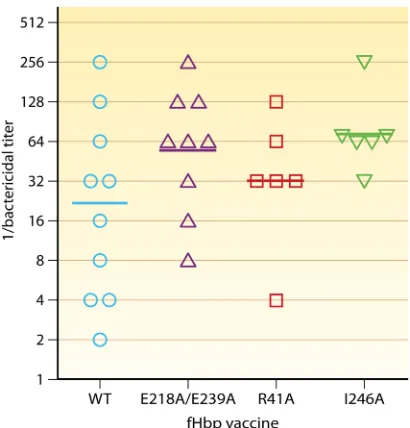
Johnson et al. (48) immunized human fH transgenic mice with
three different mutant fHbp vaccines with decreased binding of fH (Fig. 5). The authors reported no significant differences be-tween the serum bactericidal antibody responses of transgenic mice immunized with mutant fHbp vaccines with decreased fH binding and those immunized with a control wild-type fHbp
vac-cine that strongly bound fH (Fig. 5). The serum bactericidal GMT
of mice given the control fHbp vaccine was 1:22, which was lower than that for each of the three fHbp vaccines tested with decreased binding of human fH (1:55, 1:32, and 1:72; GMTs calculated from
their data inFig. 5Bof the original paper [48]). Since none of the
pairwise comparisons with the control fHbp vaccine that bound fH was statistically significant, the authors concluded that there was no enhancement of immunogenicity by the mutant fHbp vac-cines that did not bind human fH.
Johnson et al. (48) used a previously described transgenic
mouse model that was generated in a C57BL/6 background (55)
(Table 1). These transgenic mice lacked endogenous mouse fH
and expressed a chimeric mouse-human fH molecule that bound to fHbp. Since the short consensus repeat (SCR) domains 6 and 7
of human fH are known to interact with fHbp (44), Johnson et al.
employed a chimeric fH molecule that consisted of human SCR domains 6 to 8 flanked by the mouse sequences for SCR domains 1 to 5 and 9 to 20. While the authors proposed that this transgenic model provided a physiologically relevant model to investigate the immunogenicity of WT and mutant fHbp vaccines with decreased binding of human fH, they did not quantify the fH concentrations in the mouse sera. This transgenic mouse line in which fH
expres-sion was driven by theapoEpromoter (Table 1) originally was
reported by Ufret-Vincenty et al. to have serum concentrations of
chimeric fH ranging between 92 and 210g/ml (55). The
pub-lished mean serum fH concentrations in humans lie between 210
and 516g/ml (47,51–54). Given our previous report that the
superior immunogenicity of mutant fHbp vaccines with low fH binding was observed only in transgenic mice with serum human
fH levels ofⱖ250g/ml (Fig. 2D), it is not surprising that Johnson
et al. did not observe statistically significant differences in immu-nogenicity between the control and mutant fHbp vaccines tested
in their transgenic mice (48).
Johnson et al. also did not observe a relationship between se-rum chimeric fH concentrations and sese-rum bactericidal titers in
individual transgenic mice (see supplementalFig. 4of their
pub-lication [48]). The data reported, however, were from transgenic
mice immunized with mutant fHbp vaccines in which a lack of correlation was expected, since, in addition to low serum chimeric fH concentrations, the vaccines tested did not bind fH. We, too, did not find a correlation between serum human fH concentra-tions and serum bactericidal antibody responses of human fH transgenic mice immunized with the R41S mutant fHbp vaccine (Fig. 2C, red regression line). Indeed, these results added credence to the significant inverse correlation we found in transgenic mice immunized with the fHbp vaccine that bound human fH. Thus, in our studies, the impaired serum bactericidal antibody responses of the transgenic mice were specific for the fHbp vaccine that bound human fH when the human fH concentrations were suffi-ciently high.
We acknowledge that a direct causal link between high serum human fH concentrations and decreased fHbp immunogenicity has not been demonstrated. Apart from the differences in human or chimeric fH concentrations in the two transgenic mouse mod-els, we also cannot exclude the possibility that other differences in study design or reagents might have contributed to the different
results reported by Johnson et al. (48) and our group. Most
nota-bly, these include different genetic backgrounds of the transgenic mouse strains, use of a mouse line expressing both intact mouse and human fH versus another expressing only chimeric mouse-human factor H, and slight differences in the immunization
pro-tocols (Table 1) or the bactericidal assay methods. In addition,
potential differences in the affinities of full-length human fH and the chimeric fH for the control fHbp vaccine may possibly have contributed to the differences in immunogenicity. While human fH binds WT fHbp with affinities in the mid-nanomolar range
(56,57), the affinity of the chimeric fH for WT fHbp is not known.
OVERALL CONCLUSIONS
In two published studies, and in a third study not yet published (Granoff and Beernink, unpublished data), we found superior bactericidal antibody responses elicited by mutant fHbp vaccines
FIG 5Serum bactericidal antibody responses of transgenic mice immunized with mutant recombinant fHbp vaccines that do not bind fH. C57BL/6 mice that lacked endogenous mouse fH and expressed a chimeric mouse-human fH molecule that permitted binding to fHbp were immunized with three doses of a wild-type (WT) fHbp vaccine that bound fH or three mutant vaccines with decreased fH binding (E218A/E239A double mutant, R41A, or I246A). The serum bactericidal GMT of mice given the WT fHbp vaccine was 1:22, which was lower than that for each of the three mutant fHbp vaccines tested (1:55, 1:32, and 1:72); none of the pairwise comparisons with the WT vaccine were significant (P⬎0.05). Geometric mean titers (GMT) are shown as horizontal bars as calculated from data inFig. 5Bof the original paper (48). The amino acid residues have been renumbered based on the mature fHbp ID 1 protein sequence (http://pubmlst.org/neisseria/fHbp). (Modified from reference48
with permission of the publisher.)
on August 17, 2020 by guest
http://cvi.asm.org/
compared to the respective serum bactericidal responses to con-trol fHbp vaccines that strongly bound human fH. Collectively, the results provide strong evidence that human fH decreases fHbp immunogenicity and that high serum fH concentrations correlate with decreased fHbp immunogenicity. Had we only analyzed the antibody responses of the transgenic mice with serum human fH
levels of⬍250g/ml (47), we, too, would not have observed
sig-nificant differences in immunogenicity between the control and mutant recombinant fHbp vaccines. Thus, the most likely expla-nation for the lack of superior immunogenicity of the mutant
fHbp vaccines tested by Johnson et al. (48) was their use of a
transgenic mouse model with serum chimeric fH concentrations that were lower than those expressed in our transgenic model and lower than those found in many healthy humans.
The fHbp antigen in the recently licensed meningococcal
sero-group B vaccine is a fusion protein with GNA 2091 (49). The ID 1
fHbp sequence variant used in the fusion protein is known to be a
high binder of human fH (56). In human infants and toddlers, the
breadth of coverage elicited by the recombinant protein antigens when administered without the OMV component in the multi-component vaccine (referred to as 3MenB vaccine) was limited
(32,33). One explanation for the limited coverage is an effect of
human fH on decreasing fHbp immunogenicity. The addition of OMV (referred to as 4MenB vaccine) improved vaccine coverage
(32,33). In the Findlow et al. study, however, the addition of the
OMV was accompanied by higher rates of fever and greater in-flammatory reactions at the injection sites than when the
recom-binant proteins were given without OMV (32). In a subsequent
larger study, fever of 39°C or higher occurred in 10% to 15% of infants given the 4MenB vaccine along with routinely recom-mended vaccines, compared with 3% to 4% of control infants
given recommended vaccines only (58). While the clinical
impor-tance of these reactions will need to be defined by postlicensure
studies in large populations (59), the potential of improving fHbp
immunogenicity by using mutant molecules with decreased fH binding may improve vaccine coverage and, possibly, avoid inclu-sion of the OMV vaccine.
The bivalent fHbp vaccine under development (34) contains
recombinant fHbp sequence variants ID 55 (also referred to as B01) in variant group 1 and ID 45 (also referred to as A05) in
variant group 3 (34). These two proteins avidly bind human fH
(1.6- and 5.2-fold-higher binding than fHbp ID 1, respectively)
(56). In toddlers, the bivalent vaccine elicited a limited breadth of
bactericidal antibody against four of six primary test strains with
fHbp in variant group 1, 2, or 3 (34). Conceivably, using mutant
fHbp molecules with decreased fH binding might also improve the breadth of coverage of this vaccine. The prospect of improving vaccine immunogenicity against a potentially fatal disease has im-portant implications for global public health and merits further study, including testing immunogenicity of mutant fHbp vaccines in humans. Indeed, while Johnson et al. did not observe enhanced immunogenicity of mutant fHbp molecules with decreased fH binding, they also concluded that clinical trials were needed to provide definitive evidence of whether the mutants offered supe-rior safety and immunogenicity compared with those of wild-type
fHbp vaccines that bind human fH (48).
ACKNOWLEDGMENTS
This work was supported in part by Public Health Service grants R01 AI 046464 and AI 082263 (to D.M.G.), AI 054544 (to S.R.), and AI 070955
and AI 099125 (to P.T.B.) from the National Institute of Allergy and Infectious Diseases, NIH. S.R. was also supported in part by NIH grants AI 032725 and AI 084048, and D.M.G. was supported in part by an endow-ment from the Clorox Company, Oakland, CA. The laboratory work at Children’s Hospital Oakland Research Institute was performed in a facil-ity funded by Research Facilities Improvement Program grant C06 RR 016226 from the National Center for Research Resources, NIH.
The funders had no role in study design, data collection and analysis, decision to publish, or preparation of the manuscript.
REFERENCES
1.Cohn AC, Macneil JR, Harrison LH, Hatcher C, Theodore J, Schmidt M, Pondo T, Arnold KE, Baumbach J, Bennett N, Craig AS, Farley M, Gershman K, Petit S, Lynfield R, Reingold A, Schaffner W, Shutt KA, Zell ER, Mayer LW, Clark T, Stephens D, Messonnier NE. 2010. Changes inNeisseria meningitidisdisease epidemiology in the United States, 1998-2007: implications for prevention of meningococcal disease. Clin. Infect. Dis.50:184 –191.
2.Harrison LH, Trotter CL, Ramsay ME.2009. Global epidemiology of meningococcal disease. Vaccine27:B51–B63.
3.Trotter CL, Ramsay ME.2007. Vaccination against meningococcal dis-ease in Europe: review and recommendations for the use of conjugate vaccines. FEMS Microbiol. Rev.31:101–107.
4.Shepard CW, Rosenstein NE, Fischer M.2003. Neonatal meningococcal disease in the United States, 1990 to 1999. Pediatr. Infect. Dis. J.22:418 – 422.
5.Baker MG, Martin DR, Kieft CE, Lennon D.2001. A 10-year serogroup B meningococcal disease epidemic in New Zealand: descriptive epidemi-ology, 1991-2000. J. Paediatr. Child Health37:S13–S19.
6.Rouaud P, Perrocheau A, Taha MK, Sesboue C, Forgues AM, Parent Du Chatelet I, Levy-Bruhl D.2006. Prolonged outbreak of B meningo-coccal disease in the Seine-Maritime department, France, January 2003 to June 2005. Euro Surveill.11:178 –181.
7.Finne J, Leinonen M, Makela PH.1983. Antigenic similarities between brain components and bacteria causing meningitis. Implications for vac-cine development and pathogenesis. Lancetii:355–357.
8.Holst J, Feiring B, Naess LM, Norheim G, Kristiansen P, Hoiby EA, Bryn K, Oster P, Costantino P, Taha MK, Alonso JM, Caugant DA, Wedege E, Aaberge IS, Rappuoli R, Rosenqvist E.2005. The concept of “tailor-made,” protein-based, outer membrane vesicle vaccines against meningococcal disease. Vaccine23:2202–2205.
9.Holst J, Martin D, Arnold R, Huergo CC, Oster P, O’Hallahan J, Rosenqvist E.2009. Properties and clinical performance of vaccines con-taining outer membrane vesicles fromNeisseria meningitidis. Vaccine 27(Suppl 2):B3–B12.
10. Bjune G, Hoiby EA, Gronnesby JK, Arnesen O, Fredriksen JH, Hal-stensen A, Holten E, Lindbak AK, Nokleby H, Rosenqvist E, Solberg LK, Closs O, Froholm LO, Lystad A, Bakketeig LS, Hareide B, Hal-stensen A, Holten E, Eng J.1991. Effect of outer membrane vesicle vaccine against group B meningococcal disease in Norway. Lancet338: 1093–1096.
11. Keiser PB, Biggs-Cicatelli S, Moran EE, Schmiel DH, Pinto VB, Burden RE, Miller LB, Moon JE, Bowden RA, Cummings JF, Zollinger WD. 2011. A phase 1 study of a meningococcal native outer membrane vesicle vaccine made from a group B strain with deleted lpxL1 and synX, over-expressed factor H binding protein, two PorAs and stabilized OpcA ex-pression. Vaccine29:1413–1420.
12. Koeberling O, Seubert A, Santos G, Colaprico A, Ugozzoli M, Donnelly J, Granoff DM.2011. Immunogenicity of a meningococcal native outer membrane vesicle vaccine with attenuated endotoxin and over-expressed factor H binding protein in infant rhesus monkeys. Vaccine29:4728 – 4734.
13. Koeberling O, Seubert A, Granoff DM. 2008. Bactericidal antibody responses elicited by a meningococcal outer membrane vesicle vaccine with overexpressed factor H-binding protein and genetically attenuated endotoxin. J. Infect. Dis.198:262–270.
14. Granoff DM.2010. Review of meningococcal group B vaccines. Clin. Infect. Dis.50(Suppl 2):S54 –S65.
15. Sadarangani M, Pollard AJ. 2010. Serogroup B meningococcal vac-cines—an unfinished story. Lancet Infect. Dis.10:112–124.
16. Martin D, Cadieux N, Hamel J, Brodeur BR.1997. Highly conserved
on August 17, 2020 by guest
http://cvi.asm.org/
Neisseria meningitidissurface protein confers protection against experi-mental infection. J. Exp. Med.185:1173–1183.
17. Pizza M, Scarlato V, Masignani V, Giuliani MM, Arico B, Comanducci M, Jennings GT, Baldi L, Bartolini E, Capecchi B, Galeotti CL, Luzzi E, Manetti R, Marchetti E, Mora M, Nuti S, Ratti G, Santini L, Savino S, Scarselli M, Storni E, Zuo P, Broeker M, Hundt E, Knapp B, Blair E, Mason T, Tettelin H, Hood DW, Jeffries AC, Saunders NJ, Granoff DM, Venter JC, Moxon ER, Grandi G, Rappuoli R.2000. Identification of vaccine candidates against serogroup B meningococcus by whole-genome sequencing. Science287:1816 –1820.
18. Serruto D, Spadafina T, Ciucchi L, Lewis LA, Ram S, Tontini M, Santini L, Biolchi A, Seib KL, Giuliani MM, Donnelly JJ, Berti F, Savino S, Scarselli M, Costantino P, Kroll JS, O’Dwyer C, Qiu J, Plaut AG, Moxon R, Rappuoli R, Pizza M, Arico B.2010.Neisseria meningitidis
GNA2132, a heparin-binding protein that induces protective immunity in humans. Proc. Natl. Acad. Sci. U. S. A.107:3770 –3775.
19. Welsch JA, Moe GR, Rossi R, Adu-Bobie J, Rappuoli R, Granoff DM. 2003. Antibody to genome-derived neisserial antigen 2132, aNeisseria meningitidiscandidate vaccine, confers protection against bacteremia in the absence of complement-mediated bactericidal activity. J. Infect. Dis. 188:1730 –1740.
20. Comanducci M, Bambini S, Brunelli B, Adu-Bobie J, Arico B, Capecchi B, Giuliani MM, Masignani V, Santini L, Savino S, Granoff DM, Caugant DA, Pizza M, Rappuoli R, Mora M.2002. NadA, a novel vaccine candidate ofNeisseria meningitidis. J. Exp. Med.195:1445–1454. 21. Humphries HE, Williams JN, Blackstone R, Jolley KA, Yuen HM,
Christodoulides M, Heckels JE.2006. Multivalent liposome-based vac-cines containing different serosubtypes of PorA protein induce cross-protective bactericidal immune responses againstNeisseria meningitidis. Vaccine24:36 – 44.
22. West D, Reddin K, Matheson M, Heath R, Funnell S, Hudson M, Robinson A, Gorringe A. 2001. Recombinant Neisseria meningitidis
transferrin binding protein A protects against experimental meningococ-cal infection. Infect. Immun.69:1561–1567.
23. Carmenate T, Mesa C, Menendez T, Falcon V, Musacchio A. 2001. Recombinant Opc protein fromNeisseria meningitidisreconstituted into liposomes elicits opsonic antibodies following immunization. Biotechnol. Appl. Biochem.34:63– 69.
24. Jolley KA, Appleby L, Wright JC, Christodoulides M, Heckels JE.2001. Immunization with recombinant Opc outer membrane protein from
Neisseria meningitidis: influence of sequence variation and levels of ex-pression on the bactericidal immune response against meningococci. In-fect. Immun.69:3809 –3816.
25. Masignani V, Comanducci M, Giuliani MM, Bambini S, Adu-Bobie J, Arico B, Brunelli B, Pieri A, Santini L, Savino S, Serruto D, Litt D, Kroll S, Welsch JA, Granoff DM, Rappuoli R, Pizza M.2003. Vaccination againstNeisseria meningitidisusing three variants of the lipoprotein GNA1870. J. Exp. Med.197:789 –799.
26. Fletcher LD, Bernfield L, Barniak V, Farley JE, Howell A, Knauf M, Ooi P, Smith RP, Weise P, Wetherell M, Xie X, Zagursky R, Zhang Y, Zlotnick GW.2004. Vaccine potential of theNeisseria meningitidis2086 lipoprotein. Infect. Immun.72:2088 –2100.
27. Granoff DM.2013. Commentary: European Medicines Agency recom-mends approval of a broadly protective vaccine against serogroup B meningococcal disease. Pediatr. Infect. Dis. J.32:372–373.
28. Murphy E, Andrew L, Lee KL, Dilts DA, Nunez L, Fink PS, Ambrose K, Borrow R, Findlow J, Taha MK, Deghmane AE, Kriz P, Musilek M, Kalmusova J, Caugant DA, Alvestad T, Mayer LW, Sacchi CT, Wang X, Martin D, Von Gottberg A, Du Plessis M, Klugman KP, Anderson AS, Jansen KU, Zlotnick GW, Hoiseth SK.2009. Sequence diversity of the factor H binding protein vaccine candidate in epidemiologically relevant strains of serogroup BNeisseria meningitidis. J. Infect. Dis.200:379 –389. 29. Lucidarme J, Tan L, Exley RM, Findlow J, Borrow R, Tang CM.2011. Characterization ofNeisseria meningitidisisolates that do not express the virulence factor and vaccine antigen factor H binding protein. Clin. Vac-cine Immunol.18:1002–1014.
30. Madico G, Welsch JA, Lewis LA, Mcnaughton A, Perlman DH, Costello CE, Ngampasutadol J, Vogel U, Granoff DM, Ram S.2006. The menin-gococcal vaccine candidate GNA1870 binds the complement regulatory protein factor H and enhances serum resistance. J. Immunol.177:501– 510.
31. Schneider MC, Exley RM, Chan H, Feavers I, Kang YH, Sim RB, Tang
CM.2006. Functional significance of factor H binding toNeisseria men-ingitidis. J. Immunol.176:7566 –7575.
32. Findlow J, Borrow R, Snape MD, Dawson T, Holland A, John TM, Evans A, Telford KL, Ypma E, Toneatto D, Oster P, Miller E, Pollard AJ.2010. Multicenter, open-label, randomized phase II controlled trial of an investigational recombinant meningococcal serogroup B vaccine with and without outer membrane vesicles, administered in infancy. Clin. In-fect. Dis.51:1127–1137.
33. Snape MD, Dawson T, Oster P, Evans A, John TM, Ohene-Kena B, Findlow J, Yu LM, Borrow R, Ypma E, Toneatto D, Pollard AJ.2010. Immunogenicity of two investigational serogroup B meningococcal vac-cines in the first year of life: a randomized comparative trial. Pediatr. Infect. Dis. J.29:e71– e79.
34. Marshall HS, Richmond PC, Nissen MD, Jiang Q, Anderson AS, Jansen KU, Reynolds G, Ziegler JB, Harris SL, Jones TR, Perez JL.2012. Safety and immunogenicity of a meningococcal B bivalent rLP2086 vaccine in healthy toddlers aged 18-36 months: a phase 1 randomized-controlled clinical trial. Pediatr. Infect. Dis. J.31:1061–1068.
35. Richmond PC, Marshall HS, Nissen MD, Jiang Q, Jansen KU, Garces-Sanchez M, Martinon-Torres F, Beeslaar J, Szenborn L, Wysocki J, Eiden J, Harris SL, Jones TR, Perez JL.2012. Safety, immunogenicity, and tolerability of meningococcal serogroup B bivalent recombinant lipo-protein 2086 vaccine in healthy adolescents: a randomised, single-blind, placebo-controlled, phase 2 trial. Lancet Infect. Dis.12:597– 607. 36. Vu DM, Wong TT, Granoff DM.2011. Cooperative serum bactericidal
activity between human antibodies to meningococcal factor H binding protein and neisserial heparin binding antigen. Vaccine29:1968 –1973. 37. Borrow R, Andrews N, Goldblatt D, Miller E.2001. Serological basis for
use of meningococcal serogroup C conjugate vaccines in the United King-dom: reevaluation of correlates of protection. Infect. Immun.69:1568 – 1573.
38. Welsch JA, Ram S, Koeberling O, Granoff DM.2008. Complement-dependent synergistic bactericidal activity of antibodies against factor H-binding protein, a sparsely distributed meningococcal vaccine antigen. J. Infect. Dis.197:1053–1061.
39. Giuntini S, Reason DC, Granoff DM.2012. Combined roles of human IgG subclass, alternative complement pathway activation, and epitope density in the bactericidal activity of antibodies to meningococcal factor H binding proteinInfect. Immun.80:187–194.
40. Konar M, Granoff DM, Beernink PT. 28 May 2013. Importance of inhibition of binding of complement factor H for serum bactericidal an-tibody responses to meningococcal factor H-binding protein vaccines. J. Infect. Dis. doi:10.1093/infdis.jit239.
41. Granoff DM, Welsch JA, Ram S.2009. Binding of complement factor H (fH) toNeisseria meningitidisis specific for human fH and inhibits com-plement activation by rat and rabbit sera. Infect. Immun.77:764 –769. 42. Beernink PT, Welsch JA, Bar-Lev M, Koeberling O, Comanducci M,
Granoff DM.2008. Fine antigenic specificity and cooperative bactericidal activity of monoclonal antibodies directed at the meningococcal vaccine candidate, factor H-binding protein. Infect. Immun.76:4232– 4240. 43. Giuntini S, Beernink PT, Reason DC, Granoff DM.2012. Monoclonal
antibodies to meningococcal factor H binding protein with overlapping epitopes and discordant functional activity. PLoS One7:e34272. doi:10 .1371/journal.pone.0034272.
44. Schneider MC, Prosser BE, Caesar JJ, Kugelberg E, Li S, Zhang Q, Quoraishi S, Lovett JE, Deane JE, Sim RB, Roversi P, Johnson S, Tang CM, Lea SM.2009.Neisseria meningitidisrecruits factor H using protein mimicry of host carbohydrates. Nature458:890 – 893.
45. Meri S, Jordens M, Jarva H.2008. Microbial complement inhibitors as vaccines. Vaccine26(Suppl 8):I113–I117.
46. Beernink PT, Shaughnessy J, Pajon R, Braga EM, Ram S, Granoff DM. 2012. The effect of human factor H on immunogenicity of meningococcal native outer membrane vesicle vaccines with over-expressed factor H binding protein. PLoS Pathog. 8:e1002688. doi:10.1371/journal.ppat .1002688.
47. Beernink PT, Shaughnessy J, Braga EM, Liu Q, Rice PA, Ram S, Granoff DM.2011. A meningococcal factor H binding protein mutant that elim-inates factor H binding enhances protective antibody responses to vacci-nation. J. Immunol.186:3606 –3614.
48. Johnson S, Tan L, Van Der Veen S, Caesar J, Goicoechea De Jorge E, Harding RJ, Bai X, Exley RM, Ward PN, Ruivo N, Trivedi K, Cumber E, Jones R, Newham L, Staunton D, Ufret-Vincenty R, Borrow R, Pickering MC, Lea SM, Tang CM.2012. Design and evaluation of
on August 17, 2020 by guest
http://cvi.asm.org/
ningococcal vaccines through structure-based modification of host and pathogen molecules. PLoS Pathog.8:e1002981. doi:10.1371/journal.ppat .1002981.
49. Giuliani MM, Adu-Bobie J, Comanducci M, Arico B, Savino S, Santini L, Brunelli B, Bambini S, Biolchi A, Capecchi B, Cartocci E, Ciucchi L, Di Marcello F, Ferlicca F, Galli B, Luzzi E, Masignani V, Serruto D, Veggi D, Contorni M, Morandi M, Bartalesi A, Cinotti V, Mannucci D, Titta F, Ovidi E, Welsch JA, Granoff D, Rappuoli R, Pizza M.2006. A universal vaccine for serogroup B meningococcus. Proc. Natl. Acad. Sci. U. S. A.103:10834 –10839.
50. Pajon R, Beernink PT, Granoff DM.2012. Design of meningococcal factor H binding protein mutant vaccines that do not bind human com-plement factor H. Infect. Immun.80:2667–2677.
51. Hakobyan S, Harris CL, Tortajada A, Goicochea De Jorge E, Garcia-Layana A, Fernandez-Robredo P, Rodriguez De Cordoba S, Morgan BP.2008. Measurement of factor H variants in plasma using variant-specific monoclonal antibodies: application to assessing risk of age-related macular degeneration. Invest. Ophthalmol. Vis. Sci.49:1983–1990. 52. Ingram G, Hakobyan S, Hirst CL, Harris CL, Pickersgill TP, Cossburn
MD, Loveless S, Robertson NP, Morgan BP.2010. Complement regu-lator factor H as a serum biomarker of multiple sclerosis disease state. Brain133:1602–1611.
53. Reynolds R, Hartnett ME, Atkinson JP, Giclas PC, Rosner B, Seddon JM.2009. Plasma complement components and activation fragments: associations with age-related macular degeneration genotypes and pheno-types. Invest. Ophthalmol. Vis. Sci.50:5818 –5827.
54. Heger A, Kannicht C, Romisch J, Svae TE. 2007. Normal levels of ADAMTS13 and factor H are present in the pharmaceutically licensed plasma for transfusion (Octaplas) and in the universally applicable plasma (Uniplas) in development. Vox Sang.92:206 –212.
55. Ufret-Vincenty RL, Aredo B, Liu X, Mcmahon A, Chen PW, Sun H, Niederkorn JY, Kedzierski W.2010. Transgenic mice expressing variants of complement factor H develop AMD-like retinal findings. Invest. Oph-thalmol. Vis. Sci.51:5878 –5887.
56. Dunphy KY, Beernink PT, Brogioni B, Granoff DM. 2011. Effect of factor H-binding protein sequence variation on factor H binding and survival ofNeisseria meningitidisin human blood. Infect. Immun.79:353– 359.
57. Seib KL, Serruto D, Oriente F, Delany I, Adu-Bobie J, Veggi D, Arico B, Rappuoli R, Pizza M.2009. Factor H-binding protein is important for meningococcal survival in human whole blood and serum and in the presence of the antimicrobial peptide LL-37. Infect. Immun.77:292–299. 58. Gossger N, Snape MD, Yu LM, Finn A, Bona G, Esposito S, Principi N, Diez-Domingo J, Sokal E, Becker B, Kieninger D, Prymula R, Dull P, Ypma E, Toneatto D, Kimura A, Pollard AJ.2012. Immunogenicity and tolerability of recombinant serogroup B meningococcal vaccine adminis-tered with or without routine infant vaccinations according to different immunization schedules: a randomized controlled trial. JAMA307:573– 582.
59. Cohn AC, Messonnier NE.2012. Inching toward a serogroup B menin-gococcal vaccine for infants. JAMA307:614 – 615.
Dan M. Granoffreceived his A.B. and M.D. de-grees from Johns Hopkins University in Balti-more, MD. He did a pediatric internship at the Children’s Hospital of Philadelphia, a pediatric residency at Johns Hopkins Hospital, and a pe-diatric infectious diseases fellowship at Case Western Reserve University School of Medicine and Cleveland Metropolitan General Hospital in Ohio. He currently holds the Clorox En-dowed Chair and is Director of the Center for Immunobiology and Vaccine Development at
the Children’s Hospital Oakland Research Institute, Oakland, CA. Before moving to Oakland, he was Professor of Pediatrics and Associate Professor of Molecular Microbiology at Washington University School of Medicine, St. Louis, MO, and Director of Pediatric Infectious Diseases at St. Louis Chil-dren’s Hospital. For more than 10 years, his laboratory has focused on stud-ies of meningococcal factor H binding protein and genetic approaches to developing improved meningococcal outer membrane vesicle vaccines.
Sanjay Ramearned his medical degree at the Seth G. S. Medical College and King Edward VII Memorial Hospital in Mumbai, India. He did a residency in internal medicine at the State Uni-versity of New York at Buffalo, followed by an infectious diseases fellowship at the Boston University School of Medicine between 1994 and 1998. During his fellowship, Dr. Ram stud-ied complement interactions with Neisseria gonorrhoeaeat the Maxwell Finland Laboratory for Infectious Diseases. Subsequently, he has
elucidated mechanisms of serum resistance ofN. meningitidis. He served as a faculty member at Boston University until 2006 and is now an Associate Professor at the University of Massachusetts Medical School at Worcester, where he continues to study how the pathogenic neisseriae interact with and evade the complement system. He also serves as an infectious diseases con-sultant at the University of Massachusetts.
Peter T. Beerninkis an Associate Scientist at the Children’s Hospital Oakland Research Institute in Oakland, CA. He received his A.B. from Cor-nell University in Ithaca, NY, with a major in biology. He earned his Ph.D. in biology from Boston University in Boston, MA, dissecting the functional role of subunit interactions in the glycolytic enzyme aldolase. Dr. Beernink con-ducted postdoctoral research at the University of California, Berkeley, where he characterized two allosteric enzymes using crystallographic
and other biophysical approaches. He later worked as a biomedical scientist at Lawrence Livermore National Laboratory, where he undertook biochem-ical studies of human DNA repair proteins. Throughout Dr. Beernink’s ca-reer, he has been interested in protein structure and macromolecular inter-actions, and for the past eight years, he has applied these interests to the development of meningococcal protein vaccine antigens, in particular, fac-tor H binding protein.