Scholarship@Western
Scholarship@Western
Electronic Thesis and Dissertation Repository
12-17-2013 12:00 AM
Elementary Students' Beliefs About the Causes of Learning
Elementary Students' Beliefs About the Causes of Learning
Difficulties: A Comparison Between Canada and Saudi Arabia
Difficulties: A Comparison Between Canada and Saudi Arabia
Huda Saleh Felimban
The University of Western Ontario
Supervisor
Elizabeth A Nowicki
The University of Western Ontario
Graduate Program in Education
A thesis submitted in partial fulfillment of the requirements for the degree in Master of Education
© Huda Saleh Felimban 2013
Follow this and additional works at: https://ir.lib.uwo.ca/etd
Part of the Special Education and Teaching Commons
Recommended Citation Recommended Citation
Felimban, Huda Saleh, "Elementary Students' Beliefs About the Causes of Learning Difficulties: A Comparison Between Canada and Saudi Arabia" (2013). Electronic Thesis and Dissertation Repository. 1775.
https://ir.lib.uwo.ca/etd/1775
This Dissertation/Thesis is brought to you for free and open access by Scholarship@Western. It has been accepted for inclusion in Electronic Thesis and Dissertation Repository by an authorized administrator of
ELEMENTARY STUDENTS’ BELIEFS ABOUT
THE CAUSES OF LEARNING DIFFICULTIES:
A COMPARISON BETWEEN CANADA AND SAUDI ARABIA
Huda Felimban
Graduate Program in Education
A thesis submitted in partial fulfillment of the requirements for the degree of
Master of Education
The School of Graduate and Postdoctoral Studies The University of Western Ontario
London, Ontario, Canada
Abstract
In this cross-cultural comparison, students from inclusive schools in Canada and Saudi
Arabia shared their beliefs about the causes of and factors associated with learning difficulties.
Qualitative data were collected through interviews with 36 Canadian and 62 Saudi elementary
students in Grades 5 and 6. Thematic analysis was used to analyze the data. Six categories
emerged: Lack of Knowledge, Achievement, Academic Skills; Cognitive and Social-Emotional
Barriers; Lack of Attention and/or Motivation and Behavioural Issues; Home and Parental
Concerns; Teacher-Related Issues; and Physical/Sensory Disabilities and Innate Conditions.
Results showed that participants from both countries had a general understanding of the factors
associated with learning difficulties. Compared to their Saudi peers, Canadian students showed a
deeper understanding of cognitive and social-emotional factors associated with learning
difficulties. Educational and research implications are discussed.
Key words: learning difficulties, learning disabilities, learning problems, special needs, beliefs,
Acknowledgements
In The Name of Allah “And if you would count the blessings of Allah you would not be
able to count them…” (Surah Ibrahim 14:34). My first and last gratitude is to Allah; I am so
grateful to Him for supporting me throughout my life and particularly during this phase. He,
Almighty, has been guiding me through every step of my life’s journey and surrounding me with
great people to whom I express my deepest appreciation.
I would like to express my sincerest gratitude to my research supervisor, Dr. Elizabeth
Nowicki, for suggesting this research topic and offering me the chance to expand on her
remarkable work. Thank you Professor, for your constructive comments, remarks and
engagement through the writing process of this thesis. I would also like to thank my thesis
committee member, Dr. Jason Brown, for his helpful advice and suggestions. Also, I would like
to thank all of the Saudi and Canadian students who willingly agreed to participate in both
studies; I value their willingness to volunteer without the expectation of a reward in return. My
sincere thanks also go to the Saudi Arabian cultural bureau in Canada, The Ministry of Higher
Education, and King Abdulaziz University for supporting me and sponsoring me throughout my
journey.
Furthermore, I would like to thank the administration at Al-Manarat School for allowing
me to conduct research at their campus. I thank their teachers as well for sharing their precious
time during the interview process.
I will forever be thankful to my academic advisor at King Abdul Aziz University, Dr.
Nadia Taibah, for her continuous and unfailing support to facilitate all the procedures needed for
the completion of the work done in Saudi Arabia. I am also grateful to Dr. Nojood Alsudairi for
colleague. Thank you my dearest Professors for your advice, knowledge, and many insightful
discussions and suggestions.
Finally, and most importantly, I would like to thank my best support system; my family-
my parents, Eng. Saleh Felimban and Dr. Hind Bin Furaij; my only sister Hiba and my four
brothers Mohannad, Mohammad, Moayyad and Majed. Thank you all for your faith in me; thank
you for supporting me emotionally throughout my life and keeping me harmonious. I could not
have succeeded doing it without each one of you. With love, I promise to do my best to meet
Table of Contents
Abstract ... i
Acknowledgements ... ii
List of Tables ... v
List of Appendices ... v
Chapter 1: Introduction ... 1
Literature Review ... 2
Terminology ... 2
Background to Education in Saudi Arabia ... 5
Overview of Education in Canada ... 10
Brief Overview of Causes of and Factors Associated with Learning Difficulties ... 13
Individuals’ Beliefs about Learning Difficulties ... 14
Summary ... 17
Chapter 2: Method ... 18
Participants ... 18
Procedure ... 18
Data Analysis ... 22
Chapter 3: Results ... 24
Category 1: Lack of Knowledge, Metacognitive Skills, or Academic Skills ... 27
Category 2: Cognitive and Social-Emotional Barriers ... 30
Category 3: Lack of Attention and/or Motivation and Behavioural Issues ... 31
Category 4: Home and Parental Issues ... 32
Category 5: Teacher-Related Issues ... 33
Category 6: Physical/Sensory Disabilities and Innate Conditions ... 33
Chapter 4: Discussion ... 35
Category 1: Lack of Knowledge, Metacognitive Skills, or Academic Skills ... 35
Category 2: Cognitive and Social-Emotional Barriers ... 38
Category 3: Lack of Attention and/or Motivation and Behavioural Issues ... 40
Category 4: Home and Parental Concerns ... 42
Category 5: Teacher-Related Issues ... 43
Category 6: Physical/Sensory Disabilities and Innate Conditions ... 44
Summary of Discussion ... 45
Limitations ... 46
Future Studies ... 47
Educational Implications ... 48
Summary ... 49
List of Tables
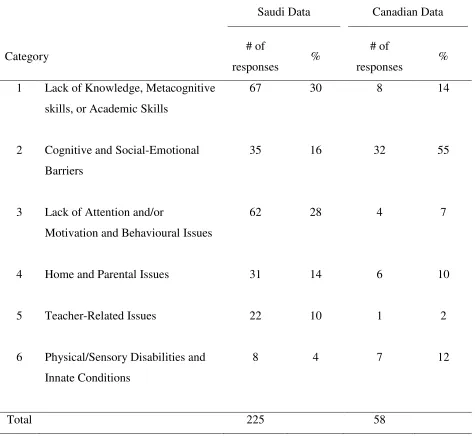
Table 1: Frequencies of Responses across Categories for Saudi and Canadian Data …………..28
List of Appendices Appendix A: Ethics Approval at Western University... 62
Appendix B: Letter of Information and Consent Form ... 63
Appendix C: Certificate of Appreciation ... 67
Chapter 1: Introduction
The overarching goal of inclusive education is “to create a better quality of life for all our
students - to bring them to a society that accepts difference” (Specht, 2013, p. 45). Inclusive
schools offer an environment in which all students learn together, so that students with learning
difficulties are educated alongside their typically developing peers. In this environment, typically
developing students might be expected to develop their understanding and acceptance of learning
difficulties (Diamond, 2001; Nowicki, Brown & Stepien, 2013b). However, enrolling students in
inclusive classrooms does not guarantee they will learn about their fellow students’ difficulties
(Nikolaraizi, Kumar, Favazza, Sideridis, Koulousiou, & Riall, 2005). Indeed, students in
inclusive classrooms often have incorrect or limited knowledge about their classmates’
exceptionalities (Magiati, Dockrell & Logotheti, 2002; Nikolaraizi et al., 2005; Smith &
Williams, 2004; Smith & Williams, 2005). Identifying students’ beliefs about the causes of and
factors associated with learning difficulties is an important step in understanding how this
knowledge is formed (Rau, 2003). To further our understanding of this topic, this study invited
Canadian and Saudi students to take part in semi-structured interviews on their beliefs about the
etiology of learning difficulties.
The purpose of this study was to investigate Canadian and Saudi elementary students’
beliefs about learning difficulties and to compare those beliefs. Studies in this domain have been
conducted in Canada (e.g., Nowicki, 2007; Nowicki, Brown, & Stepien, 2013a). However, a
search for studies conducted in Saudi Arabia on individuals’ beliefs about the causes of learning
difficulties yielded no results in either Arabic (EduSearch and AskZad), or English databases
(Eric, PsychInfo and GoogleScholar). Therefore, this study addresses a gap in the Saudi
public education system, and it is near the top in international school achievement tests
(Jahnukainen, 2011). The research question for this study was, “How do typically developing
grade 5 and 6 elementary Saudi students view the causes of learning difficulties and how do
those beliefs compare to those held by Canadian peers?”
Results from this study will inform inclusion policy in Saudi Arabia and provide a
baseline understanding of how Saudi children in inclusive settings view peers with learning
difficulties. In addition, this study gives voice to Saudi students who have not been included in
the research to date on children’s beliefs about learning difficulties (Alquraini, 2011).
This thesis is divided into four chapters. In this introductory chapter, I provide a review
of the literature. In chapter two I describe the study method, and in chapter three I present the
study results, organized by category. Chapter four concludes this thesis with a discussion of the
findings including limitations, suggestions for future research and educational implications.
Literature Review
This literature review is divided into three sections. In the first section, I define the terms
“learning difficulties” and “inclusive education” and describe how the terms are used. The
second section provides a summary of the education systems in Saudi Arabia and Canada,
especially in relation to inclusive education and learning difficulties. The third section includes a
review of the literature on individuals’ beliefs about learning difficulties and other special needs.
Terminology
Learning difficulties/learning disabilities. It is interesting to note that definitions of the
terms “learning disabilities” and “learning difficulties” vary across cultures. “Learning
difficulties” is a general term that describes a person’s lack of success or achievement which can
“learning difficulties” can also be used to refer to learning problems that are associated with an
intellectual disability, a specific learning disability, lower academic ability, mental retardation, or
a handicap (Nowicki, 2007; Nowicki, et al. 2013a). In other words, learning difficulties are not
limited to individuals who have intellectual disabilities, and individuals who have learning
difficulties may or may not have low intelligence quotient (IQ) scores (Hido & Shehu, 2010).
On the other hand, the term “learning disabilities” represents a small number of
individuals with specific learning difficulties who have average or above average IQs
(Westwood, 2008). According to the Learning Disabilities Association of Canada (n.d.), the term
refers to “a number of disorders which may affect the acquisition, organization, retention,
understanding or use of verbal or nonverbal information.” For example, Berninger and May
(2001) identified three specific learning disabilities: dysgraphia, which affects writing abilities;
dyslexia, which affects a complex range of abilities related to reading and language; and oral and
written language learning disability, which includes the same impairments as dyslexia plus
problems with morphological and syntactic coding and comprehension. Dyscalculia is another
identified learning disability that affects the application of mathematical operations, and visual
and spatial organizations (Hutchinson, 2007). The Learning Disabilities Association of Canada
(n.d.) reports that 3.2% of Canadian children have a learning disability.
In Saudi Arabia, the term “learning difficulties” does not have a distinct definition. The
term “learning disabilities” is used by learning disabilities’ professionals when referring to
“school children who experience learning difficulties in particular school subjects and who
‘apparently’ have average intelligence, have underlying deficit, presumed to be dysfunction in
In this study, I chose to use the term “learning difficulties” rather than “learning
disabilities” for two reasons. First, it is a broader term (Westwood, 2008) and second, I used this
term for participants’ ease of understanding (Nowicki, 2007). In the following literature review,
however, I have retained the terms as the authors originally used them.
Inclusive education/inclusion. According to the United Nations Educational Scientific
and Cultural Organization (UNESCO, 2008), some countries (including Saudi Arabia and
Canada), use the term inclusion to refer to an educational model in which students with special
education needs spend most or all of their educational time with their typically developing peers.
A comprehensive definition of inclusion does not refer simply to teaching individuals with and
without disabilities in the same educational settings; inclusive education offers social benefits to
all students and is “central to the achievement of high-quality education for all learners and the
development of more inclusive societies” (UNESCO, 2008, p. 5). All students should have
access to high-quality inclusive education regardless of gender, language, family socio-economic
status, disability, sexual orientation, colour, religion, national or ethnic origin (British
Psychological Society, 2002).
Inclusive educational environments benefit all students and offer several advantages for
students with learning difficulties in particular. For example, reading support programs
administered in an inclusive classroom environment, where everyone is accepted without fear of
being different, can help students develop a sense of equality. An inclusive environment can
foster students’ feelings of competence because they are not singled out (Thomazet, 2009). In
addition, inclusion at school can ease students’ social integration into society as they mature
Background to Education in Saudi Arabia
Beginning in the 7th century, education was offered through what was called Kuttab.
Kuttab is the equivalent of primary/elementary education and was presided over by a Muslim
preacher in mosques for both sexes (segregating those aged six and over). Students who went to
Kuttab learned how to recite and memorize the Holy Quran as well as other religious texts. Some
Ottoman public schools were established after the Ottoman Empire ruled the Hejaz region (the
western area of the Arabian Peninsula) and students were taught religion, art, geography, and
history. However, most Hejazis refused to have their children educated in these schools because
instruction was provided in Turkish. The desire for education in Arabic led wealthy Hejazi
merchants to establish some private schools in Hejaz major cities such as Jeddah, Makkah, and
Madinah, offering a wide range of subjects in Arabic. Soon after the unification of Saudi Arabia
by King Abdulaziz Al-Saud, the Saudi Directorate of Education was founded in 1926, and public
schools followed shortly thereafter (Rugh, 2002). In 1953, the Directorate of Education was
upgraded and became what is now the Ministry of Education. In today’s system, Saudi citizens
are granted a free education including six years of elementary school followed by three years in
intermediate and three years in secondary schools. Public education is gender-segregated. After
students graduate from secondary school, they can receive free post-secondary education, which
is under the authority of the Ministry of Higher Education (Rugh, 2002). Post-secondary
education is also gender-segregated.
Private schools in Saudi Arabia are allowed to have first to third graders of both genders
study side by side in the same classroom; however, only a few schools apply this option.
Interestingly, Al-Sheikh (1992) noted “at higher education levels, where necessary, female
cited in Hussain, 2009, p. 7). Additionally, in 2005, the King Abdullah Foreign Scholarship
Program (KASP) was launched. The program’s main objective is to train and educate Saudi
students in foreign countries, and to have the students return as qualified professionals in
different fields in accordance with the needs of the Saudi government’s ministries, communities,
the private sector and the public sector. To fulfill this goal, prospective students are sent to the
world’s best schools to pursue higher education by completing bachelor’s, master’s and
doctorate degree programs and medical fellowships (King Abdullah Scholarships Programs,
2010). Canada is one of 23 countries that were chosen for the quality of their post-secondary
institutions. According to the Government of Canada, there were more than 15,000 Saudi
students in 2012.
Learning difficulties in Saudi Arabia. Hussain (2009, p. 11) estimates that
approximately 5-10% of Saudi students experience learning difficulties, although this percentage
may not reflect the actual prevalence due to a lack of adequate assessment tools. Within Saudi
schools, regular classroom teachers are responsible for referring students for identification
(Hussain, 2009). Identified students then receive support from learning disabilities specialists.
Learning disabilities are regarded as minor disabilities and students who have learning
disabilities are educated in the general education curriculum with their typically developing
peers. Extra support (e.g. a resource room) is available when needed (Al-Ajmi, 2006).
In Saudi Arabia, there are at least 12 public and private educational institutions that offer
educational accreditation with specialization in education on learning disabilities. However,
Hussain (2009) states “no study has been conducted to evaluate the effectiveness of the learning
disabilities specialization area” (p.1). Institutions that offer four year bachelor’s degree programs
Al-Uloom University, Umm Al-Qura University, King Faisal University, Taibah University, Jazan University, Qassim University, Majmaah University, and, Najran University that offers
bachelor’s and master’s degree programs with an emphasis on learning disabilities. In addition,
there are three institutions that offer an 18-month diploma program in special education
accredited by the Ministry of Higher Education: University of Tabuk, King Abdulaziz
University, and Dar Al-Hekma College. In 1991 King Saud University was the first institution to
offer a program for student teachers interested in the field of learning disabilities.
Since 2003, a collaboration of higher education organizations and the Department of
Learning Disabilities at the Saudi Arabia Ministry of Education has conducted a number of
domestic workshops and research projects related to learning disabilities. These workshops and
projects were conducted by King Saud University, Princess Nora Bint Abdulrahman University,
Prince Salman Center for Disability Research, and King Abdulaziz Public Library (Ministry of
Education of Saudi Arabia, 2011). Going beyond the borders of Saudi Arabia, the Department of
Learning Disabilities makes efforts to inform people in other countries about the status of
learning disabilities in Saudi Arabia, and also helps Saudi residents abroad who have learning
disabilities. For example, the Saudi School in Vienna is an international Saudi school that offers
a program for students with learning disabilities supported by Saudi specialists (General
Directory of Saudi Schools Abroad, 2012).
To help spread awareness about learning disabilities, the Ministry of Education
introduced Learning Disabilities Day on May 3, 2009 with a campaign called “I Know My
Difficulties.” The following year the campaign was “Yes, I Can Learn” and in 2011 it was
“Learn About My Difficulties So We Can Defeat Them.” It was mandatory for all schools to
Efforts to improve awareness aim to breakdown negative societal attitudes towards learning
difficulties (Ministry of Education of Saudi Arabia, 2011).
Inclusion in Saudi Arabia. Inclusive education in Saudi Arabia is offered to students in elementary and middle school (from 6 to 14 years of age). The Inclusion Act in Saudi provides
for two types of inclusion approaches according to students’ needs (Alquraini, 2011). The first
approach is tailored to students with mild learning difficulties; they receive their education in
fully inclusive settings with some modifications and accommodations in teaching style. A
different approach is provided for students with mild and moderate cognitive disabilities; they
attend segregated classes that are located in the same building as their typically developing peers.
This partial inclusion allows students with mild and moderate cognitive disabilities to get
involved in the same non-curricular activities with students in regular education classes. Students
with severe disabilities are not covered by the Inclusion Act. Instead, they are educated in
segregated, residential institutions. These institutions do not provide inclusive activities between
their students and typically developing peers (Alquraini, 2011).
In 1997, the Ministry of Education approved 12 inclusive education programs specially
designed for elementary students with learning disabilities. These programs operated in Riyadh,
Jeddah, and the Eastern Region (Abunayyan, n.d.). The Ministry of Education of Saudi Arabia
(2001) assessment procedures are similar to the Canadian approach. These procedures include:
• Parents’ consent is important prior to diagnosis of their child's condition, and prior
taking any decision;
• Parents should take part in the preparation, evaluation and tracking of their child’s
• Parents, or the student's guardians, are invited to visit the institute or the school and
become familiarized with the program recommended to their child;
• All information about the students or their family is kept confidential;
• Parents receive an explanation of their child's condition in simple language to make
sure everything is clearly understood;
• A student's family can ask for a re-diagnosis in case they believed the initial diagnosis
is not accurate; and (Ministry of Education of Saudi Arabia, 2001).
Students are referred for special education identification by the regular classroom teacher. A
specialized team then makes the decision on whether a student is eligible for learning disabilities
services. For a student to be eligible for learning disabilities services there must be a significant
difference between the child’s level of achievement and his or her abilities. These difficulties
cannot be a result of a mental disorder, sensorial causes, or any factors that are related to learning
conditions or family care. The specialist team is directed by the school’s principal and includes
the following: a special education teacher, a special needs program director, a teacher, a
psychologist, a vice-principal and if possible, the student’s guardian and the student
himself/herself (General Directorate of Special Education, n.d. a). The Ministry’s policy on
learning disabilities mandates that each student spend at least 50% of their school day in regular
classes. Students spend the rest of the school day in the resource room, where they receive
special education support. The teacher-student ratio in these resource rooms is one to three and
the total number of students assigned to each teacher per semester cannot exceed 15 (General
Despite Ministry support for inclusive education, Al-Mousa (2008) has reported a
number of obstacles to inclusion in Saudi Arabia. For example, individuals who do not have
special education needs are sometimes mistakenly included in special education services,
reducing opportunities for needier students. Some school buildings lack the facilities to provide
inclusive education services. In addition, negative societal attitudes and parents’ fear of negative
attitudes toward inclusion present another obstacle to inclusion. However, support for inclusion
has increased over the last several years and it is becoming progressively easier to overcome
these obstacles (Al-Mousa, 2008). According to UNESCO (2009) obstacles to inclusion are
reduced by the collaboration of those involved in all aspects of education, including the
principal, regular and special education teachers, and policy makers (UNESCO, 2009).
A study on the implementation of the Ministry’s learning disabilities services reported
that 87% of the students with learning disabilities who were enrolled in the program made
adequate learning progress and 78% felt better about themselves (Ministry of Education of Saudi
Arabia, 2011). Based on the findings of the implementation study, other programs targeting
intermediate and high-school students were approved in 2006 (Ministry of Education of Saudi
Arabia, 2011). By the academic year 2006/2007, there were programs across the Kingdom
serving 11,618 students with learning disabilities (Directorate General of Special Education,
n.d.c).
Overview of Education in Canada
In the 17th century, children received some teaching on the basic skills of reading and
writing at home, and some priests also established petites écoles where other subjects were
taught, including religion (The Canadian Encyclopedia, n.d.). By the middle of 17th century,
subjects such as classical studies, grammar, and theology. In the 18th century, the British
assumed control of Canada and used education as a tool for spreading their culture and
advocating for the English language and customs. The structure and organization of schooling as
it is offered today was introduced through the Constitution Act of 1867 (Van Nuland, 2011).
Education is now compulsory in all ten provinces and three territories across Canada at
elementary and secondary levels, which include grades 1 to12 (with the exception of Quebec,
which includes grades 1 to11). Pre-elementary schooling, before age of six, is optional. As there
is no federal department of education in Canada, each jurisdiction organizes, delivers and
evaluates education within their area, including post-secondary education (Van Nuland, 2011).
Across Canada, public education is offered in co-educational, non-religious settings (Canadian
Association of Public Schools – International, n.d.), as well as in publically funded Catholic
schools in some provinces.
Speaking to the quality of public education offered in Canada, the government of Canada
invests in education more than any other country in the world's eight wealthiest countries
(Canadian Association of Public Schools – International, n.d.). Canadian students are ranked
highly among English speaking countries in many areas such as reading, mathematics, and
science, and have consistently been among the top five ranked countries world-wide (Council of
Ministers of Education, Canada, 2012; Organization for Economic Co-operation and
Development, 2009). In 2011, Canada had the highest adult population (51%) holding a
post-secondary qualification among Organization for Economic Co-operation and Development
(OECD) countries (OECD, 2013).
Learning difficulties in Canada. In Canada most publically funded schools practice
offered different kinds of integrated education. Student’s needs are accommodated through a
range of options. For example, according to the Ontario Ministry of Education (2007), students
with special needs may be placed as follows:
• regular class with indirect support where the student is placed in a regular class for
the entire day and the teacher receives specialized consultative services;
• regular class with resource assistance where the student is placed in a regular class
for most or all of the day and receives specialized instruction, individually or in a
small group within the regular classroom from a qualified special education teacher;
• regular class with withdrawal assistance where the student is placed in a regular class
and receives instruction outside the classroom, for less than 50 per cent of the school
day, from a qualified special education teacher;
• special education class with partial integration where the student is placed by the
Identification, Placement, and Review Committee in a special education class for at
least 50 per cent of the school day, but is integrated with a regular class for at least
one instructional period daily; or
• full-time special education class for the entire school day (Ontario Ministry of
Education, 2007, para. 3).
In terms of special education training, pre-service teacher programs vary across provinces. For
instance, to earn a Special Education Teachers' Certificate in Manitoba, a teacher must hold a
Manitoba Professional Teaching Certificate, complete thirty hours of post-baccalaureate special
education courses, and have at least two years of teaching experience (Manitoba Government,
2013). Some Canadian post-secondary institutions offer degree programs in special education,
University of British Colombia, Thompson Rivers University, University of Northern British
Columbia, Ryerson University, York University, University of Manitoba, Brock University,
Vancouver Island University, University of Alberta, and Memorial University of Newfoundland.
Background Summary
In summary, there are some differences and some similarities between Canadian and
Saudi educational systems. While both countries now offer free public school education, the
Canadian system was established almost 100 years before the Saudi system. With regards to
teacher training in Canada, each province has its own requirements. In Ontario, a prospective
teacher must first earn an undergraduate degree and then obtain a teaching certificate to become
of member of the Ontario College of Teachers and be qualified to teach in public elementary
schools (Ontario College of Teachers, 2013). In Saudi Arabia, prospective learning disabilities
teachers are expected to obtain a post-secondary degree in learning disabilities (Abunayyan,
n.d.). One major difference between the education systems in Canada and Saudi Arabia is that
Saudi students are educated in single-gender schools while Canadian students are educated in
co-educational schools. In terms of similarities, both Saudi and Canadian systems support inclusive
education and emphasize that time spent in special education classes (when needed) should not
exceed 50% of a student’s school day.
Brief Overview of Causes of and Factors Associated with Learning Difficulties
The causes of and factors associated with learning difficulties are numerous and complex
and a full review of the literature is beyond the scope of this paper. However, I mention some of
the key findings briefly here to provide context to this study.
Research examining family factors associated with children’s achievements has
Berliner (2009) reported that children who experience family violence can have stress-related
problems that may lead to lower levels of achievement. In a study examining family structure,
Carlson (2006) reported that children of divorced parents or single parents may have lower
achievement. Some studies show that children born to mothers who smoked and/or consumed
alcohol during pregnancy are more likely to experience learning difficulties (Berliner, 2009).
Other factors associated with learning difficulties include health, poverty and language
related issues. Health issues such as heart conditions, asthma and leukemia may limit a student’s
attentiveness and alertness (Knoblauch & Sorenson, 1998). Some studies have reported an
association between poverty and learning disorders (Bigelow, 2006; Kingdon & Cassen, 2010).
Kingdon and Cassen (2010) also reported that ethnicity and studying in a language other than
student’s first language have been associated with low achievement.
Individuals’ Beliefs about Learning Difficulties
Existing literature from Western countries is richer with more studies on children’s attitudes
about exceptionalities than causal explanations (Smith & Williams, 2004). On the other hand, my
review of the literature from Arab countries showed that research in Arab countries has focused
on educators’ understanding of learning disabilities. This difference may reflect the fact the Arab
countries are still developing inclusion policies and refining professional development practices
for teachers; recent research in these countries has focused on educators’ understanding and
attitudes to inform this policy and program development.
Research with children has demonstrated that, in general, students show greater
capability in identifying physical disabilities than psychological and intellectual disabilities
(Magiati, Dockrell & Logotheti, 2002; Nowicki & Sandieson, 2002). Not surprisingly, older
Nowicki, 2007; Smith &Williams, 2004). Looking at families with children who have
disabilities, Hames’ (2005) found that younger siblings first copy the behaviour of their older
siblings with disabilities and then begin to copy their parents after realizing that their siblings
with disabilities are different. When they start going to school, they may feel embarrassed to say
that their siblings have a disability (Hames, 2005).
A number of studies have shown that some students are able to identify learning
difficulties (Magiati, Dockrell, & Logotheti, 2002; Nowicki, 2007; Nowicki et al., 2013a; Ralli et
al., 2011). For example, in a study by Magiati et al. (2002) students identified dyslexia as a cause
of learning difficulties. Research shows that students have attributed the existence of learning
difficulties to various factors. In a recent study by Nowicki et al. (2013a.), participants between 9
and 12 years of age were asked what they believed to be the causes of learning difficulties.
Among their responses they identified five categories of factors related to learning difficulties
including: fate and circumstances occurring prior to birth; family stress; neurological and
developmental problems; difficulties with information processing; and issues related to
motivation, learning and instruction. Finally, students also view lack of academic and social
skills, failure to listen, and change of environment (e.g. poor teaching and moving to a new grade
or school, or coming from another country) as factors associated with learning difficulties
(Nowicki, 2007).
Some studies have shown that students in inclusive schools appear to be more
knowledgeable about disabilities than students in non-inclusive schools (Diamond, 2001; Dyson,
2005; Nowicki et al., 2013a). In a study involving 77 kindergartners, Dyson (2005) found that
students in inclusive schools showed social tolerance rather than fear of their classmates who had
acceptance and understanding of their classmates with disabilities (Diamond, 2001; Nowicki et
al., 2013b.). However, Maras and Brown (2000) conducted a study in inclusive classes and found
that children without disabilities were less accepting of their classmates with disabilities.
Students showed negative attitudes towards, and were misinformed about, children with learning
disabilities and physical disabilities.
In a qualitative study on young children’s attitudes towards their peers with disabilities,
Mouzourou (2009) reported that students’ thoughts and actions towards their classmates with
disabilities were influenced by teachers’ comments and actions as well as the classroom and
school environment. In the same study, Mouzourou (2009) showed that parents’ attitudes and
language when referring to individuals with special needs influenced children’s thoughts and
actions.
Some researchers have examined the role of religion in shaping individuals’ knowledge
(Tufan, 2008; Croot, Grant, Cooper, & Mathers, 2008). Studies in Turkey and Pakistan were
particularly relevant to the current study as these are all countries with majority Muslim
populations. Participants among these countries showed what is known as Islamic tolerance
towards learning difficulties (Tufan, 2008; Croot et al., 2008). Islamic tolerance is “a reflection
of the peaceful coexistence and nondiscriminatory interaction between two or more
heterogeneous groups” (Ferrara, 2012). Tufan (2008) completed observations and open-ended
interviews with kindergartners and their parents to better understand kindergartners’ attitudes
towards learning difficulties. Tufan (2008) found “both children and their parents strongly
pointed out the accident-related reasons, complications before or during birth, and religious
views” which influenced kindergartners’ attitudes towards peers with special needs (p. 153).
believe it is Allah’s kismet (God’s will) to have a family member with special needs and
therefore, one should sympathize with their situation and offer help as required; (b) people with
mental challenges are viewed as children in Islam, and they are to be looked after and taken care
of by their brothers and sisters (or society); and (c) individuals with special needs are in need and
according to Islamic instructions, Muslims should help those in need (Tufan, 2008). In a
qualitative study involving 16 interviews with parents of children who had severe learning
disabilities, parents expressed religious beliefs in their views about children with disabilities.
Parents viewed children with learning difficulties as a gift from God, a test from God, evidence
of being chosen parents, a punishment, or a curse (Croot, et al., 2008).
Summary
This exploratory study builds upon previous studies that investigated students’
understanding of different disabilities in general and learning difficulties in particular (Hames,
2005; Magiati, et al., 2002; Maras & Brown, 2000; Nowicki & Sandieson, 2002; Nowicki, 2007;
Nowicki et al., 2013a; Ralli et al., 2011; Smith & Williams, 2004; Tufan, 2008). This study
compared beliefs about causes of and factors associated with learning difficulties among
Canadian students (as reported by Nowicki et al., 2013a.) and Saudi students of similar age. In
addition to providing cross- cultural comparisons, the findings provide valuable insight into the
perceptions of Saudi students in inclusive education settings. The research was exploratory in
nature because no prior research had been undertaken with this population. Therefore, this study
fills a gap in the current Saudi literature on inclusive education, and may be used to inform
Chapter 2: Method
Participants
Participants in this study were volunteer grade five and six students from Saudi Arabia
and Canada. The Saudi sample consisted of 62 participants (35 males and 27 females) with a
mean age of 10.50 years (SD = 0.50) from a total of six classrooms, two classes with male
students and four classes with female students. The Saudi sample was recruited from Jeddah, a
multicultural, major city in Saudi Arabia. The Canadian sample was made up of 36 participants
(20 males and 16 females) with a mean age of 10.42 years (SD = 1.25) from three classrooms.
The Canadian sample reflected a broad socio-economic urban and suburban demographic in a
medium-sized city in Ontario. Both samples were recruited from schools that support inclusive
education. Four of the Saudi participants revealed they had some kind of difficulty in learning
although none of them were diagnosed with a learning disability, while three of the Canadian
students revealed they had learning difficulties.
Procedure
Ethics Approval and Consent. I obtained approval for this study from the ethics review boards at both the Faculty of Education sub-REB (Review Ethics Board) at Western University
(see Appendix A), and the London District Catholic School Board for the Canadian sample.
Ethics approval for the Saudi sample was obtained from the Faculty of Education sub-REB
(Review Ethics Board) at Western and the Saudi Educational Supervision Board in Jeddah.
As a first step in recruitment, teachers consented to allow the researchers to recruit from
their classrooms. The study was then briefly described to children in these classrooms. Students
were provided with letters of information and parental consent forms (see Appendix B) and those
Data Collection. The qualitative data for this study was collected through
semi-structured in-person interviews. In the Saudi sample, interviews were conducted in Arabic. In the
Canadian sample, interviews were conducted in English.
Interviewer preparation: Saudi Sample. As a female researcher in Saudi, I could only
interview female students. I recruited a male graduate student, Mr. M., to assist in this study. Mr.
M. was a database administrator and design graduate student at the University of Denver who
volunteered to conduct the male participant interviews. In this study, I followed two techniques
to enhance qualitative research validity and reliability between data collectors (Guest,
MacQueen, & Namey, 2012). Guest et al. (2012) suggested training the assistant before the
interviews, as this “improves data relevance and contributes to better reliability between data
collectors” (p. 99). Additionally, Guest et al. (2012) emphasized the importance of immediate
feedback during the data collection stage. Prior to conducting the interviews, Mr. M received
interview training and was provided with interview guidelines and a summary of the research
rationale. I also provided Mr. M. with copies of the letters of information, letters of consent,
signed certificates of appreciation (see Appendix C), different forms of the research question,
and possible scenarios on how the interviews might proceed. During the interview phase, Mr. M.
recorded the interviews with male participants and then forwarded the recordings after each
school day (either online or in person) to me. Consequently, Mr. M. was in constant contact with
me and I provided feedback each time he handed in interview recordings.
Interviewer preparation: Canadian Sample. Canadian data were collected by two
graduate students who were qualified teachers. As in the Saudi sample, the procedures
recommended by Guest et al. (2012) were followed specifically the graduate students were
Interview process and questions. Specific details concerning how the data were gathered in the Saudi and Canadian samples are described in the next section. Here, I describe
procedures that were common to both samples.
Prior to the beginning of each interview, participants were given a brief explanation of
the research topic, and it was also explained that their insight was important to our understanding
of what they knew about learning difficulties. In the Saudi interviews, the interviewer explained
that this research was part of a comparative study. Both Canadian and Saudi interviewers assured
participants that they would remain anonymous, and each participant knew that their answers
would remain confidential. Additionally, participants were informed of their right to ask for a
break or to ask to stop the interview at any time if they decided not to complete the interview.
Each interview focused on the open-ended question: “Why do you think some students
have problems learning new things at school?” To encourage participants to elaborate on their
answers, the interviewer was free to add prompts as required. Prompts included questions such
as: “What else?,” “Can you tell me more?”, “Is there anything else you can think of?,” and “Is
there anything else you would like to add?” All interviews were audio recorded and saved on a
secured flash drive. After completing the interview, each participant was given a certificate of
gratitude.
Saudi sample. The Saudi interviews occurred at Manarat School in Jeddah.
Al-Manarat School was chosen after taking into account a number of factors including the
following, (a) the school was recommended by the Saudi Educational Supervision Board as
being supportive to research, (b) the school’s tuition is at a medium-range and is considered to be
affordable by middle-class families, (c) the school supports the inclusion of students with special
by the same management, so only one ethics approval was needed to include both male and
female participants.
Al-Manarat school is a private school that offers education for all levels, kindergarten,
elementary, secondary and high school, for both males and females; it has a student population
of approximately 2000 students. Male and female students are educated in two separate
campuses. The school has one head principal and eight vice-principals, one for each level in each
campus. The head principal of the school approved the study, but the interview arrangements
were made with the elementary vice-principals on both campuses. Interviewers, in both male and
females campus, were granted quiet areas such as the school mosque or the library to conduct
their interviews. They considered themselves as guests at the school and were agreeable to
whatever arrangements were suggested by school vice-principals regarding the students’
withdrawal from their classes. With that being said, the vice-principal at the male campus
arranged for students to be withdrawn from their classes throughout the school day, while female
students were interviewed outside of instructional time.
To put participants at ease, the interviewer began with a short introduction and asked
about how the interviewee spent their vacation (interviews took place right after a two-week
vacation). Interviews were conducted in Arabic with children who were first language Arabic
speakers and lasted for 10 to 20 minutes each. After the interviews were completed, I translated
them into English and transcribed them for analysis.
Canadian sample. Interviews took place in a quiet room during the school day and lasted
10 to 20 minutes each. Interviews were conducted in English with children who were first
language English speakers by a trained, female graduate student assistant. In order to make the
student feel more at ease, each interview began with initial questions on what the participants
outlined. After completing the interviews, the audio recordings were transcribed by the
interviewer.
Data Analysis
The data was analyzed using the Three C’s Analysis Approach (Lichtman, 2010).
According to Lichtman (2010), this content-driven, thematic analysis approach is particularly
suitable for exploratory studies. In exploratory thematic analyses, transcripts are converted to
codes that are derived from the data rather than being sorted into a pre-determined framework of
codes. This method was appropriate in this exploratory study because the study was not designed
to test a hypothesis and there were no pre-determined codes (Guest et al., 2012). The three C’s in
Lichtman’s (2010) approach stand for coding, categorizing, and concepts. This approach
involves six steps to move from raw data to meaningful concepts and to finalize the analysis. The
six steps are outlined below.
1. Initial coding. Read through the transcribed data looking for unique ideas. Highlight relevant sections of text and assign an initial set of codes to identify distinct ideas
within the transcript.
2. Revise initial coding. Review the set of codes made in step one. Look for
redundancies and combine any codes that are similar, renaming codes as necessary.
3. Develop an initial list of categories or central ideas. Organize codes into groups of
similar ideas to create a list of categories.
4. Modify the initial list. Examine the list of categories, look for any that overlap and determine whether some are more important than others. It is important to note that
what differentiates coding from categorizing is that in coding the researcher deals
with the original raw data, whereas in categorizing the researcher deals with codes
5. Revise categories. Eliminate any categories that are redundant and begin to identify key themes of importance.
6. Move from categories to concepts. Identify the strongest themes, or key concepts, which emerged through steps one to five.
In this study, I used Microsoft Word (2007) word processing software to conduct the
analysis. This software includes features such as adding comments in margin, highlighting text,
and finding and replacing words or phrases. These features were helpful in completing the data
Chapter 3: Results
To begin the analysis, I identified students’ responses to the research question by reading
through the transcript and looking for sections of text, which specified reasons why some
students have difficulties learning in school. Through this initial step, I extracted 58 responses
from the 36 Canadian interviews and 225 responses from the 62 Saudi interviews. Next, I began
analyzing the Saudi children's interviews by reading all the responses several times to distinguish
the most common themes. In this step, I moved from reading specific comments to creating
general themes by grouping similar comments together. For example, I combined responses
coded under student-teacher relationships, materials used in class, and teaching styles under one
category named Teacher-Related Issues.
Using the Saudi data to develop categories for coding, I initially fitted the statements into
14 defined categories. The 14 initial categories were Newness, Difficult Topic, Attention-Related
Issues, Lack of Interest, Lack of Guardians’ Guidance, Focus on Handwriting, Pace and Time,
Shyness or Anxiety, Memory Issues, Teacher or Materials Related, Lack of Previous
Knowledge, Classroom Behavior Problems, Disability/ Difficulty/ Disorder, and Medical
Condition. Next, I applied the same 14 categories to the Canadian data. After completing this
step, I found discrepancies among the categories in both Saudi and Canadian data; some
responses were a good fit for more than one category, while other categories could be divided
into smaller groupings. Therefore, I made changes to some of the initial categories following
consultation with my thesis supervisor. These changes included combining similar classifications
together, dividing others and creating new ones. These changes resulted in the following six
• Category 1: Lack of Knowledge, Metacognitive Skills, or Academic Skills was created
by combining the original categories Newness, Difficult Topic, Focus on Handwriting,
Pace and Time, Memory Issues, and Lack of Previous Knowledge.
• Category 2: Cognitive and Social-Emotional Barriers was created by combining the
original categories Pace and Time, Shyness or Anxiety, Shyness or Anxiety, Disability/
Difficulty/ Disorder.
• Category 3: Lack of Attention and/or Motivation and Behavioural Issues was created by
combining Lack of Interest and Attention-Related Issues.
• Category 4: Home and Parents Issues remained the same with a change to its label
(originally Lack of Guardians’ Guidance).
• Category 5: Teacher-Related Issues remained the same with slight changes to its label
(originally Teacher or Materials Related).
• Category 6: Physical/Sensory Disabilities and Innate Conditions combined the original
category Medical Condition with some responses from the original category Anxiety,
Disability/Difficulty/ Disorder.
I numbered the six categories according to size from greatest to least number of
responses. To ensure consistent organization of responses into categories, I gave each category
an operational definition, and double-checked each response fit within the operational definition
for each category (Adanza, 1995). The operational definitions for the finalized categories are
listed below:
1. Lack of Knowledge, Metacognitive Skills, or Academic Skills. Responses sorted into this
category related to lack of knowledge or academic skills, or poor metacognition, none of
2. Cognitive and Social-Emotional Barriers. This category included all responses falling
among a broad range of disabilities, disorders and social-emotional barriers including, but
not limited to the following: cognitive, psychological, neurological and developmental
disabilities and disorders, regardless of their severity. For example, this category included
learning disabilities, anxiety, aphasia, dyslexia, autism, attention deficit hyperactivity
disorder (ADHD) as well as shyness. It excluded responses related to physical conditions.
3. Lack of Attention and/or Motivation and Behavioural Issues. This category included
responses related to lack of attention, low interest or motivation, and minor classroom
behavioural problems that are not likely due to exceptionalities. It did not include issues
related to specific disabilities or identified exceptionalities.
4. Home and Parental Issues. This category included responses that related to lack of
parental (or guardians’) guidance or family situations that stood between the participants
and their studies as possible causes of learning difficulties.
5. Teacher-Related Issues. This category included responses that indicated issues related to
the teacher could contribute to learning difficulties. These issues included: teaching styles
and skills, student-teacher relationships, and materials used in class. Teaching styles and
skills included responses on how teachers affect their students’ interest in learning and
students’ levels of achievement.
6. Physical/Sensory Disabilities and Innate Conditions. This category included responses
related to permanent physical conditions or disabilities. It excluded disabilities that are
cognitively based.
One limitation in qualitative data analysis is the potential for researcher bias. Bias may
looking for, rather than being open to emergent themes in the data (Chenail, 2011). To decrease
potential for researcher bias, Guest et al. (2012) suggested that a second coder should analyze the
data. In this study, I asked a graduate student to independently code the initial 20% of each of the
Canadian and Saudi responses so that coding reliability could be determined. She was asked to
code the data into the six categories using the operational definitions provided. After she had
categorized the responses into the six given categories, I then compared her coding with mine. A
high inter-rater agreement was reflected in the agreement between the two sets of coded data,
with only seven out of 45 statements categorized differently. Discrepancies were resolved
through discussion. The second coder also suggested a couple of additions to the descriptions of
categories. These included adding “meta-cognition of learning” to the description of Category 1
and adding “learning disabilities” to the description of Category 2.
Table 1 shows the frequency of responses in each category for both the Saudi and Canadian
samples (see Appendix D for a complete list of all responses in each category). Unless otherwise
stated, the percentages reported throughout this chapter reflect proportions of responses within
the Saudi sample or the Canadian sample, as shown in Table 1. Following is a detailed
presentation of results within each category.
Category 1: Lack of Knowledge, Metacognitive Skills, or Academic Skills
This category included the largest total number of responses overall with 75 responses
(26% of the entire sample). It was the most common theme among Saudi responses with 67
responses (30%) and the second most common theme among the Canadian data with eight
responses (14%). Within this category, three sub-themes emerged: Lack of Knowledge, Lack of
Table 1
Frequencies of Responses across Categories for Saudi and Canadian Data
Saudi Data Canadian Data
Category # of
responses %
# of
responses % 1 Lack of Knowledge, Metacognitive
skills, or Academic Skills
67 30 8 14
2 Cognitive and Social-Emotional Barriers
35 16 32 55
3 Lack of Attention and/or
Motivation and Behavioural Issues
62 28 4 7
4 Home and Parental Issues 31 14 6 10
5 Teacher-Related Issues 22 10 1 2
6 Physical/Sensory Disabilities and Innate Conditions
8 4 7 12
In the Saudi sample, Lack of Knowledge was the most common sub-theme, including 20
responses such as “It’s new,” “Because it’s like if they are opening a new page, it’s new for
them,” and “They have never studied it before.” Examples given by participants regarding lack
of academic skills included, “They don’t know how to read” and “They do not know adding.” A
couple of responses related to being transferred between two educational settings. One comment
was on the difference between curricula: “I was in a British school so I find difficulties in writing
in Arabic.” The other comment was on using two languages (English and Standard Arabic) in
school: “I have difficulties because some sayings are in standard Arabic so I cannot understand
the language.” Some Saudi participants spoke about students being slow in writing: “I am slow, I
don’t write as fast as everybody else because I want my writing to be neat and easy to
understand” and “Some girls write slowly because they want it to look neat.” Among the Saudi
data, 26 responses related to a lack of metacognitive skills as a factor associated with learning
difficulties: “Because they don’t know how to study well” and “Some of them don’t understand
things fast.”
Although this category represented the second largest theme among Canadian responses,
the category comprised a much smaller percentage of the Canadian data compared to the Saudi
data (14% vs. 30%). All eight Canadian responses in this category were coded into the
sub-theme Lack of Knowledge because they all indicated that the introduction of new learning
material might cause learning difficulties. Examples of Canadian participants’ responses sorted
into this category include: “Because it’s new and they don’t know what lots of new things are,”
“I think that some kids just have difficulties learning new things, maybe they just didn’t
not used to it or it’s new to them,” and “Because maybe like they speak a different language and
are trying to learn a language.”
Category 2: Cognitive and Social-Emotional Barriers
This category was the second largest category of responses for the entire sample with 68
responses (24% of the entire sample). Among the Saudi data, 35 responses (16%) were coded
into this category and it was the third largest category in the Saudi data. However, Canadian
participants mentioned beliefs about cognitive and social-emotional barriers as possible reasons
for learning difficulties more than any other belief, with 32 responses (55%) coded into this
category. This category was coded into two sub-themes: Cognitive Barriers and
Social-Emotional Barriers. Canadian participants were able to name many specific disabilities, with 31
comments coded under the sub-theme Cognitive Barriers including the following: “autism,”
“Asperger’s,” “ADHD,” “ADD,” “reading problems” and “learning disabilities.” In this
category, Canadian participants most often suggested learning disabilities as a cause of learning
difficulties, for example, “They probably have some problems with reading” and “That’s because
he has learning disabilities.” A few participants mentioned that learning difficulties could be
related to brain function: “Their brain didn’t like work as well as other kids’.”
Twenty six Saudi responses were coded into the sub-theme Cognitive Barriers and
included comments such as “Maybe she has a problem with her brains, like for example a brain
disease,” “Some students... when they concentrate, they feel like they have squint eyes, they feel
heat in their bodies, like they are shaking or they feel that they want to throw-up,” and “Maybe
they are not recognizing the letters well.”
My review of the 10 responses coded under the sub-theme Social-Emotional Barriers
“Maybe they are shy and don’t feel like telling the teacher they don’t understand the lesson.”
Some Saudi participants thought conditions such as “stuttering,” “reading weakness,” and
“speech problems” were possible factors associated with learning difficulties. A few of the Saudi
responses were somewhat vague, for example having “a weakness” and “Maybe their brains are
not as big as the things they are studying.” One Canadian participant mentioned
Social-Emotional Barriers: “Cause they’re new and they’re nervous.”
Category 3: Lack of Attention and/or Motivation and Behavioural Issues
This was the third largest category with 66 responses (23% of the entire sample).
Responses in this category were mostly from the Saudi data, with 62 Saudi responses (27%)
sorted into this category. Four sub-themes were identified: Lack of Attention, Chatting with
Classmates, Lack of Interest, and Students’ Carelessness. Lack of Attention was the largest
sub-theme with 25 Saudi responses coded into it. Examples of statements in this sub-sub-theme include
the following: “He is thinking about something else,” “Because they are distracted,” and “They
don’t pay attention to the teacher when she explains the lesson.” Another sub-theme, Chatting
with Classmates, included 13 Saudi responses such as “Maybe because they talk to their friends”
and “They sit and talk.” The sub-theme Lack of Interest also included 13 Saudi responses such as
“Maybe they don’t want to study” and “Maybe they are learning something that they do not
like.” Finally, the sub-theme Students’ Carelessness included 11 Saudi responses, for example, “I
feel like she’s careless” and “They would take a paper and make themselves busy doodling and
other stuff.”
Only four (7%) of the Canadian responses were placed under this category and they
related to two of the sub-themes. The sub-theme Lack of Attention included “Some kids aren`t
attention in class”. The sub-theme Lack of Interest included the following comments relating to
interest: “Maybe they just aren’t interested” and “They don’t like the studies they are doing.”
Category 4: Home and Parental Issues
This category was the fourth largest overall with 37 responses (13% of the entire sample).
Three sub-themes emerged within this category: Students’ Behaviour at Home, Parents’
Responsibility, and Family Circumstances.
Among the Saudi sample, 31 responses (14%) were coded into this category. The
sub-theme Students’ Behaviour at Home included 20 Saudi responses which reflected on behaviours
that might detract from learning, for example eating junk food, staying up late and lack of
studying. Responses in this sub-theme included the following: “She doesn’t go to bed early,”
“She’s busy at home watching TV,” and “Maybe they don’t study at home.” Among the Saudi
data, the sub-theme Parents’ Responsibility included eight responses relating to parents, lack of
support their children’s education. Examples of comments in this sub-theme included the
following: “Maybe their parents don’t explain to them or don’t study with them,” “Maybe they
are not being encouraged to study,” and “Maybe their parents only care about their in-school
learning so they don’t think about pursuing their studies.” Three responses were sorted under
family circumstances: “Maybe her mom is in the hospital,” “Maybe their mother is pregnant and
went to the hospital or maybe the mother went shopping and left them with the maid to study
with” and “He is American and has immigrated to Saudi.”
Among Canadian responses, six (10%) were classified under this category across two
sub-themes. The sub-theme Family Circumstances included four responses such as “Maybe their
parents have split up” and “If your dad died a week ago, you would be focused on that and not
smoke or do drugs when they are pregnant” and “Something to do with, when you grow up and
your parents work.”
Category 5: Teacher-Related Issues
This category was the fifth largest with 23 responses (8% of the entire sample). While 22
Saudi responses (10%) were coded into this category, it included only one Canadian response
(2%). Responses were sorted into three subthemes: Teaching Styles and Skills, Student-Teacher
Relationship, and Materials Used In Teaching. Most of the Saudi responses related to teachers’
teaching styles and skills with 18 responses such as: “Some teachers just say the lesson and they
do not explain after that,” “Maybe because the teacher is new” and “Maybe the teacher doesn’t
follow the learning style that’s best for them.” The sub-theme Student-Teacher Relationship
included the following three responses: “Maybe the student is afraid of her teacher” and “Some
teachers hit us and that makes me hate school” and “I think he had a problem with the teacher
once so he does not like to read in front of him.” Materials used in teaching included one
response: “Some books are printed wrong so students make mistakes when they read.”
The single Canadian response in this category was coded under the sub-theme Teaching
Styles and Skills: “Some teachers will say things kinda fast and it is hard to understand.”
Category 6: Physical/Sensory Disabilities and Innate Conditions
This category was the smallest with 15 responses overall (5% of the entire sample) which
all grouped together in this category without sub-themes. There were eight Saudi responses (4%)
and seven Canadian responses (12%) in this category. Saudi participants mentioned physical
conditions such as “A heart disease,” “Something wrong with their hands” and “Having vision
weakness,” and one response indicated that “being born like that” could contribute to learning
were born like that” and “That’s just how God made them.” Canadian participants mentioned
only one physical condition, specifically “hearing problems.”
Summary of Results
In summary, six categories emerged from the data collected. Overall, categories were rich
in content, and five out of the six categories were divided into sub-themes, resulting in a total of
15 sub-themes. Only the smallest category, Physical/Sensory Disabilities and Innate Conditions,
was not sub-divided into sub-themes. Responses from the Saudi sample were categorized into
more sub-themes than the Canadian responses, in other words, Saudi participants gave a wider
variety of responses than their Canadian peers. More than half of Canadian responses (55%)