Available Online at www.ijcsmc.com
International Journal of Computer Science and Mobile Computing
A Monthly Journal of Computer Science and Information Technology
ISSN 2320–088X
IMPACT FACTOR: 6.017
IJCSMC, Vol. 7, Issue. 8, August 2018, pg.37 – 52
COMPARATIVE STUDY ON ONE
TIME PASSWORD ALGORITHMS
Dr. K. Mohan Kumar
[1], G. BalaMurugan
[2] Research Guide & HOD of Computer Science [1], Research Scholar [2]PG and Research Department of Computer Science, Rajah Serfoji Government College, Thanjavur 613 005, Tamil Nadu - India
ABSTRACT: Web applications play a major part in our day to day life. Every human being use
computers for their transactions using web applications. Even personal information’s are stored in
government websites. Banks are using web applications for the transactions. Due to lack of security
lot of frauds are occurred every day. So, security issue is an important issue in our digital life. One
time pass word is the solution for this issue. Many algorithms are used to generate OTP. Every
algorithm has its own pros and cons. This study analyse seven algorithms and suggest the best OTP
generation algorithm using various aspects.
INDRODUCTION
One-Time Passwords (OTP) can provide complete protection of the login-time authentication mechanism against replay attacks. A one-time password (OTP) is a password that is valid for only one login session or transaction. OTPs avoid a number of shortcomings
that are associated with traditional (static) passwords. The most important shortcoming that is
addressed by OTPs is that, in contrast to static passwords, they are not vulnerable to replay
attacks. This means that a potential intruder who manages to record an OTP that was already
be no longer valid. On the downside, OTPs are difficult for human beings to memorize.
Therefore they require additional technology to work. So we need to generate OTP. OTP
generation algorithms typically make use of pseudo randomness or randomness. This is
necessary because otherwise it would be easy to predict future OTPs by observing previous
ones. Concrete OTP algorithms vary greatly in their details [1].
Approaches for generation of OTP[1]
The various approaches for the generation of OTPs are listed below.
Based on time-synchronization between the authentication server and the client providing the password (OTPs are valid only for a short period of time)
Using a mathematical algorithm to generate a new password based on the previous password (OTPs are effectively a chain and must be used in a predefined order).
Using a mathematical algorithm where the new password is based on a challenge (e.g., a random number chosen by the authentication server or transaction details) and/or a counter. The following Figure-1 shows how OTP is generated and used for the transactions.
Figure-1: Genation of OTP and usage
One- time password or PIN [2]
Static OTP is a password that is valid for only one login session or transaction, on a
thus avoiding the threat of pin code the left. The following Figure-2 shows the screen shot of OTP login system.
Figure-2: OTP login screen
There are number of ways to deliver one-time passwords and pins with the two most common and secure ways being through proprietary tokens and mobile phones. Using mobile phones for delivering OTP's come as a logical step due to mobile phones being ubiquitous and that most of them meet hardware requirements needed to successfully deal with OTP's. The usage of modern smart phones in delivering one-time PIN codes benefits both the end- users who are already familiar with their device and don't need to use another one and enterprises that need to deliver them, as using this method lowers their operational costs.
Static password
Replay attack.
Static Password
The impact of the Internet over the last few years has meant fundamental changes in the
way the user access business systems. The network security perimeter has crumbled at all
levels while the number of users waiting for the network access has grown. The geographical
location of users has also widened to a situation where they can be, not just in a different
department or company branch office, but anywhere in the world. While there are enormous
increased. The traditional method of securing system access was by authentication through
the use of password [2]
Replay Attack
Replay attacks can be prevented by tagging each encrypted component with a session
ID and a component number. Using this combination of solutions does not use anything that
is interdependent on one another. Because there is no interdependency there are fewer
vulnerability. This works because a unique, random session id is created for each run of the
program thus a previous run becomes more difficult to replicate. In this case an attacker
would be unable to perform the replay password [3]
Problem in OTP generation
Use of one time passwords (sOTPs) as a second step to logging in seems to be getting
more popularrecently. There are two main approaches to OTPs, the first being delivery of the
OTP over a channel like SMS, and the other being a code that changes every time you use
one to log in or on a predefined time schedule, based on a predefined algorithm. To use the
first type, one must have a device with network connectivity and a phone number to receive
SMS. With devices like RSA Secure ID tokens or Google Authenticator, a person can
generate the second type of OTP manually generate the OTP on your mobile handset instead of receiving it through SMS. OTP application is available to Apple, Android, Windows and blackberry mobile users. OTP can be generated through an application without internet connection/Mobile network. Activation of this application will involve two steps as under: Downloading of Mobile OTP application “CA MOBILE OTP” on handsets. Users are
required to download the application from respective app stores [4].
METHODOLOGY
Characteristics of OTP Methodology [4]
Encryption method is a binary additive stream cipher, where a stream of truly random keys is generated and then combined with the plain text for encryption or with the cipher text for decryption by an “exclusive OR” (XOR) addition. It is possible to prove that a stream
The message is represented as a binary string (a sequence of 0’s and 1’s using a
Code mechanism such as ASCII coding).
Ensure that the Key generated for the purpose of Encryption / Decryption is unique
and that there will be no re-use of the same.
Ensure that the selected/assignment of Key is completely a random function.
Ensure that the total length of plaintext should be made equal to that of the generated
key.
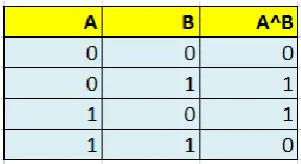
The following Table-1 shows XOR operation. Column A shows that a bit of plain text, column B as its corresponding key bit and column A^B is the resultant of XOR table.
Table -1 XOR operation
OTP encryption process
One Time Pad keys are used in pairs. One copy of the key is kept by each user and the keys are distributed securely prior to encryption. The confidentiality and authenticity of the One Time Pad keys are assured by continuous protection during their distribution and storage. This guarantees that outsiders will not be able to misuse the key (e.g. by copying or altering the key during distribution).
Currently, all the keys are exclusively generated by a “True Random Noise Source” and the
Figure -3 Encryption of OTP
Methods of OTP generation
Time-synchronized
A time-synchronized OTP is usually related to a piece of hardware called a security token (e.g., each user is given a personal token that generates a one-time password). Inside the token is an accurate clock that has been synchronized with the clock on the proprietary authentication server. On these OTP systems, time is an important part of the password algorithm, since the generation of new passwords is based on the current time rather than, or in addition to, the previous password or a secret key.
Mathematical algorithms
Various algorithms
1. Time based one time password algorithm [5]
This document describes an extension of the One-Time Password (OTP) algorithm, namely the HMAC-based One-Time Password (HOTP) algorithm, as defined in RFC 4226, to support the time-based moving factor. The HOTP algorithm specifies an event-based OTP algorithm, where the moving factor is an event counter. The present work bases the moving factor on a time value. A time-based variant of the OTP algorithm provides short-lived OTP values, which are desirable for enhanced security. The proposed algorithm can be used across a wide range of network applications, from remote Virtual Private Network (VPN) access and Wi-Fi network logon to transaction-oriented Web applications. The authors believe that a common and shared algorithm will facilitate adoption of two-factor authentication on the Internet by enabling interoperability across commercial and open-source implementations.
2. Hotp: hmac-based one-time password algorithm [6]
Home networks are one of the focused areas of research these days. One of the important services that home networks provide is to remotely control home appliances in home network. However, the remote control service causes home networks to have various security threats. Hence, home networks should provide strong security services, especially remote user authentication. Here provide an efficient solution for authentication scheme to provide secure remote access in home network environments. Our proposed scheme uses HMAC-based one-time password algorithm for the user authentication in home networks. The proposed scheme is not only has several advantage features but also quite satisfactory in terms of the security
Requirements of home networks. HOTP(K,C) = Truncate(HMAC-SHA-1(K,C))
3. Lamport one time password authentication [7]
and can interrupt the progress of communication between the devices or application due to the complexity and heterogenity in terms of devices, topology, communication and different security protocols used in IoT. Therefore, Our proposed scheme uses the principles of lightweight Identity Based Elliptic Curve Cryptography scheme and Lamport’s OTP
algorithm. So, our scheme with a smaller key size and lesser infrastructure is the right candidate to perform the authentication without compromising the security level. Also this scheme can be implemented in real time IoT networks.
4. S/key one time password system [8]
The S/KEY system has several advantages compared with other one-time or multi-use authentication systems. The user’s secret password never crosses the network during login or
when executing other commands requiring authentication such as the UNIX passwd (change password) or su (change privilege) commands. No secret information is stored anywhere, including on the host being protected, and the underlying algorithm may be made public. The remote end (client) of this system can run on any locally available computer and the host end (server) can be integrated into any application requiring authentication. The S/KEY authentication system has been in experimental use at Bell core for two years. It is available by anonymous ftp on the Internet.
5. Two factor authentication in one time password [9]
Two-factor authentication (2FA) provides improved protection, since users are prompted to provide something they know and something they have. This method delivers a higher level of authentication assurance, which is essential for online banking security. Many banking systems have satisfied the 2FA requirements by sending a One Time Password (OTP), something possessed, through an SMS to the user’s phone device. Unfortunately,
international roaming and SMS costs and delays put restrictions on this system reliability. This paper presents a novel two-factor authentication scheme whereby a user’s device produces multiples OTPs from an initial seed using the proposed production scheme. The initial seed is produced by the communications partners’ unique parameters. Applying the
6. Online banking authentication in mobile otp [10]
In online banking, security is an important issue for online banking application which can be implemented by various internet technologies and gap between real world and virtual world can be filled up. While implementing online banking system, secure data transfer need can be fulfilled by using https data transfer and database encryption techniques for secure storage of sensitive information. To eliminate threat of phishing and to confirm user identity, QR-code which would be scanned by user mobile device can be used and weakness of traditional password based system can be improved by one time password (OTP) which can be calculated by user transaction information and data unique at user side like imei number of the user mobile device.
7. Backup key generation in one time password [11]
The use of one-time password (OTP) has ushered new life into the existing authentication protocols used by the software industry. It introduced a second layer of security to the traditional username-password authentication, thus coining the term, two-factor authentication. One of the drawbacks of this protocol is the unreliability of the hardware token at the time of authentication. This paper proposes a simple backup key model that can be associated with the real world applications’ user database, which would allow a user to circumvent the second authentication stage, in the event of unavailability of the hardware system.
The backup key is a 16 digit alphanumeric code with both uppercase and lowercase symbols. Each entry in the user database, i.e. every username-password pair, is associated with a unique backup key. That key would not be associated with any other pair within the user database. At the time of a user’s registration, the backup key would be supplied to him and
RESULT AND DISCUSSION:
The following Table-2 is created after analyzing the seven OTP Generation Algorithms. This table gives an overview of seven algorithms.
S. N O Name of the algorithm Implementation language
Benefits of algorithm Drawback in algorithm
1. Time based one time password algorithm
Java/Java x Human side security
can be used in mobile phone applications
OTP is 8 digit long numeric values
OTP is valid for 30 seconds.
OTP is generated Randomly
Some time Failure in Receiving
High Cost
Easy to find the Secret key
2. HMAC-based one time password in(Htop)
Open source/
Java x/Java f x script Ability to face the brute force attack with probability of success.
ensuring frequent use in human time.
some time Validation error will come Potentially
valid for long time
3. Lamppost’s one time
Password algorithm
Open source Core java
Data structure/java
OTP is generated within 60 seconds.
Calculation is performed in 1000 iteration.
Remote system issues is in challenge
SMS Lateness
Cost is high
User responds in one time password is easy.
Using relativity unique identifier for OTP generation
4 S/key one time password algorithm
It can be easily and quickly added to any kind of operating
system.
We can connect it into SSL.
username and password are more secure
Transmitted over the internet.
Terminal users are happy to use because of its easiness
Ease of Learning
Ease of Installation
Time is reduced at some extent
5. Two factor authentication in one time password
Java x /data structure International Roaming facility
2fauthentication OTP
Support in VPNS WEP SSO,ADFS,LIN UX
MICROSOFT WIFI,
applications
Installatio n is very difficult Message
High security while sending OTP through SMS into user account.
two-factor
authentication in email service increased in
flexibility and productivity of 2fauthentication
6. Online Banking
Authentication
System Using
QR-code and Mobile
OTP
Java x Suitable for Online net banking,
authentication in house etc.
OTP is generated Instantly in fund transfer
Secured 2 factor authentication
A very cost effective way of achieving a strong 2factor
implementation of OTP
OTP can be sent to the user’s enrolled email account.
Usage is very simple and Easy.
View the transaction in online at any time.
Sometime due to server error it takes very long time to get OTP. Very
difficult in no network No battery on the phone and laptop. Lack of
Table-2: Overview of OTP generation algorithms
7. Backup key generation in OTP security protocol
RDBMS/
Platform independent programming
languages/My SQL
Data base designed for real world
applications.
Back up is maintained for randomly
generated alphanumeric OTP.
Sophisticated for the increase in network attacks and signalled the need for better security.
Backup key is a 16 digit alphanumeric code with both uppercase and lowercase
symbols.
The following Table-3 is generated by giving the values to the seven algorithms
ALGORITHM ADVANTAGE DISADVANTAGE NET VALUES Time based one time
password algorithm
5
- 3
2
HMAC one time
password algorithm
2
-2
0
Lamport’s one time
password
5
-3
2
S/key one time
password algorithm
7
-1
6
Two factor
authentication one time password algorithm
6
-1
5
Online banking authentication system and mobile phone OTP
6
-3
3
Backup key generation in OTP
security protocol
4
-2
2
Table-3 Performance analysis
Here the S/key algorithm has a higher value compare with the remaining six algorithms. The HMAC algorithm has lower values. So the S/key algorithm is the best algorithm compare with the other algorithms.
Figure-4 OTP performance analysis
In this study the s/key one time password algorithm is having more performance value 6. So this algorithm is an optimised algorithm used to generate One Time Password.
CONCLUSION
In OTP lot of algorithms are used to optimise the transactions. Each and every algorithm has its own advantages and disadvantages. In this study the various parameters of algorithms such as implementation language, merits and demerits are analysed and found that S/key one time password algorithm is an optimal algorithm which gives more performance value. So, the algorithm S/KEY gives better performance compare with other algorithms.
REFERENCES:
1. N. Haller, C. Mat z, P. Nesser, M. Straw, “A One-Time Password System”, IEEE. 2. A.D.Ubin, “Independent One-Time Passwords”, IEEE.
3. sarika khaladkar1, sarita malunjkar2 “Three –way security using image based authentication system” International Journal of Computer & Communication Technology ISSN (PRINT): 0975 -7449, Volume-6, Issue-2, 2017.
4. Neha Vishwakarma1, Kopal Gangrade2,” Secure Image Based One Time Password” International Journal of Science and Research (IJSR).
5. Binod Vaidya1, Jong Hyuk Park2, hotp-based user authentication scheme in home networks” 978-1-4577-0737-7/11/$26.00 ©2011 IEEE.
6. Selman Yakut1 A. Bedri Özer1,” hmac based one time password generator” 2014 IEEE 22nd Signal Processing and Communications Applications Conference (SIU 2014).
0 1 2 3 4 5 6 7
TOTP HMAC LAMPORT S/KEY OTP TWO FACTOR OTP
7. Thanushree.N.R1, Tejashree.N.R2,” Integrating Lamport’s One Time Password Authentication Scheme with Elliptic Curve Cryptography” International Journal of Recent Trends in Engineering & Research (IJRTER).
8. Neil M. Haller,” The s/keytm one-time password system” 2014 28th International Conference on Advanced Information Networking and Applications Workshops. 9. Mohamed Hamdy Eldefrawy1,” OTP-Based Two-Factor Authentication Using
Mobile Phones” 2011 Eighth International Conference on Information Technology: New Generations.
10.Jaideep Murkute, Hemant Nagpure,”Online Banking Authentication System Using QR-code and Mobile OTP”Sinhgad College of Engineering, Department of
Information Technology, University of Pune, Pune-411041.