University of South Carolina
Scholar Commons
Theses and Dissertations
2018
Measuring The Effects Of A Mindfulness
Intervention On Counselors’-In-Training
Dispositions, Strength Of The Therapeutic
Relationship, And Client Outcomes
Therese Louise Newton
University of South Carolina
Follow this and additional works at:https://scholarcommons.sc.edu/etd
Part of theCounselor Education Commons, and theEducation Commons
This Open Access Dissertation is brought to you by Scholar Commons. It has been accepted for inclusion in Theses and Dissertations by an authorized administrator of Scholar Commons. For more information, please [email protected].
Recommended Citation
M
EASURING THEE
FFECTS OF AM
INDFULNESSI
NTERVENTION ONC
OUNSELORS’-I
N-T
RAININGD
ISPOSITIONS,
S
TRENGTH OF THET
HERAPEUTICR
ELATIONSHIP,
ANDC
LIENTO
UTCOMESby
Therese Louise Newton
Bachelor of Science
Pennsylvania State University, 2006
Master of Arts Marywood University, 2014
Submitted in Partial Fulfillment of the Requirements
For the Degree of Doctor of Philosophy in
Counselor Education
College of Education
University of South Carolina
2018
Accepted by:
Dodie Limberg, Major Professor
Jonathan H. Ohrt, Committee Member
Moody E. Crews, Committee Member
Katie Wolfe, Committee Member
Hope Schuermann, Committee Member
ii
iii
DEDICATION
This is for you Amy. Words cannot begin to express the great joy I feel for having
had you in my life. I will forever hold your energy and spirit in my heart. Until we meet
iv
ACKNOWLEDGEMENTS
I would like to thank my dissertation committee for all of the time and effort that
you have invested in me so that I may succeed. Each of you has helped and guided me in
your own unique way, and for each of you I am grateful. To my chair, Dr. Dodie
Limberg- thank you for the continued guidance and energy that you have invested into
me and my work. From the first day we met during my first semester as a doctoral
student, you have helped in cultivating my counseling researcher identity by helping me
to build both research efficacy and the confidence to push and challenge myself in new
ways. I am so grateful for the opportunities and support that you have continuously
offered me. I look forward to connecting and collaborating with you in the years to come.
Dr. Jonathan Ohrt, thank you for always being willing to just sit and talk, whether it was
about research, goals, or coffee. Your guidance and encouragement allowed me to have
the confidence to draft and publish my first manuscript. I look forward to writing with
you in the future. Dr. Moody Crews, I will forever appreciate your openness and humor.
Thank you for talking mindfulness with me and listening to whatever was on my mind at
that given moment. You helped guide and cultivate my instruction as a counselor
educator; helping me to cultivate in students a passion for the field I hold so dear. Dr.
Katie Wolfe, there are no words to express how grateful I am for your continued support
and guidance. I could not have completed this investigation without your methodological
expertise and kind guidance. I am so grateful for the high standards and expectation of
v
from different disciplines, I have become a more competent and critical counseling
researcher because of your guidance and I will continue to bring fidelity to this
methodology of which I have grown to respect and appreciate. I look forward to writing
with you in the future. Dr. Hope Schuermann, thank you for your in-depth and thoughtful
feedback on my work. I value and respect you as a counseling researcher and I feel so
blessed to have had you on my committee.
To each of the amazing individuals who comprise the College of Education’s
Office of Assessment and Accreditation: thank you! Cindy, Regina, Lisa, William, and
Adam- for the past three years I have had the distinct privilege of being a part of a team
that exudes excellence, professionalism, collegiality, and genuine appreciation for each
other. How I got so lucky to be your graduate assistant and work with each of you every
day for the past three years is beyond me, but I am so grateful. Thank you for all you
have offered to me and just for being who you are. I look forward to staying in touch for
many years to come!
I would like to unapologetically express great love for all of my Wardlaw 140
sisters! Kim, Shannon, Brooke, and Jessie- I am so blessed to have you all in my life and
in my heart. Whether we were laughing, crying, yelling, or celebrating, we were
definitely always far too loud for that hallway. More importantly though, we were always
supportive of each other’s journeys while knowing that we were also in this together.
You are more than my colleagues, you are dear friends and I am so grateful for each of
you. Also, a huge thank you to Jennifer and Claudia! I asked a lot of you during this past
year, your help was instrumental in this study. I am so grateful for the fidelity with which
vi
Also, I would like to thank all of those individuals who I hold in my heart, those
who have believed in me and supported my dreams long before and throughout these past
three years. There are too many of you to list, and for that alone my heart if full and
happy. However, I must mention my best friend, Jenn, and my Marywood University
family- Amy, Kelly, Deb, Laura, and Barb. I am the person, and the counselor, I am
because I have been blessed to have you all in my life. Jenn, Amy, and Kelly- I am so
grateful for your support, friendship, and sisterhood. In your own ways, you have each
made me a better friend and a better person. Thank you for being exactly who you are.
Deb, Laura, and Barb- you were the best mentors, teachers, and cheerleaders I could have
ever asked for. I will be a better counselor educator and researcher because of the values,
respect, and standards for the counseling profession that you planted and cultivated
within me. I will do my very best to make you proud and do for future counselors what
you have so graciously done for me.
Finally, to my husband. Scott- we made it! I don’t think we could have ever
anticipated what was in store for us over these past three years. Your belief in me and
support of my goals and dreams has been unwavering; for this I am beyond grateful.
Through all of my late nights and long hours, you were there to be whatever I needed.
You round my edges and offer endless patience and stability when I need it. I am a better
person because of you and am so proud to be your wife. Our marriage and friendship has
vii
ABSTRACT
Using a multiple baseline single case research design, the present study sought to
measure the effects of a mindfulness intervention on counselors’-in-training facilitative
dispositions of: (a) empathetic understanding, (b) level of regard, (c) unconditionality of
regard, and (d) congruence (as observed through weekly in-session engagement with
clients), and client outcomes (as measured by the Personal Growth Initiative Scale-II;
[Robitschek et al., 2012] and the Outcomes Questionnaire-45.2; [Lambert et al., 1996]).
In addition, the investigation examined the influence of counselors-in-training
participation in a brief mindfulness intervention on clients’ perception of the strength of
the therapeutic alliance (as measured by the Barrett-Lennard Relationship Inventory
Form OS-40; [Barrett-Lennard, 1962, 2015]). More specifically, this study analyzed the
effect of mindfulness education and engagement in mindfulness activities on the
in-session occurrences of counselor-in-training expressions of additive empathetic
understanding, subtractive empathetic understanding, positive regard, negative regard, the
unconditionality of their regard, congruence, and incongruence, as well as the effect of
counselor-in-training engagement in mindfulness education and mindfulness activities on
client outcomes. The results support mindfulness as effective in increasing the
dispositions of additive empathy and positive regard, while also demonstrating
effectiveness in enhancing client outcomes. A discussion of the study procedures, results,
viii
TABLE OF CONTENTS
Dedication ... iii
Acknowledgements ... iv
Abstract ... vii
List of Tables ...x
List of Figures ... xi
Chapter One: INTRODUCTION ...1
Chapter Two: LITERATURE REVIEW ...33
Chapter Three: METHOD ...65
Chapter Four: RESULTS ...101
Chapter Five: DISCUSSION ...146
References ...173
Appendix A: UNIVERSITY OF SOUTH CAROLINA IRB APPROVAL ...189
Appendix B: INFORMED CONSENT - COUNSELOR-IN-TRAINING ...190
Appendix C: INFORMED CONSENT - CLIENTS ...193
Appendix D: GENERAL DEMOGRAPHIC SURVEY - CIT ...196
Appendix E: GENERAL DEMOGRAPHIC SURVEY - CLIENTS ...198
Appendix F: OPERATIONAL DEFINITIONS AND CLARIFIERS - DISPOSITIONS ...200
ix
Appendix H: INTERVENTION FIDELITY CHECKLIST - INTERVENTION ONE ..207
Appendix I: INTERVENTION FIDELITY CHECKLIST - INTERVENTION TWO ...209
Appendix J: INTERVENTION FIDELITY CHECKLIST - INTERVENTION THREE ...211
Appendix K: INTERVENTION FIDELITY CHECKLIST - INTERVENTION FOUR ...213
Appendix L: DAILY MINDFULNESS ACTIVITY LOG ...215
Appendix M: PERSONAL GROWTH INITIATIVE SCALE - II ...219
Appendix N: BARRETT-LENNARD RELATIONSHIP INVENTORY-OS-40 ...220
x
LIST OF TABLES
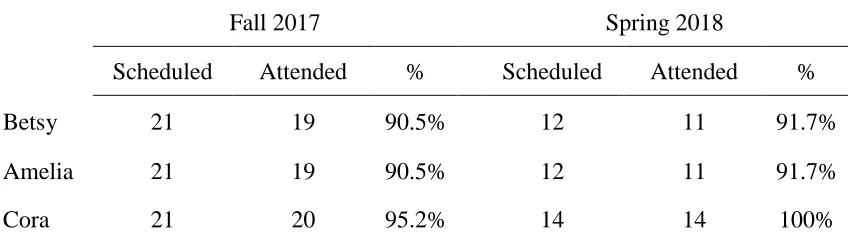
Table 4.1 Counseling session attendance by semester and counselor-in-training. ...104
Table 4.2 Total client-reported scores on the Outcomes Questionnaire-45.2 for Betsy’s clients at each administration... ...128
Table 4.3 Total client-reported scores on the Outcomes Questionnaire-45.2 for Amelia’s clients at each administration... ...129
Table 4.4 Total client-reported scores on the Outcomes Questionnaire-45.2 for Cora’s clients at each administration... ...131
Table 4.5 Total scores reported by Betsy’s clients on the Barrett-Lennard Relationship Inventory-OS-40 at each administration. ...134
Table 4.6 Total scores reported by Amelia’s clients on the Barrett-Lennard Relationship Inventory-OS-40 at each administration. ...136
Table 4.7 Total scores reported by Cora’s clients on the Barrett-Lennard Relationship Inventory-OS-40 at each administration. ...139
Table 4.8 Interobserver agreement data for baseline and intervention phases of the
xi
LIST OF FIGURES
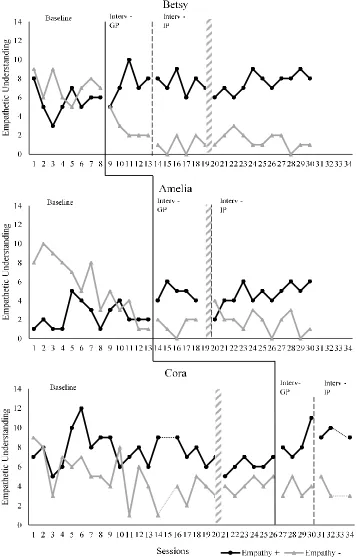
Figure 4.1 Total occurrences of Empathetic Understanding for each participant during baseline and intervention ...110
Figure 4.2 Total occurrences of Regard for each participant during baseline and
intervention. ...115
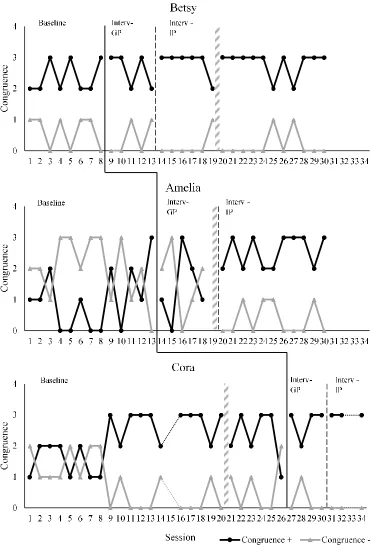
Figure 4.3 Total occurrences of Congruence for each participant during baseline and intervention ...119
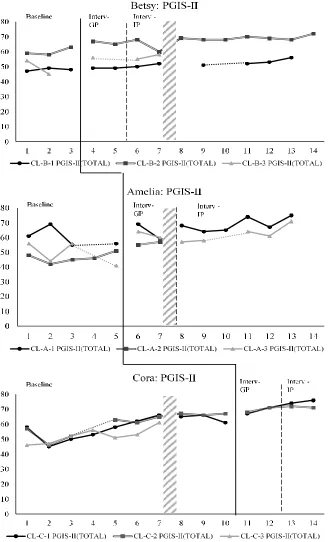
Figure 4.4 Total client-reported scores on the Personal Growth Initiative Scale-II across baseline and intervention phases of the study. ...123
Figure 4.5 Total scores reported by Betsy’s clients on the Outcomes Questionnaire-45.2 at each administration ...128
Figure 4.6 Total scores reported by Amelia’s clients on the Outcomes Questionnaire-45.2 at each administration ...130
Figure 4.7 Total scores reported by Cora’s clients on the Outcomes Questionnaire-45.2 at each administration ...131
Figure 4.8 Total scores reported by Betsy’s clients on the Barrett-Lennard Relationship Inventory-OS-40 at each administration. ...135
Figure 4.9 Total scores reported by Amelia’s clients on the Barrett-Lennard Relationship Inventory-OS-40 at each administration ...137
1
CHAPTER ONE: INTRODUCTION
The purpose of this research study is to contribute to the current knowledge
surrounding the use of mindfulness to cultivate counselor dispositions. Specifically, the
presented investigation analyzed the effect of participation in a brief mindfulness training
intervention had on counselors’-in-training facilitative dispositions of: (a) empathetic
understanding, (b) level of regard, (c) unconditionality of regard, and (d) congruence (as
observed through weekly in-session engagement with clients). In addition, the
investigation examined the effects of counselors-in-training participation in a brief
mindfulness intervention on client outcomes (as measured by the Personal Growth
Initiative Scale-II; [Robitschek et al., 2012] and the Outcomes Questionnaire-45.2;
[Lambert et al., 1996]) and the influence of counselor-in-training engagement with
mindfulness on clients’ perception of the strength of the therapeutic alliance (as measured
by the Barrett-Lennard Relationship Inventory Form OS-40; [Barrett-Lennard, 1962,
2015]).
Overall, psychotherapy has been found to be an effective form of treatment to
improve most client’s outcomes (Lambert, 2013; Lambert & Ogles, 2004; Wampold,
2001, 2007), with the strength of the therapeutic alliance accounting for the largest
portion of intra-therapeutic outcome variance (30%; Norcross & Lambert, 2011). Rogers
(1957) outlined what he believed to be the “necessary and sufficient conditions” of a
2
(c) counselor congruence. While Rogers put forth his “conditions” as change producing
mechanisms (e.g., positive client outcomes) of the therapeutic process rather than
personal attributes held by the clinician, Barrett-Lennard (1962) contends that it is the
client’s perception of the therapeutic alliance that informs change. Further, as perception
is guided by the interaction of an individual’s personality characteristics and personal
attributes with those of another, the conditions of empathetic understanding, congruence,
level of regard, and unconditionality of regard are better understood as counselor
attributes or dispositions (Barrett-Lennard, 1962). With this, exploring effective methods
of cultivating such dispositional qualities in counselors is warranted. However, research
conducted on effective means of dispositional cultivation, or framing the aforementioned
constructs as dispositions rather than behaviors or skills, is sparse.
The American Counseling Association (ACA, 2014) and the Council for
Accreditation of Counseling and Related Educational Programs (CACREP, 2016) each
identify the cultivation of counselor professional dispositions as important to the creation
of a strong and unified counselor professional identity; which has long been promoted as
integral to the recognition of counseling as an equal and reputable mental health
profession. While CACREP accredited training programs are required to assess and
evaluate students for professional dispositions as a component of student progress and
gatekeeping (Section 4, Standard B, G), the question exists of whether counselor training
programs proactively attend to the cultivation of students’ cognitive and dispositional
development, in addition to technical counseling skill development (Greason & Cashwell,
2009; Greason & Welfare, 2013). However, as the counselor is responsible for
3
counselor, more specifically the person of the counselor (McConnaughy, 1987), as a form
of treatment that also requires attention and facilitative cultivation.
McConnaughy (1987) describes the individual personality characteristics,
character, and interpersonal style of the counselor to comprise what she refers to as the
person of the counselor. It is this personhood that transcends theory and therapeutic
technique to create effective therapeutic relationships and enhance positive client change.
She goes on to state that while clinical techniques can be learned and used to enhance
practice, it the person of the counselor that selects the technique based on past
experiences and personality. Therefore, techniques are but reflections of the counselor’s
immediate state, well-being, and awareness: “the therapist as a person is the instrument of
primary influence in the therapy enterprise” (McConnaughy, 1987, p. 303).
McConnaughy’s assertion is further supported throughout many of the prominent
theories within counseling and psychotherapy literature. Carl Rogers described the
person-centered clinician to be “congruent, genuine, integrated person” (1957, p. 97) who
possesses ample awareness of self so that they may be free to fully experience the present
moment and create an environment of warmth, acceptance, and congruence conducive to
client change. Though quite different in approach to client change, Jung (1933), Erikson
(1950), Freud (1912), and Whitaker (1974) each emphasized the importance of the
clinician’s personality, well-being, personal development, and disposition as a
cornerstone for successful therapeutic growth. Further, with the rising acceptance of
therapy as generally integrative in nature (Norcross & Goldfried, 2006; Norcross, 2005),
addressing the commonalities across theoretical approaches has found that the
4
or approach taken (Lambert, 1992; Messer & Wampold, 2002; Norcross & Lambert,
2011).
As stated earlier, it is the client’s perception of the therapeutic alliance that is said
to inform change, and perception is guided by the interaction of an individual’s
personality characteristics and personal attributes with those of another (Barrett-Lennard,
1962), attending to the dispositional cultivation of the person of the counselor is logical.
In recent years, the exploration of mindfulness, or the intentional practice of bringing
one’s awareness into the present moment and accepting one’s thoughts and feelings in
that moment without judgment or evaluation (Kabat-Zinn, 2013), as a means of
enhancing counseling skills self-efficacy and cultivating various facilitative dispositions
has seen promising results. Additionally, as both the mind attitudinal foundations of
mindfulness (e.g. non-judging, patience, acceptance, letting-go, etc.) and the heart
attitudinal foundations (e.g. non-harming, kindness, compassion, empathetic joy, etc.) as
described by Kabat-Zinn (2013), parallel the professional values of counseling (ACA,
2014), mindfulness appears to be a complimentary practice to counseling. Therefore, this
study used mindfulness practices as a training intervention, measuring the effects of
mindfulness on counselor-in-training dispositions, client perception of the therapeutic
relationship, and client outcomes.
Statement of the Problem
The strength of the therapeutic alliance has been found to account for the largest
portion of intra-therapeutic outcome variance (30%; Norcross & Lambert, 2011).
Counseling technique (15%), client expectations (15%), and extra-therapeutic factors
5
2011). With a significant percentage of outcome variance attributed to a manipulatable
factor such as the therapeutic alliance, it is logical that the specific factors leading to
cultivation of an effective alliance be explored. As the counselor is an integral member of
the therapeutic alliance; with 5%-18% of variance in client outcome attributed to the
individual counselor (Baldwin, Wampold, & Imel, 2007; Crits-Christoph & Mintz, 1991;
Lutz, Martinovich, Lyons, Leon, & Stiles, 2007; Norcross & Lambert, 2011; Owen,
Duncan, Reese, Anker, & Sparks, 2014), identifying counselor training interventions that
are proven to cultivate facilitative dispositions for the benefit of greater client outcome is
beneficial to the advancement of the counseling profession.
Mindfulness has been found to be effective in enhancing counseling skills
self-efficacy (Buser, Buser, Peterson, & Seraydarian, 2012) and various counselor
dispositions (Campbell & Christopher, 2012; Christopher, Christopher, Dunnagan &
Shure, 2006; Duffy, Guiffrida, Araneda, Tetenov, & Fitzgibbons, 2017). Mindfulness as a
training intervention often includes activities informed by Kabat-Zinn’s
Mindfulness-Based Stress Reduction (MBSR; 2013) such as sitting meditation to encourage attention
to breathing while remaining open to experienced sensations, thoughts, and emotions; a
body scan encouraging an individual to attend to physical sensations and tension in each
part of the body; hatha yoga using gentle stretches and postures to encourage mind-body
awareness; loving-kindness meditation to encourage compassion toward others as well as
love and compassion toward self. Additional practices done outside of formal practice
may include journaling, mindful activities, or sitting with difficult thoughts.
Counseling students who engaged in mindfulness practice reported increased
6
empathy, compassion, emotional stability, and decreased levels of judgment (Campbell &
Christopher, 2012). Additionally, a positive relationship has been found between
counselor mindfulness and empathy (Greason & Cashwell, 2009), counselor mindfulness
and client perception of the therapeutic alliance (Greason & Welfare, 2013), and
mindfulness and moral reasoning (Shapiro, Jazaieri, & Goldin, 2012).
However, gaps exist in the literature related to methods of cultivating counselor
dispositions. First, many studies focused on mindfulness and constructs such as empathy,
congruence, and client outcomes are correlational (Greason & Cashwell, 2009; Greason
& Welfare, 2013), therefore a causal relationship cannot be determined. Second, while
several qualitative studies (Campbell & Christopher, 2012; Christopher et al., 2006;
Duffy et al., 2017) have offered rich descriptions of the experiences of
counselors-in-training who have engaged in mindfulness practice, they are retrospective by nature and
do not account for observable in-session behavior or client outcome as a result of their
mindfulness practice. This study measured the effect of a mindfulness intervention on the
dispositions of empathetic understanding, level of regard, unconditionality of regard, and
congruence to determine if a causal relationship exists between mindfulness and
counselor dispositions. Additionally, this study sought to further validate previous
findings related to strength of the therapeutic relationship as predictive of positive
therapeutic outcome through assessment of client change, and client perception of
counselor empathy, regard, unconditionality of regard, and congruence.
Significance of the Study
This study measured the effect of a brief mindfulness training intervention on
7
for client perception of the therapeutic relationship as an influential factor for client
outcomes. Several implications exist for counselor training programs, professional
gatekeeping, and ethical standards.
Results of this study contribute to the current knowledge surrounding the use of
mindfulness to cultivate counselor dispositions. Counselors enter a therapeutic
relationship with not only their learned skills and therapeutic techniques, but with
personal dispositional qualities that may be inseparable from their counselor role.
Through attention to the impact of such dispositional qualities on the therapeutic
relationship and client outcome, counselor training programs may improve gatekeeping
procedures through more accurate assessment of dispositions while also developing
training interventions specific to cultivation of specific dispositions proven to be effective
in enhancing client outcome.
Attention to cultivation of facilitative dispositions necessary to build a strong
therapeutic alliance is often missing from counselor training curriculums (Greason &
Cashwell, 2009; Greason & Welfare, 2013). While counselor training programs continue
to produce well-skilled and technically-competent clinicians, the absence of training
interventions specific to cultivation of the person of the counselor may be representative
of the profession’s move toward incorporation of manualized treatment procedures in
counseling (Miller, Hubble, Chow, & Seidel, 2013). However, as the clinician is
responsible for implementing treatment and obtaining positive outcomes, it is logical to
consider the clinician, more specifically the person of the counselor, as the filter through
8
it would be beneficial to the profession and client outcome to view the counselor as a
form of treatment requiring appropriate dispositional cultivation.
Theoretical Framework
This study is grounded in four concepts: (a) mindfulness, (b) counselor
dispositions, (c) the therapeutic relationship, and (d) client outcomes.
Mindfulness
Mindfulness is defined as the intentional practice of bringing one’s awareness into
the present moment and accepting one’s thoughts and feelings in that moment without
judgment or evaluation (Kabat-Zinn, 2013). According to Kabat-Zinn (2013), the
cultivation of mindfulness leads to calmness, relaxation, and increased insight into
oneself. As multiple descriptions of mindfulness exist in the literature, Bishop et al.
(2004) proposed use of a single operational definition inclusive of common themes found
across definitions: (a) self-regulation of attention to present moment thoughts, feelings,
and sensations, and (b) an orientation of curiosity, openness, and acceptance of these
experiences. Simply phrased, mindfulness is the expansion of one’s awareness to
encompass all present moment experiences while also choosing not to over-identify with
any one, but instead accepting them simply as present; allowing an individual to become
aware of the space between observation of thought, emotion or sensation, and response.
Bishop et al. (2004) proposes that it is within that space that a person may choose how
they wish to respond instead of reacting in a habitual or automatic manner; becoming
more reflective and intentional as opposed to reactive or reflexive.
Jon Kabat-Zinn was instrumental in gaining acceptance of mindfulness as an
9
treatment of chronic pain and other medical disorders (1982, 2013). Mindfulness-Based
Stress Reduction (MBSR; Kabat-Zinn, 2013), originally developed under the name Stress
Reduction and Relaxation Program, has since laid the foundation for the emergence of
other mindfulness-based interventions such as Dialectical Behavioral Therapy (Linehan,
1993), Mindfulness-Based Cognitive Therapy (Segal, Williams, & Teasdale, 2002), and
Acceptance and Commitment Therapy (Hayes, Strosahl, & Wilson, 1999). To date,
mindfulness practices have been used as the foundation for treatment of a variety of
mental health and medical disorders (Grossman, Niemann, Schmidt, & Walach, 2004)
and as a method of cultivating counseling self-efficacy (Buser et al., 2012) and various
counselor attitudes and dispositions (Campbell & Christopher, 2012; Christopher et al.,
2006; Duffy et al., 2017).
Counselor Dispositions
Counselor professional dispositions have been broadly defined in recent literature
as core values, attitudes, and beliefs, as well as in terms of emotional stability, ethical
behavior, and adaptability (Garner, Freeman, & Lee, 2016; Lambie, Mullen, Swank, &
Blount, 2015; Spurgeon, Gibbons, & Cochran, 2012; Swank, Lambie, & Witta, 2012).
The American Counseling Association (ACA, 2014) and the Council for Accreditation of
Counseling and Related Educational Programs (CACREP, 2016) state that importance of
cultivating counselor professional dispositions. CACREP accredited training programs
are required to assess and evaluate their students for professional dispositions as a
component of student progress and gatekeeping. While CACREP has included a
definition of professional dispositions in their most recent Standards (2016), “the
10
that influence the counselor's professional growth and interactions with clients and
colleagues” (p. 43), a unified set of specific dispositions has yet to be introduced.
Governing bodies of other related professions, such as teaching and school
psychology, have begun taking steps to define the characteristics essential to their
respective professions. The Council for the Accreditation of Educator Preparation
(CAEP) has adopted the definition of dispositions put forth by the Council of Chief State
School Officers (CCSSO) in the Interstate Teacher Assessment and Support Consortium
(InTASC) Model Core Teaching Standards as “the habits of professional action and
moral commitments that underlie and educator’s performance” (CCSSOO, 2011, p. 6).
InTASC further outlines specific dispositional criteria to be used when evaluating teacher
candidates during their training. The National Association of School Psychologists
(NASP) requires graduate programs to evaluate students’ level of “professional work
characteristics needed for effective practice as school psychologists, including respect for
human diversity and social justice, communication skills, effective interpersonal skills,
responsibility, adaptability, initiative, dependability, and technology skills” (NASP, 2010,
p. 16).
While several variations of assessments evaluating counselor dispositions and
characteristics exist (Frame & Stevens-Smith, 1995; Garner et al., 2016; Lambie et al.,
2015; McAdams, Foster, & Ward, 2007; Spurgeon et al., 2012), neither ACA nor
CACREP has identified or offered an agreed upon set of dispositional criteria that are
central to the development of a unified professional identity. This study will interpret
11
counselor empathy, unconditional positive regard, and congruence, as counselor
attributes, or dispositions, as proposed by Barrett-Lennard (1962, 2015).
The Therapeutic Relationship
The therapeutic alliance continues to be cited as the strongest predictor of positive
client outcome (Lambert et al., 2001; Lambert & Hill, 1994; Miller et al., 2013). The
therapeutic alliance, therapeutic relationship, and working alliance are all phrases used to
describe the interpersonal and dynamic engagement between counselor and client
(Horvath & Luborsky, 1993; Miller et al., 2013). Carl Rogers (1957) placed great
emphasis on the therapeutic relationship, asserting that if certain conditions were met, the
relationship would be sufficient to make positive change in the client. These “necessary
and sufficient” (Rogers, 1957; p.95) conditions include the counselor’s ability to be
empathetic, offer the client unconditional positive regard, and remain in a state of
congruence. However, it is the client’s perception of the therapeutic relationship, rather
than the counselor’s, that more accurately informs therapeutic change (Bachelor, 1995;
Barrett-Lennard, 1962; Gurman, 1977). As perception is guided by the interaction of an
individual’s personality characteristics and personal attributes with those of another,
attention must be paid toward the appropriate cultivation of the counselor’s facilitative
dispositions. This study will use the Barrett-Lennard Relationship Inventory (BLRI;
Barrett-Lennard, 1962) to measure client perception of the therapeutic relationship.
Client Outcomes
Client outcomes, or change, is generally viewed in relation to counselor
techniques, processes and interactions, and client behavior (Lambert & Hill, 1994). Client
12
distress level across the areas of: individual functioning, relational functioning, and social
functioning (Lambert & Hill, 1994). Client behavior may also be described in terms of a
personal growth initiative and adaptability to change (Robitschek, 1998; Robitschek et
al., 2012). Personal growth is believed to be a way of addressing all aspects of life:
individual, relational, and social, from the perspective that as change is inevitable and an
individual must possess the skills needed to grow and adapt to change. Further, as change
occurs across all aspects of life, and individuals are presented with various forms of
challenges and obstacles throughout the life cycle, those possessing a higher self-efficacy
surrounding intentional personal growth and ability to make change will be better able to
cope and adapt (Bandura, 1977; Robitschek, 1998).
Studies assessing for client outcomes resulting from direct counselor engagement
in mindfulness activities are rare. This study measured client outcome as a change over
time in personal growth initiative using the Personal Growth Initiative Scale-II
(Robitschek et al., 2012) and a change in reported symptomology using the Outcomes
Questionnaire-45.2 (Lambert et al., 1996).
Operational Definitions of Terms
Several terms were used throughout this study when discussing the constructs
being explored. To ensure clarity and understanding, the constructs are briefly defined.
Mindfulness
Mindfulness is defined as the intentional expansion of one’s awareness to
encompass all present moment experiences while consciously choosing not to
over-identify with any one, but instead accepting them simply as present; thus allowing an
13
thought, emotion or sensation, and intentional response (Kabat-Zinn, 2013; Bishop et al.,
2004).
Counselor Dispositions
Counselor dispositions are defined as “the commitments, characteristics, values,
beliefs, interpersonal functioning, and behaviors that influence the counselor's
professional growth and interactions with clients and colleagues” (CACREP, 2016, p.
43). This study will specifically investigate the following counselor dispositions: (a)
empathic understanding, (b) level of regard, (c) unconditionality of regard, and (d)
congruence.
Empathic Understanding. Empathetic understanding, or empathy, is defined as
the extent to which one desires to know and experience the process and content of
another’s awareness. Further, it the ability to sense the immediate quality and intensity of
another’s experience while being able to recognize the context of the feeling or thought
(i.e. what/whom the feeling is directed toward or the conditions that produced the
feeling). Empathetic understanding is demonstrated through experiential recognition of
perceptions or feelings that another has directly expressed, as well as through the sensing
and inferring of that which another has implied or indirectly expressed. Empathetic
understanding is diminished when one projects perception of another’s experience that
has originated within oneself and one’s own experiences (Barrett-Lennard, 1962, 2015).
Level of regard. Level of regard is defined as the affective aspects, both positive
and negative, of one’s response to another. Positive aspects may include indicators of
14
aspects may include indicators of pulling away from another, impatience, dislike,
rejection, and contempt (Barrett-Lennard, 1962, 2015).
Unconditionality of regard. Unconditionality of regard is defined as the degree of
variability, or constancy, that exists in one’s affective response to another. Conditionality
exists when one’s communication of experience is tailored to obtain desired affective
responses from another (Barrett-Lennard, 1962, 2015).
Congruence. Congruence is defined as consistency between present experience,
awareness, and response. Congruence is enhanced when an individual is psychologically
unthreatened, therefore allowing openness to awareness of another’s experience while
also responding to their experience with honesty, directness, and sincerity. Incongruence
is demonstrated through discomfort, tension, anxiety, and inconsistency between what
one says and what is implied through expression, gesture, or tone of voice
(Barrett-Lennard, 1962, 2015).
The Therapeutic Relationship
The therapeutic relationship is defined as the interpersonal and dynamic
engagement between counselor and client (Horvath & Luborsky, 1993; Miller et al.,
2013). While development of a strong therapeutic relationship is contingent upon the
presence of counselor empathy, unconditional positive regard, and congruence (Rogers,
1957), it is the client’s perception of the presence of these constructs that is predictive of
positive outcome (Bachelor, 1995; Barrett-Lennard, 1962; Gurman, 1977).
Client Outcome
Client outcome will be defined as a change over time in client’s personal growth
15
2012) and a change in reported symptomology using the Outcomes Questionnaire-45.2
(Lambert et al., 1996).
Counselor-In-Training
For the purpose of this study, a counselor-in-training was defined as a student
who is “engaged in formal graduate-level counselor education” (ACA, 2014, p. 21) and
who has advanced through to practicum experience.
Practicum
Practicum is defined as a “distinctly defined, supervised clinical experience in
which the student develops basic counseling skills and integrates professional
knowledge” (CACREP, 2016, p. 43). Practicum is completed prior to internship.
Research Questions & Hypotheses
The purpose of this study was to measure the effect of a counselors’-in-training
participation in a mindfulness intervention on the observable dispositions of (a)
empathetic understanding, (b) regard, (c) unconditionality of regard, and (d) congruence,
and client outcome. Additionally, clients’ perception of the degree to which these
facilitative dispositions exist within their counselor was also measured. The following
research questions were used to guide the study:
Primary Research Questions & Hypotheses
Research Question 1
Does counselors-in-training participation in a brief mindfulness intervention affect their
dispositions of (a) empathetic understanding, (b) regard, (c) unconditionality of regard,
and (d) congruence (as demonstrated through in-session engagement with clients)?
16
Counselors-in-training dispositions of (a) empathetic understanding, (b) regard, (c)
unconditionality of regard, and (d) congruence (as demonstrated through in-session
engagement with clients) will demonstrate a measurable increase after introduction of the
mindfulness intervention.
Research Question 2
Does counselors-in-training participation in a brief mindfulness intervention affect client
outcomes (as measured by the Personal Growth Initiative Scale-II; [Robitschek et al.,
2012] and the Outcomes Questionnaire-45.2; [Lambert et al., 1996])?
Hypothesis 2
Client outcomes (as measured by the Personal Growth Initiative Scale-II; [Robitschek et
al., 2012]will increase after introduction of the mindfulness intervention with scores
from the Outcomes Questionnaire-45.2; [Lambert et al., 1996]) showing a positive trend
as client perception of the therapeutic alliance (as measured by the Barrett-Lennard
Relationship Inventory Form OS-40; [Barrett-Lennard, 1962]) increases.
Research Question 3
Is the strength of the therapeutic alliance, as determined by client perception of the
presence of counselor (a) empathetic understanding, (b) regard, (c) unconditionality of
regard, and (d) congruence (as measured by the Barrett-Lennard Relationship Inventory
Form OS-40; [Barrett-Lennard, 1962]) influenced by counselor-in-training participation
in a brief mindfulness intervention?
Hypothesis 3
The strength of the therapeutic alliance, as determined by client perception of the
17
regard, and (d) congruence (as measured by the Barrett-Lennard Relationship Inventory
Form OS-40; [Barrett-Lennard, 1962]) will be positively influenced by
counselor-in-training participation in a brief mindfulness intervention.
Research Design
This study used a concurrent multiple baseline across-participants single-case
research design (SCRD; Gast, 2010; Kazdin, 2011) to measure the effect of a brief
mindfulness training intervention on: (a) counselor-in-training dispositions, (b) client
perception of the therapeutic relationship, and (c) client reported outcome. The multiple
baseline across participants SCRD has been described as an A-B design that is replicated
across participants, where each participant is able to serve as their own control (Gast,
2010; Kazdin, 2011; Ray, 2015). This control is possible as each participant is exposed to
both a control condition (A) and an intervention (B). While results from a single A-B
design are not sufficient to infer a causal relationship as threats to internal validity,
particularly the impact of extraneous variables on outcome, cannot be ruled out (Kazdin,
2011), the implementation of a second A phase following the intervention may strengthen
the inference of intervention effectiveness (Foster, 2010; Gast, 2010). However, as many
counseling interventions strive to offer long term change and are effects are “functionally
irreversible” (Gast & Ledford, 2010, p. 284), implementing an A phase post-intervention
proves challenging due to the high potential for carryover effect, or the effect of an
intervention on another phase (Ray, 2015). In situations such as this, replication of the
experiment across-participants using a multiple baseline increases rigor and reduces
threats to internal validity (Gast & Ledford, 2010, Kazdin, 2011). Replication across
18
functional nature” of treatments and outcome (Lenz, 2015). Multiple baseline is
considered a rigorous experimental design that is fully able to make meaningful
contribution to evidence-based outcomes research (Gast, 2010; Lenz, 2015; Ray, 2015).
Multiple baseline designs may run concurrently or nonconcurrently across
participants. Concurrent multiple baselines are characterized by participants beginning
baseline phase simultaneously and matriculating through to the intervention phase at a
staggered rate, as determined by baseline stability and demonstration of observable
treatment effect in subjects who have previously begun the intervention (Christ, 2007;
Gast & Ledford, 210; Heppner, Wampold, & Kivlighan, 2008; Kazdin, 2011). Further,
incorporating components of randomization into single case research, such as the random
assignment of client-participants to counselors-in-training, serves to increase internal
validity and experimental control (Kratochwill & Leven, 2010; Watson & Workman,
1981).
Use of concurrent multiple baseline across-participants SCRD was appropriate for
this study as it will allow for isolation of intervention effect on the dependent variables.
Additionally, when utilizing across participant multiple baseline design, Gast & Ledford
(2010) view the identification of participants who exhibit “similar learning histories and
who emit the same target behavior at similar frequencies under similar pre-intervention
conditions” (p.313) as an ideal, or even conservative, approach to the research design. As
participants will be counselors-in-training who have progressed through their counselor
training program at the same rate and who are at similar places in their counseling
professional development, they are an ideal sample for inclusion and analysis of
19
In addition to the continuous data collection related to counselor-in-training dispositions,
client data related to treatment outcomes (as measured by the Personal Growth Initiative
Scale-II; [Robitschek et al., 2012]) will also be collected on a continuous basis following
each counseling session. Further probing for additional client-report data related to
symptom distress and perception of the therapeutic alliance occurred at predetermined
points throughout the study; (a) baseline session one, (b) intervention week one, (c) fall
semester end, (d) spring semester start, and (e) termination session. Client data was
collected using the Barrett-Lennard Relationship Inventory Form OS-40
(Barrett-Lennard, 1962) to assess the strength of the therapeutic relationship and the Outcomes
Questionnaire-45.2 (Lambert et al., 1996) as a supplemental measure of treatment
outcomes. Probing for client data at selective times was appropriate to reduce the impact
of continued measurement and enhance internal validity (Christ, 2007).
Research Method
Population and Sampling
The target populations for this study was current counselors-in-training and their
clients. Using purposive sampling (Heppner et al., 2008), study participants included
three counselors-in-training enrolled in a practicum course in which they saw a minimum
of two clients in a university-based clinic. Potential counselors-in-training included
students matriculating through Marriage, Couples, and Family Counseling and School
Counseling tracks of a CACREP-accredited graduate counseling program. While the
minimum sample size required in SCRD is one, and analysis of data occurs at the
individual level, when implementing a multiple baseline design the inclusion of at least
20
internal validity (Gast & Ledford, 2010; Lenz, 2015). Clients included a minimum of six
undergraduate students enrolled in courses within the Counseling minor academic
program. All clients were required to be currently enrolled at the university at time of
participation and over the age of 18.
Incentives. Counselors-in-training received a $25 gift card for their participation
in this investigation. Counselors-in-training also received credit toward their required
practicum and internship hours for time spent engaging in counseling activities and for
time spent participating in the mindfulness intervention. Counselors-in-training each
received weekly supervision as required by their enrollment in the practicum course.
Weekly supervision was offered by second-year Counselor Education & Supervision
doctoral students in group, triadic, and individual formats. Supervising doctoral students
each received weekly supervision of their supervision practice by a counselor education
program faculty member. Additionally, two fully licensed, second-year counselor
education doctoral students served as on-site clinical supervisors to participating
counselors-in-training; providing supplemental weekly supervision. Should recruitment
efforts produce more than three volunteer counselors-in-training, potential participants
were informed that a random sample will be identified through use of a
computer-generated selection tool (Heppner et al., 2008) and only those participants selected would
receive the intervention. To encourage session attendance and reduce the potential for
21
Instrumentation
Observers
In addition to the primary researcher, two first-year doctoral students in the
Counselor Education and Supervision program were trained to observe and collect data
related to participant dispositions and engagement in counseling sessions. Using
guidelines put forth by Ayers & Gast (2010), the independent observers were trained by
the researcher to identify and record instances of dispositional expressions under
investigation. Trainings occurred over a two-week period and included the use of
fictitious, or role-played, counseling session videos for practice coding. Independent
observers did not begin recording baseline data until an IOA of 80% was consistently met
or exceeded during training. Observer training also included review of procedures for
completing and storing data and documentation to ensure confidentiality of participant
data and experimental control. Operational definitions and behavioral clarifiers for each
disposition were included with all CIT Dispositional Data-Collection Forms for
continued reference. Follow up training occurred as needed throughout the duration of
the study.
Counselor-in-Training (CIT) Dispositional Data-Collection Form
The CIT Dispositional Data-Collection Form (see Appendix G) was created by
the researcher using recommended SCRD data-collection form templates (Gast &
Ledford, 2010). The forms are organized by observation periods, disposition, and
clarifying information related to the disposition expression observed (e.g. verbal,
nonverbal, positive, negative) Observers used tick marks (|) to record each instance of the
22
segment and then all tallies were added together to offer a session total for each
disposition.
Demographic Survey
The General Demographic Survey (see Appendix D and E) is a self-report
questionnaire created by the researcher to collect participants’ demographic information
(e.g., gender, age, ethnicity, level of education, counselor prior exposure to mindfulness,
client prior exposure to counseling, etc.). This demographic information was completed
prior to initial counseling session and collected by the researcher. Counselors-in-training
and clients were each assigned a unique identifier in lieu of name to protect their
confidentiality. Unique identifiers were used for all documentation and reporting (e.g.
video recordings, disposition data-collection forms, client report assessments).
Personal Growth Initiative Scale-II
The Personal Growth Initiative Scale-II (PGIS-II) is a 16-item assessment of
personal growth assessed through four subscales of: (a) Intentional Behavior, (b) Using
Resources, (c) Planfulness, and (d) Readiness for Change. Individual items on the
PGIS-II use a six-point Likert scale ranging from 0 (Disagree Strongly) to 5 (Agree Strongly),
with a final score ranging from 0-80. Psychometrics for the PGIS-II show a Cronbach’s
alpha of .92 (Shigemoto, Low, Borowa, & Robitschek, 2016) and a test-retest reliability
of .90-.94 when administered at intervals of one to six week (Robitschek et al., 2012). As
the PGIS-II will be administered at one-week intervals, the high test-retest reliability of
23 Barrett-Lennard Relationship Inventory OS-40
The Barrett-Lennard Relationship Inventory (BLRI), in its original form, is a
64-item assessment containing four subscales that align with Rogers’ (1957) facilitative
conditions of empathetic understanding, level of regard, unconditionality, and congruence
(Barrett-Lennard, 1962). The BLRI measures the client’s perception, consider most
impactful to the relationship (Rogers, 1957), of the facilitative conditions within the
therapeutic relationship. Clients use a six-point interval scale to respond to questions
based on their level of agreement; -3 to +3 with use 0 not offered as a potential response.
Each subscale may be scored independently to assess specific facets of the relationship or
combined to obtain a total score for the relationship.
Several variations of the BLRI have been created for use across settings and
populations. This study will utilize the abbreviated Barrett-Lennard Relationship
Inventory Form OS-40 (BLRI-OS-40) containing a total of 40 questions, or 10 questions
for each of the four subscales. Reliability coefficients for the subscales of the
BLRI-OS-40 include .91 for empathic understanding, .87 for level of regard, .82 for
unconditionality, and .88 for congruence.
Outcomes Questionnaire - 45.2
The Outcomes Questionnaire – 45.2 (OQ-45.2) is a 45-item self-report outcomes
assessment used to measure change in client symptomology over time (Lambert et al.,
1996). Individual items on the OQ-45 use a five-point Likert scale ranging from 0
(Never) to 4 (Always), with a final score ranging from 0-180. Research indicates that
scores demonstrating a change of 14-points or more is indicative of significant client
24
show a test-retest reliability of .84 and a Cronbach’s alpha of .93 (Mueller, Lambert, &
Burlingame, 1998).
Daily Mindfulness Activity Log
The Daily Mindfulness Activity Log (see appendix L) is a self-report instrument
created by the researcher to collect information related to counselor-in-training
engagement and experiences associated with their mindfulness practices during the
intervention phase of this study. Information collected included details related to specific
mindfulness activities practiced each week, duration of practice, and context of the
practice (i.e. time of day, reason for specific activity selection, etc.). While data obtained
was reviewed for across participant themes related to specific mindfulness activities
practiced, Daily Mindfulness Activity Logs were designed to serve as a method for
counselors-in-training to remain accountable for their engagement in mindfulness
activities while participating in the intervention.
Post-Intervention Follow-Up Questionnaire
The Post-Intervention Follow-Up Questionnaire (see Appendix O) is a self-report
instrument created by the researcher to capture counselor-in-training thoughts and
opinions related to the mindfulness intervention. Data collected was used to assess for the
social validity (Kazdin, 2011) of the intervention. The questionnaire was sent to
counselors-in-training following completion of data collection.
Data Collection
Data collection was continuous (Gast, 2010) and began during the first encounter
between the counselor-in-training and client. All 50-minute counseling sessions were
25
an IRB-approved portable recording camera that was placed in the counseling clinic
rooms during sessions. Following each session, video recordings were reviewed by a
member of a team of trained observers and, using the CIT Dispositional Data-Collection
Form, observers tallied the frequency, or occurrences, of dispositional expressions being
investigated. Each 50-minute counseling session recording was broken down into five
10-minute observation periods; with periods one, three, and five reviewed by observers for
occurrences of dispositional expressions and then tallied to obtain an individual segment
frequency count and a total frequency count. Periods two and four, where observations
did not occur, allowed for observers to record observations and tally the completed period
before moving onto the next (Kazdin, 2011). Frequency recording was used when
measuring the occurrences of empathetic understanding and regard as these dispositional
expressions, as operationally defined for this study, proved to have identifiable beginning
and end points (Kazdin, 2011). Congruence was measured using whole interval recording
as the dispositional expressions for congruence/incongruence often accompanies
expressions or statements associated with empathetic understanding and regard;
therefore, discrete measurement of congruence/incongruence is challenging. Whole
interval recording (Kazdin, 2011) allows for the measurement of behaviors that occur at a
high rate or those with variation in duration, such as congruence/incongruence. If a
counselor-in-training presented as congruent, based on the operational definitions used in
this study, an occurrence of congruence (+) was marked for that observation period.
Similarly, if a counselor-in-training presented as incongruent, based on the operational
definitions used in this study, an occurrence of incongruence (-) was marked for that
26
tallied to offer a total count. Completed observation forms were then collected by the
researcher and data points were visually graphed, using Microsoft Excel, for continuous
pattern analysis. Furthermore, in an effort to reduce the potential for recording bias, each
independent observer remained blinded to participant phases and phase change
occurrences.
Client report data was also collected after each counseling session. Following the
conclusion of the counseling sessions, clients were given an envelope containing the
assessments required for them to complete. Upon completion of the assessments, clients
were asked to return the completed assessments to the original envelope and seal the
envelope before handing it to their counselor-in-training. Once the packet was handed to
the counselor-in-training, the counselor-in-training delivered the sealed envelope to the
researcher. The researcher then recorded and graphed client responses for continuous
visual analysis.
Procedures
Baseline
Baseline, or the control condition, refers to the period of time prior to introduction
of an intervention (Kazdin, 2011; Ray, 2015). During the baseline phase repeated
measurements of the dependent variables (e.g. counselors’-in-training empathy, level of
regard, unconditionality of regard, and congruence) were collected to establish a pattern
of behavior that may predict future behavior if an intervention was not being introduced
(Gast, 2010). Using video recordings, baseline data collection began during the first
encounter between counselor-in-training and client. Stabilization of baseline data related
27
data points prior to moving into the intervention phase (Gast, 2010; Kazdin, 2011; Lentz,
2015; Ray, 2015). Once stabilization of baseline data for the first participant occurred, the
participant was able to transition into the intervention phase. Baseline data continued to
be collected for the remaining participants until both stabilization of individual baseline
data was present and clear indication of treatment effect, using no fewer than three data
points, had occurred in prior participants. Once both criterion had been met, the next
participant was able to enter into the intervention phase of the study. This pattern
continued until all participants had entered into the intervention phase of the study.
Baselines of differing lengths is needed to accurately evaluate for threats to internal
validity (Gast & Ledford, 2010).
Intervention
Upon progression to the intervention phase, counselors-in-training individually
participated in a brief mindfulness intervention. Counselors-in-training continued seeing
their clients for 50-minute counseling sessions throughout the intervention phase. The
mindfulness intervention, created by the researcher, is informed by Kabat-Zinn’s
Mindfulness-Based Stress Reduction (2013) and traditional mindful meditation teachings
and practices (Thera, 1962/1996). The intervention consisted of two stages: (a) guided
practice and (b) independent practice. During the initial stage, guided practice,
counselors-in-training individually attended four 75-minute mindfulness sessions over the
course of two weeks. The guided mindfulness sessions were held within the University
counseling clinic and led by the primary researcher who has practiced mindfulness for
28
Counselors-in-training were required to engage in both formal and informal
mindfulness practices outside of the scheduled intervention sessions and log their
experiences using the Daily Mindfulness Activity Logs, which they returned to the
researcher prior to each intervention session. All guided sessions followed the same
format (see Appendix H-K): (a) introduction and welcome, (b) opening practice (e.g.
breathing exercise), (c) follow-up and processing of mindfulness experiences and/or
questions, (d) psychoeducation (e.g. foundations and tenets of mindfulness, attitudinal
qualities), (e) guided meditations and processing of experience, (f) brief closing practice
(e.g. breathing meditation), and (g) review of homework expectation.
At the conclusion of the guided practice phase, counselors-in-training entered into
the independent practice phase of the intervention. During this phase,
counselors-in-training did not attend intervention sessions but were asked to continue logging their
mindfulness activities using the Daily Mindfulness Activity Logs. Logs were handed in
weekly to the researcher for review. Counselors-in-training remained in the independent
practice phase of the intervention until the conclusion of the investigation. Continuous
data collection during the independent practice phase of the intervention allowed for
analysis of the lasting effect of a brief mindfulness intervention on counselor-in-training
dispositions.
Client Report Data
Client data was collected continuously throughout this investigation. Clients
completed the Personal Growth Initiative Scale-II (PGIS-II; Robitschek et al., 2012)
following each counseling session. The continuous collection of data related to client
29
allows for an assessment of a causal relationship between the mindfulness intervention,
counselor dispositions, and client outcome. In addition to administration of the PGIS-II,
clients also completed the Barrett-Lennard Relationship Inventory Form OS-40
(Barrett-Lennard, 1962) to assess their perception of the strength of the therapeutic relationship
and the Outcomes Questionnaire-45.2 (Lambert et al., 1996) to measure changes in client
distress and symptomology.
Data Analysis
Both counselor-in-training and client data was visually analyzed using graphical
displays of data points created using Microsoft Excel. Analysis included documentation
of baseline pattern, examination of data within phases to assess for patterns, comparison
of data between phases to assess for intervention effect, and integration of data across
phases to determine if there is a minimum of three demonstrations of effect (Kratchowill
et al., 2010). Additionally, the following variables will be considered when analyzing
between and within group data: (a) level, or mean of each phase; (b) trend, or slope of
data; (c) variability between each data point in phases; (d) immediacy, or time between
intervention and effect; (e) overlap, or proportion of data that overlaps phases; and (f)
consistency of data patterns across phases for replication and credibility (Hott et al.,
2015; Kratochwill et al., 2010).
Interobservor agreement (IOA), or the accuracy of agreement between observers,
aids in enhancing credibility to findings (Hott et al, 2015). IOA will be assessed though a
simple frequency ratio to determine agreement between observations (Kazdin, 2011).
Frequency ratio is computed by dividing the smaller total by the larger total and then
30
consistency of which the target behavior was observed. It is recommended that IOA data
be assessed in 20-33% of observations, with a minimum of 80% IOA as a recommended
cut-off to ensure validity of results (Ayers & Gast, 2010; Kazdin, 2011).
Treatment integrity, or intervention fidelity, refers to the degree to which the
procedures described for the intervention phase were implemented across participants
(Gast, 2010). Differences in intervention implementation may result in variability of
outcome and loss of reliability in results (Kazdin, 2011). To determine the degree of
integrity for which the intervention was implemented, a random selection of 25% of
video recorded intervention sessions were reviewed by an outside observer using the
Intervention Fidelity Checklists for each intervention session (see Appendix H-K). To
determine the percentage of treatment integrity, the number of observed events were
divided by the number of planned events and then this number was multiplied by 100.
Ethical Considerations
The following measures were taken to ensure this research study was conducted
in accordance with ethical standards and to ensure the protection of participant
confidentiality:
1. Participant names were not used during data collection, analysis, or reporting.
Participants were assigned a unique number code as their identifier and the
researcher maintained an electronic code key that was encrypted and
password-protected as required by the ACA Code of Ethics (2014).
2. Participation in this study was voluntary and though incentives were offered for
completing the study, early withdrawal did not negatively impact academic
31
3. All participants were informed of their rights and an explanation of research was
approved by the IRB at the University of South Carolina.
4. Client completed assessments were collected and sealed in prelabeled envelopes
following each collection time. The researcher collected and stored the completed
assessments in a locked cabinet in Wardlaw 140.
5. Permission to use the instruments was obtained from the authors when required
and appropriate licenses were obtained.
6. The study was conducted with the permission and approval of dissertation
co-chairs, committee members, and IRB of the University of South Carolina.
Potential Limitation of the Study
Several limitations exist within this study. First includes the use of self-report
measures as the primary method of client data collection. While this method is common,
the potential for malingering, untruthful, or distorted answers was present; potentially
impacting results. Also, through observer ratings of client dispositions, what may be
considered internal processes, there was an increased chance of inaccurate scoring.
Precautions to reduce inaccurate measurement included thorough training of observers by
the primary researcher to identify dispositions using the operational definitions and
behavioral clarifiers for each disposition under investigation. Additionally, while
precautions were taken to reduce the effect of history and maturation, these threats to
internal validity exist. Perhaps the largest limitation due to chosen research design is the
question of generalizability of results to other settings or populations (Heppner et al.,
32
Chapter Summary
Chapter One introduced the constructs (counselor dispositions, mindfulness,
therapeutic relationship, and client outcome) investigated in this study. The research
design (multiple baseline single case research) was explained, and potential limitations
and ethical considerations were identified. Chapter Two reviews relevant literature
related to the constructs investigated. Chapter Three will present the methodology used in
the study. Chapter Four will present the results of the study. Chapter Five will discuss the
33
CHAPTER TWO: LITERATURE REVIEW
Chapter Two presents a thorough review of literature relevant to the constructs of
this investigation: (a) mindfulness, (b) counselor dispositions, (c) the therapeutic
relationship, and (d) client outcomes. Additionally, the use of single case research
designs in counseling research is explored.
Mindfulness
Mindfulness has been practiced for over 2,500 years, often as a means of
alleviating suffering rooted in psychological distress (Fulton & Siegel, 2005). Buddhism
holds mindfulness, or the practice of intentional attention toward an object, as the heart of
Buddhist meditation, teaching that mindfulness is the practice of fully knowing the mind,
so as to be able to shape the mind, so as to be able to free the mind (Thera, 1965/1996).
Within this Buddhist-doctrine, the mind acts as the starting point, focal point, and
culminating point of all experiences, believing that “if the mind is comprehended, all
things are comprehended” (Thera, 1965, p. 21). Buddhist meditation encourages
individuals to intentionally attend to all mental processes, without attachment or
judgement, and with the awareness of the impermanence of all experiences. The
orientation toward impermanence, as all situations and phenomena in life are subject to
change, removes mental attachment and is believed to alleviate suffering (Lee, 2017).
Like many current psychotherapeutic theories, mindfulness meditation holds that