554
Screening Green Manure Cover Crops for their Allelopathic Effects on Some Important Weeds Found in Zimbabwe
Runzika, M., Rugare, J. T., Mabasa, S.
Crop Science Department, Faculty of Agriculture, University of Zimbabwe, Mt Pleasant, Harare, Zimbabwe
Abstract
Weed control is a serious problem in smallholder conservation agriculture farming areas in Zimbabwe. Green Manure Cover Crops (GMCCs), which improve soil fertility and reduce weeds through allelopathy, are likely to reduce the cost of weed control in these areas. A laboratory study was conducted at the University of Zimbabwe to investigate the effect of extracts of eleven GMCCs on the germination percentage, radicle and plumule length of Bidens pilosa, Eleusine indica and Pennisatum glaucum (pearl millet). A green house experiment was also done to determine the allelopathic potential of these GMCC extracts applied as soil incorporated residues on the emergence and dry matter production of E. indica, B. pilosa and Acanthospermum hispidum. GMCC extracts significantly reduced germination, radicle and plumule length of Pennisatum glaucum (P < 0.05) except for
Crotalaria grahamiana and Raphanus sativas which had no effect on germination of Pearl millet. The emergence and dry matter of B. pilosa, E. indica and A. hispidum were significantly reduced by these legumes (P < 0.05) with the exception of common vetch (Vicia sativa) which stimulated the emergence of A. hispidum. Most of the legumes that were used in this study have allelopathic effects on B. pilosa, E. indica and A. hispidum.
Keywords:Allelopathy, Green manure cover crops, Conservation agriculture
Introduction
1Conservation Agriculture (CA) is a broad concept involving minimal soil disturbance, maintenance of a permanent soil cover and a rational use of crop rotations (FAO, 2007; Harrington and Erenstein, 2005; Hobbs, 2007). Minimum soil disturbance under CA is being achieved by the use of planting basins and the use of implements such a as the jab planter and the direct seeder, which are used to plant into untilled soil, and also through the use of ripper tines that only open a furrow where the seed is placed. Permanent soil cover is being achieved by retaining crop residues from the previous
1Corresponding author’s details:
Name: Rugare, J. T.
Email address:[email protected]
season and also through relay intercropping with green manure cover crops (GMCCs). GMCCs, mostly legumes, are crops that are grown as soon as possible after harvest of the previous crop (Derpsch, 2008), alternatively leguminous crops such as sunnhemp (Crotalaria juncea L) are planted in between maize as live mulch. In some instances, the new crop may be drilled directly into the GMCC. There is enough scientific evidence that no-tillage without permanent soil cover results in poor yields (Ashburner, 1984; Wall, 1999; Sayre et al., 2006). Permanent soil cover with a thick layer of mulch has been a key factor for success in CA systems in South America. Derpsch (2008) reported that a farmer should aim at having at least six and if possible more than 10 tonne per hectare of dry matter from crop residues and or
Asian Journal of Agriculture and Rural Development
555 green manure cover crops every year. This way, a farmer can achieve good weed suppression, positive effects of mulch on soil moisture and soil temperature, and improve the chemical, physical and biological soil properties.
The shift from tillage systems that include extensive annual soil disturbance to CA systems that minimize soil disturbance causes major changes in weed population dynamics. These changes often reduce the effectivenessof weed control practices. While results have varied among experiments, some general trends in weed population dynamicshave arisen as tillage is reduced. These include increased populations of perennial, summer annual grass, biennial, and winter annual species (Buhler et al., 1995). Densities of large-seeded dicot species often decrease. The ecological and management aspects of these changes are variedand complex. Generally CA is believed to worsen weed problems, through higher weed emergence by concentration of seeds in surface soil layers, and shift of the weed community towards increased abundance of troublesome species, e.g. grasses and perennials (Spandl, et al., 1999; Barberi and Lo Cascio, 2001). Research by Ball and Miller (1993) showed that CA systems increased total weeds by about five times compared to a mould board system after five years. Other research has indicated a weed species shift, most commonly to more perennial weeds with reduced or no-till systems (Miller and Nalewaja, 1985; Mulugeta
et al., 2001; Derksen et al., 1995). Under CA, weed seeds may still be protected from predation by insects, animals and birds because of self-burial as soils expand and crack with changes in moisture (Somody et al., 1985), thus allowing weeds to grow from seeds without tillage. Moreover, CA and no-till maintain a crop residue on the surface that keeps the soil cooler and moister, increasing survival of germinating small seeded weeds as compared to conventional tillage. All of these conditions will greatly influence the number and type of weed species.
As a result, labour demands for weeding under CA increase due to increased weed pressure while the source of labour is declining due to several factors including the spread of HIV/AIDS and the urbanisation in the farming communities in Zimbabwe. Labour constraints
during peak periods of land preparation and weeding limit the area that small scale farmers can manage and often negatively impact on crop yields (Mmbaga, 1994). Although most farmers weed maize (Zea mays L) twice, some 21 % of farmers abandon up to 20 % of their cropped area each year as a result of poor crop establishment and weed competition (Ellis-Jones
556 with quackgrass (Agropyron repens [L.] Beauv.) because this weed produces allelochemicals in its rhizomes and leaves that alter the growth of small grains and maize (Ross and Lembi, 1985). This phenomenon has been reported occasionally for weedy species but it has also been demonstrated in crop plants such as rice, rye and sorghum. Mashayamombe et al. (2013) reported that upright starbur (Acanthospermum hispidum), black jack (Bidens pilosa) and rapoko grass (Eleusine indica) are some of the dominant annual weeds of arable lands in Zimbabwe. There is therefore scope in identifying GMCCs that have allelopathic effects on common arable weeds in Zimbabwe. In this experiment, it was hypothesized that extracts of GMCCs have allelopathic effects on the germination, root and shoot length as well as emergence and dry matter accumulation of
Bidens pilosa, Eleusine indica and
Acanthospermum hispidum. .
Materials and Methods
Study site
The study was done in the laboratory and green house at the University of Zimbabwe’s Crop Science Department in Harare, Zimbabwe (17.780S, 31.050E, 1523 meters above sea level). The University of Zimbabwe is in Natural Region II with an annual rainfall of 600-1000mm and average temperature of 20-30 0C. Laboratory experiment
The laboratory experiment was laid out as a Randomised Complete Block Design (RCBD) with three blocks and different shelves were used as blocks. Eleven GMCCs and water were used as treatments and each treatment was replicated three times. The GMCCs that were used are Lab lab (Dolicos bean), Tephrosia (Tephrosia vogelli), Raphanus (Raphanus sativa), Black bean (Phasiolus vulgaris), Grahamiana (Crotalaria grahamiana), Jack bean (Canarvalia ensiformis), Sunhemp (Crotalaria ochraleuca), Sunhemp (Crotalaria juncea), Velvet bean (Mucuna pruriens), Common vetch (Vicia sativa), Cowpea (Vigna unguiculata) and distilled water was used as the control. Each of the GMCCs was planted in the greenhouse in large pots of 39 cm diameter and 40 cm height. The legumes were watered after
every other day using a watering cane fitted with a fine rose. The plants were harvested just before flowering at about three weeks after planting (WAP). The roots and shoot of each legume were harvested and mixed in the same envelope before drying in the shed for three weeks. After drying the plant material was ground into fine powder using a hummer mill grinder. Twenty grams of each powder were dissolved in 300 ml of distilled water and left for 24 hours at room temperature. The extract was then filtered to remove the residues using a muslin cloth. The extracts were put in labeled 500 ml beakers and kept in a refrigerator for later use. A 9 cm diameter of Whatman filter paper was laid at the bottom of the petri dishes and 20 weed seeds were placed in each petri dish. The seeds of B. pilosa, E. indica and a local landrace of Pearl millet (Pennisatum glaucum) were treated separately in separate petri dishes with 5 millilitres of each GMCC extract and the petri dishes were properly closed using the lid to avoid moisture escape. The weed seeds were treated regularly with the same amount of each extract when the filter papers were about to dry. The petri dishes were placed in an incubator and the temperature was set at 30
o
C until germination was noticed. Germination was defined as emergence of the radical or the hypocotyls to a length equal to the longest dimension of the seed. Data on germination percentage, root length and plumule length were measured using a 30 centimeter ruler after 14 days. Germination was expressed as a percentage. And percentage reduction was also calculated using the formula:
Where C = number of seeds that emerged in the control and T = number of emerged seeds in the GMCC treatment.
Greenhouse experiment
557 according to the position of rows from the windows. The allelopathic potential of the legumes was evaluated using the method modified from Shiling et al. (1992) and Bewick
et al., (1994). The ground powder of each of the GMCCs from the first experiment was used in this experiment. Pots of 20 cm diameter and 18 cm height were filled with red clay soil (texture) soil and 30 grams of each powder were thoroughly mixed with the soil in the top five centimeters of the pot and in the control no powder was applied. The assay species were B. pilosa, E. indica and A. hispidum. 100 seeds of
E. indica, 30 seeds of B. pilosa and 30 A. hispidum were planted in each pot. The soil in the pots was watered to field capacity using a watering cane fitted with a fine rose.
Weed counts per species were taken from each pot starting at 6, 8, 13, 20, 23 and 28 days after planting (DAP). On the same day when the final weed count was taken, the weeds were harvested putting each weed species in its envelope. The harvested weeds were oven dried for 48 hours and weighed to obtain the dry matter. Germination percentage for each weed species was calculated by dividing the number of seeds that had germinated over the total seeds that were sown.
Data analysis
Data which were obtained in the laboratory and greenhouse were entered into excel and were subjected to analysis of variance (ANOVA) using Genstat version 14 at P < 0. 05. Mean
separation was done using the protected least significance difference (LSD) at 5 % significance level.
Results
Laboratory experiments
Effect of GMCC extracts on the germination, radicle length and plumule length of Pearl millet (Pennisatum glaucum)
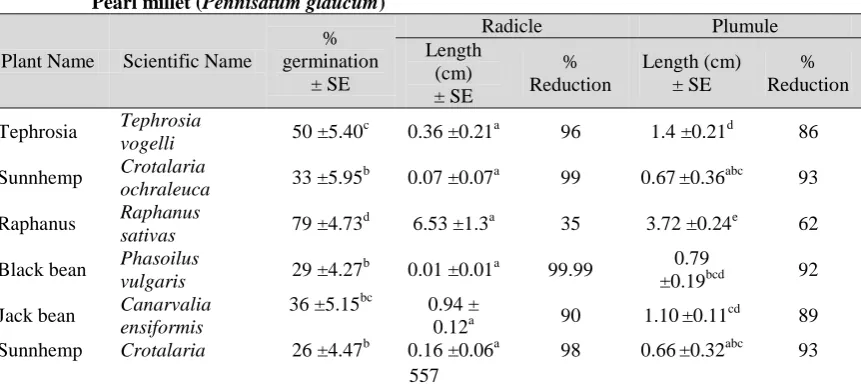
GMCC extracts had a significant effect (P< 0.05) on germination percentage of Pearl millet (Table 1). GMCC extracts significantly reduced the germination of Pearl millet except for Raphanus (R. sativas) and Grahamania (C. grahamiana) with both having the highest germination percentage. The percentage germination of Pearl millet (P. glaucum) ranged from 9 % to 91 % including the control. Cowpea was significantly (P < 0.05) more efficous in reducing the germination of pearl millet than all the other GMCCs. GMCC extracts had a significant (P < 0.05) effect on radical length of pearl millet. Most of the GMCC extracts significantly (P < 0.05) reduced the radical length except for Grahamiana which was not significantly (P < 0.05) different from the control and had the lowest percentage reduction. Extracts of all the GMCCs significantly (P < 0.05) reduced plumule length of Pearl millet. The percentage reduction for all the legumes ranged from 18 % to 98 %.
Table 1: Effect of GMCC extracts on the germination, radicle length and plumule length of Pearl millet (Pennisatum glaucum)
Plant Name Scientific Name
% germination
± SE
Radicle Plumule
Length (cm) ± SE
% Reduction
Length (cm) ± SE
% Reduction Tephrosia Tephrosia
vogelli 50 ±5.40
c
0.36 ±0.21a 96 1.4 ±0.21d 86 Sunnhemp Crotalaria
ochraleuca 33 ±5.95
b 0.07 ±0.07a 99 0.67±0.36abc 93
Raphanus Raphanus
sativas 79 ±4.73
d
6.53 ±1.3a 35 3.72 ±0.24e 62 Black bean Phasoilus
vulgaris 29 ±4.27
b 0.01 ±0.01a 99.99 0.79
±0.19bcd 92 Jack bean Canarvalia
ensiformis
36 ±5.15bc 0.94 ±
0.12a 90 1.10±0.11
cd
558
juncea
Common vetch
Vicia sativa
25 ±4.56b 0.04 ±0.02a 99.6 0.16 ±0.05a 98 Cowpea Vigna
unguiculata 9 ±5.15
a 0.01 ±0.01a 99.99 0.21±0.18ab 98
Velvet bean Mucuna
pruriens 31 ±4.73
b
0.02 ±0.03a 98 0.77±0.21abc 92 Grahamania Crotalaria
grahamiana 79 ±4.27
d 8.62 ±0.21b 15 8.00 ±0.09f 18
Lab lab Dolicos bean 38 ±6.07bc 0.01 ±0.01a 99.99 1.20 ±0.07cd 88 Distilled
water
H2O 91 ±2.39d 10.08
±1.84b 0 9.68 ±0.26
g 0
P value P< 0.001 P< 0.001 P< 0.001
LSD (0.05) 14.04 1.828 0.618
Means bearing the same letters are not significantly different at P < 0.05.
Effect of GMCC extracts on the germination of B. pilosa and E. indica.
B. pilosa did not germinate in the incubator. However, E. indica had low germination in the control (distilled water) and Grahamiana with germination percentage of 25.0 ± 2.04 and 6.25 ± 1.25, respectively. E. indica only germinated where Grahamiana extracts were used. Germination percentage of E. indica seeds was significantly (P < 0.05) lower than the
germination percentage of E. indica in the control.
Greenhouse experiments
Effect of GMCC biomass on the emergence of
B. pilosa.
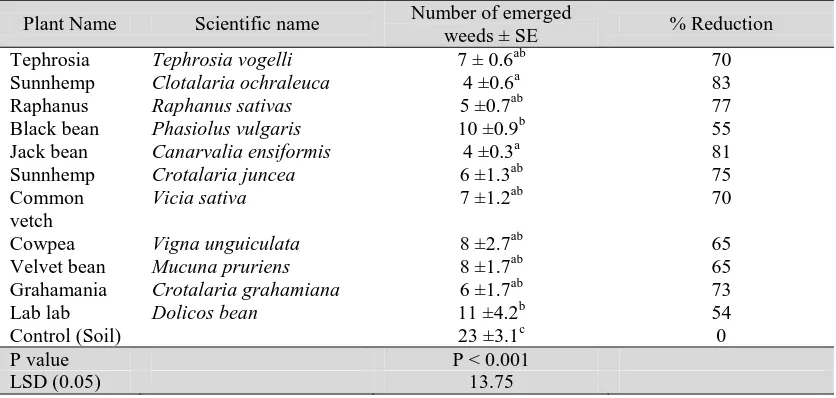
Table 2 shows that the GMCC biomass significantly (P < 0.05) reduced B. pilosa
emergence. The percentage reduction of B. pilosa ranged from 54 % to 83 %.
Table 2: Effect of GMCC biomass on the final emergence of B. pilosa
Plant Name Scientific name Number of emerged
weeds ± SE % Reduction
Tephrosia Tephrosia vogelli 7 ± 0.6ab 70
Sunnhemp Clotalaria ochraleuca 4 ±0.6a 83
Raphanus Raphanus sativas 5 ±0.7ab 77
Black bean Phasiolus vulgaris 10 ±0.9b 55
Jack bean Canarvalia ensiformis 4 ±0.3a 81
Sunnhemp Crotalaria juncea 6 ±1.3ab 75
Common vetch
Vicia sativa 7 ±1.2ab 70
Cowpea Vigna unguiculata 8 ±2.7ab 65
Velvet bean Mucuna pruriens 8 ±1.7ab 65
Grahamania Crotalaria grahamiana 6 ±1.7ab 73
Lab lab Dolicos bean 11 ±4.2b 54
Control (Soil) 23 ±3.1c 0
P value P < 0.001
LSD (0.05) 13.75
559
Tephrosia
w
eed
coun
ts/
pot
0 5 10 15 20 25 30
35 Ocronica
Raphanus
Black bean
0 5 10 15 20 25 30 35
Jack bean Sunnhemp
Common vetch
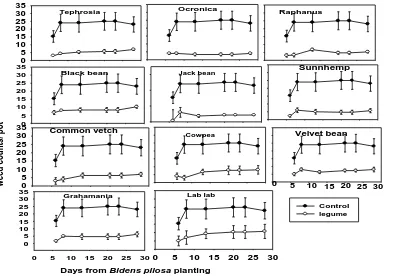
Fig 1 . Effect of leguminous cover crops on the emergence of Bidens pilosa from first
day of counting upto last day of counting. 0
5 10 15 20 25 30 35
Cowpea Velvet bean
Days from Bidens pilosa planting
Grahamania
0 5 10 15 20 25 30
0 5 10 15 20 25 30 35
Lab lab
0 5 10 15 20 25 30
Control legume
0 5 10 15 20 25 30
Figure 1 shows that B. pilosa counts were significantly reduced by all the GMCCs that were used in this experiment from 6 DAP to 28 DAP.
Effect of GMCC biomass on the emergence of
E. indica.
All GMCCs significantly reduced (P < 0.05) the emergence of E. indica (Table 3). The reduction of E. indica ranged from 28 % to 67 % as compared to the control. The greatest reduction was seen where Raphanus and Jack bean were used.
Table 3: Effect of GMCCs on the final emergence of E. indica
Plant Name Scientific Name Number of emerged weeds ±
SE % Reduction
Tephrosia Tephrosia vogelli 59 ±8.2d 28
Sunnhemp Crotalaria ochroleuca 42 ±2.9bc 48
Raphanus Raphanus sativas 31 ±3.0ab 62
Black bean Phasiolus vulgaris 42 ±3.3bc 48
Jack bean Canarvalia ensiformis 27 ±3.5a 67
Sunnhemp Crotalaria juncea 53 ±5.2cd 35
Common vetch Vicia sativa 48 ±1.2cd 41
Cowpea Vigna unguiculata 49 ±7.4cd 40
Velvet bean Mucuna pruriens 51 ±2.5cd 37
Grahamania Crotalaria grahamiana 49 ±5.9cd 40
Lab lab Dolicos bean 46 ±3.2cd 43
Control (soil) 81 ±7.3e 0
P value P < 0.001
560
Means showing the same letters are not significantly different at P< 0.05.
Tephrosia
w
eed count
s/pot
0 20 40 60 80 100
Ocronica Raphanus
Black bean
0 20 40 60 80 100
Jack bean Sunnhemp
Common vetch
0 20 40 60 80 100
Cowpea Velvet bean
Days from Eleusine indica planting Grahamiana
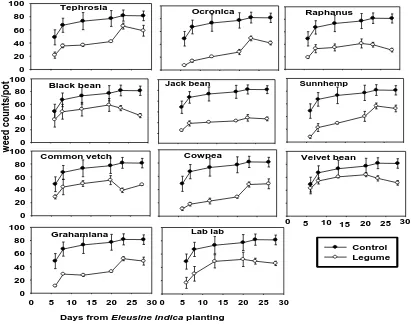
Fig 2 shows the effect of leguminous cover crops on the emergence of Eleusine indica from day of planting up to last count.
0 5 10 15 20 25 30
0 20 40 60 80 100
Lab lab
0 5 10 15 20 25 30
Control Legume
0 5 10 15 20 25 30
The density of E. indica was significantly (P < 0.05) reduced from 6 DAP up to 28 DAP where the biomass of Tephrosia, Ocronica, Raphanus, Jack bean, Sunnhemp, Cowpea, Grahamiana and Lab lab were used (Figure 2). Biomass of common vetch, black bean and velvet bean only started to cause a significant reduction on E. indica emergence after the fourth weed count.
Effect of GMCC biomass on the emergence of
A. hispidum.
The effect of GMCCs on the emergence of A. hispidum was significant (P < 0.001). All the GMCCs did not significantly reduce the emergence of A. hispidum except for common vetch which stimulated the emergence of A. hispidum (Table 4).
Table 4: Effect of GMCC biomass on the emergence A. hispidum
Plant Name Scientific name Number of emerged weeds
± SE % Reduction
Tephrosia Tephrosia vogelli 4 ±1.2a 14
Sunnhemp Crotalaria ochraleuca 4 ±1.2a 14
Raphanus Raphanus sativas 5 ±0.7a 6
Black bean Phasiolus vulgaris 5 ±1.2a 0
Jack bean Canarvalia ensiformis 7 ±0.3a 0
561
Common vetch Vicia sativa 14 ±1.2b 0
Cowpea Vigna unguiculata 5 ±0.9a 0
Velvet bean Mucuna pruriens 5 ±0.9a 0
Grahamania Crotalaria grahamiana 5 ±1.5a 0
Lab lab Dolicos bean 7 ±2.3a 0
Control (soil) 5 ±0.0a 0
P value P < 0.001
LSD (0.05) 3.5
Means bearing the same letters are not significantly different at P < 0.05.
Tephrosia
0 5 10 15 20
Control Legume
Ocronica Raphanus
Black bean
0 5 10 15 20
Jack bean Sunnhemp
Common vetch
Days from Acanthospermum hispidum planting
0 5 10 15 20
Cowpea Velvet
Grahamiana
0 5 10 15 20 25 30
0 5 10 15 20
Lab lab
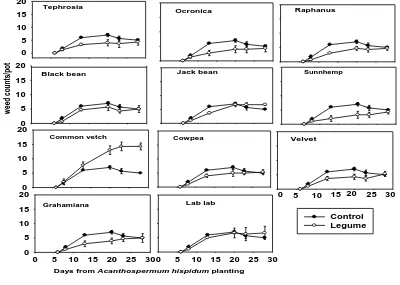
Fig 3. Effect of leguminous cover crops on the emergence of Acanthospermum hispidum from first day of counting upto last day counting.
0 5 10 15 20 25 30
w
eed
coun
ts/po
t
0 5 10 15 20 25 30
Figure 3 shows that residues of common vetch had a stimulatory effect on the emergence of A. hispidum from 13 DAP to 28 DAP. All the other GMCC had no significant effect on the germination of A. hispidum throughout the duration of the experiment.
Effects of GMCC biomass on the dry matter of B. pilosa, E. indica and A. hispidum.
562
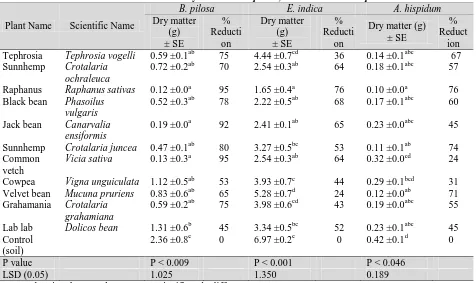
Table 5: Effect of GMCC biomass on the dry matter of B. pilosa, E. indica and A. hispidum
Plant Name Scientific Name
B. pilosa E. indica A. hispidum
Dry matter (g) ± SE
% Reducti
on
Dry matter (g) ± SE
% Reducti
on
Dry matter (g) ± SE
% Reduct
ion Tephrosia Tephrosia vogelli 0.59 ±0.1ab 75 4.44 ±0.7cd 36 0.14 ±0.1abc 67 Sunnhemp Crotalaria
ochraleuca
0.72 ±0.2ab 70 2.54 ±0.3ab 64 0.18 ±0.1abc 57 Raphanus Raphanus sativas 0.12 ±0.0a 95 1.65 ±0.4a 76 0.10 ±0.0a 76 Black bean Phasoilus
vulgaris
0.52 ±0.3ab 78 2.22 ±0.5ab 68 0.17 ±0.1abc 60 Jack bean Canarvalia
ensiformis
0.19 ±0.0a 92 2.41 ±0.1ab 65 0.23 ±0.0abc 45 Sunnhemp Crotalaria juncea 0.47 ±0.1ab 80 3.27 ±0.5bc 53 0.11 ±0.1ab 74 Common
vetch
Vicia sativa 0.13 ±0.3a 95 2.54 ±0.3ab 64 0.32 ±0.0cd 24 Cowpea Vigna unguiculata 1.12 ±0.5ab 53 3.93 ±0.7c 44 0.29 ±0.1bcd 31 Velvet bean Mucuna pruriens 0.83 ±0.6ab 65 5.28 ±0.7d 24 0.12 ±0.0ab 71 Grahamania Crotalaria
grahamiana
0.59 ±0.2ab 75 3.98 ±0.6cd 43 0.19 ±0.0abc 55 Lab lab Dolicos bean 1.31 ±0.6b 45 3.34 ±0.5bc 52 0.23 ±0.1abc 45 Control
(soil)
2.36 ±0.8e 0 6.97 ±0.2e 0 0.42 ±0.1d 0
P value P < 0.009 P < 0.001 P < 0.046
LSD (0.05) 1.025 1.350 0.189
Means bearing the same letters are no significantly different at P< 0.05.
Discussion
Extracts of all the GMCCs had a negative impact on the germination of Pearl millet (P. glaucum), except for Raphanus (R. sativas) and Grahamiana (C. grahamania) which were seen to have no impact on the germination of Pearl millet. This suggests that the residues of most of these GMCCs have allelochemicals that have a detrimental effect on pearl millet germination. These results concur with finding by Machado (2007) who reported that Meadow foam (Limnanthes alba) was able to reduce the growth of Downy brome (Bromus tectorum), a weed in wheat (Triticum aestivum) but at the same time it was toxic to wheat itself. This implies that intercropping or growing Pearl millet where residues of these GMCCs have been incorporated in the soil might have a negative effect on the emergence of Pearl millet. These findings clearly demonstrate that allelochemicals are not suppressive to weeds only but can also be harmful to other crops.
All the legumes were able to reduce the radicle and plumule length of Pearl millet except for
Grahamania and Raphanus which showed the least potential in reducing the plumule length of Pearl millet. This may indicate that, extracts that allowed rapid germination also allowed more time for radicle and plumule growth compared to extracts that delayed germination. Reduction in the plumule and radicle length may be a reflection of delayed germination rather than direct effect of the allelochemicals.
563 some seeds require an alternation of darkness and light so that they can germinate.
The results clearly show that most of the legumes which were screened in this study have an effect on the emergence and dry matter production of B. pilosa, E. indica and A. hispidum. These findings concur with findings by Hill et al. (2006) who reported that
Crotalaria juncea had some inhibitory effect on
A. hypochondriacus and A. retroflexus. Similar results were also obtained byAdler and Chase, (2007) who reported that biomass of Sunnhemp (C. juncea), Cowpea (V. unguiculata) and Velvet bean (M. pruriens) had an inhibitory effect on Amaranthus species. Allelochemicals such as L-3-(3, 4 dihydroxyphenylalamine) produced by the leaves of Mucuna pruriens
(Fujii, 1999), a non protein amino acid delta-hydroxynorleucine (5- hydroxyl 1-2- aminohexanoic acid) produced by Crotalaria
species (Pilbeam and Bell, 1979) and quinolizidine alkaloids produced by legumes of
Phasiolus vulgaris could be some of the compounds that are responsible for suppression of germination in these weed species.
Although some GMCCs used in this study have not shown outstanding potential of inhibiting the emergence of B. pilosa, they delayed the emergence of this weed. GMCCs such as Lab lab (Dolicos bean) and Black bean (Phasiolus vulgaris) resulted in a delay in the emergence of
B. pilosa over time. This delay might have an effect on the critical weed control period. A delay in weed emergence may give enough time to the crop to grow before it is harmed by the weeds (Hartzler, 2003). When the weeds emerge late this will give the crop a competitive advantage and it might not be economic to control these late weeds afterwards using other weed control methods (Knezevic et al., 2002). Biomass of B. pilosa, Raphanus (R. sativas), Jack bean (C. ensiformis), Common vetch (V. sativas) and Sunnhemp (C. juncea) showed an outstanding reduction in the dry matter of Black jack (B. pilosa). The ability of these legumes to reduce the dry matter might indicate that these legumes might have post emergence herbicidal properties (Adler and Chase, 2007). Common vetch (Vicia sativas) did not reduce the emergence of B. pilosa, but had an impact on the
dry matter, which suggests that the type of allelochemicals that are found in this GMCC have an inhibitory effect on other physiological processes other than germination and emergence.
The GMCCs had an inhibitory effect on the emergence of E. indica. Similar results were obtained by Adler and Chase (2007) who reported that Raphanus (R. sativas) and Jack been (C. ensiformis) have the highest potential in suppressing the emergence of E. indica. The fact that these two GMCCs also have an effect on B. pilosa suggests that they have broad spectrum activity. The trend of emergence of E. indica from day of planting up to the day of harvesting shows that these GMCCs apart from inhibiting emergence and dry matter are also capable of delaying the emergence of weeds. Generally results from this study have demonstrated that the GMCCs that are commonly used in rotations under CA systems also have a suppressive effect on weeds, both as a result of allelochemicals that they produce and also as a result of the smothering effect that they have on weeds because they produce a lot of biomass.
Conclusion and Recommendations
Most plant species screened in this study, in particular Jack bean (Canarvalia ensiformis), Sunnhemp (Crotalaria juncea), Sunnhemp (Crotalaria ochraleuca), Grahamania (Crotalaria grahamania), Velvet bean (Mucuna pruriens) and Raphanus (Raphanus sativas) have shown the highest inhibitory effect on the three weeds under this study. These legumes have a great potential of controlling B. pilosa, E. indica and A. hispidum in cropping systems. Additional work is needed to test the efficacy of residues and extracts from these plants on weed control under field conditions and to test them on different weed species. There is also a need to isolate and identify the actual allelochemicals that are produced by these GMCCS.
References
564 Potential of Leguminous Summer Cover crops: Cowpea, Sunhemp, Velvet bean. Hortscience, 42: 289-293.
Ashburner, J. E. (1984). Dryland tillage practices and studies in Algeria. F.A.O Panel of experts on Agricultural mechanisation, 6th Session, Adana, Turkey, October 1984: 22.
Ball, D. A. and Miller, S. D. (1993). Cropping history, tillage effects on weed flora composition in Irrigated corn. Agronomy Journal, 85: 817-821.
Barberi, P. and Lo Cascio, B. (2001). Long-term tillage and crop rotation effects on weed seed bank size and composition. Weed research, 41: 325-340.
Bewick, T. A., Shilling, D. G., Dusky, J. A. and William, D. (1994). Effects of Celery (Apium graveoleus) root residue on growth of various crops and weeds. Weed technology, 8: 625-629.
Bezuidenhout, R. S. (2005). Allelopathy as a possible cause of yield reduction, Weed science journal, 2: 16-18.
Buhler, D. D., Doll, J. D., Proost, R. T. and Visocky M. R. (1995). Integrating mechanical Weeding with Reduced herbicide use in conservation tillage corn production systems. Agronomy Journal, 87: 507-512.
Derksen, D. A., Thomas, A. G., Lafond, G. P., Loeppky, H. A. and Swanton, C. J. (1995). Impact of Post emergence herbicides on weed community diversity within conservation-tillage systems. Weed Research, 35: 311-320.
Derpsch, R. (2008). No Tillage and Conservation Agriculture: A progress report, In: Goddard, T., Zoebisch, M., Gan, Y., Ellis, E., Watson, A. and Sombatpanit, S. No till Farming Systems. Special Publication No. 3. The World Association of Soil and Water Conservation (WASWC). Bangkok. Thailand.
Egley, G. H. (1999). Reflection on my career in seed germination research. Seed Science research, 9: 3-12
Ellis-Jones, J., Mavhudzi, Z., Muzenda, J., Chivinge, O., Riches, C., Chikwanda, M. and Nehanda, G.J. (2001). Mid season farmer evaluation of cotton weed management trials, Lower Muzarabani.
Project Document IDG/01/10, Silsoe Research Institute. Bedfordshire, UK. FAO (2007). Conservation Agriculture Website.
http: //www.fao.org/ag/ca/ (verified 16/04/07).
Fujii, Y. (1999). Allelopathy of Hairy vetch and Mucuna: Determination of L-DOPA as a candidate of allelopathic substance. In: H.G Cutler and S.J Cutler (Eds), Biologically Active Natural products, CRC Press, Boca, Raton, FL, USA, pp 33- 48.
Harrington, L. and Erenstein, O. (2005). Conservation agriculture and resource conserving Technologies - A global perspective. Agromeridian, 10: 32-43. Hartzler, B. (2003). Critical periods of
competition. Agronomy journal, 2: 4-7. Hill, E. C., Ngouajio, M. and Nair, M. G.
(2006). Differential response of weeds and vegetable Crops to aqueous extracts of Hairy vetch and Cowpea. Hort Science, 41: 695-700.
Hobbs, P. R. (2007). Conservation agriculture: what is it and why is it important for future sustainable food production? Journal of Agricultural Science, 145(2): 127-137.
Knezevic, S. Z., Evans, S. P., Blankenship, E. E., Van Acker, C. R. and Lindquist, J. L. (2002). Critical period for weed control. Weed science, 9: 773-786.
Machado, S. (2007). Allelopathic potential of various plant species on Downy Brome: Implication for weed control in wheat production. Agronomy journal, 99: 127-131.
Mashayamombe, B. K., Mazarura, U. and Chiteka, A. (2013). Effect of two Formulations of Sufentrazone on Weed Control in Tobacco (Nicotiana Tabacum
L). Asian journal of Agriculture and Rural Development, 3(1): 1-6.
Miller, S. D. and Nalewaja, J. D. (1985). Weed spectrum change and control in reduced-till wheat. North Dakota Farm Research, 43(1): 11-14.
565 Mulugeta, D., Stoltenberg, D. E. and Boerboom,
C. M. (2001). Weed species-area relationships as influenced by tillage. Weed Science, 49: 217-223.
Pilbeam D. J. and Bell, A. E. (1979). A Reappraisal of the Free Amino acids In Seed of Crotalaria juncea
(Leguminosae). Phytochemistry, 18: 320-321.
Ross, M. A. and Lembi, C. A. (1985). Applied Weed Science. Burgess Publishing Company. Minneapolis. Minnesota. USA. Sayre, K., Govaerts, B., Martinez, A., Mezzalama, M. and Martinez, M. (2006). Comparison of Alternative conservation agriculture technologies for rain fed production in the highlands of Central Mexico. Proceedings on CD, 17th ISTRO Conference, Kiel, Germany, 28 Agust-3 September 2006:1012 - 1018.
Shilling, D. G., Dusky, J. A., Mosser, M. A. and Bewick, T. A. (1992). Use of the cover crops Weed Index to evaluate weed suppression by cover crops in Organic
Citrus Orchards. Horticultural Science Journal, 43: 27-33.
Sibanda, S., Barton, A., Ellis-Jones, J., Nyakudya, E., Mashingaidze, A. B., Chivinge, O. A. and Riches, C. (2001). Weed management in cotton productions systems: A case study from The Zambezi Valley, Zimbabwe. In: Garcia-Torres, L., Benites, J. and Martinez-Vilela, A. Conservation agriculture, a World challenge. XUL, Cordoba, Spain. Somody, C. N., Nalewaja, J. D. and Miller, S. D.
(1985). Self-burial of wild oat florets. Agronomy Journal, 77: 359-362.
Spandl, E., Durgan, B. R. and Forcella, F. (1999). Foxtail (Setaria spp) seedling dynamics in Spring Wheat (Triticum aestivum) are influenced by seeding date and tillage regime. Weed Science, 47: 156-160.