International Journal of Scientific Research in Computer Science, Engineering and Information Technology © 2018 IJSRCSEIT | Volume 3 | Issue 4 | ISSN : 2456-3307
An Outsourced Revocation for Identity Based Encryption in
Cloud Computing
K. Swetha
MCA Sri Padmavathi College of Computer Sciences And Technology Tiruchanoor,Tirupati, Andhra Pradesh, India
ABSTRACT
Cloud Computing provides USA suggests that by that we are able to access the applications as utilities over the web. It permits USA to make, configure, and customize the business applications on-line. Altogether the present schemes for information security, major security-oriented process like secret writing, decryption, and access management mechanisms area unit handled by the user’s device itself. During this paper, aiming at try the crucial issue of identity revocation, we tend to introduce outsourcing computation into IBE for the primary time and propose a voidable IBE theme within the server-aided setting. Our theme offloads most of the key generation connected operations throughout key-issuing and key-update processes to a Key Update Cloud Service supplier, going away solely a continuing range of straightforward operations for PKG and users to perform regionally. This goal is achieved by utilizing a unique collusion-resistant technique: we tend to use a hybrid personal key for every user, during which associate degree logic gate is concerned to attach and certain the identity element and also the time element. Moreover, we tend to propose another construction that is obvious secure underneath the recently formulized Refereed Delegation of Computation model. Finally, we offer intensive experimental results to demonstrate the potency of our planned construction.
Keywords: Identity-Based encoding, Public Key Infrastructure, public key, identity revocation and Cloud Service Provider.
I.
INTRODUCTION
ID targeted secret writing (IBE) may well be a desirable utterly totally different selection for open key secret writing, that's projected to spice up key administration in Associate in Nursing endorsement designed up Public Key Infrastructure (PKI) with the guide of utilizing human-understandable personalities (e.g., distinctive title, electronic mail handle, IP address, etc) as open keys. Thus, sender victimization IBE cannot got to be compelled to appear to be up open key and declaration, but straight encodes message with collector's ID. As a result, recipient getting private key connected with the relating ID from non-public Key Generator (PKG) is in associate degree extremely position to rewrite
components unit distinguished in IBE air. In Boneh and Franklin impressed that shoppers recharge their classified keys usually and senders utilize the collectors' personalities connected with times interim. However this half would impact in Associate in nursing overhead load at PKG. In another expression, the larger a region of the consumers in spite of despite whether or not or not their keys were denied or not, ought to contact with PKG intermittently to demonstrate their personalities and come after new selective keys. It obliges that PKG is on-line and so the cosy channel got to be maintained for all exchanges that enables you to develop to be a bottleneck for IBE framework on the grounds that the number of shoppers develops.
On this paper, we've got a bent to introduce outsourcing computation into IBE revocation, and formalize the safety definition of outsourced rescindable IBE for the first time to the high-quality of our advantage. we've got a bent to advocate a subject to dump all of the key generation associated operations for the quantity of issuing and key-replace, exploit best identical quantity of simple operations for PKG and eligible customers to perform domestically. In our theme, just like the recommendation. We’ve got a bent to acknowledge revocation via modification the exclusive keys of the unrevoked customers. though not like that job that trivially concatenates quantity with identification for key iteration/update and desires to re-drawback the total personal key for unrevoked users, we've got a bent to advise a novel collusion-resistant key issue system: we've got a bent to rent a hybrid confidential key for every shopper, whereby associate gate thinks about to connect and positive a pair of sub-add-ons, specifically the identification issue and additionally the time component. At first, shopper is ready to accumulate and a default time element (i.e., for current time interval) from PKG as his/her confidential key in key-issuing. Afterwards, in an effort to hold decipher ability, unrevoked users wishes to periodically request on key-replace for
time component to a brand new introduced entity named Key replace Cloud provider supplier (KU-CSP).
Proposed System:-
An IBE theme which usually involves 2 entities, PKG and users (including sender and receiver) is consisted of the subsequent four algorithms.
Setup: - The setup formula takes as input a security parameter and outputs the general public key and also the master. Note that the master is unbroken secret at PKG.
KeyGen:-The non-public key generation formula is travel by PKG that takes as input the master and user’s identity. It returns a personal key appreciate the identity.
Encrypt: - The cryptography formula is travel by sender that takes as input the receiver’s identity and a message to be encrypted. It outputs the cipher text. Decrypt: - The coding formula is travel by receiver that takes as input the cipher text and his/her non-public key. It returns a message or a mistake.
Problem Statement:-
KeyGen:-The key generation formula travel by PKG takes as input–a master, Associate in Nursing identity, a revocation list and a time list. If, the formula is aborted. Otherwise, it sends the non-public key to user wherever is that the identity element for personal key and is its time element for current fundamental quantity. In addition, the formula sends Associate in Nursing outsourcing key.
KU-CSP Encrypt: - The cryptography formula travel by sender takes as input–a message, Associate in Nursing identity and a fundamental quantity. It outputs the cipher text.
comprehend revocation at KU-CSP through change the non-public keys of unrevoked users.
Revoke:-The revocation formula travel by PKG takes as input–a revocation list, a time list and also the set of identities to be revoked. It outputs Associate in Nursing updated fundamental quantity further because the updated revocation list and time list. Key Update:-
The key update algorithmic rule pass KU-CSP takes as input–a revocation list, associate identity, a period and therefore the outsourcing key for identity. We’ll show a way to avoid such collusion later. Security Definition we have a tendency to assume that KU-CSP within the planned system model is semi-trusted. Specifically, it'll follow our protocol however try and verify the maximum amount secret info as doable supported its possession. Therefore, 2 varieties of adversaries’ are to be thought of as follows. Type-I soul. It’s outlined as a curious user with identity however revoked before period. Such soul tries to get helpful info from cipher text meant for him/her at or when (e.g. time period) through colluding with different users though they're unrevoked. Therefore, it's allowed to evoke non-public key as well as identity part and updated time part for cooperative users. we have a tendency to specify that beneath the idea that KU-CSP is semi trustworthy , type-I soul cannot get outsourcing key for any users. Type-II soul. it's outlined as a curious KU-CSP that aims to get helpful info from cipher text meant for a few target identity at period. Such soul not solely possess of outsourcing keys for all users within the system, however is also able to get user’s non-public key through colluding with the other user with identity . it's noted that to create such attack affordable, we have a tendency to should prohibit.
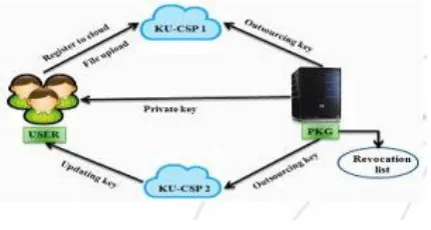
Figure 1. System Model for IBE with Outsourced Revocation
Compared therewith for typical IBE theme, a KU-CSP is concerned to comprehend revocation for compromised users. Actually, the KU-CSP are often visualised as a public cloud surpass a 3rd party to deliver basic computing capabilities to PKG as standardized services over the network. Typically, KU-CSP is hosted off from either users or PKG, however provides some way to cut back PKG computation and storage value by providing a versatile, even temporary extension to infrastructure. once revocation is triggered, rather than re-requesting personal keys from PKG unrevoked users ought to raise the KU-CSP for change a light-weight element of their personal keys. though' several details square measure concerned in KU-CSP‟s preparation, during this paper we have a tendency to simply logically envision it as a computing service supplier, associate degreed concern a way to style secure theme with an entrusted KU-CSP.
Based on the system model planned, we tend to square measure ready to outline the outsourced rescindable IBE theme. Compared with the standard IBE definition, the KeyGen code and rewrite algorithms square measure redefined as follows to integrate time element. Note that 2 lists and square measure utilized in our definition, wherever records the identities of revoked users and may be a coupled list for past and current period.
KeyGen:-The key generation algorithmic program pass PKG takes as input–a passé-partout, associate identity, a revocation list and a time list. If, the algorithmic program is aborted. Otherwise, it sends the personal key to user wherever is that the identity element for personal key and is its time element for current period. to boot, the algorithmic program sends associate outsourcing key to KU-CSP.
Decrypt:-The coding algorithmic program pass receiver takes as input–a cipher text encrypted underneath identity and period and a personal key. It outputs the first message if any, otherwise outputs. Additionally, 2 algorithms area unit outlined to understand revocation at KU-CSP through change the personal keys of unrevoked users.
Revoke:-The revocation algorithmic program pass PKG takes as input–a revocation list, a time list and also the set of identities to be revoked. It outputs associate updated period likewise because the updated revocation list and time list.
Key Update:-The key update algorithmic program pass KU-CSP takes as input–a revocation list, associate identity, a period and also the outsourcing key for identity. It outputs user’s updated time element in camera key if his identity doesn't belong to, otherwise, outputs.
In this paper, we discuss user revocation that is how to deprive users of decrypt ability even if they have been issued their private keys. To this end, we embed a time period into private key in a clever manner for revocation. Specifically, in the same example illustrated in Section 2.2, Alice in our setting not only encrypts message with Bob’s email address “[email protected]” but also with current time period (e.g., “Thu Jul 18 2013”). When receives the encrypted email, Bob then obtains his private key consisting of an identity component and a time period component from PKG. With the both appropriate components, the email can be read. Suppose Bob is compromised. Then, the time components of all the other users are updated by KU-CSP with a new time period (e.g., “Fri Jul 19 2013”). From then on, the message sent to Bob should be encrypted with Bob’s email address and the updated time period. Since Bob does not have the time component corresponding to the updated time period, the following encrypted messages cannot be decrypted by Bob even if they are intended for him. The challenge in designing the outsourced revocable IBE scheme is how to prevent collusion between Bob
and other unrevoked dishonest users. Specifically, a dishonest user (named Eve) can share her updated time component (i.e., “Fri Jul 19 2013”) with Bob, and help Bob decrypt cipher text even if Bob just has the previous one (i.e., “Thu Jul 18 2013”). We will show how to avoid such collusion later.
Proposed Construction:-
An identity-based encoding with outsourced revocation theme is semantically secure against adaptation chosen cipher text attack (IND-ID-CCA) if no polynomials finite opposer features a non-negligible advantage against competition in security game for each type-I and type-II oppose. Finally, on the far side the CCA security, we have a tendency to conjointly specify that 1) AN IBE with outsourced revocation theme is INDID-CPA secure (or semantically secure against chosen plaintext attack) if no polynomial time opposer has non-negligible advantage in changed games for each type-I and type-II opposer, during which the secret writing oracle in each section one and section two is removed; 2) AN IBE with outsourced revocation theme is secure in selective model if no polynomial time opposer has non-negligible advantage in changed games for each type-I and type-II opposer, during which the challenge identity and period of time is submitted before setup.
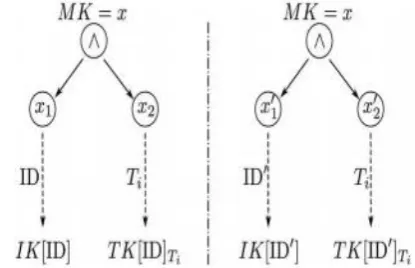
Figure 2. A comparison on generating private key for two different users.
Therefore, the key purpose is to forestall revoked user from colluding with different users to re-construct his/her non-public key. As declaring in intuition, such collusion attack is resistant in our projected construction owing to the random split on for every user. Specifically, as shown in Fig. two during which is associate gate connecting 2 sub-components, if 2 totally different users involve their non-public keys, PKG can get 2 every which way splits ( ) and ( ) with the complementary that and. and area unit wont to turn out the identity part for and severally, whereas the time part is on an individual basis generated from and. By the rationale that the complementary exists between and in addition as and, the identity part and time part ought to consequently have“verification” in camera key. With such “verification”, albeit a curious user obtains time part of different users, he/she cannot forge a sound non-public key for himself to perform coding with success.
Advanced Construction:-
Figure 3. System model with two KU-CSP’s
RDoC model originates from the model of refereed games in, and is later formalized. In RDoC model, the consumer is in a position to move with multiple servers and it's a right output as long as there exists one server that follows the planned protocol. one amongst the foremost blessings of RDoC over ancient model with single server is that the protection risk on the only server is reduced to multiple servers concerned in. because the results of each the utility and utility, RDoC model recently has been wide used within the literature of outsourced computation.
In order to use RDoC to our setting, we tend to introduce different freelance KU-CSPs. For simplicity, within the remainder of paper, we tend to solely specialize in the case that as shown in Fig. 3. Moreover, we've 3 necessities in such model: 1) a minimum of one amongst the KU-CSPs is honest. 2) Procedure quality at the honest KU-CSP isn't far more than the opposite needed activity revocation. 3) PKG‟s period of time would be a lot of smaller than needed to directly perform revocation.
We work out that the challenge to comprehend such advanced construction is to demand that and can't be leaked at a similar time. To realize this goal, we tend to arbitrarily split into and which is able to be individually utilized by the 2 KU-CSPs to provide partial time element and. once receiving the 2 partial time elements, user performs a production.
II.
CONCLUSION
In this paper that makes a specialty of the very important issue of identity revocation we've a bent to introduce outsourcing computation into IBE and propose a reversible theme throughout that the revocation operations unit of measurement delegated to CSP. With the assistance of KU-CSP, the planned theme is full-featured: 1) It achieves constant potency for every computation at PKG and private key size at user; 2) User wishes to not contact with PKG throughout key update, in numerous words, PKG is allowed to be offline once causation the revocation list to KU-CSP; 3) No secure channel or user authentication is required throughout key-update between user and KU-CSP.We gift a sophisticated construction and show it's secure below Do model, throughout that a minimum of 1 amongst the KU-CSPs is assumed to be honest. Therefore, tho' a revoked user and either of the KU-CSPs conspire, it's unable to help such user re-obtain his/her decipher ability.
[1]. W. Aiello, S. Lodha, and R. Ostrovsky, "Fast digital identity revocation," in Advances in Cryptology (CRYPTO‟98). New York, NY, USA: Springer, 1998, pp. 137-152.
[2]. V. Goyal, "Certificate revocation using fine grained certificate space partitioning," in Financial Cryptography and Data Security, S. Dietrich and R. Dhamija, Eds. Berlin, Germany: Springer, 2007, vol. 4886, pp. 247-259.
[3]. F. Elwailly, C. Gentry, and Z. Ramzan, "Quasimodo: Efficient certificate validation and revocation," in Public Key Cryptography (PKC‟04), F. Bao, R. Deng, and J. Zhou, Eds. Berlin, Germany: Springer, 2004, vol. 2947, pp. 375-388.
[4]. D. Boneh and M. Franklin, "Identity-based encryption from the Weil pairing," in Advances in Cryptology (CRYPTO 01), J. Kilian, Ed. Berlin, Germany: Springer, 2001, vol. 2139, pp. 213-229.
[5]. A. Boldyreva, V. Goyal, and V. Kumar, "Identity-based encryption with efficient revocation," in Proc. 15thACMConf. Comput. Commun. Security (CCS‟08), 2008, pp. 417-426.
[6]. A. Sahai and B. Waters, "Fuzzy identity-based encryption," in Advances in Cryptology (EUROCRYPT‟05), R. Cramer, Ed. Berlin, Germany: Springer, 2005, vol. 3494, pp. 557-557.
[7]. R. Canetti, B. Riva, and G. N. Rothblum, "Two 1-round protocols for delegation of computation," Cryptology ePrint Archive, Rep. 2011/ 518, 2011 online]. Available: http://eprint.iacr.org/2011/518.
[8]. U. Feige and J. Kilian, "Making games short (extended abstract)," in Proc. 29th Annu. ACM Symp. Theory Comput. (STOC‟97), 1997, pp. 506-516.
[9]. S. Hohenberger and A. Lysyanskaya, "How to
securely outsource cryptographic
computations," in Proc. 2nd Int. Conf. Theory Cryptography (TCC‟05), 2005, pp. 264-282.
[10]. R. Canetti, B. Riva, and G. Rothblum, "Two protocols for delegation of computation," in Information Theoretic Security, A. Smith, Ed. Berlin, Germany: Springer, 2012, vol. 7412, pp. 37-61.
[11]. X. Chen, J. Li, J. Ma, Q. Tang, and W. Lou, "New and secure outsourcing algorithms of modular exponentiations," in Proc. 17th Eur. Symp. Res. Comput. Security (ESORICS), 2012, pp. 541-556.