Abstract
Wallace, Jeff Thomas. An Enzymatic Fiber Modification Method for
Enhancing Tissue Properties. (Under the direction of Dr. Joel J. Pawlak).Retail consumers of tissue products desire the highest softness at the lowest cost. The softness of a product can be broken down into two components, the bulk (i.e.
structural) softness and the surface softness. Traditionally, papermakers have used a variety of tools, such as refining, beating, chemical addition, etc., to enhance the softness of paper. The use of enzymatic treatment to enhance the softness of paper is less
common, but offers a unique way to modify the chemical composition and ultra-structure of the papermaking fibers.
Procter and Gamble has developed a patented process for enzymatically modifying and degrading cellulose fibers to produce softer tissue grade pulps. The principle of this technology is that by selectively degrading a cellulose fiber, the bulk softness of the resulting fiber structure can be increased. The main goal of this research is to investigate the fundamental interactions of enzymes with cellulosic substrates in order to better understand the fiber modification process and the potential for new properties and products created by this technology.
A duplication of the Procter and Gamble patented technology was carried out in the research labs using different enzyme concentrations and incubation times. From these duplication experiments, it was found that the patent claims could be reproduced in our laboratories. Furthermore, the enzyme dosage and incubation time could be
An investigation into localized fiber degradation produced by the enzymatic treatment of the fibers was carried out. This investigation was broken into three parts and the first part was to characterize enzyme absorption on softwood fibers by investigating the location of enzyme activity on the fiber using microscopic and image analysis
techniques. The results along with the patent duplication experiments relates back to how enzymes affect the fibers to create weaker and more compressible fibers as seen in the microscopic and the zero-span tensile strength results. The results proved that
notch/dislocation areas of the fiber are more accessible areas for enzymes to degrade. The results also showed that as incubation time increased, the fibers began to break up and fragment at dislocation areas for enzyme concentrations of 0.5% and higher.
The second part of the localized fiber modification study was to study enzyme attachment to softwood fibers. This was tested functionally by attempting to first absorb the enzymes onto fibers and then incubate the fibers with untreated fibers. The sheet properties of jointly incubated fibers and separately incubated fibers were compared. The results indicated that enzymes absorb and desorb from the fiber, reattaching and redistributing to other fibers.
The third part of this investigation was to study the effect of enzyme treatment on wet fiber flexibility for refined softwood fibers. The effect on wet fiber flexibility relates back to how enzymes affect the compressibility, bending stiffness and modulus of the sheet as a whole, which is important for improving bulk softness. From the results, it can be concluded that enzymatic degradation affects fiber flexibility as a function of
An Enzymatic Fiber Modification Method for
Enhancing Tissue Properties
by
JEFF THOMAS WALLACE
A thesis submitted to the Graduate Faculty of
North Carolina State University
In partial fulfillment of the
Requirements for the degree of
Master of Science
In
PAPER SCIENCE AND ENGINEERING
Raleigh, NC
2006
Approved by:
Dr. Joel J. Pawlak
__________________
Chair of Advisory Committee
Dr. John A. Heitmann
__________________
Dedication
Biography
NAME:
Jeff Thomas Wallace
DATE AND PLACE OF BIRTH:
June 19, 1980, Roanoke Rapids, NC
EDUCATION:
Name and Location Dates Degree(s) High School: Roanoke Rapids High School, 1994-1998 Diploma Roanoke Rapids, North Carolina
College: North Carolina State University 1998-2003 Bachelor of College of Natural Resources Science Raleigh, North Carolina
Bachelor of Arts
EMPLOYMENT:
Name and Location Dates Position Department of Wood and Paper Science 2003-2006 Research North Carolina State University Assistant Raleigh, North Carolina
Acknowledgements
I would first like to express my appreciation for my committee head, Dr. Joel J. Pawlak for his assistance and patience in helping me to complete my degree. With his assisted vision and insight into the project, I was able to finally reach and complete the goals that were set. I would also like to think the other member of my committee, Dr. John A. Heitmann and Dr. Dimitris S. Argyropoulos, for their added support and guidance in the project.
The financial support of the Pulp and Paper Foundation and the Procter and Gamble Corporation is also greatly appreciated.
I would also like to thank a number of people that have assisted and supported me through my project including: Jung Myoung Lee, Sunkyu Park, Dr. Bradley Lucas, Kevin Copeland, Danté Jones, and the rest of the faculty and staff of the Paper Science and Engineering Faculty.
Table of Contents
viii
List of Tables………...
xi
List of Figures………...
Preface………... 1
Chapter 1 Literature Review 1.1 Enzyme Basics and Their Influence………... 5
1.2 How Enzymes Affect Effect Paper Softness………. 10
1.3 Understanding Softness and How it is Measured……… 19
Chapter 2 The Modification of Bleached Kraft Softwood Fibers with Enzymatic Treatment 2.1 Introduction……… 36
2.2 Experimental Methods and Materials……… 38
2.3 Results and Discussion………... 42
2.4 Conclusions………... 65
Chapter 3 Localized Fiber Enzyme Treatment for Fiber Modification 3A Characterization of Enzyme Absorption on Softwood Fibers: Isolation of Enzyme Activity to Fiber Dislocation Areas 3A.1 Introduction………... 68
3A.2 Experimental Methods and Materials………... 69
3A.4 Conclusions……….. 85
3B Enzyme Interaction with Softwood Fibers 3B.1 Introduction………... 87
3B.2 Experimental Methods and Materials………... 87
3B.3 Results and Discussion………... 90
3B.4 Conclusions……….. 100
3C Effect of Enzyme Treatment of Wet Fiber Flexibility for Refined Softwood Fibers 3C.1 Introduction………... 101
3C.2 Experimental Methods and Materials………... 103
3C.3 Results and Discussion………... 109
3C.4 Conclusions……….. 123
Literature Cited………... 125
Appendix A – Procedure for Preparing Pulp………... 132
Appendix B – Procedure for Enzyme Treatment of NIST Softwood Pulp………... 134
Appendix C – Procedure for Sodium Acetate Buffer Preparation……….. 138
Appendix D – Procedure for Enzyme Inactivated Control (EI control)….. 139
Appendix E – Procedure for Control #2 (no enzyme)... 143
Appendix G – Pre-Enzyme Treatment, Fiber Defect Creation and
List of Tables
Chapter 2
Table 1: 0.05 % Enzyme Concentration Handsheet Densities …………... 42
Table 2: 0.1 % Enzyme Concentration Handsheet Densities …………... 42
Table 3: 0.5 % Enzyme Concentration Handsheet Densities…………... 42
Table 4: 1.0 % Enzyme Concentration Handsheet Densities……….. 43
Table 5: EI Control and NE Control Handsheet Densities ………... 43
Table 6: Patent Claim #3 Reproduction Results (% Drop in Zero Span Dry Tensile Strength for Treated as Compared to NE Control)… 48 Table 7: Patent Claim #4 Reproduction Results (% Drop in Zero Span Wet Tensile Strength for Treated as Compared to NE Control)……….. 49
Table 8: Patent Claim #2 Reproduction Results (% Similarity between Treated Sample Dry Tensile Index and NE Control Dry Tensile Index)………. 51
Table 9: Patent Claim #5 Reproduction Results (Ratio between dry zero span and wet zero span)………..………….. 53
Table 10: STFI Compressibility Strength Results for Single Basis Weight Testing………..………. 56
Table 11: STFI Compressibility Strength Results for Double Basis Weight Testing………..……… 57
Table 12: STFI Compressibility Strength Results for Averaging Single and Double Basis Weight Testing………..……….. 58
Table 13: Drainage Times for Different Enzyme Concentrations and Incubation Times………..……… 60
Table 2: 3-Hour Control (mixed after 3 hours) Handsheet Densities …... 93
Table 3: NE Control (no enzyme) Handsheet Densities……….. 93
Table 4: Patent Claim #3 Reproduction Results………... 94
Table 5: Patent Claim #4 Reproduction Results………... 96
Table 6: Patent Claim #2 Reproduction Results (0.5% enzyme conc.)… 97 Table 7: Patent Claim #5 Reproduction Results ………. 99
Chapter 3C Table 1: Densities, Basis Weights and Calipers of Handsheets.……….. 111
Table 2: Patent Claim #3 Reproduction Results………... 115
Table 3: Patent Claim #4 Reproduction Results……….. 116
Table 4: Patent Claim #2 Reproduction Results……….. 117
Table 5: Patent Claim #5 Reproduction Results ………. 118
Appendix F Table 1: Fiber Count for Four Samples………. 149
Table 2: Defect Classification and Tallying Table……… 151
Table 3: Defects/Fiber Count Ratios……….. 152
Table 4: Defects/Fiber Count Ratios Wet, Dry and Re-Wetted States…. 154 Table 5: Defects/Fiber Count Ratios for Increasing Hobart Kneading Times………...…… 156
Appendix G Table 1: Non-Enzyme Treated (Hobart only)……… 166
List of Figures
Chapter 2
Figure 1: The Dry Zero Span Tensile Strength of Low Density
Handsheets for Enzyme Treated Samples, Heat Inactivated
Control and No Enzyme Control……….. 44 Figure 2: The Wet Zero Span Tensile Strength of Low Density
Handsheets for Enzyme Treated Samples, Heat Inactivated
Control and No Enzyme Controls……… 45 Figure 3: Patent Claim #3 Reproduction Results (0.5% enzyme
concentration)………. 46 Figure 4: Patent Claim #4 Reproduction Results (0.5% enzyme
concentration)………. 47 Figure 5: Patent Claim #3 Reproduction Results (% Drop in Zero
Span Dry Tensile Strength for Treated as Compared to NE
Control)……….……… 48
Figure 6: Patent Claim #4 Reproduction Results (% Drop in Zero Span Wet Tensile Strength for Treated as Compared to NE
Control)………….……… 49
Figure 7: Patent Claim #2 Reproduction Results (0.5% enzyme
concentration)………. 50 Figure 8: Patent Claim #2 Reproduction Results (% Similarity between
Treated Sample Dry Tensile Index and NE Control Dry
Tensile Index)…..……… 51 Figure 9: Patent Claim #5 Reproduction Results (averaged for 2
trials)………... 52 Figure 10: Patent Claim #5 Reproduction Results (Ratio between dry
zero span and wet zero span)……….. 54 Figure 11: STFI Compressibility Strength Results for Single Basis
Weight Testing………..…….. 56 Figure 12: STFI Compressibility Strength Results for Double Basis
Figure 13: STFI Compressibility Strength Results for Averaging Single
and Double Basis Weight Testing……… 58
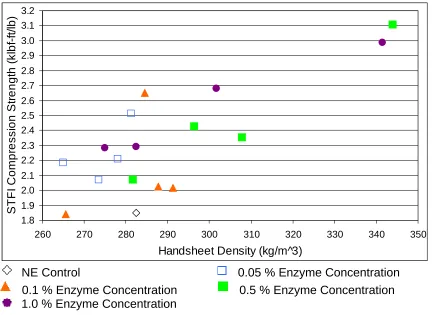
Figure 14: STFI Compression Strength vs. Handsheet Density for Different Enzyme Concentrations and Incubations Times…... 59
Figure 15: Drainage Times for Different Enzyme Concentrations and Incubation Times………... 61
Figure 16: FQA Results: Percent Fines for Different Enzyme Concentrations and Incubation Times………... 62
Figure 17: FQA Results: Mean Fiber Length for Different Enzyme Concentrations and Incubation Times………. 63
Figure 18: FQA Results: Mean Kink Index for Different Enzyme Concentrations and Incubation Times.……… 65
Chapter 3A Figure 1: Single Fiber Slide Preparation……… 71
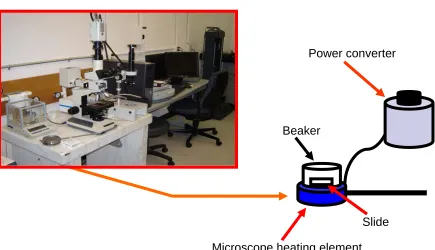
Figure 2: Microscope and Sample Incubation Set-up……….. 72
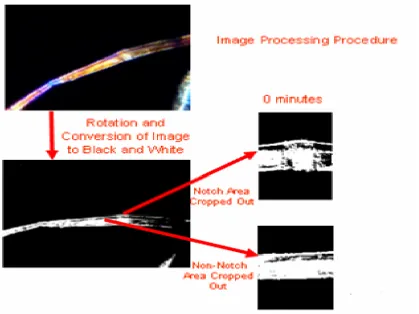
Figure 3: Procedure for Processing and Cropping Images………. 74
Figure 4: Bitmap Analysis for Individual Image………. 75
Figure 5: 1% (left) and 5% (right) enzyme concentration for 1 hour…….. 76
Figure 6: 1% (left) and 5% (right) enzyme concentration for 3 hours…… 77
Figure 7: 1% (left) and 5% (right) enzyme concentration for 9 hours…… 77
Figure 8: 1% (left) and 5% (right) enzyme concentration for 23 hours….. 78
Figure 9: 1% (left) and 5% (right) enzyme concentration for 48 hours….. 78
Figure 10: Enzyme Absorption at Dislocation Area for Increasing Incubation Time………. 79
Figure 12: Images of Fiber for Beginning (12a) and Ending (12b)
Incubation Period using 1.5% Enzyme Concentration.………. 82 Figure 13: Images of Fiber for Beginning (13a) and Ending (13b)
Incubation Period using 1.0% Enzyme Concentration.………. 82 Figure 14: Images of Fiber for Beginning (14a) and Ending (14b)
Incubation Period using 0.5% Enzyme Concentration.………... 82 Figure 15: Images of Fiber for Beginning (15a) and Ending (15b)
Incubation Period using 0.4% Enzyme Concentration.………... 83 Figure 16: Images of Fiber for Beginning (17a) and Ending (17b)
Incubation Period using 0.2% Enzyme Concentration……….... 83 Figure 17: Images of Fiber for Beginning (18a) and Ending (18b)
Incubation Period using 0.1% Enzyme Concentration………… 83 Figure 18: Images of Fiber for Beginning (19a) and Ending (19b)
Incubation Period using 0% Enzyme Concentration…………... 84 Figure 19: Notch Area to Non-notch Area White Pixel (255) Average
Differential as a Function of Incubation Time………... 85
Chapter 3B
Figure 1: Dry Zero Span Tensile Strength Results for Different Enzyme
Treated to Untreated Pulp Ratios……… 91 Figure 2: Wet Zero Span Tensile Strength Results for Different Enzyme
Treated to Untreated Pulp Ratios……… 92 Figure 3: Patent Claim #3 Reproduction Results……….. 95 Figure 4: Patent Claim #4 Reproduction Results……….. 96 Figure 5: Patent Claim #2 Reproduction Results (0.5% enzyme
concentration)………. 98 Figure 6: Patent Claim #5 Reproduction Results……….. 99
Chapter 3C
Figure 2: Slide with Parallel Grid of Stainless Steel Wires………... 105
Figure 3: Freeness of NIST SW Pulp at Different Refining Times…….. 106
Figure 4: Flexibility of NIST SW Pulp at Different Refining Times…….. 106
Figure 5: Average Fiber Flexibility (2 trials) vs. Enzyme Treatment Time………... 110
Figure 6: Dry Wet Zero Span Tensile Strength for Enzyme Treated Samples, EI Control and NE Controls………. 113
Figure 7: Wet Zero Span Tensile Strength for Enzyme Treated Samples, EI Control and NE Controls………. 114
Figure 8: Patent Claim #3 Reproduction Results………... 115
Figure 9: Patent Claim #4 Reproduction Results………... 116
Figure 10: Patent Claim #2 Reproduction Results………... 118
Figure 11: Patent Claim #5 Reproduction Results………... 119
Figure 12: FQA Results: Percent Fines (Length Weighted %) for Different Enzyme Reaction Times (min.)……… 120
Figure 13: FQA Results: Mean Fiber Length (Length Weighted mm) for Different Enzyme Reaction Times (min.)……… 121
Figure 14: FQA Results: Mean Kink Index (1/mm) for Different Enzyme Reaction Times (min.)……… 122
Figure 15: FQA Results: Mean Curl Index (1/mm) for Different Enzyme Reaction Times (min.)……… 123
Appendix F Figure 1: Softwood Fibers at 100 X Magnification……... 150
Figure 2: Fiber with Dislocation at 100 X Magnification………... 150
Figure 3: Fiber with curl (3a) and Fiber with kink (3b)……….. 151
Figure 5: Kinks/Fiber Ratio for Six Samples……….. 153 Figure 6: Curls/Fiber Ratio for Six Samples……….. 154 Figure 7: Defects/Fiber Count Ratios Wet, Dry and Re-Wetted States…. 155 Figure 8: Defects/Fiber Count Ratios for Increasing Hobart Kneading
Times... 156
Appendix G
Figure 1: Zero Span Tensile Index (Dry and Wet) for Increasing Defect
Ratio………..………….. 160
Figure 2: Experimental Plan for Three Trials………. 162 Figure 3: Mean Length (left) and Curl Index (right) for Increased Hobart
Kneading Time………..………. 164 Figure 4: Kink Index (left) and Kink Angle (right) for Increased Hobart
Kneading Time………..………. 165 Figure 5: Kinks/mm for Increased Hobart Kneading Time……….. 165 Figure 6: Hobart Pretreatment Only, Dry and Wet Zero-span Tensile
Strengths for Increased Kneaded Times………... 167 Figure 7: Hobart Pretreatment + Enzyme Treatment,Dry and Wet
Zero-span Tensile Strengths for Increased Kneaded Times………... 168 Figure 8: Dry Zero-span Tensile Strength, Enzyme Treated and
Untreated at Increasing Kneading Times……….. 168 Figure 9: Wet Zero-span Tensile Strength, Enzyme Treated and
Preface
Retail consumers of tissue products desire the highest softness at the lowest cost. The softness of a product can be broken down into two components, the bulk (i.e.
structural) softness and the surface softness. The surface softness is controlled by factors such as coefficient of friction, surface roughness, and surface compressibility
[Ramasubramanian, 2001]. The bulk softness, which is controlled primarily by the structure of the sheet, is related to the bending stiffness, compressibility and modulus of the structure as a whole.
Traditionally papermakers have used a variety of tools, such as refining, beating, chemical addition, etc., to enhance the softness of paper. The use of enzymatic treatment to enhance the softness of paper is less common, but offers a unique way to modify the chemical composition and ultra-structure of the papermaking fibers. Enzyme technology is a versatile tool for modifying the fibers, since it has a tendency to degrade specific components [Buchert, J., et al., 1996].
The technology underlying this project is that by selectively degrading a cellulose fiber, the bulk softness of the resulting fiber structure can be increased. Selective enzymatic treatments affect the chemical and physical properties of the fiber ultras-structure such as the ratio of crystallinity, pore size distribution, elastic modulus, and fiber strength. The selective enzymatic degradation of the fibers results in fibers that have significantly reduced strength as a result of localized defect creation or enhancement without significant reduction in the coarseness of the fibers or the bulk of the fiber
network. Low-density tissue products have fiber strength values much higher than the network strength, and thus controlled reduction of fiber strength does not lower the network strength.
was to investigate the fundamental interactions of enzymes with cellulosic substrates in order to better understand the fiber modification process. In order to achieve this goal, three major tasks were completed. The first goal was to conduct a thorough literature review and patent search to provide a baseline of the state of the art in the areas of fiber modification with enzymes. This literature review provided extensive knowledge and understanding of enzyme terminology and chemistry and different methods of measuring softness.
The second task was to duplicate the Procter and Gamble patented technology in our research labs using different enzyme concentrations and incubation times. This provided a firm foundation for the development of laboratory procedures for process evaluation. From these experiments, it was found that it was possible to reproduce the patent claims. Also, the appropriate concentration and incubation time for repeating these claims was determined. Zero-span tensile strength and normal tensile strength test were used in these duplication experiments. The change in zero-span tensile strength results from enzyme treatment relates to the change in fiber strength and hence it’s effect on compressibility of the sheet as a whole.
Chapter 1
1.1 Enzyme Basics and Their Influence
As mentioned earlier in the introduction, papermakers use a variety of tools to enhance the papermaking characteristics of fibers. These tools include: different
methods of pulping, refining, beating, high consistency kneading, chemical addition, etc. The use of enzymatic treatment to enhance the papermaking characteristics of fibers is less common, but offers a unique way of modifying the chemical composition and ultra-structure of the fiber. To fully understand how enzyme technology can be used to alter fibers and create softer tissue paper, a review of basic enzyme chemistry is first needed.
Enzymes are biological catalysts that increase the rate of chemical reactions and the reactants of enzymes are termed substrates [Palmer, 1991]. There are many types of enzymes, but all enzymes are proteins. Without the presence of non-protein component called a cofactor, many enzyme proteins lack catalytic activity. Some of the common terminology used for enzyme chemistry includes apoenzyme, holoenzyme, coenzyme and prosthetic group [Palmer, 1991]. An apoenzyme is the inactive protein component of an enzyme. The holoenzyme is the active enzyme, including cofactor. A coenzyme is a cofactor that is an organic molecule. And the prosthetic group is a cofactor that is so tightly bound that it is difficult to remove without damaging the enzyme [Palmer, 1991].
All reactions catalyzed by enzymes are reversible to some degree and the
classification which would be given to enzymes for the catalysis of the forward reaction would not be the same for the reverse reaction. Also, enzymes exhibit group specificity in that they may act on several different, though closely related, substrates to catalyze a reaction involving a particular chemical group [Palmer, 1991]. This is termed absolute specificity when enzymes act only on one particular substrate. Enzyme catalyzed reactions are product specific as well as being substrate specific [Palmer, 1991].
Uncatalyzed reactions will give rise to a wide range of products. Besides being substrate and product specific, enzymes also exhibit stereochemical specificity. If a substrate can exhibit in two stereochemical forms, chemically identical but with a different
a result of catalysis by a particular enzyme. The only enzymes which act on both stereoisomeric forms of a substrate are those whose function is to interconvert L and D isomers [Palmer, 1991].
There must be at least three different points of interaction between enzymes and substrate [Palmer, 1991]. These interactions have either a binding or a catalytic function. The binding sites link to specific groups in the substrate, ensuring that the enzyme and substrate molecules are held in a fixed orientation with respect to each other, with the reacting groups in the vicinity of catalytic sites. The active site is the region which contains the binding site and the catalytic sites. The binding and catalytic sites must be either amino acid residues or cofactors. The substrate binding may involve a variety of linkages, but the bonds formed are usually relatively weak (i.e. non-covalent) [Palmer, 1991]. The active site often includes both polar and non-polar amino acid residues, creating an arrangement of hydrophilic and hydrophobic microenvironments not found elsewhere on an enzyme molecule. The function of an enzyme may depend not only on the spatial arrangement of binding and catalytic sites, but also on the environment in which these sites occur [Palmer, 1991].
Binding domains improve the binding and facilitate the activity of the catalytic domain on the insoluble but not on soluble substrates. Cellulose binding domains (CBD’s) have been divided into several different families based on their amino acid sequence similarities [Linder, 1997]. CBD’s rely on several aromatic amino acids for binding to the cellulose. The CBD’s binding to crystalline cellulose have different topologies but share similar rigid backbone structures for correct positioning of the side chains required for the substrate recognition and binding. Efficient wood decaying organisms, such as filamentous fungi, typically use batteries of secreted and
Glucoamylases decreases their activities on insoluble substrates, but not on soluble substrates [Linder, 1997].
The CBD’s of cellulases have been grouped into several families based on similarities in their amino acid sequence [Azevedo, 2000]. Family I is the smallest with CBD’s containing 33-36 amino acid residues. They occur only in fungal cellulases such as those created by Trichoderma reesei and Humicola insolens. Family II CBD’s have about 110 amino acid residues and these include the CBD’s of some cellulases of Cellulomonas fimi and Thermomonospara fusca [Azevedo, 2000]. Boraston et al. showed that family II CBD’s disrupt the surface of cellulosic fibers and release fine particles from cotton or Avicel [Boraston, 1998]. The CBD’s of family I have not been found to disrupt the cellulose structure. Jervis concluded that CBD’s of bacterial
cellulases from C. fimi (Cen A and Cex CBD’s, family II) bind irreversibly to crystalline cellulose because desorption of these CBD’s was not observed after dilution [Jervis, 1997]. Also, Bothwell reported irreversible adsorption for the EG’s E3 and E5 from T. fusca (CBD’s of family II), but found completely reversible binding for CBHI from T. reesei (family I CBD) [Bothwell, 1997].
The enzymatic activity of many different cellulases is affected by the shortening or lengthening of the linker region between CBD and the catalytic domain. Data suggest that two domains are in contact on the cellulose surface during catalyzation, and that relatively long linker regions with some flexibility are needed to express full cellulolytic activity [Linder, 1997]. Cellulases with CBD’s are required in the early stages of cellulose degradation when most of the substrate is still insoluble. At later states, when the substrate has been largely solubilized into oligosaccharides, enzymes operating in the liquid phase may be preferred and brought about, e.g. by specific proteolysis of the CBD [Linder, 1997]. An aspect of CBD adsorption to cellulose is how ‘tightly’ or irreversibly the protein binds to cellulose. When considering the function of intact cellulases,
irreversible binding through the CBD seems very likely. Instead, the enzymes should undergo a dynamic process of binding and desorption of both domains allowing
substrate surface [Linder, 1997]. It is likely that the diversity of the substrates and the enzymes as well as difficulties in the experimental design have contributed to the observation of irreversible binding of cellulases and CBD’s. First of all, a great variety of substrates that clearly present different binding surfaces for the celluloses have been used in the binding studies. Secondly, the binding can occur through either one or the other of the individual domains, or through both of the domains simultaneously, and that each way of binding also has a different affinity [Linder, 1997]. Finally, the catalytic and binding domains of different cellulases may have different preferred binding sites on the cellulose surface and the dominating mode of binding may depend on the enzyme concentration [Linder, 1997].
There are a couple of models or hypotheses to explain how enzymes work. One is the lock and key model which suggests that all substrates remain fixed throughout the binding process. This hypothesis (lock and key), by Fischer explains many features of enzyme specificity, but takes no account of the known flexibility of proteins, X-ray diffraction analysis and data from several forms of spectroscopy, including NMR, have revealed differences in structure between free and substrate bound enzymes [Palmer, 1991]. This hypothesis suggests that the binding of a substrate to an enzyme may bring about a conformational change. Another hypothesis is Kashland’s induced fit hypothesis of 1958 that suggested that the structure of a substrate may be complementary to that of the active site in the enzyme-substrate complex, but not in the free enzyme [Palmer, 1991]. This suggests that a conformational change takes place in the enzyme during the binding of substrate which results in the required matching of structure. This essentially requires that the active site to be floppy and the substrate to be rigid.
There are two major groups of enzymes: monomeric enzymes and oligomeric enzymes. Monomeric proteins are those which consist of only a single polypeptide chain, so they cannot be dissociated into smaller units. These proteins catalyze hydrolytic
enzymes are proteases, i.e. they catalyze the hydrolysis of peptide bonds in other proteins. Oligomeric proteins are different from monomeric proteins in that they consist of two or more polypeptide chains, which are usually linked to each other by non-covalent
interactions and never by peptide bonds. The component polypeptide chains are termed sub-units and may be identical to or different from each other. If they are identical to each other they are sometimes called protomers. The vast majority of known enzymes are oligomeric.
Cellulolytic enzymes which are oligomeric in nature can be subdivided into cellobiohydrases and endoglucanases. Cellobiohydrolases (CBH, exo-type) degrade crystalline regions and endoglucanases (EG, endo-type) prefer to degrade amorphous regions of cellulose. Cellobiohydrolase (CBHI) is an oligomeric enzyme and is probably the key enzyme needed for the efficient hydrolysis of native crystalline cellulose [Devine, 1994]. It is also the most abundant cellulase produced by the filamentous fungus
Trichoderma reesei and the removal of its gene reduces overall activity on crystalline cellulose by 70%. CBHI has been classified on the basis of its amino acid sequence as a family C enzyme. This family includes both exo- and endoglucanases which cleave the
β(1,4) glycosidic bond by a double-displacement mechanism, resulting in retention of configuration of the product, cellobiose. Also CBHI is a two domain enzyme, consisting of a large catalytic core linked to a small cellulose-binding domain by a heavily
1.2 How Enzymes Affect Paper Softness
Enzyme technology is a versatile tool for modifying the fibers, since it has a tendency to degrade specific components [Buchert, J., et al., 1996]. The hypothesis underlying this study is that by selectively degrading a cellulose fiber, the bulk softness of the resulting fiber structure can be increased. The bulk softness of a paper sheet can be linked to the compressibility of the fibrous network. Fiber network compressibility models show that the structural rigidity of the fiber is a critical factor in determining the compressibility of the sheet [Pawlak, J.J., 2001]. This model suggests that if the flexural rigidity of the fiber can be reduced, while maintaining a constant coarseness, then the compressibility of the paper sheet can be increased at the same sheet density. The flexural rigidity of the fibers may be reduced by lowering the elastic modulus of the fibers, decreasing the moment of inertia of the fibers, or providing localized “hinge points” in the fiber. The enzymatic action on the fibers enhances localized defects in the fibers, which then serve as “hinge points” around which the fibers can flex. By creating these localized hinge points, the coarseness of the fiber is changed very little and this allows for the compressibility of the fiber structure to be increased without reducing the density of the structure. If the tensile strength of the fiber network is much lower than the fiber strength, then reducing the fiber strength should have little or no impact on the sheet tensile strength, as the tensile strength is dictated primarily by the bonding., which
remains the same. The net result of engineering such a structure would be a softer, more compressible product, with the same tensile strength as the original product.
This would allow Douglas-Fir fibers to be used in markets other than traditional Kraft pulp applications [Mansfield, 1997]. In their study, both cellulase and xylanase treatments were used and pulp slurries were treated for one hour at 50°C under continuous agitation over a range of enzyme loadings. Results showed significant reductions in zero-span breaking length and burst index after cellulase treatment. The tensile index for the unfractionated kraft pulp decreased after cellulase treatment, while three longer fiber length fractions showed significant improvements [Mansfield, 1997]. This increase combined with the similar increase in handsheet density suggested that the fibers had collapsed and flattened. Flatter fibers would be expected to exhibit a greater surface area available for binding and this enhanced fiber to fiber contact could increase the tensile index. The fiber modifications from xylanase were very small compared to the ones previously obtained with the commercial cellulase on the different fiber length fractions [Mansfield, 1997].
It was found that a large percentage of the hemicellulose, which is important for fiber to fiber bond strength, within the pulp samples in the xylanase fiber modification study had been hydrolyzed [Mansfield, 1997]. Therefore, it is possible that, in addition to the removal of fines, the reduction in available hemicellulose played a substantial role in the previously observed reduction in paper strength. Also, the reduction in the degree of polymerization of the residual hemicellulose may have contributed to the reduced paper strength [Mansfield, 1997]. Mansfield and Saddler stated that the observed reduction in fiber strength must be a result of the modification of the fibers’ cellulose component rather than any effect resulting from xylan removal. The work indicates that the 35.2 % reduction in intrinsic fiber strength resulting from the enzyme treatment occurred without any change in the degree of polymerization of the cellulose [Mansfield, 1997]. They also stated that previous studies showed that the enzymes preferentially degrade irregular zones such as kinks and nodes in the fiber wall and the localized degradation by
There have also been some studies on the effects of Trichoderma cellulases on pulp properties. The effects of Trichoderma reesei cellulases (EGI, EGII, CBHI and CBHII) and their core proteins on technical properties of the ECF bleached softwood kraft pulp were previously studied [Buchert, 1997]. In this study it was found that of the endoglucanases, EGII caused the most dramatic viscosity decrease in given cellulose hydrolysis level. The CBH’s decreased the viscosity less than the EG’s, however the differences were also observed between CBHI and CBHII [Buchert, 1997]. It was also found that the pulp strengths were reduced more by EGII than EGI treatment and the effect of EG’s on the strength properties of the pulp after beating were most dependent on the dosage used in treatment. The removal of cellulose binding domain (CBD) from CBHII is reported to have no influence on the activity of the enzyme when soluble substrates are used but using crystalline substrates both its binding and activity were clearly impaired [Buchert, 1997].
In a study by Gerber, et al. [1997] the absorption behavior of purified
Trichoderma reesei CBHI and EGII on bleach Kraft fibers was investigated. The results showed that the fiber history (never-dried or once-dried) had the largest influence on the extent of absorption of each enzyme. Ionic strength of the enzyme in the salt solution was shown to be dependent on the enzyme and fiber type. At high ionic strength, CBHI exhibited a higher affinity for both once-dried and never-dried fibers at low enzyme concentrations. Salt was shown to decrease the extent of adsorption at higher enzyme charge. In contrast, salt increased the maximum adsorption of EGII, most notably on the once-dried hardwood fibers [Gerber, et al., 1997]. The impact that salt had on enzyme adsorption, suggests that the ionic strength of the papermaking process water may influence the level of cellulases absorbed onto the pulp. Reinikainen showed that high ionic strengths increased the apparent affinity and binding capacity of CBHI onto
Gerber found that CBHI had a higher affinity for softwood fibers than for hardwood fibers at low enzyme concentrations. The maximum adsorption of EGII onto once-dried softwood fiber increased by 80% compared to the once-dried hardwood fibers. This did not correlate to increased fiber hydrolysis. Both hardwood and softwood never-dried fibers had the capacity to adsorb two to three times more enzyme than the once-dried fibers; however at industrial enzyme addition levels the difference was substantially less [Gerber, 1997]. The higher cellulase adsorption onto never-dried fibers was
probably due to its higher surface area. Upon drying, the microfibrils and nearby fiber fines collapse onto the fiber surface, and hydrogen bonding closes the physical
discontinuities in the secondary cell wall. Also, hornification not only decreases the surface area by collapsing pores in the fiber wall, but most importantly, may decrease the accessibility of the enzyme on to the fiber surface [Gerber, 1997].
In a study by Oksanen, et al., on the effect of Trichoderma reesei cellulase and hemicellulases on the paper properties, it was found that the pretreatment of never-dried bleached pine kraft pulp prior to refining with CBHI and CBHII had virtually no effect on the development of pulp properties during refining, except for a slight decrease in strength properties [Oksanen, et al., 1997]. It was however found that EGI and EGII improved the beatability of the pulp as measured by Schopper-Riegler value, sheet density and Gurley air resistance. EGII was the most effective in improving the beating response, but combos of CBHI with EGI and EGII had similar effects on pulp properties as the EG’s alone, although the amount of hydrolyzed cellulose was increased. The negative effect of EGII on strength properties was more pronounced compared with EGI. According to Noe, et al., improved beatability of kraft pulps has been obtained by using hemicellulases and cellulases [Noe, et al., 1986]. An explanation for why the EG’s increased beating response is the increased fiber breakage and function of fines, rather than improved flexibilization [Oksanen, et al., 1997]. They also found that pulp
enzymes action is more pronounced on the outer surface of the fibers [Oksanen, et al., 1997].
In a study by Pere, et al., on the effects of purified Trichoderma reesei cellulases on the fiber properties of kraft pulp, purified cellulases from Trichoderma reesei were applied to unbleached pine kraft pulp at various dosages [Pere, et al., 1995]. The purpose was to study the individual effects of the four main cellulases – (CBHI and CBHII) and (EGI and EGII) – on pulp strength. In this study, only 0.20 – 2.05% of the pulp (dry weight) was solubilized by the enzyme treatments. It was found that both EG’s dramatically decreased pulp viscosity, EGII in particular. No effect on the fiber length was observed and a clear correlation between viscosity and cellulose degradation by cellulases was detected. Also, there was no major difference in the strength properties for the CBHI treated and control pulps. In the sample treated with CBHI, the slight decrease of the tear index was compensated by the increase in tensile index at higher levels of beating [Pere, et al., 1995]. The study also reported that the comparable zero-span indices indicate that CBHI did not cause structural damage to the fibers. The EGII treatment severely damaged the strength properties of fibers, as could be expected from the viscosity data [Pere, et al., 1995]. The negative effects of EGII were found to be irreversible and could not be restored by beating. It is possible that EGII degrades certain accessible regions of the cellulose molecules within the microfibrils, loosening the
structure, but not breaking the fibers. After handsheet manufacture and drying, the loosened cell wall might have partly collapsed, increasing fiber conformability, which was detected by changes in air resistance and higher density [Pere, et al., 1995]. The report also stated that a specific mode of degradation at critical points would suggest that enzymes penetrate and subsequently hydrolyze cellulose in the inner S2 layer, at least to some extent.
of applied shear force is required for optimal cellulase performance. The usage of cellulase technology in open-width equipment is blocked by lack of the required level of applied shear force and it cannot be compensated by additional enzyme dosage or extending the incubation time [Lenting, 2001]. Also, based on hypothesis and cellulose application in batch production equipment, it can be expected that the type of applied shear force is of importance also, in that forces of changeable directions are required to break the cellulose or weaken the microfibrils from the fibers [Lenting, 2001]. It is also pointed out that the cellulose activity is highest on the flexible amorphous cellulose when compared to that with more rigid crystalline cellulose.
A study by Azevedo, et al., looked at the effects of agitation level on the
that EGV and EGV core achieve three to four times the fabric loss produced by Cen A and Cen A core under the same high-agitation conditions [Azevedo, et al., 2000]. Cen A only has moderate activity on crystalline cellulose, suggesting that the surface diffusion of CBD’s does not limit the substrate catalysis.
There have also been some studies on the use of enzymes in the recycled pulp industry. In a study by Pommier et al., the use of enzymes to improve the process and product quality in recycled pulp was looked at [Pommier et al., 1989]. At low enzyme concentrations, pulp freeness increases soon after contact with enzymes without any loss in the mechanical properties of the paper. This can improve machine speed and allow more dilution in the headbox, which leads to better sheet formation and better physical properties for the paper [Pommier et al., 1989]. Alternatively, different raw materials could be used, including more low-grade wastepaper, to achieve the same mechanical properties. A practical use of this phenomenon is in the recycled paper industry, in which the natural drainage of the pulp is generally low [Pommier et al., 1989]. As early as 1942, a patent claimed that “cytases” – or, actually, hemicellulases – could aid the refining of all kinds of pulps, increasing by a factor of two to six times the rate of hydration of the fibers. But there is a limitation in paper recycling, in that the fiber quality declines because of undesirable changes in the pulp furnish, caused by fines, colloids, fillers, etc. [Pommier et al., 1989]. Pommier used T. Reesei enzyme (0.2% wt./wt.) and wastepaper pulps (laboratory and industrial pulps) in his experiments. The wastepaper contained mostly OCC and mixed wastepaper in the ratio of 75:25 at a consistency of three percen. In the lab, the freeness increase of the pulp due to the enzymatic treatment caused a slight decrease in the paper mechanical properties. In the pilot paper machine experiments, it was found that when the pulp was treated with enzyme, the freeness increases without any loss of the mechanical properties in the paper [Pommier et al., 1989].
The improved pulp properties resulted in higher productivity in the manufacture of corrugated board. Strength values of the board remained unchanged when enzyme treatment was limited to 30 minutes and the enzyme dosage was not too high. A too-intensive treatment led to disintegration of the fibers by cellulases. Bhat verified the findings of Pommier using dried bleach, and unbleached softwood Kraft fibers [Bhat, 1991]. Neither Bhat, nor Pommier pursued a mechanism, but Pommier speculated that enzymes act on the surface of fibers producing a peeling effect. If a peeling effect is controlled, the enzymes will remove only some small components that have a great affinity for water, but do not contribute to hydrogen bonding of the fibers. Better drainage of the pulp could be allowed without affecting the mechanical properties [Pommier et al., 1989].
In a study by a European research consortium, recovered paper was incubated with culture filtrates and with isolated cellulase and hemicellulases [Stork, 1995]. They found that the action of endoglucanases was necessary for an improvement in the
drainage of recovered paper. The effect did not appear to be due to a selective hydrolysis of the fines fraction but was a consequence of the hydrolysis of amorphous cellulose on the surface of the fibers. Depending on the origin and history of primary and secondary fibers, the endoglucanase treatment decreased the strength properties to different degrees. Endoglucanase treatment seems best suited for the treatment of recovered paper
consisting of mechanical pulp but not for those papers containing considerable amounts of chemical pulp fibers [Stork, 1995].
those of conventionally deinked pulp. The authors observed a preferential hydrolysis of interfiber bonds, but no change in fiber length distribution was found.
Prasad, et al., found a selective hydrolysis of the fines and an increase in the long-fiber content of recovered paper, which was enzyme treated and deinked by flotation [Prasad, et al., 1992]. Some of the basic effects of the enzymatic treatment were studied by Jackson et al. [Jackson, 1993]. These authors used softwood kraft pulp as a substrate and tested using a xylanase preparation along with two different mixtures of cellulases and xylanases. The CSF (Canadian Standard Freeness) was increased by cellulase treatment but not by the xylanase preparation. Low enzyme dosages resulted in a
reduction of the fines content, and which was related to a flocculation similar induced by polymers. On the other hand, higher enzyme dosages led to an increase in the fines content. This effect can be attributed to cellulase-induced disintegration of fibers, as described by Oltus et al. [Oltus, 1987].
1.3 Understanding Softness and How it is Measured
Softness or surface feel is one of the most important properties for differentiating between different tissue products, particularly for grades such as facial and bathroom tissue [Carr, 1997]. It is important though that functional properties of tissue paper, such as tensile strength and liquid absorbency, should not be sacrificed in order to increase softness of the product. The goal of the Procter and Gamble project is to increase bulk softness by weakening fiber tensile strength and not disrupting the integrity of the overall sheet by keeping the breaking length tensile strength of the enzymatically treated sheet basically the same. For low density papers such as tissue, the fiber-to-fiber bond network is the principal factor determining the final strength of the sheet and the single fiber strength is not critical [Ramasubramanian and Perkins, 1988]. However, during the creping process, which is used often in the tissue business to increase surface softness, the fibers resist axial compression by the creping blade and maintain the stiffness of the sheet, while transferring the load to the fiber-to-fiber bonds and weakening the sheet [Ramasubramanian and Sun, 1999]. By enzymatic degradation of the fibers selectively at pre-determined locations, the fiber axial collapse and out of plane deformation can be augmented, resulting in a sheet with reduced stiffness, while not directing the energy into the fiber-to-fiber bonds. In this manner, the sheet is able to exhibit lower stiffness, and therefore increased softness, while maintaining or even increasing the strength. This would be revolutionary if a sheet can be engineered to retain strength, while losing stiffness and thus increasing bulk softness [Ramasubramanian and Lee, 1991, 1992, 1993].
ST * t2, where E is Young’s modulus, t is the effective thickness of the material, and ST is
the tensile stiffness. Bending stiffness responds to variations in thickness through a square function. This means that an increase in thickness with no change in the tensile stiffness gives a large increase in bending stiffness [Hollmark, 1983]. However the existence of new materials with extremely high bulk as well as very high softness indicates that this relationship cannot be translated into softness [Commercial, 1978].
Surface softness is related to the smoothness and texture of the tissue sheet [Carr, 1997]. Surface smoothness is also a function of the mechanical properties of the sheet material [Kim, 1994]. When someone touches a sample to judge its softness, both characteristics – namely, the size and distribution of irregularities and the yield of he material under local compression- influence the magnitude of softness perception. Texture is qualitatively described by its coarseness or roughness, in the sense that a patch of wool cloth is coarser than that of a patch of silk cloth under the same conditions [Kim, 1994]. While low texture or coarseness is a component of greater softness in tissue or paper toweling, it also is desirable to have a large number of free fiber ends protruding up from the paper surface, somewhat like a nap of velvet fabric [Kim, 1994]. Brushing the tissue increases the number of free fiber ends. Softness was found to be directly related to the number of free fiber ends and inversely to the texture in Kim’s study [Kim, 1994]. Garnsworthy, et al., showed that the sensations of prickliness or itchiness associated with wool cloth depend on how the fabric interacts with the skin to trigger the sensory
receptors exposed to the fabric [Garnsworthy, et al., 1988].
enhancing the papermaking characteristics of fibers, such as softness. These tools include: different methods of pulping, refining, beating, high consistency kneading, chemical addition etc. The use of enzymatic treatment to enhance the papermaking characteristics of fibers is less common, but offers a unique way of modifying the chemical composition and ultra-structure of the fiber.
Also mentioned earlier, was the creping process used in the tissue industry. Creping occurs as a result of the forces of adhesion and release (adhesion failure), which act upon the sheet [Carr, 1997]. Creping increases the sheets texture or coarseness. However, it also increases the sheets extensibility, which is an important factor in perception of bulk softness [Kim, 1994]. In producing toilet paper, the wet web is pressed against the surface of a Yankee dryer by a touch roll [Kuo, 2000]. After drying to the desired moisture content, the web is creped by a creping blade. This requires a fine balance between web adhesion to the dryer, the physical properties of the sheet, and the force applied by the creping blade [Kuo, 2000]. The controlled adhesion of the sheet to the Yankee dryer roll will help to develop creping by improving the crepe frequency [Sloan, 1994]. Creping is also affected by the physical properties of the formed sheet (such as tensile strength and formation), the sheet adhesion to the Yankee dryer surface and the geometry of the creping blade, which is the angle at which the creping blade strikes the Yankee dryer surface [Sloan, 1994]. The higher the adhesion level, the greater the crepe development, and ultimately, improved surface softness can be expected from this.
Crepe count is a numerical value that can be used to measure the effect of
The coating-to-release balance will generally be at or below 1:1 ratio to maximize the coating development [Sloan, 1994].
The cylinder coating influences the forces of adhesion and release which act upon the sheet as it is creped [Carr, 1997]. The forces determine to what extent the structure and texture of the sheet is altered. A manageable coating gives rise to controlled
adhesion that results in increased extensibility of the sheet. When a finer crepe structure is generated, this will improve the surface texture of the sheet [Carr, 1997]. The use of appropriate cylinder coating chemicals gives rise to a coating which gives uniform coating build up, maximum creping blade life, and protection of the Yankee surface and consistent tissue quality. The polymers used for effective coating are polyaminoamide, polyacrylamide, polyvinylalchol, polyvinylacetate and polyethyleneoxide. The polymers give rise to various degrees of adhesion which attracts the sheet to the dryer surface [Carr, 1997]. The chemicals used as release agents are generally hydrophobic in nature.
Chemicals referred to as softeners and debonders alter the bulk and surface softness of the sheet thereby improving perceived softness.
means of a spray bar eliminates any effect on the tensile strength, while maximizing the surface softness of the sheet [Carr, 1997].
As mentioned earlier, improving softness has long been a goal of tissue manufactures, but this goal is difficult to quantify. The problem is that softness is a highly subjective tactile property and it means different things to different people. The data for measuring softness is from complex and multidimensional human sensory system. In evaluating softness, users rub their fingers over the sheet while
simultaneously varying pressure to judge texture and “sponginess”. They may also crumple the sheet (in-plane compression) to judge stiffness or sharpness of folds. The tissue industry relies on the subjective evaluation of softness through groups of
experienced testers often known as the “softness panel”. These panels are usually done by 100’s of customers and are costly and take weeks to get results. They assign an arbitrary value to a particular grade of tissue [Carr, 1997]. A calculation based on the strength, stretch, basis weight, and thickness can be used to give a softness index for a particular sample also. This approach has met with limited success and acceptance, and consequently the softness panel still prevails. But, it has also been found that softness ratings based on subjective evaluations are often inconsistent [Kim, 1994]. An
alternative to subjective evaluation is available in the form of a recently developed technique that measures fabric properties at low levels of mechanical stress. The measured mechanical/physical parameters are applied to mathematical formulas that predict softness perception [Kim, 1994]. Panel measurements have been related to lab measurements including some surface geometry parameters.
Only a few test methods exist for capturing the surface geometry itself; i.e., for specifying the x-y-z coordinates of a surface. They include stylus profilometry, laser triangulation, stereo imaging and interferometry. AFM and electrical inductance instruments are other types of coordinate measurement machines, but are not suited for tactile related measurements. Stylus profilometry is the only technique used for
Limitations of stylus profilometry include long measurement time and errors associated when stylus jumps over steep peaks or valleys. Rust et al. of NCSU’s College of Textiles correlated stylus profilometry measurements of 20 tissue samples to panel softness values using 90 students [Rust, 1994]. Laser triangulation has been explored as a possible method for tissue characterization. This method uses a laser beam that shines on the sample at an angle and a detector determines apparent height of point of incidence using triangulation. Laser beam scans to create topographical map. Limitations to this method include limited resolution, noise for laser scattering and long scan times. Another
method is Stereo imaging, which is a optical technique that uses multiple 2-D
dimensional images from cameras at different positions to reconstruct 3-D surfaces. This method is noninvasive and can be highly accurate, but suffers from long image
acquisition and processing times. One other method is interferometry, in which line diffraction gratings are superimposed, with their lines slightly off from parallel.
Relatively wide fringes appear (alternate light and dark zones) that are normal to lines on the grating. Analysis of these “moiré fringes” provides information on the offset of one grating relative to the other. Computer calculations are required to relate the fringe pattern to surface structure.
The Kawabata Evaluation System for fabrics (KES-F) for measuring softness is viewed as a significant breakthrough in textile product quality control, engineering, and optimization of fabric finishing processes [Carr, 1997]. The KES-F instruments are designed to measure the low deformation forces encountered when manipulating a fabric for handle evaluation. By measuring the bending, shear, surface, and compression properties of the fabric under these conditions much of the subjectivity involved in fabric handle evaluation is removed. More recently the KES-F has been applied to the
The softness of a particular fabric is ranked according to the PHV [Carr, 1997]. The mechanical measurements from the KES-F testing are used to calculate the PHV. The result is a figure on a scale 0-10 with 10 being the softest. The critical properties of fibers are related to softness, stiffness, and fullness. So the shear and bending properties of a particular fabric play a greater role in determining softness [Carr, 1997]. A human judge can detect difference greater than 0.5 units on the PHV scale. Softness is regarded as a “slip/stick” effect and reducing the variations in smoothness results in an increased perceived softness.
Calendering decreases bending stiffness by reducing the thickness, d, and increases it by increasing the E. The coupling disappears using the specific modulus of elasticity, E/ρ = Ed/b, where ρ is the density and b is the basis weight. E/ρ is then independent of calendaring. Bending stiffness is almost always symmetrical, because elastic modulus is the same in tension and compression [Niskanen, 1998]. Sometimes bending stiffness seems asymmetric because of curl in the specimen. At large bending deformations, the local strain within the sheet may increase into the nonlinear region of the stress-strain curve. Then the bending direction becomes significant. The nonlinearity in compression can be reversible, and so permanent change in curvature need occur even if the specimen goes into the nonlinear region. The nonlinearity in compression can be reversible, and no permanent change in curvature need occur even if the specimen goes into the nonlinear region [Niskanen, 1998].
There are a lot of factors that can affect the stiffness of paper and subsequently the bulk softness. Humid paper is less stiff than dry paper [Niskanen, 1998]. Also, when low bending stiffness causes problems, the cause is usually cross direction (CD) stiffness that is typically 2-4 times lower than the machine direction (MD) stiffness. The
anisotropy arises from fiber orientation and CD drying shrinkage that affects the elastic modulus. Three possibilities exist to increase/improve bending stiffness. The first is thicker and bulkier paper, in that the main problem is to achieve a smooth printing
than in the middle of the sheet. If each surface layer is 5% of paper thickness, then doubling their elastic modulus raises bending stiffness by 27%. This is the most effective way to obtain high bending stiffness and good surface properties with a maximum basis weight [Niskanen, 1998].
The following rules of thumb characterize the effect of pulp. The first is that flexible fibers give dense paper and low stiffness. The second is that stiff fibers give bulky paper and high bending stiffness. The third is that stiff bonds give high bending stiffness [Niskanen, 1998]. The bending ability of chemical pulps is better than that of mechanical pulps. Mechanical pulp fibers are stiffer than chemical pulp fibers and therefore give higher thickness to paper. Beating increases bending ability and fiber flexibility. Since flexible fibers also decrease paper thickness, bending stiffness may not change at all [Niskanen, 1998]. In the paper machine, altering fiber orientation, wet strains, and drying stresses change the anisotropy of bending stiffness. Increased fiber orientation anisotropy increases bending stiffness in MD, but decreases it in CD. Higher wet strain or drying tension increases MD stiffness, but have little effect on the CD value.
Compressive strength is typically one-third of tensile strength. The difference between compressive strength and tension is significant in severe bending [Niskanen, 1998]. In bending, paper or board yields on the compressed side first. This is often good, because the compression failure prevents the other side from breaking in tension.
Compressive strength is by definition the largest force that a test piece can tolerate without failing. With paper or board, compressive strength is usually given as force per unit width. Compressive strength does not depend on basis weight, if furnish and
network structure do not change [Niskanen, 1998]. In compressive strength measurement, the main problem is preventing the bulking of a thin sample. This is possible by an
Out-of-plane strength measures the ability of paper or board to withstand tensile stress in the thickness direction. There are several methods to measure it including Scott bond (according to measurement method), z-strength, delamination strength, internal bond strength, and ply-bond strength [Niskanen, 1998]. Out-of-plane strength is sensitive to any nonuniformity or layering in the z-direction of the sheet, since delamination occurs at the weakest place. The location of delamination depends on the z-directional
distribution of fines and fillers, density through bonding degree, and distribution of size, if present [Niskanen, 1998]. In the layered sheet, fibers lie on top of one another in a well-defined sequence so the sheet can delaminate without breaking any fibers. Since fibers are much stronger than bonds, even a small number of broken fibers can
significantly increase the delamination energy [Niskanen, 1998]. Out-of-plane strength increases with density if density is increased by wet pressing or beating. The effect comes simply from the increase in the bonded area [Niskanen, 1998].
The elastic modulus is an important property, because paper is seldom loaded anywhere near the ultimate failure stress [Niskanen, 1998]. Through bonding stiffness, elastic modulus also controls the performance of paper and board in sheet form. The elastic modulus or Young’s modulus, E [GPa], measures the force necessary for a small elongation. If σ is the applied stress or force over the cross-sectional area of the
specimen, and ε is the corresponding strain [%], then E is the following: E = dσ/dε at
σ→0. The elastic modulus of paper is different in the three principal directions: the machine direction (EMD or Ex), cross-machine direction (ECD or Ey), and thickness
direction (EZD or Ez). Elastic modulus is usually the same in tension and compression.
For paper, differences between tension and compression are possible because of the structure consists of fiber segments that can bond or buckle differently depending on whether the network stretches or compresses [Niskanen, 1998].
degradation of the fibers at pre-determined locations (fiber defects), the fiber axial collapse and out of plane deformation can be augmented, resulting in a sheet with reduced stiffness, while not directing the energy into the fiber-to-fiber bonds. This is based upon a model of paper compressibility that shows the structural integrity of the fiber is a critical factor in determining the compressibility of the sheet [Pawlak, J.J., 2001]. This model suggests that if the flexural rigidity of the fiber can be reduced, while maintaining a constant coarseness, then the compressibility of the paper can be increased at the same sheet density. Flexural rigidity of the fibers may be reduced by lowering the elastic modulus of the fibers, decreasing the moment of inertia of the fibers, or by
providing localized “hinge points” in the fiber. Enzymatic action on the fibers creates or enhances localized notches in the fibers which serve as “hinge points” around which the fiber can flex. By creating these localized weak points, the coarseness of the fiber is changed very little. This allows for the compressibility of the fiber structure to be increased without reducing the density of the structure. In this manner, the sheet is able to exhibit lower stiffness, and therefore increased softness, while maintaining or even increasing the strength.
As just mentioned, an increase in compressibility can be accomplished with a decrease in fiber strength, while keeping the overall tensile strength of the sheet the same. In the technology used in this work, the change in fiber strength resulting from enzyme treatment is measured by zero-span tensile strength measurements. The zero-span tensile strength test was first developed by Hoffman-Jacobsen in 1925 as a method of
Today, several studies demonstrate that fiber bonding does not influence the dry zero-span tensile strength. When bonding in the sheet is increased by increasing the wet pressing, the dry zero-span tensile index does not change as shown by Seth [Seth, 1999]. The reason why the dry zero-span tensile index increases with laboratory refining is instead explained by the presence of fiber curl in unrefined pulps. The fibers are straightened during laboratory refining, which gives a higher zero-span tensile strength for both dry and rewetted zero-span. In the case of laboratory pulps containing straight fibers, laboratory beating does not cause any decrease in dry zero-span tensile index [Mohlin, 2003]. Gurnagul and Page found that for a wide range of pulps, the decrease in zero-span tensile strength upon rewetting of a handsheet is caused by the weakening of the individual fibers that made up the sheet [Gurnagul, 1989]. This loss in strength depends on the extent of chemical and mechanical damage to the inter-fibrillar matrix of fibers during pulping, bleaching, and refining. Unbleached Kraft fibers are almost equally strong dry or wet, whereas sulfite pulp fibers or fully bleached Kraft pulp fibers can lose up to 30% in strength when rewetted [Gurnagul, 1989]. They also found that wet zero-span strength could not be used as an index of dry fiber strength, although it may be valuable when measuring the strength of wet fibers.
Mohlin and Puiseau tried to resolve the difference in wet and dry zero span tensile strength between laboratory pulps and industrial pulps by examining the defects in fibers with a microscope [Mohlin, 2003]. An examination of the refined fibers showed that some defects and some mechanical damage to the fibers could be observed and it was plausible that observable structural defects retained after the PFI-mill beating coincided with chemical degradation in the fiber wall. They found that there was no significant correlation between the number of defects before and after refining [Mohlin, 2003]. The results from the microscopic counting of defects in laboratory refined fibers, evaluated as the sum of points that showed a change in the direction of the fiber axis and mechanical damage, correlated well with the observed decrease in rewetted zero-span tensile strength. The dry zero-span tensile strength was affected very little by the localized defects. Also, it was found that extrapolating the rewetted zero-span tensile strength to zero defects, the level for the dry zero-span was reached [Mohlin, 2003]. It was also found that rewetted zero-span tensile strength responds to fiber kinks and fiber ends and that the rewetted zero-span tensile strength is sensitive to local defects and that dry zero-span tensile strength was not [Mohlin, 2003].
segments showed that their length did not decrease as a result of the enzyme treatment; a confirmation that the cellulase absorb in the already deformed zones [Mohlin, 2003].
It has been mentioned in these studies, that zero-span tensile strength is affected most notably by defects on fibers [Mohlin, 2003, Gurnagul, 1992]. There are two classes of structural modifications to pulp fibers that affect their papermaking properties: (a) modifications arising from compression failures within the fiber wall (wall dislocations and zones of dislocation) and (b) modifications affecting fiber straightness, i.e., fiber curl, which can be thought of as including curvature, kink and twist [Kibblewhite, 1977]. Fiber curl is defined by Perez and Kallmes as the combined in-plane and out-of-plane curvature of fibers in paper. Quantitatively, it is defined as the curl factor, which is equal to the ratio of the actual to the linear length between two points on a fiber in paper [Perez, 1965]. Fiber kinks are defined as distinct angular bends along the length of pulp fibers. Evidence suggests that unless kinks are set into position and made inflexible, they have negligible effects on both wet-web and paper strengths [Kibblewhite, 1975]. Wall dislocations are defined as fractures or dislocations in fiber walls that are clearly visible with a polarizing microscope and such fractures are located within the S2 layer of the wall
and represent fractured wall elements dislocated with respect to each other [Kibblewhite, 1977]. The visualization of dislocations is possible using polarized light microscopy because the cellulose crystal chains of the microfibrils in dislocations have a different orientation than those of the undisturbed cell wall [Thygesen, 2005]. Zones of
dislocation are defined as concentrations of wall dislocations in fiber walls and they generally extend over the width of a fiber. Such regions have been described as nodes or weak points at which the greatest amount of fiber bending occurs [Kibblewhite, 1977].