Scholarship at UWindsor
Scholarship at UWindsor
Electronic Theses and Dissertations Theses, Dissertations, and Major Papers
Winter 2014
Using couple-level data to examine the relation between social
Using couple-level data to examine the relation between social
information-processing and intimate partner violence among men
information-processing and intimate partner violence among men
and women in dating relationships
and women in dating relationships
Sarah R. Setchell
University of Windsor
Follow this and additional works at: https://scholar.uwindsor.ca/etd
Recommended Citation Recommended Citation
Setchell, Sarah R., "Using couple-level data to examine the relation between social information-processing and intimate partner violence among men and women in dating relationships" (2014). Electronic Theses and Dissertations. 5029.
https://scholar.uwindsor.ca/etd/5029
This online database contains the full-text of PhD dissertations and Masters’ theses of University of Windsor students from 1954 forward. These documents are made available for personal study and research purposes only, in accordance with the Canadian Copyright Act and the Creative Commons license—CC BY-NC-ND (Attribution, Non-Commercial, No Derivative Works). Under this license, works must always be attributed to the copyright holder (original author), cannot be used for any commercial purposes, and may not be altered. Any other use would require the permission of the copyright holder. Students may inquire about withdrawing their dissertation and/or thesis from this database. For additional inquiries, please contact the repository administrator via email
USING COUPLE-LEVEL DATA TO EXAMINE THE RELATION BETWEEN
SOCIAL INFORMATION-PROCESSING AND INTIMATE PARTNER VIOLENCE
AMONG MEN AND WOMEN IN DATING RELATIONSHIPS
By
Sarah R. Setchell
A Dissertation
Submitted to the Faculty of Graduate Studies
Through the Department of Psychology
In Partial Fulfillment of the Requirements for the
Degree of Doctor of Philosophy at the
University of Windsor
Windsor, Ontario, Canada
2013
Processing and Intimate Partner Violence among Men and Women in Dating
Relationships
by
Sarah R. Setchell
APPROVED BY:
______________________________________________ G. Stuart, External Examiner
The University of Tennessee Knoxville
______________________________________________ B. Barrett
Department of Social Work
______________________________________________ K. Babb
Department of Psychology
______________________________________________ D. Jackson
Department of Psychology
______________________________________________ P. Fritz, Advisor
Department of Psychology
AUTHOR’S DECLARATION OF ORIGINALITY
I hereby certify that I am the sole author of this thesis and that no part of this
thesis has been published or submitted for publication.
I certify that, to the best of my knowledge, my thesis does not infringe upon
anyone’s copyright nor violate any proprietary rights and that any ideas, techniques,
quotations, or any other material from the work of other people included in my thesis,
published or otherwise, are fully acknowledged in accordance with the standard
referencing practices. Furthermore, to the extent that I have included copyrighted
material that surpasses the bounds of fair dealing within the meaning of the Canada
Copyright Act, I certify that I have obtained a written permission from the copyright
owner(s) to include such material(s) in my thesis and have included copies of such
copyright clearances to my appendix.
I declare that this is a true copy of my thesis, including any final revisions, as
approved by my thesis committee and the Graduate Studies office, and that this thesis has
ABSTRACT
The aim of the current study was to use couple-level data to examine negative emotions
and social information-processing (SIP) abilities as risk factors for intimate partner
violence (IPV) among 100 dating couples (N = 200; mean age = 21.45 years). Crick and
Dodge’s (1994) SIP model was used as a guiding theoretical framework. Participants
read a series of hypothetical conflict situation vignettes and responded to questionnaires
to assess negative emotions and various facets of SIP including attributions for partner
behaviour, generation of response alternatives, and response selection. The Revised
Conflict Tactic Scales (CTS2; Straus, Hamby, Boney-McCoy, & Sugarman, 1996) were
used to assess how often acts of physical aggression occurred in the preceding year.
Bivariate correlations revealed negative emotions and SIP abilities were significantly
intercorrelated. A series of negative binomial mixed-model regressions were conducted
based on the actor-partner interdependence model (APIM; Kenny, Kashy, & Cook,
2006). Significant results emerged for the response generation and negative emotion
models. Results suggested that participants who generated a lower number of coping
response alternatives were at greater risk of victimization (actor effect). Women were at
greater risk of victimization if they had partners who generated a lower number of coping
response alternatives (sex by partner interaction effect). Generation of less competent
coping response alternatives predicted greater risk of perpetration among men, whereas
generation of more competent coping response alternatives predicted greater risk of
victimization among women (sex by actor interaction effects). Finally, two significant
actor by partner interaction effects emerged for the negative emotion models.
lowest risk of perpetration, whereas participants who reported discrepant levels of
negative emotions from their partners were at greatest risk of perpetration. Participants
who reported low levels of negative emotions were at lowest risk of victimization
regardless of their partner’s emotions; however, participants who reported high levels of
negative emotions were at greatest risk of victimization if they had partners who reported
low levels of negative emotions. Results from the current study have implications for
ACKNOWLEDGEMENTS
First and foremost, I have two very important people to thank for supporting me
and keeping me on track over the past ten years of my education: my mom and my dad.
Thank you both for the unconditional love and support in the form of phone calls, emails,
visits, and care packages. Dad, thank you for emphasizing the importance of pursuing
higher education when I was a little girl. I heard your message loud and clear, although I
doubt you ever expected me to go to university for ten years. I have felt your loving
support and pride every step of the way. Thank you for being my biggest cheerleader.
Mom, thank you for being you – a kind, optimistic, and compassionate woman. You
have always accepted me without judgment and for that I cannot thank you enough. You
are a constant reminder to stay balanced and embrace the lighthearted side of life.
My wonderful girlfriend, Melissa Butler, also has been a major source of support
throughout my journey in graduate school. Melissa, thank you for being patient and
giving me the time, space, and support I needed to complete my masters and doctoral
degrees. Thank you for your unconditional love and acceptance and for always making
me smile and laugh.
This dissertation has been a work in progress for over three years and the person
for whom I would like to express my utmost gratitude for helping me is my research
supervisor, Dr. Patti Timmons Fritz. Patti, I must thank you for your support, belief in
my ability to succeed, and encouragement to apply for awards, scholarships, and
conferences. You have always made your students a priority, even when your schedule
Graduate school would not have been the same without you and I can only hope that I
will follow in your footsteps as an outstanding supervisor to my students in the future.
There are many other people I would like to thank for a variety of reasons: Drs.
Kimberley Babb, Betty Barrett, Dennis Jackson, and Gregory Stuart for being on my
dissertation committee; Leyco Wilson, Kassandra Zorzan, Betty Zhang, Alyssa
Beaudoin, and Maria van Duinhoven for their help with running participants, coding
responses, and entering data; Brianna O’Neil for assisting me with literature reviews; Dr.
Amy Holtzworth-Munroe for sharing some of her study measures and procedures with
me; and Drs. Joseph Hilbe, David Atkins, and Jeremy Dawson for taking time out of their
busy days to lend me their statistical advice. Last, but certainly not least, I’d like to thank
Barb Zakoor, our graduate secretary, for making me feel so welcomed when I first began
graduate school and for taking such good care of us graduate students.
Lastly, I must thank my amazing friends and colleagues at the University of
Windsor: Holly Ambrose, Kelly Anthony-Brown, Anna Arcuri, Vanessa Bruce, Andrea
Kapeleris, Bojana Knezevic, and Jen Long. You ladies made my graduate school
experience one to remember and I will never forget all of the great times we had together.
Despite the growing distance between us as we move on to the next phase of our lives, I
know we can always rely on each other for support, encouragement, and friendship. To
all my non-graduate school friends – thank you for your understanding, love, and support
over the last six years. I promise you will soon never have to hear the words “sorry, I
TABLE OF CONTENTS
AUTHOR‘S DECLARATION OF ORIGINALITY iii
ABSTRACT iv
ACKNOWLEDGEMENTS vi
LIST OF TABLES xiii
LIST OF FIGURES xv
LIST OF APPENDICES xvi
CHAPTER
I. INTRODUCTION 1
II. LITERATURE REVIEW 5
Overview of IPV Literature 5
Definitions 5
Measurement strategies 8
Types of IPV 10
Rates of IPV 11
Sex differences in IPV Rates 13
Theories of IPV 17
Sociocultural models 18
Interpersonal models 19
Intrapersonal models 21
Social Information-Processing (SIP) Theory 22
SIP theory and aggressive behaviour 27
SIP theory and IPV 31
Perception and interpretation 31
Response generation and selection 35
Behavioural enactment 37
The role of emotion 38
Contributions of the current study 41
The Current Study 48
Research questions 49
50 Hypotheses
III. METHOD 54
Participants 54
Pilot study 54
Main study 54
Measures 60
Demographics questionnaire 60
Marlowe-Crowne Social Desirability Scale Short-Form C 60
Hypothetical conflict situation vignettes 61
Negative emotion questions 64
Negative Intentions Questionnaire 65
Responsibility Attributions Questionnaire 66
Coping Response Measure 67
Revised Conflict Tactic Scales 73
Procedures 77
Pilot study 77
Main study 78
IV. RESULTS 82
Preliminary Analyses 82
Pilot study 82
Missing Data 85
Data Reduction 90
Statistical Assumptions 92
Outliers and influential observations 92
Distributions 92
Multicollinearity and singularity 93
Descriptive Statistics 95
95
97
102 Key predictor variables
IPV
Mental health and drug/alcohol-related variables
Bivariate Correlations 103
Within-male correlations 106
Within-female correlations 106
Interpartner correlations 107
107 Interpartner Agreement
Main Analyses 110
Research questions 2 to 5 113
Covariates 114
Main effects 121
Actor effects 121
Partner effects 122
Interaction effects 123
Sex by actor interactions 123
Sex by partner interactions 128
Actor by partner interactions 130
Summary of Main Analyses 135
141 Additional Analyses
Safety question 141
Emotion checklist 141
V. DISCUSSION 143
Review of Main Results 143
Type of IPV 143
Intercorrelations among negative emotions and SIP abilities 144
Negative emotions 148
Negative attributions 153
Response generation 155
Response selection 160
Strengths of Current Study 162
Research Implications 178
179 Clinical Implications
Conclusions 182
REFERENCES 184
APPENDICES 220
LIST OF TABLES
Table
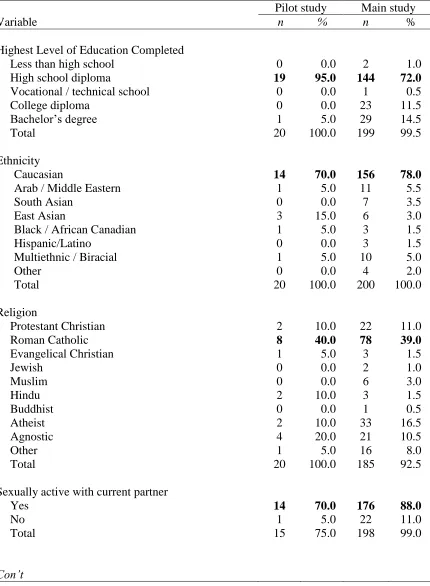
1. Demographic Information 57
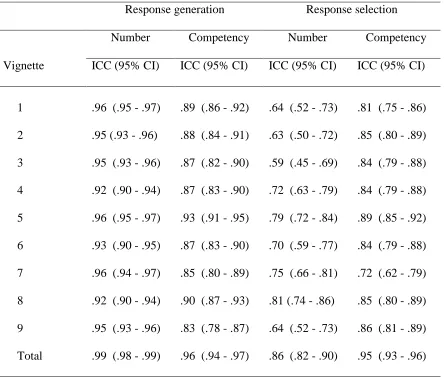
2. Intraclass Correlation Coefficients (ICCs) for Number and Competency
of Coping Responses as Rated by Two Independent Coders on the
CRM
72
3. Mean Ratings across Vignettes on Realism, Importance, Difficulty, and
Comfort Scales
84
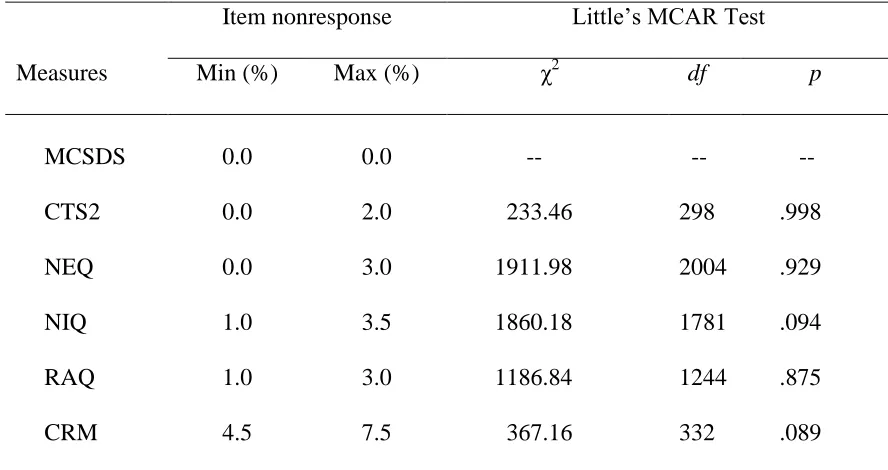
4. Amount of Missing Data Due to Item Nonresponse and Patterns of
Missing Data as indicated by Little’s MCAR Test
89
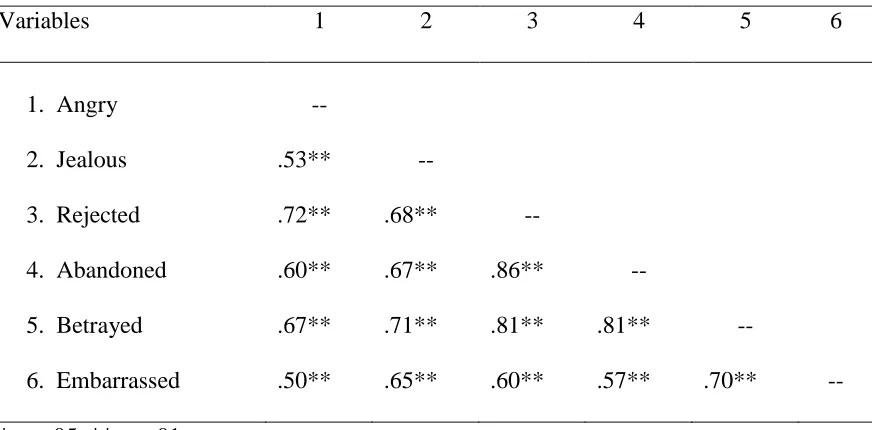
5. Intercorrelations among Negative Emotion Questions in Response to
Hypothetical Conflict Situation Vignettes
91
6. Overview of Univariate Outliers and Collinearity Diagnostics for
Predictor and Outcome Variables
94
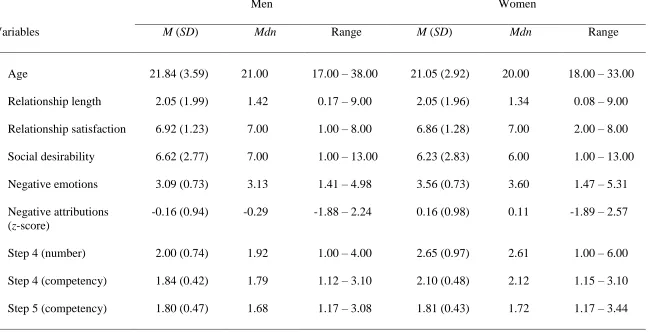
7. Descriptive Statistics for Predictor Variables by Participant Sex 96
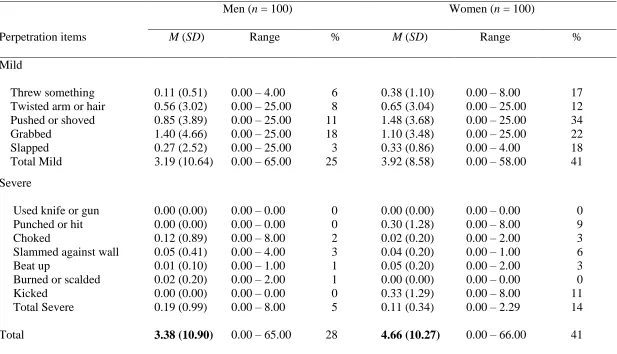
8. Descriptive Statistics for Perpetration Items on Physical Assault
Subscale of CTS2 by Participant Sex
98
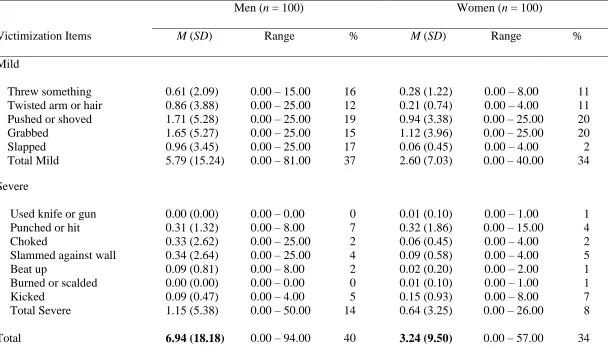
9. Descriptive Statistics for Victimization Items on Physical Assault
Subscale of CTS2 by Participant Sex
100
10.Within-Female, Within-Male, and Inter-Partner Correlations among
Variables of Interest
105
11.Bivariate Correlations among Participants’ Negative Emotions and SIP
Abilities
12.Summary of Negative Binomial Mixed-Model Regressions Predicting
IPV Perpetration and Victimization from Negative Emotions
116
13.Summary of Negative Binomial Mixed-Model Regressions Predicting
IPV Perpetration and Victimization from Negative Attributions
117
14.Summary of Negative Binomial Mixed-Model Regressions Predicting
IPV Perpetration and Victimization from Number of Responses
Generated
118
15.Summary of Negative Binomial Mixed-Model Regressions Predicting
IPV Perpetration and Victimization from Competency of Responses
Generated
119
16.Summary of Negative Binomial Mixed-Model Regressions Predicting
IPV Perpetration and Victimization from Competency of Responses
Selected
120
LIST OF FIGURES
Figure
1. Crick and Dodge’s (1994) reformulated model of social
information-processing
24
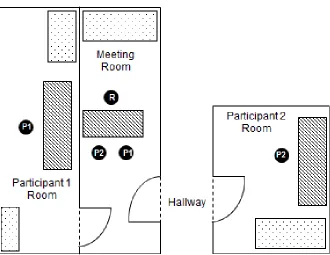
2. Room configuration 79
3. Examination of significant sex by actor interaction effect predicting
IPV perpetration from competency of coping response alternatives
generated by participants.
125
4. Examination of significant sex by actor interaction effect predicting
IPV victimization from competency of coping response alternatives
generated by participants.
127
5. Examination of significant sex by partner interaction effect predicting
IPV victimization from number of coping response alternatives
generated by participants’ partners
129
6. Examination of significant actor by partner interaction effect predicting
IPV perpetration from negative emotions
132
7. Examination of significant actor by partner interaction effect predicting
IPV victimization from negative emotions
LIST OF APPENDICES
Appendix
A. Permission to Copy Figure 220
B. Demographics Questionnaire 221
C. Hypothetical Conflict Situation Vignettes 226
D. Permission to Copy Hypothetical Conflict Situation Vignettes 228
E. Consent Form (Pilot Study) 229
F. Research Summary (Pilot Study) 232
G. Consent Form (Main Study) 234
H. Positive Mood Induction Procedure 238
I. Safety Protocol for Research Assistants 239
J. Personalized Safety Plan Worksheet 244
CHAPTER I
Introduction
Intimate partner violence (IPV) has been identified as a serious public health
concern and has received increasing attention from researchers, practitioners, citizens,
and policy-makers (World Health Organization, 2002). IPV has generally been
conceptualized as a widespread social problem that affects many people regardless of
age; gender; racial, ethnic, or cultural background; sexual orientation; level of physical
ability; or socioeconomic status (Archer, 2000; Foshee, Benefield, & Suchindran, 2009;
Freedner, Freed, Yang, & Austin, 2002; Jones & Raghavan, 2012; Lipshitz, 2006;
Moagi-Gulubane, 2010; Sigelman, Berry, & Wiles, 1984; Stets & Henderson, 1991; Ward,
Bosek, & Trimble, 2010; White & Koss, 1991). IPV among young people in dating
relationships also has been associated with a number of negative outcomes including
school failure, substance abuse, disordered eating, suicidal ideation, sexual risk
behaviours, and the use or experience of violence in subsequent dating and marital
relationships (Ackard & Neumark-Sztainer, 2002; Carlson, 1987; Follette & Alexander,
1992; Murphy & O’Leary, 1989; O’Leary et al., 1989; O’Leary, Malone, & Tyree, 1994;
Roscoe & Benaske, 1985; Silverman, Raj, Mucci, & Hathaway, 2001). Given the
pervasiveness and seriousness of IPV, it is important to gain a better understanding of
early risk factors associated with dating IPV and intervene while couples are still young
and dating with the ultimate goal of preventing future incidents.
The literature on IPV is constantly evolving and researchers have begun to make
great strides in identifying the causes and correlates of IPV at both individual- and
collecting data from both partners to better understand the causes and correlates of IPV
from a couple or relationship perspective (Capaldi & Kim, 2007; Clark, Beckett, Wells,
& Dungee-Anderson, 1994; Tolan, Gorman-Smith, & Henry, 2006; Simonelli & Ingram,
1998). Interestingly, however, a recent survey found that less than 25% of the
relationship studies surveyed collected data from both members of the dyadic relationship
under investigation (Kashy, Campbell, & Harris, 2006). The lack of couple-level
research is problematic because a comprehensive understanding of why aggression
occurs in romantic relationships requires knowledge of the social context in which it
occurs, and this entails a consideration of the characteristics and behaviours of both
partners and the interactions between them (Jacobson, Gottman, Waltz, Babcock, &
Holtzworth-Munroe, 1994; Murphy & Eckhardt, 2005).
A growing area of research in the aggression literature that lends itself particularly
well to a couple-level perspective is the study of social cognition, or social
information-processing (SIP). The basic premise of SIP theory is that how one responds to
frustration, anger, or provocation depends not so much on the objective social cues in the
situation but rather on the ways in which this information is processed, interpreted, or
assigned meaning (Crick & Dodge, 1994). For example, researchers have consistently
found that children who exhibit a hostile attribution bias (tendency to interpret ambiguous
behaviours by others as hostile) are more likely to engage in aggressive behaviours
toward their peers (Crick & Dodge, 1996). The vast majority of research guided by SIP
theory has been directed toward understanding child and adolescent aggression in the
aggression in adulthood, and in fact, there is an emerging body of research examining the
role of SIP abilities in predicting IPV among adults.
Research investigating the association between how adults process and respond to
social information and subsequent use of aggression has focused primarily on samples of
married men. Studies have shown that violent husbands, in comparison to nonviolent
husbands, tend to attribute negative intent to their wives’ behaviours, generate fewer and
less competent responses, and ultimately respond more negatively and less competently
to conflict situations (see Holtzworth-Munroe, 1992, 2000). Few studies have examined
the relation between SIP and aggressive behaviour among adult women; however, there
is some preliminary evidence to suggest violent women show similar deficits and biases
in their marital relationships as well (Anglin & Holtzworth-Munroe, 1997; Clements &
Holtzworth-Munroe, 2008).
In addition to research investigating the role of SIP abilities in predicting IPV
among married couples, several recent studies also have shown that the way in which
people process and respond to social information mediates the relation between earlier
developmental experiences, such as witnessing family-of-origin violence, and aggressive
behaviour in subsequent adult intimate relationships (Brendgen, Vitaro, Tremblay, &
Wanner, 2000; Fite et al., 2008; Jouriles, McDonald, Mueller, & Grych, 2012; Pettit,
Lansford, Malone, Dodge, & Bates 2010; Taft, Schumm, Marshall, Panuzio, &
Holtzworth-Munroe, 2008). As such, deficient or biased SIP may not only be a risk
factor for aggressive behaviour in intimate relationships, but may also be one of the
causal mechanisms underlying the intergenerational transmission of family violence.
factors for IPV and has implications for prevention and intervention efforts aimed at
breaking the intergenerational cycle of family violence.
Despite this growing research interest in investigating the role of SIP abilities in
predicting IPV and family violence, most studies have followed the general trend in the
relationship literature and examined this topic at an individual-level of analysis only.
That is, although studies have examined how one’s perceptions and behaviours in
relationship conflict situations predict their subsequent use of aggression, partner
behaviour is often ignored. There is growing emphasis on better understanding the social
context in which IPV occurs, and as such, researchers have begun to focus their attention
on the characteristics and abilities of both partners within an intimate relationship, as well
as the interaction between them. The current study therefore investigated the relations
between SIP abilities and IPV at a couple-level of analysis with the goal of informing
prevention and intervention strategies aimed at reducing the incident of violent behaviour
CHAPTER II
Literature Review
The following literature review begins with a broad overview of the IPV
literature, including conceptual definitions and types of violence, rates of violence among
adolescents and young adults, measurement strategies, and sex differences in perpetration
and victimization rates. Next, etiological theories of IPV are described including
sociocultural, interpersonal, and intrapersonal theories. A more in-depth description of
SIP theory is provided and studies examining the role of negative emotions and SIP
abilities in predicting aggressive behaviour in romantic relationships are reviewed in
detail. Finally, limitations of past research, rationale for the current study, and specific
research questions and hypotheses are discussed.
Overview of IPV Literature
Definitions. Many terms have been used to describe the type of violence that
takes place in intimate relationships. For example, intimate partner violence, intimate
partner abuse, domestic violence, domestic abuse, woman battering, wife abuse, spouse
abuse, relationship violence/abuse, courtship violence/abuse, and dating violence are
terms often used to describe aggressive behaviour by current or former intimate partners.
The implications of how researchers choose to define or conceptualize IPV are
widespread and can impact what conclusions are drawn about rates, sex differences, and
consequences of IPV, as well as clinical decisions regarding how to treat perpetrators and
victims of IPV (Nicolaidis & Paranjape, 2009).
The wide range of terms used to describe violence that takes place between
this topic. For example, it has been suggested that the term “violence”has been used
interchangeably with similarly vague terms such as “aggression” and “abuse,” creating
uncertainties about the precise nature of IPV studied (Emery, 1989). In attempt to clarify
such definitional uncertainties, some researchers argue that “aggression” refers to the act
itself (e.g., yelling or hitting) whereas “violence” refers to the act as well as the resulting
consequences (e.g., injury; see Archer, 1994). Other researchers have used the term
“abuse” to ensure acts that do not neatly fit within the strict definition of “violence” are
included, such as controlling and psychologically demeaning acts (see Belknap & Potter,
2006). There are also researchers who believe the difference between these terms to be
simply semantic in nature (see Jackson, 1999), a position more generally adopted in the
current study.
For the purpose of the current study, the term “intimate partner violence” or IPV
is used to describe any intentional act of physical aggression or violence on one partner
by the other in a dating relationship in the preceding year (Health Canada, 1995). The
term IPV was chosen for the current study because it is gender neutral and because no
assumptions are made about the sex of the perpetrator or victim. In addition, it is the
most commonly used term in the family violence literature, a body of research devoted to
understanding both male- and female-perpetrated IPV, and on which the current study
was based.
Similar to the definitional uncertainties associated with IPV, the terms dating or
intimate relationship also have been conceptualized differently across studies. For
example, some definitions may explicitly state whether only heterosexual couples were
whether a study includes same-sex couples, a clear definition must also acknowledge the
level of relationship commitment and explicitly state whether it encompasses couples
who are living together or who are engaged to be married. Studies must also be clear
about the nature of relationships under investigation as IPV can occur at any point in the
dating process. For example, IPV can take place when people first meet, on first dates,
over the course of their relationships, once they have been dating for several months or
years, or even after their relationships have ended. Research has shown, however, that
IPV is more likely to occur in committed relationships than in casual dating relationships
(Arias, Samios, & O’Leary, 1987; Hanley & O’Neill, 1997; Laner, 1983; Laner &
Thompson, 1982; Makepeace, 1989; Pederson & Thomas, 1992), and is more likely to
occur when partners live together than when they live separately (Lane &
Gwartney-Gibbs, 1985; Magdol, Moffitt, Caspi, & Silva, 1998; Stets & Straus, 1989).
For the purpose of the current study, the definition of a dating relationship
included: (a) a range of relationship commitment from casual dating to cohabitation, (b)
excluded married couples, and (c) was applicable to heterosexual relationships only.
Couples who were engaged to be married were eligible to participate in the current study
to increase the number of committed and cohabitating couples, a group known to be at
heightened risk of IPV (Lane & Gwartney-Gibbs, 1985; Magdol et al., 1998; Stets &
Straus, 1989). In addition, the focus of the current study was narrowed to heterosexual
dating couples; however, investigating the negative emotions and SIP abilities as risk
factors IPV among same-sex couples would represent a valuable future extension of this
Measurement strategies. In addition to differences in how researchers choose to
define and conceptualize IPV, measurement strategies also vary across studies. It is
important to understand the different measurement strategies researchers use to study IPV
because they can impact statistics regarding how frequently these behaviours occur and
make it difficult to draw meaningful comparisons of violence rates across studies in the
literature (Jackson, 1999; Lewis & Fremouw, 2001). For example, some researchers
combine data on physical and psychological aggression into a single composite score
(e.g., Hegarty, Bush, & Sheehan, 2005). Other researchers blend perpetration and
victimization data, although this practice appears to be less common (Jackson, 1999).
The timeframe in which IPV is measured also is not always consistent across
studies. For example, some studies investigate acts of aggression occurring in the
previous month, previous six months, previous year, or even across the life span. In
addition, many studies do not distinguish between violent acts that occurred in a single or
specified romantic relationship and acts that occurred across multiple relationships.
Researchers also differ in their approach to collecting data such that some rely on
reports by only one partner whereas others collect data from both partners. Collecting
data from only one partner has been common practice in the literature on IPV based on
the assumption that couples should generally hold similar perspectives and agree on the
events that take place in their relationships. Researchers who collect data from only one
partner often cite studies showing that a substantial correlation exists between partner
reports on the Revised Conflict Tactic Scales (CTS2; see Straus et al., 1996). In addition
partners but then combine this data into a single composite score (Archer, 1999; Jouriles
& O’Leary, 1985; O’Leary & Williams, 2006; Schafer, Caetano, & Clark, 2002).
More recently, however, there has been a growing trend toward collecting and
analyzing data from both partners in the IPV literature. This trend is based on a growing
body of research showing that men and women rarely agree on the occurrence or
frequency of IPV in their relationships, and when they do, it is often because they can
agree on the non-occurrence of violence in their relationships (Hanley & O’Neill, 1997;
Perry & Fromuth, 2005; Simpson & Christensen, 2005; Szinovacz & Egley, 1995).
Research on IPV in marital relationships has shown that both husbands and wives tend to
report lower levels of aggression for themselves than their partners attributed to them,
although some research has shown that this discrepancy generally tends to be stronger for
husbands (Archer, 1999; Perry & Fromuth, 2005; Simpson & Christenson, 2005).
Combining self- and partner-reports or using data from one partner only may not provide
an accurate assessment of the true frequency or severity of violence that occurs within
couples’ relationships, particularly when sex differences in patterns of reporting occur
(Szinovacz & Egley, 1995). As such, many researchers are now advocating for data
collection from both partners in a relationship and use of separate self- and
partner-reports in data analyses, an approach that was adopted in the current study.
Differences in self-reported rates of IPV also may be attributed to differences in
socially desirable response patterns. Many studies rely on self-report measures which
can lead to an underreporting of violent experiences, particularly for male respondents
(Archer, 1999; Davis & Taylor, 1999; Jackson, 1999; Moffitt et al., 1997).
individuals define various acts of violence, purposeful distortion strategies aimed at
presenting oneself in a more socially favourable manner, cognitive minimization
strategies, or perhaps even post-hoc rationalization for aggressive behaviour. In addition,
underreporting also may result from awareness of the low social acceptance and societal
intolerance of IPV, particularly when women are the perceived victims.
Related to social desirability and self-report issues is the finding that, in
comparison to the proportion of women who volunteer to participate in violence research,
the proportion of men appears to be significantly lower (Archer, 2000). Although sex
differences in research participation may be attributed to a number of factors, there is a
possibility that men who are unwilling to participate are those who are most
aggression-prone or those who are engaging in aggressive behaviour toward their partners. Biased
data in the female direction may result if physically aggressive men are overrepresented
among those declining to participate in IPV research. Researchers must therefore
acknowledge potential confounding variables and sampling biases when collecting
self-report data on IPV perpetration and victimization.
Types of IPV. Despite a lack of consensus regarding conceptual definitions and
measurement strategies in the IPV literature, most researchers agree that there are three
major types of violence at the most basic level: physical aggression, psychological or
verbal aggression, and sexual aggression. Physical aggression in dating relationships
often includes, but is not limited to, pushing, shoving, grabbing, slapping, and throwing
objects (Riggs, O’Leary, & Breslin, 1990). Psychologically or verbally aggressive
behaviours occur most frequently and can often involve insulting, yelling, or swearing at
exert power and control over an intimate partner also has been recognized as a form of
psychological abuse that may escalate to physical violence for some couples (Johnson &
Leone, 1995). Finally, sexual aggression often includes non-consensual or forced
kissing, touching, and in its most extreme forms forced intercourse or rape (Abbey,
McAuslan, & Ross, 1998). Consistent with the majority of research in the area of SIP
and IPV thus far, the scope of the current study was limited to the investigation of
physical aggression. Given that the causes and correlates of IPV may differ according to
the type of aggression under investigation (i.e., physical, psychological, and sexual), an
interesting line of future research would be to examine the role of negative emotions and
SIP abilities as risk factors for psychological and sexual aggression in dating
relationships.
Rates of IPV. The occurrence ofIPV in dating relationships is a significant and
widespread social problem regardless of whether it is physical, psychological, or sexual
in nature. For example, according to a recent survey conducted by Statistics Canada,
close to 23,000 incidents of dating IPV were reported to police in 2008, with IPV in
dating relationships representing 7% of all violent crimes and about one quarter of all
IPV incidents (28%; Mahony, 2010). According to this survey, young people between
the ages of 15 and 24 years were at highest risk of dating IPV, making up almost half of
all dating IPV incidents reported to police (43%). It is important to note, however, that
police-reported data underestimate the extent to which IPV occurs in the general
population because police involvement often only occurs in the minority of cases. In
fact, it has been suggested that up to 95% of all IPV cases are not known to police
Victimization found that 6% of the Canadian adult population in common-law and
spousal relationships experienced physical aggression at some point in the preceding five
years; however less than one-quarter of these incidents were reported to the police
(Statistics Canada, 2011). To fully appreciate how many individuals and couples are
affected by IPV in the general population, a consideration of more general research
surveys is necessary.
Surprisingly high rates of IPV among young adults in dating relationships have
been reported in more general research surveys, with approximately 20 to 50 percent of
the general population reporting that they engaged in physically aggressive behaviour
toward an intimate partner (Magdol et al., 1998; Shook, Gerrity, Jurich, & Segrist, 2000;
Silverman et al., 2001). A recent international study examined students at 31 universities
in 16 different countries and found that approximately one-third admitted to physically
assaulting their intimate partner in the preceding year (Straus, 2004a). Similarly, another
study examined prevalence rates of physical aggression in dating relationships among
university students in 21 countries and found perpetration rates ranging from 17 to 44%
and victimization rates ranging from 14 to 39% (Chan, Straus, Brownridge, Tiwari, &
Leung, 2008). It is important to note that estimates of IPV tend to be much higher when
psychological or verbal aggression is considered. Numerous studies have found that up
to 90% of high school and college students experience psychological aggression at some
point in their dating history (Jezl, Molidor, & Wright, 1996; Neufeld, McNamara, & Ertl,
1999; White & Koss, 1991). It has been suggested that psychological or verbal
aggression may even be considered normative by young adults given its common
Research has generally shown rates of IPV increase from adolescence to young
adulthood. For example, an early review of the literature found that approximately 12%
of high school students and 36% of college students reported physical aggression
occurring in their intimate relationships (Carlson, 1987). A more recent cross-sectional
study found that rates of physical aggression ranged between 10 to 25% among high
school students and increased on average to 20 to 30% among college students (Wekerle
& Wolfe, 1999). Longitudinal research also has shown that the rates of IPV generally
tend to increase with age suggesting that, over time, dating individuals are more likely to
encounter a violent partner (e.g., Halpern, Oslak, Young, Martin, & Kupper, 2001).
These findings may reflect the increasing number of partners individuals tend to have
over time or that risk of IPV increases as more seriously committed relationships develop
over the course of adulthood (Makepeace, 1989). Although more prospective
longitudinal studies are needed to better understand how risk of IPV perpetration and
victimization unfolds over time and across development, prevalence rates are unarguably
quite high among older adolescents and young adults in dating relationships.
Sex differences in IPV rates. One of the most controversial and vehemently
debated issues in the literature on IPV surrounds the issue of sex differences in
perpetration and victimization rates. Historically, IPV has been framed and understood
almost exclusively as gender-based phenomenon, such that the terms “wife battering” and
“violence against women” were commonly used to describe partner violence more
generally. However, the early widespread assumption that IPV was strictly a women’s
issue was challenged when the first National Family Violence Survey was published in
men and women in a large representative community sample, with 12.1% reporting
husband-to-wife violence and 11.6% reporting wife-to-husband violence (Gelles &
Straus, 1988; Straus & Gelles, 1986; Straus, Gelles, & Steinmetz, 2006). Since this
historic survey was conducted, hundreds of books and journal articles have been
published and two major opposing viewpoints have emerged to the forefront of the
literature. Specifically, feminist theorists have argued that IPV is largely
male-perpetrated and rooted in the patriarchal traditions of Western society (Dobash &
Dobash, 1978). In contrast, family violence theorists have argued that IPV is perpetrated
by men and women at roughly equal rates and rooted in everyday relationship conflict
(Straus, 1999). These two opposing viewpoints have resulted in an ongoing debate about
sex differences in IPV rates in the literature. This debate is rooted in different
methodological, conceptual, and sociopolitical perspectives, and both sides tend to be
strongly wedded to their respective viewpoints. At a fundamental level, feminist theorists
argue that IPV is a gender-based problem that affects women, whereas family violence
researchers argue that IPV is a gender-neutral phenomenon that affects men and women.
These differing perspectives have implications for understanding sex differences in IPV
rates, identifying risk factors for IPV and whether they differ for men and women, and
ultimately deciding how to approach the treatment of IPV.
More recently, to reconcile these two opposing viewpoints, Johnson (1995, 2001)
proposed that feminist and family violence theorists have been using different sampling
strategies and have therefore been studying two completely different types of IPV,
namely coercive controlling violence and situational couple violence. Coercive
larger control context in which the violence is embedded and are therefore associated
with different sex patterns in perpetration and victimization rates.
The first type, coercive controlling violence, tends to be perpetrated by men
against women and involves a “pattern of emotionally abusive intimidation, coercion, and
control coupled with physical violence” (Kelly & Johnson, 2008, p. 478). Men who
engage in coercive controlling violence use physical aggression as one of many possible
control tactics to exert power and dominance over their partner in the relationship. The
acts of physical aggression tend to be more frequent and severe than other types of IPV,
resulting in negative health outcomes for its female victims (Dobash & Dobash, 1978;
Ferraro, 2006; Kirkwood, 1993; Sackett & Saunders, 1999; Sutherland, Bybee, &
Sullivan, 1998). Women who are victims of coercive controlling violence may also
engage in aggressive behaviour themselves; however, this behaviour often takes place as
an immediate reaction to their partner’s behaviour and is intended primarily to protect
oneself or others from injury (i.e., self-defense; Cascardi & Vivian, 1995; Miller, 2005).
Coercive controlling violence therefore fits with the feminist perspective on IPV where
aggressive behaviour is viewed as one of many possible control tactics men can use
against their female partners in the context of their intimate relationships. This type of
violence tends to be most common among clinical samples of men and women (e.g.,
refuges, police, courts, hospitals, and shelters), which are often the focus of feminist
research (Johnson, 1995, 2001).
The second type of IPV, situational couple violence, tends to be perpetrated by
men and women at roughly equal rates and consists of “violence that is not embedded in
escalate to violence” (Johnson & Leone, 2005, p. 324). This type of violence may
involve one isolated incident, several sporadic incidents, or regularly occurring incidents,
and it tends to be less frequent and severe than coercive controlling violence (Kelly &
Johnson, 2008). Gender symmetry in perpetration rates does not necessarily imply that
aggressive acts are mutually or reciprocally perpetrated by both partners in the same
relationship. Nonetheless, as it pertains to situational couple violence, there is some
evidence to suggest that mutual or reciprocal violence is common, occurring in about half
of all cases (Ansara & Hindin, 2009; Gray & Foshee, 1997; Kessler, Molnar, Feurer, &
Appelbaum, 2001; Straus, 2008; Straus, 2009a; Straus et al., 2006; Whitaker, Haileyesus,
Swahn, & Saltzman, 2007). It is important to note that mutual or reciprocal violence
suggests that both partners engaged in aggressive behaviour toward each other at some
point in their relationship (though not necessarily within the same social exchange or
interaction). Situational couple violence therefore fits with the family violence
perspective on IPV, in which aggressive behaviour by men and women is viewed as a
coping response to everyday relationship conflict. This type of violence tends to be most
common among general samples of men and women, including college and university
students, which are often the focus of family violence research (Johnson, 1995, 2001).
In summary, sex differences in IPV rates has been a topic of great debate over the
past several decades, but Johnson’s (1995, 2001) typology has helped to reconcile
opposing viewpoints emerging from the feminist and family violence literatures. At
present, most researchers tend to agree that IPV is a complex phenomenon, and that the
causes and correlates of aggressive behaviour may be different depending on the context
large part determine what type of IPV they ultimately study. As it relates to the current
study, a general sample of young adults in dating relationships was used and at least one
partner was recruited from a university setting. Research studies that use large
community or national samples, including college and university students, have found
that situational couple violence tends to occur in the majority of the cases (89%; Johnson,
2006). It therefore seems reasonable to assume that the most common type of IPV
reported by participants in the current study may be situational couple violence. Post-hoc
examination of data to examine sex differences in perpetration rates, severity of violent
behaviour, and mutuality or reciprocity of aggressive acts will better confirm this
assumption.
Theories of IPV. Many different etiological theories and frameworks have been
put forth in the literature to better understand risk factors for IPV. Although not always
made explicit, most theories pertain to the etiology of becoming a perpetrator, whereas
some pertain to that of becoming a victim. Some theories are focused almost exclusively
on explaining male-perpetrated IPV (or alternatively, violence against women), whereas
others take a more gender-neutral approach. Theories and models of IPV also differ in
the extent to which they emphasize proximal or distal risk factors. It is worth noting,
however, that a recent meta-analytic study of risk factors for IPV found that effect sizes
were smaller (and often nonsignificant) for more distal risk factors and larger for risk
factors more proximal to the aggressive or violent behaviour (Stith, Smith, Penn, Ward,
& Tritt, 2004). Despite having different emphases, each approach provides a unique
explanatory framework and many have received at least some degree of empirical support
risk factors for IPV are described briefly in the following sections, including
sociocultural, interpersonal, and intrapersonal influences. A more detailed discussion of
social information-processing (SIP) theory (Crick & Dodge, 1994) follows this section
because it was the guiding theoretical framework for the current study.
Sociocultural models. Sociocultural approaches to understanding IPV take a
broad approach and emphasize macro-level risk factors for perpetration including
community socialization, institutional norms, shared cultural beliefs, and power
structures within and outside the family. Theories and models emphasizing sociocultural
risk factors differ in the extent to which they view the mechanisms underlying IPV as
different for men and women. For example, some models are focused almost exclusively
on explaining male-perpetrated violence by emphasizing the sociopolitical and economic
forces that endorse and sanction men’s power, control, and domination over women at
multiple levels of society (Dobash & Dobash, 1978; Mitchell & Vanya, 2009; Walker
1979; Yllo & Bograd, 1988). This gendered approach to understanding IPV remains
influential among feminist researchers who are most often interested in violence against
women and the sociocultural context in which it occurs.
Other sociocultural models of IPV tend to take a more gender-neutral approach by
emphasizing national, racial/ethnic, community, and familial socialization factors that
increase the likelihood of perpetration for men and women (e.g., Stets & Straus, 1990;
Straus, 2008). Although sociocultural approaches to understanding IPV remain
influential in the literature and many have received at least some degree of empirical
support (Archer, 2006; Leonard & Senchak, 1996; Smith, 1990; Yllo, 1983), they have
lack of sufficient empirical support, suppress alternative approaches to understanding
IPV, and cannot explain women’s use of violence against men (Dutton & Corvo, 2006;
Dutton & Nicholls, 2005; Felson, 2002; Straus, 2009b). In addition, many researchers,
especially within the field of psychology, study more proximal risk factors for IPV that
can be easily targeted through individual- and couple-level prevention and intervention
programs (e.g., behaviour-based risk factors such as communication patterns or
problem-solving skills).
Interpersonal models. A more narrowed approach to understanding IPV involves
consideration of interpersonal risk factors, including characteristics and interactional
patterns of violent couples, as well as the immediate social context in which aggressive or
violent behaviour occurs. Studies have shown that violent couples exhibit more negative
behaviours during conflict discussions than do nonviolent couples and also demonstrate
more reciprocal patterns of negative communication (Berns, Jacobson, & Gottman, 1999;
Burman, Margolin, & John, 1993; Cordova, Jacobson, Gottman, Rushe, & Cox, 1993;
Gottman, 1998; Hellmuth & McNulty, 2008; Jacobson et al., 1994; Margolin, John, &
Gleberman, 1988). In addition, research has shown that lower levels of relationship
satisfaction and higher levels of conflict are key predictors of IPV (Jacobson et al., 1994;
Murphy & Eckhardt, 2005; Stith et al., 2004). Specifically, research has shown that
problematic couple communication patterns predict verbal arguments and relationship
distress, which in turn predict IPV perpetration (Babcock, Waltz, Jacobson, & Gottman,
1993; O’Leary, 1999; O’Leary et al., 1989; Rogge & Bradbury, 1999).
In addition to this couple-focused research, researchers also have begun to
violent behaviour. For example, Bell and Naugle (2008) proposed an integrated model
that outlines proximal and distal risk factors for violent episodes including antecedents
(e.g., social learning history, individual and relationship characteristics, conflict, stress
levels, etc.), motivating factors (e.g., drug/alcohol use, distress, relationship satisfaction),
discriminative stimuli (e.g., presence of others, location, availability of weapons),
behavioural repertoire (e.g., communication, coping, problem-solving skills), and
consequences or outcomes (e.g., positive or negative reinforcement). This integrated
model provides a framework for identifying the types of situations that may increase the
likelihood of violent behaviour. Interpersonal approaches, and their emphasis on couple
interactions and the context in which they occur, may therefore be relevant to
understanding risk factors for situational couple violence, or the type of IPV that occurs
when relationship conflict escalates into aggressive behaviour by one or both partners in
the relationship (Johnson, 1995, 2001).
Although interpersonal models represent a promising approach to understanding
the causes and correlates of IPV, few measures exist to assess the social context in which
aggressive behaviour occurs. The CTS2 (Straus et al., 1996) is the most commonly used
measure of IPV and it consists of act-based questions to assess the occurrence and
frequency of physical aggression in a specified time period. Although the CTS2 provides
separate measure of perpetration and victimization, it does not yield any information
regarding the nature of the conflict, factors that led up to the aggression, who initiated the
aggression, whether respondents used aggression in response to their partners’ aggression
or in self-defense, whether the aggression was mutual or reciprocal within the same social
and psychologically demeaning behaviour. The narrow focus on measuring number of
acts of physical aggression and the lack of information regarding the social context in
which it occurs is problematic because researchers draw conclusions about “perpetrators”
and “victims” without a clear understanding of whether these labels are in fact
appropriate for the behaviours of those involved (i.e., it may not be accurate to label
someone as a perpetrator if they are using physical aggression in response to their
partner’s aggression or in self-defense). In addition, although both partners may report
similar acts or behaviours on the CTS2 suggesting some degree of interpartner
agreement, each partner may be referring to separate or unrelated incidents. These are
some of the key methodological issues facing researchers who take an interpersonal
approach and rely solely on act-based measures, such as the CTS2, to better understand
IPV.
Intrapersonal models. Finally, intrapersonal models represent the most narrow
and individually-oriented approach to understanding IPV and are common among
researchers in the field of psychology who are often interested in individual
characteristics and behaviour. Researchers who build their understanding of IPV on
intrapersonal models also tend to use act-based measures of IPV, including the CTS2, to
assess the occurrence and frequency of aggressive behaviour in intimate relationships.
Unfortunately, and as a result, this body of research also is plagued by methodological
problems similar to those described in the interpersonal models section of this paper.
Intrapersonal models emphasize factors internal to the perpetrator that increase the
likelihood of IPV perpetration. Research has shown that a large number of intrapersonal
features, history of family violence including interparental aggression and child abuse,
psychopathology and psychological disorders, drug/alcohol abuse, personality
characteristics, attachment style, self-regulation including emotion and impulse control,
communication and problem solving skills, and personal attitudes and beliefs toward
violence (see Capaldi, Knoble, Shortt, & Kim, 2012, for a review; Dutton, 1995; Murray
& Kardatzke, 2007). One specific intraindividual variable that has received a great deal
of attention in the literature on childhood aggression, and has begun to receive increasing
attention in the literature on IPV is social cognition, or alternatively, social
information-processing (SIP). Although research examining the association between SIP and IPV is
still in its infancy, most published studies in this area have taken an intrapersonal
approach by examining how perpetrators of IPV process, interpret, and respond to social
information in the context of their relationships. The current study was designed to take a
more integrative approach by considering interpersonal and intrapersonal models to better
understand the role of SIP in predicting IPV from individual- and couple-level
perspectives.
Social Information-Processing (SIP) Theory
Social information-processing (SIP) theory is one of the most widely used
frameworks in psychology for understanding aggressive behaviour (Crick & Dodge,
1994; Dodge, 1986; Huesmann, 1988; McFall, 1982). The basic assumption underlying
SIP theory is that how one responds to frustration, anger, or provocation depends not so
much on the objective social cues but rather on the ways in which this information is
processed. Over the past few decades, several well-articulated SIP models have been
including aggressive behaviour (Crick & Dodge, 1994; Dodge, 1986; Huesmann, 1988;
McFall, 1982). Crick and Dodge’s SIP model was selected to provide a conceptual
framework for the current study because it is a well-articulated model that has received
considerable empirical support and has been used by many scholars in the literature on
aggressive behaviour (see Dodge, 2010).
According to Crick and Dodge’s (1994) SIP model, individuals process
information about a particular social cue or situation in a cyclical manner by: (a)
encoding external and internal cues, (b) interpreting and forming mental representations
of those cues, (c) clarifying or selecting a goal, (d) generating potential behavioural
response options, (e) deciding upon a response and evaluating the likely outcomes
Figure 1. Crick and Dodge’s (1994) reformulated model of social
information-processing. From “A review and reformulation of social-information mechanisms of
children’s social adjustment,” by N. R. Crick & K. A. Dodge (1994), Psychological
Bulletin, 115, p. 74. Copyright 1994 by the American Psychological Association (APA),
At Steps 1 and 2, individuals selectively attend to particular situational and
internal cues, encode those cues, and then interpret them. The interpretation process is
complex and involves forming mental representations of the social cues, considering
events that took place in the social interaction, making inferences about the perspectives
and intentions of others in the situation, and considering previous social interaction with
others and associated outcomes. During Step 3, individuals select a goal or desired
outcome for the situation or continue with a pre-existing goal. The type of goal an
individual selects may be a function of the immediate social situation or alternatively,
may be more generally related to goal orientations and tendencies that have developed
over time and across social situations (e.g., relational versus instrumental goals). Once a
goal has been clarified and selected, individuals generate a range of potential behaviours
in response to immediate social cues at Step 4. Different individuals may generate
different potential behaviours depending on their interpretation of the situation, their
goals, and the outcomes associated with previously accessed or constructed responses.
At Step 5, individuals are thought to evaluate the range of potential behaviours and
responses and select the most promising or positively evaluated option. The type of
response individuals select depends on the appropriateness of the behaviour for the given
situation, their expectations of what is likely to happen after they behave a certain way,
and their confidence in successfully carrying out that particular behaviour. Finally, at
Step 6, the selected or chosen response is behaviourally enacted.
Each step is considered a necessary-but-not-sufficient condition for socially
competent responding, and as such, deficits and biases at any one or more steps can
selectively attend to hostile or aggressive behaviour cues in their social environments.
They may also choose to attribute negative intent and responsibility to the ambiguous
behaviour of others. Alternatively, individuals may accurately perceive and interpret
social information in their environments, but generate and/or select aggressive responses
based on past social learning experiences. Even those who generate and select socially
competent responses may lack the necessary skills to enact the best response for a
particular social situation. Therefore, deficits and biases can occur at any given point in
the SIP model and increase the likelihood of socially maladjusted behaviour, including
aggression and violence.
The sociocognitive processes in Crick and Dodge’s (1994) SIP model are cyclical
in nature because information gleaned at one step of the model can serve as feedback for
processing at other steps. Therefore, at any given point in time, individuals may be
simultaneously engaged in multiple SIP activities (i.e., encoding cues while assigning
meaning to them and generating potential behavioural responses). An individual’s
environment is rich with social information and efficient processing of this information is
critical when interacting with others. As a result, individuals develop a complex database
of long-term memories, acquired social rules and schemas, and social knowledge based
on past experiences and situations. The cognitive structures within this database are
continuously shaping and being shaped by SIP processes at various steps and are major
determinants of how individuals represent, categorize, interpret, and respond to ongoing
social cues and information. The information stored within these structures ultimately
helps to guide SIP processes and allows individuals to process social information more
SIP processes may be even more pronounced in situations that evoke strong emotions and
aggression-related cognitions (Constanzo & Dix, 1983; Crick & Dodge, 1994; Dodge &
Somberg, 1987).
Although the need for methodology to study automatic or “online” SIP processes
as they occur more naturally in the brain has been stressed in recent theoretical papers
(e.g., Fontaine, 2008; Mize & Pettit, 2008; Orobio de Castro, 2004), research studies have
been slow to follow such recommendations. In the child aggression literature, only a
small number of studies have applied eye tracking and response time techniques to study
SIP as it relates to aggressive behaviour (see Arsenio, 2010). Most studies examining the
relation between SIP and aggressive behaviour among children and adults have relied on
methodology that requires more reflective thinking and decision-making. For example,
standardized vignettes are commonly used in SIP research whereby participants are asked
to reflect on and describe how they would perceive, interpret, and respond to various
hypothetical social scenarios. These latter methods, though not without their limitations,
have been widely used by researchers and proven to be quite useful in understanding the
relation between social cognition and aggressive or violent behaviour.
SIP theory and aggressive behaviour. To date, research guided by SIP theory
has primarily focused on explaining aggressive and antisocial behaviour among children
and adolescents. This research has shown that in comparison to nonaggressive children
and adolescents, those who are aggressive pay less attention to relevant social cues while
interacting with others, are more likely to attribute hostile intent to socially ambiguous
behaviours of others, are more likely to access and select hostile or aggressive responses,
to positive outcomes (see Dodge & Crick, 1990, for a review of the literature). Research
examining SIP characteristics of bullies and victims have found that both groups respond
more emotionally to adverse conditions and also display more SIP deficits and biases in
comparison to other children (Camodeca & Goossens, 2005; Camodeca, Goossens,
Schuengel, & Meerum Terwogt, 2003; Karatzias, Power, & Swanson, 2002). Therefore,
there is some preliminary evidence to suggest that bullies and victims demonstrate
similarities in their cognitions and emotions, a finding that may be explained by their
common use of reactive aggression against each other (Camodeca & Goossens, 2005).
Although there are many studies examining the association between SIP and aggressive
behaviour in childhood and adolescence, there is comparatively less research directed
toward understanding the role of SIP in aggressive behaviour among adults.
Within the adult literature, some studies have examined how SIP deficits and
biases relate to various forms of psychopathology including cognitive disorders such as
intellectual and delusional disorders (Basquill, Nezu, Nezu, & Klein, 2004; Bömmer &
Brüne, 2006); impulsivity, anger, and aggression (Bailey & Ostrov, 2008; Coccaro,
Noblett, & McCloskey, 2009; Feldman & Ridley, 1995; Fite, Goodnight, Bates, Dodge,
& Pettit, 2008; Krieglmeyer, Wittstadt, & Strack, 2009); violent and sexual offensive
behaviour (Copello & Tata, 1990; Gannon, 2009); and alcohol abuse (Schuckit, Smith,
Anderson, & Brown, 2004). More recently, SIP theory has been applied in the adult
literature to better understand the role of social cognition in predicting physical
aggression in intimate relationships, or IPV.
Thus far, two conceptually similar theoretical frameworks have been applied in
SIP model. Both models describe a series of steps involved in the processing of social
information, however, McFall’s model describes three basic steps, whereas Crick and
Dodge’s model describes six steps. Crick and Dodge’s model has been revised and
reformulated since it was originally proposed, and more recently, it has been expanded on
in the literature to include emotional processing (Lemerise & Arsenio, 2000). Crick and
Dodge’s model also has received considerable empirical support over the years and
therefore tends to be the preferred SIP framework among many researchers. Nonetheless,
it is important to note that McFall’s model has been used a guiding theoretical framework
by a specific group of researchers who have conducted extensive research on the link
between SIP and male-perpetrated IPV (see Holtzworth-Munroe, 1992, 2000). To allow
for a more consistent and cohesive examination of the literature in this area, the following
review has been organized according to steps outlined in Crick and Dodge’s model,
irrespective of the specific theoretical framework used in each study.
SIP theory and family-of-origin violence. The role of sociocognitive processes
and variables, including SIP, has received increasing attention by researchers in the field
of IPV who are interested in understanding why individuals aggress against their intimate
partners in adulthood. There is strong evidence to suggest that individuals who grew up
witnessing or experiencing family-of-origin violence are at increased risk of becoming
involved in a violent relationship in adulthood (see Delsol & Margolin, 2004, for a
review). The mechanisms underlying this intergenerational cycle of violence are
complex and varied; however, there is growing evidence to suggest that children who
witness or observe aggressive behaviour between their parents develop SIP deficits and