ABSTRACT
MCCLERNON, CHRISTOPHER KYLE. Human performance effects of adaptive automation of various air traffic control information processing functions. (Under the direction of Dr. David B. Kaber.)
Advanced forms of automation are being considered for application to Air Traffic Control (ATC) in order to reduce controller workload and make higher traffic volumes more manageable. At this point in time there is only limited knowledge of the implications of, for example, Adaptive Automation (AA) on controller performance, workload, and Situation Awareness (SA). The purpose of this research was to (1) define a measure of SA in an ATC simulation that is a sensitive and reliable indicator of automation state changes as part of AA; (2) empirically assess the SA measure for use in investigating AA of various ATC
information processing functions; and (3) determine the relationship(s) between AA in the ATC simulation and operator SA. The situation awareness global assessment technique (SAGAT) was considered to be an appropriate candidate measure of SA during AA of an ATC simulation.
simulation (aircraft cleared, conflicts, and collisions) and the gauge-monitoring task (workload).
The SAGAT involved freezing the simulation three times per trial and querying the subjects on their perception, comprehension, and projection (Level 1, 2, and 3 SA) of simulation states. Subject responses were scored based on “ground truth” observations recorded during stops. Data was analyzed, first, on a per stop-basis in order to identify any effect of the general type of control (manual or automated), and then on a per trial-basis to identify any mode of automation effects.
Results revealed that AA of the action implementation aspect of ATC information processing produced superior performance during the automated control periods as part of the simulation. In addition, automation of the information analysis aspect of ATC
information processing appeared to have a positive effect on performance during manual control periods as part of adaptive conditions. Subjects were able to benefit from the automation even during periods of manual control of the simulation. Counter to expectations, no significant findings were revealed for secondary task performance
HUMAN PERFORMANCE EFFECTS OF ADAPTIVE AUTOMATION OF VARIOUS AIR TRAFFIC CONTROL INFORMATION PROCESSING FUNCTIONS
by
CHRISTOPHER KYLE MCCLERNON
A thesis submitted to the Graduate Faculty of North Carolina State University
in partial fulfillment of the requirements for the Degree of
Master of Science in
INDUSTRIAL ENGINEERING
Raleigh, North Carolina 2003
Approved By:
________________________________ ________________________________
Biography
Acknowledgements
I would like to first thank my academic advisor and teacher, Dr. David Kaber, who provided a wealth of knowledge during my studies at NCSU. I would also like to thank my advisory committee, Dr. Ola Harrysson, Dr. Christopher Mayhorn, and Dr. Melanie Wright for their time, guidance, and feedback. I am also thankful to the members of the Ergonomics Laboratory for their support and friendships.
Last, and most importantly, I owe many thanks to my family:
I am greatly indebted to my loving wife, Stephanie. Without her support and understanding I could not have finished my masters program.
I would also like to thank my brother, Joe, and his wife, Emily who have been a source of insight and humor during our stay in North Carolina.
Table of Contents
List of Tables... v
List of Figures ...vi
List of Abbreviations...vii
1 Introduction ... 1
1.1 Situation Awareness in Air Traffic Control... 2
1.2 Automation in Air Traffic Control... 12
1.3 Advanced Automation in Air Traffic Control ... 22
1.4 Summary... 30
2 Problem Statement ... 32
3 Methods... 34
3.1 Tasks ... 34
3.2 Participants... 48
3.3 Equipment and Environment ... 48
3.4 Experimental Design... 50
3.5 Variables ... 50
3.6 Procedures... 55
3.7 Hypotheses... 62
4 Data Analysis ... 65
5 Results ... 71
5.1 Primary Task Performance (Multitask©) ... 71
5.2 Secondary Gauge-monitoring Task Performance... 75
5.3 SAGAT Performance... 76
6 Discussion ... 80
6.1 Primary Task Performance (Multitask©) ... 80
6.2 Secondary Gauge-monitoring Task Performance... 83
6.3 Situation Awareness... 84
7 Conclusions ... 88
7.1 Caveats... 88
7.2 Design Implications for Future ATC Automation... 89
7.3 Situation Awareness in Adaptive Automation of Air Traffic Control... 90
7.4 Future Research ... 91
8 References ... 94
Appendices ... 99
Appendix A: Multitask© Goal-Directed Task Analysis... 100
Appendix B: SAGAT Questions... 106
Appendix C: Subject Survey... 110
Appendix D: Informed Consent Form ... 111
Appendix E: Payment Form... 113
Appendix F: Contest Rules and Score Sheet ... 114
Appendix G: SAGAT Question Descriptions... 115
Appendix H: Closing Questionnaire... 117
List of Tables
Table 3.1 Aircraft designators... 36
Table 3.2 Aircraft type parameters... 37
Table 3.3 Level 1 example SAGAT question ... 52
Table 3.4 Level 2 example SAGAT question ... 52
Table 3.5 Level 3 example SAGAT question ... 52
List of Figures
Figure 3.1 Multitask display in manual mode... 35
Figure 3.2 Aircraft icon... 36
Figure 3.3 Control box ... 37
Figure 3.4 Decision making automation display screen ... 39
Figure 3.5 Information acquisition automation display screen ... 40
Figure 3.6 Information analysis automation aid box... 41
Figure 3.7 Decision making automation aid box ... 42
Figure 3.8 Action implementation automation aid box... 43
Figure 3.9 Multitask© performance measures ... 45
Figure 3.10 Gauge-monitoring display ... 46
Figure 3.11 Workstation... 49
Figure 5.1 Primary task performance during automation control periods ... 73
Figure 5.2 Primary task performance during manual control periods... 75
List of Abbreviations
AA Adaptive Automation AFB Air Force Base
ANOVA Analysis of Variance
ARTS Automated Radar Terminal System ATC Air Traffic Control
CA Conflict Alert
CAA Clearance Advisory Aids CDA Conflict Detection Aids
CRDA Converging Runway Display Aid CTAS Center TRACON Automation System DA Descent Advisor
DFA Dynamic Function Allocation DL Data Links
EDD Electronic Data Display EDP Expedite Departure Path FA Function Allocation
FSL Full Service Level
GDTA Goal Directed Task Analysis GPWS Ground Proximity Warning System HIP Human Information Processing HTA Hierarchical Task Analysis
IE Industrial Engineering IFR Instrument Flight Rules IV Independent Variable LOA Level of Automation
MSAW Minimum Safe Altitude Warning NC North Carolina
NCSU North Carolina State University NRC National Research Council OOTL Out-of-the-loop
OOTLUF Out-of-the-loop Unfamiliarity PRAT Prediction/Resolution Advisory Tool SA Situation Awareness
SAGAT Situation Awareness Global Assessment Technique SD Standard Deviation
SI-SFO Straight-in Simulated Flame-out
TPA Trajectory Projection Aid
1 Introduction
Air traffic control (ATC) is one of the most complex and stressful jobs in the world. Controllers are responsible for communicating with numerous aircraft simultaneously, while constructing complex three-dimensional mental “pictures” of the airspace environment in their minds and maintaining strictly regulated aircraft separations and procedures. The consequences for mistakes include costly delays and possible injuries or death; consequently, the margin for error is minimal. Beyond this, airspace is becoming increasingly congested (Hopkin, 1999). One method currently employed to alleviate task burdens placed on air traffic controllers is the introduction of computer control, or automation, in aircraft information processing.
There are currently many different forms of automation incorporated in ATC, and they can have many advantages for air traffic controllers including a reduction in workload (Laois & Giannacourou, 1995), an increase in system reliability (National Research Council (NRC), 1998), and the capability to perform complex computations and data management (Wickens & Hollands, 2000). However, automation in ATC can also present many
disadvantages (Dillingham, 1998), including the removal of the human from the control loop (Wickens, 1992; Parasuraman, Sheridan, & Wickens, 2000; Sanders & McCormick, 1993; Endsley, 1996; Endsley & Kaber, 1999), vigilance decrements (NRC, 1997), and
complacency (Parasuraman & Riley, 1997; Endsley, 1993; Laois & Giannacourou, 1995; Parasuraman et al., 2000).
environment, the comprehension of their meaning, and the projection of their future status (Endsley, 1995a). Situation awareness has been found to be a critical factor in successful ATC, and must be addressed when designing automated systems for ATC (Endsley & Jones, 1995; Endsley & Rodgers, 1994). New, advanced forms of automation are being considered for ATC to alleviate the disadvantages of conventional automation, and to preserve operator SA. These advanced forms of automation involve providing computer assistance only when assistance is needed by a controller, or adaptively applying automation to ATC information processing functions.
The following sections define SA, discuss the importance of SA in ATC, describe the role of automated systems in ATC, and address the impact automation can have on human performance, including SA in an ATC environment.
1.1 Situation Awareness in Air Traffic Control
In March, 1994, a United States Air Force (USAF) F-16 approached Pope Air Force Base (AFB), North Carolina (NC) with ATC clearance, attempting a straight-in simulated flame-out (SI-SFO) approach – a high-speed final approach with a very high approach angle. The air traffic controller did not notify the F-16 of a C-130 in the pattern, because he
the controller’s radio call, the F-16 was cleared to land, and the two aircraft collided. The two F-16 pilots ejected safely, but the aircraft impacted a Pope AFB staging area killing twenty-four Army personnel and injuring more than 100 soldiers and civilians on the ground. The C-130 landed safely with significant damage (Alkov, 1997).
This accident provides an example of insufficient air traffic controller SA resulting from increased workload in a busy and complex airport traffic pattern. (This will be expanded on below in defining the concept of SA.) At the time of this accident, Pope AFB was the home to a composite air wing; that is, the base operated many different types of aircraft, all with different missions, from the same airfield. The disparity in aircraft performance parameters increased the cognitive load placed on controllers because of the requirement to recall different aircraft capabilities and to coordinate them on this basis. The NRC (1998) has found that decrements in SA may occur due to factors, including high stress and workload, and this may increase the likelihood of ATC errors. The Pope AFB accident was found to be the result of inadequate controller guidance, training, and experience resulting in insufficient controller SA (Alkov, 1997).
Unfortunately, with the volume and diversity of traffic at many of the US airport’s surpassing capacity within the last five years (Donohue, 2001), incidents like this are
Defining Situation Awareness
Endsley (1995a) defines SA as the “perception of the elements in the environment within a volume of time and space, the comprehension of their meaning, and the projection of their status in the near future” (Endsley, 1995a, p. 36). In the context of ATC, SA has also been described in many instances as a picture of the environment that a controller must maintain internally (Niessen et al., 1999). The three elements of Endsley’s (1995a) definition delineate three different levels of SA:
• Level 1: Perception of elements in the environment,
• Level 2: Comprehension of the current situation, and
• Level 3: Projection of future status (Endsley, 1995a).
In regard to ATC, Level 1 SA is considered to be perception of critical information relating to each aircraft and the environment within a controller’s airspace. For example, heading, altitude, and airspeed of controlled aircraft; the status of each aircraft, including fuel on-board, emergencies, etc.; and airport and airspace information including active runway(s) and airspace restrictions.
Level 2 SA is considered to be information consciously abstracted from the
Level 3 SA is the prediction of future aircraft status based on current Level 1 and Level 2 SA. Specific air traffic controller predictions might include future aircraft heading, altitude, and airspeed; future aircraft conflicts; and future proximity with other obstacles. As can be discerned from this description of SA, the levels of SA are hierarchical in that they build on each other. If Level 1 SA is not achieved, it is unlikely that either Level 2 or Level 3 SA will be achieved. It is important to note that SA is often referred to as a snapshot of operator cognition in time, meaning an operator’s situation model is relevant for a particular place and time (Endsley, 1995a).
In the Pope AFB accident described above, the controller committed a Level 1 error by perceiving the wrong information on the C-130, and calling the aircraft the wrong call sign. Insufficient training and experience also contributed to the commission of a Level 2 SA error by preventing the controller from accurately determining the F-16’s speed and decent rate based on the knowledge that the F-16 was performing an SI-SFO. Finally, assuming the flight parameters for both aircraft were known, the controller failed to accurately predict their future locations, a Level 3 SA error, which prevented the controller from predicting the intersecting courses. Here it can also be observed that because of the hierarchical properties of the levels of SA, once a lapse in Level 1 and Level 2 SA occurred, a Level 3 error became likely.
may improve when optimal workload levels are prescribed for a task, which provokes optimal arousal and performance (Wickens, 1992). Relating to ATC, if a controller’s workload increases as a result of controlling multiple aircraft of different types, requiring numerous communications and actions, then SA can drastically decrease as in the case at Pope AFB. However, a decreased workload resulting from minimal traffic may also lead to controller boredom, complacency and degraded SA.
With respect to the relation of SA and performance, it is likely that SA has a direct impact on ATC functioning (Endsley & Kiris, 1995). However, as Endsley (1995a) pointed-out, SA does not guarantee good performance, but it is “a factor that will increase the probability of good performance” (Endsley, 1995a, p. 40).
Wickens (2002) also breaks SA down into three components and identifies the
aspects and features of aviation systems that are most relevant to each component. Wickens’ (2002) components include: spatial awareness, system awareness, and task awareness. Three-dimensional spatial awareness in an ATC context is the awareness of all aircraft locations and orientations within the controlled area. Each of these parameters are dynamic and have an effect on the others. For example, if an aircraft’s orientation is changed (e.g., it pitches nose-down) then the future location of that aircraft will change as well (i.e., it will likely be lower) and it may have new flight parameters (e.g., a possible increase in airspeed). There may also be unpredictable time lags between these variables, increasing their
complexity.
initiated better than those initiated by another agent” (p. 131). In the Pope AFB example, the C-130 continued to final approach without direction from the controller, because the
controller used the wrong call sign. As a result of the controller not initiating correct actions, the controller lost awareness about the C-130’s location and intentions. Automation can have a significant impact on system awareness, because the more a controller is removed from the control loop the less system awareness is retained (Wickens, 2002).
Finally, Wickens (2002) defines task awareness as knowing what tasks are required to achieve the overarching goal and the order in which to address the tasks. Knowledge of a system’s goals allows an operator to respond to a situation quickly and efficiently even if an operator has not obtained sufficient SA. For example, an air traffic controller may not be consciously thinking about the fact that there is a general aviation aircraft traversing a tower controlled airspace without the intent to land, but as another aircraft approaches the airport to land, the controller’s goal of aircraft separation causes the controller to quickly and
accurately separate the two vehicles.
Like Wickens (2002), Niessen et al. (1999) state that there are three requirements for the ATC picture, or controller SA, including:
(1) a cyclical update of varying relations between aircraft and the environment as a basis for SA;
(2) the prediction of the future states in order to detect risky relationships between aircraft; and
Niessen et al. (1999) also presented a model that depicted the different phases of controller information processing required for SA, including data selection, anticipation, conflict resolution, update and control. These five steps contribute to the mental picture developed by the controller. In addition, according to Niessen et al. (1999) these steps do not occur in parallel, but, rather, must be performed separately. Experience also plays a large roll in the use of this model, as experienced operators “use less information, but that this information is diagnostically more relevant” (Niessen et al., 1999, p. 1513).
Situation Awareness and Other Cognitive Constructs
There are many cognitive constructs that have been hypothesized to have
Perception is another cognitive construct that is considered essential for achieving SA (within ATC). Endsley (1995a) states that working memory is the primary aspect of
cognition used in recognition/classification of stimuli in an environment. Working memory also serves as a dynamic storage for concurrent operator task goals. The air traffic controller compares his or her current goals with perceived information in order to comprehend current traffic situations (Level 2 SA). In addition, perception of stimuli within the environment (facilitated by recognition and classification through working memory) leads to the development of an internal situation model that is matched to mental models in long-term memory. This process forms the basis for decision making and projection of future states of a system (Level 3 SA).
Long-term memory is related to SA in that situation models may be used to enhance and expand existing mental models. This may allow, for example, expert controllers to effectively sort information and determine which stimuli are most important at a particular moment. Therefore, the controller can achieve adequate SA in a stimulus-saturated
environment. This suggests a circular relationship of situation models and mental models. Long-term memory can also effect the efficiency (i.e., speed and accuracy) of perceiving information in the environment (Level 1 SA). Expert controller’s expectations and
Identifying Goals and Tasks for Air Traffic Control
Endsley and Rodgers (1994) and Endsley and Jones (1995) conducted research to determine the goals and tasks for ATC, as well as controller SA requirements, and the information required to accomplish ATC goals by using Goal Directed Task Analysis
(GDTA). Endsley and Rodgers (1994) interviewed retired air traffic controllers and analyzed simulated ATC scenarios to develop a very extensive list of SA requirements for en route controllers. En route ATC refers to the control centers across the country responsible for separating, navigating, and handing-off aircraft between airport, or terminal, air space (Nolan, 1999). These en route requirements consist of overarching ATC goals. Secondly, subgoals are defined which are required for accomplishing the goals. Subsequently, questions that must be answered by the controller to accomplish subgoals are developed. These questions can later be used to assess SA in the task, and will be discussed in a later section of this document. Finally, the high-level and low-level SA requirements for answering questions are outlined.
Endsley and Jones (1995) performed a similar analysis to evaluate the SA
[goal] 1.1 Separate aircraft
[subgoal] 1.1.1 Assess aircraft separation
[question] - vertical separation meets or exceeds limits?
[high-level SA information] -- vertical distance between aircraft along route (projected) [high-level SA information] -- vertical distance between aircraft (current)
[low-level SA information] -- aircraft altitude (current) [low-level SA information] -- altitude accuracy [low-level SA information] -- altitude (assignment)
[low-level SA information] -- altitude rate of change (climbing/descending)
(Endsley & Jones, 1995, p. 19)
This type of analysis is an important tool for understanding ATC SA requirements, and is valuable for designing and developing future ATC systems by considering controller information needs.
Situation Awareness and Air Traffic Control Performance and Automation
One method explored to alleviate stress and workload on controllers is the use of automation in ATC. In the following sections, definitions and forms of automation are provided in addition to potential advantages and disadvantages of using automation within ATC.
1.2 Automation in Air Traffic Control
With the increase in aircraft volume and the types of aircraft being flown in airspaces around the world, actions must be taken in order to help controllers to manage the inevitable airspace congestions while maintaining safety, efficiency, and reducing costs (NRC, 1998). One common strategy for relieving controller stress is partitioning, or reducing the airspace an individual controller is responsible for. However, according to Hopkin (1999) partitioning has reached its maximum obtainable benefits as the airspace becomes so small that a
controller is responsible for more frequent hand-offs of aircraft to other controllers, more communications, and increased coordination; thus, further increasing workload and possibly decreasing SA. As technology provides more capabilities to ATC, a more feasible solution to remedy increased airspace congestion is to allocate some of the controller’s
responsibilities to computers, or automation.
Defining Automation
defines system functions that are fully automated as, “functions that do not require, and often do not permit, any direct human participation or intervention in them” (p. 498). Billings (1997) further describes automation as a tool that allows a human operator to accomplish a task with less effort, or to complete a task that would have been impossible otherwise.
Air traffic control automation first appeared in the 1960’s in the form of the Automated Radar Terminal System (ARTS), which incorporated all aircraft information within one controlled space into one radar display. Modern versions of the ARTS are still in place today. Since the 1960’s, many new applications have been developed for automation integration. These will be discussed in the following sections.
Identifying Forms of Automation
Wickens (1992, p. 531-532), in attempting to define different types of automation, identified three general circumstances in which automation can be employed. First,
automation can be used to perform functions that the human operator cannot perform because of inherent limitations. For example, humans are generally limited in their ability to
aircraft flight information on ATC displays. Flight data regarding specific aircraft is gathered incrementally and presented to controllers on displays, but this unprocessed information presents jagged, irregular display movements, which can be distracting to controllers without the aid of an automated process called smoothing that extrapolates the flight data into smooth, fluid movements of the aircraft displays (NRC, 1997).
Wickens (1992) also describes automation used to perform functions that humans perform poorly or at the cost of high workload. As previously mentioned, as airspace becomes more congested, and partitioning decreases the sizes of airspace, controllers are required to perform the taxing process of handing-off aircraft to other controllers more frequently. Automated systems have been implemented to handle hand-offs, thereby eliminating the need for verbal communication between controllers as aircraft pass through airspace, and decreasing both controller and pilot workload. In addition, controllers were previously required to obtain aircraft altitude, speed, and other information verbally from pilots for hand-offs. They were also expected to perform the complex process of determining specific aircraft headings based on limited and inaccurate aircraft information presented on controller displays. This information including aircraft call sign, type of aircraft, destination airport, navigational fixes, altitude, and ground speed are all now automatically presented to the controller in an accurate data tag embedded in the radar display (NRC, 1997).
assist controllers are the Minimum Safe Altitude Warning (MSAW) system, the Conflict Alert (CA) system, and the automated (aircraft) track deviation system (NRC, 1997). In addition, controller requirements to maintain aircraft separation from other aircraft and the ground has been augmented by various forms of cockpit automation systems including the Traffic Alert and Collision Avoidance System (TCAS) and the Ground Proximity Warning System (GPWS). These systems alleviate controller workload by allocating some separation responsibilities to pilots (NRC, 1997; Nolan, 1999).
Advantages and Disadvantages of Automation
Automation can have a profound effect on human performance. Automation has many advantages and, with the availability of modern technology, has become a viable option for reducing the load on air traffic controllers, increasing ATC efficiency and safety, and decreasing cost. However, when improperly implemented, there are also many potential disadvantages of using automation.
Workload
One of the primary goals of incorporating automation into a system is often to decrease workload. Laois and Giannacourou (1995) conducted research to determine the impact of five currently automated ATC systems, including: Electronic Data Display (EDD), Trajectory Prediction Aids (TPA), Conflict Detection Aids (CDA), Data Links Applications (DL), and Clearance Advisory Aids (CAA). Their study consisted of observations,
communication), performance, and flexibility while decreasing workload by assuming responsibility for ATC functions. They also determined that “significant workload reductions will be effected by aiding decision making and predictive activities and not by automation of routine data acquisition and communication activities” (Laois &
Giannacourou, 1995, p. 395).
However, introducing automation does not always decrease workload; in some cases, automation may actually increase workload. Parasuraman and Byrne (2002) suggest three situations where improper automation may increase operator workload. First, if automation requires extensive reprogramming or data entry during critical events, then the automation may actually increase workload (e.g., if a controller is required to input data into a system during a close proximity warning). Second, if the nature of the automated system requires the user to continuously evaluate the benefit of automation compared to manual control (as in adaptively automated systems), the system may induce higher workload. This is important in the implementation of adaptively automated systems (Clamann & Kaber, in press). Finally, if the results of automation are so critical or unreliable that the automation performance must be continually evaluated for errors, user workload may increase. This is a critical issue for ATC automation, because ATC errors can be catastrophic. Riley (1996) found that in situations where automation significantly increased workload, given the choice, operators often chose to operate manually.
System Trust
(1998) presented seven characteristics that determine trust in an automated system: reliability, robustness, familiarity, understandability, explication of intentions, usefulness, and dependence. Any or all of these factors can contribute to one of many resulting
scenarios: overtrust, mistrust, and any level of trust between the two (Parasuraman & Riley, 1997). The primary factor influencing overtrust is automation reliability (Wickens, 2000; Parasuraman & Byrne, 2002). If a system appears to be extremely reliable, and errors are very rare, then the operator will place a great degree of trust in the system (Parasuraman & Riley, 1997). However, perfect automation performance is rare, and too much trust also fosters complacency, which, as Endsley (1993) noted, can decrease SA and make system recovery from errors much more difficult.
Lower or variable levels of system reliability can be used to overcome overtrust problems (Parasuraman et al., 2000), but a very low level of reliability can lead to mistrust. Mistrust often leads to operators refraining from use of the automation or ignoring it. Mistrust has also been attributed to an unreliable system with a high level of false alarms (Parasuraman & Riley, 1997; Wickens, 2000). In a system like ATC, errors have great consequences (e.g., aircraft accidents may result in fatalities, aircraft damage is very
expensive, and delays are very costly). Therefore, system designs often aim to decrease the likelihood of a missed error, at the cost of increasing the probability of a false alarm
weather, and air traffic data, are both very complex systems (Nolan, 1999). With an
incomplete understanding of all of their various modes and behaviors, pilots and controllers may not trust their capabilities. Automation design and training is responsible for making complex automation systems transparent and understandable in order to decrease mistrust.
Out-of-the-Loop Unfamiliarity
Another possible drawback of implementing automation is reducing the level of operator interaction with the system and reducing familiarity, which Wickens (1992) defines as “out-of-the-loop unfamiliarity” (OOTLUF). As more ATC functions and operations are performed by machines, controllers have less interaction with the system and may become less aware of system operations. Parasuraman, Sheridan, and Wickens (2000) point out that automation may change the role of humans from system controllers to supervisors
monitoring system status, a function to which humans are not well suited (Endsley, 1995b). Out-of-the-loop (OOTL) performance may reduce a controller’s ability to detect that a problem has occurred, determine the current state of the system, understand what has happened and what courses of actions are needed (develop SA), and react to the situation (Endsley, 1996).
Endsley and Kaber (1999) identified five consequences when implementing automation in a manner that places the controller OOTL, including: difficulty in assuming control when needed, vigilance decrements, complacency (discussed previously), skill decay, and loss of SA. With respect to the first consequence associated with implementing
Laois and Giannacourou (1995) observed this in their study of expert controllers when they found that automation which places the controller OOTL can result in the inability to react to an emergency situation.
Vigilance decrements are the result of extended periods of monitoring, which decrease operator sensitivity to task stimuli, so that the ability of the user to discriminate, recognize, and diagnose critical events is compromised (NRC, 1997), and the accuracy and speed of these responses can be severely affected. An ATC example of potential vigilance decrements can by found during the infrequent, yet critical, instance that a data tag on a radar display is inaccurate. A controller is always monitoring data for accuracy, but when the controller is removed from the active process of gathering aircraft data, and this information is presented automatically, a vigilance decrement can occur resulting in issuance of a wrong clearance or a clearance to the wrong aircraft because of inaccurate data. Sufficient
controller breaks and active involvement in system control during low workload periods may decrease the likelihood of vigilance decrements (NRC, 1997).
Complacency, as discussed earlier, is a function of trust within a system, reliance on the automation, and confidence in the automation. Trust in automation is critical for
effective system monitoring, but too much trust can result in complacency, leading to errors and missed critical events (Parasuraman & Riley, 1997). Endsley (1993) suggested that low levels of workload can also induce complacency, and that complacency can negatively affect SA, making the operator less aware of system status.
operator trust in the system also became variable, decreasing complacency. Salient warnings and alarms, and providing information regarding system status may also reduce complacency and stimulate operator attention by alerting them to system failures (Parasuraman & Riley, 1997; NRC, 1998). Another method for overcoming complacency issues is the use of more advanced forms of automation, discussed in Section 1.3.
If controllers work OOTL for extended periods of time, or automated systems are highly reliable and evoke high levels of operator trust, controller skills may degrade (NRC, 1999). This drawback of automation is known as skill decay (Endsley & Kaber,1999). In the automation of most systems, skill decay is inevitable as an operator becomes less actively involved in control. For example, in a highly automated system like CTAS or STARS, controllers are likely to lose the skills required to perform basic ATC functions such as flight tracking or ground and aircraft close proximity detection (NRC, 1998). This becomes problematic when a situation requires a controller to revert to manual control, as discussed earlier. Recurring training, periods of manual control, and thoughtful automated system design are important for maintaining controller skills (NRC, 1998).
Situation Awareness
automated system, and she said that maintaining SA is vital for proper decision making and performance. She also states that partly or fully automated tasks can decrease operator SA compared to fully manual control, because having a passive role in the system’s performance prevents the user from understanding its current and future status. Furthermore, “turning a human operator from a performer into an observer can, in and of itself, negatively affect SA” (Endsley, 1996, p. 3). These SA deficiencies become apparent when a supervisory controller is required to initiate and maintain manual control of a system in response to an automation failure. Automation of different levels of HIP can also affect SA in different ways. Endsley and Kiris (1995) and Kaber, Onal, and Endsley (1999) determined that low-level automation can improve SA, while high-level automation like decision-making aids can decrease SA.
Examples of ATC automation leading to decrements in controller SA can be found in the many different types of mode errors that occur with automated ATC systems. A mode refers to “the setting of a system in which inputs to the system result in outputs specific to that mode but not to other modes” (Parasuraman & Byrne, 2002, p. 328). Mode errors result when an operator, because of high levels of automation and multiple system modes, is unaware of the mode in which a system is currently operating; thus, the controller inputs data, or extrapolates data from a system, assuming the wrong system mode is active. High level automation can decrease SA and the operator becomes unaware of mode changes and activities prior to interacting with the system. Many aircraft accidents have resulted from low levels of SA and mode errors, particularly with the aircraft FMS, because the pilot was OOTL (Parasuraman & Byrne, 2002; NRC, 1997).
operator SA by maintaining in-the-loop performance. One aspect of system automation critical to SA is appropriate feedback. Proper feedback about a system’s status can improve controller SA (Endsley, 1996), improve OOTL performance, and improve safety in
automated systems (Parasuraman & Byrne, 2002). In the example of mode errors, proper feedback about the current system mode changes can improve operator SA and decrease OOTL errors. In addition, Parasuraman and Byrne (2002) suggest that automated states and behaviors be salient and understandable for better automated performance. This includes warnings and signals about the system status (e.g., feedback) being obvious and clear in their meaning.
Summary
Air traffic control automated systems are not perfect. Although their intention is to alleviate workload placed on controllers and improve system performance, unfortunately the manner in which automated systems have been designed and implemented has sometimes led to the opposite. There are other automation methods that focus on the design and integration of modern technologies with human control. As research and development make these forms of automation more accessible and exposes the advantages of using new methods, they may become actual approaches for overcoming some of the disadvantages of existing automation.
1.3 Advanced Automation in Air Traffic Control
some of which extend beyond the previously discussed forms of traditional automation, including:
• human tasks that can be automated completely so the human retains no role in them;
• human tasks that can be performed with various forms of computer assistance so that they may be simplified, reduced in procedure, reduced in detail or frequency, or permit the controller to act more quickly;
• human tasks that can be divided, leaving some parts for the human to perform while
other parts are performed automatically; and
• human roles that can be changed from tactical interventions during flights of single aircraft to strategic preplanning of traffic flows.
Full Automation
Computer Assistance
The CTAS is a good example of an ATC automated system which provides automation assistance for controllers. The CTAS has four components, the first being the Traffic Management Advisor (TMA). This computer system gathers information about all of the aircraft inbound for a landing, and uses the aircraft parameters to develop a plan
including a sequence and schedule for landing all of the aircraft. This plan may be accepted or adjusted by the controller to meet specific requirements not considered by the automated system (e.g., emergency procedures, special requests, etc.; NRC, 1998). Secondly, the CTAS system incorporates a Descent Advisor (DA) which uses aircraft type, capabilities,
atmospheric conditions, and a plan from the TMA to advise controllers about decent rates, speeds, and durations for each aircraft (Hilburn, Jorna, Byrne, & Parasuraman, 1997). Lastly, the Final Approach Spacing Tool (FAST) provides controllers with aircraft sequence, runway assignments, speed, and heading advisories. The final approach portion of a flight is the most crucial segment given the close proximity of aircraft near an airport, limited time to make decisions, and the precision and safety requirements of decisions (NRC, 1997). The FAST has the capability to quickly and precisely adjust to dynamic situations during the final approach segment. The DA and FAST advisories are presented automatically to the
Function Allocation
Hopkin (1998) also suggests dividing ATC tasks between human and computer controllers as a method for effective automation. Sanders and McCormick (1993) define this approach to automation as function allocation (FA). The primary dilemma when applying FA to an automated system, is deciding which functions should be automated and which functions should be performed manually by the operator. In general, Kaber and Endsley (1997) determined that “in dynamic, multi-task environments some human manual performance is useful to overall system functioning” (p. 209), and that shared human and automated control of a system is often better than fully automated control. Studies have investigated the allocation of automated assistance to the various stages of human-machine system information processing in dynamic control tasks to determine which forms of automation are most advantageous for supporting human performance (Kaber & Endsley, 1997; Parasuraman et al., 2000; Clamann, Wright, & Kaber, 2002). Kaber and Endsley (1997) defined 10 different forms, or levels, of automation (LOAs) ranging from manual control to full automation by developing FA schemes for humans and machines in dynamic control tasks. Their empirical research determined that the LOA has a significant effect on radar monitoring and target elimination task performance. Specifically, they found that FA of lower forms of automation, like action support, as opposed to higher LOAs, like decision-making, resulted in superior performance even when compared to full automation. Likewise, Laois and Giannacourou (1995) stated that automation tends to have a more beneficial effect on low-level HIP functions in complex systems, like information acquisition and
found that automation of task planning and strategizing functions degrades dynamic control task performance compared to purely human strategizing.
Level of automation can also refer to the amount of computer assistance provided to an operator on a particular system function. Parasuraman et al. (2000) defined LOA as the amount of computer assistance that is applied to a particular information processing function, varying from the lowest level of automation, or manual control, to the highest level of
automation, or full automation. They also identified four different types of automation, based on Wickens’ (1992) stages of HIP, including information acquisition, information analysis, decision selection, and action implementation. Each type of automation can occur at varying levels.
This particular model of automation has many implications for ATC. For example, Parasuraman et al. (2000) suggest that high levels of information acquisition and information analysis should only be incorporated into a system that has been proven to be very reliable. They offer the converging runway display aid (CRDA) as an example of a reliable automated ATC system. The CRDA projects the future paths of two aircraft landing on converging runways, relieving the controller of having to mentally project the aircraft paths. Likewise, low levels of decision selection and action implementation automation should be
Dynamic Function Allocation/Adaptive Automation
Hopkin (1998) lastly suggests that automation cannot only be applied statically to different types of system functions at different levels, but it can also be dynamically applied to functions to switch control between the human and machine. Kaber and Endsley (1997) have labeled this concept as dynamic function allocation (DFA), or adaptive automation (AA). Adaptive automation uses one of five strategies for scheduling control allocations between the human and computers: (1) critical events – specific tactical events trigger control allocations (Scerbo, 1996); (2) operator performance measurement – operator mental states are inferred from primary or secondary-task performance and used as a basis for automation decisions (Kaber & Riley, 1999); (3) operator physiological assessment – proven and validated physiological measures (e.g., heart rate variability, electroencephalogram signals, eye movements, etc.) indicate workload and stress, and have been used to trigger DFAs (Freeman, Mikulka, Prinzel, & Scerbo, 2000; Scerbo, Freeman, & Mikulka, 2003); (4) system performance modeling – a pre-established pattern of system behavior is used to define a schedule of manual and automated control allocations (Scerbo, 1996); and (5) hybrid methods – one or more of the previously mentioned techniques are integrated (Parasuraman & Byrne, 2002).
density) to maintain controller involvement in the system (Hilburn et al., 1997; Parasuraman et al., 2000). A number of studies have provided evidence that this type of approach to automation can be beneficial (Kaber & Endsley, 1997; Hilburn et al., 1997; Clamann et al., 2002; Kaber et al., 2002; Kaber & Endsley, in press). Kaber and Endsley (1997) found that AA produced significantly superior performance than completely manual or fully automated control. Hilburn et al. (1997) found similar results. They conducted research to determine the effects AA has on decision making tasks in ATC using the previously described DA. They developed three different automation schemes including constant manual control, constant automation, and AA which introduced automation during high air traffic simulation periods (critical event scheduling strategy). They found that the AA condition resulted in the smallest increase in workload compared to fully manual and automated control.
Clamann et al. (2002) also conducted research to determine the effect AA has on HIP using forms of automation similar to those presented by Parasuraman et al. (2000). They found that “humans are better able to adapt to AA when applied to lower-order sensory and psychomotor functions, such as information acquisition and action implementation, as compared to AA applied to cognitive (planning and decision making) tasks” (Clamann et al., 2002, p. 346).
control loop. The second form of authority, human mandated, may involve the computer suggesting DFAs to the operator, and the decision to switch to automation is left up to the human (Clamann & Kaber, in press; Kaber & Endsley, in press).
Adaptive Automation is currently being assessed as an option for reducing the workload associated with ATC while keeping controllers involved in system control loops and maintaining SA. Adaptive automation and other forms of advanced automation may be implemented in ATC in the future.
Free Flight
Another approach to future ATC that may incorporate a number of advanced automation systems is free flight. Currently, when aircraft fly under instrument flight rules (IFR) they establish a flight plan with ATC, which includes a particular flight path, altitude and flight times to fly to the aircraft’s destination. If an aircraft needs to deviate from their established flight plan for any reason (e.g., weather, conflict, emergency procedures, etc.) they must communicate with ATC and request a change (Nolan, 1999).
The FAA has proposed a complete restructuring of ATC by 2010 that will incorporate
free flight, which allows aircraft to autonomously fly any heading or altitude during any times that are convenient for the aircraft (Dillingham, 1998). If a change is needed, pilots simply redirect their flight without any communication with ATC.
has many benefits, including flight efficiency and cost reductions due to direct, streamlined routes, and reduction in ATC personnel and equipment requirements. However, free flight also presents many challenges associated with its implementation, primarily controllers being more OOTL during system operations.
1.4 Summary
Situation awareness is a prominent concept in human factors design and development of complex systems. It is the perception, comprehension, and projection of system states in an environment (Endsley, 1995a). Situation awareness is critical for air traffic controllers to maintain a mental picture of the airspace environment and the aircraft within that
environment (Niessen et al., 1999). In order for controllers to maintain appropriate levels of SA, spatial, system, and task awareness are all important requirements (Wickens, 2002). Air traffic control is such a complex system, that controller awareness is critical to identifying and understanding concurrent goals and tasks (Endsley & Rodgers, 1994), and what the temporal sequence of cognitive activities is required for successfully accomplishing these tasks (Niessen et al., 1999).
Air traffic control requires high levels of cognitive processing, and one approach for alleviating the stress and workload among controllers is to allocate some controller activities to computers, or automation (NRC, 1997; Parasuraman & Riley, 1997). However, the introduction of automation, though providing many benefits when done properly, has
human-centered automation. Likewise, by removing the controller from the control loop, there may be adverse effects on SA (Wickens, 2002; Endsley, 1996; Endsley & Kiris, 1995; Kaber et al., 1999; Parasuraman & Byrne, 2002).
An option for maintaining controllers in system control loops while exploiting the benefits of automation is the use of more advanced approaches to automation including DFAs. Such forms of automation allow computers to accomplish parts of a task for the human at particular times during task performance (Hopkin, 1998; Kaber & Endsley, 1997; Wickens & Hollands, 2000). Adaptive automation can allow for the introduction of
2 Problem Statement
As discussed in the previous sections, SA is an important aspect of human-machine interactions in complex systems control. Numerous studies have defined methods for
measuring SA (Endsley, 1995a; Endsley, 1995c; Endsley & Kaber, 1999; Hauss and Eyferth, 2003; Jones & Kaber, in press). A general result of applying these methods to the study of human-machine interaction is a clear understanding of how system designs, and automation in particular, can influence user SA. Endsley and Rodgers (1994) observed that SA is critical to ATC because of human interaction with highly complex automated systems. Numerous empirical studies have analyzed the impact of automation and SA in different contexts using various measures (Sarter, 1991; Carmody & Gluckman, 1993; Endsley, 1996; Kaber & Endsley, 1997; Kaber & Endsley, in press; Endsley & Kaber, 1999; Kaber, Onal, & Endsley, 1999).
Adaptive automation has been introduced in complex systems to prevent the
shortcomings of conventional automation, including OOTLUF, but there is limited evidence on the extent to which AA may succeed in moderating operator workload and facilitating SA. Research is needed to describe the SA effect of AA in the context of advanced ATC systems. This study assessed the performance, SA and workload effects of AA of four different stages of HIP in an ATC simulation. The following objectives were established at the onset of the research:
(2) empirically assess the SA measure for use in investigating the effectiveness of AA of various ATC information processing functions; and
(3) determine the influence of AA in an ATC simulation on operator SA.
3 Methods
The experiment conducted as part of this research involved human subject trials to measure performance, workload, and SA in a simulated ATC task under various modes of AA. The latest version of an ATC simulator, Multitask© (version 3.0), developed and used by Endsley and Kaber (1999), Kaber et al. (2002) and Clamann et al. (2002), was used in conjunction with a gauge-monitoring task as the research test-bed.
3.1 Tasks 3.1.1 Multitask
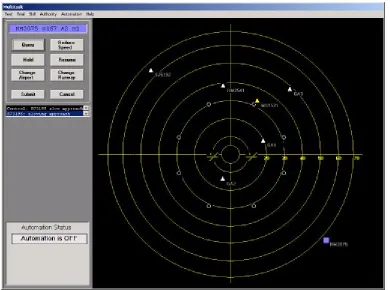
Multitask© is a low fidelity ATC approach control simulator. The objectives of an operator are to contact aircraft appearing on a radar display, make any necessary changes to pre-existing aircraft clearances based on their potential to cause a conflict, and safely land aircraft at one of two airports. One of four modes of automation (of various HIP functions as part of the task), and manual control, can be used in the simulation. Task performance is based on the number of aircraft safely landed at an airport, the number of aircraft that encounter conflicts, and the number of clearance amendments administered.
display, each representing 10 nm increments from the display center. Near the center of the radarscope are two airports, one 10 nm west of the center and another 10 nm east of the center (with 20 nm between the airports). Each airport has two runways. Eight equally spaced holding fixes, represented on the display by small gray circles, are located 30 nm from the center of the radarscope.
Figure 3.1 Multitask display in manual mode
destined for one of the runways. An aircraft’s starting location, airport, and runway are all randomly assigned, and the aircraft appear one at a time with a 1-20 s buffer between aircraft.
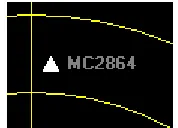
Figure 3.2 Aircraft icon
When an aircraft appears on the radarscope, it is presented as a flashing white triangle, indicating that it has not yet been contacted. Once an aircraft is contacted (selected and queried using a mouse controller), the icon becomes a solid white triangle, and the aircraft’s predetermined clearance (including call sign, aircraft speed, destination airport, and destination runway) is displayed in a data box on the left side of the Multitask© display (see top of Figure 3.3). If an aircraft is placed in a holding pattern, the icon becomes yellow until the aircraft is advised to resume its approach to the destination airport, at which time it becomes white again.
The aircraft icons represent one of three possible types of aircraft: commercial, private, or military. The aircraft call sign is represented by an alphanumeric designator, including an aircraft type letter designator and a numerical designator as shown in Table 3.1.
Table 3.1 Aircraft designators
Aircraft Type Letter designator Four digit designator
Military M Sequential number
Commercial Random 2-character airline designator Random number
The three aircraft types occur in the simulation with different frequencies (see Table 3.2). The type of aircraft also dictates the possible range of speed for the vehicle. The exact speed is determined based on a standard amount of time required for each aircraft type to reach its destination (without a controller clearance amendment). The average time and speed values (real-time) for each type of aircraft are shown in Table 3.2. The destination airports include A1 for the west airport or A2 for the east airport, and the runways include R1 or R2.
Table 3.2 Aircraft type parameters
Aircraft Type Frequency Travel time Average speed
Military 10% 21 minutes 200 kts
Commercial 70% 25 minutes 170 kts
Private 20% 42 minutes 100 kts
The control box allows the user to communicate with all of the aircraft currently on the radarscope and to request changes to aircraft parameters. It includes the previously mentioned data box, eight command buttons, and a history box (see Figure 3.3).
The data box is located on the top of the control box. The information in this box is displayed until another aircraft is contacted. The eight control buttons facilitate six clearance change commands, including query, reduce speed, hold, resume, change airport, and change runway. The two action commands include submit and cancel. The ‘Query’ command is used to initiate communication with an aircraft and obtain the aircraft’s flight identifier and parameters. The ‘Reduce Speed’ command simply reduces the aircraft’s speed by a set amount, and the original speed cannot be subsequently reassigned. The ‘Hold’ command is used to request that an aircraft fly directly to the nearest of eight holding fixes and remain there for either 30 min. or until advised to continue to their assigned airport and runway (the ‘Resume’ command). The ‘Change Airport’ and ‘Change Runway’ commands advise aircraft to change from their randomly assigned clearance to the other of the two possible destinations. The ‘Submit’ button must be used after selecting a desired clearance command, and ‘Cancel’ may be used to prevent an aircraft from further processing a command. All of the command keys are used to prevent possible conflicts between aircraft while maintaining efficiency (e.g., issuing the fewest number of clearance revisions). The history box, located below the command buttons (see Figure 3.3), displays the communications with the aircraft in text form, simulating actual ATC communications (e.g., GA4: Change airport).
Figure 3.4 Decision making automation display screen
An automation status control box is located below the automation aid box and indicates whether automation or fully manual control is currently being utilized (see left-bottom of Figure 3.4). During AA trials when the computer intervenes in human operator control (mandated automation), the automation status control box displays, “Automation is ON,” and during manual control portions of AA trials (computer return of control to the human) the box displays, “Automation is OFF.”
Multitask© is capable of operating under one of the following five modes of automation during a simulation trial:
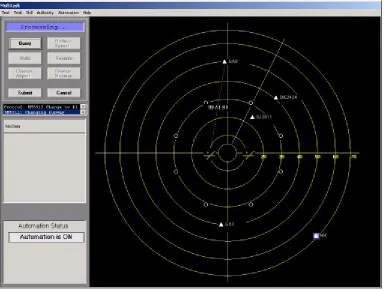
2. Information acquisition – A scan line rotates clockwise around the radar display, and as it passes over an aircraft icon, a Trajectory Projection Aid (TPA) for that aircraft is presented for 2 s. The TPA shows the aircraft destination and route in the form of a line connecting the aircraft and the airport or holding fix. The aircraft speed (in knots), destination airport, and destination runway are affixed to the center of the TPA (see upper-left radarscope quadrant of Figure 3.5). This mode of automation allocates the information gathering/data collection stage of HIP to machine control (Wickens, 1992). The ARTS and the TMA incorporate automation similar to this by including data blocks and graphic displays of aircraft tracks on radar displays (Debelack, Dehn, Muchinsky, & Smith, 1995; Nolan, 1999).
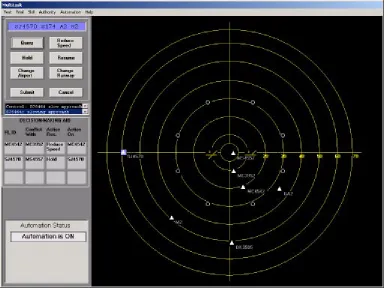
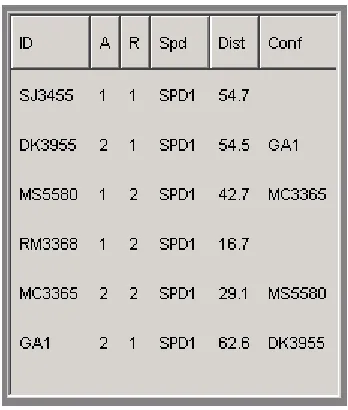
3. Information analysis – Information pertinent to each of the contacted aircraft on the radarscope is displayed in the automaton aid box including the aircraft’s call sign, destination airport, destination runway, speed, and distance (nm) from the destination airport (see Figure 3.6). A final column in the table, ‘Conf,’ denotes the call sign of any aircraft that are currently in conflict with each other. This mode of automation may reduce operator workload associated with the integration of perceived information with long-term memories in working memory as part of HIP (Wickens, 1992). This mode of automation is very similar to the current User Request Evaluation Tool (URET) and the Prediction/Resolution Advisory Tool (PRAT) used by air traffic controllers, which alert controllers to potential conflict situations (Nolan, 1999).
Figure 3.6 Information analysis automation aid box
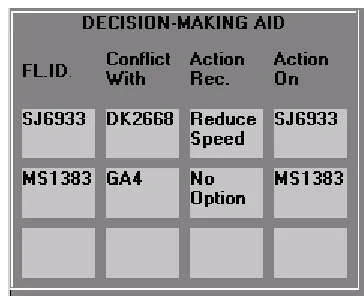
no option), and which aircraft to advise of a necessary change are all displayed together (see Figures 3.4 and 3.7). Up to three automated clearance
recommendations are displayed in the automation aid box at a time and they are listed in order of priority. Runway changes are not recommended by the
automation. This is an intended limitation in the automation in comparison to human manual control to ensure active operator involvement in the simulation. This mode of automation assumes responsibility for the HIP requirements associated with the decision and response selection aspects of the task (Wickens, 1992). It is similar to the conflict-resolution capability of the PRAT (Nolan, 1999).
Figure 3.7 Decision making automation aid box
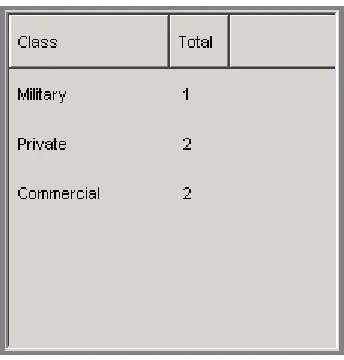
5. Action implementation – This mode of automation simulates the hand-off of air traffic control from approach control to local-tower control, and the tower
simply summarizes the classification and number of aircraft on the display (see Figure 3.8). The aid is included as part of this mode, in part, to facilitate consistency in the interface information content across conditions. Action implementation automation assumes the HIP requirement of response execution as part of the ATC simulation (Wickens, 1992). Proposed data link technology is currently being explored as a replacement for voice communication between controllers and aircraft (Debelack et al., 1995; Dillingham, 1998). One feature of this mode of automation, similar to the Multitask© action implementation mode of automation, is the computer automatically hands-off aircraft from one control sector to another (Nolan, 1999; NRC, 1997).
Figure 3.8 Action implementation automation aid box
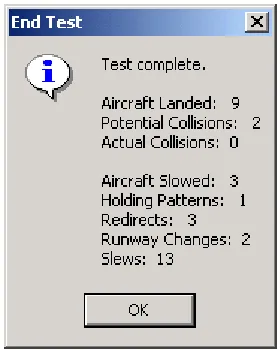
Figure 3.9 Multitask© performance measures
The experimenter controls the mode of automation applied to the simulation, the duration of trials, and the skill level. The skill level is defined by the number of aircraft (from 3 to 9) that are present on the radarscope at any given time. During all training and test trials as part of this experiment, 7 aircraft appeared on the radarscope from
moment-to-moment.
3.1.2 Gauge-monitoring Task
The gauge-monitoring task used in this research was similar to the secondary task developed by Kaber and Riley (1999) and used by Clamann et al. (2002) and Kaber et al. (2002). It was a simple loading task which also contributed to the realism of the
were colored blue. The transitional ranges were also considered “acceptable” gauge values. The user’s goal was to prevent the randomly drifting pointer from moving into either
“unacceptable” range by maintaining it in the “acceptable” range using particular keys on a keyboard (‘Shift’ to move the pointer up or ‘Ctrl’ to move the pointer down) depending on which direction the pointer drifted. If the pointer drifted into an “unacceptable” range, depressing the appropriate key returned the pointer to the center of the “acceptable” range. After returning the pointer to the “acceptable” range, it continued to drift randomly until the end of a trial. The pointer did not dwell in an unacceptable region for more than 3 s at a time. Three seconds was determined by Clamann et al. (2002) as a sufficient amount of time for subjects to register a deviation while also performing the primary, ATC simulation. The design of the gauge task allowed for approximately six pointer deviations, or signals, to occur per minute with a variance of plus-or-minus one signal.
Figure 3.10 Gauge-monitoring display
unnecessary correction (a false alarm; e.g., a ‘Ctrl’ key press when the pointer was in the green or blue ranges).
The gauge task provided an index of operator workload in the Multitask© simulation. A low score in monitoring implied a high level of workload in the ATC simulation and vice versa. The task also served as a basis for invoking changes in the allocation of Multitask© functions from manual control to one of the modes of automated control. When secondary-task (gauge) performance was good, suggesting a reduction in operator workload, Multisecondary-task© returned to completely manual control.
In general, gauge task performance was recorded as a hit-to-signal ratio, or the number of times a subject detected the pointer in an “unacceptable” range, divided by the number of signals. Upper and lower performance bounds for gauge-monitoring were determined during subject training as part of the experiment for each mode of automation. Pairs of subjects performed gauge-monitoring practice trials under a randomly assigned mode of Multitask© automation, and their performance was used to establish primary task “overload” conditions for all subjects exposed to the same mode of automation during the experimental test trials. Pairs of subjects performed gauge practice trials for the information acquisition, information analysis, decision making, and action implementation modes of Multitask© automation. The upper and lower performance bounds were used as a basis for determining when DFAs should occur in the Multitask© simulation under the various modes of automation; that is, the AA was implemented based on operator secondary-task
3.2 Participants
Eight subjects were recruited to participate in this experiment from the North Carolina State University student population. Subjects ranged in age from 23 to 27 years. All subjects had 20/20, or corrected to normal, vision and personal computer experience. None of the subjects had flying or ATC experience. Subjects were compensated at a rate of $10 per hour for their participation. Subject were informed of an additional incentive at the beginning of the experiment, a $30 gift certificate, which was awarded to the top performer.
3.3 Equipment and Environment
The equipment used in the experiment included a high-performance graphics workstation with 512 MB of RAM and dual 2 GHz Pentium Xeon processors. Multitask© and the gauge-monitoring task were presented on two 17-inch, digital flat panel displays (see Figure 3.11). Two keyboards and two, 2-D computer mice were integrated with the
Figure 3.11 Workstation
All trials took place in a small office with no windows and the overhead lights turned off to prevent glare on the computer screens. A small lamp was set up behind the computer monitors. A separate desk and computer were set up adjacent to the simulation workstation and were used by subjects to complete SA questionnaires (described in Section 3.5). The experimenter sat out of view of subjects and took particular care to not distract subjects while the simulation was running. Simulation freezes were periodically conducted to allow
3.4 Experimental Design
The experiment followed a completely within-subjects design in which all eight subjects completed two, 30-min. trials under each of the five modes of Multitask© automation (i.e., the design was replicated to allow for estimation of experimental error). Each experiment trial consisted of both manual and automated minutes (with the exception of manual control condition trials which involved only manual minutes), depending on the DFAs that occurred during the ATC simulation on the basis of subject workload (as indicated by gauge-monitoring performance). Consequently, all performance, workload and SA
response measures were calculated for both automated and manual control periods as part of AA trials. The experiment yielded 10 manual and 8 automated performance scores for each subject. In total, eighty composite performance observations (manual and automated minutes) were gathered across subjects (8 subjects x 2 trials x 5 control modes), and 64 manual and automated performance observations were collected (8 subjects x 2 trials x 4 control modes) on AA conditions (excluding the manual control condition trials).
3.5 Variables
The independent variable (IV) manipulated in this study was the mode of AA applied to the Multitask© simulation, including completely manual control, information acquisition automation, information analysis automation, decision making automation, and action implementation automation. Under the AA conditions, each mode of automation switched “on” and “off” depending upon operator workload states.
gauge-monitoring task performance, recorded as a hit-to-signal ratio. Both of these measures were captured during each minute of a test trial.
Percent correct responses to SA queries were also recorded during the experiment using the Situation Awareness Global Assessment Technique (SAGAT), developed and validated by Endsley (1995a; 1995c). The SAGAT is a direct, objective measure of SA. One approach to developing SA queries as part of the SAGAT methodology is to conduct a GDTA on the simulation being used. A portion of a GDTA developed for the Multitask© subgoal “acquire aircraft information” is presented here (a GDTA for Multitask© is presented in its entirety in Appendix A):
1. acquire aircraft information 1.1 locate aircraft
in what display sector is the aircraft located?
aircraft position
how many other aircraft are located in that sector?
aircraft position
location of other aircraft
Table 3.3 Level 1 example SAGAT question
Aircraft # What is the aircraft's call sign? 1 2 3 4 5 6 7 Criterion: none
Table 3.4 Level 2 example SAGAT question
Aircraft # What is the aircraft's distance to destination? (nm) 1 2 3 4 5 6 7
Criterion: within 5 nm
Table 3.5 Level 3 example SAGAT question
Aircraft # When will the aircraft arrive
at the destination airport? (min from now) 1 2 3 4 5 6 7