2001 Kluwer Academic Publishers. Manufactured in The Netherlands.
Information Systems Knowledge: Foundations, Definitions,
and Applications
Lee A. Freeman
Department of Management Studies, School of Management, The University of Michigan – Dearborn, 4901 Evergreen Road, Dearborn, MI 48128, USA
E-mail: [email protected]
Abstract. A key component of research within information systems is the use of valid instruments to measure numerous as-pects of technology, organizations, and people. Validated instru-ments exist for many different variables and more are available all the time. Knowledge of a particular domain is an integral part of working competently, effectively, and successfully within that domain (N.M. Degele,World Futures, 50, 743–755, 1997). Therefore, this paper will describe the rationale for the develop-ment of an instrudevelop-ment to measure the information systems knowl-edge of individuals. This rationale is rooted in several streams of research, such as absorptive capacity and certainty of knowledge, and focuses on three main questions: why measure knowledge of information systems, how to measure this knowledge, and what to actually measure. The definitions of knowledge and information systems knowledge are developed and refined through an anal-ysis of the literature covering the philosophical, psychological, and educational aspects of knowledge. The resulting models of knowledge and specifically information systems knowledge are then applied to research streams within the information systems discipline as well as practitioner-oriented needs.
Key Words. knowledge, models of knowledge, information sys-tems knowledge, instrument development
1. Introduction
For years researchers have been attempting to under-stand the use of technology by individuals and the fac-tors that drive and influence this use (see, e.g., Davis, 1989; Davis, Bagozzi, and Warshaw, 1989; DeSanctis, 1983; Doll and Torkzadeh, 1988; Taylor and Todd, 1995; Vessey and Galletta, 1991). Of the numerous variables already studied and yet to be studied, an in-dividual’s knowledge of information systems (IS) has received little, if any, attention in the IS literature. This
paper will describe the rationale for the development of an instrument to measure the information systems knowledge of individuals. The potential subjects of such an instrument are practically unlimited— professionals, managers, potential users, academics, and so forth. Such an instrument could be utilized in al-most any type of research program that is interested in the level of information systems knowledge and its in-fluence on other constructs or its reliance on other con-structs. For instance, does information systems knowl-edge affect or is it affected by user self-efficacy; does information systems knowledge have an affect on per-ceptions of adoption and implementation of new appli-cations (see Zmud and Cox, 1979), or how does infor-mation systems knowledge relate to the constructs of user satisfaction, ease of use, learnability, playfulness, or IS success. These examples of possible research questions represent the uses of such an instrument.
This research is supported by a number of existing research streams and topics both within and outside of IS that answer the questions of why measure IS knowledge,whatshould be measured, andhowshould IS knowledge be measured. As will be shown in Section 9, there are numerous potential applications of this research to current research within IS and several non-research related areas. However, in order to better define and understand exactlywhatIS knowledge is, knowledge itself must be defined and understood.
The purpose of this paper is not to elaborate on the actual development of this instrument. Rather, the purpose of this paper is to provide the underlying definitions of knowledge and information systems knowledge as well as a sampling of the potential ap-plications of the ability to measure an individual’s IS knowledge. This is done in an exploratory manner and
the paper does present conclusive results. It is only af-ter this process is properly completed and information systems knowledge is well-defined that the actual instrument should be developed. Granted, knowledge is not a physical, easily quantifiable essence such as labor cost, project cost, or project duration, and it can be difficult to articulate clearly to others. It will not be a direct measurement such as cost or time, but through other performance measures, knowledge can be indi-rectly measured (Hunt and Hassm´en, 1997).
The remainder of this paper is structured as follows. Section 2 provides key definitions of knowledge and related terminology that are used throughout the re-mainder of the paper. Section 3 provides the motivation for this research as taken from previous research and a practitioner point of view. Following the motivation, the Model of IS Knowledge is presented in Section 4 as a basis for the rest of the discussion. Section 5 provides the theoretical basis for this research. Next the relevant literature is reviewed to develop a more thorough un-derstanding of knowledge and IS knowledge: Section 6 discusses knowledge measurement, Section 7 discusses the types and qualities of knowledge, and Section 8 dis-cusses the forms of IS knowledge and re-introduces the Model of IS Knowledge. Section 9 returns to the moti-vation and provides a more thorough discussion of the proposed relationships and uses for such a measure. The paper concludes with a potential research project based on the models developed in the paper.
2. Knowledge
It is widely accepted that the term knowledge has several meanings, and even more when considering those meanings that are obsolete. The philosophical definition of knowledge is “justified true belief” (Pears, 1971). This says that knowledge is information (see next paragraph for a discussion of information) that an individual believes to be true and has justified this belief to him/herself. This justification of the belief being true is what allows the individual to internalize the information as valid information—knowledge. For a more formal discussion of the philosophical nature of knowledge see Carrier (1993), Craig (1990), Jones (1997), Pears (1971) or Ward (1983). From this philo-sophical definition comes several more practical def-initions. Of these more practical definitions, the most common are “that which is known” and “the state of knowing” (Machlup, 1980; Plotkin, 1994). While these
two definitions may be self-referencing, they are used throughout the literature. The first refers to the items, concepts, subjects, and beliefs that individuals have and utilize as part of their understanding of the world. The second refers to ways of knowing what we know. As Machlup (1980, p. 27) states, “if ‘knowledge’ means both what we know and our state of knowing it, we might have to say that we ‘have knowledge of much knowledge.’” This research focuses on “that which is known” and the many aspects of this definition.
Data, information, and knowledge
“That which is known” can be further delineated into several categories along an information hierarchy. The first, or lowest, level is data—raw facts. The second level isinformation—interpretations of the data from a particular point of view. The third level isknowledge— information that has been validated and is thought to be true, and the equivalent to the philosophical “justi-fied true belief.” In general, as “information” moves up the hierarchy, its value also tends to increase, though “information” at any of the levels is extremely valu-able. Numerous authors have utilized this hierarchy and have provided examples of each level (see Bhatt and Dalal, 1997; Haeckel and Nolan, 1994; Hedlund and Nonaka, 1993; Machlup, 1980; Machlup, 1983; Mason, Mason, and Culnan, 1995; Quinn, Anderson, and Finkelstein, 1996; Vance, 1997). This is not to say that only knowledge is important and deserves to be measured. Individuals, organizations, and countries measure, capture, and manipulate data every day. This type of activity has a different purpose than measuring the knowledge of an individual.
Value of knowledge
In addition to the value of knowledge for acquiring new knowledge (absorptive capacity, to be discussed in Section 5), for decision-making, and for defining a profession, there exists intrinsic value in knowledge. Knowledge is valued because when it is gained through reliable methods, those with the knowledge are more believable (Jones, 1997; Pears, 1971). People want to be believed; they want others to take the informa-tion that they have and internalize it into their own knowledge.
3. Motivation
streams of research—user acceptance of technology, user satisfaction, computer self efficacy, microcom-puter playfulness, etc. It is from this wide array of previous studies that the motivation for this study is generated.
Though not specifically mentioned in any of the previous research on the Technology Acceptance Model (TAM) as a potential external variable, “both general intellectual abilities and a knowledge of spe-cific content areas are believed to influence MIS usage,” (Zmud, 1979, p. 967). This single statement links to-gether the previous research on TAM and this current research on IS knowledge and provides the motivation to be able to measure IS knowledge.
In addition, Weigel (1983) has proposed that specific content knowledge influences behavior, making the addition of knowledge as a variable/ construct to be measured as part of an extended TAM appropriate. The Ives, Olson, and Baroudi (1983) user satisfaction instrument measures the perceptions of the IS staff, the final output, the vendor support, and the knowledge or involvement of the individual in the design of the system. Right here it is shown that knowledge has a direct role in the measurement of user satisfaction with information systems. Still, there is no measure of this IS knowledge that pre-vious researchers have shown to be an important variable in two of the main models that are used in IS research.
[image:3.595.307.524.134.306.2]From the practitioner point of view, Sch¨on (1983) argues that there is a crisis in this country over con-cerns of professional effectiveness. He names this phenomenon the Crisis of Confidence in Professional Knowledge. Specifically, some individuals are ex-tremely skeptical of the actual contribution to society of some professions through their delivery of ser-vices based on special knowledge. What this means is that there are debates brewing on whether individ-uals should view themselves belonging to specialized professions in the sense that it does not seem that these professions are helping society. Professions are defined as highly specialized occupations with a substantive field of knowledge and techniques for production and application of that knowledge (Quinn, Anderson, and Finkelstein, 1996; Sch¨on, 1983). If professions are de-pendent on such a substantive field of knowledge, there should be some measure of this knowledge to know whether an individual is truly a professional within in-formation systems.
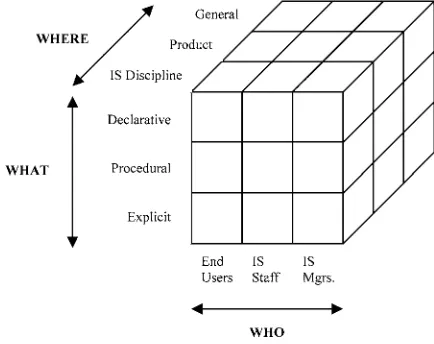
Fig. 1.Model of IS knowledge.
4. Model of IS Knowledge
The proposed Model of IS Knowledge (see Fig. 1) consists of a three-part framework: WHO, WHAT, and WHERE. The WHO is the subject population that is being measured; the WHAT is the type of knowledge being measured; and the WHERE is the task or do-main of the knowledge being measured. It is not a requirement that only one “cell” of the model be mea-sured at a time. There could easily be a situation where multiple groups of subjects (e.g., End Users and Man-agers) have their declarative and conceptual knowledge of Telecommunications and Databases measured as a part of training or promotion decisions. The point is that (1) combinations of two or more points along any one of the dimensions may be appropriate and neces-sary, and (2) the “size” of each dimension of the model is not set—a 3×3×3 model is shown for purposes of brevity and clarity. Following the theoretical basis for this research and the development of a more thorough understanding of what knowledge is, the Model of IS Knowledge will be re-examined with more specific at-tention to each of the three dimensions.
5. Theoretical Basis
whatshould be measured in the first place. These will be discussed as well.
Absorptive capacity
Absorptive capacity refers to the ability of a firm “to recognize the value of new, external information, as-similate it, and apply it to commercial ends,” (Cohen and Levinthal, 1990, p. 128). They argue that a firm’s absorptive capacity is heavily related to its prior related knowledge. However, a firm’s absorptive capacity orig-inates at the individual level and is then “accumulated” into an organizational absorptive capacity. It is from the viewpoint of absorptive capacity at the individual level that this study falls under absorptive capacity.
The absorptive capacity of individuals is very closely related to their knowledge within a specific domain. Therefore, since Cohen and Levinthal (1990) have shown that the absorptive capacities of individuals within an organization contribute to the absorptive ca-pacity of the organization as a whole, it is necessary to be able to measure the absorptive capacity of these in-dividuals. In other words, to be sure that one knows the absorptive capacity of a particular individual, one must measure that particular individual’s prior knowledge within the specific domain, as well as within other do-mains. The development of a definition of the construct of IS knowledge aims to get closer to the possibility of this type of measurement.
Cohen and Levinthal believe that at the most basic level, absorptive capacity stems from an individual’s prior knowledge that
permits the assimilation and exploitation of new knowledge. Some portion of that prior knowledge should be very closely related to the new knowledge to facilitate assimilation, and some fraction of that knowledge must be fairly diverse, although still re-lated, to permit effective, creative utilization of the new knowledge. (pp. 135–136)
Spiro (1983) also stresses the importance of prior knowledge in determining what new knowledge is learned and how it is organized within the individual’s mind, though he works under the research of knowledge synthesis as opposed to absorptive capacity. This prior knowledge may include basic skills, a shared language, or even current developments within a particular field. An individual with prior knowledge in a par-ticular field will have a greater ability to enhance his/her knowledge when new information is presented (Bower and Hilgard, 1981; Lindsay and Norman, 1977;
Valencia and Stallman, 1989). This occurs through as-sociative learning when “events are recorded into mem-ory by establishing linkages with pre-existing con-cepts” (Cohen and Levinthal, 1990, p. 129). This is not to say that individuals cannot learn without prior knowledge. However, this does point out that new knowledge may not be well utilized by the individ-ual if the appropriate prior knowledge or knowledge frameworks did not already exist to assist the learning process (Spiro, 1983).
An individual cannot just encounter a new skill, hear a new term, or see a new development and then be ex-pected to have made all of the essential connections and linkages to his/her prior knowledge. There must be a recurring exposure to the prior knowledge so that the individual can make effective linkages when the new terms are encountered. Absorptive capacity is not a simple “cognitive device” that any individual can uti-lize at any time. The “capacity” must be developed to “absorb” new information, and the best method for building and developing this capacity is through re-peated exposure to the prior knowledge. In a sense, it is like getting to know something like “the back of your hand.” It becomes second nature and any linkages and connections almost happen subconsciously. When this new information is absorbed, new knowledge is therefore created for that particular individual.
Human performance model
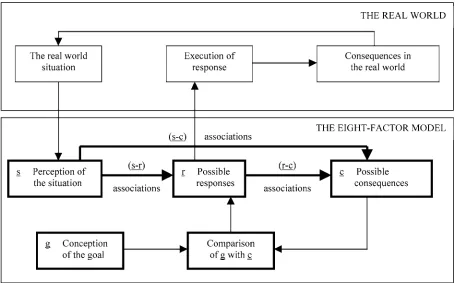
Fig. 2. Eight-factor model of human performance and learning (from Hunt and Sams, 1989).
of his/her answer and is also correct. The problem is that the first individual is less likely to be able to use this knowledge correctly in the future either as a re-sult of guessing incorrectly the next time or, through a lack of certainty, making a different choice. This model provides answers as tohowIS knowledge should be measured.
To better assess the knowledge of an individual on a specific topic, a system has been developed that con-siders an individual’s certainty about an answer as well as the actual “correctness” of an answer. When taken together, an individual’s knowledge and an individual’s self-assessment of his/her certainty of that knowledge have shown to be highly correlated to real-world ac-tions. Mason, Mason, and Culnan (1995) and Pirolli and Wilson (1998) also state that behaviors are based on knowledge. Therefore, the model from Hunt and Sams (1989) and Hunt and Hassm´en (1997) provides the nec-essary link between knowledge and action–the combi-nation of knowledge and certainty are good predictors of future actions. So, in order to predict future actions of individuals in regards to information systems, a valid measure of the information systems knowledge of these
individuals must be developed. This measure can then be combined with a certainty measurement to more accurately predict future actions. However, it must be noted that knowledge does not always lead to observ-able behaviors—i.e., knowledge may lead to the be-havior of doing nothing at all (Sage and Rouse, 1999). Therefore, the full impact of IS knowledge becomes more difficult to measure and evaluate.
Employees’ skills and knowledge
The above theories and frameworks are not to imply that the IS literature is without any “within” rationale for the measurement of IS knowledge. In an attempt to answer the question ofwhatto measure, Zmud (1983) suggested six types of knowledge and skills required by all employees:
(a) Organizational Overview—objectives, goals, pur-poses, opportunities, and functioning of the orga-nization;
(c) Target Organizational Unit—application of orga-nizational skills to a specific internal or external unit;
(d) General IS Knowledge—hardware and software concepts, IS policies, and IS applications; (e) Technical Skills—methods and techniques for IS
tasks; and,
(f) IS Product—purpose, design, procedures, and doc-umentation.
The first three are all part of organizational learning and the last three are part of IS-specific learning. It is these last three with which this research is concerned. Nelson (1991) used these six categories and developed an instrument to measure both perceived usefulness and perceived proficiency of items within these categories. This perceived proficiency aspect is somewhat similar to the measurement of certainty from Hunt and Sams (1989) and Hunt and Hassm´en (1997) though perceived proficiency was measured on a broad level of topics, and not on singular questions of knowledge within a particular domain.
The above three theories and frameworks—absorp-tive capacity, the Human Performance Model, and the six types of skills and knowledge for employees— provide a theoretical grounding for the arguments to be developed in the next sections.
6. Knowledge Measurement
There does not seem to be a consensus on how to effectively measure an individual’s knowledge of a given subject or domain. The fact that there are dif-ferent types of knowledge (see next section) only compounds the problem (Bateson, 1972). Hunt and Hassm´en (1997) have proposed that an individual’s certainty should be measured in conjunction with the actual answer. The combination of these two measures will lead to a better measurement of knowledge in the sense that it would be used for future actions and be-haviors. Pirolli and Wilson (1998) propose a frame-work of knowledge measurement that is based on ob-servations of behaviors and the implied knowledge that the individual must possess to achieve those be-haviors rationally. Their framework, based on Rasch (1960), allows variables associated with the environ-ment and variables associated with the individual to be discerned. Though interesting as a means for measuring knowledge through behavior, not all knowledge will be
manifested through behaviors (Sage and Rouse, 1999), and therefore a more active measurement is required.
Though there is no consensus on the best way to measure knowledge, it does not mean that knowledge measurement is not possible or is not done. There are many instruments that measure knowledge in numer-ous fields such as medicine, nutrition, training, politics, and education (de Jong and Ferguson-Hessler, 1995; Snow, 1989). These tests and instruments measure a variety of different types of knowledge (as discussed in the next section) and use various groups of individ-uals as subjects, yet they show very significant results in terms of reliability and validity for each particular instrument and domain. Therefore, there does not seem to be a significant reason in terms of measurement to discourage this research into the measurement of IS knowledge.
7. Types of Knowledge
It is a general assumption that the knowledge of an individual is composed of a multitude of different types of knowledge—declarative/procedural, tacit/explicit, special/general, and others. In fact, numerous authors have used a multitude of different, yet likely analogous, adjectives to represent the different types of knowl-edge (de Jong and Ferguson-Hessler, 1996; Hedlund and Nonaka, 1993; Hintikka, 1996; Machlup, 1980; Nonaka, 1994; Nyiri, 1997; Reif, 1987, and others). While the purpose of this paper is not to distinguish among the more than three dozen terms for the types of knowledge, it is important to clarify the distinctions among the most prominent types of knowledge from the literature. These distinctions will help build a model of knowledge.
Tacit versus explicit
The tacit/explicit distinction has been studied in a number of contexts from managerial success (Kerr, 1995) to information sharing (Constant, Kiesler, and Sproull, 1994; Montoya-Weiss and Massey, under re-view) to general intelligence (Sternberg, 1995; Wagner, 1987). The difficulty rests with the measurement of tacit knowledge. It is extremely difficult to measure something that is unspoken and based on experience.
Declarative versus procedural
A second of the major distinctions in the types of knowledge is that of declarative versus procedural knowledge. Declarative knowledge is often viewed as “knowing that” or “knowing what,” while procedural knowledge is viewed as “knowing how” (Anderson, 1980; Machlup, 1980; Pears, 1971; Ryle, 1966). Declarative knowledge is associated with the ability to define terms, state facts, and show rule structures (de Jong and Feriguson-Wessler, 1996; Lemat, 1988; Reif, 1987). Procedural knowledge is in turn associated with the ability to show temporal/sequential logic, present scripts for action, and enact declarative knowledge (Anderson, 1980; Anderson, 1983; Lamberti and Wallace, 1990).
Though not always the case, declarative knowledge is often explicit, and procedural knowledge is often tacit (Anderson, 1980; Pears, 1971). For instance, the knowledge that Mt. Everest is the tallest mountain on Earth is declarative (and explicit)—it is a statement of a fact. The knowledge of how to ride a bike is pro-cedural in nature, though very difficult to articulate in words (tacit) given our limited understanding of laws of motion and balance and so forth. However, the pro-cedural knowledge of baking cookies is very explicit as are nearly all recipe books.
Since the declarative/procedural distinction takes into account the key parts of the tacit/explicit distinc-tion as well (Anderson, 1980; Pears, 1971), it is argued that the declarative/procedural distinction itself is suf-ficient for the focus of further research into the mea-surement of knowledge and specifically IS knowledge. Therefore, by focusing on knowingthatand knowing
how, multiple types of knowledge are covered at once.
Qualities of knowledge
The qualities of knowledge are the properties that de-scribe and define knowledge. Much more could be said about the different types of knowledge, but nothing has yet been said regarding the qualities of knowl-edge. Qualities of knowledge—level, structure,
au-tomation, modality, andgenerality—cross all knowl-edge types and can be used to further define each type of knowledge, as well as cross-compare multiple types of knowledge as related to a single quality (de Jong and Ferguson-Hessler, 1996). While the descriptions of the qualities that follow present each quality in terms of two opposite extremes, each quality is really a continuum between the two terms, not a dichotomous distinction. Thelevelof knowledge can either be surface or deep. Surface knowledge is seen as knowledge that is stored in memory as rote learning or a mere reproduction of external information (Glaser, 1991). Deep knowl-edge, on the other hand, involves abstraction, criti-cal judgment, evaluation, and comprehension (Marton and S¨alj¨o, 1976). Deep knowledge can be applied to new tasks easily. Closely related tolevelof knowledge is the structure of knowledge. Knowledge can either be structured or unstructured. Structured knowledge is knowledge of a domain that is well organized in memory, often in a hierarchical format (Reif, 1984). This is somewhat related to the concept of schemas discussed earlier (see, e.g., Rumelhart and Schemata, 1980).LevelandStructureof knowledge are related in that in order to create effective structures and schemas, a deep understanding of the knowledge is needed in the form of abstractions and generalizations (de Jong and Ferguson-Hessler, 1996; Reif, 1987).
The third quality of knowledge is automation. This refers to the nature of the use of specific do-main knowledge in task performance. Low automa-tionresults in very conscious, step-by-step processes, whereas highautomationleads to continuous and auto-matic processes.Automationis very dependent on both
levelandstructureas deep, well-structured knowledge will lead to higher automation, or compiled knowl-edge (Anderson, 1983; de Jong and Ferguson-Hessler, 1996). Automated or compiled knowledge has many similarities to the tacit/explicit distinction presented earlier. Highly automated knowledge can be very dif-ficult to express, as it is implicit (and tacit) for that specific domain (Anderson, 1980). Knowledge that is low inautomationon the other hand, can many times be expressed as explicit knowledge through its conversion into a step-by-step process.
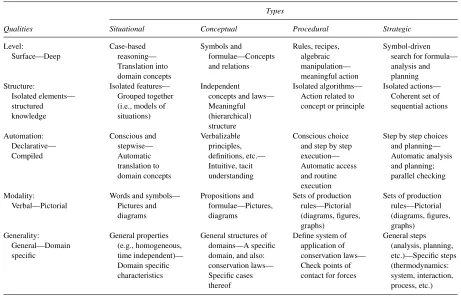
Table 1.Example descriptions of knowledge as a function of type and quality (from de Jong and Ferguson-Hessler, 1996) Types
Qualities Situational Conceptual Procedural Strategic
Level: Case-based Symbols and Rules, recipes, Symbol-driven
Surface—Deep reasoning— formulae—Concepts algebraic search for formula—
Translation into and relations manipulation— analysis and
domain concepts meaningful action planning
Structure: Isolated features— Independent Isolated algorithms— Isolated actions— Isolated elements— Grouped together concepts and laws— Action related to Coherent set of
structured (i.e., models of Meaningful concept or principle sequential actions
knowledge situations) (hierarchical)
structure
Automation: Conscious and Verbalizable Conscious choice Step by step choices
Declarative— stepwise— principles, and step by step and planning—
Compiled Automatic definitions, etc.— execution— Automatic analysis
translation to Intuitive, tacit Automatic access and planning;
domain concepts understanding and routine parallel checking
execution
Modality: Words and symbols— Propositions and Sets of production Sets of production Verbal—Pictorial Pictures and formulae—Pictures, rules—Pictorial rules—Pictorial
diagrams diagrams (diagrams, figures, (diagrams, figures,
graphs) graphs)
Generality: General properties General structures of Define system of General steps General—Domain (e.g., homogeneous, domains—A specific application of (analysis, planning, specific time independent)— domain, and also: conservation laws— etc.)—Specific steps
Domain specific conservation laws— Check points of (thermodynamics: characteristics Specific cases contact for forces system, interaction,
thereof process, etc.)
greater efficiency of recall and higher problem-solving skills (Anzai, 1991; Larkin and Simon, 1987). The fifth and final quality of knowledge is generality. Knowledge can either be general or domain specific. General knowledge is broad and at a high level in the hierarchy of Reif (1984). Domain specific knowledge is limited in its broad use, though often times necessary in problem solving (de Jong and Ferguson-Hessler, 1996; Larkin, 1989).
Model of knowledge
To conceptualize knowledge for use in research clas-sifications, de Jong and Ferguson-Hessler (1996) have developed a taxonomy of knowledge based on types and qualities (see Table 1). This taxonomy combines their conception of the types of knowledge with the qualities of knowledge to create a framework that can be applied to most situations.
To better apply this taxonomy to the previ-ous discussion of the types of knowledge, a brief explanation of these four types of knowledge is necessary.Situationalknowledge concerns the knowl-edge of a particular situation within a specific domain.
Conceptual knowledge is the knowledge of facts, concepts, and principles, and is very similar to declarative knowledge. Procedural knowledge cov-ers the knowledge of actions or manipulations within a domain. Finally, strategic knowledge concerns the broader application of problem solving (de Jong and Ferguson-Hessler, 1996). From Table 1, it can be seen that theconceptual-automationcell is the tacit/explicit distinction, though the entireautomationquality is con-cerned with the tacit/explicit distinction. The concep-tual andproceduraltypes are similar to the declara-tive/procedural distinction, as previously mentioned.
8. IS Knowledge
In searching through the Barki, Rivard, and Talbot (1993) keyword classification scheme, there was no inclusion of a specific keyword for “IS Knowledge.” However, the following keywords are closely related to IS Knowledge:
– EH0201: IS training and development – EH0208: IS skill requirements – IA02: Computer Literacy
Information recall, knowledge utilization, IS training and development, and IS skill requirements are all fourth level keywords that refer to a very specific part of IS research. Computer Literacy is a third level keyword and therefore represents slightly broader categories of research. Computer Literacy was not broken down into any fourth level keywords. This may be a potential placement for IS Knowledge within the scheme.
The keywords that do exist hint at the multitude of dimensions by which IS Knowledge can be bro-ken down. The main divisions differentiate between the professional position of the subject, the breadth of the knowledge, and the relative expertise of the subject.
IS staff versus end-users
While there has been previous work done concerning knowledge and knowledge of information systems, a majority of it concerns the knowledge and skill re-quirements of IS personnel specifically (e.g., Bartol and Martin, 1982; Benbasat, Dexter, and Mantha, 1980; Cheney and Lyons, 1980; Henry, Dickson, and LaSalle, 1974). Other studies have looked at the requirements of end-users (e.g., Doll and Torkzadeh, 1988; Nelson, 1991; Sein, Bostrom, and Olfman, 1999), while very few have compared the two groups (Henry, Dickson, and LaSalle, 1974; Nelson, 1991).
The main point here is the subjects under study. IS professionals are not the only group of people that need to have knowledge about information systems. End-users and other non-IS managers will likely ben-efit from a greater knowledge of information systems. While not specifically a type or quality of knowledge, the subjects under study are a necessary component of any research in this area. With a particular subject population in mind, a type of knowledge to be studied can be selected. However, without a subject population in mind, any particular type of knowledge will have different effects for different people and groups.
In addition, the interactions between IS personnel and non-IS personnel are influenced by the knowledge of the individuals interacting. For instance, in a sys-tems development scenario, the IS personnel have a much different knowledge base than the clients (the end-users). Realizing a common ground, a mutual or shared understanding, of each others’ background, knowledge, and experiences will aid in
communi-cation, decision-making, and the ultimate design of the system (Hunt and Sanders, 1986; Jeffrey, 1996; Tan, 1994). Enabling this mutual understanding is the key, however, as it is not always easy to accomplish (Freeman, 2000; Tan, 1994).
Training and skills
Training and skills, though skills especially, are usually concerned with procedural knowledge—the ability to do something with an information system, complete some task, or fix a problem. However, training often involves the learning of facts, concepts, and other as-pects of declarative or conceptual knowledge. Though Nelson (1991) distinguishes between knowledge and skills, it should be clear from the previous model of knowledge that skills are merely a subset of know-ledge—in particular, situational and procedural knowl-edge that may be highly structured and automated.
By studying skills, some aspects of knowledge are covered while others are not. Therefore, the study of skills and/or training of IS staff and end-users (Henry, Dickson, and LaSalle, 1974; Nelson, 1991), IS man-agers and analysts (Benbasat, Dexter, and Mantha, 1980), IS staff (Cheney and Lyons, 1980), and end-users (Davis and Bostrom, 1993; Nelson and Cheney, 1987; Sein, Bostrom and Olfman, 1999) is beneficial in terms of research, but it should not be inferred that these studies cover IS knowledge beyond skills and training. As stated previously, the subject population is very important when discussing skills as different groups will require and use vastly different skills for vastly different tasks.
Specific versus general
The generality quality of knowledge is part of IS as well. Zmud’s (Zmud, 1983) six types of knowledge and skills required by all employees were already men-tioned in Section 4. The last three are specifically con-cerned with information systems knowledge. General IS Knowledge is declarative knowledge as is IS Prod-uct, for the most part. Technical Skills is procedural as is some of IS Product.
This lends credibility to these dimensions and types of knowledge being potential constructs of informa-tion systems knowledge. Addiinforma-tionally, Lim, Ward, and Benbasat (1997) offer that experience with computers produces greater general knowledge and greater spe-cific knowledge for particular domains.
Nelson (1991) expanded Zmud’s (Zmud, 1983) six constructs into a 30-item questionnaire that he used in comparing IS personnel and IS end-users. He measured both the perceived usefulness (importance towards suc-cessful job performance) of each item as well as the per-ceived proficiency (knowledge or ability) of each item. The perceived proficiency component of this scale is the closest thing to an IS knowledge instrument and is somewhat related to the certainty ratings from Hunt and Sams (1989) and Hunt and Hassm´en (1997). However, Nelson’s work did not attempt to determine if there were any other factors or constructs that belonged in the instrument to more fully measure IS knowledge. He adopted the six categories (Zmud, 1983) and de-veloped items for each based on previous research in the area of training and skills assessment (Benbasat, Dexter, and Mantha, 1980; Henry, Dickson, and LaSalle, 1974; Nelson and Cheney, 1987).
Novice versus expert
Knowledge that is deep, highly structured, and highly automated is often associated with experts (de Jong and Ferguson-Hessler, 1996), as well as being closely related to tacit knowledge. The novice versus expert dichotomy has been studied in many disciplines (see for an overview (Chi, Glaser, and Rees, 1982; Schneider, Korkel, and Weinert, 1990)). Marakas (1995) states that the transition from novice to expert is a desired change and is important for performance, and that discovery learning is one way to allow learners to move from novice to expert.
To measure the knowledge of experts within a do-main, an entirely different instrument should be used to account for the different types of knowledge of this sub-ject group versus novices. This is not to say that novices do not share any of the knowledge of experts, rather the ends of the spectrum produce the more substantial and interesting results and discussions. The difference be-tween novice and expert has applications for managers interested in hiring a certain type of employee. Some sort of instrument to measure whether an individual was an “expert” in a certain area for a certain type of knowledge could help managers hire the correct people for the correct jobs.
Competence, proficiency, and experience
Webster and Martocchio (1993) tested their playfulness measure against numerous other measures. Though not emphasized very much in their study, one of these mea-sures was Computer Competence through several dif-ferent scales. Common items covered computer skills, computer experiences, typing skills, and computer us-age. A couple of the scales captured knowledge of specific computer packages, such as Lotus 1-2-3 or WordPerfect. Again, though not specifically referred to as IS Knowledge, these scales seem to contain parts of the total construct, and they will help develop the instrument further.
A major area of measurement of competence and proficiency occurs with examinations, particularly at the college level. Unfortunately, these exams more often than not seem to measure declarative knowledge that is not very deep and composed of mostly facts and low structured knowledge.
Model of IS knowledge
The above aspects of IS knowledge interplay with the types and qualities of knowledge from Table 1 to form a model of IS knowledge. First, the above descriptions are not intended to easily match with any of the types or qualities from Table 1. These aspects of IS knowl-edge are combinations of various types and qualities. To create a model of IS knowledge, the model of knowl-edge from the previous section, the above descrip-tions, and the framework provided by Zmud (1983) and Nelson (1991) are put together into a three-part framework consisting of the WHO, the WHAT, and the WHERE (see Fig. 1).1Each of the three parts are
nec-essary due to the individual and task-specific aspects of knowledge. In other words, when measuring a certain type of knowledge, the characteristics of the people being measured and the domain of the knowledge (the subject matter) are also important. The three cannot be separated.
Finally, the WHERE is concerned with the task and sub-ject domain in question. There may be a need to con-sider only general IS knowledge or possibly specific product knowledge. Perhaps the knowledge of a sub-discipline of information systems such as Databases, Telecommunications, or Systems Analysis & Design is more appropriate for the WHERE.
While Fig. 1 is represented as a 3×3×3 cube, the three-part framework has sides ofn. That is, there are numerous possibilities and combinations of factors for each of the three dimensions, but the ability to rep-resent the framework pictorially has limited Fig. 1 to its current size. The Model of IS Knowledge is a dy-namic model that can adapt over time. If and when new sub-disciplines of IS evolve, they will naturally become a part of the WHERE. New instantiations of a specific type of knowledge or a specific quality of knowledge will become a part of the WHAT. Similarly, any new combination of subjects will become a part of the WHO. It would be very difficult, if not impossible, to create an instrument that would cover a majority of the “cells” within this framework. However, when se-lecting an individual cell or possibly two or three cells that are adjacent to each other, an instrument could be developed and tested for significance. Of course, the results would be limited to the particular popula-tion, type of knowledge, and subject domain. With this model in mind, a number of applications of the mea-surement of IS knowledge will be explored in the next section.
9. Applications
The rationales for developing a measure of the Infor-mation Systems knowledge of an individual have been presented as well as the theoretical foundations of knowledge and the types of general knowledge. Fi-nally, some of the areas of IS knowledge that currently exist were explored. All of this is of little value if noth-ing will be gained from the production of a measure of IS knowledge. However, the potential research appli-cations of being able to measure IS knowledge seem endless. It seems plausible that IS knowledge may play a vital and defining role in many of the existing IS research constructs. A brief application of IS knowl-edge is given for a number of IS research constructs and research streams, as well as for several practitioner concerns.
User acceptance of IT
The Technology Acceptance Model (TAM) has been used extensively in IS research (e.g., Adams, Nelson, and Todd, 1992; Davis, 1989; Davis, Bagozzi, and Warshaw, 1989; Gefen and Straub, 1997; Jackson, Chow, and Leitch, 1997; Taylor and Todd, 1995). The original model as proposed by Davis (1989) is an adap-tation of the Theory of Reasoned Action that measures the user’s perceptions of the ease of use (EU) and use-fulness (U) of a particular technology. These two mea-surements are shown to positively affect the user’s at-titude toward the technology which affects the user’s behavioral intention to use the technology which finally affects the actual usage by the user.
One aspect of TAM that is applicable to this re-search is really a part of TAM that is not included in the measurement of its constructs. Influencing both the user’s perceptions of EU and U are external variables. These could be system features like menus, icons, etc. intended to enhance usability (EU) or features such as feedback and output design intended to enhance useful-ness (U) (Davis, Bagozzi, and Warshaw, 1989). Though not specifically mentioned in any of the previous re-search on TAM as a potential external variable, “both general intellectual abilities and a knowledge of spe-cific content areas are believed to influence MIS us-age,” (Zmud, 1979, p. 967). This single statement links together the previous research on TAM and this cur-rent research on IS knowledge. The question remains, however, of the extent of influence that knowledge of specific content areas indeed has on IS usage.
Additionally, Nelson and Cheney (1987) found that computer-related training positively influences a user’s computer-related ability which then positively influences his/her acceptance of IT. Weigel (1983) has proposed that specific content knowledge influences behavior, making the addition of knowledge as a variable/construct to be measured as part of an ex-tended TAM appropriate. At this point it seems logical that knowledge would influence both usefulness (U) through the likelihood of realizing more of the potential of the system in question and ease of use (EU) through knowledge’s influence on ability. Even though the system itself may not be objectively easier to use, it will be subjectively easier to use to this individual.
User satisfaction with IT
1997; Melone, 1990; Srinivasan, 1985) instruments to measure the construct have been developed by several researchers under a variety of circumstances. The Ives, Olson, and Baroudi (1983) instrument refines the work of Bailey and Pearson (1983) to measure user informa-tion satisfacinforma-tion as a surrogate for the measurement of system success. The Ives et al. instrument measures the perceptions of the IS staff, the final output, the vendor support, and the knowledge or involvement of the indi-vidual in the design of the system. Right here it is shown that knowledge has a direct role in the measurement of user satisfaction with information systems. As opposed to system effectiveness, the Doll and Torkzadeh (1988) instrument really measures content, accuracy, format, ease of use, and timeliness of the information system as perceived by the individual, in this case the end user of the system. Ives et al. used production managers as their sample, as opposed to the use of actual end users by Doll and Torkzadeh.
As with TAM, ease of use is also part of the over-all construct of user satisfaction with an informa-tion system. Nelson and Cheney (1987), as previously mentioned, have shown that training influences ability which then influences acceptance. Ease of use will in-fluence both the acceptance of a system and the overall satisfaction with the system. So if IS knowledge can be shown to positively affect an individual’s perception of ease of use through an increase in ability, then user satisfaction will be positively affected as well.
A situation could exist, however, where more IS knowledge leads to lower user satisfaction. If an indi-vidual knows a lot about how systems should work and/or knows a lot about user interface design, it seems logical that such knowledge could lead to lower user satisfaction scores as it would require a highly error-free system or an extremely well designed inter-face for that user to be satisfied. In essence, higher IS knowledge might create unattainable expectations for user satisfaction in expert users. This potential inverse relationship needs further study.
Microcomputer playfulness
The degree of cognitive spontaneity in microcomputer interactions has been termed an individual’s micro-computer playfulness. More clearly, micromicro-computer playfulness is “a situation-specific individual char-acteristic, [that] represents a type of intellectual or cognitive playfulness ... and describes an individ-ual’s tendency to interact spontaneously, inventively, and imaginatively with microcomputers” (Webster
and Martocchio, 1992, p. 202). In their development of a valid and reliable instrument to measure mi-crocomputer playfulness, Webster and Martocchio found microcomputer playfulness to be positively related to computer attitudes, computer compe-tence, and computer efficacy, and negatively re-lated to computer anxiety. In addition, they found microcomputer playfulness to be a positive and sig-nificant predictor of involvement, positive mood, satisfaction, and learning. Though not empirically tested, they hypothesized several negative outcomes of microcomputer playfulness—longer time-to-task and over-involvement. So, microcomputer playfulness may result in more satisfied users who produce higher qual-ity results, though at a potential cost of time (Starbuck and Webster, 1991).
Playfulness in general, and microcomputer playful-ness in particular, seem to be apt possibilities for an application of IS knowledge. It has already been shown that microcomputer playfulness is related to computer competence and that microcomputer playfulness is a positive predictor of learning (Webster and Martocchio, 1992). It seems logical that a higher knowledge of in-formation systems would lead to higher playfulness scores as this individual would be less fearful of and awed by the computer system and therefore more apt to explore (Lieberman, 1977; Webster and Martocchio, 1992). Rieman (1996) has shown that employees prefer the exploratory and trial-and-error methods of learn-ing to the more structured approaches from trainlearn-ing sessions, tutorials, and manuals. If an increase in IS knowledge can increase an individual’s microcomputer playfulness, the individual will be more likely to en-gage in exploratory learning techniques on the job. It has also been shown that microcomputer playfulness has a positive affect on users’ attitudes and intentions toward adopting an information system (Allen, 1998). Therefore, an increase in microcomputer playfulness as a result of an increase in IS knowledge will also affect technology acceptance.
Computer self-efficacy
(Compeau and Higgins, 1991; Compeau and Higgins, 1995b; Marakas, Yi, and Johnson, 1998; Webster and Martocchio, 1993); education (Burkhardt and Brass, 1990; Marakas, Yi, and Johnson, 1998; Miura, 1987); productivity, as measured by effort (Bandura and Schunk, 1981; Schunk, 1984) and persistence (Bandura and Schunk, 1981); computer anxiety (Compeau and Higgins, 1991; Glass and Knight, 1988; Meier, 1985); and acceptance of technology (Compeau and Higgins, 1991; Hill, Smith, and Mann, 1985; Igbaria and Iivari, 1995). The antecedent variable of computer training implies that training can influence the CSE rating of an individual (Miura, 1987). Training produces skills, expertise, and knowledge, so IS knowledge should therefore be considered as an antecedent variable to CSE. Toris (1984) used computer knowledge as an an-tecedent variable of computer anxiety, again linking many of the above constructs to each other in addition to CSE.
As with many of the constructs in IS research, CSE is related to other constructs including acceptance of technology. Therefore, if IS knowledge is an appropri-ate and significant antecedent variable to CSE and CSE is one of many antecedent variables to technology ac-ceptance, then IS knowledge has implications for not only CSE, but also for technology acceptance, as dis-cussed earlier. This is in addition to the other conse-quent variables of CSE such as effort, persistence, and anxiety.
Other research streams
This is not intended to be a fully developed list of possible applications of IS knowledge to the current research in IS. Rather, it is a sampling of some of the more popular theories and models in conjunc-tion with some of the more substantiated applicaconjunc-tions based on the existing literature. There are surely many other theories and models that could possibly bene-fit from the incorporation of IS knowledge. An initial list of additional research streams within IS worthy of consideration may include user participation and user involvement (see Barki and Hartwick, 1994; Hartwick and Barki, 1994; Ives and Olson, 1984); IS success and IS effectiveness (see Davis and Bostrom, 1993; DeLone and McLean, 1992; Zmud, 1979); and, systems devel-opment (see Marakas and Elam, 1998; Saleem, 1996; Zmud and Cox, 1979).
For any of the research streams mentioned above, and any others for which the ability to measure an individual’s IS knowledge could be applied, if IS
knowledge is shown to have a positive, significant influ-ence, organizations and managers within them can then attempt to increase the knowledge of their employees. Similarly, if it is shown that an individual’s IS knowl-edge has a significant but negative affect on another variable or construct, things may be able to be done to make sure that the IS knowledge of any concerned employees does not become too high.
Hiring procedures
In addition to the potential research applications of being able to measure IS knowledge, there are sev-eral potential applications to the practitioner. Granted, if completed accurately and published and practiced appropriately, the research findings in any of the above areas would also have implications for practitioners. However, the applications below are outside of the re-search perspective.
Beginning in the early 1980’s, a series of studies have been conducted that have measured the impor-tance of key information systems issues by executive-level IS managers. These five studies report data collected in 1980 (Ball and Harris, 1982), 1983 (Dickson et al., 1984), 1986 (Brancheau and Wetherbe, 1987), 1989 (Niederman, Brancheau, and Wetherbe, 1991), and 1994 (Brancheau, Janz, and Wetherbe, 1996). Throughout these studies, IS Human Resources has ranked 7th, 8th, 12th, 4th, and 8th, respectively. IS Human Resources refers to the specifying, recruiting, and developing of the IS staff within an organization. Bartol and Martin (1982) also emphasize the impor-tance of successfully managing IS personnel, some-thing which at the time was not being done effectively or well-studied. A key component of this issue is the ability to recognize and measure the skills and knowl-edge of current and potential employees. A validated measure of IS knowledge, though limiting in the cov-erage of all of IS on any singular instrument, would assist personnel in the role of selection.
also applies to end-users and other non-IS personnel in terms of hiring procedures, as seen by Henry, Dickson, and LaSalle’s (1974) inclusion of users. For instance, nearly every employee in today’s work environment uses a computer and various information systems dur-ing the course of any given day. It would be nice to be able to hire highly “knowledged” workers so that less training, time, and money are needed to make them highly “knowledged” in order to take advantage of any of the research findings proposed above.
Overall assessments
In addition to the potential uses of such an instrument to augment the hiring process of employees in indus-try, there are potential uses in other realms as well. For instance, returning to the viewpoint of Sch¨on (1983) presented in Section 2, this instrument could be used to “prove” that information systems professionals indeed possess a specialized knowledge as compared to other professions. There is no need to stop at the evaluation of IS professionals, however. The measurement of IS knowledge could become an integral part of the colle-giate curriculum, both at the undergraduate and grad-uate level. Undergradgrad-uates and masters students could be required to obtain a certain score on some measure of their IS knowledge before receiving their degree.
10. Conclusion
In order to empirically test the preceding applications of IS knowledge, in addition to any other applications, the identification and creation of measures is the next important step. This process may take some time, but it is extremely vital that the creation and validation of the measures be done properly.
The first step is to select the type(s) of knowledge to be measured. This could be declarative knowledge, procedural knowledge, declarative-explicit knowledge only, etc., or some other combination. The identifi-cation of the subject population(s) follows the type of knowledge. They could be end-users, IS staff, IS managers, senior executives, employees in gen-eral, etc., or some combination. The identification of task/subject domains follows the subject popu-lation. This could be general knowledge, product usage knowledge/experience, or knowledge of a spe-cific sub-discipline within information systems such as Databases, Telecommunications, Systems Analysis & Design, Programming, etc., or some combination.
An instrument should then be developed follow-ing proper instrument validation and reliability testfollow-ing procedures. Moore and Benbasat (1991) and Straub (1989) provide detailed descriptions of the instrument development process and particularly the instrument validation process. In summary, these procedures in-clude the creation of scale items (to ensure content validity), the development of the scale (to ensure con-struct validity and unambiguous scale items), and fi-nally the testing of the resulting instrument in pilot tests (to ensure reliability and further refine construct validity). Following the development and validation of the instrument, it can be used to test the effects of IS knowledge in a particular context on the appropriate IS theory.
For example, a possible research project based on the model in Fig. 1 could be described as follows: It seems logical that IS knowledge would have a posi-tive affect on user acceptance of technology through its influence on ease of use (EU). Therefore, end-users will be the subject base, their procedural knowledge of completing basic computer tasks will be the knowl-edge type, and general computer use will be the domain. With this in mind, an instrument will be developed that will reliably measure this knowledge for these subjects in the selected domain. This instrument and the already developed instrument for TAM can then be used in an experimental setting to test whether the inclusion of this IS knowledge measure significantly increases (or decreases) the explanatory power of TAM. At this point, based on the achieved results and other factors such as time and availability of subjects, additional tests could be performed by manipulating one or more of the variables—subject, knowledge type, and/or task domain.
Concluding remarks
science, but this should not detract from its importance to a more robust understanding of information systems and the field of IS.
Note
1. The author wishes to thank George Marakas for his suggestion of using a three-part framework.
References
Adams DA, Nelson RR, Todd P. Perceived usefulness, ease of use, and usage of information technology: A replication.Management Information Systems Quarterly1992;16(2):227–247.
Allen JW.The Relationship Between Microcomputer Playfulness and End-User Intention to Adopt Information Technology. Un-published Doctoral Dissertation, Georgia State University, 1998. Anderson JR.Cognitive Psychology and Its Implications. San
Fran-cisco: W.H. Freeman and Company, 1980.
Anderson JR.The Architecture of Cognition. Cambridge, MA: Har-vard University Press, 1983.
Anzai Y. Learning and use of representations for Physics ex-pertise. In: Ericsson KA and Smith J, ed. Toward a Gen-eral Theory of Expertise: Prospects and Limits. Cambridge, England: Cambridge University Press, 1991:64–92.
Bailey JE, Pearson SW. Development of a tool for measur-ing and analyzmeasur-ing computer user satisfaction. Management Science1983;29(5):530–545.
Ball L, Harris R. SMIS members: A membership analysis. Manage-ment Information Systems Quarterly1982;6(1):19–38.
Bandura A. Self-efficacy: Toward a unifying theory of behavioral change.Psychological Review1977;84(2):191–215.
Bandura A, Schunk DH. Cultivating competence, self-efficacy, and intrinsic interest through proximal self-motivation.Journal of Per-sonality and Social Psychology1981;41:586–598.
Barki H, Hartwick J. Measuring user participation, user involve-ment, and user attitude.Management Information Systems Quar-terly1994;18(1):59–82.
Barki H, Rivard S, Talbot J. A keyword classification scheme for IS research literature: An update.Management Information Systems Quarterly1993;17(2):209–226.
Bartol KM, Martin DC. Managing information systems per-sonnel: A review of the literature and managerial implica-tions.Management Information Systems Quarterly Special Issue
1982;6:49–70.
Bateson G.Steps to an Ecology of Mind. London: Chandler Publish-ing Company, 1972.
Benbasat I, Dexter AS, Mantha RW. Impact of organizational maturity on information system skill needs. Management Information Systems Quarterly1980;4(1):21–34.
Bhatt GD, Dalal NP. Rethinking the role of information systems in a changing age: An exploration. In: Gupta JND, ed.Proceedings of the 3rd Americas Conference on Information Systems1997:351– 353.
Bower GH, Hilgard ER.Theories of Learning. Englewood Cliffs, NJ: Prentice-Hall, 1981.
Brancheau JC, Janz BD, Wetherbe JC. Key issues in information systems management: 1994–95 SIM Delphi results.Management Information Systems Quarterly1996;20(2):225–242.
Brancheau JC, Wetherbe JC. Key issues in information systems management. Management Information Systems Quarterly
1987;11(1):23–45.
Burkhardt ME, Brass DJ. Changing patterns or patterns of change: The effects of a change in technology on social network structure and power.Administrative Science Quarterly1990;35:104–127. Carrier LS. The roots of knowledge.Pacific Philosophical Quarterly
1993;74(2):81–95.
Cheney PH, Lyons NR. Information systems skill require-ments: A survey. Management Information Systems Quarterly
1980;4(1):35–43.
Chi MTH, Glaser R, Rees E. Expertise in problem solving. In: Sternberg RJ, ed.Advances in the Psychology of Human Intel-ligence, Volume 1. Hillsdale, NJ: Lawrence Erlbaum Associates, Inc, 1982:7–75.
Cohen WM, Levinthal DA. Absorptive capacity: A new perspective on learning and innovation. Administrative Science Quarterly
1990;35:128–152.
Compeau DR, Higgins CA. The development of a measure of com-puter self-efficacy.Paper Presented at The Administrative Science Association of Canada, Niagara Falls, Ontario, Canada, 1991. Compeau DR, Higgins CA. Computer self-efficacy: Development
of a measure and initial test.Management Information Systems Quarterly1995a;19(2):189–211.
Compeau DR, Higgins CA. Application of social cognitive theory to training for computer skills. Information Systems Research1995b;6(2):118–143.
Constant D, Kiesler S, Sproull L. What’s mine is ours, or is it? A study of attitudes about information sharing.Information Systems Research1994;5(4):400–421.
Craig E. Knowledge and the State of Nature. Oxford: Oxford University Press, 1990.
Davis FD.A Technology Acceptance Model for Empirically Testing New End-User Information Systems: Theory and Results. Un-published Doctoral Dissertation, Sloan School of Management, Massachusetts Institute of Technology, 1986.
Davis FD. Perceived usefulness, perceived ease of use, and user acceptance of information technology.Management Information Systems Quarterly1989;13(3):319–340.
Davis FD, Bagozzi RP, Warshaw PR. User acceptance of com-puter technology: A comparison of two theoretical models.
Management Science1989;35(8):982–1003.
Davis SA, Bostrom RP. Training end users: An experimental investi-gation of the roles of the computer interface and training methods.
Management Information Systems Quarterly1993;17(1):61–85. de Jong T, Ferguson-Hessler MGM. Types and Qualities of
Knowledge: An Application to Physics Problem Solving. IST Internal-Memo 95-05. Enschede (The Netherlands): University of Twente, Faculty of Educational Science and Technology, 1995. de Jong T, Ferguson-Hessler MGM. Types and qualities of
knowledge.Educational Psychologist1996;31(2):105–114. Degele NM. Knowledge in the information society.World Futures
1997;50:743–755.
DeLone WH, McLean ER. Information systems success: The quest for the dependent variable.Information Systems Research
DeSanctis G. Expectancy theory as an explanation of volun-tary use of a decision support system.Psychological Reports
1983;52:247–260.
Dickson GW, Leitheiser RL, Wetherbe JC, Nechis M. Key infor-mation systems issues for the 1980’s.Management Information Systems Quarterly1984;8(3):135–159.
Doll WJ, Torkzadeh G. The measurement of end-user comput-ing satisfaction. Management Information Systems Quarterly
1988;12(2):259–274.
Freeman LA. The Effects of Concept Mapping on Shared Un-derstanding During the Requirements Elicitation Phase of Information Systems Development. Unpublished Doctoral Dissertation, Indiana University, 2000.
Gefen D, Straub DW. Gender differences in the perception and use of e-mail: An extension to the technology acceptance model. Man-agement Information Systems Quarterly1997;21(4):389–400. Glaser R. The maturing of the relationship between the science of
learning and cognition and educational practice.Learning and Instruction1991;1:129–144.
Glass CG, Knight LA. Cognitive factors in computer anxiety.
Cognitive Therapy and Research1988;12:351–366.
Haeckel SH, Nolan RL. The role of technology in an information age: transforming symbols into action.Annual Review of Institute for Information Studies, The Knowledge Economy: The Nature of Information in the 21st Century, 1994.
Harter SP, Hert CA. Evaluation of information retrieval systems: Approaches, issues, and methods.Annual Review of Information Science and Technology1997;32:3–94.
Hartwick J, Barki H. Explaining the role of user participation in in-formation system use.Management Science1994;40(4):440–465. Hedlund G, Nonaka I. Models of knowledge management in the West and Japan. In: Lorange P, Chakravarthy B, Roos J and Van de Ven A, ed.Implementing Strategic Processes: Change, Learning and Co-operation. London: Basil Blackwell, Ltd, 1993:117–144. Henry RM, Dickson GB, LaSalle J.Human Resources for MIS: A Report of Research. Working Paper, 74-01, MIS Research Center, University of Minnesota, Minneapolis, MN, 1974.
Hill T, Smith ND, Mann MF. Communicating innovations: Con-vincing computer phobics to adopt innovative technologies. In: Lutz RJ, ed.Advances in Consumer Research Vol. 13. Provo, UT: Association for Consumer Research, 1985:419–422.
Hintikka J. Knowledge acknowledged: Knowledge of propositions vs. knowledge of objects. Philosophy & Phenomenological Research1996;56(2):251–275.
Hunt DP, Furustig H. Being informed, being misinformed and disinformation: A human learning and performance approach.
National Defence Research Institute, Technical Report PM
1989;56(238):1–17.
Hunt DP, Hassm´en P. What it means to know something. Reports from the Department of Psychology, U. Stockholm (#835), 1997:1–17.
Hunt DP, Sams MR. Human self-assessment process theory: An eight-factor model of human performance and learning; and everyman’s causation. In: Ljunggren G and Dornic S, ed.
Psychophysics in Action. New York: Springer-Verlag, 1989: 41–53.
Hunt R, Sanders GL. Propaedeutics of decision-making: Supporting managerial learning and innovation.Decision Support Systems
1986;2(2):125–134.
Igbaria M, Iivari J. The effects of self-efficacy on computer usage.
Omega1995;23(6):587–605.
Ives B, Olson MH. User involvement and MIS success: A review of research.Management Science1984;30(5):586–603.
Ives B, Olson MH, Baroudi JJ. The measurement of user information satisfaction. Communications of the ACM 1983; 26(10):785–793.
Jackson CM, Chow S, Leitch, RA. Toward an understanding of the behavioral intention to use an information system.Decision Sciences1997;28(2):357–390.
Jeffrey HJ. Controversy corner: Addressing the essential difficulties of software engineering.The Journal of Systems and Software
1996;32(2):157–179.
Jones WE. Why do we value knowledge?American Philosophical Quarterly1997;34(4):423–439.
Junnarkar B, Brown CV. Re-assessing the enabling role of infor-mation technology in KM.Journal of Knowledge Management
1997;1(2):142–148.
Kerr MR. Tacit knowledge as a predictor of managerial success: A field study. Canadian Journal of Behavioural Science, 1995;27(1):36–51.
Lamberti DM, Wallace WA. Intelligent interface design: An empirical assessment of knowledge presentation in ex-pert systems. Management Information Systems Quarterly
1990;14(3):279–311.
Larkin JH. What kind of knowledge transfers? In: Resnick LB, ed. Knowing, Learning, and Instruction: Essays in Honor of Robert Glaser. Hillsdale, NJ: Lawrence Erlbaum Associates, Inc, 1989:284–306.
Larkin JH, Simon HA. Why a diagram is sometimes worth ten thousand words.Cognitive Science1987;11:65–100.
Lenat DB. Knowledge representation. In: Firebaugh MW, ed.
Artificial Intelligence. Boston: Boyd & Fraser, 1988:274–299. Lieberman JN.Playfulness. New York: Academic Press, 1977. Lim KH, Ward LM, Benbasat I. An empirical study of
computer system learning: Comparison of co-discovery and self-discovery methods. Information Systems Research
1997;8(3):254–272.
Lindsay PH, Norman DA.Human Information Processing. Orlando, FL: Academic Press, 1977.
Machlup F.Knowledge: Its Creation, Distribution, and Economic Significance, Volume 1: Knowledge and Knowledge Production. Princeton, NJ: Princeton University Press, 1980.
Machlup F. Semantic quirks in studies of information. In: Machlup F and Mansfield U, ed. The Study of Information. New York: John Wiley, 1983:641–671.
Marakas GM. The discovery-learning DSS: allowing for discovery in the decision process. InProceedings of the 28th Annual Hawaii International Conference on System Sciences1995:72–81. Marakas GM, Elam JJ. Semantic structuring in analyst acquisition
and representation of facts in requirements analysis.Information Systems Research1998;9(1):37–63.
Marakas GM, Yi MY, Johnson, RD. The multilevel and multifaceted character of computer self-efficacy: Toward clarification of the construct and an integrative framework for research.Information Systems Research1998;9(2):126–163. Marton F, S¨alj¨o R. On qualitative differences in learning:
Out-come and process.British Journal of Educational Psychology