Georgia State University Georgia State University
ScholarWorks @ Georgia State University
ScholarWorks @ Georgia State University
Sociology Dissertations Department of Sociology
Spring 5-5-2012
Self-Concepts of Homeless People in an Urban Setting: Processes
Self-Concepts of Homeless People in an Urban Setting: Processes
and Consequences of the Stigmatized Identity
and Consequences of the Stigmatized Identity
Josie L. Parker
Georgia State University
Follow this and additional works at: https://scholarworks.gsu.edu/sociology_diss
Recommended Citation Recommended Citation
Parker, Josie L., "Self-Concepts of Homeless People in an Urban Setting: Processes and Consequences of the Stigmatized Identity." Dissertation, Georgia State University, 2012.
https://scholarworks.gsu.edu/sociology_diss/65
This Dissertation is brought to you for free and open access by the Department of Sociology at ScholarWorks @ Georgia State University. It has been accepted for inclusion in Sociology Dissertations by an authorized
SELF-CONCEPTS OF HOMELESS PEOPLE IN AN URBAN SETTING:
PROCESSES AND CONSEQUENCES OF THE STIGMATIZED IDENTITY
by
JOSIE LEIGH PARKER
Under the Direction of Donald C. Reitzes
ABSTRACT
This study investigates social psychological strategies homeless persons use to develop and
maintain the self while homeless. To understand this topic, I apply the identity theory of Stryker,
self-esteem of Rosenberg, self-efficacy of Gecas and Schwalbe, and homeless identity meanings
and behaviors of Burke. Additionally, I examine what is needed to no longer be homeless. In all,
326 surveys were collected at six different homeless service agencies such as shelters and meal
sites. The data analysis includes descriptive statistics and multivariate regression. The results
only partially support identity theory in that interactive commitment (increased number of
homeless friends) predicts salience (frequently invoking the homeless identity across different
situations) which predicts increased length of time in role. However, affective commitment and
centrality of the homeless identity have no effect. This study does confirm Snow and Anderson’s
findings that homeless persons on the streets for a shorter period of time will distance themselves
As opposed to previous research, I find that the majority of homeless respondents do not have
low self-esteem or self-efficacy. Instead it is certain factors such as being homeless longer and
more often, accepting the homeless identity, viewing the homeless identity as most important,
little to no family support and having a high school diploma (or less) that result in homeless
persons having low self-esteem or self-efficacy. With homeless identity meanings, people
thinking negatively about themselves is the result of having more homeless friends, being
homeless longer and more often, possessing low self-esteem and low self-efficacy. Placing great
importance on homeless identity behaviors such as helping other homeless people and staying
sober influence these outcomes: thinking positively about the self, stronger ties with other
homeless people, more homeless friends and invoking the homeless identity more often in
different situations. For homeless people to obtain housing, two factors, income and social
support systems, are most important. Of all the control variables, sleeping on the streets and
multiple disabilities demonstrate the greatest impact for almost all of the independent variables.
The implications of these findings are discussed.
SELF-CONCEPTS OF HOMELESS PEOPLE IN AN URBAN SETTING:
PROCESSES AND CONSEQUENCES OF THE STIGMATIZED IDENTITY
by
JOSIE LEIGH PARKER
A Dissertation Submitted in Partial Fulfillment of the Requirements for the Degree of
Doctor of Philosophy
in the College of Arts and Sciences
Georgia State University
Copyright by Josie Leigh Parker
SELF-CONCEPTS OF HOMELESS PEOPLE IN AN URBAN SETTING:
PROCESSES AND CONSEQUENCES OF THE STIGMATIZED IDENTITY
by
JOSIE LEIGH PARKER
Committee Chair: Donald C. Reitzes
Committee: Charles Jaret
Ralph LaRossa
Electronic Version Approved:
Office of Graduate Studies
College of Arts and Sciences
Georgia State University
DEDICATION
ACKNOWLEDGMENTS
The completion of my dissertation has been a transformative experience. Through this
learning process, I have come to know myself and the world around me better. It has been an
undertaking that I could not have completed without the help and support of some very important
people in my life.
Thanks first to Gary Batchelor, my significant other. He has stood by my side during the
stressful times and the exciting times. With his help, I have let go of my past to look forward to
my future.
My family has always encouraged me to pursue my dreams. I am thankful to my mother for
all that she sacrificed so that I could succeed in this life. She and my father are deeply missed.
While working on my dissertation, I have appreciated the support that my siblings, Tony, Sallie
and Cindy, and their families have provided me.
I wish to express my gratitude to my dissertation chair, Donald Reitzes, and my committee
members, Charles Jaret and Ralph LaRossa. Don has been a wonderful mentor, instrumental in
my development as a sociologist and social psychologist, researcher and writer. Thanks also to
both Charlie and Ralph for all their time and effort in providing their expertise and guidance.
During this process, I am grateful to Tim Crimmins at the GSU Center for Neighborhood
and Metropolitan Studies, William Matson at Pathways and Mindy Stombler in the sociology
department at Georgia State University for the opportunities they gave me to practice in my field.
I am also thankful to all my professors at Georgia State University from whom I gained the
Of course, I could not have survived this whole graduate school process without my fellow
graduate students. They became my friends and confidants as we surpassed and enjoyed all the
stages and challenges of our doctoral program. Finally, the dream of obtaining my doctorate was
set many years ago in Tampa and I am grateful for all the support and encouragement that I
TABLE OF CONTENTS
ACKNOWLEDGEMENTS v
LIST OF TABLES viii
CHAPTER 1 INTRODUCTION 1
CHAPTER 2 CONDITIONS OF HOMELESSNESS 9
CHAPTER 3 STRATEGIES OF THE HOMELESS 20
CHAPTER 4 SELF-CONCEPT OF HOMELESS PERSONS 30
CHAPTER 5 METHODOLOGY 49
CHAPTER 6 CHARACTERISTICS OF THE HOMELESS SAMPLE 64
CHAPTER 7 RESULTS FOR IDENTITY THEORY, ACCEPTING 110
THE HOMELESS IDENTITY AND EXITING HOMELESSNESS CHAPTER 8 RESULTS FOR SELF-ESTEEM AND SELF-EFFICACY 135
CHAPTER 9 RESULTS FOR HOMELESS IDENTITY MEANING 161
AND BEHAVIORS CHAPTER 10 CONCLUSION AND IMPLICATIONS 200
REFERENCES 220
LIST OF TABLES
Table 6.1: Demographics as Compared to the 2009 City Homeless Survey: 65
Number, Frequency and Standard Deviation for Race/Ethnicity, Gender,
Military Service, Age and Living with Family Members
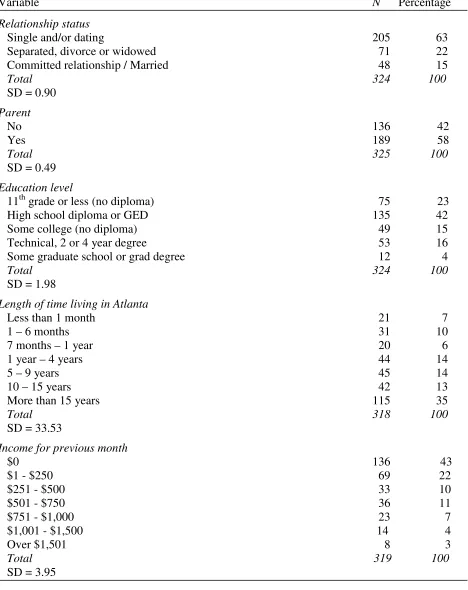
Table 6.2: Demographics: Number, Frequency and Standard Deviation 67
for Relationship Status, Parent, Education Level, Length of Time Living
in Atlanta and Income for Previous Month
Table 6.3: Causes of Homelessness: Number and Frequency for Economic 69
Reasons, Health Reasons, Family Reasons, Housing Reasons and Other
Reasons
Table 6.4: Homeless History: Number, Frequency and Standard Deviation 72
for Usually Slept at Night Over Past Month, Different Times Homeless,
Current Length of Homelessness and Total Length of Homelessness
within Past Three Years
Table 6.5: Number, Frequency, Type and Standard Deviation of Disabilities 74
Table 6.6: Number, Frequency and Standard Deviation for Acceptance 77
of the Homeless Identity
Table 6.7: Centrality to the Homeless Identity: Number, Mean and Standard 78
Deviation of respondents who ranked the role as an important identity
Table 6.8: Centrality to the Homeless Identity by Roles: Number and Frequency 79
for Family member, Worker, Friend, Relationship Status, Religious, Physically Healthy, Education Level and Homeless Table 6.9: Centrality to the Homeless Identity by Roles: Number and Frequency 82
for Race/Ethnicity, Gender, Mentally Healthy, Age, Student, Veteran, Sexual Orientation and Alcoholic/Addict Table 6.10: Salience to the Homeless Identity: Number and Frequency 84
of Respondents who Discussed the Topics Most Often Across the Different Situation Table 6.11: Salience to the Homeless Identity: Number, Frequency and Standard 85
Deviance of Homelessness, Work, Physical Health and Religion Table 6.12: Mean and Standard Deviation for Affective Commitment 87
to the Homeless Identity Table 6.13: Number and Frequency for Interactive Commitment to the 89
Homeless Identity Table 6.14: Mean and Standard Deviations for Self-Esteem 91
Table 6.15: Mean and Standard Deviations for Self-Efficacy 92
Table 6.16: Mean and Standard Deviation for Homeless Identity Meaning 95
Table 6.17: Number, Frequency and Means for Homeless Identity Behaviors 97
Table 6.18: Number, Frequency and Standard Deviation for Exiting the 99
Homeless Situation Table 6.19: Mean and Standard Deviation for Family Support 101
Table 6.21: Homeless Experience: Alcohol / Drug Abuse and Mental Health 105
Table 6.22: Homeless Experience: Learning and Bad Experiences 106
Table 6.23: Homeless Experience: Employment and Housing 107
Table 7.1: Multiple Regression of the Relationship between Interactive 112
Commitment and Salience of the Homeless Identity (H1A)
Table 7.2: Multiple Regression of the Relationship between Affective 114
Commitment and Salience of the Homeless Identity (H1B)
Table 7.3: Multiple Regression of the Relationship between Interactive 115
Commitment and Centrality of the Homeless Identity (H1C)
Table 7.4: Multiple Regression of the Relationship between Affective 116
Commitment and Centrality of the Homeless Identity (H1D)
Table 7.5: Multiple Regression of the Relationship between Salience 118
of the homeless identity and Current Length of Time Homeless (H2A)
Table 7.6: Multiple Regression of the Relationship between Centrality 119
of the Homeless Identity and Current Length of Time Homeless (H2B)
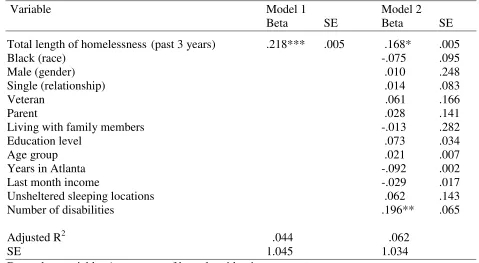
Table 7.7: Multiple Regression of the Relationship between Total Length 122
of Time Homeless and Acceptance of the Homeless Identity (H3A)
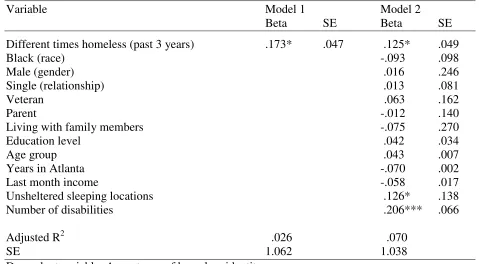
Table 7.8: Multiple Regression of the Relationship between Number 123
of Different Times Homeless and Acceptance of the Homeless Identity (H3B)
Table 7.9: Multiple Regression of the Relationship between Acceptance 125
Table 7.10: Multiple Regression of the Relationship between Interactive 127
Commitment to the Homeless Identity and Attempts to Exit the Homeless
Situation (H5A)
Table 7.11: Multiple Regression of the Relationship between Affective 128
Commitment to the Homeless Identity and Attempts to Exit the Homeless
Situation (H5B)
Table 7.12: Multiple Regression of the Relationship between Salience 129
of the Homeless Identity and Attempts to Exit the Homeless Situation (H5C)
Table 7.13: Multiple Regression of the Relationship between Centrality 130
of the Homeless Identity and Attempts to Exit the Homeless Situation (H5D)
Table 7.14: Multiple Regression of the Relationship between Family Support 133
and Attempts to Exit the Homeless Situation (H6)
Table 8.1: Multiple Regression of the Relationship between Total Length 137
of Time Homeless and Self-Esteem (H7A)
Table 8.2: Multiple Regression of the Relationship between Number 138
of Different Times Homeless and Self-Esteem (H7B)
Table 8.3: Multiple Regression of the Relationship between Acceptance 140
of the Homeless Identity and Self-Esteem (H8)
Table 8.4: Multiple Regression of the Relationship between Interactive 142
Commitment to the Homeless Identity and Self-Esteem (H9A)
Table 8.5: Multiple Regression of the Relationship between Affective 143
Table 8.6: Multiple Regression of the Relationship between Salience 144
of the Homeless Identity and Self-Esteem (H9C)
Table 8.7: Multiple Regression of the Relationship between Centrality 145
of the Homeless Identity and Self-Esteem (H9D)
Table 8.8: Multiple Regression of the Relationship between Family Support 147
and Self-Esteem (H10)
Table 8.9: Multiple Regression of the Relationship between Family Support 149
and Self-Efficacy (H11)
Table 8.10: Multiple Regression of the Relationship between Acceptance 151
of the Homeless Identity and Self-Efficacy (H12)
Table 8.11: Multiple Regression of the Relationship between Interactive 153
Commitment to the Homeless Identity and Self-Efficacy (H13A)
Table 8.12: Multiple Regression of the Relationship between Affective 154
Commitment to the Homeless Identity and Self-Efficacy (H13B)
Table 8.13: Multiple Regression of the Relationship between Salience 155
Commitment of the Homeless Identity and Self-Efficacy (H13C)
Table 8.14: Multiple Regression of the Relationship between Centrality 156
of the Homeless Identity and Self-Efficacy (H13D)
Table 8.15: Multiple Regression of the Relationship between Total Length 158
of Time Homeless and Self-Efficacy (H14A)
Table 8.16: Multiple Regression of the Relationship between Number 159
Table 9.1: Multiple Regression of the Relationship between Safe Place 163
and Homeless Identity Meanings (H15A)
Table 9.2: Multiple Regression of the Relationship between Person 164
To Trust and Homeless Identity Meanings (H15B)
Table 9.3: Multiple Regression of the Relationship between Best Meal 165
Sites and Homeless Identity Meanings (H15C)
Table 9.4: Multiple Regression of the Relationship between Helping Others 166
and Homeless Identity Meanings (H15D)
Table 9.5: Multiple Regression of the Relationship between Telling Storied 167
and Homeless Identity Meanings (H15E)
Table 9.6: Multiple Regression of the Relationship between Staying Sober 168
and Homeless Identity Meanings (H15F)
Table 9.7: Multiple Regression of the Relationship between Sharing 169
Information and Homeless Identity Meanings (H15G)
Table 9.8: Multiple Regression of the Relationship between Interactive 171
Commitment to the Homeless Identity and Homeless Identity Meanings (H16A)
Table 9.9: Multiple Regression of the Relationship between Affective 172
Commitment to the Homeless Identity and Homeless Identity Meanings (H16B)
Table 9.10: Multiple Regression of the Relationship between Salience 173
of the Homeless Identity and Homeless Identity Meanings (H16C)
Table 9.11: Multiple Regression of the Relationship between Centrality 174
Table 9.12: Multiple Regression of the Relationship between Total Length 176
of Time Homeless and Homeless Identity Meanings (H17A)
Table 9.13: Multiple Regression of the Relationship between Number 177
of Different Times Homeless and Homeless Identity Meanings (H17B)
Table 9.14: Multiple Regression of the Relationship between Self-Esteem 179
and Homeless Identity Meanings (H18A)
Table 9.15: Multiple Regression of the Relationship between Self-Efficacy 180
and Homeless Identity Meanings (H18B)
Table 9.16: Multiple Regression of the Relationship between Best Meal 182
Site and Interactive Commitment to the Homeless Identity (H19A-1)
Table 9.17: Multiple Regression of the Relationship between Helping Others 184
and Interactive Commitment to the Homeless Identity (H19A-2)
Table 9.18: Multiple Regression of the Relationship between Telling Stories 185
and Interactive Commitment to the Homeless Identity (H19A-3)
Table 9.19: Multiple Regression of the Relationship between Staying Sober 186
and Interactive Commitment to the Homeless Identity (H19A-4)
Table 9.20: Multiple Regression of the Relationship between Share 187
Information and Interactive Commitment to the Homeless Identity (H19A-5)
Table 9.21: Multiple Regression of the Relationship between Helping Others 188
and Affective Commitment to the Homeless Identity (H19B-1)
Table 9.22: Multiple Regression of the Relationship between Telling Stories 189
Table 9.23: Multiple Regression of the Relationship between Share 190
Information and Affective Commitment to the Homeless Identity (H19B-3)
Table 9.24: Multiple Regression of the Relationship between Helping Others 192
and Salience of the Homeless Identity (H19C-1)
Table 9.25: Multiple Regression of the Relationship between Telling Stories 193
and Salience of the Homeless Identity (H19C-2)
Table 9.26: Multiple Regression of the Relationship between Staying Sober 194
and Salience of the Homeless Identity (H19C-3)
Table 9.27: Multiple Regression of the Relationship between Share 195
Information and Salience of the Homeless Identity (H19C-4)
Table 9.28: Multiple Regression of the Relationship between Staying Sober 197
and Self-esteem (H20A)
Table 9.29: Multiple Regression of the Relationship between Staying Sober 198
CHAPTER 1
INTRODUCTION
Homelessness is a pervasive social problem in the United States. On any given night, over
650,000 homeless people are found sleeping on the streets, at homeless shelters or in transitional
housing programs. The U.S. Department of Housing and Urban Development (HUD) (2009)
defines homeless individuals as persons without adequate, stable nighttime residence. Middle
aged single men who are members of a minority group and live in urban areas comprise the
largest group of people who are homeless (HUD 2009). Despite a plethora of research on the
extent of homelessness in the U.S., causes of homelessness, and behaviors of homeless people,
relatively little has been written about how homelessness is incorporated into people’s sense of
self and the significance of homelessness as a role identity. This dissertation addresses that gap
by exploring the meanings and impact homelessness has for people’s self identity.
The United States began experiencing an immense growth of the homeless population
during the early 1980s (Snow and Anderson 1993). A change in the socio-demographic
composition of the homeless population also occurred during this time period. An increase of
single unaccompanied women and families who were homeless appeared requiring new social
services to meet their needs (Rossi 1990; Snow and Anderson 1993). To understand the
increasing numbers and changing composition, a growing literature developed focusing on issues
of homelessness.
Two broad explanations emerged from the past research as reasons for homelessness. The
2001; Goering et al. 2002; Goldfinger et al. 1999; Rosenheck 2000), while the second reason for
homelessness pointed to structural factors like economics and housing (Elliott and Krivo 1991).
At the time, this research (mainly conducted using homeless counts and surveys) helped define
the homeless problem and determine funding possibilities for solving the issue. Even though the
data on socio-demographics, numbers and reasons were important in understanding the
population, many of these studies overemphasized personal characteristics and individual
pathologies of homeless persons (Snow, Anderson and Koegel 1994).
In response, scholars turned their attention to other aspects of the homeless population,
such as the strategies used to survive while homeless (Snow and Anderson 1987). People learn
techniques in dealing with their homeless situation and to get their needs met. Food, water, and
sleep are basic physiological needs that must be met to survive. Obtaining these necessities can
be difficult for people because on most days only a few social service agencies and/or good
Samaritans are providing these basic items at a few locations throughout an entire city. Getting
adequate sleep can also be a problem because in several major U.S. cities police and security
officers go around waking up homeless people beginning in the early morning hours.
Safety is another important necessity for survival while homeless. The 2009 local city and
two counties (Tri-J) homeless survey found that over a quarter of respondents had been the
victim of a violent attack since becoming homeless. In the six months prior to the Tri-J survey,
almost half of the respondents had visited the emergency room (ER). The fourth most mentioned
reason for going to the ER was because of being attacked or for fighting (Parker and Regus
2009).
Other primary needs are social psychological in nature focusing on the requirements for
city and two counties (Tri-J) homeless survey, the majority of respondents (70 percent) stated
that they were getting the emotional support that they needed, with a small number (30 percent)
of them getting that support from other homeless people. Predominately, the respondents had
people to rely on when they became sick (77 percent), with the majority depending on family
members. In addition, over half of the respondents stated that they were in contact with their
family on a weekly basis (Massey, Runkle and Parker 2008). Finally, average to high levels of
self-esteem are essential for feeling confident about the self, even while homeless.
Predominately, the homeless literature has centered on the physiological and belonging
needs and techniques used to get them met. Snow and Anderson (1987) were among some of the
first researchers to examine the social psychological strategies people use to develop and
maintain the self while homeless, specifically focusing on aspects of the self concept relating to
identity, meaning, and self esteem. These researchers concentrated on the personal identity,
whereby meaning for the self was created during interaction. One dominant strategy for
establishing the self to others was through verbal communication. Verbal construction of the self
as homeless was accomplished through either embracing the homeless identity or it was resisted
by distancing oneself from the homeless identity. Other strategies involved activities centered on
getting needs met, life on the streets and interacting with other homeless people. According to
Snow and Anderson (1987), people created identity and meaning in homelessness by actively
presenting themselves to others and interacting with them, while they gained or lost self-esteem
based on the perceived responses of others to their presentation of self. Thus homeless
individuals either had their self-concept verified or not verified in this process. Negative feelings
Much of the homeless research on social psychological aspects of life on the streets has
been addressed by scholars empirically but has not been well developed theoretically. I propose
filling the gap by applying Stryker’s structural identity theory (Stryker and Serpe 1994). In this
theory, a person’s multiple identities are organized into a hierarchy. This hierarchy of identities
is based around three important elements: salience, commitment and centrality. First, salience is
the probability of invoking a certain identity in a series of situations consistently over time. The
structural identity theory is thus conceived as situationally based identity as opposed to
psychological theories which are personality based. Next, commitment is how attached people
are to an identity. It can be measured in two ways: the number of known others who are
connected to the same identity is “interactive commitment,” and the stronger the ties attached to
the identity is “affective commitment.” Finally, centrality is how important the identity is to
individuals.
Identities that people possess are tied to the social positions or categories in society that
they occupy in their everyday lives (James 1890). Common examples of established social
positions that people occupy are parent, spouse, student and worker. Other social categories that
are not regularly held by people, and thus are seen as not part of the normal life trajectory,
include addict, prostitute and homeless. To know how to act in the social category, there are
behavioral expectations attached to the positions defined as roles. For example, students are
expected to attend classes, read books, write papers, and study for exams. Along with the
activities attached to a role, there are also the meanings that people impute upon the role, such as
students being people who learn and gain knowledge (Burke and Stets 2009).
For those persons with identities that are not seen as part of the traditional life trajectory,
others and labeled as stigmatized (Goffman 1963). Much of the past research has investigated
role identities based on the traditional life trajectory such as student (Burke and Reitzes 1981;
Stryker and Serpe 1994). Instead, this study examines the non-traditional and stigmatized role
identity of homelessness.
In a similar vein, most self-esteem research has also focused on assessing traditional role
identities. The premiere self-esteem scale, developed by Rosenberg (1979), was tested using high
school students. For Rosenberg, self-esteem was the assessment people make of their overall
personal worth based on the opinion of others, comparison to others, and a self assessment of
successes versus failures. Based on findings from his student testing, Rosenberg viewed people
with a negative role identity as having a lower self-esteem. Goffman (1963) and Gecas and
Schwalbe (1983) believed similarly that stigmatized people would possess a lowered sense of
self worth. On the other hand, Croker and Major (1989) thought that stigmatized persons would
have a middle to high range of self-esteem based on techniques that they use to compensate for
their situation. For this study, Rosenberg’s self-esteem scale (1979) and Gecas and Schwalbe’s
self-efficacy concepts (1983) are tested on people who are stigmatized with the homeless identity
to determine whether they will have a low, middle or high self-esteem level.
A further area of investigation is the acquiring and exiting of the homeless role identity.
People who are precariously domiciled can become homeless for a number of reasons such as
unemployment or addiction, thus changing their identity from housed to homeless. The length of
time that people are homeless influences the embracing of the new homeless identity (Snow and
Anderson 1993). Conversely, individuals who are homeless can become housed. As for exiting
the homeless situation, I examine what homeless people believe they need in order to no longer
For this study, I base my inquiry around the following questions: While homeless, do
individuals adopt a homeless identity (i.e., do they embrace or distance themselves from this
identity)? Is a homeless identity the primary or most salient identity for people while in the
situation? How committed are people to the homeless identity during their homelessness? What
activities are important for individuals who are homeless? Do people think of themselves in
positive or negative terms while homeless? How does being homeless affect people’s self-worth?
What attempts do individuals make to exit the homeless situation?
In the past, researchers predominately conducted ethnographies to understand the
construction of a homeless identity (Cohen 2001; Snow and Anderson 1993). For this study, I
build on the previous field research by testing Stryker’s structural identity theory on the three
elements: salience, centrality and commitment (Stryker and Serpe 1994). I also examine identity
meanings based on self descriptive terms and activities (Burke and Reitzes 1981; Burke and Stets
2009), along with the self esteem (Rosenberg 1979) and self-efficacy (Gecas and Schwalbe
1983) of homeless people. These theories are all examined using a standardized questionnaire. A
survey provides the ability to test for validity, reliability and statistically significant relationships
among the multiple variables.
In addition, a new approach to measuring salience is tested based on conversational topics
with others in various situations. This measurement is different than past research in which
students were asked about meeting people for the first time and what they would tell others about
themselves (Stryker and Serpe 1994). Also, the homeless condition, exiting the homeless
situation and socio-demographic characteristics are measured in the surveys. As in previous
people had been homeless. Finally, the respondents are asked whether they identify themselves
as homeless or not.
This research is innovative and significant in four ways. First, whereas past research
investigated homeless identity, the meaning of being homeless and the self-worth of homeless
people by conducting ethnographies, this study tests these variables utilizing a standardized
questionnaire. Second, instead of only considering homeless identity in terms of whether people
embrace it or not, this research also examines homeless identity theoretically (and empirically)
using Stryker’s structural identity theory: salience, centrality, and commitment. Third, it applies
a new approach to measuring identity salience based on conversational topics with others in
various situations. Finally, this project expands on the common pathology model of
homelessness, which focuses on fixing the problems of individuals, and applies a new identity
centered approach to policies and program development. This new approach focuses on the
positive meanings, activities and self-worth of people who are homeless by emphasizing their
strong survival skills, ability to provide emotional support to other homeless people and their
average to high self-esteem. This new method also highlights and evaluates other identities that
homeless people possess such as parent and worker, instead of only focusing on the stigmatized
homeless identity.
The following chapters describe more comprehensively the goals, theory, methods, and
findings of my research. Chapter two discusses the current and past state of homelessness,
including the highly debated definition of homelessness, the individual and structural causes, and
demographic characteristics.Chapter three then states the various strategies that people use to
maintain and construct their identities, meaning, and self-worth while homeless. In chapter four,
along with other supporting theoretical frameworks. Chapter five explains the sampling and
survey research methods utilized in this study while chapter six provides the reliability data and
descriptive statistics. Chapters seven (homeless identity), eight (self-esteem and self-efficacy)
and nine (homeless identity meanings and behaviors) present the findings from the regression
analysis used to test the hypotheses.After the results are presented, chapter ten offers the
conclusion to the study, its key theoretical contributions, its relevance in the context of social
CHAPTER 2
CONDITIONS OF HOMELESSNESS
In order to understand homelessness, it must first be defined. Reviewing the literature, most
often homelessness is identified as the lack of a permanent place to sleep at night, such as an
apartment or house. Reasons provided for becoming homeless range from individual problems of
addiction to structural factors such as the lack of affordable housing. In addition to knowing the
causes of homelessness, researchers and policy makers throughout the U.S. want to understand
the scope of the problem by determining the number and characteristics of the homeless
population. The purpose of this chapter is to discuss these various aspects that encompass the
past and current conditions of homelessness.
HOMELESS DEFINITIONS
An issue for people attempting to solve homelessness is how to identify the scope of the
problem. One aspect of that is deciding who is homeless. Currently, there are a multitude of
homeless definitions from various perspectives.
The federal definition of homelessness was amended in 2009 as The Homeless Emergency
Assistance and Rapid Transition to Housing (HEARTH) Act. The original McKinney-Vento
Homeless Assistance Act (1987) focused on an individual or family who was literally homeless,
such as those sleeping on the streets, in abandoned buildings, and in temporary shelters or
housing programs. The 2009 amendment expands the federal homeless definition to include
place to stay due to a lack of resources or support networks. The updated definition also includes
unaccompanied youth and families with children who have been without permanent housing for
an expanded period, frequently moved around and will continue to be unstably housed due to
someone in the household experiencing a disability or several obstacles to employment. A final
factor for defining an individual or family as homeless is if they are fleeing from domestic
violence or some other life-threatening situation. This federal definition is administered by the
U.S. Department of Housing and Urban Development (HUD) and used by state and local
governments and non-profit agencies receiving federally based funds.
Another federal agency, the U.S. Department of Health and Human Services (2003),
defines homelessness by length of time: temporary, episodic and chronic. People who are
temporarily homeless experience the homeless spell for only a short period of time. Once they
are housed, they are no longer in need of homeless services ever again.Episodically
homelesspeople are homeless sporadically. Thus their use of homeless services are intermittent
and usually for only short periods of time.Finally, it is important to note that the chronically
homeless has a much limited definition than the previous two time frames in that it is only for
unaccompanied individuals and certain sleeping locations (HUD 2007). Thus chronically
homeless individuals are those who are continuously homeless for a year or more or have been
homeless at least four times over the past three years. The individuals must also have a disabling
condition such as an addiction or mental illness.
For Snow and Anderson (1993), homelessness has three dimensions: residential, family
support networks, and role and self-worth. The first dimension indicates a lack of conventional
permanent housing and is typically the start of how people are defined as homeless. The second
their family. Familial support ties into the “traditional image” of home as being shared with
family. The third dimension refers to the homeless role as being a master status. The homeless
role or identity is highly visible and seen as negative, especially when interacting with others,
and thus can affect the dignity and self worth of people who are homeless (Snow and Anderson
1993).
Other researchers also indicate that the primary definition of homelessness begins with the
lack of a conventional place to sleep such as a house or apartment. Rossi (1989) though
challenges the concept of what is a “conventional dwelling”. He asks whether or not a hotel
room, single occupancy or rented room, recreational vehicle or even a tent could be included. By
reviewing how other agencies and researchers have defined homelessness, we see that it is not
universally defined but instead created by each developer based on their research or purpose.
TYPES OF SLEEPING LOCATIONS
For people who are homeless, there are several types of sleeping locations. Emergency
shelters provide homeless individuals and families with places to sleep nightly for up to three
months. These facilities provide a minimum of basic services, such as a place to shower and
evening and morning meals. On the other hand, a transitional housing program allows homeless
people to stay for up to two years. The agencies also provide additional supportive services, such
as case management and job training, to help facilitate moving into an independent living
situation. Aside from these formally designated shelters and housing programs, some homeless
people find or make improvised sheltered places to live or sleep (e.g., abandoned buildings,
cannot find sheltered locations to sleep, then they will sleep on the streets, in parks, in doorways,
under bridges or bushes, or in other unsheltered locations.
CAUSES OF HOMELESSNESS
The homeless literature has primarily focused on two main causes of homelessness (Main
1998; Morris 1998). One reason points to issues with the social structure such as affordable
housing and political and economic factors as sources for the problem (Morrell-Bellai, Goering,
and Boydell 2000). The other cause indicates the pathological behavior of individuals as the
reason for people becoming homeless (Wright, Rubin, and Devine 1998). A continuing debate
exists as to the importance of each in explaining the cause of homelessness.
Structural explanations attribute the problem of homelessness to the dominant institutions
of the United States such as the government, educational system and corporate business.
Homeless advocates blame these institutions for not providing enough support for the most
vulnerable and disadvantaged members. With continued systematic problems, an increasing
unequal distribution of wealth and poverty creates a widening gap between the rich and the poor.
Criticism is placed on the federal and local governments for failing to create social policy
that adequately addresses the homeless problem (Elliott and Krivo 1991; Main 1998) and for
changing policy to the detriment of the homeless. Policy changes, such as the 1996 Welfare
Reform Act, adversely affect the social subsidies that the homeless use to survive. The welfare
benefits prior to 1996 allowed homeless families the ability to leave emergency shelters within a
six week time period. However with the changes to the welfare system, families need to stay for
several months at long term transitional family shelters in order to stabilize and obtain permanent
The main concern for homeless advocates is the failure to aggressively address the
overarching societal factors that result in high levels of poverty that put people at risk of
becoming homeless. For instance, the public school system does not provide the education and
skill level that high risk students need to compete in the current global job market. Job
opportunities for people with low skill levels are diminishing. Working at the minimum wage is
not sufficient to provide a living for individuals or enough money for heads of households to
support families. At the same time, inadequate mass transit systems and long commutes in urban
areas makes it difficult for the homeless to travel the distance necessary to obtain possible jobs in
prosperous suburban neighborhoods where a majority of businesses that pay livable wages
currently are located.
Often homeless people are located in the downtown sections of cities to be closer to social
service agencies which are concentrated in the central city. Navigating the urban space between
agencies is a problem because this places the homeless in direct contact with others using the
same downtown space. Conflicts arise when the use of space is at odds between the homeless
and businesses or residents (Snow and Mulcahy 2001). Various major cities throughout the
United States such as Atlanta, Miami Beach, and San Francisco have passed ordinances to limit
panhandling around businesses and tourist attractions (Copeland and Jones 2005).
Even though both structural factors and personal problems are discussed in the literature,
primary attention is placed on individual difficulties (Snow et al. 1994). Focus on personal
troubles leads to the assumption that it is the pathology that is responsible for persons being
homeless. The issue of homelessness is shifted then to a problem inherent in individuals and not
in societal factors. It is assumed that people have the power to prevent homelessness. The
Much of the emphasis on personal characteristics has to do with the theoretical orientation
of researchers from other disciplines such as psychology, social work and the medical
profession. These researchers list multiple individual attributes, conditions, and characteristics as
reasons for people becoming homeless. Mental illness (along with the deinstitutionalization of
mentally ill people) has been the main problem discussed with substance abuse being a close
second (Cohen 2001; Coldwell and Bender 2007; Goering et al. 2002; Goldfinger et al. 1999;
Main 1998; Rosenheck 2000). Negative childhood experiences like poverty and family problems
are found to create an increased risk for becoming homeless as adults (Koegel, Melamid, and
Burnam 1995; Morrell-Bellai et al. 2000; Tam et al. 2003). Other factors that contribute to
homelessness include spousal abuse, evictions, lack of familial support and physical disabilities
(Goering et al. 2002; Morrell-Bellai et al. 2000).
DEMOGRAPHICS WITHIN U.S. HISTORICAL CONTEXT
In the U.S., the size and composition of homelessness fluctuates depending on the
economic situation. Prosperous times obviously lead to a decreased homeless population.
Unfortunately these periods do not last and are often followed by downward economic cycles
that are difficult times for those living in poverty.
After World War I, the United States economy experienced a number of disruptions: the
stock market crash of 1929, a drought in the Midwest region from 1933 to 1935, and the
hardships of the Great Depression in the 1930s. The homeless population was mainly comprised
of young unattached men who moved from place to place looking for employment; however,
families were also a part of the population (Ry 1993). Transient centers and overnight shelters
Unfortunately with so many people struggling to survive, providing assistance became a burden
for cities and states which they could not handle. Because of the high demand, local agencies
filled in the need but limited their aid to residents who had lived in the community for at least a
year (Freidel 2001).
With entry into World War II, the U.S. experienced a reduction in the size of the homeless
population as men and women joined the military or found work in the factories (Hopper and
Hamburg 1984). Following the war in the 1950s, the homeless population was predominately
comprised of white adult men in their fifties who lived regularly or sporadically in single room
occupancy hotels (SRO). The skid row section of the central cities is where they were
concentrated. This part of cities catered to transients, poor and the homeless by providing
lodging, restaurants, bars, pawn shops and cheap clothing stores (Bogue 1963; Rossi 1989).
These homeless men were unmarried with few friends and little contact with their relatives.
They experienced alcoholism, mental illness and physical disabilities. They lived off their social
security benefits and menial jobs in agriculture, construction, and the loading docks. Missions
and shelters were concentrated in the skid rows to provide the men who were not working with
food and beds (Bogue 1963).
From the 1950s to the 1970s the American economy prospered with an expansion of job
opportunities and a focus on urban renewal. The skid row sections of downtowns where the
homeless lived were viewed as problem areas. They became a target for redevelopment due to
the cheap land and housing. The urban renewal projects of that era resulted in much of the
affordable housing that supported the homeless being renovated or demolished and replaced with
In the 1980s, the size of the homeless population increased and a shift in the composition
occurred (Rossi 1990). Unlike the skid row homeless of the previous years, this group was not
concentrated in one area of downtown but was living on the streets and in shelters scattered
throughout U.S. cities. The homeless population was more visible to the public due to their larger
numbers, dispersion throughout cities, and because they were literally sleeping on park benches
and doorways of office buildings. One main concern was the increase in the number of single
women and families. Transitional and domestic violence shelters appeared to accommodate the
larger numbers and changing needs of homeless (Weinreb and Rossi 1995). Racial and ethnic
minorities came to comprise the largest percentage. The overall median age of this group was
much lower at 34 years, mainly due to the younger ages of heads of families. As in previous
years, this group experienced extreme levels of poverty due to inconsistent and non-existent
employment. Unaccompanied adults also faced high levels of mental illness, alcoholism, and
physical disabilities (Rossi 1990).
LOCAL DEMOGRAPHICS
With the increasing concern about the rise in the homeless population, communities
throughout the U.S. began to be concerned about the scope of the problem locally. In 2002, the
Southern city and its two counties (Tri-J) had decided that assessing the number of people
homeless in the community and their needs was critical in addressing the problem. Beginning in
2003 and every two years thereafter, the Tri-J conducted an enumeration of the homeless
population, which was then followed several months later with a survey. The homeless count
takes place during the last two weeks in January based on a HUD mandate and gathers basic
survey is conducted to get a more in-depth understanding of the characteristics and needs of
people who are homeless in the community (Parker 2009).
On January 25, 2011, the city and its two counties (Tri-J) counted 6,838 as being homeless
in the community (Parker et al. 2011). The majority of homeless people (5,987 persons) were
located in the city where most social service agencies are located. Of the overall homeless
number, there was a three way split in sleeping locations – emergency shelters (36 percent),
unsheltered (35 percent) and transitional housing (29 percent). Adult males were the largest
group of people homeless (68.5 percent) with adult females a distant second (15.3 percent) and
children in families third (10.3 percent).
A trend analysis of all four local homeless surveys revealed that the majority of
respondents were black, single, non-veteran, middle aged men. For both the 2007 and 2009
homeless surveys (Massey et al. 2008; Parker 2009), the majority of respondents were homeless
six months or less with this being their first time homeless, although these numbers had
decreased from 2007 to 2009. As for the chronically homeless percentage, it had increased from
20 percent to 23 percent between 2005 and 2009 (Johnson, Ashley, and Pandley 2005; Parker
2009).
The top causes of homelessness for both 2007 and 2009 were unemployment, alcohol/drug
use and relocation from out of town. An interesting finding was that alcohol/drug use was the
primary reason given for the 2007 Tri-J homeless survey but it was the lack of jobs for 2009.
This is a possible reflection of the current difficult times that the U.S. economy is experiencing
(Massey et al. 2007; Parker 2009).
Another indication of the current economic hardships for this population was obtained from
over a quarter of people worked a full time job (27 percent). Yet in 2009 when that same
question was asked, the number decreased significantly (7 percent) for people employed full
time. Also, the number of respondents receiving governmental assistance almost doubled from
2005 to 2009 (Johnson et al. 2005; Parker 2009).
SUMMARY
A review of the literature finds several definitions of homelessness based on the agenda
and specialization of the agencies and people creating the definition. Homeless definitions
created by the federal government are for funding purposes. In the past, they were limited in their
focus by concentrating on one main element of the homeless situation such as sleeping location
or length of time. With the HEARTH Act amendment however, the federal homeless definition
has expanded to include more dimensions similarly to that of homeless researchers. This study
also starts with sleeping location for defining people homeless and expands the definition by
investigating length of time homeless and other dimensions such as cause of homeless and
experiencing a disability. In addition, the dissertation allows the respondents to state whether or
not they identify as homeless, and if so, how strongly.
A similar limited focus is found with discussions regarding causes of homelessness. Many
researchers and advocates focus on the cause of homelessness as uni-dimensional - either
structural factors or individual characteristics. However, by placing the homeless population and
composition in a historical and local context as this study has done, the changing nature of the
population can be seen.As for reasons of homelessness, a multi-dimensional approach is applied.
Normally there is not just one cause as to why persons or families become homeless but several.
The multiple factors are interconnected, even if on different levels. People without stable,
illnesses. Nevertheless, individual deficiencies cannot be blamed solely for a person becoming
homeless. Several structural factors, such as being born into poverty, place persons at risk of
considerable homelessness. A disability such as a mental illness, a natural disaster such as
Hurricane Katrina, or an unexpected event such as a sudden illness can push individuals or
families who are at risk past the level of maintaining a home and onto the streets (Wright et al.
1998). In working to eliminate homelessness, both individual and structural factors must be
taken into account to come up with an appropriate response that meets the immediate needs of
homeless people while addressing long-term causal factors.
Finally, with this study, it is important to place the demographics, composition and number
of homeless people in the community within a historical and geographical context. For instance,
the local homeless population is definitely a reflection of the demographics and economic
possibilities within the city. Another factor that will be considered is the city’s goal to focus on
eliminating chronic homelessness in ten years by moving away from emergency shelters which
sustain homelessness and towards transitional and permanent housing which appears to end the
CHAPTER 3
STRATEGIES OF THE HOMELESS
In the 1980s, with a change in the social demographics of the homeless population, also
came a change in the homeless literature. Previously research had primarily focused on the
causes of homelessness and the social demographic characteristics of the homeless. Additionally,
Bogue (1963) also investigated the personality structure and self-image of homeless people on
skid row. One area not studied by homeless researchers at the time was identity. Snow and
Anderson (1987) realized this gap existed in the homeless research and focused their attention on
this neglected area.
Since the work of Snow and Anderson (1987), other researchers expanded their ideas on
the construction and maintenance of the homeless identity. Studies also looked at extending other
social psychological elements of the homeless. One area of interest focused on the meaning that
homeless people give to their lives while on the street (Boydell, Goering, and Morell-Bellai
2000; Cohen2001; Hill2003;Snow and Anderson 1993). Another subject of importance has
been the self worth of individuals who are homeless (Miller and Keys 2001; Morris 1998;
Osborne 2001; Snow and Anderson 1993). Along with social psychological strategies of the
homeless, this chapter also presents the work of researchers who studied the strategies of people
HOMELESS IDENTITY
To fill the void in the literature, Snow and Anderson (1987, 1993) examined the survival
strategies of the homeless. The researchers observed homeless people in their daily routines and
engaged them in conversations to understand their life on the streets. A main objective of their
study was to advance the understanding of how individuals in the lowest strata of society survive
socially and psychologically.
Snow and Anderson (1987, 1993) found that people were faced with establishing who they
are during this homeless situation by constructing and maintaining an identity that supported a
sense of worth and dignity. Identity was not viewed by the researchers as a single element, but
was instead separated into three types: social identity, personal identity and self-concept. Social
identity is the identity given to persons by others based on the individuals’ appearance or
behavior in a situation. This concept of social identity is consistent with Goffman’s (1963)
definition. On the other hand, personal identity differs from Goffman (1963) and is instead seen
as the attribution of meaning given to oneself during interaction. Finally, the self-concept is the
overarching image one has of oneself.
According to Snow and Anderson (1993), one of the main activities used when proclaiming
a personal identity is that of verbal communication. Verbal construction, called identity talk,
consists of three forms: distancing, embracement and fictive storytelling. The first form of
identity talk is distancing, when individuals separate themselves from the homeless role and from
homeless institutions. They believe that the homeless identity is inconsistent with their
self-image or personal identity. There are three types of distancing. Associational distancing is when
distancing indicates that persons disassociate themselves from the role of homelessness (role
distancing). Institutional distancing is the final technique and occurs when homeless individuals
talk derogatorily of the service agencies that attend to the needs of homeless people such as
Salvation Army.
Embracement is the second type of identity talk. Individuals accept a homeless identity
because it is consistent with their self-concept. Role embracement is seen as accepting a
homeless category such as hippie tramp or dumpster diver. Associational embracement is when
homeless people take seriously and are committed to social relationships with other homeless
individuals. Accepting a set of beliefs congruent to the homeless identity is called ideological
embracement (Snow and Anderson 1993).
The final type of identity talk is that of fictive storytelling. Experiences and
accomplishments of the individuals’ past, present or future selves are exaggerated during
discussion to enhance self presentation. Additionally, homeless individuals may fantasize about
the future indicating that they would be self-employed, possess money and material items, and be
in a significant relationship (Snow and Anderson 1993).
Snow and Anderson (1993) indicated that survival strategies and identity construction
varied with time that homeless individuals spent on the streets. Homeless people on the streets
for a short period of time distance themselves from the homeless identity, whereas those on the
streets longer than two years embrace the homeless identity in conversation. Therefore, the
identities that homeless people construct and maintain are not static but instead change with the
passage of time.
Being homeless creates identity problems for people. Positive identities that existed prior to
identity of the present is devalued. For the future, different non-homeless identities are always
indicated as emerging by people. Thus homeless identity formation is not static over time, but
instead is a process that progresses towards accepting a homeless identity the longer individuals
are on the streets (Boydell et al. 2000).
MEANINGS AND BEHAVIORS OF HOMELESS PEOPLE
To create meaning while in the homeless situation, individuals invoke “casual accounts or
commonsense attributions” (Snow and Anderson 1993) to make sense of their circumstances.
One account (“I’m down on my luck”) is that they credit their situation to unanticipated
occurrencesthat are outside oftheir controlsuch as bad luck or an unfortunate incident. A
second attribution (“What goes around, comes around”) is that since they are suffering now, their
luck will change for the better in the future and they will be on top. With the final account (“I’ve
paid my dues”), it is believed that they have met the preconditions for a run of good luck due to
their homeless experiences.
Unfortunately, while homeless, individuals must deal with more than simply trying to meet
their basic daily needs.They are also often faced with disabling conditions such as mental illness
and alcohol or drug abuse. For mentally ill homeless persons, there is a continuous search to
discover significance in their lives.Meaning and a positive self-image is infused into their lives
by the telling of stories which can involve elaborate fantasies and important people and events.
For alcohol and drug abusers, meaning is instilled through staying busy with activities such as
finding sources by which to purchase alcohol or drugs, by pursuing obtainable goals like getting
mainstream domiciled people as pathological, but for the homeless, the use of stories and the
pursuit of these goals can be adaptive strategies to appear “normal” (Cohen2001).
According to Boydell et al. (2000), for homeless people, the loss of their past identity is
important in understanding the meaning of their present situation. A number of homeless people
express their current identity in positive terms using adjectives like honest, kind, hardworking,
resourceful and independent, whereas others spoke of their selves in negative terms. The sense of
a positive self, as well as a devalued self, is usually the result of interactions with other people.
Many homeless people conceive of a future self that will no longer be homeless (i.e., a
non-homeless identity). Their future self is seen as being healthy and stable. Once housed, they feel
that they will be able to assist other marginalized people because, due to the homeless
experience, they feel as if they have a deeper understanding of the purpose of life (Boydell et al.
2000).
SELF-WORTH OF HOMELESS PERSONS
Just as homeless people attempt to live lives of value, they also strive to have selves of
value. According to Miller and Keys (2001), homeless people feel a sense of self-worth when
they are validated by being treated with dignity. This respect is validated and sustained through
receiving care, being treated as individuals, and receiving personalized service from others. By
feeling good about themselves, individuals are more motivated to become self-sufficient, exit
homelessness and contribute to others(Miller and Keys 2001).
On the other hand, while homeless, people feel doubts about their self-worth because on a
regular basis they experience negative attention, being ignored or avoided by those who are
of their dignity (Burke and Stets 2009; Miller and Keys 2001). They feel demeaned and
diminished as people. The dignity of homeless persons is violated in several ways such as
through poor service and being unfairly treated which led to feelings of anger, depression and
that no one cares (Miller and Keys 2001).
Miller and Keys (2001) identified six factors that negatively affect the dignity of homeless
people. One way to violate homeless persons’ dignity is to treat individuals like a number or to
lump all homeless into one homogenous group with no personal identity. Another way is to treat
people like children or animals. A third way is to give impersonal service by making people wait
in a long line for a lengthy time or else force people to rush through a service line. A fourth way
is to violate the rights of individuals. A fifth way is to assault the persons physically or verbally
such as by yelling insults. A final way is to have an excessive number of rules, have staff enforce
rules at their own discretion, have staff enforce rules with no rationale, and have staff give
explicit orders of how to behave.
For mainstream society, the number, quality and cost of material possessions that people
own evoke a sense of status or social worth for the self. Unfortunately, homeless persons are
unable to act as consumers and purchase items due to a lack of financial resources and a place to
house the material objects. The homeless are thus socially isolated and ostracized because they
cannot participate in the modern American consumer driven society (Hill 2003). They may feel
that someone who possesses so little of material value must themselves be worthless (or they
suspect that others think this about them).
According to Miller (1998), gender affects the self-esteem of individuals. The self-esteem
for unaccompanied women is found to be slightly higher than that for unaccompanied men. It is
women, because they have been socialized to be independent and self-sufficient. On the other
hand, women are more willing not to blame themselves for accepting assistance while homeless
through their socialization process (Morris 1998).
To protect their self esteem, the newly and chronically homeless create an “us” versus
“them” dichotomy. Each group believes that they are different from the other group by not being
as lazy or as unmotivated. One group presents themselves favorably while speaking of the other
group in negative terms (Boydell et al. 2000).
EXITING THE HOMELESS SITUATION
With the focus of research on conditions of homelessness and social psychological factors,
few studies have addressed attempts of persons who are homeless to transition off the streets.
MacKnee and Mervyn (2002) determinednineteen categories that facilitated and four that
hindered homeless people’s attempts to exit homelessness based on face to face interviews with
seventeen formerly homeless individuals. From these twenty-three categories, five themes
emerged: theme one – established supportive relationships, theme two – enhanced self-esteem,
theme three – accepted personal responsibility, theme four - accomplished mainstream lifestyle
goals and finally theme five - changed perceptions that street life was acceptable. Of these five
themes, this study assesses themes one, two and four as they relate to the social psychological
variables being investigated.
Supportive relationships (theme 1) means having someone provide instrumental and/or
socioeconomic support, such as a family member, social worker, friend, or pastor. When other
people provide support, homeless people experience encouragement, acceptance and trust.
reestablishing family relationships help them to discover their personal identity and exit life on
the streets.A vital factor in exiting homelessness and then not returning back to street life is the
ability to sever ties with friends from the street.An obstacle to exiting the street life fully is
feeling a sense of loyalty towards the street friends who they think of as “family”, feeling guilty
over leaving this constructed street “family”, and a sense of loss for giving up these relationships
(MacKnee and Mervyn 2002).Being treated with dignity by others is motivation to improve
oneself, become self-sufficient, and exit homelessness (Miller and Keys 2001).
Key factors to enhancing self-esteem (theme 2) is establishing confidence and belief in
people’s talents.Accomplishing mainstream goals (theme 4) is also important in attempting to
exit life on the streets. These goals include attending alcohol/drug rehabilitation programs to stop
using substances, obtaining a legitimate job to maintain financial stability and finishing a school
program and/or attaining a GED. Achieving these goals promotes a sense of pride,
accomplishment, and level of confidence (MacKnee and Mervyn 2002).
Various possibilities exist for individuals who maintain their domiciled identity in their
attempts to leave the streets versus people who create a homeless identity (Osborne 2001). The
individuals who strongly identify as homeless are more self-reliant and less likely to transition
off the streets. Within a year time period, these people are significantly less likely than others to
have made attempts to exit the streets. On the other hand, people who did not identify as being
homeless are more likely to use social services and make attempts to get off the streets. The
reason for the difference is that people who identify as homeless are fully integrated in the
homeless role and thus use different strategies to maintain a homeless status. For people who
have been on the streets for less than sixteen months, the average number of attempts to exit the
Farrington and Robinson (1999) divided the twenty-one respondents from their participant
observation study into categories based on length of time on the streets. For “aspirant exiters,”
the length of time on the streets was less than one year. “Deniers” had been on the streets from
fourteen to eighteen months. “Subgroupers” had been homeless from two to four years. “Carers
and sharers”, “family” and “typicals” were homeless the longest time at more than three and a
half years.Aspirant exiters, deniers and subgroupers all discussed leaving their homeless
situation. Aspirant exiters did not identify with other homeless people, but instead distanced
themselves both behaviorally and cognitively by stressing their skills, travel experience and
coping abilities.Deniers disavowed group membership as homeless and instead asserted new
identities. This allowed individuals the ability to exit the homeless situation, since their identity
was not tied to it. Homeless identities were integral to carers, sharers, family, and typicals in the
situation making it difficult for them to escape the street life.
The ability to exit the homeless situation appears to be the result of a number of factors at
both the structural and individual level. Structuralreasons that enable individuals to leave a life
of homelessness include a livable minimum wage, decent employment, and affordable housing.
Personal issues that contribute to people remaining on the streets include impoverished support
networks and alcohol or drug problems(Morrell-Bellai et al. 2000).
SUMMARY
The current literature views homeless individuals as coming to accept a homeless identity
the longer that they are homeless (Snow and Anderson 1993). In this dissertation the current
dualistic “either/or” approach (i.e., viewing someone simply as either homeless or not homeless)