Middle-Secondary Education and Instructional Technology Dissertations
Department of Middle-Secondary Education and Instructional Technology (no new uploads as of Jan. 2015)
Fall 12-12-2010
Passing as Literate: Gender, Dyslexia, and the
Shaping of Identities
Ellen Burns Hurst
Georgia State University
Follow this and additional works at:https://scholarworks.gsu.edu/msit_diss Part of theEducation Commons
This Dissertation is brought to you for free and open access by the Department of Middle-Secondary Education and Instructional Technology (no new uploads as of Jan. 2015) at ScholarWorks @ Georgia State University. It has been accepted for inclusion in Middle-Secondary Education and Instructional Technology Dissertations by an authorized administrator of ScholarWorks @ Georgia State University. For more information, please [email protected].
Recommended Citation
This dissertation, PASSING AS LITERATE: GENDER, DYSLEXIA, AND THE SHAPING OF IDENTITIES, by ELLEN BURNS HURST, was prepared under the direction of the candidate‘s Dissertation Advisory Committee. It is accepted by the committee members in partial fulfillment of the requirements for the degree Doctor of Philosophy in the College of Education, Georgia State University.
The Dissertation Advisory Committee and the student‘s Department Chair, as representatives of the faculty, certify that this dissertation has met all standards of excellence and scholarship as determined by the faculty. The Dean of the College of Education concurs.
Mary Ariail, Ph.D. Committee Chair
Amy Seely Flint, Ph.D. Committee Member
Dana L. Fox, Ph.D. Committee Member
Patricia Carter, Ph.D. Committee Member
Date
Dana L. Fox, Ph.D.
Chair, Department of Middle-Secondary Education and Instructional Technology
R. W. Kamphaus, Ph.D.
By presenting this dissertation as a partial fulfillment of the requirements for the
advanced degree from Georgia State University, I agree that the library of Georgia State University shall make it available for inspection and circulation in accordance with its regulations governing materials of this type. I agree that permission to quote, to copy from, or to publish from this dissertation may be granted by the professor under whose direction it was written, by the College of Education‘s director of graduate studies and research, or by me. Such quoting, copying, or publishing must be solely for scholarly purposes and will not involve financial gain. It is understood that any copying from or publication of this dissertation which involves potential financial gain will not be allowed without my written permission.
All dissertations deposited in the Georgia State University library must be used in
accordance with the stipulations prescribed by the author in the preceding statement. The author of this dissertation is:
Ellen Burns Hurst 1156 Hampton Hall Drive
Atlanta, GA 30319
The director of this dissertation is:
Dr. Mary Ariail
Department of Middle-Secondary Education and Instructional Technology College of Education
ADDRESS 1156 Hampton Hall Drive Atlanta, Georgia 30319
EDUCATION
Ph.D. 2010 Georgia State University
Teaching and Learning: Language and Literacy
Department of Middle-Secondary Education and Instructional Technology
Ed.S 1986 Georgia State University
Vocational and Career Development
M.Ed. 1980 Georgia State University Reading Specialist
A.B. 1975 Georgia State University Elementary Education
PROFESSIONAL EXPERIENCES
Classes Taught
2010 Supervision of Interns and Student Teachers, Department of Early Childhood, GSU
2010 Critical Issues in Education, Department of Education, Georgia Gwinnett College
2009-2010 Assessment in Early Childhood, Department of Early Childhood, GSU 2008 Writer‘s Workshop, Teaching Internship, Department of Middle,
Secondary and Instructional Technology, GSU
2007-2009 Regents‘ Reading Skills, Department of Middle, Secondary and Instructional Technology, GSU
PRESENTATIONS AND PUBLICATIONS
Puvirajah , A., Schoene, M., Hurst, E.(2010) A teacher's role in facilitating scientific inquiry for her environmental science students. . Presented at the American Educational Research Association, Denver, Colorado.
Zisook, K. & Hurst, E. (February, 2009). Writers who run with the wolves. Presented at 16th Annual Institute for Women‘s Studies Student Research Symposium, University of Georgia, Athens, GA.
University, Atlanta, GA.
Hurst E. (February 2008) Title I reading teacher self-efficacy Presented atConference on Literacy, Urban Issues, and Social Studies Education, Georgia State University, Atlanta, GA.
Hurst, E. (November, 2008) 10 mini lessons for ELL writers Presented at Southern Association of Colleges and Schools State Conference Workshop Presentation: flint, A., Ariail, M., Fisher, T., Kurumada, K., Zisook, K., & Hurst, E. (December, 2008).
Changing ―Yes, but…‖ to ―How can…?‖: Reframing identities among teachers of writing. Presented at National Reading Conference, Orlando, FL.
ARTICLE UNDER REVIEW
Hurst, E. (2009) Dyslexia: Myths and misconceptions, Georgia Journal of Reading, Spring 2010 (Rewrite and Resubmit).
PAPERS
Flint,A., Ariail, M., Hurst, E., Fisher,T., Kurumada, K., & Zisook, K. Changing “Yes,
but. . .” to “How can. . .?”: Reframing identities among teachers of writing. Manuscript submitted for publication.
PASSING AS LITERATE: GENDER, DYSLEXIA AND THE SHAPING OF IDENTITIES
by
Ellen Burns Hurst
The purpose of this qualitative case study was to investigate the ways in which
currently diagnosed dyslexic females, who navigated adolescence and their concomitant
schooling without a definitive diagnosis of dyslexia, negotiated their identities in the figured
world of school. To explore this phenomenon, it was necessary to understand the complexity
of dyslexia as well as the theoretical underpinnings of identity construction, adolescence, and
―passing as literate.‖ This case study is informed by poststructuralist thought; through this
lens I examine how my subjects perceived their worlds and how they negotiated the
challenges associated with undiagnosed dyslexia. As they describe their positions in their
figured worlds, I search for issues of power, identity and agency around which their lives
appear to be organized.
The answers to the following research questions were sought: (1)How do adult
women who were undiagnosed dyslexic girls reflect upon their negotiations of identity in the
figured world of school (Holland, Lachicotte, Skinner, & Cain (1998)? (2) Is there evidence
that girls attempt to pass as literate? If so, what types of ―passing‖ attempts and techniques
are used by dyslexic adolescent girls to appear more literate? Case study methodology offers
the insight provided by detailed narratives of personal experiences. Data was collected by
interviews, observations and researcher‘s field notes obtained through the stories of three
adult dyslexic women. The data was analyzed for affirming or conflicting themes. The stories
were retold in a chronological and thematic pattern describing the participants‘ experiences
by
Ellen Burns Hurst
A Dissertation
Presented in Partial Fulfillment of Requirements for the Degree of
Doctor of Philosophy in
Teaching and Learning in
the Department of Middle-Secondary Education and Instructional Technology in
the College of Education Georgia State University
Copyright by Ellen Burns Hurst
ii
ACKNOWLEDGMENTS
I would like to acknowledge the courage of the three women who made this study possible. It is my hope that their telling of their struggles will inform the teachers of today and tomorrow about the challenges facing individuals with dyslexia.
To my dissertation chair, Dr. Mary Ariail, I owe my understandings of identity, the research process and the ethics and collegiality of academia. With her guidance and with the many opportunities she provided me from the very beginning of my doctoral program, I view my belated start in academia as an opportunity rather that an
impediment. I would also like to give my warmest thanks to her for offering her friendship in only the way that a mentor can by listening, questioning, talking, and keeping me off the ledge.
I extend special gratitude to my committee members who each guided my work from their specialty areas. Dr. Amy Flint, Dr. Patricia Carter, and Dr. Dana Fox have placed their unique marks on my identity as an academic. With your support, my journey was rich and meaningful, and this work more robust.
Many thanks and appreciation is also given to my children Eric, Zac and Elizabeth. Their fearless life choices and extraordinary successes provide continuous inspiration. A special thanks to Dr. Eric Hurst. To have a child as a mentor is a unique and wonderful experience. From my first steps into the library, to learning the tricks of negotiating registration, he has held my hand.
iii
TABLE OF CONTENTS
Page
List of Tables ... iv
Chapter 1 INTRODUCTION ...1
The Problem ...1
Purpose ...4
Theoretical Framework ...5
2 REVIEW OF LITERATURE ...15
Nature of Dyslexia ...16
Dyslexia Misconceptions ...18
Views of Adolescence...19
The Construction of a Gendered Literacy Identity ...23
Once the Damage is Done: Spoiled Identity and ―Passing as Literate‖ ...29
Conclusion ...32
3 METHODOLOGY ...35
Why Case Study? ...35
Participants and Research Setting ...38
Trustworthiness ...45
Data Analysis ...47
Limitations of the Study...52
4 RESULTS ...54
The Penitents and Their Negotiations of the Figured World of School ...56
Passing as Literate...96
Summary of Results ...114
5 DISCUSSION ...119
Classroom Practices ...121
Passing as Literate...133
Implications for Classroom Practice ...136
Suggestions for Further Research ...139
Summary ...142
References ...144
iv
LIST OF TABLES
Table Page
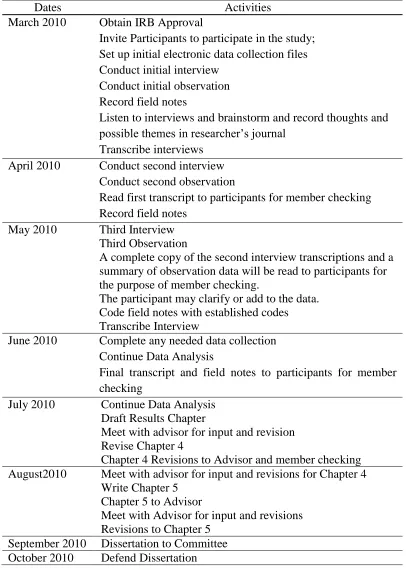
1 Overview of Data Collection and Data Analysis ...44
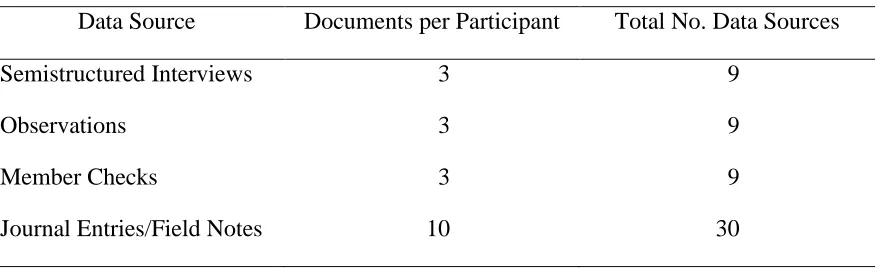
2 Data Sources ...46
CHAPTER 1
INTRODUCTION
Once upon a time there lived a beautiful prom queen. This prom queen resembles
the Prom Queen that Lesko (1984) describes in her critical ethnography of a Catholic
high school in the Midwestern, blue collar city of Port Gilbert. She possesses all the
requisite physical characteristics that one might expect in a fantasy queen. She has golden
tresses, blue eyes, porcelain skin, perfect white smile, and a voluptuous body. She gives
the illusion of developed sexuality without denying the possibility of innocence. She
shares a special membership in the school as a combination of loner and outsider, while
also being group oriented and organizationally committed. She has the ability to mediate
conflicting cultural categories within her high school population because she has the
genius of communication. She could be characterized as a cultural heroine in that she
unifies the individual and the collective (Lesko, 1984). Our prom queen differs
significantly in one aspect of her life. She lives with a secret that she keeps hidden
throughout her middle and high school years. This young woman walked into my office
and set this research into motion. This vision of perfection had one veiled flaw. She was
an undiagnosed dyslexic.
The Problem
The International Dyslexia Association (2009) reports that about 13 to14% of the
school population nationwide has a handicapping condition that qualifies them for special
education. Of this population, one-half of all the students who qualify for special
education are classified as having a learning disability (LD) (6–7%). About 85% of those
as many as 15-20% of the population as a whole have some of the symptoms of dyslexia.
These symptoms include slow or inaccurate reading, poor spelling, poor writing, or
mixing up similar words. Whether or not these students will qualify for special education
is uncertain, but what is certain is they are likely to struggle with many aspects of the
learning process.
Researchers assumed for years that many more boys than girls were dyslexic
(Rutter, 2004; Shaywitz, 2003). This assumption was based on the fact that more boys
than girls are referred to dyslexia centers, reading centers or reading clinics. Between
three and four times as many boys as girls have been reported as being dyslexic, but
experts have questioned for some time whether there might be some gender bias in the
referral figures. This gender bias is potentially based on essentialized gender normative
behavioral differences in which boys with dyslexia tend to express their frustration by
acting up and causing trouble while dyslexic girls tend to internalize their feelings and
withdraw(Shaywitz & Fletcher, 1999). Logic follows that parents and schools are far
more likely to seek help for a disruptive child than a quiet one (Gardner, 2008).
As we work to deconstruct the masculinized educational framework in an attempt
to make the system more equitable, often forgotten are the ―can do‖ girls, those who are
flexible, independent and are following non-linear trajectories to success (Harris, 2004),
who are experiencing academic difficulty. The essentialized gender normative behavior
of boys and the moral panics associated with drug use, sexual promiscuity and teenage
pregnancy (Becker, 1963; Wilkins, 1964; Young, 1971)surrounding at-risk girls demand
most of the attention of educational researchers and policy makers. Gilligan (1982)
may result in sustained levels of anxiety and group compliance. Could this compliance
obscure academic problems and create the educational isolation? (LaGreca & Stone,
1990; Siperstein & Bak, 1988). As the scientific understandings of dyslexia evolve and
neuroscientists learn more about brain function as it relates to reading disabilities, why
are so many girls still going undiagnosed?
Historically, much of the focus on policy, practice, and research on gender and
education has been on issues related to boys (Rowan, et al., 2002; Brozo, 2002). The tide
shifted with the publication of a number of reports and popular books about girls and
their educational disadvantages. The American Association of University Women
(AAUW) published the much touted report of How Schools Shortchange Girls (1992). The focus of this report is the argument that current curricula and pedagogy are
educationally depriving girls. In addition, books such as Failing at Fairness (Sadker & Sadker, 1994), School Girls (Orenstein, 1994), and Reviving Ophelia (Pipher, 1994), address the psychological damage and educational neglect to which girls are subjected in
the male dominated classroom. According to these authors, girls are called on less often
by teachers, show less involvement and achievement in math and science, and receive
fewer and lower-quality comments from teachers.
The question of gendered difference in the presentation of dyslexic symptoms has
been addressed by several important studies. Dr Sally Shaywitz, co-director of The
Center for the Study of Learning and Attention Disorders at Yale University, conducted a
longitudinal study involving 445 children. She followed their progress from the time they
entered kindergarten until the age of nine. The study revealed that schools identified more
twice as many nine-year-old boys as girls were said to have reading problems. However,
when the researchers tested the children independently, they found equal numbers of
boys and girls in both years had reading problems (Shaywitz & Fletcher, 1999).
Another large-scale study (Rutter, 2004) reinforces the assumption that boys are
more likely to be dyslexic than girls. Researchers from the Universities of Warwick in
Coventry and King's College London examined nearly 10,000 children aged seven to 15.
These students had been given standard reading tests in Britain and New Zealand. None
of the children had been identified as having reading difficulties. These results indicated
that between 18 and 22 per cent of the boys were dyslexics, compared with 8 to 13 per
cent of the girls.
Schools were identifying four times as many boys as girls a decade ago. However,
Rutter‘s (2004) large-scale study suggests there are perhaps twice as many dyslexic boys
as girls, not three or four times as many. Furthermore, the study at Yale of 400
Connecticut children indicates that the numbers of dyslexic girls and boys are about equal
and that most discrepancies in the diagnosis of dyslexia are the result of gender normative
behavior in that dyslexic girls tend to behave better and work harder than dyslexic boys
(Shaywitz, 1999).
Purpose
The purpose of this study is to investigate the negotiation of identities by
undiagnosed dyslexic adolescent girls through case study analysis of adult dyslexic
women whose initial diagnosis of dyslexia did not occur until after high school. To fully
explain this phenomenon, it is necessary to understand the complexity of dyslexia as well
literate.‖ Informed by the framework of poststructural thought, I examine how my
subjects perceived their worlds and how they negotiated peers, assets, limitations and
behaviors. As they reveal their positions in their figured worlds, I search for issues of
power, identity and agency around which their lives became organized.
The answers to the following research questions were sought: (1)How do adult
women who were undiagnosed dyslexic girls reflect upon their negotiations of identity in the
figured world of school (Holland et al., 1998)? (2) Is there evidence that they use attempts
of passing as literate? If so, what types of ―passing‖ attempts and techniques are used by
dyslexic adolescent girls to appear more literate and cross from the position of peripheral
participant in the figured world of school into that of a position of expert (Lave &
Wagner, 1991)? The case study methodology offers the opportunity for the insight
provided by detailed narratives of personal experiences. Data was collected by
interviews, observations, and researcher‘s field notes. The data was analyzed for
affirming or conflicting themes and intergenerational connectedness. The stories are then
retold in a chronological and thematic pattern describing the participants‘ experiences
from as many perspectives as possible.
Theoretical Framework
For many years, theories have been proposed to explain identity. Most of these
explanations have assumed that one‘s identity is based on a central and coherent core.
Erikson (1968) proposed a fixed or true identity that determines who a person is as well
as the relative power he or she possesses. Poststructuralist thought challenges the notion
of a singular, coherent self and explains the self as being plural, unstable, and constantly
in flux. Multiple characterizations of identity from a poststructural perspective include
2002). A particular strength of the poststructuralist perspective is that it recognizes the
essential force of discourse, the way one talks about the self, and at the same time
recognizes that people are capable of exercising choice in relation to those discourses.
Culler (1982) provides a succinct epistemological thesis relative to poststructuralist view
of experience and identity. ―Experience always has a divided, duplicitous character: it has
always already occurred and yet is still to be produced-an indispensible point of
reference, yet never simply there‖ (p.63). This challenging poststructuralist perspective
provides a seductive canvas on which to paint an interwoven theoretical framework that
is informed by a variety of thinkers. Holland et al., (1998) add richness to the theoretical
landscape by extending our understanding of identities through their explanation of the
construct of figured worlds.
Identities: Do We Have More Than One?
The concept of identity in figured worlds was first introduced in Identity and Agency in Cultural Worlds (Holland et al., 1998). Drawing from different schools of thought, including culturalism, constructivism,and universalism, the concept of identity
formation as a traditional static state is usurped by a process of reconstructions that are
constantly being negotiated in the social interactions that take place in cultural spaces. No
longer prey to the labels placed on themselves and others, individuals come to ‗‗figure‘‘
out their identities in the ‗‗worlds‘‘ in which they participate (Urretta, 2007). Thus,
identities develop within and through social practices in multiple contexts (Boaler &
Greeno, 2000; Holland et al., 1998).
Bakhtin (1981) also viewed identities as being constructed in social contexts with
which we author the world. The process of authoring the world is a dialogic process that
involves a continual and conflicting dialogue between the ―I‖ and the world. Words are
complex in that they are always partially someone else‘s. They are received from others
already tainted with the sender‘sintentions and purposes. Once words are infused with
one‘s own intention, the individual‘s Voice is heard. This process of authoring the self is
tantamount to developing one‘s self. To be me, I must understand myself from the
perspective of others. I must reach outsideness.
Identities construction in the social context of school creates a unique context that
incorporates discourse communities (Gee, 1996) and communities of practice (Lave &
Wenger, 1998). Schooling is not only a social phenomenon, constituted in the
experienced, lived in world, but it is also a social context that provides the social
dynamics of the world within which students learn and construct their learner identities
(Lave & Wenger, 1998)
Worlds of Identities
This idea is exemplified in a description of the figured worlds of school. As
‗‗socially and culturally constructed realm[s] of interpretation in which particular
characters and actors are recognized, significance is assigned to certain acts, and
particular outcomes are valued over others (Holland et al.,1998, p. 52).‖ Figured worlds
are socially produced, culturally constituted activities, where people come to
conceptually and materially perform new identities. Figured worlds have four
1. Figured worlds are a cultural phenomenon, to which people are recruited,
or into which people enter, and that develop through the work of their
participants;
2. Figured worlds function as contexts of meaning within which social
encounters have significance and people‘s positions matter. Activities
relevant to these worlds take meaning from them and are situated in
particular times and places;
3. Figured worlds are socially organized and reproduced, which means that
in them people are sorted and learn to relate to each other in different
ways;
4. Figured worlds distribute people by relating them to landscapes of action;
thus activities related to the worlds are populated by familiar social types
and host to individual senses of self.
How Are We Positioned?
Positionality is defined as the places or perspectives from which individuals shape
their actions (Holland et al., 1998). A variety of possible positional choices exists because
there are many and contradictory discursive practices in which each person can engage
(Davies & Harré, 1990). Many positions are culturally imposed as a result of societal
expectations and may necessitate the performance of conventional or stereotypical
positions. These socially expected positions are often different than those assumed at
other times or in other contexts. Culture-specific story lines are exemplified by roles such
as student, daughter, or athlete. Once positioned, a person sees the world from the
stories and concepts which are relevant to the discursive practice in which they are
positioned.
From this vantage point, individuals can gain new perspectives on the world and
through them learn to view peers, assets, limitations and behaviors with new meaning,
passion or emotion. Figured worlds also provide individuals the capacity to influence
their own behavior in these worlds. As individuals assume positions in their figured
worlds, their lives become organized around certain issues that carry the most importance
to them. These could be the positions of ―jock,‖ ―alcoholic,‖ ―popular,‖ ‗‗delinquent,‘‘
‗‗incompetent,‘‘ or ‗‗dyslexic.‖ Once positioned, individuals are no longer engaged in
self-making but rather are continually accepting, rejecting, or negotiating the identities
being offered to them. Individuals develop positional identities over time, through social
interaction, whereby they acquire "a sense of their relative social position" (Holland et
al., 1998, p. 132) . Positional identities "happens through day-to-day encounters and is
built, again and again, by means of artifacts, or indices of positioning, that newcomers [to
a figured world] gradually learn to identify and then possibly to identify themselves
with--either positively or negatively, through either acceptance or rejection ( p. 133).‖ An
exquisite example of this process is the intersection of the myriad positions available in
adolescence with the figured world of school.
The opportunity for a multitude of positions gives the phenomenon of
adolescence a unique shape and form as different aspects of complex young lives
intersect. Adolescents learn to recognize each other as a particular sort of actor,
sometimes with strong emotional attachments. Certain outcomes are valued over others,
adolescents are drawn into or recruited into them, they enter particular figured worlds
based on who they are and their personal social history. They may be denied entry into
some figured worlds based on their social rank or position, while simultaneously they
may deny entry to a figured world to unqualified or unworthy outsiders (Holland et al.,
1998).
Circulation of Power
We are all faced with the dilemma of figuring out into which worlds we will enter
temporarily or peripherally and those we will enter with positions of power and prestige.
For some individuals, positions are predetermined culturally and socially. This is
especially true in the schools of the United States. Within the figured world of school,
opportunities for movement from peripheral participation to expertise (Lave & Wenger,
1998) may be limited to the privileged, thus creating an environment of inequality. For
example, school structures tend to ensure that white middle-class girls occupy positions
of privilege while marginalizing working-class and poor girls and girls of color
(Mendoza-Denton, 2008; Lopez, 2003). All figured worlds will contain "moments in
which conflicts between lived participation and normative practices may emerge‖
(Linehan & McCarthy, 2001, p. 136). From a more negative stance, a "dark side"
characterized by parochialism, conformity, exclusion, and coercion may also exist
(Noddings, 1996, p. 258).
Thus, social contexts allow for the possibility that some individuals will occupy
positions of greater or lesser value, influence, or activity in the interactions occurring
there. Foucault (1978) concurs that power results through interactions and relationships in
abdicate opportunities for power. For example, the undiagnosed dyslexic girl‘s
opportunity for sharing in the distribution of power may become complicated by the
dearth of literacy tools she possesses to navigate her figured world of school. Conversely,
as power circulates, those dyslexic learners who can pass as literate may assume personal
and cultural liberation through the enactment of resistant practices.
Performativity
Identities arise from the particular local contexts that constitute individuals‘ lives
and are shaped by the broader social and cultural discourses of our worlds. Although
these discourses exert powerful influence over how persons enact their identities,
poststructuralism provides an explanation of how they may also be resisted or contested.
Butler (2006) argues that performativity, the effect of social discourses and cultural
practices in producing persons, reveals the constructed nature of identity categories, such
as gender, by virtue of the difference between one‘s actions and the discursive formations
they perform. An identity, such as gender, "requires a performance that is repeated. This
repetition is at once a reenactment and re-experiencing of a set of meanings already
socially established; and it is the mundane and ritualized form of their legitimation (p.
114).‖ In this way, identities become "natural." Butler also points out that gender norms
and identities are socially instituted and maintained. They are the effects rather than the
cause of discourses that constitute identity (Butler, 1990). For Butler, discourse is always
constitutive and always performative in that/it has the power to produce what it names.
Voice
While some identities are often unconsciously reproduced, others are the result of
a conscious practice of figuring the world. This can be accomplished through the expert
use of cultural tools. Once aware of one‘s position, the individual may choose to
remediate and in doing so, create other ways in which to be positioned. Bakhtin (1981)
views this act as a manifestation of agency. The process of developing internally
persuasive speech mediates conflicting voices so that the true Voice may be heard.
Bourdieu (1990), however, leaves little hope for the emergence of the true Voice.
He uses the term habitus to describe the powerful system of structure and dispositions that are constituted in practice and based on past experience. It is through the habitus that the past tends to perpetuate itself into the future by reactivation in similarly structured
practices. It gives a framework for understanding the social practices that are around us.
Our habitus shapes our perceptions, interpretations and conceptions of the social practices around us. The fact that our habitus limits the way we see the world simultaneously limits the actions we deem possible or desirable.
Agency
Despite Bourdieu‘s assertions that our positions are coerced by societial
pressures, there are cracks and openings that allow persons to take up positions as
something other than those by which they are recognized in the social and cultural worlds
they inhabit (Bettie, 2003). These cracks provide a space by which, in the ongoing
interactions of their social and cultural lives, people can act in ways that position them
differently. In other words, they provide a space for agency. Agency, then, can be defined
what then differentiates the actor from the agent? Karp (1986) suggests that actor and
agent are two different aspects of the same person. The actor is rule governed as opposed
to the agent who is engaged in the exercise of power in the sense of the ability to bring
about change. Action theorists (Davidson, 1980; Seagal, 1991) argue that agency requires
intention, presence of self, a rational point of view, and a domain of intentional control.
Agency is typically evoked as a response to and challenge to the determination of social
structuring.
Is it necessary for an individual to resist the discourses that tend to position them
in particular ways in order to have agency? Feminist scholars (Davies, 1991) have
emphasized the necessity to resist male dominance for agency to exist. From a feminist
perspective of agency, a sixteen year old girl demonstrates her agency by choosing not to
succumb to pressures to dress in gender normative ways, thereby taking up a position in
opposition to prevailing discourses. As power circulates in the discourses which
subsequently shape one‘s identity, it can also allow personal, cultural and professional
liberation through these resistant practices (Foucault, 1978). This strategic making and
remaking of identities exemplifies the act of performing agency. According to Holland et
al. (1998), agency is intimately related to, and mediated by, identities or the possibilities
of identities, which in turn, are shaped through activity in social practice. It is the
principal way in which individuals come to ―care about and care for what is going on
around them‖ (p. 5).
Ironically, at the moment one attains the identity status of subject, one
simultaneously experiences the moment of subjection. Once we are subjects, we are made
our self, we then become the focus of self monitoring practices consistent with the
Panopticon (Foucault, 1978). This concern of subjection is reflected in Derrida‘s
argument that we should best approach identity as a strategy through temporary
utilization of the self rather than creating a deep commitment that might ultimately work
to control us (Moya & Hames-Garcia, 2000). Butler (1994), too, asserts that accepting
identities is tantamount to accepting dominant scripts and thus we focus on performing
the identities that power has invented.
Identities are not located solely in the individual, but rather are negotiated in
social interactions that take form in cultural spaces. Identities and self are concepts that
extend beyond those constituted by the labels that people place on themselves and others.
More importantly, identities result from the processes through which individuals come to
understand themselves. Through these processes they come to ‗‗figure‘‘ out who they are
CHAPTER 2
REVIEW OF LITERATURE
I was a student in elementary school I wasn't a very good student. I had a terrible time with reading and math. As a matter of fact, I did not learn how to read until I was almost 14 years old. Can you imagine what it was like to see all my friends do so well in school and I wasn't! I thought I was dumb. I didn't like school because there was this boy that always teased me and made me feel even dumber. When I was fourteen, it was learned that I have a learning disability. It is called dyslexia. I felt trapped in a body that wouldn't do what everybody else could do. That was when one of my hero's, my teacher, found what was wrong with me and got me the help I needed to succeed in school. Of course, now that I am an adult, I realize that being learning disabled does not mean DUMB AT ALL! As a matter of fact, I have learned that being learning disabled only means that I cannot learn the way most of you do. As a matter of fact most learning disabled children are actually GENIUSES! Once I learned how to read and caught up with the rest of my fellow students, I did very well.(Polacco, retrieved 2010)
McMermott and Varne (1995) suggest that the fundamental and powerful
assumptions of our culture regarding literacy are that it is inherently good for the
individual, good for a culture, difficult to acquire, and should be transmitted to illiterates
in classrooms. They assert that the consequences of the belief that literacy is difficult to
acquire are the creation of a multitude of reasons that attempt to explain why some read
better than others, as well as the development of reasons to degrade those without such
powers. Thus, the more people believe that literacy is best learned in classrooms, the
more they ignore other sources of literacy, and the more they insist on bringing back to
school those who have already failed to develop school literacy.
A history of Learning Disabilities (LD) in the United States says much about
American culture. After decades of neurological speculation on dyslexia, critics of the
diagnosis of dyslexia still assert that it is nothing more than a plausible explanation of
of securing more time for labeled children on examinations (McDermott, Goldman, &
Varenne, 2006). The breakthrough of neuroimaging in children withdyslexia has
revealed reduced engagement of the left temporo-parietalcortex for phonological
processing of print, altered white-matterconnectivity, and functional plasticity associated
with effectiveintervention (Gabrieli, 2009). Gabrieli also reports that beh:avioral and
brain measures identify infantsand young children at risk for dyslexia, and preventive
interventionis often effective. There is hope that a combination of targeted teaching
practices and cognitive neuroscience measures could preventdyslexia from occurring in
the majority of children who wouldotherwise develop dyslexia. To fully explore this
complex phenomenon as it is manifested in the lives of undiagnosed dyslexic adolescence
in American middle and high schools, it is necessary to understand the complexity of
dyslexia as well as the theoretical underpinnings of identity construction, adolescence,
and ―passing as literate.‖
Nature of Dyslexia
Throughout the world there is a lack of consensus regarding the exact nature of
dyslexia. The Dyslexia Society of Singapore (2009) defines dyslexia as a specific
difficulty in reading, writing, and spelling. It asserts that dyslexia is not caused by a lack
of intelligence or a lack of opportunity to learn. The British Dyslexia Association (2009)
asserts that dyslexia is a specific learning difficulty which is neurobiological in origin. It
is described as a disability that persists across the lifespan of the individual. In addition,
the individual‘s difficulties with phonological processing, rapid naming, working
memory, processing speed and the automatic development of skills are unexpected in
difficulty in the ability to read and write. Yet, a precise description of the beh:avioral
manifestations of this reading disability does not exist. The International Dyslexia
Association (IDA) resolves one aspect of the confusion by establishing a broad based
definition of dyslexia. IDA defines dyslexia as follows:
Dyslexia is a specific learning disability that is neurological in origin. It is characterized by difficulties with accurate and / or fluent word recognition and by poor spelling and decoding abilities. These difficulties typically result from a deficit in the phonological component of language that is often unexpected in relation to other cognitive abilities and the provision of effective classroom instruction. Secondary consequences may include problems in reading comprehension and reduced reading experience that can impede growth of vocabulary and background knowledge. (2009, p. 2)
The IDA definition is vague relative to the issue of the neurological origins of dyslexia.
The definition minimizes the possibility that gender, race, class and instructional
practices could contribute to or exacerbate the propensity for developing this condition.
Firth (1999) states that in order to fully understand dyslexia we need to link together
cultural, biological, and behavioral factors. He contends that we must consider the
possibility that these three factors alone or in concert can aggravate or ameliorate the
condition.
The recent work of Dr. Sally Shaywitz (2003) results in a new definition of
dyslexia based on neuroimaging studies of dyslexics. Technological advances in the form
of functional MRI‘s substantiate the view that dyslexia is a neuro-developmental disorder
with a biological origin. Evidence also exists that supports the theory of a genetic
component as a causative factor. Studies seek to isolate a specific causal gene (Nothen et
Dyslexia Misconceptions
Many misconceptions concerning the definition of dyslexia exist. In order to
delve into the social construction and the biological origins of dyslexia, it is imperative
that these misconceptions be replaced with accurate facts. The most common
misconception concerning dyslexia is that it can be diagnosed when a student writes
letters or words backwards (Shaywitz, 2003). Teachers and parents become overly
concerned when they see evidence of these reversals in the writing samples of children.
Badian (2005) reports that reversal errors are likely to disappear in children with reading
disabilities as their reading and writing skills improve. The observation of reversals is not
unique to the reading and writing of struggling readers. During the developmental
process of acquiring literacy, most children engage in some level of word and letter
reversals before the age of eight. Shaywitz (2003) asserts that there is no evidence that
dyslexics actually see letters and words backwards. The core of dyslexia is not visual
perception. The basis of dyslexia is a problem with processing language at the phoneme
level. Kutz (1997) explains that phonemes are the representation of sounds that are
meaningful within a language. These sounds allow individuals to distinguish one word
from another. Thus, the deficiency in the dyslexic is the inability to distinguish the
phonemic difference between /big/ and /pig/ rather than the ability to distinguish the
graphic differences of the letters. Shaywitz (2003) expresses concern that many children
will not be correctly diagnosed because they do not make the stereotypical reversals.
The assumption that dyslexia is the result of a visual processing deficit leads to a
second common misconception. The use of colored text overlays or lenses is purported to
existence of scotopic sensitivity syndrome (SSS). SSS allegedly is manifested as a visual
disturbance related to light. Treatment for SSS includes the wearing of colored glasses or
the use of colored plastic sheet overlays. Stone and Harris assert that the diagnosis of this
condition is extremely subjective and raises questions of accuracy and reliability of
previous studies.
Early studies indicate that dyslexia affects more boys than girls. Gaud and
Carlson (1997) propose that the girls who are referred to clinics are those most severely
affected. They trigger the referral process as a result of the ―squeaking wheel‖
phenomenon by displaying co-occurring overt behavioral patterns of inattention.
Szatmari‘s (1992) population studies found a ratio of identification of one girl for every
three male diagnoses. Shaywitz (2003) gives evidence that as many girls are affected by
dyslexia as are boys. She suggests that the reason that the over-identification of boys
occurs is the manifestation of gender specific behavior. The occurrence of hyperactive
and impulsive behavior by dyslexic boys is reported at a higher rate than that exhibited
by dyslexic girls. The result is a disproportional referral rate. This argument presupposes
a gender difference in the activity level of boys and girls. When girls display behaviors
that mirror that of aggressive male behavior, it triggers the referral process and the
subsequent diagnosis of a reading disability.
Views of Adolescence
teasing me, but he also noticed that I wasn't reading well and got a reading specialist to help. To this day, I remember the first day that words on a page hadmeaning to me...Mr. Falker had reached into the most lonely darkness and pulled me into bright sunlight and sat me on a shooting star. I shall never forget him...so this book was written both to honor Mr. Falker, but also to warn young people that mean words have a terrible power...and that they should do all that they can to see that teasing stops at their school.
Thank you, Mr. Falker (Polacco, 1998)
Joftus and Maddox-Dolan (2003) report the alarming data that roughly 6 million
secondary students read far below grade level and that approximately 3,000 students drop
out of U.S. high schools every day. We can predict that a student who fails to read
adequately in 1st grade has a 90% probability of reading poorly in 4th grade and a 75%
probability of reading poorly in high school (Gabrieli, 2009). For many students, the
secondary years provide a last chance to build sufficient reading skills (Biancarosa &
Snow, 2006; Joftus, 2002).Slavin, Cheung, Groff, & Lake (2008) determined that there
are few large, high-quality studies of middle and high school reading programs. Sadly,
there were no methodologically adequate studies comparing different reading texts or
curricula. After examining 33 studies that involved nearly 39,000 students, there were
only a small number of studies of any particular program.
To understand the complexity of being an adolescent struggling reader, it is
critical to first delve into the conundrum of adolescence. G. Stanley Hall (1904) is viewed as the father of the field of adolescence. He is responsible for describing adolescence as a
period of development that is characterized with emotional ―storm and stress‖ that is a
universal and inevitable part of human development (Finders, 1998). Coleman (1961)
takes a theoretical step away from Hall‘s concept of storm and stress in adolescence and
describes an independent adolescent culture that selects a focus on pop culture rather than
hormonal changes. He argues that educators must embrace the challenge of apathy and
change the norms of the culture to make education relative to the lives of youth.
Gardner and Steinberg (2005) engaged in quantitative research that reinforces the
myths and moral panics (Becker, 1963; Wilkins,1964;Young, 1971)relative to
adolescence. In their study, 306 individuals were divided into three age groups. The
adolescent group included participants from 13 to 16 years old. The youth group included
18 to 22 year olds. The adult groups included participants 24 years old and older. Each
group completed two questionnaires that assessed risk preference and risky decision
making. Research questions sought to determine whetherrisk taking, risk preference, and
risky decision making will decrease with age. They also queried as to whether individuals
would demonstrate more risk taking, greater risk preference, and more risky decision
making when in the company of their peers than when alone. The final question
examined the difference in group effects on risk orientation among adolescents relative to
the other groups. Participants in each age group were randomly assigned to complete the
measures either alone or with two same-aged peers. The results indicated that risk taking
and risky decision making decreased with age. The participants took more risks, focused
more on the benefits than the costs of risky behavior, and made riskier decisions when in
peer groups than alone. Peer effects on risk taking and risky decision making were
stronger among adolescents and youths than adults. These findings support the idea that
adolescents are more inclined toward risky behavior and risky decision making than are
adults. In addition, peer influence seemed to play an important role in explaining risky
More recent research calls for educators of youth to consider how adolescence is
socially situated. Vadaboncoeur (2005) argues that our perception of adolescents is
created from the narratives society perpetuates with respect to youth in secondary
schools. These narratives draw upon scripts that are used to objectify, refer to, and
categorize young people. These narratives are performed in social contexts and thus exert
influence among society‘s perception of adolescence. She argues that this narrative
essentializes assumptions about youth that relegate them to marginalized positions
Patel Stevens (2005) calls for a new conception of adolescents and adolescence as
identity markers that require a lens of schooling. By situating teenagers in the social
context of schooling, it provides the opportunity to recreate the concept of adolescence
from a hormone- riddled period of victimization to one that is process-focused and
situated within and constructed by the educational setting. Through such a lens, the
long-held notion of developmental stages is usurped by the understanding that individual
identity is constructed as adolescents engage dialogically with their social and cultural
contexts. This understanding of youth interacting with their social context reinforces the
importance of examining the intersection of adolescence, schooling and gender.
Recent research argues that it is important for educators of youth to consider how
adolescence is socially situated and criticizes theories that do not consider social, cultural
and economic contexts of youth‘s lives (Lesko, 2001; Vadaboncoeur, 2005). Our concept
of adolescence is based on the fictions that society has created with respect to youth in
secondary schools. These fictions draw upon language that is used to objectify, refer to,
and categorize young people. This language is created and applied in social contexts and
youth that relegate them to marginalized positions by controlling their movements within
society and limiting their access to information (Vadaboncoeur, 2005).
Adolescence marks a distinct and pivotal place in students‘ understanding of
themselves as males, females, students, and future workers and citizens. The struggle
with oral and written interpretations of texts can give us insight into how literacy
mediates students‘ understanding of themselves, their place in society, and their future.
As we seek to make decisions regarding the academic well-being of the adolescents in
our charge, it is critical that we debunk the popular assumptions associated with
phenomenon of adolescence. As educators we must accept the theoretical stance that
adolescence is socially constructed and reject the views of teenagers that we have
inherited from the Victorians (Lesko, 1994).
The Construction of Gendered Literacy Identities
In first grade, Trisha sat in a circle with the other kids. They were all holding Our Neighborhood, their first reader, sounding out letters and words. They said, ―Beh:, beh:…oy, boy, and luh, luh…ook, look.‖ The teacher smiled at them when they put all the sounds together and got a word right. But when Trisha looked at a page, all she saw were wiggling shapes, and when she tried to sound out words, the other kids laughed at her. ―Trisha, what are you looking at in that book?‖ they‘d say. ―I‘m reading!‖ she‘d say back to them. But her teacher would move on to the next person. Always when it was her turn to read, her teacher had to help her with every single word. And while the other kids moved up into the second reader and third reader, she stayed alone in Our Neighborhood. Trisha began to feel ―different.‖ She began to feel dumb. (Polacco, 1998, p. 22)
Children with reading difficulties often choose pastimes and school subjects
which do not involve large amounts of reading. They are likely to encounter print less
often than an average child on a day-to-day basis, perhaps leading to a Matthew effect
(Stanovich, 1986) and a negative cycle of achievement. Spear-Swerling and Sternberg
disadvantaged relative to other readers, whereas the reverse happens for children who
have a successful start in reading‖ (p. 9).
Thus, we expect young people with poor literacy to show evidence of
self-selecting environments with less print exposure. It is critical to explore how this
avoidance of print affects the literacy identities of struggling readers. Equally important
is the examination of how gender intersects with literacy identity work in which students
engage as they struggle to read, write, interpret, and create texts in their classrooms.
The processes of written and oral production and interpretation of texts in
classroom settings provide students with opportunities to create relationships with other
classmates (Sperling, 1995) and negotiate their sense of themselves as gendered, raced
and classed beings (Dyson, 1995; Finders, 1997). Through these identity negotiations
they articulate their life goals and interests (Hull & Schultz, 2001), as well as stake out
allegiances within larger social groups or discourse communities (Gee, 1996).
At an early age, children are exposed to the culturally imposed positions of
gender. Societal expectations have been shown to use literacy to make sense of the
versions of masculinity and femininity they see in their lives and to imagine themselves
as actors in them (Orellana, 1995). This process involves positioning themselves into
different gendered societal categories and trying on different gendered practices and
identities. Both boys and girls manipulate these positions so that they serve their own
interests and allow for exploration of various gendered practices and their effects
Feminist Perspective
The feminist perspective of a gendered literacy identity inserts power as an
integral component of this process. Feminist see language as central to human experience
and understanding of the world but they see it primarily as a veh:icle for the exertion of
power (Weedon, 1987). Students come to understand characters‘ motivations and actions
through socially prescribed views of what males and females should and can do (Davies,
1993). This often creates a hierarchy of power in which femininities are dominated by
masculinities.
This domination of masculinities results in girls being positioned in specific ways
that may limit their access to the full array of educational experiences (Sadker & Sadker,
1994; Orenstein, 1994; Pipher, 1994). Teachers often encourage girls to take on
positional identities that emphasize nurturing, such as mother or teacher, and although
these positions may provide girls with increased power in some classroom relations, they
also deny girls access to other roles. This role restriction results in inequality in the ability
to switch between registers as the linguistic context changes (Finders, 1997).
Whom Should We Blame?
The well intentioned second wave of feminist researchers shares some of the
blame for these inequitable patterns. Carol Gilligan (1982) falls into an essentialist trap
by creating a stage theory of moral development exclusively for women. Rather than
departing from the limitation of developmental stage construct to explain human
development and behavior, she just develops her own female friendly version. Just like
Female children begin with a selfish focus. As they develop they learn to care for
others and reject selfishness. In the conventional stage, women doubt their freedom to act
in their own interests. They value the interests of others above their own. In the
post-conventional stage, women finally learn that their own interests are just as important as
others. The core theoretical difference in the feminist model exists in Gilligan‘s assertion
that the transitions between the stages are caused by changes in the sense of self rather
than in changes in cognitive capability. Kohlberg's approach is based on Piaget's
cognitive developmental model while Gilligan's is based on selective aspects of Freud.
Gilligan‘s stages of moral development were constructed from the study of
women making significant decisions in their lives. This investigation was driven in
reaction to Kohlberg‘s experimental results that insinuated that women tended to be less
morally developed than men. Central to Gilligan‘s investigation was the exploration of
the moral decision making process in which women engaged as they decided whether or
not to get an abortion. The issue of reproductive rights is the linchpin in Gilligan‘s
paradigm. It is the emergence of choice that gives rise to the emergence of feminist moral
voice. Gilligan concludes that women‘s sense of integrity appears to be entwined with an
ethic of care rather than the ethic of justice. Morally developed women think more about
caring, for themselves and others, rather than following the rules. Gilligan‘s attempt to
underscore the importance of investigating girls in the realm of moral development
resulted in the reinforcement the essentialist doctrine of second wave feminism and
provided fodder for the emerging third wave (hooks, 2000).
hooks (2000) asserts that competitive, atomistic liberal individualism has
monopoly of feminist discourse by bourgeois women has thwarted the focus away from
true feminist issues. She goes on to theorize, as a result of her personal experiences, that
all white feminists seek to silence black women in order to maintain the white hold on
feminism. Thus, hook‘s central argument is definitional. Is feminism a radical movement
working for the eradication of domination and elitism in all human relations or is it a
movement that strives for social equality with men? The obvious answer is both but
separatism and radicalism refuse a collaborative definition.
An obvious example of this gendered inequality is that of the silencing of
culturally responsive talk in schools. This practice has had its most deleterious effects on
girls and students of color (Mendoza-Denton, 2008; Lopez, 2003). Racially stigmatized
youth are labelled as ―at-risk‖ thus sentencing them to low expectations and low-level
curriculum tracks (Lopez, p. 167). Thelma, a 21-year-old West Indian woman, reports the
outcome of her vocational track classes.
In secretarial studies, they teach you shorthand and how to take notes. It was kind of easy to take notes because I took a lot of notes in shorthand. My teacher taught grammar and the use of punctuation. It was integrated in secretarial studies and you had to know it.You lose points for putting a comma in the wrong place. It was amazing to me. Although I didn‘t know what a research paper was, I knew where to place my commas! So, it was hard for me to be in college. In high school we didn‘t have any research paper or anything like that. They didn‘t challenge us at all. (Lopez, p. 57)
Women were taught to beh:ave like young ladies. This translated into being silent and
obedient. Teachers were less threatened by young women and thus gave them more
leniency if rules were transgressed.
By comparison, boys were relegated into special education classes for
misbehavior. When ostracized to a low level curriculum, many expressed their
High School, reported that young women were only involved in frivolous spats over
jealousies, unlike the male students, who were involved with more serious fights over
property (Lopez, 2003, p. 74).
As a result of gender, social or economic variability, some children have limited
exposure to the special linguistic patterns of text. This unique linguistic precursor to
reading acquisition is that of cohesion. Cox, Fang and Otto (2004) define cohesion as the
interrelatedness and interpretability of words and sentences in a text. Cohesion
determines the child‘s ability to differentiate different types of texts. As children
experience language in different contexts, a specific linguistic register develops. A
register can be defined as a conventional language pattern that corresponds to specific
situation. The ultimate expression of cohesion is the ability to switch between registers as
the linguistic context changes. It is not surprising that Cox, Fang and Otto (2004)
observed variability in the knowledge of differing linguistic registers relative to
socioeconomic status. Without this opportunity to develop a text register and the ability
to switch between linguistic registers, children come to school with an immediate
disadvantage.
Thus, an even closer look must be taken at the philosophical and academic
profiles of the teachers with whom we entrust the academic and social growth of our
girls. Levine (2006) in his description of future elementary education teachers as ―less
academically qualified than our children need or deserve‖ (p.56) epitomizes this critical
perspective. In response to this criticism, the American Educational Research Association
(Cochran-Smith & Zeichner, 2005) has called for more research in the area of teacher
Once the Damage is Done: Spoiled Identity and “Passing as Literate”
Trisha was sure Mr. Falker believed that she could read. She had learned to memorize what the kid sitting next to her was reading. Or she would wait for Mr. Falker to help her with a sentence, then she would say the same thing he did. ―Good,‖ he would say. Then one day, Mr. Falker asked her to stay after school and help wash the blackboards. He put on the music and brought out little sandwiches as they worked and talked. All at once he said, ―Let‘s play a game! I‘ll shout out letters. You can write them on the board with the wet sponge as quickly as you can.‖‖A,‖ he shouted. She wiped a watery A. ―Eight,‖ he shouted. She made a watery 8.
―Fourteen . . . Three . . . D . . . M . . . Q,‖ he shouted out. He shouted out many, many letters and numbers. Then he walked up beh:ind her and together they looked at the board. It was a watery mess. Trisha knew that none of the letters or numbers looked like they should. She threw the sponge down and tried to run. (Polacco, 1998, p. 27)
Kroeger (2003) defines passing as the act of creating, imposing, adopting, or
rejecting a given identity and the way society rewards and penalizes people when they
do. This negotiation involves complex subterfuge that involves keeping secrets, avoiding
disclosures, and the enlisting of the complicity of those who know the secrets.
Research that examines the strategies used by dyslexic adolescents to pass as
literate is limited. To be able to study this process of passing, studies involving English
Language Learners (ELL‘s) are the only source available to give a glimpse of this
complex dance. Early studies on passing and the concealment of illiteracy include that of
Ramos (1973) who discussed the interactional strategies that low-income Mexican
American families use to conceal illiteracy from outsiders. Strategies for dealing with
problematic literacy situations included calling upon the services of benefactors for tasks
that required reading and writing. If no benefactor was available other strategies were
employed to conceal illiteracy. A family faced with formal documents attempted to pass
as literate by looking at the document for several minutes as if they were examining it
read and approved. This performance was enacted to conceal the inability to read. Rueda
and Meh:an (1986) describe a paradox in the passing strategies of students with learning
disabilities. They avoid difficult tasks while trying to appear competent. This requires
constant checking, monitoring, and evaluation their actions. This review of the case
histories of students with learning disabilities concluded (1) that passing and
metacognition are examples of strategic interaction in that they because they both involve
planning and awareness of action directed toward the accomplishment of a goal, and (2)
that passing is a context-bound activity that occurs on some but not all occasions of
interaction.
The later study of Monzo and Rueda (2009) examine these concepts of stigma and
passing as they describe how English Language Learners cope with the stigma associated
with lack of English proficiency in our society. This article describes the concept of
passing for English fluent among Latino immigrant children. Passing refers to the use of
strategies to appear more competent in English than is actually the case. The findings
suggest that passing for English fluent may be both a strategy of self preservation and a
form of resistance.
English holds greater power and status in the United States than minority
languages, particularly Spanish (Monzo & Rueda, 2009). This sometimes becomes
evident to immigrant families almost immediately upon arrival to the United States.
Many Spanish-dominant children and adults often experience discrimination or prejudice
because of their language and ethnicity. Children are conscious of being ―different‖ and
Monzo and Rueda (2009) seek to dissect the complexities of ―passing‖ for
English fluent speakers in a variety of contexts. Specific research questions include
(a) why students attempt to ―pass‖ as English fluent, (b) how the practice of ―passing‖
reflects race relations, and (c) how ―passing‖ relates to children‘s developing identities
and agency.
Children‘s ―passing‖ strategies may both reflect and support gender, race and
identity development and agency. This framework allows for the dynamic and complex
reality of both social and individual worlds that so often lead to ―improvisations‖
(Holland et al., 1998). Thus, the authors present Latino children as creative and
resourceful human beings who actively mediate their own psychological functions and
their English-speaking world.
Leigh (2006) asserts that struggling readers avoid texts or respond helplessly to
assigned tasks. In addition, content area teachers ignore the reading needs of these
struggling readers. The ways in which each student transacted with the reading task
demands of his or her classroom were influenced by several variables. Most significant
influences were the participants‘ perception of his or her abilities as a reader, the
participants‘ desired persona as a reader, and the participants‘ desire to compreh:end and
learn from text. Students explained that they tried to find other ways to compreh:end and
learn from text. Participants‘ reported that some of the beh:aviors their teachers expected
them to engage in could reveal their weaknesses as readers to other students. Fear of
disclosure created the need to attempt to compreh:end through other means. Alternative
strategies included (a) listening to discussions about text, (b) asking friends for
Equally interesting were the ways in which each teacher transacted with his or her
respective student. There was variability in relation to the reading task. Teacher demands
on students were influenced by perception of the student‘s cognitive strengths and
weaknesses as a reader and perceived level of student motivation. Teachers expressed
frustration when a student did not engage in beh:aviors that would help him or her
compreh:end text. It is telling that the teachers never asked students to discuss their
refusal to comply with suggested compreh:ension strategies and simply made the
assumption that their failure to follow directions was symptomatic of laziness (Leigh,
2006).
Conclusion
It is essential to understand that domination and elitism are alive and well in the
middle and high schools of the United States to fully understand how the literacy
identities in adolescent girls are constructed. Griffith (1995) asserts that feminism is not
just theoretically significant in today‘s classrooms but that educational practices and
educational outcomes are damaged by sexism. The prevailing sexism both in and out of
formal educational institutions distorts how such educational practices and outcomes are
understood and researched. This is precisely the concern of feminist epistemology: how
to improve knowledge and remove sexist distortions.
The majority of teachers in today‘s work force are white, female and middle class.
Teachers of color comprise about 16 percent of the teaching force in the United States
(Banks, et al, 2005). In addition, pre-service as well as in-service teachers have little
experience with children with learning differences or from cultures and languages