www.hydrol-earth-syst-sci.net/11/1441/2007/ © Author(s) 2007. This work is licensed under a Creative Commons License.
Earth System
Sciences
Analysis of the runoff response of an alpine catchment at different
scales
B. Zillgens1, B. Merz1, R. Kirnbauer2, and N. Tilch3 1GeoForschungsZentrum Potsdam, Potsdam, Germany
2Institute of Hydraulics, Hydrology and Water Resources Management, Vienna University of Technology, Vienna, Austria 3Geological Survey of Austria, Department of Engineering Geology, Vienna, Austria
Received: 14 July 2005 – Published in Hydrol. Earth Syst. Sci. Discuss.: 9 September 2005 Revised: 13 April 2007 – Accepted: 2 July 2007 – Published: 18 July 2007
Abstract. To understand how hydrological processes are related across different spatial scales, 201 rainfall runoff events were examined in three nested catchments of the up-per river Saalach in the Austrian Alps. The Saalach basin is a nested catchment covering different spatial scales, from the micro-scale (Limberg, 0.07 km2), to the small-catchment scale (Rammern, 15.5 km2), and the meso-scale (Viehhofen, 150 km2). At these three scales two different event types could clearly be identified, depending on rainfall character-istics and initial baseflow level: (1) a unimodal event type with a quick rising and falling hydrograph, responding to short duration rainfall, and (2) a bimodal event type with a double peak hydrograph at the micro-scale and substan-tially increased flow values at the larger basins Rammern and Viehhofen, responding to long duration rainfall events. In all cases where a bimodal event was identified at the mi-croscale, the hydrographs at the larger scales exhibited sig-nificantly attenuated recession behavior, quantified by reces-sion constants. At all scales, the bimodal events are associ-ated with considerably higher runoff volumes than the uni-modal events. From the investigations at the headwater Lim-berg we came to the conclusion that the higher amount of runoff of bimodal events is due to the mobilization of subsur-face flow processes. The analysis shows that the occurrence of the two event types is consistent over three orders of mag-nitude in area. This link between the scales means that the runoff behavior of the headwater may be used as an indicator of the runoff behavior of much larger areas.
Correspondence to: B. Merz ([email protected])
1 Introduction
This paper investigates the runoff response to rainfall in three nested catchments of the upper river Saalach in the Austrian Alps. The study area covers different spatial scales, from the micro-scale (Limberg, 0.07 km2), to the small-catchment scale (L¨ohnersbach basin, gauge Rammern, 15.5 km2), and the meso-scale (Viehhofen, 150 km2). Understanding runoff generation processes is essential for obtaining realistic esti-mates of runoff for unobserved situations, such as extreme floods or changed environmental conditions (e.g. Naef et al., 2002; Singh and Strupczewski, 2002; Weingartner et al., 2003). However, natural hydrological systems are charac-terized by tremendous variability in space, time and process (McDonnell and Woods, 2004). Runoff generation results from the interaction of different processes which vary with climate and catchment properties. One particularly challeng-ing aspect is the understandchalleng-ing of the spatio-temporal pat-terns of runoff generation (Kirnbauer et al., 2005). This in-cludes the variability of runoff processes from event to event and the variability across spatial scales. The dominance of processes may change with scale (Grayson and Bl¨oschl, 2000); an observation which complicates hydrological un-derstanding and modelling.
of highest interest. Another problem is the heterogeneity of the terrain and of the subsurface, where flow processes are highly influenced by complex geological formations.
Investigation of the runoff response in the headwater area Limberg have shown that different runoff mechanisms ex-ist, dependent on moisture and precipitation characteris-tics (Kirnbauer et al., 2001), causing different hydrograph shapes. Short intensive storms during dry periods cause a quick runoff response and storm events during long duration rain periods cause a delayed peak in addition to the quick runoff response. The direct peak events are the quick re-sponse to rainfall (within minutes) and the delayed peak oc-curs as a delayed damped arch-shaped hydrograph. The de-layed peaks can be observed approximately three days after the first peak, even if the rain has already stopped. The dou-ble peak event is of particular importance in the L¨ohnersbach catchment, because it was shown that simultaneous to dou-ble peak events in the headwater Limberg the hydrograph of the superordinate L¨ohnersbach watershed is characterized by substantially increased flow values of prolonged duration (Kirnbauer et al., 2001). During these times of increased runoff additional rain can cause flood discharges.
Double peak or bimodal events have been observed in other regions, too. Anderson and Burt (1978) measured de-layed throughflow peaks in Sommerset, UK, in a small val-ley, with a one to two meter deep, freely drained soil layer on an impermeable subsurface. Onda et al. (2001) observed double hydrographs in western Japan for shale and serpenti-nite watersheds in steep mountainous regions. The second peak seems to be a result of delayed runoff from a deep subsurface flow system. Masiyandima et al. (2003) found bimodal events in an inland valley and surrounding con-tributing watershed area in central Cˆote d’Ivoire. The dou-ble peak events have in common that the delayed peak con-tributes considerably more runoff than the first peak. Onda et al. (2001) found the second peak discharge volume to be five to ten times greater than the volume of the first peak. In a watershed in central Cˆote d’Ivoire the first peak of the double peak event occurred during the rainfall event and was caused by rain falling on the saturated valley bottom. The second peak was delayed by minutes and hours and consisted of rain flowing via the subsurface of the hydromorphic zone that sur-rounds the valley bottom (Masiyandima et al., 2003).
Tracer methods have become an important tool for decod-ing runoff generation processes in mountainous regions (e.g. Vitvar et al., 1999; Uhlenbrook et al., 2002; Tilch et al., 2003; Weiler et al., 2003) and can provide information about flow pathways, residence time and runoff formation. Tracer in-vestigations in the headwater area Limberg showed that the fast peak consists of pre-event water (old water stored in the catchment) and event water (from the current rain event), originating from saturation areas and episodic interflow pro-cesses of the drift cover (Tilch et al., 2003; Kirnbauer et al., 2004). The second peak consists exclusively of pre-event wa-ter from fissured bedrock and deep quawa-ternary drift covers.
Another method for understanding runoff generation pro-cesses is the analysis of the shape of hydrographs. Hydro-graph characteristics are a function of spatial and temporal characteristics of precipitation and physical features of the catchment, including rainfall duration and intensity, drainage area morphology, topography, geology, vegetation, soil water storage and depression storage. Runoff contributions from different compartments, storages and flow pathways vary with event characteristics and can result in different hydro-graph shapes (Jenkins et al., 1994; Gutknecht, 1996).
McNamara et al. (1998) used hydrograph analysis to as-sess the importance of saturation areas for fast runoff gener-ation in an artic river basin. Rose and Peters (2001) could demonstrate the effects of urbanization on stream flow. A specific characteristic of a hydrograph is the recession be-haviour of the falling limb which reflects various physical watershed factors. Recession curve analysis is widely used to describe the storage-outflow relationship for river catch-ments (e.g. Hall, 1968; Nathan and McMahon, 1990; Tallak-sen, 1995; Chapman, 1999; Wittenberg and Sivapalan, 1999; Mendoza et al., 2003; Sujono et al., 2004). In most cases, the aim of such analyses is to describe the behaviour of ground-water reservoirs, and to quantify discharge, evapotranspira-tion loss, storage and recharge. An overview of recession curve analysis is given by Tallaksen (1995) and Dewandel et al. (2003); and different techniques are compared by Chap-man (1999) and Sujono et al. (2004).
The objective of this paper is to study the runoff response to rainfall in the three nested alpine catchments of the up-per river Saalach and to understand how this response be-haves across spatial scales. Characteristics of the two event types, referred to as unimodal and bimodal event type, are analyzed by hydrograph and recession analysis for the head-water catchment Limberg (0.07 km2). Further, the analysis is extended to the two larger basins, the L¨ohnersbach basin (15.5 km2)and the upper Saalach basin (150 km2). It is in-vestigated if the typical runoff behavior at the headwater scale, i.e. the occurrence of unimodal and bimodal events, can also be found at the larger scales, and if this behavior is consistently linked to event characteristics.
2 Investigation site
2.1 Catchment characteristics
Kilometer
4 0 4 8 12
w
w
w
w
rain gauge
runoff gauge:
Schattberg
Limberg Rammern Viehhofen Saalach
Löhn
[image:3.595.131.468.64.222.2]ersba ch
Fig. 1. Map of the nested study area of the upper Saalach basin: upper Saalach (150 km2, gauge Viehhofen), L¨ohnersbach (15.5 km2, gauge Rammern), and Limberg (0.07 km2, gauge Limberg).
stream gauge Viehhofen. The annual precipitation is about 1400 mm. Spacious luff and lee effects are rather insignifi-cant and are superimposed by regional thunder storms. The monthly runoff of the upper Saalach and the L¨ohnersbach is characterized by a maximum in May due to snow melt. Storm runoff maxima tend to occur during summer due to heavy thunder storms. During snow accumulation in winter the streams have constant low flow rates with a minimum in January/February. In summer, baseflow decreases with de-creasing snow melt (HD ¨O, 2002).
The catchment of the brook L¨ohnersbach has a size of 15.5 km2 up to the runoff gauge Rammern with elevations ranging from 1100 to 2250 m a.s.l. The L¨ohnersbach brook flows at an elevation of 920 m into the Saalach and has the character of a mountain torrent. In previous years, a lot of research has been carried out in the L¨ohnersbach area, be-cause extreme storm events repeatedly be-caused landslides and debris flows, which are a high risk for settlements close to the stream. Slopes in the L¨ohnersbach catchments are steep, with a mean value of nearly 42% (standard deviation 13%) based on a 10 m grid. Thus, concentration times are rather small: Estimated by the method proposed by Morgali and Linsley (1965), they amounted to 1.5 h with a coefficient of variation of 0.5. Soil types and soil physical properties were investigated and mapped by Markart and Kohl (1993a, b, un-published reports), who found saturated conductivities be-tween 24 and 520 mm/h with a mean value of 177 mm/h and field capacities of about 50 mm. A vegetation map was es-tablished by Schiffer and Burgstaller (1990, unpublished re-port). Table 1 which gives the relative fraction of land cover types in the L¨ohnersbach catchment is based on this map, af-ter digitizing it to a 10 m grid. Information about geology, hydrogeology and stream network including saturation areas is given by Pirkl (1989, unpublished report). Rainfall runoff characteristics are monitored since 1991 by the Institute of Hydraulics, Hydrology and Water Resources Management
Table 1. Vegetation in the L¨ohnersbach catchment.
Vegetation type % of total area roads, settlements 0.27
alpine and subalpine pioneering vegetation 3.20 meadows containing nardus stricta 20.07
meadows 0.81
subalpine shrub 34.52 dwarf pine 0.29 green alder, brushwood 3.07 spruce forest 31.68 deciduous forest 2.11 fen, swamp 2.61 deforested 1.36
Total 100.00
at the Vienna University of Technology. The instrumenta-tion consists mainly of stream and rain gauges. Figure 1 shows the location of the instrumentation relevant for this paper, namely the runoff gauges at Limberg, Rammern and Viehhofen and the rain gauge at Schattberg. The Viehhofen runoff gauge is operated by the Austrian Hydrographic Ser-vice, Salzburg Section.
[image:3.595.312.543.304.461.2]25.06 27.06 29.06 25.06 27.06 29.06 0 2 4 6 date pr ec ip it a ti o n [m m /15m in ]
01.07 03.07 05.07 07.07 0 2 4 6 date pr ec ip it a ti o n [m m /15m in ] A B
25.06 27.06 29.06 25.06 27.06 29.060 2 4 6 8 10 date ru nof f [l /s L im ber g o r m ³/ s R am m ern] Rammern [m³/s] Limberg [l/s]
[image:4.595.127.461.63.302.2]01.070 03.07 05.07 07.07 2 4 6 8 10 date ru nof f [l /s L im ber g o r m ³/ s R am m ern] Rammern [m³/s] Limberg [l/s] C D
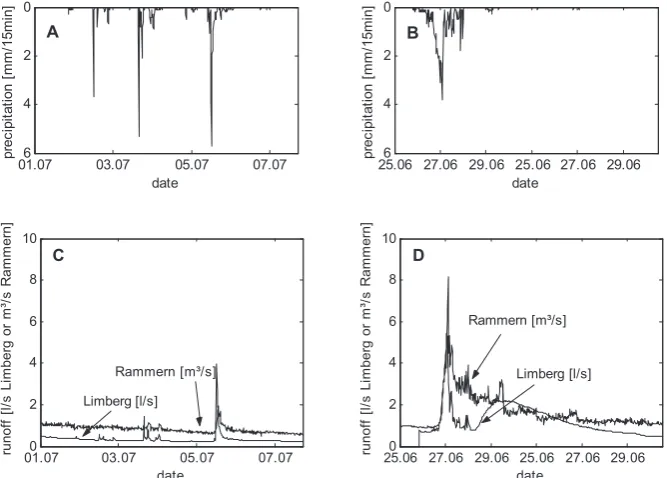
Fig. 2. Typical hydrographs of the micro-scale catchment at stream gauge Limberg and meso-scale catchment at stream gauge Rammern
(year 1995): direct and synchronic runoff peaks (C) during short and intensive rainstorms (A), and bimodal runoff events (D) during and after moderate and much longer rainfall events (B) (Kirnbauer et al., 2001, modified).
2.2 Runoff response in the L¨ohnersbach catchment In the L¨ohnersbach catchment different runoff characteris-tics were identified (Kirnbauer et al., 1996, 2001, 2005). The L¨ohnersbach divides the catchment into a north-western and south-eastern part. The runoff response of both parts differs. During low flow conditions, the north-western part contributes to runoff below average and the south-eastern part above average. For high flow conditions and large rain events this trend is reversed. Furthermore, different event types could be identified at the micro-scale (gauge Limberg) and the small-catchment scale (gauge Rammern). Figure 2 shows typical hydrographs at gauge Limberg [l/s] and at gauge Rammern [m3/s]. Direct and synchronic runoff peaks (C) occur during short and intensive rainstorms (A) at both scales. For long duration rainfall events with low rainfall in-tensity (B), bimodal runoff events can be observed at Lim-berg (D). Simultaneously to the bimodal runoff events at Limberg an increased runoff volume with a slowly abating recession curve can be measured at Rammern gauge (D). Bi-modal runoff response could be identified in a different head-water in the L¨ohnersbach catchment, too, and is not only a specific phenomenon of the Limberg catchment (Tilch et al., 2003). For the small-catchment scale (gauge Rammern), it seems quite evident that the shape of the recession curve is a result of different “delayed peaks” from other locations, which occur in sum as a substantially increased hydrograph with long recession time.
2.3 Headwater Limberg
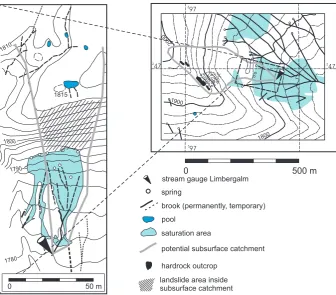
The headwater Limberg is located on the lateral part of a glacier. Accordingly, the geological conditions are very com-plex, where subsurface flow pathways are difficult to identify. The micro-scale catchment Limberg can roughly be divided into three major geographic-geological units (see Fig. 3). The highest unit, and furthest from the stream gauge, is a boulder field with very steep slope and a high macroporos-ity, underlain by low metamorphic and fractured greywake and siltstone. Downhill in more flat positions is a cirque area with a frontal rim, caused by a combined rock and debris block slide. This area is characterized by thick duff layer un-der alpine rose vegetation, some small pools and saturation areas. At the foot of the frontal rim is a saturation area fed by springs from the base of the slide mass and from inside the saturation area. Some of the springs are permanent, some are only active during wet conditions. The sources providing permanent base flow are most likely supplied by additional areas from deep storage water systems.
1817
1780
1790 1800
1810 1815
1815
0 500 m
spring
potential subsurface catchment brook (permanently, temporary)
pool
hardrock outcrop saturation area
stream gauge Limbergalm 2
47
397 397
1800 1900
2000
247
landslide area inside subsurface catchment
[image:5.595.129.466.61.356.2]0 50 m
Fig. 3. Headwater catchment Limberg with stream network, saturation areas, ponds and springs (Tilch et al., 2003, modified).
out by rain during a storm event. In the frontal rim within and under the duff layer fast episodic runoff is generated, too. After saturation the duff layer generates interflow. The delayed peak consists solely of pre-event water. At least two subsurface flow systems could be identified. Newer investi-gations (Kirnbauer et al., 2004) prove that the water moves at least along two pathways with different attenuation and stor-age properties (boulder field at the very steep hillslope, and the metamorphic and fractured greywake and siltstone). Un-like the delayed peak, the permanent subsurface flow comes from deeper storage systems.
3 Data and methods
3.1 Rainfall runoff events
Rainfall and runoff time series of 67 storms of the years 1997–2002 were analyzed at all scales (micro-scale, small-catchment scale, meso-scale). The time series are given in intervals of 15 min. The events were taken from the period when there was no (or negligible) snow cover and when the temperature was above 0◦C (usually end of June). The be-ginning of an event depends on the onset of rain measured at the Schattberg gauge. An event is defined to start one time step before the precipitation begins (the hydrograph rises in the same time step as rainfall occurs). The initial base flow is
defined as the discharge of the first time step. It characterizes the base flow conditions before the hydrograph response to a rain impulse.
These 67 events, identified at the gauge Limberg, were not only analyzed at the gauge Limberg but also at the gauges Rammern and Viehhofen. It is assumed that these events af-fect the whole catchment up to Viehhofen with 150 km2. For the same time segments, taken at Limberg, the hydrographs measured at the Rammern and Viehhofen gauges were ana-lyzed. The beginning of an event is the same for all scales. The duration of an event is taken individually according to the decay characteristics of the hydrographs at the different scales.
3.2 Hydrograph analysis and event types
direct peak
timet
storm runoff
base flow base flow
delayed peak direct and
delayed peak runoff
storm runoff
rainfall
p
straight line hydro-graph separation
event inside a delayed peak
timet
A
B
time to delayed peak t2p
runof
f
q
initial baseflow q0
qdelayed
qdirect
qdirect
rainfall
p
runof
f
[image:6.595.131.467.61.216.2]q
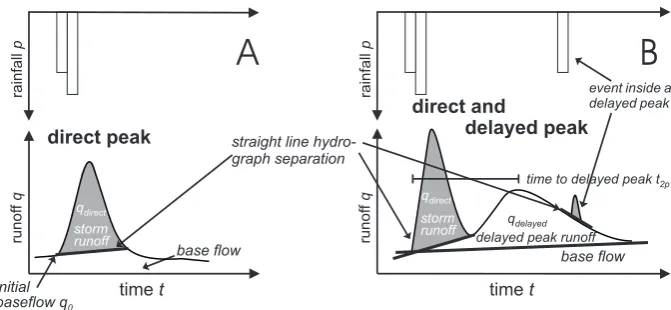
Fig. 4. Schematic representation of the hydrographs of an unimodal peak event (A) and a bimodal peak event (B).
Table 2. Number of runoff events for the two event types.
year unimodal bimodal time period event event
1997 5 3 22 June–13 Sep 1998 13 1 27 June–28 Sep 1999 13 4 21 June–28 Sep 2000 8 2 10 July–3 Oct 2001 7 2 16 June–8 Aug 2002 9 – 27 June–10 Sep
total 55 12
adequate because we wish to compare water volume mobi-lized by a rainfall event independent of the source area. The line was projected from the initial rise of the hydrograph to the point on the falling limb where a break in slope occurred (point of inflection on the falling limb).
3.3 Event types
The runoff events are subdivided into unimodal and bimodal event types (Table 2). In Fig. 4 the two types measured at the Limberg gauge are drawn schematically (see also Fig. 1). The unimodal event type is characterized by a peak that di-rectly responds to the rainfall impulse. A rainfall event can have more than one impulse so that the hydrograph responds with more than one direct peak. A bimodal event consists of a direct peak response and a delayed peak as a response to the same rain impulse that initiated the direct peak.
In this paper storm runoff is defined as the direct re-sponse to a rainfall impulse minus base flow calculated by the straight-line separation. The delayed peak runoff volume is the volume generated in the delayed “damped” peak minus base flow volume. For bimodal events, the onset of a delayed peak cannot be seen in the hydrograph, because the delayed peak intermixes with the direct peak reaction. We assume
that the delayed peak response starts at the same time as the direct peak response. Storm runoff events caused by rainfall impulses within a delayed peak were separated by straight-line separation and were not included in the delayed peak runoff (see Fig. 4b). The time to delayed peak is defined as the time from the beginning of the direct peak event to the maximum discharge of the delayed peak.
3.4 Recession analysis
Recession curve analysis was used to show that unimodal and bimodal event types exist not only at the micro-scale but also at the small-catchment scale and at the meso-scale. A delayed peak can only be identified as a wave-shaped hy-drograph at the headwater Limberg. We hypothesize that if a delayed peak occurs at the headwater, the hydrographs at the larger scales (Rammern and Viehhofen) are character-ized by significantly retarded recession. Therefore, recession coefficients were calculated for all events at Rammern and Viehhofen. Two approaches were used. First, a simple and widely used method is chosen based on the assumption of a linear reservoir outflow. The runoff values of the reces-sion limb of an event were plotted against time as a semi-logarithmic function (Pilgrim and Cordery, 1993). If the be-havior of this semi-logarithmic function is linear, then the inverse of its slope (the inverse of the semi-logarithmic gra-dient) is equal toKrtwith values between 0 and 1.
The recession function is described by:
qt =q0×Krt (1)
t= time [day (86 400 s)]
[image:6.595.73.257.292.400.2]unimodal bimodal 0.2
0.4 0.6 0.8 1
initial baseflow [l/s]
event type
unimodal bimodal
0 2 4 6 8
rainfall intensity [mm/h]
event type
−outlier
−data extend
−upper quartile
−median −lower quartile
−data extend
unimodal bimodal
0 20 40 60 80 100
cumulative precipitation [mm]
event type
unimodal bimodal bimodal
0 100 200 300 400 500
runoff volume [m³]
event type delayed
peak
[image:7.595.130.467.62.384.2]first peak
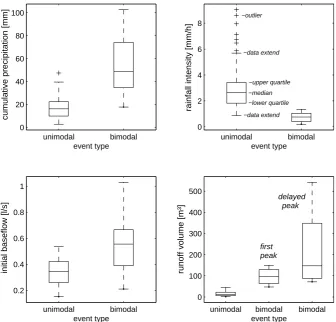
Fig. 5. Comparison of cumulative precipitation, rainfall intensity, initial baseflow and runoff volume for unimodal and bimodal events. The
whiskers of the box plots extend to the minimum and maximum data value, however, not more than 1.5×interquartile range.
Krtis a dimensionless quantity whose value depends on the time unit chosen. The log(q)values were fitted to a straight line with the coefficientsa[m3×(s×86 400s)−1] andb[m3/s]:
log(q)=a×t+b (2)
withKrt resulting from:
Krt =exp(a) (3)
Because various authors have shown that the storage-discharge relationship is non-linear (Kubota and Sivapalan, 1995; Wittenberg, 1999, 2003; Wittenberg and Sivapalan, 1999) a nonlinear outflow method according to Wittenberg (1999) was applied to the recession curves (Eq. 4). In this case, the recession flow hydrograph was estimated by fitting the discharge dataqtto the non-linear storage outflow model:
qt =q0 1+
(1−b)×q01−b
a×b ×t
!b−11
(4)
For qt and q0 in [m3/s] the factor a has the dimension
m3−3bsbandb is dimensionless. It has been found for nu-merous rivers in different hydrological regimes thatbis less
Table 3. Characteristics of the unimodal events measured at the
headwater Limberg.
55 events te p pi pi−max q0 qs
[d] [mm] [mm/h] [mm/h] [l/s] [m3]
median 0.41 16.1 2.63 10 0.35 10.69
minimum value 0.11 2.7 0.86 2 0.15 1.16
maximum value 2.32 74.4 9.04 44 0.54 45.71
te, event duration; p, total rainfall; pi, precipitation intensity; pi−max, maximum precipitation intensity;q0, initial baseflow; qs,
storm runoff
than 1, with typical values around 0.5 (Wittenberg, 1994, 1999; Wittenberg and Sivapalan, 1999; Aksoy and Witten-berg, 2001; Mishra et al., 2003). For a fixedb,a character-izes the recession behavior of the falling limb. With increas-inga, the shape of the recession limb becomes increasingly damped. To get a clear interpretable parametera,bwas fixed at 0.5 andaundq0were fitted with a non-linear least square
Table 4. Characteristics of the bimodal events measured at the headwater Limberg.
event start te
[d]
q0
[l/s]
t2p
[d]
pdirect
[mm]
pi
[mm/h]
pi−max
[mm/h]
qsdirect
[m3]
qsdelayed
[m3] * 1 22 June 1997 15.02 0.73 3.35 28.7 0.60 1.2 61.32 71.55 2 5 July 1997 17.69 0.55 4.90 102.6 1.35 5.5 149.75 160.87 3 17 July 1997 20.69 0.56 4.80 84.8 1.12 2.3 94.93 245.51 4 7 July 1998 26.42 0.36 5.05 36.7 0.45 3.9 96.77 542.02 5 21 June 1999 20.83 0.67 5.81 17.7 0.20 3.1 86.98 93.54 6 9 July 1999 24.09 0.46 8.30 39.1 0.37 4.4 62.21 112.65 7 22 July 1999 21.00 0.57 5.27 53.0 0.66 9.1 128.27 133.62 8 26 Aug 1999 26.29 0.32 10.80 57.2 0.32 2.1 134.80 75.07 9 10 July 2000 20.83 0.42 5.49 43.8 0.85 1.1 103.78 420.01 10 5 Aug 2000 16.67 0.66 3.70 32.7 0.88 2.7 47.27 387.62 11 16 June 2001 14.71 1.03 4.08 75.5 0.98 2.0 65.40 309.33 12 19 July 2001 20.83 0.21 4.86 72.7 1.14 2.6 131.701 82.85
te, event duration;q0, initial baseflow;t2p, time to second peak;pdirect, rainfall during direct peak duration;pi,rainfall intensity;pi−max,
maximum precipitation intensity; qsdirect, storm runoff from direct peak, qsdelayed, storm runoff from delayed peak
precipitation is underestimated due to measurement errors and temperatures<0◦C
0 2.5 5 7.5 10
0 0.5 1 1.5
precipitation intensity [mm/h]
initial baseflow [l/s]
0 50 100 150
0 0.5 1 1.5
cumulative precipitation [mm]
initial baseflow [l/s]
unimodal event bimodal event unimodal event
bimodal event
Fig. 6. Hydrological characteristics of the two event types (unimodal and bimodal) of the micro-scale catchment, stream gauge Limberg.
Filled circles indicate bimodal events with underestimated precipitation due to measurement errors.
4 Results
4.1 Runoff response of headwater Limberg
In Fig. 5 cumulative precipitation, rainfall intensity, initial baseflow and runoff volume of the two event types are com-pared (see also Tables 3 and 4). The bimodal events show higher cumulative precipitation, lower rainfall intensities and higher initial base flow levels than the unimodal events. The runoff volume of bimodal events exceeds the runoff volume of unimodal peaks. The first peak of a bimodal event yields, compared to the unimodal peak event, more than the double runoff volume, and could be a result of the higher rainfall volume. Further, the delayed peak contributes at least half of the runoff volume of the first peak (Table 4, event 8) and can exceed the runoff of the first peak up to eight times (Table 4,
event 10). The bimodal events follow the same trend deter-mined by Kirnbauer et al. (2001). For six bimodal and six unimodal events they show that the bimodal events occur un-der relatively high precipitation depths (greater than 40 mm), relatively low rainfall intensities (between 4 and 10 mm/h), and wet conditions, i.e. high initial base flow. The thresh-old values for bimodal runoff response given by Kirnbauer et al. (2001) differ slightly from the values found here and have overlapping ranges in the case of cumulative precipita-tion, rainfall intensity and initial baseflow. Overall, the event characteristics at Limberg shown in Fig. 5 are statistically significantly different for both event types which was proven by the Wilcoxon test of equality of medians at a significance level ofα=0.01 (99%).
[image:8.595.130.464.316.464.2]0 20 40 60 80 100 120 140 160 0
500 1000 1500 2000 2500 3000 3500 4000 4500 5000
runoff [m³]
required area for runoff generation [m²] for (p/qd=1)
minimum area of SOF maximum area of SOF
[image:9.595.312.545.64.251.2]minimum area of SOF + duff layer area maximum area of SOF + duff layer area unimodal event bimodal event, fist peak
Fig. 7. Required area to generate the observed runoff volume of the
first peak of bimodal events and of the unimodal events, under the assumption that the event runoff coefficient equals 1 (SOF: satura-tion area).
moisture state of the catchment. In Fig. 6, for all 67 events, initial baseflow as indicator of the soil moisture state is plot-ted versus precipitation intensity and cumulative precipita-tion, respectively. The two event types occur under very different event characteristics and form two separate groups (Fig. 6). A low rainfall height can produce a delayed peak (Fig. 6, right), but only if the initial baseflow is high (e.g. rainfall height = 17.7 mm, initial baseflow = 0.67 l/s, Ta-ble 4). If the initial baseflow is low a high rainfall amount is necessary to initiate a delayed peak (e.g. rainfall height = 72.7 mm, initial baseflow = 0.21 l/s, Table 4). In contrast, bimodal events are always characterized by relative low pre-cipitation intensities independent of initial baseflow (Fig. 6, left). It seems that the delayed peak results from an overflow of a storage system where, depending on the current water content, more or less rain input is needed to initiate a delayed peak.
The relationship between the runoff volume of the delayed peak and the two variables that represent the amount of wa-ter in the system, i.e. initial baseflow and cumulative precip-itation, has not been explored in detail. To identify such a relationship or its determining factors a much larger sample (more than 12 bimodal events) would be necessary. Further-more, the volume estimates of rainfall and runoff are crude estimates. For 4 out of 12 bimodal events the rainfall vol-ume is underestimated due to measurement problems, and the derivation of the runoff volume of the delayed peak is subjective due to the subjective separation between the first und the second peak.
In Fig. 7 the required size of the generation area of the unimodal events and of the direct peak of the bimodal events
0 1 2 3 4 5 6 7
0 1 2 3 4
time [d]
log q [m³/s]
Viehhofen 150 km²
0 1 2 3 4 5 6 7
−1.5 −1 −0.5 0 0.5
1Rammern 15.5 km²
time [d]
log q [m³/s]
measured curvefit
[image:9.595.51.284.65.265.2]measured curvefit
Fig. 8. Recession curves for the rainfall runoff events measured
1997 (every forth measured point is plotted) for Rammern and Viehhofen: linear model.
0 1 2 3 4 5 6 7
0 10 20 30
40Viehhofen 150 km²
time [d]
q [m³/s]
0 1 2 3 4 5 6 7
0 0.5 1 1.5
2Rammern 15.5 km²
time [d]
q [m³/s]
measured curvefit
measured curvefit
Fig. 9. Recession curves for the rainfall runoff evens measured 1997
(every forth measured point is plotted) for Rammern and Viehhofen: nonlinear model.
[image:9.595.310.546.316.505.2]unimodal bimodal unimodal bimodal 0
0.2 0.4 0.6 0.8 1
Kr [m³*(86400s²)
−1
]
event types event types Rammern Viehhofen
unimodal bimodal unimodal bimodal 0.6
0.7 0.8 0.9 1
r²
event types event types Rammern Viehhofen −data extend
−upper quantile
−median
[image:10.595.129.470.64.222.2]−lower quantile −data extend
Fig. 10. Box plots of recession coefficientsKrt (left) with goodness of curve fitr2(right) for the unimodal and bimodal event types at the small-catchment scale (gauge Rammern) and at the meso-scale (gauge Viehhofen).
unimodal bimodal unimodal bimodal 0
5 10 15 20
a [m
(3
−3b)
*s
b ]
event types event types Rammern Viehhofen
unimodal bimodal unimodal bimodal 0.6
0.7 0.8 0.9 1
r²
data extend− upper quantile−
median−
lower quantile− data extend−
outlier−
[image:10.595.130.465.273.428.2]event types event types Rammern Viehhofen
Fig. 11. Boxplots of coefficienta(left) calculated with the nonlinear model with goodness of curve fitr2(right) for the two event types at the small-catchment scale (gauge Rammern) and at the meso-scale (gauge Viehhofen).
Further areas must be involved in generating fast runoff, tak-ing into account that the required size is calculated under the most unfavorable assumption of a runoff coefficient equal 1. These results are consistent with the results of Tilch et al. (2003). They could verify that the first peak does not only consist of event water from the saturation area and slide area, but also of pre-event water from the boulder field at the very steep slope.
4.2 Runoff response at different scales
Figures 8 and 9 show example recession limbs for all events of 1997, with linear curve fit andqtplotted on a logarithmic
scale (Fig. 8) and with a nonlinear curve fit (Fig. 9) accord-ing to the model given by Wittenberg (1999) (see Sect. 3.4). The recession limbs are neither all concave shaped nor lin-ear. For example, the bimodal events are more linear on a log scale but unimodal events are still concave shaped (Fig. 8). In opposite, recession limbs measured at Rammern are almost
linear at normal scale (Fig. 9). Hence, two methods are ap-plied, a semi-logarithmic method assuming a linear storage-discharge relationship and the method according to Witten-berg (1999) implying a nonlinear storage-discharge relation-ship.
0 5 10 0
0.5 1 1.5
precipitation intensity [mm/h]
in
it
ia
l b
a
s
e
fl
o
w
[
m
³/
s
]
0 50 100 150
0 0.5 1 1.5
in
it
ia
l b
a
s
e
fl
o
w
[
m
³/
s
]
cumulative precipitation [mm]
0 5 10
0 5 10 15
precipitation intensity [mm/h]
in
it
ia
l b
a
s
e
fl
o
w
[
m
³/
s
]
0 50 100 150
0 5 10 15
in
it
ia
l b
a
s
e
fl
o
w
[
m
³/
s
]
cumulative precipitation [mm] unimodal event bimodal event
Rammern 15.5 km² Rammern 15.5 km²
[image:11.595.130.466.63.384.2]Viehhofen 150 km² Viehhofen 150 km²
Fig. 12. Initial base flow versus cumulative precipitation, and initial baseflow versus precipitation intensity, for gauges Rammern and
Viehhofen. Filled circles indicate bimodal events with underestimated precipitation due to measurement errors.
0 50 100 150 200
0 10 20 30 40 50
cumulative precipitation [mm]
runoff [mm]
y=0.0012x2.0063 r²=0.72 Rammern 15.5 km²
0 50 100 150 200
0 10 20 30 40 50
cumulative precipitation [mm]
runoff [mm]
y=0.0027x1.9261
r²=0.82 Viehhofen 150 km²
unimodal event bimodal event
Fig. 13. Runoff versus cumulative precipitation for direct peak events and for bimodal events at two different scales. Total runoff from
bimodal events is the runoff from both peaks, filled circles indicate bimodal events with underestimated precipitation due to errors in time series.
the different recession behavior of the unimodal and bimodal events.
The appearance of an event type at Limberg can be described by initial baseflow and cumulative precipitation (Fig. 6). Initial baseflow versus precipitation intensity, and
[image:11.595.129.467.435.594.2]Table 5. Characteristics of the unimodal events measured at gauges Rammern and Viehhofen.
Rammern Viehhofen
te q0 qs qs/p te q0 qs qs/p
[d] [m3/s] [m3/km2] [–] [d] [m3/s] [m3/km2] [–]
median 0.53 0.49 291 0.020 0.79 3.64 635 0.040 minimum value 0.17 0.26 9 0.004 0.25 1.87 23 0.005 maximum value 1.56 1.00 3361 0.070 2.52 12.51 6438 0.130
[image:12.595.57.539.228.406.2]te, event duration;q0, initial baseflow; qs, storm runoff; qs/p, runoff coefficient
Table 6. Characteristics of the bimodal events measured at gauges Rammern and Viehhofen.
Rammern Viehhofen
event start te [d]
q0
[m3/s]
qs
[m3/km2]
qs/p
[–]
te [d]
q0
[m3/s]
qs
[m3/km2]
qs/p
[–] * 1 22 June 1997 7.51 0.77 5871 0.17 7.51 5.15 8413 0.25 2 5 July 1997 8.84 0.70 17 185 0.13 9.19 3.18 42 749 0.27 3 17 July 1997 10.34 0.70 14 772 0.13 10.34 7.47 33 663 0.29 4 7 July 1998 13.21 0.70 26 126 0.23 13.21 5.49 32 318 0.29 5 21 June 1999 – – – 10.42 6.86 16 340 0.31 6 9 July 1999 – – – 11.32 5.08 16 132 0.28 7 22 July 1999 – – – 11.22 4.96 21 462 0.24 8 26 Aug 1999 15.28 0.46 8464 0.21 15.95 3.55 16 317 0.24 9 10 July 2000 10.41 0.42 23 032 0.32 10.42 3.80 17 143 0.25 10 5 Aug 2000 8.75 0.81 17 020 0.32 8.75 6.87 15 154 0.29 11 16 June 2001 7.77 0.67 11 262 0.14 7.77 8.90 20 198 0.26 12 19 July 2001 10.83 0.31 15 426 0.20 10.70 2.21 18 162 0.25
te, event duration;q0, initial baseflow; qs, storm runoff; qs/p, runoff coefficient
precipitation is underestimated due to measurement errors and temperatures<0◦C
namely the unimodal event at gauge Viehhofen with more than 50 mm precipitation and an initial baseflow of more than 12.5 m3/s. This event occurred at Viehhofen during the ex-treme flood event in summer 2002. But this outlier can be distinguished from the bimodal event type due to a much higher precipitation intensity.
Runoff height is plotted versus precipitation height in Fig. 13. The relationships at both scales are nonlinear and are correlated withr2=0.72 for Rammern andr2=0.82 for Viehhofen. Higher runoff volumes are generated dur-ing bimodal events. The runoff coefficients of the bimodal events are between 0.13 and 0.32 for Rammern and 0.24 to 0.31 for Viehhofen (Table 6), whereas unimodal events just reach a runoff coefficient of 0.07 for Rammern and 0.13 for Viehhofen, respectively (Table 5). It follows that at this scales runoff coefficients of the bimodal events are much higher than those of the unimodal events, and the gap seems to increase with scale.
5 Conclusions
areas and stream gauge, and due to variable flow accumula-tion and flow concentraaccumula-tion, the overlay of several damped hydrographs results in an increased runoff of prolonged du-ration. This link between the scales means that the runoff behavior of the headwater (Limberg, 0.07 km2)may be used as an indicator of the runoff behavior of much larger areas (Rammern, 15.5 km2, Viehhofen, 150 km2). It is interesting to note that the occurrence of the two event types is consis-tent over three orders of magnitude in area.
At all three scales, the occurrence of an event type depends on the rainfall amount and on the initial baseflow. A low rainfall height can produce a bimodal event only if the ini-tial baseflow is high. For low iniini-tial baseflow, a high rainfall volume is necessary to generate a delayed peak. Therefore, the bimodal events seem to result from an overflow of deeper storage systems where, depending on the current water con-tent, more or less rain input is needed to initiate a delayed peak response.
During bimodal events, considerably higher runoff volume is generated at all scales. Investigations at the headwater Limberg let come to the conclusion that the higher amount of runoff of bimodal events consists of pre-event water, gen-erated by subsurface flow processes. This reveals that be-side saturation areas subsurface compartments can be signif-icantly involved in the flood generation process.
Acknowledgements. The authors would like to thank the German
Science Foundation (DFG), project Me 1844/1-3, for financial support. We would also like to thank the Austrian Hydrographic Service – Salzburg Section – for providing hydrographic data for runoff gauge Viehhofen.
Edited by: M. Mikos
References
Aksoy, H. and Wittenberg, H.: Jahreszeitliche Ver¨anderung der Trockenwetterganglinie – Fallstudie f¨ur einen Fluss im eu-rop¨aischen Teil der T¨urkei, Wasserwirtschaft, 90, 38–41, 2001. Anderson, M. G. and Burt, T. P.: The role of topography in
control-ling throughflow generation, Earth Surf. Processes, 3, 331–344, 1978.
Chapman, T.: A comparison of algorithms for stream flow recession and baseflow separation, Hydrol. Processes, 13, 701–714, 1999. Dewandel, B., Lachassagne, P., Bakalowicz, M., Weng, P., and Al-Malki, A.: Evaluation of aquifer thickness by analyzing reces-sion hydrographs. Application to the Oman Ophiolite hard-rock aquifer, J. Hydrol., 274, 248–269, 2003.
Gutknecht, D.: Abflussentstehung an H¨angen – Beobachtungen und Konzeptionen, ¨Osterreichische Wasser- und Abfallwirtschaft, 48, 134–144, 1996.
Grayson, R. and Bl¨oschl, G.: Spatial processes, organisation and patterns, in: Spatial patterns in catchment hydrology. Observa-tions and modelling, edited by: Grayson, R. and Bl¨oschl, G., Cambridge University Press, 3–16, 2000.
Hall, F. R.: Baseflow recessions – a review, Water Resour. Res., 4973–4983, 1968.
HD ¨O (Ed.): Hydrographisches Jahrbuch von ¨Osterreich 1999, Bundesministerium f¨ur Land- und Forstwirtschaft, Umwelt und Wasserwirtschaft, Wien, 2002.
Jenkins, A., Ferrier, R. C., Harriman, R., and Ogunkoya, Y. O.: A case study in catchment hydrochemistry: Conflicting interpreta-tions from hydrological and chemical observainterpreta-tions, Hydrol. Pro-cesses, 8, 335–349, 1994.
Kirnbauer, R., Bl¨oschl, G., Haas, P., M¨uller, G., and Merz, B.: Identifying space-time patterns of runoff generation in the L¨ohnersbach catchment, in: Runoff generation and implications for river basin modelling, Freiburger Schriften zur Hydrologie, 13, 37–45, 2001.
Kirnbauer, R., Tilch, N., Markart, G., Zillgens, B., Kohlbeck, F., Leroch, K., Seidler, C., Haas, P., Uhlenbrook, S., Didszun, J., Leibundgut, C., Merz, B., Chawatal, W., and F¨urst, J.: Runoff generation in the northern greywack zone of the Alps – field stud-ies and mathematical modeling, in: 10. Kongress Interpraevent in Garda 2004, 24–27 May 2004, vol. II, 45–56, 2004.
Kirnbauer, R., Pirkl, H., Haas, P., and Steidl, R.: Runoff processes – observations and modelling, ¨Osterreichische Wasser- und Ab-fallwirtschaft, 48, 15–26, 1996.
Kirnbauer, R., Bl¨oschl, G., Haas, P., M¨uller, G., and Merz, B.: Iden-tifying space-time patterns of runoff generation – A case study from the L¨ohnersbach catchment, Austrian Alps, in: Global change and mountain regions – a state of knowledge overview, edited by: Huber, U., Bugmann, H., and Reasoner, M., Springer Verlag, 309–320, 2005.
Klemes, V.: Probability of extreme hydrometeorological events – a different approach, in: Extreme Hydrological Events: Precipita-tion, Floods and Droughts, 213, 167–176, 1993.
Kubota, J. and Sivapalan, M.: Towards a catchment-scale model of subsurface runoff generation based on synthesis of small-scale process-based modelling and field studies, Hydrol. Processes, 9, 541–554, 1995.
Markart, G. and Kohl, B.: Die B¨oden im Einzugsgebiet des L¨ohnerbaches/Saalbach. Unver¨offentlichter Projektbericht an das BMLF (unpublished report), Wien, 1993a.
Markart, G. and Kohl, B.: Beregnungen im Einzugsgebiet des L¨ohnerbaches/Saalbach, Unver¨offentlichter Projektbericht an das BMLF (unpublished report), Wien, 1993b.
Masiyandima, M. C., van de Giesen, N., Diatta, S., Windmeijer, P. N., and Steenhuis, T. S.: The hydrology of inland valleys in the sub-humid zone of West Africa: rainfall-runoff processes in the M’b´e experimental watershed, Hydrol. Processes, 17, 1213– 1225, 2003.
McDonnell, J. and Woods, R.: On the need for catchment classifi-cation (editorial), J. Hydrol., 299, 2–3, 2004.
McNamara, J. P., Kane, D. L., and Hinzman, L. D.: An analysis of streamflow hydrology in the Kuparuk River basin, Arctic Alaska; a nested watershed approach, J. Hydrol., 206, 39–57, 1998. Mendoza, G. F., Steenhuis, T. S., Walter, M. T., and Parlange
J.-Y.: Estimating basin-wide hydraulic parameters of a semi-arid mountainous watershed by recession-flow analysis, J. Hydrol., 279, 57–69, 2003.
Mishra, A., Hata, T., Abdelhadi, A. W., Tada, A., and Tanakamaru, H.: Recession flow analysis of the Blue Nile River, Hydrol. Pro-cesses, 17, 2825–2835, 2003.
Naef, F., Scherrer, S., and Weiler, M.: A process based assessment of the potential to reduce flood runoff by land use change, J. Hy-drol., 267, 74–79, 2002.
Nathan, R. J. and McMahon, T. A.: Evaluation of automated tech-niques for base flow and recession analyses, Water Resour. Res., 26, 1465–1473, 1990.
Onda, Y., Komatsu, Y., Tsujimura, M., and Fujihara, J. I.: The role of subsurface runoff through bedrock on storm flow generation, Hydrol. Processes, 15, 1693–1706, 2001.
Pilgrim, D. H. and Cordery, I.: Flood Runoff, in: Handbook of Hydrology, edited by: Maidment, D. R., McGraw-Hill Inc., 9.1– 9.42, 1993.
Pirkl, H.: Erarbeitung der Zusammenh¨ange zwischen Hanginsta-bilit¨aten und -laHanginsta-bilit¨aten, Hangwasserhaushalt und Massenbe-wegungen in Teilen des Zentralalpenkristallins, ¨Osterreichische Akademie der Wissenschaften, Geologische Bundesanstalt (un-published report), Wien, 1989.
Rodda, J. C.: Mountains – a hydrological paradox or paradise?, Beitr¨age zur Hydrologie der Schweiz, 41–51, 1994.
Rose, S. and Peters, N. E.: Effects of urbanization on streamflow in the Atlanta area (Georgia, USA): A comparative hydrological approach, Hydrol. Processes, 15, 1441–1457, 2001.
Schiffer, R. and Burgstaller, B.: Vegetationskartierung L¨ohnersbach, Thematische Karte (unpublished report), 1990. Singh, V. P. and Strupczewski, W. G.: On the status of flood
fre-quency analysis, Hydrol. Processes, 16, 3737–3740, 2002. Sujono, J., Shikasho, S., and Hiramatsu, K.: A comparison of
tech-niques for hydrograph recession analysis, Hydrol. Processes, 18, 403–413, 2004.
Tallaksen, L. M.: A review of baseflow recession analysis, J. Hy-drol., 165, 349–370, 1995.
Tilch, N., Uhlenbrook, S., Didszun, J., Leibundgut, C., Zillgens, B., Kirnbauer, R., and Merz, B.: Decoding flow formation pro-cesses using tracer hydrologic methods in an Alpine catchment,
¨
Osterreichische Wasser- und Abfallwirtschaft, 55, 9–17, 2003.
Uhlenbrook, S., Frey, M., Leibundgut, C., and Maloszewski, P.: Hydrograph separations in a mesoscale mountainous basin at event and seasonal timescales, Water Resour. Res., 38(6), 1096, doi:10.1029/2001WR000938, 2002.
Vitvar, T., Gurtz, J., and Lang, H.: Application of GIS-based dis-tributed hydrological modelling for estimation of water residence times in the small Swiss pre-alpine catchment Rietholzbach, IAHS-AISH-Publication, 258, 241–248, 1999.
Viviroli, D., Weingartner, R., and Messerli, B.: Assessing the hy-drological significance of the world’s mountains, Mt. Res. Dev., 23, 32–40, 2003.
Weiler, M., McGlynn, B. L., McGurie, K. J., and McDonnell, J. J.: How does rainfall become runoff? A combined tracer and runoff transfer function approach, Water Resour. Res., 39(11), 1315, doi:10.1029/2003WR002331, 2003.
Weingartner, R., Barben, M., and Spreafico, M.: Floods in moun-tain areas – an overview based on examples from Switzerland, J. Hydrol., 282, 10–24, 2003.
Wetzel, K. F.: Runoff production processes during different rain-fall in small hillslope catchments of the northern limestone Alps, Erde, 132, 361–379, 2001.
Wittenberg, H.: Nonlinear analysis of flow recession curves, IAHS-Publication, 221, 61–67, 1994.
Wittenberg, H.: Baseflow recession and recharge as nonlinear stor-age processes, Hydrol. Processes, 13, 715–726, 1999.
Wittenberg, H.: Effects of season and man-made changes on base-flow and base-flow recession – case studies, Hydrol. Processes, 17, 2113–2123, 2003.