DISSERTATION
EXPLORING THE RELATIONSHIPS AMONG CREATIVITY, ENGINEERING KNOWLEDGE, AND DESIGN TEAM INTERACTION ON SENIOR ENGINEERING
DESIGN PROJECTS
Submitted by Badaruddin Ibrahim School of Education
In partial fulfillment of the requirements For the Degree of Doctor of Philosophy
Colorado State University Fort Collins, Colorado
Summer 2012
Doctoral Committee
Advisor: Michael A. de Miranda Gene W. Gloeckner
ii ABSTRACT
EXPLORING THE RELATIONSHIPS AMONG CREATIVITY, ENGINEERING KNOWLEDGE, AND DESIGN TEAM INTERACTION ON SENIOR ENGINEERING
DESIGN PROJECTS
In the 21st century, engineers are expected to be creative and work collaboratively in teams to solve or design new products. Research in the past has shown how creativity and good team communication, together with knowledge, can impact the outcomes in the organization. The purpose of this study was to explore the relationships among creativity, engineering knowledge, and team interaction on senior engineering design product outcomes. The study was conducted within the College of Engineering, Department of Mechanical Engineering, at Colorado State University. A purposeful sampling of 55 students who enrolled in Mechanical Engineering Design capstone course completed the instruments during this study, which included the Torrance Tests of Creative Thinking (TTCT) Figural Form A, and a pre and post Team Climate Inventory. Students were assigned to twelve design project teams at the beginning of the fall term, 2011, and the project outcomes were evaluated in the spring of 2012, during the senior design
showcase. Eleven professional engineers and three graduate students were trained to evaluate the senior design outcomes. The students’ engineering grade point average (GPA) was used as a proxy to represent engineering knowledge.
iii
design team level, results from this research indicate that there was no statistical significant relationship between the teams’ creativity composite score and the design outcome. There was also no statistical significant relationship between the team interaction score and the design outcome. The team composite creativity score had no significant relationship with the team interaction score. The composite of team
engineering knowledge had no significant relationship to the team interaction score. At the individual level, the correlation analysis indicated there was no statistically significant relationship between student engineering knowledge and the creativity score.
Exploratory data analysis (EDA) was used to assess the interaction of the main constructs on the engineering design outcome. The EDA results indicate that only one team met the hypothesis that a team scored above average on engineering knowledge and creativity, and a positive team interaction climate would expect to score above average on their design outcome score. Two design teams scored above average on creativity and engineering knowledge, and positive team interaction climate yet scored below average on their design outcome, which went against the original hypothesis. One design team scored above average on their design outcome, but scored below average on the other three main constructs of the study. The remaining eight design teams did not show any consistent pattern of relationships among the three constructs and the design outcome score.
iv
vii
TABLE OF CONTENTS
TABLE OF CONTENTS ... vii
LIST OF TABLES ... xi
LIST OF FIGURES ... xiii
CHAPTER 1: INTRODUCTION ... 1
Statement of Problem ... 2
Statement of Purpose ... 5
Significance of the Study ... 5
Research Questions ... 7
Conceptual Framework ... 8
Engineering Knowledge ... 9
Creativity ... 9
Teamwork ... 10
Definition of Terms ... 11
Assumptions ... 12
Delimitations ... 13
General Limitations ... 13
Researcher’s Perspective ... 14
CHAPTER 2: REVIEW OF LITERATURE ... 17
Creativity ... 18
Perspectives on Creativity ... 20
The Distinctions Among Creativity, Innovation, and Invention ... 24
Creativity as Human Performance/Achievement ... 27
Multidimensionality of Creativity ... 28
Problem Finding and Evaluation ... 29
Creative Process ... 30
Creative Product Assessment ... 34
How is Creativity Measured? ... 37
Measuring Creativity in Engineering Education ... 40
viii
Modern Engineering Practice ... 48
Mechanical Engineering ... 49
Teamwork... 51
Team Development ... 53
Brainstorming ... 55
Teamwork in Engineering Design ... 57
Engineering Design ... 58
Engineering Design Variables ... 60
Engineering Design Process (EDP) ... 62
Creativity, Knowledge and Teamwork in Engineering Design ... 70
Summary ... 73
CHAPTER 3: METHOD ... 77
Overview of the Chapter ... 77
Research Design ... 78
Reflection on the Study Limits... 79
Permission and Approval ... 81
Research Context: Engineering design practicum ... 81
Participants and Sampling Procedures ... 87
Site Selection Description ... 88
Demographic Questionnaire ... 88
Measures and Specifications ... 88
Engineering Knowledge Score ... 89
Team Climate Inventory (TCI) Questionnaire ... 89
Torrance Tests of Creative Thinking (TTCT) ... 90
Senior Design Outcome Score ... 92
Data Collection Phases ... 94
Data Collection Procedure ... 95
Data Analysis ... 98
CHAPTER 4: RESULTS ... 101
Overview ... 101
ix
Engineering Knowledge Prior to Senior Design ... 103
Measure of Creativity ... 111
Team Interaction Measure ... 118
Senior Design Outcome Score ... 130
Analysis of Correlation ... 136
Relationship Between Creativity and Senior Design Outcome ... 136
Relationship Between Team Interaction and Senior Design Outcome ... 138
Relationship Between Team Interaction and Creativity ... 139
Relationship Between Engineering Knowledge and Creativity ... 142
Relationship Between Engineering Knowledge and Team Interaction ... 143
Relationship Among Creativity, Engineering Knowledge, and Team Interaction on Senior Design Outcome ... 144
Summary ... 151
CHAPTER 5: DISCUSSION AND CONCLUSION ... 153
Overview of the Study... 153
Instrumentation of the Study ... 153
Relationship Between Creativity and Senior Design Outcome ... 157
Relationship Between Team Interaction and Senior Design Outcome ... 157
Relationship Between Creativity and Team Interaction ... 158
Relationship Between Engineering Knowledge and Creativity ... 159
Relationships Between Engineering Knowledge and Team Interaction ... 160
Interaction Among Creativity, Engineering Knowledge, and Team Interaction on Engineering Design Outcome ... 161
Implications for Action ... 162
Education Institutions ... 163
Engineering Professor/Instructor ... 164
Engineering Education Researcher ... 166
Industry ... 167
Measurement Dilemma and Challenges ... 169
Recommendations for Research ... 175
x
Conclusions ... 180
Concluding Remarks ... 181
REFERENCES ... 182
APPENDIX A. MECH486A/B 2011/2012 PROJECT LIST ... 196
APPENDIX B. COLORADO STATE UNIVERSITY INSTITUTIONAL REVIEW BOARD (IRB) APPROVAL ... 197
APPENDIX C. DEMOGRAPHIC QUESTIONNAIRE... 198
APPENDIX D. STUDENT PERMISSION TO RELEASE ACADEMIC RECORDS . 199 APPENDIX E. PERMISSION TO USE AND REVISE TEAM CLIMATE INVENTORY (TCI) ... 200
APPENDIX F. SCHOLASTIC TESTING SERVICE, INC. ... 201
APPENDIX G. PERMISSION TO USE AND REVISE THE STUDENT PRODUCT ASSESSMENT FORM (SPAF) ... 202
xi
LIST OF TABLES
Table 2.1: Matrix of Creativity Types (Unsworth, 2001) ...31
Table 2.2: Torrance Test of Creative Thinking (TTCT) creative dimension (Torrance, 1974) ...33
Table 2.3: Creative Product Analysis Matrix (CPAM) dimensions (Besemer & O’Quin, 1999) ...35
Table 2.4: Four dimensions and elements to test creativity ...42
Table 2.5: Engineering Design Process (EDP) ...66
Table 2.6: What makes a creative team? ...72
Table 3.1: The CSU Mechanical Engineering Bachelor’s Degree Program Objectives ...81
Table 3.2: The CSU Engineering Bachelor Science graduate expectations ...82
Table 3.3: Research questions and type of statistical approach for data analysis ...100
Table 4.1: Means and Standard Deviations of the Sub-discipline and Overall GPAs (n = 88) ...106
Table 4.2: The t-tests, Significant p-values, and Effect Sizes of the GPA Pairs ...107
Table 4.3: Intercorrelations among sub-GPAs, Engineering GPA, Overall GPA Prior to MECH486A (n = 88) ...108
Table 4.4: Means and Standard Deviations of the Sub-Discipline GPAs for Participating Design Teams ...110
Table 4.5: Means and Standard Deviations of TTCT Figural Form A (n = 85) ...113
Table 4.6: Intercorrelations for Constructs in Creativity Test, Creativity Average Score, and Creativity Index (n = 85) ...114
Table 4.7: Percentages of 13 Creativity Strengths Measured by TTCT Figural Form A exhibited by Students (n = 85) ...115
Table 4.8: Means and Standard Deviations of the TTCT Figural Form A for Participating Design Teams ...117
xii
Table 4.10: Number of Scale Items and Cronbach Alpha Coefficient of the TCI at
Pretest (n = 62) ...124 Table 4.11: Intercorrelations for Factors in Team Climate Inventory at Pretest
(n = 62) ...125 Table 4.12: Means, Standard Deviations, t-test, Effect Sizes, and Significant p-values
of the Construct in TCI at Pretest and Posttest ...126 Table 4.13: Average Pretest and Posttest Means, Standard Deviations, and Mean
Differences of TCI for Participating Design Teams ...128 Table 4.14: Average Score of the Judging Criteria for the Participating Design
Teams ...132 Table 4.15: Means, Standard Deviations, and Interrater Reliability of the Judging
Criteria...134 Table 4.16: Intercorrelations between TTCT Figural Form A Constructs, Creativity
Index, and Senior Design Outcome Score (n = 12) ...137 Table 4.17: Intercorrelations between TCI factors Difference and Senior Design
Outcome Score (n = 12) ...139 Table 4.18: Intercorrelations between TCI Factors Difference, TTCT Creativity
Constructs, and Creativity Index (n = 12) ...141 Table 4.19: Intercorrelations for Engineering Knowledge and TTCT Creativity
Index (n = 85) ...143 Table 4.20: Creativity, Engineering Knowledge, Team Interaction, and Senior
Design Outcome Pattern (n = 12) ...150 Table 4.21: Intercorrelations for TTCT Creativity Index, Engineering Knowledge,
xiii
LIST OF FIGURES
Figure 1.1: Theoretical relationships among creativity, engineering knowledge, and team interaction on design outcome in senior design practicum ...4 Figure 3.1: The relationships among creativity, engineering knowledge, and team
interaction and the impact on outcome in senior design projects ...77 Figure 3.2: Senior design practicum prerequisite courses (Adapted from Department of
Mechanical Engineering Undergraduate Curriculum Guide Fall 2011, Retrieved March 11, 2011, from http://www.engr.colostate.edu/me/pages/ documents/UndergradCurricGuideFall11.pdf ...85 Figure 3.3: Data collection phases of the study ...95 Figure 4.1: Comparative boxplot of TTCT creativity index for each senior design
teams with group mean of 106.74 ...145 Figure 4.2: Comparative boxplot of engineering GPA for each senior design team
with group mean of 2.94 ...147 Figure 4.3: Comparative boxplot of the team interaction for each senior design team
with group mean of -.17 ...148 Figure 5.1: Leonardo daVinci's notebook shows his work on water wheels and
Archimedes pumps. Retrieved April 12, 2012, from http://www.science buddies.org/engineering-design-process/SciF_EngrDesignGuide_Notebook_ Leonardo_CodexAtlanticus.jpg ...173 Figure 5.2: A sample of engineering design notebook page that indicate date, constraint,
sketches and calculations involved in completing a specific project. Retrieved April 12, 2012 from http://web.mit.edu/2.009/www/assignments/Design
1
CHAPTER 1: INTRODUCTION
“I think if engineers are not creative, they’re not engineers” – Elliott (2001)
History has shown that people have always relied on science and technology to find solutions to their daily problems and improve the quality of their lives. For example, the development of farming approaches/methods has evolved from the earliest methods of farming with human labor and using animals that only could feed a small population, to the use of advanced and sophisticated machines that could supply entire nations and feed the world’s population. As the world becomes more economically competitive, each nation must continuously strive to maintain their advantages and leadership in
technological inventions and integrative processes (Reader, 2006).
Industrialization is very closely related to the growth and development of science and technology. New discoveries and inventions continually challenge the
industrialization process. No one can doubt the role of engineers in fueling the great revolution in science and technology (Alger & Hays, 1964). However, global market demands have forced engineers to develop goods and products at a faster pace and per lower cost (Frankenberger & Auer, 1997; Hicks, Culley, Allen, & Mullineux, 2002). To date, engineers continue to drive industries by creating solutions to secure competitive advantages (Reader, 2006).
2
company or corporation goals. Therefore, engineers need to be trained to work and communicate in teams.
Bachelor’s degree levelengineering education has been designed to produce excellent engineers who will do high quality work that will help corporations and nations to excel (Moritz, 1998). Moritz (1998) defined excellent engineers as those who meet the characteristics of being inspirational, excellent technical problem solvers, able to produce devices or systems, and are creative. Moritz (1998) also argued that excellent engineers should not only benefit their employers and the nation, but also must benefit the global community.
Statement of Problem
The world of industry must change in order to remain competitive in the 21st century. With the rapid development of information technology, industries need to respond quickly to new opportunities with creative and innovative products (Kemper & Sanders, 2001). Most industries would expect their hired engineers to be creative and help them to sustain their competitiveness in the global market (Kemper & Sanders, 2001).
3
(Felder, Woods, Stice, & Rugarcia, 2000; Rugarcia, et al., 2000). Although teamwork and communication were recognized as the most important skills needed by industry, Kemper and Sanders (2001) reported that most of the engineering schools failed to prepare their engineering graduates for working in a team environment.
Creativity has long been recognized as important in engineering design. Creativity in engineering design is often found as an area of emphasis in engineering textbooks. For example, Cross (2008) in his textbook stated, “When designers are asked to discuss their abilities and to explain how they work, a few common themes emerge. One theme is the importance of creativity and ‘intuition’ in design – even in engineering design” (p. 19). In addition, Haik (2003) stated “In the systematic design process, creativity is utilized in all steps” (p. 119).Despite the fact that creativity is an important element in the engineering profession, engineering educators still face difficulties in assessing or quantifying
creativity among their students. One reason could potentially come from the abstract nature of creativity itself and even now, there is no single definition of creativity that has been agreed upon among scholars.
4
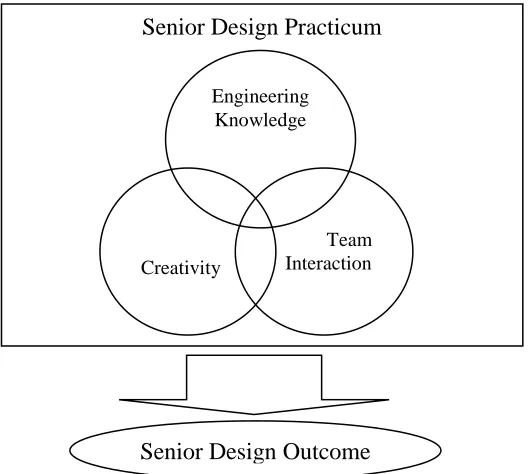
Figure 1.1. Theoretical relationships among creativity, engineering knowledge, and team interaction on design outcome in senior design practicum
The problem this research study seeks to address is to understand the relationships among creativity, engineering knowledge, and team interaction constructs and how these three variables interact with each other and impact engineering design outcomes. This represents the problem space of the study and it is unknown if these variables interact. Due to the complex problem of the study with multiple facets, Figure 1.1 helps to illustrate the theoretical relationships among the constructs. A study assessing the
interaction among creativity, engineering knowledge, and teamwork among college-level engineering students is necessary to ensure not only the quality of students who are graduating, but also the future quality of life of all people who depend on engineers.
Senior Design Practicum
Creativity
Team Interaction Engineering
Knowledge
5
Statement of Purpose
The purpose of this study is to explore the relationships among creativity, engineering knowledge, and design team interaction on creative products or solutions in engineering design. The importance of this investigation focused on the challenges facing complex engineering organizations that require the efforts of creative teams to develop solutions to be used to replicate, sustain, and compete in the global market (Jassawalla & Sashittal, 1998). In higher education, students gain particular sets of engineering
knowledge that are prescribed. However, could faculty choose better instructional strategies for students to learn teamwork and creativity? We do know that professional engineers work in teams but are there appropriate assessments for collaborative work at the college level? The aim of the study, therefore, is to gain insight into the relationships among creativity, engineering knowledge, and team interaction on creative products or solutions in engineering design.
Significance of the Study
According to Lumsdaine, Lumsdaine, and Shelnutt (1999), since the
6
team (Cross & Cross, 1995; Thatcher & Brown, 2010).
Thompson and Lordan (1999) argued “engineering designers are expected to be creative” (p. 29) and this is currently becoming a core mission statement of engineering education in the United States (Charyton & Merrill, 2009; Middleton, 2005). In the United States, 81% of employers agree that creativity is important for future workforce entrants (Casner-Lotto & Barrington, 2006, p. 10). On the other hand, many engineering education courses do not have in-depth work that requires creativity, and many
institutions are not using practical methods to assess creativity (Charyton & Merrill, 2009; Thompson & Lordan, 1999). Assuming creativity is a component in successful engineering design, it is important to be able to measure/assess creativity to assure added value in engineering education. Measuring creativity “is necessary to acknowledge that acts of creativity can and do occur in any workplace environment” (Thatcher & Brown, 2010, p. 291) and creative thinking can be developed and fostered effectively by
educators (Sawyer, 2006) helping educate more successful engineers.
Competitiveness, innovation, and creativity in engineering education have driven this study. All three factors (creativity, engineering knowledge, and team interaction) combine significantly toward the real focus of this study, producing creative outcomes or solutions in engineering design. Research has shown that these three factors have
7
This study seeks to explore the facets of creativity and teamwork among engineering students in college as outcomes in engineering design. By understanding creativity and the environment of teamwork among students and how it interacts with their current engineering knowledge, instructors and students will be assured of a
competitive advantage. Moreover, this research will provide recommendations on how to assess creativity, team interaction, and design outcome in engineering design projects.
Research Questions
This study examined the impact that the three variables of student creativity level, engineering knowledge, and design team interaction had on the outcomes of an
engineering design project in a senior level engineering design capstone course. The research questions examined in this study include:
1. What is the relationship between team composite creativity score and senior design outcome?
2. What is the relationship between team interaction score and senior design outcome?
3. What is the relationship between team composite creativity score and team interaction score?
4. What is the relationship between composite engineering course GPA and creativity score?
8
b. What is the relationship between physics courses GPA and creativity score?
c. What is the relationship between chemistry courses GPA and creativity score?
d. What is the relationship between engineering sciences courses GPA and creativity score?
e. What is the relationship between engineering design courses GPA and creativity score
5. What is the relationship between composite engineering knowledge GPA and team interaction score?
6. What is the interaction between creativity, engineering knowledge, and team interaction on senior design outcome?
Therefore the direction of this study in terms of the research questions, relates to
creativity, engineering knowledge, and team interaction on engineering design outcome.
Conceptual Framework
9 Engineering Knowledge
Engineering is a profession that requires knowledge of mathematics and natural sciences gained through learning, experience, and practice (Eide, Jenison, Mashaw, & Northup, 2002). This knowledge is then applied to product development or solutions especially in engineering design. Besides having engineering knowledge (e.g., to determine the strength of materials and how to select the right materials), knowledge of the process of engineering design is essential in solving a design problem. According to Eder and Hosnedl (2008), engineering design involves four main phases: (1) elaborating the assigned problem, (2) conceptualizing the design, (3) laying out the design, and finally (4) detailing the design. Each phase involves special tasks or strategies to meet the goal of the project. Engineering Design Process (EDP) phases can be described from the main steps to the most specific and detailed process. The design methods “represent a number of distinct kinds of activities that the designer might use and combine into a overall design process” (Cross, 2008, p. 46). According to Hill (1998), “regardless of the degree of complexity, all models describe a common thread: a process that moves from the inception of an idea to the reflection stage in order to verify if the developed model, prototype or system functions as intended” (p. 204).
Creativity
10
device, or system being developed by the engineers that perform the task or solve problems” (p. 171). Furthermore, “creativity is usually apparent in all stages of design processes, but is particularly prominent in the early stages” (A. M. Hill, 1998, p. 204). Others scholars in engineering design have the same view as Hill (1998) and admit that creativity is essential in engineering design (e.g., Cross, 2008; Haik, 2003;
Vzyatishev,1991).
Teamwork
History has shown that humans in society need to cooperate with each other in their lives whether to live, work, or even to play (West, 2004). As an organization’s structure grows and becomes more complex, the need for groups of people to work together becomes more vital (West, 2004). The nature of engineering problems requires engineers to work in groups. Lumsdaine et al. (1999) argued that “with today’s
knowledge explosion, it is no longer possible for a single person to know all the data connected to a problem” (p. 93). At the college or university level, engineering design curriculum has been designed for students to practice working in a group to solve engineering design problems.
11
Definition of Terms
The following terms were operationally defined for the purpose of this study: 1. Senior design students – students in College of Engineering, Colorado State
University who are enrolled in Engineering Design Practicum I (MECH486A) and Engineering Design Practicum II (MECH486B) in two consecutive semesters. These courses act as the capstone for the Mechanical Engineering bachelor degree program.
2. Senior design team – a group of students who have been assigned a specific engineering design task in MECH486A by a group of instructors and graduate teaching assistant. They remain in the same group and continue the same design task in MECH486B in the following semester.
3. Creativity Index score – an individual score from the Torrance Tests of Creative Thinking (TTCT).
12
6. Senior design outcome – could be a real functional product, a prototype, or an engineering solution. The team projects list involved in this study can be found in Appendix A.
7. Engineering course GPA – the cumulative grade point average (GPA) of all prerequisite or required engineering courses for Mechanical Engineering Senior Design Practicum (MECH486A/B) including mathematics, physics, chemistry, and engineering sciences courses. The engineering course GPA was used as a proxy measure to represent students engineering knowledge in this study.
Assumptions
An exploratory quantitative non-experimental correlational research design was used in the study. There was no intervention involved in the study and the researcher did not have control over the independent variables. The following assumptions were made about the study, its context, and the classroom.
1) The sample studied was representative of the total population of Mechanical Engineering and Engineering Science students who are enrolled in Engineering Design Practicum I (MECH486A) and Engineering Design Practicum II
13
2) No major changes were made in the curriculum design and instruction throughout the two consecutive semesters. Additionally, the researcher assumed that any changes did not affect the findings of this research.
3) The demographics of the participants are homogenous especially in their academic backgrounds and achievement. All participants were Mechanical
Engineering and Engineering Science students with cumulative GPAs above 2.00. 4) Because the researcher had no control over group assignment, the researcher
assumed the sample is normally distributed among the groups.
5) Since this study involved multiple instruments, the researcher assumed that all the students completed the creativity tests and team interaction questionnaire
seriously and honestly. This led to the assumption that the test scores and team interaction scores are normally distributed.
Delimitations
This study was conducted at one university with Mechanical Engineering and Engineering Sciences final year students – who are enrolled in MECH486A in fall 2011 and MECH486B in spring 2012. The findings are limited and only true for this specific setting. Therefore the researcher has no interest to generalize the findings to a larger population like other courses, programs, or universities.
General Limitations
14
Two main instruments including the Torrance Tests of Creative Thinking (TTCT) (Figural Form A) and the adapted Team Climate Inventory (TCI) questionnaire were administered in this study. Each instrument was administrated at different times during the period of the study to limit fatigue among participations in the study and prevent study attrition. In addition, the instrument for assessing the senior design final outcome or solution was reviewed by content and measurement experts and did not undergo pilot testing.
The cooperation of the course professor was crucial to achieve 100% participation and contribution from the participants. Since there was a creativity test and team
interaction questionnaire administered in this study, the cooperation of the course Professor was needed to allocate some time during the class period for the researcher to administer the test and distribute the questionnaire.
This study was conducted from August 2011 to April 2012 in the Department of Mechanical Engineering at Colorado State University. For the purpose of this study, the sample was selected from students enrolled in the fall 2011 semester of Engineering Design Practicum I (MECH486A, N = 99 students). No students dropped out of MECH486A and MECH486B during the period of the study.
Researcher’s Perspective
The researcher’s background as an educator working with engineering students and pre-service engineering and technology teachers at one of Malaysia’s higher education institutions has driven him to explore creativity and team interaction in
15
to be creative and communicate well among their peers in solving engineering design problems. Additionally, the researcher has encouraged students to work in teams and come up with creative solutions or products for engineering problems. However, when it comes to creativity and teamwork assessment, he has experienced difficulties in terms of what kind of creativity and teamwork characteristics should be measured and how these can be measured.
As a technology and engineering educator, the researcher believes that students’ knowledge, skills, attitude, etc. can be measured. In most cases, academic achievement was used as a benchmark by employers in hiring new workers. Students’ academic achievement are used to represent their basic knowledge and applied skills required for a specific job with the employer (Casner-Lotto & Barrington, 2006). In engineering industries, besides good academic achievement, it has been reported that employers are also interested to know their newly hired employees’ creativity and teamwork skills (Kemper & Sanders, 2001).
16
materials and techniques, sound instructional design, and improved evaluation
methodology; and enhancement of the status of teaching in the university" (American Society of Engineering Education, 2011, p. para. 18). While the main objective of DEE is to address design education issues across every engineering discipline.
17
CHAPTER 2: REVIEW OF LITERATURE
“It would seem that while creativity is especially difficult to define, it is something that we can recognize when we see it” – Hennesey (2005)
The constructs of engineering knowledge, team orientation, and creativity are unique and have their own body of knowledge. Therefore the purpose of this literature review is to bring perspectives from each of these communities to inform this study. The literature review section will be guided by eight questions that relate to each construct:
a) What is creativity?
b) What is measured in creativity? c) How is creativity measured? d) What is engineering knowledge? e) What is engineering design?
f) How important is teamwork in engineering design? g) Why is creativity important to the engineer?
h) What are the relationships between creativity and engineering design?
The organization of the literature review will be around the constructs presented in Figure 1.1 illustrated in Chapter 1. Therefore, creativity as a whole and many of its sub-elements will be reviewed; engineering knowledge and most of its sub-elements, such as the engineering design process will be reviewed; and team interaction and its elements will be reviewed. These areas will make this review from more than one field and body of knowledge, and will be presented to provide grounding for greater
18 Creativity
Genius, invention, talent, and creativity are the highest levels of human
performance (Eder & Hosnedl, 2008; Kerr & Gagliardi, 2004; Sawyer, 2006), “and yet most critical to human advancement” (Kerr & Gagliardi, 2004, p. 2). Conversation about creativity began in 1950 when an American psychologist, Joy Paul Guilford from The University of Southern California, addressed the importance for psychology researchers to conduct research related to creativity. Before then, psychologists’ main tool for
measuring human creativity was the IQ test (Clapham & Schuster, 1992; Guilford, 1950), but this meant psychologists were conflating creativity with intelligence, arguing that IQ tests measure a person’s performance on several indicators including abstract problem solving ability (Flynn, 1987). Guilford (1950) believed that the nature of creativity itself was difficult to describe and measure. For example, even in an equal environment with equal opportunity, two different people have different creative productivity.
Since the 1950s, psychologists have debated what IQ tests really measure (Flynn, 1987). Does intelligence equate to creativity? Guilford (1950, 1987) and Sternberg (2001) argue that creativity goes beyond human intelligence. Guilford (1950, 1987) defined creativity as a process or activity, which includes inventing, designing,
19
importance of planning stages in order to complete the task successfully. People who are able to demonstrate their capability in all of these types of activities to a distinct degree are recognized as being creative (Guilford, 1950, 1987).
It is important to recognize that one person’s creative productivity differs in performance from time to time (Guilford, 1950). A person’s creative productivity is dependent upon major behavior traits other than abilities (e.g., motivational factors, temperament factors, etc.) (Guilford, 1987). Guilford (1987) argues that most “people believe that creative talent is to be accounted for in terms of high intelligence or IQ. This conception is not only inadequate but has been largely responsible for the lack of
progress in the understanding of creative people” (Guilford, 1987, p. 44). In addition, Clapham and Schuster (1992) reported that research has repeatedly shown low correlations between IQ and creativity measures. In his review of creativity literature, Wallach (1971) summarizes:
Within the upper part of the intellective skill range, intelligence test scores and grades on standard academic subject matter are not effective signs as to who will manifest the strongest creativity attainments in nonacademic contexts. Empirical documentation of this relative unpredictability of creativity criteria from intellective skills data suggests that a separation between these two realms genuinely exist (p. 30).
Generally, it has been argued that the concept of creativity is too loosely defined
(Goldenberg, Mazursky, & Solomon, 1999; Kaufmann, 2003) and the debate seems still ongoing (Sternberg & Lubart, 1999). However, for the purpose of this study, the
20 Perspectives on Creativity
For the purpose of this study, the perspectives on creativity in psychology and the arts as well as in engineering and technology are reviewed to highlight the similarities and differences of creativity applied in these three fields.
Psychology perspective
Despite difficulties in defining creativity, the researcher will refer to the definition of creativity from three psychologists, Guilford (1950), Torrance (1962), and Sternberg (1999) in this study. These three psychologists have defined creativity as an outcome and a process. Guilford (1950) asserts:
[Creativity is] the abilities that are most characteristic of creative people. Creative abilities determine whether the individual has the power to exhibit creative behavior to a noteworthy degree. Whether or not the individual who has the requisite abilities will actually produce results of a creative nature will depend upon his motivational and temperamental traits. (p. 444)
Guilford’s definition of creativity was based on his research interests in human intelligence, and his concept of divergent thinking was a result of his research on developing the structure-of-the-intellect (SI) model. While researching creativity,
Guilford identified numerous intellectual abilities such as fluency, flexibility, originality, and elaboration, which have collectively been labeled as parts of divergent thinking. Meanwhile, Torrance (1962) argued:
[Creativity is] the process of sensing gaps or disturbing, missing elements; forming ideas or hypotheses concerning them; testing these hypotheses; and communicating the results, possibly modifying and retesting the hypotheses. (p. 16)
Torrance’s definition of creativity was more focused on the process involved in
21
would describe creativity as a very natural process, within the reach of everyday people in everyday life, and yet possible at any age. After defining creativity, Torrance designed activities to measure creative thinking abilities to fit his definition.Torrance adopted Guilford’s ideas of divergent thinking and developed a test called the Torrance Tests of Creative Thinking (TTCT). This test was originally used to measure creativity within four intellectual abilities that Guilford identified in school-age children. The four intellectual abilities are fluency, flexibility, originality and elaboration. These will be discussed later in this review.
Finally, Sternberg and Lubart (1999) define creativity as “the ability to produce work that is both novel (i.e., original, unexpected) and appropriate (i.e., useful, adaptive concerning task constraints)” (p. 3). The Sternberg and Lubart (1999) definition was influenced by Guilford’s (1950) and Torrance’s (1962) definitions of creativity. Sternberg and Lubart believed creativity was comprised of six basic elements:
intelligence, knowledge, thinking styles, personality, motivation, and environment. These elements will be discussed later in this literature review section.
It has been recognized that Guilford’s theories of the creative process had a great impact upon the development of creative thinking industry. Both Guilford (1950) and Torrance (1974) have suggested a creative individual should possess the types of abilities measured by tests of divergent thinking. Torrance (1962, 1968, 1974) has provided a significant contribution in terms of objectively evaluating creative talent on a
22 Artistic Perspective
Compared with other fields, artistic creativity is one of the most widely studied fields in the area of creativity (Cropley & Cropley, 2005). Alland (1977) expressed artistic creativity as creativity articulated in any aspect of the arts, including visual art, music, literature, dance, theatre, film, and mixed media. Cowdroy and Williams (2006) reported that the literature in creative arts has distinguished various types of artistic creativity based on the outcome (e.g., painting, design, composition, script for a play) and some of them coupled two or more creative fields (e.g., play-writing and acting) to form a third art form, such as drama, music, etc.
Cowdroy and Williams (2006) define artistic creativity as the uniqueness or excellence found in the outcome “whether or not higher-order intellectual activity is indicated (e.g., in news photography, medical illustration)” (p.102). Gluck, Ernst, and Unger (2002) argue that in most cases, an artist did not offer any common measures for assessing creative products in their field. Creativity in art always results in something that is different in an interesting, important, fruitful, or other valuable way.
23 Engineering and Technology Perspective
Literature on creativity in the field of engineering and technology is inadequate when compared with other fields (Thompson & Lordan, 1999). Therefore, it is a challenge to find a good definition of creativity from a technology and engineering perspective. Despite the challenge, the researcher managed to find creativity defined by Drabkin (1996) as “the ability of human intelligence to produce original ideas and solutions using imagination” (p. 78). Lumsdaine et al. (1999) defined creativity as “playing with imagination and possibilities while interacting with ideas, people, and environment thus leading to new and meaningful connections and outcomes” (p. 9).
Cropley and Cropley (2005) proposed a four dimensional model for creativity in engineering and technology: (a) relevance and effectiveness, (b) novelty, (c) elegance, and (d) generalizability. Relevance and effectiveness refer to how closely matched the product solution is to the problem it was intended to solve. Novelty refers to originality and surprisingness of the product. Elegance refers to the product’s appearance (e.g., beautiful, simple), and it is considered a bonus if the new product design is cost effective. Finally, generalizability means the product is able to be and is accepted into a larger use or is flexible for adoption. Elegance and generalizability were considered as value-added to the creativity of the product, so they are lower in the hierarchy of the model.
24
have to be smart or savvy in order to use it. In terms of generalizability, an iPhone® is very accepted in any part of the world. It is a bonus if people can buy an iPhone® at an affordable price.
In engineering, creative products or creative outcomes are often described as having three primary characteristics including novelty, value, and surprisingness (Nguyen & Shanks, 2009). Cropley and Cropley (2005) have gone into more detail about the characteristics of creativity in engineering. Unlike fine arts, Cropley and Cropley (2005) believe that engineering creativity is different. Engineering creativity can clearly be seen through outcomes including product, device, or system being developed by engineers. Within the literature, there are various ways to define creativity; perhaps the definition differences are due to the unexpected ideas that appear among creative people, together with little sensible attention paid to how their creativity grows on the part of those who have the ideas (Niu & Sternberg, 2001). In this section, the researcher has reviewed the perspective of creativity from three different fields including psychology, the arts, and engineering and technology. It is important to acknowledge that this study specifically looks at creativity from the engineering and technology perspective. However, this raises a significant question regarding both the relationships and the differences between creativity, innovation, and invention.
The Distinctions Among Creativity, Innovation, and Invention
In most engineering design textbooks, it is recognized that there is strong
182 References
Acceditation Board of Engineering and Technology Education. (2011). Criteria for Accrediting Engineering Programs, 2012 - 2013 Baltimore, MD: ABET.
Afolabi, M. O., Dionne, S., & III, H. L. (2006). Are we there yet? A Review of Creativity Methodologies (pp. 1-7). Binghamton, NY: State University of New York.
Alger, J. R. M., & Hays, C. V. (1964). Creative synthesis in design. Englewood Cliffs, NJ: Prentice-Hall.
Alland, A. (1977). The Artistic Animal. Garden City, NY: Anchor Books.
Almeida, L. S., Prieto, L. P., Ferrando, M., Oliveira, E., & Ferrandiz, C. (2008). Torrance Test of Creative Thinking: The question of its construct validity. Thinking Skills and Creativity, 3, 53-58.
Amabile, T. M. (1996). Creativity in context. Boulder: Westview Press.
Amabile, T. M., & Gryskiewicz, N. D. (1989). The creative environment scale: Work environment inventory. Creative Research Journal, 2(4), 231-253.
American Society of Engineering Education. (2011). Educational Research and Methods Division Retrieved Mac 14, 2011, Retrieved from http://erm.asee.org/
Anderson, N. R., & West, M. A. (1998). Measuring climate for work group innovation: Development and validation of the Team Climate Inventory. Journal of
Organizational Behavior, 19(3), 235-258.
Baillie, C., & Walker, P. (1998). Fostering creative thinking in student engineers. European Journal of Engineering Education, 23(1), 35-44. doi: 0304-3797/98/010035-10
Barker, D. P., Day, R., & Salas, E. (2006). Teamworks as an essential component of high-reliability organizationa. Health Services Research, 41(4p2), 1576-1598. doi: 10.1111/j.1475-6773.2006.00566.x
Bellman, R. (1964). Creativity and research in the university. Paper presented at the Conference on Creativity in the Science, New York University.
183
Berliner, D. C. (2002). Educational research: The hardest science of all. Educational Researcher, 31(8), 18-20.
Besemer, S. P. (1998). Creative Product Analysis Matrix: Testing the model structure and a comparison among products-Three novel chairs. Creative Research Journal, 11(4), 333-346.
Besemer, S. P. (2006). Creating products in the age of design: How to improve your new product ideas. Stillwater, OK: New Forums Press.
Besemer, S. P., & O'Quin, K. (1986). Analyzing creative products: Refinement and test of a judging instrument. Journal of Creative Behavior, 20(2), 115-126.
Besemer, S. P., & O'Quin, K. (1987). Creative product analysis: Testing a model by developing a judging instrument. In S. G. Isaksen (Ed.), Frontiers of Creativity Research: Beyond the Basic (pp. 341-357). University of California: Bearly Besemer, S. P., & O'Quin, K. (1999). Confirming the three-factor creative product
analysis matrix model in an American sample. Creativity Research Journal, 12(4), 287-296.
Blicblau, A. S., & Steiner, J. M. (1998). Fostering creativity through engineering projects. European Journal of Engineering Education, 23(1), 55-65. doi: 0304-3797/98/010055-11
Brown, R. T. (1989). Creativity: What are we to measure? In J. A. Glover, R. R. Ronning & C. R. Reynolds (Eds.), Handbook of creativity (pp. 3-32). New York, NY: Plenum Press.
Bulmer, M. G. (1979). Principles of statistics. New York, NY: Dover Publications. Bursuck, W. D., & Munk, D. D. (1998). Can grades be helpful and fair? Educational
Leadership, 55(4), 44-47.
Calhoun, M. L., & Beattie, J. (1984). Assigning grades in the highschool mainstream: Perceptions of teachers and students. Diagnotique, 2(4), 218-225.
Campbell, D. T. (1960). Blind variation and selective retention in creative thought as in other knowledge processes. Psychological Review, 67, 380-400.
184
Charyton, C., Jagacinski, R. J., & Merrill, J. A. (2008). CEDA: A research instrument for Creative Engineering Design Assessment. Psychology of Aesthetics, Creativity, and the Arts, 2(3), 147-154.
Charyton, C., & Merrill, J. A. (2009). Assessing general creativity and creative engineering design in first year engineering students. Journal of Engineering Education, 98(2), 145-156.
Christiaans, H., & Venselaar, K. (2005). Creativity in design engineering and the role of knowledge: Modelling the expert. International Journal of Technology and Design Education, 15(217-236). doi: 10.1007/s10798-004-1904-4
Cicirelli, V. G. (1965). Form of the relationship between creativity, IQ, and academic achievement. Journal of Educational Psychology, 56(6), 303-308.
Clapham, M. M., & Schuster, D. H. (1992). Can engineering students be trained to think more creative? Journal of Creative Behavior, 26, 156-162.
Cohen, J. (1988). Statistical power analysis for the behavioral sciences (Second ed.). Hillsdale, NJ: L. Erlbaum Associates.
Colorado State University. (2011). Colorado State University General Catalog 2011-2012, Retrieved from
http://catalog.colostate.edu/ProgramPDF/2.8ENGNRNG1112f.pdf
Cooper, E. (1991). A critique of six measures for assessing creativity. The Journal of Creative Behavior, 25(3), 194-204.
Couger, J. D., Higgins, L. F., & McIntyre, S. C. (1990). Differentiating creativity, innovation, entrepreneurship, intrapreneurship, copyright, and patenting for I.S. products/process. Paper presented at the Hawaii International Conference on Systems Sciences, Hawaii.
http://ieeexplore.ieee.org/stamp/stamp.jsp?tp=&arnumber=205281
Court, A. W. (1998). Improving creativity in engineering design education. European Journal of Engineering Education, 23(2), 141-154.
Cowdroy, R., & Williams, A. (2006). Assessing creativity in the creative arts. Art, Design, & Communication in Higher Education, 5(2), 97-117.
185
Cropley, & Cropley. (2005). Engineering creativity: A systems concept of functional creativity. In J. C. Kaufman & J. Baer (Eds.), Creativity Across Domains: Face of the Muse (pp. 169-185). Mahwah, NJ: Lawrence Erlbaum Associates.
Cropley, A. J. (2000). Defining and measuring creativity: Are creativity tests worth using? Roeper Review, 23(2), 72-79. doi: 10.1080/02783190009554069 Cropley, D. H., & Cropley, A. J. (2000). Fostering creativity in engineering
undergraduates. High Ability Studies, 11(2).
Cross, N. (2008). Engineering design methods (Fourth ed.). Chichester, West Sussex, UK: John Wiley & Sons.
Cross, N., & Cross, A. C. (1995). Observations of teamwork and social processes in design. Design Studies, 16, 143-170.
Davis, D. C., Gentili, K. L., Trevisan, M. S., & Calkins, D. E. (2002). Engineering design assessment processes and scoring scale for program improvement and
accountability. Journal of Engineering Education, 91(2), 211-221.
Dekker, D. L. (1995). Engineering design process, problem solving, and creativity. Paper presented at the 1995 International Association for Engineering Education
Frontiers in Education Conference, Atlanta, GA.
Department of Mechanical Engineering Colorado State University. (2011a). Retrieved from http://www.engr.colostate.edu/me/pages/objectives_outcomes.html
Department of Mechanical Engineering Colorado State University. (2011b). Department of Mechanical Engineering Undergraduate Curriculum Guide Fall 2011.
Mechanical Engineering Department. Colorado State University. Retrieved from http://www.engr.colostate.edu/me/pages/documents/UndergradCurricGuideFall11 .pdf
Department of Mechanical Engineering Colorado State University. (2011c). Senior Design Practicum Retrieved March 11, 2011, Retrieved from
http://www.engr.colostate.edu/me/pages/senior_design.html
Doolittle, J. H. (1990). Creative Reasoning Test. Pacific Grove, CA: Midwest Publications/Critical Thinking Press.
Drabkin, S. (1996). Enhancing creativity when solving contradictory technical problems. Journal of Professional Issues in Engineering Education and Practice, 78-82. Ebel, R. L. (1951). Estimation of the reliability of ratings. Psychometrika, 16(4), 407-
186
Eder, W. E., & Hosnedl, S. (2008). Design engineering: A manual for enhancing creativity. Boca Raton, FL: CRC Press.
Eide, A. R., Jenison, R. D., Mashaw, L. H., & Northup, L. L. (2002). Introduction to engineering design and problem solving. New York, NY: McGraw Hill. Felder, R. M., Woods, D. R., Stice, J. E., & Rugarcia, A. (2000). The future of
engineering education: II. Teaching methods that work. Chemiical Engineering Education, 34(1), 26-39.
Finke, R. A., Ward, T. B., & Smith, S. M. (1992). Creative cognition: Theory, research, and applications. Cambridge, MA: The MIT Press.
Fleenor, J. W., & Taylor, S. (2003). The assessment of creativity. In J. C. Thomas (Ed.), Comprehensive handbook of psychological assessment: Industrial and
organizational assessment (Vol. 4, pp. 75-86). Hoboken, NJ: John Wiley & Son. Flynn, J. R. (1987). Massive IQ gains in 14 nations: What IQ tests really measure.
Psychology Bulletin, 101(2), 171-191.
Frankenberger, E., & Auer, P. (1997). Standardized observation of team-work in design. Research in Engineering Design, 9, 1-9.
Getzels, J. W., & Csíkszentmihályi, M. (1976). The Creative Vision: A Longitudinal Study of Problem Finding in Art. New York, NY: Wiley.
Gilson, L. L., & Shalley, C. E. (2004). A little creativity goes a long way: An examination of team's engagement in creativity processes. Journal of Management, 30(4), 453-470. doi: 10.1016/j.jm.2003.07.001
Ginsburg-Block, M. D., Rohrbeck, C. A., & Fantuzzo, J. W. (2006). A meta-analytic review of social, self-concept, and behavioral outcomes of peer-assisted learning. Journal of Educational Psychology, 98(4), 732-749. doi:
10.1037/0022-0663.98.4.732
Gliner, J. A., Morgan, G. A., & Leech, N. L. (2009). Research methods in applied
settings: An integrated approach to design and analysis (Second ed.). New York, NY: Routledge.
Gluck, J., Ernst, R., & Unger, F. (2002). How creatives define creativity: Definitions reflection different types of creativity. Creativity Research Journal, 14(1), 55-67. Gluskinos, U. M. (1971). Criteria for student engineering creativity and their relationship
187
Goldberg, J. R. (2011). Managing students expectations of the real world. IEEE Pulse 68-69. Retrieved from http://lifesciences.ieee.org/education/careers/65-senior-design-managing-student-expectations-of-the-real-world
Goldenberg, J., Mazursky, D., & Solomon, S. (1999). Creative sparks. Science, 285(5433), 1495-1496.
Goldman, R. D., & Slaughter, R. E. (1976). Why college grade point average is difficult to predict. Journal of Educational Psychology, 68(1), 9-14.
Goldschmidt, G. (1995). The designer as a team of one. Design Studies, 16, 189-209. Guilford, J. P. (1950). Creativity. American Psychologist, 14, 469-479.
Guilford, J. P. (1954). Psychometric methods. New York: McGraw Hill.
Guilford, J. P. (1987). Creativity research: Past, present and future. In S. G. Isaken (Ed.), Frontiers of creativity research: Beyond the basic (pp. 33-65). Buffalo, NY: Bearly Limited.
Haik, Y. (2003). Engineering design process. Pacific Grove, CA: Thomson Learning. Harris, J. P. (1995). Men, Ideas, and Tanks: British Military Thought and Armoured
Forces, 1903-1939. Manchester, UK: Manchester University Press.
Henle, M. (1974). The cognitive approach: The snail beneath the shell. In S. Rosner & L. E. Abt (Eds.), Essays in creativity. Croton-On-Hudson, NY: North River Press. Hicks, B. J., Culley, S. J., Allen, R. D., & Mullineux, G. (2002). A framework for the
requirements of capturing, storing and reusing information and knowledge in engineering design. International Journal of Information Management, 22, 263-280.
Higgs, M., Plewnia, U., & Ploch, J. (2005). Influence of team composition and task complexity on team performance. Team Performance Management, 11(7/8), 227-250. doi: 10.1108/13527590510635134
Hill, A. M. (1998). Problem solving in real-life context: An alternative for design in technology education. International Journal of Technology and Design Education, 8, 203-220.
Hill, G. W. (1982). Group versus individual performance: Are N+1 heads better than one? Psychology Bulletin, 91(3), 517-539.
188
Howard, T. J., Culley, S. J., & Dekoninck, E. (2008). Describing the creative design process by the integration of engineering design and cognitive psychology literature. Design Studies, 29, 160-180. doi: 10.1016/j.destud.2008.01.001 Huck, S. W., & Cormier, W. H. (1996). Reading statistics and research (Second ed.).
New York, NY: HarperCollins College Publisher.
Immerwahr, J. (2010). The case for motivational grading. Villanova University. Retrieved from
http://www46.homepage.villanova.edu/john.immerwahr/Texas/motivational%20g rading%20UTA.pdf
Isaac, S., & Michael, W. B. (1995). Handbook in research and evaluation (Third ed.). San Diego, CA: Educational and Industrial Testing Services.
ITEA. (2007). Standards for Technological Literacy: Content for the Study of Technology. Reston, VA: International Technology Education Association.
James, K., Clark, k., & Cropanzano, R. (1999). Positive and negative creativity in groups, institutions, and organizations: A model and theoritical extension. Creativity Research Journal, 12(3), 211-226.
Jassawalla, A. R., & Sashittal, H. C. (1998). An examination of collaboration in high-technology new product development process. Journal of Product Innovation Management, 15, 237-254.
Kaufmann, G. (2003). What to measure? A new look at the concept of creativity. Scandinavian Journal of Educational Research, 47(3), 235-251.
Kemper, J. D., & Sanders, B. R. (2001). Engineers and their profession. New York, NY: Oxford University Press.
Kerr, B., & Gagliardi, C. (2004). Measuring creativity in research and practice. Unpublished Manuscipt. Arizona State University. Tempe.
Khandani, S. (2005). Engineering design process Retrieved January 5, 2010, Retrieved from http://iisme.org/etp/HS%20Engineering-%20Engineering.pdfDiablo Valley CollegeDiablo Valley College
Kim, K. H. (2006). Can we trust creativity tests? A review of the Torrance Tests of Creative Thinking (TTCT). Creativity Research Journal, 18(1), 3-14.
189
Kosky, P., Wise, G., Balmer, R., & Keat, W. (2006). Exploring engineering: An introduction for freshmen to engineering and to the design process. Burlington, MA: Elsevier.
LaChapelle, J. R. (1983). Creativity research: Its sociological and educational limitations. Studies in Art Education, 24(2), 131-139.
Lai, E. R., & Viering, M. (2012). Assessing 21st Century Skills: Integrating Research Findings Retrieved May 10, 2012, Retrieved from
http://www.pearsonassessments.com/hai/images/tmrs/Assessing_21st_Century_S kills_NCME.pdfPearsonPearson
Lencioni, P. (2002). The five dysfunctions of a team. San Francisco, CA: Jossey-Bass. Lewis, T. (2005a). Coming to terms with engineering design as content. Journal of
Technology Education, 16(2), 37-54.
Lewis, T. (2005b). Creativity - A framework for the design/problem solving discourse in technology education. Journal of Technology Education, 17(1), 35-52.
Lissitz, R. W., & Willhoft, J. L. (1985). A methodological study of the Torrance test of creativity. Journal of Educational Measurement, 22(1), 1-11.
Loo, R., & Loewen, P. (2002). A confirmatory factor-analytic and psychometric
examination of the Team Climate Inventory: Full and short versions. Small Group Research, 33, 254-265.
Lorge, I., Fox, D., Davitz, J., & Brenner, M. (1958). A survey of studies contrasting the quality of group performance and individual performance, 1920-19571.
Psychology Bulletin, 55(6), 337-372.
Lumsdaine, E., Lumsdaine, M., & Shelnutt, J. W. B. (1999). Creative problem solving and engineering design. New York, NY: McGraw-Hill, Inc.
MacKinnon, D. (1970). Creativity: A multi-faced phenomenon. In J. D. Roslansky (Ed.), Creativity: A discussion at the Nobel conference (pp. 17-32). Amsterdam: North-Holland.
Madsen, D. A., Folkestad, J., Schertz, K. A., Shumaker, T. M., Stark, C., & Turpin, J. L. (2004). Engineering drawing and design (Third ed.). Albany, NY: Delmar.
Masi, C. G. (1995). Re-engineering engineering education. IEEE Spectrum, 32(9), 44-47. Massachusetts Institute of Technology. (2011). Design Notebook (physical and online)
Retrieved April 12, 2012, Retrieved from
190
McKeag, D. (n.d.). Embedding creativity and innovation in the engineering curriculum Retrieved January 5, 2010, Retrieved from
http://www.sefi.be/wp-content/abstracts/1260.pdfUniversity of Ulster at JordanstownUniversity of Ulster at Jordanstown
Mednick, S. A. (1968). The Remote Associates Test. Journal of Creative Behavior, 2(3), 213-214.
Middleton, H. (2005). Creative thinking, values and design and technology education. International Journal of Technology and Design Education, 15, 61-71.
Miller, D. C., & Salkind, N. J. (2002). Handbook of research design and social measurement (Six ed.). Thousand Oaks, CA: Sage Publications.
Miner, F. C. (1984). Group versus individual decision making: An investigation of performance measures, decision strategies, and process losses/gains. Organizational Behavior and Human Performance, 33, 112-124.
Mooney, R. L. (1963). A conceptual model for integrating four approaches to the identification of creative talent. In C. W. Taylor & F. Barron (Eds.), Scientific creativity: Its recognition and development (pp. 331-340). New York, NY: Wiley. Morgan, G. A., Leech, N. L., Gloeckner, G. W., & Barret, K. C. (2004). SPSS for
Introductory Statistics: Use and Interpretation (Second ed.). Mahwah, NJ: Lawrence Erlbaum Associates.
Morgan, S. E., Reichert, T., & Harrison, T. R. (2002). From numbers to words:
Reporting statistical results for the social sciences. Boston, MA: Allyn & Bacon. Moritz, E. F. (1998, October 14-16). The purpose engineering education. Paper presented
at the International Conference on Education in Manufacturing, San Diego, CA. Moubayed, N., Bernard, M., & Jammal, A. (2006). A survey of engineering education in
developing countries - The Lebanese case. WSEAS Transactions on Advances in Engineering Education, 6(11), 430-441.
Mumford, M. D., & Gustafson, S. B. (1988). Creativity syndrome: Integration, application, and innovation. Psychology Bulletin, 103(1), 27-43.
Neal, H. A., Smith, T. L., & McCormick, J. B. (2008). Beyond Sputnik: U.S. Science Policy in the Twenty-First Century. Ann Arbor, MI: The University of Michigan Press.
Nguyen, L., & Shanks, G. (2009). A framework for understanding creativity in
191
Niu, W., & Sternberg, R. J. (2001). Cultural influence on artistic creativity and its evaluation. International Journal of Psychology, 36(4), 225-241.
NSB. (2012). Science and Engineering Indicators Digest 2012: National Science Board. Oaks, W. C., Leone, L. L., Gunn, C. J., Dilworth, J. B., Potter, M. C., Young, M. F., . . .
Flori, R. E. (2000). Engineering your future. Okemos, MI: Great Lake Press, Inc. Oliver, R. T. (1960). The eternal (and infernal) problems of grades. Speech Teacher, 9(1),
8-11.
Parker, D. P., & Salas, E. (1992). Principles for measuring teamwork skills. Human Factors, 34(4), 469-475.
Partnership for 21st Century Skills. (2011). Framework for 21st century learning Retrieved January 28, 2012, Retrieved from http://www.p21.org/overview/skills-framework
Pirola-Merlo, A., & Mann, L. (2004). The relationship between individual creativity and team creativity: Aggregating across people and time. Jornal of Organizational Behavior, 25, 235-257.
Rae, J., & Volti, R. (2001). The engineer in history. New York, NY: Peter Lang Publishing.
Reader, J. (2006). Globalization, engineering, and creativity. Ontario, Canada: Morgan and Claypool.
Reis, S. M. (1981). An analysis of the productivity of gifted students participating in programs using the revolving door identification model. Doctor of Philosophy Dissertation, The University of Connecticut.
Reis, S. M., & Renzuli, J. S. (2004). The assessment of creative products in programs for gifted and talented students. In C. M. Callahan (Ed.), Program Evaluation in Gifted Education (pp. 47-59). Thousand Oaks, CA: Corwin Press.
Rhodes, M. (1961). An analysis of creativity. The Phi Delta Kappan, 42(7), 305-310. Ross, F. X. (1953). The history of helicopters Retrieved May 20, 2011, Retrieved from
http://www.aviastar.org/history/index.htmlLiterary Licensing, LLCLiterary Licensing, LLC
192
Runco, M. A., & Chand, I. (1995). Cognition and creativity. Educational and Psychology Review, 7(3), 243-267.
Sawyer, R. K. (2006). Explaining creativity: The science of human innovation. New York, NY: Oxford University Press.
Schmidhuber, J. (2006). Developmental robotics, optimal artificial curiosity, creativity, music, and the fine arts. Connection Science, 18(2), 173-187.
Science Buddies. (2012). The Engineering Design Process: Design Notebook Retrieved April 12, 2012, Retrieved from http://www.sciencebuddies.org/engineering-design-process/engineering-design-notebook.shtml
Shellenbarger, S. (2010, December 15). A box? Or a spaceship? What makes kids creative, The Wall Street Journal, pp. D1-D2. Retrieved from
http://online.wsj.com/article/SB1000142405274870469400457601946210792901 4.html
Simonton, D. K. (1983). Formal education, eminence, and dogmatism: The curvilinear relationship. The Journal of Creative Behavior, 17(3), 150-162.
Simpson, M. E. (2010). The effect team learning has on the development of creativity in a college classroom: An integrated case study. Doctor of Education Dissertation, Baylor University. (3419323)
Sloane, P. (2010). How is an invention different from an innovation? Retrieved from innovationexcellence.com website:
http://www.innovationexcellence.com/blog/2010/06/07/what-is-the-difference-between-innovation-and-creativity/
Smith, M. K. (2005). Bruce W. Tuckman - forming, storming, norming and performing in groups. The Encyclopedia of Informal Education. Retrieved from
http://www.infed.org/thinkers/tuckman.htm
Solomon, D. J. (n.d.). Medical Education Online Retrieved from http://med-ed-online.org/rating/reliability.htmlCo-Action PublishingCo-Action Publishing Spool, M. D. (1978). Training programs for observers of behavior: A review. Personnel
Psychology, 31, 853-888.
Sternberg, R. J. (2001). What is the common thread of creativity? Its dialectical relation to intelligence and wisdom. American Psychologist, 56(4), 360-362.
193
Sternberg, R. J., & Lubart, T. I. (1999). The concept of creativity: Prospects and
paradigms. In R. J. Sternberg (Ed.), Handbook of creativity (pp. 3-15). New York, NY: Cambridge University Press.
Stiggins, R. J. (1991). facing the challenges of a new era of educational assessment. Applied Measurement in Education, 4(4), 263-273.
Stouffer, W. B., Russell, J. S., & Oliva, M. G. (2004). Making the strange familiar: Creativity and the future of engineering education. Paper presented at the 2004 American Society for Engineering Education Annual Conference & Exposition, Salt Lake City, UT.
Stroebe, W., & Diehl, M. (1994). Why groups are less effective than their members: On productivity lossess in idea-generating groups. European Review of Social Psychology, 5(1), 271-303.
Taggar, S. (2002). Individual creativity and group ability to utilize individual creative resources: A multilevel model. The Academy of Management Journal, 45(2), 315-330.
Taylor, I. A. (1972). Use of a creative product inventory for evaluating products of chemists. Proceeding of the Annual Convention of the American Psychological Association, 7(1), 311-312.
Taylor, I. A. (1975). An emerging view of creative actions. In I. A. Taylor & J. W. Getzels (Eds.), Perspectives in Creativity (pp. 297-325). Chicago, IL: Aldine. Thatcher, S. M. B., & Brown, S. A. (2010). Individual creativity in teams: The
importance of communication media mix. Decision Support Systems, 49, 290-300.
Thompson, G., & Lordan, M. (1999). A review of creativity principles applied to
engineering design. Journal of Process Mechanical Engineering, 213(Part E), 17-31.
Tomas, V. (1958). Creativity in art. The Philosophical Review, 67(1), 1-15.
Torrance, E. P. (1962). Assessing the creative thinking abilities. In E. P. Torrance (Ed.), Guiding creative talent (pp. 16-43). Englewood Cliffs, NJ: Prentice-Hall.
Torrance, E. P. (1968). Examples and rationales of test tasks for assessing creative abilities. The Journal of Creative Behavior, 2(3), 165-178.
194
Torrance, E. P. (2008). Torrance Tests of Creative Thinking: Norms-technical manual - Figural (streamlined ) Forms A & B. Bensenville, IL: Scholastic Testing Service, Inc.
Treffinger, D. J. (1986). Research on creativity. The Gifted Child Quarterly, 30(1), 15-19. Tuckman, B. W. (1965). Developmental sequence in small groups'. Psychological
Bulletin, 63(6), 384-399.
Unsworth, K. (2001). Unpacking creativity. The Academy of Management Review, 26(2), 289-297.
Urban, K. K., & Jellen, H. G. (1996). Test for Creative Thinking - Drawing Production (TCT-DP). Lisse, Netherlands: Swets and Zeitlinger.
Vona, M. K. (1996). The relationship between visionary leadership and climates of innovation in organizational work units. Doctorate of Education Dissertation, The George Washington University. (9731507)
Vzyatishev, V. F. (1991). Engineering design and creativity. International Journal of Continuing Engineering Education, 1(3), 219-234.
Waks, S., & Merdler, M. (2003). Creative thinking of practical engineering students during a design project. Research in Science and Technological Education, 21(1), 101-121.
Wallach, M. A. (1971). The Intelligence / Creativity Distinction. New York: General Learning Press.
Weisberg, R. W. (1999). Creativity and knowledge: A challenge to theories. In R. J. Sternberg (Ed.), Hanbook of Creativity (pp. 226-250). Cambridge, UK: Cambridge University Press.
Weisberg, R. W. (2006). Creativity: Understanding Innovation in Problem Solving, Science, Invention, and the Arts. Hoboken, NJ: John Wiley & Sons, Inc.
West, M. A. (1990). The social psychology of innovation in groups. In M. A. West & J. L. Farr (Eds.), Innovation and Creativity at Work: Psychological and
Organizational Strategies (pp. 4-36). Chichester, UK: Wiley.
West, M. A. (2004). Effective teamwork: Practical lessons from organizational research (Second ed.). Malden, MA: BPS Blackwell.
195
West, M. A., & Markiewicz, L. (2004). Building team-based working: A practical guide to organizational transformation. Oxford, UK: BPS Blackwell.
Withington, R. (1944). On judgement and grades. Bulletin of the American Association of University Professors, 30(4), 557-568.
Wright, P. H. (2002). Introduction to Engineering (Third ed.). New York, NY: John Wiley & Sons.
Yetton, P. W., & Bottger, P. C. (1982). Individual versus group problem solving: An empirical test of a best-member strategy. Organizational Behavior and Human Performance, 29, 307-321.
Zhao, N. (2009). The minimum sample size in factor analysis Retrieved from