2016 International Conference on Computer, Mechatronics and Electronic Engineering (CMEE 2016) ISBN: 978-1-60595-406-6
Research on Web Service Dynamic Selection with Multi-constraint
Heng-wei ZHANG, Chen FANG and Tao LI
Zhengzhou Institute of Information Science and Technology
Zhengzhou, China
*Corresponding author
Keywords: Service composition, Multiple constraints, Decomposition of global QoS.
Abstract: With the massive growth of Web services in cloud computing environment, users require
as much short time as possible to get high-quality composite service that meets multiple constraints. Therefore, this paper proposes a multi-constraint service selection method based on decomposition of global QoS. The method uses cultural genetic algorithm to decompose the global QoS constraints, and then combines with the dependency relationship and compatible relationship among candidate services to filter out the unsatisfied services. Finally the most appropriate composite service is obtained by local selection. Experimental results prove the effectiveness of this method.
Introduction
With the rapid growth of Web services in the Internet, more and more services have similar functional properties. While selecting services, users put forward requirements for the quality of composite service (QoS). However, QoS is uncertain in dynamic Internet. So methods which can quickly select appropriate services are of great importance to ensure the quality and performance of composite services.
Reference [1] decomposed global QoS constraint by mixed integer programming, and got the most appropriate composite service by local selection. Reference [2] proposed an adaptive adjustment method based on fuzzy logic to find the optimal number of decomposition satisfying users’ preferences, and improved the accuracy of service selection. However, the above service selection method only considered global QoS constraints, but ignored functional constraints that may exist between the candidate services. To solve this problem, this paper proposes a dynamic service selection method with multi-constraints based on global QoS decomposition (referred to as DSS-QD).
Question Modeling
Service composition based on the global QoS constraints and functional constraints is an optimization problem, also an NP-hard problem. This paper establishes a single objective optimization model with multiple constraints as follows:
'1
1
max ( )
1 0 (1 )
0 ( , , , , , )
. .
1 ( , , , , , )
( ) (1 )
r
k k
k n
ij ij
i
ab cd cd ab
ef gh ef gh
k k
U CS w q CS
x x j m
x x a b c d satisfies s s
s t
x x e f g h satisfies s s
q CS C k r
,(1)
The description of parameters in Formula(1) is as follows:
(1) wk(1 k r)is the weight of QoS attribute k, and
1 1 r
k k
w
composed of m basic service classes Sj.xij indicates the state of i-th candidate service of basic
service class Sj.xij 1 indicates the service is selected, and xij 0 indicates the service isn’t
selected.C{ ,C C1 2,...Cr} indicates the global QoS constraints. q CSk( )Ck indicates the k-th
QoS value of composite service has to meet the corresponding global constraints.
(2) sab indicates the b-th candidate service of basic service class Sa. Dependency relationship
, ,
i cd ab
t s s indicates service sabdepends on servicescd ,xabxcd 0ensures that only when
service scd is selected, service sab is perhaps to be selected. Conflicting relationship
, ,
i ef gh
d s s indicatessef is incompatible withsgh, xef xgh1ensures that sef andsghcan’t be
simultaneously selected.
Service Selection Method
In this paper, we firstly decompose the global QoS constraint into the local QoS constraint for each service class, then combines with the functional constraints to filter out the unsatisfied services, finally get the optimal composite service by local selection. The specific steps are as follows.
Step 1: According to the transitivity of dependency, we establish dependency sett s( )i and conflicting setd s( )i for each candidate servicesi. The transfer rules of dependency are as follows:
, , ( ) , , ( ) ( )
, , , , ( ) , , , , ( ) ( )
a b b a c d c d d c
a b c a b c a b a c c b b c
s s s t s s s s d s ands d s
s s s s s t s s s s s s d s and s d s
(2)
The 1st formula indicates that if sb relies on sa, then sb belongs to the dependency set t s( )a
of sa; The 2st formula indicates that if sc is incompatible withsd, then both are included into each
other’s conflicting set; The 3st formula indicates that if sb relies on sa,sa relies on sc, then sb
belongs to the dependency set t s( )c of sc; The 4st formula indicates that if sb relies on sa,sa is
incompatible withsc, thensb is also incompatible with sc.
Step 2: Using an improved culture genetic algorithm (CGA) to decompose the global QoS constraint into local QoS constraint corresponding to each service class, then filter out those candidate services which don’t meet the local QoS constraint. More details about the algorithm are described later.
Step 3: Check all the filtered candidate services. If a candidate service is included in the filtered service’s dependency set, then filter out the candidate service too, and update the remaining candidate services’ dependency set and conflicting set. This is the second filtering stage.
Step 4: Sort the remaining services according to their quality, and select the candidate service that has the largest local fitness, and finally form the most appropriate composite service.
max
1 max min
( ) ( )
( )
( ) ( )
k r
j k j
j k k k
k j j
q S q s
Q s w
q S q S
(3)Global QoS Decomposition
The Framework of CGA
belief space update()
population space
GA
accept() influence()
select() evaluate()
[image:3.595.128.465.71.313.2]PEvolve()
Figure 2. The framework of CGA.
QoS attributes of service class quality levels of service class
1( j1)
q s q s2( j1) q s3( j1) q sr( j1)
1( j2)
q s q s2( j2) q s3( j2) q sr( j2)
1( jn)
q s q s2( jn) q s3( jn) q sr( jn)
1 1
j
L 1
2
j
L L1j3
1
jr
L
2 1
j
L 2
2
j
L 2
3
j
L 2
jr
L
1
d j
L d2
j
L d3
j
L d
jr
L
decompose
j
[image:3.595.131.465.202.310.2]S Sj
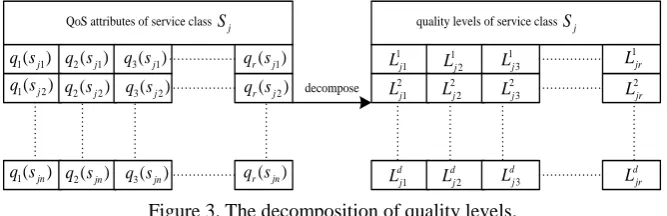
Figure 3. The decomposition of quality levels.
Design of fitness function and encoding
k
C is the k-th QoS constraint, q sr( jn) denotes r-th QoS value of n-th candidate service in service
class Sj . d
jr
L indicates d-th quality level of r-th QoS in service class Sj , and it satisfies
1 2
min( ) max( )
k i d k
j jk jk jk jk j
q S L L L L q S , where d is the number of quality levels. The decomposition of quality levels is shown as Figure 3:
Definition 1: quality level weight bijk. It indicates the probability of candidate services being
selected when selecting quality level Lijk for k-th QoS in service class Sj, which is computed as
Formula(4).
( ) ( ),1
( ) ( )
i i
jk max jk
i jk
j max j
n L Q L
b i d
n S Q S
(4)
Where ( i ) jk
n L is the number of services contained in the quality level i jk
L .n S( j) is the total
number of services in Sj. max( ) i
jk
Q L is the maximum utility function value of services contained in
i jk
L . Qmax(Sj) is the maximum utility function value of services in service class Sj. In order to
find optimal quality level combination for each service class, we build a single objective optimization model as follows:
1 1 1
1 1
1
max ln( )
: ,1
. .
, : 1,1 ,1
m r d
i i
jk jk
j k i
m d
i i
jk jk k
j i d
i jk i
f b x
k L x C k r
s t
j k x j m k r
(5)
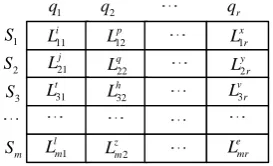
Figure 4. m-dimensional chromosome model.
Global QoS decomposition algorithm based on CGA.
Global QoS Decomposition Algorithm Based on CGA
Input: The number of service classes m, QoS values of services, the number of
quality levels d, global QoS constraintCk(1 k r),the scale of population space N, crossover probabilityp1,mutation probability p2,the number of excellent solutions
passed to the belief space q, the accumulated updating times in belief space, maximum iteration times M.
Output: the optimal quality level combination for each service class.
Step 1: Initialization phase
1. Randomly generate N initial valid individuals in the population space; evaluate all the individuals by fitness function.
Step 2:Evolution in the population space
2. Individuals in the population space carry out selection, crossover, mutation operations by PEvolve() function.
Step 3: Evolution in the belief space
3. Select q excellent individuals from the population space, and pass them to the belief space by accept() function.
4. Replace the poor individuals in the belief space with better individuals passed from the population space by update() function.
Step 4: Guide the evolution of the population space
5. When the individuals in the belief space has been updated fortimes, replace the q poor individuals in the population space with q excellent individuals in the belief space by Influence() function.
Step 5: Whether stop to evolve
6. If(Iteration times=M) Then
Output the optimal solutions in the belief space and stop computing End if
7. Else
Iteration times+1, go to Step2. End if
Experimental Studies
The test compares the proposed method with three other service selection methods with QoS constraint, respectively GS in [3], HGA in [4], LDPSO in [5]. This paper’s method is DSS-QD. QWS datasets are used in the experiments. Global QoS constraints are: (1) response time<2s (2) availability>0.4 (3) reliability>0.4 (4) cost<100. p10.85,p2 0.05,q20,5, M=200,d10.
The Performance under Different Scale of Candidate Services
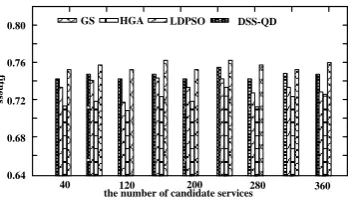
Figure 5 and 6 shows the execution time and composite service’s fitness of four methods under different scale of candidate services. The optimal quality level returned by CGA can help select better candidate services, so DSS-QD performs better than the other three methods.
11
i
L 12
p
L 1
x r
L
21
j
L q22
L 2
y r
L
1
l m
L z2
m
L Lemr
31
t
L 32
h
L 3
v r
L
1
S
2
S
3
S
m
S
1
200
40
ex
ec
u
tio
n
t
im
e(
m
s)
number of candidate services
GS HGA LDPSO
400 600 800
120 200 280 360
DSS-QD
0.64 40
fit
n
es
s
the number of candidate services GS HGA LDPSO
0.68 0.76 0.80
120 200 280 360 DSS-QD
[image:5.595.57.533.67.330.2]0.72
Figure 5. The change of execution time. Figure 6. The change of fitness.
B. The performance under different scale of service classes
4
ex
ec
u
tio
n
t
im
e(
m
s)
the number of service classes
GS HGA LDPSO
400 800 1600
8 12 16 20
DSS-QD
1200
0.64
4
fit
n
es
s
the number of service classes
GS HGA LDPSO
0.68 0.76 0.80
8 12 16 20
DSS-QD
[image:5.595.75.260.70.172.2]0.72
Figure 7. The change of execution time. Figure 8. The change of fitness.
Figure 7 and 8 shows the execution time and composite service’s fitness of four methods under different scale of service classes. By combining the functional constraints with the QoS constraints to filter out the unsatisfied services, the final composite service is of better quality.
Conclusion
This paper proposes a dynamic service selection method with multi-constraint based on global QoS decomposition. We design a culture genetic algorithm (CGA) to decompose the global QoS constraint to local QoS constraint. Then by combining with the dependency and conflicting relationships between services, it filters out those unsatisfied services and calculate the fitness of remaining services. The optimal composite service is finally obtained by local selection.
References
[1] Alrifai M, Risse T. Combining global optimization with local selection for efficient QoS-aware service composition [C]. In: Proc. of the 21th International Conference on World Wide Web, 2012:881-890.
[2] Wang Shang-Guang, Sun Qi-Bo, Yang Fang-chun. Web service dynamic selection by the decomposition of global QoS constraints[J]. Journal of Software. 2011,22(7):1426-1439.
[3] Ardagna D, Pernici B. Adaptive service composition in flexible processes [C]. IEEE Trans Software Engineering 2014:369 -384.
[4] Tang Mao-lin and Ai Li-feng. A hybrid genetic algorithm for the optimal constrained Web service selection problem in Web service composition[C]. Proceedings of the 2014 IEEE Congress on Evolutionary Computation, Barcelona, Spain, 2014: 1- 8.
[image:5.595.352.530.72.172.2]