The Significance of Regionalism as an Element of
China’s Security and Foreign Policy:
The Case of the Tumen River Area
Development Project (TRADP)
Jaeho Hwang
Thesis submitted for PhD in International Relations, London School of Economics and Political Science,
UMI Number: U615240
All rights reserved
INFORMATION TO ALL USERS
The quality of this reproduction is dependent upon the quality of the copy submitted.
In the unlikely event that the author did not send a complete manuscript and there are missing pages, these will be noted. Also, if material had to be removed,
a note will indicate the deletion.
Dissertation Publishing
UMI U615240
Published by ProQuest LLC 2014. Copyright in the Dissertation held by the Author. Microform Edition © ProQuest LLC.
All rights reserved. This work is protected against unauthorized copying under Title 17, United States Code.
ProQuest LLC
789 East Eisenhower Parkway P.O. Box 1346
u r
poimCAl
S AND u ,
F
ABSTRACT
Since the end of Cold War, processes of regionalisation have developed in a world experiencing globalisation. The Tumen River Area Development Project (TRADP) is an UNDP-initiated multilateral sub-regional scheme for economic cooperation that emerged in 1992 and was institutionalised by the establishment of the Tumen Secretariat in 1995. It is based on ‘North-South’ cooperation as well as a socialist-capitalist division of labour among six neighbouring countries (China, Russia, DPRK, ROK, Mongolia, and Japan), involving certain adjacent areas in the Tumen River region - which serves as a natural border for China, Russia, and North Korea. Arguing that the project has a significance that is more political than economic, the thesis will explore the significance of regionalism as an element of China’s security and foreign policy. China was the project’s most active supporter, from the late 1980s to the late 1990s. This thesis will argue that China developed the Tumen project not only as part of its own pursuit of domestic development, but also in order to take the initiative in regional economic development and to alter the distribution of power in Northeast Asia, in particular, the Korean Peninsula.
Table of Contents
T itle/1 Abstract/ 2
Table of Contents/ 3 List of Figures/ 12 List of Tables/13 Abbreviations/14 Acknowledgements/16
Chapter One. Introduction/18
Introduction/18
Bringing in the two themes o f the thesis/ 20
I. Regionalism in international relations/ 22
1. The concern for regionalism in cooperation between states: Theoretical setting/ 22 1.1 Relative versus absolute gains/ 23
1.2 Why cooperation does not arise in most cases/ 24 1.3 When cooperation is possible in specific cases/ 26 1.4 The number of actors/ 27
1.5 The importance of political decisions/ 28
2. The political economy of regionalism: Empirical setting/ 28 2.1 Successful cases of regionalism/ 29
Europe/ 29
North America/ 30
2.2 Unsuccessful cases/31
Central and South Americas/ 31 South Asia/ 31
Middle East and North Africa/ 32
2.3 Asia-Pacific: Test case at trial/ 32
3. A contribution to the study of international relations/ 34 II. Regionalism in China’s foreign policy/ 38
1. Recent study on the TRADP/ 38 1.1 Chinese scholarship/ 3 8
1.2 Non-Chinese scholarship/ 40
2. Defining China’s TRADP strategic objectives/ 42 3. Assessing obstacles to China’s TRADP policy/ 44 4. A contribution to the study of Chinese foreign policy/ 47 5. Methodology/ 50
Chapter Two. Regionalism: Theoretical Dimension/ 54
Introduction/ 54
I. Regionalism in theory/ 54 1. Concepts of regionalism/ 55
Regionalisation/ 55
Regional interstate cooperation/ 56 Regional awareness and identity/ 56
2. Theoretical approaches to regionalism/ 57 2.1 Approaches of the four theories/ 57 2.2 Critiques of the four theories / 58 3. East Regionalism/ 59
3.1 Why EU-type regionalism does not exist in East Asia/ 60 3.2 East Asian regionalism/ 62
II. Regionalism in East Asia/ 64
1. Defining Sub-regional Economic Zones (SREZs)/ 65 1.1 Concepts/65
1.2 Modalities/65
1.3 SREZs in East Asia/ 66
SIJORI (Singapore-Johore-Riau)/ 66
GSCEZ (Greater South China Economic Zone)/ 67 NGT (North Growth Triangle)/ 67
EGT (East Growth Triangle)/ 67 Baht Economic Zone/ 68
Mekong River Basin Project/ 68 Yellow Sea and Sea o f Japan Rims/ 68
1.4 Categories of SREZs/ 72
A metropolitan spillover into the hinterland/ 72
Geographically proximate areas with common interests! 72
Joint development o f natural resources and infrastructure! 72
1.5 Classification by initiatives/ 72 2. Objectives of the SREZ/ 73 2.1 Performance legitimacy/73 2.2 Bargaining power/ 73
2.3 Reducing the likelihood of conflict/ 74
2.4 Harmony with higher-level regional organisations/ 74 3. Problems and issues/ 75
3.1 Financial constraint/ 7 5 3.2 Lack of coordination/ 75 3.3 Distribution issues/ 75 3.4 Inter-provincial rivalry/ 76 3.5 Centre-provincial tensions/ 76 3.6 Allotment among countries/ 77
3.8 Different development preference of each country/ 78 3.9 Incomplete triangle/ 78
3.10 Political sensitivity/78
3.11 Discouragement of economic cooperation at a higher regional level/ 79 4. Why are SUORI and GSCEZ successful when others have failed/ 79 4.1 A comparison of SUORI and the GSCEZ/ 79
4.2 Political commitment: The key success factor of SREZs/ 80 5. The number of actors/ 81
6. Implications for the TRADP/ 82
Chapter Three. The TRADP/ 84
Introduction/ 84
1. A profile of TRADP/84
1.1 Geography of Tumen River area/ 84 1.2 Regional scope of the TRADP/ 85 1.3 Vision and goals/ 88
1.4 Economic complementarities/ 90
Natural resources! 90
Population and labour force! 90
Capital technology! 91
Geographical location! 91
2. The view of the UNDP/ 94
3. TRADP membership and organisations/ 97
Tumen Consultation Commission/97 Tumen Coordination Committee/ 97 National Teams/98
Tumen Secretariat/98
Chapter Four. Regionalism: The Chinese Dimension/ 105
Introduction/ 105
I. Regionalism in China’s foreign economic relations/106 1. China’s intra-regional economic relations/106
1.1 Hong K ong/107 1.2 Taiwan/108 1.3 Japan/108 1.4 South K orea/108 1.5 ASEAN/109
1.6 The Commonwealth of Independent States (C IS)/109 2. Foreign economic relations of China’s provinces/109 2.1 Guangdong Province/ 110
2.2 Fujian Province/ 111 2.3 Shandong Province/ 111 2.4 Liaoning Province / 112 2.5 Jilin Province/112
2.6 Heilongj iang Province/113 2.7 Yunnan Province/114
2.8 Inner Mongolia Province/114 2.9 Tibet/115
2.10 Xinjiang/115
3. Special Economic Zones (SEZs)/116 3.1 The development history of SEZs/116 3.2 The purpose and functions of SEZs/117 II. China’s foreign policy of interdependence/120
1. Levels of analysing Chinese foreign policy/120 1.1 The IR theorists’ approach/ 120
The realist perspective/120 The liberal perspective/122 The Marxist perspective/122
1.2 A critique of the three perspectives/123
Critique o f realism/123 Critique o f liberalism/124 Critique o f M arxism/124
1.3 The approach of specialists on China/ 125
Historical fa c to r/125
Domestic political fa c to r/126 Ideological fa c to r/126
1.4 A critique o f the three factors/127
Critique o f the historical fa cto r/127
Critique o f the domestic political fa cto r/128 Critique o f the ideological fa cto r/128
2. Interdependence as China’s foreign policy choice/130 2.1 Interdependence in Westem literature/130
2.2 The Chinese view of interdependence/132 2.3 Goals of interdependence diplomacy/ 133 2.4 China’s good neighbourliness/135
2.5 Constraints to China’s interdependence due to neighbouring countries’ concern for relative gains/137
3. Sub-regionalism in China’s regional policy/140 3.1. The GMS in Chinese foreign policy/141
3.2 The significance of the TRADP/143 Conclusion/ 14S
Chapter Five. The Perspective of Jilin Province/147
Introduction/ 147
I. Evolution of regional development policy: An overview/148 1. Regional development in the Pre-Tiananmen Period (1953-89)/ 148
2. New regional development policy in the Post-Tiananmen Period (1990-)/151 3. Concluding rem arks/153
II. The three Northeast provinces/154 1. Background/154
1.1 Geography/154 1.2 Trade/155 1.3 Investment/155
1.4 The development of Northeast China/ 162 1 5 Northeast Phenomenon/ 162
2. Development strategies of the three Northeast provinces/167
Coastal Economic Strip centred at Dalian (Yanbian)/168
Border Economic Development and Opening Strip (Yanbian and Yanjiang)/168 Economic Strip with Harbin-Dalian Railroad as the Axis (Yanxian)/169
Western Resources Development Zone/169
3. Concluding rem arks/170 III. TRADP and Jilin Province/170
1. Jilin Province: Provincial level/ 170 1.1 Background/170
1.2 Economy/171
1.3 Development strategy/173
2. Yanbian Autonomous Prefecture: Local level/ 175 2.1 Background/175
2.2 Economy/175
Yanji Economic Development Zone/180 Dunhua Economic Development Zone/1 8 0
Tumen Economic Development Zone/181
Antu Changbai Mountain Economic Development Zone/181
3. Hunchun City: City level/ 182 3.1 Background/182
3.2 Economy/183
3.3 Development strategy/184
4. The role of Beijing, Jilin and Yanbian in the TRADP policy-making/185 5. Institutional arrangements/191
Conclusion/ 194
Chapter Six. The Perspective of B eijing/195
Introduction/ 195
I. The Korean minority policy/196 1. China’s minority policy/196 1.1 Background/196
1.2 Characteristics of nationalities/ 199
1.3 Evolution of China’s nationality policy/ 199 1.4 Limits of China’s nationality policy/ 200 2. China’s Korean minority policy/ 201 2.1 Background/ 201
2.2 History of Korean migration/ 202 2.3 Changes to China’s Korean policy/ 203 2.4 Korean minority problem in the 1990s/ 204 2.5 Policy measures/206
Hard line measures/ 206 Soft measures/ 207
3. Concluding remarks/ 207
II. Navigation to the East Sea through the Tumen River/ 208 1. History of navigation attempts/ 208
2. China’s position on the legal and historical claims of navigation/ 213 3. Implications/ 214
3.1 International maritime aspect/ 215 3.2 Domestic economic aspect/ 215 3.3 Possible maritime claims/ 215 3.4 Military value/ 215
III. Stability in the Korean Peninsula/ 217 1. Evolution of China’s Korean policy/ 217 2. China’s interests in the Korean Peninsula/ 220 2.1 Geostrategic importance/ 220
2.2 Against ‘peaceful evolution’/ 220 2.3 Stability in Northeast China/ 220 2.4 The North Korea card/ 221
2.5 Uncertainties in the wake of Korean unification/ 221 2.6 ‘Two-Koreas’ as a reflection of China’s core interests/ 221 3. Policy measures/222
3.1 Political and security supports/ 222 3.2 Economic support/ 223
4. The TRADP as China’s best means to lead the reform of North Korean system/ 223 4.1 Process of political and economic reform/ 224
4.2 Preserving an economic buffer in the Peninsula / 225 5. Concluding remarks/ 226
IV. Taking the initiative in regional distribution of power/ 226 1. Asia-Pacific focused omni-directional foreign policy/ 227
2. Sub-regionalism as a pivot of omni-directional foreign policy/ 228 2.1 South China Economic Circle (SCEC)/ 229
2.2 Central Asia Economic Circle (SWEC)/ 230 2.3 Northeast Economic Circle (NEEC)/ 230
The Yellow Sea Economic Area/ 230 The Sea o f Japan Rim Economic Area/ 230 The Bohai Rim Area/ 231
The Heilongjiang Economic Circle/231
2.4 Strategic objectives of China’s sub-regionalism policy/ 233 Conclusion/ 235
Chapter Seven. Economic and Institutional Constraints on the TRADP/
236
Introduction/ 236
I. Evolution of the TRADP: An overview/ 237 1. Time of ‘desire’ (1990-94)/ 237
2. Time of ‘practice’ (1995-97)/ 241 3. Time of ‘stagnation’ (1998-2000)/ 244 4. Conclusing remarks/ 245
2. Russia/ 248 3. South Korea/ 251 4. Mongolia/ 252 5. Japan/ 253
III. Constraints in and around the project itself/ 256 1. Limits of the role of UNDP as a mediator/ 256
1.1 Unrealistic plans/ 256 1.2 Neutrality doubt/ 257
1.3 Member countries’ disappointment at UNDP inefficiency/ 257 1.4 Oversized bureaucracy/ 257
1.5 Funding limits/ 258
2. The view of the private sector/ 258
2.1 Geological and natural constraints of the project/ 258 2.2 Exaggerated value of the project/ 259
2.3 Poor infrastructure/ 259
2.4 Insufficient cooperation among countries/ 259 2.5 Legacy of the socialist economic system/ 260 2.6 Irrational price and incentive structures/ 260 2.7 Bureaucratic structures organisations/ 260
2.8 Different administrative levels: Unclear ill-defined major players in the project/ 261 2.9 Weak trade mechanism/ 261
2.10 Financial supply constraints/ 261
2.11 Limited support from the public sector/ 262 2.12 Scepticism of the private sector/ 263 Conclusion/ 265
Chapter E ight Political and Strategic Constraints on China’s TRADP
Policy/ 266
Introduction/ 266
I. Inter-provincial rivalry and centre’s response: Domestic level/ 266 1. The compromise between the three northeast provinces/ 267
2. Beijing’s response/ 270 3. Concluding remarks/ 274
U. The TRADP as one issue in the North Korea problem: The Korean Peninsula level/274
1. Importance of North Korea at the international strategic balance/ 275 2. North Korea’s survival game/ 276
6. The United States’ North Korea policy/ 283
III. A conflict between m ajor powers9 strategies toward the regional distribution of power: The Northeast Asia level/ 285
1. Russia/ 285 2. Japan/ 286
3. The United States/ 288 4. China/ 289
Conclusion/ 291
Chapter Nine. Conclusion/ 292
1. China’s TRADP policy dilemma/ 293 1.1 China’s TRADP policy obj ectives/ 294 1.2 China’s TRADP policy failures/ 295
2. The TRADP at the crossroads of East Asian regionalism/ 297 2.1 Regionalism under the comparative perspective/ 298
2.2 The ways to revive the TRADP/ 301 3. Concluding remarks/ 304
Bibliography/ 306
I. Prim ary sources/ 306
1. Documents from international organisations/ 306 1.1 United Nations Development Programme/ 306 1.2 Other international organisations/ 307
1.3 International organisation-sponsored project papers/ 307 2. Official publications/ 307
3. Official magazines and newspapers/ 309 4. Interviews/ 310
II. Secondary sources/ 311
1. Books and monographs/ 311 2. Academic articles/ 314
List of Figures
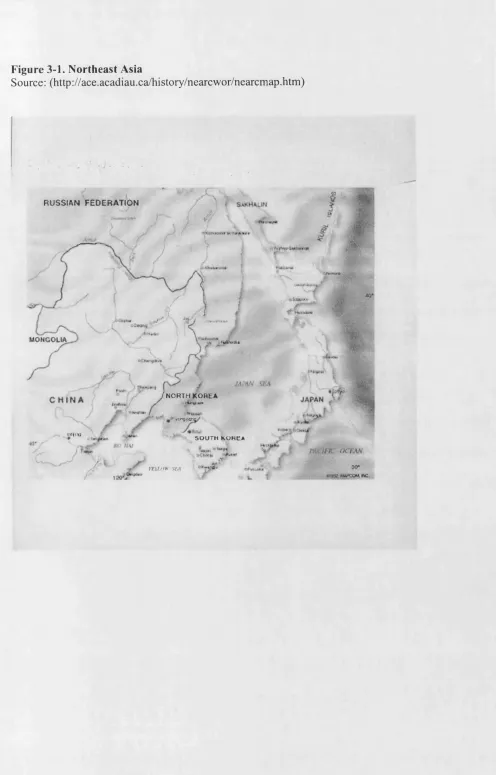
2-1. Sub-regional Economic Zones (SREZs) in East Asia/ 69 3-1. Northeast Asia/ 86
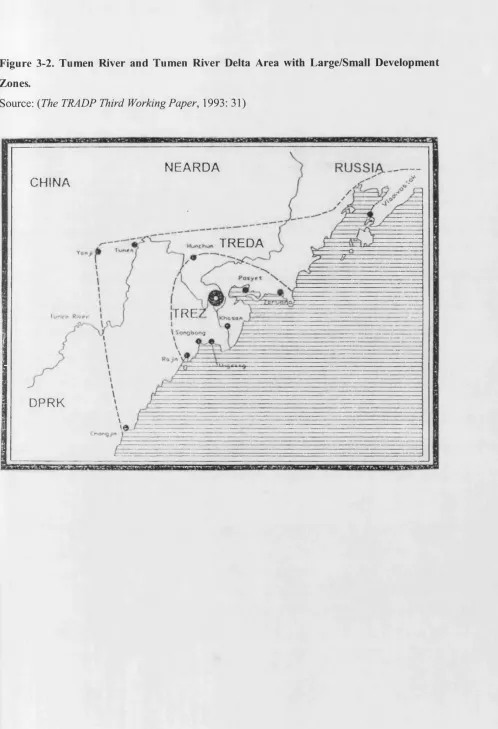
3-2. Tumen River and Tumen River Delta Area with Large/Small Development Zones/ 87
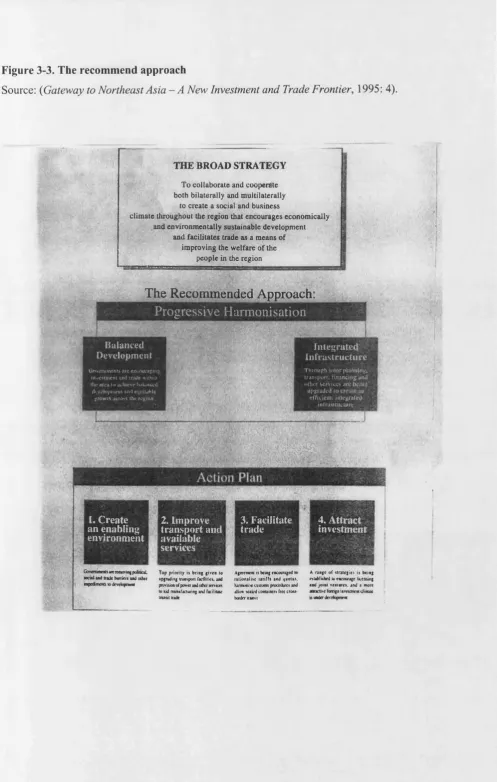
3-3. The recommend approach/ 96 3-4. Tumen organisation/ 99
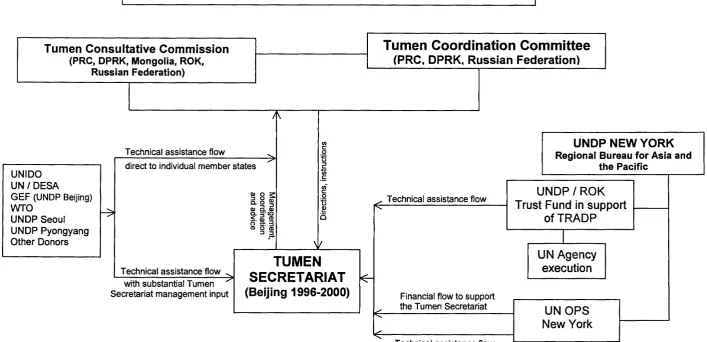
3-5. TRADP institutional and financial framework, 1996-2000/ 102
3-6. Tumen Secretariat (Beijing): Principal functions and responsibilities, 1996-2000/ 103
4-1. Location of the fourteen open cities and the four Special Economic Z ones/119 5-1. The three Northeast provinces/157
5-2. Jilin Province Development Zone distribution chart/174 5-3. Yanbian Korean Autonomous Prefecture/177
5-4. Tumen River Area Development (TRAD) Administration/ 193 6-1. China’s minority nationalities/198
6-2. Tumen River/ 212
List of Tables
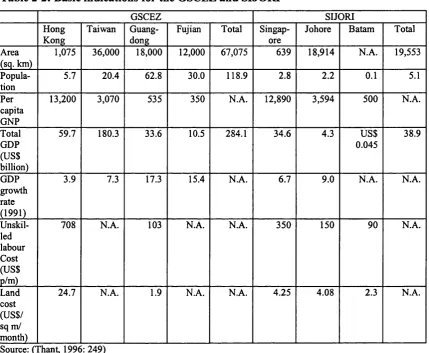
2-1. Economic cooperation groupings in East Asia/ 70 2-2. Basic indications for the GSCEZ and SUORI/ 71
3-1. Per head of GNP (Moderate/Low Growth Projections)/ 89
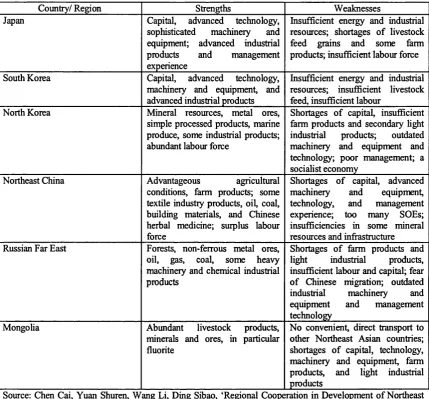
3-2. Mutually complementary conditions of Northeast Asian countries/ 93 4-1. Guangdong Province ’ s maj or export and import markets/ 110
4-2. Shandong Province’s major export markets/ 111
4-3. Liaoning Province ’ s maj or export and import m arkets/112 4-4. Jilin Province’s major export and import m arkets/112 4-5. Heilongjiang Province’s major export m arkets/113 4-6. Yunnan Province’s major export and import m arkets/114 4-7. Inner Mongolia’s major export and import markets/ 114 4-8. Xinj iang’s maj or export and import m arkets/115 5-1. Four larger economic zones/152
5-2. Major economic zones in China and industries o f comparative advantage/ 154 5-3. Basic information on Northeast China, 1991/155
5-4. Economic growth of the three Northeast provinces/155 5-5. Trade matrix of the region, 1993/ 158
5-6. China’s Share of Total Exports with Particular Countries, 1993/ 159 5-7. China’s Share of Total Imports with Particular Countries, 1993/160 5-8. China’s share of export and import partners/161
5-9. Foreign direct investment in the three Northeast provinces/ 161 5-10. Direct investment in China/ 161
5-11. Direct investment in China - Northeast provinces/161 5-12. Principal economic Indicators for Coastal Provinces/ 165
5-13. Principal indicators of external economic relations for 1990/166 5-14. Comparison of GDP in Jilin and other cities/provinces/172 5-15. Total trade of Jilin within China/ 172
5-16. Foreign direct investment in Jilin Province (Actual amount, accumulated up to September 1998)/172
5-17. GDP for Yanbian Prefecture (1998)/ 178
5-18. Industrial structure of Yanbian Prefecture (1997)/178
5-19. Yanbian: Strengths, weaknesses, and potential sectors for investment/ 179 6-1. North Korea’s trade with China, 1990-1997/ 219
7-1. Foreign direct investment in the Tumen Region/ 25 5 7-2. Trend of foreign investment in Yanbian/ 255
Abbreviations
ADB Asian Development Bank
AFTA ASEAN Free Trade Area
ARF ASEAN Regional Forum
ASEAN Association of Southeast Asian Nations
ASEM Asia-Europe Meeting
APEC Asia-Pacific Economic Cooperation CAEC Central Asia Economic Circle
CCP Chinese Communist Party
CDS Coastal Development Strategy
DPRK Democratic People’s Republic of Korea (North Korea) EAEC East Asia Economic Caucus
EC European Community
EPZ Export Processing Zone
EU European Union
FEZ Free Economic Zone
FTA Free Trade Area
FYP Five-Year Plan
GMS Greater Mekong Sub-regional Economic Zone GSCEZ Greater South China Economic Zone
GVFEZ Greater Vladivostok Free Economic Zone HBECZ Hunchun Border Economic Cooperation Zone
MOU Memorandum of Understanding
NAFTA North America Free Trade Agreement NEARDA Northeast Asia Regional Development Area NEAEC Northeast Asia Economic Circle
NEAEF Northeast Asia Economic Forum NEEC Northeast Economic Circle
NEEZ Northeast Economic Zone
NETs Natural Economic Territories NIEs Newly Industrialised Economies NPC National People’s Congress
PMC Programme Management Committee
PMO Programme Management Office
PRC People’s Republic of China ROK Republic of Korea (South Korea) RSFEZ Rajin-Sonbong Free Economic Zone SEEC Southeast Economic Circle
SEZs Sub-regional Economic Zones
SIJORI Singopore-Johore-Riau Growth Triangle SLOC Sea Lanes of Communication
SOEs State-owned enterprises
SPC State Planning Committee
SREZ(s) Sub-regional Economic Zones
TRADCO Tumen River Area Development Corporation TRADP Tumen River Area Development Project TREDA Tumen River Economic Development Area
TREZ Tumen River Economic Zone
TSR Trans-Siberian Rail
UNDP United Nations Development Programme
UNIDO United Nations Industrial Development Organisation
Acknowledgements
In 1990 I read an article about the possible development of the Tumen River Area in a local Korean newspaper in Seoul. I was amazed by the plans for such an ambitious multi national project in the vast region of Manchuria. I promised myself that I would study the project one day. 12 years later, through my PhD course, I have realized that the Tumen River Area Development Project (TRADP) is not just an economic project between neighbouring countries: many non-economic calculations lie behind the project. I have tried to analyse the project in the context of regionalism and foreign policy. It should be seen as one of the many regional movements in globalisation and a multi-function tool of China’s foreign policy. From my supervisor, Professor Michael Yahuda, I have leamt that there are many approaches that can be used to analyse one object. I would like to express my deepest respect not only for his decisive and constructive supervision of this thesis, but also for his encouragement and sense of humour throughout my PhD years. He continues to be my model for intellectual excellence and scholarly inspiration.
In addition, I am greatly indebted to the warm support and advice of Professor Margot Light. I would not have embarked on my PhD research without her continued encouragement since the days of my MSc studies at LSE. I appreciate the three panellists on my annual internal assessment within the Department of International Relations, Dr. Razeen Sally, Mr. Nicholas A. Sims, and Dr. Christopher Coker, who gave me many valuable suggestions for my thesis at different stages through the years.
Songxian, Prof. Park Choon-ho, and Dr. Hisako Tsuji, were instrumental in helping me to understand the nature of the TRADP.
Furthermore, I wish to thank Dr. Ian Davies for sending me useful information, and Dr. Gaye Christoffersen for permitting me to use her unpublished conference paper. Also Prof. Edward Friedman and Prof. A.B. Shamsul for their productive comments on my conference paper which was used as part of this thesis, and Prof. Samuel S. Kim and Prof. Young Whan Kihl for introducing to and sending me informative articles. Many thanks are also extended to Prof. Peter T. Y. Cheung, Prof. Kim Soonam, Prof. Paul Evans, and Prof. Joo Seung-Ho for their help and encouragement.
I was fortunate to enjoy the support of a large number of institutions and individuals for this thesis, and am grateful to them for their help. In addition to the British Library of Political and Economic Science and the School of Oriental and African Studies where my research was conducted, they are: Mr. Jung Sungil (The Sejong Institute), Ms. Yoko Aoki (The Sasakawa Peace Foundation, Tokyo), Ms. Machiko Takahashi (The ERINA, Niigata), Mr. Kim Sewoo (The UNDP Seoul Office), Ms. Anne-Maria Makela (The UNDP Tumen Secretariat, Beijing), and Ms. Cynthia Yamane (The East-West Centre, Honolulu).
I am also grateful to the LSE for providing me with financial assistance through the LSE Research Studentships (1998/99, 1999/00, 2000/01, 2001/02) and various Financial Support Funds. I would like to thank Ms. Jane Johnson in particular.
Chapter One. Introduction
Introduction
The Tumen River region, which opens out to the East Sea (or the Sea of Japan), straddles the borderlands of the People’s Republic of China (PRC), the Russian Federation, and the Democratic People’s Republic of Korea (DPRK). Arguably, the conflicts of this much troubled region have been occasioned by the confluence of broader international trends affecting the great powers with and local and regional developments. These at the time of the 19th and 20th centuries involved the competition between China, Russia, Japan, and the United States for control of Northeast Asia. Several wars have been fought over the region including those between China and Japan (1894-5), Japan and Russia (1905), China and Japan (1931) and first war of the Cold War, China/North Korea against the US/South Korea (1950-53). Indeed tension inherent over the last years has yet to be resolved. Moreover, past tense relations between the former Soviet Union and China have contributed to the area’s insecurity. To this must be added continued suspicion by Chinese and Koreans towards Japan and the persistent failure of Russia and Japan to settle their differences. This has resulted in a proliferation of weapons of mass destruction in the area, with cross-border relationships defined primarily by the conflicting political and strategic factors.
project was to enable this area to develop into a centre for transit trade or bonded processing area in the Northeast Asian sub-region. Promoters of the project such as Cho and Valencia claimed that opportunities would be created for the neighbouring countries to build new relationships with each other in the fields of trade, investment and technology transfer by taking advantage of the division of labour between them. Substantial gains were envisioned for all concerned. Such economic activity would lead to regional development and improvement in the standard of living of the relevant populations. It was hoped that in the long run, cooperation would lead to better mutual understanding, as a result of the working of institutional arrangements, involving linkages between divergent legal and political systems (Cho & Valencia, 1992: 14).
Bringing in the two themes o f the thesis
At present the TRADP is generally regarded as a ‘failure’. It has not lived up to original expectations and there appears to be a belief that the project no longer has a realistic prospect of becoming an example of successful multinational economic cooperation. If this is the case, then what need is there to study the TRADP at all? A major argument of this thesis is that there is always something we can learn, even from ‘failure’, and that there are many interesting aspects of the presumed failure that have yet to be examined. Beyond analysing the dimensions of its failure, there are two additional aspects of the TRADP that will be considered.
The second aspect centres on China’s foreign policy in which regional issues have acquired a growing significance. Extending beyond the economic aspects of cooperation between adjacent countries, regionalism offers additional dimensions for the study of foreign policy (Weatherbee, 1995). Regionalism contains major political and security implications beyond transnational economic interaction. This thesis involves studying the international security order of the post-Cold War period, focusing on regionalism, the political and security dilemmas of and within states, and the states’ foreign policy. In case of China, the issue is not just whether Chinese regionalism is an attempt to take advantage of general trends in the global economy, but whether it serves particular political and foreign policy interests. The Chinese government has deliberately promoted regionalism since 1979 when Deng Xiaoping first selected a policy of economic development that placed priority on the coastal regions. That programme further encouraged the border areas of the country to cultivate economic relations with adjacent neighbouring countries. How has China managed border relations through sub-regional economic cooperation? As China develops economically, has its foreign policy become more interdependent? What strategic foreign policy objectives has China aimed for? And has economic development brought real changes to foreign policy? Answers to the questions about regionalism as an instrument of China’s foreign policy therefore helps understanding the scope and limits of China’s seemingly more interdependent, cooperative, and multilateral foreign behaviour since the late 1980s.
economic interdependence in the context of the cautious and suspicious inter-state relationships in Northeast Asia, where political, economic and military rivalry and historical hostility are still dominant. This thesis places the study of regionalism within the disciplines of both IR and China area studies. It aims to combine the insights of China area studies which emphasise the alleged uniqueness of China’s characteristics and experiences with IR scholarship that focuses on the more general view of China as a member of the international community that has not been excluded from external influence. It therefore hopes to contribute to the academic exchange between IR on the one hand, and the area studies of Northeast Asia and China, on the other.
To examine the TRADP in the context of the themes, this introductory chapter examines the theory of ‘relative gains versus absolute gains’. This theoretical setting of the concern of states in contemplating cooperation can explain the success or failure of regionalisms in various parts of the world, and then highlight the implications o f relative gains for China and illustrates the applications to the study o f China’s foreign policy. Finally, it will outline the research design, and summarise the contents of this thesis.
I. Regionalism in international relations
1. The concern for regionalism in cooperation between states: Theoretical setting
section reviews the broader theoretical point regarding the nature and role of states in cooperation with one another, before explaining why most regional activities have been unsuccessful. Within the context this thesis goes to clarify the nature of China’s cooperation foreign policy by underlining the general scope and possibilities of states’ foreign policies.
1.1 Relative versus absolute gains
Theoretical analysis of regionalism in international political economy generally begins with the state as a key level of explanation (Gamble & Payne, 1996). Differences about the bases of cooperation stem from the question as to whether states are concerned primarily about relative or absolute gains. The basic point can be found in the following passage from Waltz:
When faced with the possibility of cooperating for mutual gain, states that feel insecure must ask how the gain will be divided. They are compelled to ask not ‘Will both of us gain?’ but ‘Who will gain more?’(Waltz, 1979: 105; also quoted in Baldwin, 1993: 5-6)
This important factor of perceived gains is interpreted differently according to the theoretical problem; with neoliberals stressing absolute and neorealists relative gains (Baldwin, 1993: 5). From the neoliberal camp, Snidal does not accept that the issue of relative gains is always an inhibiting factor to cooperation. States are always able to make up for any relative disadvantage by other means. Through further cooperation and agreement, with compensation or structural reforms, states may arrive at a balance that is acceptable to the initially disadvantaged partner (APSR, 1993: 730-1).
52). This is especially the case in security rather than economic matters, since economic rivalry does not present a direct threat to national sovereignty. Of course, a country with a strong economy may turn such economic strengths into military capabilities (Matthews, 1996: 115).
Explaining cooperation requires a more careful approach than is allowed for by the pure argument about relative gains versus absolute gains. Matthews distinguishes scenarios when relative or absolute gains are more or less significant in the players’ objectives. Under some conditions, gains, however small, will accumulate and earlier rounds will influence the later rounds significantly to establish market or security dominance. In these cases relative outcomes are of great importance. In circumstances, where gains will not accumulate, then clearly absolute gains will have more prominence. Both neorealists and neoliberals have come to agree that it is important to identify when conditions will lead to relative gains as they may hinder successful outcomes of cooperation (Matthews,
1996: 112, 116-7)
1.2 Why cooperation does not arise in most cases
In practice cooperation between states is not easy. Cooperation at governmental level occurs only when players adapt ‘their behaviour to the actual or anticipated preferences of others, through a process of policy coordination’ (Keohane, 1984: 51). There are at least two additional sources of a state’s concerns about cooperation: uncertainties about the other partners, and fears with regard to relative gains. In Grieco’s view, the prime motivation of states is a deep-seated fear of being dominated by other states and the need for security. Milner refers to Grieco as arguing that this leads states to aim to be as self- reliant as possible. It also means that in changes in international power relations states will be concerned to maintain their relative power positions, and that any cooperative relationships that negatively affect these positions will be viewed unfavourably (Milner,
Such defensive state positioning1 is considered by realists to be an unfortunate reflection of the uncertainty in international relations. States are naturally concerned about one another’s future intentions and how cooperation might influence the future balance of power and capabilities (Grieco, 1993a: 128). One could foresee cooperation leading to increase influence, thus forcing disadvantaged partners ‘to accept progressively less favourable terms’ not only in the original cooperation agreement but ‘in arrangements in other domains as well’. This can restrict the independent action of the disadvantaged partners (Grieco, 1993b: 315). In cases where this threat is perceived as more likely, there is of course more sensitivity to relative gains, tending towards the adoption of this defensive positioning (Matthews, 1996: 119).
Participating countries may decide to act as individuals rather than collectively or cooperatively when they are wary of their partner making even relative gains, or when the future is uncertain and thus involves risk. In seeking to reduce the gains available to others, there are various alternatives to cooperation: withdrawal, unilateral behaviour, and inactivity. Unilateral action may be taken, and simple inactivity is an alternative to cooperation. These may not aim to affect others’ gains, but still will be uncooperative if they do not bring down the negative impact of the acting party’s policies (Milner, 1992: 468). If a state has concerns that a partner has real prospects of making relative gains and if this is seen as a threat, that state may well withdraw its cooperation or rein in its cooperative actions, even though it may have stood to make large absolute gains (Grieco,
1993a: 128).
1 Snidal briefly clarifies Grieco’s definition as ‘[T]he possibility o f some states’ seeking relative gains leads all states to forego co-operative opportunities out o f fear that others will take advantage o f them’ (Snidal,
1.3 When cooperation is possible in specific cases
International cooperation is possible, although it is hard to achieve. Bearing in mind the central motivation of states will clarify the range of possibility of cooperation. My argument is that cooperation is unlikely in cases where countries are seeking to minimise partner countries’ relative gains, or where future outcomes are too uncertain. In such a case they will prefer to act unilaterally or may be inactive. However, cooperative action may be won even in such a case, if long-term strategic considerations are taken into account. Reluctant cooperation can arise when states fear that being left behind will weaken them, even though rivals may gain as a result.
Relative gains will allow one state to have the upper hand over another under certain conditions. Even though the actual gain may be small, a relative gain may be very important. This is especially so where ‘winning or losing ground’ may influence who wins the next round of negotiations or positioning, and thus in the long term determine which country is able to establish the superior position in market or security domains (Matthews, 1996: 128). Relative gains can be in the area of economics, security or politics, and not all states may be so concerned about them. If the government of a state is focuses on its economic interests, the relative gains of the state lie in economic terms. Cooperation in that case would not present so many problems. If regime stability is what governments value above all, then the relative gains will be couched in political terms. Under such conditions, a state might refuse cooperation despite potential economic gains. If there are no threats to political stability, then even if there were no economic gains to be had, a state may cooperate in a project, albeit reluctantly.
1.4 The number of actors
How important is the number of actors in achieving successful regional cooperation? The range of different views on the influence of the number of actors indicates the difficulties in understanding the issue. ‘Relative gains considerations are shown to matter only fo r issues involving small numbers o f states. The impact o f relative gains drops o ff quickly
with more than two states and is virtually irrelevant fo r issues involving a large number
o f actors. In addition, the transition to cooperation is not appreciably more difficult
under relative gains than under absolute gains’ (original emphasis) (Snidal, 1991: 388).
In total contrast, Oye explains why cooperation becomes more difficult as the number of actors increases. As the number and heterogeneity of players increases, ‘transactions and information costs rise’. ‘[T]he likelihood of autonomous defection’ increases while simultaneously becoming harder to detect and to control. As the gains and costs become obscured, ‘prospects for mutual cooperation may decline’ (Oye, 1986: 18-9).
1.5 The importance of political decision
What makes states decide whether or not to cooperate in a regional project? As discussed, relative gains influence a state’s decision. However, as Milner argues, international anarchy does not necessarily make the dichotomous question of ‘relative or absolute gains dominate the motivations of states’ (Milner, 1992: 496). Domestic politics, a factor in goal setting ‘a state’s position, the nature of its political system, bureaucracy, the influence of special interests, and public opinion’, may be of great influence in determining strategic positioning of states at international level (Ibid.: 493). As Oye notes, some domestic interest groups may benefit from regional agreements, and this will be a further spur towards liberalisation as a regional or multilateral level (Oye, 1992, in Walter, 1995: 82). More particular factors may add influence from the personal orientation of leaders or privileged elites, the pressure of powerful lobbies, to the hard-to- define influence of national character (Jervis, 1988: 324-29). In the realm o f foreign trade, Grieco points out the strong factor of domestic political institutions (Grieco, 1990, p. 24, in Milner, 1992: 490).
Self-interested strategic motives must be read into any cooperative as well as individual actions of states. As this self interest differs according to differing domestic characteristics, states’ international goals will also differ (Milner, 1991: 81). States will also have an eye on the benefits of cooperation taken by other states, and will use this as a measure of the strategic benefit to themselves. Therefore, within an international system, cooperation may or may not be attainable because o f domestic conditions.
2. The political economy of regionalism: Empirical setting
integration. While they may all be framed within a common globalist perspective, each regionalism has ‘distinctive features’ (Aarts, 1999: 911) in terms of the degree of institutionalisation and speed of progress. If considered in the framework of relative gains, such differences may be explained by the changes ‘taking place in the relative strengths and capabilities of partners in the different regions’, and how those changes affect the attitude of nations towards regionalism (Grieco, 1997: 176).
For regionalism to be successful, its distinctive features should be considered from two perspectives: i) whether a leading country (or countries) within a region is willing to provide a common good, and/or less powerful states are willing to accept the leader(s); and ii) whether rivalry between major powers can be accommodated in the region. This section will show that the EU succeeded because rivalry between major powers such as Germany and France was accommodated, while NAFTA could succeed because the less powerful countries such as Mexico and Canada accepted the US as the unquestionable leader. However, most regionalisms in other parts of the world have not been successful. Central American states sought unilateral actions to maximise their national interests, thus sowing distrust. Political and historical rivalry were crucial in the cases of South Asia and Middle East. Meanwhile, despite economic dynamics, along with many political, economic and historical reasons, the rivalry between Japan and China is the fundamental obstruction to the success of regionalism in the Asia-Pacific in general and East Asia in particular.
2.1 Successful cases of regionalism
Europe
which created the EU. Other countries joined successively: Britain, Denmark, and Ireland joined in 1973, Greece in 1981, Spain and Portugal in 1986, Austria, Finland, and Sweden in 1995. There are plans to extend its scope to the countries o f Eastern and Central Europe. The European countries have sought not only economic integration, but also cooperation on social issues, defence and foreign policy (Ibid.: 168).
There are various reasons for the success of European regionalism. The first is its relative homogeneity, both historical and cultural. Another was the commonly perceived threat of the Soviet Union and the member nations’ interest in centring US leadership in the security sphere. Yet another powerful reason was the congruence of the interests of the major European powers. A single regional hegemon did not exist in Europe, rather the regional leadership has been ‘divided relatively evenly between Germany, France, and Britain’ (Gamble & Payne, 1996: 257). Initially France opposed the creation of the Federal Republic of Germany, but later chose the path of integration as a way of checking the growing power of Germany within the structure of a higher authority. The ECSC were devised not only to secure France’s economic interests, such as equal distribution of the supplies of coal and steel with Germany, but also to prevent the possible recurrence of war between France and Germany (George, 1996: 22). Western Germany in turn believed the ECSC could help breakdown the suspicions of other European countries towards the new state, as well as encouraging economic development. Britain later joined the EEC partly to counter the growing French leadership, which aimed to develop the EEC into a third global power alongside the US and the Soviet Union (Ibid.: 24).
North America
by the US was considered by Mexico to be beneficial, especially as a way to encourage foreign investment (Grugel, 1996: 142-3, 147). Canada also had little option but to join, with 22% of US trade (US$79 billion) directed there in 1989 (Payne, 1996: 102). It did not want to risk losing out to Mexico (Gamble & Payne, 1996: 255).
2.2 Unsuccessful cases
Central and South Americas
Unlike the successful implementation of the EU and NAFTA, regional efforts in other parts of the world have been unsuccessful. Regionalism in Central America is one such failure. Regional initiatives were first stimulated by the US’s Enterprise for American Initiative (EAI) in 1990 and the subsequent NAFTA agreement between the US, Mexico, and Canada (Grugel, 1996: 132). The Mercosur (The South American Common Market) was created by Brazil, Argentina, Paraguay and Uruguay in 1991. It was an attempt to upgrade the economic cooperation between Argentina and Brazil into a common market union. Despite a great deal of institutionalisation, South American regionalism has not achieved much substantially (Bull, 1999). Other attempts at regionalism took place in Central America. In 1993 the Central American Integration System (SICA) was established between Guatemala, El Salvador, Honduras, and Nicaragua. However, with a history of regional instability, national interests have dominated the outcomes. More often the member countries have operated bilaterally with third parties, for example, in the Costa Rica-Mexico treaty of 1995 followed by independent negotiations with Mexico by El Salvador, Honduras and Guatemala (Ibid.: 961). This has naturally undermined regional efforts.
South Asia
figure for Pakistan was 3%. A more ambitious proposal for a trade agreement based on a common market for the region is unlikely to take off. Part of the reason is because the member countries are in favour of bilateral trade rather than remaining within a regional grouping but, more crucially, the stand-off between Pakistan and India has created a security crisis which has affected wider regional trade, and member countries.
Middle East and North Africa
Although there has been talk of regional integration in the Middle East and North Africa, this has been more of symbolic value then having wide tangible benefits. The Arab Maghreb Union (UMA) consisting of Algeria, Morocco, Tunisia, Libya and Mauritania, created in 1989, had potential to harness complementarities for growth. However, 60- 75% of trade of the UMA remains extra-mural with Europe rather than intra-mural. On a political level there is little cooperation between widely differing ideologies. In 1989 Egypt, Jordan, Iraq and North Yeman formed the Arab Cooperation Council (ACC), but it turned out to be a strategic ploy between the members. The ACC broke down after the Gulf crisis of 1990, and cooperation across the Middle East has remained plagued by violence and political instability (Aarts, 1999: 912-3)
2.3 Asia-Pacific: Test case at trial
In contrast to the large extent of institutionalisation in Europe and Americas, the process of regionalism in the Asia-Pacific is insignificant, notwithstanding the economic growth and development achieved with the region. There have been various levels of regionalism. At an Asia-Pacific level there is APEC and ASEAN Regional Forum (ARF). Lower down come ASEAN, ASEAN Free Trade Area (AFTA), and the East Asia Economic Group (EAEG)/East Asia Economic Caucus (EAEC). Finally there are several sub-regional economic zones (SREZs).
security matters, but with the minimum of institutional formality. Malaysia led the way in putting forward the more institutionalised EAEG/EAEC, but received little initial support across the region (Ibid.: 170). Since 1989, APEC has brought together representatives from the US, Canada, Mexico, Chile, Japan, Australia, New Zealand, China, Taiwan, Hong Kong, and the ASEAN countries. In 1994 the target was agreed of liberalising trade and investment by 2010 between those countries that were economically developed, and by 2020 for less developed countries (Ibid.: 168), and following year it was agreed that the target was not binding. However, it would be safe to comment that the APEC is ‘largely engaged for the most part solely in the gathering and exchange of information’ (Ibid.: 169). The value of APEC was more in the forum itself, which provides a process for confidence building, although it has a considerable amount of institutionalisation. All of these organisations offer little more than opportunities for dialogues.
Koreas, Mongolia, and Japan. SREZs were seen as a great opportunity to promote mutual regional economic development. However, most of the above projects have failed to deliver, and only two SREZs - SIJORI and GSCEZ - can be considered successful in the region. Even those two appear to have developed independently of the end of the Cold War and the continuing trend towards globalisation.
Thus it is apparent that there has been a failure to establish strong regional institutions in the Asia-Pacific. This can be attributed to three factors (See also Chapter Two). First, whereas Western Europe felt threatened by the Soviet Union, Asia did not suffer in the same way from a single sustained external threat. Security was not guaranteed through pooled arrangements but largely through bilateral agreements with the US. Second, the concept of Asia includes not only a huge diversity of cultures, histories and interests, but also a wide disparities of economic development and a range of models from market economies such as Japan and the four Newly Industrialised Economies (NIEs) and ASEAN countries, through market socialism such as China and Vietnam, to the central command economy of North Korea. The area has experienced some rapid growth in investment and trade quite apart from developments in regionalism, and most countries are individually strongly dependent on US markets (Haggard, 1997: 45-6). These features both militate against the development of coordinated regional policy making. Third, as a result of historical rivalry and conflicting political ideologies, the countries in the region have been suspicious of each other. Franco-Germany rivalry was brought into accommodating framework, but Sino-Japanese relations, for example, cannot be said to have fully thawed. With no single regional hegemon, major players are still trying to extract economic and political advantages (Ibid.: 46-7; Bergsten, 2000).
3. A contribution to the study of international relations
an analysis can benefit from looking at similar emerging structures in other world regions (See also Katzenstein & Shiraishi, 1997; Katzenstein, 1996). Keeping in mind that while various regionalist processes may be comparable, they are also very different. Before 1990 the EU presented a working model of formal economic integration, among a geographically proximate group of states which were already in a stable and clear security framework (Wallace, 1995: 226). It differed markedly from the mode of cooperation in East Asia. European regionalism, formal and exclusive, stands in contrast to the informal and open structures of Asian regionalism. Asian regionalism possesses two qualities that are significantly different from the EU model: First, it is not rule- making nor highly institutionalised; and second, multilateral cooperation in Asia aims at cooperation based on and implemented through an informal consensus. In this respect, the TRADP can provide an interesting example. The Tumen project is nowhere like the formal economic integration of the EU and NAFTA. Nor is it similar to the ASEAN’s Free Trade Area plan (3fii, Zhu, 1996: 97). Instead, it resembles to what Robert Scalapino has called the ‘Natural Economic Territories’ (NETs).2 This involves links between segments of neighbouring states. Such SREZs emerged on the basis of geographical, historical and cultural proximity between regions within neighbouring countries, offering comparative advantages, and thus gains from trade, to each other. In contrast to Western institutionalism, SREZs are ‘pragmatic’ rather than principled forms of cooperation. They do not necessitate binding inter-state agreements, and can operate across very different economic and political conditions (Zhao, Suisheng, 1998: 111). For political reasons, formal institutions are avoided, and the whole state is not necessarily involved. The striking differences between the two modes of cooperation mean a comparative analysis can help us identify elements of Asian and non-Asian distinctiveness. In this sense, looking at an example outside the EU-type formal integration will enrich conventional integration theories.
In comparison to Europe, Asian regionalism does not have strong institutional traditions. It seems that the preferred approach of East Asian governments has been ‘non-binding policy instruments’ and ‘intensive consultation process’ (Yoshimatsu, 2000: 16). The value of APEC is more in the forum itself, which provides a process for confidence building, although it has a considerable amount of institutionalisation. Other Asia-Pacific organisations also offer little more than opportunities for dialogues. Many other sub regional cooperation projects have also taken a similar approach, but only two regional projects have been transformed into institutionalised regionalism through inter governmental agreements. One of these institutionalised regionalisms is the Singapore- Johore-Riau Growth Triangle (SUORI). Although it has been successful in developing regional cooperation, it was in fact institutionalised more strongly only in 1994, after more than a decade of cooperation. In contrast to the non-institutional character of regionalism in East Asia and to the institutionalisation of SUORI, the TRADP from the outset sought to promote its regionalism on a formal institutional basis. The Tumen River Area Development Coordinating Council was set up by China, Russia, and North Korea in 1995. At the same time these countries plus Mongolia and South Korea established the Tumen River Area Development Consulting Council. They also issued formal guidelines to manage environmental issues. The two UNDP-led bodies set up to assist the governments in the project have brought about the formal framework (Zhao, Suisheng, 1998: 111-2). The inclusion of North Korea means that ‘the TRADP is the only development programme through which almost all countries in Northeast Asia have made a commitment to effect cooperation at the governmental level’ (Rim, 1998: 181). Thus there is a certain amount of structure to the TRADP. The second contribution will measure the likelihood of success of institutionalised regionalism in East Asia.
developed and developing countries, and for more openness to association with countries from a different political spectrum. There are nine SREZs in East Asia, including SUORI and the GSCEZ, which were formed in the early 1980s. There are five SREZs in Southeast Asia and four in Northeast Asia. While most participants in Southeast Asia are minor players, those in Northeast Asia include the major regional powers. In the case of TRADP, China and Russia are carrying out reforms to establish a freer market economy aimed at economic development that is at the same time linked to the world economy. South Korea and Japan have long benefited from capitalism and its attendant, the free market. North Korea remains ideologically committed to the command economy and self-reliance (Takao, 1995: 50). This research attempts to investigate the complex issue of regional cooperation across divergent political and security as well as economic levels.
II. Regionalism in China’s foreign policy
1. Recent research on the TRADP
Regionalism cannot be simply seen as a pure economic activity, and a cautious approach should move into the realm of political and security. This study aims to contribute not only to the literature on East Asian regionalism, but also to that on the role of regionalism in the China’s foreign policy. The significant role of regionalism in China’s foreign policy in the period of more interdependent globalisation demands scholarly attention. Before going on to provide the brief description of objectives and obstacles of China’s TRADP policy, this section first supplements the literature on the TRADP.
1.1 Chinese scholarship
Many analyses by Chinese scholars in the 1980s favoured the promotion of economic development on a regional basis. As Christoffersen has noted, the ‘formula of economic complementarity was repeated in every conference paper at every meeting on Northeast Asian economic cooperation since 1985’ (Christoffersen, 1996b, p. 271; also quoted in Blanchard, 2000: 272).3 In general, the main argument was that the TRADP would let China could access Russian, North Korean and Mongolian natural resources and infrastructure and attract Japanese and South Korean capital and technology.
Chinese scholars have explained the TRADP largely in terms of economics and geography. Ding Shicheng (1994) provides insights into technical and industrial development ideas for the Tumen project. Chui Longhe (1994) claims that the project exemplifies the need for regionalisation as a corollary of globalisation. Many scholars in Li Shaogeng’s edition (1992) pay attention to the Yanbian Prefecture where the TRADP locates, and the economic development strategy with regard to Northeast Asian trade cooperation. Most articles in the local journals have focused on industrial development and the investment environment of Northeast China.4
However, we can also add some non-economic dimensions to previous economics- centred explanations of why Beijing has supported the TRADP. One of the main assumptions of this research is that all government-sponsored economic activities are pursued, at least partly if not entirely, for political reasons. As Stuart Harris has contested, ‘Economics can enter the security discourse from various directions.... In maintaining security in this sense, economic factors are always involved but economic factors seldom exist or exert their influence in isolation’ (Harris, 1995: 34).
The motives of the Chinese government too are political. Clearly, a purely economic account of Beijing’s involvement can explain only part o f the project. The TRADP ‘offered relatively small economic gains’, in relation to ‘the Chinese economy as a whole or to larger economic initiatives such as the Pudong or Three Gorges developments’ (Clayton, 1996, quoted in Blanchard, 2000: 272). The total amount of foreign investment brought into the TRADP was minor. From 1990 to 1995, it only added up to US$230 million, barely 0.5% of the total foreign investment that China took in 1999 (Ibid.). Therefore, we must recognise the meaningful role of political considerations in China’s involvement in the project.
Nonetheless, Chinese scholars have rarely referred explicitly to the political dimension of the project. Cao Liqun (1995) expanded upon the domestic and international political
4Joumals such as Dongbei Shida Xuebao (Journal o f Northeast Normal University), Dongbeiya Yanjiu
dimensions, but the explanation remained superficial. Chen and Yuan (1996) openly discussed the sensitive issue of navigation to the East Sea (Chapter II in particular), but avoided discussion of any possible military use o f the channel or any account of security related issues. Most Chinese discussions were still confined to studying the issues and problems of economic cooperation in the region.
In sum, Chinese scholarship has engaged with the socio-economic views of the development in the Tumen River area. Many still remain at the level of official declaratory principles, but a few have put forward views regarding the political and security effects of the project. Clearly there are problems and challenges of various kinds that arise from the Chinese obsession with secrecy regarding security and foreign affairs and from the lack of straightforwardness in the way they present their views.
1.2 Non-Chinese scholarship
Western experts studying the TRADP as an element of China’s security and foreign policy have encountered major difficulties because of limited access to the reliable sources, i.e., interim documents of administrative departments. Despite the paucity of reliable sources, some articles have provided interesting analyses relevant to the TRADP at various levels in a timely manner.
explaining different national and local considerations of the countries involved in the regional cooperation.
However, this scholarship has not addressed the question why Beijing has been so supportive of the TRADP. Up to now, Blanchard (2000) has provided a more comprehensive analysis of China’s international political interest in the TRADP. He argues that the project cannot be explained without grasping three political considerations. First, the project could be a multi-functioned means to balance against the economic and political threat of Japan; second, it could serve to counter the political threat generated by Western protectionism and bloc formation; and finally it could help to ensure peace and stability on the strategic Korean Peninsula. Yet, his work did not pay a great deal of attention to the interests and policies of the other participating countries.5 In addition, he gave little consideration to the importance of Beijing’s domestic consideration of trying to achieve a more balanced pattern of development between the regions.
Despite the high quality of the works, the above mentioned articles have tended to focus only on single aspect of the TRADP issue. Each of these papers has analysed aspects of either political, economic, diplomatic, or security issues of the project itself, at one of the domestic, inter-state, or international levels alone. Although this thesis does not attempt to provide a wide-ranging account of all the issues and problems concerning the project, it will attempt to provide a comprehensive analysis of the TRADP, which includes as many aspects as possible at various levels, both empirical and theoretical. This thesis will focus more on Beijing’s interests, because at present, national interest rather than local interest remains at the core of China’s approach to the TRADP. The project may not necessarily be the highest political priority for Beijing and it may not always be viewed as a useful way to satisfy its political goals but, as Blanchard notes, focusing on the local level inevitably means that insufficient attention is given to the interests of the central government in Beijing (Blanchard, 2000: 274).
2. Defining China’s TRADP strategic objectives
Second, access to the East Sea would not only restore Chinese historical and legal claims but it would also establish maritime and military interests in the Sea, as recognised in the Chinese official or unofficial writings (Chen & Yuan, 1996; Chiao, 1994). The vision for the TRADP is of an international trade and transport mega-complex for export-processing in the Tumen River area. This plan put forward by the UNDP calls for a ‘cross-border free trade zone near the mouth of the river’ {Financial Times, 27 May 1992). To exit from or gain entry to China from the East Sea one may go through the Tumen River. The navigation to the Sea through the Tumen River has been China’s long-cherished desire since losing the maritime territory in 1860, and the opportunity given by the TRADP would make it possible to reclaim China’s ambition to access the East Sea. Once China gains the right it may also freely use the Sea in various ways. China does not want to lose this opportunity, which has resulted from the rapid changes in the Northeast Asian political atmosphere since the late
1980s.
Finally, the initial impetus to the growing regional focus of China’s foreign policy may be regarded as a product of the marginalisation of China in world politics (Yahuda, 1992: 32). Beijing certainly has aspirations to be a decisive power, even though it claims not to be a hegemonic power in the Asia-Pacific region. What China needs is to build a power base in Asia for its future global power status.6 More importantly, in the early 1990s it was thought this could help to advance China’s efforts to avoid international isolation and to maintain diplomatic leverage imposed after the Tiananmen crisis (Hu, Weixing, 1996: 45; also cited in Blanchard, 2000: 284). China clearly recognised that its capabilities were too limited to compete successfully with Japan, let alone with the US. That is why it adopted the ‘Segmental Omni-dimensional Cooperative Strategy’, which attempted to break the region into manageable sub-regions (See Chapter Six). Accordingly, the TRADP could provide Beijing with a potential means to counter Japanese centred proposals for economic cooperation in Northeast Asia. Not only did the project deny Japan a leading or central political and economic role, but it elevated China to a leading role in Northeast Asian economic cooperation that did not include the US, which China saw as its rival in establishing regional leadership.
3. Assessing obstacles to China’s TRADP policy
China’s initial aims in pursuing the TRADP policy have encountered multiple challenges. The reasons for the current difficulties facing China can be examined from several perspectives. Firstly, the project is constrained by many economic problems in and/or around the project itself. These weaknesses were originally ignored, whether intentionally or unintentionally, by participating countries. Economically speaking, questions still remain: how much of the project is actually viable? And how attractive is it for the private sector, which ultimately must provide heavy investment? The probable answers to these questions are quite pessimistic. Basically, the geological and natural environment of the project is harsh (Li, Kiseok et al., 1994: 56), and the infrastructure of the region is too poor to provide
support for the project. The legacy of socialism remains strong in Mongolia and in China’s two riparian neighbouring countries (North Korea and Russia). Northeast China lags behind the rest of the country, despite its considerable economic reform (Kim, Icksoo, 1995a: 93). Except for South Korea and Japan, the other members of the TRADP do not effectively understand trade mechanisms and incentive structures, as well as other important economic mechanisms. Due to the large number of participants, distributional issues among countries have become an obstacle (Marton et al., 1995: 13). Who the real players in the project are is still unclear: the representatives of China and Russia are local governments; while the two Koreas and Mongolia participate in the name of central government. Accordingly, mutual coordination is not an easy task. The three legs within the triangle (China, Russia, DPRK) are not uniformly developed, and achievements that have been made up to now are the result of bilateral rather than multilateral negotiations (Ding, Dou, 1996). The UNDP has also been blamed for its lack of co-ordination skills and its incapacity to raise sufficient funds to continue the project as a mediator (Davies, 2000: 44-5). Not surprisingly, the private sector, which is the only possible investor that can provide the huge financial support necessary to continue the project, remains pessimistic about the project.
of the ten national-level development projects. The Tumen formulation could be said to mirror the process of political change in China, which produced important changes in the nature of both centre-province and inter-provincial relations after 1978 (Rozman, 1998a: 10- 11 & 1998b: 12-4). The project served as a double compromise between the aims of the centre and the provinces, and between the provinces themselves. It was based on domestic political consideration, and not on economic rationality.
Third, there is a big difference in the extent of the current commitment by member countries to the TRADP. As the project has low priority even in China, the strongest backer, the interest of other countries is also not high. North Korea is interested in the economic gains of the project but is hesitant about a full-scale ‘opening’ to the outside, because it is afraid of a possible threat to the regime. Russia was reluctant to join and at present lacks the political commitment and the financial resources to participate actively. It also has problems in coordinating policies between central and regional governments, but simply wants to take advantage of whatever aspects of the project should meet its own interests. South Korea believes the project enables the expansion of its markets and inter-Korean dialogue but it thinks that the project will not be able to fully meet its potential without cooperation with Japan because of the limited economic capacity of South Korea. So its policy is to ‘wait and see’. Mongolia is enthusiastic about the project, but it is the weakest member of the TRADP group and its leverage is minimal. Japan is currently just a TRADP observer and also maintains a �