© 2015, IRJET ISO 9001:2008 Certified Journal
Page 10
Ethical Issues in Computing Sciences
Samson O. Ogunlere
1, Adewale. O. Adebayo
21
Computer Engineering Research Scholar, Computer Science Dept., Babcock University, Ogun State, Nigeria.
2
Lecturer, Computer Science Dept., Babcock University, Ogun State, Nigeria.
---***---
Abstract - Generally speaking, Ethical issues involve
religion, philosophical paradigms, moral
responsibilities, customs/cultural, societal beliefs, self conscience and professional rules and regulations as the case may be. A number of professional organizations in the field of computing have published their own code of ethics. Computing professionals are obligated to perform a variety of tasks conscientiously because their decisions affect the performance and functionality of computer systems, which in turn affect the welfare of the systems’ users directly and that of others less directly. This paper focuses on the ethical codes of four key professional bodies in computing and engineering sciences and discusses the roles such codes can play as professionalization strategy, ethical position, and practical approach, in order to raise some fundamental awareness on ethics for computer professionals and to
point out areas of challenges. A code of ethics that is
strictly practiced and adhered to is especially adequate to educate and inspire computing professionals to achieve ethical behavior that cannot be compromised nor be transferred to others since good intentions are not enough moral principles and respect to human dignity.
KeyWords: Professional Ethics, Christocentric,
professionalism, Deontology and Teleology.
1.0 INTRODUCTION
What is Ethics?
Ethics can be defined in various ways ranging from religion to philosophical point of view of what is meant by a morally good action; for sometimes what is good or morally right in one’s mind may be bad or morally wrong to others and vice versa.
The English dictionary defines ethics as the standards that govern the conduct of a person, especially a member of a profession.
a) Religiously, ethics may be defined as the belief in the existence of God and the activities that are connected with the worship of God; it is a system of faith that is based on the belief. Notably in this regard is the Christian ethics which are based on:
i.
God’s unchanging moral character – God’s
will
ii.
Absolute moral duties
iii.
God’s divine revelation
iv.
Prescriptive rather than descriptive
v.
Deontology rather than Teleology – as God
is interested in the process than the result
or outcome [1].
Christian’s ethics therefore, are practically based on truth, justice, integrity, honesty and strong moral principles. It is a continuation and fulfillment of the Hebrew ethics which came with the revelation to Moses in the Old Testament. The features essential of what Christian ethics means as argued [2] in “Towards Defining Christian Ethics - An evaluation of contrasting views” are:
i. That Christian ethics is mainly prescriptive and only marginally speculative.
ii. That Christian ethics is religiously prescriptive and is not secular either in the sense of being religiously neutral or in the sense of being nonreligious.
iii. That Christian ethics is theistically and religiously prescriptive and is not pantheistic.
iv. That Christian ethics is moral theology and not moral philosophy.
v. That Christian ethics is transcendent; God-centered divinely revealed moral theology and is
not mundane, anthropocentric, humanly
generated moral theology.
vi. That Christian ethics is moral theology specifically revealed by, in, and through the Bible as the Word of God and is not merely transcendent, God-centered, divinely revealed moral theology not necessarily grounded upon or controlled by the Bible as the Word of God.
vii. That Christian ethics is Christocentric, biblically revealed moral theology and is not merely transcendent, God-centered, divinely revealed biblical moral theology however anyone happens to interpret it.
© 2015, IRJET ISO 9001:2008 Certified Journal
Page 11
ix. That Christian ethics is therefore somethinguniversal (for the world) and is not something only for Christians or the Christian community. x. That Christian ethics is therefore something
unchanging and is not something changing or that only applies to a future Not -Yet-World [2].
b) Philosophically, ethics are the study of principles relating to right and wrong conduct. It is a set or system of belief resulting from the search for knowledge about human life and the universe. These can be viewed as moral principles that control or influence a person’s behavior. Some famous philosophers that were involved in the study of this topic are:
i. Socrates (469-399BC) – was concerned about justice and virtue
ii. Plato (427-347BC) – practiced the four cardinal virtues; temperance, courage, justice and wisdom
iii. Aristotle ( 384-322BC) – was concerned with the golden mean which mean “Do nothing in excess”
iv. Epicurus (341-270BC) – taught that pleasure was good and pain was evil v. St.Augustine (354-430BC) – systematized
Christian ethics by adding faith, hope nd love of apostle Paul’s teaching to Plato’s four cardinal virtues of temperance, courage, justice and wisdom.
It is worth the while knowing that African Ethics of customs, taboos, oral tradition (which includes myths and stories, liturgies, songs and proverbs) et cetera, and the Western Ethics of Greco- Judeo Christian tradition were in existence and practiced long before any of the above mentioned ethics [4].
1.1 Problem Statement
Professional Ethics is a crucial part of the content of professionalism. Computing professionals perform a variety of tasks which include hardware designs, software engineering, database administration, system analysis, and host of others. Computing professionals are obligated to perform these tasks conscientiously because their decisions affect the performance and functionality of computer systems, which in turn affect the welfare of the systems’ users directly and that of others less directly. In view of this, it is important to understand the term professional ethics and discuss the roles such codes can play as professionalization strategy, ethical position, and practical approach so as to raise some fundamental awareness on ethics for computer professionals and point out areas of their differences.
1.2 Aim and Objectives of the Study
The aim of this paper is to raise some fundamental awareness on ethics for computer professionals/ organizations and to point out areas of their differences. The specific objectives of the study are to:
i. Assess moral responsibility in the profession; preeminence of human values and crucial consideration of consequences
ii. Assess the code of ethics of four different organizations in computing and engineering sciences and to compare the roles such codes of ethics play as professionalization strategy, ethical position and practical approach.
2.0 WHAT IS COMPUTER ETHICS AND WHY STUDY IT?
Computer ethics can be defined as the analysis of the nature and social impact of computer technology and the corresponding formulation and justification of policies for the ethical use of such technology [3]. We therefore learn or study computer ethics to convey a sense of professional responsibility not covered in other courses to deal with the true nature of computing as a service to other human beings. The knowledge of computer ethics helps to sensitize students to computer ethics issues, provide tools and methods for analyzing cases, provide practice in applying the tools and methods to actual or realistic cases, and develop in the student good judgment and helpful intuitions.
2.1 Why Computing Professional Ethics?
Computing professional’s obligations are similar to those of other technical professionals. Taken together, these professional obligations are called professional ethics. Ethical obligations have been studied by philosophers and have been articulated by religious leaders for many years. Within the discipline of philosophy, ethics encompasses the study of the actions that a responsible individual should choose, the values that an honorable individual should espouse, and the character that a virtuous individual should have [5]. This is also known as philosophical ethics, ethical theory, moral theory or moral philosophy which involves systematizing, defending and recommending concepts of right and wrong conduct and often addressing disputes of moral diversity. Religiously, it encompasses a system of faith based on belief in the existence of God and the activities that are connected with the worship of God.
2.2 Who are the Professionals?
© 2015, IRJET ISO 9001:2008 Certified Journal
Page 12
do not rely exclusively on the transmission of crafttraditions. Professionals tend to have clients, not customers. Whereas a sales clerk tries to satisfy the customer’s desires, the professional try to meet the client’s needs (consistent with the welfare of the client and the public).
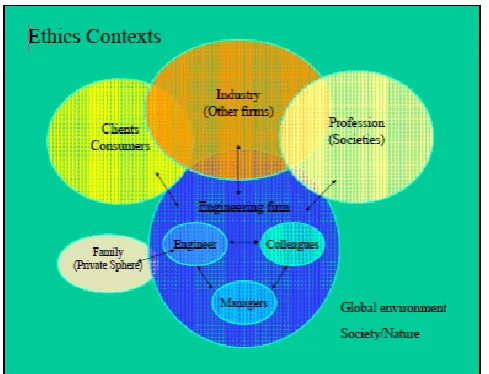
[image:3.595.36.281.291.478.2]Clients cannot fully evaluate the quality of services provided by professionals because of their specialized knowledge and skills. Only other members of a profession known as the professional’s peers can sufficiently determine the quality of professional work; hence often a time, there arise conflict of code of ethics between organizations, professionals and clients as depicted in figure 1.
Figure 1, Ethics contexts, (Dodig-Crnkovic, 2004)
3.0 WHY PROFESSIONAL ASSOCIATIONS?
The purposes and values of a profession, including its commitment to a public good, are expressed by its code of ethics. The creation of a code of ethics is the transformation of an occupation into a profession. A profession code of ethics is developed and updated by a national or international professional association; e.g. the Institute of Electrical and Electronics Engineering Computer Society (IEEE-CS), the Association for Computing Machinery (ACM), the Association of Information Technology Professionals (AIPT), the Computer Professionals of Nigeria (CPN) and a host of others. These associations publish periodicals, organize the accreditation of educational programs, licensing of individual professionals and host conferences to enable professionals to continue learning and networking with other members of the profession. The obligations of computing professionals to clients, employers, and the public are expressed in several codes of ethics just like any other professions such as Law Accounting and Medicine.
But do computing professions measure up to these criteria for a strongly differentiated profession?
Yes on one hand, because to become a computing professional, an individual must acquire specialized knowledge about discrete algorithms and relational database theory and specialized skills such as software development techniques and digital system design. Computing professionals usually learn this knowledge and acquire these skills by earning a bachelor degree in computer science, computer engineering, information systems, or a related field in accredited institutions. These are some of the first criteria for becoming a member of registered professionals like the CPN, ACM, AIPT, IEEE-CS and host of others.
Although the computing professions meet many criteria of other professions, they are deficient in many ways. Relatively, few academic programs in computing are accredited. For instance, in the United States as at 2008, computing professionals cannot be licensed, except in Texas for software engineers only. Though the Association for Computing Machinery (ACM) has reaffirmed its opposition to state sponsored licensing of individuals, but the trend is still being practiced most especially in the United States (White and Simons, 2002). Computing professionals may earn proprietary certifications offered by corporations such as Cisco, Sun, and Microsoft. In the United States and Nigeria, the Medical Association dominates the medical profession, and the Bar Association dominates the legal profession, but no single organization defines the computing profession except of late in Nigeria with Nigeria Computer Society (NCS) and Computer Professionals Registration Council of Nigeria (CPRCN) being the sole computing professional bodies. Instead, multiple distinct organizations exist, including the ACM, the Institute of Electrical and Electronics Engineers Computer Society (IEEE-CS), and the Association of Information Technology Professionals (AIPT). These organizations remain largely distinct, with separate publications and codes of ethics. The question then arise; “Why cannot these same professional organizations with the same ideologies merge together as one body with one code of ethic”?
4.0 WHAT ARE THE MORAL AND LEGAL RESPONSIBILITIES IN COMPUTING
© 2015, IRJET ISO 9001:2008 Certified Journal
Page 13
atomized to the point at which no one in the group isresponsible. Rather, each member of the group is accountable to the other members.
Nevertheless, an individual who is assigned a task or function is considered legally responsible for his actions whether good or bad. Hence, an individual or organization can be legally responsible or liable for a problem and can be charged in a civil lawsuit. Therefore, the principle of strict liability encourages manufacturers to be careful, since it provides a way to compensate victims of accidents.
Judging from the various contemporary schools of moral thinking, consequence-based ethics, as opposed to rule-based, seems to have a good acceptance among professionals such as software engineers. Besides, the complexity of software systems makes it very hard to know in advance the consequences that will derive from professional activities in the production of software. Therefore, following the spirit of well-known codes of ethics such as the ACM/IEEE’s, it is pertinent to take into account both rules and consequences to assess the goodness of actions, and at the same time pay adequate consideration to the absolute values of human dignity [6]. Good intentions are not enough. Software engineers require sound ethical instruction that integrates moral principles and respect to human dignity with the real experience of their profession.
Software systems are strongly characterized by complexity due to the following reasons:
i. Complexity and imperfection of software makes the prediction of consequences particularly difficult.
ii. The imperfection and unpredictability of software belongs to the very nature of the profession, as witnessed nowadays.
iii. Though it is not an excuse to ignore at all the consequences of one’s acts, consequentiality analysis of responsibility becomes much harder and inadequate in software engineering.
To tackle these problems, the Current codes of ethics in software engineering provide valuable guidelines as:
i. A moderate deontologist ethical position is adopted.
ii. It tries not to teach precise (algorithmic) mechanisms to valuate responsibility so as not to compound the complexity problems.
iii. It strives for a good integration of rules and consequences to achieve ethical behavior and to assess moral responsibility in the profession:
4.1 What then are Morality and Ethics?
Morality is used to refer to moral conduct, while ethics is used to refer to the formal study of moral conduct. Hence Ethics is often called Moral Philosophy.
i. Morality (Praxis):first-order set of beliefs and practices about how to live a good life
ii. Ethics (Theory): a second-order, conscious reflection on the adequacy of our moral beliefs.
5.0 EVALUATION OF FOUR PROFESSIONAL ORGANIZATIONS CODE OF ETHICS
It is necessary, but not sufficient, to trust people or organizations by setting a number of ethical rules. Education may help toward ethical awareness and action, such that computer ethics may actually, and not just theoretically, help increase information security management. However, information security is worthy of ethical consideration as many decisions in information technology affect a wide range of stakeholders. Hence, National and international computer societies have promoted codes of ethical practice and even written these codes into their constitutions. Notably among them are ACM, IEEE-CS, AIPT and CPN.
The ACM and IEEE-CS developed in 1998 the ACM/IEEE Software Engineering Code of Ethics and Professional
Practice in terms of the following eight principles [7]:
i. For the public, software engineers shall act consistently with the public interest.
ii. For the client and employer, software engineers shall act in a manner that is in the best interests of their clients and employer, consistent with the public interest.
iii. Concerning the product, software engineers shall ensure that their products meet the highest professional standards possible.
iv. With respect to judgment, software engineers shall maintain integrity and independence in their professional judgment.
v. About management, software engineering
managers shall subscribe to and promote an ethical approach to the management of software development and maintenance. vi. For the profession, software engineers shall
advance the integrity and reputation of the profession consistent with the public interest. vii. With colleagues, software engineers shall be fair
to and supportive of their fellow workers. viii. About self, software engineers shall participate in
© 2015, IRJET ISO 9001:2008 Certified Journal
Page 14
On the other hand, AIPT code of ethics acknowledges andrecognizes the following obligations. It is first of all expected that an information processing professional will abide by the appropriate laws of their country and community and that these code of ethics are not objectives to be strived for as they are rules that no professional will violate [8]. These include:
i. Acknowledgement and Recognition of obligation to management by Sharing knowledge with others and presenting factual and objective information to management and accepting full responsibility for work done
ii. Acknowledgement and Recognition of obligation to fellow members by being honest and not take advantage of the lack of knowledge or inexperience on the part of other fellow members for personal gain.
iii. Acknowledgement and Recognition of obligation to society by Protecting the privacy and confidentiality of all information entrusted and supporting, respecting, and abiding by the appropriate local, state, provincial, and federal laws.
iv. Acknowledgement and Recognition of obligation to employer by Avoiding conflict of interest and ensuring that employers are aware of any potential conflicts, and by protecting the privacy and confidentiality of employer’s information.
The CPN code of ethics and professional conduct for the Information Technology Profession of Nigeria promulgated as Decree No. 49 on June 10, 1993; the first five guidelines focus on the acknowledgement and recognition of an obligation to certain important entities:
i. The public, safety, health, and well-being ii. The employers or clients, whose trust shall be
upheld, serve, with faithfulness, honesty, wisely and loyally.
iii. The fellow members of the Profession by cooperating with them and treating them with honesty and respect at all times. iv. The Profession; therefore I shall acquire,
maintain and improve professional
competence, promote the advancement of Computer Science.
v. The country; whose business, social contacts shall be respected at all times and honour the chosen way of life of fellow citizens, by being law abiding, transparently honest, of unquestionable integrity, and utmost responsibility and reliability [9].
6.0 DIFFERENCES IN CODE OF ETHICS OF THESE COMPUTING PROFESSIONAL ORGANIZATIONS
Though code for ethical practices are laid down by various international and national computing professional organizations, there are still guidelines that are similar in spirit, and cover similar grounds, but may comprise a different number of items that are composed of different wordings that may be of great benefit to members of these different professions. A comparison of more than 20 IT codes of ethics can be found in [10].
While these codes may serve to deter potential offensive actions, they are limited because they rely on the moral obligation of the members; even though violation of professional conduct may result in expulsion from the societies or termination of membership benefits and privileges, violation by itself does not attract any criminal charges in the legal sense. Nonetheless, the codes of ethical professional conduct contribute to security because they do help reduce the incidence of abuse, fraud and software piracy, even though adoption of the codes cannot guarantee more ethical behavior.
6.1 Ethical dilemmas/ Issues point of view of these computing organizations
From ethical dilemmas and issues point of view on these four organizations, it is pertinent to know that only IEEE-CS clearly highlighted factors such as race, religion, gender, disability and age specifically. Others generally, focus on the society, nation or country at large. Important ethical questions in this regard are [8]:
a)
What are some of the important ethical questions?
b) What guidance do the codes of ethics give on these questions?
c) How do we interact with colleagues with whom there is disagreement?
d) When do we blow the whistle?
e) Should we accept work on an “impossibility” million dollar project?
© 2015, IRJET ISO 9001:2008 Certified Journal
Page 15
what is moral to be able to apply the general principles inspecific situations by individual is needed.
Item (c) on dealing with colleague, AIPT declares; “In recognition of my obligation to fellow members and the profession I shall cooperate with others in achieving understanding and in identifying problems.” While item 5.12 of ACM / IEEE-CS Software Engineering Code declares: “Those managing or leading software engineers shall not punish anyone for expressing ethical concerns about a project”.
Item (d) on the issues of whistle blowing, AIPT declares; “In recognition of my obligation to society, I shall never misrepresent or withhold information that is germane to a problem or situation of public concern nor allow any such known information to remain unchallenged.” While item 1.4 of ACM / IEEE-CS Software Engineering Code declared that “Software engineers shall disclose to appropriate persons or authorities any actual or potential danger to the user, and the public”.
Item (e) on accepting impossible work, items 1.3 and 3.2 of ACM / IEEE-CS Software Engineering Code declared that “Software engineers shall ensure proper and achievable goals and objectives for any project on which they work or propose;” and “Software engineers shall accept software only if they have a well founded belief that it is safe, meets specifications, and passes appropriate tests”.
7.0 CONCLUSION
It can be concluded that current codes of ethics in Computing and Engineering Sciences are based on religious and philosophical ethics which provide valuable guidelines that:
i. Adopt a moderate deontologist ethical position.
ii. S
trive for a good integration of rules and consequences to achieve ethical behavior and to assess moral responsibility in the profession: preeminence of human values and crucial consideration of consequences. Computing and Engineering Sciences professionals require a sound ethical instruction that integrates moral principles and respect to human dignity with the real experience of their profession as good intentions are not enough. A code of ethics that is strictly practiced and adhered to is especially adequate to educate and inspire computing professionals to achieve ethical behavior that cannot be compromised nor be transferred to others.
REFERENCES
[1] J. E. Macdonald and C. L. Beck-Dudley, Are
deontology and teleology mutually exclusive?, 1994, retrieved from:
http://link.Springer.com/article/10.1007/BF00871 809.
[2] D. A. Heimbach (n. d), Toward Defining Christian Ethics: An Evaluation of Contrasting Views, Southeastern Baptist Theological Seminary, IEEE Code of Ethics, Approved by the IEEE Board of Directors,
2006, retrieved from:
http://www.ieee.org/portal/index.jsp?pageID=corp_le vel1&path=about/whatis&file=code.xml&xsl=generic. xsl
[3] G. Dodig-Crnkovic, Philosophy of Computer Science, CD5650- Computer and Society, Department of computer Science and Engineering, Mälardalen
University, 2004, retrieved from:
http://www.idt.mdh.se/kurser/cd5590
[4] E. P. Congress, Cultural and Ethical Issues in Working with Culturally Diverse Patients and Their Families, the Haworth Press, Inc, 2004, retrieved from: http://www.haworthpress.com/web/SWHC.
[5] M. C. Loui and K. W. Miller, (2008), Ethics and Professional Responsibility in Computing, University of Illinois, Springfield, Wiley Encyclopedia of Computer Science and Engineering, John Wiley and Sons Inc, 2008
[6] G. Génova G., M. R. González, A. Fraga, Ethical
Responsibility of the Software Engineer,
Philisophiocal Foundations on Information Systems Engineering (PHISE'06), 2006, pp727-738
[7] Wiley Encyclopedia of Computer Science and Engineering, 2008
[8] I. Sommerville, Software Engineering, 8th edition, chapter 1, school of engineering, University of Cyprus, ΗΜΥ317 Δ13 Ethics.4, Sommerville, Θεοχαρίδης, 2008
[9] Computer Professionals (Registration Council of Nigeria), Code of Ethics and Professional Conduct, Decree 1993, promulgated as Decree No. 49 on June 10, 1993
[10] J. Berleur and K. Brunstein, Ethics of Computing, Codes, Spaces for discussion and law, 1996
[11] B. Dahlbom and L. Mathiassen, 20 Professional Code
of Ethics, Computers and Society, ACM,
1994, Vol. 24, No. 2, pp 485-495
[12] Ethics and responsibility in Computing, Wiley Encyclopedia of Computer Science and Engineering, edited by Benjamin Wah, Copyright, 2008 John Wiley & Sons, Inc.
© 2015, IRJET ISO 9001:2008 Certified Journal
Page 16
from:www.isaca.org/.../JOnline-Computer-Ethics-A-Potent-Weapon-for-Infor.
[14] Professional Ethics in Science and Engineering at MDH, http://www.idt.mdh.se/kurser/, retrieved from: http://www.idt.mdh.se/kurser/cd5590 [15] White J. and Simons B., (2002, ACM’s position on
the licensing of software engineers, Communications ACM, 45(11): 91
BIOGRAPHIES
Engr. Samson O. Ogunlere1is a lecturer at Babcock University, Computer Science Department in Computer Hardware/ Software related courses. He is a member of Nigeria Society of Engineers (MNSE) with extensive working experience in computer industries. Currently, He is a Computer Engineering Research Scholar for PhD at Babcock University, Ogun State, Nigeria.