IJPSR (2012), Vol. 3, Issue 09 (Research Article)
Received on 18 May, 2012; received in revised form 11 August, 2012; accepted 27 August, 2012
DEVELOPMENT AND VALIDATION OF AN UPLC METHOD FOR IN-VITRO STUDY OF GLIPIZIDE EXTENDED RELEASE TABLETS
Harshal Kanubhai Trivedi*, Nayan Kshtri, Vipul Patel and Vinay Roa
Analytical Research Lab, Cadila Pharmaceutical Ltd, Dholka-387 810, Gujarat, India ABSTRACT
A Reversed Phase Ultra Performance Liquid Chromatographic (RP-UPLC) method was developed for the determination of glipizide (GLI) in in-vitro study during formulation development. The chromatographic separation was achieved on a Acquity UPLC BEH C18 (50 mm × 2.1 mm, 1.7 µm) column, with a mixture of 55 volumes of methanol and 45 volumes of buffer contain 0.001M sodium dihydrogen phosphate in isocratic elution with flow rate of 0.3 mL/min. The eluted compound was monitored at a wavelength of 276 nm using a UV detector. The method described herein separated glipizide and glipizide related compound-A from all other formulation components within a run time of 1.2 min. The RP-HPLC method was developed and validated according to the International Conference on Harmonization (ICH) guidelines. This method was successfully applied in the quantitative determination of glipizide in in-vitro study during formulation development. The procedure described herein is simple, selective, and reliable for routine quality control analysis as well as stability testing.
INTRODUCTION: Glipizide (GLI) is an oral medium-to-long acting anti-diabetic drug from the sulfonylurea class. It is classified as a second generation sulfonylurea, which means that it undergoes enterohepatic circulation. The structure on the R2 group is a much larger cyclo or aromatic group compared to the 1st generation sulfonylureas. This leads to a once a day dosing that is much less than the first generation, about 100 fold. Mechanism of action is produced by blocking potassium channels in the beta cells of the islets of Langerhans. By partially blocking the potassium channels, it will increase the time the cell spends in the calcium release stage of cell signaling leading to an increase in calcium. The increase in calcium will initiate more insulin release from each beta cell 1.
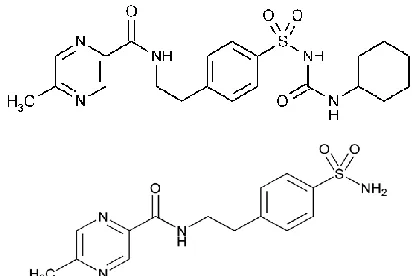
GLI is a salt with pKa of 5.9. It is insoluble in water and alcohols, but soluble in 0.1 N NaOH; it is freely soluble in dimethylformamide 2. Related compound-A is the major degradation product of GLI 3.
FIG. 1: (A) STRUCTURE OF GLIPIZIDE AND (B)GLIPIZIDE RELATED COMPOUND-A
Keywords: Glipizide, UPLC, Dissolution, In-vitro study, Method validation
QUICK RESPONSE CODE
IJPSR:
ICV- 4.57
Website:
www.ijpsr.com
Correspondence to Author:
Harshal Kanubhai Trivedi
Manager, Analytical Research Lab, Cadila Pharmaceutical Ltd, Dholka-387 810, Gujarat, India
[image:1.612.346.552.592.730.2]Ultra performance liquid chromatography (UPLC) has been considered as a novel development in liquid chromatography. It is specially designed to withstand higher system pressures during chromatographic analysis so that it enables significant decrease in separation time and solvent consumption. The UPLC columns packed with 1.7 μm sized particles provides not only increased efficiency but also the ability to work at increased linear velocity without loss of efficiency, providing both resolution and speed. Using advantages of UPLC, a number of applications in different fields including pharmacy,[4-6] clinical analysis, pesticide analysis 7 and tetracyclines in human urine 8 have been reported.
Many analytical approaches are available for the assay of GLI in tables formulation 9-20 some pharmacopoeial method are also available for the dissolution of GLI in tablets formulation 3 . A number of assay methods are available. Also numbers of methods are available for determination for determination of glipizide in plasma by chromatographic technique 22-25. However, all the above- mentioned methods are oriented to the determination of the active pharmaceutical compound. Now-a-day, pharmaceutical industry is forced to quality of work with in short time. No one method is available for determination of GLI in-vitro study. In this method related compound-A peak is separate from GLI peak.
The aim of the present work was the development of an UPLC method for the determination of GLI in the in-vitro study of formulation development. With in short run time. To the best of our knowledge, and base of above method reference analytical methods can separate GLI from all peaks due to diluent, placebo and related compound-A in in-vitro study. Attempts were made to develop a short UPLC method for estimation of GLI in in-vitro study. The developed method was validated according to International Conference on Harmonization (ICH) guidelines [26] to show the capability of the method.
RESULTS AND DISCUSSION:
Method Development and Optimization: The main criterion for developing an RP-UPLC method for the determination of GLI using a UV detector was to estimate the amount of GLI in in-vitro study within
short runtime, with emphasis on the method being accurate, reproducible, robust, linear, free of interference from other formulation excipients, diluent and convenient enough for routine use in quality control laboratories.
TABLE 1: LABEL CLAIM OF GLIPIZIDE WITH ITS WORKING CONCENTRATION
Compound Label claim mg/tab
Working concentration
(mg/mL) (µg/mL)
GLI 10 mg 0.011 11
A spiked solution of GLI (11 µg/mL), glipizide related compound-A (11 µg/mL) and placebo peaks were subjected to separation by RP-UPLC. Initially, the separation of all peaks was studied using 0.001 M sodium dihydrogen phosphate with pH-6.0 buffer and methanol in ratio of 55: 45 on an Acquity UPLC column (BEH C18 (50 mm × 2.1 mm, 1.7µm) and Waters (UPLC) system with a isocratic program. The 0.3 mL/min flow rate was selected to achieve the separation of peaks. The column oven temperature was maintained at 25°C. These conditions resulted in separation of the GLI peak with the placebo peaks and related compound-A peak, represented in Figure 2.
Parameters were as follows: flow rate, 0.3 mL/min; column oven temperature, 25°C; injection volume, 3 µL; and a isocratic program with mobile phase contain 0.001M sodium dihydrogen phosphate ph-6.0 and methanol in ration of 55:45. Based on the UV spectrum of the compound, 276 nm was found to be appropriate for the determination of GLI in in-vitro study in pharmaceutical development. GLI is well resolved with respect to each other in a reasonable time of 1.2 minutes (Figure 2). No chromatographic interference due to the blank (diluent) and other excipients (placebo) at the retention time of GLI was observed, as shown in Figure 2.
[image:2.612.317.584.617.728.2]Analytical Parameters and Validation: After development, this method was subjected to validation according to ICH guidelines. The method was validated to demonstrate that it is suitable for its intended purpose by the standard procedure to evaluate adequate validation characteristics (system suitability, accuracy, precision, linearity, robustness and solution stability).
[image:3.612.46.570.230.350.2]System Suitability: The percentage relative standard deviation (RSD) of area from five replicate injections was below 2.0 %. Low values of RSD for replicate injections indicate that the system is precise. The results of other system suitability parameters such as peak tailing and theoretical plates are presented in Table 2. As seen from this data, the acceptable system suitability parameters would be as follows: the relative standard deviation of replicate injections is not more than 2.0 %, the tailing factor for the peaks of GLI is not more than 1.5 and the theoretical plates is not less than 8000.
TABLE 2: SYSTEM SUITABILITY RESULTS (PRECISION, INTERMEDIATE PRECISION AND ROBUSTNESS)
Parameter Theoretical plates* Tailing factor* % RSD* of standard
Precision 13644 1.2 0.3
Intermediate Precision 13222 1.1 0.4
At 0.33 mL/min flow rate 15573 1.1 0.1
At 0.27 mL/min flow rate 12565 1.1 0.1
At 20°C column temp. 13980 1.1 0.2
At 30°C column temp. 13973 1.1 0.2
At 274 nm 13542 1.1 0.2
At 278 nm 12910 1.2 0.3
* Determined on five values.
Specificity: Specificity studies performed to demonstrate the selectivity of the proposed RP-UPLC method. Figure 2 shows that there is no interference at the RT (retention time) of GLI from the blank, placebo and glipizide related compound-A. The peak attributed to GLI was investigated for spectral purity in the chromatogram of all in-vitro dissolution media and was found to be spectrally pure. The results of the peak purity of standard and sample in different in-vitro
[image:3.612.312.588.424.647.2]dissolution media are report in Table 3.
TABLE 3: SUMMARY OF PEAK PURITY RESULTS OF GLIPIZIDE.
Dissolution media Peak Purity of GLI standard
Peak Purity of GLI sample
0.1N HCl Pass Pass
pH-4.5 Acetate buffer Purifide water pH-6.8 Phosphate buffer pH-7.5 Phosphate buffer
Pass Pass Pass Pass
Pass Pass Pass Pass
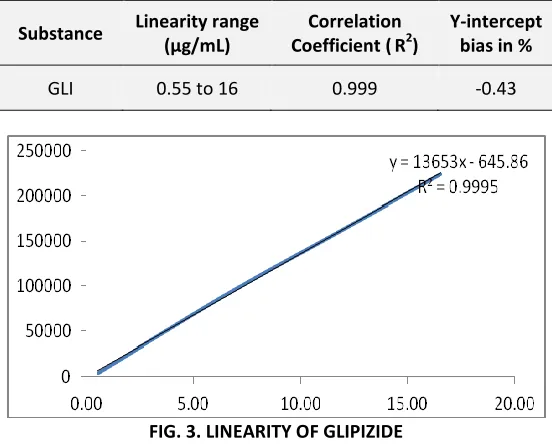
Linearity: The linearity of an analytical method is its ability to elicit test results that are directly, or by a well-defined mathematical transformation, proportional to the concentration of analyte in that sample within a given range. The response was found to be linear from 0.55 µg/mL to 16 µg/mL. The regression statistics are
shown in Table 4, with the linearity curve for GLI represented in Figure 3.
TABLE 4: REGRESSION STATISTICS
Substance Linearity range (µg/mL)
Correlation Coefficient (R2)
Y-intercept bias in %
GLI 0.55 to 16 0.999 -0.43
FIG. 3. LINEARITY OF GLIPIZIDE
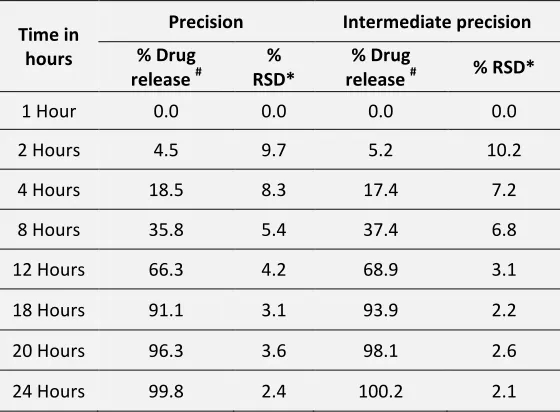
[image:3.612.31.290.540.631.2]TABLE 5: PRECISION AND INTERMEDIATE PRECISION RESULTS FOR ALL TIME POINT
Time in hours
Precision Intermediate precision
% Drug release #
% RSD*
% Drug
release # % RSD*
1 Hour 0.0 0.0 0.0 0.0
2 Hours 4.5 9.7 5.2 10.2
4 Hours 18.5 8.3 17.4 7.2
8 Hours 35.8 5.4 37.4 6.8
12 Hours 66.3 4.2 68.9 3.1
18 Hours 91.1 3.1 93.9 2.2
20 Hours 96.3 3.6 98.1 2.6
24 Hours 99.8 2.4 100.2 2.1
# Average of six determinations; * Determined on six values
[image:4.612.22.302.67.273.2]Accuracy: The accuracy of an analytical method is the closeness of test results obtained by that method compared with the true values. The amount recovered (for 10, 50, 100 and 150 % level) was within ± 2 % of amount added, indicating that the method is accurate and that there is no interference due to other excipients presents in the formulation. The results of the recovery of GLI are shown in Table 6.
TABLE 6: ACCURACY RESULTS
GLI At 10%
1.1µg/mL
At 50% 5.55µg/mL
At 100% 11.1µg/mL
At 200 % 16.6µg/mL
Mean
Accuracy 101.3 101.4 99.8 100.2
%RSD 1.7 1.5 0.7 0.5
Determined on three values; # Mean of three determinations.
Robustness: The robustness of an analytical procedure is a measure of its capacity to remain unaffected by small but deliberate variations in method parameters and provides an indication of its reliability during normal usage. No significant effect was observed on system suitability parameters such as RSD, tailing factor, or the theoretical plates of GLI when small but deliberate changes were made to chromatographic conditions. The results are presented in Table 2, along with the system suitability parameters of normal conditions. Thus, the method was found to be robust with respect to variability in applied conditions.
EXPERIMENTAL:
Materials and Reagents: Glipizide tablets, Glipizide related compound-A, Glipizide API and placebo were provided by Cadila Pharmaceutical Ltd. Dholka, Ahmedabad, India, along with the working standard. Methanol (MeOH) of HPLC grade was received from J. T. Baker (NJ, USA). Sodium dihydrogen phosphate (NaH2PO4) was obtained from Qualigens fine chemicals (Mumbai, India). All solutions were filtered through 0.2 μm nylon filters manufactured by Millipore Pvt. Ltd (Bangalore, India).
Buffer Preparation: A Solution of 0.01M of sodium dihydrogen phosphate was prepared using Milli-Q water adjust pH-6.0 of this solution with sodium hydroxide. The buffer preparation was stable with respect to pH and maintained visual clarity for 48 hours.
Chromatographic Conditions: Use mixture of buffer preparation and methanol in ratio of 45:55 in isocratic program. System control, data collection and data processing were accomplished using Waters Empower chromatography data software. The analytical column used was 50 x 2.1 mm, 1.7 μm Waters acquity UPLC BEH C-18 column (Milford, USA). The optimized conditions were as follows: injection volume: 3.0 μL, flow rate: 0.3 mL min-1 at a column temperature of 25 °C, sample cooler temperature: 25 °C and detection wavelength: 276 nm. Under these conditions the system back pressure was about 6000 psi. The samples for specificity were analyzed using a PDA detector over a range of 200 – 400 nm.
Standard Solution Preparation: The standard solution was prepared by dissolving the GLI standard in methanol to obtain a solution containing 1110 µg/mL and further dilute solution in dissolution media to obtain a solution concentration 11.1 µg/mL.
[image:4.612.24.298.436.522.2]Replace 5 ml of dissolution media in each bowl. Filter this solution with 0.2 µ nylon filter; discard first 2 ml of filtrate and use other solution as a sample.
Placebo Solution Preparation: In preparing the placebo solution, equivalent 10 mg of placebo was accurately transferred into a 1000 mL volumetric flask. Accurately transfer 900 mL of dissolution media was added to the volumetric flask, which was then sonicated in an ultrasonic bath for 90 min. filter this solution with 0.2 µ nylon filter; discard first 2 ml of filtrate and use other solution as a placebo preparation.
Method Validation: The method described herein has been validated for in-vitro study of glipizide by UPLC. System Suitability: System suitability parameters were performed to verify the system performance. System precision was determined on five replicate injections of standard preparations. All the important characteristics, including the relative standard deviation, peak tailing, and theoretical plate number, were measured.
Specificity: Specificity studies were performed to demonstrate selectivity capability of the proposed method. All sample, standard and placebo in different in-vitro media were analyzed by the proposed method. Linearity: Linearity was demonstrated from 10% to 150 % of standard concentration using a minimum of six calibration levels (10 %, 50 %, 75 %, 100 %, 125 % and 150 %) for GLI. The method of linear regression was used for data evaluation. The peak areas of the standard compound were plotted against the respective standard concentration. Linearity was described by the linearity equation and the correlation coefficient was also determined.
Precision: The precision of the system was determined using the GLI tablets for sample preparation procedure described above for six real samples of GLI tablets and analysis using the same proposed method. Intermediate precision was studied using different columns and was performed on different days.
Accuracy: To confirm the accuracy of the proposed method, recovery experiments were carried out by the
standard addition technique. Four levels (10%, 50 %, 100 % and 150 %) of standards were added to placebo in triplicate. The percentage recoveries of GLI at each level and each replicate were determined. The mean of percentage recoveries (n = 12) and the relative standard deviation were also calculated.
Robustness: The robustness is a measure of the capacity of a method to remain unaffected by small but deliberate changes in flow rate (± 0.03 mL/min), change in column oven temperature (± 5 °C) and change in wavelength nm (± 2 nm).
CONCLUSION: A new RP-UPLC method was successfully developed for the estimation of dissolution profile ( In-vitro study) of GLI tablets. The method validation results have verified that the method is selective, precise, accurate, linear, and robust. The run time (1.2 min) enables rapid determination of GLI dissolution. This method is applied for the determination of release of GLI during in-vitro study.
ACKNOWLEDGEMENT: The authors would like to thank M/s Cadila Pharmaceutical Ltd. for supporting this work. All the development and validation work performed at Analytical Research and Development Lab., Cadila Pharmaceutical Ltd., Ahmedabad, India. Authors’ Statements
Competing Interests: The authors declare no conflict of interest.
REFERENCES:
1. Wikipedia, the free encyclopedia 2. Drug bank.com
3. US pharmacopoeia USP35– Page 3338-3339. 4. Rakshit Kanubhai Trivedi , Mukesh C. Patel, Sushant B. Jadhav:
A Rapid, Stability Indicating RP-UPLC Method for Simultaneous Determination of Ambroxol Hydrochloride, Cetirizine Hydrochloride and Antimicrobial Preservatives in Liquid Pharmaceutical Formulation. Scientia Pharmacutica 2011, 79, 525-543. Doi No:10.3797/scipharm.1103-19.
5. Rakshit Kanubhai Trivedi, Mukesh Patel Development and validation of a stability indiacating RP-UPLC
method for determination of quetiapin in pharmaceutical dosage form. Scientia Pharmacutica 2011: 79: 97-111 Doi:10.3797/scipharm.1009-12
7. Cristiana C. Leandro, Peter Hancock, Richard J. Fussell, Brendan J. Keely: Comparison of ultra-performance liquid chromatography and high-performance liquid chromatography for the determination of priority pesticides in baby foods by tandem quadrupole mass spectrometry. Journal chromatography-A. 2006, 1103 (1),94-101. Doi : 10.1016/j.chroma.2005.10.077
8. Hua Jin, Avvaru Praveen Kumar, Do-Hyeon Paik, Kwon-Chul Ha, Young-Jae Yoo, Yong-Ill Lee. Trace analysis of tetracycline antibiotics in human urine using UPLC–QToF mass spectrometry. Microchem Journal, 2010, 94(2), 139-147. Doi: 10.1016/j.microc.2009.10.010
9. Glipizide and metformin hydrochloride tablets, USP-35, Page 3339 to 3340.
10. Useni reddy mallu, Viswanath reddy pyreddy, somasekhar penumajji, varaprasad bobbarala. Single and high resolution RP-HPLC method for determination of six anti diabetic drug product. Journal of pharmcy research. 2011,4(4),1209-1212. 11. B. Udaykumar Rao, Anna Pratima Nikalje. Determination of
Glipizide, Glibenlamide and Glimeperide in a Tablet Dosage Form in the Presence of Metformin Hydrochloride by Ion Pair – Reversed Phase Liquid Chromatographic Technique. Journal of Analytical and bioanalytical technique. 2010,1(2),1-5. Doi:10.4172/2155-9872.1000105
12. Gumieniczek A, Berecka A, Komsta L: Stability-indicating validated HPLC method for simultaneous determination of oral antidiabetic drugs from thiazolidinedione and sulfonylurea groups in combined dosage forms. Journal of AOAC International, 2010, 93(4),1086-1092.
13. Gupta S, Bansal G: Validated stability-indicating HPLC-UV method for simultaneous determination of glipizide and four impurities. Journal of AOAC International, 2011, 94(2),523-530. 14. Sheikh Rahila, Karigar Asif: Reverse phase high performance
liquid chromatography method for the analysis of glipizide in pharmaceutical dosage forms. International journal of research in Ayurveda and pharmacy. 2010, 1 (2),455-458.
15. Darshana K. Modi, Bhavesh H. Patel: Simultaneous determination of metformin hydrochloride and glipizide in tablets formulation by HPTLC. Journal of Liquid Chromatography & Related Technologies, 2012. 35(1), 28-39.Doi: 10.1080/10826076.2011.593227
16. Naglaa M. El Kousy: Stability-indicating densitometric determination of some antidiabetic drugs in dosage forms, using TLC. Chemistry and materials science, Microchimica acta,1998 ,128, 65-68, Doi: 10.1007/BF01242191
17. Ketan P. Dadhania, Parthika A. Nadpara , Yadvendra K. Agrawal: Development and validation of spectrophotometric method for simultaneous estimation of glipizide and metformin hydrochloride in bulk and tablets dosage form by simultaneous
equation method. International Journal of Pharmaceutical Sciences and Research , 2011, 2(6), 1559-1563.
18. Akademiai kiado. Quantitative analysis of gliclazide and glipizide in tablets by a new validated and stability-indicating RPTLC method. Journal of planar chromatography- Modern TLC. 2010, 23,129-133 Doi:10.1556/JPC.23.2010.2.8
19. L. Bhaskar Reddy , P. Raveendra Reddy, Useni Reddy Mallu, L. Maheshwara Reddy: Novel RP-HPLC Method for Metformin hydrochloride, Glipizide and Repaglinide in pharmaceutical drug products. International journal of research and reviews in pharmacy and applide sciences. 2011, 1(3), 131-139.
20. S.D. Jadhav, A.V.Chandewar, R.L. Bakal, A. Dewani. Development of HPLC method and validation for the estimation of Glipizide and metformin hydrochloride In combined dosage form. International Journal of Pharma Recent Research. 2011, 2(2),8-10.
21. Lin ZJ, Desai-Krieger D, Shum L. Simultaneous determination of glipizide and rosiglitazone unbound drug concentrations in plasma by equilibrium dialysis and liquid chromatography– tandem mass spectrometry. Journal of Chromatography B. 2004, 801(2), 265-272. Doi:10.1016/j.jchromb.2003.11.019 22. K.S. Lakshmi and T. Rajesh: Development and Validation of
RP-HPLC Method for Simultaneous Determination of Glipizide, Rosiglitazone, Pioglitazone, Glibenclamide and Glimepiride in Pharmaceutical Dosage Forms and Human Plasma. Journal of the Iranian Chemical Society. 2011,8(1), 31-37.
23. Swaroop R. Lahoti, Prashant K. Puranik, Ashish A. Heda,Rajesh B. Navale: Development and Validation of RP-HPLC Method for Analysis of Glipizide in Guinea Pig Plasma and its Application to Pharmacokinetic Study. International journal of pharmTech research. 2010, 2(3),1649-1654.
24. Hakan Emilsson: High-performance liquid chromatographic determination of glipizide in human plasma and urine. Journal of chromatography.1987,421(2),319-26, Doi:10.1016/ 0378-4347(87)80411-5
25. Jung-Woo Bae, Nam-Tae Kim, Chang-Ik Choi, Mi-Jeong Kim, Choon-Gon Jang & Seok-Yong Lee. HPLC Analysis of Plasma Glipizide and its Application to Pharmacokinetic Study. Journal of Liquid Chromatography & Related Technologies, 2009, 32 (13), DOI: 10.1080/10826070903091712
26. ICH - Harmonised Tripartity Guideline; Validation of Analytical Procedures: Text and Methodology Q2(R1), IFPMA: Geneva, 2005.
How to cite this article: