A Comparative Analysis: Differences between Mexico
and Sweden Country Outlines and Education System
Structures
Charles Gibson*
*
American College of Education, International Education, Indianapolis, Indiana, USA
Abstract- This paper conducted a comparative analysis between the countries Mexico and Sweden. The study contrasted the two counties in terms of education systems, location and non-location factors. A Framework for Comparative Education Analyses was used to compare and contrast the countries of Mexico in North America and Sweden in Northern Europe. The cross comparative analyses displayed evidence that future researchers can build on to better educational policy and exchange educational practices between the two countries. The paper also can be used as a platform for more in-depth qualitative and quantitative studies within and between Mexico and Sweden.
Index Terms- Mexico, Sweden, Education System, Comparative Education
I. INTRODUCTION
his paper compared the Mexican and Swedish education system. Comparative education among countries is an area currently being researched. A number of studies exists comparing education systems across the world. Želvys & Wolhuter (2014) explained that education is becoming increasingly important in the world and is viewed as a means of economic survival. Dabancal (2015) stated that comparative education is in the midst of the sub-branches of educational knowledge.
The Mexican and Swedish education systems are amongst two of the countries included among the OECD PISA Countries. Although on a large scale, comparisons of international education systems have been researched, there is very little research that exist comparing Mexico and Sweden directly to each other. Sweden is a country that recently had undergone education reform efforts. The Education Act of 2010 implemented regulation regarding attendance and curriculum in compulsory education (Johansson & Nihlfors, 2014). Sweden is a school system that had experienced a high influx of refugee immigration. Popov & Sturesson (2015) cited European Commission (2012), which displayed statistics that Sweden accepts over 20% of all minor immigrants Europe. An earlier study by Rippberger (1988) explained that the Mexican education structure is highly centralized.
II. PURPOSE
The aim of this study was to conduct a comparison of the Mexican and Swedish country outlines and education system. The overall intent of this paper is to understand the similarities and differences in Mexico and Sweden. This paper would serve as a foundation to build future qualitative and quantitative research studies between the countries.
III. RESEARCH DESIGN In this paper, the following research question was poised:
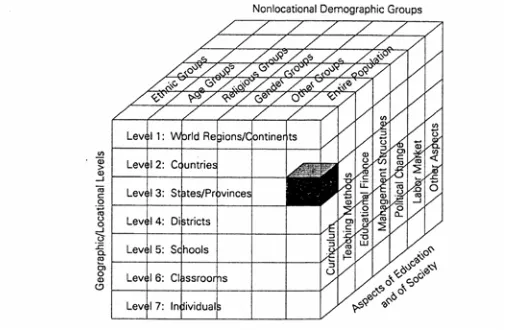
Figure 14.1: A Framework for Comparative Education Analyses
Source: Bray & Thomas (1995), p.475.
To investigate the poised research question, A Framework for Comparative Education Analyses was utilized. The Bray & Thomas (2015) multivariate analysis of Mexico and Sweden were completed in three stages. The initial stage analyzed the differences between the two country’s Nonlocational Demographic Groups. The next phase of the framework analyzed the Geographical/Locational Levels. The final phase of the Framework for Comparative Education Analysis examined the Aspects of Education and of Society.
The data used in this study was obtained from multiple sources. Data was extracted from the OECD PISA 2012 Country Profile, OECD Education at a Glance 2014, CIA World Factbook and additional scientific-based literature. Once all needed data was obtained from the mentioned data sources, the analysis was conducted. The results were displayed using charts, tables and written explanations.
IV. RESULTS
Nonlocational Demographic Groups
populations: Swedes with Finnish and Sami minorities; foreign-born or first-generation immigrants: Finns, Yugoslavs, Danes, Norwegians, Greeks and Turks.
Chart 2: Age Groups, 2012 estimates (CIA: The world factbook: Mexico, 2012; CIA : The world factbook: Sweden, 2012)
There is a noticeable difference in the age groups between Mexico and Sweden. Mexico has 28.2% of its population as being age 0-14, opposed to Sweden’s 15.4%. The age groups are similar in the 15-64 years estimates (Mexico 65.2% and Sweden 64.8%). The 65 and over group makes up 6.6% in Mexico and 19.7% in Sweden (CIA: The world factbook: Mexico, 2012; CIA : The world factbook: Sweden, 2012).
Chart 4: Sweden Religious Groups (CIA: The world factbook: Sweden, 2012) Source: 2000 Census Data
Chart 3 displayed that the majority of the country is Roman Catholic (77%), along with groups that are Unspecified (14%), Protestant (5%), none (3%) and Jehovah’s Witness (1%). Sweden is mainly Lutheran (87%), with a variety of other religions making up the remaining 13% as shown in Chart 4 (includes Roman Catholic, orthodox Baptist, Muslim, Jewish and Buddhist) (CIA: The world factbook: Mexico, 2012; CIA : The world factbook: Sweden, 2012).
Chart 5: Entire Population. Population Estimates using July 2012 Data (CIA: The world factbook: Mexico, 2012; CIA : The world factbook: Sweden, 2012).
Mexico and Sweden both have public and private education facilities (Mexico: Education at a glance, 2014; Sweden, 2012). The educational system in Mexico is constructed of five levels: pre-primary, primary, lower secondary, upper secondary and tertiary (Mexico: Education at a glance, 2014). The school structure in Sweden is similar to Mexico, being made up of pre-school, primary and lower secondary education, secondary education and higher education (Sweden, 2012).
Aspects of Education and of Society
The aspects of education and of society are the last stage of A Framework for Comparative Education Analysis. The PISA 2012 Country Profile displayed data for both Mexico and Sweden in three areas: Reading Performance, Mathematics performance and Science Performance.
Chart 6: Reading Mean Scores (OECD, 2012)
Chart 8: Reading Mean Scores (OECD, 2012)
Chart 6 reveled Mexican students and Swedish student’s reading mean scores. Mexican Students Boys (m= 411.365), Mexican Student Girls (m= 435.272), Sweden Student Boys (m=457.991) and Sweden Student Girls (m= 509.135). Chart 7 reveled Mexican and Swedish student’s mathematics mean scores. Mexican Students Boys (m= 420.441), Mexican Student Girls (m= 406.427), Sweden Student Boys (m=476.916) and Sweden Student Girls (m= 479.629). Chart 8 reveled Mexican students and Swedish student’s science mean scores. Mexican Students Boys (m= 418.128), Mexican Student Girls (m= 411.836), Sweden Student Boys (m=
481.151) and Sweden Student Girls (m= 488.513) (OECD, 2012).
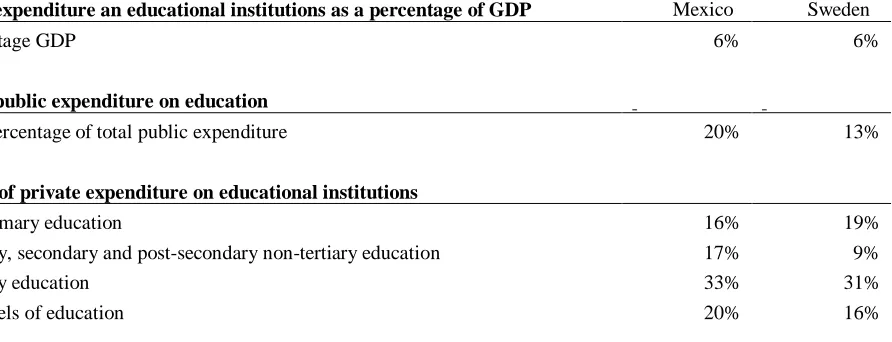
Table 1: Educational Expenditure Comparison 2011. (Mexico: Education at a glance, 2014; Sweden: Education at a glance, 2014)
Total expenditure an educational institutions as a percentage of GDP Mexico Sweden
Percentage GDP 6% 6%
Total public expenditure on education
As a percentage of total public expenditure 20% 13%
Share of private expenditure on educational institutions
Pre-primary education 16% 19%
Primary, secondary and post-secondary non-tertiary education 17% 9%
Tertiary education 33% 31%
All levels of education 20% 16%
In Table 1, the Mexican and Swedish Education system showed the percentages spent within each system.
Another area that is compared are politics. Mexico has a federal public government and Sweden is a constitutional monarchy. The Mexican constitution is dated February 5, 1917 and the Swedish constitution on January 1, 1975. The two countries also have different time periods that they have been independent. Mexico’s independence was declared on September 16, 1810, but officially recognized by Spain on September 27, 1821. Sweden’s Independence Day is June 6, 1523 (CIA: The world factbook: Mexico, 2012; CIA: The world factbook: Sweden, 2012).
In addition to political and governmental comparisons between the two countries, there are economic differences between the labor markets. According to CIA: The world factbook: Mexico (2012), Mexico has a free market economic structure, which is in a trillion dollar division. The Mexican structure in the country consists of agricultural industries dominated heavily by the private sector. The industries include seaports, railroads, telecommunications, electricity generation, natural gas distribution and airports. In Sweden’s labor market, privately owned firms form most of the industrial output. Agriculture accounts for just over 1% of the employment (CIA: The world factbook: Sweden, 2012).
V. DISCUSSION AND CONCLUSION
The aim of this paper was to conduct a comparative analysis between Mexico and Sweden to address the poised research question. The Framework for Comparative Education Analysis displayed several similarities and differences between the two countries (Bray, 2005). Mexico and Sweden are both nations comprised of mainly Christian religious groups. However, there denominations are very different. Mexico is mainly Roman Catholic and Sweden is mostly Lutheran. It is difficult to determine if this has any influence on the educational performance as an outside factor (CIA: The world factbook: Mexico, 2012; CIA: The world factbook: Sweden, 2012). The age groups between the compared countries are very similar in the 15-46 age range shown in Chart 2, but the age 0-14 and 65 and over are reversed. This data can be viewed as evidence that although there are more people in Mexico born and alive between ages 0-14, Sweden has more of the population living to be over the age 65. This evidence could also explain the population differences between the countries. Mexico had a population of 114,975,406 and Sweden had a population of 9,103,788; which is substantially less people (CIA: The world factbook: Mexico, 2012; CIA: The world factbook: Sweden, 2012).
The study also revealed that the Geographical/Locational Levels of Mexico and Sweden have few similarities. A similarity that the countries do have is that they both have public and private institutions. Mexico is a country in North America with a Latin Cultural background. Sweden is a country located far away from North America in Northern Europe (CIA: The world factbook: Mexico, 2012; CIA: The world factbook: Sweden, 2012). Further qualitative research could reveal how cultural differences affect learning and education in the studied regions; which is beyond the scope of this paper.
constitutional monarchy (CIA: The world factbook: Mexico, 2012; CIA: The world factbook: Sweden, 2012). Additional quantitative and qualitative evaluation on the effect of political involvement in education policy development and control would give Mexico and Sweden a broader understanding of best practice. The paper concluded showing that Mexico and Sweden are very different counties on all three levels of A Framework for Comparative Education Analysis and would benefit from professional idea sharing on all levels (Bray, 2005).
REFERENCES
[1] Bray, M. (2005). Methodology and focus in comparative education. CREC studies in comparative education, Vol. 7, p. 239-252. [2] CIA: The world factbook: Mexico. (2012). CIA World Fact Book, 50479-483.
[3] CIA: The world factbook: Sweden. (2012). CIA World Fact Book, 50697-700.
[4] Dabancal, M. P. (2015). A comparative analysis of the colour subject between Canada Saskatchewan state and visual arts education curriculum in Turkey. Journal of Education And Training Studies, 3(6), 140-150.
[5] de Souza, M. M. (2013). A case study of schooling practices at an escuela secundaria in Mexico. High School Journal, 96(4), 302-320.
[6] Green, S. S., & Edwards-Underwood, K. (2015). Understanding and redefining multicultural education. Journal Of Education Research, 9(4), 399-411.
[7] Johansson, O., & Nihlfors, E. (2014). The Swedish superintendent in the policy stream. Leadership & Policy In Schools, 13(4), 362-382. doi:10.1080/15700763.2014.945652
[8] Lundström, U., & Parding, K. k. (2011). Teachers' experiences with school choice: Clashing logics in the Swedish education system. Education Research International, 20111-10. doi:10.1155/2011/869852
[9] Mexico: Education at a glance. (2014). OECD. Retrieved from https://www.oecd.org/edu/Mexico-EAG2014-Country-Note.pdf [10] OECD. (2016). Mathematics performance (PISA) (indicator). doi: 10.1787/04711c74-en (Accessed on 14 June 2016) [11] OECD. (2016). Reading performance (PISA) (indicator). doi: 10.1787/79913c69-en (Accessed on 14 June 2016) [12] OECD. (2016). Science performance (PISA) (indicator). doi: 10.1787/91952204-en (Accessed on 14 June 2016)
[13] Popov, O. o., & Sturesson, E. e. (2015). Facing the pedagogical challenge of teaching unaccompanied refugee children in the Swedish school system. Problems Of Education In The 21St Century, 6466-74.
[14] Rippberger, S. (1988). Insiders' perspectives on strengths and weaknesses of the Mexican education system. [15] Sweden. (2012, May). UNESCO. World data on education 7th edition, VII Ed. 2010/2011
[16] Sweden: Education at a glance. (2014). OECD. http://www.oecd.org/edu/Sweden-EAG2014-Country-Note.pdf
[17] Želvys, R. R., & Wolhuter, C. C. (2014). Development of comparative education worldwide and at universities of Lithuania. Acta Paedagogica Vilnensia, 3259-71.
AUTHORS