Mobile Learning to Development of Students'
Self-concept of Chemistry
Ucu Cahyana*, Yuanita Marwa H. A, Erdawati, Maria Paristiowati, Yuli Rahmawati
Department of Chemistry Education, Universitas Negeri Jakarta, Indonesia
Received August 31, 2019; Revised November 24, 2019; Accepted December 3, 2019
Copyright©2019 by authors, all rights reserved. Authors agree that this article remains permanently open access under the terms of the Creative Commons Attribution License 4.0 International License
Abstract
The study aims to develop students’ chemistry self-concept in learning electrolyte solution and oxidation-reduction reaction by using mobile learning. The research method used was the qualitative method. Research data were obtained through observation during learning, questionnaires chemistry self-concept, reflective journal, and interviews. Chemistry Self-concept observed amounts to four indicators: Chemistry Self-concept, Academic Enjoyment Self-concept, Academic Capability Self-concept and Problem Solving Self-concept. The results showed that four indicators tend to awaken and develop learning with mobile learning. Based on the results of chemistry self-concept which shows positive self-concept chemistry because in mobile learning there is a compact content, easy to understand, thus causing students to prefer to learn. There are images, music and color variation so as students are interested in learning. There are tests simulation that is used to try students' learning abilities, and there is video content that can be used as a reference for students in solving a problem.Keyword
Chemistry Self-concept, Mobile Learning1. Introduction
Chemistry includes the science that has various kinds of concepts that must be understood in each learning process. This makes it difficult for students to interpret abstract chemistry. This difficulty causes a sense of self-confidence in chemistry learning. Self distrust which eventually makes students less interested in chemistry, so that it can result in the process of transferring knowledge to be hampered. In fact, chemistry is a branch of natural science that is closely related to human life. So, it can make interpreting chemistry difficult for students (Midle Camp, Kean, 2001) If the learning strategy is not correct, abstract material will lead to misconceptions for students. If chemical difficulties are not
resolved properly, then the chemical impression becomes bad. When chemistry learning takes place, students become uninterested, uninspired, uncomfortable and unmotivated to study chemistry. For that reason, it needs the right strategy to make the impression of chemistry good by increasing student motivation (Rau, 2008. Huang, 2016. Chiampa, 2014). Based on the chemistry learning curriculum in Indonesia in 2017 the importance of technology can accelerate the addition of chemical materials so that students do not feel left behind when students do not understand the material and with a limited time allocation teachers can provide appropriate learning approaches, methods and techniques that can provide comfort and building student motivation when studying chemistry.
Currently in the 21st Century, the development of information and communication technology is very rapid. Information Technology is the knowledge needed to manage information so that information can be searched easily and accurately, information can be in the form of writing, sound, pictures and videos. The rapid development of information technology is marked by the development of communication devices, namely mobile phones. Now mobile phones have many features that can make it easier for humans so that mobile phones can be called smartphones. Almost all activities have used technology, and all can be accessed easily using a smartphone. The world of education also utilizes smartphone sophistication as a learning medium that can support the learning process. Currently written teaching materials in the form of books such as modules have been made a lot, but the teaching materials displayed in ICT-based audio-visual media (Information and Communication technology) have not been done much. The use of unlimited time and place has made many researchers conduct research on cellular learning, and international cellular learning has been studied, and new findings obtained including students can increase their cognitive awareness, because discussions that often use relevant sources of cellular learning can facilitate teenage thinking, can help students in solving problems (Lai, 2014), and content contained in mobile learning can motivate students to learn (Martin, 2013), and media can make students learn, because media is the key to learning success (Hwang, 2014) learning mobile can train students in critical thinking (Cavus, 2009), mobile learning can help students solve problems in chemistry (Jehan, 2011), etc.
Relevant journals and research (Wu, 2016) that mobile learning provides a significant positive effect on self-concept in learning habits are felt useful and can provide ease of use in the learning process. The next relevant journal and research is Rad (2015) which shows the results that mobile learning can improve achievement motivation, emotional experience, self-concept, and self-confidence compared to traditional learning. However, self-concept in this journal emphasizes that teacher's expression when teaching can influence students' self-concept to know their success or failure of the two relevant journals the self-concept discussed is self-concept in the field of psychology. Therefore, there needs to be research that analyzes in depth the concept of self in the field of education, namely students' self-concept in chemistry through the use of Mobile learning media.
2. Literature Review
Mobile learning (M-Learning) is defined as wireless, digital, and technological devices, generally produced for the public, used by students because they participate in education (Traxler J., 2007). Mobile Learning is a forward-looking tool that can support learning in ways that were previously impossible and increased use of technology
in education (Traxler & Vosloo, 2014). Learning practices use direct mobile technology or simply complement learning with technology and communication information (ICT), to enable learning processes to occur anytime and anywhere (Volsoo, 2015).
Mobile learning focuses on student mobility, interacts with portable technology, and learning that reflects a focus on how the community and its institutions can accommodate and support. However, it is clear that mobile learning not only refers to the tools used, but also to learner mobility (Sharples, Taylor, & Vavoula, 2005).
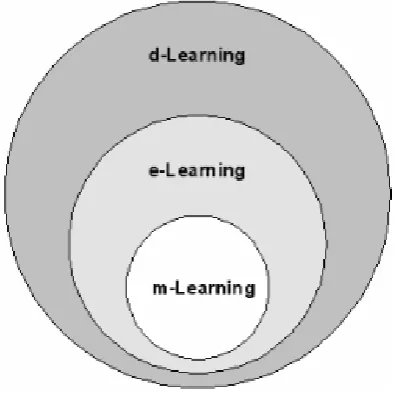
[image:2.595.336.534.344.541.2]Mobile learning is technology-based learning, where learners can access learning materials, directions and applications related to learning, whenever and wherever. This will increase attention to learning material, make learning active and can encourage students' motivation for learning. Mobile learning is proven to have advantages for students in language learning to encourage independence in learning (Leite, 2014). M-Learning is part of electronic learning so that, by itself, becomes part of distance learning (d-Learning) (Figure 1).
Figure 1. Scheme of M-Learning (Tamimuddin, 2010)
As for some of the advantages of mobile learning compared to other learning are as follows: a) Can technology be used whenever and wherever by teachers and students in accessing lesson information b) Because of the use of technology in the current era of globalization, the scope becomes unlimited so that it can include more learners. c) Devices used are cheaper than PC and laptop prices. While the limitations are mainly from the side of the device or learning media. The limitations of mobile devices include the following: a) limited processor capabilities; b) internal memory capacity that is still minimal; c) display screen that is still not maximal; d) fast battery power supply. The operating system on certain devices is limited.
Meanwhile, according to Henderson and Dweek (in Clara, 1993), the concept of self in the academic field for the first time refers to the individual's perception of competence or ability in the academic field. Academic self-concept is basically a basic force that energizes and directs individuals who include individual trust in themselves, see their self-image and self-esteem and their assumptions towards others in relation to their abilities and achievements in the academic field, learn and work in school, do school assignments as well as responses to academic achievement that he achieved. A positive self-concept is directly proportional to student achievement in school; this is supported by The Reflected Glory Effect theory if students have a good self-concept then learning achievement will be good too, because students have been comfortable in learning, so students are able in academic fields (Yeriezki, Sara Nielsen, and Ellen, 2015).
There are several things that will encourage students to build positive self-concepts such as positive suggestions from students, teachers who are attentive and careful in addressing each student's activities, students with positive images, and increased courage of students. So that the implementation of learning will lead to the position of the individual towards him to be positive. It is from this positive that self-development begins, as a result of learning and high trust in him who can achieve the things he aspires to. This view will greatly influence the success of student learning, or other impacts of negative external influences must be avoided (Wahyuningsih, 2010).
3. Methodology/Materials
The research method used is qualitative method according to (Bogdan, 2013) that is a type of research that produces findings that are not obtained by statistical procedures or other tools of quantification. Qualitative research is an inquiry (discovery process) approach. Which is useful to explore and understand a phenomenon and characteristics of qualitative research seen regarding research stages (Rianti, 2017).
This research was carried out in Class X with a total of 31 students in the even semester of 2017-2018 school year. When the research was conducted from December 2017 to June 2018, using qualitative research procedures with the paradigm of Interpretivism, namely a perspective that is based on the goal to understand and explain the social world
from the eyes of respondents involved in it. Data obtained through several ways of collecting data, including:
• The research instrument in the form of a chemical self concept inventory sheet (CSCI) which has been modified in the form of an instrument in the form of statements about students' perceptions of chemistry learning, according to (Yeriezki, Sara Nielsen and Ellen, 2015) instruments are arranged in writing and using a Likert scale with alternatives 1 to 7 answers, if you do not agree that 1 to very agree that is number 7.
• Interview. Which contains 10 questions that will be asked to some students about the impression of carrying out learning with mobile learning, the implementation of learning with mobile learning media, the ability of students in understanding the material, the convenience of students in the learning process when using mobile learning and students' perception of the usefulness of mobile learning in solving problems chemistry. Interviews were conducted on several students who in particular had negative chemical self-concepts and some students who had positive chemical self-concepts. • Observation, carried out by the teacher as well as
researchers to observe the implementation of learning using mobile learning media. Observations include learning interaction, student interaction, ability, comfort and ability to solve problems in the learning process. Observations were carried out by researchers and two observers, namely fellow researchers. The Observer will fill in the observation sheets provided during the Learning Activities.
• Reflective Journal aims to determine students 'responses regarding the learning process of each meeting and how students' chemical self-concept by giving questions that have been directed, as well as the views of researchers on the learning process called the reflective research journal.
4. Results and Findings
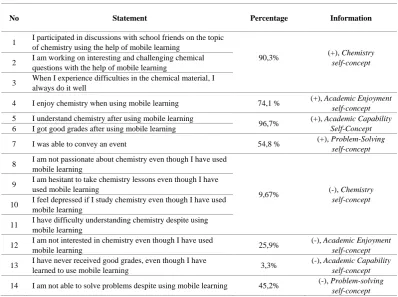
Table 1. Percentage Indicators of Chemistry Self-Concept
No Statement Percentage Information
1 I participated in discussions with school friends on the topic of chemistry using the help of mobile learning
90,3% (+), Chemistry
self-concept 2 I am working on interesting and challenging chemical
questions with the help of mobile learning
3 When I experience difficulties in the chemical material, I always do it well
4 I enjoy chemistry when using mobile learning 74,1 % (+), Academic Enjoyment
self-concept 5 I understand chemistry after using mobile learning
96,7% (+), Academic Capability Self-Concept 6 I got good grades after using mobile learning
7 I was able to convey an event 54,8 % (+), Problem-Solving
self-concept
8 I am not passionate about chemistry even though I have used mobile learning
9,67% (-), Chemistry
self-concept 9 I am hesitant to take chemistry lessons even though I have
used mobile learning
10 I feel depressed if I study chemistry even though I have used mobile learning
11 I have difficulty understanding chemistry despite using mobile learning
12 I am not interested in chemistry even though I have used
mobile learning 25,9%
(-), Academic Enjoyment self-concept
13 I have never received good grades, even though I have
learned to use mobile learning 3,3%
(-), Academic Capability self-concept
14 I am not able to solve problems despite using mobile learning 45,2% (-), Problem-solving self-concept
The result from observation sheet: 1. Chemisrty self-concept:
"Students in groups play an active role in practicum activities and form collaboration between students (January 22, 2018)"
2. Academic enjoyment self-concept:
"All groups enjoy the learning process (January 15, 2018). Students were very enthusiastic when the quiz took place (February 5, 2018) "
3. Academic cappability self-concept:
"Students understand the questions posed by this, which can be seen from the answers given by students (January 22, 2018). Students’ focus is seen from the questions given by the teacher, and students understand the material presented by the teacher (January 29, 2018)"
4. Problem solving self-concept
"Interaction between groups at the time of presentation (there are objections/additions) is good, and students answer well, and there are some who have different answers so that they can complement each other (15 January 2018). Students can explain the answer well and smoothly (15 January 2018). "
The result from reflective journal: 1. Chemisrty self-concept:
"The concept of chemistry regarding group participation is quite good, but there are still some
students who have not been active in the group (15 January 2018) and group participation at this meeting is better than the previous meeting (January 29, 2018)" 2. Academic enjoyment self-concept:
"Students are very interested and enthusiastic in practicum because students can prove their material in books and videos on mobile learning with these activities (January 22, 2018). Students enjoy the learning process even though the material is classified as difficult but with mobile learning (January 29, 2018) "
3. Academic cappability self-concept:
"Understanding the material of students is still not well marked by there are several students individually who have not understood the questions from researchers. However, students can work on LKPD and can practice the questions given by researchers with the help of mobile learning. Students are enthusiastic in trying test simulations on mobile learning (January 15, 2018). Students' learning abilities are quite good because the test simulation (which was given before) students become often practice questions. Test simulation results are quite well marked by only 3-4 students who have the lowest simulation score (February 5, 2018) "
4. Problem solving self-concept
[image:4.595.105.504.89.386.2]results and work tools does not run well students initiative to solve problems by replacing lights/batteries / re-assembling tools to find out what errors occur in the lab (January 22, 2018). There is a problem with the discrepancy between mobile learning and books regarding the development of the concept of reduction and oxidation. Students are asked to find answers to the actual development of the concept. (January 29, 2018) "
The result from student interview: • Chemisrty self-concept:
R = Researcher; S = Students
R = "in this material is there something difficult for you?"
S = "yes, I haven't memorized the terms of the oxidation number. So, I still not able to determine what elements the oxidation number is looking for. However, there is no difficulty with electrolyte solution material. "
R = "is there any difficulty in memorizing the terms of the oxidation number?"
S = "I am lazy to see books with pages making me feel bored."
R = "then, whether the media I provide can help you understand oxidation number? "
S = "yes, help! Before there was mobile learning, I felt bored quickly, but because there is now a medium that can be brought wherever and whenever and the contents of the material are concise, I become excited about learning. "
R = "Alhamdullilah ... are there any other influences that you feel like a sense of doubt and pressure on chemistry learning after using mobile learning media?"
S = "there must be, I used to feel hesitant to study chemistry and felt depressed when studying chemistry because I did not understand the material, but because now I can study wherever and whenever and the simple material content makes me often learn. However, the teaching factor also affected me in studying chemistry. If getting a good teacher, I feel even more uncertain and depressed in learning chemistry. "
• Academic enjoyment self-concept: R = Researcher; S = Students
P = "do you think that learning with mobile learning can provide a sense of comfort in learning chemistry?" S = "yes, learning to be not sleepy. Because there is a
little music. "
R = "besides music, what else makes you feel interested in learning with mobile learning?"
S = "hm .. the contents of the material that has been made into a coin make me feel easy to read and also the image makes me interested in learning
about mobile learning " • Academic cappability self-concept:
R = Researcher; S = Students R = "why is water a good solvent?"
S = "because water has two poles which are poles H + and OH- so it can dissolve acidic, basic or neutral compounds."
"Yes (understand), because in mobile learning the material has been summarized like a summary in the book. I understand it faster, so I can memorize quickly ... "
(Student interview 04, March 22, 2018)
"Yes, several times I use mobile learning, it can make it easier for me to work on chemical problems."
(Student interview 15, 22 March 2018)
"A little help. But it's more helpful to use a textbook. Because there are many examples of questions + explanations that I can apply when I encounter chemical problems. "
(Student interview 03, March 22, 2018)
"Before, the value of me was rich just like that but now using mobile learning is good ..."
(Student interview 02, 22 March 2018) • Problem solving self-concept
PS = students who are prescribed; S = Students PS = "in practicum activities, the result of rainwater is
nonelectrolyte."
S12 = "the result that our group can get rainwater is an electrolyte solution because rainwater is the result of electrolytic evaporation of seawater because in the sea there is a mineral."
"For video problems, it helps because it can be played repeatedly so that you can understand and video as a reference in practicum activities."
(Student interview 03, March 22, 2018)
"Yes, because the video explains how to test electrolyte and non-electrolyte solutions and it is easy to know the classification of electrolyte and non-electrolyte solutions."
(Student interview 05, March 27, 2018) Learning Implementation with Mobile Learning:
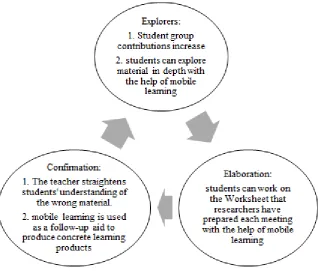
Figure 2. Analysis of Students' Self-Concept Chemistry in the Implementation of Mobile Learning Media Students' cognitive awareness can be improved because
frequent discussions with other students and relevant sources can be obtained from mobile learning and the internet. Thus, it can be considered that mobile learning can facilitate the thinking of youth development (Lai, 2014). In the indicator of chemical self-concept based on the results of the questionnaire, students agree on chemistry learning using mobile learning media. But at meetings that do not use mobile learning the group's contribution has not been well developed, each student is still considered less active in his group, besides that the chemical self-concept that has not developed well especially on reduction and oxidation material so that students find it difficult to understand chemistry, it has an impact on students towards chemistry that are feeling depressed, doubtful and a sense of enthusiasm of students. After being analyzed, the discussion process between students in the group can run well and students can answer interesting and challenging chemical questions given by researchers because according to the interview results above mobile learning can help students to learn chemistry because of the nature of flexible mobile learning, the material presented in a concise and easy way to understand manner so that the students' chemical concepts can be well developed, besides that it can reduce the difficulty of understanding chemistry and can give the impression of learning chemistry well and students become passion for learning chemistry.
Technology can make students enjoy learning because the content in the technology is presented attractively so that the material is easily understood and this learning takes place effectively and can motivate students to learn (Martin, 2013).
In the indicator of academic enjoyment self-concept, students agree on chemistry learning using mobile learning. Based on the results of interviews and observations it was found that the convenience of learning with mobile learning can be considered as providing comfort when the learning process is carried out. If, the feeling of learning pleasure has been formed in students, then there is no feeling of stress, doubt and lack of enthusiasm in the learning process ,so that the cognitive aspects of students in learning can work well.
repeatedly to get satisfactory grades so that students' understanding of the material can be awakened and students can enjoy the learning process.
When chemistry self-concept, academic enjoyment self-concept and academic capability self-concept are positive, students can be to solve a problem, it can be seen from the discussion group. Students who have been given problems by the researcher to each group will discuss and present other groups from the results of the discussion. After the presentation, there are other students who will refute because of incompatibility with the results obtained and there are those who add so that they will get new findings about the problem. In addition, the practical skills of students in solving problems are also found, for example when designing electrical conductivity tools students are assisted with videos contained in mobile learning without requiring internet data anymore, so when students are wrong in assembling the tools students can see the incompatibility of the results with the video . Videos in mobile learning can provide good assistance in solving problems, but the duration of time that is too fast becomes a weakness of mobile learning. A mobile learning process that can continuously improve the ability to solve problems is deeper (Lai, 2014).
5. Conclusions
The students' self-concept of chemistry on the use of mobile learning media can be analyzed from four indicators, namely Chemistry Self-Concept Indicator, which is due to group learning that makes the discussion process run well so that the existence of student learning groups that have low Self-Concept Chemistry is increasing because of joining a friend who has a high Chemistry Self-Concept. Mobile learning media can minimize learning difficulties in chemistry because the material in mobile learning is concise, easy to understand, and flexible (does not have to carry books) which makes students' enthusiasm to learn chemistry high so students can do chemistry learning well. As for the indicators of learning convenience, the existence of mobile learning media makes students interested in learning chemistry because of the appearance, images, and music found in mobile learning.
Academic capability self-concept indicators develop after the use of mobile learning media due to a test simulation that is useful to train students' understanding of non-electrolyte and Redox electrolyte solution material, and test simulations contained in mobile learning can be used whenever and wherever making students practice frequently so that students' school grades, especially in chemistry, can be better. The last indicator is an indicator of problem-solving self-concept ability, and students' skills in solving problems develop after the use of mobile learning media, especially regarding practical videos that help students to solve chemical problems when practicum activities other than the consequences of mobile learning.
Acknowledgements
This research report was made possible through funding received from the Directorate Research Ministry of Research, Technology, and Higher Education. The authors would like to thank colleagues, Research Institution and Department of Chemistry Education Universitas Negeri Jakarta.
REFERENCES
[1] Bauer, Christopher F. (2007).. Beyond "Student Attitudes": Chemistry Self-Concept Inventory for Assessment of the Affective Component of Student Learning. Journal of Chemical Education, Vol. 82, No 10.
[2] Bogdan, B. a. (2013, December ). Tujuan Penelitian Kualitatif. Retrieved from Metode Penelitian Kualitatif: http://Belajarpsikologi.com/metode-penelitian-kualitatif
[3] Cavus, N. & UzunBoylu H. (2009). Improving critical thinking skills in mobile learning. Science Direct, 434-438.
[4] Ciampa, K. (2014). Learning in a mobile age : an investigation of student motivation. Journal of Computer Assited Learning, 82-96.
[5] Cotton, K. (2001, APRIL monday). Building Positive Student Self-Concept. Retrieved from School-Improvement-Research -Series:
http://educationnorthwest.org/sites/default/files/BuildingPosi tiveStudentSelf-Concept.pdf
[6] Huang, C & Yang, S. et al. (2016). Effects of Situated Mobile Learning Approach on Learning Motivation and Performance of EFL. Educational Technology and Society. Vol. 19, 263-276.
[7] Hwang, G. J. (2014). Applications, impacts and trends of mobile technology-enhanced learning: a review of 2008-2012 publications in selected SSCI journals. International Journal of Mobile Learning and Organization, 83.
[8] Jehan, M. (2014). Develop Classroom Management Skills Of English. International Journal of English Language Teaching, Vol. 5, Isusue 3, 41-69.
[9] Lai, C. L. (2014). Effects of mobile learning time on students' conception of collaboration, communication, complex problem-solving, meta-cognitive awareness and creativity, 276.
[10]Leite, B. S. (2014). "M-Learning : The use of Mobile Devices As A Dicdactic Tool In Teaching of Chemistry". Journal Chemistry Education, Vol. 22 No. 3.
[11]Martin, F. (2013). Here and now mobile learning: An experimental study on the use of mobile technology, 68.
[12]Midle Camp, Kean. (2001). Panduan Belajar Kimia Dasar. Jakarta: Gramedia.
[13]Rad, M. Rezaei, M. (2015). Psychological aspect effetiveness mobile learning in higher education. International Journal of Educational and Psychological Researches, 199.
high school education: Motivation, pressure, and learning performance.Science Direct. Vol. 88,1-22.
[15]Traxler, J. (2007). Defining, Discussing, and Ealuating Mobile Learning: The moving finger writes and having writes. International Review of Research in Open and Distance Learning.
[16]Traxler, J., & Vosloo, S. (2014). Introduction: The prospects for mobile learning. Prospects: Quarterly Review of Comparative Education.
[17]Volsoo, S. (2015, Desember 13). Mobile Learning: Key Principles for Success. Retrieved from Center For Education Innovations:
http://www.educationinnovations.org/research-and-evidence/ mobile-learning-key-principles-success.
[18]Wu,W, Y. Perg. (2016). Research on the correlations among mobile learning perception study habits, and continuous learning. Eurasia Journal of Mathematics, Science and Technology Education, 1665-1673.