i
IMPROVING SKILLED WORKERS’ PERFORMANCE
IN CONSTRUCTION PROJECTS
IN NIGERIA
ZANNAH ALHAJI ALI
IMPROVING SKILLED WORKERS’ PERFORMANCE IN CONSTRUCTION PROJECTS
IN NIGERIA
ZANNAH ALHAJI ALI
A Thesis submitted in partial
fulfilment of the requirements for the Award of the
Degree of Master of Science in Construction Technology Management
Faculty of Technology Management and Business Universiti Tun Hussein Onn Malaysia
iii
DEDICATION
ACKNOWLEDGMENT
All Praise be to Allah the Highest, the Beneficient, the Merciful. I thank Allah for giving me the opportunity to accomplish my Master thesis writings and other curricula programmes at the University Tun Hussein Onn Malaysia. I sincerely appreciate and gratify the efforts of my and respectful and workaholic supervisor Dr. Aryani Ahmad Latiffi. She has dedicated her precious time painstakingly correcting the mistakes and strengthened the quality of the research. I will not forget my co-supervisor in person Dr. Asrul Md Masrom for his tireless assistance toward strengheneing the quality of the research. On the other hand, I am appreciating the efforts of my lecturers of the department of Construction Management especially the Head of Department Dr. Mohd Yamani Yahya and the programme coordinator Associate Professor Dr. Narimah Kasim. I would also like to show my appreciation to all academic and non-academic staff of the Faculty of Technology Management and Business.
v
ABSTRACT
ABSTRAK
vii
CONTENTS
TITLE i
DECLARATION ii
DEDICATION iii
ACKNOWLEDGEMENT iv
ABSTRACT v
ABSTRAK vi
CONTENTS vii
LIST OF TABLE xiii
LIST OF FIGURES xiv
LIST OF ABBREVIATIONS xv
CHAPTER 1 INTRODUCTION 1
1.1 Introduction 1
1.2 Research background 1
1.3 Problem statement 3
1.4 Research questions 5
1.5 Research objectives 6
1.6 Research significance 6
1.7 Research scope 7
1.8 Research methodology 8
1.9 Chapters outline 9
CHAPTER 2 LITERATURE REVIEW 12
2.1 Introduction 12
2.2 Overview of the Nigerian construction industry 12 2.3 Skilled workers in the construction industry 13
2.3.1 Category of skilled workers in the Nigerian
construction industry 14
2.3.1.1 Tile fixers 15
2.3.1.2 Bricklayers 16
2.3.1.3 Plasterers 16
2.3.1.4 Pavers 16
2.3.1.5 Plumbers 17
2.3.1.6 Carpenters 17
2.3.1.7 Metal workers 18
2.3.1.8 Plant operators 18
2.3.1.9 Painters 19
2.3.1.10 Welders 19
2.4 Definition of performance 20
2.4.1 Theory of performance 21
2.4.2 Construction projects performance 23 2.5 Criteria for selection of skilled workers in construction
projects 25
2.5.1 Physical strength and stamina 25 2.5.2 Manual dexterity and coordination 26 2.5.3 Knowledge and analytical skills 27 2.5.4 In-depth knowledge in handling tools and
equipment 27
2.6 Causes of low skilled workers’ performance in
construction projects in Nigeria 28
2.6.1 Motivation 30
ix
2.6.1.2 Delay in payment of skilled workers’
wage 33
2.6.1.3 Lack of standard salary scale for
skilled workers 34
2.6.1.4 Lack of incentive scheme programmes
for skilled workers 34
2.6.1.5 Lack of free residential accommodations for
skilled workers 35
2.6.1.6 Lack of free food vouchers for skilled
workers 35
2.6.1.7 Lack of free transportations for
skilled workers 36
2.6.1.8 Lack of free medical facilities for
skilled workers 37
2.6.1.9 Lack of opportunity to observe public
holidays for skilled workers 37 2.6.1.10Lack of gifts during festive periods for
skilled workers 38
2.6.2 Training and retraining 38
2.5.2.1 Lack of sufficient skill acquisition
centres for skilled workers 39 2.6.2.2 Ineffective vocational training programmes
for skilled workers 40
2.6.2.3 Lack of issuance of training certificates
for skilled workers 40
2.6.3 Conducive working condition 41
2.6.3.1 Vulnerability to safety and health care
services on site 42
2.6.4.2 Shortage of plants and equipment 44 2.6.4.3 Plants malfunction and maintenance
on site 45
2.6.5 Site management 45
2.6.5.1 Excessive rework by skilled workers due to
design errors 46
2.6.5.2 Overcrowding of skilled workers
during project execution 47
2.6.5.3 Change of orders of project executions 47 2.6.5.4 Delay in supply of materials and
equipment to site 47
2.6.5.5 Conflicts among skilled workers on site 48 2.7 Ways to improve skilled workers’ performance in
construction projects in Nigeria 49
2.7.1 Good incentive schemes for skilled workers 51 2.7.2 Payment of skilled workers’ wages on time 52
2.7.3 Good wages of skilled workers 52
2.7.4 Free transportation for skilled workers 53 2.7.5 Free food vouchers for skilled workers 53 2.7.6 Free residential accommodations for skilled
workers 54
2.7.7 Provision of standard salary scale for skilled
workers 54
2.7.8 Giving opportunity for skilled workers to
observe public holiday 55
2.7.9 Provision of gifts to skilled workers during festive
periods 55
2.7.10 Establishing skill acquisition centres for skilled
xi
2.7.11 Provision of vocational training programmes where certificates are issued for qualified
skilled workers 57
2.7.12 Resolving conflicts and disagreements among
skilled workers using construction code of ethics 57 2.7.13 Provision of safety and health care services for
skilled workers 58
2.7.14 Supply of quality and modern tools,
equipment, machines and plants for skilled
workers 59
2.7.15 Supply of materials and equipment on time for
skilled workers 59
2.7.16 Avoid overcrowding of skilled workers during
project execution 59
2.7.17 Proper supervision of skilled workers to avoid
errors of rework 60
2.8 Summary 61
CHAPTER 3 RESEARCH METHODOLOGY 62
3.1 Introduction 62
3.2 Research design 62
3.3 Research approach 63
3.3.1 Questionnaire design 64
3.4 Population and sampling 65
3.5 Data collection method 66
3.5.1 Questionnaire survey 66
3.6 Pilot study 67
3.7 Data analysis 68
CHAPTER 4 FINDINGS AND DISCUSSIONS 71
4.1 Introduction 71
4.2 Response rate 72
4.3 Results of survey 72
4.3.1 Reliability test 72
4.3.1.1 Demographic information 74
4.3.2.1 Position in organisation 74
4.3.2.2 Working experience 75
4.3.2.3 Role in organisation 76
4.4 Causes of low skilled workers’ performance in
construction projects in Nigeria 77
4.4.1 Discussion of findings 80
4.5 Ways improve skilled workers’ performance in
construction projects in Nigeria 83
4.5.1 Discussion of findings 85
4.6 Similarities and differences in perception of respondents using
ANOVA 89
4.7 Summary 92
CHAPTER 5 CONCLUSIONS AND RECOMMENDATIONS 94
5.1 Introduction 94
5.2 Conclusion 94
5.3 Contributions of research 96
5.3.1 Construction industry 96
5.3.2 Academic environment 96
5.4 Recommendations of research 97
5.5 Limitations of research 97
5.6 Concluding remark 98
REFERENCES 99
APPENDIX A 123
xiii
LIST OF TABLES
2.1 Causes of low skilled workers’ performance in construction projects 29 2.2 Skilled workers’ demotivational factors in construction projects in Nigeria 31 2.3 Ways to improve skilled workers’ performance in consruction projects in
Nigeria 50
3.1 Relevant situations for different research question strategies 63
3.2 Avearge index method scale 65
3.3 Population and sample size 66
3.4 Respondents’ suggestions based on questionnaire draft 68
4.1 Questionnaire response rates 72
4.2 Cronbach’s alpha coefficient 73
4.3 Cronbach’s alpha coefficient reliability test for survey 73
4.4 Position in organisation 74
4.5 Working experience 75
4.6 Role in organisation 76
4.7 Average mean index scale 77
4.8 Ranking for causes of low skilled workers’ performance in construction
projects in Nigeria 78
4.9 Ranking for ways to improve skilled workers’ performance in construction
projects in Nigeria 83
4.10 ANOVA test for causes of low skilled workers’ performance in construction projects based on position in organisation of respondents 90 4.11 ANOVA test for ways to improve skilled workers’ performance in
LIST OF FIGURES
1.1 Research methodology process 9
xv
LIST OF ABBREVIATIONS
ANOVA - Analysis of Variance
BNVQ - British National Vocational Qualification CACN - Corporate Affairs Commission of Nigeria
EBRD - European Branch for Reconstruction Development GPS - Global Positioning System
HSA - Hypo Sludge Ash
IFC - International Finance Corporation ITF - Industrial Training Fund
KPI - Key Performance Indicator MMC - Maiduguri Metropolitan Council
NBTE - National Board for Technical Education NDE - National Directorate of Employment NRC - National Research Council
NVQF - National Vocational Qualification Framework PMS - Performance Measurement System
ROI - Return of Investment
SON - Standard Organisation of Nigeria SPSS - Statistical Package for Social Sciences TOP - Theory of Performance
CHAPTER 1
INTRODUCTION
1.1 Introduction
This chapter discusses on the introduction, which serves as the research background. The research background forms a clear focus of the problem statement, research questions, research objectives, research significance and research scope. Finally, it describes the chapters’ outline of the report.
1.2 Research background
Construction industry in many developing countries are greatly concerned with low level of skilled workers’ productivity due to economic, social, physical and psychological related factors influencing the performance of the skilled workers (Naoum, 2016). Low productivity of skilled workers’ is one of the most serious task facing the construction industry especially in developing countries such as Malaysia, Indonesia, Singapore, Hong Kong, and other states in South east Asia (Kaming et al.,
and Ab Malik (2015) assert that, productivity improvement can be achieved when construction workers with high skills and knowledge, together with sound physical and mental health perform tasks with efficiency and effectiveness. In most countries, the cost of operatives comprises 30 % to 50 % of the overall projects’ cost, and thus, it is regarded as a true reflection of the efficiency of the operation (Kazaz et al., 2008). In addition, since construction is a labour intensive industry, Jarkas (2015) argued that, skilled workers are one of the most productive labour category in the industry, and therefore, construction productivity is mainly dependent upon skilled workers’ effort and performance. Alinaitwe et al. (2007) stressed that construction industry in sub-Sahara Africa has unique characteristics. To mention few are, building is labour intensive as it is largely in-situ, therefore skilled workers are exposed to extreme of hot and wet weather conditions, poor skilled workers’ incentive schemes, and hazardous working environment.
3
1.3 Problem statement
Nigeria as a developing country with rapid growing population and various housing scheme programmes such as; National Housing Policy of Nigeria, Report of the Vision 2020 National Technical Working Group on Housing, as well as publications from UN-Habitat, Musa et al. (2016) assert that, these programmes require the services of skilled workers on construction sites for an efficient and effective projects productivity. In the Nigerian construction industry, skilled workers such as bricklayers, carpenters, painters, electricians, welders, plumbers, plant operators among others, form a large part of the site labour force whose input determine to a great extent, the quality of the industry’s products (Akinluyi and Adeleye, 2013). In Nigeria, the common problems of low skilled workers’ performance in construction have been traced to unfair wages of workers, poor safety in construction sites, lack of clear-cut career paths, diminishing skilled workers training programmes and delay in schedule of works on sites (Oseghale et al., 2015). On the other hand, contractors are generally not satisfied with the level of construction productivity due to apparent poor performance of skilled workers (Forcada et al., 2013).
to show more interest in participating in the labour force. Construction work, as at the present time in Nigeria is labour intensive, unlike in some advanced countries such as; United Kingdom (UK), United States of America (USA) and Australia where a great percentage of site operations have been mechanised thus requiring fewer numbers of operatives on the construction sites (Van Doren, 2008). The low performance of skilled labour affects schedules and costs, which in turn could critically delay projects completion and thereby jeopardise the economic benefits the project is expected to generate (Ireland, 2007). The low performance of skilled labour is one of the most pressing issues today and is already having serious implications for both business and the economy (Windapo, 2016). As self-employment continues to rise, competition is becoming more severe, contract times are shorter, profit margins are smaller and specialisation and fragmentation of various trades is increasing, which ultimately presents problem of finding key skilled workers such as; bricklayers, carpenters, plasterers and electricians (Amusan, 2016).
5
schemes and poor site management lead to an adverse effect on skilled workers’ productivity in the Nigerian industry. In the construction industry, skilled workers are directly responsible for setting out construction work on site, therefore, suitable motivations are necessary in order to maximise their performance toward effective productivity (Ho, 2016). Perhaps, programmes combining elements of both financial and non-financial incentives schemes are those that produce the most consistently satisfactory results, where the result of either component serves as motivational factor toward skilled workers’ performance in construction projects (Fagbenle, 2009).
The performance of skilled workers in the construction industry in the past received little attention as a subject of research, whereby most researches focus on general labour productivity. Therefore, the genesis of this research focuses on skilled workers’ performance which was driven by observations in the disparity of the skilled workers’ low performance as a result of non-implementation of factors militating to the construction productivity. Similarly, there is need to strive towards achieving optimal productivity in the Nigerian construction industry, however, this cannot be attainable unless problems such as; inadequate tools and equipment, lack of training and retraining of skilled workers, poor working condition, lack of motivation and incompetent site management are addressed. Hence, this research will seek to recommend ways to improve skilled workers’ performance towards ensuring the overall development of the Nigerian construction industry.
1.4 Research questions
This research is proposed to answer two questions, which invariably would assist in achieving its objectives. The questions are:
i. What are the causes of low skilled workers’ performance in construction projects in Nigeria?
1.5 Research objectives
This research is aimed at investigating into improving skilled workers’ performance of construction projects in Nigeria. This aim can be achieved through the following objectives:
i. To identify the causes of low skilled workers’ performance in construction projects in Nigeria.
ii. To recommend ways for improving skilled workers’ performance in construction projects in Nigeria.
1.6 Research significance
Improving constraints associated with regard to skilled workers’ performance in construction project delivery is important to construction industry in the following aspects:
i. To Policy
By identifying the causes and ways of improving associated with skilled workers’ performance in construction projects, the government can come up with a good policy and laid down criteria that can ensure skilled workers’ performance in projects delivery follows a stated guideline to ensure that quality, cost and time are maintained toward successful projects productivity.
i. To economy
7
the money that would have been otherwise channelled for maintenance work of projects.
ii. To contractors
The research is expected to contribute immensely to the contractors such as the project manager, project engineer, site engineer and site supervisor, toward improving skilled workers’ performance in construction projects, which apparently can lead contractors into successful completion of any given project within cost, stated time and quality and that add to contractors’ reputation in various ways.
iii. To skilled workers
Identifying areas that affects quality in construction would ensure good workmanship and high productivity of any completed project. This would go a long way in preventing building from collapse and safeguard peoples live. It would also ensure that the tax payers, who are the people themselves, get value for their money.
iv. To academic environment
The findings and recommendations of this research will open a window, thereby contributing to the academic knowledge and for future research regarding the causes of low skilled workers’ performance in construction projects, and the ways to improve it.
1.7 Research scope
issues especially in terms of skilled workers’ performance (Jalam, 2016). In this research, Maiduguri Metropolitan Council (MMC), which is the Capital of Borno State was selected due to significant number of public construction activities that is on-going in various sites within the state capital (Egidario et al., 2016). The geographical location of Maiduguri lies within 11º 50ˈ latitude and 13º 09ˈ longitude and it is situated at altitude of 325 meters above sea level and occupies a land mass of an area of 50,778 square metres (Jimmie et al., 2016). According to Waziri (2016), despite the present rapid increase in population density of about 1.1 million, Maiduguri remains as centre of trade, learning, culture, tourism and history but public constructions projects in the public sector suffer from low quality due to skilled workers’ ineffective performance. In this regards, co-operation from project manager, project engineer, site engineer and site supervisor as respondents will be sought to investigate the causes of the skilled workers’ low performance in public construction projects within the study area in order to suggest ways of improving it.
1.8 Research methodology
9
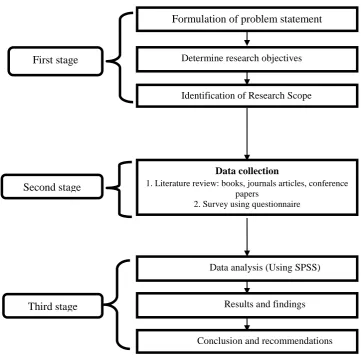
Figure 1.1: Research methodology process
1.9 Chapters outline
The research comprises of five (5) main chapters, namely; Introduction, literature review, research methodology, data analysis and discussion, then conclusion and recommendations. Details and explanation to every chapter will be discussed below:
Chapter 1: Introduction
This section introduces the research topic. It consists of the research background, research problem, research questions, research objectives, research scope, and research significance. Finally, the chapters’ outline and summary.
Formulation of problem statement
Determine research objectives
Identification of Research Scope
Data analysis (Using SPSS)
Data collection
1. Literature review: books, journals articles, conference papers
2. Survey using questionnaire
Results and findings
Conclusion and recommendations
First stage
Chapter 2: Literature review
This chapter reviews factors causing low skilled workers performance in construction projects and recommends appropriate ways of improving it. The chapter also focuses on identification of the research gaps that have not been discussed by previous researchers or need to be discussed more. The chapter also focuses on general suggestions to minimise interface problems.
Chapter 3: Research methodology
This chapter discusses the research approach and strategies, and the procedures to be adopted in conducting the research. This includes, research process and design, population and sampling techniques to be used. It also discusses the instrument of data collection and data analysis technique.
Chapter 4: Data analysis and discussion
This chapter presents the data obtain from questionnaires and make analysis of the data. It also discusses the result from the survey conducted. The chapter also discusses on the findings obtained from the analysis which forms the basis of recommendations for future research.
Chapter 5: Conclusion and recommendations
11
1.10 Summary
CHAPTER 2
LITERATURE REVIEW
2.1 Introduction
This chapter discusses previous researches on skilled workers’ construction projects performance in the construction industry. The overview of the previous researches on the subject matter justifies the way research questions are to be answered. Through the chapter, the elaborations of the topic will be clearly described. This research reviews its literature relevant to the subject matter from books, journal articles, and other available documents related to this research. To achieve the success of the research, an intensive literature review is needed, which will be collected from previous scholars’ write up on the particular subject matter.
2.2 Overview of the Nigerian construction industry
13
economic growth and also in problems facing. Danso and Menu (2013), justify that, Nigeria is like most developing countries where construction industry plays a dominant role in the economic activities of the country. In spite of the Government’s apparent concern over the quality of skilled workers’ performance outputs in Nigeria, little effort has been made to ensure compliance to efficient productivity in the Nigerian construction industry and this is reflected in the publication of only two codes of practice for use in the construction industry in 1973 by the Standard Organisation of Nigeria (SON) since its inception (Ahaotu and Pathirage, 2015). These codes are outdated in relation to the present development in construction materials, design and site techniques (Adenuga, 2013).
Looking at the importance of the Nigerian construction industry in the economic development of nations, it becomes necessary to study the activities of the industry and also to be very much vigilant upon all the impediments that will affect the output and quality of productivity (Bilau et al., 2015). In addition, Wogu et al.
(2015) reviewed that, Nigeria is pursuing a project tagged ‘vision 2020’ as one of its strategies to become one of the top leading twenty (20) economies in the world by 2020. In Nigeria, there has been a large scale construction of low-cost housing estates is on-going to provide houses at reduced cost for citizens, but nevertheless, there are still cases of skilled workers’ inadequate productivity due to their low performances (Hardoy and Satterthwaite, 2014). Therefore, embarking on improving skilled workers in construction will go a long way in curtailing their low performances in the Nigerian construction industry.
2.3 Skilled workers in the construction industry
skilled worker is a segment of the work force with a high skill level that creates significant economic value through the work performed. Skilled worker is generally characterised by high experience and expertise level and involves complicated tasks that require specific skill sets, education, training and experience, and may involve abstract thinking. Sweet and Meiksins (2016) asset that, a skilled worker requires some form of professionalism and training which does not require a college degree or the like. Common skilled workers include electrician, plumber, painter, carpenter and mason, bar bender, tiler, plant operator, welder, mechanics, and steel fixer (Uchitelle, 2009).
Skilled workers not only work with their hands to build, fix, or install something, there is also a significant amount of brainpower required to do most jobs.
Griffith and Macartney (2014) viewed that, with the present trend of technology,
skilled workers must be computer literate as many machines use computer programs to operate in projects, and they must also have good math and reading skills in order to calculate, measure and read blueprints accurately. In addition, innovations and advances in technology have enabled skilled workers to engage in the use of robotics and lasers based of their respective trades (Scarbrough and Corbett, 2013). The unskilled workers on the other hand are a category of workers that require special skills and it is defined as any way of making a living with little or no degree of security of income and employment and they require little or no training to make them perform (Wahab, 2011). Unskilled workers are able-bodied men and women that perform manual duties, and their major asset therefore lies in their strength and healthy body which requires no special training (Goswami et al., 2016). Therefore, skilled workers are persons that have served an apprenticeship, practice the trade learned activity, and by reason of their knowledge and vocational capacity are given tasks which are particularly difficult and need lot of experience that involves different trades of specialisation (Vollenhoven, 2016).
2.3.1 Categories of skilled workers in the Nigerian construction industry
15
namely; masons, steel fixers, electricians, carpenters, plumbers and welders. Uchitelle (2009) asserts that, common skilled workers include electricians, plumbers, painters, carpenters and bricklayers, bar benders, tile fixers, plant operators, welders, mechanics, and steel fixers. Offei-Nyako et al. (2014) stressed that, skilled workers vary from mason, carpenter, tile worker, steel worker, painter, electrician and plumber. The study of Ameh and Shokumbi (2013) viewed that, skilled workers in the construction industry include; iron bender, carpenter, bricklayer, painter, electrician, welding worker, plumber and tiler. However, Adewale et al. (2014) listed categories of skilled workers which include; carpenter, bricklayer, painter, iron bender and plumber. Oseghale et al., (2015) assets that, frequent used skilled workers in the construction industry include; carpenters, bricklayers, bar bender, plumbers and painters where their services are required most in construction projects. Sherekar and Tatikonda (2016) identified the major categories of skilled workers in the construction industry as; mason, painter, steel fitter and plasterer. Therefore, from the various categories of skilled workers mentioned by various researchers, there are significant similarities among the researchers on the different trade specialisations of skilled workers in the construction industry. The various categories of skilled workers in the construction industry consist of the following:
2.3.1.1 Tile fixers
2.3.1.2 Bricklayers
Bricklayers build walls, partitions, and other structures made of brick, and they also work with concrete and blocks, bricks, tiles, marbles, and terra cotta, also bricklayers can do both construction and maintenance work as directed in the study of Ward-Harvey, (2009). Normally bricklayers will stretch string from one corner of the wall to the other to use as a guide so that they can build the wall straight. According to Wahab (2011), many tools used by bricklayers include; trowels, brick hammers, chisels, levels, plumbs and measuring squares, whereby unskilled worker will assist the bricklayer to do the heavy work such as; carrying materials and mixing mortars.
2.3.1.3Plasterers
According to O'Kelly and Dean (2007), plastering is one of the oldest and required construction trade which is responsible for applying stucco and plaster to building components for insulation, support, aesthetic and smooth background on walls both internally and externally. To achieve this, an efficient services of skilled masonry work is required for the plastering and rendering finishes. Kadu and Gajghate (2016) viewed that, waste produced from paper mill industries as Hypo Sludge Ash (HSA) can be used as replacement to cement in varying proportions which yields smooth background in plastering.
2.3.1.4Pavers
17
modern society that we so often take for granted. Rajkumar et al. (2016) assert that, the usage of bagasse ash in manufacturing of paver block leads to lesser environmental hazards than conventional concrete, which reduces the pollution and global warming. In addition, it shows the economic benefit in terms of construction and maintenance cost by replacing cement with bagasse ash in concrete paver blocks.
2.3.1.5 Plumbers
According to Gupta and Thawari (2016), plumbers design, install, repair and maintain piping systems such as soil, waste water treatment, portable water connections, and gas systems in residential, commercial, industrial buildings and at utility sites. Plumbing tasks require the ability to assemble, install, maintain and repair pipes, fittings, fixtures, appurtenances, appliances of heating, water, storm and sanitary drainage systems according to specifications and plumbing codes. Ogochukwu (2014) viewed that, plumbers install sanitary fixtures such as, lavatories, toilets, bathtubs, bathroom accessories, showers, kitchen sinks and appliances, fountains and laundry equipment.
2.3.1.6Carpenters
constructors, cabinet makers, stairways constructors, floor coverers and interior decorators (Adeyemi, 2010).
2.3.1.7 Metal workers
According to Ogbeifun (2011), the duty of metal workers in the construction is to maintain and install for variety of metal products including vinyl siding repairs, signs and ventilation equipment. This profession requires many years of training and experience, not only because metal work must be very precise, but also the level of danger associated with working environment which use the powerful cutting and lifting equipment is higher than most other occupations. The transformation of metals through the application of the availably manufacturing process date back to stone ages when bulk of the valuable work contents are manual with the accompanying by repetitive risks. Common manufacturing processes in practice among the local fabricators includes cutting, grinding, welding, shaping, bending, painting and forging (Onawumi et al., 2016).
2.3.1.8 Plant operators
19
2.3.1.9 Painters
According to Authority (2016), painters and decorators are often the last line of construction workers to finish a project before the tenants occupy the structure. The main duty of painter is to provide not only aesthetic considerations for a bare structure, but also enhance the natural shape of a building and provide additional protection from weather, wear and tear, and natural aging process. Lo et al. (2016) opined that, there are many purposes for using paint in building construction, these includes increase the visual appeal of building surface, protect surface against weathering impact, make the surface water proof, protect surface from termite attack and increase the surface durability. In addition, the study of Ozic et al. (2016) indicate that, painting is usually use in four elements of a building such as; interior wall, exterior wall, ceiling surface, wooden surface and metal surface.
2.3.1.10 Welders
have to work in difficult conditions as it maintain and repair all types of industrial machinery, including outdoor facilities such as oil rigs (Ekong and Ekong, 2016). Therefore, a welder is among skilled workers that involves in construction, manufacturing and civil engineering works which the Nigerian construction industry recognises it as one of the categories of skill trades in the construction projects.
2.4 Definition of Performance
To perform is to take a complex series of actions that integrate skills and knowledge to produce a valuable result (Romero et al., 2014). Project performance has been defined as the degree of achievement of certain effort or undertaking which relates to the prescribed goals or objectives that form the project parameters (Al-Dhaafri et al., 2013). The key requirements of suitable performance measures and measurement frameworks are identified as including, having a few but relevant measures, being linked with critical project objectives, providing accurate information, and comprising financial and nonfinancial measures (Idiake et al., 2015). There are many potential measures of performance for evaluating the success of a construction project. All address performance in three key areas; scope, schedule and budget (Kaliani et al.,
2016). Alsulamy (2015) discovered seven (7) project performance indicators, namely; construction cost, construction time, cost predictability, time predictability, defects, client satisfaction with the product and client satisfaction with the service. project performance indicators are measured based on three components which include; safety, profitability and productivity.
21
system of communication, culture of the project, staff members and the structure of the communication used. In construction industry, according to Balfaqih et al. (2016), there are several performances such as; safety performance and environmental performance, which are measured using Performance Measurement System (PMS) in order to improve the performances of construction industry. Maya (2016) indicates that, clients, investors and other stakeholders are demanding continuous improvement in the construction industry. Performance measurement is defined as the process of quantifying the efficiency and effectiveness of an action (Spano, 2016).
2.4.1 Theory of Performance
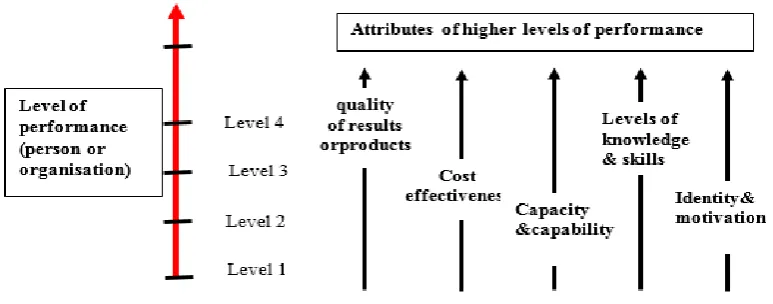
Figure 2.1: performance advancing through levels (Romero et al., 2014)
Performance advancing through levels is shown in figure 2.0 where Label 1, Label 2, Label 3, Label 4 etc., are used to characterise effectiveness of performance of a person or organisation. The figure indicates that, a person or organisation at Level 3 is performing better than a person or organisation at Level 2.
As shown on the right side, performing at a higher level produces results that can be classified into categories:
i. Quality increases: Results or products are more effective in meeting or exceeding the expectations of stakeholders production a result, amount of waste goes down.
ii. Capability increases: Ability to tackle more challenging performances or projects increase.
iii. Capacity increases: Ability to generate more through performace input increase.
iv. Knowledge increases: Depth and breadth of knowledge increases.
v. Skills increase: Abilities to set goals persist, maintain a positive outlook, increase in breadth of application and in effectiveness.
23
2.4.2 Construction projects performance
Chinny et al., (2010) stated that, the level of the satisfaction experienced decides the degree of the project success. Khan (2015) mentioned that, ineptitude management is generally recognised as a major factor of poor construction productivity especially as a result of insufficient supervision on site. In fact, poor supervision on site contributes to the poor workmanship on construction site and it can be seen at many occasions on the jobsite as inadequate management on the construction site to be the primary cause that affects labours’ daily productivity (Kasun and Janaka, 2006). Jha and Chockalingam (2009) stated that, unqualified project manager is one of the causes of substandard project delivery, as a result, poor project management is one of the factors contribute to poor workmanship in construction sites. Khalid et al. (2006) agreed that, the role of subcontractor is one of the factors contribute to construction poor workmanship that need to be addressed for effective project productivity due to the fact that, most of the site works are completed by subcontractors whereby the main contractors only depend on the subcontractors. Jarkas (2013) asserts that, approximately 90% of the site work is executed by variety of subcontractors whereas main contractor is focused on management and coordination of the projects. Besides, Chan et al., (2006) also mentioned that, labour sub-contracting also leads to severe problems in the co-ordination of work and attainment of quality standards. Therefore, complicated role of subcontractor in construction projects can contribute to poor workmanship.
communication failure on the jobsite, whereby, language barrier indirectly causes the lack of communication between the supervisors and labours. This consequently causes misunderstanding by the labours during work scope and then lead to poor workmanship. Faisal et al., (2006) stated that, unsuitable construction equipment and insufficient latest information about procurements of equipment can influence the project quality. Danso (2014) addeded that, poor quality of mass low-cost housing projects in Turkey is mostly because lack of information about current construction materials and equipment. Therefore, unsuitable construction equipment can cause low quality of workmanship in construction. Dai et al., (2009) stated that, extreme climate condition is one of the factors that affecting construction labour productivity and workmanship. Abu-Hamdeh & Alnefaie (2016) found that, the climate of Saudi-Arabia being extremely hot and severe during summer which makes most of the construction work very hard to deliver effectively, and as a result, the quality of workmanship is affected.
REFERENCES
Abdulaziz, M. J. (2010). Buildability factors influencing formwork labour productivity of isolated foundations. Journal of Engineering, Design and Technology, 8(3), 274-295.
Abdulkadir, M., Lee, W., Jaafar, M., Sapuan, S. & Ali, A. (2005). Factors affecting construction labour productivity for Malaysian residential projects. Journal of Structural Survey, 23(1), 42-54.
Abdullah, A., Mohandes, S. R., Hamid, A. R. A. & Singh, B. (2016). Research article: The practices of corporate social responsibility among construction companies in Malaysia. Research Journal of Applied Sciences, Engineering and Technology, 12(7), 742-755.
Abdulsalam, D., Faki, A. I., & Dardau, A. A. (2012). Impact assessment of incentive schemes for the sustainable development of Nigerian construction industry.
Journal of Civil Engineering and Architecture, 6(9), 1194.
Abu-Hamdeh, N. H., & Alnefaie, K. A. (2016). Design considerations and construction of an experimental prototype of concentrating solar power tower system in Saudi Arabia. Energy Conversion and Management, 11(7), 63-73.
Adams, A. V. (2007). The role of youth skills development in the transition to work: A global review. Children & Youth, World Bank.
Adamu, K. J., Dzasu, W. E., Haruna, A. & Balla, S. K. (2011). Labour productivity constraints in the Nigerian construction industry. Continental Journal of Environmental Design and Management, 1(2), 9-13.
Adegoke, A. B. (2012). Accounting for construction contracts. The Nigerian Journal for Management Research, 8(2), 121-135.
Adenuga, O. A. & Dosumu, O. S. (2012). Assessment of procurement methods used for executing maintenance works in Lagos state. Ethiopian Journal of Environmental Studies and Management, 5(4), 475-481.
Adesile, I., Nordin, M. S., Kazmi, Y. & Hussien, S. (2016). Validating academic integrity survey (AIS): An application of exploratory and confirmatory factor analytic procedures. Journal of Academic Ethics, 4(2), 1-19.
Adesanya, D. A. (2009). The impact of non-financial incentives on bricklayers’ productivity in Nigeria. Journal of Construction Management and Economic, 22(4), 890-911.
Adewale, P. O., Siyanbola, A. B. & Siyanbola, S. O. (2014). Building craftsmanship skill development and Nigeria’s vision 20:2020: Imperatives and daunting challenges. International Journal of Vocational and Technical Education, 6(4),
36-42.
Adeyemi, A. Y. (2010). Financial Performance of Construction Contractors in Nigeria. Unpublished Ph.D. Thesis. Building Department Obafemi Awolowo University, Ile-Ife, Nigeria, 20-43.
Ahaotu, S. M., & Pathirage, C. (2015). Importance of leadership in effective implementation of TQM in the Nigeria construction industry. International Postgraduate Research Conference (IPGRC 2015).
Ahiakwo, O. (2015). Improving Construction Processes in Nigeria using the Last Planner System. A thesis submitted in partial fulfilment of the requirements of the University of Wolverhampton for the degree of Doctor of Philosophy. United Kingdom.
Ahmed, S. M., & Azhar, S. (2015). Addressing the issue of compliance with personal protective equipment on construction worksites: A workers’ perspective.
Ahmed, H. M., & Yusuff, R. M. (2016). Factors affecting quality during the construction phase in Iraqi Government Companies. International Journal of Applied Engineering Research, 11(13), 7974-7981.
101
Aina, O. O. (2011). Performance of incentive schemes in construction projects in Nigeria. Global Journal of Management and Business Research, 11(10), 89-93.
Aina, O. O. & Adesanya, D. A. (2015). Factors affecting performance of incentive schemes in the construction industry in Nigeria. Journal of Civil and Environmental Research, 8(7), 81-82.
Aiyetan, A. O. & Olotuah, A. O. (2006). Impact of motivation on workers’ productivity in the Nigerian construction industry. In: Boyd, D (Ed). Prods 22nd Annual ARCOM Conference. Birmingham, UK, Association of Researchers in Construction Management, 239-248.
Aje, O. I., Odusami, K. T., & Ogunsemi, D. R. (2009). The impact of contractors' management capability on cost and time performance of construction projects in Nigeria. Journal of Financial Management of Property and Construction, 14(2),
171-187.
Ajufoh, A. M. O., & Ogwuche, A. H. (2016). Appraising the effects of building construction activities on the immediate environment. Proceedings: The Academic Conference of Mediterranean Research and Publications International on Sustainable Development, 4(1), 10th March, 2016- Abubakar Tafawa Balewa University, Bauchi State, Nigeria.
Akanni, P. O., Osmadi, A. B., & Hussin, A. A. (2015). Indicator framework for selection of trade specialist subcontractors in Nigeria. Advances in Environmental Biology, 4(1), 143-147.
Akanni, P. O., Oke, A. E. & Akpomiemie, O. A. (2015). Impact of environmental factors on building project performance in Delta State, Nigeria. HBRC Journal,
11(1), 91-97.
Akinluyi, M. L. & Adeleye, O. O. (2013). The building industry in the housing programme: Technology, materials and labour towards addressing housing shortage in Nigeria. Global Journal of Arts Humanities and Social Sciences,
1(3), 58-70.
Akinsiku, O. E. & Akinsulire, A. (2012). Stakeholders’ perception of the causes and effects of construction delays on project delivery. Journal of Construction Engineering and Project Management, 2(4), 25-31.
Al-Dhaafri, H. S., Yusoff, R. Z. B., & Al-Swidi, A. K. (2013). The effect of total quality management, enterprise resource planning and the entrepreneurial orientation on the organizational performance: The mediating role of the organizational excellence: A proposed research framework.International Journal of Business Administration, 4(1), 66-69.
Alinaitwe, H. M., Mwakali, J. A. & Hansson, B. (2007). Factors affecting the productivity of building craftsmen. Journal of Civil Engineering and Management, 13(3), 169-176.
Almes, G., Zekauskas, M., Kalidindi, S., & Morton, A. (2016). A One-Way Delay Metric for IP Performance Metrics (IPPM).
Almutairi, Y., Arif, M., & Khalfan, M. M. (2016). Moving towards managing off-site construction techniques in the Kingdom of Saudi Arabia: a review. Middle East Journal of Management, 3(2), 164-178.
Alsulamy, S. (2015). Developing a performance measurement framework for municipal construction projects in Saudi Arabia. PhD. Dissertation. Edinburgh Napier University.
Ameh, O. J. & Shokumbi, B. B. (2013). Effectiveness of non-financial motivational scheme on construction workers output in Nigeria. Ethiopian Journal of Environmental Studies and Management, 6(3), 263-266.
Amusan, L. M., Tunji-Olayeni, P. F., Afolabi, A. O., Omuh, I. O., Ojelabi, R. A., & Oluwatobi, A. O. (2016). Re-modularising technical institutions towards quality manpower delivery in construction sector in Nigeria. In: Proceedings of INTED2016 Conference, 7th-9th March 2016, Valencia, Spain.
Aniekwu, N. & Ozochi, C. A. (2010). Restructuring education, training and human-resource development in the Nigerian construction industry. Journal of Science and Technology Education Research, 5(1), 92-98.
Aroge, S. T. (2012). Employers training and development for optimum productivity. The roles of Industrial Training Fund (ITF). Nigerian journal of developing country study, 12(4), 50-58.
103
Attar, A. A., Gupta, A. K. & Desai, D. B. (2012). A study of various factors affecting labour productivity and methods to improve it. IOSR Journal of Mechanical and Civil Engineering (IOSR-JMCE), 1(3), 11-14.
Auma, E. (2014). Factors affecting the performance of construction projects in Kenya: A survey of low-rise buildings in Nairobi central business district. The International Journal of business and management, 2(10), 115-140.
Authority, S. Q. (2016). Decorative Finishing Occupations in Construction: Painter and Decorator. Scottish Vocational Qualifications.
Awasthi, A. (2016). Innovative techniques and strategies of skill building for human resource development in SMEs, India. SMS Journal of Entrepreneurship & Innovation, 2(2), 11-21.
Awe, E. M., Stephenson, P. & Griffith, A. (2010). Impact of vocational training on skilled labour shortage within the Nigerian construction sector. In W089-Special Track 18th CIB World Building Congress May 2010 Salford, United Kingdom
(p. 252).
Awe, E. M., Griffith, A. & Stephenson, P. (2010). An enquiry into the challenges of skills training in the Nigerian construction industry. Conference Proceedings: 3rd International World Construction Project Management Conference.
Coventry University, Nigeria, 152-159.
Balfaqih, H., Nopiah, Z. M., Saibani, N., & Al-Nory, M. T. (2016). Review of supply chain performance measurement systems: 1998–2015. Computers in Industry,
8(2), 135-150.
Barg, J. E., Ruparathna, R., Mendis, D., & Hewage, K. N. (2014). Motivating workers in construction. Journal of Construction Engineering, 11(3), 64-77.
Bendat, J. S. & Piersol, A. G. (2011). Random data: Analysis and measurement procedures (vol. 729). John Wiley & Sons.
Berger, L. J., Essers, C., & Himi, A. (2016). Muslim employees within ‘white ‘organizations: The case of Moroccan workers in the Netherlands. The International Journal of Human Resource Management, 8(2), 1-21.
Bheemaiah, K. & Smith, M. J. (2015). Inequality, technology and job polarization of the youth labour market in Europe. Technology and Job Polarization of the Youth Labour Market in Europe (June 2, 2015).
Bilau, A. A., Ajagbe, A. M., Kigbu, H. & Sholanke, A. B. (2015). Review of shortage of skilled craftsmen in small and medium construction firms in Nigeria. Journal of Environment and Earth Science, 5(15), 5-12.
Black, J. E., & Reynolds, W. M. (2016). Development, reliability, and validity of the moral identity questionnaire. Personality and Individual Differences, 97, 120-129.
Brown, A., Orr. & Lou, J. (2008). The suitability of public private partnership in the provisions of sustainable housing in China. Journal of World Review of Entrepreneurship, Management and Sustainable Development, 2(1), 101-125.
Bublitz, E., & Noseleit, F. (2014). The skill balancing act: when does broad expertise pay off?. Small Business Economics, 42(1), 17-32.
Cooke, B., & Williams, P. (2013). Construction planning, programming and control. John Wiley & Sons.
Cooper, R., Mukherjee, N., Al-Khady, A. D., & Garlapati, A. (2015). Communicating with multinational workforce on S.H & E issues: An international perspective & best practices. In ASSE Professional Development Conference and Exposition. American Society of Safety Engineers.
CACN. (2015). Corporate Affairs Commission of Nigeria: Registration Portal. Retrieved from http://[email protected]
Campbell, J. D., Jardine, A. K., & McGlynn, J. (Eds.). (2016). Asset management excellence: optimizing equipment life-cycle decisions. CRC Press.
Chancellor, W. & Abbott, M. (2015). Apprenticeship training and productivity growth: A case study of the Australian construction industry. Australian Bulletin of Labour, 41(1), 22-25.
Chandra, H. P. (2015). Initial investigation for potential motivators to achieve sustainable construction safety and health. The 5th International Conference of Euro Asia Civil Engineering Forum (EACEF-5),125, 103-108.
105
Chan, A. P. C., Wong, K. W., & Lam, T. I. (2006). Assessing quality relationships in public housing. International Journal of Quality and Reliability Management, 23(8), 909-927.
Chinny, N. E., Chris, N., Panos, G., & Proverbs, D. (2010). Integrated framework for satisfaction assessment in construction sector. Journal of Engineering, Design and Technology, 8(2), 168-188.
Choudhry, R. M. & Fang, D. (2008). Why operatives engage in unsafe work behaviour: Investigating factors on construction sites. Journal ofSafety Science,
46(4), 566-584.
Cingoranelli, D. (2007). Use partnering to improve construction productivity. 14th January 2007. USA. newsreleasewire.com
Cox, R. F., Issa, R. R. A. & Frey, A. (2006). Proposed subcontractor-based employee motivational model. Journal of Construction Engineering and Management, 132(2), 152-163.
Cox, R. F., Issa, R. A. & Collins, H. (2008). Determining the Quantitative Return on Investment of Craft Training. National centre for construction education and research. Gainesville, Florida. USA.
Creswell, J. W. (2012). Educational Research Design: Planning, conducting, and evaluating quantitative and qualitative research: 4th Edition Pearson.
Dai, J., Paul, M. G., & William, F. M. (2009). Construction craft workers’ perceptions of the factors affecting their productivity. Journal of Construction Engineering and Management, 135(3), 217-226.
Dalhatu, A., Ali, I. F. & Abdulazeez, A. D. (2012). Impact assessment of incentive schemes for the sustainable development of Nigerian construction industry.
Journal of Civil Engineering and Architecture, 6(9), 1194-1201.
Danso, H. & Menu, D. (2013). High cost of materials and land acquisition problems in the construction industry in Ghana. International Journal of Research in Engineering & Applied Sciences, 3(3), 18-33.
Danso, H. (2014). Poor workmanship and lack of plant and equipment problems in the construction industry in Kumashi, Ghana. International Journal of Management Research, 2(3), 60-70.
De Dreu, C. K. & Gelfand, M. J. (2008). The Psychology of Conflicts and Conflict Management in Organisations. New York, Lawrence Erlbaum.
Diep, P., & Coxhead, I. (2016). Globalization, wages and skill premia in a transition economy: New evidence from Vietnam.
Doloi, H., Sawhney, A., Iyer, K. C., & Rentala, S. (2012). Analysing factors affecting delays in Indian construction projects. International Journal of Project Management, 30(4), 479-489.
Dubem, I. K., Stephen, O. O. & Oluwaseyi, A. A. (2012). An evaluation of personnel training policies of construction companies in Nigeria. Journal for human ecology, 40(3), 29-238.
Edmonds, W. A. & Kennedy, T. D. (2012). An Applied Reference Guide to Research Designs: Quantitative, qualitative, and mixed methods Sage.
Edwards, D. J., & Love, P. E. (2016). A case study of machinery maintenance protocols and procedures within the UK utilities sector.Accident Analysis & Prevention, 9(3), 319-329.
Egidario, B. A., Patrick, A. E. & Eziyi, O. I. (2016). Urbanization and housing for low-income earners in Nigeria: A review of features, challenges and prospects.
Mediterranean Journal of Social Sciences, 7(3), 347-358.
Ekong, U. M., & Ekong, C. U. (2016). Skills acquisition and unemployment reduction in Nigeria: A case Study of National Directorate of Employment (NDE) in Akwa Ibom State. International Journal of Economics & Management Sciences, 5(2),
123-138.
El-Gohary, K. M., & Aziz, R. F. (2013). Factors influencing construction labour productivity in Egypt. Journal of Management in Engineering, 30(1), 1-9.
Ene, O. C. (2010). Artisanship disconnect: declining technical apprenticeship, artisan service and implications for Nigeria’s future development. Asian Journal of Industrial Engineering, 2(2), 37-51.
Enshassi, A., Mohamed, S., Abu Mustafa, Z. & Mayer, P. (2007). Factors affecting labour productivity in building projects in the Gaza Strip. Journal of Civil Engineering and Management, 13(4), 245-254.
107
Fagbenle, O. I., Adeyemi, A. Y. & Adesanya, D. A. (2012). The impact of non-financial incentives on bricklayers’ productivity in Nigeria. Journal of Construction Management and Economics, 22(3), 899-911.
Fagbenle, O. I. (2009). The effect of non-monetary incentives on the performance of construction craftsmen in Nigeria. In: Proceedings RICS COBRA Research Conference. University of Cape Town, South Africa, 737-753.
Faisal, M. A., Low, S. P., & Sadi, A. A. (2006). Contractors’ views of the potential causes of inconsistencies between design and construction in Saudi Arabia.
Journal of Performance of Construction Facilities, 20(1), 74-83.
Fashola, W. (2013). The impact of non-financial incentives on the productivity of construction operatives in South-western Nigeria. Unpublished M.Sc. Thesis. Building Department. Obafemi Awolowo University, Ile-Ife, 5-15.
Fellows, R. F. & Anita, M. M. L. (2009). Research methodology for construction. John Wiley and Sons.
Femi, O. T. (2014). Building construction technician training: Its relevance to modern construction industry in Nigeria. International journal of technology enhancements and emerging engineering research, 2(3), 58-68.
Fink, A. (2015). How to conduct surveys: A step-by-step guide? Sage Publications.
Finkel, G. (2015). The Economics of the Construction Industry. Routledge.
Flick, U. (2015). Introducing Research Methodology: A beginner's guide to doing a research project. Sage Publications.
Forcada, N., Macarulla, M., Fuertes, A., Casals, M., Gangolells, M. & Roca, X. (2012). Influence of building type on post-handover defects in housing. Journal of Performance of Construction Facilities, 26(4), 433-440.
Fugar, F. D., & Agyakwah-Baah, A. B. (2010). Delays in building construction projects in Ghana. Australasian Journal of Construction Economics and Building, 10(1/2), 128.
Funso, A., Sammy, L., & Gerryshom, M. (2016b). Impact of motivation on productivity of craftsmen in construction firms in Lagos, Nigeria. International Journal of Economics and Finance, 8(4), 198-214.
Garavan, T. & MacKenzie, C. (2015). Navigating extra sensitive research topics utilising content analysis and Computer Assisted Qualitative Data Analysis Software (CAQDAS). Handbook of Research Methods on Human Resource Development, 367.
Garcés‐Mascareñas, B. (2015). Revisiting bordering practices: Irregular migration, borders, and citizenship in Malaysia. International Political Sociology, 9(2), 128-142.
Ghaffar, I., Abdulrazak, B. I., Matthew, H. R., & Ahmed, Z. (2010). An investigation of the status of the Malaysian construction industry, benchmarking: An International Journal of Construction Management and Economic, 17(2), 294-308.
Ghoddousi, P., Poorafshar, O., Chileshe, N., & Hosseini, M. R. (2015). Labour productivity in Iranian construction projects: Perceptions of chief executive officers. International Journal of Productivity and Performance Management,
64(6), 811-830.
Golini, R., Longoni, A., & Cagliano, R. (2014). Developing sustainability in global manufacturing networks: The role of site competence on sustainability performance. International Journal of Production Economics, 147(5), 448-459.
Goodrum, P. M., Miller, J., Sweany, J., & Alruwaythi, O. (2016). Influence of the format of engineering information and spatial cognition on craft-worker performance. Journal of Construction Engineering and Management, 4(1), 60-43.
Goswami, A., Chaudhury, S., & Garg, T. (2016). Impact of green growth and development path for skilled and unskilled job creation and economic, social sustainability: Case study of India–A recursive. Economic Modelling, Analysis, and Policy for Sustainability, 29(2), 29-35.
Griffith, R. & Macartney, G. (2014). Employment protection legislation, multinational firms, and innovation. Review of Economics and Statistics, 96(1), 135-150.
109
Gundecha, M. (2012). Study of factors affecting labor productivity at a building construction project in the USA: PhD. Dissertation, North Dakota State University.
Gupta, L. C., & Thawari, S. (2016). Plumbing system in high rise building.
International Journal for Innovative Research in Science and Technology, 2(11),
719-723.
Hardoy, J. E. & Satterthwaite, D. (2014). Squatter Citizen: Life in the urban third world. Routledge.
Hasan, A. C., Ridzuan, A. R. M., Yusof, Z., Husna, R. N., Noor, B. R. M., Sharipudin, S. S. B. & Ismail, H. B. B. (2015). Timber Waste Generation: Factors affecting from various perspective.
Hendrickson, P. (2008). Project management for construction. 1st edition. prentice
hall. USA.
Heravi, G., & Eslamdoost, E. (2015). Applying artificial neural networks for measuring and predicting construction-labour productivity. Journal of Construction Engineering and Management, 141(10), 78-91.
Hershcovis, M. & Barling, J. (2009). Towards a multi-foci approach to workplace aggression: A meta-analytic review of outcomes from different perpetrators.
Journal of Organizational Behaviour, 31(4), 24-44.
Hicks, J. S. (2016). Building a roll-off roof or dome observatory. Building a Roll-Off Roof or Dome Observatory: A Complete Guide for Design and Construction, The Patrick Moore Practical Astronomy Series, ISBN 978-1-4939-3010-4. Springer-Verlag New York.
Hickson, B. G. & Ellis, L. A. (2014). Factors affecting construction labour productivity in Trinidad and Tobago. The Journal of the Association of Professional Engineers of Trinidad and Tobago, 42(1), 4-11.
Hill, N. C. (2009). Increasing managerial effectiveness keys to management and motivation. Menlo Park, California: Addison-Wesley Publishing.
Hintze, S. (2015). Research Design and Methodology in Value Chain Marketing. pp. 53-68. Springer International Publishing.
Ho, O. (2016). Employee's Motivation: How to improve employees’ motivation in
Holzer, H. (2015). Raising job quality and skills for American workers: Creating more-effective education and workforce development systems in the states. EPRN.
Hughes, P., & Ferrett, E. (2015). Introduction to Health and Safety in Construction: For the NEBOSH National Certificate in Construction Health and Safety. Routledge.
Husseini, A. A. (2008). The importance of manpower training and management to the construction industry. Proceedings of National Seminar on Effective Contract Management in the Construction Industry. Organised by the Nigeria Institute of Building, 22nd to 23rd August, 119-131.
Hyder, M. B. (2016). Vulnerability, sustainable livelihoods and workers' rights: a case
study of construction workers in Dhaka, Bangladesh. MSc. Thesis. Norwegian
University of Life Sciences.
Ibironke, O. T., Adedokun, O. A., & Hungbo, A. A. (2011). Drivers and challenges of motivation for casual workers on construction sites. Journal of Emerging Trends in Economics and Management Sciences, 2(5), 413-417.
Idiake, J. E., Kabir, B., & Shittu, A. A. (2015). A strategy for labour performance improvement for floor tiling work in single storey buildings in Abuja, Nigeria.
Journal of Building Performance, 6(1),54-58.
IFC & EBRD. (2009). Workers’ Accommodation: Processes and Standards. Washington DC, United States.
Ireland, B. (2007). Wanted: Skilled Labour. A robust economy strains the ranks of a qualified workforce. Skilled labour shortage in America. USA. Penton media 2008. From: http://ecmweb/mag/electric_wanted_skilled_labor/index.html.
Jablonka, E. (2015). The evolvement of numeracy and mathematical literacy curricula and the construction of hierarchies of numerate or mathematically literate subjects. ZDM-The International Journal on Mathematics Education, 47(4),
599-609.
Jalam, U. A., Abubakar, M. Y., & Muhammad, S. (2016). Culture consideration in the design of government housing estates: A case study of selected estates in Maiduguri, Borno State-Nigeria. ATBU Journal of Environmental Technology,
111
Jarkas, A. M. (2013). Primary factors influencing bid mark-up size decisions of general contractors in Kuwait. Journal of Financial Management of Property and Construction, 18(1), 53-75.
Jarkas, A. M. (2015). Factors influencing labour productivity in Bahrain's construction industry. International Journal of Construction Management,15(1), 94-108. Jarkas, A. M. & Bitar, C. (2012). Factors affecting construction labour productivity in
Kuwait. Journal of Construction, Engineering and Management, 138(7), 811-820.
Jarkas, A. M. & Radosavljevic, M. (2013). Motivational factors impacting the productivity of construction master craftsmen in Kuwait. Journal of Management and Engineering, 29(4), 446-454.
Jha, K. N. & Chockalingam, C. T. (2009). Prediction of quality performance using artificial neural networks. Journal of Advances in Management Research, 6(1),
70-86.
Jimme, M. A., Bashir, A., & Adebayo, A. A. (2016). Spatial distribution pattern and terrain analysis of urban flash floods and inundated areas in Maiduguri Metropolis, Borno State, Northeast, Nigeria. Journal of Geographic Information System, 8(1), 108-109.
Jimoh, R. A. (2012). Improving Site Management practices in the Nigerian construction industry: The Builders’ Perspective. Ethiopian Journal of Environmental Studies and Management (EJESM), 5(4), 367-368.
Johnston, H. & Mincks, W. R. (2004). Construction Jobsite Management. 2nd Ed.
Thompson Delmar Learning. USA.
Jordan, J. (2006). Training for field workers more important than ever. McGraw hill construction, Texas. USA.
Jorge, A. C., Richard, L. T., & Carl, T. H. (2005). Workers’ skills and receptiveness to operate under the Tier II construction management strategy. Journal of Construction Engineering and Management, 131(7), 799-807.
Joseph, S. (2016). A study on the impact of training programs of Central Board for Workers Education on the quality of work life of the organized, unorganized and rural labour in Kerala. MSc. Thesis. University Grant Commission, New Delhi, India.