Comparative review of water sector
restructuring in the EU accession states
Medd, W, Fay, C and Marvin, S
Title Comparative review of water sector restructuring in the EU accession states
Authors Medd, W, Fay, C and Marvin, S
Type Monograph
URL This version is available at: http://usir.salford.ac.uk/17121/
Published Date 2003
USIR is a digital collection of the research output of the University of Salford. Where copyright permits, full text material held in the repository is made freely available online and can be read, downloaded and copied for noncommercial private study or research purposes. Please check the manuscript for any further copyright restrictions.
New intermediary services
and the transformation of urban
water supply and wastewater disposal systems
in Europe
www.irs-net.de/intermediaries
Comparative Review of
Water Sector Restructuring
in the EU Accession States
Work Package 1, Final Report EU FP5 “Intermediaries” Project
September 2003
Will Medd ([email protected]), Cordula Fay, and Simon Marvin
Drawing upon individual country reports available on www.irs-net.de/intermediaries involving: Susanne Balslev Nielsen and Birgitte Hoffman (Estonia and Latvia)
Ross Beveridge and Simon Guy (Lithuania and Slovakia)
Cordula Fay, Matthias Naumann and Tim Moss (Czech Republic and Poland) Vasilis Markantonis, Dimitris Zikos and Panagiotis Getimis (Cyrpus and Turkey)
Will Medd and Simon Marvin (Malta) Vesselina Penevska (Bulgaria and Slovenia)
Eszter Somogyi, Jozsef Hegedus and Andrea Tönko (Hungary and Romania)
Copyright: This paper must not be published elsewhere (e.g. mailing lists, bulletin boards etc.) without the authors’ explicit permission and must not be used for commercial purposes. If you cite, copy or quote this paper you must include this copyright note, regarding the conventions of academic citation:
Will Medd, Cordula Fay, Simon Marvin: Comparative Review of Water Sector Restructuring in the EU Accesstion States, Work Package 1, Final Report published by the EU-project Intermediaries (website:
Contents Pages
Executive Summary i
1 Introduction
1.1 Methodological Challenges 1.2 Working Definitions
1
3 3
2 Trajectories of Restructuring
2.1 Frameworks for Liberalisation 2.1.1 Decentralisation
2.1.2 Private Sector Involvement 2.1.3 Regulation
2.2 Commercialisation
2.3 Private Sector Involvement in Practice Summary of Restructuring
5 5 5 8 9 10 12 16
3 Challenges of Restructuring
3.1 The private sector and the multinationals 3.2 The role of loans
3.3 Increasing water tariffs 3.4 Municipality capacity 3.5 The place of restructuring 3.6 Effective regulation 3.7 Donations
Summary of the Challenges
18 18 21 25 26 28 28 29 29
4 The Future of Restructuring
4.1 Coordinating EU Directives
4.2 Building local knowledge and expertise 4.3 Improving water quality and infrastructure Summary table of the Futures
30 30 30 31 32 Appendix
Summaries of Country Reports 33
Bulgaria 33
Czech Republic 34
Cyprus 35
Estonia 36
Hungary 37
Latvia 38
Lithuania 39
Malta 40
Poland 41
Romania 42
Slovakia 43
Slovenia 44
Turkey 45
Sources
Key website sources 46
Boxes and Tables
Boxes
Pages
Box 1 Bulgaria - reforming legal frameworks 7
Box 2 Malta – developing commercialisation 12
Box 3 Czech Republic – towards full private sector involvement 14
Box 4 Slovakia – piloting private sector involvement 16
Box 5 Romania – developing private sector involvement 19
Box 6 Hungary – continued negotiations with the private sector 20
Box 7 Estonia - municipal enterprises and environmental programme 23
Box 8 Poland – negotiating tariffs in Gdansk 25
Box 9 Latvia - building municipal capacity 27
Tables
Table 1 ISPA funds in percentage per country 24
Executive Summary
This report focuses on the status of water sector restructuring across the EU Accession states. It is the outcome of the first work package, undertaken between November 2002 and September 2003 of a wider EU Framework 5 project, “New intermediaries” (www.irs-net.de/intermediaries). The report is based upon individual country working papers for each of the Accession states available on the Intermediaries website. The report is structured around three main sections of analysis:
Trajectories of Restructuring
• There has been a widespread emphasis on the decentralisation of the ownership, management and regulation of water and waste-water/sewage utilities, though there is also large variation in decentralised in principle and decentralisation in practice.
• Commercialisation has been pursued to improve water sector efficiency, sometimes through private sector involvement, as a condition to secure grants/loans and in exceptional cases, as an alternative to private sector involvement.
• There are four main groups of countries in relation to private sector involvement as: first, widespread; second, being actively developed; third, limited; and finally virtually not existent.
Challenges for Restructuring
• Seven key challenges facing the current restructuring of the water sector are identified: the implications of multinational involvement in local water supplies; the implications of involvement by lending bodies; the difficulties of increasing water tariffs to cover costs; the capacity of municipal level organisation; the variations between geographical areas of municipal capacity; the difficulties of developing and ensuring effective regulation in an increasingly fragmented context; and finally the role that donations might play.
The Future of Restructuring
Three particular challenges will be important to the future processes of restructuring:
• how an increasingly fragmented water sector can be coordinated to ensure alignment with relevant European policy objectives.
• how appropriate capacity and expertise within Accession States will be developed to ensure that local priorities and concerns are protected.
1 Introduction
This report forms part of a wider EU Framework 5 project “New intermediary services and the transformation of urban water supply and wastewater disposal systems in Europe” under the Programme Key Action “Sustainable Management and Quality of Water” (contract no. EVK1-CT-2002-00115). The project fills a knowledge gap on the current restructuring of the water sector across Europe by mapping the development of intermediary activities and organisations and assessing whether, in what ways and in what institutional and organisational contexts these services can accelerate the application of resource-saving technologies and social practices (www.irs-net.de/intermediaries).
This report is the outcome of the first work package of the project, undertaken between November 2002 and September 2003, to review of the current status of water market restructuring in the Accession States of the European Union, providing an institutional backdrop for context-sensitive analysis of intermediary activities. Other EU research projects have been undertaking analysis of the current and future trajectories of current EU states, in particular, AQUALIBRIUM (reviewing UK, GR, DK, D) and EUROMARKET (reviewing UK, F, D, I, E, NL, CH).
complexities involved in restructuring. We also include the executive summaries of the country reports in the appendix.
The report shows that, across the Accession states, jurisdictional, environmental and social concerns about water supply, quality and affordability are all core drivers for restructuring. The research suggests, however, that while there is a general consensus about the value of water as a public good there is nonetheless diversity in the ways in which different states have approached restructuring the water sector. The report identifies the ways in which countries have developed varying degrees of decentralisation, private sector involvement and commercialisation of the water sector. One of the key challenges facing the Accession states is raising revenue for investment in the infrastructure as well as in organizational capacity. Different routes have been taken by different Accession states, as well as by municipalities within the Accession states. For some, commercialisation of state owned water companies is seen as an effective way of increasing efficiency. For others, the pursuit of loans or donations are key in relation to meeting environmental objectives. While in some countries, there is a strong emphasis placed on developing private sector involvement, often coupled with supporting loans to enable this to happen. These trajectories, however, are not a linear process and involve complex negotiations, at times reversals in ownership and changes to legislation. As well as identifying the extent to which restructuring has taken place, this report also points to the challenges of restructuring, including for example the impact of multinational involvement by the private sector or banks, the differential capacity of city and town/rural municipalities and the implications for local capacity – and capability – building. We end by identifying the challenges facing the development of restructuring in relation coordinating EU objectives, building local knowledge and expertise , and in improving water quality and infrastructure and summarise the apparent trajectories of the different Accession states
the Accession states. Third, we give emblematic examples of the processes of restructuring to highlight the complexities involved in local contexts. Finally we conclude highlighting three specific challenges that will be important to the future development of the water sector in the Accession states. The appendixes present the executive summaries of the country report working papers, useful website sources used during our research, and a list of core references.
1.1 Methodological Challenges
There are particular methodological challenges involved in reviewing the processes of restructuring across the Accession states. There are relatively few academic or policy accounts of the processes of water sector transition in the Accession states. There are also few secondary sources available through web-based and/or library searches. Consequently:
• There are few secondary sources documenting changes we can be used to clarify the validity of the findings
• Rapid change in some of the Accession states means it is difficult to provide up to data and reliable information
• Large variability in the application of policies within countries means that careful consideration between intention and actuality must be taken Given these source limitations each country report has also been reviewed by a country representative with expertise in the water sector and subsequently revised in response to their feedback.
1.2 Working Definitions
does not necessarily go hand in hand with commercialisation. For example, privatised ownership, of wells in rural areas, does not necessarily go hand in hand with commercial management practices. Similarly, though the legislative framework may be in place for privatisation, there may be no uptake and therefore no privatisation. These issues of definition are particularly important in relation to the Accession states because there is a risk of specifying too tightly particularly meanings that become difficult to operationalise in local contexts. Our initial pilot work for this work package suggested the importance of using broad concepts to enable comparison because imposing tight definitions, developed from western-European countries, was found to be misleading and limiting when applied to the Accession states. In order to enabling comparative analysis, this report will therefore talk of ‘restructuring’ to
refer to the general processes of change and will use the specific definitions below to
refer to liberalisation, commercialisation and private sector involvement:
• Liberalisation: Reforming legal frameworks to permit and regulate
competition in the water market.
• Commercialisation: Adoption of business management practices
characteristic of the private sector in order to improve the efficiency, effectiveness and/or market position of a water/sewage utility.
2 Trajectories of Restructuring
This section presents an overview of the processes of restructuring across the Accession states to show how processes of restructuring are varied, diverse and continuous. There are differences in the frameworks for restructuring as well as the practices of restructuring between the different states and within individual states. Consequently we do not present an account of a singular process of restructuring leading towards a uniform pattern of water sector organization across the Accession states. Diversity coupled with continuous, and sometimes rapid, change means we present an assessment of the types of changes being undertaken rather than about the outcomes of restructuring processes. Claims about the outcomes would not only be premature but would also neglect the contested nature of restructuring and continuous processes of negotiation that water governance entails. The section examines three aspects of restructuring, namely, frameworks for liberalisation, commercialisation and private sector involvement. Each is dealt with separately because in principle they involve distinct processes and logics, although in practice they become entwined in very particular ways contingent to local circumstances.
2.1 Frameworks for Liberalisation
Processes of liberalisation involve reforming the legal frameworks to permit regulated competition in the water market. Currently water is exempt from EU competition law and in the Accession states there is little explicit reference to promoting competition in the water sector, although as we shall see in section 3.1, concerns about lack of competition in tendering processes are raised. However, as within the broader policy context of liberalised utility sectors, three aspects of liberalisation processes can be identified: decentralization, policies for private sector involvement, and economic and environmental regulation.
2.1.1 Decentralisation
decentralisation from the early to mid 1990s, namely Bulgaria, the Czech Republic, Estonia, Hungary, Latvia, Lithuania, Poland. A second wave of countries includes Romania, Slovakia and Slovenia that developed decentralization policies from the mid 1990s. In Malta and Turkey the water sector remains centralised.
Decentralisation has taken four forms:
• First, the typical process involves the transfer of assets, rights and responsibility of operation to the municipality, with the state setting the legislative frameworks for the form of ownership, management and regulation issues, as in the Czech Republic, for example.
• Second, decentralisation can involve the transfer of assets and/or responsibilities of provision of services to municipals with the state retaining ownership of the water supply. In the Czech Republic, for example, state owned regional level water utilities sell the rights or operation to the municipalities.
• In Estonia the central state remains the owner of the groundwater and with extraction rights and provision of services being decentralised to the municipalities. In Hungary, decentralisation delegated ownership of the water utilities and the responsibility of the water supply to the municipalities, but the ownership of groundwater and surface water was retained by the state.
• Third, decentralisation can involve the transfer of management to municipalities but not the ownership of assets. In Cyprus, the state retained ownership of the utilities and management responsibility was transferred to the municipality level.
• Fourth, decentralisation may involve co-ownership between the state and municipalities. This was the case in the first phase of decentralisation in Bulgaria.
Box 1
Bulgaria - Reforming Legal Frameworks
In Bulgaria the organisation of the water sector has taken a number of different forms of ownership. These are state (public), municipal (public or private) and private. While the majority (48) of “Water Service Departments” (WSD) have remained in public ownership (either by municipals (19), the state (13) or 51% state and 49% municipal (16)) in three case of private sector involvement have developed. Two of the municipals developed lease arrangements with ‘water associations’ (in 1999) while the third, Sofia, has developed a concession arrangement to a company that is owned by the municipal and foreign investors (in 1999). Four water associations (WA), as private limited companies, had been established in Bulgaria (in Sliven and Veliko Tarnovo), three contracted by the same municipality (Veliko Tarnovo). The WAs were established by employees of the WSD and consumer representatives, and were leased the right to use a particular water and sewage system or utility for a 10 year period. The employees moved to their new positions without a change in their employment contract (as allowed by legislation). Managers from the initial WSD became managers of the three new WAs. WAs paid the municipality for the ‘right for use’ while the WSDs coordinated the WAs investment program and kept a full control on investment priorities and on the right to exercise an investment control. The WAs were responsible for the everyday repairing services, maintenance of the installations as a whole, can change the water prices and meter the users consumption and collect the bills. Arguments against the WAs have been made in terms of the lack of competition and possibilities for corruption, that users are charged too much in relation to investments made and water quality, and that increased profits do not lead to reinvestment. A recent Water Law in 2003, however, has excluded WAs as a legal form of private ownership, and they have been suspended with ownership being returned to WSDs. Meanwhile, the only concession in Bulgaria, SOFIA, has also undergone renegotiations and the EBRD has become a shareholder.
Source: Penevska, P. (2003) “Current Status of Water Sector Restructuring in Bulgaria” Working Paper for EU Intermediaries Research Project, http://www.irs-net.de/intermediaries
more profitable municipalities, usually with urban populations, to merge with less profitable municipalities, usually large rural population.
Such variations of decentralisation in the different states has sometimes motivated processes of legislative clarification. In Bulgaria, for example, legislation in 1999 consolidated issues of ownership, along with management, pricing, service regulation, and investment and new legislation in 2003 has clarified the legal frameworks once more. In Slovakia too, legislation in 2002 aimed to consolidate the process and options for the transfer of ownership to the municipalities.
2.1.2 Role of the private sector
This section examines the four frameworks for the transfer of ownership, responsibility or service provision from the public to the private sector. The actual involvement of the private sector is discussed below in section 2.2.
The introduction of frameworks for private sector involvement falls into four categories:
• First, is the case of Hungary in 1991 where such frameworks were introduced alongside decentralisation.
• Second, are countries where frameworks for private sector involvement were introduced after decentralisation processes. These are Bulgaria (although development of private sector involvement was suspended in 2001), the Czech Republic (beginning in the early to mid 1990s and consolidated in 1996), Estonia (from the early to mid 1990s), Latvia from 2002, Poland from 1996, Romania from 1996, Slovakia from 1997 (but clarified in 2002), Slovenia from 1999.
• Third, is Turkey, where frameworks for private sector involvement are being planned.
• Fourth, there are countries where frameworks for private sector involvement are non-existent, namely Malta (where there is explicit legislation referring to water as a public good), Cyprus, Turkey and Lithuania.
involvement is allowed. Most states enable private sector involvement in the rights of operation. For example in Romania this tends to be either through a lease or concession arrangement. Private sector involvement can also be of the ownership of assets, as in Hungary and the Czech Republic. In these cases private sector involvement can therefore be in the ownership of the assets and in rights of operation. Note, however, that there are sometimes cases of ambiguity about what can be owned in the water sector, as for example in Hungary where there were disputes about the ownership of assets.
There are also differences in the frameworks for the forms in which there can be private sector involvement. Private sector involvement might be for the full ownership of a utility, for a public-private partnership with the municipality, or a public-private partnership involving the central state. The form of private sector involvement can take all forms. For example in Bulgaria, the frameworks for private sector involvement until recently meant that utilities could be owned by the state, the municipal, a municipal- private partnership or full private sector ownership. In Romania, municipalities can choose between the utility being a municipal enterprise, a commercial company or a within the public administration, which could then involve a concession arrangement with the private company.
Finally, it is also important to note the possible changes or amendments to privatisation. In Bulgaria, the government made a decision in 2001 to suspend private sector involvement of water utilities for an indefinite period and has recently produced a new framework for private sector involvement in 2003.
2.1.3 Regulation
Although there are, in principle, forms of regulation across all the Accession states, in practice it does not appear to be particularly effective. Prominent are concerns about the regulation of pricing policies and of the environmental aspects of water use.
and negotiation with the state. For example in the Czech Republic the municipality agree a price with the state based on projections of the cost of the water; in Hungary there is no central formula but there is legislation stating prices must reflect justified expenses; in Latvia legislation allows for profit making although in practice prices do not cover full costs; in Lithuania the state oversees the tariff setting; in Slovakia a new body has been established to review price setting; in Slovenia (until 1998) the state sets a maximum price; in Sofia, Bulgaria, prices have been negotiated between the municipal, the EBRD, who gave a loan to the concession and subsequently became a share-holder, and the concession. In other countries tariff setting is a central activity, for example in Cyprus, Lithuania, Malta, and Romania. Turkey is also looking to develop pricing policies.
In relation to environmental issues, regulation seems to have primarily remained within the central state although no Accession countries – with the exception of Malta – report an autonomous body concerned with such regulation. Instead, different administrative departments within central government tend to be responsible. The extent to which they are effective remains to be seen and there are increasing concerns about the need to have independent regulators.
2.2 Commercialisation
Processes of commercialisation involve the adoption of business management practices characteristic of the private sector in order to improve the efficiency, effectiveness and/or market position of a water/sewage utility. Commercialisation can be applied to both public and private ownership.
Four aspects of commercialisation are present across the Accession states:
• Second, there is evidence of developing commercialised management practices to improve efficiency. These became particular visible where there has been the specification of contractual arrangements, including funding and accounting between a municipal and a water company. In Prague, key criteria for Vivendi, which had been active in the Czech water market since 1995/6, included the price setting, the strategy proposed in the business plan, technical proposals and productivity gains.
• Third, public-private partnerships commercialised practices can be present through the dominant role of private company on the management boards, see examples from Hungary and Bulgaria. In practice the extent to which commercialised logics are developed and applied can depend on the size of the utility. Larger utilities tend to have the capacity and expertise to pursue commercialised management, which may include bringing in foreign expertise, for example in Hungary, Latvia, Romania.
• Finally, there has been the increased emphasis placed on price rationing. Price setting has been linked to demand management practices, for example in Bulgaria, Czech Republic, Cyprus, Malta, Turkey. There is growing impetus across a range of countries for the price level to reflect the true costs of water provision and investments required. In Bulgaria and Hungary, for example, revenue from fees must cover the utilities expenses, although sometimes, as in Hungary, the state may subsidise costs in some cases. In Romania, the state owned water company charges the municipalities for water.
Box 2
Malta – Developing Commercialisation
While there is explicit monopoly status granted to the Water Services Commission (WSC) in Malta, and emphasis has also been placed on improving the efficiency of the water sector gained strength from the mid-1990s. As such the WSC was established as a company, though remaining public owned and various processes of commercialisation are now present. The WSC reports the new Chief Executive was appointed based on his private sector management experience; there has been the establishment of distinct distinct management units within WSC, namely, Corporate Services, Communications, Management Information Systems, Groundwater Operations, Gozo, Technical Support Services, Distribution Operations; WSC also report they are planning to generate a “Gozo Unit” as a strategic business unit within the WSC. The WSC as has two distinct subsidiary organisations which have their own management (the Institute for Water Technology and Malta Desalination Services Ltd.); There is also an emphasis on cost cutting. The emphasis here is on reducing money spent on overtime and shift allowance and the lowering of interest rates on bank loans); increased emphasis on making efficiency gains (through metering, billing, reduction in leakage); the WSC contracts out work where appropriate on a commercial basis. The WSC shares with the Malta Regulation Authority an emphasis on contracting out work where possible and within a commercial imperative.
Source: Medd, W. and Marvin, S. (2003) “Current Status of Water Sector Restructuring in Malta” Working Paper for EU Intermediaries Research Project, http://www.irs-net.de/intermediaries
2.3 Private sector involvement in practice
While frameworks for private sector involvement are in place in many states, there is wider variance in the actual practice of private sector involvement. In this section we overview the forms of private sectors involvement in practice.
There are four categories of private sector involvement in the Accession states:
infrastructure remains with the municipality and the company is licensed the operating rights. Interestingly, River Basin Boards remain as state enterprises and sell water, and sometimes the rights to abstract water, to the water utilities.
• Second, in Hungary, Poland, Romania Slovakia, and Slovenia private sector involvement is limited but is being developed. For example, in Hungary concession arrangements with private companies have been established in six of the largest cities and in one smaller region. The municipals retain the majority of the ownership of the companies, although the management is dominated by the private sector
• Third, in Bulgaria, Estonia and Latvia there has been limited private sector involvement but further private sector involvement has been on hold. For example, in Estonia municipals have established municipal enterprises that are state owned, and only in one case has ownership and management been delegated to a private company. In this case, Tallinn, only just over half of the shares of the company are owned by the private sector. In Latvia there are private forms for rural supplies, industrial users, and private payment for connection. Here legislation makes private sector possible but there has been no uptake.
• Fourth, private sector involvement is virtually nonexistent in Cyprus, Lithuania, Malta, and Turkey. In these countries private forms of supply are only present on an informal basis. In Malta there are forms of polishing/desalination, bore holes for agricultural users and bottled water supplies. In Lithuania the only presence of privatized forms is in the provision of district heating, forming either concessions or being bought by private companies. In Turkey there is some private ownership of small springs and water sources. And in Cyprus contracting of management functions is present in the case of the desalination units in which private companies are given 10 year lease contracts.
municipality that has majority ownership and the private sector is often given a majority on the management board, for example in Hungary and Bulgaria. Second, there are also lease arrangements, as in the case of Water Associations in Bulgaria. These Water Associations are formed by former employees of the water departments and consumer representatives. Only two municipalities have implemented such contracts in Bulgaria, one to three water associations, and one to a single water associations. Legislation passed in Bulgaria in 2003 that has in fact declared Water Assocations as illegal. Third, there is delegated Management. In Bulgaria a company (Omonit Ltd) was set up by the municipal of Sofia and delegated responsibility for controlling and auditing the concession arrangement. In Cyprus there has also been delegated managemnent of desalination units. Finally, there are also example of full ownership. In the Czech Republic, Anglian water is the owner of the assets as well as operational rights in Ostrava, Northern Moravia. In Hungary confusion over legislation means that some of the stockholder companies own the assets too for example in Budapest and Kecksemet.
Czech Republic – towards full private sector involvement
|
Duben 2002 RA Prachatice Ceský Krumlov Tábor Domažlice SM OS LN LB DC PH KL TP JC PV CV CL MB LT MO UL Prerov PE PA P J NA ST ZR KO NB PI HB SU PB TU NJ OP SY RO AB BK Bruntal UO KV JN Vsetin JE CR Beroun RK DO KT K H PS Olomouc TA PZ BN HK TC ZN JI BO CH SO BM TR JH PT CB BV CK KA KM UH FM VY ZL HO ANGLIAN WATER ONDEO SERVICES Gelsenwasser VIVENDI WATER Negotiations with private companies not yet completedPl
Ownership of water operators in the
Czech Republic
ME
Source: Vivendi 2002 The dominant form of privatization in the Czech Republic is the form of a concession arrangement. In Prague, for example, Vivendi Water, a subsidiary of Vivendi Environment (VE), bought in 2000 together with the AWG consortium a 66 % stake in the water utility (Prazské vodovody a kanalizace-PVK) for €174 million. The remaining 33 % will be transferred to the City of Prague free of charge. PVK was a legal successor of the state companies Prague Waterworks and Prague Sewage and Watercourses. Its main activity is drinking water supply and operation of the sewage system and wastewater treatment. VE/AWG will operate all water and wastewater services for 1.2 million people living in Prague and its suburbs until 2013. The contract is worth average revenues of €110 million a year for 13 years. Criteria for the decision for Vivendi, active in the Czech water market since 1995/6, were the price, its strategy proposed in the business plan, technical proposals and productivity gains. VE/AWG proposed rapid reduction in leakage from the Prague network, improved treatment of the city’s wastewater, a staff training programme and the introduction of a customer services centre. The privatisation of PVK has extraordinary importance for the Czech water market. PVK was the last major privatisation of water companies in the Czech Republic. Vivendi itself sees strategic importance in the Prague concession. One reason might be the decision of the EBRD for a 15-year €50m loan to the City of Prague to finance leakage reduction and improvements to the profitability of wastewater treatment plants in June 1999.
increases. Vivendi also plans restructuring which results in a reduction of the number of plants from seven to three and in a cut in the workforce by 200 employees. As well as Prague, Vivendi serves 3.4 million people in the Czech Republic and is the market leader in the country. The company leads the Czech municipal outsourcing market. Vivendi Water had estimated revenues in 2001 of 225 million € in the Czech Republic and a work force of around 6,000 people.
Source: Naumann, M. and Moss, T. (2003) “Current Status of Water Sector Restructuring in the Czech Republic” Working Paper for EU Intermediaries Research Project, http://www.irs-net.de/intermediaries
These variations of ownership are occurring within countries themselves. In Hungary, for example, there are 27 larger municipals with stockholder companies, 61 limited companies, 1 smaller municipalities which has set up as an enterprise, one municipal institutions and 5 not-for-profit companies. In the Czech Republic there are 100% state owned, joint state owned and municipal owned and 100% municipal ownership. Where municipalities own 100% of utilities they can opt for different forms of private sector involvement.
Box 4
Slovakia - Piloting Private Sector Involvement
In December 1998, the Trencin Waterworks Company ((Trencianska Vodohospodarska Spolocnost) (TVS) was formed by 48 municipalities when they acquired control of the water supply, sewerage and water treatment infrastructure from the state for free. TVS was established as a private company operating the major share of the water supply, sewerage and water treatment infrastructure for the regions of Trencin, Nove Mesto and Myjava in Western Slovakia. TVS provides water for around 144, 000 (about 80% of the population in these regions). Suez Lyonnaise des Eaux (Paris, France), is the major shareholder, with a number of smaller –private- shareholders controlling the rest of the company. Concerns about the local politics involved in negotiating the contract lead to new laws being developed by the next government in 2000.
Source: Beveridge, R. (2003) “Current Status of Water Sector Restructuring in Slovakia” Working Paper for EU Intermediaries Research Project, http://www.irs-net.de/intermediaries
Summary of Restructuring
In terms of liberalisation frameworks:
• widespread emphasis has been placed on the decentralisation of the ownership, management and regulation of water and waste-water/sewage utilities. However, there is also widespread variation in terms of what has been decentralised and the extent to which decentralization has taken place in practice. Consequently legislation in many countries continues to develop to clarify the issues involved in decentralization.
• there has also been the introduction of widespread frameworks for private sector involvement in the Accession states, providing for different forms of ownership, for example the extent of state or municipal ownership, and different degrees of ownership, for example ownership of assets as well as operational rights. Countries continue to provide legislative clarification about the legal basis of ownership.
• legislation for regulation has also varied. In relation to price setting legislation varies from the state setting tariffs, the state setting tariff limits, and the state setting the framework within which local tariffs can be set. Environmental regulation is largely undertaken by state departments and there pressures to develop autonomous regulatory bodies.
Commercialisation is also being developed across the Accession States in order to improve the efficiency of the water sector. Often these processes are linked with decentralisation, where forms of companies have been established that require formal accounting practices. Sometimes commercialisation has become important as a consequence of private sector involvement or as a condition for grants or loans. In other cases the development of commercialisation can be seen as an alternative to private sector involvement.
In terms of the actual private sector involvement different forms of development have been identified, both in terms of if there is private sector involvement in practice and of what kind. Although there are different processes within the countries, the countries can be classified in four main groups of private involvement:
• The Czech Republic plays a particular role, since there is far more private sector involvement than in all the other countries. Here, in most of the cases the private sector involvement happens on the municipal level, namely on basis of concession contracts.
• In Hungary, Poland, Romania, Slovakia, and Slovenia private sector involvement is in process but still limited to large cities.
• In Bulgaria, Estonia and Latvia private sector involvement has been limited and not developed although legislation allows to do so.
• In Malta, Cyprus, Lithuania and Turkey private forms are even virtually not existent.
3 Challenges of Restructuring
In this section we identify key challenges emerging in the processes of restructuring across the Accession states. Throughout the Accession states there is reported need to raise revenue in order to invest in water sector infrastructure, including the need for repair, maintenance and new provision. Coupled with pressures to reduce public expenditure, years of underinvestment in the water sector and the need to meet the demands of the European Water Directive, Accession states have explored different ways of increasing investment through donations, loans, private sector involvement and developing commercial practices. In doing so, however, the Accession states have faced challenges and below we identify five in particular: first, the dominance of multi-nationals where there is private sector involvement; second, the implications of loans; third, the complexities of increasing water tariffs; fourth, the capacity of municipalities; fifth, the differential place of restructuring, sixth, the need to develop better regulation, and seventh the role of donations. We take each in turn.
3.1 Private sector involvement and the role of multinationals
wide spread, the need for investment was not been the main driver. To the contrary, the infrastructure condition is reportedly in a good state (Milnes et al 2003) which is why it has been attractive to private investors.
Box 5
Romania - developing private sector involvement
In Bucharest, Romania, Vivendi won a tender for the concession to Bucharest municipal water services in March 2000. The concession is for the treatment and distribution of water and sanitation services and will involve a 15% real tariff increase in the first year of operation, no tariff change for the following four years, and a downward adjustment after that. The total investment by Vivendi subsidiary General des Eaux is likely to be around US$1bn. While pre-qualification for the contract took some time, with advice and support from the International Finance Corporation (IFC), there was only a month and a half between the call for bids and the award of the contract with the contract awarded on the basis of average lowest tariffs. Later conflicts emerged between the new operator company (Apa Nova Bucuresti) and the city municipality, including concerns over the transfer of assets. Some of the assets were transferred to the operating company that should not have been. Another problem was connected to the dismissal of employees: the Apa Nova planned to dismiss 3000 employees out of 4900. Further legislation has attempted to clarifying the rights of ownership.
Source: Somogyi, E., Hegedus, J. and Tönko, A. (2003) “Current Status of Water Sector Restructuring in Romania” Working Paper for EU Intermediaries Research Project, http://www.irs-net.de/intermediaries
contract. For example in Bulgaria concerns are raised about the difficulty of changing the concession contract that is in place for 35 years.
Box 6
Hungary – continued negotiations with the private sector Szeged
The Szeged Water Works and Baths (Szegedi Vízmuvek és Fürdok) was privatised in 1994 through a concession contract made with the French Compagnie Generale des Eaux (CGE). In the framework of the privatisation three joint venture companies were formed: the Szegedi Vízmu Kft (Szeged Waterworks Ltd), the Városi Vízügyi Beruházási Kft (City Water Investment Ltd) and the Magyar Vízügyi Kivitelzési Kft (Hungarian Water Construction Ltd) in which the CGE had 49%, 30%, 70% ownership respectively. Several concerns were raised about the contract: the openness of the tendering process; high management fees; a pricing structure allowing an open ended guarantee to CGE that losses will be covered by the municipality; the monopoly status for the network construction against the Law on Public Procurement (that was created after 1994); the new development of the sewerage network was financed from the water and sewerage fees and no foreign funds were drawn into to advance developments. Consequently, the contract was subject to an almost permanent process of renegotiation between 1994 and 1999. The Socialist leadership (1994-1998) did not want to terminate the contract as they did not have the financial capacity to buy back the company, but succeeded in making amendments: reduction of the management fee and the change of the price formula. In 1999 the Fidesz leadership (1998-2002) wanted to renegotiate the whole contract and started to campaign for through the local media. The French company was blamed to cause a damage of 800 million HUF to the city. A long dispute started between Vivendi (the former CGE) and the municipality and finally Vivendi turned to the International Court in Geneva claiming that Szeged Municipality had violated the contract several times. Furthermore the registration of Szeged Water Works Ltd. was refused by the Court in 1994 because of irregularities of assets transport and this decision was approved by the Supreme Court in 1999. Finally in 2001 agreement was reached that gave the municipality more control over the Water Works and less financial responsibilities concerning the funding investments. A new joint stock company was set up to operate the sector in which the municipality had majority representation. ISPA funds were also attracted for investment.
Source: Somogyi, E., Hegedus, J. and Tönko, A. (2003) “Current Status of Water Sector Restructuring in Hungary” Working Paper for EU Intermediaries Research Project, http://www.irs-net.de/intermediaries
are controversies about the levels of pay of workers in the water sector. There are arguments about the limited opportunity for collective bargaining that means differential pay rates between companies are emerging as well as arguments that the pay in the water sector is higher than average is more important. In Romania, there were disputes about the loss of jobs in Bucharest. Hungary is seen as an exception where employment levels have remained the same.
In summary, common problems encountered in negotiating contracts with the private sector:
• concerns about transparency
• clarity of the contract
• clarify of investment programme
• relationship to local producers
• price formulation
• selling of shares
• legislation changes
• Mistaken transfer of assets
• Employee security
• Lack of public bidding
• Assets sold for low price
3.2 Role of Loans
Another avenue for raising revenue for the water sector is the use of loans or donations. In Lithuania, for example, loans have been used as an alternative to private sector involvement. The extent, reasons and implications of gaining loans for investment do vary:
• First, the role of the loan can be to support private sector involvement. In Sofia, part of a loan from the European Bank for Reconstruction and Development (EBRD) supported the initial expenses incurred by the concession company. Similarly in the Czech Republic, the EBRD supported the concession company (51 % City of Brno, 39 % Suez Lyonnaise des Eaux, 10 % private investors) in Brno to enlarge and upgrade the Brno-Modrice wastewater treatment plant.
• Third, for municipalities there can be limits to being able to take out commercial loans. For example, while in Romania the World Bank supported reconstruction in Bucharest until 1999 municipalities could not take out loans without government approval and obstacles nonetheless still remain. These include that municipalities cannot take out a commercial bank account, high credit risks making loans expensive, limited revenue relative to the costs of investments, and banks lack of experience in evaluating feasibility. More recently, however, the EBRD has also launched a Romanian Municipal Environmental loan Facility.
Box 7
Estonia –municipal enterprises and environmental programmes
During the Soviet period, all the water management utilities (except Tallinn) were under the control of the Water Supply and Wastewater board. In 1992 this Board was converted to a State owned enterprise, Eesti Vesi (Estonian Water) that was responsible for all the water and wastewater services outside Tallinn. In 1992 The European Bank for Reconstruction and Development (EBRD) contacted the state owned enterprise Eesti Vesi and a feasibility study was made for municipalities to finish investment projects using loan from the bank. On basis of the feasibility study it was recommended to establish a new company with two aims, to act as a borrower of money from a foreign bank and also to manage the water management investment project on behalf of the municipalities. In 1993 the municipal owned company AS Eesti Veevärk (Estonian Water Company) was established for that purpose. In 1995 Eesti Vesi was liquidated and the responsibility for the ownership and operation of the assets was transferred to the municipalities. A called the Small Municipalities Environmental Programme (SMEP) in which 13 municipalities participated between 1996 and 2001, was developed and involved the provisional sum of 641 million EEK (40 million Euro), nearer 802 million EEK (51 million Euro) when additional grants are taken into account. SMEP resulted in a significant decrease in the pollution of the rivers and lakes of Estonia as well as of the Baltic Sea. The quality of the drinking water was also improved. The water and sewage service became more reliable and available to more of the population. The construction of municipal water and wastewater treatment plants became a countrywide activity. Following up on the SMEP, the ministry of the Environment, with support from the Danish Environmental Protection Agency (DEPA), initiated a similar program “Small Municipalities Investment program” (SMIP) for 17 small municipalities. The program involved investments of 30 million Euro or close to 500 million EEK (Milnes et al 2003) and (Trolle 2002).
An emerging concern about the use of loans is the role that the lending bank can then play in negotiating water governance to ensure sufficient profits are made to ensure repayment. In Sofia, water prices have increased since the concession began, based on a formula negotiated between the municipal, the concession and EBRD that includes a profit base and money for paying back the loan. The EBRD assisted the city in the amendment of an existing long-term concession contract between the city and a joint stock company minority-owned by an international operator (EBRD 2002: 7). Small projects in cooperation with the EBRD also took place in Ostrava and Plzen (EBRD2002: 37). Similarly, in Poland, the Municipal Support Agreements between the EBRD, utilities and municipalities were established in order to guarantee a stable regulatory environment, tariff setting and corporate governance system, or adequate conditions for the operation of utilities to ensure repayment of loans (OECD 2003, p.31).
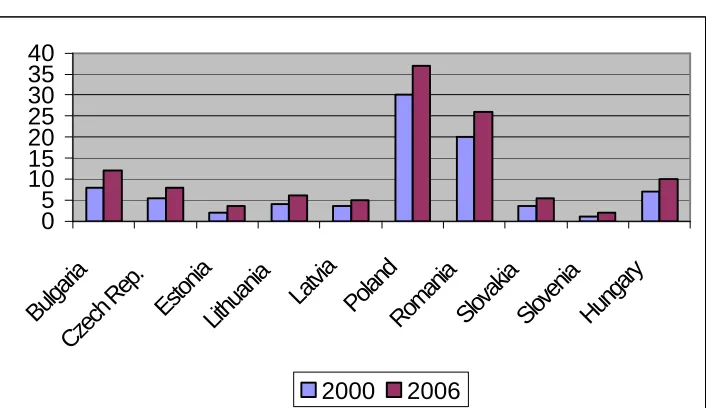
[image:30.595.121.474.523.727.2]It is also important to mention the role of the EU ISPA funds that support pre-Accession states in meeting EU environmental and transport infrastructure standards. These funds are to be used to fund large investments, which will have a major positive impact on the environment (see table 1 below).
Table 1 - ISPA funds in percentage per country
0 5 10 15 20 25 30 35 40
Bulgaria Czech Rep.
EstoniaLithuania Latvia PolandRomania Slovakia Slovenia Hungary
2000 2006
3.3. Increasing Water Tariffs
Across the Accession states there has been concern that water tariffs do not reflect the true costs of water let alone generate revenue to enable investment in the infrastructure. There has in general been rises in water tariffs. In Bulgaria this had been the case in the concession in Sofia but also for water associations based on a lease contract. This was also true in the Czech Republic, although there was much variation across the country in the price rises.
Box 8
Poland – negotiating tariffs in Gdansk
In the early 1990s the Gdansk water and sanitation system was suffering by deficiencies and inefficient management to expand the infrastructure. Furthermore, the city needed to upgrade the wastewater treatment to act in accordance with the multinational effort to in terms of ecological concerns of the Baltic Sea. In 1992 the Saur Neptun Gdansk S.A. (SNG) was established to serve the city of Gdansk. The city itself owns 49% and Saur 51% of the new company’s assets. As a private operator Saur is responsible for the operation and maintenance of the system, maintaining quality-of-service standards as specified by the city municipal council and billing and collection. The city retains ownership of the relevant infrastructure and is responsible for capital investment and for financing, regulation and tariff setting. Thus, the city of Gdansk through its municipal council controls and regulates the performance of the company both as a shareholder in SNG and through the contract. The municipal council and the private operator renegotiate a new rate every year. A thirty-year lease contract was signed between the city of Gdansk and SNG in 1993.
Economic conditions and regulatory procedures are not yet stable. As a consequence of tariff increases and meter installations between 1993 and 1995, average demand fell sharply from by around 25% and concomitantly, average water production fell by more than 20%. Tariff adjustments have been subject to political considerations. Successive tariff increases below the rate of inflation have undermined the financial capacity of SNG. The uncertainty involved in the negotiations between the municipal council and the company have slowed proposed investments. The contract was later modified because the new municipal council criticised some aspects of the contract and decided to renegotiate it. Clearer procedures for annual tariff negotiations and their timing, the sharing and control of information and the definition of a coherent annual operating plan consistent with politically viable tariff increases were established. A new remuneration formula for the private operator was defined on the basis of a fixed return on capital.
There are three problems associated with increasing water tariffs:
• First, is the problem of establishing what the actual cost of water is. In the Czech Republic, for example, it is reported that calculations depends on the reliability and transparency of the water companies. And in Bulgaria there have been experiences of overcharging and invoicing problems.
• Second, one of the paradoxes of water pricing as a means of raising revenue for investment is that increasing the tariffs can lead to decreased water consumption, in turn leading to a further need to increase the tariff. This occurred in Hungary, Poland, Estonia and Latvia. In Hungary, water companies can apply for state support if its production costs exceed revenue raised by fees, for which the state sets a limit, while households can also apply to municipalities for support. Interestingly in Hungary in the case of Debrecen, which remained municipal, price rises were moderate.
• Third, the difficulty with the rising water prices to raise revenue for investment is that the provision of water for populations that are more sparsely populated is more expensive, thus introducing a differential price between rural and city areas.
3.4. Municipality Capacity
Within and between different Accession states there are variations between the capabilities of different municipal entities. Commercialisation is an option for raising revenue. In Romania, cities with utilities owned by the municipalities have proved successful in raising revenue to finance debts and make much needed investment. And similarly, the case of Malta demonstrates a developed example of commercializing the state owned water company. However, there are three key problems facing municipalities in the process of restructuring:
• First, there are concerns about the ability of municipalities to negotiate with multinational companies, particular in negotiating a contract.
reported as particularly acute in the smaller municipalities. In Hungary, for example, restructuring lead to the formation of 400 companies where previously there were 33, thus losing previous economies of scale.
• Third, smaller municipalities have limited resources for buying in appropriate expertise. In Romania the extent of knowledge is noted as important in determining the degree of autonomy of the municipalities. Only the larger municipalities with populations of over 50,000 have developed autonomous entities. In Slovakia more recent legislation has attempted to enforce decentralisation as a response to little uptake of ownership by the municipalities. Lack of expertise in the government to deal with the process of transfer, reluctance by profitable companies to merge with unprofitable ones, lack of funding for investment in the assets and uncertainty about issues such as tax, pricing and insurance were all contributing factors.
Box 9
Latvia – building municipal capacity
In Latvia one of the concerns has been developing investment in areas where municipalities have lower capacity. Support for investment in larger city areas has been gained from the World Bank and Nordic countries in relation to concerns about the Baltic Sea. A National programme of investment called 800+ aims to develop the water supply and waste water treatment in small and middle size cities and rural areas. Currently the main focus of the Program 800+ is improvement of municipal water services infrastructure by providing municipalities with technical and investment assistance in order to reach compliance with EC water sector related directives by 2015. The programme began in 1996 and is partly funded by EU Phare. The programme involves 800 new waste water treatment utilities in 69 areas. The project office seeking and coordinating foreign support has been privatised and thus works as a private consultant.
3.5 The place of restructuring
Further, restructuring seems to have been mostly developed in city regions. This can involve complex dynamics as resources get channeled into prioritising city regions to the detriment of water/wastewater in rural areas and smaller city areas. For example, directing restructuring towards large city regions can means drawing in national resources as well as international resources, for example bank loans, to those areas to the detriment of other areas that become marginalised. For example, loans for restructuring – whether from international banks or the state – tend to require support from the municipality and only those municipalities who can raise appropriate resources can provide investments, for example in Hungarian city municipalities. Across all the countries there are poor levels of water supply and waste-water collection in the rural areas and smaller cities. Interesting the 800+ scheme in Latvia attempts to address these problems by bringing together different municipalities.
3.6 Effective Regulation
The process of restructuring has involved putting in place appropriate regulatory mechanisms. In practice this has been problematic. For example, in the Czech Republic, despite developed decentralisation, private sector involvement and regulatory frameworks, in practice there is no effective price regulation reflected in rising and differential prices across the country. There are three key problems around developing effective regulation:
• First, is the tension around the autonomy of the regulator. This is particular so in countries such as Bulgaria, Czech Republic, Hungary where the municipals have been both the regulator and the contractors. Hence, in Sofia, for example, a separate company owned by the municipal was set up to fulfill this role.
• Third, are the costs of ensuring effective regulation can be problematic for the Accession states and the municipalities, as report in the Czech Republic.
3.7. Donations
Although it is no widespread, it is important to note the role that donations can play in shaping water sector development. This is particularly the case in Latvia where support form Nordic countries is often given on the basis that there will be no private sector involvement.
Summary of the Challenges
4 The Future of Restructuring
The complexities of restructuring across the Accessions states coupled with the methodological challenges faced means that, while this report has been able to highlight key emerging issues, it cannot claim to be comprehensive nor to capture the full trajectories of the different nation states and municipalities within them. What is crucial, however, is particular recognition that the processes of restructuring are far from complete in any of the Accession States. They do not follow a linear trajectory but involved complex negations through which local configurations of restructuring are taking place. In this final section of the report we identify three key challenges that the restructuring of the Accession states face and summarising in table form the current status and trajectories of the Accession state restructuring in relation to the particular question of private sector involvement.
4.1 Coordinating European Water Priorities
The current patterns of restructuring, with an emphasis placed on decentralisation, involves the fragmentation of control over the water sector as well as the creation of new agencies. This has led to difficulties in ensuring appropriate regulations are in place to achieve sustainable water sector management. This is particularly important in the context of other European initiatives relevant to the water sector. Most notably the Water Framework Directive seeks to overcome the problem of fragmentation by coordinating the plurality of actors needed to achieve sustainable water management. The processes of restructuring need to involve anticipation of how an increasingly
fragmented water sector can be coordinated to ensure alignment with relevant
European policy objectives.
4.2. Providing Relevant Knowledge and Expertise
capacity and expertise within Accession States will be developed to ensure that local
priorities and concerns are protected.
4.3. Improving the Quality of Water Infrastructure
Across the Accession States there are serious concerns about infrastructure condition. Evidence indicates that private sector involvement has as yet rarely led to increased investment in water infrastructure even where water prices have risen. Instead, investment in infrastructure has been resourced primarily through grants or loans (e.g. EIB, EBRD, HELCOM) as well as price increases. There needs to be increased public debate about whether private sector involvement will lead to more investment
in aging infrastructure networks and what alternative methods for increasing
investment there might be.
Table 2 - Summary of Accession States future restructuring
Trajectories of water sector restructuring in the Accession States
Towards full private sector involvement
Czech Republic
Emphasis now on development of water regulatory body, demand management and personnel training.
Developing private sector involvement
Hungary
Further private sector involvement, integrating smaller water companies and increased role for domestic investors
Poland
Increasing the role of the private sector to raise revenue to secure ISPA grants
Romania
Further private sector involvement and integrating smaller municipal water companies
Slovakia
Establishing water companies by integrating smaller municipal water utilities in order to enable private sector involvement
Slovenia
Continued decentralisation and private sector involvement through concessions
Private sector involvement on hold
Bulgaria
Private sector involvement postponed, new legislation in 2003 has consolidated legal framework and cancelled water associations.
Estonia
Further commercialisation; possible private sector involvement depending on lessons of Tallinn
Latvia
Current government rejects private sector involvement, but legislation has been prepared and could enable this
Private sector involvement virtually non-existent
Cyprus
Maintain monopoly, develop equity of provision, enhance commercialisation (including lease for management of desalination)
Lithuania
Merging municipalities for economies of scale/increased expertise, improved environmental regulation, secure loans
Malta
Continued monopoly, developing commercialisation and technological improvements.
Appendix: Summaries of Country Reports
Bulgaria
Liberalisation
A process of decentralisation of responsibility for the water sector from the central state to municipalities began in 1991. New legislation in 1999 consolidated the potential for state ownership, municipal ownership (which could be part private) and fully private ownership. Responsibility and ownership of water/wastewater utilities has been almost fully transferred from the central state to municipalities, including management of water supply and sewage treatment, regulating prices, services and investment. In 2001 the government suspended further private sector involvement. Commercialisation
Municipalities have commercialised water management including: clearer definitions of water users, specification of contracts for maintenance, metering of clean water and sewage, specification of how water and sewage is paid for, the conditions in which water supply and sewage collection are terminated, and the introduction of water prices.
Private Sector Involvement
There have been two forms of private sector involvement. First, ‘Water Associations’, of which there are 4, although 3 are contracted to one municipality, are private companies formed by employees and consumers. Departments transfer their managerial functions to the Water Associations, including transfer of ‘the right to use’ water/wastewater utilities for a period of 10 years. Water associations are responsible for managing, investment, day-to-day maintenance, metering and pricing, communicating with customers. Water and Sewage Departments retain the ownership and control on investment priorities. The second form is the concession of which there is only one, in Sofia given to an “ad hoc” private sector company jointly owned by a British-American consortium and the Municipality of Sofia for the operation and maintenance of water/wastewater for 35 years.
Country specific issues
Key problems of water loss and establishing responsibility for metering, control and reducing such loss.
Future Trajectories
Further private sector involvement of assets has been planned in two city areas, however, these have been postponed due to concerns of transparency and corruption experienced with private sector involvement in Sofia. The government has suspended private sector involvement, however, new legislation is expected to consolidate the legal context for private concessions and water associations.
Czech Republic
Liberalisation
The current legislative framework has liberalised the water sector primarily by permitting the private sector involvement of water companies. The liberalisation of the water sector is founded on the Large Privatisation Act (1991), which foresees the transfer of rights and the sale of shares to private companies; the Amendment to Small Businesses Act (1996), by which rights over water supply and sewerage systems became licensable and were transferred to private companies; and the “Act on Water Supply Systems and Sewage and Drainage Systems” that defines the standards for concessions of operators for drinking water supply and wastewater disposal. The private sector involvement of the water sector was implemented during the second stage of coupon privatisation (1993-1995).
Commercialisation
Drinking water supply and waste water sewerage is managed in most cases by private companies. Prices are fixed by the municipalities according to the restrictions of the Ministry of Agriculture and the Ministry of Environment. Nevertheless there have been dramatic increases in water prices.
Private sector involvement
The water sector is almost fully privatised, as the ownership of water/ wastewater companies has been transferred to private investors. Private companies act as operators while the ownership of the water infrastructure remains in municipal hands. Water management companies like the river basin boards are in public ownership. Country specific issues
The fragmentation of the water sector, which poses an obstacle to efficient water investment and the dominance of large multinational companies (Vivendi, Ondeo, Anglian Water).
Future Trajectories
All experts see a trend towards more private involvement. The Czech trade union CMKOS expects that in the future two multinationals (Vivendi and Ondeo) will control up to 90% of the Czech water market. There is also still need for a regulatory body for the water sector and a fixed definition of ‘water’ and water rights in the Czech constitution. Finally, to meet the challenges of limited public finances and the need for investments considerable effort is needed to educate staff in water management issues.
Cyprus
Liberalisation
In general there has been limited liberalisation of the water sector. However, there are processes of decentralisation and frameworks for water pricing to provide for the full cost of water.
Commercialisation
Commercialisation of the water sector has involved important steps. First, the Water Development Department has developed water demand practices, including price setting. Second, regarding water provision, Urban Water Boards or Municipalities undertake management responsibility.
Private Sector Involvement
The only involvement of the private sector is in the management of desalination units in which private companies are given 10 year contracts. There is no further participation of domestic or foreign private companies in the water sector.
Country specific issues
Water is perceived as a scarce resource and water demand has risen above the available surface water and ground water. The increase in the need to meet demand and the pressure from agricultural and tourist users has led to several changes in the water and sewage sector, in particular, the construction of desalination plants, irrigation plans and passing of a new water demand policy with an emphasis on public awareness.
Future Trajectories
The perception of the government that water is a public good means a natural state monopoly is preferred instead of liberalisation/private sector involvement. Government policy is directed towards an emphasis on the efficient allocation of water and social equity. Additionally, in terms of water market commercialisation, the Ministry of Agriculture, Natural Resources and Environment plans the establishment of two institutions, the Water Entity and the Advisory Committee of Water Management. This aims to improve the efficiency of water policy.