53
THE EFFECT OF TRUST AND UNCERTAINTY IN THE SUPPLY CHAIN ON
FIRM PERFORMACE
Batuhan ERDOGAN
Istanbul Commerce University, TurkeyM
urat ÇEMBERCI
Yıldız Technical University, TurkeyReceived: November 23, 2018 Accepted: December 12, 2018 Published: December 15, 2018
Abstract
:In the current professional environment with the globalizing world, the companies are constantly in a competition with one another in order to survive. The companies in this globalizing world need to give close attention to the customer's demands in order to be ahead of the competition. The increasing pressure from global competition, the rapidly and constantly changing customer demands and the race to uphold these demands rapidly, and effectively, the limited nature of financial and non-financial resources has led the companies to form business partnerships with supply chains. Trust is the leading psychological factor in any kind of social relationship and it’s indispensable in collaborative relationships as well. In this study, the effect of trust in the supply chain on the performance of the company is examined.
Keywords:
Supply Chain Management, Trust in the Supply Chain, Uncertainty, Technological Uncertainty, Demand Uncertainty
1.
Introduction
Evaluation According to (Turkish Language Association, 2018), the word “supply” is described as the “searching and finding, obtaining and providing”. According to (Dictionary of Economic Terms, 2011), the same word “supply” is described as the “obtaining raw materials and capital goods by the company to be used in the production process”. Recently, this word covers not only production but also all kinds of products and services for the surviving of the companies when it is evaluated by large companies. Although this supply process which has been taken part within the companies is considered to pertain to the purchasing departments in general, as a matter of fact, the concept of supply is much more than purchasing in terms of the subject matter. According to Leenders et al. (2006), the word “Supply” refers to the acceptance of the product, product control, storage, handling, in-house consignment and consumption as well as classical purchasing processes such as determining the general needs, examining from a commercial point of view, researching the companies which might be potential suppliers, determining the relevant resources and the placing orders with the appropriate supplier and the agreement on the contract details.
The supply department, which is one of the departments of a company, is the leading department playing the most important role in the international relations of a company. The role of a supply department depends on providing the information flow enabling the company to survive from all divisions of the company to the supply department and from the supply department to the other important divisions of the company. Currently, the information flow is forwarded in a faster and more reliable way thanks to the development of this information flow technology. If the supply department fully comprehends the features required for the materials by establishing a solid communication with the departments performing other functions of the company instead of just supplying the demanded materials, this will help to examine the alternatives which can replace it and to fulfill the supply option completely in the purchase stage. (Şen A., 1992)
54
According to Ganeshan and Harrison (1995), the supply chain is a network of all facilities and distribution systems taking part for the transformation of the raw material into the intermediate product by supplying, and from the intermediate product into the final product and reaching the customer as the final product. Moreover, although the supply chain varies according to industry and company, the supply chain processes are available in the production and service sectors.
The Supply Chain is a factor ensuring the evaluation of the pre-production and the post-production processes together and increases the production by thinking of them as a part of the production process. The main aim of the supply chain is to meet the demand of the consumer with the minimum cost; to perform resource planning institutionally, and to increase all activities of the company by benefiting the planning of the material requirement and communicating with all the stages of the process. (Küçük, 2014)
According to the definition of the Council of Logistics Management, the supply chain management is a strategic coordination network including activities and plans such as products, services and information flow which are included in the supply chain and have an influence on increasing the performance of all companies and adding value to them from the first state of raw material to the last state of the material reached to the consumer. (Council of Logistics Management, 2001)
2. Conceptual Framework
2.1. Supply Chain Management
The performance has been explained as a concept in the literature. The definitions were specified by approaching terms such as profit, cost, efficiency, prudence, activity, and competitiveness in terms of the companies. If we need to make a broader definition of the firm performance, it refers to the ability to achieve the pre-determined aims by using the available resources effectively and efficiently. In other words, the firm performance is explained as the output or results gained by the company within a fixed period of time (Akgemci, 2008).
The main principal in the supply chain management is not measuring the performance of a single factor in the chain, but measuring the overall performance of all the factors in the chain. Different techniques of performance measurement may be used for each member of the chain on the condition of improving customer service. The determined system of performance measurement should measure the effectiveness of the chain and establish alternative processes regarding the implemented processes and identify and overcome the existing problems. (Bayar, 2008)
2.2 Trust in the Supply Chain
The trust refers that one party is confident in the reliability and honesty of the exchanging another party. This is defined as follows by focusing on the results of the trust: It is the belief of a company that the company has activities causing positive consequences for themselves and avoids activities causing negative consequences through another company. The relationship is available between trust, individuals or organizations, and this relationship changes in time depending on behavior (Andersen, 1990). Two of the most important dimensions of trust are goodness and qualification. The goodness dimension is involved in human relations. It is not sufficient for the companies competing globally in the business world. However, the qualification is also important for companies (Fawcett, 2012).
The trust functions as the catalyst for collaborative innovation. Although the importance of the concept of trust is known by the managers, very few companies are involved in trust-building activities. Failure to implement the reward system, bargaining based on the power balance and opportunistic behaviors are frequently seen implementations. The value of trust may vary depending on the previous behavior of the supply chain partners. Partners in the supply chain, which are able to reach the mature trust level, may get results to be realized by the customers and that fear the competitors by making breakthrough innovations. This factor attracts the attention of the best raw material suppliers and customers in the sector, which they are involved, into this cooperation (Fawcett, 2012).
2.3 Uncertainty:
55
products and services produced with higher quality and lower cost to the market quickly. An effective supply chain management plays a major role in delivering the products with lower cost and better quality to the customer without any delay.
The uncertainty in the supply chain management is the main factor affecting the effectiveness and coordination and tends to get through other sectors in the supply chain and significantly affect the performance of the supply chain (Peidro, 2010).
2.4 Demand Uncertainty in Supply Chain
There are two types of uncertainty which may be faced in the supply chain. These are demand uncertainty and supply uncertainty. Demand uncertainty refers to the uncertainty arising from inconsistencies or deficiencies in the estimation of the demand of customers. The difference between the actual demand level and the estimated demand level may have a negative influence on all decisions need to be taken in the supply chain (Topoyan M., 2010). Supply uncertainty includes the problems which may occur in obtaining the components provided by the suppliers. The uncertainty on the demand side of the supply chain has led to keeping more inventory in order to meet the customer demand on time. This factor is one of the main reasons why an effective supply chain management is not established (Topoyan M., 2010)
2.5 Technological Uncertainty in Supply Chain
The age we live in is called the Information Age as a result of developments in computer and communication technologies. These developments gradually increase the significance of the information and the processing of the system this information, and continuously affects business activities in terms of service and change them additionally. Especially, the developments in the information technologies have led to fundamental changes in the structure of the companies. These developments provide new ways to the enterprises such as to enter new markets, to offer their products and services, to increase the efficiency of their processes, to gain customers and to provide the continuance of the customer (Tekin, 2005).
Technological uncertainty in the supply chain may be defined as the level of unpredictability and change in an industry of the organization. Developments in information technologies bring great opportunities to the companies. For example, these developments contribute more than once to the company and provide the proper integration of the supply chain (Thomas, 1996).
2.6 Supplier Uncertainty in Supply Chain
The uncertainties faced by the companies throughout the supply chain have led to financial and operational losses. Some of these losses are as follows: production losses, customer complaints arising from unsatisfactory customer orders, turnover losses, increased inventory levels, supply and delivery periods.
According to Lee et al. (1992), the period from the production process of the company to which the supplier is affiliated until the time the customer receives the product is significantly affected as a result of the delay in the supply chain caused by the supplier and the uncertainty arising from the damaged or deficit products provided by suppliers. This effect leads to the company to postpone the production and as a result of this postponement, additional obligations arise. There are examples such as increasing logistics and storage costs.
3. Hypotheses Development
3.1. The Relationship between Demand Uncertainty and Firm Performance
56
The demand management is defined as a system starting from the end customer and reaching over the supplier of the supplier and herewith aims to provide all known customer needs in the most appropriate way, and in which all the elements are properly moved and put into production. This system must be managed by the company.
3.2. The Relationship Between Trust and Firm Performance
Trust is one of the most important factors in establishing a successful supply chain and maintaining relationships within the chain. Trust, which is a concept among people mostly, has become a factor needs to be reviewed in terms of the relations between the supply chain members due to the rapid developments in the business world. Trust is defined as an important specifier of positive performance in business relationships.
According to Panayides et al. (2009), trust affects supply chain performance in a positive way and is one of the pioneers of high performance in the supply chain. Similarly, according to Bradach et al. (1989), trust plays an important role for chain partners to obtain the necessary business information. Thanks to this trust environment, the company may respond positively to market changes. Therefore, the formation of the bullwhip effect is eliminated. Developing mutual trust between partners affecting the performance of the company increases the cost of operation costs and the likelihood of success of the commercial activity. The trust is considered as a key element in establishing long-term cooperation and ensuring a sustainable partnership (Rackham, 1995; Ganeshan, 1994).
3.3. The Relationship Between Technological Uncertainty and Firm Performance
There are many existing technologies in order to analyze and share information in the supply chain. The examples of frequently used technologies include Electronic Data Interchange (EDI), Internet, Enterprise Resource Planning (ERP), Radio Frequency Identification (RFID) and Supply Chain Management/Planning (SCM/SCP). Company managers must decide which technologies to use and how to integrate these technologies into their businesses and businesses of their partners. As the qualifications of these technologies increase, the aforementioned decisions are becoming more important. Moreover, it is observed in the studies that there is a parametrical relationship between information technologies and integration and this relationship affects the performance of the company.
Table 1. Summary of Hypotheses
H
1: Demand Uncertainty Affects the Performance of the Company in a Positive Way.
H
2: Trust Affects the Performance of the Company in a Positive Way.
H
3: Technological Uncertainty Affects the Performance of the Company in a Positive
Way.
57
Figure 1. Conceptual Model
4. IETT Service Quality Measurement Model
4.1. Measures and Sampling
The answers in the questionnaire have been presented for consideration in the format of the multiple-choice 5-point Likert hypothesis scale in order to test the hypothesis results. The agility scale, consisting of 7 questions developed by Swafford et al.(2006), has been used for the agility scale concept in the supply chain. The uncertainty scale, which was created by Chen and Poulraj (2004) and having 3 sub-sections has been used in order to measure the uncertainty concept in the supply chain. The sub-sections of the uncertainty are explained as the technological uncertainty, demand uncertainty and supplier uncertainty. The dimensions of the technological uncertainty have been measured by 4 questions; the dimensions of the demand uncertainty have been measured by 5 questions; and the dimensions of the supplier uncertainty have been measured by 4 questions. Total 13 questions have been benefited from the uncertainty scale. The firm performance scale, consisting of 13 questions, created by Ellinger et al. (2002) and received and developed by Akgün et al.(2009) has been used for the firm performance scale. The questionnaires have been conducted to 125 companies through e-mail and face-to-face interviews and 97 of these questionnaires have been received feedback. It is observed that the feedback rate for questionnaires is 78%.
4.2. Test of Hypotheses
58
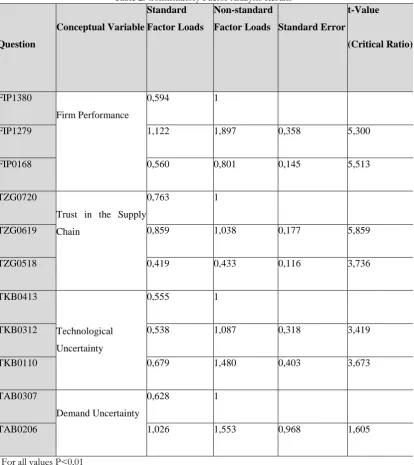
Table 2. Confirmatory Factor Analysis Results
Question
Conceptual Variable
Standard
Factor Loads
Non-standard
Factor Loads Standard Error
t-Value
(Critical Ratio)
FIP1380
Firm Performance
0,594 1
FIP1279 1,122 1,897 0,358 5,300
FIP0168 0,560 0,801 0,145 5,513
TZG0720
Trust in the Supply
Chain
0,763 1
TZG0619 0,859 1,038 0,177 5,859
TZG0518 0,419 0,433 0,116 3,736
TKB0413
Technological
Uncertainty
0,555 1
TKB0312 0,538 1,087 0,318 3,419
TKB0110 0,679 1,480 0,403 3,673
TAB0307
Demand Uncertainty
0,628 1
TAB0206 1,026 1,553 0,968 1,605
Note: For all values P<0,01
59
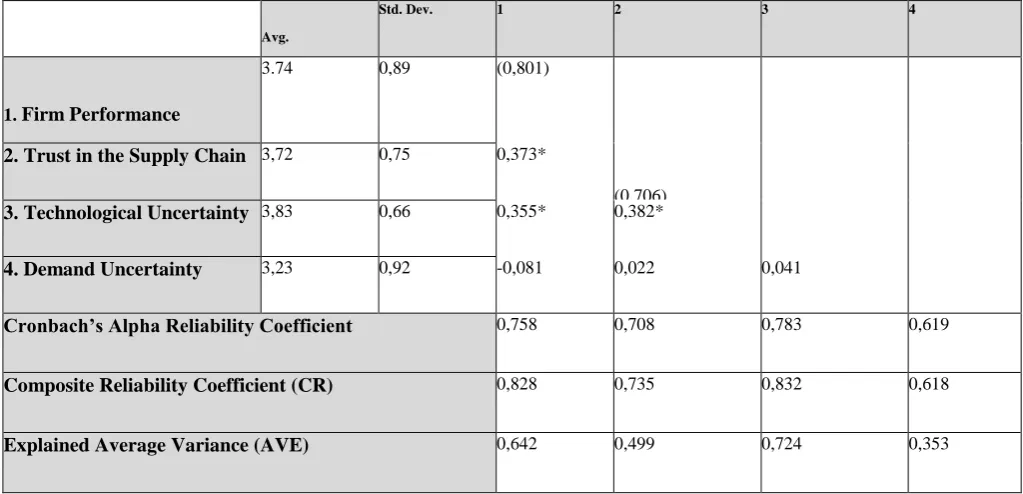
As a result of the confirmatory factor analysis, reliability analysis has been performed for the questions the scale validity of which is determined and creating the dimensions. In the analysis conducted, the value of the Cronbach's Alpha has been found above 0,7 for each dimension. The values greater than 0,7 indicate that the internal reliability of the scale used is sufficient. Another value used in the calculation of the scale reliability of each dimension is the composite reliability coefficient. It may be said that the Composite Reliability is achieved when the value of the Composite Reliability is 0.70 and above (Raykov, 1997). The correlation values between Cronbach’s Alpha, AVE and CR values and research variables calculated for each dimension are shown in Table 3.
Table 3. Correlation Dimensions and Reliability Results
Avg.
Std. Dev. 1 2 3 4
1. Firm Performance
3.74 0,89 (0,801)
(0,706)
(0,850)
(0,594)
2. Trust in the Supply Chain 3,72 0,75 0,373*
3. Technological Uncertainty 3,83 0,66 0,355* 0,382*
4. Demand Uncertainty 3,23 0,92 -0,081 0,022 0,041
Cronbach’s Alpha Reliability Coefficient 0,758 0,708 0,783 0,619
Composite Reliability Coefficient (CR) 0,828 0,735 0,832 0,618
Explained Average Variance (AVE) 0,642 0,499 0,724 0,353
60
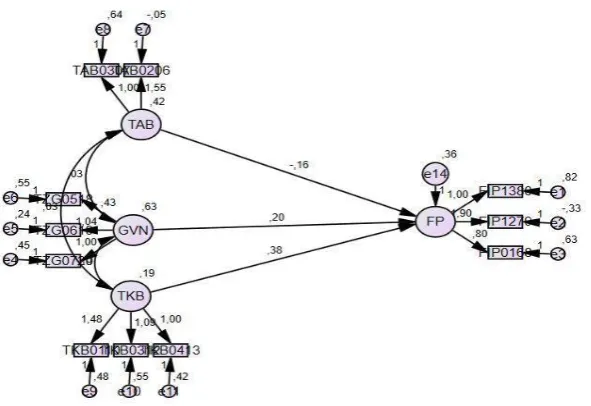
Figure 2. Path Analysis Results The results of the hypothesis testing are as shown in Table 4.
Hypothesis Relations Standard β P Acceptance/Rejec
tion
H1: TAB → FP -0,151 0,082 Supported
H2: GVN → FP 0,236 0,078 Supported
H3: TKB → FP 0,245 0,110 Not Supported
Note: the significance level of 10%
H1 hypothesis has assumed that the demand uncertainty affects the performance of the company in a positive way. The standard β coefficient with 0,082 value and at the significance level of 0,08 obtained as a result of path analysis of this hypothesis has been accepted. H2 hypothesis has assumed that the trust in the supply chain affects the performance of the company in a positive way. The standard β coefficient with 0,078 value and at the significance level of 0,08 obtained as a result of path analysis of this hypothesis has been accepted. H3 hypothesis has assumed that technological uncertainty affects the performance of the company in a positive way. The standard β coefficient with 0,110 value and at the significance level of 0,05 obtained as a result of path analysis of this hypothesis has been rejected.
5. Conclusion
61
increases opportunities for cooperation. All information is in compliance with the literature studies and supports the current studies.
In addition to these, it is observed that the demand uncertainty will positively affect the performance of the companies. It is in the same direction as the literature studies that have been conducted so far. Trust is essential for cooperation. In particular, information sharing, which is the first of the sub-dimensions of the cooperation, depends mainly on the trust of the companies each other. Among the companies trusting each other, the common aim, which is the aim unity, i.e. another sub-dimension, provides companies with work together and achieve better results. As stated in the conceptual framework, the risks of common activities are reduced in supply chain partnerships having reached the mature trust level. Although trust is the building block of the communication with both organizational and supply chain partners, it is difficult to build. The availability of formal contracts is an important factor for the trust between the purchaser and the supplier. In the long term, the formal contracts also provide a higher level of trust and a psychological agreement between partners for the time. The most beneficial action to companies in eliminating both supply and demand uncertainty is to increase information sharing. Another important factor suggested for struggling demand uncertainty is the introduction of suppliers in the process of product design at the beginning of the design and the establishment of supply centers.
References
Ağca, V., & Elitaş, C. (2006). Firmalarda Çok Boyutlu Performans Değerleme Yaklaşımları: Kavramsal Bir Çerçeve. Afyon Kocatepe Üniversitesi Sosyal Bilimler Dergisi , 8 (2), s. 343-370.
Akgün , A. E., Keskin , H., & Byrne, J. (2009, Eylül). Organizational Emotional Capability, Product and Process Innovation, and Firm Performance: An Empirical Analysis. Journal of Engineering and Technology Management , 26 (3), s. 103-130.
Braunscheidel, M. J., & Suresh, N. C. (2009). The Organizational Antecedents of a Firm's Supply Chain Agility for Risk Mitigation and Response. Journal of Operations Management , 119-140.
Butz Jr., H. E., & Goodstein, L. D. (1996). Measuring customer value: Gaining the strategic advantage. Organizational Dynamics , 63-77.
Chen , I. J., & Paulraj, A. (2004, Nisan). Towards a Theory of Supply Chain Management: The Constructs and Measurements. Journal of Operations Management , 22 (2), s. 119-150.
Chizzo, S. A. (1998, Ocak). Supply Chain Strategies: Solutions for the Customer-Driven. Software Magazine , 4-9. Chopra, S., & Meindl, P. (2007). Supply Chain Management: Strategy, Planning and Operation (6 b.).
Christopher, M. (2000). The Agile Supply Chain. Industrial Marketing Management , s. 36-44.
Cox, A. (1996, Mart). Relational Competence and Strategic Procurement Management: Towards an Entrepreneurial and Contractual Theory of the Firm. European Journal of Purchasing & Supply Management , 2 (1), s. 57-70. Çemberci , M. (2011). Tedarik Zinciri Yönetimi Performansını Göstergeleri ve Firma Performansı Üzerine Etkileri:
Kavramsal Model Önerileri. Doktora Tezi . Kocaeli, Gebze.
Çemberci, M. (2012). Tedarik Zinciri Yönetimi Performansının Göstergeleri ve Firma Performansı Üzerine Etkileri: Kavramsal Model Önerisi. İstanbul: Akademi Titiz.
Çemberci, M., Civelek, M. E., Kibritçi Artar, O., & Uca , N. (2015). Managing Supply Chain. Key Factors of Sustainable Firm Performance (s. 118). içinde Nebraska: Zea Books.
Franks, J. (2000). Supply Chain Inovation. Work Study , 49 (4), s. 152-155.
Gligor , D. M. (2015). The Five Dimensions of Supply Chain Agility. CSCMP's Supply Chain Quarterly .
62
Kim, M., & Chai, S. (2017). The impact of supplier innovativeness, information sharing and strategic sourcing on improving supply chain agility: Global supply chain perspective. International Journal of Production Economics , 42-52.
Li, S., Ragu-Nathan, B., Ragu-Nathan, T. S., & Rao, S. S. (2006, Nisan). The Impact of Supply Chain Management Practices on Competitive Advantage and Organizational Performance. Omega , 34 (2), s. 107-124.
Morash, E. A. (2001). Supply Chain Strategies, Capabilities, and Performance. Transportation Journal , 37-54. Moriarty, R. T., & Kosnik, T. J. (1989). High-Tech Marketing: Concepts, Continuity and Change. Sloan Management
Review , 30 (4), s. 7-17.
Raykov, T. (1997). Estimation of composite reliability for congeneric measures. Applied Psychological Measurement , 21 (2), 173-184.
Selness, F., & Sallis, J. (2003). Promoting Relationship Learning. Journal of Marketing , 80-95.
Swafford, P. M., Ghosh , S., & Murthy, N. (2008, Aralık). Achieving Supply Chain Agility Through IT Integration and Flexibility. International Journal of Production Economics , 116 (2), s. 288-297.
Swafford, P. M., Ghosh, S., & Murthy, N. N. (2006, Ocak). The Antecedents of Supply Chain Agility of a Firm: Scale Development and Model Testing. Journal of Operations Management , 24 (2), s. 170-188.