Elsevier Editorial System(tm) for Computers & Education
Manuscript Draft
Manuscript Number:
Title: Evaluating the efficacy of digital games to develop communication skills in an Arts environment
Article Type: Research Paper
Keywords: Digital, Game, Pedagogy,Skills, Communication
Corresponding Author: Dr. Paul Anthony Hollins,
Corresponding Author's Institution: The University of Bolton
First Author: Paul Anthony Hollins
Order of Authors: Paul Anthony Hollins; Sarah Humphrey; Li Yaun; Gareth Sleightholme
Abstract: Much has been written about the theoretical potential of digital games to transform teaching and learning and to offer new forms of digital assessment; yet the education system in the United Kingdom (UK) is arguably still focused exclusively on the assessment and reward of individual effort and achievement. This can be at odds with the requirements of twenty-first century working environments and in the requirements for developing the personal employability characteristics of students. Engaging students in authentic collaborative project work that requires sophisticated and coordinated communication can present real challenges.
Employers are increasingly demanding as prerequisite that graduates have highly developed communication and collaborative team working skills for opportunities in the digital industries such as Games Design, however Games Design students are often quite isolated in their personal industry related practice, working methods and their online lifestyles and lack the "soft skills" which would enable them to work successfully within a team. The authors elaborate on how Hull School of Art and Design has attempted to address this problem through the implementation of an Applied Game, the "Watercooler Game", for their Games Industry
undergraduates. They present their reflections on the rationale behind the pedagogic approach, the decision to develop an applied game to
address their pedagogic challenges and their experience of working with a commercial Games Developer in producing the game. Using a sophisticated evaluation framework, devised as part of the EU Horizon 2020 funded Realising an Applied Gaming Eco-system (RAGE) project, the authors present the initial findings of their evaluation of game from a multidimensional perspective. The pedagogic approach, the technical approach adopted by the developers of the game (an open source asset based approach) and the pedagogic efficacy of the game through evaluation of the learning objectives achieved and how these finding may be
Suggested Reviewers: Nicola Whiton Professor
Evaluating the Efficacy of Digital Games
Professor Paul Hollins
Prof Paul Hollins The University of Bolton, Sarah Humphreys Hull School of Art and Design, Dr Li Yuan The University of Bolton, Gareth Sleightholme Hull School of Art and Design, Michael D. Kickmeier-Rust Graz University of Technology [email protected]
The authors wish to acknowledge the ongoing support of their host institutions The
University of Bolton and Hull School of Art and Design from the United kingdom and
Graz University of Technology from Austria and the University of the Netherlands
co-ordinators of the RAGE project. This work has been partially funded by the EC
H2020 project RAGE (Realising an Applied Gaming Ecosystem); http
Rageproject.eu/ : Grant Agreement No 644187
1 2 3 4 5 6 7 8 9 10 11 12 13 14 15 16 17 18 19 20 21 22 23 24 25 26 27 28 29 30 31 32 33 34 35 36 37 38 39 40 41 42 43 44 45 46 47 48 49 50 51 52 53 54 55 56 57 58 59 60 61
Evaluating the efficacy of digital games to develop communication skills in an Arts environment
Abstract :
Much has been written about the theoretical potential of digital games to transformteaching and learning and to offer new forms of digital assessment; yet the education system in the United Kingdom (UK) is arguably still focused exclusively on the assessment and reward of individual effort and achievement. This can be at odds with the requirements of twenty-first century working environments and in the requirements for developing the personal employability characteristics of students. Engaging students in authentic collaborative project work that requires sophisticated and coordinated communication can present real challenges.
Employers are increasingly demanding as prerequisite that graduates have highly developed communication and collaborative team working skills for opportunities in the digital industries such as Games Design, however Games Design students are often quite isolated in their personal industry related practice, working methods and their online lifestyles and lack the “soft skills” which would enable them to work successfully within a team. The authors elaborate on how Hull School of Art and Design has attempted to address this problem through the implementation of an Applied Game, the “Watercooler Game”, for their Games Industry undergraduates. They present their reflections on the rationale behind the pedagogic approach, the decision to develop an applied game to address their pedagogic challenges and their experience of working with a commercial Games Developer in producing the game.Using a sophisticated evaluation framework, devised as part of the EU Horizon 2020 funded Realising an Applied Gaming Eco-system (RAGE) project, the authors present the initial findings of their evaluation of game from a multidimensional perspective. The pedagogic approach, the technical approach adopted by the developers of the game (an open source asset based approach) and the pedagogic efficacy of the game through evaluation of the learning objectives achieved and how these finding may be applicable in a wider educational context.
Keywords : Digital, Game, Pedagogy,Skills
Introduction
The Realising an Applied Gaming Ecosystem (RAGE) Project (rageproject.eu) iscurrently the largest European H2020 funded initiative to support the development of Applied games (Wistera et al 2016) . It is coordinated by the Open University of The Netherlands and boasts contributions from 19 key partner organisations, embracing those from the Applied Games industry, the European education sector and Higher Education (HE) research institutes from 10 European countries: Austria, Bulgaria, France, Germany, Italy, Portugal, Romania, Spain, United Kingdom and The Netherlands. The primary output of the RAGE project will be the development and validation of a number of self-contained software assets that game developers have access to and can use to enhance the pedagogical quality of their Applied games. The assets will facilitate pedagogical processes and features including the processing of data from logging and input devices to provide contextual learning analytics, learner emotional states capturing and stealth assessment of players, and enable strategic interventions and social representations that support personalised learning, game balancing, procedural animations, language analyses and syntheses, interactive storytelling, and other functions.The project aims to support the widespread consumption of these interoperable game assets amongst game development business and create of an asset based Eco-system to support the use of applied games and the industries supporting the value chain.
RAGE from the outset has engaged multiple stakeholders in a service design process approach.
Background to the “Water Cooler “ Game
The Water Cooler Game is one of six case studies developed for the RAGE project. The primary purpose of the case studies within the project is to provide contextual exemplars of the use of RAGE assets within commercially developed Applied Games and to provide proof of concept in the Applied Games development domain. German based Nurogames were responsible for production of the game, Hull School of Art and Design for the design and pedagogic integrity of the completed games, Graz University of Technology for the empirical validation of the assets, evaluation design, tools and The University of Bolton as research partner .The inspiration for the “Water Cooler Game” scenario or RAGE Use Case came from second year BA (Hons) Games Design group projects at the Hull School of Art and Design. Games Design, as with many other industries, falls into the category of highly “collaborative work” based industry. However, these students are very often quite isolated in their Title Page -- anything identifying the author should be on this page.
1 2 3 4 5 6 7 8 9 10 11 12 13 14 15 16 17 18 19 20 21 22 23 24 25 26 27 28 29 30 31 32 33 34 35 36 37 38 39 40 41 42 43 44 45 46 47 48 49 50 51 52 53 54 55 56 57 58 59 60 61 62 63 64 65
personal industry related practice, which together with their digital working methods and online lifestyle choices add layers of abstraction from interpersonal skills. Within an Art School context the primary focus is on the development of practical making and production skills together with a contextual academic understanding. Other aspects such as development of soft skills are implicit rather than explicit within the curriculum and developed through “live” group projects which require students interact constructively with wider groups or external stakeholders outside the cohort of their chosen group. Issues with “soft” skills were identified in client projects which required group work, both anecdotally through staff observing the group working process, and at the assessment stage of the project when successive cohorts’ results presented themselves within assessment classification as bimodal or multimodal peaks. The hardest element of group-working for our students to learn (or assign value to) is the concept of objectively putting the project outcomes and a successful development process above personal concerns and personality clashes (conflict management).The Watercooler game was conceived as a means of developing soft skills/conflict management and productive collaborative skills, enabling students engaging in group working projects to move from a personal position to a holistic one, from highly subjective to objective positions and value assignment. The game was envisaged as both a training/educational instrument and a self-assessment tool, to be played prior to engaging in a real project with an assessment outcome. The Art School’s academic philosophy is rooted in a social constructivist and social interactionism model and utilising the medium of games as a method of exploring/reinforcing learning seems a logical extension of this ethos.
Description of the “Water Cooler “ Game
In the Water Cooler gameplay scenario the “player” or student is hired by a small game studio to help nurture the “team working” between employees at the studio through his/her interpersonal relationships. Engaged as an office assistant his/her explicit goal to contribute to the success of the studio by improving, enabling, prompting and challenging the attitudes, values and social skills of the virtual team they are placed within. The attitudes and values exhibited by the studio staff may be positive or negative and the game ultimately functions as mirror which reflects the “player” or students’ own values and attitudesThe game was designed primarily for students engaged in subjects to which there is a digital skills bias, in which “soft” skills may be regarded as not important by the student. Consequently gameplay based feedback detailing teamwork skills is made accessible as a digital report to the tutor which will be analysed and discussed during and post-game by the learner directly with the tutor in a blended approach to assessment.
The Watercooler Game provides recognition and a psychosocial moratorium (Gee 2003) or a space where students are able to develop “soft” skills in a game environment where the consequences of “failure” are much reduced, engendering an understanding of the following :
The value of objectivity over subjectivity in communication. Appropriate communication and interpersonal skills. Relevant leaderships skills and empathetic approaches. Concepts of ambiguity as an element of working practice. Critical and self-reflective approaches to working.
Personal and effective working design processes. Conflict management and resolution skills
Draft Office Layout and the “HUD”/Head Up display
1 2 3 4 5 6 7 8 9 10 11 12 13 14 15 16 17 18 19 20 21 22 23 24 25 26 27 28 29 30 31 32 33 34 35 36 37 38 39 40 41 42 43 44 45 46 47 48 49 50 51 52 53 54 55 56 57 58 59 60 61
with tangible rewards for completion until a level of mastery is achieved. The status of the “production pipeline” will affect the development process of the game and importantly impact on the morale of the employees.However the core purpose of the game, and the player/student’s actual primary objective, is to avoid or mitigate conflict amongst staff in order to achieve the project goals, as conflict directly impacts negatively on employee morale which plummets, and productivity therefore follows a similar trajectory downwards. The players/students and Non Playing Characters (NPCs) can at any time move towards the centre of the office space and if they should meet at the water cooler a dialogue ensues which prompts responses that tests the ability of the player to mitigate conflict, avoid problematic behaviours and to keep focus on the project outcomes The interaction is designed to prompt learners to reflect on their own attitudes as part of a larger workplace and team agenda.
Underlying Pedagogy
The underlying pedagogical theory behind the Water Cooler game is based on Conversation Theory (Pask 1975 ) or more specifically on the conversational framework (Laurillard 2002) inspired by Pask. The Learning design represented by the Water cooler case study embraces the activity in its whole; including the gameplay and the student/peer tutor interactions that are undertaken in parallel to the (educational) technology intervention and in the evaluation process itself. The Learning Design suggests that we motivate students to engage cognitively to (adapted from Laurillard 2002)
Students use their current conceptions within the game to adapt their practice as actions to achieve their learning goal. They revise their actions (behaviours) using the intrinsic analytic feedback from the Water Cooler game to improve their outputs. “The informational content of intrinsic feedback is extremely valuable to the learner. It enables them to know how close they are to a good performance, and what more they need to do.” (Laurillard, 2002: 127).
The Conversational Framework poses the following checklist of questions to the Learning Design and activities planned for a learning session. Each question checks an action cycle in the Framework.
Does the game motivate the students to:
1. Access explanations and presentations of the theory, ideas or concepts ?
2. Ask questions about their understanding of the theory, etc, by providing the opportunity for answers from the teacher ,or their peers ?
3. Offer their own ideas and conceptual understanding, by providing comment on them from the teacher, or their peers?
4. Use their theoretical understanding to achieve a clear task goal by adapting their actions in the light of their understanding, or in response to comments or feedback ?
5. Repeat practice, by providing feedback on actions that enables them to improve performance ?
6. Repeat practice, by enabling them to share their trial actions with peers, for comparison and comment ?
7. Reflect on the experience of the goal-action-feedback cycle, by offering repeated practice at achieving the task goal ?
8. Discuss and debate their ideas with other learners ?
9. Reflect on their experience, by having to articulate or produce their ideas, reports, 10. Designs, performances, etc. for presentation to their peers ?
11. Reflect on their experience, by having to articulate or produce their ideas, reports, designs, performances, etc.
Students share their practice with their peers and tutors for comparison and comment, reflecting on their experience of the game, the intrinsic analytic feedback within the game as goal action feedback by presenting their own conception as an output.
The game is situated within a broader module that embraces traditional practical group working as a major element of the curriculum. A long play version is designed as an ongoing or endless scenario and could be used concurrently alongside practical sessions whilst a short play version is available as a stand alone exercise more appropriate for short training courses.
Both of the above scenarios would result in a series of short or extended gameplay sessions (as appropriate) followed by discussion with the tutor/lecturer analysing the data collected by the game analytics indicating the player's activity and response to the scenarios and stimuli designed to test. The combination of the raw analytical data generated within the game and tutor feedback forms the basis of an ongoing plan for the student to move to physical live group working sessions
1 2 3 4 5 6 7 8 9 10 11 12 13 14 15 16 17 18 19 20 21 22 23 24 25 26 27 28 29 30 31 32 33 34 35 36 37 38 39 40 41 42 43 44 45 46 47 48 49 50 51 52 53 54 55 56 57 58 59 60 61 62 63 64 65
development study could be applied. It is aimed at an individual learning strategy (within a larger group of peers) supported in studio with tutorial discussion, prior to submersion in a “live”, peer-to-peer and client oriented group learning project with definite client expectations and where the impact of poor group working will affect the student's ability to evidence learning/professional skills acquisition and so hinder their summative assessment potential.
Implementation of the “Watercooler Game”
The implementation of the game occurred during the period April and May 2017. As far as technical integration is concerned the game was installed directly onto the desktops of the Hull School of Art and Design’s students without any significant technical challenges and ran effectively on the institutional systems of the School with little or no modification. Difficulties were reported by students in logging on to the game which resulted in only partial compilation of experience data which is reflected in the initial findings presented in this paper.
Methodology for the Evaluation of the Game
For this study the authors opted for a mixed methods approach consisting of a quantitative online survey and open questions prepared using the tools and instruments of the RAGE project evaluation work-package to be completed by the Hull School of Art and Design cohort of students followed by a qualitative evaluation workshop to explore key themes exposed by student responses to the open questions of the survey.
User Groups for Case Studies
The trial was conducted with three diverse groups. The first, BA (Hons) Games Design students, were predominantly male, arguably technology literate and were frequent game players (as substantiated by the questionnaire responses). Some had already played the game and provided informal feedback prior to the hour-long testing session, for others it was a new experience.
These students were pleased to be invited to test the game and related their experience to industry and that of the role of Games Testers in a Games Design company. They all were able to start the game quickly without requests for support and engaged in the game in a cooperative way – that is, discussing it between themselves, giving each other tips on how to play, discussing the characters (for example which were “moody”), competing regarding office mood and number of games shipped. They related to the Games Studio setting and to the different roles of the Non Playing Characters (NPC) within it.
Many wanted to play quickly, choosing dialogue responses on the basis of what they felt would be effective in improving the mood of the NPCs. Others took longer and were more reflective in their choices.
A second cohort were drawn from BA (Hons) Fashion course, all female students and, with the exception of one, not frequent game players. They were generally less interested in taking part in the testing but agreed to take part in an hour session.
Many found it more difficult to get started and to relate to the Games Studio environment. One mature student in particular felt overwhelmed by the interface and didn't want to participate. The group were vocal, discussing how to play with the game each other but without the element of competition we saw with the Games students. They were all slower and more reflective over dialogue choices.
The final group were younger, pre-degree students studying Interactive Media and arguably technology literate. They had few problems with starting to play the group but were silent throughout the test sessions, no discussion or interaction occurred between them. Their familiar learning environment was less discursive than that of the Art School Studio environment.
Findings from the Survey and Questionnaire
Findings from the total cohort of students as described above (a mixture of technically/gaming literate Games students, less technically/gaming literate Fashion students and younger technically/gaming literate students) were at variance with findings from the target audience group (Games students) only.
1 2 3 4 5 6 7 8 9 10 11 12 13 14 15 16 17 18 19 20 21 22 23 24 25 26 27 28 29 30 31 32 33 34 35 36 37 38 39 40 41 42 43 44 45 46 47 48 49 50 51 52 53 54 55 56 57 58 59 60 61
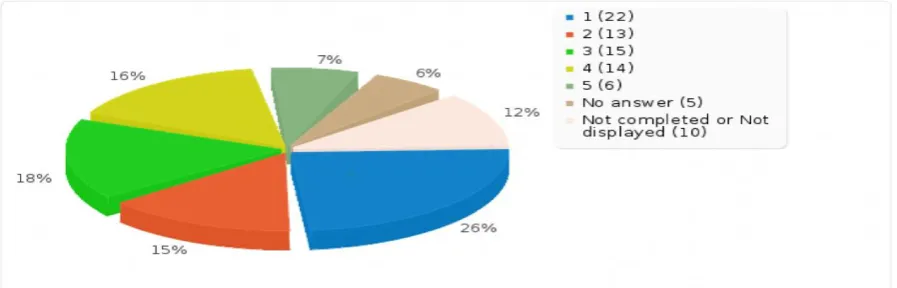
Basic background: There were 85 participants who completed the survey and questionnaire. 51% declared male and 35% declared female (and 16% did not disclose their gender). 34% play computer games daily, 11% several times a week and 3% once a week (Figure 1). 53% declaring in advance they believed the experience of playing the game would be a valuable experience consistent with the anecdotal assertion in the introduction of this paper.
Figure 1: How often do students play computer games?
Students’ views on games and learning: 35% of participants believe play games can help students to learn more quickly and 20% disagree (Figure 2). Similarly, 47% of participants believe game can engage and motivate student and 16% disagree.
Figure 2 I believe play games can help students to learn more quickly (1- fully agreed, 5 - completely disagreed)
Students’ views on the Watercooler game: On completion, 29% of students think playing this game will be a valuable experience and 33% disagreed with the statement; 30% of the students thought the game was boring to play, conversely over 40% of the group declared the game “fun” to play. Over 26% did not believe the game session helped them though 54% felt confident in playing the game (Figure 3) and over 47% declared that they would rather achieve goals on their own. Only 7% of the students found the game too hard though 30% would not be willing to use the game again. 30% believed the game was useful for improving their group working skills. These findings were in direct contrast to the qualitative working groups who all (100%) described the game as being as being good. This variance may have occurred due to the self selecting (volunteer) nature of the working groups. It was also in contrast to findings from a review of the target audience data which was much more positive.
1 2 3 4 5 6 7 8 9 10 11 12 13 14 15 16 17 18 19 20 21 22 23 24 25 26 27 28 29 30 31 32 33 34 35 36 37 38 39 40 41 42 43 44 45 46 47 48 49 50 51 52 53 54 55 56 57 58 59 60 61 62 63 64 65
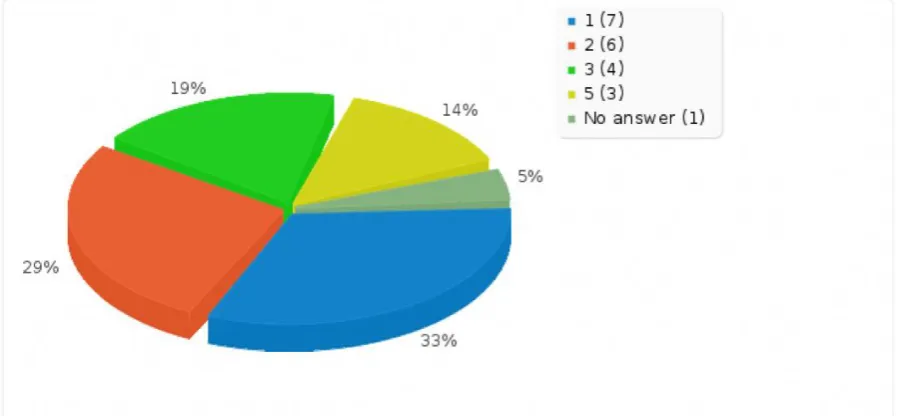
Figure 3 I don’t think this game session helped me (1- fully agree, 5- completely disagree)
From a technical perspective over 70% of those surveyed confirmed the game ran smoothly and 23% that the game made them more thoughtful and capable in real group situations.
Target audience cohort only:
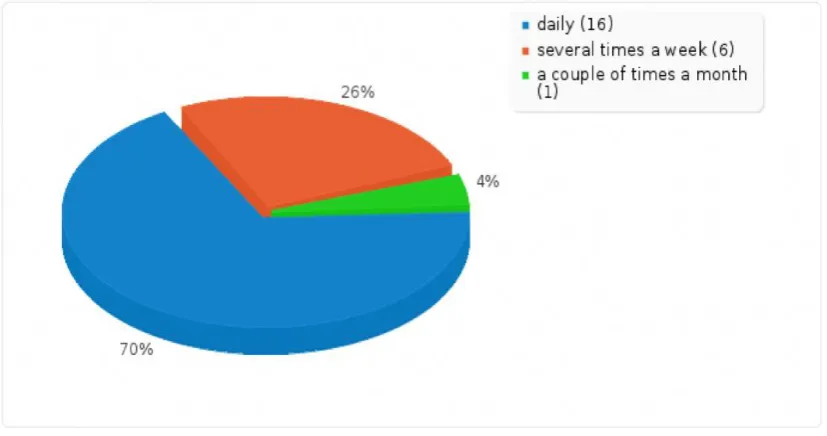
Basic background: There were 23 BA(Hons) Games Design student participants who completed the survey and questionnaire. 78% declared male and 13% declared female (and 9% did not disclose their gender). 70% play computer games daily, 26% several times a week and % once a week (Figure 4). 64% declaring in advance they believed the experience of playing the game would be a valuable experience consistent with the anecdotal assertion in the introduction of this paper.
Figure 4: How often do (Games Design) students play computer games?
1 2 3 4 5 6 7 8 9 10 11 12 13 14 15 16 17 18 19 20 21 22 23 24 25 26 27 28 29 30 31 32 33 34 35 36 37 38 39 40 41 42 43 44 45 46 47 48 49 50 51 52 53 54 55 56 57 58 59 60 61
Figure 5: (Games Design students) I believe play games can help students to learn more quickly (1- fully agreed, 5 - completely disagreed)
Students’ views on the Watercooler game: On completion, 64% of students think playing this game will be a valuable experience and 27% disagreed with the statement; 20% of the students thought the game was boring to play, conversely 85% of the group declared the game “fun” to play. 30% did not believe the game session helped them (Figure 6) though 86% felt confident in playing the game and over 76% declared that they would rather achieve goals on their own. Only 14% of the students found the game too hard. 81% would be willing to use the game again whilst 76% believed the game was useful for improving their group working skills. This was more in line with the qualitative working groups outcome (all of whom described the game as being as being good) than the results from the mixed cohort outcome who were far less positive.
Figure 6: (Games Design students) I will be willing to do this again because it has some value to me (1- fully agree, 5- completely disagree)
From a technical perspective over 95% of those surveyed confirmed the game ran smoothly and 77% that the game made them more thoughtful and capable in real group situations.
From a technical perspective over 95% of those surveyed confirmed the game ran smoothly and 77% that the game made them more thoughtful and capable in real group situations.
1 2 3 4 5 6 7 8 9 10 11 12 13 14 15 16 17 18 19 20 21 22 23 24 25 26 27 28 29 30 31 32 33 34 35 36 37 38 39 40 41 42 43 44 45 46 47 48 49 50 51 52 53 54 55 56 57 58 59 60 61 62 63 64 65
The Qualitative evaluation workshop was undertaken at the Hull School of Arts and Design in May 2017 within one month of completing the game testing and associated activities with a self-selected cohort of students who had completed the game in order to gather more extensive qualitative feedback .The group consisted entirely of Games design Students with a mix of genders , there was no representation from the cohort of fashion design students which restricted our ability to undertake any form of comparative analysis between the two groups. The Survey questionnaire response had exhibited marked differences between the groups in their technical capabilities, familiarity with games interfaces and predisposition to using digital games for Learning.
Students were collectively are asked within their peer group setting six specific questions as follows:
Do you think the Water Cooler Game was a “good” Game ?
There was positive feedback to the game, whilst recognising that it was still in development and that some issues would be resolved as more content was added to extend gameplay. It was felt that the tutorial required further development (a matter that came up particularly with the Fashion group as less experienced gamers) and that some struggled at first but as they got more used to the layout they lost track of time, entering a state of flow.
There was positive feedback on the game mechanics and “cute, quaint” graphics, but it was felt that the storyline could be further developed (something which was recognised during staff testing and can be developed for phase two). The game concept was described as “sound”, a game which achieved what it set out to achieve.
“I got into a state of flow, the game got too addictive”.
Do you think the Water Cooler Game was “fun” to play ?
Again there was a general consensus that the game was fun to play particularly when a good workflow was going. One student explained that she liked to explore within a game rather than repeat processes and described the experience as enjoyable rather than fun. Another felt that there should be more challenges and interaction, they proposed a day to day system where NPCs came in with a different motivation.
Overall the students related to the “real world” Games Studio setting (as relevant to their discipline) and enjoyed the social interactions and psychological aspects of the game.
“I wanted to go back and play again. I enjoyed the repetition and trying to achieve mastery”.
Do you think the Water Cooler Game was effective for Learning
Feedback was that the game was good for understanding how a Games Studio worked, for developing organisation and project management skills. One students with Aspergers syndrome was particularly pleased to see a NPC with Aspergers included, and felt the game would help them be more confident with not upsetting people.
“I wish I had this game last year, it would have helped with my group project”.
Can games be good for learning?
The group all believed games could be good for learning and benefit everyone. Examples were given of games which improved hand/eye coordination and memory, of physical and academic things learnt from games over the years even when not specifically designed for learning. The Watercooler game in particular had helped with being able to organise tasks.
“Gamified learning could conquer the world, could teach humans anything”.
What did you perceive to be the purpose of the Water Cooler Game and what did you learn from it?
1 2 3 4 5 6 7 8 9 10 11 12 13 14 15 16 17 18 19 20 21 22 23 24 25 26 27 28 29 30 31 32 33 34 35 36 37 38 39 40 41 42 43 44 45 46 47 48 49 50 51 52 53 54 55 56 57 58 59 60 61
The skills developed by the game were seen as transferable skills for any industry, how to work in a team to get things done.
“The game is show how people interact with departments, that have people who have feelings and how to deal with them”.
Do you think you will apply the learning (from the Water Cooler Game) in your professional practice?
It was agreed that the skills developed were transferrable. More practice was needed but the skills could be applied anywhere, social skills in particular.
“The game helps with engaging other people, I will definitely apply this in industry” Open discussions produced evidence of recognition of diversity issues. The Watercooler game includes diverse non playing characters including those with disabilities including autism. Students in informal discussions recognised this condition and as a bi product of the game claimed to have developed a greater understanding of the condition , how this may affect the working environment and their relationships.
Qualitative Evaluation Workshop Summary
The feedback on the Watercooler was both positive and constructive. The intention of the game was fully understood and there was a view that when the game was fully developed it would be extremely useful. Suggestions regarding strengthening the tutorial, further developing characters, dialogue and narrative to make the game more challenging and immersive, will all be useful in next stages of development.Of the three groups we ran test sessions with it is this Games group, digitally literate and interested in games, which were the primary target audience. Because of their subject knowledge they have been able to give informed critical feedback on the Watercooler game.Evidence from the test sessions suggest other groups have found the process more challenging, it will be interesting to hold subsequent focus groups with a more diverse audience as a comparison.
Conclusions
Our initial findings indicated technically the implementation of the Watercooler game proceeded without major issues although the implementation was independent and not interoperable with the institution's Learning Management System. the user experience of the game on whole was positive although feedback on the game provided by the “mixed” cohort” quantitative survey questionnaire outcomes was less positive than from the “target audience only” cohort. The post game workshop discussions gave a particularly positive outcome although as highlighted this may be due to the self selection nature of the workshop groups which were made up largely of a cohort Games Design Students who were more familiar with technology and games broadly than the cohort of fashion course students . The two groups displayed quite different gender characteristics the games design course being predominantly male and the Fashion course predominantly female although we could not draw any meaningful gender distinctions indeed the response of female students on the Games Design Course did not exhibit any discernable variance from their male counterparts.
Technical problems with log-in precluded significant data tracking and analysis. However it was clear from tutor feedback that significant further work is required on the data reporting interface if tutors are in the future to take advantage of the potential of the data and learning analytics gathered from students during gameplay.
Acknowledgments
References
Gee, J.P. (2003) What videogames have to teach us about learning and literacy, New York, Palgrave MacMillan.
1 2 3 4 5 6 7 8 9 10 11 12 13 14 15 16 17 18 19 20 21 22 23 24 25 26 27 28 29 30 31 32 33 34 35 36 37 38 39 40 41 42 43 44 45 46 47 48 49 50 51 52 53 54 55 56 57 58 59 60 61 62 63 64 65
Ljuben Saveski, G.,Wistera, W, Mareno,P, Yuan,l.,Fernandez Manjon, B. Stefanov,K., Hollins,P. (2016) What Serious Games Studios want from ICT Research : Identifying Developers’ Needs , Verlag Berlin Heidelberg Springer.
Nystrand, M. (1996). Opening dialogue: Understanding the dynamics of language and learning in the English classroom. New York: Teachers College Press.
Pask, G. (1975) Conversation, Cognition and Learning (A cybernetic Theory and Methodology) ,Oxford Elsevier.
Resta, P. & Laferrière, T. (2007). Technology in support of collaborative learning. Educational Psychology Review.
Singhal, A., Rogers, E. M., & Brown3, W. J. (1993). Harnessing the potential of
entertainment-education telenovelas [Journal article]. Gazene, 51, 1-18. Accessed