Nagesh G et al / Int. J. of Pharmacy and Analytical Research Vol-8(4) 2019 [647-656]
IJPAR |Vol.8 | Issue 4 | Oct - Dec - 2019
Journal Home page: www.ijpar.com
Research article Open Access
Formulation and evaluation of solid lipid nanoparticles of felodipine by
solvent evaporation method
G Nagesh, G. Harini kumari, Srinivasan S, N. Sriram
Department of Pharmaceutics East Point College of Pharmacy, Bengaluru, Karnataka – 560049
*Corresponding author: Nagesh G
ABSTRACT
A beta blocker and felodipine, a calcium channel blocker have been widely used for the treatment of blood pressure. felodipine belong to BCS Class II drugs and have poor aqueous solubility and poor oral bioavailability. Poor and variable bioavailability along with low biological half-life require frequent dosing which leads to more fluctuation of drug concentration in the blood. This frequent dosing leads to poor patient compliance and poor therapeutic outcome. In order to improve patient compliance through reducing the number of doses per day, to maintain a uniform drug concentration throughout the therapy, and to reduce side effects of drugs, sustained released formulations are advisable. In the present study it was attempted to develop oral sustained release delivery system of felodipine exploring nanoparticulate technology using steric acid, polyethylene glycol- 400 and polyvinyl pyrrolidone.
Keywords:
Felodipine, Solid lipid nanoparticles, Polyethylene glycol, Polyvinyl pyrrolidone.INTRODUCTION
The elevated blood pressure is a major risk factor in the development of cardiovascular diseases (CVD). The recent study reveals that the achievement of desired blood pressure targets has become a challenge to reduce the risk of morbidity and mortality. There are number of medicines used for the treatment of high blood pressure and patients might need to take their medicine for several years. Calcium channel blockers (CCBs) are widely used for the treatment of systemic arterial hypertension. The antihypertensive effect of CCBs is due to the inhibition of voltage dependent L- type calcium channels in vascular smooth muscle and heart that causes arterial
dilatation and smooth muscle relaxation. Felodipine, a dihydropyridine calcium channel blocker, has been widely used for the treatment of hypertension [1].
Felodipine is a lipophilic crystalline powder and practically insoluble (BCS Class-II) in water (solubility-0.5mg/l) [2]. Felodipine has poor and variable bioavailability, which leads to the multiple daily dosing. The multiple daily dosing sometimes exhibits fluctuation of plasma drug concentration and also lead to poor patients’ adherence. The bioavailability of poorly water soluble drugs can be improved by various approaches like solubilisation, use of co-solvents, salt formation, micronization and complexation with cyclodextrins [3-5]. The bioavailability issue
Nagesh G et al / Int. J. of Pharmacy and Analytical Research Vol-8(4) 2019 [647-656]
of the drugs’ can be addressed by making the particle size within the nano-meter range.
Nanoparticles have the diameter less than 1µm and have been used to improve the solubility and dissolution rate of poorly soluble drugs. Poorly soluble drugs can be formulated in the form of nanoparticles alone, or with the combination of pharmaceutical excipients. The solid lipid nanoparticles have been considered as promising carriers for the drug delivery [6, 7] and sustained oral drug delivery will be beneficial to the patients for the long term treatment. The widely used nanoparticulate engineering processes for the synthesis of nanoparticles are solvent evaporation, high pressure homogenization, nano-precipitation, emulsion diffusion etc.
PREFORMULATION STUDY: [8-14]
Drug- excipient compatibility studies [8-14]
Fourier
transforms
infrared
radiation
measurement (FTIR)
Preparation of samples
The mixture of felodipine with selected excipients was prepared in 1:1 w/w ratio by the simple blending of the components in a mortar with pestle for 10 min at room temperature. The drug and polymers individually weighed in glass vials, each vial was sealed with Teflon-lined screw cap and the mixture of drug and polymers was stored at 40°C±2/75%±5 RH for one month.
FTIR spectrophotometric analysis
Generally, the sample concentration in potassium bromide should be in the range between 0.2% and 1%. The dried potassium bromide was placed into a mortar 1% w/w of the drug sample was accurately weighed and mixed with the KBr powder, subsequently ground the mixture for 3-5 minutes. The powder mixtures were pressed through a mechanical press to form translucent pellets. These pellets were scanned by FTIR (Perkin-Elmer model 1600) in the 4000-400 cm-1 Differential scanning calorimetric analysis spectral range.
Differential Scanning Calorimetry study
Compatibility studies of the mixtures of the drug and excipients were performed by using differential scanning calorimetry (DSC, Shimadzu, Japan). 2-10mg of the drug and excipients mixture as individual samples and mixtures of drug and excipients were accurately directly weighed directly into standard aluminum pans and placed in the equipment under room temperature and it was scanned in temperature from 50-300°C. The heating rate was 20°C per min in nitrogen atmosphere (Flow rate: 20 ml/min) and the interactions were observed from obtained thermograms.
Formulation evaluation of felodipine loaded
solid lipid nanoparticles [8-14]
Preparation of felodipine loaded solid lipid
nanoparticles
The felodipine loaded solid lipid nanoparticle were fabricated by using solvent wetting method. In brief, accurately weighed amount of felodipine was dissolved in ethanol (organic phase) at 60°C. The aqueous phase containing 1.00 % PVA, 1.00 % PEG 400, w/v and Polysorbate 80 was heated to the same temperature of the organic phase. Then the organic phase was dropped into the hot aqueous phase under rapid stirring at 500 rpm using magnetic stirrer (Remi magnetic stirrer, India.) for 20 mins. Upon evaporation of the solvent, the lipid phase is slowly added into the aqueous phase under continuous stirring. The nanoparticles dispersion is formed in the aqueous medium.
Evaluation of felodipine loaded solid lipid
nanoparticles [8-14]
Measurement of particles size of SLN
Nagesh G et al / Int. J. of Pharmacy and Analytical Research Vol-8(4) 2019 [647-656]
Determination of Polydispersity index (PDI)
The polydispersity index (PdI) for the felodipine loaded solid lipid nanoparticles was carried out by photon correlation spectroscopy (PCS) using Malvern Mastersizer 2000 (Malvern Instruments Inc, Worcestershire, UK.) and the samples were measured in the range from 0.02 µm to 2000 µm.
Polydispersity index, a parameter calculated from the width of the particle size of distribution by using the equation = D (0.9) - D (0.1) /D (0.5). Where, D (0.9), D (0.5) and D (0.1) are corresponding to particle size immediately above 90%, 50% and 10% of the sample. [15-17].
Zeta potential measurements
Zeta potential of felodipine solid lipid nanoparticles (FD-SLNs) formulation was determined by laser Doppler electrophoresis (Zetasizer Nano ZS, Malvern, UK). The samples were diluted with deionized distilled water with a conductivity adjusted to 50µS/cm with sodium chloride. Helmholtz–Smoluchowski equation was used to convert the measured electrophoretic mobility to zeta potential.
Scanning electron microscopy (SEM)
The morphology of felodipine solid lipid nanoparticles (FD-SLNs) characterized by scanning electron microscopy (Carl Zeiss EVOMA25, Germany). The samples were frozen at -80°C and lyophilized (Lark, Penguin Classic Plus, India) by drying method. 10 mg of freeze-dried samples were suspended in 1 ml deionized distilled water and one droplet of the suspension was placed on a glass surface. After drying the latex particles, coated with gold using an Ion Sputter coater and scanned at an accelerating voltage of 20 kV. [18]
Determination of total drug content
Felodipine solid lipid nanoparticles (FD-SLNs) (0.1 ml) were diluted to 10 ml with chloroform / methanol (1:1) and this sample was further diluted with Phosphate buffer pH 6.8 to determine the total drug content using HPLC (Shimadzu, Japan).
Determination of entrapment efficiency
Entrapment efficiency of felodipine solid lipid nanoparticles (FD-SLNs) was determined by measuring the concentration of free drug (unentrapped) in aqueous medium. Centrisart tubes (Sartorius, USA), with molecular weight cut of
20,000 Da, were used to carryout
ultracentrifugation. About 1 mL of the formulation was placed in the outer chamber and sample recovery chamber placed on top of the sample and centrifuged at 4000 rpm for 10 min, the SLN along with encapsulated drug remained in the outer chamber and aqueous phase moved into the sample recovery chamber through filter membrane.
Evaluation of
In-vitro
release
[15-17
]Solid lipid nanoparticles, equivalent weight of felodipine was weighed and transferred into a conical flask containing 50 ml of phosphate buffer saline (PBS pH 7.4). Then the flask was kept in a metabolic shaker and the shaker was adjusted to 50 horizontal shakes per min at 37±0.5°C. One ml aliquot of release medium were withdrawn at time intervals of 0.5, 2, 4, 8, 16, 24 hrs and replaced by the same volume of PBS. Samples were filtered through 0.45 µm membrane filter (Elix, Mill-Q) and the filtrate was diluted suitably with PBS and estimated by UV/Vis spectrophotometer at 238 nm.
RESULTS AND DISCUSSION
Preformulation studies
Preformulation study, drug- excipient compatibility studies was determined by Fourier transforms infrared radiation measurement (FTIR) and Differential Scanning Calorimetry analysis.
Nagesh G et al / Int. J. of Pharmacy and Analytical Research Vol-8(4) 2019 [xxx-xxx]
Figure 1: FTIR spectra of pure felodipine drug
Data acquired from FTIR Spectrophotometric studies of drug excipients mixtures stored at 40°C±2/75%±5RH, indicates no significant changes in the spectra. The pure felodipine characteristic spectra were shown in Figure 1. FTIR spectra of felodipine and mixture of felodipine with Excipients are indicates there no characteristic in the spectra. The results of the
FTIR studies proved there is no compatibility between felodipine and other selected excipients.
The Differential Scanning Calorimetry (DSC) thermogram of felodipine showed an endothermic speak at 147.6°C and the results indicates the felodipine drug was pure. The felodipine with excipients thermograms shows is no interaction.
Figure 2: DSC thermogram of pure felodipine
Formulation evaluation of Felodipine loaded solid lipid nanoparticles
Nagesh G et al / Int. J. of Pharmacy and Analytical Research Vol-8(4) 2019 [xxx-xxx]
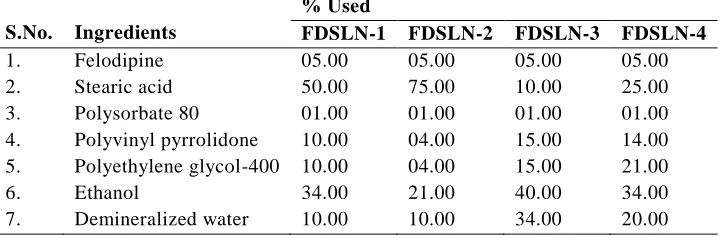
Table 1: Different strength of Felodipine and other excipients used in the formulations
S.No. Ingredients
% Used
FDSLN-1 FDSLN-2 FDSLN-3 FDSLN-4
1. Felodipine 05.00 05.00 05.00 05.00
2. Stearic acid 50.00 75.00 10.00 25.00
3. Polysorbate 80 01.00 01.00 01.00 01.00
4. Polyvinyl pyrrolidone 10.00 04.00 15.00 14.00
5. Polyethylene glycol-400 10.00 04.00 15.00 21.00
6. Ethanol 34.00 21.00 40.00 34.00
7. Demineralized water 10.00 10.00 34.00 20.00
Briefly, the Felodipine concentration is same in all these formulations only the biocompatible lipid concentration and the surfactant and co-surfactant concentration were changed in the following tablets contains formulations.
Evaluation of Felodipine loaded solid lipid
nanoparticles
The Felodipine loaded solid lipid nanoparticles were prepared by hot homogenization method. The process yield mean particle size, Polydispersity index, zeta potential, drug content and entrapment efficiency of felodipine loaded SLNs results were shown in Fig. 2-5 and 6-9.
Figure 3: Particle size distribution of FDSLN-1
Nagesh G et al / Int. J. of Pharmacy and Analytical Research Vol-8(4) 2019 [647-656]
Figure 5: Particle size distribution of FDSLN-3
Figure 6: Particle size distribution of FDSLN-4
The prepared Felodipine loaded solid lipid nanoparticles process yield was 87.51 % and the mean particle size range of 149 to 198 nm. The polydispersity index (PdI) ratio provides the information about the homogenicity of particle size
distribution and it should be <0.3, the PdI values of Felodipine loaded SLNs was 0. 189, which represents that the SLNs had a narrow size distribution and signifying SLNs monodispersity.
Nagesh G et al / Int. J. of Pharmacy and Analytical Research Vol-8(4) 2019 [647-656]
Figure 8: zeta potential of FDSLN-II
Figure 9: zeta potential of FDSLN-III
Figure 10: zeta potential of FDSLN-IV
The Zeta potential (surface charge) is a factor for evaluation of the stability in colloidal dispersion through the electrostatic repulsion between particles. The particles are
Nagesh G et al / Int. J. of Pharmacy and Analytical Research Vol-8(4) 2019 [647-656]
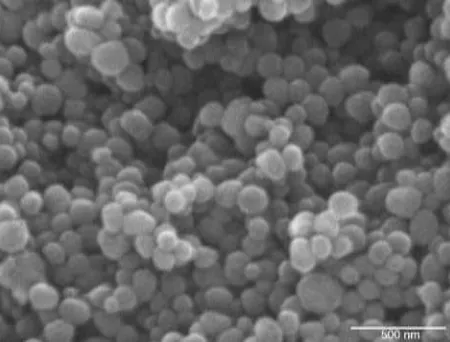
Figure 11: SEM image of Felodipine loaded solid lipid nanoparticles
The morphology of Felodipine loaded solid lipid nanoparticles was examined using scanning electron microscopy. The photographic result shows a fine spherical shape, smooth surface, and particle size was within the nanometric range Fig.10. The entrapment efficacy and drug content of the prepared Felodipine loaded solid lipid nanoparticles was 86.13±0.14% (FDSLN-I) and. 91.24±0.03% (FDSLN-IV).
Evaluation of in vitro release
The invitro release of all the four batches of SLN (FDSLN-1 to FDSLN-4) were carried out,
which showed an interesting biphasic release with an initial burst effect in the 2nd hr drug release was 25.70 %, 23.87 %, 25.60 % and 24.50 % FDSLN-1, FDSLN-2, FDSLN-
3 and FDSLN-4, respectively. This was followed by a prolonged second phase (zero order) release, which may due to diffusion of drug through the polymer matrix as the lipid erodes slowly. Cumulative percent drug release for FDSLN-I, FDSLN-II after 16 hrs was 77.01%, 78.34% and for FDSLN-III, FDSLN-IV after 24 h was 89.49% and 91.34 %,
respectively.
Table 2: Cumulative percentage of Felodipine loaded solid lipid nanoparticles
Time (hrs)
FDSLN-I FDSLN- II
FDSLN- III
FDSLN- IV
0.5 13.91 15.06 13.83 14.81
2 25.70 23.87 25.60 24.50
4 30.83 36.61 31.52 30.31
6 42.70 40.10 41.40 43.50
8 54.70 56.30 54.60 54.98
10 58.40 63.08 60.74 66.10
12 67.81 69.21 66.81 68.60
14 69.97 75.17 69.72 76.35
16 77.01 78.34 76.60 78.82
18 79.20 80.81 82.98 86.88
Nagesh G et al / Int. J. of Pharmacy and Analytical Research Vol-8(4) 2019 [647-656]
Figure 12: Dissolution release of Felodipine loaded solid lipid nanoparticles
Figure 13: Dissolution release of Felodipine loaded solid lipid nanoparticles
CONCULSION
The treatment of hypertension has become a challenge with the finding that even small reductions in blood pressure can significantly reduce the risk of morbidity and mortality. A beta blocker and felodipine, a calcium channel blocker have been widely used for the treatment of blood pressure. felodipine belong to BCS Class II drugs and have poor aqueous solubility and poor oral bioavailability. Poor and variable bioavailability along with low biological half-life require frequent dosing which leads to more fluctuation of drug
Nagesh G et al / Int. J. of Pharmacy and Analytical Research Vol-8(4) 2019 [647-656]
BIBLIOGRAPHY
[1]. Saltiel E, Ellrodt AG, Monk JP, Langley MS. Felodipine. A review of its pharmacodynamic and pharmacokinetic properties, and therapeutic use in hypertension. Drug s 36, 1998, 387–428.
[2]. Karavas E, Ktistis G, Xenakis A, Georgarakis E. Miscibility behaviour and formation mechanism of stabilized felodipine polivinylpyrrolidone amorphous nanodispersions. Drug Dev Ind Pharm. 31 , 2005, 473–489.
[3]. Kim BK, Hwang SJ, Park JB, Park HJ. Characteristics of felodipine-located poly (epsilon-caprolactone) microparticles. J. Microencapsul. 22, 2005, 193–203.
[4]. Lee DW, Hwang SJ, Park JB, Park HJ. Preparation and release characteristics of polymer -coated and blended alginate microspheres. J. Microencapsul. 20, 2003, 179–192. 7.
[5]. Lawrence MJ, Rees GD. Microemulsion-based media as novel drug delivery systems. Adv. Drug Deliv. Rev. 45, 2000, 89-121.
[6]. Vauthier C, Dubernet C, Chauvierre C, Brigger I, Couvreur P. Drug delivery to resistant tumors: the potential of poly(alkyl cyanoacrylate) nanoparticles. J. Control. Release 93 , 2003, 151-160.
[7]. Amaral E, Grabe-Guimaraes A, Nogueira H, Machado GL, Barratt G, Mosqueira V. Cardiotoxicity reduction induced by halofantrine entrapped in nanocapsule devices. Life Science. 80, 2007, 1327–1334. [8]. K.Viveksarathi, K.Kannan. Compatibility studies of rasagiline mesylate with selected excipients for an
effective solid lipid nanoparticles formulation. International Journal of Pharmacy and Pharmaceutical Science, 7(1), 2014, 73-80.
[9]. K.Viveksarathi, K.Kannan. Multi criteria decision making to select the best method for the preparation of solid lipid nanoparticles of Rasagiline mesylate using analytic hierarchy process. Journal of Advanced Pharmaceutical Technology & Research. 5(3), 2014, 115-121.
[10].K.Viveksarathi, K.Kannan. Effect of the moist-heat sterilization on fabricated nanoscale solid lipid particles containing rasagiline mesylate. International Journal of Pharmaceutical investigation, 5(2) , 2015, 1-5.
[11].K.Viveksarathi, K.Kannan. Experimental design for the optimization of nanoscale solid lipid particles containing rasagiline mesylate. Journal of Young Pharmacist, 7, 2015, 1-11.
[12].K.Viveksarathi, K.Kannan. Kinetic modeling of Rasagiline mesylate from nanoscale solid lipid p articles. International Journal of Pharmacy and Pharmaceutical Science, 7(11) , 2015, 300-305.
[13].K.Viveksarathi, K.Kannan. Formulation and Evaluation of Nanoscale Solid Lipid Particles Containing a Hydrophilic Drug-Rasagiline Mesylate. Journal of Applied Pharmaceutical Science, 6(05), 2016, 044-050. [14].Selvakumar kalimuthu., Yadav. A.V. - Formulation and evaluation of Felodipine loaded Eudragit E 100
Nanoparticles‖. Int. J. PharmTech Res, 1(2), 2009, 79-83.
[15].Zur Miihlen A, Schwarz C and Mehnert W Solid lipid nanoparticles (SLN) for controlled drug delivery Drug release and release mechanism 1998.
[16].Lander R, Manger W, Scouloudis M, Ku A, Davis C and Lee A Gaulin homogenization: A mechanistic study. Biotechnol Prog 16, 2000, 80-85.
[17].Jahnke S The theory of high pressure homogenization, in Emulsions and Nanosuspensions for the Formulation of Poorly Soluble Drugs, Miiller RH, Benita S and Bohm B (eds.), Medpharm Scientific Publishers: Stuttgart, 207, 1998, 177-200. Solid Lipid Nanoparticles as Drug Carriers 207,