INTRODUCTION
Lead is considered as one of the metals of prime environmental concern and is tabulated among 129 priority pollutants and one of the 25 hazardous species for human health and has been classified as a class B2 pollutant by environmental protection agency (EPA)¹. It has long been recognized that presence of lead in various forms leads to complicated problems and disturbations in living organisms. The major drawback of lead on human health is its cumulative toxicity and damaging influences on brain, kidney and central nervous system².
Meanwhile, the toxicological treatment of lead may be attributed to its ability for uncoupling oxidative phosphorilation, modification of ion transport in mitochondria, and inhibition of the metabolisms of enzymes containing thiol (-SH) group in hem synthesis and mitochondria energetic processes³.
In literature numerous procedures and techniques have been reported for lead determination. These methods and techniques are predominately including spectrophotometry,4 flame
ASSESSMENT OF THE TRACE LEVELS OF LEAD (II) USING
SOLID PHASE EXTRACTION AND FLAME ATOMIC ABSORPTION SPECTROMETRY
Mohammad Saber Tehrani1* and Majid Mohammadhosseini2
¹Department of Chemistry, Science and Research Campus, Islamic Azad University, Tehran (Iran) ²Department of Chemistry, Islamic Azad University, Shahrood Branch, Shahrood (Iran)
(Received, 29 October, 2005)
ABSTRACT
An efficient procedure for pre-concentration, separation and determination of the trace amounts of lead (II) ions in water samples has been established. The analyte is adsorbed on the surface of C18 silica membrane disk modified with APDC, quantitatively, while other interfering ions pass through the disk to drain. The sorbed Pb2+ ions are then stripped by appropriate eluting
agents followed by monitoring of the eluates by flame atomic absorption spectrometry (FAAS). The effects of sample pH, amount of the modifier, stripping agent types, sample flow-rates, and potential interfering ions were also investigated. The described method involves a pre-concentration factor of about 200. The detection limit of the procedure is 0.93 ng.mL-1. The method was employed
for isolation and determination of lead in different water samples.
Keywords: Lead, Flame Atomic Absorption Spectrometry & Solid Phase Extraction.
atomic absorption spectrometry5, electrothermal atomic absorption spectrometry (ETAAS)6, inductively coupled plasma atomic emission spectrometry (ICP-AES)7, inductively coupled plasma optical emission spectrometry (ICP-OES)8, and inductively coupled plasma - mass spectrometry (ICP-MS)9.
However, these procedures do not possess sufficient enrichment factor, desirable relative standard deviation (RSD), sensitivity and selectivity. On the other hand, to ensure the efficiency of the analysis, especially when high sample throughput is required, on-line separation and concentration techniques are employed10. These techniques circumvent most of the latter problems and feasible the monitoring of a wide variety of elements and their related species by fully automated manifolds. However, they suffer from poor reproducibility11.
Due to occurance of lead in different matrices at low levels, introduction and development of novel approaches for pre-concentration, matrix elimination and determination of lead is indispensable and has a prime importance.
Liquid-liquid extraction of various metal ions has been widely utilized in literature12. However, traditional classical methods are frequently time consuming, labor intensive, require too large volumes of ultrapure hazardous solvents, comprising excess experimental steps, encounter with emulsion formation, and suffer from elaborative automation, practically. An additional concern is the disposal cost of the used solvents which creates severe environmental problems. In order to eliminate some of the above mentioned difficulties, solid phase extraction (SPE) is considered as the best attractive alternative method. SPE features are mainly based on the utilization of a major constituent component as sorbent (bonded stationary phase) impregnated with suitable chelating or immobilized by functional groups. Practically, the selectivity of each loaded sorbent would be assigned via its donating groups.
The use of chelating resins has been referred in literature, frequently13-14. The main restriction associated with ion-exchange resins is related to matrixes containing high electrolyte concentrations, which limits both adsorption capacity and selectivity. Other proper and effective sorbents are co-crystallized naphthalene8, Chitosan15, amino carboxylic acid-type cellulose known as Chelest fiber Iry16, functionalized activated carbon17-18, poly tetra fluoro ethylene (PTFE) turnings19, immobilized C
18 on silica, activated carbon and polyurethane foam16, cellulose nitrate20,rice bran21, and chemically bonded 4-aminoantipyrene to silica gel22, and alumina23.
Among the various SPE features, modified octadecyl silica membrane disks are known as excellent sorbents for trace amounts of metal ions and possess advantages as follows: shorter sample processing time and decreased plugging by suspended materials and matrix components due to the large cross-sectional area of the disk, higher density; uniformity of packing; and decrease pressure drop which allows the sample processing at higher flow-rates; reduced channeling and favorable handling of small sample volumes resulting from facility of preparation of small diameter sorbent and a greater mechanical stability of the sorbent bed; selective extraction and enrichment of the trace elements of interest thereby avoiding the presence of matrice ions; flexibility; supportable structure by using a porous glass or plastic supports; easiness of automation and possibility of on-line coupling to other analytical techniques; wide application domain including
preconcentration of the trace metals and their organic compounds; determination of colloidally associated polycyclic aromatic hydrocarbons(PAH); herbicides; drugs; natural and humic products; and higher pre-concentration factor over similar adsorbents2, 24- 25.
Dithiocarbamates as a suitable generation of multi-purpose chelating groups have been used more than other agents during the recent decades in combination with other powerful analytical techniques such as graphite furnace atomic absorption spectrometry (GFAAS)26, ICP-AES27, neutron activation analysis (NAA)28, anodic stripping voltammetry (ASV)29, gas-liquid chromatography (GLC)30, and high performance liquid chromatography (HPLC)31. Soylak and his co-worker have reported a membrane filtration treatment for simultaneous multielement analysis of some heavy metal ions, recently32.
In our previous reports, we employed octadecyl silica membrane disks for enrichment and monitoring the trace amounts of chromium33-34, and lead35-36, effectively.
The present report is an attempt to develop a facile and quantitative method for concentrative separation and subsequent assessment of the ppb and sub-ppb levels of lead in some water samples collected in different regions of Tehran. To generalize the efficiency of the method, some relevant factors on retention and elution of lead ions were tested. To the best of our knowledge, octadecyl silica membrane disks modified by ammonium pyrrolidine dithiocarbamate (APDC) (Fig. -1) have not been used for isolation, pre-concentration and monitoring of the lead traces, previously.
Fig. 1. Molecular structure of APDC
EXPERIMENTAL Reagents
of water samples were obtained from S&S Company. Deionized water was prepared by passing of double distilled water through Nano-pure ultraNano-pure water system from Barnstead Company (USA) and was used throughout the experiments.
Reversed phase C18-silica membrane disks Solid phase extractions were carried out by glassy membrane disks, ENVI-18DSKTM 47 mm diameter
0.6 mm thickness containing octadecyl silica bonded phase (as irregular 30 µm particles with 70 AÚ pore size) purchased from Supelco (Bellefonte, PA 16823). The typical composition of ENVI-18DSKTM membrane disks contain glass fiber embedded with surface modified silica having a disk void volume of 500 µL and a mean flow-through porosity of 5 µL. The typical capacity of an ENVI-18DSKTM for well retained species ranges from 10 to 20 mg. The flat disks supply high cross sectional area and are capable of separating bulky ion-pairs and neutral organic and organometallic molecules. Solid phase extractions were conducted by the mentioned membrane disks, in conjunction with a standard Millipore 47mm filtration apparatus equipped with a desktop vacuum pump.Apparatus
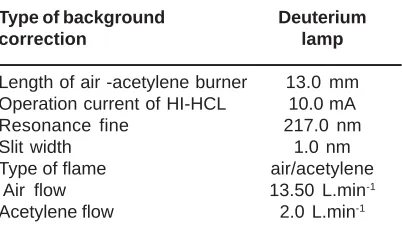
The pH measurements were carried out by an ATC pH meter equipped with a combined glass calomel electrode (EDT instruments, GP 353). Determination of lead contents of working samples was performed by a Varian spectra A.200 model atomic absorption spectrometer equipped with a high intensity hallow cathode lamp (HI-HCL) and instrumental parameters were adjusted according to the recommendations of the manufacturers. These characteristics are tabulated in Table -1. The pH measurements were carried out by an ATC pH meter equipped with a combined glass calomel electrode (EDT instruments, GP 353).
Preparation of stock and standard solutions The stock solution of lead (II) was prepared by dissolving a proper quantity of analytical grade lead (II) nitrate (159.8 mg) of deionized water in a 100 mL volumetric flask. One mL of dilute nitric acid was added to this solution to prevent the hydrolysis of lead ions. The working solutions of lead were prepared by accurate stepwise dilution of the stock solution with double distilled deionized water.
Sample extraction
The performation steps of the employed solid phase extraction - flame atomic absorption spectrometry (SPE-FAAS) technique were as follows:
1) First Step: Sample treatment: In order to eliminate suspended materials, water samples were filtered through 45 µm nylon filters before extraction. After each filtration, the residue remained on the filter was washed with 10 mL of deionized water. Sampling vessels were polyethylene bottles soaked in 1 mol.L-1 HNO
3 overnight, rinsed twice with deionized water, and dried in a dust-free environment.
2) Second Step: Disk cleaning and conditioning: In order to remove potential interferences and to ensure optimal extraction of the analyte of interest, the disk cleaning and conditioning should be accomplished before its use. Therefore, after placing the disk in the filtration apparatus, 10 mL of methanol was poured onto the disk and immediately drawn through the disk by applying a slight vacuum. When all the solvent passed though the disk, it was dried by passing air through it for a few minutes. The disk conditioning was done by introducing 10 mL of methanol onto the disk. Immediately a low vacuum was applied and the solvent was drawn through the disk until the solvent surface almost reaches the surface of the disk. The disk should not be allowed to soak without vacuum, and air contact with the surface of the disk should be avoided. This is to ensure complete wetting of the disk with the organic solvent. It is preferable to leave some extra methanol on top of the disk rather than allowing air contact. Immediately thereafter 20 mL of water was poured onto the disk and was drawn through it. The disk was then dried under the vacuum for 5 min or longer if necessary. This is especially important for the disks which are used for the first time.
3) Third Step: Disk modification: This step could be performed by either of the following manners:
a) A solution of 3 mg of APDC in 1 mL of CHCl3 Table -1 : The operational characteristics of flame.
Type of background Deuterium
correction lamp
Length of air -acetylene burner 13.0 mm Operation current of HI-HCL 10.0 mA
Resonance fine 217.0 nm
Slit width 1.0 nm
Type of flame air/acetylene
Air flow 13.50 L.min-1
Acetylene flow 2.0 L.min-1
was introduced onto the disk and drawn slowly through it by applying a slight vacuum. The passed solution was collected in a test tube. Then, water was added drop-by-drop to the test tube until the formation of the suspension began and the solution becomes turbid. The resulting suspension was again introduced onto the disk and passed through the disk slowly. The filtration and addition of water step was repeated until no turbidity is observed anymore and remains clear. The disk was then washed with 25 mL of water and dried by passing air through it.
b) A solution of 3 mg of APDC in 1 mL of chloroform was added to the top reservoir of the apparatus and was drawn slowly through the disk by applying a slight vacuum until the ligand penetrates the membrane, completely (change of appearance of the disk). The solvent was evaporated by a warm blower (at about 50 ÚC). The modified membrane disk is now ready for sample extraction. The activated and modified membrane disk is stable up to nearly two months and should be stored in a dry and dark place.
4) Fourth Step: Analyte extraction: The general procedure for the extraction of Pb2+ contents was as follows: after drying, the modified disk was washed with 25 mL of water to pre-wet the surface of the disk prior to the extraction. Then, 500 mL of the completely homogenized sample solution
containing 20 µg of Pb2+ was passed through the membrane disk (flow-rate = 60 mL min-1). After the extraction, the disk was dried completely by passing air through it and a 23 mm×200 mm test tube was placed under the extraction funnel. The adsorbed lead was then stripped from the membrane disk using 5 mL of an appropriate organic solvent which is compatible with flame and does not change the signal to noise ratio, at a flow-rate of 1-10 mL min -1. The lead content in the eluate was then determined by FAAS using an external calibration graph. To achieve higher selectivity and minimize the influence of the probable impurities present in acids used for pH adjustments, a blank determination was performed.
RESULTS AND DISCUSSION Evaluation the nature and role of APDC
APDC is a non-selective chelating agent and reacts with a wide variety of metal ions, properly. This reagent is slightly soluble in water at neural pH, and quite stable in acidic media. This ligand behaves as a bidentate univalent anionic ligand via its two S donor atoms and tends to form complexes with those metal ions containing partially filled d orbitals, filled d orbitals but low positive charge and ions with 18+2 electronic structure. Despite this fact, under the best optimal experimental conditions, it was observed that only Pb2+-APDC complexes could be retained on the surface of octadecyl silica membrane disks, drastically, while other metal complexes are sorbed
Table - 2 : Effect of eluent type and volume on percent recovery of metal-APDC complexesa
Eluting solution Recovery (%) b
3 5 8 10
HNO3 (0.5M) 8.2 12.4 21.2 16.7
HNO3 (1M) 12.4 15.0 18.3 14.2
HNO3 (3M) 9.5 23.3 28.9 16.9
HCl (1M) 3.3 11.2 14.1 14.3
HCl (3M) 7.4 10.5 13.8 19.3
CH3COOH (1M) 10.5 27.4 31.5 33.2
CH3COOH (3M) 14.5 38.9 43.4 37.5
H3PO4 (1M) 5.6 13.8 11.2 9.8
H3PO4 (3M) 12.1 18.6 21.3 26.6
CH3OH (6M) 63.5 99.1 95.3 97.3
CH3CH2OH (6M) 60.2 98.9 98.2 96.5
CH2OHCH2CH3 (6M) 40.4 74.3 81.5 80.5
a Initial samples contained 20 µg of Pb2+ in a 500 mL of sample.
partially. To evaluate the quantitative retention of Pb2+ ions by C
18-membrane disks, some preliminary experiments were carried out in the absence and presence of ligand. It was observed that while the disk itself shows low tendency for Pb2+ ions (as about 8%) each disk modified with APDC is capable to retain lead ions, virtually. Selection of stripping solution
In order to choose the proper eluting solution for quantitative clean-up of the retained lead ions, after the extraction of 20 µg of Pb2+ from a 500 mL of a water sample by means of the modified membrane disk, the retained Pb2+ complexes were stripped with various volumes of different non-organic and non-organic solutions. The subsequent results are presented in Table -2. Obviously, according to these data, among the 12 employed removing solutions, only organic eluents are capable for effective recovery of the sorbed Pb2+ ions. However, mineral eluents could not elute the analyte completely and consequently are not regarded as effective stripping agents. It should be emphasized that addition of methanol to each of the mineral eluting solutions leads to more reliable results. This may be because of the better contact of eluent with hydrophobic surface of the disk. According to the data given in Table -3, it can be seen that the most effective mineral eluents are the ones containing 5 % v.v-1 of methanol.
Undoubtedly, one of the interesting respects of SPE procedures is the percentage recovery of eluted Pb2+ species in sequential volumes of quantitative stripping agents. The numerical
percentage recovery of each efficient eluent has been demonstrated in Table - 4.
Effect of pH
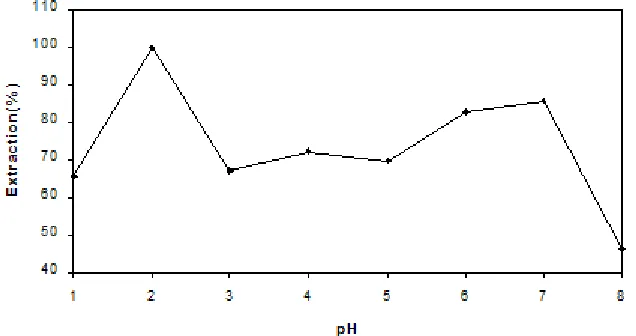
By notifying the fact that most chelating ligands behave as conjugate bases of weak acids, they show a very strong affinity for H+ ions. Therefore, the pH will be a crucial and critical parameter in separation of metal ions by chelation. To evaluate the effect of pH on the SPE of lead ions, the pH of each aqueous solution containing 20 µg of Pb2+ was adjusted to appropriate pH values over 1-8 by addition of proper amounts of diluted nitric acid or ammonia solutions. The percent recovery plot versus pH is shown in Fig. -2.
Table - 3 : Influence of methanol on the extraction efficiency of mineral eluentsa
Eluent Recovery (%)b
V.V-1 % of methanol
0.5 1 3 5
HNO3 (0.5M) 18.9 23.3 48.2 50.1
HNO3 (1M) 17.8 21.9 42.3 53.4
HNO3 (3M) 19.2 32.3 42.2 60.3
HCl (1M) 13.2 18.6 24 49.4
HCl (3M) 14.4 17.1 18.3 22.9
CH3COOH (1M) 21.3 32.3 47.6 58.7
CH3COOH (3M) 20.1 31.6 48.2 56.3
H3PO4 (1M) 11.8 19.3 29.2 33.8
H3PO4 (3M) 15.1 20.8 22.9 30.3
aInitial samples contained 20 µg of Pb2+ in a 500 mL of sample.
bRSDs based on three individual replicate analyses were within 0.8-4.5.
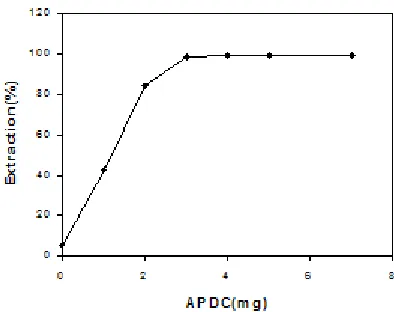
Fig. 2. Effect of amount of APDC on extraction efficiency of lead ions
Accordingly, at the pH=2 extractions are complete and quantitative. At lower pH values (<2), there is the probability of protonation of sulfur atoms (donating atoms) which will reduce the stability of APDC and Pb2+ ions complexes and subsequently, diminish the recoveries efficiencies. Meanwhile, the higher pH values (>8.0) were not tested because of the possibility of the hydrolysis of octadecyl silica bonded phase of the membrane disks37. To achieve higher selectivity and better results, it was decided to adjust the pH of the lead solution to 2.0 throughout the experiments. Effect of the amount of APDC and flow-rate
To investigate the optimized amount of APDC on the percentage recovery of lead by membrane disks, the extraction was conducted by varying the amount of APDC over the range of 0-7 mg (Fig. -3). As can be seen, the extraction would be complete by using of at least 3 mg of the ligand. Therefore, subsequent extraction experiments were performed with 3 mg of it.
On the other hand, the influence of flow-rates of the sample and removal solutions from the membrane disk on the retention and recovery of Pb2+ ions was also evaluated. Under the optimized conditions, it was found out that in the range of 10-75 mL.min-1, the retention and sorption of the lead complexes through each membrane disk was not considerably affected by the sample solution flow-rate. Meanwhile, quantitative stripping of the lead complexes from the disk was achieved in a flow-rate of 1–10 mL.min-1of proper eluents. For our studies, the selected flow-rates were 60 and 5 mL.min-1 for sample solution and eluent, respectively. At higher flow-rates, complete recovery of lead required larger volumes of eluents. It is also notable that as the amount of loaded ligand on the membrane disk increases, the flow-rate of solutions through the modified disk decreases. Inspection of the disk efficiencies
To examine the feasibility of each membrane disk for complete clean-up and extraction, a series
Fig. - 3 : The influence of pH on retention of Pb2+ - APDC complexes
of organic and mineral eluents were chosen and the recommended method was followed. Under the optimized conditions, it was found out that each ENVI-18DSKTM disk could afford at least 24 replicate analyses when organic eluents are utilized, while acidic and alkaline eluents restrict the times of accurate recoveries to a maximum of 17 and 4 replicates, respectively. The excessive abatement of disk efficiencies in alkaline solutions is most probably attributed to the probability of the hydrolysis of octadecyl silica bonded phase in these conditions.
Analytical performance
The linear regression equation of lead (II) standard solutions was as A=0.016C+ 0.0032 with a correlation coefficient of r2=0.9997 using an external calibration curve. The linearity of the graph was in the range of 2.5-30 µg.mL-1.
Table - 5 : Performance characteristics of the proposed method for pre-concentration of lead
L.R.E a A=0.015C + 0.0032
L.D.R (µg.mL-1) b 2.5-30 Disk capacity (µg) 453 ± 5 c Break-through volume (mL) 1000
Enrichment factor 200
LOD (ng.mL-1) 0.93
a Linear regression equation b Linear dynamic range
c Standard deviation based on three individual replicate analysis Table - 4 : Percent extraction of lead through modified C18 disks by using the
sequential volumes of stripping solutions a
Eluent agent Volume (mL)
First 1 mL Second 1mL Third 1mL Forth 1mL Fifth 1mL Total
Methanol (6M) 28.6 22.1 20.7 16.2 13.5 99.1
Ethanol (6M) 29.1 21.3 19.3 16.8 12.4 98.9
a Initial samples contained 20 µg of Pb2+ in a 500 mL of sample.
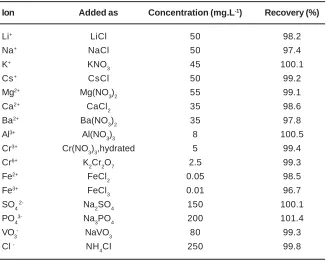
Table - 6 : Effect of matrix ions on recovery of Pb2+ ions a
Ion Added as Concentration (mg.L-1) Recovery (%)
Li+ LiCl 50 98.2
Na+ NaCl 50 97.4
K+ KNO
3 45 100.1
Cs+ CsCl 50 99.2
Mg2+ Mg(NO
3)2 55 99.1
Ca2+ CaCl
2 35 98.6
Ba2+ Ba(NO
3)2 35 97.8
Al3+ Al(NO
3)3 8 100.5
Cr3+ Cr(NO
3)3,hydrated 5 99.4
Cr6+ K
2Cr2O7 2.5 99.3
Fe2+ FeCl
2 0.05 98.5
Fe3+ FeCl
3 0.01 96.7
SO4 2- Na
2SO4 150 100.1
PO43- Na
3PO4 200 101.4
VO3- NaVO
3 80 99.3
Cl - NH
4Cl 250 99.8
a Initial samples contained 10 µg of Pb2+ in 500 mL of water.
Table - 7 : Percent recovery of 20 µg of lead added to 500 mL of synthetic solutions at pH=2
Synthetic Ingredients Recovery
Sample (%)
1 K+ , Mg2+, Al3+ 96.5(2.1)b (5mg)a
2 Zn2+ , Co2+ , Fe2+ 99.1(3.5) (50µg)
3 Cr3+, Cr(VI) and Fe3+ 97.2(0.5) (5mg)
a Values in parentheses are mg and µg amounts of each mentioned cation.
b Values in parentheses are RSDs based on five individual replicate analyses.
Table - 9 : Comparison of the efficiencies of the suggested method and published similar reports using octadecyl silica membrane disks
Ion(s) of Enrichment factor Sample flow LOD Ref
interest rate range (ng. mL -1)
Pb2+ Cu2+ (mL.min-1) Pb2+ Cu2+
Pb2+ 120 - 20 16.7 - 40
Pb2+ 100 - 1-30 0.075 - 41
Pb2+ , Cu2+ 200 200 1-20 0.9 0.2 42
Pb2+ 75 - 1-60 5 - 43
Pb2+ 200 - 60 0.93 - proposed
method Table - 8 : Percent recovery of 20 µg of lead added to a
500 mL solution of real water samples Sample Pb2+ content Recovered amount
(µg) (µg)
Waste water 1 a 8 27.2(2.4)e
Waste water 2 b 75 92.3(0.3)
Waste water 3 c 72 91.6(1.9)
Waste water 4 d 62 80.3(2.2)
a Located in Jajrood b Located in Bumehen-up c Located in Bumehen-down d Located in Roodehen
external calibration curve. The maximal capacity of the disk obtained from three replicate measurements was 453±5 µg of lead on the disk. By passing of solutions containing 20 µg of Pb2+ in 50, 100, 250, 500, 750 and 1000 mL of water under the optimal conditions, the Pb2+ was retained in all cases, quantitatively. Thus, the break-through volume of the method must be greater than 1000 mL. Consequently, by considering the final elution volume of 5.0 mL of each suitable eluent and the break-through volume of 1000 mL, an enrichment factor of 200 is easily achievable. The limit of detection (LOD) is defined operationally as the analyte concentration yielding an analytical signal equal to some confidence factor (Kb) times the standard deviation of the blank measurements (Sb) divided by the slope of linear calibration curve (m). The related equation is presented as: LOD = KbSbm-1 where K
b is a numerical factor
38-39. For a numerical factor of Kb=3 and pre-concentration factor of 200, a LOD of about 0.93 ng.mL-1 is achievable. In Table - 5, the analytical parameters and figures of merit of the present work have been presented.
Effect of interfering ions
The utility and selectivity of the proposed procedure was examined in the presence of various ions. For this purpose, the influence of ions at milligram and microgram levels on the extraction efficiency of 20 µg of lead in a 500 mL of an aqueous sample solution was tested and the related results are summarized in Table 6. As it is seen, none of the metals interferes the lead recovery. The tolerance limit was set as the ion concentration needed to cause at most ± 4% error in the recovery values of 20 µg of Pb2+ in 500 mL of water. As it is seen, the suggested method is free from
interferences from a large number of ions even at high concentrations. The tolerable levels of some interferic ions seem adequate for our investigations because the levels of these ions in real samples are lower than their tolerance amount.
Determination of lead in synthetic and real water samples
In order to assess the applicability of the proposed method to synthetic and real water samples with different matrices containing varying amounts of a variety of diverse ions, it was applied to the isolation and recovery of lead ions from three synthetic samples as well as four different samples (obtained from east of Tehran). According to the results presented in Tables 7 and 8, the lead recovery is almost quantitative and satisfactory. Conclusion
The overall proposed method is economic, convenient, reliable, and permits an enrichment factor of 200 under minimal experimental requirements. Therefore, the LOD could be improved as 200 times. It does not need to any elaborative and time consuming sample pre-treatment steps. The RSD of the method is at the most 2 % and hence is satisfactorily reproducible. In Table 9, the comparability or even superiority of the described method over similar methods has been discussed. The maximum time taken for extraction, concentration and assessment of 20 µg of Pb2+ in 500 mL of a water sample is at the most 15 min.
ACKNOWLEDGEMENTS
The financial support provided by Science and Research Campus is gratefully acknowledged by the authors.
1. U. S. Department of Health and Human Services and U. S. environmental Protection Agency, In Federal Register, 52, 12866 (1987)
2. V. Camel, Spectrochim. Acta Part B, 58, 1177 (2003)
3. Natural library of Medicine, “Hazardous substances Data Bank (HSDB)’’ (1996) 4. G. Fang, Y. Liu, S. Meng, Y. Guo, Talanta, 57,
1155 (2002)
5. B.Welz, Atomic Absorption Spectrometry, VCH, Germany (1985)
REFERENCES
6. D. L. Tsalev, L. Lampugnani, R. Georgieva, K. K. Chakarova, I. I. Petrov Jr., Talanta, 58, 331 (2002)
7. A. Montaser, D. W. Gollightly, Inductively Coupled Plasma In Analytical Atomic Spectrometry (1987)
8. M. S. Bispo, M. d. G. Andrade Korn, E. S. d. Bao Morto, L. S. Gomes Teixeira,
Spectrochim. Acta Part B, 57, 2175 (2002) 9. S. T. Petrova, T. Dzherayan, M. Relkhstat, J.
Fresenius Anal. Chem., 340, 271 (1997) 10. J. K. Baena, M. Gallego, M. Valcarcel,
Spectrochim. Acta Part B, 54, 1869 (1999) 11. A. Arrebola Ramirez, D. Gasquez, I. M. de la
Rosa, F. Moreno, Anal. Lett., 27, 1595 (1994) 12. P. K. Tewari, A. K. Singh, Talanta, 56, 735
(2002)
13. M. E. Malla, M. B. Alvarez, D. A. Batistoni,
Talanta, 57, 277 (2002)
14. W. S. Wan Ngah, S. A. Ghani, L. L. Hoon, J. Chin. Chem. Soc., 49, 625 (2002)
15. Y. Akamada, K. Yamada, O. Iton, Anal. Chim. Acta, 485, 19 (2003)
16. M. Pesavento, A. Profumo, G. Alberti, F. Conti,
Anal. Chim. Acta, 480, 171(2003)
17. M. Saber Tehrani, F. Rastegrar, A. Parchehbaf, Z. Rezvani, accepted for publication in Chin. J. Chem.
18. A. N. Anthemidis, G. A. Zachariadis, J. S. Kougolis, J. A. Stratis, Talanta, 54, 935 (2001)
19. S. P. Quinania, J. B. B. da Silva, M. d. C. Ezequeil Rollenberg, A. J. Curtius, Talanta, 54, 687 (2001)
20. M. Soylak, N. D. Erdo, L. Elci, J. Chin. Chem. Soc., 51, 703 (2004)
21. M. A. Farajzadeh, M. R. Vardast, J. Chin. Chem. Soc., 50, 245 (2003)
22. M. M. Osman, S. A. Kholief, N. A. Abou-Almaaly, M. E. Mahmoud, Anal. Sci., 20, 847 (2004)
23. M. Saber Tehrani, F. Rastegrar, A. Parchehbaf, M. Khatamian, M. Mohammadhosseini, A. Moghimi, Chin. J. Chem., In press.
24. C. F. Poole, S. K. Poole, D. S. Seibert, C. M. Chapman, J. Chromatogr. B, 689, 245 (1997)
25. C. F. Poole, Trends Anal. Chem., 22, 362 (2003)
26. J. M. Lo, J. C. Yu, F. I. Hutchison, and C. M. Wai, Anal. Chem., 54, 36 (1982)
27. M. Sugiyama, O. Fujino, S. Kihara, M. Matsue,
Anal. Chim. Acta, 181, 159 (1986)
28. J. C. Yu, J. M. Lo, C. M. Wai, Anal. Chim. Acta, 154, 307 (1983)
29. L. Labuda, M.Vanickova, Anal. Chim. Acta,
208, 219 (1988)
30. J. J. Yu, C. M. Wai, Anal. Chem., 63, 842 (1991)
31. E. B. Edward-Inatimi, J. Chromatogr., 256, 253 (1983)
32. E. Narin, M. Soylak, Anal. Chim. Acta, 493, 205 (2003)
33. M. Saber Tehrani, A. Afshar Ebrahimi, F. Rastegrar, Ann. Chim. (Rome), 94, 429 (2004)
34. M. Mohammadhosseini, M. Saber Tehrani, M. R. Ganjali, A. Parchehbaf, A. Moghimi, K. Zare, J. Chin. Chem. Soc., in press. 35. M. Mohammadhosseini, K. Zare, M. Saber
Tehrani, J. Phys. Theo. Chem. I. A. U. Iran, 1, 149 (2004)
36. M. Mohammadhosseini, M. Saber Tehrani, A. Parchehbaf, A. Moghimi, K. Zare, J. Chin. Chem. Soc., In press.
37. Y. Yamini, N. Alizadeh, M. Shamsipur, Anal. Chim. Acta, 355, 69 (1997)
38. ACS Committee on Environment Improvement, Anal. Chem., 52, 2242 (1980) 39. J. D. Ingle, S. R. Crouch, Spectrochemical Analysis; Prentice Hall; Englewood Cliffs, NJ, (1988)
40. O. R. Hashemi, M. Kargar-Razi, F. Raoufi, A. Moghimi, H. Aghabozorg, M. R. Ganjali,
Microchem. J., 69, 1 (2001)
41. O. R. Hashemi, F. Raoufi, M. R. Ganjali, A. Moghimi, M. Kargar-Razi, H. Aghabozorg, M. Shamsipur, Anal. Sci., 16, 1221 (2000) 42. M. R. Ganjali, F. Basiripour, M. S. Niasari,
Can. J. Anal. Sci. Spect., 47, 41 (2002) 43. F. Raoufi, Y. Yamini, H. Sharghi,