COMPUTER SCIENCE & TECHNOLOGY
www.computerscijournal.org
August 2016, Vol. 9, No. (2): Pgs. 81-91 An International Open Free Access, Peer Reviewed Research Journal
Published By: Oriental Scientific Publishing Co., India.
Analysis of Pattern Identification Using Graph
Database for Fraud Detection
NAvNEET KR. KASHYAP*, B.K. PANDEY and H. L. MANDORIA
Department of Information Technology, College of Technology Govind Ballabh Pant University of Agriculture and Technology, Pantnagar-263145, Uttarakhand, India.
http://dx.doi.org/10.13005/ojcst/9.02.04 (Received: April 16, 2016; Accepted: June 10, 2016)
ABSTRACT
Internet is the main tool for e-business. E-transaction is made faster by Internet. With the increase of e-transaction internet fraud or e-business fraud is increasing. Credit fraud in the banking sector is a growing concern. Few sort of card (debit/credit) fraud is decreasing by providing detection and prevention system from banks and government. But card-not-present fraud losses are increasing at higher rate because of online transaction as there is no chance to use Chip and PIN as well as card is not used face-to-face. Card-not-present fraud losses are growing in an un-protective and un-detective way. This paper seeks to investigate the current debate regarding the fraud in the banking sector and vulnerabilities in online banking and to study some possible remedial actions to detect and prevent credit fraud. The research also reveals lots of channels of fraud in online banking which are increasing day by day. These kinds of fraud are the main barriers for the e-business in the banking sector. This paper devised a new approach for fraud detection in these sector with help of graph database & by matching pattern of previous frauds.
Keywords: Frauds, bank Frauds, Online/offline frauds, Fraud Detection, Fraud pattern.
INTRODUCTION
In the same way as any wrongdoing aversion technique, the way to minimizing the danger of fraud lies in understanding why it happens; in recognizing business territories that is at danger and actualizing methods tending to powerless regions. Fighting fraud danger ought to along these lines be a two dimensional methodology. To begin with, guaranteeing that the open doors don’t emerge and, second, guaranteeing that the
fraudster trusts that he will be gotten and that the potential prizes don’t make the outcomes of being gotten beneficial. With the point of avoiding fraud, the national banks ought to consider forcing controls on the banks by authorizing their structure for fraud hazard insurance coverage6.
ascending amid the worldwide emergency all over on the planet and also in Albania itself. Most deceitful acts are executed by representatives who comprehend the interior operations at their working environment and exploit inner control shortcomings6. So prevention & detection of Fraud & any anomaly before it happened or converted in to unmanageable situation is best solution.
OUNCE OF PREvENTION = POUND OF CURE
Problem Statement
The essential motivation to utilize Graph database to handle fraud is on account of a great deal of inside control frameworks have genuine control shortcomings1. Keeping in mind the end goal to successfully test and screen inner controls, associations need to take a gander at each exchange that happens and test them against built up parameters, crosswise over applications, crosswise over frameworks, from divergent applications and information sources3,4. Most
Fig. 2: Migration of data from RDBMS to GDBMS
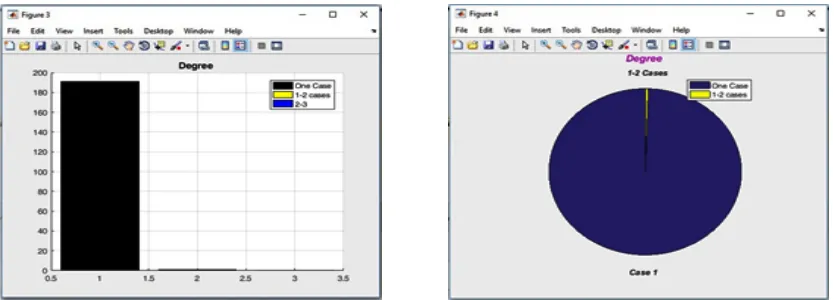
Fig. 3(a), (b): Bar graph & pie chart of type of fraud detected
interior control frameworks essentially can’t deal with this in the event of case of relational database systems.
Detailed logs of all exercises performed. you can run an application or a script, enter a few information, and discover a few irregularities. That is awesome, yet you’re going to need some kind of verification of what you did to reveal that fake movement. That verification must be particular and point by point enough to face further misrepresentation examination2.
In this paper, our objective is to recognize questionable patterns in the information gathered from information obtained from bank & financial institution. Furthermore, we are using graph Fig. 3(e): Pie chart of fraud detected
with modus operandi
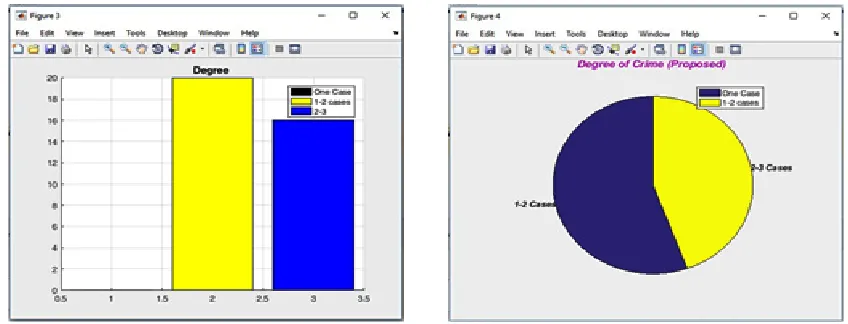
Fig. 4(a), (b): Bar graph & pie chart of type of fraud detected
database, not relational database system. We need to identify pattern taken from previous studies of frauds & identify any suspicious activity within system. Then analyze data with optimization technique for better solution & proof of Fraud detection8.
Create graph database from structured database by adding properties to nodes and defining relationship between them. Create query- Algorithm has been developed for the retrieval of the sub graph. Analyze fraud and set rules to identify fraud tendency by developing the algorithm further8,9.
That contains the preceding procedures 1. Import database from RDBMS to GDBMS 2. Development of nodes, feature of nodes, and
connection between individuals nodes 3. Assortment of property to be explored and
arranging together with the assistance of relationship.
Traversing towards a specific node which often requires to be explored in simultaneously left as well as right way and save the relationship whenever the pattern took place.
METHODS & MATERIAL
These days the measure of information is expanding step by step, so appropriately the longing for information mining is likewise developing. Substantial database must be looked to locate the fascinating properties of the graph and to build up a relationship along with them. It is gainful to demonstrate the complex data with the assistance of graph in which data is stored in nodes and edges speak to the relationship among the nodes. Subsequently having a Graph database defeats the important of relational database and helps in finding the super graph, sub graph, basic graph and connection in between different graphs9.
This graph based data mining has turned out to be increasingly famous in the most recent couple of years. Graph mining is the utilization of most essential structure of graph to get regular patterns of data. It has board scope of applications. This procedure can be utilized to discover the possibility of persons doing wrongdoing in the organization through web or by using any other way .Some relevant researches of individuals required in digital wrongdoing were concentrated on to get the characteristics, for earning , persons required in wrongdoing, whether they are taught or not, style of wrongdoing, acquiring from the specific risk. These feature lead to the development of graph database and algorithm happens to be proposed for traversing the graph in both headings left and in addition right and build up relationship among various nodes which assist creates a sub graph as per the request6,9.
Neo4j is the graph database utilized for evaluation as the recovery times of graph database are not exactly social database as it takes a look at records, it doesn’t check the whole gathering to discover the nodes that met the inquiry criteria. Analysis report from this execution will likewise be useful in arranging the prevention concerning a number of offenses. The rest of this paper is sorted out as takes after.
Overview of Existing Algorithm
Existing algorithm which is used in following data discovery is as follows:
A. Part Miner Algorithm B. Span Algorithm C. gIndex Algorithm D. RMAT Algorithm
Let’s have a brief about these algorithms: Part Miner Algorithm
Every graph in the database is divided into littler sub graphs. Part Miner can viably diminish the quantity of candidate graphs by examining the total data of the units. This has prompted a considerable measure of cost investment funds saving. Part Miner is successful and adaptable in discovering sub graphs5.
gSpan Algorithm
Graph-Based Substructure Pattern Mining that introduced gSpan algorithm which usually finds out regular substructures without having candidate production. gSpan develops a new lexicographic arrangement among the graphs ,and routes every graph to a exclusive minimum DFS code as the canonical label. Dependent upon this lexicographic order, gSpan explores the depth-ûrst search approach to exploit regular connected subgraphs effectively. So, gSpan outperforms FSG by the order of degree as well as is suitable to exploit huge regular subgraphs in a larger graph arranged with lower minimal helps9.
gIndex Algorithm
Assorted out from the established route-based techniques, this strategy, known as gIndex, will make use of regular substructure as the fundamental categorization or indexing property.
Frequent substructures tend to be appropriate candidates considering that they search the internal attributes of the information as well as is reasonably steady to database upgrades5. RMAT Algorithm
Inside this specific recursive system for the graph mining discovering the attributes of genuine graphs which appear to continue more than several procedures. We identify such “laws” as well as, more significantly, suggest a straight forward, parsimonious method, the recursive matrix (R-MAT) system, which could rapidly produce accurate graphs, recording the importance of every single graph in a mere a couple of variables. R-MAT immediately creates graphs using the neighborhoods inside of networks property. R-MAT can conveniently come up with convincing weighted, directed and bipartite graphs5.
PROPOSED APPROCH & RULE SET The suggested algorithm is actually improve in overall performance than earlier algorithms such as for example gIndex , Part Miner, gSpan & RMAT when it comes to of grouping and looking around including DFSS with both left and right connection, graph property with individual dependent query and connection property. That contains the preceding procedures
1. Development of nodes, feature of nodes, and connection between individuals nodes 2. Assortment of property to be explored and
arranging together with the assistance of relationship.
3. Traversing towards a specific node which often requires to be explored in simultaneously left as well as right way and save the relationship whenever the pattern took place.
Algorithm for Fraud Detection
Assumption
Fraud dataset is available Algorithm to analyze data
Step1. Import data from database
fori ←1 to max
if type ←Account Fraud’ ctrßincrement by one
otherwiseif type ←Netbanking Fraud’ ctr2ßincrement by one
otherwiseif type ←Siphoning’ ctr3ßincrement by one
otherwiseif type ←Loan Fraus’ ctr4ßincrement by one
otherwise repeated for all the expected type end if
end for
Step3. Calculate severity of criminal based on modus operandi
forI ←to max
if ‘Mannual’ greater than 0 then mannaul← increment by one elseif ‘Online’ greater than 0 then Online←increment by one elseif ‘Offline’ greater than 0 then Offline←increment by one
elseif ‘E-commerce’ ß greater than 0 then Ecommerce← increment by one
elseif ‘Phishing and fraudulent e-mails’ greater than 0 then
OnlineOffline← increment by one
elseif ‘Offline/ Mannual’ greater than one then OfflineMannual← increment by one
elseif ‘Online / Offline’ greater than one then OnlineOffline← increment by one
otherwise
others← increment by one end
end
Step4. Calculate severity of fraud for i ← 1to max
if cc(i)==1
case1← increment by one Crimedata1← store record elseif cc(i) between 1 and 2 case2← increment by one Crimedata2← store record elseif cc(i) between 2 and 3 case3← increment by one Crimedata3← store record end if
end for Rule Set
Calculate Probability of Fraud Step1. Compare result with for I←1 to l
if description ← similar to existing record if modus operandi ← similar to existing record if rank is high
prob← high probability end if
end if end if
if description ← similar to existing record if modus operandi ←similar to existing record if rank middle
prob← average probability end if
end if end if
if description ← similar to existing record if modus operandi← similar to existing record if rank is low
prob← low probability end if
end if end if
if description←has no similarity to existing records
if modus operandi ß not similar to existing record prob←No possibility of fraud
end if end if
Formula Used
Here
• wdi - words matched in description • WDi – total words in the description • wmi – words matched in modus operandi • WMi – total words in modus operandi • ri – rank
• Ri – Max rank
correlation is between the quantity of subgraphs recognized when a looking strategy is connected on the graph database and when the Ant Colony optimization based methodology is connected to the graph database. The pattern distinguished and the distinction regarding number of subgraphs is of awesome significance. This change is of extraordinary Importance to the application.(ACO)
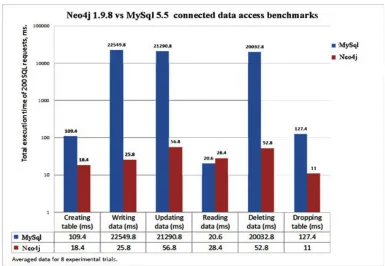
Fig. 5: Data access benchmarks for connected data Test case:
TOTAL NODE = 1400
EFFICIENCy= ((TOTAL NODES -RETRIVED NODE)/TOTAL NODES) * 100
Table 1: Evaluation of the proposed approach
S.No. Retrieved Total nodes Efficiency DATA 1400 %
1 Data field 406 71 % retrieved after 1400- 406
searching =994 techniques
2 Data field 70 95 %
retrieved after 1400-70 optimization = 1330
techniques
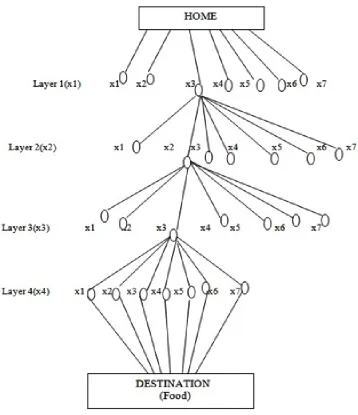
We can clarify the procedure as takes after. We accept that the ant colony has N number of ants. These ants begin going from the principal hub and after that navigate the primary layer and afterward the rest. And after that achieve the last layer and the destination hub of the diagram. This happens in each cycle or emphasis. In each cycle the ants visit stand out hub in each layer as per the state transition rule. These hubs consolidated structure a specific candidate way. For instance a way (x13, x22, x33, x42) is navigated in the diagram in (figure 1). In the start of the emphasis, all the layers are instated with equivalent measure of pheromone. So as in cycle 1, the ants begin from a hub and end at the last layer picking an arbitrary way. The procedure stops in the event that we as of now have a predetermined number of cycles or iterations. The way picked is the one with the biggest measure of pheromone. This is the ideal arrangement and every one of the ants go along the same way.
We have the method towards the issue when we move every ant bit by bit. It contains two rules:
1. Local pheromone updation while the ant constructs the solution. 2. Global pheromone updation when the
solution is formed.
This procedure goes on until eventually the threshold value arranged is actually equivalent or increased than. This variation of ACO algorithmic rule deals along with the specific data, and also forms guidelines for the updation consequently. The data applied (TrainingSet) is the fraud graph database included for the evaluation. DiscoveredList is in which each the pruning rules is saved concerning the optimized frequent patterns.
Algorithm
TrainingSet={ all fraud cases};
DiscoveredList=[]/* initialization of the list */ WhILE(TrainingSet=max covered sets) t=1; /* ant index*/
j=1;/* convergence test index */
all trails initialized with the same amount of pheromone
Repeat
Ant star ts with an empty set and incrementally constructs a pruning condition Pt by adding one term at a time to the current condition;
Prune condition Pt
Update the pheromone of all trails by increasing pheromone in the trail followed by Ant (in proportion to Pt)and decreasing pheromone in the other trails (simulating pheromone evaporation); IF (Pt is equal to Pt– 1) /* update convergence test */
ThEN j = j + 1; ELSE j = 1; END IF t=t+1;
UNTIL (i e” No_of_ants) OR (j e” No_condition) Choose the best rule R among all rules Pt constructed by all the ants;
Add rule R to DiscoveredList;
TrainingSet = TrainingSet - {set of cases correctly covered by R};
END WhILE
RESULTS
Graph database happens to be utilized to resolve two targets. These goals are associated to the Fraud database established from previous case study for the evaluation. These objectives include: 1. Graph based substructure mining for the
detection of regular activities and therefore carrying out the examination
2. Optimization with the sub graph utilizing the approach of Ant Colony Optimization.
We use database entry or dataset stored in RDBMS (My SQL), by using Neo4j Lib for import data from RDBMS to Graph we generate Graph for Stored data. Graph created with this step is can be seen in Neo4j Data Browser & Neoeclipse as well1.
optimization option. The optimization of the graph database results in less number of subgraphs as compared to the normal search technique applied on the graph database. Thus first we obtain the optimized subgraphs in the Netbeans. Then this result can be seen in form of subgraphs also. The optimization is performed using two important attributes of the graph database.
We are showing both results for better understanding with & without results. That provide a wide view of fraud detection.
Results without optimization
Let’s see the result without any optimization techniques. Degree & modus opreandi (mode of operation) are both is main attributes which match for decide degree & operation of fraud by matching them to previous case studies.
Results concluded with base implementation with graph dataset. All results which are detected are displayed with graphical presentation. (Figure 3 (a), (b), (c), (d), (e)) present results of base implementation without optimization.
Results displayed in (figure 3(a),(b)) is showing the type of fraud detected in this fraud detection in form of bar & pie chart. X axis in (figure 3(a)) showing frequency of fraud occurrence & y axis is present degree of fraud. (figure 3(b)) showing fraud occurrence in form of pie chart.
• Results with ACO Optimization
Results concluded with ACO optimization with graph dataset. We optimize dataset with All results which are detected are displayed with graphical presentation. (Figure 4(a), (b), (c),
(d), (e)) present results of implementation with
optimization.
• All these results used degree & modus operandi ( mode of operation) with case two. here we actually see the difference after apply proposed approach with optimized result. Results concluded with base implementation with graph dataset. All results which are detected are displayed with graphical presentation. (Figure 4 (a), (b), (c), (d), (e))
present results of implementation with optimization. Results displayed in (figure 4(a),(b)) is showing the type of fraud detected in this fraud detection in form of bar & pie chart. X axis in (figure 4(a)) showing frequency of fraud occurrence & y axis is present degree of fraud. (figure 4(b)) showing fraud occurrence in form of pie chart.
As compare to (figure 3(c)), we can see in (figure 4(c)) that after optimization, this case present fraud rate of degree 2 & 3. This is a refine result foregree 2 & 3 in between graph data set.
CONCLUSION & UPCOMING WORK
Wrongdoing and lawbreakers have been under study following for quite a while. A few methodologies are utilized to comprehend the nature and reasons of wrongdoing. This approach is another way to deal with comprehending the conduct of the crooks. This is finished by utilizing a few properties and nodes gathered from valid sources. This database, when changed over into graph database, is all the more effectively examined. The subgraphs acquired are utilized for every one of the targets of the application. Since the recovery of a subgraph is to be lessened in order to accomplish effective results, optimization is executed. The optimization is performed with the assistance of utilizing the idea of Ant Colony optimization. Change in results is likewise appeared as far as effectiveness. The subgraphs are additionally utilized for the examination of the fraud conduct utilizing Graph-based mining (gSpan). The frequent patterns are recognized utilizing standards are produced. Taking into account these principles the investigation is performed. Neo4j is utilized to get the graph creation of the database. Therefore, the goal of the exposition is accomplished and the criminal conduct is examined utilizing graph mining.
discover fraud furthermore; it also offers an open system to work with a variety of discovery methods and techniques.
Even though the fact that the present analysis as of now performs great, it can be executed real time frameworks for locate the pattern in various type to areas like. E-commerce, network anomaly, fraud in different organization, graph based search, identity search, network IT management with little modification in pattern identification attributed we can implement this method for above mentioned area for finds any similarity in the patterns.
ACKNOWLEDGEMENTS
I am immensely indebted and owe my due regard to Dr. H. L. Mandoria, Professor, Information Technology Department, Mr. Binay Kumar Pandey, Assistant Professor, Information Technology Department, Mr. Ashok Kumar & Mr. Rajesh Shyam
Singh, Assistant Professor, Information Technology
Department and the members of my advisory committee for their persistent encouragement and support.
REFERENCE
1 yan X, han J. gSpan: graph-based substructure pattern mining. In: Technical report UIUCDCS-R-2002-2296. Champaign: Department of Computer Science, University of Illinois at Urbana; 2002.
2 yan X, yu PS, han J. Graph indexing: frequent structure-based approach. In: ACM SIGMOD international conference on management of data (SIGMOD’04) ACM, 2004. New york, pp. 335–46.
3 Eichinger F, Böhm K, huber M. Improved software fault detection with graph mining. In: Appearing in the 6th international workshop on mining and learning with graphs, helsinki, Finland, 2008.
4 Sequeda J, Arenas M, Miranker DP. On directly mapping relational databases to RDF and OWL. In WWW, pp. 49-58, 2012. 5 Kashyap N.K., “Evaluation of Proposed
Algor ithm with Preceding GMT for Fraudulence Diagnosis”. Orient.J. Comp. Sci. and Technol; 9(2). Available from:http:// www.computerscijournal.org/?p=3661 6 Navneet Kumar Kashyap, Binay Kumar
Pandey, h. L. Mandoria & Ashok Kumar,”A Comprehensive Study Of Various Kinds Of Frauds & It’s Impact”, International Journal of Computer Science Engineering
and Information Technology Research (IJCSEITR) ISSN(P): 2249-6831; ISSN(E): 2249-7943 Vol. 6, Issue 3, Jun 2016, 47-58,
7 Navneet Kumar Kashyap, Binay Kumar Pandey, h. L. Mandoria & Ashok Kumar, “A Review Of Leading Database: Relational & Non-Relational Database”, I-Manager’s Journal On Information Technology (JIT) ISSN (P): 2277-5110; ISSN (E): 2277-5250, (Accepted On May 31, 2016)
8 Navneet Kumar Kashyap, Binay Kumar Pandey, h. L. Mandoria & Ashok Kumar, “Comprehensive Study of Different Pattern Recognition Techniques”, i-manager’s Journal on Pattern Recognition (JPR) ISSN(P): 2349-7912; ISSN(E): 2350-112X, vol. 2, No. 4, 42-49 ( Accepted on JUNE 9, 2016)