Geschke Center
Doctor of Nursing Practice (DNP) Projects Theses, Dissertations, Capstones and Projects
Spring 5-6-2014
A Novel Psychotropic Risk Assessment To
Enhance Medical Management Of Patients With
Behavioral And Psychological Symptoms Of
Dementia
Nancy C. TregoUniversity of San Francisco, [email protected]
Follow this and additional works at:https://repository.usfca.edu/dnp
Part of theGeriatric Nursing Commons
This Project is brought to you for free and open access by the Theses, Dissertations, Capstones and Projects at USF Scholarship: a digital repository @ Gleeson Library | Geschke Center. It has been accepted for inclusion in Doctor of Nursing Practice (DNP) Projects by an authorized administrator of USF Scholarship: a digital repository @ Gleeson Library | Geschke Center. For more information, please [email protected].
Recommended Citation
Trego, Nancy C., "A Novel Psychotropic Risk Assessment To Enhance Medical Management Of Patients With Behavioral And Psychological Symptoms Of Dementia" (2014).Doctor of Nursing Practice (DNP) Projects. 23.
A Novel Psychotropic Risk Assessment To Enhance Medical Management Of Patients With
Behavioral And Psychological Symptoms Of Dementia
Nancy Cornelius Trego DNPc, GNP, MSN, CNL
University of San Francisco School of Nursing and Health Professions
Abstract
There is growing evidence and concern documenting the risks of antipsychotic use, and
psychotropic medication burden in general, for older adults with behavioral and psychological
symptoms of dementia (BPSD). Yet nearly 25 percent of all long term care residents take
antipsychotics for behavioral disturbances associated with dementia as “off-label” use, despite
their modest efficacy and FDA black box warnings (CMS, 2013). Expert consensus calls for
non-pharmacological strategies as the first line treatment, yet some patients with BPSD may
require a combination of non-pharmacological interventions and pharmacological treatments for
symptom reduction (AGS, 2011). The relief of debilitating symptoms aims to improve quality of
life, and reduce patient and caregiver distress. The purpose of this quality improvement project
was to implement use of an evidence-based psychotropic risk assessment checklist, that
integrates palliative medicine with the dementia disease trajectory, to guide treatment decisions
for psychotropic risk reduction, and improve the documentation of outcome measures and
person-centered care. The checklist was initially used in four separate skilled nursing facilities
over a period of eight weeks. The adoption of the checklist to change practice patterns, and
influence the prescribing culture in the nursing homes, was founded on Roger’s Diffusion of
Innovation theory (Rogers, 2003). Evaluation methods included qualitative impact results from
the interdisciplinary team, and chart review for increased utilization and documentation of
non-pharmacological interventions, and shared-decision making on goals of care. Additional future
outcomes may include, reduced psychotropic use for public reporting with national
benchmarking, and improved survey results from oversight and regulatory organizations. The
checklist is simple yet comprehensive, has good feasibility for long-term care, and is projected to
A Novel Psychotropic Risk Assessment To Enhance Medical Management Of Patients With
Behavioral And Psychological Symptoms Of Dementia
Introduction Background and significance
There is a mounting body of evidence documenting the risks of antipsychotic use for the
older adult with behavioral and psychological symptoms of dementia (BPSD). At the same time,
the prevalence of these medications in U.S. nursing homes is still about 24 percent (CMS, 2013).
Geriatric agitation is seen in about 50-60 % of patients with advanced dementia and as much as
80 % in patients with dementia in nursing homes (Castle, Hanlon, & Handler, 2009; Huybrechts,
et al., 2012; Kamble, Chen, Sherer, & Aparasu, 2009; Lester, Kohen, Stefanacci, & Feuerman,
2010). The symptoms of BPSD include agitation, aggression, anxiety, hallucinations, delusions,
and depression. The most common antecedents to institutionalization are wandering, agitation,
incontinence, and psychosis (Ballard, Waite, & Birks, 2006; Hersch & Falzgraf, 2007; Liperoti,
Pedrone, & Consonello, 2008). Expert consensus recommendations call for non-pharmacological
strategies to be used as the first line treatment, yet some patients with BPSD may require a
combination of non-pharmacological interventions and pharmacological treatments for symptom
reduction (AGS, 2011; O’Neil, Freeman, Christensen, Addleman, & Kansagara, 2011). These
symptoms pose a significant physical and emotional burden on patients and families, and often
precipitate nursing home admissions due to caregiver burnout and fatigue (AGS, 2011; Kamble
et al., 2009; Lester, et al., 2011).
Management of these difficult behaviors aim to reduce risk of injury, and improve quality
of life (QoL), (Lyketsos, et al., 2006; Lyketsos, 2007; Mohamed et al., 2012). Some evidence
et al., 2008; Ryu, Ha, Park, Yu, Livingston, 2011; Wetzels, Zuidema, Jonghe, Verhey,
Koopmans, 2010), but may also predict a worse prognosis (Banerjee, et al., 2006; Hersch, &
Falzgraf, 2007; Matsui, et al., 2006; Tun, Murman, Long, Colenda, & Von Eye, 2007). Tun, et
al., (2007), found the presence of BPSD correlated negatively with survival rates over a three
year period, and other studies have reported psychosis in Alzheimer’s disease is associated with
increased mortality and accelerated cognitive decline (Gauthier, et al., 2010; Salzman, et al.,
2008).
There is a paradigm shift emerging in healthcare, gradually spreading to long-term care
as well, that supports a movement away from the medical model or a clinician-disease ethos, to
person-centered care (Kolanowski, & Van Haitsma, 2013). The seminal report, Crossing the
Quality Chasm from the Institute of Medicine (IOM) in 2001, described healthcare in the United
States as “impersonal and fragmented”. In an effort to achieve optimal healthcare and well being,
care must address the whole person, including the bio-psycho-social-spiritual aspects of being.
The term person-centered has become accepted as the gold standard, and refocuses care to
meeting goals and shared decision-making. Person-centered values and practices emerged from
humanistic psychology and the foundational work of Carl Rogers and Abraham Maslow.
centered care, as taken from the “Toolkit: Promoting Positive Behavioral Health,
Person-Centered Care: An Overview” (Kolanowski, & Van Haitsma, 2013)
• Focuses care on choices, goals for care, and personal preferences.
• Emphasizes and recognizes the individual person’s self-determination, unique
set of values, perspectives, histories and interests (Koren, 2010).
• Promotes a life affirming, satisfying humane, and meaningful experience
Local problem
The treatment of BPSD in advanced dementia is challenging, because these patients are
often frail, and have numerous comorbid conditions that may affect the disease trajectory, (see
Figure 1 for dementia disease trajectory). Yet the relief of these debilitating symptoms may
improve the QoL, and reduce patient and family distress (Hersch & Falzgraft, 2007; Liperoti, et
al., 2008; Wetzels, et al., 2010). As patients move along the dementia disease trajectory and
across different settings of care, a palliative care approach with comfort-focused strategies may
assist clinicians with treatment decisions to improve quality outcomes for older adults with late
life BPSD, and decrease the burden of disease.
Person-centered palliative care can be integrated into dementia care as a new clinical
pathway to restructure care services that incorporate the expertise of the IDT to work
collaboratively to meet the needs of the patient. Utilizing the knowledge from pharmacists,
dieticians, gero-psych practitioners, therapists, and nursing will strengthen the care delivery
system. Discussions with family members or the proxy to establish realistic goals of care with
comfort care as a priority, is a process of shared decision-making, that is often undocumented, or
not well established.
After a complete medical evaluation, and if a substantial trial of non-pharmacological
interventions have failed to ameliorate the patient’s symptoms, or if the symptoms of distress
persist or escalate, the decision to start antipsychotic medication at low doses may be inevitable
for some patients. Other psychotropic medications with a safer risk profile may be considered
first if appropriate, (e.g. antidepressants, cholinesterase inhibitors, and mood stabilizers),
depending on the target symptoms of most concern (Hersch, & Falzgraft, 2007). The medical
thinking that is often chaotic or undocumented. The application of clinical guidelines and best
practice have been lacking in long-term care. Increased knowledge of geriatric pharmacology is
an ongoing need for nursing home clinicians.
The medical management of patients with BPSD is complex, and requires experienced
clinicians and professionals on the interdisciplinary team (IDT), and a referral to a behavior
specialist or a psychiatric nurse working collaboratively with a psychiatrist, for a
gero-psychiatric evaluation may be beneficial. Nursing home clinicians are challenged by healthcare
systems that have limited resources and staff with high rates of turnover. Advanced training in
dementia care with an emphasis on non-pharmacological approaches is needed (Kolanowski, &
Van Haitsma, 2013).
The recommended maximum doses of antipsychotics for elderly patients with dementia
based on examination of therapeutic and adverse effects are: risperidone 1.5 mg/day; olanzapine
10 mg/day; quetiapine 200 mg/day; and aripiprazole 12 mg/day (Jeste et al., 2008). Potential side
effects from antipsychotics include sedation, tardive dyskinesia, gait disturbances, falls,
anticholinergic side effects, extrapyramidal symptoms, orthostatic hypotension, QT interval
prolongation, cerebrovascular events, and increased mortality (Hersch, & Falzgraft, 2007).
Antipsychotic medications require a careful consent process, and discussion with the
patient or their surrogate decision maker, and documented in the medical record (AGS, 2011).
Efforts should be made to design and implement improved consent processes with shared
decision-making in long-term care. Disclosure of potential benefits and risks of all psychotropic
medications is required. Nursing home clinicians must consider complex risk and quality
concerns with multiple sources of information, but the process of critical thinking and analysis is
Although some states restrict advance practice nurses (APNs) from prescribing
antipsychotics in nursing home settings, they are often responsible for the clinical oversight of
patients with BPSD, and need to be aware of antipsychotic safety concerns. Close monitoring for
side effects by APNs and direct care staff, is important to evaluate treatment response, with an
effort to keep the dose low, and begin dose reduction when possible. See the case presentation
attached, demonstrating the role of APNs working collaboratively with IDT members to manage
patients with BPSD. The case presentation also illustrates how utility of the Psychotropic Risk
Assessment Tool and a palliative care approach informs clinical decision-making for an older
adult with BPSD in a nursing home setting, and improves his quality of life.
An important source of information for clinicians on prescribing guidelines for
antipsychotic medications is the American Geriatrics Society 2012 Updated Beers Criteria for
Potentially Inappropriate Medication Use in Older Adults (AGS, 2012). This source gives strong
evidence-based recommendations to avoid antipsychotic medications in patients with dementia
and cognitive impairment, and specifies these medications should not be used for the behavioral
problems of dementia, unless non-pharmacological options have failed, or it the patient is a
threat to self or others. However, the AGS 2012 Updated Beers Criteria also lists medications
that may be used with caution in older adults, whereby, antipsychotics in this category are
associated with more risks than benefits, but may be considered appropriate in certain
circumstances, or with individuals near the end of life (AGS, 2012). The full document together
with accompanying resources can be accessed online at www.americangeriatrics.org.
Intended improvement
Clinicians may be prompted by the IDT or regulatory organizations, to provide a
lack tools and guidelines to provide these critical appraisals. The purpose of this quality
improvement project was to compile evidence on psychotropic medications and dementia,
implement use of an evidence-based psychotropic risk assessment checklist, and evaluate the
benefits of this checklist at area skilled nursing facilities. The psychotropic risk assessment
checklist brings previously developed instruments together into an easy to use checklist that is
incorporated into the medical record. Clinicians and IDT members may use the checklist to
implement and evaluate the effectiveness of non-pharmacological and pharmacological
treatments, to enhance the appropriate use of psychotropic medications for nursing home
residents with BPSD, and improve documentation.
Review of the evidence
Despite consensus recommendations that non-pharmacological interventions are the
first-line treatment (Azermai, et al., 2011; Gauthier, et al., 2010; Salzman, et al., 2008), there are few
proven, effective non-pharmacological interventions for the persistent and problematic behaviors
of advanced dementia, and severe geriatric agitation (Buhr, & White, 2006; Huybrechts, et al.,
2012; O’Neil, et al., 2011; Sink, Holden, & Yaffe, 2005). Livingston, Johnson, Katona, Paton, &
Lyketsos (2007) found in a systematic review, that some behavior management therapies,
caregiver and staff education, and possibly cognitive stimulation appear to have lasting
effectiveness for the management of BPSD, however due to lack of high quality, well-designed
or significantly powered research, the conclusions are limited. Kuerno, et al., (2008) reported in
a systematic review of the literature, behavioral and pain management, environmental
management, caregiving training, increasing pleasant events and lowering stress, are moderately
efficacious in patients with mild to moderate dementia, but it remains unclear whether these
A comprehensive evidence-based synthesis of non-pharmacological approaches for
BPSD was conducted by O’Neil, Freeman, Christensen, Addleman, & Kansagara (2011) at the
Portland VA Medical Center, and funded by the Department of Veteran’s Affairs. It was titled, A
Systematic Evidence Review of Non-pharmacological Interventions for Behavioral Symptoms of
Dementia (June, 2011). O’Neil and colleagues developed this evidence-based synthesis program
in order to develop best practice guidelines on clinical topics relevant to veterans in order to fill
the gaps in our current knowledge of effective interventions for the treatment of BPSD. They
searched MEDLINE, Cochrane Database of Systematic Reviews and Cochrane Database of
Reviews of Effects through 2009 for systematic reviews related to dementia. Based on 21 good
quality systematic reviews of a single non-pharmacological interventions, and seven good quality
systematic reviews of comparisons of multiple interventions, they reported a few promising
results with stimulation/sensory approaches (e.g. acupuncture, aromatherapy, light therapy,
massage, music, Snoezelen Multisensory Stimulation Therapy, or TENS-Transcutaneous
Electrical Nerve Stimulation). These interventions may be valid, but there were no head-to-head
comparisons and the evidence was inconsistent. There were a few behavior techniques that
showed some promise, but need additional validation and replication of results. These included,
providing a calm predictable schedule, identifying and avoiding situations that agitate the patient,
and redirecting and refocusing the patient. Behavioral techniques are primarily focused on
caregiver training and support. They found some positive effects of exercise on sleep, and
physical health. However, potential harms of exercise in older adults, such as increased risk of
falls or physical injuries, and have not been well studied in older adult populations. Lastly, this
fewer and less severe harms versus pharmacological interventions for BPSD, but they cannot
recommend any, for lack of evidence.
In a recent systematic review performed by Seitz, Brisbin, & Herrmann, (2012)
investigating the efficacy and feasibility of non-pharmacological interventions for BPSD in
long-term care settings, they reported some evidence that, effectiveness of non-pharmacological
interventions improve if they are consistently implemented over time. Seitz and colleagues
concluded that research in this area, that has rigorously tested non-pharmacological interventions
on older adults with BPSD, has been limited by small sample sizes, and the use of research teams
to implement interventions rather than the nursing home staff.
National consensus guidelines supported by multiple professional associations, call for an
increased emphasis of non-pharmacological interventions, as the first line treatment for BPSD in
long-term care settings. Recently, at the Gerontological Advanced Practice Nurses Association
(GAPNA) annual meeting September 18-21, 2013, there was a panel discussion entitled,
Antipsychotics and CMS Behavioral Health Initiative. A Toolkit was presented by Ann Marie
Kolanowski, PhD, RN, to improve behavioral health in nursing homes, and was funded by the
Commonwealth Foundation (Kolanowski & Van Haitsma, 2013). The purpose of the Toolkit was
to compile resources and evidence-based recommendations with regard to alternative approaches
to manage the challenging behaviors of BPSD. Dr. Kolanowski acknowledged, that the Toolkit:
Promoting Positive Behavioral Health, was developed to address concerns that a void in care
may be evident if psychotropic drug reduction is not supplemented by alternative approaches to
problematic behaviors. In addition, there were long-term care administrative concerns, that a
major barrier to implementing non-pharmacological interventions in these settings is a lack of
clinicians, nursing, and direct-care staff with skills and competencies. The toolkit and additional
information is available for review and use at www.nursing.psu.edu/Hartford/toolkit. For a
complete list of non-pharmacological approaches for treating BPSD recommended in the
Toolkit, see Tables 1 and 2. On the Toolkit website, there are multiple 3-minute evidence-based
coaching videos, to demonstrate how to engage residents who are exhibiting challenging
behaviors during activities of daily living, and strategies to ameliorate agitation.
The Toolkit provides current evidenced-based information that will help long-term care
staff to understand the behaviors of BPSD, and provides information on clinical decision support
approaches, and practical guidance for health care providers. Addressing the challenges that
long-term care staff encounter when responding to the difficult behaviors of patients with BPSD
in a resource-challenged environment, experts are increasingly emphasizing the need to identify
non-pharmacological approaches that are feasible and efficacious (Kolanowski & Van Haitsma,
2013). Resource challenges faced by nursing home health care providers include, limited access
to staff with advanced training in dementia care, limited resources, and high rates of turnover.
Kolanowski recommends the Toolkit as a guide to assist nursing homes to identify the “optimal
evidence-feasibility fit” for their residents and facility. Feasibility was defined using Seitz and
colleagues guidelines: high feasibility approaches require fewer resources, less cost of supplies,
less complexity of the activity, minimal staff training, less need for additional personnel and less
specialized personnel (Seitz, et al., 2012).
To date, there are no Federal Drug Administration (FDA) approved medications for
BPSD and the off-label prescribing of antipsychotics has been a growing concern to clinicians,
patients, families, policy-makers, state and federal agencies and consumer groups. In 2005 the
increased risk of death compared with placebo in randomized controlled trials among older adult
patients with dementia (Schneider, Dagerman, & Insel, 2005). Later in 2008, a black box
warning was issued for the conventional antipsychotics as well (Huybrechts, et al., 2012). Since
then, the prevalence of antipsychotics for the treatment of BPSD in U.S. nursing homes still
ranges from 15-33 percent (Kamble, Chen, Sherer, & Aparasu, 2009; Lester, et al., 2011).
A recent five-year retrospective study conducted by Rossom and colleagues, (2010) using
U. S. Veterans Administration data from more than 89,000 veterans did not find an increased risk
of death in veterans with dementia who were prescribed lower doses of olanzapine (<2.5 mg/d),
quetiapine (<50 mg/d), or risperidone (<1 mg/d). However, at higher doses, these atypical
antipsychotics (excluding quetiapine) were associated with an increased risk of death. All doses
of haloperidol, a conventional antipsychotic, were associated with increased mortality.
The mechanism(s) for increased mortality associated with antipsychotic use is still not
well understood, and needs further research and analysis (AGS, 2011). One study that examined
mortality risk, was a large epidemiological five-year retrospective nested case-control study of
primary care patients in the United Kingdom (Parker, et al., 2010). They found that there was a
32% greater risk for venous thromboembolism (VTE) in those prescribed antipsychotics in the
previous 24 months versus non-antipsychotic users. The risk was greater for new users and those
who were prescribed atypical antipsychotics. The study examined risk stratification by type of
antipsychotic drug, potency and dose, and adjusted for comorbidity and concomitant drug
exposure. The sample was (N=25,532) with a total of 89,491 matched healthy controls. The
median age for all participants was 67 years. The researchers concluded more evidence is needed
mortality, to allow risk profiling of patients, and eventually lead to approaches to minimize risk
in those patients who otherwise may need and benefit from these medications (AGS, 2011).
Data for antipsychotic utilization in U.S. nursing homes from 1996 through 2006,
demonstrates that antipsychotic use increased from 16.4% to 25.9% respectively, despite the
FDA black box warnings. A study conducted by Lester, Kohen, Stefanacci, & Feuerman (2011)
using a nationwide survey to assess changes in antipsychotic utilization patterns since the black
box warnings were imposed, found no decrease in their use, but noted a large number of U.S.
nursing home facilities had implemented policies for informed consent on the use of these
medications.
Current literature and expert consensus supports gradual dose reductions and short-term
use of antipsychotics for BPSD, however a recent RCT with high-grade (Level 2) evidence,
conducted by Devanand, et al., (2012) has relevance to clinical practice, and may influence
treatment decisions for dose reduction or discontinuance of antipsychotic medications. These
researchers found in patients with Alzheimer’s disease who had psychosis or
agitation-aggression, and had responded to risperidone for 4 to 8 months, had an increased risk of relapse
of symptoms once risperidone was discontinued, over the group that received placebo. A total of
110 patients met criteria for randomization, and were randomly assigned to one of three
regimens: continued risperidone (mean dose 0.97 mg daily) for 32 weeks (group 1), risperidone
therapy for 16 weeks followed by placebo for 16 weeks (group 2), or placebo for 32 weeks
(group 3). In the first 16 weeks after randomization, the rate of relapse was higher in the group
that received placebo than in the groups that received risperdone (60% [24 of 40 patients in
group 3] vs. 33% [23 of 70 in groups 1 and 2]; P=0.004; hazard ratio with placebo, 1.94; 95%
higher in the group that was switched from risperidone to placebo than in the group that
continued to receive risperidone (48% [13 of 27 patients in group 2] vs. 15% [20 of 13 in group
1]; P=0.02; hazard ratio, 4.88; 95% CI, 1.08 to 21.98; P=0.02). The findings suggest patients
with psychosis or agitation-aggression, who had a sustained response to antipsychotic
medications for 4 to 8 months, had a significantly increased risk of relapse for at least 4 months
after discontinuation, and this finding should be weighed against the risk of adverse effects with
continued antipsychotic treatment (Devarnand et al., 2012).
Centers for Medicare and Medicaid Services (CMS) is concerned about the high off-label
use of antipsychotics in nursing homes and sponsored an educational event in March 29, 2012
entitled, Launch of the Initiative to Improve Behavioral Health and Reduce the Use of
Antipsychotic Medications in Nursing Home Residents. This program showcased a national
movement to increase awareness about the high prevalence of off-label use of antipsychotic
medications, in nursing homes as a quality improvement initiative. This initiative set a modest
goal to reduce antipsychotic use by 15 percent by the end of 2012. Centers for Medicare and
Medicaid Services extended partnership with federal and state agencies, nursing homes
nationally, advocacy groups and health care professionals to ensure appropriate use of
antipsychotics with dementia care.
Centers for Medicare and Medicaid Services has emphasized the strategies of partnership
and increased education, transparency and awareness, although some believe more regulation
and enforcement with penalties is needed to ensure appropriate use of antipsychotic medications
(Senate Special Committee, CMS, 2012). Nursing homes are required to post their rates of
antipsychotic utilization on a CMS website, Nursing Home Compare, which began in July, 2012
and Medicaid Services has declared a higher goal in 2013, by reducing inappropriate prescribing
of antipsychotics in nursing homes by 40 percent (CMS, 2013).
In May, 2011, the high cost of antipsychotic drugs for nursing home residents was
reported by the Department of Health and Human Service, Office of Inspector General (OIG) to
be $116 million for a six-month period, January 1-June 30, 2007. This report from OIG
addressed the utilization of atypical antipsychotics, including 1) 14% of elderly nursing home
residents had Medicare claims for atypical antipsychotic drugs; 2) 83% of Medicare claims for
atypical antipsychotics were for off-label conditions and 88% of Medicare claims were
associated with the condition specified in the FDA black box warnings; 3) 51% of Medicare
atypical antipsychotic drug claims for elderly nursing home residents did not comply with
Medicare’s reimbursement criteria, amounting to $116 million in claims; and 4) 22% of the
atypical antipsychotic drugs claimed through Medicare were not administered in accordance with
the CMS standards regarding unnecessary drug use in nursing homes (OIG, 2011).
Centers for Medicare and Medicaid Services objects to the high cost of antipsychotic
medications for Medicare beneficiaries primarily because Medicare guidelines do not allow for
off-label prescription reimbursements, in addition to the significant health risks, with imposed
black box warnings for older adults with BPSD (Edelman, 2012). Data from CMS from 2010,
demonstrates more than 17 percent of nursing home residents had daily doses exceeding the
recommended levels, and 40 percent of nursing home residents with dementia were receiving
antipsychotic medications even though there was no documented diagnosis of psychosis,
according to CMS Chief Medical Officer and Director of Clinical Standards and Quality, Patrick
The Centers of Medicare and Medicaid Services acknowledges that there are clinical
indications for the use of antipsychotics and other psychotropic medications, in some older adults
with BPSD (CMS.gov, 2013). They have updated the training of state surveyors, from the
Medicare Learning Network, to evaluate the process of care when antipsychotic medications are
used in long-term care facilities by looking for 1) person-centered care based on individualized
needs, 2) documentation of the evaluation of new or worsening condition and target symptoms
warranting antipsychotic drug use, 3) evidence of critical thinking related to antipsychotic drug
use, 4) monitoring for potential side effects, 5) engagement of the resident/family or
representative in decision making, and 6) quarterly documentation for gradual dose reduction to
support continued use.
Little is known about the prevalence and treatment of BPSD near the end of life
(Banerjee, et al., 2006; Kverno, Rabins, Hicks, Black, 2008). Most research has focused on the
mild to moderate stages of dementia. Still, there is limited evidence on available therapeutic
strategies for late stage dementia and current recommendations are mainly from expert consensus
(Alexopoulos, et al., 2005). Banerjee, et al., (2009) report in a systematic review of English
papers up to October 2007, we know almost nothing about the natural history of QoL in patients
with dementia or what interventions improve or worsen QoL. Additionally, most evidence-based
clinical guidelines are based on the management of a single condition, whereas many older
adults have multiple comorbidities (Levenson, & Morley, 2007). Some symptoms such as
agitation and aggression tend to worsen as the dementia becomes more advanced, (Lyketsos, et
al., 2000), yet other patients may experience a decline in agitation as they approach the end of
Lawton (1991) provided a broad conceptual framework for QoL that laid a foundation to
guide research in older adult populations. He identified four domains of importance: behavioral
competence, the objective environment, psychological well-being, and perceived QoL. Each of
these domains is highly relevant to evaluate QoL in older adults with cognitive impairment
(Logsdon, et al., 2002).
Quality of life measures for older adults with dementia are still emerging, however over
the last decade, there have been important strides in contributing new knowledge to what we
know about the long debilitating illness of Alzheimer’s disease (Crespo, Hornillos, & Bernaldo
de Quiros, 2013). Quality of life measures for patients with dementia are utilized to evaluate the
efficacy of interventions (e.g. behavioral interventions, drug treatments, or environmental
modifications), (Black, Rabins, & Kasper, 2009). Additionally, QoL measures guide clinical
decision-making and end-of-life (EOL) care, support decisions to initiate or discontinue
treatments, and informs payors and policy-makers which treatment alternatives are most
cost-effective (Black, et al., 2009).
Researchers interested in long-term care quality, have begun to shift their focus from how
care is delivered or process of care, to how care affects residents, or outcomes of care (Slone, et
al., 2005). Although defining and measuring QoL with persons who have dementia is complex,
and a “gold standard” instrument does not exist, the current literature supports a combination of
methods and sources to provide the most useful information on QoL (Slone, et al, 2005; Selai, &
Trimble, 1999).
Patients with dementia have increasing difficulty articulating their symptoms as the
disease progresses. When patients with dementia loose their ability to participate in evaluating
observer (e.g., nurses, or caregivers), (Slone, et al., 2005). It is generally accepted that patients
with severe cognitive impairment, and a Mini-Mental State Examination (MMSE) score below
10 are unable to give reliable answers to questions for a number of reasons, (e.g., lack of
memory, inability to concentrate, loss of words or language skills, or lack of awareness of their
impairments and disabilities), (Slone, et al., 2005). A MMSE score below 10 has become the
cutoff for “interviewability” (Mozley, et al, 1999; Naglie, et al, 2011).
Current evidence suggests there is poor correlation with the patient’s own self-report, and
the reports of proxies or staff (Logsdon, Gibbons, McCurry, & Teri, 2002; Slone, et al., 2005).
However, it has been interpreted that patient and proxy report may represent valid but different
perspectives on QoL (Ready, Ott, & Grace, 2004). Multiple sources of information may be
necessary to better understand QoL in persons with dementia.
Crespo, Hornillos and Bernaldo de Quiros (2013) found in a small cross-sectional study,
(n=102 residents, 184 relatives, and 197 staff) that QoL of residents in nursing homes with
dementia were correlated primarily with their emotional state (depression level), while proxies
perceptions (both family and staff) were mainly associated with the resident’s functional ability
in activities of daily living, and therefore perspectives of residents with dementia and proxies
were not congruent. An additional finding in this study that adds evidence to support the current
literature, was managing depression is an important intervention for impacting QoL for persons
with dementia (Crespo, et al., 2013; Naglie, et al., 2011).
Naglie, et al. (2011) conducted a Canadian cross-sectional study, (n=370) to discover
whether core symptoms of Alzheimer’s disease (AD) consistently predict patient self-rated QoL
as assessed by a variety of QoL instruments. They interviewed patients with AD in nursing
symptoms, and depression. They found self-rated symptoms of depression were a consistent
independent predictor of patient-rated QoL across diverse QoL measures. These findings are
clinically relevant, and support the current evidence in the importance of identifying and treating
depression in patients with AD.
Cordner, Blass, Rabins, & Black (2010) found in a cross-sectional study of advanced
dementia nursing home residents, that QoL can be improved in this population by appropriate
assessment of pain, and effective management of behavior problems. An additional outcome was
support for the Alzheimer’s Disease Related QoL scale (ADRQL) administered to nursing home
residents, surrogate decision-makers, and nursing home staff. They found the ADRQL is a valid
indicator of QoL in nursing home populations with advanced dementia, yielding clinically
relevant information with important implications for practice, primarily attention to pain and
behavior problems.
Over the past decade, there have been a variety of scales developed to measure QoL for
persons with dementia. They range from single component measures to some that capture
multiple domains. Sloan et al., (2005) sought to compare existing instruments for interrater
reliability, internal consistency, and greater understanding of how resident measures correlate
with proxy and staff measures. Two of these instruments have particular applicability and utility
for nursing home settings and for populations of persons with advanced dementia. The Quality of
Life in Alzheimer’s Disease (QOL-AD) scale; (Logsdon et al., 2000), has 13 items rated on a
4-point scale (1 = poor, and 4 = excellent) yielding a summative score ranging from 15 to 60. The
QOL-AD has one version designed for a person with AD, and one version designed for
administration to a caregiver. The reported coefficient alpha for the patient version is 0.87
ADRQL (Rabins, & Steele, 1996). This instrument of 47 items is completed by a caregiver and
describes behaviors that are judged by family caregivers and professionals to be important in the
evaluation of health-related QoL in AD. The following 5 domains are measured: social
interaction, awareness of self, feelings and mood, enjoyment of activities, and response to
surroundings. Summary scores are added for each domain and for global quality of life, and
range from 0 (lowest quality) to 100 (highest quality). The internal reliability of this scale is
reported to range between 0.77 and 0.91 (Lyketsos et al., 2003).
Other instruments used in addition to the QOL-AD and the ADRQL, to capture
measurements of cognition, depression, pain, and agitation are likely to provide a comprehensive
and complete picture of QoL for advanced dementia residents in nursing homes. The Geriatric
Depression Scale (GDS) is a 30-item scale to rate the patient’s depressive symptoms, with scores
greater than 10 suggestive of clinical depression (Yesavage, et al., 1983). The Neuropsychiatric
Inventory (NPI) is a caregiver rated measure of 12 behavioral and psychological symptoms. The
score rages from 0-144, with higher scores indicating more severe behavioral symptoms and
agitation (Cummings, et al., 1994). Simple pain scales are commonly utilized by nurses and
patients in nursing home settings, and a single number from 1-10, (with 10 signifying the
greatest pain), is used as an index to monitor pain management. The Numeric Rating Scale
(NRS) is a reliable and valid pain intensity scale when used for older adults (Herr, & Garand,
2001).
There are clear similarities between the behaviors and body language of agitation and
physical pain. Scales for detecting and measuring pain in patients with severe dementia cannot
considering individualized pain management and addressing depression are evidence-based
strategies for the ongoing evaluation of a patient with BPSD.
Although antipsychotic medications are associated with an increased risk of mortality and
morbidity, and evidence-based guidelines recommend their use only when other interventions
have failed, antipsychotics may be justified using a palliative care model, by reducing severe
distress in patients who are nearing the end of life (Treloar, et al., 2010). When antipsychotics
and other psychotropic medications are used for a target symptom causing distress, they may in
fact relieve suffering. Not all potentially inappropriate medications can be avoided, particularly
when used as a last resort, and when the patient or the family and the clinician agree the potential
benefit outweighs the risk (Fick & Semla, 2012). Antipsychotic prescribing decisions should be
based on the patient’s individual needs, with medical, functional, social considerations, and
quality of life with prognosis (Pretorius, Gataric, Swedlund, & Miller, 2013).
There is evidence that antipsychotics have modest efficacy, and may improve psychosis
and aggressive behaviors with a number needed to treat (NNT) of between 5 and 11 (Banerjee, et
al., 2009). But conversely, some international studies link psychotropic drugs to poor QoL with
functional and cognitive decline, and a high rate of adverse effects (Kleijer, et al., 2009; Ruths,
Straand, Nygaard, & Aarsland, 2008; Wetzels, et al., 2010). These studies collectively suggest
that trial dose reductions and drug cessation attempts should be attempted at regular intervals.
Some evidence suggests that behavioral focused interventions, supportive comfort
therapies and individualized meaningful structured activities can maximize QoL, dignity and
comfort, but these therapies need to be standardized, consistent and documented, or it appears to
care delivery systems (Kverno, et al., 2008). Interventions and goals of care that are poorly
documented, inconsistent, or found in multiple areas of the chart can be misleading.
Theoretical framework
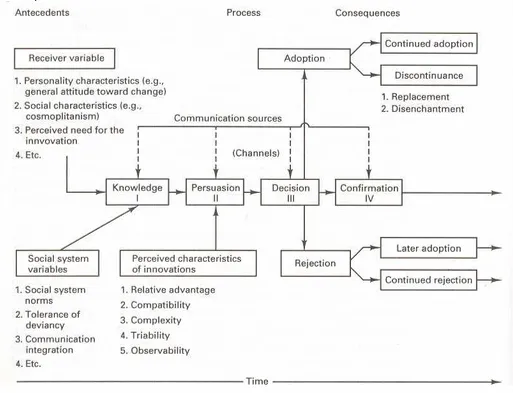
The adoption of a new Psychotropic Risk Assessment Checklist to change practice
patterns, and influence the prescribing culture in the nursing homes, was based on Roger’s
Diffusion of Innovations theory (Rogers, 2003). The adoption of change in practice for care of
patients with BPSD; specifically, an increase in non-pharmacological interventions, a decrease in
psychotropic use, and a person-centered care plan, will affect each nursing home individually.
The diffusion of new knowledge flows through channels, over a period of time, as
communication and dissemination between members of a healthcare system. Innovation
translates to change in practice patterns as ongoing sustainable improvements in care delivery, as
per Roger’s Diffusion of Innovations theory (Rogers, 2003). Each nursing facility is a unique
living environment, and adapts to change at a pace that evolves over time. The early adoption of
the assessment checklist, by the director of nursing, as an individual of influence and respect,
demonstrates quality improvement leadership as a change agent. The quality of the evidence and
new knowledge, the perceived relevance to the practice setting and population, and feasibility are
important factors that determine rates of adoption. For a conceptual model of the theory see
Figure #3.
The Diffusion of Innovations theory is based on the assumption that certain conditions
increase or decrease the likelihood that a new concept, product or practice will be adopted by
members of a given culture or social system. This theory predicts that media and interpersonal
relationships provide information, and influence others opinions and judgment. Rogers defined
system, time and the social system or context. As information flows through networks, the roles
of opinion leaders determine the likelihood that the innovation will be adopted by exerting their
influence on audience behavior.
Rogers defined five characteristics that determine the likelihood that an innovation will
be adopted. These characteristics also determine the rate of adoption:
• Relative advantage
• Compatibility
• Complexity
• Trialability
• Observability to members within the social system
Communication, or the process of diffusion, is accomplished by members of a social
system sharing information and reaching a mutual understanding (Rogers, 2003).
Communication channels are mass media channels or interpersonal channels, where mass media
are more effective in creating new knowledge, but interpersonal channels are more effective in
forming and changing attitudes toward a new idea. Rogers asserted that most individuals
evaluate an innovation through subjective evaluation of peers and colleagues who have adopted
an innovation rather than on scientific research or expert opinion alone.
Time intervals in the process of diffusion, can be measured in three different ways
(Rogers, 2003). The first is a 5-step innovation-decision process involving, 1) an individual’s
first knowledge of an innovation, to 2) forming an attitude toward the innovation, to 3) a decision
to adopt or reject the innovation, to 4) implementing the innovation to 5) confirming or
confirm progression through the process and increase certainty about an innovation’s perceived
consequences.
The second way in which time is involved in diffusion is captured by five adoption
categories and is based on a standard deviation-curve where very few innovators adopt the
innovation in the beginning (2.5%), early adoptors arrive (13.5%) a short time later, followed by
the early majority (34%), the late majority (34%), and finally the laggards who represent (16%)
of the adoptors. Rates of adoption are influenced by the five perceived characteristics of an
innovation previously mentioned.
The third way in which time is involved in the rate of adoption or the relative speed with
which an innovation is adopted by members of a social system.
The social system represents the fourth main element in the diffusion of innovation, and
Rogers defined it as a set of interrelated units that are engaged in joint problem solving to
accomplish a common goal. The units of a social system may be individuals, informal groups,
organizations or subsystems. A change agent is an individual who attempts to influence other
members innovation-decisions in a direction that is perceived as beneficial to the organization.
An important concept in understanding the nature of the diffusion process is the critical
mass. Critical mass occurs at the point at which enough individuals have adopted the innovation
so that the innovation’s further rate of adoption becomes self-sustaining. Strategies to reach
critical mass should be targeted to the early adoptors, (13.5%) in the social system. These early
adoptors are often influential opinion-leaders, and serve as role models for many other members
in the organization.
Rogers describes innovators, the first 2.5% of individuals in a system to adopt an
problems in new ways. The innovator must be able to cope with uncertainty about an innovation
at the time of adoption. The innovator is usually not limited by financial resources, but may
weigh heavily against unprofitable projects. The innovator plays an important role in the
diffusion process by launching the innovation and by importing the innovation into the
organization from outside the organizational boundaries. Therefore, the innovator has a
gatekeeping role in the flow of ideas into a social system.
The early adoptors are the next 13.5 percent of the members of a social system to adopt
an innovation. They are described as opinion leaders and speed the diffusion process. The early
adoptors are generally respected by their peers and know that to continue to earn the respect of
colleagues, they must make judicious innovation-decisions. The early adoptors serve to decrease
uncertainty about an innovation by adopting it, and then sharing their perceived benefit to peers
by interpersonal connections.
The next group of individuals to adopt an innovation in a social system, are known as the
early majority (34%). The early majority group adopts innovations just before the average
member of a social system. They interact frequently with their peers, but rarely have positions of
opinion leadership. They represent an important adoptor category because they provide
interconnectedness in the social system’s network of members.
The late majority is the next 34 percent of individuals in a social system to adopt an
innovation. This adoptor category, adopts new ideas just after the average member of a social
system, and they are likely to be influenced by increasing peer pressure. They may be skeptical
and cautious before they motivated to make a change. The late majority group is characterized by
having relatively scarce resources, which means they need confidence and low risk to adopt new
Rogers classified the last group of individuals to adopt an innovation as the laggards, or
16 percent of the members of a social system. Many laggards are relatively isolated in the social
network and their usual point of reference rests on process and patterns of the past. They may
resist innovation and similar to the late majority, are resource limited, and may fear failure.
Methods Ethical issues
APNs and other clinicians have important professional and ethical obligations to older
adults, with advanced dementia and behavioral disturbances. Especially challenging is the
medical management with psychotropic medications in the setting of long-term care. Knowledge
of the dementia disease trajectory may inform treatment decisions with a goal for palliative care
and symptom reduction to relieve suffering and improve QoL. The ethical virtues of
nonmaleficence (do no harm), beneficence (do good), autonomy (respect for individual rights),
and advocacy (speaking for the interests of those who cannot speak) are based in our
professional code of ethics, and are relevant for vulnerable populations. APNs can rely on our
professional organization, the American Nurse’s Association’s Code of Ethics for Nurses with
Interpretative Statements for a position statement on end of life care:
Nursing care is directed toward meeting the comprehensive needs of patients and their
families across the continuum of care. This is particularly vital in the care of patients and
their families at the end of life to prevent and relieve the cascade of symptoms and
suffering that are commonly associated with dying. (ANA, 2001, p.12)
In an effort to provide more optimal dementia care, the tool provides a checklist to critically
appraise the benefits and risks of psychotropic medications, and to establish the goals of care,
knowledge that nursing homes are living-environments for residents who live there, long-term
care providers should preserve and promote QoL, as important as other health outcomes (Kane,
et al., 2003).
Setting
The Psychotropic Risk Assessment Checklist was implemented in four separate skilled
nursing facilities (SNF) over a period of eight weeks, to document the medical management for a
total of 17 long-stay residents with BPSD. The SNFs were local to the community of Napa,
California, and ranged in size from 50 beds to 190 beds. Two of the SNFs were contracted with
Kaiser Permanente (KP) for skilled care. As a KP employed nurse practitioner, my caseload
included skilled care residents in addition to a total of 92 long-stay residents, among the four
facilities. Each facility had individual interdisciplinary teams (IDT) and leadership philosophies,
with individual rates of adoption of new knowledge, and willingness to change. The directors of
nursing were enthusiastic about implementing the Psychotropic Risk Assessment Checklist, and
became the facility champion for implementation. They perceived the new checklist as quality
improvement for a process of care delivery that was poorly documented, and located in many
sections of the chart. The checklist is simple but comprehensive, streamlined, and inexpensive to
implement. The checklist seemed a good fit with individual organizational missions and IOM
philosophies; to deliver safe, efficient, equitable, timely, high-quality, person-centered care.
Planning the intervention
Discussions with the administrators and directors of nursing at the individual SNFs,
regarding their concerns with the general lack of documentation in the medical records with the
medical management of residents with BPSD, revealed their readiness to participate in a revised
psychotropic use, was an additional concern. The checklist was simple, concise but
comprehensive, and was feasible for implementation in their organizations. It included a list of
the resident’s medical condition and staging of dementia, target symptoms, individualized
non-pharmacological interventions employed, a complete list of psychotropic medications prescribed
with their indications, psychotropic risk review, QoL indicators, and engaged families or patient
proxies for shared decision-making. Additional value from the checklist comes from the
integration of palliative care with dementia care, addressing the goals of care, with a focus on the
resident’s experience. Engaging the IDT and psychotropic review committee at each facility,
strengthens the care delivery process through collaboration. The checklist could be accessed and
updated by clinicians and other IDT members, and utilized as a quarterly update and review of
the medical management for residents with BPSD and psychotropic risk reduction. Decisions to
attempt psychotropic dose reductions or discontinuations would be carefully evaluated and
documented on the checklist. Engagement of the family or the patient’s proxy would be
documented as an important part of the process. An electronic version of the checklist, by
utilizing informatics to access psychotropic risk assessment information along the continuum,
would meet expectations of busy primary health care physicians as high end-users. As the
checklist evolves as a simple, concise documentation aid, with a point and click format, it may
simplify the process of critical thinking and risk analysis in the medical management of BPSD.
Sharing an electronic version of the checklist with colleagues and eventual spread to other Kaiser
Permanente service areas can be accomplished by introducing the checklist at medical
conferences and the annual long-term care summit. Dissemination of the checklist can spread
rapidly by submitting for publication to geriatric medical and nursing journals. A complete
Implementation of the project
Project education and implementation began in January 2013. An educational update on
best practice guidelines on the medical management of patients with BPSD with evidence-based
risk and safety concerns, was delivered to Kaiser Permanente nurse practitioners in the San
Francisco bay area who worked in long-term care facilities, in February 2013. Later, in
September, a similar educational update was delivered to KP primary care physicians in the
Napa Medical Offices. In October 2013, an educational update was presented to interdisciplinary
health professionals at a KP SNF Summit. A checklist concept evolved as a method to aid
documentation and address critical thinking toward psychotropic use for residents with BPSD.
The evolution of an electronic version of the checklist, came from discussions with primary care
physician colleagues who were end-users and familiar with the KP Healthconnect electronic
health record.
How the checklist works
The checklist is a 2-page, front and back paper form, with multiple components
including; disease severity and prognosis, target symptoms, individualized non-pharmacological
interventions, psychotropic drugs prescribed with indications, risk analysis, QoL indicators, and
shared decision-making with proxy or family discussions including trial dose reductions based
on perceived benefit and risk, and goals of care. The dementia disease trajectory, although not
included in the checklist, helps the clinician to define dementia as a progressive and terminal
disease. This knowledge of the temporal pattern of the disease process leading to a person’s
death, suggests when to commence palliative care or hospice.
The Psychotropic Risk Assessment Checklist involves the evidence-based FAST
dementia disease, where a score above 7 correlates with advanced disease (Reisberg, 1988).
Stage 7c of the FAST scale has been suggested by the National Hospice Organization as an
appropriate point to enroll patients with a primary diagnosis of dementia into hospice (National
Hospice Organization, 1996). At stage 7c or greater, more than two-thirds of persons with
dementia will die within 6 months (Hanrahan, Raymond, McGowen, & Luchins, 1999). Patients
cannot be staged using the FAST criteria unless their disease progresses in the ordinal sequence
of the scale (Luchins, Hanrahan, & Murphy, 1997). It is important to note that not all patients
with dementia follow the progression of disease designated by the FAST. The Psychotropic Risk
Assessment Checklist prompts the clinician to identify the type, severity or stage of dementia,
and considers other co-morbid conditions that may affect the clinical course and treatment
choices.
The target symptoms of most concern, or distress to the patient, are identified and
defined. Expert consensus calls for non-pharmacological strategies to be first line treatment, and
should be designed for each individual patient according to patient preference, or what is
beneficial to ameliorate the target symptoms. Feasible and effective non-pharmacological
interventions may include (e.g. time outside, exercise or movement, music or sing-a-longs,
animal assisted therapy, or scheduled family visits). Many patients with mild to moderate BPSD
will not need pharmacological treatments if non-pharmacological interventions are effective, and
utilized consistently. However, some patients with advanced disease and severe symptoms may
inevitably need psychotropic treatments, and the checklist matches the prescribed medication
with a specific target symptom of concern.
The checklist provides a condensed synopsis of evidence-based psychotropic risk
burden, as well as QT interval prolongation. New evidence from Rossom, et al., (2010), suggests
lower doses of antipsychotic medications are associated with lower risk for mortality and
morbidity, and may guide treatment decisions for trial dose reductions. Using the lowest
possible dose to achieve efficacy is an important clinical tip for prescribing for older adults.
Evidence of QoL measures for dementia patients at the end of life, suggest strong
correlatations with decreased pain, depression and agitation. The Psychotropic Risk Assessment
Checklist prompts clinicians to address pain management, symptom reduction, depression
management, and sleep quality with interventions to improve QoL. The qualitative value of the
checklist lies in the integration of palliative medicine with dementia care, with comfort-focused
strategies to relieve suffering of those who are near the end of life. The checklist acts as a guide
to inform discussions with patient’s family or proxy regarding prognosis and goals of care. When
optimizing the care of persons with dementia, and addressing the goals of comfort and shared
decision-making, the use of psychotropic medications may be justified in the management of
debilitating symptoms (AGS, 2012). In this framework of therapeutic analysis, the perceived
benefits of psychotropic treatments may exceed the risks, in certain individuals who are near the
end of life. In cases with extended psychotropic therapy, the decision to mainstay or decrease the
psychotropic burden, is based on the patient’s QoL benefit, or preference for risk reduction by
trial dose reduction. Clear documentation of a benefit/risk statement regarding a patient’s
psychotropic use, is a key value of the Psychotropic Risk Assessment Checklist.
The checklist may become more widely utilized in long term care settings to provide
clinicians and IDT members with an evidence-based method for risk appraisal, to inform the
selection of appropriate non-pharmacological approaches, and lowest risk options for
performance measures and outcome statistics, risk management and QoL indicators for those
with BPSD in diverse settings. This checklist is not a scale, and does not stratify risk or predict
outcome measures for mortality or morbidity indices, for example. Nor has the checklist been
endorsed as policy or best practice by Kaiser Permanente.
Planning the study of the intervention
The checklist represents a process improvement with a focus on person-centeredness,
engaging the IDT, utilizing an evidence-based process of critical thinking and analysis, and
informatics. Retrospective chart review was planned to capture measures of increased utilization
and documentation of non-pharmacological interventions and shared decision-making with
residents and their families or proxy. By the essence of using the checklist, where a chaotic
process existed before, it was assumed that utilization and documentation of these measures
would improve. There were no actual baseline measures to compare, and it was assumed that if
non-pharmacological interventions were undocumented, that they were not done, or done
inconsistently.
A gap analysis can be viewed as an appendix.
Methods of evaluation
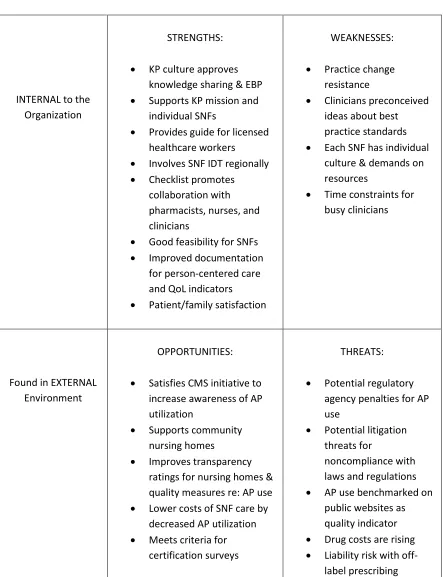
A full SWOT assessment with known internal and external forces can be viewed
as an appendix. The Psychotropic Risk Assessment Checklist supports the Kaiser Permanente
(KP) culture of knowledge sharing and evidence-based practice, and is congruent with the KP
mission to provide high-quality and cost effective care to the members and communities it
serves. The checklist also supports the individual nursing home missions, and was perceived as
an innovation that adds value to their current care delivery system. The checklist is easily
disciplines. Each individual nursing home has unique leadership styles and resource constraints
and therefore, different rates of adoption to change. The checklist satisfies CMS and national
initiatives to improve care for patients with BPSD and reduce psychotropic use. The checklist
may reduce potential external pressures posed by regulatory agencies and penalties with
inappropriate psychotropic use, and improve compliance with laws and regulations concerned
with prescribing practices.
Retrospective chart review was conducted to collect data for increased documentation of
multiple components of BPSD management. The utilization of the Psychotropic Risk
Assessment Checklist facilitated concise documentation on the type and severity of dementia, the
disease staging (to integrate palliative medicine into the goals of care), the target symptoms
causing distress, the effective non-pharmacological interventions, the psychotropic drug
prescribed, the dose and indication, adverse effect monitoring, and QoL indicators. The decision
to implement a trial dose reduction of psychotropic medications was a collaborative decision
with the patient, family, or members of the IDT and documented on the checklist. Finally, the
checklist documents and acknowledges discussions with family or proxies on shared
decision-making and goals of care (e.g. palliative, comfort, hospice). The checklist will be utilized as a
quarterly clinical assessment for all patients with BPSD who use psychotropic medications. By
the very essence of using the checklist as a new process, there will be enhanced documentation
of the various components in the management of BPSD, that were previously undocumented,
and measured as a process improvement.
The qualitative impact results were captured by a phone survey conducted to elicit feed
back from the directors of nursing who were the Quality Improvement Coordinators and lead the
conducted to patient’s family or proxy, to capture evaluative remarks about the provision of care
for patients with BPSD, and satisfaction.
Analysis
The methods used to capture data included both quantitative and qualitative strategies and
are still emerging. Quantitative and qualitative metrics include, 1) increased utilization and
documentation of non-pharmacological interventions, 2) improved satisfaction with care, and
shared decision-making, 3) improved QoL measures, and 4) qualitative impact results from the
IDT. Additional future outcomes include reduced psychotropic use with cost savings, improved
public benchmarking, and improved survey results from oversight and regulatory organizations.
Developing a formal quarterly patient/family or proxy survey will measure perceptions with care
delivery. This kind of data provides rich content for evaluating the project impact. Clinician
satisfaction with the Psychotropic Risk Assessment Checklist comes from comprehensive but
concise documentation of BPSD management. The checklist simplifies the complex task of
weighing benefits and risks of psychotropic use, and risk reduction. Patients and families who
are satisfied with their care, is an additional value. An electronic version of the checklist will
improve clinician access and end-user efficiency.
The project implementation is primarily nonlinear, with a less defined structure. There
are anticipated outcomes that influence care management, with improved documentation of a
care delivery process that was previously fragmented and disorganized. Other important
anticipated outcomes extend to influence culture change with psychotropic prescribing, and
increased emphasis on non-pharmacological interventions. Metrics collected are both simple, as
with retrospective chart review, and other complex metrics emerge from organizational impact
Results Program evaluation
The checklist was implemented with 17 long-stay residents with BPSD on psychotropic
medicines, with a mean age = 86.7 years (range = 65-97 years). There were 16 females (94%),
and 1 male (6%). From a total of 92 long-stay residents on my case-load, there were 17 residents
on psychotropic medications for BPSD management which represented 18.4% residents on
psychotropic medicines. The Mean FAST score for dementia severity was (6.71); a score over 7
represents severe dementia.
The checklist improved documentation of non-pharmacological interventions, for the
management of BPSD, on all 17 residents. Psychotropic dose reductions were documented on a
total of 7 residents, which represented a 41% reduction in psychotropic medication use during
the eight week project, conducted January 1, 2014 through February 28, 2014. One resident
experienced a relapse of severe symptoms after dose reduction, and after a gero-psych
evaluation, had a subsequent increase in psychotropic medications. All four of the directors of
nurses reported, the checklist represented quality improvement by increased documentation of
the non-pharmacological interventions employed for each resident, the target symptoms of
distress, the dementia disease severity, the psychotropic medications prescribed and indication,
adverse effect monitoring, quality of life indicators, and goals of care. Each of the directors of
nursing, or facility champion, readily adopted the checklist into process improvement, because it
was concise, streamlined, comprehensive, and had a good feasibility fit for their residents and
facility. There was no cost associated with the tool implementation to the facilities, and three of