Irena Choroszy-Król
A–F, Magdalena Frej-Mądrzak
A–F,
Agnieszka Jama-Kmiecik
A–F, Tamara Bober
B, C, Jolanta Sarowska
D–FCharacteristics of the
Chlamydia trachomatis
species
– Immunopathology and Infections
Charakterystyka gatunku
Chlamydia trachomatis
– immunopatologia
i zakażenia
Department of Basic Science, Faculty of Health Sciences, Wroclaw Medical University, Poland
A – research concept and design; B – collection and/or assembly of data; C – data analysis and interpretation; D – writing the article; E – critical revision of the article; F – final approval of article; G – other
Abstract
Chlamydiae are microorganisms exhibiting characteristics intermediate between bacteria and viruses. Chlamydia is widespread in the natural world, intracellular parasites of people and animals. They are capable of independent reproduction, because they do not synthesize ATP, in its development cycle using the host cell metabolic pathways. The life cycle of these microorganisms is original, unique among bacteria and lasts from 24 to 48 hours. Chlamydia antigens consist of 4 groups: group-specific, species-specific, type-specific and subspecies-specific. The group of species-specific antigens consists of MOMP and heat shock proteins. C. trachomatis is a potent immunogen, stimu-lating the immune processes of microorganisms. In the course of C. trachomatis infection, the response mecha-nisms involved are: non-specific, specific, humoral and cellular. Chronic infection is characterized by maintenance of microorganisms in the host cell. Inflammation is formed in less time and with increased intensity and has a rapid immune response on the part of previously sensitized lymphocytes. C. trachomatis infections are the most common bacterial sexually-transmitted infections. It represents an important clinical problem for doctors in many areas of medicine such as dermatology, venereology, ophthalmology, gynecology and obstetrics, rheumatology and others. Chlamydial infections are important pathogens in medical practice, not only because they cause disease in various fields of medicine, but also because of the large proportion of the population suffering and exposed to these micro-bial infections. Chlamydial infections are characterized by multifocality and polymorphism changes. Chlamydia causes inflammation in the adult urethra and cervix with the possibility of serious complications, and can cause perinatal infections in infants (Adv Clin Exp Med 2012, 21, 6, 799–808).
Key words: Chlamydia trachomatis, immunopathology, infections.
Streszczenie
Chlamydie są drobnoustrojami wykazującymi cechy pośrednie między bakteriami a wirusami. Chlamydie to sze-roko rozpowszechnione w świecie przyrody wewnątrzkomórkowe pasożyty ludzi i zwierząt. Są niezdolne do samo-dzielnego rozmnażania, ponieważ nie syntezują ATP. W swoim cyklu rozwojowym wykorzystują szlaki metabo-liczne komórek gospodarza. Cykl rozwojowy tych drobnoustrojów jest oryginalny, niespotykany wśród bakterii i trwa 24–48 godz. Chlamydie mają 4 grupy antygenów: swoiste grupowo, gatunkowo, typowo oraz podgatunkowo. Do grupy antygenów swoistych gatunkowo należą: MOMP i białka szoku termicznego. C. trachomatis jest silnym immunogenem stymulującym procesy odpornościowe mikroorganizmów. W przebiegu zakażenia C. trachomatis
biorą udział mechanizmy odpowiedzi nieswoistej, swoistej, humoralnej oraz komórkowej. Zakażenie przewlekłe charakteryzuje się utrzymaniem drobnoustroju w komórce żywiciela. Stan zapalny powstaje w krótszym czasie i ze zwiększonym nasileniem oraz szybką reakcją immunologiczną ze strony uczulonych wcześniej limfocytów. Zakażenia C. trachomatis są najbardziej rozpowszechnionymi infekcjami bakteryjnymi przenoszonymi drogą płciową. Stanowią istotny problem kliniczny dla lekarzy wielu dziedzin medycyny, takich jak: dermatologia, wene-rologia, okulistyka, ginekologia i położnictwo, reumatologia i inne. Zakażenia chlamydialne są niezwykle ważnymi patogenami w praktyce lekarskiej, nie tylko dlatego, że wywołują choroby z zakresu różnych dziedzin medycyny, ale także z uwagi na duży odsetek populacji cierpiącej i narażonej na zakażenia tymi drobnoustrojami. Zakażenia
Adv Clin Exp Med 2012, 21, 6, 799–808 ISSN 1899–5276
rEvIEWS
On the basis of classification according to Bergey’s manual, chlamydia belongs to the order Chlamydiales, represented by the family Chlamy-diaceae and Chlamydia type. The type includes four species of bacteria pathogenic to humans:
C. trachomatis, C. pneumoniae, C. psitaci, C. peco-rum. They are characterized by a common antigen group and developmental cycle, but they have dif-ferent phenotypes and pathogenicity. Differences and common features are shown in Table 1.
The new taxonomy of microorganisms of the family Chlamydiaceae in the research of Everetti et al. [1] is as follows: Order: Chlamydiales, Fam-ily: Chlamydiaceae, Type: Chlamydia, Species:
Chlamydia trachomatis, Chlamydia muridarum
sp nov., Chlamydia suis sp nov. Biotype: trachoma and LGv, type: Chlamydophila, Species: Chlamy-dophila psittaci comb nov., Chlamydophila abortus
sp nov., Chlamydophila felis sp nov., Sp nov Chla-mydophila caviae, Chlamydophila pecorum comb nov., Chlamydophila pneumoniae comb nov., bio-type: TWAr, Koala, Equine [1].
In this taxonomy, the two lines and a new spe-cies of the family Chlamydiaceae were identified.
The term Chlamydia trachomatis derives from the Greek words chlamydos and trachoma. “Chlamys” – a coat, which are inclusions of intra-cellular bacteria flattening the host cell nucleus. “Trachoma” – an eye disease that leads to cicatri-cial changes, known since antiquity as a “rough eye” [3–5]. Currently, the C. trachomatis species consists of two biotypes: trachoma – a typical C/PK-2 strain, and LGv – venereal granuloma with a specific L2/434/BU strain. A mouse biotype previously belonging to this species has now been called C. muridarum and it causes pneumonia in mice [1]. Human pathogenic strains are divided into 18 serotypes (Fig. 1). The trachoma biotype includes A, B, Ba, and C serotypes. They are trans-mitted by indirect contact and cause trachoma. D, Da, E, F, G, H, I, Ia, J and K serotypes are responsi-ble for so-called oculogenital infections (infections of the urogenital system in adults, conjunctivitis in adults and children, and pneumonia in children). L1, L2, L2A and L3 – the LGv biotype causes in-guinal lymphogranuloma venereum, inflamma-tion of the rectum, genital ulcers, and infecinflamma-tions of the lymphatic tissue [1, 4–7]. Chlamydiae are microorganisms exhibiting common features of bacteria and viruses. Nevertheless, since 1966 they have been classified as bacteria [1, 4, 8–10].
The bacterial features are as follows: cell wall structure is similar to Gram (–), except that there is not a sufficient amount of peptidoglycan in the periplasmic space, the cell is lancet-shaped, the presence of two acids in the cell (DNA, rNA) and some organelles, different active metabolic enzymes (e.g. disintegrating glucose and produc-ing CO2), reproduction by division and antibiotic sensitivity.
viral features are as follows: cell size of 0.2–1.3 microns, the lack of some of their own mechanisms of metabolic energy production, only intracellular life cycle, using the ATP energy stored in the host cell (so-called energy parasitism), formation of cytoplasmic inclusions and they do not grow on synthetic bacterial media.
Other features of chlamydia: sensitivity to ex-ternal environment (temperature, light, drying), at 45°C they are killed in 15 min and at 80°C in 1 min, sensitivity to commonly used disinfectants, such as 1% solution of chloramine [4].
Chlamydia Developmental
Cycle
Chlamydia is widespread in the environment, an intracellular parasite of humans and animals. They are capable of independent reproduction, be-cause they do not synthesize ATP. In its develop-ment cycle it uses the host cell metabolic pathways. The life cycle of these microorganisms is original and unique among bacteria. It lasts from 24 to 48 hours. Its uniqueness is associated with the oc-currence of two morphologically different forms of microorganism: an elementary body (EB) and a reticulate body (rB). The differences between the EB and rB are described in Table 2. EB is an infectious form, metabolically inactive and can be transferred from person to person. It has a lancet shape, high electron density and a size of 0.4 mi-crons. It also has a cell membrane that allows cells to survive for some time outside the host cell. rB is a non-infectious and metabolically active form. It has a reduced shell, is formed after cell infection, and is capable of intracellular multiplication (inclu-sion bodies are created). It has an oval shape, size of 0.8–1.3 microns and a low electron density. rB is surrounded by a thin cell membrane with high permeability, it does not contain haemagglutinin. The chlamydia cell wall does not contain
pepti-chlamydiami charakteryzuje wieloogniskowość i wielopostaciowość zmian. Chlamydie powodują u dorosłych stany zapalne cewki moczowej i szyjki macicy z możliwością groźnych powikłań, a u noworodków mogą być przyczyną zakażeń okołoporodowych (Adv Clin Exp Med 2012, 21, 6, 799–808).
Table 1. Comparison of species of the family Chlamydiaceae according to [1, 2]
Tabela 1. Porównanie gatunków z rodziny Chlamydiaceae wg [1, 2]
Species
(Gatunek) C. trachomatis C. pneumoniae C. psittaci C. pecorum Biotype
Biotyp Serotype Serotyp
Trachoma
A, B, Ba, C, D, Da, E, F, G, H, I, Ia, J, K
LGv
L1, L2, L2a L3
mouse
lack
TWAr
TW-183, Ar-37, Ar-277, Ar-388, Ar-427, Ar-231, Lr-65
1, 2, 3–9
probably 1 i 2
no data
no data
Natural host
(Gospodarz naturalny) human human animals animals Infection route
(Droga zakażenia) contact inhalation inhalation inhalation Place of infection
(Miejsce infekcji) conjunctival and genitourinary epithelial cells respiratory epi-thelium respiratory epi-thelium respiratory epithelium Diseases
(Choroby) trachoma, venereal granuloma, infection of the urogenital system, inclusion conjunctivitis, reactive arthritis, conjunctivitis and pneu-monia in children
pneumonia zoonoses zoonoses
Number of serotypes
(Liczba serotyp) 18 1 numerous 3
LPS antigen
(Antigen LPS) (+) (+) (+) (+)
EB shape
(Kształt EB) round round pear-shaped pear-shaped Antibiotic sensitivity
(Wrażliwość na antybiotyki) (+) (–) (–) (–)
Species Chlamydia trachomatis (Gatunek)
Biotype trachoma LGV (Biotyp)
Serotype A, B, Ba, C D, Da, E, F, G, L1, L2, L2a, L3 (Serotyp) H, I, Ia, J, K
trachoma inguinal lymphogranuloma venereum (jaglica) (ziarnica weneryczna)
genitourinary infections (zakażenia układu moczowo-płciowego)
conjunctivitis in adults and children (zapalenie spojówek u dorosłych i dzieci)
doglycan, which is characteristic for this group of microorganisms. It is thick, stiff, and similar to the wall of Gram-negative bacteria. It has two layers: internal and external which contain a high amount of proteins rich in cysteine. Disulfide bridges affect the resistance of EB to mechanical and oxidative stress, and provide wall rigidity. The presence of hemagglutinin facilitates its adhesion and penetra-tion into host cells, which probably also affects the infectivity against the host cell [1, 4, 9, 10, 12, 13].
The Chlamydial developmental cycle lasts 48–72 hours and several stages can be distin-guished: the binding of EB to the host cell, endo-cytosis of EB into the host cell and the creation of cytoplasmic inclusion, transition of rB into EB, the multiplication of rB transition of rB into EB, phagosomal rupture and release of EB. The stages of the developmental cycle of chlamydia are pre-sented in Figure 2.
An infection occurs when EB cells bind with sensitive cells (usually the columnar epithelial cells of the conjunctiva and genital organs) and a re-versible and then irrere-versible connections are pro-duced. The next stage is the transition of EB into
Fig. 2. The intracellular developmental cycle of C. tra-chomatis: A) EB cell penetration through endocytosis, B) phagosome formation and transformation of EB into rB, C) rB divisions, D) rB into EB transforma-tion, E) lysis of infected cells
Ryc. 2. Wewnątrzkomórkowy cykl rozwojowy C. tra-chomatis. A) wnikanie ciałek EB na drodze endocytozy, B) powstawanie fagosomu i transformacja EB w rB, C) podziały rB, D) przeobrażenie rB w EB, E) liza komórki zakażone
Table 2. The main differences between elementary and reticulate body [7]
Tabela 2. Główne różnice między ciałkiem elementarnym a siateczkowatym [7]
Property
(Cechy) EB rB
Size
(rozmiar) 0.2–0.4 µm 0.8–1.3 µm
Morphology (Morfologia)
– lancet-shaped, – high electron density,
– the presence of a thick, rigid cell wall with large amounts of cysteine protein,
– the presence of cytoplasmic membrane
– oval-shaped, – low electron density,
– the presence of a thin membrane with high permeability
Haemaglutinin in the cell wall (Hemaglutynina w ścianie komórkowej)
present lack
Infectivity
(Zakaźność) high lack
Place of development
Miejsce rozwoju extracellular (mainly) and intracellular intracellular Sensitivity to:
– digestion by trypsin, – mechanical stress, – oxidative stress (Wrażliwość na: – trawienie trypsyną – stres mechaniczny – stres)
resistant sensitive
Metabolic activity
(Czynność metaboliczna) lack active The ability to reproduce
the cell through endocytosis and producing a com-mon phagosome together with other elementary bodies which are called cytoplasmic inclusions [6, 9, 12, 14]. EB differentiates into rB, while a re-duction of the disulfide bridges occurs, leading to modification of the structure of outer membrane proteins, chromosome decondensation, an in-crease in the size and number of ribosomes as well as changes in the rNA to DNA proportion from 1 : 1 to 3 : 1 [7]. Within the phagosome, rB replica-tion occurs (several divisions), which is associated with a significant enlargement of the cytoplasmic inclusion. It fills the cytoplasm, therefore the cell nucleus is pushed to the cell perimeter. After about 36 hours following infection, rB are surrounded by a plasma membrane and undergo transforma-tion to EB. After 48 hours following cell infectransforma-tion, EB is released through lysis or cytoplasmic inclu-sion rupture without damaging the host cell. The 50–1000 mature bodies that exist outside the cell are the source of infection for other host cells. Chla-mydiae have the ability to survive within the host cell without undergoing the developmental cycle.
The cycle may vary under the influence of various factors delaying the maturation of EB and EB transformation into invasive rB. These factors include: antibiotics – penicillin inhibits the rB transformation into EB, INF-γ, which inhibits the intracellular multiplication of Chlamydia and di-etary factors – which reduce the level of exogenous tryptophan. These factors cause the loss of “patho-genicity” of the endospore form [12, 16].
Characteristics of
Chlamydia
trachomatis
Antigens
Chlamydia have 4 groups of antigens: group- -specific, species-specific, type-specific and sub-species-specific. The group-specific antigen (ge-nus) is a multisaccharide-lipid complex which consists of two components:
LPS – the lipopolysaccharide component com-posed of several long-chain fatty acids, phosphate, D-galactosamine and deoxy-D-manno-2-octulo-sonic acid. LPS is present on the surface of EB and rB during the developmental cycle of Chlamydia.
GLXA – the glycolipid component composed of glucose, mannose, possibly galactose, and two fatty acids containing 17 and 18 carbon atoms. It is located on the surface of EB and rB within the cell membrane of cytoplasmic inclusions, the host cell membrane and surrounded by infected cells. In terms of chemical structure, the weight of the molecules and genus-specific antigen features are similar to the lipopolysaccharide antigen of Gram- -negative bacteria.
MOMP and heat shock proteins belong to the species-specific antigens. MOMP is a protein whose molecular weight is approximately 40 kDa and it is 60% of the weight of outer membrane proteins. It is built of four variable hydrophilic domains exposed outside the cell membrane sur-rounded by five hydrophobic domains occurring on the inner surface. MOMP acts as a structural protein and is involved in the differentiation of the chlamydial development cycle. It is a protein with highly immunogenic properties, containing epitopes specific to the genus, species, subspecies and serotype. The c-HSP60 antigen, or heat shock protein, whose molecular weight is 60 kDa is mod-erately immunogenic in comparison to the poorly immunogenic smaller protein of 12 kDa molecular weight. They are invisibly present on the surface of the membrane, and antibodies specific to these proteins do not bind to live EB.
Type-specific antigens are probably polypep-tides, whose molecular weight is 30 kDa, placed on the surface of EB and rB. They are used to differ-entiate serotypes using the MFI test. Polypeptides are subspecies-specific antigens. Based on the re-activity measured using the MIF test, C. trachoma-tis serovars were classified into three subspecies: B, Ba, D, Da, E, L1, L2 and L2A serotypes belong to the so-called group B, serotypes A, C, I, Ia, J and H belong to group C, and K and L3 serotypes that undergo cross-reaction, and the group C, F and G serotypes and B subspecies belong to the so-called intermediate group [7, 8, 11, 12, 17, 18].
Immunopathology
and Infection Caused
by
Chlamydia trachomatis
C. trachomatis is a potent immunogen, stimu-lating the immune processes of microorganisms. In the course of C. trachomatis infection, non-specific, non-specific, humoral and cellular response mechanisms are involved.
which, in the presence of chlorine and other hal-ogens, MPO enzyme chloric acid is formed, and then chloramine which is toxic to bacteria [1, 7].
In the initial phase, 20–24 hours after infec-tion, the infected epithelial cells produce IL-1α, IL-6, IL-8 and IL-10 cytokines. The secreted cy-tokines which have chemotactic and activating neutrophils, monocytes and T cells properties also increase the adhesive properties of epithelial cells and stimulate secretion of other proinflammatory cytokines by macrophages and acute phase pro-teins.
In a further phase, macrophages and T leuko-cytes migrate to the infection site. B lympholeuko-cytes play a minor role here. The immune response from the host cells to primary chlamydial infection in most patients is temporary and is not associated with tissue damage. Mainly IgA show neutralizing action, which limit the spread of infection but do not eliminate the microorganisms from the body [7, 13].
Chronic infection is characterized by the maintenance of a microorganism in the host cell. The inflammation is induced in less time and with increased intensity and a rapid immune response by previously sensitized lymphocytes occurs. In the process of chronic infection, delayed-type hy-persensitivity (DTH) and the Arthus reaction arise. DTH develops within 24–48 hours, and results from the interaction of antigen with specifically sensitized Th1 lymphocytes. In type III hypersen-sitivity (Arthus reaction), immune complexes lead to epithelial cell damage and the development of fibrosis and scarring within the infected organs.
In the pathogenesis of chlamydial infections, the following compounds are involved:
IFN-γ – completely inhibits the developmen-tal cycle of chlamydia in high concentrations, in medium and low concentrations it causes the de-velopment of non-infected forms. The mechanism involves the secretion of an enzyme catalyzing the degradation of tryptophan, whose deficiency in-hibits the growth of Chlamydia.
IL-1 – has immunostimulatory properties, inducing maturation of pre-B cells, it proliferates and differentiates B cells stimulated by antigens, it induces release of IL-2, IL-3, interferons, it stimu-lates the phase response and triggers fever. It also affects the chemotaxis of neutrophils, lymphocytes and monocytes. It is involved in scar formation and fibrosis.
IL-1α – intensifies the inflammatory response by stimulating those yet uninfected to secrete oth-er cytokines.
IL-5 – influences the differentiation, activation and degradation of eosinophils. Together with an-tigen it induces growth and differentiation of B
cells in combination with IL-2 and it is cytotoxic to T cells. It is secreted in a later phase of infection and may affect the protraction of the inflamma-tion process and the formainflamma-tion of dangerous com-plications.
c-HSP60 – causes delayed-type hypersensitiv-ity reaction which contributes to irreversible con-sequences in the course of infection with C. tra-chomatis [7, 13].
Infections and Complications
Caused by
C. trachomatis
C. trachomatis infections are the most com-mon bacterial sexually transmitted diseases. They are a major clinical problem for physicians in many areas of medicine such as dermatology, ve-nereology, ophthalmology, gynecology and obstet-rics, rheumatology and others. Chlamydia infec-tions are important pathogens in medical practice, not only because they induce diseases belonging to various fields of medicine, but also because of the large proportion of the population suffering from and exposed to infection by these pathogens [6, 10, 19–24]. The incidence of chlamydia diseases according to the WHO are 90 million people per year [6, 17].
Asymptomatic infections spread among sexu-al partners that lead to long-term complications. One infection does not give immunity and does not prevent further recurrences.
risk factors for C. trachomatis infection inclu-de: low level of intimate hygiene, young woman’s age (20–25 years old), having sexual intercourse with multiple partners, a partner with symptoms of non-gonococcal urethritis, blennorrheal infection, pregnancy, cervical ectopy, invasive diagnostic procedures within the reproductive tract, invasive diagnostic tests, intrauterine contraception, artifi-cial insemination, previous or concomitant geni-tourinary infection of a different etiology, alcohol and drug abuse, low socio-economic status [7, 20, 25]. C. trachomatis infection may be the result of indirect contact, such as by objects or dirty hands. This applies mainly to A-C serotypes. Oculogeni-tal infections with D-K and L1-L3 serotypes are mainly spread by sexual contact, and in newborns D-K serotypes are transmitted via perinatal route. The serotypes most commonly isolated from pa-tients are E (50%), F (20%) and D (10%) of C. tra-chomatis. According to recent research, serotype F causes more severe infections, and E serotype causes asymptomatic infections [7, 20].
tracho-ma, i.e. chronic inflammation of the cornea and conjunctiva, the main cause of blindness. Infec-tion occurs through direct contact with secreInfec-tions of people infected with conjunctivitis or with con-taminated clothing, towels. The disease is char-acterized by the occurrence of lesions within the epithelium of the eye and nasopharynx. There are cytoplasmic inclusions in the epithelial cells of the eye [2, 18, 26].
C. trachomatis is the most common cause of diseases transmitted by sexual contact [27–29]. L1, L2, L2A and L3 serotypes cause lymphogranu-loma venereum, which occurs mainly in develop-ing countries. In Poland, LGv is intermittent. The initial symptom is erosion or pimple in the groin, which in 1–4 weeks adopts a secondary form [30].
D, Da, E, F, G, H, I, Ia, J and K serotypes cause urogenital tract infections which are transmitted through genital sexual contact and through peri-natal route in infants. C. trachomatis has a tissue tropism for columnar and transitional epithelium. Primary infection occurs in the cervical canal and the urethra [2]. The clinical picture of oculogenital infections with D–K serotypes depends on gender.
Infections of the urogenital system in men are non-gonococcal urethritis (NGU) and post-gonococcal urethritis (PGU). If left untreated, they lead to serious complications such as epididymitis, prostatitis, reactive arthritis, and complete or in-complete reiter’s syndrome and infertility [8, 26, 29, 31, 32, 34].
NGU is a sexually transmitted disease. 50% of cases of NGU are caused by chlamydia [34, 35]. The incubation period is 2–3 weeks after infec-tion. The clinical course is usually subacute and poorly symptomatic, the bacteria are rarely detect-ed in patients without clinical signs of infection. The symptoms are: severe difficulties in urination (burning, itching, pain in the urethra during uri-nation, urinary frequency and urgency), the pres-ence of abnormal secretions in the mouth of the urethra, which appears in the morning (morning dew drops symptom), are watery, mucous, mu-cous-purulent or rarely purulent and pain in the lower abdomen and/or testicles [2, 18, 27].
Although the symptoms are varied and may go unnoticed by the patient, in rare cases hematu-ria and low-grade fever may occur [20, 29].
20–30% of men with gonococcal urethritis (GU) are also infected with C. trachomatis. In PGU, chlamydia is detected at a higher percentage than in NGU. The WHO has introduced new GU treatment regimens, as co-infection with C. tra-chomatis and N. gonorrhoeae is common [7, 18].
Urethral structure in men with NGU is a con-sequence of a long course of chronic and recur-rent or late and inadequate treatment of NGU.
The main symptoms include slowing or stopping the urine flow, which may cause difficulty in start-ing micturition. Additional symptoms are: urinary frequency, nocturia, urinary urgency and painful urination. Exacerbated local inflammation can lead to complete closure of the lumen of the ure-thra [29].
A complication of chlamydial infection of the urethra in men may be epididymitis, which can be accompanied by the following symptoms: severe pain in the epididymis which prevents walking, pain in the abdomen, fever, chills and general mal-aise. Within the scrotum the following symptoms may be observed: swelling, soreness, redness and warmth. Inflammation of the epididymis may be accompanied by inflammation of the testicles and obstruction of the seminiferous tubules, leading to infertility [20, 27, 29].
C. trachomatis is also involved in the patho-genesis of inflammation of the prostate (prostati-tis), which is a urological disorder found in 50% of men under 50 years of age. Prostatitis caused by C. trachomatis is characterized by a triad of symptoms: acute, dull pain located within the perineum, lower abdomen and near the sacro-lumbar spine radiating to the genital area, discom-fort in the urinary tract (frequency, tenesmus, pain when urinating, decreased urination) and genital dysfunction (erectile dysfunction, pain during ejaculation or premature ejaculation). The disor-ders may be accompanied by hematospermia and hematuria [7, 18]. Chlamydia’s effect on fertility in men raises a lot of controversy. It was found that epididymitis may lead to partial or complete obstruction of the tubules, and thus to reduce the amount of semen. reduced sperm count and poor sperm construction may be observed. Chlamydia- infected seminal vesicles and prostate secrete more mucus, which weakens the movement of sperma-tozoa; leukospermia may also negatively affect fer-tility in men [27].
endo-metrium, intrauterine procedures and remains after a miscarriage. The characteristic symptoms of inflammation of the cervix include: congestion and swelling of the mucous membrane and puru-lent-mucous discharge with polymorphonuclear leukocytes [20, 27, 29].
In the course of C. trachomatis infection the following symptoms can occur: a set of symptoms from the urethra (urinary syndrome), inflamma-tion of the vagina (vaginitis), inflammainflamma-tion of the Bartholin’s gland (bartholinitis), pelvic inflamma-tory disease (PID) and inflammation of the he-patic tissues and appendages (Fitz-Hugh-Curtis syndrome) [2, 29, 34, 35].
Chlamydial urethritis in women may be in the form of so-called urethral syndrome, which is characterized by: dysuria, frequency, leukocyturia, pain in the lumbar region and perineum, and neg-ative results of routine bacteriological examination of urine. redness and swelling of the external ure-thral orifice and the presence of mucous-purulent or mucous discharge are found under physical ex-amination. 30% of patients who are sexual part-ners of men with NGU had urethritis [20, 29].
vaginosis is often asymptomatic, it is charac-terized only by abnormal bacterial flora, although 4% of infected women have symptoms. This ap-plies to patients after hysterectomy undergoing hormonal treatment and girls before puberty. One of the first and most common symptoms of in-flammation is vaginal discharge [7].
A complication of chlamydial cervicitis is in-flammation of the greater vestibular gland
(Bar-tholin). In the course of infection, an abscess is formed and the duct is closed. Inflammation is associated with swelling and soreness around the labia [20, 30].
Pelvic inflammatory disease (PID) in women occurs in the course of inflammation of the cer-vix. Infection of the mucosa of the endometrium manifests with low-grade fever, atypical pelvic pain, uterine bleeding and heavy and painful pe-riods. Histologically, it is considered the presence of inflammatory infiltrates composed of plasma cells and polymorphonuclear leukocytes. Physical examination shows tenderness of the uterus. En-dometritis is associated with inflammation of the fallopian tubes caused by C. trachomatis, which is characterized by: a dull lower abdominal pain, low-grade fever, intermittent vaginal discharge, abnormal menstrual periods or bleeding after in-tercourse.
In the course of PID, inflammation of the ova-ries, which is accompanied by secondary amen-orrhea, may develop. C. trachomatis is the most common mechanical cause of infertility in women with a history of PID. During chronic infection, the fallopian tubes can be damaged and ectopic pregnancy may occur [20, 26, 29]. rare complica-tions in women include: inflammation of the liver tissue, Skene gland’s inflammation, inflammation of the anus and throat, a syndrome of interstitial inflammation of renal tubules and uvea [7, 20].
In pregnant women, infection with C. tra-chomatis infects the urogenital system, which contributes to the pathological course of preg-nancy and may pose a risk to the fetus, newborn and mother. Infection is facilitated by long-term congestion and looseness of cervical epithelium resulting from the estrogen activity. Microorgan-isms from the cervix of a pregnant woman infect amniotic epithelial cells, causing inflammation of the membranes and therefore may induce miscar-riages. Complications of pregnancy also include: premature births, blighted pregnancy, premature rupture of membranes, low birth weight and peri-natal infant infection [7, 26, 27].
Neonatal infection occurs during childbirth when the child contacts the birth canal of the cervix of infected women. The risk of perinatal infection is 30%. Cases have also been found of chlamydial infection in children born by caesar-ean section. C. trachomatis infection in children causes: conjunctivitis, pharyngitis, pneumonia, vaginitis, endocarditis and myocarditis, otitis me-dia and gastroenteritis [20, 23, 27, 34].
The most common form of infection in new-borns is conjunctivitis, which is 18–50% of cases. It occurs approximately 2 weeks after birth and is characterized by the following symptoms: mucous
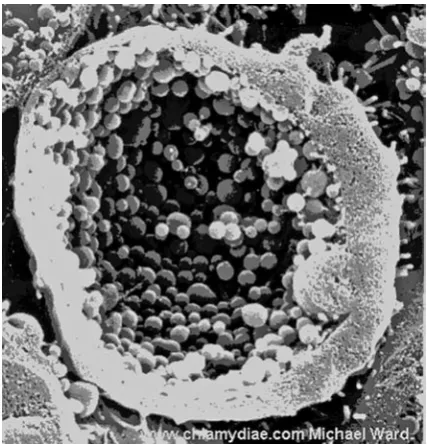
Fig. 3. The disintegration of the epithelial cells of the host and the release of elementary bodies
secretion which changes into purulent secretion, swollen eyelids, redness of the conjunctiva, and then the whole eye. Inclusion conjunctivitis may be accompanied by rhinitis and/or otitis media. The untreated clinical form can lead to scarring within the conjunctival and corneal vacuolization [29].
Interstitial pneumonia caused by C. tracho-matis is the second most common perinatal infec-tion in neonates. This shows up between 2 and 16 weeks of age. It is characterized by good general condition and usually feverless course, dry cough, gradually growing shortness of breath and the as-sociated conjunctivitis. The radiographic findings observed are interstitial or patchy inflammatory infiltration and hyperinflation [7, 29].
In the course of chlamydial infection of the genitourinary tract, conjunctivitis, joint pain and discharge and anorectal discomfort may occur in sexual partners [2, 21, 26, 30].
Infection of the urogenital system can be trans-ferred to the conjunctiva of the eye (autoinfection) and cause inflammation. In adults, it is usually conjuctivitis, has subacute onset and one eye is in-volved. The infection lasts from several days to sev-eral weeks. Predominant symptoms include: watery eyes, congestion, conjunctivitis, photophobia, very severe swelling of the eyelid and the presence of mucous-purulent secretions [18, 19, 26, 27, 29].
Urogenital C. trachomatis infection may be a cause of reactive arthritis (SArA), acquired by sexual contact. SArA is manifested by inflamma-tion of synovial membranes, tendons and fascia, mainly in the knee and ankle joints, usually uni-laterally. If articular symptoms are accompanied by symptoms from the urogenital system and con-junctivitis is found then reiter’s syndrome is diag-nosed [20, 30, 31, 35].
References
[1] Pawlikowska M, Deptuła W: Chlamydie i chlamydofile u ludzi i zwierząt. WN Uniwersytetu Szczecińskiego, Szczecin 2012.
[2] Juszczyk J, Samet A: Zakażenia układu moczowo-płciowego wywołane przez Chlamydia trachomatis. Antybiotykoter zakaż 2003, 2, 28–33.
[3] Choroszy-Król I: Chorobotwórczość, metody identyfikacji i leczenie zakażeń wywołanych przez Chlamydia tra-chomatis. Urol Pol 1999, 52, 125–135.
[4] Markowska J: rola zakażenia Chlamydia trachomatis w rozwoju CIN i raka szyjki macicy. Gin Pol 2002, 73, 473–475.
[5] Szymulska M, Zagórski Z: Znaczenie Chlamydia trachomatis w etiologii zapalenia spojówek. Klin Oczna 1995, 97, 64–65.
[6] Nitsch-Osuch A, Wardyn KA, Choroszy-Król I: Zakażenia wywołane patogenami atypowymi w praktyce lekar-skiej. Górnicki Wyd. Med. Wrocław 2007.
[7] Zdrodowska-Stefanow B, Ostaszewska I:Chlamydia trachomatis – zakażenia u ludzi. volumed, Wrocław 2000. [8] Choroszy-Król I, Ruczkowska J: Laboratoryjna diagnostyka chlamydioz. Wyd. Akademia Medyczna we Wrocławiu,
2004.
[9] Heczko PB: Mikrobiologia, Podręcznik dla pielęgniarek, położnych i ratowników medycznych. Wyd. Lek. PZWL, Warszawa 2007.
[10] Karwan-Płońska A: Infekcje Chlamydia trachomatis. Terapia 1999, 12, 17–18.
[11] Kurpas D, Steciwko A: Atypowe infekcje układu moczowego w praktyce lekarza rodzinnego. Lekarz 2008, 6, 96–105.
[12] Bielecki R, Zdrodowska-Stefanow B, Ostaszewska-Puchalska I, Kozłowski R, Puciłło K: rola zakażenia
Chlamydia trachomatis w patologii męskiego narządu moczowo-płciowego. Przegl Lek 2004, 61(3), 170–174. [13] Pawlikowska M, Deptuła W: Mechanizmy odporności nieswoistej u ludzi i zwierząt a chlamydie i chlamydofile.
Post Mikrobiol 2006, 45, 315–325.
[14] Workowski KA, Berman SM: Leczenie chorób przenoszonych drogą płciową. Część II: Choroby przebiegające z zapaleniem szyjki macicy. Aktualne (2006) wytyczne Centers for Disease Control and Prevention. Med Prakt Gin Poł 2008, 1, 28–36.
[15] Jahnz-Różyk K: Współczesne zagrożenia patogenami atypowymi. Nowa Med 2009, 2, 151–152.
[16] Oliveira ML, Amorim MM, Souza PR, Albuquerque LC, Brandão LA, Guimarães RL: Chlamydia infection in patients with and without cervical intra-epithelial lesions tested by real-time PCr vs. direct immunofluorescence. Braz J Infect Dis 2008, 12, 324–328.
[17] Osiński M: Zakażenia chlamydialne jako interdyscyplinarny problem kliniczny. rys historyczny, mikrobiologia, immunologia. Med rodz 2010, 2, 46–49.
[18] Osiński M: Zakażenia chlamydialne jako interdyscyplinarny problem kliniczny. Chlamydiozy w rożnych dyscy-plinach medycznych. Med rodz 2010, 3, 16–28.
[21] Ojcius DM, Darville T, Bavoil PM: Jak powstrzymać chlamydie? Świat Nauki 2005, 6, 56–63.
[22] Ruczkowska J, Choroszy-Król I, Dolna I: Diagnostyka laboratoryjna zakażeń przenoszonych drogą płciową. Wydawnictwo Medyczne Górnicki, Wrocław 2003.
[23] Steciwko A, Mastalerz-Migas A: Ostre i przewlekle zakażenia układu moczowego przenoszone drogą płciową. Pol Med rodz 2003, 5, 273–277.
[24] Żak-Prelich M, Królikowska E, Broniarczyk-Dyłka G: Leczenie zakażeń układu moczowo-płciowego wywołanych przez Chlamydia trachomatis. Nowa Med 2000, 5, v (online).
[25] Horner PJ, Caul EO: Wytyczne postępowania w zakażeniu dróg moczowo-płciowych przez Chlamydia trachoma-tis. Med Prakt 2003, 3, 151–161.
[26] Choroszy-Król I: Wykrywanie antygenów Chlamydia trachomatis w osadzie moczu metodą immunoenzymatyczną. Diagn Lab 1992, 28, 56–59.
[27] Friedek D, Wiechuła B, Martirosian G:Chlamydia trachomatis w zakażeniach układu moczowo-płciowego. Klin Pediatr 2005, Antybiotykoterapia 13/4, 455–456.
[28] Sikorska-Siudek K: rozpoznawanie i leczenie zakażeń układu moczowego w praktyce lekarza rodzinnego. Med rodz 2004, 6, 291–296.
[29] Zagórska-Nowosielska I, Slawińska B, Szostek S, Zawilińska B: Chorobotwórczość i metody rozpoznawania zakażeń narządu moczowo-płciowego wywołanych Chlamydia trachomatis. Mikrob Med 1996, 3, 3–6.
[30] Skibińska A, Kruszewski J: Chlamydiozy. Epidemie XXI wieku, Alergia 2002, 21–24.
[31] Kwiatkowska B, Filipowicz-Sosnowska A: Patogenność gatunków Chlamydiaceae z uwzględnieniem zapalenia stawów. Nowa Med 1999, 12 (online).
[32] Ruczkowska J, Choroszy-Król I: Badania laboratoryjne w kierunku Chlamydia trachomatis, czy wskazują one na spadek liczby zakażeń? Przeg Epidem 1998, 52, 163–169.
[33] Steciwko A, Pirogowicz I, Mastalerz-Migas A:Chlamydia trachomatis znaczenie w klinice dróg moczowych. Pol Med rodz 2007, 4, 251–254.
[34] Szczerkowska-Dobosz A, Lange M, Jasiel-Walikowska E, Nedoszytko B: Zespół reitera skojarzony z infekcją
Chlamydia trachomatis. Diagnostyka z zastosowaniem metody molekularnej. Przegl Dermatol 2005, 92, 297–300. [35] Starownik R, Bar K, Klijer R, Urban M: Zwężenie cewki moczowej u mężczyzn. Med rodz 2004, 6, 284–290.
Address for correspondence:
Irena Choroszy-KrólDepartment of Basic Science Wroclaw Medical University Chałubińskiego 4
50-368 Wrocław Poland
tel./fax: +48 71 784 00 76 E-mail: [email protected] Conflict of interest: None declared received: 10.04.2012
![Table 1. Comparison of species of the family Chlamydiaceae according to [1, 2]Tabela 1](https://thumb-us.123doks.com/thumbv2/123dok_us/8770907.1756951/3.595.70.527.93.519/table-comparison-species-family-chlamydiaceae-according-tabela.webp)
![Table 2. The main differences between elementary and reticulate body [7]Tabela 2. Główne różnice między ciałkiem elementarnym a siateczkowatym [7]](https://thumb-us.123doks.com/thumbv2/123dok_us/8770907.1756951/4.595.71.524.93.486/differences-elementary-reticulate-glowne-roznice-cialkiem-elementarnym-siateczkowatym.webp)