DEMOGRAPHIC RESEARCH
VOLUME 28, ARTICLE 13, PAGES 373-408
PUBLISHED 26 FEBRUARY 2013
http://www.demographic-research.org/Volumes/Vol28/13/ DOI: 10.4054/DemRes.2013.28.13
Research Article
Perceived risk of HIV infection and mental
health in rural Malawi
Ning Hsieh
© 2013 Ning Hsieh.
This open-access work is published under the terms of the Creative Commons Attribution NonCommercial License 2.0 Germany, which permits use, reproduction & distribution in any medium for non-commercial purposes, provided the original author(s) and source are given credit.
1 Introduction 374
2 How might perceived HIV risk relate to mental health? 376
2.1 Worry about infection and fear of death 376
2.2 Health and economic conditions 376
2.3 Social support 377
2.4 Stigma 377
3 Data and methods 379
3.1 Data 379
3.2 Methods 380
3.3 Variables 383
3.3.1 Dependent variables 383
3.3.2 Independent variables 386
4 Results 389
4.1 Bivariate relationships 389
4.2 Multiple Regression Models 390
4.2.1 Random-effects linear regression 390
4.2.2 Fixed-effects linear regression 391
5 Discussion 396
6 Acknowledgments 397
References 398
Appendix A 404
Perceived risk of HIV infection and mental health in rural Malawi
Ning Hsieh1
Abstract
BACKGROUND
The emerging literature on HIV/AIDS and mental health in sub-Saharan Africa stresses that HIV-positive status is significantly related to mental illness. However, the literature has neglected an equally important concern in contexts where HIV is highly prevalent, namely, whether and how an HIV/AIDS epidemic affects the mental well-being of individuals in the general population, regardless of their HIV status.
OBJECTIVE
This paper adopts an innovative perspective for addressing this public mental health concern in sub-Saharan Africa. It examines the relationship between perceived risk of HIV infection and mental health in rural Malawi and evaluates four psychosocial mechanisms that potentially influence the relationship, including (1) worry about being infected and fear of death, (2) health and economic conditions, (3) social support, and (4) the stigma of HIV/AIDS.
METHODS
The analysis uses data from the Malawi Longitudinal Study of Families and Health collected in 2006 and 2008. Random-effects and fixed-effects linear regression models are used to predict mental health status (measured by the SF-12 Mental Component Summary scale).
RESULTS
Regardless of HIV status, the perceived risk of infection has a strong negative relationship with mental health outcomes. This relationship is in part associated with the individual's health, fear of death (or pessimism about survival), and marital/cohabitation status.
CONCLUSIONS
Mental health concerns in the context of an HIV/AIDS epidemic need to be addressed not only for HIV-infected individuals, but also for those who are not infected but are uncertain and fearful about being infected and about the ensuing life changes.
1. Introduction
The psychosocial and mental health ramifications of being infected with HIV have been studied in both developed and developing countries. People living with HIV/AIDS are generally subject to a higher prevalence of mental illness. In Western developed countries, the stigma of HIV has been shown to be associated with lower levels of social support and poorer mental health outcomes for people living with HIV/AIDS (Logie and Gadalla 2009). The experience of stigma and insufficient social support, together with a lack of trust in the healthcare system, are further linked to poorer medication adherence and to risky behaviors that deteriorate individuals’ health and the quality of their lives (Whetten et al. 2008). Studies also indicate that in developing countries where HIV prevalence is quite high, particularly in sub-Saharan Africa, people living with HIV/AIDS experience more mental distress than do HIV-negative individuals (Brandt 2009; Freeman et al. 2008). The evidence points to a need for the provision of mental health services in AIDS programs in low-income contexts (Collins et al. 2006; Jenkins et al. 2010).
infected and losing members of their family and are pessimistic about their personal future and the future of their community because of the epidemic.
The study in this paper adopts an innovative perspective for addressing public mental health concerns in the context of an HIV/AIDS epidemic. It examines the relationship between the perceived risk of HIV infection and mental health by evaluating four psychosocial mechanisms that may influence that relationship, including (1) worry about being infected and fear of death, (2) health and economic status, (3) social support, and (4) the stigma of HIV/AIDS. By analyzing population-level data with longitudinal observations collected in 2006 and 2008 in rural Malawi, a sub-Saharan African country with an HIV prevalence of 11-12% among individuals aged 15 to 49 (UNAIDS, 2010), the study shows that regardless of an individual’s actual HIV status, the perceived risk of HIV has a negative influence on mental health. Moreover, the study shows that among the potential psychosocial pathways, an individual’s health, fear of death, and marriage or cohabitation underlie or moderate the negative association between perceptions of HIV risk and mental health outcomes.
This study contributes to the body of research on HIV/AIDS and mental health in several ways. First, by shifting the focus away from the conventional HIV+/HIV− mental health classification, this study demonstrates that in contexts where HIV is highly prevalent there is a need to address the mental health concerns not only of HIV-infected individuals, but also of those who are worried, fearful, or uncertain about whether they are infected and about their future, regardless of their HIV status. The study’s findings reveal a neglected but significant facet of public mental health concerns during an HIV/AIDS epidemic. Second, in contrast to the majority of previous research, which is based on clinical, convenient, and/or small-sized samples (Brandt 2009), this study analyzes a probability sample at the population level. Third, the longitudinal structure of the dataset allows a more rigorous investigation of causal relationships. Finally, in contrast to the frequent use of single-item psychometrics such as happiness and life satisfaction in mental health research, this study uses the SF-12 Mental Component Summary scale (MCS-12), a multi-item summary measure that is more reliable over time and subject to fewer measurement errors and that has been validated across different populations, including those in sub-Saharan Africa.
2. How might perceived HIV risk relate to mental health?
2.1 Worry about infection and fear of death
Regardless of actual HIV status, an individual’s mental health may be impacted by the perceived risk of infection due to worry and fear. When access to HIV testing is limited or there are doubts about its accuracy, individuals use heuristics to assess their HIV status according to their sexual behavior and that of their partner, incomplete knowledge about the disease, and/or observations about the AIDS mortality rate in their community (Kohler, Behrman, and Watkins 2007; Watkins 2004). Because subjective assessments are often biased, particularly in the direction of overestimating the risk of infection when an individual’s actual HIV status is negative (Anglewicz and Kohler 2009; Delavande and Kohler 2009), false concerns and worries about being infected may lead to a deterioration of mental well-being. Previous research, although mostly based on Western societies, indicates that individuals’ uncertainty and fear of contracting HIV increase their levels of anxiety (Brashers et al. 1998; Weitz 1989). Those who are at risk live with the conceptualization of what might happen to them, and they cope with the worry by either seeking or avoiding knowledge about their potential illness. Since the disease is incurable, individuals who are at risk also need to cope with the fear of death or pessimism about survival that is positively associated with anxiety and symptoms of depression (Chibnall et al. 2002; Neimeyer, Wittkowski, and Moser 2004). In short, because HIV/AIDS is widely known to have a devastating impact on personal, family, and social life, individuals’ perceptions of their risk of infection can significantly influence their state of mind. If reality is constructed by the situation people believe or perceive they are in, it is reasonable to expect that the subjective assessment of HIV risk will directly impact an individual’s emotions and mental health as much as or even more than the objective test result. Therefore, I hypothesized that worry about being infected and fear of death would mediate the association between perceived HIV risk and mental well-being.
2.2 Health and economic conditions
Therefore, it is likely that the condition of an individual’s health shapes the subjective assessment of HIV risk and mental health simultaneously and is partially responsible for their observed correlation. Moreover, individuals with higher perceived risks of HIV infection are more likely to expect future financial instability due to anticipated sickness, job loss, or medical expenses (Brashers et al. 2003). Uncertainty about possible financial consequences may thus mediate the relationship between the perception of risk and mental health. I hypothesized that health (as a preceding condition) and expected economic well-being (as a mediating factor) would explain some of the relationship between the perceived risk of HIV infection and mental health.
2.3 Social support
Another relevant factor that may influence the association of perceived risk of HIV infection and mental health is social support. Research has widely confirmed that material, emotional, or informational support received from (and given to) others enhances mental well-being (Berkman and Kawachi 2000; House, Umberson, and Landis 1988). In particular, social support networks help people cope with HIV/AIDS by providing material aid, by engaging in discussions of personal matters, and by fostering a sense of self-worth (Lee, Kochman, and Sikkema 2002; Li et al. 2009; McDowell and Serovich 2007). Likewise, social networks may relieve the psychological burden borne by a general population that faces the threat of HIV/AIDS in the context of an epidemic by easing fear and worry about being infected, for example, and by providing information about the prevention of HIV/AIDS. Therefore, I hypothesized that social support plays a moderating role and expected that support received from intimate relationships, religious participation, or other forms of community involvement would ameliorate the negative association between the perceived risk of HIV infection and mental health. Conversely, losses within a social support network, such as friends or family members dying from HIV/AIDS, may exacerbate that association.
2.4 Stigma
due to its discrediting social label (Alonzo and Reynolds 1995; Herek, Capitanio, and Widaman 2003). The resulting internalization of these stigmas is significantly related to depression, anxiety, and hopelessness in people living with HIV/AIDS (Lee, Kochman, and Sikkema 2002; Simbayi et al. 2007). Those who are uncertain of their HIV status and perceive themselves to be at risk live with the fear of moving into the real stigmatized category—that of being tested positive. Their fear of future social rejection might ―pre-realize‖ the effects of the HIV/AIDS stigmas on mental health (Alonzo and Reynolds 1995). In short, stigmas related to HIV/AIDS may moderate the relationship between perceived risk of infection and mental health, most likely by exacerbating it.
However, the stigmatization of HIV/AIDS does not seem as clear-cut in the Malawian context. Although local religious leaders frequently discuss HIV-related issues, abstinence, and fidelity with their congregations, and although in some instances adultery or promiscuity is blamed for putting faithful spouses at risk of HIV infection and children at risk of being orphaned, people living with HIV/AIDS are not generally stigmatized in rural Malawi (Trinitapoli 2006). In the pandemic of the disease, it is recognized that in addition to the adulterers, many innocents (i.e., faithful spouses and children) are infected with HIV, so that the disease is not a straightforward indicator of sexual ―sin‖ for which the infected individual is responsible. This recognition in fact demonstrates that there are insufficient conditions for stigmatization to occur. As Link and Phelan (2001) argue, labeling, stereotyping, separation, loss of status, and discrimination need to co-occur in order for a stigma to develop. In the Malawian context, the ―HIV-positive‖ label does not directly associate an individual with undesirable characteristics such as infidelity and promiscuity that construct the stereotype. Indeed, during an epidemic where AIDS is common within individuals’ social networks2 and the perceived risk of infection is quite high, it may not be easy to physically and emotionally separate ―us‖ (HIV-negative) from ―them‖ (HIV-positive) and assign inferior characteristics to ―them‖. According to the 2006 Malawi Longitudinal Study of Families and Health, even though about half of the respondents (53%) agreed that people in their community felt that those who contracted HIV through adultery deserved it, the stigmatization of HIV/AIDS, if any, looked rather moderate. In particular, the majority of the respondents agreed that most people in their
2 According to the 2006 Malawi Longitudinal Study of Families and Health, the respondents suspected that,
villages were comfortable around someone with HIV/AIDS (83%), that a female teacher living with HIV/AIDS should be allowed to continue teaching in the school (93%), and that they would buy fresh vegetables from a vendor with HIV/AIDS (92%). Moreover, almost 98% of the respondents disagreed with expelling people infected with HIV/AIDS from their church or mosque. Therefore, I hypothesized that the role of stigma as a moderator between the perceived risk of HIV infection and mental health would perhaps be limited in the Malawian context.
3. Data and methods
3.1 Data
The data come from two waves (2006 and 2008) of the Malawi Longitudinal Study of Families and Health (MLSFH; formerly, the Malawi Diffusion and Ideational Change Project). The MLSFH, a longitudinal research project, investigates multiple processes that contribute to HIV risks in rural Malawi, identifies risk-management strategies and mechanisms through which individuals and communities cope with the impact of HIV-related morbidity and mortality, and assesses the possible effects of HIV prevention programs. The project was conducted in three distinct districts of rural Malawi: Rumphi (in the northern region), Mchinji (in the central region), and Balaka (in the southern region). The first wave of data collection started in 1998, when 1,541 ever-married women aged between 15 and 49 and 1,065 of their spouses were interviewed. These respondents were re-interviewed when the second wave took place in 2001, and all new spouses of individuals who remarried between 1998 and 2001 were also included in the sample. In 2004, the third wave of MLSFH data collection added approximately 1,500 adolescents and young adults aged between 15 and 28 to the sample, in addition to the original sample and new spouses. The fourth and fifth waves were conducted in 2006 and 2008, respectively. These samples comprised respondents from the previous waves plus any new spouses.3 This study is based on the 2006 and 2008 waves because the MLSFH only began collecting data regarding mental well-being (i.e., MCS-12) and
3 In 2008, the project also included a new sample of approximately 800 biological parents of the respondents
subjective expectations (e.g., perceived risk of HIV infection and expected likelihood of death) in 2006.
One noteworthy point about the MLSFH survey administration is that the main questionnaire was collected prior to and separately from the collection of biomarkers (Anglewicz et al. 2009). This is particularly relevant to the present study because the question about the perceived risk of HIV infection in the main questionnaire was administered before the HIV test that was included in the biomarker collection. For this reason, the answers about perceived HIV risk should be independent of the HIV test results in each wave of the MLSFH. This aspect of the survey administration therefore facilitates an exploration of the interaction between perceived HIV risk, tested HIV status, and mental health.
Although the MLSFH’s sampling design is not representative of the national population of Malawi, the sample characteristics closely match those of the rural population of the Malawi Demographic and Health Survey. The response rate in both 2006 and 2008 was approximately 68%, reflecting sample attrition over time. The attrition rate between 2006 and 2008 was approximately 24%, mainly attributable to migration. Although this sample attrition rate is not low, it does not significantly bias the statistical estimation in the present study (see Appendix A). This is consistent with previous findings that sample attrition is not a major concern for longitudinal research (Alderman et al. 2001; Falaris 2003; Fitzgerald, Gottschalk, and Moffitt 1998). The final analytical sample for this study includes 1,708 women and men.
3.2 Methods
Both random-effects and fixed-effects linear regression models were used to analyze the longitudinal data. Because the random-effects model is able to estimate the coefficients of predictors with constant or barely changing values over time (Allison 2009), I used this model to demonstrate how the association of HIV test results (which changed very little in the sample between 2006 and 20084) with mental well-being depends on the perceived risk of HIV infection. Specifically, I compared the mental health outcomes of four groups: HIV-negative individuals with low perceived risk of HIV, HIV-negative individuals with high perceived risk, HIV-positive individuals with
4 The small change in HIV test results possibly reflects the fact that the prevalence of HIV and its incidence in
low perceived risk, and HIV-positive individuals with high perceived risk (see Section 3.3.2 for the definitions of low and high perceived risk). The model is specified as:
where is the mental health status—measured by MCS-12—for individual at time . is a vector of dummy variables indicating individual 's HIV status group and perceived risk group at time (note that even though is in theory a time-varying variable, it had limited within-individual changes over time in the current sample, in part because the HIV test results were quite stable over time). is a vector of time-invariant covariates including age, education level, gender, and region of residence. is an intercept that may be different for each time period. represents all differences between individuals that were stable over time and not otherwise accounted for by (i.e., unobserved heterogeneity) and is assumed to be normally distributed with a constant variance and uncorrelated with , , or . is a random and normally distributed disturbance term that affects mental health ( ) but is independent of all the other parameters.
unobserved heterogeneity, including influences of personality traits and other unobserved time-invariant factors. The fixed-effects model is specified as:
( )
( )
where is the MCS-12 for individual at time . is a vector of time-varying variables including perceived HIV risk, worry about HIV infection, expected likelihood of death within several periods of time, health and economic status, and social support. is a vector of time-invariant covariates including HIV status and the stigma of HIV/AIDS.5 Note that the fixed-effects model will not produce an estimate of because does not change over time even if is controlled for in the model. The product
( ) represents the interaction between
perceived HIV risk and four social support indicators and is used to test the moderating role of social support for the relationship between perceived risk and mental health. The product ( ) represents the interaction between perceived HIV risk and two time-invariant variables, HIV status and the stigma of HIV/AIDS, and is used to test whether an HIV-positive status and the stigma of HIV/AIDS aggravate the effect of the perceived risk of HIV on mental health. is an intercept. represents all differences across individuals that are stable over time. Unlike the parameter that is defined in the random-effects model as a set of random variables, is defined in the fixed-effects model as a set of fixed constants that are correlated with and . This aspect of allows time-invariant unobserved heterogeneity to be controlled for, which is the major advantage of fixed-effects over random-effects models. Finally, is a random and normally distributed disturbance term.
Although economic resources, social status, sexual norms, and power relationships in marriage differ by gender in Malawi (Bingenheimer 2010; Porter et al. 2004; Reniers 2008; Tawfik and Watkins 2007), and therefore women and men may respond to and cope with the risk of HIV in different ways, separate regression analyses were not conducted for women and men because the coefficient estimates are, for the most part, similar for the two genders (see Appendix B).
5 The HIV/AIDS stigma in the community was not measured in the 2008 MLSFH, so this study assumes that
3.3 Variables
3.3.1 Dependent variables
The MCS-12 measures mental health based on an established 12-item short-form health survey. It emphasizes four dimensions of mental well-being: vitality, social functioning, role limitation due to emotional problems, and mental health status (Gandek et al. 1998; Ware Jr., Kosinski, and Keller 1996)6. The scale is calculated following the scoring algorithm provided by the SF-12v2 Health Survey User's Manual (QualityMetric 2002). A higher summary score suggests better mental well-being. This instrument has been proven to have high validity and test-retest reliability and is widely used across different countries and populations, including sub-Saharan Africa (Adams, Boscarino, and Galea 2006; Gandek et al. 1998; Jenkinson et al. 1997; Trivedi et al. 2008; Ware Jr., Kosinski, and Keller 1996).
As illustrated in Figure 1, the kernel distribution of the MCS-12 shifts leftward between 2006 and 2008 for both women and men, indicating worsening mental health status. Table 1 shows that the mean scores decreased by 1.54 for women and by 0.66 for men over this period. This decline in the MCS-12 score may reflect changes in several areas of life, including increased perceived risk of HIV, increased worries about infection, higher expected likelihoods of death, deteriorated health and economic conditions, and loss of social network during the previous year because of AIDS.
6 Of the twelve items of the SF-12, six are directly related to mental well-being. One of them measures
Figure 1: Distribution of MCS-12 by gender, 2006 and 2008 MLSFH
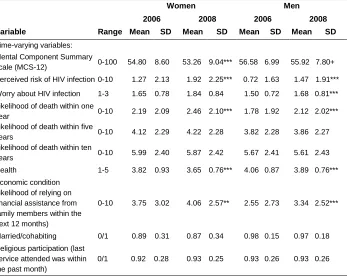
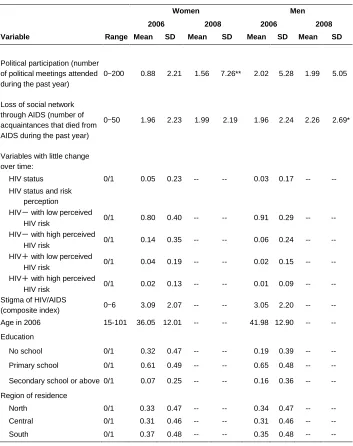
Table 1: Summary statistics by gender, 2006 and 2008 MLSFH
Women Men
2006 2008 2006 2008
Variable Range Mean SD Mean SD Mean SD Mean SD
Time-varying variables:
Mental Component Summary
scale (MCS-12) 0-100 54.80 8.60 53.26 9.04*** 56.58 6.99 55.92 7.80+
Perceived risk of HIV infection 0-10 1.27 2.13 1.92 2.25*** 0.72 1.63 1.47 1.91***
Worry about HIV infection 1-3 1.65 0.78 1.84 0.84 1.50 0.72 1.68 0.81***
Likelihood of death within one
year 0-10 2.19 2.09 2.46 2.10*** 1.78 1.92 2.12 2.02***
Likelihood of death within five
years 0-10 4.12 2.29 4.22 2.28 3.82 2.28 3.86 2.27
Likelihood of death within ten
years 0-10 5.99 2.40 5.87 2.42 5.67 2.41 5.61 2.43
Health 1-5 3.82 0.93 3.65 0.76*** 4.06 0.87 3.89 0.76***
Economic condition (likelihood of relying on financial assistance from family members within the next 12 months)
0-10 3.75 3.02 4.06 2.57** 2.55 2.73 3.34 2.52***
Married/cohabiting 0/1 0.89 0.31 0.87 0.34 0.98 0.15 0.97 0.18
Religious participation (last service attended was within the past month)
0/1 0.92 0.28 0.93 0.25 0.93 0.26 0.93 0.26
0 .0 5 .1 .1 5 .2 D e n si ty
10 20 30 40 50 60 70
MCS-12 2006 2008 Women 0 .0 5 .1 .1 5 .2 D e n si ty
10 20 30 40 50 60 70
MCS-12
2006 2008
Table 1: (Continued)
Women Men
2006 2008 2006 2008 Variable Range Mean SD Mean SD Mean SD Mean SD
Political participation (number of political meetings attended during the past year)
0-200 0.88 2.21 1.56 7.26** 2.02 5.28 1.99 5.05
Loss of social network through AIDS (number of acquaintances that died from AIDS during the past year)
0-50 1.96 2.23 1.99 2.19 1.96 2.24 2.26 2.69*
Variables with little change over time:
HIV status 0/1 0.05 0.23 -- -- 0.03 0.17 -- --
HIV status and risk perception
HIV- with low perceived
HIV risk 0/1 0.80 0.40 -- -- 0.91 0.29 -- --
HIV- with high perceived
HIV risk 0/1 0.14 0.35 -- -- 0.06 0.24 -- --
HIV+ with low perceived
HIV risk 0/1 0.04 0.19 -- -- 0.02 0.15 -- --
HIV+ with high perceived
HIV risk 0/1 0.02 0.13 -- -- 0.01 0.09 -- --
Stigma of HIV/AIDS
(composite index) 0-6 3.09 2.07 -- -- 3.05 2.20 -- --
Age in 2006 15-101 36.05 12.01 -- -- 41.98 12.90 -- --
Education
No school 0/1 0.32 0.47 -- -- 0.19 0.39 -- --
Primary school 0/1 0.61 0.49 -- -- 0.65 0.48 -- --
Secondary school or above 0/1 0.07 0.25 -- -- 0.16 0.36 -- --
Region of residence
North 0/1 0.33 0.47 -- -- 0.34 0.47 -- --
Central 0/1 0.31 0.46 -- -- 0.31 0.46 -- --
3.3.2 Independent variables
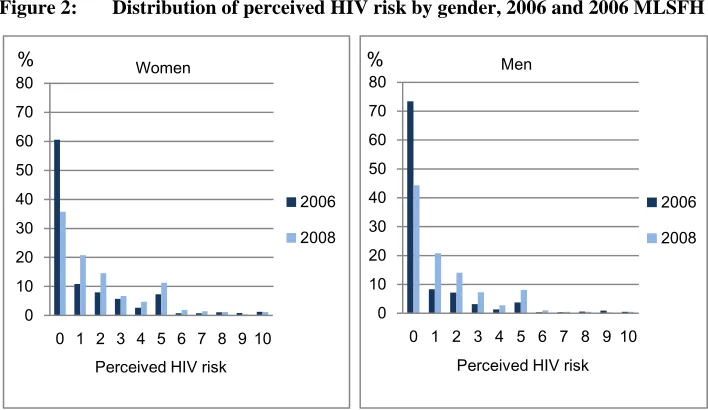
The perceived risk of HIV infection was measured by respondents' indication of the likelihood that they were currently infected with HIV. In the survey, the respondents were given ten beans and asked to pick the number of beans that reflected their likelihood of infection, with one bean representing one chance out of ten. The respondent's answers to the question can be interpreted as subjective probabilities. This measurement has been demonstrated to be valid in rural Malawi, where levels of literacy and numeracy are low (Delavande and Kohler 2009). Figure 2 presents the distribution of perceived risk of HIV infection by gender over time. The proportion of both men and women who thought they had no likelihood of being infected dropped dramatically between 2006 and 2008. Specifically, women's mean perceived risk increased from 12.7% to 19.2% and men's increased from 7.2% to 14.7% (Table 1). The gender difference is consistent with the fact that women are disproportionally affected by HIV in sub-Saharan Africa, accounting for 60% of all infections in the region (UNAIDS 2009). Figure 3 presents the distribution of within-person change in perceived risk from 2006 to 2008. It shows that 67% of women and 63% of men in the sample changed their perceived risk of HIV infection over time. Among these individuals, the majority perceived an increased rather than a decreased risk of infection.
Figure 2: Distribution of perceived HIV risk by gender, 2006 and 2006 MLSFH
0 10 20 30 40 50 60 70 80
0 1 2 3 4 5 6 7 8 9 10
%
Perceived HIV risk Women 2006 2008 0 10 20 30 40 50 60 70 80
0 1 2 3 4 5 6 7 8 9 10
%
Perceived HIV risk Men
2006
Figure 3: Distribution of within-person change in perceived HIV risk between 2006 and 2008 by gender, MLSFH
The HIV status variable is a dummy variable based on the HIV test result, with 1 indicating HIV-positive and 0 indicating HIV-negative. The infection rate was about 5% for women and 3% for men in the sample, with little change in the rate between 2006 and 2008. The HIV status with perceived risk variable is a categorical variable that integrates the previous two measures, HIV status and the perceived risk of HIV infection. Respondents were assigned to one of four groups: HIV-negative with low perceived risk of HIV, HIV-negative with high perceived risk, HIV-positive with low perceived risk, and HIV-positive with high perceived risk. Low perceived risk of HIV corresponds to a selection of zero to three beans (out of ten) to reflect the individual’s likelihood of being infected, while high perceived risk corresponds to a selection of
0 5 10 15 20 25 30 35 40
-10 -8 -6 -4 -2 0 2 4 6 8 10 %
Change in perceived HIV risk
Women
more than three beans. The analytical results are not sensitive to the cutoff point between high and low perceived risk.7
Four sets of covariates were considered for explaining the psychosocial mechanisms that influence the relation between perceived risk of HIV infection and mental well-being; the categories were (1) worry about being infected with HIV and fear of death, (2) health and economic status, (3) social support, and (4) the stigma of HIV/AIDS. In the first set, worry about being infected with HIV was measured on a scale ranging from 1 (Not worried at all) to 2 (Worried a little) and 3 (Worried a lot). Fear of death was represented by three variables representing the expected likelihood of death within one year, within five years, and within ten years. Like the perceived risk of HIV, these subjective probabilities were measured by asking respondents to select a number of beans between zero and ten to reflect their anticipated likelihood of death.
In the second set of covariates, health was represented by self-rated health on a scale ranging from 1 (Poor) to 2 (Fair), 3 (Good), 4 (Very good), and 5 (Excellent). Economic status was represented by the expected likelihood of relying on financial assistance from family members within the next twelve months. This likelihood was also measured by the number of beans that the respondent selected out of ten.
The third set of covariates representing social support includes four variables: intimate relationship, religious participation, political participation, and loss of social network through HIV/AIDS. Intimate relationship is a dummy variable with 1 indicating that the respondent was married or cohabiting and 0 indicating otherwise. Religious participation is also a dummy variable, with 1 indicating that the respondent most recently attended church or mosque within the month and 0 indicating that the most recent attendance was more than a month ago. It is worth noting that religious participation plays a particularly important role for coping with the AIDS epidemic. According to Manglos and Trinitapoli (2011), religious belief in Malawi has become a third therapeutic system in addition to biomedical and traditional treatments for the epidemic. Participation in faith-healing congregations is associated with lower levels of worry about AIDS. Political participation was measured by the number of political meetings the respondent attended during the last year; this represents potential social capital that individuals could draw on to facilitate their life goals, such as improvement of their economic resources and of their health. Finally, loss of social network through HIV/AIDS was measured by the number of acquaintances who had died from AIDS during the previous year.
The fourth set of covariates concern the stigma of HIV/AIDS in the respondent's community. This is a composite scale based on how much the respondent agrees with each of the following two statements: "People in your village feel that those who got AIDS through sex have gotten what they deserve," and "Religious leaders in your community feel that those who got AIDS through sex have gotten what they deserve" (Pearson r=0.79). The level of agreement with each statement was measured by a 4-point Likert scale ranging from 0 (Strongly disagree) to 3 (Strongly agree), and the composite scale is the sum of the answers to the statements, ranging from 0 to 6. A higher score suggests a higher perception of an HIV/AIDS stigma in the community.
Finally, three variables—age, education level (No school, Primary school, and Secondary school or above), and region of residence (Northern, Central, and South)— were used in the random-effects model to control for sociodemographic backgrounds.
4. Results
4.1 Bivariate relationships
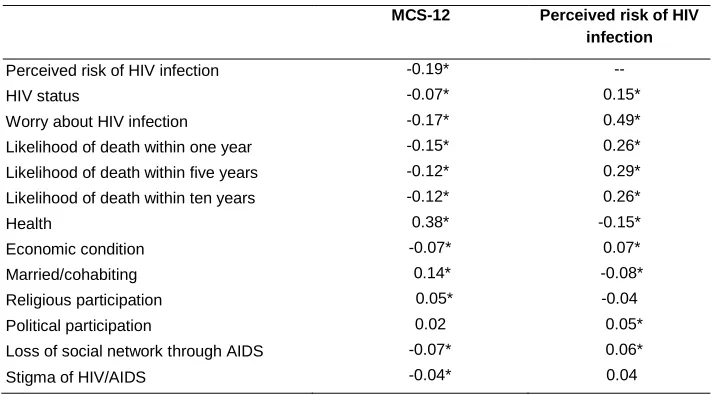
Pairwise correlations show that mental health (MCS-12) and the perceived risk of HIV infection are negatively correlated (Table 2). In addition, both variables are associated with major covariates in expected directions. In particular, the MCS-12 is negatively related to HIV status, worry about infection, the expected likelihood of death (within one, five, and ten years), financial instability, and loss of social network through AIDS deaths during the previous year; and it is positively related to health, living in an intimate relationship, and religious participation. The only variable that is not significantly associated with the MCS-12 is political participation. Among all these variables, health has the strongest correlation with mental well-being.
Table 2: Pairwise correlations among major variables, 2006 MLSFH
MCS-12 Perceived risk of HIV infection
Perceived risk of HIV infection -0.19* --
HIV status -0.07* 0.15*
Worry about HIV infection -0.17* 0.49*
Likelihood of death within one year -0.15* 0.26*
Likelihood of death within five years -0.12* 0.29*
Likelihood of death within ten years -0.12* 0.26*
Health 0.38* -0.15*
Economic condition -0.07* 0.07*
Married/cohabiting 0.14* -0.08*
Religious participation 0.05* -0.04
Political participation 0.02 0.05*
Loss of social network through AIDS -0.07* 0.06*
Stigma of HIV/AIDS -0.04* 0.04
Note: *p<0.05
4.2 Multiple Regression Models
4.2.1 Random-effects linear regression
the perceived risk of HIV infection is an important risk factor for mental health in a context where HIV is prevalent, not only for those who are actually infected with HIV but also for those who test negative. The following section further examines the relationship between perceived risk of HIV infection and mental well-being and explores the relevant psychosocial mechanisms using fixed-effects estimation.
Table 3: Random-effects linear regression of mental health (MCS-12),
2006 and 2008 MLSFH
Coeff. Robust S.E. HIV status and risk perception (Ref: HIV
- with low perceived HIV risk)
HIV- with high perceived HIV risk -3.02*** 0.55
HIV+ with low perceived HIV risk 0.77 1.06
HIV+ with high perceived HIV risk -7.49*** 1.74
Male 2.20*** 0.35
Age -0.07*** 0.01
Education (Ref: No school)
Primary school -0.35 0.42
Secondary school or above 0.16 0.69
Region of residence (Ref: Central)
North -0.34 0.42
South -0.84* 0.40
Constant 57.87*** 0.67
N 1,708
Notes: * p<0.05, ** p<0.01, *** p<0.001. The coefficient estimates of HIV- with high perceived HIV risk, HIV+ with low perceived HIV risk, and HIV+ with high perceived HIV risk are all different from one another at the 5% significance level.
4.2.2 Fixed-effects linear regression
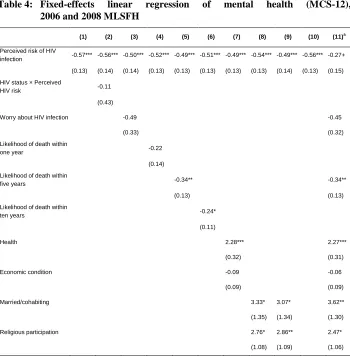
Moreover, the strength of this association is independent of an individual's actual HIV status; the interaction between perceived HIV risk and HIV status is not statistically significant (Model 2). The results from Models 1 and 2 show that individuals' subjective assessment of their HIV status is strongly connected to their mental well-being, regardless of their objectively tested HIV status.
In order to examine the psychosocial mechanisms underlying or conditioning the linkage between perceived HIV risk and mental health, Models 3 to 10 test the main or moderating effects of variables in the following four categories: (1) worry about being infected and fear of death, (2) health and economic status, (3) social support, and (4) the HIV/AIDS stigma. Finally, Model 11 concurrently tests all of these variables to evaluate their joint explanatory power and their relative importance.
The results are as follows. First, worries about being infected with HIV do not significantly mediate the relationship between the perceived risk of HIV and an individual's mental health (Model 3). However, the fear of death does seem to be an important mediating factor (Models 4-6). In particular, expectations of a higher likelihood of death within five or ten years explain 11-14% of the coefficient of the perceived risk of HIV (this is shown by a comparison of Models 5 and 6 with Model 1). This suggests that fear of death in the long run, represented by the subjectively assessed probabilities of death within five years and within ten years, can be psychologically consuming in the rural Malawian context. In contrast, the expected likelihood of death within a year is not related to an individual's mental well-being (Model 4). A possible reason why long-term likelihoods matter while short-term likelihoods do not is that, as a few studies have pointed out, when individuals learn of their impending death they undergo a sequence of psychological reactions, starting with denial and progressing through anger to bargaining, depression, and finally, to acceptance (Kubler-Ross 1969; Lamers Jr. 2000). Individuals need time to adjust their emotions when facing the threat of death, and as different emotions take hold and then subside, dying individuals may gradually share their feelings and concerns with their friends and families, reprioritize their life objectives, and gain more confidence in their ability to manage pain and symptoms. Therefore, compared to those who see themselves dying within five or ten years, individuals who anticipate dying within a year may have already learned to live peacefully with the anticipation of death; as a result, the anticipation of death in the short term is not likely to explain why a greater perceived risk of HIV is associated with lower levels of mental well-being.
significantly impacts their mental health outcomes. In other words, an individual's health influences both the individual's perception of risk of HIV infection (negatively) and the individual's mental well-being (positively). On the other hand, economic concern does not show a significant effect as a potential mediator between perceived risk of HIV infection and mental health. This non-finding may suggest an alternative, namely, that the association is mediated through long-term rather than short-term economic insecurity (i.e., financial assistance will eventually be needed, but not within the next 12 months) because financial stability may not be expected to deteriorate in the immediate short term after an individual perceives a higher risk of being infected.
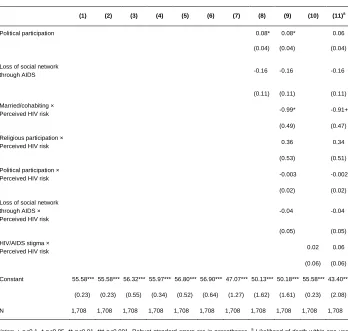
Among the social support indicators, marriage or cohabitation and more frequent participation in religious activities and in political activities are all related to greater mental well-being; in contrast, loss of social network through AIDS deaths is not significantly associated with mental health (Model 8). Are these social resources, some of which directly predict mental health outcomes, able to mitigate the harmful effects of an individual's perceived risk of HIV infection? The answer is negative. As Model 9 suggests, none of the interactions between the social support variables and perceived risk of HIV show a significant positive effect that ameliorates the negative relationship between perceived risk and mental health. In fact, the mental well-being of those who are married or cohabiting is even more compromised when their perceived risk of HIV infection increases. This is probably attributed to an anticipated reduction in the quality of their union as well as an increased probability that the union will dissolve; several studies have demonstrated that divorcing high-risk partners is an important strategy for controlling one's exposure to HIV in contexts where it is highly prevalent (Porter et al. 2004; Reniers 2008; Smith and Watkins 2005). In summary, inconsistent with my hypothetical expectation, the findings suggest that social support in general does not buffer the impact of the perceived risk of HIV on mental well-being. On the contrary, "support" in the form of an intimate relationship may even exacerbate the impact, presumably because there is a risk of union dissolution or losing an important source of lifetime support.
Furthermore, the stigma of HIV/AIDS in the local community, if any, does not moderate the linkage between perceived risk of HIV infection and mental health (Model 10). This finding is consistent with previous research findings that the stigmatization of people living with HIV/AIDS is not widespread in the HIV/AIDS epidemic in rural Malawi. Given that the public attitude in rural Malawi toward people living with HIV/AIDS, particularly those who are non-adulterers, is generally accepting and sympathetic, stigmas associated with HIV/AIDS have limited influence.
relationship between perceived risk of HIV infection and mental health, and that marriage and cohabitation also moderate that relationship (though at a marginal level of significance). The full sets of variables jointly explain more than 50% of the coefficient of perceived HIV risk and turn the coefficient into marginal significance (this can be seen by comparing Model 11 with Model 1). As a result, health status, fear of death, and marital/cohabitation status may be some of the relevant factors that drive or moderate the negative relationship between perceptions of HIV risk and mental health outcomes.
Table 4: Fixed-effects linear regression of mental health (MCS-12),
2006 and 2008 MLSFH
(1) (2) (3) (4) (5) (6) (7) (8) (9) (10) (11)a
Perceived risk of HIV
infection -0.57*** -0.56*** -0.50*** -0.52*** -0.49*** -0.51*** -0.49*** -0.54*** -0.49*** -0.56*** -0.27+ (0.13) (0.14) (0.14) (0.13) (0.13) (0.13) (0.13) (0.13) (0.14) (0.13) (0.15) HIV status × Perceived
HIV risk -0.11 (0.43)
Worry about HIV infection -0.49 -0.45
(0.33) (0.32)
Likelihood of death within
one year -0.22
(0.14) Likelihood of death within
five years -0.34** -0.34**
(0.13) (0.13)
Likelihood of death within
ten years -0.24*
(0.11)
Health 2.28*** 2.27***
(0.32) (0.31)
Economic condition -0.09 -0.06
(0.09) (0.09)
Married/cohabiting 3.33* 3.07* 3.62**
(1.35) (1.34) (1.30)
Religious participation 2.76* 2.86** 2.47*
Table 4: (Continued)
(1) (2) (3) (4) (5) (6) (7) (8) (9) (10) (11)a
Political participation 0.08* 0.08* 0.06
(0.04) (0.04) (0.04)
Loss of social network
through AIDS -0.16 -0.16 -0.16
(0.11) (0.11) (0.11) Married/cohabiting ×
Perceived HIV risk -0.99* -0.91+
(0.49) (0.47) Religious participation ×
Perceived HIV risk 0.36 0.34
(0.53) (0.51) Political participation ×
Perceived HIV risk -0.003 -0.002
(0.02) (0.02) Loss of social network
through AIDS × Perceived HIV risk
-0.04 -0.04
(0.05) (0.05) HIV/AIDS stigma ×
Perceived HIV risk 0.02 0.06
(0.06) (0.06)
Constant 55.58*** 55.58*** 56.32*** 55.97*** 56.80*** 56.90*** 47.07*** 50.13*** 50.18*** 55.58*** 43.40***
(0.23) (0.23) (0.55) (0.34) (0.52) (0.64) (1.27) (1.62) (1.61) (0.23) (2.08)
N 1,708 1,708 1,708 1,708 1,708 1,708 1,708 1,708 1,708 1,708 1,708
Notes: + p<0.1, * p<0.05, ** p<0.01, *** p<0.001. Robust standard errors are in parentheses. a
Likelihood of death within one year
and Likelihood of death within ten years were not included in Model 11 because they are both highly correlated with Likelihood of death within five years. The coefficient estimates are very similar when Likelihood of death within ten years is used instead of
5. Discussion
To compensate for the fact that research on HIV/AIDS and mental health heavily focuses on HIV-positive individuals but ignores the possibility that the epidemic may also create mental health burdens for the general population, this study examined the relationship between perceived risk of HIV infection and mental health and attempted to reveal the mechanisms affecting this relationship from four perspectives: (1) worry about being infected and fear of death, (2) health and economic conditions, (3) social support, and (4) the stigma of HIV/AIDS. The study found that in rural Malawi, regardless of an individual's actual HIV status, the perceived likelihood of being infected with HIV has a strong negative relationship with mental health, as measured by the SF-12 Mental Component Summary scale. This relationship is in part driven or moderated by several factors, including the state of an individual's health, the individual's fear of death or pessimism about survival, and the individual's marital/cohabitation status. Specifically, health appears to have an influence on both the perceived risk of HIV and mental well-being. An expected likelihood of death within five or ten years mediates some of the effect of a perceived risk of HIV on mental health. Also, living in an intimate relationship moderates the association between the perceived risk and mental health in an unfavorable direction. In contrast, worry about being infected, expected likelihood of death within a short period of time (one year), expected deterioration of economic well-being within the next 12 months, social support, and the stigma of HIV/AIDS are not significant factors that influence the association between the perception of HIV risk and mental health.
indicators, such as whether someone is available for sharing emotions when feeling depressed, worried, or anxious or for discussing important matters. In addition, a better-developed or well-established index for the HIV/AIDS stigma in a community would enable future research to confirm the limited influence of such a stigma on mental health in the rural Malawi context. Finally, although the fixed-effects regression analysis partially addresses the concern of endogeneity by controlling for time-invariant unobserved heterogeneity (e.g., the trait of neuroticism), the analysis may still be subject to biases from time-varying unobserved heterogeneity. Moreover, an analysis that only examines data from two years cannot fully determine the causal direction between the perceived risk of HIV infection and mental well-being. There is a possibility of causation in the reverse direction from that uncovered in this study; that is, it is possible that lower levels of mental well-being lead to higher perceptions of risk.
In conclusion, there is still much to learn about the mental health of a general population living in the context of an HIV epidemic. The wide prevalence of HIV/AIDS influences individuals’ perceptions of risk and increases their worry about being infected, changes their expectations about the future such as the likelihood of their survival, impacts their social networks, and shapes how their communities perceive the disease (e.g., by stigmatizing it). Moreover, different cultural settings develop various strategies for coping with the changes brought about by the epidemic, strategies that include but are not limited to sexual and marital practices, support on the part of families, and participation in faith-healing congregations. All of these aspects of living in a community where HIV is prevalent are important to the mental health of the general population and certainly merit further investigation.
6. Acknowledgments
References
Adams, R.E., Boscarino, J.A., and Galea, S. (2006). Social and psychological resources and health outcomes after the World Trade Center disaster. Social Science & Medicine 62(1): 176–188. doi:10.1016/j.socscimed.2005.05.008.
Alderman, H., Behrman, J.R., Kohler, H.-P., Maluccio, J.A., and Watkins, S.C. (2001). Attrition in longitudinal household survey data: Some tests for three developing-country samples. Demographic Research 5(4): 79–124.
doi:10.4054/DemRes.2001.5.4.
Allison, P.D. (2009). Fixed effects regression models. Los Angeles: Sage.
Alonzo, A.A. and Reynolds, N.R. (1995). Stigma, HIV and AIDS: An exploration and elaboration of a stigma trajectory. Social Science & Medicine 41(3): 303–315.
doi:10.1016/0277-9536(94)00384-6.
Anglewicz, P., adams, j., Obare, F., Kohler, H.-P., and Watkins, S.C. (2009). The Malawi Diffusion and Ideational Change Project 2004–06: Data collection, data quality, and analysis of attrition. Demographic Research 20(21): 503–540.
doi:10.4054/DemRes.2009.20.21.
Anglewicz, P. and Kohler, H.-P. (2009). Overestimating HIV infection: The construction and accuracy of subjective probabilities of HIV infection in rural Malawi. Demographic Research 20(6): 65–96. doi:10.4054/DemRes.2009.20.6. Berkman, L.F. and Kawachi, I. (2000). Social epidemiology. New York: Oxford
University Press.
Bingenheimer, J.B. (2010). Men’s multiple sexual partnerships in 15 sub-Saharan African countries: Sociodemographic patterns and implications. Studies in Family Planning 41(1): 1–17. doi:10.1111/j.1728-4465.2010.00220.x.
Blanchflower, D.G. and Oswald, A.J. (2004). Well-being over time in Britain and the USA. Journal of Public Economics 88(7-8): 1359–1386. doi:10.1016/S0047-2727(02)00168-8.
Bouchard, T.J. and Loehlin, J.C. (2001). Genes, evolution, and personality. Behavior Genetics 31(3): 243–273. doi:10.1023/A:1012294324713.
Brashers, D. E., Neidig, J.L., Reynolds, N.R., and Haas, S.M. (1998). Uncertainty in illness across the HIV/AIDS trajectory. Journal of the Association of Nurses in AIDS Care 9(1): 66–77. doi:10.1016/S1055-3290(98)80078-2.
Brashers, D.E., Neidig, J.L., Russell, J.A., Cardillo, L.W., Haas, S.M., Dobbs, L.K., Garland, M., McCartney, B., and Nemeth, S. (2003). The medical, personal, and social causes of uncertainty in HIV illness. Issues in Mental Health Nursing 24(5): 497–522. doi:10.1080/01612840305292.
Caspi, A., Roberts, B.W., and Shiner, R.L. (2005). Personality development: Stability and change. Annual Review of Psychology 56: 453–484. doi:10.1146/annurev.
psych.55.090902.141913.
Cattell, R.B., Eber, H.W., and Tatsuoka, M.M. (1970). Sixteen personality factor questionnaire. Champaign, IL: Institute for Personality and Ability Testing.
Chibnall, J. T., Videen, S. D., Duckro, P. N., and Miller, D. K. (2002). Psychosocial— spiritual correlates of death distress in patients with life-threatening medical conditions. Palliative Medicine 16(4): 331–338. doi.10.1191/0269216302pm 544oa.
Collins, P.Y., Holman, A.R., Freeman, M.C., and Patel, V. (2006). What is the relevance of mental health to HIV/AIDS care and treatment programs in developing countries? A systematic review. AIDS 20(12): 1571–1582.
doi:10.1097/01.aids.0000238402.70379.d4.
Costa Jr., P.T. and McCrae, R.R. (1987). Neuroticism, somatic complaints, and disease: Is the bark worse than the bite? Journal of Personality 55(2): 299–316.
doi:10.1111/j.1467-6494.1987.tb00438.x.
Deaton, A., Fortson, J., and Tortora, R.D. (2009). Life (evaluation), HIV/AIDS, and death in Africa. In: Diener, E., Helliwell, J.F., and Kahneman, D. (eds.). International differences in well-being. New York: Oxford University Press: 105-136.
Delavande, A., and Kohler, H.-P. (2009). Subjective expectations in the context of HIV/AIDS in Malawi. Demographic Research 20(31): 817–875. doi:10.4054/
DemRes.2009.20.31.
Falaris, E.M. (2003). The effect of survey attrition in longitudinal surveys: Evidence from Peru, Côte d’Ivoire and Vietnam. Journal of Development Economics 70(1): 133–157. doi:10.1016/S0304-3878(02)00079-2.
Fitzgerald, J., Gottschalk, P., and Moffitt, R. (1998). An analysis of sample attrition in panel data: The Michigan Panel Study of Income Dynamics. Journal of Human Resources 33(2): 251–299. doi:10.2307/146433.
Freeman, M., Nkomo, N., Kafaar, Z., and Kelly, K. (2008). Mental disorder in people living with HIV/AIDS in South Africa. South African Journal of Psychology 38(3): 489–500.
Gandek, B., Ware Jr., J.E., Aaronson, N.K., Apolone, G., Bjorner, J.B., Brazier, J.E., Bullinger, M., Kaasa, S., Leplege, A., Prieto, L., and Sullivan, M. (1998). Cross-validation of item selection and scoring for the SF-12 Health Survey in nine countries: Results from the IQOLA project. Journal of Clinical Epidemiology 51(11): 1171–1178. doi:10.1016/S0895-4356(98)00109-7.
Herek, G.M., Capitanio, J.P., and Widaman, K.F. (2003). Stigma, social risk, and health policy: Public attitudes toward HIV surveillance policies and the social construction of illness. Health Psychology 22(5): 533–540. doi:10.1037/
0278-6133.22.5.533.
House, J. S., Umberson, D., and Landis, K. R. (1988). Structures and processes of social support. Annual Review of Sociology 14: 293–318. doi:10.1146/annurev.
so.14.080188.001453.
Jenkins, R., Baingana, F., Belkin, G., Borowitz, M., Daly, A., Francis, P., Friedman, J., Garrison, P., Kauye, F., Kiima, D., Mayeya, J., Mbatia, J., Tyson, S., Njenga, F., Gureje, O., and Sadiq, S. (2010). Mental health and the development agenda in sub-Saharan Africa. Psychiatric Services 61(3): 229–234. doi:10.1176/appi.
ps.61.3.229.
Jenkinson, C., Layte, R., Jenkinson, D., Lawrence, K., Petersen, S., Paice, C., and Stradling, J. (1997). A shorter form health survey: Can the SF-12 replicate results from the SF-36 in longitudinal studies? Journal of Public Health 19(2): 179–186. doi:10.1093/oxfordjournals.pubmed.a024606.
Kahneman, D. and Krueger, A.B. (2006). Developments in the measurement of subjective well-being. Journal of Economic Perspectives 20(1): 3–24.
Kohler, H.-P., Behrman, J. R., and Watkins, S. C. (2007). Social networks and HIV/AIDS risk perceptions. Demography 44(1): 1–33. doi:10.1353/dem.2007.
0006.
Kubler-Ross, E. (1969). On death and dying. New York: Macmillan.
Kupper, N., Boomsma, D.I., de Geus, E.J.C., Denollet, J., and Willemsen, G. (2011). Nine-year stability of Type D personality: Contributions of genes and environment. Psychosomatic Medicine 73(1): 75–82. doi:10.1097/PSY.0b013
e3181fdce54.
Lamers Jr., M.W. (2000). Grief in dying persons. In: Rando, T.A. (ed.). Clinical dimensions of anticipatory mourning: Theory and practice in working with the dying, their loved ones, and their caregivers. Champaign, IL: Research Press: 281-305.
Lee, R.S., Kochman, A., and Sikkema, K.J. (2002). Internalized stigma among people living with HIV-AIDS. AIDS and Behavior 6(4): 309–319. doi:10.1023/
A:1021144511957.
Li, L., Lee, S. J., Thammawijaya, P., Jiraphongsa, C., and Rotheram-Borus, M.J. (2009). Stigma, social support, and depression among people living with HIV in Thailand. AIDS Care 21(8): 1007–1013. doi:10.1080/09540120802614358. Link, B.G. and Phelan, J.C. (2001). Conceptualizing stigma. Annual Review of
Sociology 27: 363–385. doi:10.1146/annurev.soc.27.1.363.
Logie, C. and Gadalla, T.M. (2009). Meta-analysis of health and demographic correlates of stigma towards people living with HIV. AIDS Care 21(6): 742–753.
doi:10.1080/09540120802511877.
Lüdtke, O., Trautwein, U., and Husemann, N. (2009). Goal and personality trait development in a transitional period: Assessing change and stability in personality development. Personality and Social Psychology Bulletin 35(4): 428–441. doi:10.1177/0146167208329215.
Manglos, N.D., and Trinitapoli, J. (2011). The third therapeutic system: Faith healing strategies in the context of a generalized AIDS epidemic. Journal of Health and Social Behavior 52(1): 107–122. doi:10.1177/0022146510395025.
McCrae, R.R., Costa Jr., P.T., Ostendorf, F., Angleitner, A., Hřebíčková, M., Avia, M.D., Sanz, J., Sánchez-Bernardos, M.L., Kusdil, M.E., Woodfield, R., Saunders, P.R., and Smith, P.B. (2000). Nature over nurture: Temperament, personality, and life span development. Journal of Personality and Social Psychology 78(1): 173–186. doi:10.1037//0022-3514.78.1.173.
McDowell, T.L. and Serovich, J.M. (2007). The effect of perceived and actual social support on the mental health of HIV-positive persons. AIDS Care 19(10): 1223– 1229. doi:10.1080/09540120701402830.
Neimeyer, R.A., Wittkowski, J., and Moser, R.P. (2004). Psychological research on death attitudes: An overview and evaluation. Death Studies 28(4): 309–340.
doi:10.1080/07481180490432324.
Porter, L., Hao, L., Bishai, D., Serwadda, D., Wawer, M. J., Lutalo, T., and Gray, R. (2004). HIV status and union dissolution in sub-Saharan Africa: The case of Rakai, Uganda. Demography 41(3): 465–482. doi:10.1353/dem.2004.0025. QualityMetric. (2002). SF-12v2 Health Survey User’s Manual. Lincoln, RI:
QualityMetric.
Rantanen, J., Metsäpelto, R.-L.L., Feldt, T., Pulkkinen, L., and Kokko, K. (2007). Long-term stability in the Big Five personality traits in adulthood. Scandinavian Journal of Psychology 48(6): 511–518. doi:10.1111/j.1467-9450.2007.00609.x. Reniers, G. (2008). Marital strategies for regulating exposure to HIV. Demography
45(2): 417–438. doi:10.1353/dem.0.0002.
Simbayi, L.C., Kalichman, S., Strebel, A., Cloete, A., Henda, N., and Mqeketo, A. (2007). Internalized stigma, discrimination, and depression among men and women living with HIV/AIDS in Cape Town, South Africa. Social Science & Medicine 64(9): 1823–1831. doi:10.1016/j.socscimed.2007.01.006.
Smith, K.P. and Watkins, S.C. (2005). Perceptions of risk and strategies for prevention: Responses to HIV/AIDS in rural Malawi. Social Science & Medicine 60(3): 649–660. doi:10.1016/j.socscimed.2004.06.009.
Tawfik, L. and Watkins, S.C. (2007). Sex in Geneva, sex in Lilongwe, and sex in Balaka. Social Science & Medicine 64(5): 1090–1101. doi:10.1016/j.socscimed.
2006.10.002.
Terracciano, A., McCrae, R.R., and Costa Jr., P.T. (2010). Intra-individual change in personality stability and age. Journal of Research in Personality 44(1): 31–37.
Trinitapoli, J. (2006). Religious responses to AIDS in sub-Saharan Africa: An examination of religious congregations in rural Malawi. Review of Religious Research 47(3): 253–270.
Trivedi, R.B., Ayotte, B., Edelman, D., and Bosworth, H.B. (2008). The association of emotional well-being and marital status with treatment adherence among patients with hypertension. Journal of Behavioral Medicine 31(6): 489–497.
doi:10.1007/s10865-008-9173-4.
UNAIDS. (2009). Fact sheet: Sub-Saharan Africa. Geneva: UNAIDS. http://www.unaids.org/en/media/unaids/contentassets/dataimport/pub/factsheet/2 009/20091124_fs_ssa_en.pdf
UNAIDS. (2010). Epidemiological factsheet: Malawi. Geneva: UNAIDS. http://www.unaids.org/en/regionscountries/countries/malawi/
Ware Jr., J.E., Kosinski, M., and Keller, S.D. (1996). A 12-Item Short-Form Health Survey: Construction of scales and preliminary tests of reliability and validity. Medical Care 34(3): 220–233. doi:10.1097/00005650-199603000-00003. Watkins, S.C. (2004). Navigating the AIDS epidemic in rural Malawi. Population and
Development Review 30(4): 673–705. doi:10.1111/j.1728-4457.2004.00037.x. Weitz, R. (1989). Uncertainty and the lives of persons with AIDS. Journal of Health
and Social Behavior 30(3): 270–281. doi:10.2307/2136960.
Whetten, K., Reif, S., Whetten, R., and Murphy-McMillan, L.K. (2008). Trauma, mental health, distrust, and stigma among HIV-positive persons: Implications for effective care. Psychosomatic Medicine 70(5): 531–538. doi:10.1097/PSY.
0b013e31817749dc.
Appendix A: Evaluation of sample attrition effects
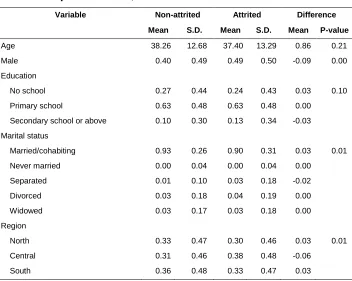
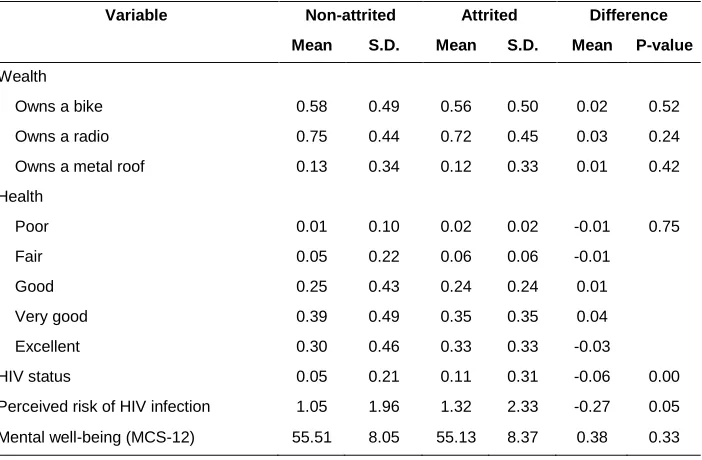
Table A1 compares the descriptive statistics for the basic sociodemographic and health variables by attrition status. The non-attrited sample includes individuals who were interviewed in both 2006 and 2008, and the attrited sample includes those who were only interviewed in 2006 (i.e., they were not followed up in 2008). The statistics show that the attrited sample is more likely to be male, higher educated, unmarried, to reside in the central region of Malawi, to be HIV-positive, and to perceive a higher risk of HIV infection. However, age, wealth (i.e., ownership of a bike, a radio, and a metal roof), health, and mental well-being (as measured by MCS-12) do not significantly vary by attrition status.
Table A1: Summary statistics for basic sociodemographic and health variables
by attrition status, 2006 MLSFH
Variable Non-attrited Attrited Difference Mean S.D. Mean S.D. Mean P-value
Age 38.26 12.68 37.40 13.29 0.86 0.21
Male 0.40 0.49 0.49 0.50 -0.09 0.00
Education
No school 0.27 0.44 0.24 0.43 0.03 0.10
Primary school 0.63 0.48 0.63 0.48 0.00
Secondary school or above 0.10 0.30 0.13 0.34 -0.03
Marital status
Married/cohabiting 0.93 0.26 0.90 0.31 0.03 0.01
Never married 0.00 0.04 0.00 0.04 0.00
Separated 0.01 0.10 0.03 0.18 -0.02
Divorced 0.03 0.18 0.04 0.19 0.00
Widowed 0.03 0.17 0.03 0.18 0.00
Region
North 0.33 0.47 0.30 0.46 0.03 0.01
Central 0.31 0.46 0.38 0.48 -0.06
Table A1: (Continued)
Variable Non-attrited Attrited Difference Mean S.D. Mean S.D. Mean P-value Wealth
Owns a bike 0.58 0.49 0.56 0.50 0.02 0.52
Owns a radio 0.75 0.44 0.72 0.45 0.03 0.24
Owns a metal roof 0.13 0.34 0.12 0.33 0.01 0.42
Health
Poor 0.01 0.10 0.02 0.02 -0.01 0.75
Fair 0.05 0.22 0.06 0.06 -0.01
Good 0.25 0.43 0.24 0.24 0.01
Very good 0.39 0.49 0.35 0.35 0.04
Excellent 0.30 0.46 0.33 0.33 -0.03
HIV status 0.05 0.21 0.11 0.31 -0.06 0.00
Perceived risk of HIV infection 1.05 1.96 1.32 2.33 -0.27 0.05
Mental well-being (MCS-12) 55.51 8.05 55.13 8.37 0.38 0.33
To test whether the sample attrition biases the coefficient estimates of the regression analysis, I performed a linear regression of the mental health score (MCS-12) on attrition status, a set of sociodemographic and health variables, and their interaction terms. The results show that none of the interaction terms are significantly different from 0, which suggests that the coefficient estimates are quite similar for the attrited and non-attrited samples (Table A2). Moreover, according to the Chow test (H0: The coefficient estimates for the attrition status variable and all its interaction
Table A2: Linear regression of MCS-12 on the attrition status, sociodemographic and health variables and their interaction terms, 2006 MLSFH
Coeff. Std. Err.
Perceived risk of HIV infection -0.41*** 0.09
HIV status -0.89 0.82
Health 3.52*** 0.21
Age -0.03* 0.01
Male 0.90* 0.39
Married/Cohabiting 1.72** 0.64
Education (Ref: No school)
Primary school -0.35 0.46
Secondary school or above -0.77 0.78
Region of residence (Ref: North)
Central -2.72*** 0.50
South -2.46*** 0.51
Wealth
Owns a bike -0.46 0.54
Owns a radio 0.04 0.43
Owns a metal roof -0.12 0.39
Attrition status (1=not followed up in 2008) 0.02 0.47
Attrition × Perceived risk of HIV infection 0.34 0.21
Attrition × HIV status -2.30 1.78
Attrition × Health -0.36 0.54
Attrition × Age -0.03 0.04
Attrition × Male 1.53 1.04
Attrition × Married -2.25 1.52
Attrition × Primary school -1.46 1.23
Attrition × Secondary school or above -2.71 1.98
Attrition × Central region 0.57 1.28
Attrition × South region -1.84 1.36
Attrition × Owns a bike 0.58 1.00
Attrition × Owns a radio -1.84+ 1.10
Attrition × Owns a metal roof 0.52 1.51
Constant 43.47** 1.29
N 1,860
R-squared 0.2
Appendix B: Test of gender differences in coefficient estimates
In both the random-effects and the fixed-effects model, gender differences in coefficient estimates are, for the most part, not significant. In the random-effects model, the effects of HIV status with perceived risk on mental health do not vary by gender. In the fixed-effects model, only the main effect of Political participation and the interaction effect between Loss of social network through AIDS and Perceived HIV risk differ by gender at the 5% significance level. For these reasons, the regression analyses in the main text include women and men in the same equation. Table B1 summarizes the interaction effects between gender and all of the variables of interest from Tables 3 and 4.
Table B1: Summary of the interaction effects between gender and major
covariates included in the random-effects and fixed-effects linear regressions
Coeff. Robust S.E.
Random-effects linear regression
Male × HIV- with high perceived HIV risk -0.84 1.20
Male × HIV+ with low perceived HIV risk -0.28 2.40
Male × HIV+ with high perceived HIV risk 2.73 3.71
Fixed-effects linear regression
Male × Perceived HIV risk -0.17 0.28
Male × (HIV status × Perceived HIV risk) -0.38 0.97
Male × Worry about HIV infection 1.10 0.64
Male × Likelihood of death within one year 0.04 0.29
Male × Likelihood of death within five years 0.08 0.26
Male × Likelihood of death within ten years -0.05 0.22
Male × Health -0.97 0.65
Male × Economic condition 0.04 0.19
Male × Married/cohabiting 3.57 3.25
Male × Religious participation -3.31 2.30
Male × Political participation -0.23** 0.09