Maryam Safahani1, Reza Amani1, Hadi Aligholi*2, Alireza Sarkaki3, Mohammad Badavi3, Ahmad Zand Moghaddam 1, M.Hosein Haghighizadeh4
1. Department of nutrition, .Paramedical faculty, University of Medical Sciences Ahwaz Jundishapour
2. School of Advanced Medical Technologies. Department of Neurosciences Tehran University of Medical Sciences. 3. Medical faculty, Department of physiology, Ahwaz Jundishapour University of Medical Sciences.
4. Health faculty, Department of statistics, Ahwaz Jundishapour University of Medical Sciences.
* Corresponding Author: Hadi Aligholi
Tehran University of Medical Sciences. School of Advanced Medical Technologies. Department of Neurosciences. Tel: 09171032437- 02177298613.
E-mail: [email protected]
Introduction: Several studies indicate that estrogen use increase performance on some tests of cognition especially in postmenopausal women. These steroids have many side effects, thus, other estrogenic agents with fewer side effects are needed to develop alternative treatment strategies. The main objection of this study was to evaluate the effects of different doses of dietary soy meals (with or without isoflavone) on spatial learning and memory in ovariectomized (OVX) rats.
Methods: Female Wistar rats with the exception of intact group were ovariectomized at the first line of study. Subjects were divided into six groups. The control group rats (c) were gonadally intact, while the others were OVX. OVX groups received normal diet (0), treated with 10 gr soy (10), 20 gr soy (20), 10 gr isoflavone free soy (-10) or 20 gr isoflavone free soy (-20) in daily diet for four weeks. The spatial learning and memory were tested using Morris water maze. Rats were trained in water maze to find a hidden escape Platform. Rats received 6 blocks that each block consisted of 3 trials. Following acquisition trials, one probe trial were conducted in which the platform was removed.
Results: Soy meal diet (with or without isoflavone) in ovariectomized rats caused improvement of performance across 18 trials of Acquisition.
Discussion: Our results suggest that soy consumption apart from containing isoflavone or not is a potential alternative to estrogen in the improvement of cognition.
A B S T R A C T
Article info: Received: 15 May 2011
First Revision: 25 June 2011
Accepted:20 July 2011
Key Words:
Soy, Isoflavone, Morris water maze, Ovariectomy, Rat.
1. Introduction
enopause is characterized by physi-ologic and psychosocial changes in a woman’s life. Menopause may be as-sociated with vasomotor symptoms, bone loss, urogenital atrophy, urinary tract infections and incontinence, increased
Summer 2011, Volume 2, Number 4 Basic and Clinical
Results of numerous studies indicate that estrogen exerts positive effects on tasks that primarily require the use of working memory, defined as memory for informa-tion that relevant for a single trial. For example, chronic estrogen replacement in ovariectomized rats increased the number of visits to correct arm choices during ac-quisition of working memory tasks in radial-arm maze (Bimonte HA, 1999; Daniel JM, 1997; Fader, Hendric-son, & Dohanich, 1998; Luine VN, 1998) and also in-creased the number of reinforced alternations made in a T-maze (Fader, et al., 1998). Estrogen replacement also improved acquisition procedure (Daniel, Winsau-er, BraunWinsau-er, & MoerschbaechWinsau-er, 2002) and on delayed matching-to-position spatial memory tasks (Gibbs, 2000; Gibbs., 1999; Sandstrom NJ, 2001). Leuner et al in 2004 examined the effects of short-term estrogen replacement therapy on associative memory formation. Results of this study provide additional Support to the view that ovarian steroids are beneficial to the perfor-mance of certain forms of learning and memory tasks albeit at supra physiological doses (Leuner B, 2004).
However, estrogen has proliferative and oncogenic ef-fects on non–neural cells which are responsive to es-trogen, such as breast and endometrium cells (Bang, et al., 2004). Hence other estrogenic agents with fewer side–effects are needed to develop alternative treatment Strategies. Phytoestrogen, Plant–derived nonestroidal estrogens found in high abundance in most soy food products, may contain benefical effects of estrogen without its unwanted side-effects (Lephart, et al., 2002).
Much recent interest has focused on the possibility that soy been or isoflavones can help preserve cogni-tive function. Short – term high dose of soy bean in-take altered the level of total plasma testestron and improved spatial cognition in women (Celec P, 2004). isoflavone supplementation has a favorable effect on cognitive function particularly verbal memory, in post-menopausal women (Kritz-Silverstein, Von Muhlen, Barrett-Connor, & Bressel, 2003). Consumption of di-etary phytoestrogens resulting in very high plasma iso-flavone levels can significantly alter sexually dimorphic brain regions, anxiety, learning and memory (Lephart, et al., 2002). Dietary Soy derived phytoestrogens can influence learning and memory and alter the expression of proteins involved in neural protection and inflam-mation in rats (Lund TD, 2001). Soy isoflavones can influence the brain cholinergic system and reduce age-related neuron loss and Cognition decline in male rats (Lee, et al., 2004).
However, little is Known about the influence of phy-toestrogens on the brain or behavior, in this study we will try evaluate the effect of deferent doses (as dose dependent) of soy meal contain isoflavone or isoflavone free on dementia (spatial learning and memory by water maze) in ovariectomized rats for 4 weeks.
2. Method and Materials
Subjects42 female wistar rats, approximately five months of age, were purchased from Ahwaz Joundishapour university (AJUMS) animal house. Rats were individually caged, under a 12-h light/dark cycle (light on at 7:00 AM). Ani-mals were allowed free access to water and food. After one week animals were overiectomized while under an-esthesia induced by injection of ketamine (90 mg / kg ip, Rotex Medica. Trittau. Germany) and Xylazine (10 mg/kg ip, Miles laboratories, Shawnee). All efforts were made to minimize the number of animals used.
Groups
Subjects were divided into six groups. The control group rats (c) were gonadally intact, while the others were OVX. OVX groups received normal diet(0), treat-ed with 10 gr soy(10), treattreat-ed with 20 gr soy(20), treattreat-ed with 10 gr isoflavone free soy(-10) or treated with 20 gr isoflavone free soy(-20) in daily diet for four weeks.
Diet Preparation
In order to prepare isoflavone free soy ethanol (80 de-gree) was added to soy powder. After passing 24hr, the soy was dried in suitable place. Before and after alcohol washing, Total isoflavone concentration of soy was de-termined by high performance liquid chromatography (HPLC).
Morris Water Maze
a submerged platform using extra maze cues. Prior to water maze testing, all rats were habituated to the water using a three-trial shaping procedure. This procedure habituated the rat to the water and taught them to escape from the water by climbing on to a platform. Subjects were trained across one day. Each rat received 18 trials per day. There was a 20-min break between each 3 trials (6 blocks, each block consist of 3 trials). The location of submerged platform did not change through out the experiment. for each trial, the subject was placed in wa-ter facing the edge of the tank from random start points. On each trial, the subject was allowed 60s to escape to the submerged plat form; rats that failed to escape were led to the platform and were allowed to remain on it for 15s before being removed from the maze and dried off (Norris & Foster, 1999).
Probe Trial
Following the one day acquisition period, a probe trial was order. The probe trial was identical to the acquisi-tion trials with one excepacquisi-tion. During the probe trial, the submerged plat form was removed. Multiple measures of water maze performance were recorded. Swim dis-tance (cm), quadrant time (percent time that each sub-ject spent in the quadrant containing the plat form), and swim speed (cm/s) were recorded during 18 trials and one probe trial (Norris & Foster, 1999).
Body Weight and Plasma Estrogen
In order to confirm that ovariectomy was effective, a record of the body weight of each animal was kept. Plasma estrogen was measured by ELIZA test.
Statistical Analysis
A paired T-test analysis was used to determine wheth-er significant diffwheth-erences existed in the OVX groups weight at the baseline and one month after ovariectomy.
One-way analysis of variance (ANOVA) was run to determine whether group differences existed in terms of percent time spent in the target quadrant and path length during acquisition and probe trials.
One-way analysis of variance (ANOVA) was run to determine whether group differences existed in plasma estrogen.
Acquisition Trials-Path Length
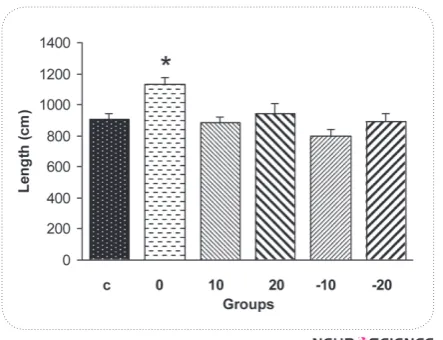
Fig.1 illustrates that OVX group received normal diet (0) had significantly longer total path length than others, F(6,274)= 10.943, (p< 0.001).
Acquisition Trials-Time
As illustrated in Fig.2, OVX group received normal diet (0) had significantly lower percent of total time were spent in target quarter than others, F(6,274)= 7.055, (p<0.001).
Probe Trials-Time
As illustrated in Fig.3 there were no significant dif-ferences in percent of total time spent in target quar-ter of probe trials between all groups,F(5,35)=1.971, (P<0.107).
Probe Trials-Swim Speed
OVX had no significant effect on swim speed in the water maze. There were no significant differences be-tween swim speed in all groups during probe trials, F(5,35)= 2.009, (p<0.15).
Figure 1. Mean pathlength (±SEM) to locate the escape platform for total acquisition trials in all groups: control group(c), OVX group received normal diet(0), treated with 10 gr soy(10), treated with 20 gr soy(20), treated with 10 gr
isoflavone free soy(-10) or treated with 20 gr isoflavone free
Summer 2011, Volume 2, Number 4 Basic and Clinical
Figure 2. Mean percent (±SEM) of total time spent in tar-get quarter for total acquisition trials in all groups: control group(c), OVX group received normal diet(0), treated with 10 gr soy(10), treated with 20 gr soy(20), treated with 10 gr
isoflavone free soy(-10) or treated with 20 gr isoflavone free
soy(-20) in daily diet for four weeks. (* p<0.001 vs. other groups).
Figure 3. Mean percent (±SEM) of total time spent in target quarter for probe trial in all groups: control group(c), OVX group received normal diet(0), treated with 10 gr soy(10),
treated with 20 gr soy(20), treated with 10 gr isoflavone free soy(-10) or treated with 20 gr isoflavone free soy(-20) in daily
diet for four weeks.
Figure 4. Mean body weight (±SEM) at the baseline (weight 1) and four weeks later (weigth2) for all groups: control group(c), OVX group received normal diet(0), treated with 10 gr soy(10), treated with 20 gr soy(20), treated with 10 gr
isoflavone free soy(-10) or treated with 20 gr isoflavone free
soy(-20) in daily diet for four weeks. (* p< 0.05 vs. weight 1).
Figure 5. Mean plasma estrogen (±SEM) for all groups: con-trol group(c), OVX group received normal diet(0), treated with 10 gr soy(10), treated with 20 gr soy(20), treated with
10 gr isoflavone free soy(-10) or treated with 20 gr isoflavone
free soy(-20) in daily diet for four weeks. (* p< 0.001 vs. other groups).
Body Weight
Fig.4. shows that body weight at the baseline (weight 1) was significantly lower than body weight at four weeks later (weigth2) in OVX group received normal diet (0), OVX group treated with 10 gr isoflavone free soy (-10) and OVX group treated with 20 gr isoflavone free soy (-20) in daily diet for four weeks (p< 0.05).
Plasma Estrogen
Fig.5 illustrates that plasma estrogen levels in OVX groups were significantly lower than plasma estrogen in control group, F(5,24)=16.695, (p<0.001).
Soy Isoflavones
Table 1 shows the isoflavone concentration of total soy and alcohol washed soy that was determined by high performance liquid chromatography (HPLC).
4. Discussion
ovariectomized rats improve performance of acquisi-tion in the Morris water maze. OVX rats receiving soy with or without isoflavone spent a significantly greater percentage of their total swim time in the quadrant in which the platform was located than OVX rats that not receiving soy. OVX rats receiving soy with or without isoflavone spent a similar time in the target quadrant in comparison with control group. Mean pathlengths to reach the platform were longer in OVX rats not receiv-ing soy than control and OVX rats that receivreceiv-ing soy. These data suggest that OVX impairs performance of acquisition in the Morris water maze and soy can pre-vent impairment induced by ovariectomy. There were no differences between groups at performance on a probe trial, suggesting that by the end of testing all groups had learned the task to the same degree. It is not clear Whether the positive effects of soy that has been seen in this study is due to its isoflavone or other constituents. Our HPLC data indicate that approximately 15% isofla-vone is remained after alcohol washing (Table 1). It is possible that this little amount of isoflavone is respon-sible for beneficial effects that have seen in our study. Previous studies have shown that at the nanomolar level (5 nM, 10 nM or 100 nM), genistein has neuroprotective effects (Bang, et al., 2004; Zeng H, 2004). Our findings in this study are consistent with other previous studies (Celec P, 2004; Kritz-Silverstein, et al., 2003; Lee, et al., 2004; Lephart, et al., 2002; Lund TD, 2001). There are proposed mechanisms for the neuroprotective effects of isoflavones. Genistein protects cells from H2O2-in-duced toxicity (Bang, et al., 2004). H2O2 is a Reactive Oxygen Species (ROS) which can damage the neurons (Behl, 1999; Holscher, 1998; Morris, 2003; Ramassamy, et al., 2000). Genistein, a phytoestrogen that is capable of crossing the blood-brain barrier, has been reported to have an antioxidative effect against the insults of UV and chemicals (Zeng H, 2004). This antioxidative ef-fect of soy can protects human from neurodegenerative diseases. Previous findings suggest that the mechanisms by which phytoestrogens especially genistein protect neuronal cells include not only by the physiological properties of genistein, such as its antioxidative
activ-ity, but also activation of Estrogen Receptors (ERs) and upregulation of brain-derived neurotrophic factor (Zeng H, 2004). Several studies indicate that estrogen use in-crease performance on some tests of memory/cognition (Daniel & Lee, 2004; El-Bakri NK, 2004; Fernandez & Frick, 2004; Green P, 2000; Heikkinen, Puolivali, & Tanila, 2004; Markham, Pych, & Juraska, 2002). How-ever, estrogen has proliferative and oncogenic effects on non–neural cells which are responsive to estrogen, such as breast and endometrium cells (Bang, et al., 2004). For this reason, other estrogenic agents with fewer side effects are needed to develop alternative treatment strat-egies. For the CNS, the ideal estrogen-like compound would have activity in the brain and none in the periph-ery (Cyr M, 2002). Unlike estrogen, genistein did not trigger proliferation of cells. Because genistein is a se-lective ER agonist, it is possible that ER , but not ER , mediates the proliferation of endometrium (Bang, et al., 2004).In the other hand, ER has a higher level of expression than ER in brain regions critical to memory function (Zeng H, 2004). In ovariectomized female rats, on the other hand, phytoestrogen treatments resulted in a dose-dependent improvement of VSM (Pan Y, 1999). This improvement in cognitive ability in phytoestrogen treated females may be due in part to the increased pres-ence of choline acetyltransferase messenger RNA in the frontal cortex, which has been shown to be associated with protection and enhancement of cognitive function (Pan Y, 1999). Furthermore, phytoestrogens significant-ly affect the brain calcium-binding protein calbindin (CALB), which acts as a buffer by binding intracellular calcium and plays an important role in mediating cell proliferation, programmed cell death (apoptosis), and neurotoxicity (Lund TD, 2001).
As mentioned earlier, beside isoflavone, other soy con-stituents may act as neuroprotective agent. Other soy constituents include: Protease inhibitors (that have anti-cancer and anti-inflammatory effects), Lignans (that have phytoestrogenic, anti-tumor and anti-viral activi-ty), Comestans (with phytoestrogenic effects), Saponins (that have anti-cancer, antioxidant and anti-mutagenic
Total soy 48 16 41 20 25 10 160
Alcohol washed
soy 7.2 2.4 6.15 3 3.75 1.5 24
Summer 2011, Volume 2, Number 4 Basic and Clinical
properties) and Phytates (with antioxidant and anti-can-cer effects) (Epizorno G, 1999).
Although the present study suggests the potential use of soy in the improvement of learning, future studies should address the effects of soy constituents on cogni-tion distinctly.
Acknowledgments
This study was supported by the research affair of Ahwaz Jondishapour University of Medical Sciences (AJUMS)(as a part of grant no 84u47). We wish to thank the physiology research center of AJUMS personels.
References
Bang, O. Y., Hong, H. S., Kim, D. H., Kim, H., Boo, J. H., Huh, K., et al. (2004). Neuroprotective effect of genistein against beta amyloid-induced neurotoxicity. Neurobiol Dis, 16(1), 21-28.
Behl, C. (1999). Alzheimer’s disease and oxidative stress: im-plications for novel therapeutic approaches. Prog Neurobiol, 57(3), 301-323.
Bimonte HA, D. V. (1999). Estradiol facilitates performance as working memory load increases. Psychoneuroendocrinol-ogy, 24, 161-173.
Celec P, O. D., Caganova M, Zuchova S, Hodosy J. (2004). Endocrine and cognitive effects of short-term soybean con-sumption in women. Gynecology of Obstetric Investigation, 3, 62-66.
Cyr M, C. F., Morissette M, Paolo T. (2002). Estrogenic modula-tion of brain activity: implicamodula-tions for schizophrenia and Par-kinson’s disease. Journal of Psychiatry Neuroscience, 27(1), 12-27.
Daniel JM, F. A., Spencer AL, Dohanich GP. (1997). Estrogen enhance performance of female rats during acquisition of a radial arm maze. Hormones and Behavior, 32, 217-225.
Daniel, J. M., & Lee, C. D. (2004). Estrogen replacement in ova-riectomized rats affects strategy selection in the Morris water maze. Neurobiol Learn Mem, 82(2), 142-149.
Daniel, J. M., Winsauer, P. J., Brauner, I. N., & Moerschbaecher, J. M. (2002). Estrogen improves response accuracy and atten-uates the disruptive effects of delta9-THC in ovariectomized rats responding under a multiple schedule of repeated ac-quisition and performance. Behav Neurosci, 116(6), 989-998.
El-Bakri NK, I. A., Zhu S, Elhassan A, Mohammed A, Win-bland B, Adem A. ( 2004). Effects of estrogen and progester-one treatment on rat hippocampal NMDA receptors:
rela-Epizorno G, M. M. (1999). Text book of natural medicine (2nd ed.): Edinburgh: Churchill Livingstone.
Fader, A. J., Hendricson, A. W., & Dohanich, G. P. (1998). Estro-gen improves performance of reinforced T-maze alternation and prevents the amnestic effects of scopolamine adminis-tered systemically or intrahippocampally. Neurobiol Learn Mem, 69(3), 225-240.
Fernandez, S. M., & Frick, K. M. (2004). Chronic oral estrogen affects memory and neurochemistry in middle-aged female mice. Behav Neurosci, 118(6), 1340-1351.
Gibbs, R. B. (2000). Effects of gonadal hormone replacement on measures of basal forebrain cholinergic function. Neuro-science, 101(4), 931-938.
Gibbs., R. (1999). Estrogen replacement enhances acquisition
of a spatial memory task and reduces deficit associated with
hippocampal muscarinic receptor inhibition. Hormones and Behavior 36, 222-233.
Green P, S. J. (2000). Neuroprotective effects of estrogen: poten-tial mechanisms of action. International Journal of Devlop-mental Neuroscience, 18, 347-358.
Heikkinen, T., Puolivali, J., & Tanila, H. (2004). Effects of long-term ovariectomy and estrogen treatment on maze learning in aged mice. Exp Gerontol, 39(9), 1277-1283.
Holscher, C. (1998). Possible causes of Alzheimer’s disease: amyloid fragment, free radicals, and calcium homeostasis. Neurobiology of Disease, 5, 129-141.
Kritz-Silverstein, D., Von Muhlen, D., Barrett-Connor, E., &
Bressel, M. A. (2003). Isoflavones and cognitive function in
older women: the SOy and Postmenopausal Health In Aging (SOPHIA) Study. Menopause, 10(3), 196-202.
Lee, Y. B., Lee, H. J., Won, M. H., Hwang, I. K., Kang, T. C., Lee,
J. Y., et al. (2004). Soy isoflavones improve spatial delayed
matching-to-place performance and reduce cholinergic neu-ron loss in elderly male rats. J Nutr, 134(7), 1827-1831.
Lephart, E. D., West, T. W., Weber, K. S., Rhees, R. W., Setchell, K. D., Adlercreutz, H., et al. (2002). Neurobehavioral effects of dietary soy phytoestrogens. Neurotoxicol Teratol, 24(1), 5-16.
Leuner B, L. S., Shors T. (2004). The ovarian hormone estrogen is presumed to modulate processes of learning and memory in adulthood. Psychoneuroendocrinology, 29, 883-890.
Luine VN, R. S., Wu VY, Beck KD (1998). Estradiol enhances learning and memory in a spatial memory task and effects level of monoaminergic neurotransmitters. Hormones and Behavior, 34, 149-162.
Lund TD, W. T., Tain L, Bu L, Simmons D, Stechell K, Adler-creuz H, Lephart E. (2001). Visual spatial memory is en-hanced in female rats (but not in males) by dietary soy phy-toestrogens. BioMed Central Neuroscience, 2, 1-13.
Markham, J. A., Pych, J. C., & Juraska, J. M. (2002). Ovarian hormone replacement to aged ovariectomized female rats
benefits acquisition of the morris water maze. Horm Behav,
age-related memory deficits. Neurobiol Learn Mem, 71(2),
194-206.
Pan Y, A. M., Clarkson TB. (1999). Effects of estradiol and soy phytoestrogens on choline acetyltransferase and nerve growth factor mRNAs in the frontal cortex and hippocam-pus of female rats. Proc Soc Exp Biol Med, 221, 118-125.
Ramassamy, C., Averill, D., Beffert, U., Theroux, L., Lussier-Ca-can, S., Cohn, J. S., et al. (2000). Oxidative insults are associ-ated with apolipoprotein E genotype in Alzheimer’s disease brain. Neurobiol Dis, 7(1), 23-37.
Sandstrom NJ, W. C. (2001). Memory retention is modulated by acute estradiol and progesterone replacement. Behavioral Neuroscience, 115, 384-393.
Tinklera G, B. M. (2005). Estrogen modulates cognitive and cholinergic process in surgically menopausal monkeys. Progress in Neuro-Psychopharmacology and Biology Psy-chiatry, 29, 473-482.
Utian, W. H. (2005). Psychosocial and socioeconomic burden of vasomotor symptoms in menopause: a comprehensive re-view. Health Qual Life Outcomes, 3, 47.