Getting started in primary care research:
choosing among six practical
research approaches
Michael D Fetters
To cite: Fetters MD. Getting started in primary care research: choosing among six practical research approaches. Fam Med Com Health 2019;7:e000042. doi:10.1136/fmch-2018-000042 In addition to its use in the University of Michigan residency research curriculum, an earlier version of this presentation was given at the Fifth Annual Family Medicine Across-Strait Conference in Guangxi, Nanning, China on 30 March 2018. Received 12 October 2018 Revised 18 December 2018 Accepted 24 January 2019
Family Medicine, University of Michigan, Ann Arbor, Michigan, USA
Correspondence to Dr Michael D Fetters; mfetters@ umich. edu © Author(s) (or their employer(s)) 2019. Re-use permitted under CC BY-NC. No commercial re-use. See rights and permissions. Published by BMJ.
AbstrACt
While many primary care practitioners want to conduct research, many also struggle with getting started. This article’s purpose is to assist emerging researchers in identifying a topic of interest, to try the ‘fit’ of feasible research approaches and commit to a research approach. The article addresses six objectives: (1) identify how important primary care research comes from clinical stories; (2) recognise how clinical stories become the source of research topics; (3) discern how the research process resembles the care of patients; (4) distinguish the essential features of six research approaches feasible for primary care researchers; (5) evaluate the fit of the six research approaches featured in this special issue; and (6) develop a list of steps that need to be taken to implement primary care research projects. Using ‘HPV (human papilloma) vaccination’ as a hypothetical topic, the article illustrates how an emerging researcher can complete the worksheets. Using the HPV topic, a worksheet illustration shows how to complete the worksheets, and examples from the literature illustrate how actual studies have used six feasible research approaches for primary care: (1) survey research, (2) semistructured qualitative interviews, (3) curriculum development, (4) continuous quality improvement, (5) clinical policy analysis and (6) case study research. The worksheet exercises support choosing a feasible research approach for emerging researchers. Emerging researchers using these exercises can identify a topic, choose a research strategy aligned with the researcher’s interest, create a study title, develop a list of the next steps, and be well positioned to implement an original research project
signifiCAnCe stAtement
While many family medicine and commu-nity health practitioners lack formal training in research, they would like to engage in research. A resource that helps aspiring researchers move from a clinical topic of interest to choosing a practical research approach has been lacking. This article provides guidance for aspiring researchers to identify topics of interest from clinical stories. The article then provides a worksheet activity to support choice of a project by considering six research approaches: survey, semistruc-tured interviews, curriculum development, quality improvement, health policy analysis
and case study research. By comparing each according to the problem, information needed, intervention involved, implemen-tation strategy, and how to evaluate findings and take the next steps, aspiring researchers can choose a practical research approach.
introduCtion
Primary care practitioners can and need to engage in research.1 2 The purpose of this article is to assist emerging researchers in primary care, that is, students, residents, fellows and practitioners who are motivated to conduct primary care research, but lack guidance as to how to proceed. The paper addresses this challenge by demonstrating how research questions come from clin-ical stories, illustrating six feasible research approaches for emerging researchers, devel-oping a title and planning the next steps. This article helps aspiring researchers consider different research approaches. Through the use of worksheets and examples, the main outcome of this article is to identify a topic and choose an appropriate research approach.
best research questions come from clinical stories
Emerging researchers often say, “I want to do research, but I don’t know where to start.” Clinical stories provide the best starting point for developing research plans. A story is the narration of an incident or a series of events that becomes the source of research questions. Clinical stories reflect issues that a primary care provider sees, but does not understand or that do not make sense. Clinical stories can be anything that causes one to stop and think, or something with multiple options for treatment with an elusive best choice. Iden-tifying a story of personal relevance will best facilitate and sustain completing a research project.
on September 12, 2020 by guest. Protected by copyright.
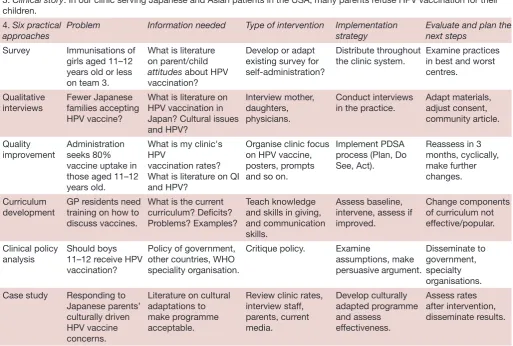
Table 1 Illustration for choosing among six research approaches practical for family medicine research 1. Name(s): Michael Fetters
2. Research topic: HPV vaccination
3. Clinicalstory: In our clinic serving Japanese and Asian patients in the USA, many parents refuse HPV vaccination for their children.
4. Six practical approaches
Problem Information needed Type of intervention Implementation strategy
Evaluate and plan the next steps
Survey Immunisations of girls aged 11–12 years old or less on team 3.
What is literature on parent/child
attitudes about HPV vaccination?
Develop or adapt existing survey for self-administration?
Distribute throughout
the clinic system. Examine practices in best and worst centres.
Qualitative
interviews Fewer Japanese families accepting HPV vaccine?
What is literature on HPV vaccination in Japan? Cultural issues and HPV?
Interview mother, daughters, physicians.
Conduct interviews
in the practice. Adapt materials, adjust consent, community article. Quality
improvement Administration seeks 80% vaccine uptake in those aged 11–12 years old.
What is my clinic's HPV
vaccination rates? What is literature on QI and HPV?
Organise clinic focus on HPV vaccine, posters, prompts and so on.
Implement PDSA process (Plan, Do See, Act).
Reassess in 3 months, cyclically, make further changes. Curriculum
development GP residents need training on how to discuss vaccines.
What is the current curriculum? Deficits? Problems? Examples?
Teach knowledge and skills in giving, and communication skills.
Assess baseline, intervene, assess if improved.
Change components of curriculum not effective/popular. Clinical policy
analysis
Should boys 11–12 receive HPV vaccination?
Policy of government, other countries, WHO speciality organisation.
Critique policy. Examine
assumptions, make persuasive argument.
Disseminate to government, specialty organisations. Case study Responding to
Japanese parents’ culturally driven HPV vaccine concerns.
Literature on cultural adaptations to make programme acceptable.
Review clinic rates, interview staff, parents, current media.
Develop culturally adapted programme and assess
effectiveness.
Assess rates after intervention, disseminate results.
5. Research title: Improving (HPV vaccination of eligible adolescents) in (a family medicine clinic serving overseas Japanese patients): a (quality improvement) study.
6. Nextsteps: (1) identify current HPV vaccination rates; (2) discuss with staff members a strategy to improve; (3) search the literature for other similar experiences.
GP, general practice; HPV, human papillomavirus; QI, quality improvement; WHO, World Health Organization.
Where do clinical stories arise?
Clinical stories can arise out of relationships with patients, office staff or other colleagues including subspecialists. Stories often arise from specific settings or transitions between settings, for example, ambulatory, hospital, long-term institution or home care settings. They may arise during training of students, residents or fellows, as questions emerge about clinical care or the best approach to training. Sometimes, stories come from circumstances that recur repeatedly over time or from observations regarding a series of patients. Stories also give rise to anomalies that become research questions.
Activity for getting started: identifying a relevant clinical story Table 1 illustrates a clinical story that could became the source of a research project with real-world applicability. The topic of the case is human papillomavirus (HPV) vacci-nation, and comes from my work as a bilingual (English
and Japanese) family physician working in a clinic serving many Japanese and other Asian families.3 Table 2 is for readers to complete in response to the clinical story. To get started, use table 1 as a reference and complete in table 2 the following three items: (1) researcher name(s), (2) research topic and (3) a clinical story.
A clinical story
Consider the case of a 46-year-old obese Asian woman who visits the office frequently and often with different practi-tioners. Her medical history includes recurrent visits for chest pain, hypertension, hypercholesterolaemia, type 2 diabetes, and suspected anxiety and depression. Two previous cardiologists who evaluated her concluded she had non-cardiac chest pain. She says they told her that her "heart was fine" and advised her "not to worry". The patient has other physical complaints, including inter-mittent aches, fatigue, headaches and food allergies. On
on September 12, 2020 by guest. Protected by copyright.
Table 2 2 Activity for choosing among six research approaches practical for family medicine research 1. Name(s):
2. Research topic: 3. Clinical story: 4. Six practical
approaches Problem Information needed Type of intervention Implementation strategy Evaluate and plan next steps
Survey Qualitative interviews Quality improvement Curriculum development Clinical policy analysis Case study 5. Research title: 6. Next steps:
Table 3 Capturing six critical elements of clinical stories that arise in family medicine
When Who What Where Why How Comment
10 September
1991 52-year-old female patient for well-woman examination.
History of total
hysterectomy. Family medicine clinic.
Unclear if Pap
test needed. Conducted scraping of vaginal cuff.
Faculty confirmed importance of the problem.
questioning, she is adamant as in previous visits that she has no problems with anxiety or depression. She agrees to laboratory testing and regular follow-up, but asks for another referral to cardiology as the visit comes to closure. While the details vary, visits with patients such as this one occur frequently in primary care.
research design starts with the story and the question
A number of questions arise from the story of this patient. How can primary care practitioners optimally manage the care of patients with multiple chronic problems? How can they efficiently recognise common mental health prob-lems like anxiety and depression? What is the acceptability of a diagnosis of anxiety and depression for patients, and how might it differ among different cultural groups? How might it differ between men and women? What are the best ways to follow patients with chronic diseases over time? Concerns such as these that arise from this story can be framed as clinically meaningful research questions.
Activity: getting started by making a list
Developing a list of interesting clinical stories or prob-lems that occur during patient care provides a great starting point for conducting research. Table 3 provides an organisational structure for recording important details. This structure serves as a reminder of the impor-tance of stories. Completing the table helps distinguish whether the identified problems resonate as issues of real
or passing interest. The list can be completed electron-ically, in a computer or handheld device, or in a paper notepad. The list also functions to stimulate ideas that can be later discussed with a colleague, for example, practice colleague, resident, fellow or advisor, in order to reflect about the personal meaning, clinical value and practical significance of the issues, and potential for research.
How to recognise a good clinical story
Recognising a good clinical story requires an inquisitive and receptive mind when problems arise that lack good answers. What are the ways to recognise good clinical stories? As an early third-year resident, I had a 52-year-old female patient new to me who came for well-woman check-up in my family medicine clinic (Table 3). On review of her chart, I noted she had a history of obesity, hypertension and uterine fibroids. I also noted that she was status-post total hysterectomy due to her fibroids. I was puzzled both if I should do a Pap smear, and if so, how to do it. I consulted with my faculty preceptor. “That is a great question!” she responded. In looking at the liter-ature, I found that recommendations on whether and how to do a Pap smear in this setting were notably vague, absent or conflicting. This story led to the question: What is the utility of obtaining Pap smears for women who have undergone total hysterectomy for benign reasons? I used a clinical policy analysis to explore this question and
on September 12, 2020 by guest. Protected by copyright.
Table 4 Five similar steps in the process of clinical care, and conducting clinical, management and educational research
Major
steps 1. Identifying the problem 2. Gathering information
3. Determining whether to
proceed 4. Implement an intervention 5. Evaluating the effect of intervention
Clinical care Identifying the patient’s chief complaint.
Gathering information through the history and clinical references.
Assessing the problem and available information.
Formulating and implementing a treatment plan.
Assessing the outcome of the intervention and revising the treatment plan based on the outcomes of the intervention.
Clinical research Identifying the
problem/question. Gathering information through a literature review.
Assessing whether the topic merits further investigation.
Formulating and implementing an intervention or project.
Evaluating the results and changing practice based on the findings.
Management research
Identifying the management or administrative issue.
Gathering information about current office practices, other management or administrative approaches.
Assessing if the challenge warrants further intervention.
Formulating and implementing a quality improvement project.
Assessing the impact of the management or administrative change, and evaluate the need for additional change.
Education
research Identifying the educational problem. Gathering information about other curricula, teaching strategies.
Evaluating if there are alternative approaches or if innovation is needed.
Formulating and implementing a new curriculum or educational intervention.
Evaluating the curriculum or educational intervention and modifying as needed.
published an article in response.4 Later, with the support of a small grant, I conducted a cost-effectiveness analysis on the topic as well.5
recording details of clinical stories
Let us now review how the case above served as a starting point for developing a research question, and how we can replicate the process of question development and choice of method using other stories. Look at table 3 and note the steps to follow. Then retrieve and use your list of clinical stories to generate a research question. Using full sentences if possible, complete the other sections of the table. Record when the event occurred, especially specific date in the event of a need to review records. Indicate who was involved, for example, specific patient, learner or administrative personnel. Record in detail what happened. Indicate where the event occurred, for example, ambulatory setting, hospital and so on. Record
why the care, incident or phenomenon was perceived to be a problem. Describe how the problem was responded to, and as relevant, the outcome of the response/inter-vention. Use the comment section to record any other information that might be important, including ideas or other reminders that might be helpful at a later time, for example, others involved, follow-up issues and so on.
Analogies between clinical practice and conducting clinical, management and education research
The five major steps of the approach to research enquiry are remarkably similar to the care of patients (see table 4).
Practitioners new to research may found this analogy helpful for thinking about the research process.
‘trying on’ feasible research approaches
Having identified topics of interest, emerging researchers often become stuck at the fourth step in table 4. As they are uncertain about what approach to use, it is hard to identify and settle on a strategy for intervention and/ or research. I advise ‘trying on’ a variety of options. This means considering the various research approaches, thinking through the work involved and the expected outcomes. Think of the analogy of trying on different clothes to find out what is the best ‘fit’. This article now focuses on ‘trying on’ the six different approaches featured in this special issue of FMCH.
Activity for ‘trying on’ the six featured approaches
Using table 1 as a reference, complete section 4 of table 2. Trying on all approaches will provide the most thorough opportunity for choosing. To fully benefit from the exer-cise, try on at least two. This exercise will help narrow down a decision about one or two preferred approach(es) so as to focus reading on the candidate methodolog-ical approaches. The following discussions and the full papers on these topics in this special issue can be used as references.
feasible research approaches for primary care
The research approaches addressed in this special issue of FMCH include (1) survey research, (2) qualitative
on September 12, 2020 by guest. Protected by copyright.
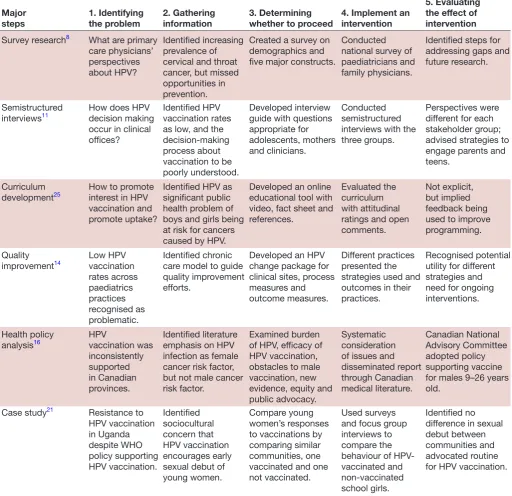
Table 5 Published examples of research on HPV for the six featured methodologies
Major
steps 1. Identifying the problem 2. Gathering information 3. Determining whether to proceed 4. Implement an intervention
5. Evaluating the effect of intervention
Survey research8 What are primary
care physicians’ perspectives about HPV?
Identified increasing prevalence of cervical and throat cancer, but missed opportunities in prevention.
Created a survey on demographics and five major constructs.
Conducted national survey of paediatricians and family physicians.
Identified steps for addressing gaps and future research.
Semistructured
interviews11 How does HPV decision making
occur in clinical offices?
Identified HPV vaccination rates as low, and the decision-making process about vaccination to be poorly understood.
Developed interview guide with questions appropriate for adolescents, mothers and clinicians.
Conducted semistructured interviews with the three groups.
Perspectives were different for each stakeholder group; advised strategies to engage parents and teens.
Curriculum
development25 How to promote interest in HPV
vaccination and promote uptake?
Identified HPV as significant public health problem of boys and girls being at risk for cancers caused by HPV.
Developed an online educational tool with video, fact sheet and references.
Evaluated the curriculum with attitudinal ratings and open comments.
Not explicit, but implied feedback being used to improve programming. Quality
improvement14 Low HPV vaccination
rates across paediatrics practices recognised as problematic. Identified chronic care model to guide quality improvement efforts.
Developed an HPV change package for clinical sites, process measures and outcome measures.
Different practices presented the strategies used and outcomes in their practices.
Recognised potential utility for different strategies and need for ongoing interventions.
Health policy
analysis16 HPV vaccination was
inconsistently supported in Canadian provinces.
Identified literature emphasis on HPV infection as female cancer risk factor, but not male cancer risk factor.
Examined burden of HPV, efficacy of HPV vaccination, obstacles to male vaccination, new evidence, equity and public advocacy.
Systematic consideration of issues and disseminated report through Canadian medical literature. Canadian National Advisory Committee adopted policy supporting vaccine for males 9–26 years old.
Case study21 Resistance to
HPV vaccination in Uganda despite WHO policy supporting HPV vaccination. Identified sociocultural concern that HPV vaccination encourages early sexual debut of young women.
Compare young women’s responses to vaccinations by comparing similar communities, one vaccinated and one not vaccinated.
Used surveys and focus group interviews to compare the behaviour of HPV-vaccinated and non-vaccinated school girls.
Identified no difference in sexual debut between communities and advocated routine for HPV vaccination.
HPV, human papillomavirus; WHO, World Health Organization.
interviews, (3) curriculum development, (4) continuous quality improvement, (5) clinical policy analysis and (6) case study research. To illustrate the six approaches, this article features examples for each methodological approach applied to the topic of HPV vaccination (table 5). For example, suppose a resident physician consulted with a faculty about an interest in doing HPV vaccine research. The illustration in table 1, section 4 suggests how the topic could be pursued with each type of project. Below, examples from the literature illustrate the application of each. While some examples were conducted nationally, the same research could be conducted in an emerging
researcher’s own community, clinical practice (especially if serving a unique population) or in one’s residency. By addressing a gap in the literature, the findings could yield a scholarly publication. Table 1, section 4 illustrates how I might conduct this research and can guide completion of table 2, section 4.
survey research
Researchers who engage in survey research may begin by identifying information for inclusion in the survey through qualitative procedures.6 Surveys involve a series of questions delivered to a target population. When
on September 12, 2020 by guest. Protected by copyright.
engaging in survey research, using a previous survey that has been demonstrated to be reliable and valid can be very practical. Unfortunately, existing surveys do not address the issues of interest to primary care researchers. Emerging researchers can create a survey, but should be methodical and patient. Experienced survey methodol-ogists go through extensive revisions, cognitive testing and pilot testing. Surveys often include closed and open-ended questions.7 Responses are summarised and the findings examined. Analysis of data frequently involves a comparison between one or more groups for differences. Table 5 illustrates how Allison et al8 used survey research to assess primary care physicians’ attitudes about HPV vaccination.
semistructured qualitative interviews
While often attributed to Einstein, William Bruce Cameron may have been the first to articulate the concept of ‘Not everything that can be counted counts, and not everything that counts can be counted’.9 This point illustrates the importance of qualitative research for understanding how things happen, why they happen and the perspectives of particular groups. A key approach to qualitative research is the semistructured qualitative interview.6 Research appropriate for semistructured qual-itative interviews often involves investigating perspectives, experiences and processes as they relate to a particular phenomenon (table 4). While less familiar to many medical researchers, qualitative research has a robust history in numerous fields in the social sciences.10Table 5 illustrates how Hughes et al11 explored the process of HPV vaccine decision making in paediatric primary care using semistructured qualitative interviews.
Curriculum development
Primary care educators often gravitate to research about curriculum development as an opportunity to advance educational practice according to best evidence.12 System-atic change in curriculum grounded in evidence involves the same five major steps illustrated in table 4 and follows a research approach by (1) identifying a deficit in perfor-mance, (2) assessing current educational efforts, (3) developing a curriculum, (4) implementing the curric-ulum and (5) evaluating the impact of the curriccurric-ulum change and modifying. Table 5 illustrates how the Centers for Disease Control and Prevention developed an online curriculum to promote interest in HPV vaccination.11
Quality improvement
In administration of a clinic, primary care practitioners may be positioned or requested to examine current prac-tice approaches and optimise them.13 Continuous quality improvement provides a framework for improving prac-tice performance (table 4): (1) identifying the problem or unintended outcome of clinical care or practice management; (2) assessing the factors involved; (3) devel-oping an alternative strategy to the current approach; (4) implementing the alternative strategy; and (5) evaluating
the effects of the alternative strategy and modifying it, and thus resuming the cycle. Table 5 illustrates how the Quality through Technology and Innovation in Pediatrics organisation developed a quality improvement effort to support practices to increase HPV vaccination rates.14
Clinical policy analysis
A clinical policy analysis process can apply locally or globally.15 That is, as new recommendations or evidence emerges, a solo-practice physician or physician group will need to decide whether to follow recommendations. Alter-natively, as illustrated above under the 'How to recognise a good clinical story' section, a seemingly simple problem can have implications for national policy. Policy work can also be conceptualised under the five steps of table 4. This process involves (1) identifying relevant policies or guidelines addressing the health issue; (2) assessing the development of the policy and consulting relevant litera-ture; (3) analysing the policy based on a framework; (4) disseminating the policy, for example through publica-tion, or perhaps locally within an organisation or even within a practice; and (5) evaluating the impact of the policy recommendation, for example, was there uptake by one or more organisations. Table 5 illustrates how Shapiro et al16 used health policy analysis to examine the rationale for vaccinating male adolescents in Canada.
Case study research
Primary care practitioners may be engaged with unique populations in their communities, work in international projects, develop novel teaching approaches or develop unique clinical practices. These activities and many others can be studied or evaluated using a case study approach.17 Case studies may use qualitative or mixed-methods data collection.18 A case study involves forming a research question about a particular phenomenon (the case), collecting and analysing the information, and devel-oping a deep understanding about the phenomenon. There are many different types of case studies (eg, single and multiple) and purposes of case studies.19 Broadly speaking, case study research may illustrate a unique phenomenon, an intrinsic case, or be used to illustrate a general or typical problem, an instrumental case.20 As in table 4, the five major steps have similarities to the other approaches: (1) identifying a phenomenon of study and bounding it; (2) searching for informative literature about the phenomenon; (3) assessing if the case is suffi-ciently unique and informative for a novel addition or expansion of the literature; (4) collecting information about the case using existing and or new data; and (5) analysing the collected data in response to the question, drawing conclusions and identifying the contribution as part of dissemination. Table 5 illustrates how Aujo et al21 used case study research to disprove a cultural resistance to uptake of HPV vaccination stemming from concern that receiving HPV vaccination leads to early sexual debut among Ugandan girls.
on September 12, 2020 by guest. Protected by copyright.
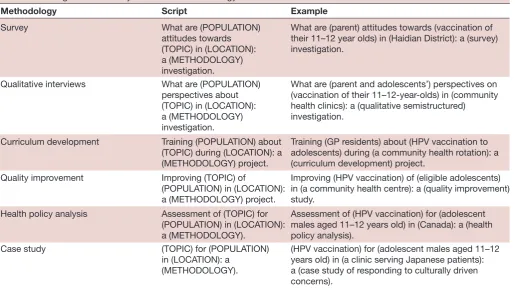
Table 6 Writing a title that fits your research methodology
Methodology Script Example
Survey What are (POPULATION) attitudes towards (TOPIC) in (LOCATION): a (METHODOLOGY) investigation.
What are (parent) attitudes towards (vaccination of their 11–12 year olds) in (Haidian District): a (survey) investigation.
Qualitative interviews What are (POPULATION) perspectives about (TOPIC) in (LOCATION): a (METHODOLOGY) investigation.
What are (parent and adolescents’) perspectives on (vaccination of their 11–12-year-olds) in (community health clinics): a (qualitative semistructured) investigation.
Curriculum development Training (POPULATION) about (TOPIC) during (LOCATION): a (METHODOLOGY) project.
Training (GP residents) about (HPV vaccination to adolescents) during (a community health rotation): a (curriculum development) project.
Quality improvement Improving (TOPIC) of
(POPULATION) in (LOCATION): a (METHODOLOGY) project.
Improving (HPV vaccination) of (eligible adolescents) in (a community health centre): a (quality improvement) study.
Health policy analysis Assessment of (TOPIC) for (POPULATION) in (LOCATION): a (METHODOLOGY).
Assessment of (HPV vaccination) for (adolescent males aged 11–12 years old) in (Canada): a (health policy analysis).
Case study (TOPIC) for (POPULATION) in (LOCATION): a
(METHODOLOGY).
(HPV vaccination) for (adolescent males aged 11–12 years old) in (a clinic serving Japanese patients): a (case study of responding to culturally driven concerns).
Activity: choosing among the selected research approaches
Having ‘tried on’ different research approaches by completing table 2, section 4, the next step involves reading more about the research approaches you have selected. This special issue of FMCH contains ‘how to do it’ articles for each of the six research approaches listed. For the top choices, read more about the approaches and consider reading more indepth references listed in each article. Consider reading the full articles summarised to learn how other authors have used specific approaches. Discussing top choices with a research partner, mentor or advisor may help with choosing an approach. Of course, the choice to use another approach may be relevant should none of these six have sufficient appeal or fit.
Composing the project title
Having identified a research topic grounded in clinical care, and an approach that is practical, feasible and a good fit for the researcher’s interest, the next step involves writing a title for the project. Effective titles generally have four elements: the population, the topic, the location of the research and the methodology.22 Table 6 provides formulas for writing a project title and an example for each type of project. Using table 1, section 5 and table 5 as references, compose a title for your study and record this in section 5 of table 2. In reality, the initial title often gets changed and may require further editing.
Activity: identifying the next steps
Using table 1, section 6 as an example, complete table 2, section 6. This section can be completed based on any
number of concerns or ideas. Perhaps conversing with a research partner, mentor or someone else can move the project along. Would further review of the litera-ture move the project forward? A closer reading of the companion reference articles in this special edition of
FMCH may clarify the commitment to one or another of the approaches. Would duplicating a previous study with a different population serve as an option? Most important, record which of the approaches look to be the most fun or appealing. This factor cannot be underscored in terms of the prognosis for completion of the project. Additionally, reading the articles in this issue on analytical approaches for quantitative and qualitative data provides guidance about how to approach analysing the data.23 24
disCussion
As research needed in primary care settings differs from other clinical settings, it becomes apparent that family doctors need to conduct the research. This article encourages developing meaningful research questions from clinical stories, considering different approaches for investigating the phenomenon of interest and choosing an approach. A title also can help give a proposal ‘life’ by embodying the essence of the project. For the next step, aspiring researchers may wish to turn to the other arti-cles in this special issue of FMCH to fully develop research questions and research plans appropriate for the research approach chosen to pursue the identified topic.
on September 12, 2020 by guest. Protected by copyright.
Correction notice This article has been corrected since it published. Several text changes have been made throughout the article.
Acknowledgements William Ventres provided valuable critical feedback on an earlier draft. Lilly Pritula, Lois Phizackea and Rania Ajilat provided technical support in manuscript preparation. I am indebted to Benjamin Crabtree for sharing with me the idea of clinical stories as a fantastic source of research questions. I credit Jennifer Hoock with the parallels between research and clinical care idea as she brought the analogy of the clinical enterprise and the research enterprise to my attention. I gratefully acknowledge Ariana Pancaldo for the enthusiasm about this clinical problem that triggered my interest in researching the topic.
Contributors MDF conceptualised, authored, revised, reviewed and revised the entire content of this submission.
funding Funding of the Mixed Methods Program by the University of Michigan Department of Family Medicine helped make this research possible.
Competing interests None declared. Patient consent for publication Not required.
Provenance and peer review Not commissioned; internally peer reviewed. guest Chief editor Michael D. Fetters and Timothy C. Guetterman
open access This is an open access article distributed in accordance with the Creative Commons Attribution Non Commercial (CC BY-NC 4.0) license, which permits others to distribute, remix, adapt, build upon this work non-commercially, and license their derivative works on different terms, provided the original work is properly cited, appropriate credit is given, any changes made indicated, and the use is non-commercial. See: http:// creativecommons. org/ licenses/ by- nc/ 4.0
referenCes
1. Fetters MD, Guetterman TC. Discovering and doing family medicine and community health research. Fam Med Comm Health 2019;7:55–7.
2. Ventres W, Whiteside-Mansell L. Getting started in research, redefined: five questions for clinically focused physicians in family medicine. Fam Med Comm Health 2019;7:58–62.
3. Mitka M. The bridge at Ann Arbor: Japanese health program. JAMA 2000;283:2921–2.
4. Fetters MD, Fischer G, Reed BD. Effectiveness of vaginal Papanicolaou smear screening after total hysterectomy for benign disease. JAMA 1996;275:940–7.
5. Fetters MD, Lieberman RW, Abrahamse PH, et al. Cost-effectiveness of Pap smear screening for vaginal cancer after total hysterectomy for benign disease. J Low Genit Tract Dis 2003;7:194–202.
6. Dejonckheere M, Vaughn LM. Semistructured interviewing in primary care research: a balance of relationship and rigour. Fam Med Comm Health 2019;7:77–84.
7. Creswell JC, Hirose M. Mixed methods and survey researchinfamily medicine and community health. Fam Med Comm Health
2019;7:71–6.
8. Allison MA, Hurley LP, Markowitz L, et al. Primary care physicians' perspectives about HPV vaccine. Pediatrics 2016;137:e20152488. 9. Cameron WB, Sociology I. A casual introduction to sociological
thinking. Random House, 1963: 170.
10. Creswell JC, Poth CN. Qualitative inquiry and research design: choosing among five approaches. 4th edn. SAGE Publications, 2017.
11. Hughes CC, Jones AL, Feemster KA, et al. HPV vaccine decision making in pediatric primary care: a semi-structured interview study.
BMC Pediatr 2011;11.
12. Schneiderhan J, Guetterman TC, Dobson ML. Curriculum development: a how to primer. Fam Med Comm Health 2019;7:85–90.
13. Ursu A, Greenberg G, McKee M. Continuous quality improvement methodology: a case study on multidisciplinary collaboration to improve Chlamydia screening. Fam Med Comm Health 2019;7:91–7.
14. QTIP: South Carolina HPV lessons learned, 2015. Available: https:// www. aap. org/ en- us/ Documents/ immunization_ QTIP_ SC_ lessons_ Sept_ 2015. pdf
15. Engelman A, Case B, Meeks L, et al. Conducting health policy analysis in primary care research: turning clinical ideas into action. Fam Med Comm Health 2019;7:98–104.
16. Shapiro GK, Perez S, Rosberger Z. Including males in Canadian human papillomavirus vaccination programs: A policy analysis. CMAJ 2016;188:881–6.
17. F bregues S, Fetters MD. Fundamentals of case study researchin family medicine and community health. Fam Med Comm Health 2019;7:105–12.
18. Guetterman TC, Fetters MD. Two methodological approaches to the integration of mixed methods and case study designs: a systematic review. Am Behav Sci 2018;62:900–18.
19. Yin RK. Case study research: design and methods (applied social research methods). 5th edn. SAGE Publications, 2013.
20. Stake RE. The art of case study research. SAGE Publications, 1995. 21. Aujo JC, Bakeera-Kitaka S, Kiguli S, et al. No difference in sexual
behavior of adolescent girls following human papilloma virus vaccination: a case study two districts in Uganda; Nakasongola and Luwero. BMC Public Health 2014;14.
22. Creswell JW, Plano Clark VL. Designing and conducting mixed methods research. 3rd ed. Los Angeles: SAGE Publications, 2018. 23. Babchuk WA. Fundamentals of qualitative analysis in family
medicine. Fam Med Comm Health 2019;7:120–9.
24. Guetterman TC. Basics of statistics for primary care research. Fam Med Comm Health 2019;7:113–9.
25. Centers for Disease Control. You Are the Key to HPV Cancer Prevention - Train the Trainer, 2017. Available: https://www. cdc. gov/ vaccines/ ed/ hpv/ you- are- key. html
on September 12, 2020 by guest. Protected by copyright.