R E S E A R C H
Open Access
The impact of behavioural screening on
intervention outcomes in a randomised,
controlled multiple behaviour intervention trial
Lauren A Waters
*†, Elisabeth A Winkler
†, Marina M Reeves
†, Brianna S Fjeldsoe
†and Elizabeth G Eakin
†Abstract
Background:With an increasing research focus on multiple health behaviour change interventions, a
methodological issue requiring further investigation is whether or not to employ pre-trial behavioural screening to exclude participants who are achieving a pre-specified level of one or more behaviours. Behavioural screening can be used to direct limited resources to participants most in need of a behaviour change intervention; but may reduce the representativeness of the sample and limit comparability with trials that do not employ pre-trial behavioural screening. Furthermore, the impact of this type of screening on intervention participation and intervention effects is unknown.
Methods:Data for this study come from the Logan Healthy Living Program, a randomised, controlled telephone counselling lifestyle intervention trial which did not employ behavioural screening prior to randomisation. Screening for physical activity, diet or the combination was simulated using baseline trial data. To examine the impact of behavioural screening on intervention participation (in terms of participant characteristics, intervention dose received and retention), characteristics of participants included an excluded under the various screening scenarios were compared. To examine the impact of behavioural screening on intervention effects, results from the main trial analysis were compared with results obtained from the same analyses performed separately for each of the screened groups.
Results:Simulated pre-trial behavioural screening impacted minimally on intervention dose received and trial retention rate. Beyond the anticipated effect of reducing baseline levels of the behaviours being screened for, behavioural screening affected baseline levels of behaviours not targeted by screening, and participants’ demographic and health-related characteristics. Behavioural screening impacted on intervention effects in ways that were anticipated and positive, but also unexpected and detrimental. Physical activity screening (alone or in combination with diet) resulted in improved intervention effects for physical activity, while fruit and vegetable screening had no impact on intervention effects for these outcomes. All three types of screening impacted detrimentally on intervention effects for behaviours not being targeted by screening.
Conclusions:Behavioural screening may have desirable and undesirable consequences in the context of multiple behaviour intervention trials, and thus its potential merits and pitfalls should be carefully considered.
Background
Participating in regular moderate intensity physical activity and consuming a healthy diet are fundamental to the prevention and management of many prevalent chronic diseases [1-4]. There is now a large body of lit-erature addressing the development and evaluation of
intervention trials that aim to increase participation in physical activity and encourage healthy nutrition. These behaviours have traditionally been targeted individually, but more recently, research has suggested that targeting multiple behaviours concurrently may maximise health outcomes [5].
The shift towards multiple health behaviour interven-tions brings with it new challenges related to trial design [6]. A particular methodological issue requiring further investigation is whether or not to employ behavioural
* Correspondence: [email protected] †Contributed equally
The University of Queensland, School of Population Health, Cancer Prevention Research Centre, Brisbane, Queensland, Australia
screening prior to the commencement of the trial in order to exclude participants who are achieving a pre-specified level of the target behaviours. Behavioural screening is a relatively straightforward process in the context of single behaviour intervention trials. However, in multiple behaviour intervention trials, the complexity of behavioural screening (i.e., whether to screen on one, some, or all behaviours) is amplified, and the extent to which this practice influences trial participation and intervention effects is uncertain.
One rationale for employing pre-randomisation screening relates to the potentially beneficial impact this practice may have on intervention effect sizes. In theory, behavioural screening may favourably influence inter-vention effect sizes via several mechanisms: for example, by selecting a sample with a greater capacity for change and in which ceiling effects are minimised [7]. Alterna-tively, screening out participants who are already enga-ging in a particular behaviour may result in a sample that is potentially more resistant to change in the absence of an intervention [8], thereby potentially redu-cing the likelihood of control group improvements and their attenuation of intervention effects. Another reason for employing behavioural screening prior to the com-mencement of an intervention trial is that it can be used to direct limited resources to participants for whom behaviour change is a greater public health prior-ity (i.e., those who are not currently achieving a pre-specified level of the target behaviours) [9]. The downside of such exclusions is that study samples may become less representative of the sampling frames from which they were drawn, reducing the generalisability of study findings.
Given that behavioural screening has the potential to influence intervention effects, the outcomes of studies that adopt different behavioural screening practices may not be comparable. A snapshot of the literature describ-ing telephone-delivered intervention trials targetdescrib-ing phy-sical activity and/or diet in adults illustrates that there is substantial variation in behavioural screening practices, across behaviours and between single versus multiple behaviour intervention trials. We examined all interven-tion trials identified in a recent systematic review [10], plus all literature published from January 2006 until June 2009 that matched this review’s selection criteria. Screening for diet (alone or in combination with physi-cal activity) occurred rarely in diet (2/8) and multiple behavior (2/8) intervention trials. By contrast, screening for physical activity (alone or in combination with diet) occurred in most (18/23) physical activity intervention trials but in less than half (3/8) of the multiple behavior intervention trials. The tools used to screen for beha-viours, the specific aspects of the behaviors targeted by screening (particularly for diet), and cut-points used to
determine eligibility (particularly for physical activity screening) varied greatly.
This study aimed to investigate the impact of screen-ing for physical activity, diet, or the combination on intervention participation and intervention effects in the context of a multiple behaviour intervention trial. Data come from a recently completed randomised trial of a telephone-delivered physical activity and diet interven-tion that did not use behavioural screening [11]. To simulate pre-trial behavioural screening, participants were excluded according to baseline levels of physical activity and/or diet. The following specific research questions were posed:
1. Does behavioural screening impact on interven-tion participainterven-tion in terms of the characteristics of participants recruited, intervention dose received and retention rates?
2. What is the impact of behavioural screening on intervention effects for all behavioural outcomes (both those screened for and those not)?
3. Where behavioural screening impacts on interven-tion effects, is this due to an effect on interveninterven-tion group change, control group change, or both?
Methods
The Logan Healthy Living Program (LHLP) was a 12-month, telephone-delivered lifestyle intervention trial promoting physical activity and diet among primary care patients with type 2 diabetes and/or hypertension in a socioeconomically disadvantaged community bordering Brisbane (the capital city of the state of Queensland), Australia. This intervention was evaluated in a cluster-randomised controlled trial conducted between February 2005 and November 2007, with data analysed between February and June 2009. The study protocol was approved by The University of Queensland, Human Research Ethics Committee. A detailed description of the methodology of this trial has been previously reported [12].
Participant recruitment
display poor physical activity and/or diet relative to national recommendations. Additionally, active partici-pants may still gain clinical benefit by further improve-ments in physical activity because the upper limit beyond which clinical improvement is unattainable is not known [4].
A recruitment flow chart and analysis of participa-tion has been reported elsewhere [12]. In summary, the study had a high consent rate (n = 434, 72.6% of eligible contacts), minimal evidence of selection bias [12], high retention to end-of-intervention (78.6%), minimal differences between completers versus drop outs, and no difference in dropout between the study groups [11].
Telephone Counselling Intervention
Details of the intervention, which was guided by social-cognitive theory [13], and used motivational interview-ing techniques [14], have been described in detail elsewhere [12]. Briefly, participants from practices ran-domised to receive telephone counselling (TC) received up to 18 telephone calls and supplementary materials over a 12-month period. The number of calls completed for each participant was systematically tracked.
Usual Care Group
Participants from practices randomly assigned to the usual care (UC) condition were mailed a 1-page letter with brief feedback on their behavioural results after each assessment. They also received quarterly project newsletters with general health tips and off-the-shelf brochures on a variety of health topics, including physi-cal activity and diet.
Outcome Measures
All study data were obtained using computer-assisted telephone interviews at baseline, four- and 12-months, by trained interviewers who were blind to study condi-tion. Self-reported minutes per week of moderate-to-vigorous physical activity were assessed via the Active Australia Survey [15], which has been found to be reli-able [16] and of acceptreli-able validity [17] within Austra-lian adults. Test-retest reliability, convergent validity and criterion validity of this survey are similar to those of the International Physical Activity Questionnaire (IPAQ) and the US Behavioral Risk Factor Surveillance Survey (BRFSS) [17].
Self-reported daily intake of fibre (grams per day), and total and saturated fat intake (as a percentage of total energy) were measured by the Anti-Cancer Council of Victoria Food Frequency Questionnaire, which estimates intakes of most nutrients accurately (within 10%) and does not systematically under- or overestimate against weighed records [18]. Servings of fruit and vegetables
per day were measured using items from the Australian National Nutrition Survey [19], which have demon-strated validity against more comprehensive self-report measures and biomarkers, including serum carotenoids and red-cell folate [20].
Behavioural screening
The primary outcomes of the intervention trial were related to diet and physical activity; therefore these are the behaviours for which screening was simulated. Three retrospectively screened samples were generated using baseline health behaviour data: those screened for physical activity, diet, or the combination. Physical activ-ity screening excluded participants who met the national physical activity guidelines at baseline (i.e.,≥150 minutes of moderate-to-vigorous physical activity over 5 or more sessions per week) [21]. Diet screening (based on fruit and vegetable intake) excluded participants who met national recommendations for both fruit and vegetable intake at baseline (i.e., ≥2 servings of fruit and ≥5 ser-vings of vegetables per day). Combined screening excluded participants meeting guidelines for physical activityorfruit and vegetable intake. Only a very small number of participants (n = 12) were physically active andconsuming a healthy diet, so the effect of screening to exclude participants engaging in both behaviours was not examined.
Statistical analysis
Under each behavioural screening scenario, included and excluded participants were compared in terms of their: demographic characteristics (age, gender, ethnicity, marital status, education, employment, household income); health-related characteristics (presence of dia-betes and/or hypertension, number of self-reported chronic conditions, smoking, body mass index [BMI]); baseline levels of the behavioural outcomes; intervention dose received (TC participants only); and study reten-tion. Comparisons were made using t-tests (normal, continuous variables), Mann-Whitney tests (non-normal, continuous variables) or chi-square tests (categorical
variables). Differences ≥10% between the participants
who were excluded and those who were included were reported as noteworthy, regardless of statistical significance.
Three participants who died of unknown causes during the trial were excluded. Change scores (12-months minus baseline) for physical activity and diet (fruit, vege-table, fibre, total and saturated fat intake) were used as outcomes because these approximated a normal distri-bution. Linear mixed models (in SAS version 9.2) included the effects of group, time, group by time and baseline values of outcomes (to control regression to the mean) [22], and used random intercepts for participant and primary care practice in view of the repeated mea-sures and cluster design. Results for between-groups intervention effects are reported as adjusted means with
standard errors or 95% confidence intervals. A ≥10%
relative difference in intervention effects in the screened samples compared to the non-screened sample is reported as a potentially meaningful impact of beha-vioural screening.
Results
The original study sample included 434 participants. Using physical activity screening, 323 participants were retained (26% excluded); diet screening retained 394 participants (9% excluded); and combined screening retained 298 participants (31% excluded).
Effect of behavioural screening on intervention participation
Characteristics of participants recruited
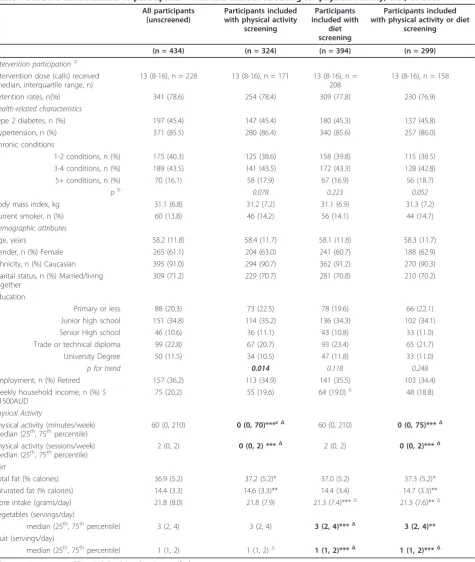
For all three behavioural screening criteria, there were no statistically significant differences between included and excluded participants with respect to age, gender, ethnicity, marital status, employment or household income (Table 1). Physical activity screening led to a significant, systematic exclusion of participants with higher levels of education (p = 0.014 for linear trend), and diet screening led to a noteworthy (≥10%), but not statistically significant difference for weekly household income, where participants earning at least $1500 AUD tended to be excluded.
Participants included and excluded under the various behavioural screening scenarios were not significantly or substantially different in terms of BMI, the proportion of current smokers, or the proportion diagnosed with hypertension or type 2 diabetes (Table 1). The difference in number of self-reported chronic conditions between participants included and excluded by combined screen-ing approached statistical significance (chi square = 3.772, df = 1, p = 0.052).
As anticipated, behavioural screening effectively and significantly reduced baseline levels of behaviours being screened for (Table 1). While diet screening (based on fruit and vegetable intake) also resulted in the exclusion of participants with significantly higher baseline fibre intake, it had no impact on baseline levels of other
dietary behaviours or on physical activity. Interestingly, physical activity and combined screening did affect base-line levels of behavioural characteristics not being screened for; with excluded participants having signifi-cantly lower total fat and saturated fat intake (as a per-centage of total calories) than included participants. This difference was most marked under the physical activity screening scenario, where excluded participants had 1.4% lower total fat and 1.1% lower saturated fat intake (as a percentage of total calories) than included participants. The median number of fruit serves per day also tended to be higher (by one serve per day) in participants excluded with physical activity and combined screening, compared to those who were included, although the comparison was significant only for combined screening.
Intervention dose received
Mann-Whitney tests revealed that telephone counselling call completion, a measure of intervention dose, was not statistically or substantially different for included versus excluded TC group participants under the physical activity (p = 0.657), diet (p = 0.656), or combined (p = 0.105) screening scenarios. The median number of com-pleted calls was 13 (of a possible 18) for the all screened groups and the unscreened sample.
Retention rates
Retention rates (Table 1) were not substantially or sta-tistically different between participants who were included versus excluded with physical activity (chi square = 0.024, df = 1, p = 0.878); diet (chi square = 1.660, df = 1, p = 0.198); or, combined screening (chi square = 0.935, df = 1, p = 0.334).
Anticipated consequences of behavioural screening
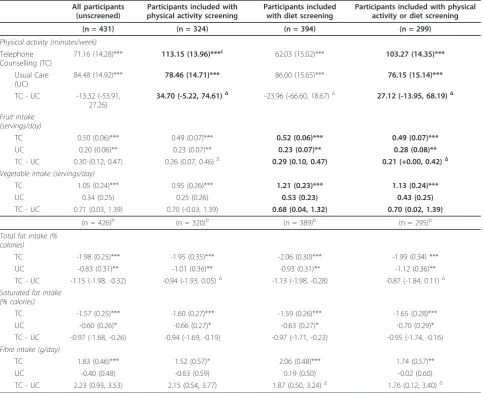
Table 2 presents the between-group intervention effects and within-groups changes observed in the unscreened sample, as published previously [11], and the three screened samples.
Impact of physical activity screening and combined screening on physical activity intervention effects
Table 1 Baseline characteristics of participants - with and without screening for physical activity, diet, or both
All participants (unscreened)
Participants included with physical activity
screening
Participants included with
diet screening
Participants included with physical activity or diet
screening
(n = 434) (n = 324) (n = 394) (n = 299)
Intervention participationa Intervention dose (calls) received (median, interquartile range, n)
13 (8-16), n = 228 13 (8-16), n = 171 13 (8-16), n = 208
13 (8-16), n = 158
Retention rates, n(%) 341 (78.6) 254 (78.4) 309 (77.8) 230 (76.9)
Health-related characteristics
Type 2 diabetes, n (%) 197 (45.4) 147 (45.4) 180 (45.3) 137 (45.8)
Hypertension, n (%) 371 (85.5) 280 (86.4) 340 (85.6) 257 (86.0)
Chronic conditions
1-2 conditions, n (%) 175 (40.3) 125 (38.6) 158 (39.8) 115 (38.5) 3-4 conditions, n (%) 189 (43.5) 141 (43.5) 172 (43.3) 128 (42.8) 5+ conditions, n (%) 70 (16.1) 58 (17.9) 67 (16.9) 56 (18.7)
pb 0.078 0.223 0.052
Body mass index, kg 31.1 (6.8) 31.2 (7.2) 31.1 (6.9) 31.3 (7.2)
Current smoker, n (%) 60 (13.8) 46 (14.2) 56 (14.1) 44 (14.7)
Demographic attributes
Age, years 58.2 (11.8) 58.4 (11.7) 58.1 (11.8) 58.3 (11.7)
Gender, n (%) Female 265 (61.1) 204 (63.0) 241 (60.7) 188 (62.9)
Ethnicity, n (%) Caucasian 395 (91.0) 294 (90.7) 362 (91.2) 270 (90.3) Marital status, n (%) Married/living
together
309 (71.2) 229 (70.7) 281 (70.8) 210 (70.2)
Education
Primary or less 88 (20.3) 73 (22.5) 78 (19.6) 66 (22.1)
Junior high school 151 (34.8) 114 (35.2) 136 (34.3) 102 (34.1) Senior High school 46 (10.6) 36 (11.1) 43 (10.8) 33 (11.0) Trade or technical diploma 99 (22.8) 67 (20.7) 93 (23.4) 65 (21.7)
University Degree 50 (11.5) 34 (10.5) 47 (11.8) 33 (11.0)
p for trend 0.014 0.118 0.248
Employment, n (%) Retired 157 (36.2) 113 (34.9) 141 (35.5) 103 (34.4) Weekly household income, n (%) $
≥1500AUD
75 (20.2) 55 (19.6) 64 (19.0)Δ 48 (18.8)
Physical Activity
Physical activity (minutes/week)
median (25th, 75thpercentile) 60 (0, 210) 0 (0, 70)***
cΔ 60 (0, 210) 0 (0, 75)***Δ
Physical activity (sessions/week) median (25th, 75thpercentile)
2 (0, 2) 0 (0, 2) ***Δ 2 (0, 2) 0 (0, 2)***Δ
Diet
Total fat (% calories) 36.9 (5.2) 37.2 (5.2)* 37.0 (5.2) 37.3 (5.2)*
Saturated fat (% calories) 14.4 (3.3) 14.6 (3.3)** 14.4 (3.4) 14.7 (3.3)** Fibre intake (grams/day) 21.8 (8.0) 21.8 (7.9) 21.3 (7.4)***Δ 21.3 (7.6)**Δ Vegetables (servings/day)
median (25th, 75thpercentile) 3 (2, 4) 3 (2, 4) 3 (2, 4)***Δ 3 (2, 4)** Fruit (servings/day)
median (25th, 75thpercentile) 1 (1, 2) 1 (1, 2)Δ 1 (1, 2)***Δ 1 (1, 2)***Δ
a
Data are given as mean (SD) or N (%) unless otherwise specified. b
Linear-by-linear association chi-square. c
Bold cells represent behaviours predicted to be impacted by screening.
ΔSubstantial difference (≥10%) between included and excluded participants.
* p < 0.05 (included participants v excluded participants). ** p < 0.01.
larger increases in physical activity being observed in the TC group when physical activity or combined screening was undertaken compared with when screening was not used; changes in physical activity were similar in the UC group regardless of behavioural screening.
Impact of fruit and vegetable screening and combined screening on fruit and vegetable intervention effects
In the unscreened sample, intervention effects for fruit and vegetable intake were significant, with intake increas-ing by +0.30 and +0.70 serves per day respectively. Diet screening had no impact on intervention effects for fruit
or vegetable intake. Combined screening also had no impact on intervention effects for vegetable intake, but reduced the size of the intervention effect for fruit intake to +0.21 serves per day (a 30% reduction in the size of the intervention effect relative to the effect for the unscreened sample). Examining changes within groups showed that this detrimental impact on the intervention effect was primarily due to a comparatively larger increase in fruit intake being observed in the UC group when combined screening was employed than when behavioural screening was not employed.
Table 2 Adjusted baseline to 12 months mean changeain behavioural outcomes with and without behavioural screening
All participants (unscreened)
Participants included with physical activity screening
Participants included with diet screening
Participants included with physical activity or diet screening
(n = 431) (n = 324) (n = 394) (n = 299)
Physical activity (minutes/week)
Telephone Counselling (TC)
71.16 (14.28)*** 113.15 (13.96)***c 62.03 (15.02)*** 103.27 (14.35)***
Usual Care (UC)
84.48 (14.92)*** 78.46 (14.71)*** 86.00 (15.65)*** 76.15 (15.14)***
TC - UC -13.32 (-53.91, 27.26)
34.70 (-5.22, 74.61)Δ -23.96 (-66.60, 18.67)Δ 27.12 (-13.95, 68.19)Δ
Fruit intake (servings/day)
TC 0.50 (0.06)*** 0.49 (0.07)*** 0.52 (0.06)*** 0.49 (0.07)***
UC 0.20 (0.06)** 0.23 (0.07)** 0.23 (0.07)** 0.28 (0.08)**
TC - UC 0.30 (0.12, 0.47) 0.26 (0.07, 0.46)Δ 0.29 (0.10, 0.47) 0.21 (+0.00, 0.42)Δ Vegetable intake (servings/day)
TC 1.05 (0.24)*** 0.95 (0.26)*** 1.21 (0.23)*** 1.13 (0.24)***
UC 0.34 (0.25) 0.25 (0.26) 0.53 (0.23) 0.43 (0.25)
TC - UC 0.71 (0.03, 1.39) 0.70 (-0.03, 1.39) 0.68 (0.04, 1.32) 0.70 (0.02, 1.39)
(n = 426)b (n = 320)b (n = 389)b (n = 295)b
Total fat intake (% calories)
TC -1.98 (0.25)*** -1.95 (0.35)*** -2.06 (0.30)*** -1.99 (0.34) ***
UC -0.83 (0.31)** -1.01 (0.36)** -0.93 (0.31)** -1.12 (0.36)**
TC - UC -1.15 (-1.98, -0.32) -0.94 (-1.93, 0.05)Δ -1.13 (-1.98, -0.28) -0.87 (-1.84, 0.11)Δ
Saturated fat intake (% calories)
TC -1.57 (0.25)*** -1.60 (0.27)*** -1.59 (0.26)*** -1.65 (0.28)***
UC -0.60 (0.26)* -0.66 (0.27)* -0.63 (0.27)* -0.70 (0.29)*
TC - UC -0.97 (-1.68, -0.26) -0.94 (-1.69, -0.19) -0.97 (-1.71, -0.23) -0.95 (-1.74, -0.16)
Fibre intake (g/day)
TC 1.83 (0.46)*** 1.52 (0.57)* 2.06 (0.48)*** 1.74 (0.57)**
UC -0.40 (0.48) -0.63 (0.59) 0.19 (0.50) -0.02 (0.60)
TC - UC 2.23 (0.93, 3.53) 2.15 (0.54, 3.77) 1.87 (0.50, 3.24)Δ 1.76 (0.12, 3.40)Δ
a
Adjusted means (standard error or 95% CI) of change from baseline to 12-months (adjusted for baseline values), with random intercepts for practice and subject.
b
Sample size differs due to the exclusion of participants with invalid data from the food frequency questionnaire. c
Bold cells represent behaviours predicted to be impacted by screening.
ΔSubstantial change (≥10%) in intervention effects when behavioural screening is employed compared to when it is not.
* p < 0.05 (for change from baseline). ** p < 0.01.
Unanticipated consequences of behavioural screening
Impact of physical activity screening on fruit and vegetable intake
The intervention effect for fruit intake under the physi-cal activity screening scenario was substantially reduced (a 13% relative reduction). The intervention effect for vegetable intake under this behavioural screening sce-nario was not meaningfully affected, although it did lose statistical significance, possibly as a result of the smaller sample size.
Impact of fruit and vegetable screening on physical activity intervention effects
The intervention effect for physical activity was more strongly in favour of the UC group, when diet screening was employed, and this change appeared to be due to a reduced improvement in the TC group relative to when diet screening was not used.
Impact of all behavioural screening scenarios on
intervention effects for variables not screened for (total and saturated fat [% daily calorie intake] and fibre intake)
With the exception of fibre intake, which may be corre-lated with fruit and vegetable intake, it was not expected that intervention effects for the dietary variables not tar-geted by behavioural screening would be impacted by the various screening scenarios. In comparison to the unscreened sample, intervention effects for fibre were reduced with diet screening (by 16%) and combined screening (by 21%), however the absolute magnitude of the differences in intervention effects were very small (0.4 grams or less).
Intervention effects for saturated fat were unaffected by screening. Physical activity and combined screening both impacted detrimentally on intervention effects for total fat intake. Compared with intervention effects for the unscreened sample, intervention effects for total fat intake were reduced by 18% and 24% respectively, under the physical activity and combined screening scenarios. In both cases, the impact on intervention effects appeared mostly due to larger reductions in total fat intake in the screened UC groups than the unscreened UC group.
Discussion
To our knowledge, this is the first study to empirically evaluate the impact of behavioural screening on inter-vention participation or interinter-vention effects within the context of a multiple behaviour intervention trial. Beha-vioural screening exerted an influence on intervention participation in terms of the characteristics of partici-pants included in the sample, but had no impact on the intervention dose received or trial retention rate. Beha-vioural screening also impacted on intervention effects, in ways that were anticipated and positive, but also unexpected and detrimental.
The detrimental impact of behavioural screening on outcomes that were not screened for suggests that some intervention effects may have been unintentionally affected to a small extent in the minority of multiple behaviour intervention trials that have used behavioural screening. While, in the context of this study, the abso-lute magnitude of the detrimental impacts were often small, and of potentially limited clinical significance, the findings from this study suggest that the impact of screening in multiple behaviour intervention trials war-rants further consideration. Our results intimate that screening for physical activity is likely to have the antici-pated consequence of improving intervention effects for that behaviour, while diet screening based on fruit and vegetable intake, may not. Hence, the greater propensity to screen for physical activity in single rather than mul-tiple behaviour intervention trials may lead to an overall underestimation of the capacity of the latter to demon-strate successful changes in physical activity.
Our findings also have implications for sample sizes required in future trials. Hypothesised intervention effects for physical activity should take into account whether the sample will be screened or not, with unscreened samples being likely to achieve smaller effect sizes and thus require markedly larger sample sizes. An alternative to using pre-trial screening to exclude certain participants is to use sub-group analyses to derive simi-lar benefits in terms of effect sizes. However, particusimi-larly for lower prevalence behaviours (e.g., smoking), the required sample sizes may become prohibitively large.
Our study also highlights some potential mechanisms through which screening may exert both positive and detrimental influences. The benefits of physical activity and combined screening on intervention effects for phy-sical activity were due to relatively greater improve-ments in TC group participants when these screens were employed than when screening was not used. Pre-sumably, the findings suggest reduced ceiling effects (i.e., participants with lower baseline levels of physical activity had a greater capacity to improve in response to the intervention). For the other detrimental impacts, the mechanisms were less clear cut: sometimes changes in the TC group were affected, sometimes UC, sometimes both. Since retention and intervention dose were unaf-fected by screening, these can be ruled out as possible explanations for the impact on intervention effects. The impact could relate to the effect of screening on baseline levels, and possibly the impact on participant character-istics (as certain types of participants achieve different levels of success in behavioural trials) [23].
physical activity and combined screening (unlike screen-ing for diet only) also significantly and substantially affected baseline levels of behaviours not targeted by behavioural screening, specifically increasing baseline levels of total and saturated fat intake (as a percentage of daily calories). This is not entirely surprising as health behaviours (including physical activity and diet) tend to co-occur [25,26]; hence excluding participants with higher levels of physical activity is also likely to exclude those with healthier diets. Although our comparisons were limited by the small numbers of participants excluded, behavioural screening also tended to exclude participants with certain demographic and health-related characteristics, thus resulting in a less representative sample than was achieved without screening. Similarly, other studies have reported that adherence with recom-mended levels of multiple health behaviours is greater in samples with certain demographic characteristics [27]. The changes in the demographic profile of the sample occurring with screening resulted in the selec-tion of a sample with characteristics associated with multiple unhealthy behaviours, who are therefore poten-tially in greater need of an intervention [28].
The results of this study must be interpreted in light of the fact that this is a secondary analysis, with ‘ beha-vioural screening’conducted retrospectively using base-line measures. In order to imitate feasible behavioural screening practices, we used behaviour-based questions and employed the national physical activity guidelines and fruit and vegetable intake recommendations as cut-off criteria. These criteria are not perceptibly different from those used by other studies, although our review of the literature did find that behavioural screening practices vary greatly in terms of both the specific aspects of the behaviours targeted (particularly for diet screening), and the criteria used to determine eligibility (particularly for physical activity screening). Despite our realistic simulation of behavioural screening, it is possi-ble that true behavioural screening, occurring some time prior to baseline, and based on different, behavioural measures, may have had slightly different effects on intervention outcomes than what was found in our ana-lyses. Both in our study and in general, the use of self-reported physical activity when screening is problematic, as over-reporting may lead to the exclusion of partici-pants who would potentially benefit from the intervention.
A number of other issues must also be considered. As anticipated when targeting a group with chronic disease, behavioural screening excluded only a small number of participants due to the high prevalence of physical inac-tivity and unhealthy dietary practices in our study sam-ple. If we had screened to exclude those with a health behaviour with a higher prevalence (e.g., non-smoking)
or targeted a healthier population, we may have excluded a larger proportion of the sample and thus seen greater effects of behavioural screening [5,29]. For multiple behaviour trials that target a more diverse array of behaviours (including smoking, hazardous drinking and sun exposure) the complexity of screening is increased, and further research on the impact of screen-ing for less prevalent behaviours is warranted. Also, our study was powered on the full sample (n = 434), so the loss of significance of intervention effects observed in the screened groups should not be over interpreted; changes to the size of effect should also be considered. Finally, the impact of screening may relate to the mechanisms previously discussed, but alternatively could be due in part to phenomena related to measurement error and biases of self report, as we used self-report measures of physical activity and diet that may be sub-ject to over- or under-reporting [30,31]. For example, screening could have an impact on outcomes by tending to exclude participants who are comparatively more or less prone to socially desirable reporting. Without objec-tive measures, this is not something we could assess.
Conclusions
Behavioural screening is an inconsistent practice that may have greater appeal for some types of trials (e.g., efficacy trials targeting single behaviours only) than others (e.g., multiple behaviour intervention trials). Mul-tiple behaviour intervention trials that target both diet and physical activity tend not to screen participants for pre-intervention levels of health behaviours. Based on our study findings, this appears to be good practice, but possibly one that makes it difficult to compare the results of single and multiple behaviour intervention trials. An alternative strategy for future multiple beha-viour intervention trials is to conduct sub-group
ana-lyses, planned in advance of the trial, on an a priori
defined sub-group of participants who are not attaining some pre-specified baseline level of the target beha-viours. This approach could have the same benefits as behavioural screening (producing samples and results comparable to studies that screen) without the adverse consequences. Not screening also allows a more repre-sentative group to be recruited, enhancing generalisabiltiy and the ability to examine issues of effectiveness -which is important in informing the translation of research into practice [32].
Acknowledgements
conduct of the study, data extraction or analyses, in the writing of the manuscript, or the review and approval of the manuscript for publication. We thank the participating Logan Area general practices and their patients, as well as staff of the South-East Primary Health Care Network for their support of the study, and acknowledge the dedicated work of our telephone counsellors, Lisa Ulyate and Fiona Porter and Natalie Doyle, as well as the entire project team.
Authors’contributions
LW, EW, MR and EE were involved in the conceptualisation of the study. EW and LW conducted the data analysis and drafted the manuscript. MR also provided assistance in interpretation of the data and drafting of the manuscript. EE and BF provided assistance in drafting of the manuscript. All authors read and approved the final manuscript.
Competing interests
The authors declare that they have no competing interests.
Received: 12 August 2010 Accepted: 30 March 2011 Published: 30 March 2011
References
1. Sigal R, Kenny GP, Wasserman D, Castaneda-Sceppa C, White R:Physical activity/exercise and type 2 diabetes: A consensus statement from the American Diabetes Association.Diabetes Care2006,29:1433-1438. 2. Chobanian AV, Bakris GL, Black HR, Cushman WC, Green LA, Izzo JL Jr,
Jones DW, Materson BJ, Oparil S, Wright JT Jr, Roccella EJ, The National High Blood Pressure Education Program Coordinating Committee:Seventh report of the joint national committee on prevention, detection, evaluation, and treatment of high blood pressure.Hypertension2003,
42:1206-1252.
3. Eyre H, Kahn R, Robertson RM, the ACS/ADA/AHA Collaborative Writing Committee, Clark NG, Doyle C, Gansler T, Glynn T, Hong Y, Smith RA, Taubert K, Thun MJ:Preventing cancer, cardiovascular disease, and diabetes: A common agenda for the American Cancer Society, the American Diabetes Association, and the American Heart Association.CA Cancer J Clin2004,54:190-207.
4. Haskell WL, Lee IM, Pate RR, Powell KE, Blair SN, Franklin BA, Macera CA, Heath GW, Thompson PD, Bauman A:Physical activity and public health: Updated recommendation for adults from the American College of Sports Medicine and the American Heart Association.Med Sci Sports Exerc
2007,39:1423-1434.
5. Prochaska JJ, Spring B, Nigg CR:Multiple health behavior change research: An introduction and overview.Prev Med2008,46:181-188. 6. Prochaska JJ, Velicer WF, Nigg CR, Prochaska JO:Methods of quantifying
change in multiple risk factor interventions.Prev Med2008,46:260-265. 7. Clutter Snyder D, Sloane R, Haines PS, Miller P, Clipp EC, Morey MC,
Pieper C, Cohen H, Demark-Wahnefried W:The Diet Quality Index-Revised: A tool to promote and evaluate dietary change among older cancer survivors enrolled in a home-based intervention trial.J Am Diet Assoc
2007,107:1519-1529.
8. van Stralen MM, Lechner L, Mudde AN, de Vries H, Bolman C:
Determinants of awareness, initiation and maintenance of physical activity among the over-fifties: a Delphi study.Health Educ Res2010,
25:233-247.
9. Prochaska JJ, Sallis JF, Long B:A Physical Activity Screening Measure for Use With Adolescents in Primary Care.Arch Pediatr Adolesc Med2001,
155:554-559.
10. Eakin E, Lawler S, Vandelanotte C, Owen N:Telephone interventions for physical activity and dietary behavior change: A systematic review.Am J Prev Med2007,32:419-434.
11. Eakin E, Reeves M, Lawler S, Graves N, Oldenburg B, Del Mar C, Wilke K, Winkler E, Barnett A:Telephone counseling for physical activity and diet in primary care patients.Am J Prev Med2009,36:142-149.
12. Eakin EG, Reeves MM, Lawler SP, Oldenburg B, Del Mar C, Wilkie K, Spencer A, Battistutta D, Graves N:The Logan Healthy Living Program: A cluster randomized trial of a telephone-delivered physical activity and dietary behavior intervention for primary care patients with type 2 diabetes or hypertension from a socially disadvantaged community -rationale, design and recruitment.Contemporary Clinical Trials2008,
29:439-454.
13. Bandura A:Social foundations of thought and action: a social cognitive theoryNew Jersey: Prentice-Hall; 1986.
14. Hecht J, Borrelli B, Breger RKR, De Francesco C, Ernst D, Resnicow K:
Motivational interviewing in community-based research: experiences from the field.Ann Behav Med2005,29:29-34.
15. Australian Institute of Health and Welfare:The Active Australia Survey: A Guide and Manual for Implementation, Analysis and ReportingCanberra: AIHW; 2003.
16. Timperio A, Salmon J, Crawford D:Validity and reliability of a physical activity recall instrument among overweight and non-overweight men and women.J Sci Med Sport2003,6:477-491.
17. Brown WJ, Trost SG, Bauman A, Mummery K, Owen N:Test-retest reliability of four physical activity measures used in population surveys.J Sci Med Sport2004,7:205-215.
18. Hodge A, Patterson AJ, Brown WJ, Ireland P, Giles G:The Anti Cancer Council of Victoria FFQ: relative validity of nutrient intakes compared with weighed food records in young to middle-aged women in a study of iron supplementation.Aust N Z J Public Health2000,24:576-583. 19. Rutishauser IHE, Webb K, Abraham B, Allsopp R:Evaluation of short dietary
questions from the 1995 National Nutrition SurveyCanberra: Australian Food and Nutrition Monitoring Unit; 2001.
20. Coyne T, Ibiebele TI, McNaughton S, Rutishauser IH, O’Dea K, Hodge AM, McClintock C, Findlay MG, Lee A:Evaluation of brief dietary questions to estimate vegetable and fruit consumption - using serum carotenoids and red-cell folate.Public Health Nutr2005,8:298-308.
21. Australian Government Department of Health and Aged care:An active way to better health: National physical activity guidelines for Australians. Canberra
1999.
22. Vickers AJ, Altman DG:Statistics notes: Analysing controlled trials with baseline and follow up measurements.BMJ2001,323:1123-1124. 23. King AC, Ahn D, Rejeski WJ, Marcus B, Dunn AL, Sallis JF:Identifying
subgroups that succeed or fail with three levels of physical activity intervention: The activity counseling trial.Health Psych2006,25:336-347. 24. Adler N, Ostrove J:Socioeconomic status and health: what we know and
what we don’t.Ann NY Acad Sci1999,896:3-15.
25. Hausdorf K, Eakin E, Whiteman D, Rogers C, Aitken J, Newman B:
Prevalence and correlates of multiple cancer risk behaviors in an Australian population-based survey: Results from the Queensland Cancer Risk Study.Cancer Causes Control2008,19:1339-1347.
26. Dutton GR, Napolitano MA, Whiteley JA, Marcus BH:Is physical activity a gateway behavior for diet? Findings from a physical activity trial.Prev Med2008,46:216-221.
27. de Vries H, van‘t Riet J, Spigt M, Metsemakers J, van den Akker M, Vermunt JK, Kremers S:Clusters of lifestyle behaviors: Results from the Dutch SMILE study.Prev Med2008,46:203-208.
28. Laaksonen M, Prattala R, Lahelma E:Sociodemographic determinants of multiple unhealthy behaviours.Scand J Public Health2003,31:37-43. 29. Prochaska JO:Multiple Health Behavior Research represents the future of
preventive medicine.Prev Med2008,46:281-285.
30. Sallis JF, Saelens B:Assessment of physical activity by self-report: status, limitations and future directions.Res Q Exerc Sport2000,71:1-14. 31. Heitmann B, Lissner L:Can adverse effects of dietary fat intake be
overestimated as a consequence of dietary fat underreporting?Public Health Nutr2005,8:1322-1327.
32. Dzewaltowski DA, Estabrooks PA, Glasgow RE:The future of physical activity behavior change research: What is needed to improve translation of research into health promotion practice?Exerc Sports Sci Rev2004,32:57-63.
doi:10.1186/1479-5868-8-24
Cite this article as:Waterset al.:The impact of behavioural screening on intervention outcomes in a randomised, controlled multiple behaviour intervention trial.International Journal of Behavioral Nutrition