Procedia Computer Science 46 ( 2015 ) 1164 – 1172
1877-0509 © 2015 The Authors. Published by Elsevier B.V. This is an open access article under the CC BY-NC-ND license (http://creativecommons.org/licenses/by-nc-nd/4.0/).
Peer-review under responsibility of organizing committee of the International Conference on Information and Communication Technologies (ICICT 2014) doi: 10.1016/j.procs.2015.01.029
ScienceDirect
International Conference on Information and Communication Technologies (ICICT 2014)
Dynamic MAPT Approach for Vertical Handover Optimization in
Heterogeneous Network for CBR and VBR QoS Guarantees
R. Tamijetchelvy
a,*, G. Sivaradje
a, P. Sankaranarayanan
baDepartment of Electronics and Communication Engineering, Pondicherry Engineering College, Pondicherry, 605014, India bDepartment of Electronics and Communication Engineering, Bharathiyar College of Engineering Technology, Pondicherry, 609609, India
Abstract
Efficient handover optimization and intelligent mobility management mechanism are the key requirements for designing next generation wireless network. Therefore, a dynamic Multiple Attribute decision based on Priority of Traffic classes (MAPT) for Constant Bit rate (CBR) and Variable Bit Rate (VBR) are proposed in this paper to optimize the handover operations. The IEEE 802.21 Media Independent Handover (MIH) standard provides an associated service to MAPT for achieving seamless handover. Simulation results prove that the proposed work resourcefully minimizes the vertical handover delay, packet loss, jitter and thus improves the throughput for both real time and non- real time applications.
© 2014 The Authors. Published by Elsevier B.V.
Peer-review under responsibility of organizing committee of the International Conference on Information and Communication Technologies (ICICT 2014).
Keywords: Vertical handover; Seamless connection; Mobility Management; Heterogeneous network; Media Independent Handover; Qos
1.Introduction
Wireless access technologies are evolving rapidly, the mobile operator with multi interface capability may obtain a decision to switch its connection towards best access technologies in order to satisfy ubiquitous coverage, minimum service cost, best Quality of service (Qos), seamless connection etc. The IP core infrastructures serve as a backbone to integrate different wireless access systems (UMTS, WiFi, WiMAX, LTE etc) and support seamless mobility. However, the mobile user executes advent real time applications like video conferencing, multimedia service etc. needs an efficient and seamless connectivity when the mobile node changes its Point of Attachment
* Corresponding author. Tel.: +0-994-439-1385. E-mail address: [email protected]
© 2015 The Authors. Published by Elsevier B.V. This is an open access article under the CC BY-NC-ND license (http://creativecommons.org/licenses/by-nc-nd/4.0/).
Peer-review under responsibility of organizing committee of the International Conference on Information and Communication Technologies (ICICT 2014)
(PoA). Host based autonomous mobile address translation is proposed in1 for end to end vertical handover performance. It is proved to be simple, scalable, easy deployment with modified MIP and minimum signaling overhead. Later2,3,4 proposed a fast handover operation to enhance handover latency and data loss in vehicular applications. The importance of different network layer protocols are analyzed in5,6,7 to prove the efficiency of the system in terms of handover delay. Multiple attributes, optimized cross layer handover prediction are summarized in8,9,10,11 for 4G wireless networks. The network based mobility management protocols and state aware pointer forwarding scheme are discussed in12,13,14,15 adapts PMIPv6, ICMP6 and HMIPv6 for efficient data transmission in inter-domain architecture in order to consider handover delay, jitter and throughput improvement. The location of MIH functions and Qos guarantee for IMS based architectures are examined in16,17,18,19 for integrated WiMAX/3GPP network. Handover decision based on frame retransmission and frequently used data rate for multi rate WLAN networks are discussed in20. However, the existing schemes provide less consideration for the improvement of significant algorithms for seamless handover. Hence the proposed scheme efficiently utilizes IEEE 802.21 MIH standard for intelligent handover signalling with combined dynamic MAPT approach to improve the handover latency. The rest of this paper is organized as follows. Section 2 provides the overview of IEEE 802.21 MIH standard and our proposed MAPT approach is presented in section 3. The implementation details are described in Section 4, and finally conclude with the results and discussions.
2. IEEE 802.21 Media Independent Handover Protocol stack
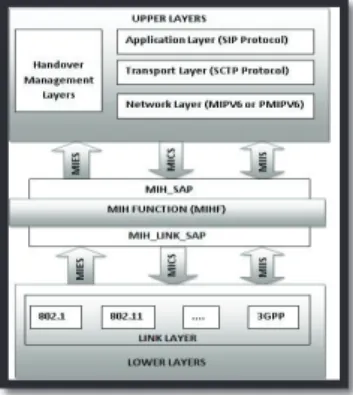
IEEE 802.21 MIH protocol stack provides efficient and seamless mobility management in heterogeneous wireless access network. The important unit of MIH standard is the MIH Function (MIHF), which resides across MIH User (MIHU) and lower link layer device interface. MIHF is responsible for exchange of signaling information between different wireless access terminals for handover preparation and execution phases. Interface between MIHF and other entities (upper and lower layers) are based on Service Access Points (SAPs). Media Independent standard provides three important services for efficient handover process, namely Event Service (MIES), Command Service (MICS) and Information Service (MIIS) as shown in Fig. 1. Event service provides information about the link status and initiates three triggers based on the link quality, MIH_Link_Up, MIH_Link_Down, MIH_Link_GoingDown events. MICS enables higher layer to control the physical, data link and logical link layers for event subscription and threshold configuration. Finally MIIS provides the static information about candidate network.
Fig. 1. IEEE 802.21 Media Independent Handover Protocol Stack
3. Proposed MAPT approach for VHO Optimization in Heterogeneous Network based on MIH signaling
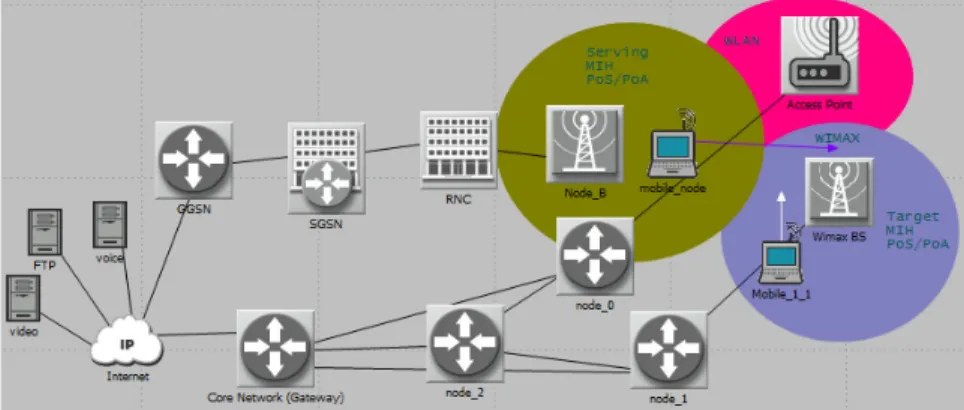
The proposed method aims to provide vertical handover decision by considering dynamic multiple attribute criteria for different priority of traffic classes (MAPT). The presented two integrated mobility management scenario UMTS / WLAN / WiMAX and WLAN / WiMAX describes the vertical handover performance based on MAPT with IEEE 802.21 MIH signaling as shown in the Fig. 2 and Fig. 3. The priority of traffic classes are grouped into
four categories - real time constant bit rate (TC1), real time variable bit rate (TC2), non-real time variable bit rate (TC3) and best effort traffic (TC4) for VoIP, MPEG, FTP and HTTP applications. It is assumed that the real time traffic classes TC1, TC2 have highest priority and non-real time traffic classes TC3, TC4 have lowest priority.
Fig. 2. Vertical Handover between UMTS / WLAN / WiMAX networks based on Priority of Traffic classes
In the first scenario, the MN resides in UTMS network and exchanges its information to the correspondent node (CN) through IP core infrastructure. The MN and all the network base stations are equipped with MIH functions which are used to exchange signalling information during handover operations. At a moment later, in a time ‘t’, the
MN observes service degradation in the current serving network. This signal disruption is due to many reasons includes mobility of MN, fading factor (affects RSS), lower data rate, poor resource allocation and scheduling, type of traffic classes etc. Therefore, the proposed algorithm dynamically comprises to take the mentioned issued into consideration for initiating intelligent handover. The MN wants to receive a video feed (MPEG-4) from the corresponding video server and requesting serving network for resource availability check of traffic class TC2 through MIHF. The MIHF in the UMTS BS replies with negative acknowledgment indicating lower data rate and bandwidth constraints. Hence the MN initiates handover process to the candidate network due to lack of data rate and bandwidth support for real time traffic classes (TC1 or TC2). The first phase of delay is due to handover initiation by the serving UMTS network and is given in equation (1).
ݐூൌ ݐெேೝ ݐௌೝೞ (1)
Where tMNreq is the time taken for the MN to request resource availability in the serving network and tUBSres is the
time taken by the UMTS BS to respond back to the MN. Once the handover is initiated, the next step is to get ready for handover preparation, by discovering the candidate network. The MIHF in the serving network query the MIIS server for candidate information through MIH_Candidate_Information.request command. The MIIS server replies with a list of neighbour network (WLAN, WiMAX) to accessible. The serving UMTS network query the available neighbour networks regarding resource availability for the traffic classes (TC1/TC2) through HO_Candidate_Resource.query. The MIHF in the candidate network receives the neighbour node advertisement and responses with positive acknowledgement to agree for handover execution, which leads to significant delay as mentioned in equation (2).
ݐൌ ʹݐௌೝ ݐெூூௌೝೞ ݐௐௌೝೞ (2)
Where tUBSreq is the time need for UMTS BS to query the MIIS server for candidate network, tMIISres and tWBSres are
the response time of MIIS server and WiMAX BS. In handover execution phase, the serving network informs the MN to scan the signal strength of WiMAX BS to accessible. The MIHF in MN triggers Link_up event to indicate the good signal quality of target WiMAX BS. The handover execution delay ݐா as given in equation (3). Where tBU,
tMNreg and tMNro are the MN binding update, registration and route optimization time of the MN. Hence the overall
vertical handover delay for MN to seamlessly switch its connection to candidate network is given in equation (4) and equation (5).
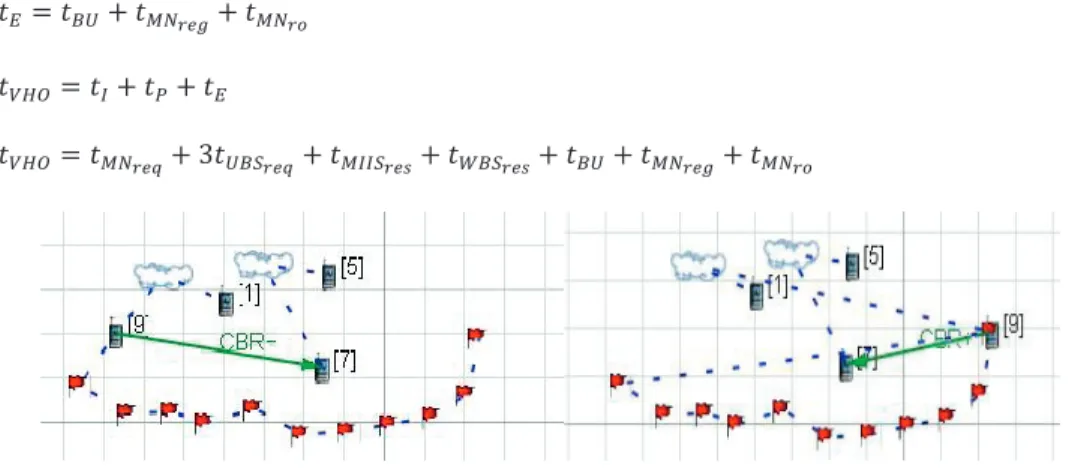
ݐாൌ ݐ ݐெேೝ ݐெேೝ (3)
ݐுைൌ ݐூ ݐ ݐா (4)
ݐுைൌ ݐெேೝ ͵ݐௌೝ ݐெூூௌೝೞ ݐௐௌೝೞ ݐ ݐெேೝ ݐெேೝ (5)
Fig. 3. Vertical Handover between WLAN / WiMAX networks using MAPT a) Before Handover; b) After Handover
Fig. 4. Vertical Handover Preparation and Execution phases
At last, the MN executes handover to WiMAX network for excellent support for data rate and bandwidth for real time variable bit rate traffic class TC2 (MPEG-4). The detailed handover signalling information is shown in Fig. 4. In the second scenario, the MN initiates vertical handover based on multiple attributes namely RSS and data rate (DR) for traffic type (TC1 / TC2). Initially the MN (9) is attached to WLAN network and communicates to CN (7) and at a time ‘t’, the mobile user moves away from the current PoA and wants to access VoIP (G.711) service to the CN. The MN receives service disruption due to degraded RSS (mobility) and low support for TC1 and TC2 data rates. Thus the MN decides to initiate handover to the neighbour network. Handover to the target network is initiated
MIH_HO_Candidate_Commit.request MIH_HO_Candidate_Commit.response MIH_ Link_Up MIH_Resource_Negative Response MIH_Candidate_Information. Request MIH_Candidate_Information. Response MIH_HO_Commit.request MIH_Resource.query for TC1/TC2 traffic
MIH_HO_Candidate_Resource.query for TC1/TC2 traffic HO_Candidate_Resource.response MIH_HO_Commit.response Link_Power_Down MIH_HO_Complete. Indication MIIS Server Mobile Node (MN) MIHU MIHF Serving UMTS BS MIHU MIHF Candidate WiMAX BS MIHU MIHF
MN attached to UMTS network and Exchanges Information to CN Collects Informatio n about Candidate Networks At a time ‘t’ MN wants to access TC1/TC2 traffic class from UMTS network
3) Resource Availability Check in WiMAX
Establish New Link Layer Connectivity M M M M M M M M M M 1) Discover Candidate Network 2) Scanning Process
based on the condition as mentioned in equation (6). Finally the MN chooses WiMAX is the best candidate network, compromising both RSS and data rate for VoIP application. From the above discussions, it is observed that the proposed approach enhances the system performance by considering dynamic multiple attributes for different priority of traffic classes. The MAPT with combined MIH signalling provides proper VHD which is well applicable for designing the next generation wireless access networks.
ܲݎுைൌ ሾሼܴܵܵெே൏ ܴܵܵ௧ሽ ځሼܦ்ܴ ൏ ܦܴ௧ሽሿ (6)
4. Simulation Results and Discussion
This section examines the proposed vertical handover performance across two heterogeneous environments. The first scenario is implemented in OPNET software with the integration of three networks UMTS / WLAN / WiMAX. The architecture consists of multi interface mobile node (MN), correspondent node (CN), application server (voice, video, FTP, email), overlapping WLAN, WiMAX and UMTS network with backbone IP connectivity.
Fig. 5. (a) UMTS Vertical Handover delay (b) Based on with and without priority of Traffic classes
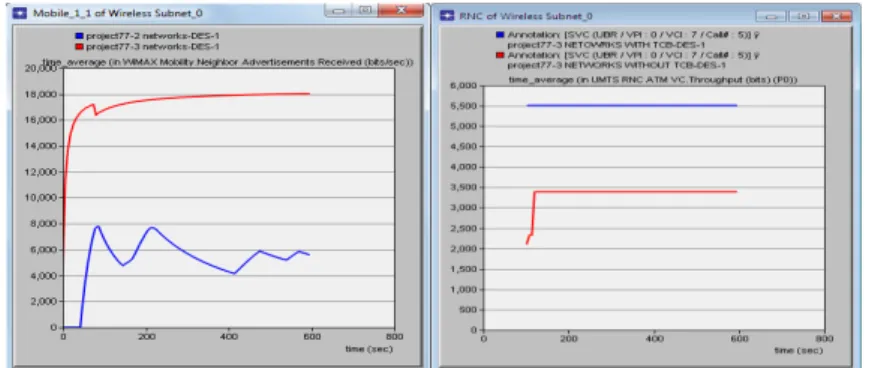
Fig. 6. (a) Neighbour node advertisement; (b) Throughput for with and without priority of Traffic classes
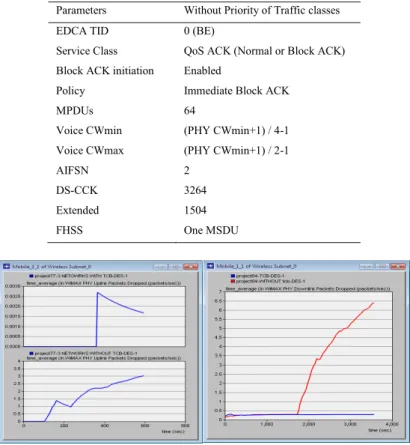
Table 1 summarizes the simulation parameter needed for vertical handover execution. UMTS network provides sufficient coverage area to the MN throughout the simulation process. But the MN initiates handover to candidate WiMAX network due to the poor support for bandwidth allocation and data rate for real time traffic classes (VoIP –
G.711, MPEG - 4). The UMTS handover delay is minimum 0.06 sec as shown in Fig. 5, this due to the enhanced MIH functions are implemented in both the MN and network base stations. It is observed that the combined MAPT with MIH signaling minimizes the handover delay by sending and receiving proper advertisement to the neighbor node, and thus increases throughput of the serving network as in Fig. 6. Finally the MN achieves best QoS and greatest bandwidth utilization in WiMAX target network. The proposed method provides minimum vertical handover latency when the MN moves from UMTS to WiMAX network.
Table 1. Simulation parameters.
Parameters Without Priority of Traffic classes
EDCA TID 0 (BE)
Service Class QoS ACK (Normal or Block ACK) Block ACK initiation Enabled
Policy Immediate Block ACK
MPDUs 64
Voice CWmin (PHY CWmin+1) / 4-1 Voice CWmax (PHY CWmin+1) / 2-1
AIFSN 2
DS-CCK 3264
Extended 1504
FHSS One MSDU
Fig. 7. (a) Uplink video packet dropped; (b) Downlink video packet dropped
Fig. 8. WiMAX physical layer (a) Uplink SNR; (b) Downlink SNR
Hence it is proved that the uplink and downlink packet dropped ratio is very low when compared to without MAPT approach as shown in Fig. 7. The WiMAX network provides good signal strength to the MN by considering path loss into account and thus achieves better SNR for best transmission efficiency as shown in Fig. 8. The second scenario is illustrated for two integrated WLAN / WiMAX networks and implemented in Qualnet software. The MN initiates handover to WiMAX network based on the two criteria (RSS and data rate) for video and FTP traffic. The voice (G.711) and video (MPEG-4) traffic are more sensitive to handover delay which leads to more packet losses when compared to FTP traffic.
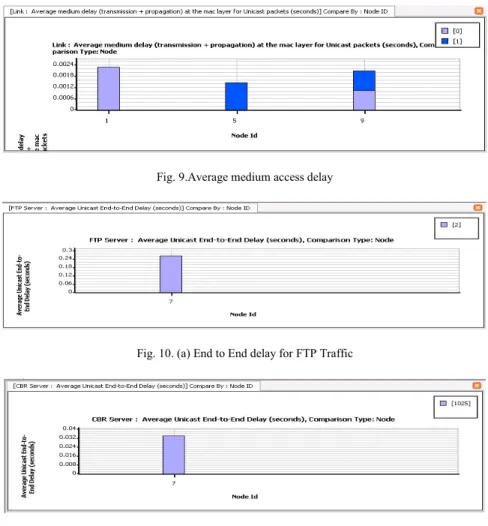
Fig. 9.Average medium access delay
Fig. 10. (a) End to End delay for FTP Traffic
Fig. 10. (b) End to End delay for VoIP application (CBR)
Fig. 11. (a) Average Jitter for FTP Traffic
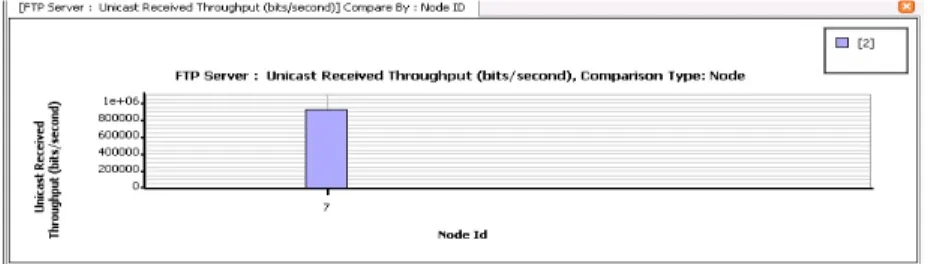
Fig. 12. (a) Throughput for FTP Traffic
Fig. 12. (b) Throughput for VoIP application (CBR) Table 2. Performance Evaluation of with and without priority of Traffic classes (First scenario).
Parameters Without Priority of Traffic Classes With Priority of Traffic Classes
Network Load (Bits/sec) 1500 2000
IP Packet drop (packets/sec) 0.17 0.08
RIP Route convergence duration(sec) 12.5 6
Uplink packet drop(packets/sec) 3 0.0025
Downlink packet drop(packets/sec) 10 1.5
UMTS attach delay (sec) 16 1
UMTS throughput (bits/sec) 3500 5500
UMTS access delay (sec) 0.090 0.060
Table 3. Performance Evaluation based on single and multiple attribute criteria (Second scenario).
Hence the MN makes fast and successful handover to the candidate network, achieving lower medium access delay as depicted in Fig. 9. The simulation results of end to end delay, jitter and throughput are shown in Figs. 10-12. The end to end delay factor for high and low priority traffic classes provide good performance during vertical
Parameters Handover based on RSS Handover based on RSS and data rate
CBR Jitter (sec) 0.00461 0.000408
CBR Throughput (bits/sec) 4089.9 4431.53
CBR End to End Delay (sec) 0.03427 0.0304056
CBR data received (bytes) 7168 50688
FTP Jitter (sec) 0.00723688 0.00560010
FTP Throughput (bits/sec) 872965 954790
FTP End to End Delay (sec) 0.265012 0.204917
Average medium delay (sec) 0.00125641 0.0012557
handover process. Table 2 and 3 summarizes the various performance factors of the proposed MAPT scheme for with and without priority of traffic classes. From the simulation results and discussion, it is proved that the proposed dynamic MAPT approach highly support seamless connectivity across heterogeneous networks.
5. Conclusion
The proposed integrated architecture based on dynamic MAPT approach with IEEE 802.21 MIH signalling has been presented to solve seamless vertical handover and to guarantee the QoS for different traffic classes. Simulation results prove that the proposed method outperforms the existing method by initiating intelligent handover decision based on MIH signalling. The handover performances are analyzed based on two conditions. In the first, the MN initiates handover due to the lack of resource availability in UMTS serving network for the traffic classes TC1 and TC2. In the second case, handover is initiated based on multiple criteria of RSS and data rate for traffic type CBR and FTP. In both the cases, the MN chooses WiMAX is the best candidate network for handover. Since WiMAX provides higher priority for TC1 and TC2 real time traffic and lower priority for TC3 and TC4 non real time traffic. The MAPT scheme minimizes the handover delay, packet loss and thus improves the system throughput, QoS efficiency, which is extremely well applicable for designing the future generation wireless networks.
References
1. Riaz Hussain, Shahzad Malik A, Shahid Khan A, Shafayat Abrar. Design, Implementation and Experimental Evaluation of an end-to-end Vertical Handover scheme on NCTUns Simulator. Simulation Modelling Practice and Theory 2012; 26: p. 151–167.
2. Yuzhe Zhou, Bo Ai. Handover schemes and Algorithms of High-speed Mobile Environment: A survey. Computer Communications 2014; 47: p. 1–15.
3. Kiran Ahuja, Brahmjit Singh, Rajesh Khanna. Network Selection Algorithm based on Link Quality parameters for Heterogeneous Wireless Networks. Optik 2014; 125: p. 3657–3662.
4. Li JunZhang, Samuel Pierre. An Enhanced Fast Handover with Seamless mobility support for Next-generation wireless networks. Journal of Network and Computer Applications; 2014.
5. Perez Costa X, Torrent Moreno M and Hartenstein H. A Performance comparison of Mobile IPv6, Hierarchical Mobile IPv6, Fast Handover for Mobile IPv6 and their combination. ACM Mobile computing and Communication Review 2003; 7:4: p. 5-19.
6. Heba Nashaat, RawyaRizk and Hani Mahdi. An Analytical Framework of Fast Handover for Hierarchical MIPv6. The Online Journal on Computer Science and Information Technology; 1:2.
7. Mun Suk Kim, Su Kyoung Lee, David Cypher, Nada Golmie. Performance Analysis of Fast Handover for Proxy Mobile IPv6. Information Sciences 2013; 219: p. 208–224.
8. George Lampropoulos, Charalabos Skianis and Pedro Neves. Optimized Fusion of Heterogeneous wireless Networks based on Media- Independent Handover Operations. IEEE Wireless Communication; 2010. p. 78-87.
9. Shin Jer Yang, Wen Chieh Tseng. Design Novel weighted rating of Multiple Attributes scheme to Enhance Handoff Efficiency in Heterogeneous Wireless Networks. Computer Communications 2013; 36: p. 1498–1514.
10. Abubakar Miyim M, Mahamod Ismail, Rosdiadee Nordin, Taha Ismail M. Technique for Cross-Layer Vertical Handover Prediction in 4G Wireless Networks. Electrical Engineering and Informatics; 2013. p. 114 – 121.
11. Yuzo Taenaka, Shigeru Kashihara, Kazuya Tsukamoto, Suguru Yamaguchi, Yuji Oie. An implementation design of a cross-layer handover method with multi-path transmission for VoIP communication. Ad Hoc Networks 2014; 13: p. 462–475.
12. Mahedi Hassan Md, Poo Kuan Hoong. Seamless Handover integrated solution for Video Transmission over Proxy Mobile IPv6 in a micro mobility domain. Journal of Network and Computer Applications 2013; 36: p. 66–76.
13. Zhiwei Yan, Jong Hyouk Lee. State-Aware Pointer Forwarding scheme with Fast Handover Support in a PMIPv6 Domain. IEEE system Journal 2013; 7: p. 92-101.
14. Yi M, Hwang C. A Pointer forwarding for minimizing signalling cost in Hierarchical Mobile IPv6 Networks. EUC; 2004.
15. Ma W, Fang Y. Dynamic Hierarchical mobility management strategy for Mobile IP networks. IEEE Journal of Sel. Areas Communication 2004; 22:4: p. 664-676.
16. Nadine Akkari. An IMS-based Integration Architecture for WiMax / LTE Handover. Computer Networks 2013; 57: p. 3790–3798.
17. Lampropoulos G, Salkintzis A, Passas N. Media Independent Handover for Seamless Service Provision in Heterogeneous Networks. IEEE Communication Magazine 2008; 46:1: p. 64-71.
18. Attaullah MJH. QoS based Vertical Handover between UMTS, WiFi and WiMAX Networks. Journal of convergence Information Technology; 2011.
19. Kenichi Taniuchi, Yoshihiro Ohba, Victor Fajardo, Subir Das, Miriam Tauil, Yuu Hengcheng, Ashutosh Dutta, Donald Baker, Maya and David Famolari. IEEE 802.21: Media Independent Handover: Features, Applicability and Realization. IEEE Communication Magazine; 2009. 20. Kazuya Tsukamoto, Shigeru Kashihara, YuzoTaenaka, Yuji Oie. An Efficient Handover decision method based on Frame retransmission and