
I
Sudan University of Science & Technology
Faculty of Computer Science and Information Technology
Integrated Framework For Green ICT:
Energy Efficiency by Using Effective
Metric and Efficient Techniques
For Green Data Centres
ينقت ماذختسإب لمبكتم لمع ربطإ
تئيبلل تقيذصو تلبعف ثب
ةءبفك ةدبيزو تكلهتسملا تقبطلا ذيشرتل
ثبمىلعملاو ثلابصتلإا بيجىلىنكت ثبنبيب سكارم
In Partial Fulfillment of the Requirements for
the Degree Doctor of Philosophy in Computer Science
Candidate
Abusfian Elgelany Ibrahim Ahmed
Supervisor
Professor Dr. Nader Nada
II
DEDICATION
To the soul of my mother
To the soul of my father
To my wife
To my family
To the people who add meaning to my life
To everyone who has supported me during this
research
III
ACKNOWLEDGEMENTS
First of all I truly thank my supervisor Prof. Dr. Nader Nada for his continu-ous advice and great support during the period of this research.
All thanks to Prof. Izzaldin Mohammed Othman, D. Talaat Wahby and all the staff of computer science and information college in SUST for great help and sup-port. I appreciate the assistance offered to me by the National Telecommunication Corporation and Sudan Telecommunication Company.
I never forget to thank my family for their patience and encouragement dur-ing my study.
Great thanks are extended to D. Mueen Uddin from Pakistan and Mr. Bandar from Saudi Arabia and the other friends for great help and support.
IV
Abstract
All over the world, nations are concerned about the challenge of sustainable energy, energy efficiency effects on society, environment and the economy. This research develop a green ICT solutions to increase energy efficiency and sustainability in data centers. Focusing on achieving high energy efficiency for green data centre, an energy efficient framework (RAIN) for energy efficiency assessment and manage-ment has been developed. Additionally, the author used Fixed to Variable Energy Ratio (FVER) as a suitable metric, to demonstrate ability and sensitivity from the effect of changes in energy workload efficiency. The tool and its technique were validated through analysis of several data sets gathered from ICT data centres in Sudan, Saudi Arabia and Pakistan. The innovative assessment tool, indicators and techniques will enable ICT data centres to monitor, measure, assess and man-age energy efficiently for Green data centers. The implementation of the proposed framework proved that RAIN could achieve an average of 50% saving of a data centre’s total energy consumption, consequently leading to performance-optimisation of ICT infrastructure services enabling users to concentrate on business, cutting ICT operations costs, reducing indirectly emissions of carbon dioxide (CO2) and
minimis-ing its carbon footprint. The proposed framework compared by other green framework and provides not only covers the understanding of different aspects of green ICT, but may also be used as a tool to evaluate techniques required to put green ICT into action.
V
لا
صخلم
بٗبضقب بوخِه نلبؼلا لظ
ساشوخسا ىبوض
تقبطلا
ّ
لبس
بِ٘لػ تظفبحولا
ذ٘ششحّ
بِهاذخخسا
شراّ
للر
.دبصخقلااّ غوخجولاّ تئ٘بلا ٔلػ
ّ
يه نغشلبب ذٗاضح ٖف لظ مبوخُلاا ازُ
ٖف ذػبسح ٖخلا ثاّدلاا ةدبٗص
ننحح
كلاِخسا
ثبهْلؼولا ب٘جْلٌْنح ضماشه ٖف تهذخخسولا تقبطلا
اّ
لا
صح
.ثلاب
تساسذلا ٍزُ
بٌ٘قح لاح مذقح
ذ٘ششحّ تقبطلا ٔلػ تظفبحولل
بِملاِخسا
ٌٖبخب للرّ
لوػ سبطا
ٖوسٗ
RAIN
كلاِخسا ش٘فْخل
ثبسسؤه ٖف ثبًب٘بلا تفبضخسا ضماشه ٖف تقبطلا
ثلابصحلااّ ثبهْلؼولا
.
ظلسح
تساسذلا
ءْضلا
ق٘قحح ٔلػ
شبمأ
سذق
ٍزُ ت٘لػبف ةدبٗضل ينوه
خب للرّ ضماشولا
بٌ
.تئ٘بلل تقٗذص ب٘جْلٌْنح ٖ
ذحببلا مذخخسا
FVER
وم
سب٘ؼ
ا
بسبٌه
ب
غ٘طخسٗ
طب٘ق
ازُ شبخؼٗ .ٍذ٘ششح نح ٕزلا ءضجلاّ تنلِخسولا تقبطلا ساذقه
سب٘ؼولا
شزمأ يه
ش٘ٗبؼولا
جهاشبلا ش٘رأح ٓذه طب٘ق غ٘طخسٗ ًَلأ ت٘لػبف
ت٘بْسبحلا ثبق٘بطخلاّ
ٖلػ
ةدبٗص
تقبطلا كلاِخسا
لا ضماشه ٖف
.ثبًب٘ب
نح
سببخخا
ةءبفمّ ت٘لػبف
سبطإ
لوؼلا
ّ
َحاّدا
يه تػْوجه ل٘لحخب
لا
ثبًب٘ب
نح ثاءاشقلاّ
يه بِؼ٘وجحّ بُذصس
ب٘جْلٌْنح ضماشه
اّ ثبهْلؼولا
لا
ّ ىادْسلا ٖف ثلابصح
تٗدْؼسلا
ىبخسمببّ
جبرا .
ٍسّدّ َخ٘لػبف ٕذه لوؼلا سبطا ق٘بطح ذؼبّ لبق ثبًب٘بلا ل٘لحح
ششببولا
ٖف
٘ظْح
ف
ثبًب٘بلا ضماشه ٖف تقبطلا كلاِخسا
بِهاذخخسا ذ٘ششخل ٕدؤٗ بوه
ظسْخه لصّ ذ٘ح
ْٕخسه
ذ٘ششخلا
ٖلا
05
%
يه
.تنلِخسولا تقبطلا تلوج
قبس بوه
ينوٗ
لا
لوؼلا سبط
RAIN
ثبًب٘بلا تفبضخسا ضماشه ةسادا
ٖف
ثلابصحلااّ ثبهْلؼولا ثبسسؤه
للزمّ
ي٘سحح
ةءبفم
ءادلإا
ل ٕدؤٗ بوه بِل
٘لقخ
ولا ثبهذخلل ت٘لنلا تفلنخلا ل
٘س ٍسّذب ازُّ تهذق
ذ٘ف
مذخخسولا
ةششببه ةسْصب
ل٘لقخب للرّ
لا تفلنح
ل٘غشخ
.
يهّ
ذئاْفلا
لا ةششببه ش٘غلا
لوؼلا سبط
RAIN
ضفخ
بر دبؼبًا
ًٖ
ىْبشنلا ذ٘سما
ضماشولا ٍزُ ٖف تقبطلا كلاِخسا ل٘لقخل ت٘لؼف تج٘خٌم
.
ادأم سبطلاا ازُ ماذخخسا ينوٗ بوم
ة
ن٘٘قخل
ةساداّ
ثبٌ٘قح
ثب٘جهشب ثبق٘بطحّ
بّ ثبهْلؼولاّ ثبًب٘بلا ضماشه ٖف تهذخخسولا ثلابصحلاا
خلب
لب
ششح ٖ
٘
تقبطلا كلاِخسا ذ
ت٘لنلا
ٖف
عبطق
ثلابصحلااّ ثبهْلؼولا
.
VI
Table of Contents Dedication II Acknowledgements III Abstract IV List of Tables IX List of Figures XIList of Abbreviations XIII
CHAPTER ONE: Introduction 1
Introduction 1
1.1 Purpose of the Research 1
1.2 Problem Background 1
1.3 Limitations and Open Issues 2
1.4 Problem Statement 3 1.5 Questions/Hypothesis/Philosophy 5 1.5.1 Questions 5 1.5.2 Hypothesis 5 1.5.3 Philosophy 5 1.6 Research Objectives 5 1.7 Research Scope 6 1.8 Research Significance 6 1.9 Research Methodology 6
1.9.1 Phase1: Development Energy Efficiency Framework 7 1.9.2 Phase 2: Analysis and Evaluating the green ICT Framework 7 1.9.3 Phase 3: Maintenance and Finalized the Framework 8
CHAPTER TWO: Background 10
2.1 Overview 10
VII
2.3 Measure the Energy Consumption in the Data Center 12
2.3.1 Data Center 13
2.4 Power Consumption in the Data Centers 15
2.4.1 Carbon Footprint 17
2.5 Energy Efficiency and Green ICT Framework for Data Centers 17
2.5.1 Energy Efficiency 18
2.6 Green Metric 19
CHAPTER THREE: Literature Review 20
3.1 Introduction 20
3.2 Literature Review Methodology 22
3.3 Energy Efficiency Levels 22
3.3.1 Data Center Level 23
3.3.2 Hardware Level 29
3.3.3 Application Level 32
CHAPTER FOUR: PROPOSED SOLUTION (I) 36
4.1 Introduction 36
4.2 energy Efficiency Measurement and Metrics 36
4.2.1 Alternative Energy Efficiency Metric 38
4.2.2 The Characteristics of the Metrics 39
4.2.3 The Comparison Between the Green Metrics 40 4.3 Fixed and Variable Energy Ratio (FVER) Metric 42
CHAPTER FIVE: PROPOSED SOLUTION (II) 45
5.1 Introduction 45
5.2 Data Center Architecture 46
5.2.1 Types of Energy Losses in the Data Centers 49 5.3 Energy Efficiency Technique in the Data Centers 49
5.4 Green ICT 52
VIII
5.5.1 Rating 57
5.5.2 Analysis 58
5.5.3 Implementation 59
5.5.4 Note and Evaluation 63
CHAPTER SIX: DATA COLLECTION AND ANALYSIS 64
Introduction 64
6.1 The Electricity Cost 64
6.2 Data Collection 66
6.3 Case study I: Sudatel (SCG) Data Center - Sudan 67 6.4 Case study II: Aljouf University Data Center - Saudi Arabia 82 6.5. Case study III: PTCL Bank Data Center - Pakistan 86 6.6 The Stability of The Proxy Measurement Over The Time 90
6.7 The Impact of Outdoor Temperature 91
CHAPTER SEVEN: CONCLUSION, CONTRIBUTIONS AND FUTURE DIRECTIONS 92 Introduction 92 7.1 Conclusion 92 7.2 Research Contributions 96 7.3 Future Directions 96 7.4 Concluding Remarks 96 Reference 98 Appendix A 106
IX
List of TablesTable 2.1 The Distribution of Power in Data Center 15 Table 2.2 Interpret and Clarify the Fixed and Variable Energy 17 Table 3.1 Energy Efficiency data center (migration and consolidation) Level 25 Table 3.2 Energy Efficiency data center Buildings Level 28
Table 3.3 Energy Efficiency hardware Level 31
Table 3.4 Energy Efficiency application level 35
Table 4.1 Goals of Energy Efficiency Metrics 41
Table 5.1 International benchmark for DC buildings 62 Table 6.1 The Demand and the Costs of Energy in Sudan 2000-2016 64
Table 6.2 Electricity Cost Among Arab Countries 65
Table 6.3 Energy Consumption by IT Equipment 70
Table 6.4 Interpret and Clarity the Fixed and Variable Energy 71 Table 6.5 Utility Power vs Productivity (work output) 74
Table 6.6 The FVER (IT) and FVER (utility) Value 75
Table 6.7 Intercept and Slope of IT and Utility Energy 75 Table 6.8 FVER Metric Calculate Using Linear Regression Models 76 Table 6.9 Activity Weighting in Sudatel Data Center 76 Table 6.10 Weighted Productivity and Energy Consumption 77 Table 6.11 Percentage Productivity and Energy Consumption 77 Table 6.12 The IT and Utility Equipment Value After RAIN 80 Table 6.13 The Intercept and Slope After Implement RAIN 80
X
Table 6.14 FVER Metric Calculate Using Liner Regression model 81 Table 6.15 Sudatel Data Center IT and Utility Energy Before and After Implement RAIN Framework
81
Table 6.16 Data Center Energy Savings After Implement RAIN Framework 82
Table 6.17 The FVER IT and Utility Value 82
Table 6.18 Aljouf University Data Center IT and Utility Energy Consump-tion Before and After Implementing RAIN Framework
85
Table 6.19 Aljouf DC the intercept and slope after RAIN 85
Table 6.20 FVER value using liner regression 85
Table 6.21 PTCL Bank FVER IT and Utility Value 87
Table 6.22 PTCL DC IT and utility Energy before and after RAIN 89 Table 6.23 PTCL the intercept and slope after RAIN 89
Table 6.24 FVER value using liner regression 89
XI
List of Figures
Figure 1.1 Losses in Data Center Power System 4
Figure 1.2 Operation Research Framework 9
Figure 2.1 Energy Consumed in Data Center 11
Figure 2.2 Source of Data Center Energy Consumption 16 Figure 2.3 Levels of Energy Consumption in the Data Centers 16
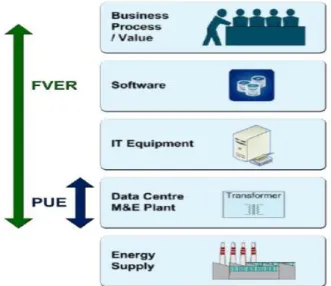
Figure 4.1 The Big Picture of Green data Center 37
Figure 4.2 FVER vs PUE 40
Figure 4.3 FVER Values 43
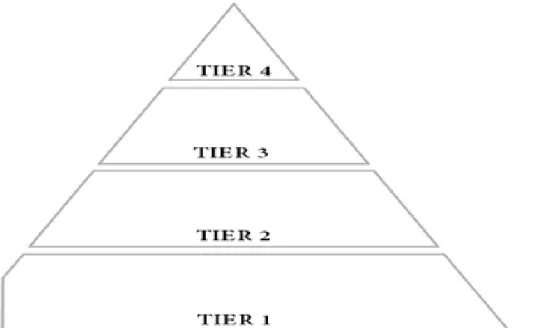
Figure 5.1 Data Center Tiers 47
Figure 5.2 The Serious Effect of Data Center Tier 47
Figure 5.3 Data Center Architecture 48
Figure 5.4 Taxonomy of Energy Management Techniques 50
Figure 5.5 Green Data Center 52
Figure 5.6 The Impact of the Data Center in the Environment 53
Figure 5.7 Reason for Adopting Green ICT 54
Figure 5.8 The Green ICT Framework (RAIN) 56
Figure 5.9 Before and After Virtualization Environment in Single Server 60 Figure 5.10 Before and After Virtualization Environment in the Data Center 60 Figure 6.1 The Increase in Demand and Costs of Energy in Sudan 65
Figure 6.2 The Cost of Energy in Arab Countries 66
XII
Figure 6.4 The Power System Losses in Sudatel Data Center 69 Figure 6.5 The Data Center Energy Consumed During One Day 71
Figure 6.6 Ideal Data Center vs Real Data Center 72
Figure 6.7 The Energy Consumption During Work Day 72
Figure 6.8 The Energy Consumption During Weekend Days 73 Figure 6.9 Measured Weekend Day and Work Day Output 73 Figure 6.10 The Energy Consumption IT Power and Total Utility Power 75 Figure 6.11 The Sudatel Data Center FVER Plots 24 Hourly 78 Figure 6.12 The Sudatel Productivity vs IT and Utility Energy Consumption in 24 Hourly
78
Figure 6.13 Show The Effect of The Framework (RAIN) on Power System Losses Using PUE Metric
79
Figure 6.14 Sudatel Data Center After Implement RAIN 80 Figure 6.15 Aljouf university data center for FVER IT and FVER utility value 83
Figure 6.16 Aljouf University DC the effect of RAIN 84 Figure 6.17 Aljouf University DC after RAIN framework 85 Figure 6.18 The carbon calculator for Aljouf DC before and after RAIN 86 Figure 6.19 PTCL Data Center FVER IT and Utility Value 87
Figure 6.20 PTCL DC after RAIN framework 88
Figure 6.21 PTCL DC Energy Consumption After RAIN Framework 89 Figure 6.22 Carbon calculator for PTCL DC before and after RAIN 90
XIII
List of Abbreviations
ICT Information Communication Technology CO2 Carbon Dioxide
QoS Quality of Service
EAC Energy Aware Computing
RAIN Rating, Analysis, Implement and Note IT Information Technology
FVER Fixed to Variable Energy Ratio SLA Service Level Agreement KWh Kilowatt per Hour
GHG Green House Gas DC Data Center VM Virtual Machine
UPS Uninterruptable Power Supply RES Renewable Energy supply DCSG Data Center Specialist Group
PUE Power Usage effectiveness CC Cloud Computing
LEED Leadership in Energy and Environment Design DVFS Dynamic Voltage/frequency scaling
DCiE Data Center Infrastructure Effectiveness DCeP Data Center Energy Productivity
XIV
DPPE Data Center Performance Per Energy DC FVER Data Center Fixed to Variable Energy RatioROI Return On Investment PDU Power Distribution Unit
NCPI Network Critical Physical Infrastructure EPA Environment Protection Agency
1
CHAPTER ONE
INTRODUCTION
This chapter is explores in details the main parts which define and explain in detail the information system research. This chapter presents the problem statement of the research, hypothesis, philosophy behind the research, research methodology that was adopted to increase the energy efficiency and reduce carbon emission indirectly by enabling green ICT framework using different green ICT techniques.
1.1
Purpose of The Research
Data centers are currently consuming amount of energy which reduce the bene-fits of the owners and in same way producing CO2 gases that are very hazardous to
the environment [69]. According to a report published by climate group and global e-sustainability initiative SMART 2020, the growth in emissions from ICT with increase from 3% of total global emissions in 2009 to 6% by 2020 [70]. The research explores the importance of green ICT in reducing energy consumption, operation costs and environment friendly in data centers. The major goal of this research is to formulate an energy efficient and low carbon enabler green ICT framework based on virtualization, right sizing, efficiency data center buildings and green metrics to reduce the operation costs for owners and end users by managing and reducing power consumption the operators can reducing operators bills.
1.2
Problem Background
The current research conducted a deep critical literature review to examine the fragmented knowledge about energy efficiency in the data centers in cloud compu-ting technology.
First, the investigated literature showed that there were some gaps in previous researches. First of all, the focus of most of their studies in the area of energy effi-ciency in data centers has been only focused on one part of the data center (Servers
2
applications, job scheduling, building, or hardware). This approach may be due to difficulties in measuring the energy efficiency in the data center.
Second, the previous techniques and approaches lacked several features like quality of services (QoS) performed against energy efficiency.
Third, the reduction of the energy consumption is not measured in a highly ef-fective way, because current metric did not measure software influence and IT equipment factors. So, there is lack of appropriate metric for measuring the value of energy efficiency take into account the change in the IT workload.
Fourth, despite the enormous body of literature in studying the effect of energy efficiency in data centers in cloud computing, lack of a unified framework for integrating different aspects and features of the changes in the software that run on the data center and the effect of the software on the energy efficiency in the data centers in cloud computing. So, the field of energy efficiency in the data centers appears to be in need of further development and coherence.
The required framework should provide a platform on top of which the green cloud could be built. The framework from Energy Aware Computing (EAC) point of view will improve the efficiency of cloud systems and their data centers and the clouds themselves will produce naturally efficient and focused centers of computa-tion, advancing the pursuit of green computing.
From the above, it can be concluded that data center managers should, when con-sidering energy efficiency framework, take into account all the three dimensions of energy efficiency parts (application, building, and hardware). Additionally, the framework consider the changed social network applications load as an effective factor in elevating energy consumption by the data centers, as well as meeting energy efficiency.
1.3 Limitations and Open Issues:
The investigated of the literature showed that there are some gaps in previous works. First of all, the focus of most of studies in the area of energy efficiency in data centers has been on one part of the data center (either Servers or application or building or hardware). This approach may be due to difficulties in measuring the energy efficiency in the data center. Despite the enormous body of literature in studying the effect of energy efficiency in data centers in cloud computing, the lack of a standard framework for integrating different aspects and features of the changing
3
in the software that run on the data center and the effect of the software on the energy efficiency in the data centers. Additionally, none of the current applied energy efficiency frameworks considered the social network applications (Facebook, twitter, YouTube, …) as a vital related factor in elevating energy consumption, as well as high potential for energy efficiency.
The field of energy efficiency in the data centers seems to be in need of further development and coherence. The previous techniques and approaches lack several features like QoS and performance against energy efficiency. Additionally, the reduction or increase of the energy consumption is not measured by suitable metric. The need for a comprehensive and integrated framework (RAIN) provides a platform on top of which the Green Cloud could be built. The development of such framework practices from Energy Aware Computing will improve dramatically the efficiency of Cloud systems and their data centers and Clouds themselves will produce naturally efficient and focused centers of computation, advancing the pursuit of green compu-ting. The required integrated data center energy efficiency framework should be also applied in different types of data centers including public, private and hybrid. The existence of such framework will offer a great powerful capability to deal with service levels and resources management. The required data center Energy Efficien-cy framework will offer improvement in scalability, elasticity, simplicity of management, delivery of cloud services and better reduction in data centers energy consumption taking into consideration the QoS for the user services.
Our literature review on the common energy efficiency metrics which are cur-rently in use by data centers reveals that none of these metrics are meeting the prior criteria.
From the above, it can be concluded that data center managers should, when con-sidering energy efficiency framework, take into account all three dimensions of energy efficiency parts (Data center, Building, Software) and choose appropriate metric. Additionally, consider the social network applications as a vital related factor in elevating energy consumption, as well as high potential for energy efficiency.
1.4 Problem Statement
The data center is the most active part in an ICT, it provides processing resources and hosting resources which supports different platforms. Data centers are connect-ed with thousands of servers, run applications for end users to meet their neconnect-eds and
4
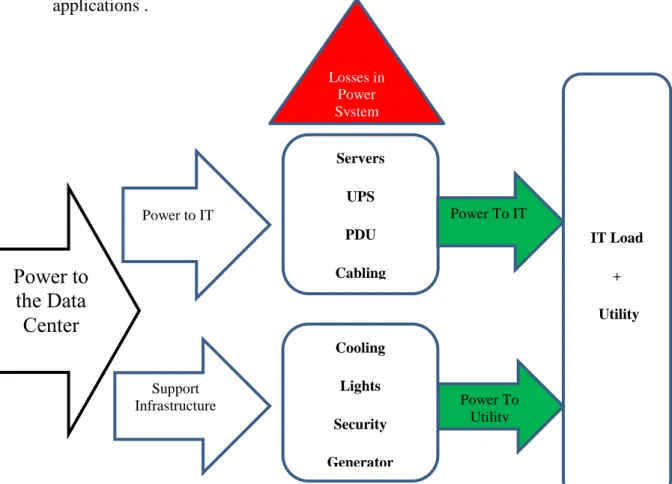
to achieve large business goals. For low operation costs, recently organizations switch to cloud services specially e-businesses, which are in need of a data center to perform their jobs. All over the world data centers consume around 40,000,000 MWhr per year [71], unfortunately figure 1.1 shows that most of the part of this energy is wasted due to lack of efficiency in data centers and data center building. The problems with the current ICT data centers are:
1-The lack of integrated and coherent green ICT framework to manage ener-gy efficiency techniques like virtualization, right sizing to increase enerener-gy efficiency and reduce operation costs including servers applications, job sched-uling, building, and hardware taking into account the QoS.
2-The lack of appropriate metric for measuring the value of energy efficiency taking into consideration the change in the IT workload including social media applications .
Figure 1.1 Losses in data center power system
Power to
the Data
Center
Servers UPS PDU Cabling Losses in Power System Power To IT Support Infrastructure Power to IT Cooling Lights Security Generator IT Load + Utility Power To Utility5
1.5 Questions/Hypothesis/Philosophy
1.5.1 Questions
1. How to minimize fixed and variable energy consumption in data centers in order to increase energy efficiency and reduce operation costs?
2. How to select a suitable and effective green metric?
3. How green ICT framework will be helpful to achieve energy efficient and green data centers?
4. How to calculate energy efficiency level?
1.5.2
Hypothesis
1. The proposed energy efficiency framework will help cloud computing pro-viders to reduce data centers operational cost.
2. Implementation of integrated and coherent green cloud computing framework in data centers will lead to increase in the utilization of data centers.
3. The measurement of energy efficiency would help data center managers to effectively manage data centers energy consumption.
4. A suitable metric would help to develop energy efficiency.
1.5.3 Philosophy
The main philosophy of our research is based on an economic form to develop mechanics of marketing between cloud providers and customers by reducing the end user costs and minimizing the carbon dioxide footprint indirectly.
1.6
Research Objectives
The main aim of this research is to reduce data centers energy consumption in two dimensions operation costs and eco-friendly environment. Other objectives are:
1. To increase energy efficient in the data centers and low cost operation. 2. To develop and implement integrated and coherent green cloud com-puting framework in data centers that will increase the data centers utilization.
3. To set criteria to identify suitable and effective green metrics to deal with change in workload.
6
costs savings including ICT equipment for different Tiers data center.
1.7
Research Scope
1. The research focuses on different Tier level data centers in Sudan, Sau-di Arabia and Pakistan currently under enormous power consumptions and generating huge amount of CO2 emissions.
2. The research applies Fixed to Variable Energy Ratio (FVER) metrics for measuring the efficiency of Tier level data centers as specified in the analysis of several case studies.
1.8
Research Significance
The research helps data center managers to put energy efficiency and green data centers into action, to reduce the operation costs for both, owner and users by reducing the energy consumption and CO2 emissions. The research drive
dif-ferent Tiers data center in difdif-ferent countries (Sudan, Saudi Arabia and Pakistan) to hold back energy challenges by switching to a new technology of energy effi-ciency and sustainable environment.
The research also helps data center managers to adopt the new world atten-tion and concern in green ICT and global environment by reducing overall CO2
emissions (Carbon Footprints), that has become very hazardous for environmen-tal sustainability and global warming.
The research support ICT businesses to implement Green ICT in their opera-tions to make them sustainable. The research also helps ICT businesses to become greener by supporting environment friendly community and follow ser-vice level agreements (SLA) between stakeholders and ICT businesses.
1.9
Research Methodology
The main goal of this research is to implement suitable technologies to put green computing into action to reduce total costs of ownership and to increase return on investment. Green ICT solutions help the firm to reduce energy in ICT operations, and increase significant benefits of an ICT sustainability business. The research was performed on tier level data centers in Sudan, Saudi Arabia and
7
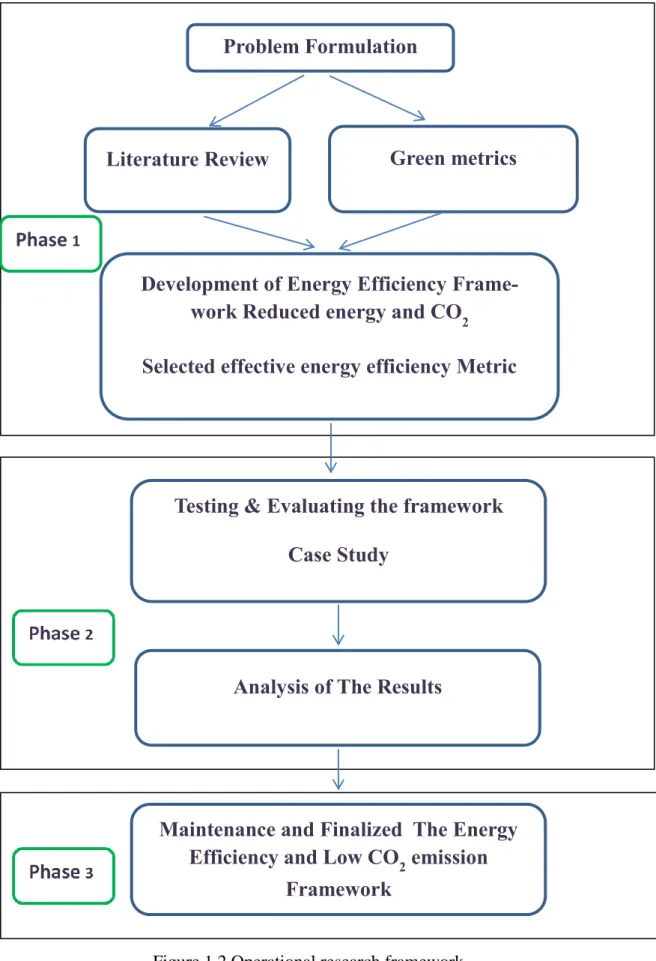
Pakistan. The research is divided in three main phases to achieve desired objec-tives. Figure 3.2 show the detail about the three phases.
1.9.1 Phase1: Development energy efficiency framework
In investigating the previous research the focus was mostly on the findings of articles and the methods used to achieve energy efficiency. Although this review targets energy efficiency in data centers in the cloud technology as the main audience and explores theoretical and empirical issues relevant to scientific research. To study the academic literatures on the effects of energy efficiency on the data centers, the related impact of journal, international conferences and universities research data-base was used to search for these keywords: 1) Green data centers, 2) Energy efficiency in the data centers, 3) Green technology, 4) Reduce energy and Co2
emission. We searched in the title, abstract and keywords of the papers. It led to 684
papers with all the results. We depended on specific conditions to choose the suitable papers.
For the industry to make real progress at any data center, efficient metric is needed to be part of a measurement methodology designed to calculate a reasonable and fair approximation of the total environmental and financial cost of the service provided at the data center. Measuring energy consumption of data centers has become a significant concern of all data centers stakeholders to meet the end-users agreement. The energy efficiency metric is a tool used to measure energy efficiency in data centers. The most important challenge in the data centers industry is the limitation of effective standard energy efficiency metrics, which supports improve-ment energy efficiency.
1.9.2 Phase 2: Analysis and evaluating green ICT framework
In this phase the proposed framework (RAIN) was analyzed and evaluated to determine its real effect in increasing the energy efficiency in data centers and reduce overall operation costs. The framework was tested and evaluated by applying:
I. Performing case studies: The proposed green ICT framework, when implementing green data centers, was tested in different tier level data centers in Sudan Tier 4, Saudi Arabia Tier 3 and Pakistan Tier 2. Three case studies were performed in hot area in different countries by different data center tier to evaluate different components of proposed framework in Tier II, Tier III and Tier VI level data centers in Pakistan, Saudi Arabia and Sudan alternatively. The part of energy
8
efficiency in the framework deal with measuring operational costs, total cost of ownership and other benefits after implementing server virtualization, right sizing and green data center building standard (LEED).
II. Applying regression analysis approach: To prove the liner relationship between the productivity of the data center in specific time (hour) and the energy consumed (kWh) to finish this work. The data collected by various means was analysed. Regression analysis technique was applied thoroughly to analyze collected data in a manageable form.
The research approach investigates the implementation of proposed green IT framework RAIN in different tier level data centers based on different categories classified according to the following components:
I. Energy Efficiency Calculations II. Productivity.
III. Green Metrics. IV. Carbon Emission
1.9.3 Phase 3: Maintenance and finalized framework
In phase 3 after implementing our framework (RAIN) and analyzing the re-sults generated after performing the detailed testing and analysis of the proposed green ICT framework in phase 2, the maintenance, if needed can be implemented, then restructured and redesigned to meet the required standards. The analysis phase results helps to improve the proposed framework, so that it became easier for data center managers to adapt and manage according to their limitations and recommen-dations to maximize efficiency in terms of energy saving and CO2 emissions and at
the same time achieve a maximum performance of the data center.
Finally a complete energy efficient and green ICT framework was developed to achieve the main objectives, which was highlighted in this research.
9
Figure 1.2 Operational research framework
Problem Formulation
Literature Review
Green metrics
Development of Energy Efficiency
Frame-work
Reduced energy and CO
2Selected effective energy efficiency Metric
Testing & Evaluating the framework
Case Study
Maintenance and Finalized The Energy
Efficiency and Low CO
2emission
Framework
Analysis of The Results
10
CHAPTER TWO
BACKGROUND
2.1 Overview
Traditionally, the development of computing systems has been focused on per-formance improvements driven by the demand of applications from consumer, scientific, and business domains. However, the ever-increasing energy consumption of computing systems has started to limit further performance growth due to over-whelming electricity bills and carbon dioxide footprints. To identify open challenges in the area and facilitate future advancements, it is essential to synthesize and classi-fy the research on power- and energy-efficient design conducted to date. In this study, we discuss causes and problems of high power/energy consumption, and present a taxonomy of energy efficient design of computing systems covering the hardware, operating system, virtualization, and data center levels. We survey various key works in the area and map them onto our taxonomy to guide future design and development efforts.
The growing of social applications and e-business need to increase the number of data centers. However, the combination of global warming and inconstant climate make the cost of energy a major challenge for the sustainability of the e-business [1]. Computer specialists expect that data centers technology is the optimal choices for next generation systems. Google managers and engineers expect that if energy consumed continues ascending, that drive to energy cost will be more than infrastruc-ture cost. Energy consumption cost will influence to end user that pay as usage cloud resources and services. Also more power consumption requires more cooling, and that affects the environment in a negative way by producing more carbon dioxide (CO2). Data centers are a binding form, for example, an IBM data center consumes
20 MW which is almost equal to 22,000 US building energy consumption [2], and equivalent to 0.5% of the whole world's energy. Gartner‘s annual report acknowl-edged that the information and communication technology (ICT) costs on 2009 decreased by 5.2%, but the costs on 2010 have increased by 3.3% [3]. The ICT manufacture will enter a renewed growth phase and take place as tops Gartner‘s list
11
of 10 strategic technologies in 2010 and will become the main technology in the coming years [3].
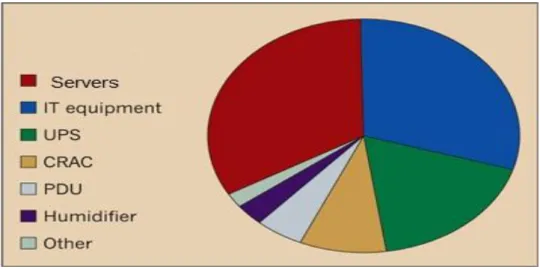
Figure 2.1 shows the energy consumed by the data center parts, so increasing in energy efficiency in a few percentage of the energy consumption means saving a significant amount of money and increasing the profits.
Figure 2.1: Energy Consumed in Data Center [20]
Energy consumption in hosting Internet services is becoming a pressing issue as these services scale up. Information communication technology (ICT) could play an essential role in decreasing energy consumed by data centers and at the same time generate new business opportunities. Energy Efficiency is one of the vital challeng-es of the ICT businchalleng-esschalleng-es, where environmental sustainability is becoming mandatory for energy management in data centers. Reduced cost of energy for data centers is imperative from an economic and sustainable perspective. Without the need for drastic changes in the city‘s physical structure.
2.2 ICT and Energy Consumption
As Information Communication Technology (ICT) improves corporate effective-ness, so energy expenditure in data centres is simultaneously also increasing. ICT could play an essential role in decreasing consumption, while at the same time generating business opportunities. During the life cycle of a data centre, most energy (~80%) is used during the operational stage; the impact of user behaviour and real-time control, only 20% [21]. Focused on the perfection of energy efficiency through innovative ICT applications is the so-called ‗Green Data Centres or ‗Smart Data
12
Centres‘. It has spawned a vision, detailed best practice examples and identified and structured research/development targets of ICT method , its models, applications and systems to support future energy efficiency in the built environment [22]. ICT has potential to facilitate lower energy use and greenhouse gas (GHG) emissions. Ac-cording to studies [23], ICT can reduce on a global one fifth of the ICT sector‘s own emissions, which is 15% of total global emissions in a ‗business as usual‘(scenario for 2020). According to GeSi (2008), the ICT could help to improve energy efficien-cy [24].
Energy consumption costs influences an end-user who must pay for usage cloud resources and services. Moreover, consumption of extra power requires more cooling – negatively affecting the environment through production of extra CO2. Cloud
computing is compatible with differing users‘ demands and has three types of access structure -network, public cloud/private cloud and hybrid cloud [25].
Software is another issue to be considered when discussing green ICT [12]. Soft-ware behaviour is affecting computing workload and resource usage and has influenced energy consumption and core computing resources – particularly in utility equipment [11]. Publications worldwide print software issues to enhance awareness. Whether driven by consumer demand, business, economic, social or politics, the green movement has grown; domestic and international organisations are adopting it [12].
While green ICT influences business and the environment, data centre managers can play a principal role in increasing energy efficiency by following a green ICT framework, to reduce huge amount of energy while reducing global warming through the cutting of CO2 emission [14].
2.3 Measure Energy consumptions in Data Center
People sometimes use power and energy in synonymously. But power and energy mean two different things. Power can be thought of the rate at which energy can expended. Power is the instantaneous measurement of the use of electricity, like a 100-watt light bulb or what something can do. Energy is the total quantity of work
13
performed. Energy is using of the power over a period of time, like 100-watt bulb being lit for one hour.
2.3.1 Data center
Data center is a corner stone of the infrastructure of cloud computing ap-proach by which a variety of information and communication technology (ICT) services are built. They extend the ability of centralized repository for computing, hosting, storage, management, monitoring, networking and deployment of data. With the rapid increase in using data centers, there is a continuous increase in the energy consumption [14]. Data center beside consumed energy also produces carbon dioxide and that riddled with IT inefficiencies. Data center major components are thousands of servers; however these servers consume huge energy without performing useful work. Data centers today are homes to a vast number and a variety of applications with diverse resource demands and performance objectives. There are many models to support energy efficiency in data center; the most important model is virtualiza-tion. Cloud computing supports virtualization like resources (i.e. computes, storage, and network capacity). The most basic one is at Virtual Machine (VM) level where different applications can be executed within their containers or operating systems running on the same machine hardware. Platform level enables seamless mapping of applications to one or more resources offered by different cloud infrastructure providers. Virtual machines (VMs) are a logical slit of physical resources, and it is the heart of virtualization. In data centers, the number of physical machines can be reduced using virtualization by consolidating virtual appliances onto shared servers. This can help to improve the efficiency of ICT systems. The advantages are simple, it allows multiple virtual machines to be run on a single physical machine in order to provide more capability and increase the utilization level of the hardware. It always increases efficiency; it allows you to do more work with less ICT equipment [2]. The worldwide agitation to achieve ecological, business and environmental sustainability is starting to redraw industrial landscape. The current status of global warming, ecological deterioration and the severity of its potential consequences explain the over whelming popularity of environmental initiatives across the world. Environ-mental impact of ICT under the banner of ―Green ICT‖ has started being discussed by academia, media and government. Since 2007 when the Environmental Protection
14
Agency (EPA) submitted a report to the US Congress [2] about the expected energy consumption of data centers. The main objective of Green ICT is to increase energy efficiency and reduce CO2 emissions [13]. Energy usage and carbon footprint are the
features most commonly discussed and measured to determine how green a Data Center is; however, other elements warrant attention as well. Other green details to consider include the following:
Generator emissions: Standby generators, used to keep a Data Center running when commercial power fails, consume fuel when in operation and can emit a range of pollutants including nitrogen oxides, hydrocarbons, carbon monoxide, carbon dioxide, and particulate matter. Knowing the consumption and emissions of your Data Center generators provide greater insight into the facility's environmental impact.
Heat waste: Most strategies regarding Data Center temperatures focus on how to best remove hot server exhaust from the hosting environment yet pay little attention to the ultimate disposition of Data Center heat waste. If your Data Center cooling system is highly efficient and does a superb job of keeping equipment cool but raises temperatures outdoors, how green is it really? Hot building exhaust is blamed for increasing the severity of several undesirable environmental and health problems including air pollution, heat-related illnesses, deteriorated water quality, and in-creased energy consumption during summer evenings. The phenomenon known as heat islands is discussed further in Chapter 3, "Green Design and Build Strategies."
Water consumption: Major Data Centers consume millions of gallons/liters of water per month through standard cooling processes as hot water is vaporized from a Data Center's cooling tower and has to be replaced. (Water used to replace what has evaporated is known as makeup water.) Although this consumption hasn't received the same level of attention from governments and the public in recent years as energy use and carbon emissions, removing such large amounts of water from local supplies is a tremendous environmental impact.
Energy consumption in the data center is classified into two types of energy consumptions:
Fixed energy consumption: this energy is consumed by the equipment running the data center like: cooling, lighting and power delivery.
Variable energy consumption: this energy is consumed by the equipment that responsible for data processing like: ICT equipment and servers.
15
2.4 Power Consumption in the Data Centers
The power delivered to the data center throw main electricity utility supply or generators in case of a breakdown, or throw renewable energy supply (RES) and feeds the switchgear. Within the switchgear the transformer resized the voltage. The suitable voltage feeds the UPS that is also fed by EG in case of a breakdown. Table 2.1 and figure 2.2 show the component of the data center and the consumption rate for each equipment. IT equipment is responsible for 50% of energy cost in the data center. Air conditioners and water pumps consumed 25% of the data center power. Air movement like fans and air pumps is responsible for 12% of energy cost in the data center. Internal transformer and transformerless UPS is responsible for more than 10% of total energy cost in the data center. Lighting and other is responsible for more than 3% of the overall data center power.
Table 2.1 The distribution of power in data center [80]
Cost Component Sub-Components
50% ICT equipment Servers, Routers, Switches, Loud balances, Cabinets, CPU, memory and storage systems. 25% Cooling Air conditioners and water pumps.
12% Air movement Fans and air pumps.
10% Transformer/ UPS internal transformer and transformerless UPS . 3% Lighting Lighting and other
16
Figure 2.2 Sources of data center energy consumption [81]
Figure 2.3 shows the levels of consuming energy in the data centers. Fixed energy is the energy consumed by the devices without executing any program. Variable energy is the difference between fixed energy and the energy required to execute the program or energy required to do the job. Table 2.2 interprets and clarifies the fixed energy and variable energy.
Figure 2.3 Levels of energy consumption in the data centers
Total Energy consumption
IT Energy Consumption
Network
Energy Consumption Variable Energy Consumption Fixed Energy Consumption Fixed Energy Consumption Variable Energy Consumption17
Table 2.2 Interpret and clarify the fixed and variable energy
Data Center Comment
Real Data Center > 70% of energy consumption is fixed and not affected by workload, < 30% is related to workload.
Ideal Data Center ~0% of energy consumption is fixed, ~100% related to work delivered
The more of these Data Center elements that you measure, the more opportu-nities to make your server environment greener that you uncover. Tips on reducing the impact of these features are provided in Chapter 4 and Chapter 5.
2.4.1 Carbon footprint
Environmental impact is the other issue of data centers. The amount of car-bon dioxide (CO2) produced as part of the running operation of the hardware
equipments. Carbon dioxide is one of a handful of substances dubbed greenhouse gases that trap heat from the sun and warm the Earth. That warming effect is neces-sary to a certain degree. Without it, the Earth's mean surface temperature would be 2 degrees Fahrenheit (19 degrees Celsius) rather than today's 57 degrees Fahrenheit (14 degrees Celsius). Many scientists and environmentalists today are concerned that human activity is causing such problems, prompting them and various government agencies worldwide to call for reductions in carbon dioxide emissions [26].
2.5 Energy Efficiency and Green ICT Framework for Data Centres
While most industrial countries aggressively pursue the effect energy use in centres, there was limited documentation on the developing countries‘ efforts, in spite of evidence of significant data centre projects in developing countries - particu-larly in Africa [13]. However, at the same time, companies in developing countries needed to adopt new technology services in the short term, while taking into account high reliability, performance, efficiency, operational costs and availability require-ments as important challenges [14].18
2.5.1 Energy Efficiency
Using technology to decrease the energy consumed by the data centers in or-der to produce the same amount of services [14]. Latest effective technology named Virtualization could be used to reduce energy consumed and increase the utilisation ratio to achieve energy-efficient data centres, by providing different solutions such as server consolidation, migration, load balancing, energy efficiency measurements and green metrics to determine inefficiencies in a data centre [15]. Data centre virtualiza-tion increased the utilisavirtualiza-tion ratio of different servers in data centres by up to 50% or even more [16], saving huge energy and reducing CO2 emission. The green ICT has
moved from the theoretical to the practical, ICT operators and leaders being chal-lenged to construct new data centre or develop existing units with energy-efficient advantages, sustainable materials and other environmental perks [16]. It was im-portant to evaluate energy use in regulatory mechanisms applied in the context of developing countries [14]. Such evaluation helped in developing green data frame-works for different tier level centres [15].
Based on our literature review we realized that the lack of and need for an in-tegrated data center energy efficiency framework which consider the social network applications as a vital related factor in elevating energy consumption, as well as high potential for energy efficiency. The framework provides a platform on top of which the Green Cloud could be built. The framework practices from Energy Aware Computing will improve the efficiency of Cloud systems and their data centers and Clouds themselves will produce naturally efficient and focused centers of computa-tion, advancing the pursuit of green computing. The required integrated data center energy efficiency framework should be also applicable in different types of data centers including public, private and hybrid. The existence of such framework will offer a great powerful capability to deal with service levels and resources manage-ment. The required data center Energy Efficiency framework will offer improved in scalability, elasticity, simplicity for management, delivery of cloud services and better reduction in data centers energy consumption taking into consideration the QoS for the user services.
Energy performance:
Energy use of a data center building under standardized conditions [82].19
2.6 Green Metric
In a few years the Power Usage Effectiveness (PUE) metric has full focus as the measure of efficiency for a data centre [16]. However, there was still no consensus metric as standard for ICT or software efficiency and most energy efficiency meas-urements stopped at ICT energy [17]. The Fixed to Variable Energy Ratio (FVER) metric developed by British Computer Society‘s Data Centre Specialist Group (DCSG), has five levels. FVER avoid the weaknesses of PUE by providing a high value diagnostic metric for ICT equipment and utility equipment and software energy consumption in the centre.
20
CHAPTER THREE
LITERATURE REVIEW
The Current State of Energy Efficiency In
Data Centers
3.1 Introduction
According to Cooper‘s taxonomy of literature reviews [28], the main goal of this review is to identify critical issues central to the field, questions that have been the focus of previous research and topics that have been neglected. Also, the current research tries to specify some methodological problems which have prevented the formation of an integrated body of knowledge in the field.
The Cloud Computing (CC) approach has grown in popularity [26] where an or-ganization achieved high profits by selling computer resources including both software and hardware. The cloud computing technique is complex and consists of a number of heterogeneous technologies [18]. However, as the cloud computing environment is growing in number and providing many levels of services. The backbone of cloud computing is the data center, it consists of a huge number of servers connected together. These data centers consume a large amount of energy to deliver the services to the customer. The cloud computing providers can control the cloud computing services to unburden the task of managing infrastructure, while cloud computing providers expand the number of servers in their data centers due to the increase in service requests. With this increasing need, their energy consumption increases significantly. Reducing the operational cost while satisfying the service level agreement (SLA) [27], becomes an important issue in order to increase the benefits for cloud computing providers and reduce the carbon emissions CO2. On the
21
The increasing in energy efficiency in a few percent of the energy consumption means saving a significant amount of money and increasing the profits.
Energy consumption in hosting Internet services is becoming a pressing issue as these services scale up. There are different solutions to increase energy efficiency like:
1- Finding ways to distribute workloads to each processor core and efficiently reduce energy consumption is of vital importance, especially for real-time systems. Recently, The efficient load balancing and scheduling technique is increasing significantly. Some techniques are closely related to the efficiency of the whole cloud computing facilities like: the job scheduling and resource management. One such very important and necessary concept is that of load balancing. This importance arises because load balancing balance between the efficiency and performance of data center. There are many load balancing algorithms available, but the relevant point regarding this is how these algo-rithms are effectively used. An effective load balancing algorithm regards to data centers, that one in which the jobs requested from the user are completed within the minimum period of time.
2- The main emphasis on the cloud computing is given to the resource manage-ment and the job scheduler. The goal of the job scheduler is to maximize the resource utilization and minimize the processing time of the jobs. Existing approaches of data center scheduling doesn‘t give much emphasis on the per-formance of a data center scheduler in processing time parameter. Schedulers allocate resources to the jobs to be executed using the First come First serve algorithm.
ICT could play an essential role in decreasing energy consumed by data center's buildings and at the same time generate new business opportunities. Ener-gy Efficiency is one of the vital challenges of the building sector and ICT businesses, where environmental sustainability is becoming mandatory for energy management in building and data centers. Reducing the cost of energy for buildings and data centers is imperative from an economic and sustainable perspective. Without the need for drastic changes in the city‘s physical structure.
According to Cooper‘s taxonomy of literature reviews [28], the main goal of this review is to identify critical issues central to the field, questions that have been the
22
focus of previous research and topics that have been neglected. Also, the current research tries to specify some methodological problems which have prevented the formation of an integrated body of knowledge in the field.
3.2
Literature Review Methodology
While investigating the previous works the focus is mostly on the findings of articles and the methods used to achieve energy efficiency. Although this review targets energy efficiency in data centers in the cloud technology as the main audience and explores theoretical and empirical issues relevant to scientific research.
To study the academic literature on the effects of energy efficiency on the data centers, the related impact journal, international conferences and universities re-searches database was used to search for these keywords:
1) Green data centers,
2) Energy efficiency in the data centers, 3) Green technology,
4) Reduce energy and CO2 emission.
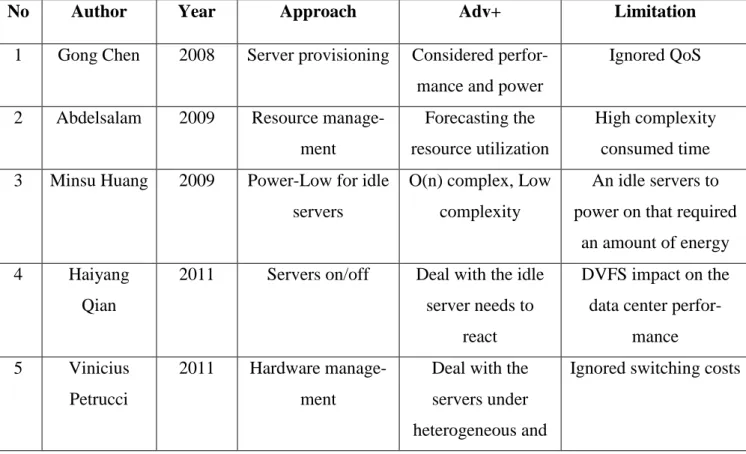
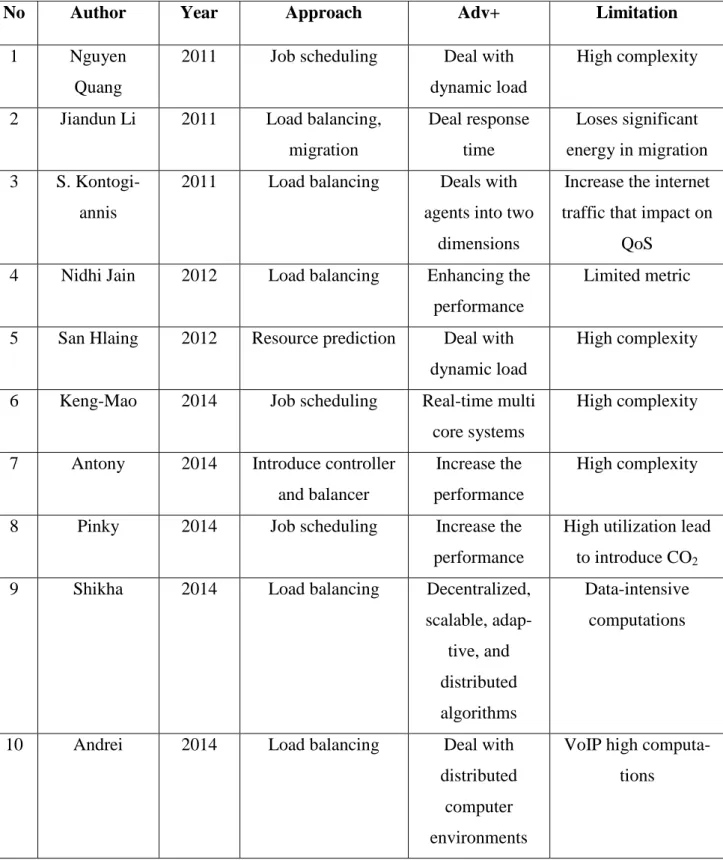
We searched in the title, abstract and keywords of the paper. It led to 684 papers as the results. We have depended on specific conditions to choose suitable papers. First, we filtered this list based on journal name and impact. Second, we evaluated the main objective of the paper. Third, reviewed the abstract that should be increased energy efficiency by using specific techniques. Fourthly, investigated the reference sections of the paper to include potential articles. The results of proceeding filtering produced a list of 40 articles. Table 1, Table 2, Table 3 and Table 4 provides a summary of selected papers based on procedures described. The organizations of this chapter are as follows: In the next section we investigated some issues with the current state of the literature. Next, provided some gabs and suggestions for future research.
3.3
Energy Efficiency Levels
In recent years, the energy efficiency has attracted the attention of data cen-ter‘s researchers. In the literature review below, a proudly previous research investigated energy efficiency in data centers in three levels:
I. Data center level:, migration, consolidation and reconfiguration. Cooling, heating, lighting and utility.
23
II. Hardware level: Hardware management, provisioning and turn on/off servers. III. Application level: skip/execute, scheduling and load balance activity.
3.3.1
Data center level: This level can be divided into two sub levels:
I.
Data center (migration, consolidation and reconfiguration).
Song et al.[29], the author developed an adaptive and dynamic model, operating system-base for efficient sharing of a server by optimizing resources (CPU and memory) between virtual machines.
Bo Li, Jianxin et al.[30], the author developed an energy saving on-line placement model, based on a balance of workload by distributing it in a virtual machine to achieve a least number of nodes to execute that load. So the workloads are replaced, and resized. However, the migration and relocation of VMs for matching application demand can impact the QoS service requirements of the user.
Rajkumar Buyya et al.[31], the author proposed (a) architectural principles for energy-efficient management of Clouds; (b) energy efficient resource allocation policies and scheduling algorithms considering quality-of-service expectations, and device power usage characteristics; and (c) a novel software technology for energy-efficient management of Clouds.
Anton Beloglazov et al. [32], the author proposed a novel technique for dynamic consolidation of VMs based on adaptive utilization thresholds, which ensures a high level of meeting to the Service Level Agreements (SLA). He validates the high efficiency of the proposed technique across different kinds of workloads using workload traces from more than a thousand Planet Lab servers.
Saurabh Kumar Garg et al. [33], the author proposed a Green Cloud framework, which make Cloud green from both user and provider's perspective. The framework relies on two main components, Carbon Emission and Green Cloud.
Uddin et al. [34], the author developed a tool to improve the performance and energy efficiency of data centers. He divided data center components into different resource pools depending on different parameters. The framework highlights the importance of implementing green metrics like power usage effectiveness (PUE) and data center effectiveness and carbon emission calculator to measure the efficiency of the data center. The framework is based on virtualization and cloud computing. The tool was to increase the utilization of the data centers from 10% to more than 50%.
24
Meenakshi Sharma et al. [35], the author firstly presented an analysis of different Virtual machine(VM) load balancing, a new VM load balancing algorithm has been proposed and implemented in a Virtual Machine environment of cloud computing in order to achieve better response time and reduce cost.
Xin Lia et al. [36], the authors proposed a virtual machine placement algorithm named EAGLE, which can balance the utilization of multidimensional resources and thus lower the energy consumption. Experimental results show, that EAGLE can reduce energy as much as 15% more energy than the first fit algorithm.
Elgelany et. al. [37], the authors investigated recent research that concentrated on energy efficiency approach and obtained some important conditions, to achieve green cloud computing by reducing energy consumption and emissions of carbon dioxide (CO2) in data centers and represent open challenges. The author found that there is an
urgent need for an integrated energy efficiency framework for green data centers, which combines IT architecture with specific activities and procedures that lead to energy efficiency putting into account the social network applications.
Nada et. al. [38], the authors investigated previous frameworks that focus on ener-gy efficiency and show the pros and cons of that framework. The analysis process found that the current available frameworks have some drawbacks that are the reason why there is an urgent need for an integrated criterion for selecting and adopting an energy efficiency framework for data centers. Additionally, the authors highlighted the importance of the identification of efficient and effective energy efficiency metric that can be used for the measurement and determination of the value of data center efficiency and their performance.
25
Table 3.1 Energy efficiency data center level: migration, consolidation and reconfiguration Techniques
No Author Year Approach Adv+ Limitation
1 Song 2007 Optimizing
resources
Deal with dynamic load
Waiting times are high
2 Bo Li 2009 A balance of
workload
Online Model Impact on Quality-of-service 3 Rajkumar Buyya 2010 Manage resource allocation policies and scheduling Quality-of-service No parameter to indicate CO2 emission 4 Beloglazov 2010 Dynamic
consoli-dation of VMs
Meeting the Service Level Agreements
(SLA)
No suitable metric to show the energy efficiency level 5 Saurabh Kumar Garg 2011 Green Cloud framework Good in reduce energy, pricing and
time
Increase the net-work traffic 6 Uddin 2012 Virtualization Increase the utilization
ratio
Did not concern to dynamically load 7 Meenakshi
Sharma
2012 VM load balancing Good in reduce energy, pricing and
time
Much calculation needs more time to
take a decision 8 Xin Lia 2013 Virtual machine
placement
Can balance the utilization of
multidi-mensional resources
Did not concern on performance 9 Elgelany 2013 Investigated previous energy efficiency work in a critical way Represent open challenges -
10 Nada 2014 Investigated previ-ous frameworks in
critical view
Show the drawbacks of the current
frame-works
26
II.
Data center (buildings) level: cooling, heating and lighting
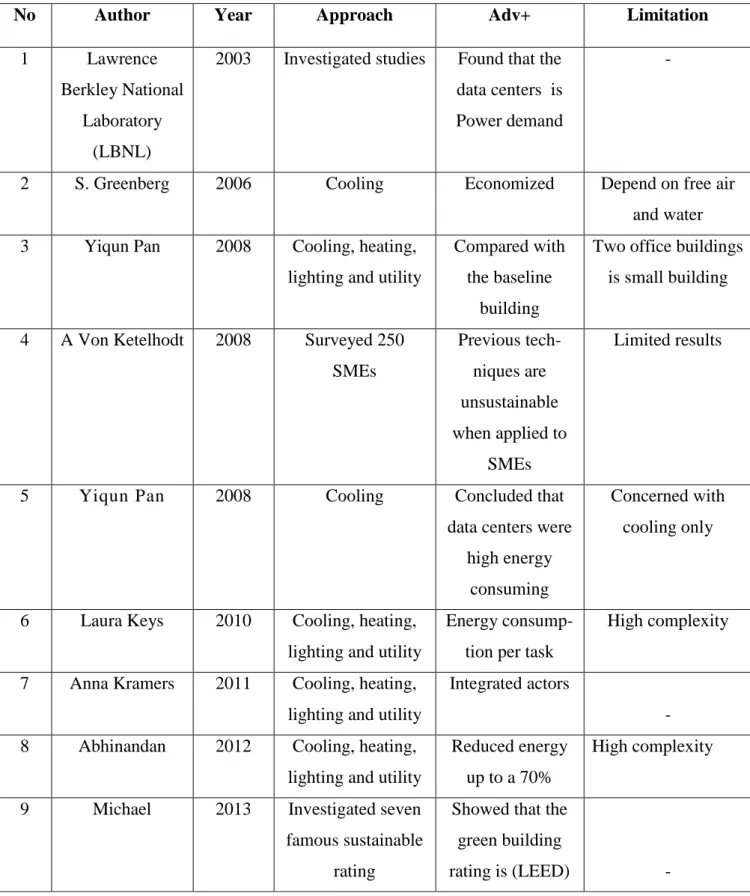
Lawrence Berkley National Laboratory (LBNL) [59], the research team in LBNL investigated studies on 14 data centers in the USA and found that power demand of data centers are in the range of 120–940 W/m2, while the power demands typically drawn by commercial office spaces lie in between 50 and 110 W/m2.
S. Greenberg et. al.[60]. The author developed a set of ‗‗best-practice‘‘ technologies for energy efficiency of data center buildings. He optimized central chiller plants,‘ free cooling‘‘ from air-side or water side economizers, improved uninterruptible power supplies, high-efficiency computer power supplies.
Yiqun Pan et. al. [61], the author developed energy simulation models with Energy Plus for two office buildings in a R&D center in Shanghai, China to evaluate the energy cost savings of green building design options compared with the baseline building.
A Von Ketelhodt et. al. [62]. The author Surveyed 250 SMEs in Cape Town and found that the prevailing methods of changing electricity consumption behavior: information campaigns, increasing prices, and providing rebates for energy savings, have had limited results and are unsustainable when applied to SMEs.
Yiqun Pan et. al, [63]. The author investigated the energy use of two data centers in commercial buildings in Shanghai and concluded that data centers were high energy consuming areas in commercial office buildings. He improved equipment efficiencies compared to ASHRAE minimum, several system enhancements and design options, e.g., under-floor air distribution system, ice storage, air-side free cooling.
Laura Keys et. al. [64]. The author conducts a survey of several small clusters of machines in search of the most energy-efficient data center building block targeting data intensive computing. The author evaluates the performance and power of single machines from the embedded, mobile, desktop, and server spaces. The author builds five-node homogeneous clusters of each type and run Dryad, a distributed execution engine, with a collection of data-intensive workloads to measure the energy con-sumption per task on each cluster. In this collection of data-intensive workloads, the author achieved an average of 80% more energy-efficient than a cluster with embed-ded processors and at least 300% more energy-efficient than a cluster with low-power server processors.
27
Anna Kramers et al. [65]. The author developed in-depth study and forms part of current research into urban sustainable. He developed a methodological approach that integrated actors and measures in describing a process of change. The research focused on ICT solutions for energy efficiency and a sustainable technique of managing and using buildings in the existing built environment.
Abhinandan et al. [66]. The author proposed an effective model, to automate the scheduling of meetings in a way that uses available meeting rooms in an energy efficient manner, while adhering to time conflicts and capacity constraints. The researcher investigated a number of scheduling algorithms, ranging from greedy to heuristic approaches, and reduced energy up to a 70%.
Michael et al. [67]. The author investigated seven famous sustainable rating sys-tems–BREEAM, CASBEE, GREEN GLOBES, GREEN STAR, HK-BEAM, IGBC Green Homes and LEED by the perceptions and opinions of stakeholders in Nigeria certified in green building rating systems in an attempt to select and adapt a green building rating system for Nigeria. The result of his research showed that the green building rating Leadership in Energy and Environmental Design (LEED), which is the dominant system in the United States and Canada is appropriate for Nigeria because it helps customers determine environmental performance, with strong base, large investments and proven advantages scored the highest with 80 points out of 100 points.
Long Phan et al. [68]. The author developed energy simulation code, Energy Plus. He investigated the effects of wall boundary conditions, climatic locations, supply air temperatures, and volume flow rates, on the energy consumption and thermal performance of a popular data center model. To achieve energy efficiency he used data center model having 1120 servers distributed in four rows of rack. He investigated under two major climatic conditions–hot and humid (Miami, FL), and cool and humid (Chicago, IL). The researcher proposed a multi-zone modeling approach to resolve the hot and cold aisles in the data center, evaluated the proposed model he compared to existing well-mixed single zone model. Using the multi-zone approach that is believed more reasonable, both monthly and annual overall energy consumptions as well as cooling load were analyzed under various boundary condi-tions. The simulation results showed that the thermal performance of the data center is significantly affected by locations or climatic conditions. The effects of location and wall boundary conditions are particularly appreciable during the summer and

![Figure 5.3 Data center architecture [ 48 ]](https://thumb-us.123doks.com/thumbv2/123dok_us/10060724.2905758/62.892.173.759.632.1022/figure-data-center-architecture.webp)
