University of South Carolina University of South Carolina
Scholar Commons
Scholar Commons
Theses and DissertationsSpring 2020
Exploring the Effects of an Asynchronous Professional
Exploring the Effects of an Asynchronous Professional
Development with the SAMR Integration Model on High School
Development with the SAMR Integration Model on High School
Teachers’ Technology Integration in the Classroom: An Action
Teachers’ Technology Integration in the Classroom: An Action
Research Study
Research Study
Taylor J. BradleyFollow this and additional works at: https://scholarcommons.sc.edu/etd
Part of the Curriculum and Instruction Commons
Recommended Citation Recommended Citation
Bradley, T. J.(2020). Exploring the Effects of an Asynchronous Professional Development with the SAMR Integration Model on High School Teachers’ Technology Integration in the Classroom: An Action Research Study. (Doctoral dissertation). Retrieved from https://scholarcommons.sc.edu/etd/5870
This Open Access Dissertation is brought to you by Scholar Commons. It has been accepted for inclusion in Theses and Dissertations by an authorized administrator of Scholar Commons. For more information, please contact [email protected].
Exploring the Effects of an Asynchronous Professional Development with the SAMR Integration Model on High School Teachers’ Technology Integration in the Classroom:
An Action Research Study by
Taylor J. Bradley Bachelor of Science College of Charleston, 2009
Master of Education
Charleston Southern University, 2015
Submitted in Partial Fulfillment of the Requirements For the Degree of Doctor of Education in
Curriculum and Instruction College of Education University of South Carolina
2020 Accepted by: Fatih Ari, Major Professor Anna C. Clifford, Committee Member Michael M. Grant, Committee Member Ismahan Arslan-Ari, Committee Member
ii
© Copyright by Taylor J. Bradley, 2020 All Rights Reserved.
iii
DEDICATION
To my wife, Chelsey, who provided me with the support, encouragement, and motivation to achieve my highest potential, to my parents, Bill and Irene who raised me from an inquisitive child to an inquisitive adult, and for all the amazing educators in my life. I am the product of your efforts.
iv
ACKNOWLEDGEMENTS
I would like to begin by thanking the faculty at the University of South Carolina for their support. Throughout the process, members of the staff have been there to guide me, support me, and answer any questions that I had. Dr. Grant was an excellent cohort advisor and mentor, and I am forever grateful for his guidance through this process. I will never look at “stew” the same way again.
I would also like to thank my dissertation committee for helping my dissertation become the best it could be. I would be remiss if I did not offer special thanks to Dr. Ari, my dissertation chair. His expertise helped guide my struggles into productivity, and I can confidently say that my dissertation would not have been completed were it not for his consistent support.
v
ABSTRACT
The purpose of this action research was to evaluate the effects of an asynchronous PD on teacher technology integration in the classroom as measured by the SAMR
integration model. Teacher professional development is one of the most significant factors in student technology use in the classroom (Hall & Martin, 2008; Murthy, Iyer, & Warriem, 2015). Within a school day there are a number of requirements on teachers in addition to teaching their classes, such as attending parent conferences, department meetings, state mandated training, and many other initiatives that supersede teacher technology training (Garthwait & Weller, 2005). When provided with an online model, allowing teachers to work at their leisure has been shown in some cases to increase the amount of professional development teachers willingly take (Paskevicius & Bortolin, 2015; Russell, Carey, Kleiman, & Venable, 2009). This study focused on three questions. The first question sought to explore the ways asynchronous teacher PD on the SAMR model impact the planning process. The second question explored how and in what ways asynchronous teacher professional development on the SAMR model impact teachers’ classroom technology integration. The third sought to determine teachers’ perceptions about the effectiveness of asynchronous teacher professional development.
This study incorporated an online professional development module on classroom technology integration to provide high school teachers with specific technology-related resources, tools, and ideas to use in the classroom. The number of participants is five classroom teachers. Data collection consisted of a pre-survey, gauging teacher’s current
vi
levels of technology integration in the classroom, observations, a mirrored post-survey and individual interviews with selected participants. Data were analyzed through a mixed-methods approach using descriptive statistics for the quantitative measures and literal transcription and inductive analysis for qualitative measures (Mertler, 2017). Results of this six-week study suggest a positive correlation between asynchronous teacher professional development and the thoughtful inclusion of technology when planning, increased levels of teacher technology use in the classroom, as well as a favorable outlook on asynchronous professional development in general. Research highlighted the need for collaboration between participants when participating asynchronously.
vii TABLE OF CONTENTS DEDICATION ... iii ACKNOWLEDGEMENTS ... iv ABSTRACT ...v LIST OF TABLES ...x LIST OF FIGURES ... xi CHAPTER 1 INTRODUCTION ...1 National Context ...1 Local Context ...4
Statement of the Problem ...5
Researcher Subjectivities and Positionality ...6
Definition of Terms...9
CHAPTER 2 LITERATURE REVIEW ...10
Information and Communication Technologies ...12
Technology Integration Frameworks ...24
School-based PD ...32 Chapter Summary ...36 CHAPTER 3 METHOD ...38 Research Design...38 Setting ...40 Participants ...41
viii
Intervention ...46
Data Collection ...48
Data Analysis ...51
Procedures ...53
Rigor and Trustworthiness ...55
Plan for Sharing and Communicating Findings ...58
CHAPTER 4 FINDINGS AND INTERPRETATIONS ...60
Quantitative Results ...61
Qualitative Data Themes...69
Chapter Summary ...89
CHAPTER 5 DISCUSSION, IMPLICATIONS, AND LIMITATIONS ...91
Discussion ...91
Implications...101
Limitations ...106
Conclusions ...107
REFERENCES ...109
APPENDIX A TEACHER TECHNOLOGY QUESTIONNAIRE (TTQ) ...127
APPENDIX B WEEKLY PROFESSIONAL DEVELOPMENT QUESIONNAIRE ...130
APPENDIX C TEACHER INTERVIEW QUESTIONS ...135
APPENDIX D CLASSROOM OBSERVATION PROTOCOL ...137
APPENDIX E SAMPLE LESSON FOR ASYNCHRONOUS PROFESSIONAL DEVELOPMENT MODULES ...141
ix
APPENDIX F SITE USE PERMISSION ...143 APPENDIX G IRB APPROVAL ...145
x
LIST OF TABLES
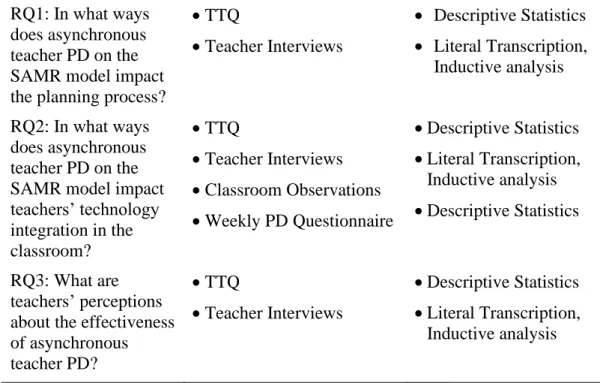
Table 3.1 Research Questions and Data Sources ...49
Table 3.2 Research Questions and Data Sources ...52
Table 3.3 Data Collection Procedures ...54
Table 4.1 Descriptive Statistics for the Teacher Technology Questionnaire (n=5) ...62
Table 4.2 Descriptive Statistics for Impact on Classroom Instruction (n=5) ...63
Table 4.3 Descriptive Statistics for Impact on Students (n=5) ...64
Table 4.4 Descriptive Statistics for Teacher Readiness to Integrate Technology (n=5) ...65
Table 4.5 Descriptive Statistics for Overall Support for Technology in the School (n=5) ...66
Table 4.6 Descriptive Statistics for Technical Support (n=5)...67
Table 4.7 Teachers’ Perceived Knowledge of Applications (n=5) ...68
Table 4.8 Likelihood of Application Usage (n=5) ...68
Table 4.9 Themes and Examples ...72
xi
LIST OF FIGURES
Figure 2.1 The SAMR model (Puentedura, 2006). ...25
Figure 2.2 The TPACK model (Mishra & Koehler, 2006). ...27
Figure 2.3 The RAT model (Hughes et al., 2006). ...29
Figure 2.4 The TIM model (Welsh et al., 2011). ...31
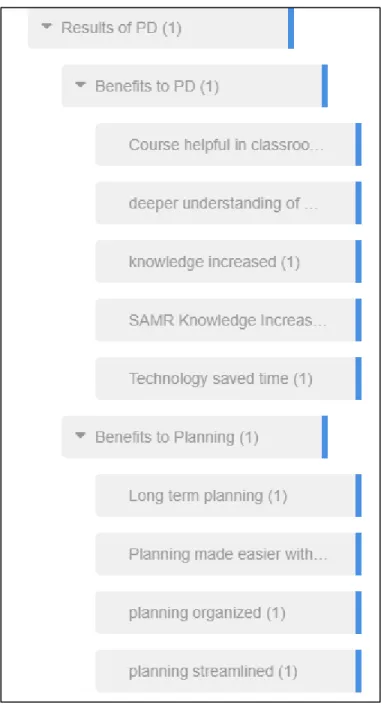
Figure 4.1 Pre-coding...70
1
CHAPTER 1 INTRODUCTION
National Context
A 2015 study conducted by the Programme for International Student Assessment rated the United States as “average” or “below average” in science, reading, and math performance (Belfali & Ikeda, 2015). This has caused much concern within the field of education, leading school and district level administrators to look for the next big educational innovation. Concurrently, technology usage in schools continues to grow with implementation of one-to-one student device initiatives as school leaders look to climb back up the international rankings. When new one-to-one initiatives are
implemented, educators in classrooms are finding themselves struggling with how to implement the devices in an effective and meaningful way (Donovan, Hartley, & Strudler, 2007; Topper & Lancaster, 2013). Computers in the classroom are not a novel concept. In a 2009 study conducted by the National Center for Education Statistics, it was reported that 96.75% of classrooms had computers in the classroom every day, with an average ratio of 5.3 students per computer (Gray, Thomas, & Lewis, 2010).
Device presence in the classroom, however, is shifting. A survey conducted in 2014 indicated that of districts utilizing mobile devices in the classroom, 19.6% of those classrooms were considered to have a one-to-one ratio of mobile devices to students, with 82.2% of those mobile districts expressing a desire to expand to a one-to-one solution within the next two years (Interactive Educational Systems Design, Inc., 2014).
2
Increasingly, districts are allowing students to take these devices home (Li & Pow, 2011; Zilka, 2016), further adding to the potential educational reach of one-to-one computing. Adopters of one-to-one programs in their districts report benefits, such as increased student interest, engagement, research skill, and achievement (Bebell & Kay, 2010; Bebell & O’Dwyer, 2010; Edwards, 2012; Ercan, 2015; J. L. Harris, Bataineh, & Al-Bataineh, 2015). There is some disagreement as to whether one-to-one integration is beneficial, as there are those who believe there is a strong correlation with improved student outcomes and others who have noticed either no effect or a negative effect with regard to technology integration in the classroom and student achievement (Arnesen, 2013; Goodwin, 2011; Hu, 2007). With discrepancies in the research, other variables, such as teacher training and implementation, must be considered as potential causes.
One of the methods employed to address issues within a school setting is professional development (PD). Teacher PD regarding technology is often focused around one of two technology integration frameworks: the substitution, augmentation, modification, and redefinition (SAMR) approach (Hilton, 2016; Kihoza, Zlotnikova, Bada, & Kalegele, 2016; Romrell, Kidder, & Wood, 2014) or the technology, pedagogy, and content knowledge (TPACK) approach (Cabero & Barroso, 2016; Liu, Tsai, & Huang, 2015; Retallick & Mithani, 2003; Sarhandi, Khan, Buledi, & Asghar, 2016). The SAMR approach can be applied to teachers or students and portrays technology
integration as a continuum, moving from lower levels of technology integration to redefining the educational experience with more advanced levels of technology usage (Puentedura, 2006). TPACK is a framework aligned with a teacher’s pedagogical
3
abilities, content knowledge, and the combination of these two within a setting that utilizes technology (Mishra & Koehler, 2006).
Regardless of which educational technology framework is integrated, there are best practices for incorporating teacher PD into a district. Many districts struggle with PD due to time constraints, a lack of skilled trainers, budgeting concerns, or other limitations (Dana, Dawson, Wolkenhauer, & Krell, 2013; Tondeur, Forkosh-Baruch, Prestridge, Albion, & Edirisinghe, 2016). In order for PD to be effective, it must generally focus on content knowledge, provide opportunities for active learning, and have coherence with other learning activities (Desimone, Porter, Garet, Yoon, & Birman, 2002; Garet, Porter, Desimone, Birman, & Yoon, 2001; Penuel, Fishman, Yamaguchi, & Gallagher, 2007). Studies report often the largest challenge in employing mobile technology is
incorporating PD that supports teachers who lack knowledge or experience (Ilhan & Ilhan, 2013; Interactive Educational Systems Design, Inc., 2014; Li, 2016). When provided with opportunities to utilize devices, teachers often feel uncomfortable and unprepared (Ertmer, 2005). This discomfort can lead to underutilization or complete abandonment of district-purchased one-to-one devices and a regression into other
methods of teaching (Ertmer, 1999; Hall & Martin, 2008; Johnson-Martin, 2014; Murthy, Iyer, & Warriem, 2015). With a lack of teacher knowledge and preparedness, a common solution is teacher PD. If teachers are not provided with these opportunities for
professional learning and growth, they will be unable to effectively incorporate one-to-one student devices within their classrooms.
In middle schools and high schools around the country, implementation of one-to-one programs is becoming more commonplace. Not all teachers are reporting an ease of
4
transition from other models to a one-to-one setting noting. There are reported concerns with the formatting of the lesson (Storz & Hoffman, 2013), preparation ahead of the lesson (Donovan et al., 2007), and lack of translation from expert home-use to expert school-use. Ultimately, it is teacher concerns, not student reluctance, administrative hesitation, or parental trepidation that is one of the largest barriers to successful one-to-one implementation within the classroom (Donovan et al., 2007). These problems are not unique to the national scale and have a localized interest within the researcher’s school district.
Local Context
District X hired a new superintendent within the last 5 years. One of the priorities for the new superintendent is a one-to-one Chromebook initiative. The goal of this initiative is to provide every student in grades 3-12 a mobile device for them to use in school and to take home with the goal of igniting a passion for “ innovation, personal growth, and promot[ing] the pursuit of world class knowledge and skills (Berkeley County School District, 2017a, para. 1). The district is implementing this goal in four separate phases, beginning with 23 elementary and middle schools, followed by the remainder of the district’s schools, including the high schools. One-to-one devices in the form of Chromebooks were provided to students beginning in October 2016. Prior to the deployment of Chromebooks, teachers at the researcher’s school had not received any training in regard to their implementation or use. After their implementation, a course was offered after school for teachers to learn the basics of Chromebook use, and low attendance was reported, with less than 10% of the faculty attending this optional training.
5
The school’s annual renewal plan has technology as one of the main foci. Specific strategies focus on providing PD and other opportunities for teacher professional growth in the areas of technology implementation, integration of science, technology,
engineering, arts, and math into programs and initiatives with specific considerations for training teachers on technology usage. The school renewal plan is linked to the school district’s goals of incorporating a “purposeful infusion of technology in teaching and learning” (Berkeley County School District, 2017b, para. 2). School level data indicates that there is a need for more technology training, as 51% of classrooms observed by administrators, this year, saw no student technology use, and the majority of technology that was used (25%) was utilized by students at the substitution level. For teachers, 26% were not observed to be utilizing any technology at all during their lessons, and of those who were, 46% were utilizing at the substitution level. With such a low level of student utilization of technology in a one-to-one building, there is a clear need for more training on how to utilize and implement devices effectively according to school goals and district expectations.
Statement of the Problem
When it comes to appropriate implementation of student technology use in the classroom, teacher training is one of the most significant factors (Hall & Martin, 2008; Murthy et al., 2015). Research suggests training is imperative to teacher implementation of technology within the classroom; however, within the school context, time is at a premium and many other initiatives, especially state mandates, take precedence over teacher technology training (Garthwait & Weller, 2005). Once exposed to an online model, allowing teachers to complete a course at their leisure, they are at least as likely,
6
and sometimes more likely to take more PD online than in a face-to-face format
(Paskevicius & Bortolin, 2015; Russell, Carey, Kleiman, & Venable, 2009). Due to a lack of appropriate asynchronous PD, teachers are underutilizing or failing to utilize one-to-one student Chromebooks in the classroom setting as measured by teacher self-reporting and administrative observations (Bartlett, 2017).
Purpose Statement
The purpose of this action research was to evaluate the effects of an asynchronous PD on teacher technology integration in the classroom as measured by the SAMR
integration model..
Research Questions
This research explores the following: In what way does asynchronous PD impact teachers’ implementation of one-to-one classroom technology? This will be explored with the following specific questions:
1. In what ways does asynchronous teacher professional development on the SAMR model impact the planning process?
2. How does asynchronous teacher professional development on the SAMR model impact teachers’ classroom technology integration?
3. What are teachers’ perceptions about the effectiveness of asynchronous teacher professional development?
Researcher Subjectivities and Positionality
I am a white, middle class, 31-year-old male born and raised in New Jersey, currently residing in a southeastern state in the United States. I hold generally liberal worldviews and am not afraid to share them with others. I grew up in a privileged
7
household where only one parent had to work a white-collar job to support our family and in a town that was made up of other upper-middle class to lower-upper class professionals and their families. As a result of my professional decisions, my
socioeconomic class has changed, but I still experience the benefits of my race, gender, and social class. I have a strong interest in education and how technology can improve the school experience for both teachers and students. It is my philosophy that at their core, all students truly want to learn. They want to know that someone is there to support them and care about them. I believe that most teachers have the best interests of their students in mind and will generally operate within their own comfort zones unless provided with training on new skills and pedagogical knowledge.
My experiences with educational technology started at a young age. The home I was raised in was in an affluent district, which enjoyed computers in every classroom in the early 1990s (Manczuk & Pasco, 1994) and a high level of student achievement, which rose to such a level of competition that class rank was abolished (Brockett, 1996). Such a high-stakes environment has left an indelible mark on my work ethic, character, and beliefs about education. I am currently an assistant principal. Among my duties at the school are the implementation of PD as well as the deployment of Chromebooks to our 2100 student population. I dabble in programming, custom computer builds, robotics, and the maker culture in my spare time. All of these items influence my position as a
researcher of educational technology. Modern technology in the classroom and one-to-one initiatives are the future, just as smartboards and whiteboards have replaced
chalkboards. I also feel as though teachers cannot effectively implement new initiatives, whether they be technological or otherwise, without appropriate training or time to
8
process. This core concept forms the basis of my research and also connects to my research paradigm of pragmatism. Those who study education may never be able to point to a silver bullet that solves all of the woes of education, but we can certainly weigh the evidence available and make a decision based on this evidence (Omerod, 2006).
Throughout the course of my research, my positionality has changed. Since beginning this program, my employment has changed from a teacher to an assistant principal. This has changed my authority, access, and positionality. In the past I was a teacher researching the implementation of a PD plan and its outcome on other teachers within my building. Now, I am an assistant principal who is researching these same topics. The research participants are now individuals who are considered my employees. I was previously considered an indigenous insider (Buss, Zambo, Zambo, & Williams, 2014). I have worked with the group of people that I researched for 2 years and was accepted as one of their own. Now, in many ways, I am an outsider. The people with whom I conducted research are not my peers, but, rather, they are those I am tasked with supervising. One area where I had to monitor my biases was with my own knowledge of educational technology and what I expected participants to know. I am also the only one, within the group mentioned, who has engaged in the research process before. This knowledge, along with my position as the assistant principal gives me a certain level of authority that may have altered participants’ views while I was conducting my research. Alternatively, as I have only been in this position for a year, it may have altered their views in an entirely different way. Being aware of these potential issues was important throughout the research process.
9
Definition of Terms
Asynchronous PD - defined as an online PD program, where course participants are “not required to be available at the same time” (Dash, Magidin De Kramer, O’Dwyer, Masters, & Russell, 2012, p. 4).
One-to-One - defined as “programs, in which all the students in a class, grade level, school, or district are provided computers for use throughout the school day and, … at home” (Zheng, Warschauer, Lin, & Chang, 2016, p. 1053).
SAMR - defined as a system of technology integration utilizing the following four classifications for technology learning:
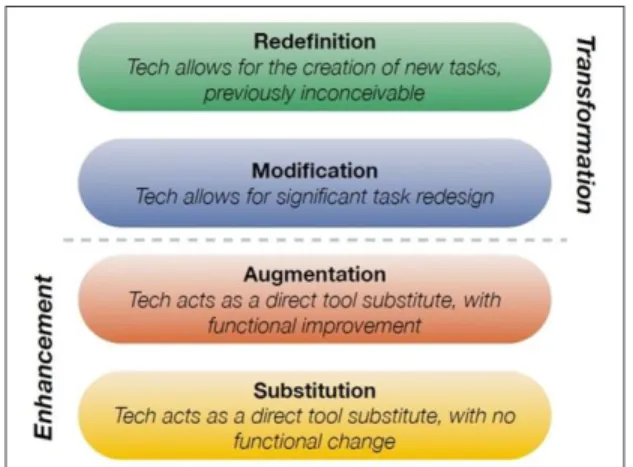
o Substitution – The technology acts as a direct tool substitute with no functional change.
o Augmentation – The technology acts as a direct tool substitute, with functional improvement
o Modification – The technology allows for significant task redesign
o Redefinition – The technology allows for the creation of new tasks, previously inconceivable.
Related activities that are classified as substitution and augmentation are
considered to be enhancements to learning. Those activities that are classified as modification and redefinition are considered to transform learning (Puentedura, 2013; Romrell et al., 2014).
10
CHAPTER 2 LITERATURE REVIEW
In 2016 the Programme for International Student Assessment released the results of the 2015 administration of their triennial survey showing the United States ranked significantly behind other developed countries in education (Belfali & Ikeda, 2015). School and district administrators are implementing a variety of strategies designed to bring students to a competitive score on the international stage. One of the recent trends in education is the shift to one-to-one computing for students. By placing a computing device in every student’s hand, it is thought that student success will improve (Levenson & Boser, 2014). A review of the literature suggests that many schools are finding that simply adding technology to a classroom does not improve student success; rather, the technological and pedagogical knowledge of the instructor has a crucial influence in these outcomes (Johnson-Martin, 2014; Storz & Hoffman, 2013). As technology has many different meanings, first, Information and Communication technologies (ICT) and their use by both students and teachers will be reviewed. Next, different frameworks pertaining to technology integration are compared. Finally, teacher PD relating to both ICT
integration and technology frameworks are discussed and different methods reviewed. The review of literature began with information gathering pertaining to the chosen technology integration framework, the Substitution, Augmentation, Modification and Redefinition (SAMR) Model (Puentedura, 2006). A Google search was conducted to determine the origin of the SAMR model and identify major sources of information on
11
the topic. Google Scholar was then utilized to review selected resources specifically
pertaining to the SAMR model. Initial search began with the keyword “SAMR”; however, this yielded too many unreliable results. Puentedura was added as a keyword along with SAMR to narrow the search to articles relating to the SAMR methodology in education. Other frameworks began to reveal themselves during this search, and a similar search method was conducted on the Technological and Pedagogical Content Knowledge (TPACK) methodology (Koehler & Mishra, 2005). After resources were gathered on
Google Scholar, the references for these resources were reviewed for additional sources
of information. Some of these sources required paid subscriptions. Additional searches were conducted on ERIC and Education Source with keywords “SAMR” “TPACK” and
“Technology Integration.” Keywords from relevant articles were analyzed for frequency and themes emerged. Many articles relevant to research being conducted contained “ICT integration,” “Teacher PD,” or variants on these two keywords. These became the focus of my next search.
PD is a broad topic that spans multiple disciplines. It was necessary to narrow the search to items specifically pertaining to teacher PD with technology in the classroom. Through searching it was revealed that teacher PD and classroom technology are referred to by myriad terms. This necessitated searches on ERIC and Education Source using
keywords “ICT Integration,” “Teacher PD,” “Teacher Training,” “Technology Training,” “Technology Integration,” “Teacher Development,” and additional modifiers, such as “Effects” and “Outcomes.”
12
Information and Communication Technologies
Information and Communication Technologies (ICT) can have different meanings to different individuals. To contextualize the definition of ICT, the definition from the
UNESCO World Communication and Information Report will be utilized: “Information
and communications technologies (ICT) are a diverse set of technological tools and resources used to communicate and to create, disseminate, store and manage
information” (Blurton, 1999, p. 46). In the past, ICT has been used to refer to film, radio, telephones, and television in education (Cuban, 1986; De Korte, 1967; Molnar as cited in Blurton, 1999). For the purpose of this research, the focus of ICTs will be on computer usage. First, a history of ICTs will be discussed, including their implementation and use within the educational setting. I will discuss (1) effective student usage of ICTs and (2) effective teacher usage of ICTs. Next, I will address the barriers to ICT usage, followed by benefits to ICT usage in the classroom, and finally controversies regarding ICT usage within the classroom.
The use of ICT within the classroom is not a new concept. Using the definition provided by UNESCO, the use of telephones, televisions, and other such devices would
classify as ICTs and usage of these systems dates back to the 1930s (Simonson, 2009). Even the use of laptop computers as an ICT is not a new concept. As early as the 1990s, laptops were incorporated into classroom instruction in Australia and the United States (Johnstone, 2003). Integration of laptops did not offer a seamless experience, and many studies were conducted as to how to classify their effectiveness within a classroom environment. In a meta-analysis, Zheng et al. (2016) conducted a review of 65 different papers tracking laptop usage and their effectiveness from 2001 to 2015. Their research
13
revealed that, in general, having laptops in a classroom led to improved achievement for students (Zheng et al., 2016). The results of this meta-analysis are supported by
researchers who have conducted studies within their classrooms and school settings (Kimmons, Darragh, Haruch, & Clark, 2017).
History of ICTs in Education
To effectively evaluate ICT usage within a classroom setting, how technology is used must be at the forefront of the discussion. Effective student usage of ICT relies on technology integration, not technology as a product or outcome. This is the difference between students using technology to create something engaging versus students using technology as the end goal. When students are engaged in a lesson, they are more likely to retain the information (Usher, 2012). For example, researchers found that students engaged in a math lesson that utilized ICT as a part of the interactive experience were more likely to not only participate but also to encourage others to come to the same conclusions on math problems (Arnesen, 2013). This effect was corroborated by researchers finding that laptops can create learning environments that are more stimulating and can enhance the conversation occurring within a classroom (Devasagayam, Stark, & Watroba, 2013). A crucial component of this successful technology integration appears to be a student-centered approach (Johnson-Martin, 2014), where teachers have a strong background in pedagogy prior to incorporating ICT into their lessons (Grant, Ross, Wang, & Potter, 2005). Effective technology usage in the classroom focuses on integration to the lessons, not a focus on the technology as the activity itself.
14
Technology integration does not begin and end with bringing laptops or other mobile devices into a classroom. Integrating technology within a classroom can be a difficult process for many educators, especially those who lack a strong belief that they can be successful or lack a solid educational foundation (Hall & Martin, 2008; Johnson-Martin, 2014). Often, it is assumed that a teacher’s background knowledge of technology or technology-related skills is enough to effectively incorporate technology into a
classroom; however, this is generally a false assumption (Hall & Martin, 2008; Ilhan & Ilhan, 2013). Background knowledge is not sufficient for effective implementation; teacher competency using ICT within the classroom is largely dependent on training (Lawrence, 2018). With training an essential component of ICT use within the classroom, it is essential to employ training methods and procedures that teachers are willing to invest in.
When schools invest money in ICTs without appropriate training, they often find that teachers are hesitant to adopt that ICT into their planning without strong foundations. When planning with ICT does occur, its effectiveness and level of incorporation often varies based on teacher’s technical and pedagogical knowledge (Hall & Martin, 2008; Ilhan & Ilhan, 2013; Zheng et al., 2016). Teacher’s personal feelings are a significant determiner of whether technology will be integrated with a classroom, with many teachers considering how it will impact them personally, before considering the impact on students or the classroom learning (Donovan et al., 2007). Hall and Martin (2008) find that teachers feelings toward their own personal technology ability, exposure to PD related to ICT use, and years of experience all influence whether or not a teacher will incorporate technology into their lessons. When key barriers to technology integration are
15
removed, such as availability and access to devices, availability of materials, and teachers' beliefs, teachers tend to incorporate technology more meaningfully (Lowther, Inan, Daniel Strahl, & Ross, 2008). Teachers who receive training related to
technological knowledge and pedagogical knowledge and how they overlap and intersect plan more student-centered lessons that focus on thoughtful integration of technology (Harris & Hofer, 2011). When training is not provided or prior ability level is not considered and accounted for, ICT usage in a classroom setting can have mixed results, ranging from full implementation to no utilization at all.
Barriers to ICT Usage
Not all barriers to ICT usage are related to the instructor; some are related to the course design or the structure. In a Tennessee district, researchers investigated whether or not their implementation program would assist teachers in incorporating technology within their school (Lowther et al., 2008). Researchers reported that as a result of the program, there were significant changes to technology culture, teacher confidence in technology integration, and student technology usage (Lowther et al., 2008). As early as 1999, in the infancy of technology integration in schools, Ertmer (1999) recognized two types of barriers to change for teachers, internal and external. It was noted that much was done to remove these barriers; however, at the time, significant research was not
conducted to define the link to these two barriers.
These factors were noted and expanded upon by a multitude of researchers (Agyei & Voogt, 2014; Ahmad et al., 2016; Bettis, 2015; Çetin, 2016; Hew & Brush, 2007; Tallvid, 2016). Through their research it has been determined that there are four main barriers to ICT usage. First, a lack of technical competence, or skill, on the part of the
16
teachers was showing that they were hesitant to incorporate technology into their classroom (Agyei & Voogt, 2014; Hew & Brush, 2007; Tallvid, 2016). Second, even when technical competence was present, there was often noted a lack of resources or training on how to use the materials provided within a classroom setting, suggesting even when teachers know how to use technology themselves, they may still struggle with effective pedagogical implementation (Ahmad et al., 2016; Hew & Brush, 2007; Tallvid, 2016). For example, teachers with knowledge of business office-style software may struggle with how to implement these programs effectively in an educational setting (Hew & Brush, 2007). The third issue noted was a lack of time for teachers to prepare and implement technology within their classrooms. This lack of time was both classroom time and preparation time, with classroom time simply being the time it takes to
distribute, log in, and navigate through devices (Bettis, 2015; Sharma, 2004). The final barrier to integration was a perceived lack of control noted by teachers. There are times when the district or state requirements can seem to be at odds with technology
integration. For example, this was noted by a researcher who found that teachers often felt as though curricula were too restrictive to effectively implement technology (Çetin, 2016). If the common barriers to ICT classroom usage can be removed, research suggests that teachers may implement more technology and at more advanced levels within their classrooms (Hew & Brush, 2007).
Effectiveness of one-to-one ICT usage. Although teachers have reported significant barriers to ICT integration and utilization within the classroom, research suggests one-to-one ICT usage can be an effective strategy when managed properly. In a quantitative study conducted in Illinois, researchers noted higher test scores for students
17
using one-to-one technology in the classroom. These same researchers did not notice a change in motivation; however, motivation was measured by student attendance, which is not necessarily a determiner of motivation (Harris & Al-Bataineh, 2015). Results of student success are similarly noted in other studies. In a midwestern United States
classroom, a phenomenological qualitative research study was conducted, and through 47 separate interviews, key themes included an improved effect on student learning
experience and overly positive effect on student behavior and management (Storz & Hoffman, 2013). In a high school, iPads were utilized for a one-to-one learning pilot program, and noted improvements in engagement, digital literacy, digital citizenship and more class time to work on projects. Researchers concluded with a recommendation for ongoing faculty development related to the effective use of technology within the classroom (Chou, Block, & Jesness, 2012). Implementation of one-to-one devices is a significant step forward for ICT that, with proper training, can provide strong benefits for both teacher and student outcomes, including planning, engagement, and achievement.
Multi-Year Studies. The effectiveness of one-to-one implementation has been studied closely not only as a year-to-year implementation but longitudinally as well. A four-year mixed methodology study was conducted at a middle school comparing their implementation of a one-to-one program with the characteristics of effective middle schools. Downes and Bishop (2015) noted a significant relationship between
implementation and team climate with team climate suffering as a result of technology integration in the third year of implementation. Through their realization, technology implementation was embraced, rather than restricted and in year four saw a significant increase in student climate. As a result of their technological integration, students
18
experienced a wider exposure to different types of content, such as podcasts and access to the internet for Web 2.0 tools. Finally, teachers noted an increase in student’s
involvement in their own learning. Students were completing assignments outside of school and teaching themselves new technology related skills as a result of their assignments (Downes & Bishop, 2015).
A three-year research initiative conducted by Bebell and Kay (2010) followed a pilot one-to-one integration program in Massachusetts. Through their research, they noted an increased usage of technology by both teachers and students, though technology was readily available before. Teachers saw marked increases in student motivation as measured by a survey, with less than 2% of teachers reporting that the laptop program had led to a decline in class participation. Teachers utilized new and varied methods to communicate with their students. Reports from the study also suggest that there was a significant increase in both teacher and student technological knowledge. Finally, researchers noted a significant impact on student achievement as a result of the implementation of one-to-one devices, with achievement trends on standardized test scores increasing as well as favorable outcomes on a computer-writing study (Bebell & Kay, 2010).
In both of these longitudinal studies, there were reports of increase in student achievement and growth. In Bebell and Kay (2010), the majority of teachers reported that increased curriculum support (80%) and increased technical support (100%) would have made the program even better. This supports the barriers for entry postulated by Hew and Brush (2007) and Hall and Martin (2008). Student achievement, motivation, and
19
significant with additional PD provided to teachers on the use and implementation of ICTs.
Different devices as ICTs. Every school has different requirements and needs; this is reflected in their choices of ICT. In this section three separate computing ICT solutions will be discussed: first, Chromebooks, followed by iPads and, finally, traditional laptops.
Chromebooks as an ICT. Chromebooks are a relatively new technology when
compared to the other ICT options available. Chromebooks are designed very similarly to traditional laptops; however, they lack significant on-board storage, and they operate almost entirely within the cloud. Despite the newness of Chromebooks, Google has a significant hold on the educational market with over half the market share (Singer, 2017). Chromebooks offer an advantage in the classroom as Google Suite, formerly Google Apps for Education (GAFE), is fully integrated into the Google System. Chromebooks also provide the benefit of requiring less user interactions on the device to get to
programs and search results, with those interactions being more intuitive (Ahlfeld, 2017). Chromebooks, like other ICT systems, are not perfect. In a study conducted by Sahin, Top, and Delen (2016), they discovered teacher experience did not have as much of an effect on teacher technology integration as the number of devices and teacher’s attitudes toward those devices did. Within the research, proper training and technological problems arose as two of the specific concerns that teachers had. This is in contrast to another study conducted by a University in Ghana where students were provided the opportunity to take a course immediately following the implementation of GAFE within their program. Within this study, over 80% of students noted they felt as though they
20
were more productive when using GAFE and over 90% stated that they were more satisfied than using a traditional course model. The remaining percentage stated that they were also moderately satisfied (Awuah, 2015). There is a stark contrast between teacher perceptions and student perceptions. In studies focusing on teachers and their satisfaction, generally they are more critical of the devices and voiced concerns (Sahin et al., 2016). For students, the Chromebook platform and the Google Suite are versatile and provide a high range of student satisfaction.
iPads as an ICT. Apple iPads are another ICT that are commonplace in
classrooms. With Google holding most of the market share, Apple is working hard to make their devices competitive as an ICT. iPads have on-board storage and a significant number of apps and programs that can be installed as well as new technologies geared specifically for students (Nicas & Singer, 2018). This technology can offer different experiences than those available on other devices.
A three-year study in New Zealand with over 100 schools explored effectiveness of iPads and found that iPads offer significantly different experiences from other ICTs, specifically offering more collaboration and a shift to learners who are engaging in educational experiences in a more informal fashion (Falloon, 2015). Of note, within this study is the researcher uses Google Suite as a part of their iPad deployment, suggesting that even when the hardware is owned by a different company, Google still maintains a presence in many classrooms. Despite the hardware utilized, there seems to be a strong case for why Google controls so much of the educational market share.
In a 9th grade classroom, a team of researchers evaluated iPads as a learning tool and tracked their effectiveness in a variety of direct and indirect instruction
21
environments. Researchers noted increased engagement, improved digital literacy and improvements in digital citizenship. Challenges for students included distracting apps and irrelevant websites, while for teachers, it was a lack of teacher-selected apps and need for more PD (Chou et al., 2012). Reports from teachers utilizing iPads are similar to those using Chromebooks—there is noticed improvement; however, more training and support are required.
Traditional laptops as an ICT. Laptops are the earliest implemented of the three
one-to-one ICT models discussed. Laptops, for the purposes of this research, are differentiated from Chromebooks by their on-board storage and local applications.
In a research study conducted across multiple districts, laptops were utilized in a one-to-one setting and patterns were examined. Research questions centered around the purpose for implementing one-to-one initiatives, the funding and support for said initiatives and the expectations of the stakeholders that are encouraging adoption. Findings from this particular study suggest that teacher PD should play a larger part in technology implementation, as teachers need to learn to shift from a tools-based model to one focused on integration of technology (Topper & Lancaster, 2013).
A meta-analysis of 65 journal articles and 31 dissertations examined the specific impacts of one-to-one laptops on learning in K-12 schools. A common theme that
emerged across the analysis within this study, and other studies, was the need for support from school administration and leadership for one-to-one program (Bebell & O’Dwyer, 2010; Silvernail, 2008). Studies reported positive changes with regard to student
22
regardless of type, have the capacity to improve student outcomes and provide for better classroom instruction, with appropriate supports in place.
Controversies within ICT implementation. ICT is not without its controversies; arguments include better retention with paper and pencil, and ICT serves as a distraction to the learning environment. This controversy extends to all levels of education. In middle school, complaints include students distracted by gaming and chatting (Storz & Hoffman, 2013). In high school, students found certain apps and websites a distraction to the classroom instruction occurring (Chou et al., 2012). In higher education, students who are attempting to multitask struggle staying focused on classroom content (Kay &
Lauricella, 2011). Drawbacks should not serve as a reason not to implement certain ICTs within the classroom; rather, to serve as a reminder that one method of implementation, regardless of what that method is, is not as effective as varied strategies.
Research indicates that students perform taking notes using long-form
handwriting versus laptop note-taking. Researchers suggest that handwriting notes is superior to typing them (Goodwin, 2018; van Wyk & van Ryneveld, 2018). This is mainly due to the levels of thought process conducted while using a device versus those writing longform. The noted discrepancy derives from the tendency for laptop note-takers to take notes verbatim, whereas those who are taking handwritten notes often paraphrase and process information reframing
it into their own words (Mueller & Oppenheimer, 2014). Teachers utilizing one-to-one ICT in their classroom should consider the effects of processing information internally before having students resort to paper, or screen as their primary note-taking device.
23
Not all writing is created equal, with one researcher suggesting that students write better compositions when using a Chromebook versus handwriting an essay. Within this research, Kimmons et al. (2017) compared 8th grade students’ essays based on whether they were composed by Chromebooks or by hand and the composition of those essays. Chromebook essays showed a significantly higher grade-level of writing and greater reading difficulty. Researchers claim this suggests greater complexity in both word usage and sentence composition, in comparison to those essays written by hand. It is
hypothesized that the medium may have an effect on student writing (Kimmons et al., 2017). In Maine, after a 5-year implementation of a laptop program, the average student score on writing in state standardized testing increased by approximately two-thirds (Peckham, 2008). Clearly, the type of writing conducted by students is an important consideration when determining the appropriate use of ICTs within the classroom.
Laptops pose distractions not only to students using the devices outside of their educational purposes but to those around them attempting to use them properly. In a higher education study, Kay and Lauricella (2011) reported despite almost 75% of participants saying laptops were beneficial, there were still issues. Specifically, even those students not engaging in distracting behaviors on their devices were distracted by those around them who chose to. Distracting behaviors included watching movies, playing games, and instant messaging during class time. In a one-to-one classroom, it is important for teachers to monitor student device usage and make sure that devices are being used for the appropriate task.
24
Technology Integration Frameworks
To facilitate promoting and tracking teacher technology integration, various frameworks were developed. Many of the frameworks are similar with some specifically borrowing parts from others or seeking to improve on previous iterations. Four
frameworks will be discussed, starting with the Substitution, Augmentation, Modification and Redefinition (SAMR) framework created by Puentedura (2006). Next Mishra and Koehler’s (2006) Technological and Pedagogical Content Knowledge (TPACK)
framework will be discussed. Then, Hughes’ (2006) interpretation and simplification of the SAMR strategy, known as Replacement, Amplification, and Transformation (RAT) will be covered. Finally, the University of South Florida (2011) developed the
Technology Integration Matrix. I will discuss each of these models as well as compare and contrast them against each other.
SAMR
The SAMR model is a framework for technology integration and should be treated as a continuum with teachers employing all ranges of the SAMR strategy, as seen in Figure 1 below (Puentedura, 2006, 2013). The SAMR model emphasizes a method of technology integration that moves in a linear path from substitution, where an instructor substitutes a digital task for a previously non-technological one, to redefinition, where tasks are designed that could previously not be accomplished without the use of technology (Puentedura, 2006). The SAMR model has been used by a variety of
researchers, educators, and administrators to evaluate the level of technology integration within their contexts.
25
Figure 2.1. The SAMR model (Puentedura, 2006).
The SAMR model has been implemented in a variety of ICT contexts. Romrell, Kidder, and Wood (2014) utilized it specifically as an evaluation tool for mobile learning. They found that for mobile learning, using technology at the substitution and
augmentation levels provided too many barriers for entry for technology to be worth implementation. At the modification and redefinition stages, there was a benefit to using technology that outweighed the costs. There were multiple issues noted within this study, mainly those related to technical, pedagogical, and management concerns. Researchers noted a need for training for teachers prior to implementing the SAMR model to promote effectiveness (Romrell et al., 2014).
One common issue with the SAMR model is that it is often noted as hierarchical by those who are using it on a day-to-day basis (Hilton, 2016). Those who see it as hierarchical attempt to consistently reach to the redefinition stage, which can cause struggles in the classroom. Hilton (2016) challenged this notion by having the participants chart their technology usage and see how it was distributed, rather than moving toward more complex levels. It is important that any training provided to teachers
26
on the SAMR framework provides clear direction for teacher expectations of technology use.
Another area of note was in that of content acquisition. Teachers reported that they found themselves using substitution/augmentation with content acquisition and modification/redefinition with understanding activities (Hilton, 2016). The versatility of SAMR as a framework makes it a worthy choice for technology integration efforts.
TPACK
TPACK is a way for teachers to assess their knowledge of ICT competencies as it relates to multiple domains. Mishra and Koehler (2006) suggested that a master of
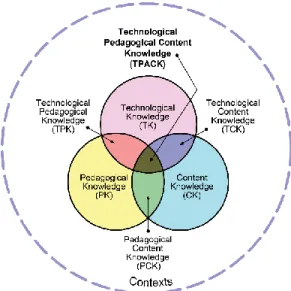
implementing ICT in the classroom has control over each of the TPACK areas as noted in Figure 2.2. In contrast to the SAMR model, the TPACK model looks at the
interrelatedness among different fields of knowledge and posits that knowledge within all three areas together will lead to the most well equipped technological integrators. The three fields that are compared are technical knowledge, content knowledge, and pedagogical knowledge, for example, a teacher’s knowledge of classroom technology, their knowledge of their classroom content, and their knowledge of what it is to be an educator. These fields are combined together in a Venn diagram to create various overlapping skill sets, with the overall goal being the intersection of all three abilities together.
27
Figure 2.2. The TPACK model (Mishra & Koehler, 2006).
TPACK can be more useful in looking at the big picture of technological
integration. In a social studies classroom, the TPACK strategy was employed alongside the SAMR model (Hilton, 2016). Researchers found that the TPACK strategy was more useful when modifying existing content and deciding how to incorporate that content with technology (Hilton, 2016). For teachers struggling with other models that appear to be ladders or hierarchies, the TPACK model may be an appropriate solution, as it emphasizes a blend of knowledge rather than a series of actions.
The TPACK strategy is widespread and sees use among a variety of contexts. One research model involved 12 schools where they were asked how they utilized the TPACK strategy within their local context. One of the themes included TPACK as a connector, combining many of the school’s initiatives under one unified plan, linking technology integration with other non-technologically related school goals. Others saw TPACK as a grass-roots initiative, where early adopters of TPACK had adopted its strategies into their professional learning experiences. Yet others utilized TPACK as a check and balance, as a mechanism to allow the technology and learning specialists to work together. Finally,
28
there were those who saw TPACK as an instructional planning tool, focusing on learning activity types as a method to bridge the learning with application (Harris & Hofer, 2017). One of the issues with the implementation process is that the different knowledge bases, technological, content, and pedagogical are interpreted differently by different teachers (Cabero & Barroso, 2016). Since TPACK is a highly descriptive framework, those with more experience tend to describe their abilities differently than new teachers (Cabero & Barroso, 2016). In general, TPACK is a varied strategy that has a variety of different implementation implications based on the context in which it is implemented.
RAT Model
The replacement, amplification, transformation (RAT) model introduced by Hughes, Thomas, and Schamber (2006) is seen by some as a simpler version of SAMR. The RAT model aims to remove some of the confusion between substitution and
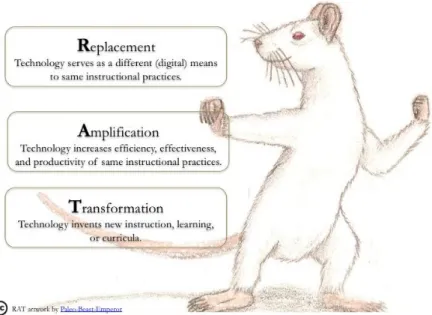
augmentation. This framework was introduced shortly after the SAMR framework, as there was a noted discrepancy between how the SAMR model was being applied, with significant concerns between the semantics of the substitution and augmentation as well as the augmentation and modification stages (Hughes et al., 2006). Instead of the bottom-up approach of the SAMR model, the RAT model takes a top-down approach, as seen in Figure 2.3. The model places replacement as the entry method to technology integration with the outcome of the instruction the same as it was prior to the use of technology. Amplification is next, where technology increases the ability of the user, specifically with benefits to productivity and efficiency but does not change the overall nature of the lesson or activity. Finally, at the transformational stage technology offers instruction that
29
was previously unthinkable, with the description being extremely close to the redefinition stage of the SAMR model.
Figure 2.3. The RAT model (Hughes et al., 2006).
RAT and SAMR were released within months of each other, and SAMR has become the more popular strategy. As such, there is significantly less research conducted using the RAT model. One study (Kimmons, Miller, Amador, Desjardins, & Hall, 2015) utilizing the model found that it provided a positive framework to determine whether or not preservice teachers were utilizing technology effectively. Through the utilization of RAT, the researchers were able to monitor practice and assign codes based on teacher reflections. The RAT model removes some of the confusion between the substitution and augmentation stages of SAMR and provides a clearer transition between sections.
TIM
The Technology Integration Matrix (TIM) was developed by the Florida Center for Instructional Technology located at the University of South Florida and focuses on how the teacher implements technology in the classroom in 5 steps. First released in
30
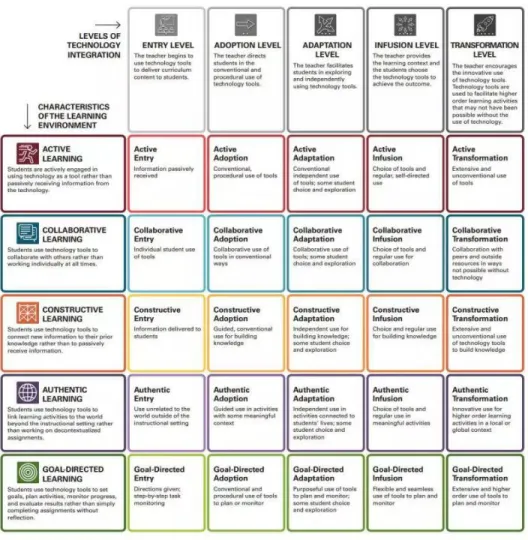
2011, the TIM model, as seen in Figure 4, provides information for teachers on how to use technology in the K-12 classroom. The matrix is broken down into “five
interdependent characteristics of meaningful learning environments—active,
constructive, goal directed, and collaborative” (Welsh, Harmes, & Winkelman, 2011, p. 69). The TIM model provides concrete examples of what each of the stages looks like through the use of videos. Unlike the other models provided, there are concrete descriptors provided that explain in detail what the differences are between the categories. For example, one can navigate to the TIM online and click on any of the categories and see what the action looks like for the teachers, the students, and in what setting it takes place. Another benefit to the TIM model is the inclusion of two tools for teachers and administrators, the TIM-O observation instrument and the technology comfort measure (TCM) (Welsh et al., 2011). These instruments give a clear evaluative tool for teachers to monitor their own practice as well as one for administrators to incorporate into observations. The TIM model has built on the models of technology integration that have come before it and sought to solve some of the most common issues.
31
Figure 2.4. The TIM model (Welsh et al., 2011).
A teacher using the TIM model and making efforts to incorporate technology along the five categories can expect to see significant changes in learning, compared to a traditional model. Teachers can utilize the TIM model as a method of self-reflection, comparing themselves to the definitions provided by the matrix (Keller-Kyriakides, 2016). The TIM model is one that can be employed in a school that is fully one-to-one or a school with limited technology access and is adaptable based on the local context (Ruman, 2017). The TIM model offers a wide range of flexibility and provides specific, concrete, and clear expectations for those using it.
32
School-based PD
A common theme that emerged throughout a review of related literature was the need for additional training and support for teachers who are attempting to implement technology in the classroom (Chou et al., 2012; Ertmer, 1999; Sahin et al., 2016; Zheng et al., 2016). Support and training requested by teachers included information specifically related to how to integrate technology (Hall & Martin, 2008) and how to appropriately incorporate technology into planning (Bettis, 2015; Donovan et al., 2007). This section will review research related to PD. First, effective PD methods will be discussed, followed by the types of PD available, and finally, the potential effects of PD will be discussed.
Effective PD
Effective technological PD for teachers centers around agreed upon central themes. These themes have emerged in numerous studies from a number of researchers. One of the most common themes is a sustained model, eschewing the normal idea of a one-off PD session. Researchers suggest that training should be continuous to support teacher needs (Curwood, 2011; Garet et al., 2001; Penuel et al., 2007). Continuous training offers the ability to ask questions and for training to shift as needed when teachers encounter obstacles in their classrooms. The second common theme related to PD is that it should be specific and relevant to teacher needs. For example, PD should relate to the issues teachers are dealing with at the moment that the PD is being offered. PD that is specific and relevant has more meaning to the teachers undergoing the PD and contributes to greater outcomes (Garet et al., 2001; Hunzicker, 2010; Penuel et al., 2007). The final common theme for PD is that it is timely, offering the opportunity for teachers
33
when they are most likely to need it. PD that is timely can offer opportunities for teachers to improve practices (Curwood, 2011). Timely PD can also improve a teacher’s abilities more than if they had the PD at a time that was not relevant (Garet et al., 2001;
Hunzicker, 2010; Penuel et al., 2007).
Types of Educational PD
There are multiple types of educational PD that are utilized with teachers. Studies suggest that when training teachers in ICT, PD that models what the desired outcome for the teachers is may be most successful (Desimone et al., 2002; Fusco, Haavind, Remold, & Schank, 2011; Garet et al., 2001; Jaipal-jamani, Figg, Gallagher, Scott, & Ciampa, 2015). PD is an important tool to support teachers with technology integration in the classroom. Teachers are professionals who are expected to constantly grow and hone their craft. To be effective for their students, teachers must always be updating their knowledge and be provided with opportunities to do so (Sarhandi et al., 2016).
Incorporating PD that is appropriate and increasing the amount of PD that is available can improve student learning and their integration of ICT (Lehiste, 2015). Increasing the frequency of PD may not be the only solution, rather the PD should be targeted to ICT and how it can be applied within classroom teaching (Çetin, 2016). In implementing a successful and cohesive PD plan, teacher and students can improve their ICT skills and utilization.
Face-to-face PD. Face-to-face PD ranges in effectiveness, based on the strategy employed in the PD but is usually ranked unfavorably by teachers due to factors, such as time, relevance, and perceived lack of differentiation (MacDonald, 2008; Russell et al., 2009; Simmons, 2015). Coaching as a PD tool may be the most effective of the
face-to-34
face PD strategies, providing targeted one-on-one support for teachers. Depending on school population, it can be difficult for the coach to service everyone (Beglau et al., 2011).
Two types of models typically employed are the sit-and-get model and
professional learning communities. Sit-and-get, or the traditional lecture format of PD is an outdated model that does not differentiate or reach the needs of teachers (Dana et al., 2013; Hunzicker, 2010). Professional learning communities are often seen as an effective method of PD, as teachers are able to learn from their peers; however, there is a
significant time commitment associated with these meetings (Curwood, 2011; Easton, 2008).
Blended or flipped PD allows for face-to-face interaction as well as online completion of activities or assignments. Teachers engaging in blended PD generally rate it more favorably than face-to-face alone. They suggest that it allows for practice and allows the group to come together to discuss issues and concerns related to shared
experiences (Alebrahim, 2016; Gunter & Reeves, 2017). Blended PD can also provide an opportunity for teachers to practice some of the same skills that are being requested they utilize with their students in the classroom, with this hands-on approach leading to even more meaningful learning (Curwood, 2011). Blended meetings have the opportunity to increase the effectiveness of an overall PD plan. In a blended situation, face to face meetings can actually help encourage online participation (Paskevicius & Bortolin, 2015). Seemingly, one way to augment the typically undesired full face to face meeting is to offer a blended solution which increases popularity and may bridge the gap with those who are less tech savvy and willing to participate in a full online session.
35
Online PD is a strategy that allows for flexibility and teachers to complete tasks and learning on their own schedule but collaboration and interaction with others can be difficult (Russell et al., 2009). Teachers who enrolled in online PD courses to improve their pedagogical knowledge noted marked improvements over a six-week span in one particular study; however, this learning did not necessarily translate to a specific increase in student achievement (Dash et al., 2012). Improved pedagogical knowledge seems to be just one of a few benefits related to online PD, participants noted changes in their
teaching methodology as a result of the online courses (Scruggs, 2009). Online PD offers many of the same benefits of other PD styles without requiring participants to meet in a set location at a set time.
Benefits of Educational PD
PD often exhibits strong results on teacher performance. PD has improved teachers’ self-efficacy and increased their use of technology in the classroom (Johnson-Martin, 2014). Teacher development has led to increased teacher proficiency,
preparedness, and ability to incorporate technology into planning (Doherty, 2011; Uslu & Bümen, 2012).
One of the most frequent complaints of teachers that they experience when implementing a one-to-one laptop system is the lack of training or support surrounding the implementation (Ertmer, 1999; Johnstone, 2003; Sahin et al., 2016). It was found that when these barriers are removed and training is provided, the students perform better and teachers incorporate more technology into their classrooms (Desimone et al., 2002; Kimmons et al., 2017). When districts are investing money and time into ICT, it is important that teachers learn how to implement the ICT appropriately.
36
The effects of PD on teacher planning are generally positive as well. Teachers who receive training on ICT are more likely to incorporate ICT into their planning and ultimately their lesson. Even teachers with low pedagogical knowledge of ICTs improved their planning when exposed to training related to technology integration (Kihoza et al., 2016). In some cases, it was enough just to increase teachers’ perception that they were more trained in ICT for improvements to be made (Hall & Martin, 2008). Appropriate PD can improve teacher implementation of technology from the planning stage to integration within the classroom.
Chapter Summary
Using ICTs in a classroom is not a new concept; however, there are new ICTs being used that teachers need to be prepared for. It is known that ICTs can improve student engagement, and when student engagement is high, so is retention of information (Usher, 2012). There are a variety of devices being used in classrooms from
Chromebooks to iPads to traditional laptops. All of these devices present significant benefits (Capra, 2014; Chou et al., 2012; Kay & Lauricella, 2011). Benefits to utilizing devices include improved writing skills (Peckham, 2008; Sharma, 2004) and increased student engagement (Bebell & Kay, 2010; Bebell & O’Dwyer, 2010; Harris & Al-Bataineh, 2015).
There are also some noted drawbacks to device use. Students may become too reliant on devices, diminishing skills, such as recall and note-taking ability (Goodwin, 2011; Mueller & Oppenheimer, 2014). Students may also struggle with staying on task and multitasking at inappropriate times (Kraushaar & Novak, 2006). Many frameworks have been developed to support teacher and administrative implementation of ICTs.
37
Different frameworks can be applied to different situations with differing results.
Frameworks can sometimes cause confusion as to how they should be applied (Hamilton, Rosenberg, & Akcaoglu, 2016; Hilton, 2016). Integrating more ICTs in a classroom does not guarantee high engagement, and it may be difficult to get ICT into a classroom without teachers feeling comfortable with that technology (Ertmer, 1999; Grant et al., 2005). PD is a way to encourage teachers to change their practices and offer them support. When appropriate PD is applied, there are significant growths in both student achievement and teacher integration of technology (Curwood, 2011; Harris et al., 2015; Kihoza et al., 2016; Sahin, Top, & Delen, 2016).
38
CHAPTER 3 METHOD
The purpose of this action research was to evaluate the effects of an asynchronous PD on teacher technology integration in the classroom as measured by the SAMR
integration model. This research explored the following: In what way does asynchronous teacher professional development impact teacher implementation of one-to-one
classroom technology? This study focused on three questions. The first question seeks to explore in what ways does asynchronous teacher professional development on the SAMR model impact the planning process. The second question explores in what ways does asynchronous teacher professional development on the SAMR model impact teachers classroom technology integration. The third seeks to determine what teachers’
perceptions are about the effectiveness of asynchronous teacher professional development.
Research Design
A concurrent mixed-methods design was selected for the purposes of my research, which evaluates the impact of asynchronous PD on teachers’ understanding of a
technology integration model and their technology integration practices within the boundaries of this model. As an assistant principal and the lead member of the
technology team at my school, it is of particular interest to me how other teachers in my building are integrating technology and if there are possibilities for improvement or advancement of their craft. Action research fits well with this inquiry-based approach, as: