Duquesne University
Duquesne Scholarship Collection
Electronic Theses and DissertationsSpring 2016
An Investigation of How Accountability Systems
Influence the Design and Development of Student
Centered Learning Environments
Peter James Mathis
Follow this and additional works at:https://dsc.duq.edu/etd
This Immediate Access is brought to you for free and open access by Duquesne Scholarship Collection. It has been accepted for inclusion in Electronic Theses and Dissertations by an authorized administrator of Duquesne Scholarship Collection. For more information, please contact
Recommended Citation
Mathis, P. (2016). An Investigation of How Accountability Systems Influence the Design and Development of Student Centered Learning Environments (Doctoral dissertation, Duquesne University). Retrieved fromhttps://dsc.duq.edu/etd/891
AN INVESTIGATION OF HOW ACCOUNTABILITY SYSTEMS INFLUENCE THE DESIGN AND DEVELOPMENT OF STUDENT CENTERED LEARNING
ENVIRONMENTS
A Dissertation
Submitted to the School of Education
Duquesne University
In partial fulfillment of the requirements for the degree of Doctor of Education
By Peter J. Mathis
Copyright by Peter J. Mathis
D
UQUESNE
U
NIVERSITY
S
CHOOL OF
E
DUCATION
E
D
.D.
IN
E
DUCATIONAL
L
EADERSHIP
P
ROGRAM
Dissertation
Submitted in Partial Fulfillment of the Requirements For the Degree of Doctor of Education (Ed.D.)
Presented by:
Peter J. Mathis
B.S., Physical Education, Kent State University, 2005 M.Ed., Educational Leadership, George Mason University, 2011
March 11, 2016
AN INVESTIGATION OF HOW ACCOUNTABILITY SYSTEMS INFLUENCE THE DESIGN AND DEVELOPMENT OF STUDENT CENTERED LEARNING ENVIRONMENTS
________________________________________, Chair Rick R. McCown, Ph.D.
Professor, Department of Educational Foundations & Leadership Duquesne University
_______________________________________, Member Deborah Scigliano. Ed.D.
Clinical Assistant Professor, Department of Educational Foundations & Leadership Duquesne University
_______________________________________, Member Jerry Minsinger, Ed.D.
Adjunct Faculty and Supervisor of Student Teachers, Department of Educational Foundations & Leadership
Duquesne University
______________________________________, Member Stephen A. Mitchell, Ph.D.
Professor, School of Teaching, Learning and Curriculum Studies Kent State University
Program Director
Connie M. Moss, Ed.D.
Clinical Associate Professor, Department of Educational Foundations Leadership and Director, Ed.D. in Educational Leadership Program
ABSTRACT
AN INVESTIGATION OF HOW ACCOUNTABILITY SYSTEMS INFLUENCE THE DESIGN AND DEVELOPMENT OF STUDENT CENTERED LEARNING
ENVIRONMENTS
By Peter J. Mathis February 2016
Dissertation supervised by Rick McCown, Ph.D
The research reported in this dissertation investigates the impact that accountability systems have on the design and development of student centered learning
environments. The nature of student-centered learning environments (SCLEs) in this study is framed theoretically by cultural historical activity theory (CHAT). The investigation itself occurred within a specific practice context: an urban charter school serving
elementary-aged children. The efforts to design and develop SCLEs in the school focused on the use of improvement inquiry by groups of stakeholders organized into a developing human ecology in educational contexts called networked improvement communities. The research sought to determine (1) how accountability systems influenced instructional practices within the school and (2) how practicing teachers perceived the assessments embedded within the accountability systems. Data were collected via surveys, interviews,
and a focus group. The data from the surveys and interviews informed the work for the focus group. The work from the focus group generated a stakeholder-generated “theory of practice improvement” in the form of an illustrative driver diagram. The driver diagram contributed an empirically generated proposal for how improved instructional practices might be pursued at the school. The investigation concluded with recommendations for implementing the plan within the school and recommendations to the broader field of education to engage more deeply in improvement inquiry.
DEDICATION
This is my first piece of work that is worthy of dedication and I could not begin to think of anyone else to dedicate this work to besides my family. The generations that came before me really paved the way for me to engage in this work. Specifically I am in debt (which I can not begin to repay) to my grandparents, parents, sister, wife and extended family members. The support, love, encouragement and patience you demonstrated over the years are truly immeasurable. Who I am as a person today is invariably due in part to my upbringing. I dedicate this work to all of you as each of you played a role in assisting me and I am forever grateful.
In the same breath I would like to look into the future and dedicate this work to my son, niece, nephews and any other additional children that may bless our family. These kiddos are the future and I am excited to be a part of their learning. I engaged in this work to make learning more authentic, more student-centered and, most importantly, more fun. So, I dedicate this work to all of you with the hope that you continue to engage in the learning process and relish the moments of curiosity and experimentation. We still have a lot to learn and teach each other and I am looking forward to all the lessons that are still to come.
ACKNOWLEDGEMENT
There are a few people who I would like to acknowledge as they stood beside me, engaged with me, and encouraged me to complete this work. First, I would like to
acknowledge my parents, Jim and Karen, and my sister, Lisa. All of you mean the world to me and you have always been supportive of the directions I go and the work I engage in. You are the best family one could ask for and I love you all.
Second I would like to acknowledge my wife, Shannon. You were probably more engaged in this process than you had anticipated, but your insights and knowledge assisted me in formulating my thoughts and ideas. Furthermore, the amount of sacrifices you made to allow me to complete this work really demonstrates the loving, caring and thoughtful person who I fell in love with.
Next, I would like to thank Dr. Benjamin Davis. Our lives crossed paths by way of this program and I could not be happier. You have become a dear friend, colleague and insightful resource for me. I enjoy the time we spend together and the conversations we engage in. I am looking forward to both our futures and am truly thankful that this program provided us with a friendship that will last a lifetime.
Finally, I would like to especially acknowledge my advisor, colleague and friend, Dr. Rick McCown. Your gentle guidance and constructive feedback assisted me greatly in constructing this piece of work. You have a way of crafting your thoughts and expressing them that allows students to think and explore and that allows for expansion of one’s imagination. You are a great facilitator of learning and a true educator. I feel both lucky
and honored to have had the chance to work and learn with you. I look forward to our continued friendship and the work that lies ahead of us.
Table of Contents
Page
Abstract ... iv
Dedication ... vi
Acknowledgement ... vii
List of Tables ... xii
List of Figures ... xiii
List of Abbreviations ... xiv
Chapter 1 ...1
Introduction ...1
General Overview ...2
Problem of Practice ...5
Importance of Study ...8
Social Justice Implications ...11
The Need for Improvement ...17
Contextual Framework...18
Contextual Data ...19
Chapter 2 ...24
Narrowing the Focus ...24
Review of Literature ...26
Social Constructivist’s Epistemology ...27
Student Centered Learning Environments ...30
Accountability ...35
Theoretical Frameworks ...39
Flow Theory ...39
Experimental Learning Theory ...41
Cultural Historical Activity Theory ...43
Zone of Proximal Development ...48
Consequences ...50
Impact on People ...64
Synthesis. ...66
Applying CHAT as a Lens ...70
Prior Solutions ...72 Chapter 3 ...76 Research Questions ...76 Methodology ...77 Instruments ...78 Analysis...80 Results ...82 Interruption of Data...91 Chapter 4 ...99
Previous Reform Efforts. ...99
Seeking Improvement ...103
Improvement Science...106
Cognitive Processes as a Mindset ...122
Establishing the Learning Environment...125
Chapter 5 ...127
Generative Impacts ...127
Internal/External Impacts ...128
Improvement Inquiry as an Agenda for Educational Leadership ...132
Conclusion ...137
References ...139
Appendix A ...150
Appendix B ...153
LIST OF TABLES
Page
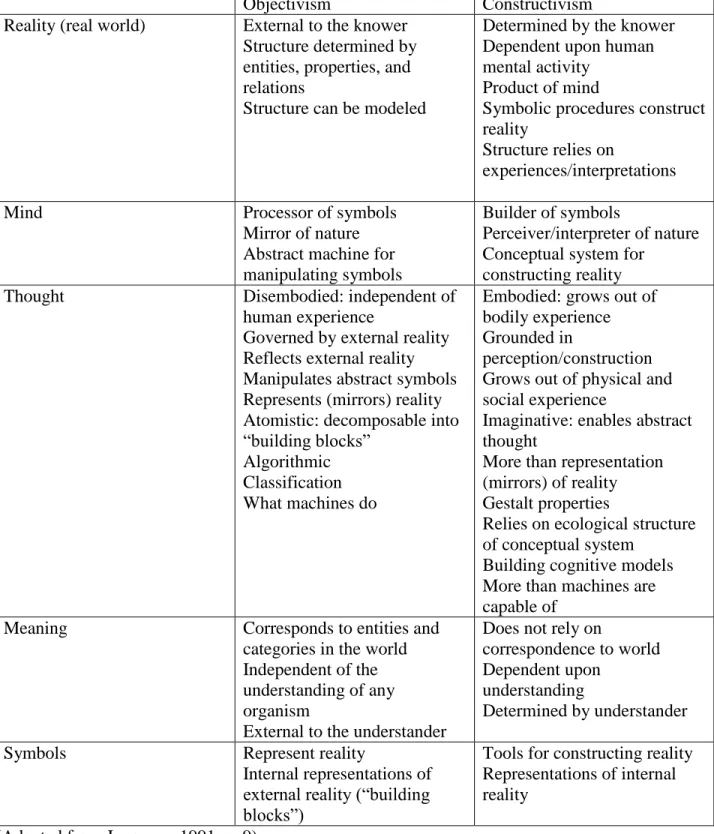
Table 1: Assumptions Inherent in Objectivism and Constructivism ...34
Table 2: Sampling of the Consequences Associated With Accountability Systems Operating in the Field of Educational Assessment ...64
Table 3: Modes and Frequencies of Survey Responses ...82
Table 4: Emergent Themes From Interview Data ...84
LIST OF FIGURES
Page
Figure 1: Demographics of Schools ...20
Figure 2: Comparison of Proficient and Advanced Reading and Math Scores ...21
Figure 3: Comparison of Proficient and Advanced Science Scores ...22
Figure 4: Demographic Comparison of Reading Scores ...23
Figure 5: Demographic Comparison of Math Scores ...23
Figure 6: Literature Review Organizational Map ...27
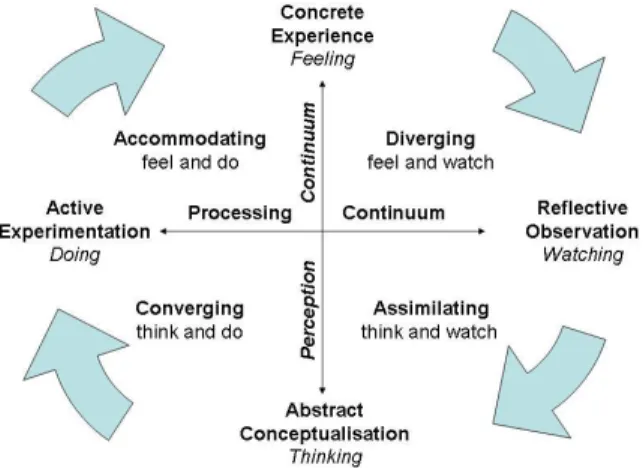
Figure 7: Experimental Learning Cycle ...42
Figure 8: Vygotsky’s Mediation Model ...45
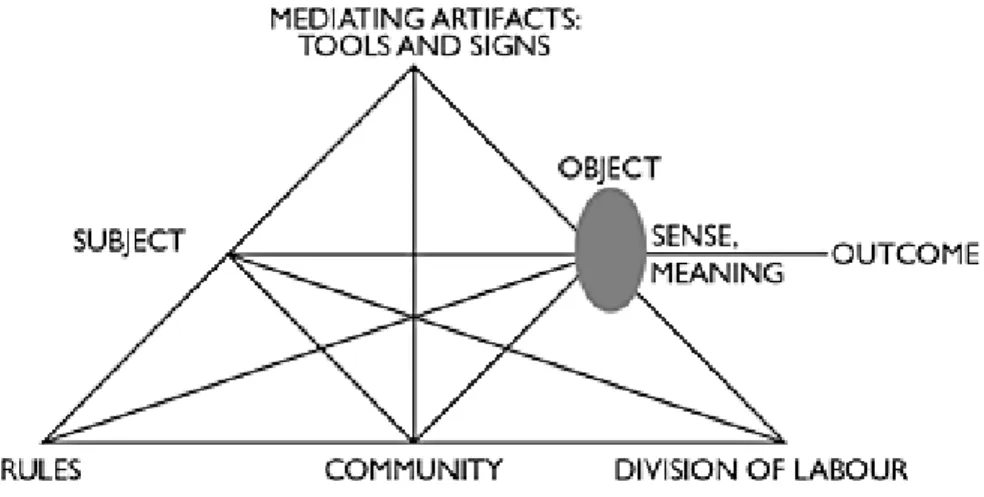
Figure 9: The Structure of a Human Activity System ...46
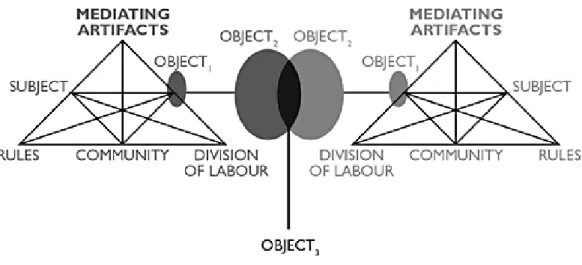
Figure 10: Two Interacting Activity Systems ...47
Figure 11: Vygotsky’s Zone of Proximal Development ...49
Figure 12: Driver Diagram From Focus Group ...91
Figure 13: The Plan-Do-Study-Act Cycle ...117
LIST OF ABBREVIATIONS
Elementary and Secondary Education Act (ESEA): Federal legislation signed into effect by
Lyndon Johnson in 1965. Offered equal opportunities to education and established high standards and accountability.
Measures of Academic Progress (MAP): Computerized tests that are adaptive and offered
in reading, language usage, and mathematics. The difficulty of each question is based on how well a student answers all the previous questions.
Networked Improvement Communities (NICs): An intentionally designed social
organization with a distinctive problem-solving focus; roles, responsibilities, and norms for membership; and the maintenance of narratives that detail what it is about and why
affiliating with it is important.
No Child Left Behind (NCLB): Federal legislation that enacts the theories of
standards-based education reform.
Pennsylvania System of School Assessment (PSSA): Annual standards-based,
criterion-referenced assessment that provides students, parents, educators, and citizens with an understanding of student and school performance related to the attainment of proficiency of the academic standards.
Race to the Top (RTT): A U.S. Department of Education initiative that was designed as a
contest for schools to participate in in order to stimulate innovation and reforms within districts.
Student Centered Learning Environments (SCLEs): Provide interactive, complementary
activities that enable individuals to address unique learning interests and needs, study multiple levels of complexity, and deepen understanding.
Chapter 1 Introduction
This dissertation will investigate how accountability systems impact the design and development of student centered learning environments (SCLEs) within a specific context. The specific context for this investigation is a charter school in Pittsburgh, PA. Administrators, teachers, and instructional coaches participated in this study and have provided useful insights about how accountability systems operate within their specific contexts. This dissertation is organized into five chapters. Chapter one serves as an introduction, which will provide some context and background information about the problem that is being investigated, why this problem is important, and the social justice implications embedded within this problem. Chapter two will serve as a literature review, as well as a place for a discussion about how this problem has been addressed. Chapter two will also house the theoretical framework(s) that were used to understand this problem. Finally, chapter two will paint a picture of what improvement would look like as well as the consequences of not solving this problem. Chapter three will establish the research questions and focus on the methodology used for this study. Chapter three will also portray the data from the study in the results section and will present an interpretation of the data. Chapter four will outline the designs for action or the improvement effort that have been
developed in order to engage others in this work. Chapter four will also outline an improvement effort that incorporates improvement science and Networked Improvement Communities (NICs). Chapter four will also discuss a mindset to utilize when working within a NIC. Chapter five will discuss the work moving forward and the generative impacts that are sought from this study.
This document represents a dissertation of practice, which is a fulfillment for the Professional Doctorate in Educational Leadership at Duquesne University. The organizational
structure of this document will follow the organizational guide to the dissertation in practice, which was provided by the Department of Educational Foundations & Leadership at Duquesne. The organizational headings will assist the reader in understanding the problem of practice that I have chosen.
Chapter one will kick-start the investigation of the identified problem. Chapter one sets the stage for the study and informs the reader of the specific context. The general overview of the problem will provide a quick look at how accountability systems have shifted over the years and how these systems have manifested themselves in the field of education. Following the general overview, the problem of practice will be clearly defined and some assumptions will be laid out that will be considered during this investigation. Next, the importance of this problem and the impacts this problem is having on the field of education will be discussed. Social justice implications will be addressed in the following subsection. This section will also dive into the history of assessment and show how current assessment practices came to fruition.
Understanding the need to seek improvement for this problem and why we should pursue improvement will also be discussed. Finally, the specific context that will be used in this investigation will be introduced and accompanied with contextual data. This will paint the picture of how this problem is operating within the specific context.
General Overview
The word “learning” can be very difficult to define. There are many different points of view as to what learning really is, how it is achieved, and/or how it is assessed. Furthermore, the views surrounding learning constantly shift. With the rise of constructivism, a paradigm shift came about during the 1990s and traditional views of education came under scrutiny. Snowman and McCown (2015) define constructivism as “meaningful learning [that] occurs when people
actively try to make sense of the world—when they construct an interpretation of how and why things are—by filtering new ideas and experiences through existing knowledge structures” (p. 346). Traditional models of education, such as transmissive instruction, were challenged and new frameworks were investigated that focused on a more social, conversational, and constructive model of learning (Jonassen & Land, 2012). As we moved into the 2000s, accountability systems within education became a focus and business models were applied to school settings in the hope that accountability would prevail. Currently, all states have accountability systems, and most are focused on student performance on state assessments. Schools and districts are held accountable based on students achieving specific performance levels or by demonstrating an increased performance from the previous year (Fuhrman, 2004). Older accountability systems issued by states operated on more of a check-and-balance system to ensure that districts were providing a certain level of education. With the overhaul of the old accountability systems, new
accountability systems emerged that were specifically focused on schools and students.
Embedded within new accountability systems are consequences for poor performance, which has led to a myriad of issues within the field of education (Fuhrman, 2004). Issues range from
improper allocation of funding for schools to labeling students, schools, and communities. This study will focus on how accountability systems are operating within a specific context and will seek to understand the system and the results that it is producing.
This study was pursued based on two vastly different experiences as an educator working within different contexts. In both contexts, accountability systems heavily influenced
instructional practices. However, in one context, the instructional practices were influenced in a negative way. For example, there was an intense amount of pressure for the school and students to perform well on standardized tests. The pressure was so intense that it trickled into the
classroom and teachers were narrowing their curricula and focusing their lessons on teaching students ways to perform well on the test. There was even a time during an administration
meeting where the assistant superintendent reviewed the entire list of students who were enrolled in the school and identified “bubble students” to focus on. Bubble students are students who performed well on previous standardized tests, but came up a few answers short of passing the test or achieving proficient status. The assistant superintendent then assigned teachers to the bubble students in order to provide them with one-on-one instruction in hopes of these students scoring in the proficient category during the next round of standardized tests.
The other context that informs this investigation comes from a charter school where instructional practices challenge the status quo or, put simply, look different from traditional education practices. For example, the charter school uses a looping model. Under this model, two teachers are in every classroom for two- or three-year cycles and teachers have the same group of students. This allows student-teacher relationships to blossom, and there is also more
instructional time at the beginning of each school year since these relationships have already been established. It also puts the student-to-teacher ratio at approximately 12:1 as opposed to 25:1. The smaller student-to-teacher ratio allows teachers to hone in on student needs and allows for differentiated instruction to flourish. The charter school also encourages teachers to create authentic learning experiences for students and no textbooks are used except in one grade-level math class. Teachers are encouraged to take risks and learn from each lesson, all while providing formative feedback to their students. Finally, the charter school also downplays standardized testing and prepares students though authentic learning experiences as opposed to narrowing the curriculum in order for students to perform well on standardized tests.
This investigation is based on the experiences of the author and therefore there will be a strong narrative that provides details about each of these contexts. This narrative will help paint a picture of a system that is operating within a specific context and how the system is affecting members of the school, academy, and community. Data from the charter school will also provide validity for this study and insight as to how improvement will be sought.
Problem of Practice
For the purpose of this study, the problem will be defined as: accountability systems are preventing the enactment of effective SCLEs. Effective learning environments can consist of a variety of frameworks and/or constructs. Jonassen (1991) states, “Learning theory has undergone a major revolution the past few decades” (p. 53). Jonassen is correct about the transformation of learning theories over the decades. Jonassen and Land (2012) go on to state, “Never have
alternative theories of knowledge and learning been so consonant in their beliefs and the methods they espouse” (p. viii). The emergence of alternative learning theories can be extremely useful when designing SCLEs. Some of these theories and other frameworks will be discussed later in this dissertation.
Public education is a costly endeavor and it seems to get more expensive each year. Currently, funding for public education sits in the ballpark of $630 billion annually. It is normal for taxpayers to be curious as to how money is being allocated and used within their school districts. After all, taxpayers are part of the community and schools can often impact the sentiments of the community. As O’Day (2004) states, “It is reasonable for the public and its representatives to want to know where the money is going and what it is producing” (p. 15). In making this comment, O’Day urges us to think critically about the allocation of this money and how it is being used. As a society we have a right to know where the money is going and what it
is producing, a point that needs emphasizing since so many people believe in the government’s ability to properly fund the educational system. New accountability systems were created with a purpose and certain intentions. Fuhrman (2004) indicates five assumptions that new
accountability systems imply when operating effectively. As you can see from the assumptions below, most of the assumptions revolve around student performance and consequences:
1. Performance, or student achievement, is the key value or goal of schooling, and constructing accountability around performance focuses attention on it.
2. Performance is accurately and authentically measured by the assessment
instruments in use.
3. Consequences, or stakes, motivate school personnel and students.
4. Improved instruction and higher levels of performance will result. 5. Unfortunate unintended consequences are minimal. (pp. 8–9)
Although all of these assumptions bear importance, assumption two will be thoroughly investigated during this study. As noted earlier, this investigation will take place in a charter school in Pittsburgh, PA. The school serves students in grades K–8, but the study will focus on students who are in grades 4–8. For the purpose of this study, accountability systems will be in reference to federal and state mandates that require schools to administer assessments to students in order to gauge student development. Therefore, accountability systems will be defined as the standards that are imposed upon schools that measure performance and are linked to school funding.
In continuation of defining this problem, we must consider current learning environments and why they came to exist. Current assessment accountability systems that are in place are a result of the No Child Left Behind (NCLB) Act, a federal policy that was passed into law on January 8, 2002. NCLB is one of the biggest and most controversial initiatives put forth by the federal government in recent years. NCLB is actually the reauthorization of President Lyndon Johnson’s Elementary and Secondary Act (ESEA) of 1965. The ESEA was originally developed
to assist with increasing student achievement and narrowing the achievement gap. NCLB requires schools to administer assessments to students at certain grade levels in order to receive funding. The goal is for schools to achieve adequate yearly progress (AYP). If AYP is not met, schools become labeled as “failing,” “low performing,” or receive other negative designations. One of the results of NCLB is that it has created learning environments where teachers are teaching to the test and students are stressed about taking these tests. These types of assessments do not allow students to demonstrate deeper learning dispositions that focus on a student’s sense of agency. Furthermore, this type of environment also deprives students of authentic learning experiences and fails to allow a transmissive model of education to flourish. According to Ravitz, Becker, and Wong (2000),
Traditional transmission instruction is based on a theory of learning that suggests that students will learn facts, concepts, and understandings by absorbing the content of their teacher’s explanations or by reading explanations from a text and answering related questions. Skills (procedural knowledge) are mastered through guided and repetitive practice of each skill in sequence, in a systematic and highly prescribed fashion and done largely independent of complex applications in which those skills might play some role. (p. 4)
This interpretation challenges the work of those critics who have long assumed that transmissive instruction was an effective model of learning. To accompany this thought,
McCarty and Schwandt (2000) state, “The traditional lecture format is particularly troublesome here because it is based either on an unwarranted ‘banking model’ of knowledge transmission or on the Socratic ideal of challenging the capacity of students to reason well” (p. 59). This is an important problem to address because students are not constructing their own knowledge when
situated in these environments. It also challenges the aforementioned second assumption that current assessments accurately and authentically measure student performance. Current
assessments require students to master memorization and factual-recall strategies that they then apply to take a multiple-choice test. These types of assessment lack real-world applications; as a result, these types of assessment produce learners who are not prepared for life outside of school. Deeper learning dispositions such as creativity, collaboration, and innovation cannot be
measured by these summative assessments, which are intentionally designed and implemented to conduct assessments of learning. These examples are just a snapshot of the bigger picture of how
standardized testing fails to prepare learners. This should be considered a problem in the field of education. Understanding how this problem manifests itself in particular contexts and why it is important to seek improvement will be the focus of this study.
Importance of Study
The identified problem is important because of the reach it casts on the nation. This problem affects students and schools all over the country. With NCLB being a federal mandate, schools are forced to abide by the federal government’s requirements. With NCLB in place, we are in a vicious cycle of depriving students of authentic learning experiences and essentially not preparing them to their fullest to enter the real world. Employers want to hire problem-solvers and critical thinkers, not proficient test-takers. Understanding what people know about SCLEs and the impacts that accountability systems have on these environments will shed some light on how we can start to engage in improvement efforts. This is an important problem to understand, for if we can gain insight about this problem in one particular context and understand why it exists, we can then make recommendations for educational leaders to address this problem within their contexts. It can also provide scholars with data and an example to reference when
engaging in scholarly work and conversations. Community members will also benefit from this study because they will be informed of practices taking place within the schools in their specific communities. Being informed community members allows critical conversations to flourish and allows for a more engaged conversation that is situated in facts instead of assumptions. By taking this approach, it allows this work to create generative impacts within the field of educational leadership as well as across the school, academy, and community (SAC).
This problem negatively impacts numerous people across the SAC. This problem exists
because current learning environments are fueled by political and cultural power structures that have undergone epistemological shifts over the years. According to Land, Hannafin, and Oliver (2012), “epistemological shifts have endangered a variety of innovative and proactive learning environments” (p. 4). Adding to their argument, it is important to note that current accountability systems in place have also endangered these types of learning environments. Current
accountability systems have created types of assessment that rely on students memorizing facts and recalling them. The assessments are usually in the form of multiple-choice standardized tests. These types of assessments fail to demonstrate student knowledge. The accountability systems, and the standardized tests that are embedded in these systems, were designed and implemented as a way to judge schools and rank them against a national set of standards. This may have seemed like a good idea in the design process, but the consequences in the
implementation process have resulted in ineffective learning environments. For example, high-stakes environments are created instead of SCLEs due to the pressure students and schools feel to perform well on the tests. A sense of competition has also been an unintended consequence. This is evident among students, teachers, administrators, and even communities. Some schools and educators are going to extremes to ensure they make AYP and get funding from the
government. Cheating in schools has gone far beyond a student looking over another student’s shoulder. Educators across the county are involved in cheating schemes and corruption due to the high stakes associated with the accountability systems that are in place. For example, in New York City a principal who ran a school that was associated with the Teachers College at Columbia University was recently caught in a cheating scandal. She admitted that she changed some of her third-graders’ answers on a state-mandated test in order to boost her school’s overall performance. This sent the community reeling for answers, and on the same day the principal admitted her guilt, she ended her life by jumping in front of an oncoming subway train.
This one extreme example is just the tip of the iceberg when discussing the consequences associated with accountability systems. A thorough investigation of the consequences, as well as another example of cheating, will be addressed in a later section. The discussion will continue as to why this problem is worthy of investigation and the following section will discuss some of the social justice implications.
Before transitioning to the social justice implications, I will briefly discuss how my experience as a professional educator has contributed to my interest in the problem of practice that drives this investigation. My experiences as an educator, along with generally being a
curious person, are among the reasons I decided to investigate this topic. I know from experience as a student and as an educator that the assessments students are required to take do not represent a student’s ability and rather are just a moment in time for the student. I have firsthand
experience of working in a context where learning environments are student centered and success has been documented. I also have experience working in a school that was not student centered and a transmissive model of education was in place. Furthermore, I have also been researching this problem over the past three years and have reviewed the literature on this
problem. In doing so, I have come to realize that this is a problem that has had a large impact on schools across the nation. As a researcher, I thought this problem was worthy of my time and effort. Bringing people to this work in order to eventually construct SCLEs that can be applied within school contexts will serve as the primary contribution of this study. Further investigation of this problem is needed, and this additional work will have the potential to yield contributions for scholars, policymakers, practitioners, and community members. A review of the literature will open the conversation about this problem and bring the voice of scholars into this
conversation. The instruments involved in this study will seek to bring the voices of teachers, administrators, and instructional coaches into this conversation. Bringing together the voices of the school, academy, and community will allow for a broad range of insight on this problem and provide perceptions on how others view this problem.
Social Justice Implications
This problem is also justified and ultimately worthy of investigation because it is a matter of social justice. Some of the consequences that have resulted from imposing these
accountability systems are unfair and unjust. The aforementioned consequences that have arisen from implementing these accountability systems should be considered a matter of social justice. Although these are only a few examples that demonstrate that this problem is a matter of social justice, they demonstrate just how far this problem reaches and the vast impact it has on people. Understanding how current learning environments got to this point and looking at the history of assessment will assist in affirming my social justice claim.
In order to understand the history behind assessment, we must dig into the roots of some other cultures that ultimately influenced the west and our ideas and theories about assessment. In order to do this, I am going to rely on the work of Ginette Delandshere and Ben Wilbrink. Both
of these scholars have published on assessment, with specific articles on the history of assessment. One example dates back to the early history of Imperial China. The Chinese implemented civil service examinations, known as imperial examinations, which served as a selection process to identify capable and moral individuals who were deemed worthy of holding positions in public office where no hereditary ruling class existed (Delandshere, 2001).
Delandshere (2001) goes on to point out that “the purpose of these examinations was strictly selective and had no educative purposes” (p. 116). The tests were very objective in nature in order to gauge one’s educational excellence. These tests were grueling, usually lasting three days and consisting of intense writing. Students were given all the materials they needed for the three days, including their bedding, and strict procedures were followed to prevent cheating. Usually students took these tests multiple times, as passing them on the first attempt was a difficult feat. The purpose of these tests was to serve as the selection process of candidates to fill the seats for local government positions. Wilbrink (1997) states, “Examinations played a crucial role in the stability of the empire, curtailing the power of the aristocracy and the military, and legitimizing the favoured position of civil servants” (p. 42). The civil service exams were some of the first known written exams in history.
Another influence comes from medieval European universities, which were considered some of the first schools. Here, going to university was a privilege and determined by one’s social class. Most of the exams were oral in nature and public events. Masters would determine when their students were ready for their public defense and therefore, failure was a rare
occurrence. The point of these public defenses, Delandshere points out, was for students to demonstrate their knowledge on “prescribed books” and to answer questions in great detail about these books. She notes that “these examinations then had a didactic purpose, making obvious the
link between teaching and assessment” (2001, p. 116). From this public process came the notion of disputations. Originating from Aristotelian pedagogy, disputations are what we know today as thesis or doctoral defenses. Students are required to defend their topic of study in front of a panel in order to demonstrate not only their knowledge, but also to promote the legitimacy of their work. Disputations ruled the assessment stage for quite some time. It wasn’t until the 16th century that assessment was challenged and looked at through a different lens.
At the turn of the 16th century, the idea of gaining knowledge through experimenting was introduced. Delandshere (2001) states that “assessment, then, would no longer be regarded as a way to debate publicly, uncover and validate knowledge, but rather it would be used as a tool to verify individual learning and the acquisition of this established knowledge” (p. 117).
Delandshere’s point is that this shift in assessment really focused on gauging what the student had learned. One might think that creativity and ingenuity would take off during this shift in the
way people were thinking about assessment. Viewing assessment from a social, political, and economic standpoint, masters and others viewed creativity and ingenuity with skepticism. People were eager during this time to imitate others as that was considered the normative practice.
It wasn’t until the 19th century that we saw another shift in the way assessment was viewed. The culture at this time played into the shift in assessment as the industrial revolution was taking hold. During this time, mass production was at its peak and major systems such as transportation, communication, and banking were all progressing at faster rates. Assessment took a hard turn; some would argue a turn for the worse. Delandshere (2001) states that
“industrialization and mass production would eventually bring an ethic of individual ambition and achievement with the related notion of success, which inevitably also defined failure” (p. 117). It was in this time frame that assessment gained traction as becoming a competition. The
makeup of the culture during this time frame sought fast, mass-produced products that inherently created competition among people and communities. Assessment of knowledge was no
exception to this cultural climate. Oral assessments were thrown out the window and replaced with written assessments. The focus shifted to how fast someone could complete the assessment, which now narrowed the content focus due to the limitations of the written form, and ultimately pigeonholed one’s knowledge. The reason for this type of assessment, Delandshere (2001) states, is that “competitive examinations were first used as a way to motivate students to learn and eventually to rank them according to merit, and to reward and honour their learning” (p. 117). This led to a culture where assessments were used to determine achievement, which ultimately led to opportunities for the privileged. It is here that Delandshere (2001) goes on to state, “In this process, assessment lost its didactic educative function as it became used as a means by which the social structure would be reorganized in order to create the possibility of social mobility” (pp. 117–118). This was also the time frame during which marking and ranking systems were being developed and implemented. Wilbrink (1997) states, “Exactly why and how ranking systems were replaced in the 19th century with marking systems is not known, but surely the 19th-century belief in the power of measurement . . . must have been involved” (p. 39).
Since those days, education has evolved and assessment has become standardized. By standardizing it, assessment became more objective in nature and created what we refer to today as “high stakes” for the students who are being assessed. With the standardization of assessment, competition grew stronger since a grading system was also embedded into the standardization process. Errors made by the students are recorded and ultimately are the most importance piece of data taken away from the assessment. Many people criticize standardized testing and the high stakes that are associated with it. Some of the consequences associated with standardized testing
include labeling students, the narrowing of the curriculum, the retention of students, and stripping students of opportunities. However, when student learning becomes compromised, it can create a high-leverage problem that permeates through schools, education, and communities.
By understanding the history of assessment, we can begin to contextualize the value that is placed on assessment and the effects it has on society. The value can be influenced by the culture in which assessment exists and by the people who make up that culture. Although
assessment has changed throughout the centuries, one aspect has always been consistent: it plays a role in society and creates an avenue for knowledge to be displayed. Assessment has also played a key role in demonstrating privilege over the centuries and in doing so, has created a sense of classism within society. For the most part, assessment has been held for those who are considered in the upper class, where privilege is expected. Even with the advancement of technology and the amount of resources we have, assessment is still deeply rooted in these century-old paradigms. Therefore, current forms of assessment can and should be considered a matter of social justice. Wilbrink (1997) states, “It is fascinating to observe that assessment procedures handed down by tradition were in this century uncritically adopted in mass education, possibly leading to major inefficiencies in education and, for too many students, a lack of quality in school life” (p. 44). The essence of Wilbrink’s argument is that we need to critically examine the systems that governing bodies are imposing on our schools. We can no longer adopt what they impose as history has showed it to be flawed and unjust.
Over the years, people such as policymakers, educational reformers, state departments, and the U.S. Department of Education have all had different silver-bullet solutions for addressing this problem. For example, policymakers and the U.S. Department of Education have issued federal acts (ESEA, NCLB, and Race to the Top (RTT)) over the years to try to address issues
within the education system as well as to hold those running the systems accountable. It almost seems like every year there is a new initiative or fad within the field of education. Most of the time these initiatives or fads are designed universally and dropped down onto schools as a one-size-fits-all approach. So why has there been little to no improvement over the years? Elmore (2004) writes
The current message of policy makers and advocates, fearing retrenchment on reforms to which they are attached, is “stay the course.” But stay the course with what? As with any policy idea, performance-based accountability, at its best, is a skeletal design—a set of highly provisional ideas about what needs fixing in American education and how it should be fixed—which is played out in a complex institutional, political, and organizational arena. (p. 274)
In other words, Elmore believes the crux of the problem lies within the political arena. There is no doubt that the people within the political arena heavily influence this problem. Often, people who do not even work in schools develop these policies and initiatives. These policies are then imposed on schools and districts all over the country and expected to work. Part of the problem is that policymakers think their policies are working and providing students with equal
opportunities to education. The truth of the matter is that most of the policies have done little to improve inequality within the educational system. Jennings and Sohn (2013) would agree when they state that “in the political arena, perceptions matter. If policy makers and voters believe that inequality has declined when in fact it is unchanged or growing, the political will to implement policies that act on schools or on the family context to address these problems is potentially undermined” (p. 198). Inequity is just one of the major consequences that is evident due to accountability systems operating within the context of schools.
As the field of educational leadership transforms, we can no longer afford to leave current forms of standardized testing unquestioned or unchallenged. We need to dig deep into understanding learning and how students can demonstrate their knowledge. We as educators need to learn ourselves, inform others, and seek improvement before we can critically advocate for our students. Learning is a process that encompasses variability, experimenting, and
differential sequences for those involved. This problem does need attention and work needs to be done on seeking improvement. There is a call for a revolution in education, specifically in the assessment arena. We have outgrown the one-size-fits-all approach, and need systems that allow for flexibility and growth.
The Need for Improvement
This problem should be addressed and improvement should be sought because students
deserve the right to learn by constructing their own knowledge and engaging in meaningful experiences that interest them. There are too many cases of current learning environments that rely on transmissive models of education, which force a curriculum on students and provide little opportunities for students to construct their own knowledge. For example, think about a typical entry-level college course. My fondest memory of this was a psychology 101 class during the first semester of my undergraduate studies. The class took place in a large lecture hall with about a 200:1 student-to-teacher ratio. We had required readings and the professor would lecture us on the material from the book. There was a strong feeling of disengagement in that class and I can honestly say that I cannot recall one thing that I learned from that class. We are already seeing states that are seeking waivers from the federal government because they were unsuccessful at meeting the goals of NCLB. If we stay on this course and educate our students using
accountable, then students will continue to be deprived of a high-quality education, continue to be retained, continue to be denied access to college, and will be unable to reach their full
potential. Herman (2004) states, “The idea is that if society and its stakeholders are clear on what is expected, it is possible to hold everyone in the system—from policy makers to educators and students—accountable for meeting those expectations” (p. 141). Herman is right that clear expectations are important to establish if we want to hold everyone who is involved accountable. Adding to Herman’s argument, I would point out that we need to set expectations on how
educators should structure their learning environments. Setting clear expectations that create SCLEs as well as providing authentic learning opportunities will allow for students to flourish in the classroom. This problem needs to be addressed in order to disrupt the status quo and restore the purpose of education, which is to learn. Disrupting current learning environments and penetrating normative practices will be a challenge, but starting in a small, specific context will provide insight as to how we can remake learning and seek generative impacts.
Contextual Framework
The specific context in which this study takes place is a charter school that has an
environmental curriculum focus. This focus drives not only the curriculum, but also the learning. Within this specific context, there is a focus on providing students with authentic learning
environments and using the environment (a 500-acre park) to enhance lessons. The only classes that have textbooks are math and even in those classes, textbooks are used sparingly. Teachers are given the freedom to explore and experiment with different teaching models. There is a coteacher model as well as a looping model in place, which means every classroom has at least two teachers and that students and teachers are looped together in either two- or three-year rotations. This allows for teachers to spend time with students and address their individual needs
as well as building relationships with the students over the looping years. Also, within this specific context, the school downplays the notion of standardized tests and tries to create an environment where students do not feel pressured by the high stakes associated with these tests. Teachers and staff instill confidence in students by constantly reminding them they are prepared and that these tests do not define who they are; rather, the results reflect just a period in time. The school pulls students in from all over the city of Pittsburgh as well as students from the suburbs of Pittsburgh. Ultimately, the makeup of the student body is similar to that of other Pittsburgh public schools. One of the underlying differences that sets this charter school apart is the unique approach to learning, along with the assistance of the park, and the success that this system has demonstrated over the years. This charter school is challenging the status quo and seeking to provide students with the opportunity to construct their own knowledge and to reflect on their experiences. They are stepping outside the normative practices that are evident in so many traditional schools and seeking to provide students with authentic learning environments. Students are challenged to think from a systems perspective and to understand how that system operates. This unique approach to learning will help to create problem solvers, critical thinkers, and collaborative students who will be prepared to take on the challenges of the world in the years to come. As a researcher, I support this approach to learning and am looking to investigate this problem further in order to gain a deeper understanding.
Contextual Data
In order to better understand the context that will be used for this investigation, a few figures will be used to demonstrate the demographics and specific statistics of the school. The charter school falls under the umbrella of Pittsburgh Public Schools (PPS), so data from the charter school will be compared to data from the PPS. Data from my prior experience at a public
school just outside of Pittsburgh, PA, will also be included. All three of these contexts are situated in western Pennsylvania. Also, a few of the figures compare data from these three contexts to that of the rest of the state of Pennsylvania. Figure 1 outlines the demographics that are represented within the three contexts as well as portraying the percentage of students who fall under the category of “economically disadvantaged.”
Figure 1. Demographics of Schools
PPS data is only broken down into black, white, and other races. As this data shows, there is a larger black population of students who attend PPS and the public school than the charter school. On the contrary, there is a larger white population of students who attend the charter school than PPS and the public school. The charter school is not necessarily a snapshot of a typical PPS school; this is due in part to the fact that the charter school pulls students from outside of PPS as well. Currently, the charter schools serves students from 12 different zip codes including
Pittsburgh. Aside from white and black students, all three contexts house a very small number of 0 10 20 30 40 50 60 70 80 90 100 Demographics of Charter School Demographics of PPS
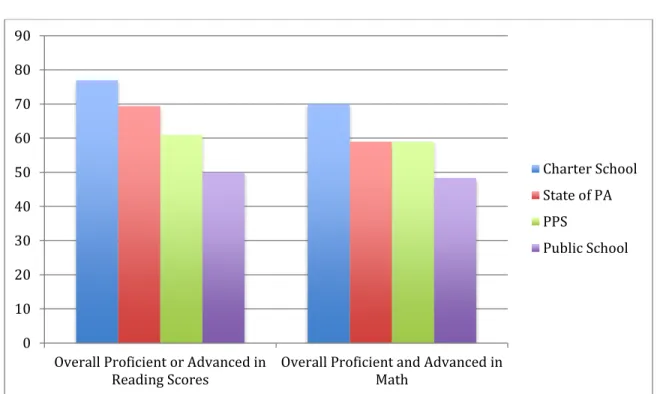
students from other races. It is important to also note that the public school had the largest number of students who fell under the category of “economically disadvantaged,” at 87.57%. Figure 2. Comparison of Proficient and Advanced Reading and Math Scores
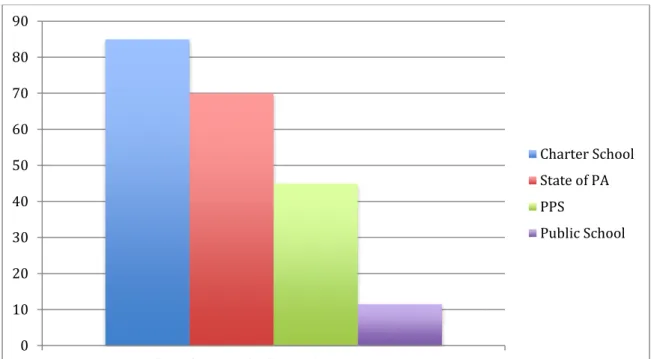
Figures 2 and 3 compare proficient and advanced scores in reading, math, and science. As you can see from the data, the charter school outperforms the state of PA, PPS, and the public school in all three subject areas. This investigation will aim at understanding how instructional practices are affected by accountability systems within the context of the charter school. The investigation will also aim to understand teachers’ perceptions of the state-mandated tests that are embedded within these accountability systems and how teachers believe the tests inform learning. 0 10 20 30 40 50 60 70 80 90
Overall Proficient or Advanced in
Reading Scores Overall Proficient and Advanced inMath
Charter School State of PA PPS
Figure 3. Comparison of Proficient and Advanced Science Scores
Finally, Figures 4 and 5 compare demographics of overall proficient or advanced scores in reading and math in the charter school and PPS. This data was not available for the public school. However, the comparison between the charter school and PPS still provides a unique look at how students are performing in each context based on the two largest subgroups of students as well as economically disadvantaged students. In reading, the charter school
outperforms PPS across the board. However, Figure 5 indicates that white students at the charter school outperform white students from PPS in math, while black students from PPS outperform black students from the charter school in math. This seems to be the only area where the charter school was outperformed by PPS. All of the data presented helps paint the picture of the success the charter school is having compared to PPS, the state of PA, and a specific public school in PA. Therefore, understanding how systems are operating in the charter school and gaining an
understanding of teachers’ perceptions will provide an opportunity for improvement to be sought and generative impacts to be made across the school, academy, and community.
0 10 20 30 40 50 60 70 80 90
Overall Proficent and Advanced in Science Scores
Charter School State of PA PPS
Figure 4. Demographic Comparison of Reading Scores
Figure 5. Demographic Comparison of Math Scores 0 10 20 30 40 50 60 70 80 90 Overall Proficent or Advanced in Reading by White Students Overall Proficent or Advanced in Reading by Black Students Overall Proficent or Advanced in Reading by Economically Disadvantaged Students Charter School PPS 0 10 20 30 40 50 60 70 80 90
Overall Proficent and Advanced in Math by
White Students
Overall Proficent and Advanced in Math by
Black Students
Overall Proficent and Advanced in Math by Economically Disadvantaged Students Charter School PPS
Chapter 2
Chapter two will dive into the literature and frameworks that influence this problem. The chapter will start by naming the issue and giving direction to the literature that will be reviewed. In the next section, a review of the literature will take place and will bring in the voice of
scholars who have researched this problem. Following the review of the literature, theoretical frameworks that inform this problem will be introduced. An array of consequences for failing to address this problem will be discussed during the next subsection. Following the consequence section, a real-life example will be given in order to bring this problem closer to reality. A synthesis will attempt to weave the research and the reality of this problem together in order to provide validation for this investigation. Immediately following the synthesis, one of the theoretical frameworks will be applied as a lens to this investigation with a justification as to why this framework is appropriate. Chapter two will conclude with a look at a few prior
solutions that have been enacted to address this problem that have ultimately failed to reach the heart of this problem.
Narrowing the Focus
This problem will be addressed from three different aspects. The three aspects that will be addressed are: educational accountability systems, student assessment, and SCLEs. All three aspects have vast amounts of literature surrounding them. Although these three aspects are very different, when they are interwoven we have a problem that is creating havoc in our educational system and affecting real people in schools, the academy, and the community. Furthermore, parts of this problem are not new. Rather, certain policies that influence this problem date back to over 20 years ago. For example, as Anagnostopoulos, Rutledge, and Jacobsen (2013) state,
test-based accountability has dominated U.S. educational policy for over twenty years. Beginning in the 1990s with a handful of states and expanding nationally with the 2001 passage of the federal No Child Left Behind (NCLB) Act and, more recently, the 2009 Race to the Top initiative, state and federal policy makers have sought to induce improvements in the nation’s public schools by attaching increasingly consequential incentives and sanctions for students, teachers, and schools to students’ scores on state assessment. (p. 1)
How we assess students has also seen changes over the years. As Heubert (2004) states,
As most educators and policy makers know, large-scale assessment, including testing for high-stakes purposes, has changed in important ways since the “minimum competency test” (MCT) programs of the 1970s and 1980s; most tests embody much higher standards today, more low-achievers are assessed and there has been growth in graduation testing and especially promotion testing. (p. 220)
In making these comments, Anagnostopoulos et al. and Heubert urge us to think about how this situation has come to be a reality and why improvement efforts have failed. This problem is not just an issue in the particular contexts in which I am studying. Learning environments have been studied for decades. Specifically, David Jonassen and Susan Land have been engaged in work around SCLEs for some time now as they recently released their second edition of Theoretical
Foundations of Learning Environments. Their work continues to investigate the theoretical
foundations that impact SCLEs and they challenge the assumptions that are evident within the transmissive model of practice. This type of practice has manifested itself in so many classrooms across the county. This problem is affecting real people on a daily basis and it is not just
policymakers, and even communities. The work that has been done to date aligns well with my study because I am seeking to gain an understanding of what people know about this problem within their specific context. Land, Hannafin, and Oliver (2012) state, “We need to identify frameworks for analyzing, designing, and implementing learning environments that embody and align particular foundations, assumptions, and practices” (p. 5). In order to achieve this, looking at specific contexts and coming to conclusions as to why certain learning environments exist will assist in identifying these frameworks and ultimately will have generative impacts. This three-tiered approach to reviewing the literature will allow for a deeper understanding of the views of scholars. The review will focus on scholars who have published intensely on a specific topic or on a specific article that bears some weight in investigating this problem. In no way should this be considered a complete review of the literature, as the amount of literature on these three topics is immense. Finally, in order to assist the reader in understanding the review of the literature, a table will be produced outlining a sampling of the research studies and scholars that have made significant contributions to the three topics.
Review of Literature
The first step in studying the impact that accountability systems are having on SCLEs is to review current literature. There is a lot of literature published on this topic and in order to narrow the focus and frame the review, the review will be organized under the umbrella of a social constructivist epistemology framework. Figure 6 illustrates the organization of the literature review. The literature review will conclude with a review of accountability.
Figure 6. Literature Review Organizational Map
Social Constructivist’s Epistemology
Constructivist epistemology’s major assumption is that human knowledge is constructed through a dynamic interaction between the human and an experience. Therefore, each learning experience is unique and can be interpreted differently based on contextual factors. Vygotsky’s social constructionism theory explores how interactions with others affect the construction of knowledge. Learning environments can provide many interactions between students, teachers, and even the environment (nature). How these interactions affect the learner is something that also should be considered when constructing SCLEs. Packer and Goicoechea (2000) state, “Learning entails both personal and social transformation” (p. 228). In making this comment, Packer and Goiocechea urge us to come to understand both these transformations and the role school plays in the transformation of students.
Immanuel Kant is thought to be one of the earliest people to investigate and write about constructivism. Howe and Berv (2000) paraphrase an epistemological assumption of Kant’s when they state, “A conceptual scheme without sensory data is empty, sensory data without a conceptual scheme are blind” (p. 21). In other words, Kant is expressing the need for raw data that constructs experiences, which then inform theories. Social constructivism is a theory that has drawn attention over the years and has a cult-like following of researchers. Ernst von Glasersfeld
Social Constructivist Epistemology
Student-Centered Learning EnvironmentsFlow Theory Learning TheoryExperimental CHAT Zone of Proximal Development
Objectivism vs. Constructivism
is just one example of a researcher who devoted his time and effort to studying social
constructivism. From his studies, von Glasersfeld coined the term “radical constructivism.” In von Glasersfeld’s view, radical constructivism is defined as
an unconventional approach to the problems of knowledge and knowing. It starts from the assumption that knowledge, no matter how it be defined, is in the heads of persons, and that the thinking subject has no alternative but to construct what he or she knows on the basis of his or her own experience. (1995, p. 18)
Von Glasersfeld’s view on constructivism is a very individualist approach in that he claims each person has their own unique experience and internalizes knowledge in their own way. The experience helps shape knowledge creation and social interactions can be part of the experience. On the contrary, not all researchers agree with this train of thought. Slezak (2000) states
The doctrines of radical social constructivism take scientific theories to reflect the social milieu in which they emerge and, therefore, rather than being founded on logic, evidence, and reason, beliefs are taken to be the causal effects of the historically contingent, local context. Accordingly, if knowledge is intrinsically the product of “external” factors rather than “internal” considerations of evidence and reason, then it is an illusion to imagine that education might serve to instill a capacity for critical thought or rational belief. On these views education becomes indoctrination, pedagogy is propaganda, and ideas are merely conventional conformity to social consensus. (p. 93)
This local context to which Slezak refers helps us put into perspective where social
constructivism comes from and what informs the theory. However, evidence is typically needed to back up and support theories. Slezak questions whether or not this local context, which is informed by external factors, can actually provide merit to social constructivism. In order to
better understand social constructivist epistemology, the meaning of “epistemology” must be broken down. Howe and Berv (2000) use a disjunctive syllogism as a way to comprehend the meaning when they state, “Either-Or: Either there exists some wholly external, extra-human world by which to verify knowledge claims, or truth resides solely in what individuals or groups
construct, i.e., in their conventions” (p. 25). Howe and Berv provide for us the two sides of social constructivism. These two sides have been investigated by researchers and debated in articles, books, and journals for years. As humans we have also been constructing knowledge and interacting as a race for a long time. As the prominent philosopher Paulo Freire (1998) puts it,
We have been able, through a long human history, to distinguish ourselves, by our own decisions, as individuals among the whole humanity, but still within the workings of society, without which we also would not be what we are. In truth, we are neither only what we inherit nor only what we acquire but, instead, stem from the dynamic
relationship between what we inherit and what we acquire. (p. 69)
Freire reminds us that it is through the interactions and workings of humans that we have become as advanced as we are today. For if there were a void in this process, we might not be in a state to even discuss the theory of social constructivism, let alone its place in education.
Furthermore, other researchers, such as Luise Prior McCarty and Thomas Schwandt, take a linguistic idealism approach to describing social constructivism. According to McCarty and Schwandt (2000),
The notion that what knowledge claims about self, world, or other might be true or false is nonsensical within social constructionism because the very concepts “true” and “false” are themselves regarded as linguistic artifacts. Hence, what counts as knowledge in a classroom is nothing more or less than a “temporary location in dialogic space—samples
of discourse that are accorded status as ‘knowledgeable tellings’ on given occasions.” (p. 58)
In other words, McCarty and Schwandt believe that how knowledgeable one is is based on one’s location and who else is around them. This is typical in a traditional classroom, where the teacher is considered knowledgeable and transmits knowledge to the students, who are not as
knowledgeable. How students interact with the teacher is just one social construct that goes into learning. Oftentimes the teacher is seen as the authority and decides what to teach and how to teach it. However, pedagogy and the art of teaching must have a student centered approach. McCarty and Schwandt (2000) acknowledge this when they state, “Pedagogy must be designed so as to enable students to participate in a range of conversations and to acquire the kinds of rhetorical skills that allow them to take persuasive positions within these conversations. Collaborative and student centered learning are to be highly prized” (p. 59). McCarty and
Schwandt are right that collaboration and student centered learning should be at the forefront of a teacher’s pedagogical practice. Social constructivism has many different epistemological
tangents, however: if we go back to the major assumption that human knowledge is constructed through a dynamic interaction between the human and an experience, then we must design learning environments that are student centered and enable the students to participate.
Student Centered Learning Environments
Both theorists and researchers have investigated learning environments and theories and have developed approaches. Jonassen and Land (2012) celebrate the fact that “for the past two decades, pedagogical research has been focused increasingly on problem-based, project-based, inquiry-oriented pedagogies in the forms of open-ended learning environments, microworlds, goal-based scenarios, anchored instruction, social-mediated communication, and so on” (p. x).
SCLEs are designed and operate differently from traditional learning environments; however, they are all grounded by the constructivist’s perspective of learning (Land, Hannafin, & Oliver, 2012, p. 4). One major assumption that has recently been identified is that there is not a unifying theory that sets the standards for SCLEs (Land, Hannafin, & Oliver, 2012). Due to this, SCLEs are designed to create experiences for the learner to assist them in constructing knowledge. Hannafin and Land (1997) state, “Ideally, student centered learning environments emphasize concrete experiences that serve as catalysts for constructing individual meaning” (p. 173). As a result, the epistemological pillars and assumptions are similar in nature to constructivism. SCLEs’ assumptions are identified below:
1. Centrality of the learner is defining meaning
2. Scaffolded participation in authentic tasks and sociocultural practices
3. Importance of prior and everyday experiences in meaning construction
4. Access to multiple perspectives, resources, and representations. (Land, Hannafin, & Oliver, 2012, p. 8)
Land, Hannafin, and Oliver (2012) go on to state, “Pedagogically, SCLEs favor rich, authentic learning contexts over isolated, decontextualized knowledge and skill, student-centered, goal-directed inquiry over externally goal-directed instruction, and supporting personal perspectives over canonical perspectives” (pp. 4–5). As stated previously, SCLEs are designed and developed differently. Keeping the learning goals, problems to investigate, available tools, and scaffolds in mind when constructing learning environments are important tenets to the design and
development of SCLEs. To illustrate the variety of SCLEs, a few options of design are listed below:
1. Problem-based learning
2. Learning communities
3. Communities of practice
4. Gaming, virtual worlds, and simulation environments
5. Digital repositories.