War Field Spying Robot with Wireless Night Vision
Camera
Priyanka Yadav1, Leena Chaudhari2, Swati Gawhale3 1, 2,3
BharatiVidyapeeth College of Engineering, Lavale, India
Abstract: The intention of this project is to reduce human victims in terrorist attack such as 26/11. So this problem can be overcome by designing the RF based spy robot which involves wireless camera, So that from this it will be easy to examine rivals when it required. This robot can quietly enter into enemy area and sends us the information via wireless camera. The movement of this robot is wirelessly controlled by a hand held RF transmitter to send commands to the RF receiver mounted on the moving robot. Since human life is always valuable, these robots are the substitution of soldiers in war areas. This spy robot can also be used in star hotels, shopping malls, jewelry show rooms, etc. where there can be threat from intruders or terrorists.
At the time of war where it can be used to collect information from the enemy terrain and monitor that information at a far secure area, and safely devise a plan for the counter attack, Tracking locations of terrorist organizations and then plan attack at suitable time. Making a surveillance of any disaster affected area where human beings can’t go.
I. INTRODUCTION
The project is designed to develop a robotic vehicle using RF technology for remote operation attached with wireless camera for monitoring purpose. The robot along with camera can wirelessly transmit real time video with night vision capabilities. This is kind of robot can be helpful for spying purpose in war fields. An ATmega16 microcontroller is used for the desired operation. At the transmitting end using Joysticks, commands are sent to the receiver to control the movement of the robot either to move forward, backward and left or right, ARM up and down etc. At the receiving end two motors are interfaced to the microcontroller where they are used for the movement of the vehicle. The RF transmitter acts as a RF remote control that has the advantage of adequate range (up to 200 meters) with proper antenna, while the receiver decodes before feeding it to another microcontroller to drive DC motors via motor driver IC for necessary work. A wireless camera is mounted on the robot body for spying purpose even in complete darkness by using infrared lighting.
At the transmitting end using Joysticks, commands are sent to the receiver to control the movement of the robot either to move forward, backward and left or right, ARM up and down etc. At the receiving end two motors are interfaced to the microcontroller where they are used for the movement of the vehicle. After receiving the command robot will stop. After that the robot will move in the same direction in which previously the robot is moving. For this purpose we designed programs in embedded C .In order to fulfill this application there are few steps that has been performed i.e.
1) Designing the power supply for the entire circuitry. 2) Selection of microcontroller that suits our application.
3) Selection of Robot.
4) Selection of DRIVER IC.
5) Selection of wireless camera.
II. LITERATURE SURVEY
After doing survey of IEEE papers, we referred some of the papers which are useful for designing the spying robot.
In R.A. Kadu, Prof. V.A. More, P.P. Chitte, J.G. Rana, M.R. Bendre. International Journal of Computer Technology and Electronics Engineering (IJCTEE) Volume 2, Issue 1.Wireless Control & Monitoring of Robotic Arm (SWORDS), Soldiers may have armed robots as battle buddies by early next year, according to industry and military officials attending the biennial Army Science Conference.
This report focuses on issues related to autonomous military robotics, the discussion may apply equally well and overlap with issues related to autonomous military systems, i.e., computer networks. Further, it is focusing on battlefield or lethal applications, as opposed to robotics in manufacturing or medicine even if they are supported by military programs (such as the Battlefield Extraction Assist Robot, or BEAR, that carries injured soldiers from combat zones), for several reasons as follow.
III. PROBLEM STATEMENT
Design and implement war field spying robot with wireless night vision camera.
A. Objectives
1) To design a robot.
2) To capture the videos at the night using night vision camera.
3) Monitoring using RFID.
4) To monitor the night activities at the war field. 5) To control the robot wirelessly.
IV. SYSTEM SPECIFICATION
The following components to design a war field spying robot apart from a base with wheels and motors.
A. Sensor Unit
A wireless Night Vision Camera: Apart from what a basic camera consists of, it consists of a transmitter unit. It captures images and transmits these images through the transmitter in form of digital signals, which are received by the receiver unit connected to the TV or computer. The camera can be as far as 30 miles away from the receiver. A night vision camera can receive illumination either by amplifying the visible light using image intensifiers or using infrared light directly by objects – thermal imaging or infrared light reflected by objects-near infrared illumination.
B. A Receiver Unit
The robot also consists of a receiver unit which receives the command signals for controlling the motors and thus the robot unit.
C. Actuators
It consists of two DC motors as actuators which provide reverse and forward motion to the robot.
D. Control Unit
It consists of a remote transmitter unit consisting of microcontroller, encoder and a RF module and a receiver unit embedded on the circuit consisting of an RF receiver module, a microcontroller and a decoder.
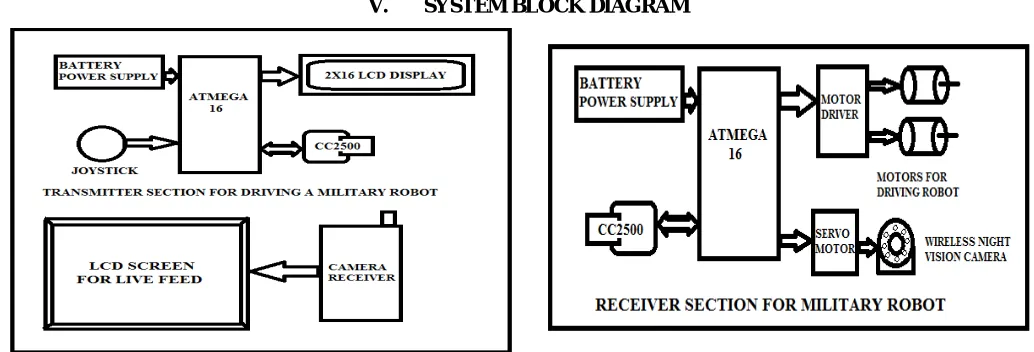
[image:3.612.46.563.532.708.2]V. SYSTEM BLOCK DIAGRAM
VI. BLOCK DIAGRAM DESCIPTION
The wireless night vision camera embedded on the robot consists of a wireless transmitter.
A cluster of IR LEDs are placed which are used to provide IR light to the image sources. The reason IR light is preferred is because at night time, it is usually dark and since any camera needs light for illumination, infra-red light is the most preferred option as all objects emit a range of Infra-red light.
The camera is powered with a 9V battery and captures these images and transmits them to the receiver unit connected to a Television unit. The images are converted to digital signals by the transmitter unit and the receiver unit receives these digital signals and reconverts them to images and these images or videos are then monitored and analyzed on a Television unit.
The transmitter unit consists of an encoder which receives parallel data input from the microcontroller through the push buttons and transmits this parallel data in serial format through the RF module. On pressing the respective push button, Microcontroller is programmed to send relevant signals to the Encoder in parallel form. The encoder converts these parallel signals to serial form to be transmitted by the RF module.
This serial data is modulated with a carrier signal using a RF transmitter and is transmitter. For example if we press the left button, the microcontroller sends the command to the receiver unit through the encoder and the RF module.
A. Night Vision Camera
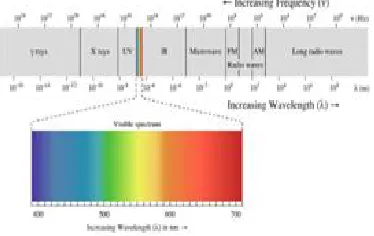
[image:4.612.219.406.344.462.2]A night vision camera is a device that allows to see in the dark. The light that is able to see is electromagnetic radiation. Human eyes are only able to see a very small part of the electromagnetic spectrum. The part which is able to see is called “Visible Spectrum”. There are many types of radiation that can see in the image below.
Fig 3.Night Vision Camera
But part of it is the infrared radiation. Infrared is a very low energetic radiation and it is widely used in night vision cameras. Basically the concept is simple – A night vision camera is a device that emits infrared “light” and is capable of detecting it in a camera. The only difference between a night vision camera and a camera that is taking a film of an environment that is being lighted by a normal lamp which can’t see the infrared “light” with human eyes but it can be seen with the infrared camera. This provides chance to see in the dark.
1) Transmission Power : 50mW 2) Bandwidth :20 MHz
3) Power Supply :9V
4) Consumption Current :80 to 120 Ma Operating
B. RF Module CC2500
transmit/receive FIFOs of CC2500 can be controlled via an SPI interface. In a typical system, the CC2500 will be used together with a microcontroller and a few additional passive components.
Fig 4.RF MODULE CC2500
VII. ADVANTAGES
A. Reduces human casualties.
B. Makes all kind of work easier.
C. Helps disabled people in living their lives.
VIII. APPLICATIONS
A. Military robots are autonomous or remote controlled devices or robots designed for military applications. B. Robots could reduce the number of military personnel injured or killed in combat situations.
C. It can be use for search & rescue type operations.
D. In bomb defusing.
E. It is also use this robot for animal tracking in forest.
F. It can be use for pick up injured soldier from war station and dropping them in safe place. It can carry extra material like as bombs, missiles, blankets etc.
IX. RESULT
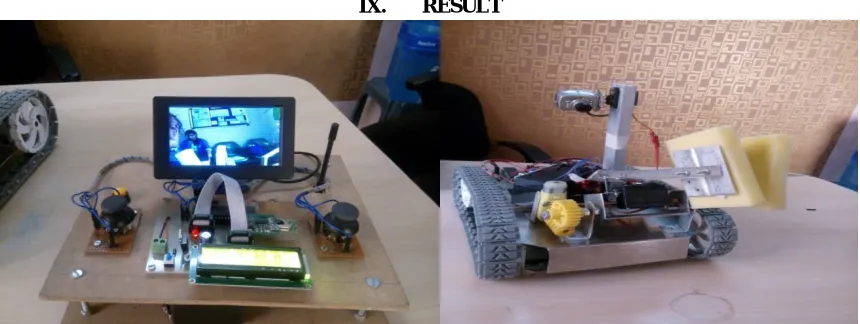
Fig 5.War Field spying robot Transmitter and Receiver
[image:5.612.93.523.472.634.2]The simple task of Robotic Arm With Gripper is moving an object from one location to another within the work area is one of the most common applications.
Grippers are the most common end-effectors. They provide the equivalent of a thumb and an opposing finger, allowing the robot to grasp small parts.
I. This paper has presented a novel CONCLUSION
method for spying purpose based on night vision camera to capture the night activities at the war field or any outside field where human being cannot go.
The paper comes out with the operations of Receiver and transmitter circuit. The functions and the operations of the circuits interrelated are very important to be analyzed. With appropriate steps and methodology, any process of completing the project can be managed wisely and will be make a good result. Currently Wireless controlled Omni-directional monitoring robot with video support that can monitor using webcam.
As per the present scenario, human dependencies on technology and future trends robots are going to be used as a perfect replacement for human being in all aspects of life.
II. ACKNOWLEDGEMENT
With great pleasure and satisfaction we present the paper on War Field Spying Robot With Wireless Night Vision Camera.
Expressing gratitude in words is one thing which can never be done in adequate manner, we are afraid we may to express abounding gratitude even then with few words from bottom of our hearts we conclude an acknowledgement for all the guidance provided to us.
REFERENCES
[1] R.A. Kadu, Prof. V.A. More, P.P. Chitte, J.G. Rana, M.R. Bendre. International Journal of Computer Technology and Electronics Engineering (IJCTEE) Volume 2, Issue 1.Wireless Control & Monitoring of Robotic Arm (SWORDS).
[2] Kalyanee N. Kapadnis et al Int. Journal of Engineering Research and Applications ISSN : 2248-9622, Vol. 4, Issue 4( Version 2), April 2014, pp.06-09. [3] Robotics: K . S. Fu, R. C. Gonzalez, C.S.G. Lee, book published by Tata Mc-Graw Hill, 2008, 1st edition.
[4] Autonomous Military Robotics: Risk, Ethics, and Design.
[5] Patrick Lin, Ph.D., George Bekey, Ph.D., Keith Abney, M.A. Autonomous Military.