©IJRASET 2014: All Rights are Reserved
114
Sharing Secure Data in the Cloud for the
Multiuser Group
1Harsha S R, 2Ms. K. Shirisha Reddy
1
M.Tech (CSE), 2Associate Professor Dept. of CSE
1,2
Vignana Bharathi Institute of Technology, Hyderabad.
Abstract ---The data is stored in the cloud. Storing data should be risky. Cloud provider should be trustful because the data is
confidentential. The Group manager keeps the record of group members. The key distribution is done to the group of each department. The Group members can access the stored data from cloud. The encryption –decryption technique is used to store the data. Any cloud user can anonymously share data with others by providing group signature and dynamic broadcast encryption techniques. When new member joined in the group, new granted users can directly decrypt data files uploaded without contacting with data owners. Proposing a new model for Sharing Secure Data in the Cloud for the Multiuser Group
Keywords— MONA, Data sharing, multiowner, resource sharing,Cloud computing
I. INTRODUCTION
Cloud computing is recognized as an alternative to traditional information technology due to its intrinsic resource-sharing and low-maintenance characteristics. One of the most fundamental services offered by cloud providers is data storage.
To preserve data privacy, a basic solution is to encrypt data files, and then upload the encrypted data into the cloud. Unfortunately, designing an efficient and secure data sharing scheme for groups in the cloud is not an easy task due to the following challenging issues:
A. Identity privacy
B. Single Owner
C. Dynamic nature of Groups
In several security schemes such as Plutus, SiRiUS, etc proposed for data sharing on untrusted servers, the data owners store the encrypted data files in untrusted storage and distribute the corresponding decryption keys only to authorized users. Thus, unauthorized users as well as storage servers cannot learn the content of the data files because they have no knowledge of the decryption keys.
However, the complexities of user participation and revocation in these schemes are linearly increasing with the number of data owners and the number of revoked users, respectively. By setting a group with a single attribute, Lu et al. proposed a secure provenance scheme based on the cipher text-policy attribute-based encryption technique, which allows any member in a group to share data with others. However, the issue of user revocation is not addressed in their scheme. The single owner manner hinders the adoption of key policy attribute-based encryption and other schemes. To overcome the above described challenges we propose the scheme-SMONA that includes the following:
1) Secure multi-owner data sharing scheme. It implies that any user in the group can securely share data with others by the untrusted cloud.
2) Support dynamic groups efficiently. Specifically, new granted users can directly decrypt data files uploaded before their participation without contacting with data owners. User revocation can be easily achieved through a novel revocation list without updating the secret keys of the remaining users. The size and computation overhead of encryption are constant and independent with the number of revoked users.
115
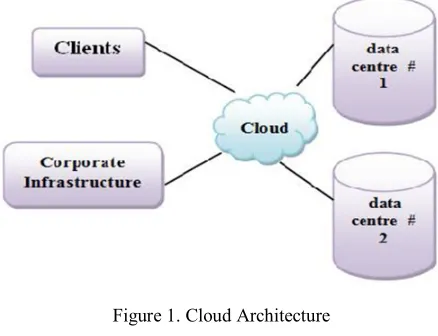
Figure 1. Cloud ArchitectureII. LITERATURE SURVEY
In the literature survey we are going to discuss some existing technique for cloud
A. E. Goh, H. Shacham, N. Modadugu, and D. Boneh the use of SiRiUS is compelling in situations where users have no control over the file server . They believe that SiRiUS is the most that can be done to secure an existing network file system without changing the file server or file system protocol. Key management and revocation is simple with minimal out-of-band communication. File system freshness guarantees are supported by SiRiUS using hash tree constructions. SiRiUS contains a novel method of performing file random access in a cryptographic file system without the use of a block server. Extensions to SiRiUS include large scale group sharing using the NNL key revocation construction.
B.Wang, B. Li, and H. Li, in this paper, we propose Knox, a privacy-preserving auditing scheme for shared data with large groups in the cloud. They utilize group signatures to compute verification information on shared data, so that the TPA is able to audit the correctness of shared data, but cannot reveal the identity of the signer on each block. With the group manager’s private key, the original user can efficiently add new users to the group and disclose the identities of signers on all blocks. The efficiency of Knox is not affected by the number of users in the group.
C. M. Armbrust, A. Fox, R. Griffith, A.D. Joseph, R.H. Katz, A. Konwinski, G. Lee, D.A. Patterson, A. Rabkin, I. Stoica, and M. Zaharia the data centers hardware and software is what we will call a cloud. When a cloud is made available in a pay-as-you-go manner to the general public, they call it a public cloud; the service being sold is utility computing. They use the term private cloud to refer to internal data centers of a business or other organization, not made available to the general public, when they are large enough to benefit from the advantages of cloud computing that we discuss here. Thus, cloud computing is the sum of SaaS and utility computing, but does not include small or medium-sized data centers, even if these rely on virtualization for management. People can be users or providers of SaaS, or users or providers of utility computing. They focus on SaaS providers cloud providers, which have received less attention than SaaS users.
D.S. Kamara and K. Lauter in this paper consider the problem of building a secure cloud storage service on top of a public cloud infrastructure where the service provider is not completely trusted by the customer. They describe, at a high level, several the benefits such architecture would provide to both customers and service providers and give an overview of recent advances in cryptography motivated specifically by cloud storage.
E. Fiat and M. Naor they introduce new theoretical measures for the qualitative and quantitative assessment of encryption schemes designed for broadcast transmissions. The goal is to allow a central broadcast site to broadcast secure transmissions to an arbitrary set of recipients while minimizing key management related transmissions. They present several schemes that allow centers to broadcast a secret to any subset of privileged users out of a universe of size so that coalitions of users not in the privileged set cannot learn the secret.
116
G. Ateniese et al. leveraged proxy reencryptions to secure distributed storage. Specifically, the data owner encrypts blocksof content with unique and symmetric content keys, which are further encrypted under a master public key. For access control, the server uses proxy cryptography to directly re-encrypt the appropriate content key(s) from the master public key to a granted user’s public key. Unfortunately, a collusion attack between the untrusted server and any revoked malicious user can be launched, which enables them to learn the decryption keys of all the encrypted blocks.
III. EXISTING SYSTEM
In the literature study we have seen many methods for secure data sharing in cloud computing, however most methods failed to achieve the efficient as well as secure method for data sharing for groups. To provide the best solutions for the problems imposed by existing methods, recently the new method was presented called MONA. This work presents the design of secure data sharing scheme, Mona, for dynamic groups in an untrusted cloud. In Mona, a user is able to share data with others in the group without revealing identity privacy to the cloud. Additionally, Mona supports efficient user revocation and new user joining. More specially, efficient user revocation can be achieved through a public revocation list without updating the private keys of the remaining users, and new users can directly decrypt files stored in the cloud before their participation. Moreover, the storage overhead and the encryption computation cost are constant.
[image:4.612.207.405.308.424.2]Therefore practically in all cases MONA outperforms the existing methods.
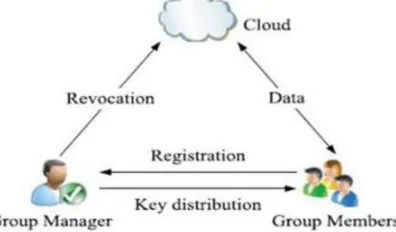
Fig.2. System Model
1) Disadvantages of Existing System
However as per reliability and scalability concern this method needs to be workout further as if the group manager stop working due to large number of requests coming from different groups of owners, then entire security system of MONA failed down.
IV. PROPOSED SOLUTION
To achieve the reliable and scalable in SMONA, in this paper we are presenting the new framework for SMONA. In this method we are further presenting how we are managing the risks like failure of group manager by increasing the number of backup group manager, hanging of group manager in case number of requests more by sharing the workload in multiple group managers. This method claims required efficiency, scalability and most importantly reliability.
[image:4.612.201.414.595.684.2]©IJRASET 2014: All Rights are Reserved
117
1) Advantage of proposed system
To overcome the disadvantage of existing system , in the proposed MONA is if the group manager stop working due to large number of requests coming from different groups of owners, then backup group manager will remains available
V. SYSTEM MODEL AND DESIGN GOALS
A. System Model
We consider a cloud computing architecture by combining with an example that a company uses a cloud to enable its staffs in the same group or department to share files. The system model consists of three different entities: the cloud, a group manager (i.e., the company manager), and a large number of group members (i.e., the staffs) as illustrated in Fig. 1. Cloud is operated by CSPs and provides priced abundant storage services. However, the cloud is not fully trusted by users since the CSPs are very likely to be outside of the cloud users’ trusted domain. Similar to, we assume that the cloud server is honest but curious. That is, the cloud server will not maliciously delete or modify user data due to the protection of data auditing schemes, but will try to learn the content of the stored data and the identities of cloud users. Group manager takes charge of system parameters generation, user registration, user revocation, and revealing the real identity of a dispute data owner. In the given example, the group manager is acted by the administrator of the company. Therefore, we assume that the group manager is fully trusted by the other parties. Group members are a set of registered users that will store their private data into the cloud server and share them with others in the group. In our example, the staffs play the role of group members. Note that, the group membership is dynamically changed, due to the staff resignation and new employee participation in the company.
B. Design Goals
In this section, we describe the main design goals of the proposed scheme including access control, data confidentiality, anonymity and traceability, and efficiency as follows:
1) Access Control: The requirement of access control is twofold. First, group members are able to use the cloud resource for data operations. Second, unauthorized users cannot access the cloud resource at any time, and revoked users will be incapable of using the cloud again once they are revoked.
2) Data Confidentiality: Data confidentiality requires that unauthorized users including the cloud are incapable of learning the content of the stored data. An important and challenging issue for data confidentiality is to maintain its availability for dynamic groups. Specifically, new users should decrypt the data stored in the cloud before their participation, and revoked users are unable to decrypt the data moved into the cloud after the revocation.
C. Anonymity and traceability
Anonymity guarantees that group members can access the cloud without revealing the real identity. Although anonymity represents an effective protection for user identity, it also poses a potential inside attack risk to the system. For example, an inside attacker may store and share a mendacious information to derive substantial benefit. Thus, to tackle the inside attack, the group manager should have the ability to reveal the real identities of data owners.
D. Efficiency
The efficiency is defined as follows: Any group member can store and share data files with others in the group by the cloud. User revocation can be achieved without involving the remaining users. That is, the remaining users do not need to update their private keys or re-encryption operations. New granted users can learn all the content data files stored before his participation without contacting with the data owner.
VI. SCHEME DESCRIPTION
A. Cloud Computing
In cloud computing, the word cloud is used as a metaphor for “the Internet” so the phrase cloud computing means "a type of Internet-based computing," where different services such as servers, storage and applications -- are delivered to an organization's computers and devices through the Internet.
118
The group manager takes charge of system initialization as follows: Generating a bilinear map group system.C. Cloud Module
In this module, we provide priced abundant storage services. The users can upload their data in the cloud. We develop this module, where the cloud storage can be made secure. However, the cloud is not fully trusted by users since the CSPs are very likely to be outside of the cloud users’ trusted domain. Similar to we assume that the cloud server is honest but curious. That is, the cloud server will not maliciously delete or modify user data due to the protection of data auditing schemes, but will try to learn the content of the stored data and the identities of cloud users
D. Group Manager Module
Group manager takes charge of followings, 1) System parameters generation, 2) User registration,
3) User revocation, and
4) Revealing the real identity of a dispute data owner.
Therefore, we assume that the group manager is fully trusted by the other parties. The Group manager is the admin. The group manager has the logs of each and every process in the cloud. The group manager is responsible for user registration and also user revocation too.
E. Group Member Module
Group members are a set of registered users they can 1) Store their private data into the cloud server and 2) Share them with others in the group.
Note that, the group membership is dynamically changed, due to the staff resignation and new employee participation in the company. The group member has the ownership of changing the files in the group. Whoever in the group can view the files which are uploaded in their group and also modify it. The group member.
F. File Security module 1) Encrypting the data file.
2) File stored in the cloud can be deleted by either the group manager or the data owner. (i.e., the member who uploaded the file into the server).
G. Group Signature Module
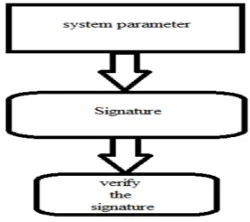
[image:6.612.234.359.533.644.2]A group signature scheme allows any member of the group to sign messages while keeping the identity secret from verifiers. Besides, the designated group manager can reveal the identity of the signature’s originator when a dispute occurs, which is denoted as traceability.
Figure 4. Signature Verification
H. User Revocation Module
119
VII. CONCLUSION
In conclusion, cloud computing is very attractive environment for business world in term of providing required services in a very cost effective way. However, assuring and enhancing security and privacy practices will attract more enterprises to world of the cloud computing In Thus to achieve the reliable and scalable in MONA, in this paper we are presenting the new framework for MONA. In this method we are further presenting how we are managing the risks like failure of group manager by increasing the number of backup group manager, hanging of group manager in case number of requests more by sharing the workload in multiple group managers. This method claims required efficiency, scalability and most importantly reliability. Extensive analyses show that our proposed scheme satisfies the desired security requirements and guarantees efficiency as well.
VIII. FUTURE ENHANCEMENT
Our work has been developed in a very short period of time and all the efforts have been taken so that this work is very efficient in its execution. Although, there still exists scope for the improvement of our project in the future. Our work has been developed mainly by taking the example of the environment of the company. We can extend our work to the fields such as education, entertainment, various social networks and other wider areas. For example, we can employ our project in the universities to maintain the data base of the students which can be used by the groups of lecturers. Here lecturer becomes the group member and the head of the department becomes the group manager. Further enhancement in the security of the data uploaded
by the members can be done. We can also concentrate on between the group manager and the group member should be improved creating sub groups in the groups. We can concentrate on preserving identity privacy for its enhancement. Interaction
REFERENCES
[1] Xuefeng Liu, Yuqing Zhang, Boyang Wang, and Jingbo Yan, “Mona: Secure Multi-Owner Data Sharing for Dynamic Groups in the Cloud”, IEEE TRANSACTIONS ON PARALLEL AND DISTRIBUTED SYSTEMS, VOL. 24, NO. 6, JUNE 2013.
[2] M. Armbrust, A. Fox, R. Griffith, A.D. Joseph, R.H. Katz, A. Konwinski, G. Lee, D.A. Patterson, A. Rabkin, I. Stoica, and M. Zaharia, “A View of Cloud Computing,” Comm. ACM, vol. 53, no. 4, pp. 50-58, Apr. 2010.
[3] S. Kamara and K. Lauter, “Cryptographic Cloud Storage,” Proc. Int’l Conf. Financial Cryptography and Data Security (FC), pp. 136- 149, Jan. 2010.
[4] E. Goh, H. Shacham, N. Modadugu, and D. Boneh, “Sirius: Securing Remote Untrusted Storage,” Proc. Network and Distributed Systems Security Symp. (NDSS), pp. 131- 145, 2003.
[5] B. Wang, B. Li, and H. Li, “Knox: Privacy-Preserving Auditing for Shared Data with Large
[6] Groups in the Cloud,” Proc. 10th Int’l Conf. Applied Cryptography and Network Security, pp. 507-525, 2012. [7] A. Fiat and M. Naor, “Broadcast Encryption,” Proc. Int’l Cryptology Conf. Advances in Cryptology (CRYPTO), pp.
480-491, 1993.
[8] V. Goyal, O. Pandey, A. Sahai, and B. Waters, “Attribute- Based Encryption for Fine-Grained Access Control of Encrypted Data,” Proc. ACM Conf. Computer and Comm. Security (CCS), pp. 89-98, 2006.
[9] D. Pointcheval and J. Stern, “Security Arguments for Digital Signatures and Blind Signatures,” J. Cryptology, vol. 13, no. 3, pp. 361-396, 2000.
[10]R. Lu, X. Lin, X. Liang, and X. Shen, “Secure Provenance: The Essential of Bread and Butter of Data Forensics in Cloud Computing,” Proc. ACM Symp. Information, Computer and Comm. Security, pp. 282-292, 2010.
AUTHOR DETAILS
HARSHA SR
PURSUING M.Tech(CSE) FROM
VIGNANA BHARATHI INSTITUTE