Christmas, S. and Bloomfield, B. and Bradburn, H. and Duff, R. and Ereaut,
G. and Miskelly, K. and Scorah, K. and Whiting, Rebecca (2018) Pollinating
insects: what do they mean to people and why does it matter? DEFRA.
Downloaded from:
Usage Guidelines:
Please refer to usage guidelines at or alternatively
Pollinating insects:
what do they mean to people
and why does it matter?
FULL REPORT
Simon Christmas,
Bob Bloomfield, Helen Bradburn, Rosemary Duff, Gill Ereaut,
Cait Miskelly, Kay Scorah, Rebecca Whiting
This research was commissioned and funded by Defra.
The views expressed in this report reflect the research findings and the authors’ interpretation; they do not necessarily reflect Defra policy.
This report (along with a shorter Summary Report) is published by Defra (Defra Project Code PH0523) and is available from the Department’s
Science and Research Projects Database at http://randd.defra.gov.uk.
3
Acknowledgements
The successful delivery of this project has depended on the generosity, expertise and energy of a large number of individuals beyond the project team.
Particular thanks are due to Dr Katherine Baldock, NERC Knowledge Exchange Fellow at the School of Biological Sciences & Cabot Institute, University of Bristol, and one of the organisers of the Get Bristol Buzzing project (www.getbristolbuzzing.org); and to Dr Jemma Batten MIEEM, Marlborough Downs Space for Nature Project Manager (www.mdnep.org.uk).
Without their enthusiastic support, fieldwork in Bristol and in the Marlborough Downs would never have taken place.
Special thanks are also due to the artists who worked with us in these two locations: the sculptor Charlotte Moreton, and the composers Spencer Martin and James Gow. The
significant contribution they have made to this research will be apparent from the discussion in the text of the pieces they created.
A great many other individuals contributed to the successful completion of the research. At the risk of leaving some of them out, we would like to thank: Grenville Johnson, Chair, St George in Bloom; Fernley Jane and Shan Biggs, Bristol East Allotments Association; Barbury Castle Members Barn; St Francis of Assisi Catholic Primary School, Norwich, and in particular Alison Wakefield, Sarah Reynolds and our participants from Year 6; Edith Cavell Academy and Nursery, Norwich, and in particular Steven Tozer, Amanda Butters and our participants from Years 3, 4 and 5; Pete Brundell; Jan Edwards; Susie Hewson; Chris Musgrave; Sarah Pitt and Dave Parkinson; Peter Thompson; Paul and John at FurtherAfield Ltd; Sara Smart and Emmet Briain.
We are also very grateful to those who made time to talk to us about the practical realities of policy- and decision-making: Teija Ahjokoski, Horticultural and Projects Supervisor, Bristol City Council; Ian Crump, Biodiversity Officer, Thames Water; Stewart Guy, Senior Manager for Biodiversity Policy, Ministry of Defence; Gemma Harper, Chief Social Scientist and Policy and Evidence Deputy Director for Plant Health and Bee Health, Defra; Andrew Jack, Community Manager, Marlborough Area Board; Tony Sangwine, Senior Principal Environmental Adviser, Highways England; Sally Pattison, Biodiversity, South Gloucestershire Council; John Taylor, Manager, Landscape and Design Team, Economic Development and Planning, Wiltshire Council; and Julia Thrift, Head of Projects, Town and Country Planning Association.
Thanks are due to Daniel Adiego González, who created the icons we have used to illustrate the different perspectives taken on pollinating insects.
Contents
Key findings ...7
Summary ... 10
Introduction ... 22
FINDINGS... 27
1. What are social and cultural values?... 28
1.1 Valuings and objects of value ... 28
1.2 From valuings to values... 29
1.3 Perspective... 29
1.4 Defining social and cultural values ... 30
1.5 Social and cultural values and pollinating insects... 31
1.5.1 “Pollinators” and “pollinating insects” ... 33
1.5.2 Bees... 34
2. …as they present themselves to direct observation ... 36
2.1 Beautiful objects... 36
2.2 Fascinating creatures... 38
2.3 Objects of a different kind of experience... 40
3. …as providers of goods to humans... 43
3.1 Useful (or harmful) things... 43
3.1.1 Pollinators as useful things... 44
4. …as objects of human stewardship ... 48
4.1 Signifiers of achievement... 48
5. …as participants in a greater, interconnected whole... 50
5.1 Manifestations of the greater, interconnected whole... 50
5.2 Creatures with a purpose ... 52
5.3 Creative connectors ... 53
5
5.3.2 Pollinators as parts standing for a whole (synecdoche)... 56
5.3.3 Knowing and feeling ... 58
6. …as participants in a greater, interconnected whole in which humans also participate... 60
6.1 Reminders of our own place in nature... 60
6.2 Signifiers of damage or recovery... 64
6.3 Focal points for responsibility and action ... 66
6.3.1 Taking action... 67
6.4 Focal points of nostalgia for an idealised past... 70
6.4.1 Romanticism and nostalgia ... 72
6.4.2 Nostalgia and childhood... 74
6.4.3 Honeybees and nostalgia... 75
7. …as analogous to humans ... 80
7.1 Creatures with lives... 80
7.2 Creatures with characters... 81
7.2.1. Projection at the collective level... 86
7.3 Partners in relationships ... 87
8. Two perspectives on pollinators ... 89
8.1 Holism and atomism ... 89
8.2 Holism and Romanticism ... 91
8.3 McGilchrist on the divided brain... 94
8.3.1 Two hemispheres, two perspectives ... 94
8.3.2 Atomism and holism revisited ... 96
8.3.3 The hemispheres in history... 98
IMPLICATIONS... 100
9. Social and cultural values and communications... 101
9.1 Opportunities for communications about pollinating insects ... 101
9.1.1 Using the holistic perspective ... 101
9.1.2 The ‘popular bee’... 103
9.2 Pollinators as flagships for wider issues... 104
10. Social and cultural values in policy- and decision-making ... 107
10.1 Taking account of social and cultural values through economic valuation ... 107
10.1.1 Developing an evidence-based catalogue... 108
10.1.2 Options for monetisation... 110
10.1.3 Subjective wellbeing ... 111
10.1.4 Non-monetary measures... 112
10.1.5 Alternatives to economic valuation ... 113
10.2 Using social and cultural values as a basis for risk assessment... 113
10.2.1 Availability and use... 114
10.2.2 Changes in use and risk... 114
10.3 Other mechanisms to take account of social and cultural values... 115
10.3.1 Getting pollinating insects onto the agenda ... 118
10.3.2 The challenge of objective measurement ... 119
10.4 Excluding values from policy- and decision-making... 121
10.4.1 Values and knowledge ... 121
10.4.2 Value to whom/what?... 122
10.4.3 Exclusion and objectivity... 123
10.5 Taking social and cultural values into account: an evidence-based approach ... 124
10.5.1 A framework for assessing the indirect values of pollinators ... 126
APPENDIX: primary research methods... 129
Participatory groups ... 130
Art ethnography ... 133
Discourse analysis ... 134
Interviews... 136
Workshops with children... 138
7
Key findings
1. People value pollinating insects, and especially bees, in a wide range of different ways: as beautiful or fascinating creatures; as providers of goods; as objects of stewardship; as participants in a greater, interconnected whole – in which humans also participate; and as creatures with lives and characters.
2. An understanding of pollinators as creative connectors, sustaining and creating life by moving from plant to plant, is particularly powerful. Pollinators prompt people to think about nature as an interconnected whole, in which they too participate; and can unlock feelings of wonder, awe, groundedness, concern, responsibility, and nostalgia.
3. Social and cultural values provide a powerful resource for effective communications, a store of pre-existing meanings and associations that can be used to frame messages. Communications about pollinators would resonate more powerfully if they framed pollinators as creative connecters, emblematic of the interconnected and interdependent nature of ecosystems. By contrast, communications which focus on what pollinators do for us (e.g. pollination framed as an ‘ecosystem service’) are rational but unemotional.
4. Communications drawing on these insights should:
• Highlight first and foremost the critical role played by pollinators as creative connectors in a greater, interconnected whole
• Acknowledge our dependency on that greater interconnected whole, but also our responsibilities as participants in it
• Be willing to embrace and use non-scientific language, ideas and tonalities in talking about both pollinators and the interconnected whole of which they are part, for example:
o spiritual/religious language in evoking feelings of awe and wonder at the greater interconnected whole
o evocations of an idealised, traditional way of life, and the possibilities of reconnecting in some small way
o metaphorical characterisations of pollinators as spreading life and love
• Recognise that we face choices about the environment not just as individuals, but as a society; that people see evidence of our society as a whole making the wrong choices; and that the actions of any body seeking to campaign about pollinators will speak as loudly, if not louder, than the messages it promotes
• Emphasise – in messages, but also in developing the case for a campaign – the link between the holistic perspective, subjective wellbeing, and reconnection:
o reconnection with nature: the consolation of knowing that one has a place in an enduring, greater whole, and a responsibility to play a positive role in that whole
o reconnection with self: the experience of a moment of self-aware contemplation in contrast to the day-to-day stresses of life
o reconnection with history: a sense of contact with an idealised traditional way of life
across towns, cities and the countryside” (including encouraging the public to take action) and to “raising awareness of what pollinators need to survive and thrive”.
6. Because they prompt people to think about and respond emotionally to the
interconnectedness of nature, pollinators framed as creative connectors could play an important role in communications seeking to increase awareness and change behaviour in relation to a much wider range of policies and approaches which relate to the
connectedness of nature: for example, maintaining wider natural connectivity, protecting biodiversity, and ensuring environmental resilience through approaches such as those relating to the concept of landscape level conservation. As such, pollinators could play an important role in delivery of the 25-year plan for the environment, and in particular in efforts to increase public engagement.
7. Compared to other pollinating insects, bees occupy a central position in our culture. The ‘popular bee’ is not a real insect, but a product of a blurring of species, idealisation of the past, ignorance of the diversity of pollinators and, often, a shaky grasp on what pollination actually means. It is, however, a very meaningful and valued insect, and as such can serve as a flagship for communications in all of the above areas.
8. In terms of wider policy and decision-making, this research offers a potential model of how to create an evidence-based catalogue of social and cultural values. The development of such an evidence-based catalogue, using a mix of interpretative and participatory methods to explore how, and in what capacities, people can and do value objects of interest, should be an essential pre-requisite for robust valuation across a wide range of natural
environment policy areas, but in practice is rarely undertaken.
9. Some types of social and cultural value can be captured through economic valuation: either through monetisation or through the inclusion of non-monetised criteria in multi-criteria analysis approaches. To do this, however, it is essential that data-gathering tools assess the right things: e.g. that willingness-to-pay questions frame the object of value in the right capacity and from the right perspective.
10.It may be more practical and/or appropriate to take account of some types of social and cultural value in policy and decision-making through other mechanisms, such as public consultation, political representation, or open policy-making. It may not be possible to monetise some kinds of value. In other cases, the effort involved in economic valuation may be disproportionate. If alternative mechanisms are not used, there is a risk that certain kinds of social and cultural value, or certain objects of value, are systematically overlooked. 11.Key levers to ensure that these alternative mechanisms are used effectively include:
• Align policy frameworks – for example, set priorities and requirements in overarching national policies which ensure key social and cultural values or objects of value are taken into account.
• Provide contexts – for example, create public consultation contexts in which certain kinds of value will be surfaced, or objects of value considered.
• Improve processes – e.g. ensure consultation questions frame objects of value in ways that invite the articulate of key values.
9
Summary
The National Pollinator Strategy set out eleven evidence actions which Defra committed to take forward, including three actions focused on understanding of the economic and social value of pollinators. The current project takes forward the third of these evidence actions, and addresses the question of social and cultural values.
Specifically, the project aimed to enhance understanding of the social and cultural values of pollinators, and to improve the way in which these values are taken into account in policy development, decision-making and evaluation at a variety of spatial scales.
At a more general level, the project set out to contribute to Defra’s wider work on valuing natural capital, and to the development of approaches and methods to help take the social and cultural value of other aspects of the natural environment into account more effectively in policy- and decision-making.
The project also aimed to inform communication with public and other audiences, and to help to ensure that future policy interventions and engagement activities are as targeted and effective (and cost effective) as they can be, and thus have greatest impact.
The project was structured around two parallel strands:
• The research strand aimed to enhance understanding of the social and cultural values of pollinators. A programme of in-depth qualitative, interpretative, creative and participatory research was undertaken, using a mix of methods: interviews, discourse analysis, art ethnography, participatory workshops, and workshops with children.
• The application strand aimed to explore in more detail how the values identified might be taken into account in policy development and other decision-making at a variety of spatial scales. Interviews were carried out with key informants involved at national and local level in policy- and decision-making with a bearing on pollinating insects. A review of existing frameworks for taking into account social and cultural values was also undertaken.
The social and cultural values of pollinating insects
How we value any object depends on the perspective we take on it. Consider, for instance, the different perspectives from which the participants quoted below understand and value bees.
I love hearing bees. […] I love that sound, that buzzy, busy sound, I find that very relaxing, other people working, or other things working, so that’s nice.
I’d never kill a bee, because we get quite a few in the conservatory, I always catch them and put them out because I’m aware, in fact bees you see, I depend an awful lot, I know you… if all the bees went… we, I’m not quite sure what, but I know that we’d be in trouble.
He was struggling out there, and I put a little bit of sugar in the water, put it in the syringe, put two droplets out there, and within two minutes he’s flown off. […] It’s just natural. It just came natural.
I do like seeing bumblebees on flowers because I just think it’s the contrast of sometimes the colours.
11
You're annoyed by the bees. […] You're always scared to be stung. […] Wasps and bees. Anything flying can sting you is annoying. […] My partner, she's allergic to bee stings.
The bumblebee is certainly in my psyche and I think typically is, sort of, considered to be a, kind of, affable, sort of, pleasant insect, even though it stings. […] A wasp is typically likely to be a bit more aggressive, you're more likely to get stung by a wasp.
Each participant understands ‘the bee’ from a different perspective and in a different capacity. The value they attach to ‘the bee’ varies accordingly, as does the behaviour that follows. Perspectives such as these can be shared across a community or society, and available for individual members to use on specific occasions. In this report, we use the term ‘social and
Pollinating insects understood… …and valued in their capacity as…
…as they present themselves to direct experience
Beautiful objects Fascinating creatures
Objects of a different kind of experience
…as providers of
goods to humans Useful (or harmful) things
…as objects of human
stewardship Signifiers of achievement
…as participants in a greater, interconnected whole
Manifestations of the greater whole Creatures with a purpose
Creative connectors
…as participants in a greater, interconnected whole in which humans also participate
Reminders of our own place in nature Signifiers of damage or recovery
Focal points of responsibility and action Focal points of nostalgia for an idealised past
…as analogous to human beings
cultural value’ to describe the way in which an object is valued when understood from one of these shared perspectives.1
The table on the previous page summarises the shared perspectives we have found being used to understand and value pollinating insects, and the associated capacities in which pollinating insects are understood and valued. A brief overview of the associated types of social and cultural value follows:
Beautiful objects. Living things can be objects of aesthetic appreciation, and pollinating insects are no different in this respect. It is not just the colours of pollinating insects which are appreciated aesthetically, but also their characteristic movement and sound.
Fascinating creatures. Living things can be inherently fascinating to watch. Evidence of this perspective was strongest among children.
Objects of a different kind of experience. When adults do find time to indulge in the experience of watching with fascination an insect or other living thing, the focus of their attention can shift to the act of observation itself, and the pleasant contrast between this contemplative frame of mind and the day-to-day stresses of adult life.
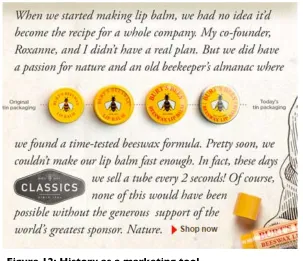
Useful (or harmful) things. There is a long history of human beings valuing living creatures in their capacity as useful providers of goods and services. The honeybee has been prized since antiquity for its provision of honey and wax. Recent campaigns to raise awareness of the importance of pollinators, such as Bees’ Needs, have tended to position pollinators in this way, highlighting their provision of services/goods to human beings.
Signifiers of achievement. Stewardship of living things brings pleasures of its own. As such, living things can become detached from the usefulness that originally made them objects of stewardship, and instead understood and valued as signifiers of achievement. For those who take action to provide habitats for insects (pollinating or otherwise), similar feelings of personal satisfaction may be associated with seeing the insects they have created a home for.
Manifestations of the greater, interconnected whole. There is also a long history of valuing living creatures as manifestations of a greater, interconnected whole in which they participate. This manifestation of an enduring greater whole in a detail can acquire an explicitly religious significance. Even when it does not, it may evoke a sense of awe and wonder at the operation of natural processes.
Creatures with a purpose. Understood as participants in a greater, interconnected whole, living things may also be valued for the job they do in keeping that greater whole functioning.
Creative connectors. Pollinating insects play a very particular kind of role in the greater, interconnected whole: as creative connectors. Indeed, ‘pollinator’ and ‘creative connector’ are so closely linked from a social and cultural perspective that at times they are effectively
synonymous. This is a role which, by its nature, draws attention to the greater whole – and therefore prompts a more holistic perspective.
Reminders of our own place in nature. Seeing living things as participants in a greater, interconnected whole can raise a question for a human observer: what is my place, our place, in this whole? The sense that one also has a place is associated with positive emotions of groundedness and calm.
1 Note that, in this report, we do not attempt to distinguish social and cultural values from each other, but use
13
Signifiers of damage or recovery. Thinking about humanity’s place in the greater,
interconnected whole can also prompt reflections on the ways in which we are destabilising the natural processes which sustain it. In the context of these concerns, living things can become powerful signifiers of damage to the environment. The positioning of the decline of bees as an early warning of greater problems is now widespread. However, observations of living things can also provide positive reminders that those natural processes endure, and that the larger whole persists despite the damage caused by human beings.
Focal points for responsibility and action. Our place in the greater, interconnected whole implies not just dependency but also responsibility. Living things such as pollinating insects can become the focal point for actions to attempt to reverse at least a little of the damage done by humans. Seeing things from this perspective may also highlight the fact that, sometimes, our responsibility is to do less rather than more – to leave space for wildlife, allow natural processes to take their course, find a better balance between the needs of humans and the needs of nature.
Focal points of nostalgia for an idealised past. The decision to play a more responsible role as part of nature can be framed as an individual or a collective one. The view that our society has made, or is making, the wrong decisions is widespread. A contrast is often made between modernity and an idealised past when human beings lived in harmony with nature: this contrast cuts across a number of the social and cultural values already identified, and has roots in Romanticism. Honeybees have become a powerful focal point for a discourse of cultural nostalgia for an idealised, traditional way of life.
Creatures with lives. Seen as analogous to human beings, individual living creatures –
including insects – can be objects of empathy and compassion. Collectively, living creatures can be considered to have rights – to food, to space, or simply to exist
Creatures with characters. As well as empathising with other living things, human beings also have a tendency to project onto them human characteristics. Three broad classes of insects were identified: cuddly bugs, workers, and scary beasts. Bees have long been seen as workers: however, there is plentiful evidence of them now being seen as cuddly bugs – especially bumblebees, on account of their being fat and fluffy.
Partners in relationships. While pollinating insects do not make good candidates for pets, it was striking that there were any occasions when participants spoke about them in terms that suggested “friendship” or “companionship”.
NOTE: the above are ways of understanding and valuing pollinating insects which are socially and culturally available for individuals to use. While this means that they are used at least sometimes and by some people, it does not necessarily mean that they are currently widely used, or used by many people.
Perspectives on pollinators: atomism and holism
To see pollinating insects as pollinators is already to understand them in a particular capacity, and from a particular social and cultural perspective. To avoid confusion, we adopt the following convention:
• We use ‘pollinating insects’ to refer to insects which, as a matter of fact, pollinate, irrespective of the capacity in which they are being understood and valued.
Human beings have been experiencing, reacting to, keeping and in various ways valuing at least some pollinating insects, and in particular the honeybee, for millennia. For most of this time, however, this has not been in their capacity as pollinators. As such, it is not surprising that many of the social and cultural values identified relate to pollinating insects in capacities other than as pollinators.
Two, however, apply specifically to pollinating insects in their capacity as pollinators: • First, pollinators may be understood and valued as useful things – providers of a vital
service to human beings. We describe this as an atomistic perspective on pollinators, as it isolates pollinators from the wider natural systems of which they are part, and focuses on services/goods provided to humans. This perspective has been promoted by recent
campaigns.
• Secondly, pollinators may be understood and valued as creative connectors – participants in a greater, interconnected whole, alongside many other participants, but with a role which, by its nature, draws attention to that greater whole. We describe this as a holistic perspective on pollinators, as it shifts attention to the greater whole in which pollinators participate.
As a matter of logic, these two perspectives appear to be consistent with each other. While the holistic perspective highlights the role played by pollinators in a greater whole, rather than services/goods provided to humans, it can still be linked to human needs by noting our dependence on that greater whole. Indeed, it could be argued that, while the atomistic
perspective aligns closely with the concept of ecosystem services, the holistic perspective offers an understanding of these services which is more in tune with the broader ecosystems
approach.
Logic aside, however, there are clear patterns of difference in the ways in which these two perspectives are used in practice. While participants were aware of the atomistic perspective, they tended not to adopt it and state with commitment that they valued pollinators as useful things, but instead to quote it and observe without commitment that they had heard they ought to value pollinators as useful things. This is in contrast to the holistic perspective, which
participants adopted confidently and with commitment.
Indeed, participants tended to default to the holistic perspective, even in response to questions specifically focusing on pollinators and pollination. This is because the relationship of
pollinators to the whole is less like the relationship of a cog to a machine – the cog alone provides no clues as to the nature of the machine from which it has been isolated – than like the relationship of a detail to a larger part of a fractal – the detail recapitulates at a smaller scale the characteristics of the whole, in this case its connectedness and creativity. The unique role that pollinators play as creative connectors draws attention, by its nature, to the greater whole in which they are participants (the holistic perspective). By contrast, the role of
pollinators does not draw attention in the same way to services to human beings (the atomistic perspctive). Hence, when asked to look at or think about pollinators, what participants saw was creative connectedness – and not services provided to humans.
Adopting the holistic perspective also opens up the powerful meanings and sources of value associated with holism. Seen from this perspective, pollinators and other living things are manifestations of the greater, interconnected whole; creatures with purpose; reminders of our own place in nature; signifiers of damage and recovery; focal points for responsibility and action; and focal points for nostalgia for an idealised past. By contrast, the atomistic
15
The tension between the holistic and atomistic perspectives has deep historical roots. In particular there are strong points of connection between the holistic perspective and
Romanticism, and the Romantic critique of analytical and atomistic Enlightenment thinking. Key figures in Romantic science include Alexander von Humboldt, often considered one of the fathers of modern ecology. It is not Enlightenment science that is rejected by the Romantics, but the pretensions of that science to completeness, and its refusal to countenance the possibility of other ways of understanding and valuing nature. In a similar way, it is not logical inconsistency that brings the atomistic and holistic perspective on nature into conflict, but a perception that all other perspectives, including the holistic perspective, can and must be reduced without loss to an atomistic focus on usefulness to human beings.
In The Master and his Emissary: the Divided Brain and the Making of the Western World, Iain McGilchrist (2009) advances an argument which suggests the tension between holistic and atomistic perspectives may be underpinned by human anatomy: specifically the separation of the brain into two hemispheres. On the basis of extensive evidence, McGilchrist argues that the two hemispheres can be thought of as having different perspectives, with strong parallels to the holistic (right hemisphere) and atomistic (left hemisphere) perspectives.
The ‘popular bee’
Compared to other pollinating insects, bees occupy a central position in our participants’ responses, in the materials reviewed in the discourse analysis strand, and in our culture more widely. The social and cultural category of bees, however, does not coincide neatly with taxonomic boundaries. In particular, popular ideas of the bee may confuse honeybees and bumblebees, while overlooking the existence of other kinds of bee entirely.
The ‘popular bee’ is not a real insect, being as it is a product of a blurring of species,
idealisation of the past, ignorance of the diversity of pollinators and, frequently, a shaky grasp on what pollination actually means. It is, however, a very meaningful insect:
• a creative connector, fulfilling a role which, by its nature, draws attention to the greater, interconnected whole of which it is part
• a creature which signifies, through its decline, the damage caused to nature by human activity; and through its presence, the endurance of nature despite human damage • a symbol of an idealised past in which we lived more in tune with nature
• an object of stewardship and care for nature – actions through which we can reconnect to nature, and to our collective and personal pasts – and an indicator of the good we achieve by such acts of stewardship
• a focal point for experiences of groundedness, calm and wellbeing – linking feelings of being in the moment to a sense of our place in nature and in the narrative of humanity
• the provider of one of nature’s sweetest gifts – honey
• a fluffy, fat, friendly creature which is both cuddly and hard-working
Implications for communications
there, if latent – rather than trying to work against the grain and foster entirely new ways of understanding and valuing the world.
Pollinator campaigns
National campaigns to promote awareness of pollinators, both by Defra and by other
organisations, currently tend to emphasise the atomistic perspective and highlight pollinators in their capacity as useful things, providing services/goods to humans. As such, campaigns are missing out on an opportunity to tap into the holistic perspective – a perspective that is more readily prompted by pollinators, more emotionally resonant, and more deeply rooted in our society and culture. Making greater use of the holistic perspective would suggest the following principles for the development of campaigns:
• Highlight first and foremost the critical role played by pollinators as creative connectors in a greater, interconnected role
• Acknowledge our dependency on that greater interconnected whole, but also our responsibilities as participants in it
• Be willing to embrace and use non-scientific language, ideas and tonalities in talking about both pollinators and the interconnected whole of which they are part, for example:
o spiritual/religious language in evoking feelings of awe and wonder at the greater interconnected whole
o evocations of an idealised, traditional way of life, and the possibilities of reconnecting in some small way
o metaphorical characterisations of pollinators as spreading life and love
• Recognise that we face choices about the environment not just as individuals, but as a society; that people see evidence of our society as a whole making the wrong choices; and that the actions of any body seeking to campaign about pollinators will speak as loudly, if not louder, than the messages it promotes
• Emphasise – in messages, but also in developing the case for a campaign – the link between the holistic perspective, subjective wellbeing, and reconnection:
o reconnection with nature: the consolation of knowing that one has a place in an enduring, greater whole, and a responsibility to play a positive role in that whole
o reconnection with self: the experience of a moment of self-aware contemplation in contrast to the day-to-day stresses of life
o reconnection with history: a sense of contact with an idealised traditional way of life
The ‘popular bee’ provides a perfect flagship species for pollinator awareness. On the other hand, the use of the bee as a flagship species carries a clear risk of crowding out other pollinating insects from consideration.
The development of a full campaign strategy making greater use of the holistic perspective is beyond the scope of this project. Work to develop such a strategy would need to consider the implications of this perspective not only for messaging, building on the principles above, but also for objectives, audiences, channels and activities. For example:
• Objectives might be focused on engagement, rather than awareness, with a focus on prompting/helping people and drawing out their own views on creative connectedness. • Engaging deliberately diverse audiences might help to stimulate thinking around diversity
17
• Channels and activities might be selected which brought to life the idea of
interconnectedness: for example, approaches that involved capturing stories, poems and pictures would create very different experiences compared to, say, the distribution of information leaflets.
Pollinators as flagships for wider issues
Adopting the holistic perspective has larger consequences for the role that pollinators could play in public communications and engagement. In particular, the synecdochic power of pollinators to stand for the greater, interconnected whole of which they are part, and the range of social and cultural values unlocked by the holistic perspective they therefore prompt, makes them ideal flagships for and ways into a wider range of environmental policies and approaches which relate to the connectedness of nature: for example, maintaining wider natural connectivity, protecting biodiversity, and ensuring environmental resilience through approaches such as those relating to the concept of landscape level conservation.
Given this, bees and pollinators could play a critical role in delivery of the 25-year plan for the environment, and in particular in efforts to increase public engagement.
This is a timely point. An upsurge in interest in pollinators has been significantly driven by concern about pollinator declines, and in particular colony collapse in domestic bees colonies and related matters such as the role of neonicotinoid pesticides. The synecdochic power of pollinators suggests that – if issues such as these were framed effectively – this upsurge of interest could be amplified and broadened to other issues. A key part of that framing would be to link communications about pollinators to wider communications efforts around biodiversity, natural resilience, and our place in nature.
Using social and cultural values in practice
Our analysis of social and cultural values suggests a number of general implications for
communications. For example, these implications should be born in mind in delivery of the 25-year plan for the environment (whether or not bees and pollinators are deployed as flagships for and ways into a wider range of environmental policies, as suggested above).
• The resources to address so-called ‘awareness’ issues may in fact already exist – not in expert knowledge or science papers, but in latent but potent social and cultural values. • The aim of a campaign which seeks to draw on these latent social and cultural values is not
to educate so much as to activate: to promote the more frequent use, or use by more people, of social and cultural values which are currently available but underused. Achieving this aim will call on techniques and methods which focus less on imparting new knowledge, and more on prompting the use of available templates in discussion or in action.
• Audience research is often used to measure what people already know, understand and value. But audience research can also play a critical role in exploring how people could understand and value a topic, especially during the development of a campaign.
Implications for policy- and decision-making
Taking account of social and cultural values through economic valuation
This research offers a potential model of how to create an evidence-based catalogue of social and cultural values. The development of an evidence-based catalogue of relevant social and cultural values – in this instance, the ways in which people can and do value pollinators in reality – is an essential pre-requisite for valuation. A descriptive catalogue of this kind would also provide the basis for further important, related, but nevertheless distinct tasks, such as: • Quantification – mapping not just what perspectives and values are available, but also how
often they are used, and by whom.
• Explanation – drawing on evidence and theory to develop accounts of i) why certain perspectives and values are available and/or ii) why these perspectives and values are used in certain instances by certain individuals.
A mix of interpretative and participatory methods can be used to explore how, and in what capacities, people can and do value objects of interest (in this research: pollinating insects). In practice, it appears this step is rarely taken; and de facto catalogues of social and cultural value are instead based on anecdotes, thought experiments, and theoretical models of economic valuation.
In the absence of such an evidence-based catalogue, entire categories of value may be
overlooked. For example, to ask a meaningful willingness-to-pay question, for example, one needs to know how to frame the object of value in that question: from what perspective, and in what capacity. An evidence-based catalogue of relevant social and cultural values allows a critical review of the evidence on which valuation is based, and the tools used to gather that evidence.
Having developed catalogue of relevant social and cultural values, decisions may be made about the most appropriate approach to taking those values into account. Within the scope of
economic valuation, it may be possible and appropriate to monetise some kinds of social and cultural value. Doing so may require thinking about different kinds of exchange other than simple payment – e.g. giving up time and effort.
The concept of subjective wellbeing may be well-suited to thinking about the ways in which pollinating insects can serve as focal points for experiences of reconnection:
• reconnection with self: the experience of a moment of self-aware contemplation in contrast to the day-to-day stresses of life
• reconnection with nature: the consolation of knowing that one has a place in an enduring, greater whole, and a responsibility to live more in harmony with that whole
• reconnection with history: a sense of contact with an idealised traditional way of life Monetisation may be deemed inappropriate for certain types of social and cultural value: for instance, values which cannot meaningfully be expressed through behaviours involving
19
Alternatively, it may be decided that mechanisms other than economic valuation are more appropriate to take certain kinds of value into account (see below). In particular, this may be the case for some non-use values, or for values for which marginal valuation is problematic.
Using social and cultural values as a basis for risk assessment
An understanding of social and cultural values therefore provides a basis on which to develop and explore scenarios, and assess the risks and opportunities arising from possible changes in ‘public opinion’. This is because social and cultural values may be widely available within a society or culture but not, at any given moment, widely used. These patterns of use can change rapidly, including in response to policies.
It is not possible to predict how patterns of use will change in response to policies (e.g. forest privatisation, neonicotinoid pesticide policy); but an evidence-based understanding of
underlying social and cultural values makes it possible to develop and explore scenarios of how they could change. For example:
• Campaigns or events which moved beyond the current focus on pollinators as service providers and unlocked the social and cultural values associated with a more holistic perspective could lead to a significant mobilisation of public opinion around issues such as, for example, the use of neonicotinoids.
• Setting aside land for pollinator-rich habitats creates opportunities to engage volunteers in creating and maintaining those habitats. Those volunteers may then experience the
satisfaction associated with seeing the insects they have created a home for – even if they have not anticipated this sense of satisfaction or cited it as a reason for volunteering. Such a volunteer scheme may therefore create value which can only be anticipated on the basis of an understanding of relevant social and cultural values.
Other mechanisms to take account of social and cultural values
In practice, social and cultural values can and do influence policy- and decision-making through mechanisms other than economic valuation, such as public consultation, political
representation, open policy-making, or public lobbying and campaigning.
There is a debate to be had about whether social and cultural values should influence policy- and decision-making through mechanisms such as these.
• On the one hand, it can be argued that social and cultural values need to be brought into the scope of economic valuation to meet the aspiration set out in The Green Book of “ensuring that public funds are spent on activities that provide the greatest benefits to society, and that they are spent in the most efficient way”. Such mechanisms also run the risk of policy- and decision-making by who-shouts-loudest.
• On the other hand, there may be pragmatic reasons to take the role of such mechanisms seriously, including the technical feasibility and costs/benefits of including different types of value in an economic valuation. Particular issues may arise for some non-use values, and values for which marginal valuation is problematic. There is also a democratic case to be made for the use of appropriate mechanisms which increase the involvement of members of the public in policy- and decision-making as active citizens.
Steps that could be taken to ensure that the social and cultural values of pollinators are better taken into account via these mechanisms include:
• Aligning policy frameworks: e.g. set priorities and requirements in overarching national policies which ensure key social and cultural values or objects of value are taken into account
• Providing contexts: e.g. create public consultation contexts in which pollinators, and different kinds of relevant social and cultural value, will be considered
• Improving processes: e.g. ensure consultation questions frame pollinators in ways that invite the articulation of key values
Challenges for objectivity
Consideration of social and cultural values raises two important challenges for the idea of an objective valuation.
The first challenge relates to the idea of objective measurement. In theory, objectivity requires finding methods which create an opportunity for social and cultural values to be used without prompting the use of those values, and therefore biasing the results. In practice, even if using familiar methods such as willingness-to-pay, it is necessary (as noted above) to specify what a respondent is being asked to pay for: the question necessarily frames the object of value in a particular capacity, from a particular perspective, and therefore prompts the use of one kind of social and cultural value rather than another. Indeed, just by framing the topic in terms of payment, such questions will exclude some perspectives and prompt others. Even markets are social and cultural phenomena, contexts which require from their participants a particular way of understanding and valuing the world around them. These issues are not insurmountable, but they do require careful thought and judgement. The development of an evidence-based
catalogue of social and cultural values could provide a useful starting point for addressing issues such as these.
The second challenge relates to the question of whether some social and cultural values should be excluded from policy- and decision-making altogether. For example, should the fact that people like bumble bees because they are “fluffy” really be a consideration in public policy- and decision-making? It is probably impossible, and almost certainly impractical, to take into
account every single kind of value in policy- and decision-making. The objective, value-free ‘view from nowhere’ is not attainable.
As such, it will always be necessary for policy- and decision-makers to make judgements about what kinds of value to exclude which will themselves, unavoidably, be made from a particular perspective, and therefore value-based. These judgements, and the perspective and values which underpin them, should be clearly articulated in a form that allows others to contest them.
Taking social and cultural values into account: an evidence-based approach
21
Develop an evidence-based catalogue of social and cultural values, using a mix of interpretative and participatory methods to explore how, and in what capacities, people can and do value objects of interest
Articulate a clear rationale for judgements about which kinds of social cultural values are to be included in analysis, policy- and decision-making, and which are to be excluded; i.e. which are the
“relevant costs and benefits to government and society” (Green Book) Evidence-based
catalogue of social and cultural values
This catalogue provides a basis on which to:
B. Anticipate future value
Develop scenarios, and assess risks arising from possible changes in ‘public opinion’
C. Influence future behaviour
Develop communications and engagement approaches which
draw on available values
Monetise (including via measures of wellbeing, time) Reflect in qualitative or quantitative appraisal criteria
Embed in other mechanisms, e.g. public consultation, political representation, open policy-making, values expressed through public lobbying and campaigning
Ensure evidence-gathering tools reflect social and cultural values: e.g. that WTP questions
frame objects of value in correct capacity; that correct stakeholders are involved in MCA
Align policy frameworks: e.g. cross-sector policy priorities that ensure key
social and cultural values or
objects of value are taken into
account
Provide contexts: e.g. formats for
participatory decision-making in which certain kinds of value will be surfaced,
or objects of value considered Improve processes: e.g. ensure consultation questions frame objects of value in ways that
invite articulation of
key values
Taking social and cultural values into account: an evidence-based approach
Assess whether to include in formal option appraisal. E.g. for each kind of social and cultural value, consider technical feasibility and costs/benefits of economic valuation. Particular issues may arise for non-use values, and values for which marginal valuation is
problematic. For some values/issues, mixed approaches may be the most appropriate.
EXCLUDE
Assess to what extent/what aspects of each kind of social and cultural value can
be expressed through behaviours which involve exchange (of money, time, etc.)
Include Exclude
Option appraisal Other
Monetisable Non-monetisable
Select best a
ppr
oaches
Implement a
ppr
oaches
A. Take into account current value
Identify best approaches to taking different kinds of value
into account, and implement
Assess value and appropriateness of other mechanisms influencing policy- and
decision making, e.g. do they promote active citizenship, avoid bias?
Introduction
Context and aims
Defra published the National Pollinator Strategy (NPS) in November 2014, following a consultation which ran from 6th March to 2nd May 2014. The final Strategy aims to deliver across five key areas:
• Supporting pollinators on farmland
• Supporting pollinators across towns, cities and the countryside • Enhancing the response to pest and disease risks
• Raising awareness of what pollinators need to survive and thrive
• Improving evidence on the status of pollinators and the service they provide
In relation to supporting pollinators across towns, cities and the countryside, the NPS aims to encourage the public to take action in their gardens, allotments, window boxes and balconies to make them pollinator-friendly or through other opportunities such as community gardening and volunteering on nature reserves.
In relation to raising awareness, the NPS includes the following priority actions for government and others:
• Promote the Bees’ Needs advice to all land managers through a wide range of channels • Develop and promote detailed evidence-based advice for farmers, land managers,
gardeners and members of the public on how to support pollinators
• Advise members of the public to consider specific actions to provide nectar and pollen, and other resources such as shelter and nest sites
The NPS states that the core of Defra’s approach will be to continue promoting the Strategy’s Call to Action for all land managers in towns, cities and the countryside, including gardeners. In relation to improving evidence, the NPS sets out eleven evidence actions which Defra committed to take forward, including three actions focused on understanding of the economic and social value of pollinators. The current project takes forward the third of these evidence actions, and addresses the question of social and cultural values.
Specifically, the project aimed to enhance understanding of the social and cultural values of pollinators, and to improve the way in which these values are taken into account in policy development, decision-making and evaluation at a variety of spatial scales.
At a more general level, the project set out to contribute to Defra’s wider work on valuing natural capital, and to the development of approaches and methods to help take the social and cultural value of other aspects of the natural environment into account more effectively in policy- and decision-making.
23
Project structure
The project was structured around two parallel strands:
• The research strand aimed to enhance understanding of the social and cultural values of pollinators.
• The application strand aimed to explore in more detail how the values identified might be taken into account in policy development and other decision-making at a variety of spatial scales
The table on the next page provides a summary overview of the primary research activities undertaken within these two strands. Full details of the methods used are provided in the Appendix. The rationale for recruitment choices across the research strand methods is discussed in the next section.
The research strand
A programme of in-depth qualitative, interpretative, creative and participatory research was undertaken, using five different methods: interviews, discourse analysis, art ethnography, participatory workshops, and workshops with children. Full details of each of these methods are provided in detail in the Appendix.
The value of using a mix of methods is highlighted by the synthesis report of the UK National Ecosystem Follow-on project (UK National Ecosystem Assessment, 2014): “A mixed method approach is required to elicit the multiple dimensions of shared values and to translate deeper-held, transcendental values into contextual values and preferences.” Two key considerations drove our selection of methods for the research strand:
• The need to explore both individual values and collective values.
• The value of mixing less participatory methods, in which researchers gather and analyse evidence, with more participatory methods, in which research participants are themselves involved in the processes of gathering and making sense of evidence.
Neither of these distinctions should be seen as absolute, and the methods selected cut across them in various ways. The four methods used for the research with adults, however, usefully emphasised one element of each distinction, as represented in the table below:
Individual focus Collective focus
Less participatory Interviews Discourse analysis
More participatory Art ethnography Participatory groups
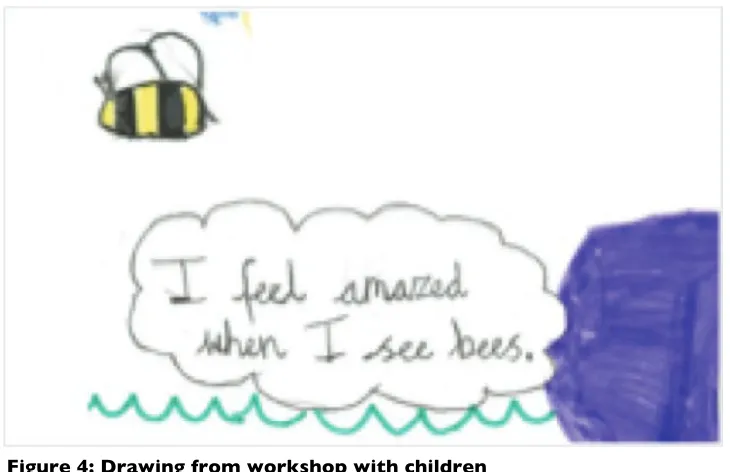
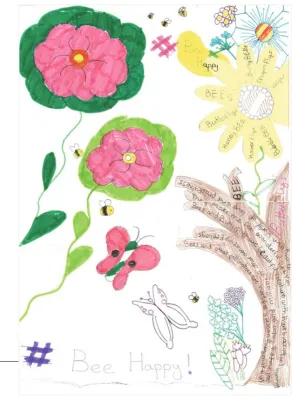
Over and above this, specific work was undertaken with children. For practical reasons, research with children is rarely carried out alongside work with adults; however, we were keen to incorporate exploratory work on children’s values as part of our overall programme, as we believe this audience is critical to the long-term engagement of society with the needs of pollinating insects.
Summary overview of primary research methods
What? Why? Who? How many?
Research strand
Participatory groups (whole day workshops)
Designed to explore collective values using more participatory methods.
Individuals with interest and expertise in pollinators Individuals with a connection to the site where the
workshop took place Other local community members
18 in each of two locations. Total: 36 Art ethnography projects (6-8 weeks)
Designed to explore individual values using more participatory methods
Individuals actively involved in the interest of pollinators in some way
Also, as co-researchers, artists (composers, sculptor)
3 participants in each of two locations. Total: 6
Discourse
analysis Designed to explore collective values as expressed in popular cultural forms of many kinds, from advertising to home decor to children’s’ books and beyond.
Samples drawn from popular sources such as
advertisements, magazine features and social media postings, and a smaller number of specialist sources such as academic articles.
Visuals and copy from around 350 items in total
Interviews (1 hour, in-home)
Designed to explore individual values, in context of understanding how interviewees
experienced, made sense of and found value in pollinating insects.
Individuals with limited engagement, recruited using the Tiering Study in
Christmas et al. (2013); participants were recruited from Tiers 1 and 3.
Total: 20
Workshops with
children 2 x short workshops
Designed specifically to explore the responses of children.
Children aged 8-11 years (Key Stage 2) at two separate primary schools.
8 children at each school. Total: 16 Application strand Key informant interviews
Designed to explore the realilty of policy- and decision-making in relation to pollinators
Individuals involved in at national and local level in policy- and decision-making with a bearing on pollinating insects.
25
talking to individuals who place no value on pollinating insects. Screening out those from whom little can be learned is good practice in qualitative recruitment. Building on this insight, our approach to recruitment was based on two distinctions:
• To what do individuals attach value?
o Pollinating insects or pollinator-rich habitats specifically?
o ‘Nature’ more generally?
• To what extent is this reflected in action?2
o Taking action at a level that requires some effort
o Appreciating, enjoying, supporting, and low effort action
Clearly, neither of these distinctions is entirely clear-cut; and both represent a spectrum not a simple binary divide. Nevertheless, these distinctions provided a pragmatic basis for planning recruitment across the methods, illustrated in the schematic below.
Using this framework, the following approach to recruitment was adopted:
• Art ethnography work was undertaken with individuals in the top right-hand quadrant. A range of different domains and types of action on pollinating insects and pollinator-rich habitats was covered, including gardening, farming, conservation and beekeeping.
• Participatory groups involved a spread of individuals across all four quadrants. This allowed the groups to explore the collective values articulated in the interaction between these different types of individual.
• Interviews were undertaken with individuals from the lower half of the schematic, using the Tiering Study developed by Christmas et al. (2013) as the basis for recruitment.
2 This distinction was inspired by the Tiering Study undertaken by Christmas et al. (2013).
Individuals taking action on ‘nature’ more generally, e.g. in relation to
biodiversity
Individuals who appreciate, enjoy and care about ‘nature’
Individuals taking action specifically on pollinating insects or
pollinator-rich habitats
Individuals with an appreciation specifically of pollinating insects or
pollinator-rich habitats
What do people value?
To what e
xtent
is this r
eflected in action?
Nature Pollinating insects
Appr
eciation
Recruitment for these three strands was focused in one urban area (Bristol) and one rural area (the Marlborough Downs). These locations were identified as areas in which it would be possible, through existing networks, to identify individuals in the upper quadrants of the schematic. Moreover, locations were selected with a view to the recruitment not only of participants in the research strand, but also locally based key informants for the application strand across a range of key settings for policy- and decision-making important for activity under the National Pollinator Strategy (see below).
The application strand
9 interviews were completed with key informants involved in at national and local level in policy- and decision-making with a bearing on pollinating insects. The roles of these
interviewees spanned three key settings for policy- and decision-making identified as important for activity under the National Pollinator Strategy.
• Public spaces, such as parks • Farmed land
• Roadsides and the verges of other transport networks – specifically with a view to enhancing connectivity
Local key informants were recruited in the same urban and rural areas where qualitative research took place (Bristol and the Marlborough Downs). Recruitment for these interviews was challenging, reflecting, we believe, the relatively low priority which pollinating insects currently have in policy- and decision-making beyond the National Pollinator Strategy. In parallel, a review was undertaken of existing frameworks for taking into account social and cultural values, and in particular the approaches presented in the UK National Ecosystem Assessment (NEA) and National Ecosystem Assessment Follow-on (NEAFO).
Reflexive analysis
The team assembled to develop this project combined experience in the rigorous use of qualitative and interpretative research methods with expertise in communications and in environmental policy.
As a team, we have challenged ourselves to understand and articulate the wide range of social and cultural perspectives apparent in our evidence. However, the rigorous use of qualitative and interpretative methods also requires acknowledgement of the perspectives of the researchers, and the ways in which they may have shaped the understanding of the evidence that those researchers arrive at.
In light of this, it should be acknowledged that we are all university educated, middle class, white European, and broadly pro-environmental in our attitudes – although, with the exception of one expert member, none of us were unusually knowledgeable about pollinators prior to the beginning of the project. Our interpretation of the evidence, and our approach to
27
1. What are social and cultural values?
In this chapter, we set out our understanding of the term ‘social and cultural values’, in an effort to avoid the kind of failings identified by Kenter et al. (2014): “a lack of clarity of meaning, a fuzziness of concept and an interchangeability in usage with regard to the terms shared, cultural, social and plural values.” We also clarify our use of terms such as ‘pollinating insects’, ‘pollinators’ and ‘bees’. As such, the chapter provides essential context for the rest of the report.
1.1 Valuings and objects of value
At the heart of the construct of value is a connection between value and behaviour.
• On the one hand, value shapes behaviour.3 Specifically, the value assigned by an individual to possible objects of value shapes the way in which s/he allocates finite resources, such as time, energy, assets, money, attention, commitment, affiliation, and so forth.
• On the other hand, behaviour demonstrates value. Specifically, any behaviour which involves the allocation of finite resources demonstrates the value assigned by that individual to possible objects of value.
Behaviours which demonstrate value assigned to objects include: paying for them; giving up other valued objects for them; making time for them; caring for them; contemplating them; praying for or venerating them; working for them; fighting for them; taking risks for them; or even, in extreme cases, dying for them. For simplicity, we shall refer to all of these different types of behaviour which demonstrate the value an individual assigns to an object as ‘valuings’. It could be argued that any behaviour can be understood as a valuing, since any behaviour represents an allocation of time and energy that could have been expended on other
behaviour. In some cases, however, the allocation is minimal. For example, this is the case for some valuings which take the form of speech behaviour, such as saying (in the absence of a contract): “I would be willing to pay £100 for this”. Resource-light statements of value are not always matched by other, more resource-intensive behaviours, an observation which helps to explain the so-called value-action gap (which might more accurately be called a stated-value-demonstrated-value gap).
As the wide range of valuings indicates, possible objects of value are also extremely diverse (at least in everyday usage), and include: particular objects, people, or places; categories of object, people or place; behaviour – both particular behaviours and consistent patterns of behaviour (such as honesty); experiences; mental and physical states; relationships; abstract qualities; beliefs and ideals; identities; freedoms; and so forth. Among these many possible objects of value we may list pollinating insects.
3 Note that this is not to say that value determines behaviour. Many other factors have a bearing on behaviour,
29
1.2 From valuings to values
Valuings are discrete behaviours which demonstrate the value an agent assigns to an object. However, the value assigned by an agent to an object on a specific occasion reflects a range of situational factors, as noted by Mace et al. (2011) in the conceptual framework chapter of the UK National Ecosystem Assessment (NEA):
the value of many goods is context specific and varies over time and space. This is true of a great variety of goods (e.g. the value of a bottle of cold freshwater is greater on a hot day) and those derived from ecosystem services are certainly no exception.
Across many such valuings it may be both useful and appropriate to identify consistencies. Such consistencies are typically described using the term “value” as a countable noun – i.e. in ways that allow use of the plural form “values”. For example:
• Individual values are consistencies across many distinct valuings of different types of object by the same individual.
• Market values are consistencies across many distinct valuings of the same type of object by different individuals, with the condition that the valuings in question are limited to certain kinds of exchange behaviours.
• Non-market values are consistencies across many distinct valuings of the same type object by different individuals, derived in contexts where relevant exchange behaviours do not occur. Different kinds of value, that is, reflect consistencies across different ranges. (As such, it should come as no surprise if different types of value cannot simply be added up, even though the countable noun “value” is being used in the same sense in each case.)
What kind of consistencies, then, are social and cultural values? To answer this question, it is necessary to look more closely at the situational factors which shape the value assigned to an object on a specific occasion.
1.3 Perspective
One very important situational factor which shapes the value assigned to an object by an individual on a specific occasion is the perspective adopted by that individual on that occasion, and the capacity in which s/he therefore understands the object.
Consider, for example, a typical exchange on the BBC show The Antiques Roadshow. This involves multiple valuings, as the same object is understood from different perspectives and in different capacities. At the end of each exchange, for example, the expert values the object from the perspective of a professional valuer, in its capacity as an item which might be sold at auction. Prior to that, however, the same expert may have valued the object from the
perspective of a connoisseur, in its capacity as a link with the history of a particular artist or craft; or from the perspective of the presenter of a programme with a local focus, in its capacity as an item linked to local history. There may be a striking disconnect between the expert’s enthusiasm for a piece understood in these capacities and the estimated sale value subsequently assigned to it. In parallel, meanwhile, the owner of the object may also have explained how they value the object from the perspective of a private individual, in its capacity as bearer of personal or family narratives.