2017 3rd International Conference on Electronic Information Technology and Intellectualization (ICEITI 2017) ISBN: 978-1-60595-512-4
System Design and Characteristic Analysis of
Variable Frequency Hydraulic Crane
Donglin Cai and Li Fan
ABSTRACT
The hydraulic crane widely used at present has low efficiency, high noise and maintenance cost; it is difficult to meet the requirements of the development of energy conservation and environment protection. The hydraulic variable frequency speed regulation makes use of variable frequency motor to adjust the working speed of the quantitative pump, thereby regulating the output flow of the quantitative pump, and solving the problem of power matching from the source. The motor system is always in an efficient working state, thus avoiding the high-speed continuous operation of the motor and the hydraulic pump, improving the reliability, the service life and the energy utilization rate of the equipment. The design scheme of variable frequency hydraulic speed control system are put forward and its operating characteristics are analyzed in this paper.
INTRODUCTION
The hydraulic crane possesses the following advantages such as high lifting capacity, a better adaptability for cargo handling, easy and reliable to operate, which make it widely used in various engineering fields. For crane with throttle velocity regulating hydraulic system, there are larger overflow and throttling losses resulting in reduced efficiency. And for crane with volumetric speed control, complex variable displacement control mechanisms are required, and swing angle of the ________________________
swash plate can only be limited to a certain range thus the speed range is limited. Therefore, the development of energy efficient, safe and reliable new speed control system of hydraulic crane is the direction of hydraulic crane. The advanced frequency conversion technology is applied to the hydraulic crane, design scheme of variable frequency hydraulic speed control system are put forward and its operating characteristics are analyzed in this paper.
DESIGN OF VARIABLE FREQUENCY HYDRAULIC SPEED CONTROL SYSTEM
Working Characteristics of Hydraulic Crane
For hydraulic crane, there are three main movements respectively hoisting, slewing, and luffing. The most frequent movement is the hoisting action for lifting cargo, and its energy consumption accounted for more than 80% of the load of the whole machine, so hoisting system is essential for the crane. When the motor vehicle lifting operation is used, the working loads are sometimes less than the rated load and the crane is in non-continuous and light load condition. And in the process of cargo handling in port, crane is often used to lift heavy loads. But these two kinds of operation states are both belonging to the intermittent work, and energy utilization is low. For the crane lifting hydraulic system, there are also exist surplus power design, dynamic response hysteresis, and the low degree of automation. At the same time, with the high standard of modern cargo handling operation, new requirements have been put forward for the reliability, efficiency, smoothness, and good mobility of the system. The traditional crane adopts the valve control system, problems have become increasingly prominent such as complex structure, low control precision, and high maintenance costs [1].
Improved Design of Hydraulic Crane
speed motor and variable pump system. PLC and frequency converter are combined adopted to regulate the asynchronous motor. Vector control speed regulation system is used, and it greatly improves the speed rigidity and stability. The motor efficiency keeps the same at speed regulation. The use of servo valve with high requirements on the medium is avoided by using of quantitative pump with high reliability and low requirement to the system [2].
Working Principle of Variable Frequency Hydraulic Crane
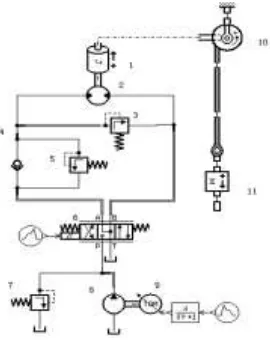
The hydraulic circuit of variable frequency hydraulic crane (as is shown in Figure 1) is mainly composed of a quantitative hydraulic motor pump, hydraulic motor, three-position four-way valve, roller, load, check valve and connecting pipelines. Variable-frequency motor, frequency inverter, PLC controller, sensor and the master controller are the main components of the electrical circuit. When the master controller sends up and down signal, inverter produces the corresponding voltage and frequency to drive the motor. The motor rotates, and at the same time the PLC controller makes the three-position four-way valve in the left or right working position, so as to achieve control of the hydraulic motor. When the three-position four-way valve works in the right working three-position, the hydraulic oil output by the hydraulic pump enters the hydraulic motor through the three-position four-way valve and check valve, the motor is driven, and the load is lifted by the rotary inertia and roller. And when the three-position four-way valve works in the left working position, the load is lowered.
1. Rotary inertia 2. Hydraulic motor 3. Safety valve 4. Check valve 5. Back-pressure valve 6. Three-position four-way valve 7. Relief valve 8. Constant displacement pump 9. Variable-frequency motor
10. Roller 11. Load
[image:3.612.230.365.412.582.2]SPEED REGULATION SYSTEM OF VARIABLE FREQUENCY HYDRAULIC CRANE
Mathematical Modeling
The vector control of frequency converter is based on the dynamic mathematical model of asynchronous motor. The torque, current component and exciting current component of motor are controlled respectively, which is similar to the control method of DC motor. When modeling, the frequency converter and asynchronous motor are modeled as a whole, which can reflect the actual work of the system more accurately. The relationship between the speed of the inverter motor and the control voltage of the input side of the inverter is calculated as [3]:
n=Kcu (1)
where n is the speed of variable frequency motor, Kc is the gain factor of frequency
converter, and u is input voltage of frequency converter.
Flow continuity equation of hydraulic mechanism is calculated as [5]:
ηpvDpωP = Dmsθm+ CtP1+ V0
βesP1 (2)
where ηpvis the volumetric efficiency of hydraulic pump, Dp is the displacement of hydraulic pump, ωP is the angular frequency of variable frequency motor and it is calculated as ωP = 2πn/60, Dm is the displacement of hydraulic motor, θm is the shaft angle of motor, Ct is the total leakage coefficient, P1 is the pump outlet pressure, V0 is the chamber volume, βe is the bulk modulus of hydraulic oil.
Moment balance equation of hydraulic mechanism is calculated as follows:
P1Dm= Jms2θm+ Bmsθm+ TL (3)
where Jm is the motor rotary inertia, Bm is the viscous damping coefficient of the motor, TL is the lifting load torque.
According to equations (2) and (3), two transfer functions can get. The first one is the transfer function of the angular displacement of the motor to the rotational speed of the hydraulic pump, and it is calculated as:
θm ωP=
Dp/Dm
s(s2
ωh+
2εh
ωhs+1)
(4)
θm
TL =
−Ct/Dm2(1+ βeV0
Ct s)
s(ωs2
h+
2εh ωhs+1)
(5)
where ωh is the undamped hydraulic natural frequency, ωh = √ βeDm2
V0Jm , εhis the
hydraulic damping ratio and it is calculated as εh= Ct 2Dm√
βeJm
V0 +
Bm
2Dm√
V0
βeJm.
[image:5.612.96.498.254.419.2]Simulation Analysis
TABLE I. SIMULATION PARAMETERS OF VARIABLE FREQUENCY HYDRAULIC CRANE.
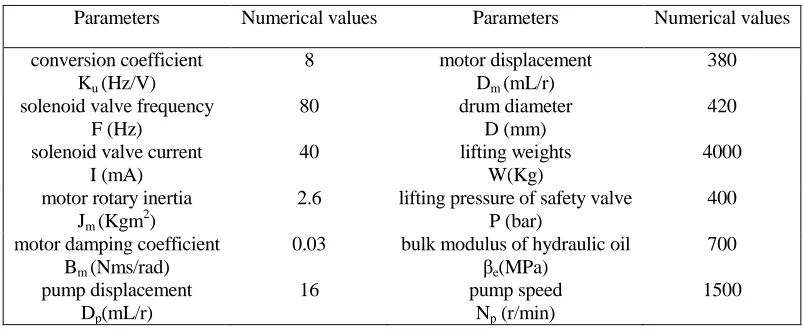
AMESim is used for simulation and performance analysis, so as to achieve reasonable design of variable frequency hydraulic crane. As is shown in Figure 1, the signal source is come from the inertial access. The voltage is input for the system simulation, the simulation curves under different working conditions are obtained. The simulation parameters are shown in TABLE Ⅰ.
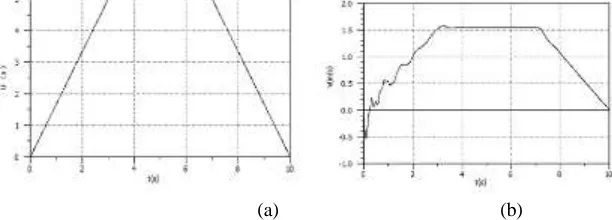
Figure 2(a) is the input voltage curve of frequency inverter and Figure 2(b) is the hoisting speed curve of variable frequency hydraulic crane. It can be seen that the acceleration, fixed speed and deceleration operations of the hydraulic pump are caused by the input signal voltage of inverter. The hydraulic motor drives the drum to accurately lift the load according to the instructions, and the load runs smoothly and follows well. As the displacement of the motor increases, the operating pressure decreases with the constant flow of the system. The system becomes more stable, the response characteristics become worse, and the speed becomes slower. The motor inertia increases, but the speed response is slower, and the overshoot becomes smaller. The slope of the system speed response has no change at all, but the overshoot increases. Conversely, reducing the load inertia can improve the speed response of the motor, but reduce its stationarity. On the other hand, the inertia of the system's speed response can be enhanced by reducing the inertia of the load. Parameters Numerical values Parameters Numerical values
conversion coefficient Ku (Hz/V)
8 motor displacement Dm (mL/r)
380
solenoid valve frequency F (Hz)
80 drum diameter D (mm)
420
solenoid valve current I (mA)
40 lifting weights W(Kg)
4000
motor rotary inertia Jm (Kgm2)
2.6 lifting pressure of safety valve P (bar)
400
motor damping coefficient Bm (Nms/rad)
0.03 bulk modulus of hydraulic oil βe(MPa)
700
pump displacement Dp(mL/r)
16 pump speed
Np (r/min)
Therefore, in terms of a setting variable frequency hydraulic system, in order to obtain good comprehensive performance, the load moment of inertia should be a more reasonable value. The effective volume of the high pressure side of the motor speed decreases, the motor speed response becomes faster, the overshoot becomes smaller, and the system becomes stability better, but it will not affect the stable value of the speed. But for the system pressure, the peak value increases, the overshoot increases, and the stationarity becomes worse, but it does not affect the steady-state value of the system pressure. Therefore, shortening the transmission line between the pump and the motor will increase the speed response of the motor speed, but system pressure shocks may occur. In short, by adjusting the displacement of the
[image:6.612.107.413.229.339.2](a) (b)
Figure 2.(a) Input voltage curve of frequency inverter, (b) Hoisting speed curve of variable frequency hydraulic crane.
hydraulic motor, effective volume of the high pressure side and motor rotary inertia, the parameter overshoot and the transition time are reduced. Thus the natural frequency ωh and damping ratio εh can be changed, and the dynamic performance of hydraulic system is greatly improved. As is shown in Figure 2(b), at the initial stage, there is a significant decline fluctuation in speed. This is due to the hydraulic pump does not build enough oil pressure when the hydraulic pump rises at zero speed without the braking system, and the hydraulic motor does not form enough torque to overcome the load, the weight of the load, the compressibility of hydraulic oil system, internal leakage and other factors, which will result in variable frequency hydraulic crane "second slipping" phenomenon. For the variable frequency hydraulic crane system, by properly setting the opening time of the brake, the problem of “second slipping” can be solved better, and the system can be prevented from damaging the parts by hydraulic impact.
fixed motor. The system speed of variable pump and fixed motor is based on the assumption that the load does not affect the motor speed. But with the change of the load, asynchronous motor speed will change greatly. In addition, the slow time-varying characteristics of hydraulic system, such as oil temperature, viscosity and leakage of hydraulic system, will mostly change nonlinearly with time, and also affect speed stiffness. Therefore, to improve the motor speed regulation accuracy, on the one hand, it is necessary to ensure that the motor speed does not change with the load changes; the other side is to eliminate or reduce the effects of the slow time-varying characteristics on the system. The use of frequency converter with vector control can greatly improve the speed stiffness of motor spindle, but it cannot reduce the influence of slow time-varying characteristics on system output. So in the vector variable frequency hydraulic speed regulation period, reducing leakage has become the main measure to improve the speed regulation accuracy. Considering the motor characteristics of the system, it is necessary to add a low pressure compensation unit at low speed, so as to further improve the motor torque and the stability of the control system [4].
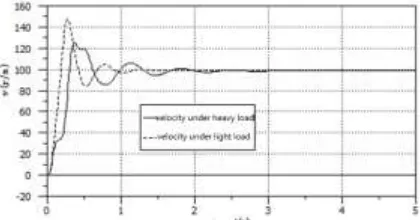
Figure 3. Speed curve of variable frequency hydraulic crane under different load conditions.
Figure 4. Load hoisting speed curve of variable frequency hydraulic crane.
CONCLUSIONS
Speed characteristics of variable frequency hydraulic crane are better than the traditional crane. Different cargo handling can be achieved by changing the frequency conversion mode of frequency converter. Variable frequency hydraulic crane has fast dynamic response, smooth running, hard load rigidity and a wide range of speed regulation. And it also has the advantages of energy saving, low noise, long service life and low maintenance cost advantages, thus it has a broad application prospect.
REFERENCES
1. Yongfu W, Miao S, Guomin L, et al. Selection and Analysis for Hydraulic Rotary Apparatus of the Deck Hydraulic Crane. International Conference on Mechatronics, Electronic, Industrial and Control Engineering (MEIC 2015), pp. 1417-1420.
2. Lu Zhizhen, Li Xuehu, Shu Xiyong, Wang Chenglong. Marine telescopic folding crane hydraulic system design [J]. Modem Manufacturing Engineering, 2012, (3):110-113.
3. Chu Y, Æsøy V, Zhang H, et al. Modelling and Simulation Of An Offshore Hydraulic Crane[C]//ECMS. 2014: 87-93.