196
ONTOLOGY KNOWLEDGE MAP FOR ENHANCING
HEALTH CARE SERVICES: A CASE OF EMERGENCY UNIT
OF SPECIALIST HOSPITAL
MAHDI ALHAJI MUSA1, MOHD SHAHIZAN OTHMAN2, WALEED MUGAHEED
AL-RAHIMI3
1,2,3
Department of Information System, Universiti Teknologi Malaysia, Johor Bahru, Malaysia
E-mail: 1
ABSTRACT
In developing countries, the health care spending has been constantly increasing in the last decades, and statistics has shown a lot of lapses in the running of the affairs of the health care systems. As a result, there is serious need to introduce new and innovative way of doing certain transaction in the hospitals in order to improve the total efficiency of the hospitals. To address this, we propose a method based on Ontology knowledge map to locate the unnecessary transactions that must be redesigned to improve the healthcare management. We carefully choose this methodology to address the problem statement because it tend to gives a better understanding of the general and dynamic situation of the Hospital emergency unit (EU), and at the same time provides a good alignment between the operation and enterprise design. The method was tested in the EU of the state specialist Hospital Damaturu, where we have succeed in locating some transactions that can be redesign or removed. Evaluation of this methodology was done by means of observations, interviews and feedback from practitioners. . A result shows that there are a lot of unnecessary process in the emergency unit which we are able to removed/redesign, it is also observe that there is also need for the hospital to deploy Electronic Health Record (EHR) to reduce error due to manual recording and reduce time response as well.
Keywords: Ontology, Knowledge map, Heath care, Emergency unit (EU), Design Science Research
Methodology (DSRM
1. INTRODUCTION
As a result of insurgent activities in north eastern part of Nigeria especially Yobe State, the emergency unit (EU) of the state specialist hospital has became congested with emergency case. Currently, the unit is operating under manual method of registering patients. As a result of the need for innovation that will improve the efficiency in the hospital a generic architecture for the healthcare delivery was proposed to face problems like the inconsistency of clinical information, the low interoperability between different healthcare units, the absence of a common rule to identify patients, and the existent barriers to the information sharing challenge in the healthcare system. The emergency unit needs to improve treatments, eliminate non value-added activities,
reduce waiting time and expenses, treat more patients, and implement new technological services [1].
Healthcare emergency unit face several challenges such as providing services efficiently, achieving strategic and operational success, and improving their business processes. They are forced to make these improvements not only to compete and prosper, but
also to merely survive strong external forces, such as technological breakthroughs, rapidly evolving customer needs, globalization trends and political or economic factors [2].
197 This situation is even worse when there is data indicating that cost and quality are not correlated, because some lower cost healthcare systems produce higher quality care, there are still long lines for specialty services and technologically advanced care, and some estimates indicate that a staggering 50% of healthcare consumed seems to be driven by physician and hospital supply, not patient need or demand [3, 4].
A frightening factor is that its expenditure accounts for 10% of the Gross Domestic Product (GDP) in developing countries, and there is an increasing trend. Other than that, there is data indicating that service cost and quality are not correlated by showing inefficiency in resource consumption, which is not reflected in improved quality of care. Consequently, quality of life may be affected because of a knock-on effect on the economy, increase in tax rates and insurance contributions, disinvestment in other public services, and increased difficulties to afford healthcare [4, 5]. Hence, this study stems from the assumption that many healthcare processes have become inefficient and unsustainable, which affects the management of the healthcare system.
Although the problem is identified as a need for emergency unit to be, some authors argue that there is no strong and reliable method to solve this problem [6]. It is estimated that over 70% of strategic initiatives such as Total Quality
Management (TQM), Business Process
Reengineering (BPR), and Six Sigma, among others, tend to fail [7].
Emergency Departments (EU) are
considered a highly complex system, with numerous managerial challenges, and accounting for the majority of the overall Hospital spending [3, 5, 8]. Moreover, they have some concerns of their own, such as the fact that the cost of treating an episodic illness is higher than outside the EU, some patients cannot wait, several resources must be available for prevention, there is not much time to make decisions, and patients cannot stay in the service taking up space from other acute episodes.
The Fast-Tracking System creates a separate staffed area for patients identified as low-acuity at triage, avoids huge waiting times, improves customer satisfaction, and reduces service occupation. It is particularly useful when a patient only needs a prescription or examination, and there
are others needing an extensive and lengthy workup
and treatment. This approach promises
improvement results of almost 50% more patients [9].. And this issue is best tackled by introducing some information systems like Electronic health record into healthcare systems [10].
This lengthy process is normally as a result of lack of integration between the people in organization and the business process in the health care sectors which can be easily tackle by using knowledge management technique known us knowledge map [11]. Therefore, in this research we employ the use of design science methodology approach (DSRM) in order to develop a method using Ontology knowledge map which will make it possible to integrate the process and organization together during the redesign process. Therefore, the main objective of this study is to provide a method based on Ontology knowledge map to find non value-added transactions, and redesign them to improve the healthcare management.
The following section describes the healthcare
management, organizational knowledge and
ontology as our knowledge base. The methodology (DSRM) is later discussed and evaluated in an emergency unit of a Hospital. Demonstration of this method is then discussed, and finally discussion and future work of this study are presented.
2. RELATED WORK
This section will describe the literature review
with regards to healthcare management,
organizational knowledge and ontology. The detail of each is described below:
2.1 Healthcare management
This section starts by giving a glance about healthcare management as a whole, and then introduces emergency department. We chose this unit as it covers the first line of access to the healthcare system, and because we focused on them for the demonstration phase. The concepts described in this section are considered essential standards to any healthcare improvement process [5].
198 often ambiguous or blurred, and frequently shift as health services provision moves from one to another. At the event of emergency situation typical patient journey should start with contact with emergency unit for an initial diagnostic consultation, and might then involve the patient being referred to secondary care for more specialized diseases or treatment, or a tertiary service for even more specialized follow-up. However, these sectors overlap and it is frequently true that an individual patient may receive services within more than one sector at the same time [5, 12].
HEALTH CARE SYSTEMS
SECONDARY HEALTH CARE
•
HOSPITALS
•
IN PATIENT CLINIC
TATIATY HEALTH CARE
•
SPECIALIST UNIT
•
OUT PATIENT
•
IN PATIENT
•
REHABILITATION UNIT
PRIMARY HEALTH CARE
[image:3.595.92.287.283.490.2]•
GENERAL PHYSICIAN
•
DENTISTS
•
PHARMACISTS
Figure 1 Sectors of within a healthcare system (Walshe and Smith, 2010)
Most of the practices described above are not tied to any methodology, being created and implemented ad-hoc for specific problems or tasks. From some perspectives, these practices are important as they come from the accumulated experience, can be implemented during a redesign or reengineering project, and some of them report good results. For example, these practices help to
avoid medical errors, increase customer
satisfaction, reduce unnecessary work, and consequently, affect positively the quality of life, public health, and operational efficiency [5].
To understand the details relationship between the patients and Doctors in the emergency unit, there is need for analyzing the process with a single practice or practitioner is viewed as being vital in relation to both individual and population health. It enables long-term relationships between
patients and physicians, increasing the amount of information, which in turn improves the monitoring and the decision making process. The importance of a health care enhancement has been powerfully demonstrated, for example, in New Zealand [12, 13]. A study suggested that lack of exixsting knowledge process for extracting knowledge from workers is one of the problem associated with healthcare service delivery [14] But it is difficult to archived this unless the available knowledge and other resources in that organizations are known and utilized and this require a knowledge map which will locate the resources in the emergency unit and merge them with the corresponding actors like medical doctors and nurses.
2.2 Organizational knowledge
Organizational knowledge is aims at representing all the available types of knowledge in that particular organization for example, know why, know-who, know-how, and know-what. Knowing according to [15 is define as the application of knowledge in a business systems at the same time tries to understand how that knowledge is applied in the process [16]. Know –what is the knowledge that deals with what to do? This type of knowledge is normally embedded in the process instances of that organization. Know-how is the knowledge of how to carry out certain task and is inherent in the chain of the process. Know-why is dealing with interactions between the goals and actors in the organization, or between the processes. This normally is concern with why certain things are done in a particular way and not how they are been done. Know-who is concern with who knows how to carry out a particular task that is who knows what. This is usually embedded in the transactions between the actors and their corresponding roles in social networks. And lastly know-where is related to where a particular resources is located in the organization. For example an actor may look for a document that contain some information on how to troubleshoot a machine, in a particular location where that document is been kept.
199 for object`s learning [17] and mind map for improving memorization [18].
A knowledge map describes the representation of knowledge which at the end will reveal the underlying relationship between the knowledge sources using a technique called a map metaphor for spatial display. A typical example of this types of map is the knowledge map for emergency unit in a hospital where the underlying relationships amongst Doctors, patients, Nurses, Technologist are highlighted by using blocks diagrams [18].
The individual knowledge in the map can either be a text, models, graphics or number. A knowledge mapping is therefore the process of associating unit of information so that the mapping will creates additional knowledge maps that can be used in a corporate context. To appropriately design good knowledge map ontology is needed to accurately represent relevant knowledge sources and match them with corresponding actors.
2.3 Ontology
The term “Ontology”, in its abstract philosophical notation can be defined as a branch of metaphysics concerned with the nature and relations of being [19]. Its notion has been used in several disciplines as a form of knowledge representation about the world or some part of it, or a specification of a shared conceptualization. In our thesis context, the purpose of ontology is the specification of a conceptualization for describing and understanding the construction and operation of the enterprise system, in line with previous researches [20].
There are many techniques for
organizational modeling in the literature. Amongst which are AALADIN, MOISE+, Agent/Group role (AGR) and Enterprise Ontology (EO) each focusing on specific situation in the organization. AALADIN and AGR are focusing on the structure of the organization and concern with agent, role and groups [21]. MOISE+ looks into functional areas in the organization like goals and admissions [22]. AIML is focusing on goals, roles agent and interactions [23]. And finally the enterprise ontology is considered as the combination of all these modelling techniques because it focuses on computational representation of information, people, resources, behaviour, process, constraint and goal [24].
The Enterprise Ontology is a collection of terms and definitions relevant to business enterprises modeling and provides a formal way to define a particular domain. It has its roots in the
Performance in Social Interaction Theory (PSI-Theory), which provides an explanation of the construction and operation of emergency units at the level of human interactions, allowing a better understanding of the operation [25]. The four major components in the enterprise ontology are: activity, organization, strategy, marketing and time. It also concern with only the essence of operation of an organization and not minding the current situation of operation in the organization. The theory of the enterprise ontology is based on the work by [6, 26].
There are several benefits for using enterprise ontology for business process reengineering among which is using common vocabulary and understanding for formal notations [23]. During business reengineering programme ontology also help in acquisitions and organization of process knowledge.
3. METHODOLOGY
200
IDENTIFY PROBLEM AND
MOTIVATION
Define problem and show importance
EVALUATION
Observe how effective, efficient And iterate back
to design DEMOSTRATION
Find suitable context Use the artifact to solve problem
COMMUNICATIO N
Scholarly publication Professional publications DESIGN AND
DEVELOPMENT
Artifact DEFINE THE OBJECTIVE OF THE SOLUTION
What would the artifact accomplish
PROBLEM CENTERD INITIATION
CLIENT CENTERD INITIATION DESIGN & DEVELOPMENT
CENTERD OBJECTIVE CENTERD SOLUTION
Possible research entry
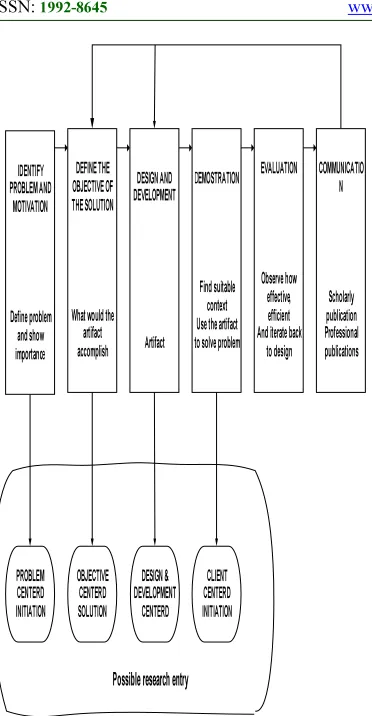
Figure 2 design science research methods by Peffers et al. (2007)
3.1 Problem Identification
This first stage of DSRM was discussed in section 1 (Introduction section). Where the researcher mention that as a result of insurgent activities in north eastern part of Nigeria especially Yobe State, the emergency unit (EU) of the state specialist hospital became congested with emergency case. Currently, the unit is operating under traditional method of registering patients. This situation called for urgent need for redesign the unit in order to improve on the overall efficiency of the unit. (see introduction section for more reading)
3.2 Objectives Of The Research
The main objective of this study is to propose a method based enterprise ontology and knowledge map that will help enhance business process redesign in health care sector. And this can be achieved by integrating both the organization and the business process during the redesign
programme. The method will help identify all the available knowledge in the emergency unit, and the location of expert. By using knowledge map it is also possible to locate and identify those transactions and process that are inefficient through interviews with various stakeholders (Unit Director, Doctors, Nurses, Lab. Scientist, Health assistants) and observations in the unit. These stakeholders are usually identified when the ontology for the decision makers is been queries to know those actors playing the roles of decision makers.
3.3 Design And Develop The Artifact
In order to successfully design and develop the artifact, there are three (4) steps to be follows. The details of each steps is described below:
3.3.1 Design Formal Enterprise Ontology Of The Organization
The representation of relationship between business process, tasks, sub-tasks, decision makers, resources and goals is the main objective of ontology. The ontology below was adopted based on the work by [30] and the exacted knowledge from the Hospital. The information obtained from
the Hospital was represented in formal
organizational ontology which provides us with the
coherent, consistent and comprehensive
organizational model. Fig. 3 below shows the formal enterprise ontology for medical care
[image:5.595.92.278.114.472.2]201
Sub goal Organizational
Goal
Case
Group
Interaction
Sign Symtom
Task
Role Actor
Outcome
Investiga tion
Has contain
Treatment Plan
Treated by
is a member of
Consume people
proceeds Is played by Achieved
Achieved
assigned
Occurred between
Specify
Performed by
Final
Determines
Has
Has
Decomposed into
Diseases Diagnosis
[image:6.595.87.515.99.576.2]Resources
Figure 3 Ontology for medical care
In order to validate the completeness and consistency of the ontology developed; we carefully select 5 Doctors, 4 Nurses and 6 Scientist from Laboratory and radiology department for interviews. 2 among the Doctors each has over 14 years working experience in patient management at the same time they are involve so many administrative roles in the Hospital including information technology committee. The other Doctors ware resident and therefore have enough experience in the current business process of the emergency unit hence we used them to validate the developed ontology as well. 3 among the Doctors
and 2 among the Nurses were involve in developing the ontology where as the remaining team were used in validating the ontology, which means different set of expert were used invalidating the ontology in order to have broader view of the concept from different perspectives.
3.3.2 Develop Knowledge Map For The Organization
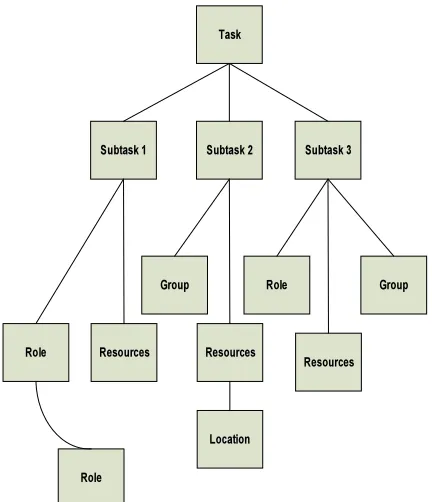
Knowledge map represent the detail relationships among the actors, group, roles and process in the organization. The map at the same time will provides views which is different from instances of the developed ontology for a particular process that is been addressed. In order to develop this map some information like instantiated ontology and available existing diagrammatic diagrammes of the business process will be required (e.g. business process diagrams). Fig. 4 below shows the knowledge structure map, which is general for all types of organizations.
Task
Resources Group Subtask 3 Subtask 2
Role Subtask 1
Location Resources Resources
Group
Role
[image:6.595.304.520.389.640.2]Role
Figure 4 knowledge structure map
202 map to the assign task and know where to access certain resource required for that task. To build the knowledge structure map the knowledge about the major components (task, sub-tasks, roles, groups, resources and interactions) has to be clear. For example the know-where is describing the location of a resources require to perform certain task, the
know how is describing the procedures on how to
carry out a task which is normally access through the documentations and other graphical diagrams of the organizational business process. The know-how also can be resolve by interviewing the experts in the organization who are identified as players of roles in a business process in question.
3.3.3 Analyse Knowledge Map To Check For Inconsistencies
After carefully developing the
organizational knowledge map, the next step is to analyse the map in order to check for inconsistencies. This including checking the know-what for example and making sure a particular actor knows where a particular resources is located in the knowledge structure map. And in the know-who aspect, is by making sure that groups and actors knows which and where they can interacts to get what they need for a particular task assigned to them. If there are any inconsistencies in the map we have to the re-address the issues and make sure that the map is good enough based on the ontology of that organization.
3.3.4 Update Organizational Ontology
The business process gaps identified above are then evaluated by the team undertaking the business process reengineering process. This is normally done by interviewing various stakeholders of that organization. For example in a hospital, the doctors, nurses, health assistants, clerks, and the patients can be survey and interview on their opinion with respect to that inefficiencies identify in the process of reengineering. They will therefore determine how the business process or the environment will be address to handle these inconsistencies. This solution can be either giving enough training to the employee of the organization or outsourcing some information systems artifact that can help the organization do business in a more efficient easy.
Defending on the type of inconsistencies, for example if the problem is from knowledge mismatch that is lack of appropriate knowledge from the actors to perform a particular task, then there will be a recommendation that the said actor
must be given a formal training so that he/she can acquire more knowledge to handle that particular task. And then at the end all these inconsistencies will be addressed in the ontology by re-addressing the instances and relationship based on the current situations.
4. DEMONSTRATION
In order to demonstrate this artifact, we applied it in an emergency unit of Yobe State Specialist Hospital, Damaturu. We present the demonstration at the unit in order to re-engineer the health care systems. In order to achieve this demonstration, we conducted a series of interview with the stakeholders in the hospitals including the Doctors, Nurses, and other health workers mainly to obtain important input applicable to the proposed artifact. This input will further help in getting practitioners feedback and that will enable us to validate the artifact. The interview was done during the field visits to the Hospital in question. There after we had several phone call and emails as follow up to the interview so that we can validate the information obtained.
203 REGISTRATION NO MID NIGHT
ASSORTMNET
DIAGNOSIS
EXAMINATION
YES
ASSORTMENT
E U
DIAGNOSIS
EXAMINATION
E U CLINIC PRESCRIPTION DECISION
PHARMACY
EXIT
YES
NO NO
YES NO
YES
YES NO
LABORATOR Y
YES
YES
NO
NO YES
[image:8.595.93.291.112.549.2]PATIENT ARRIVAL
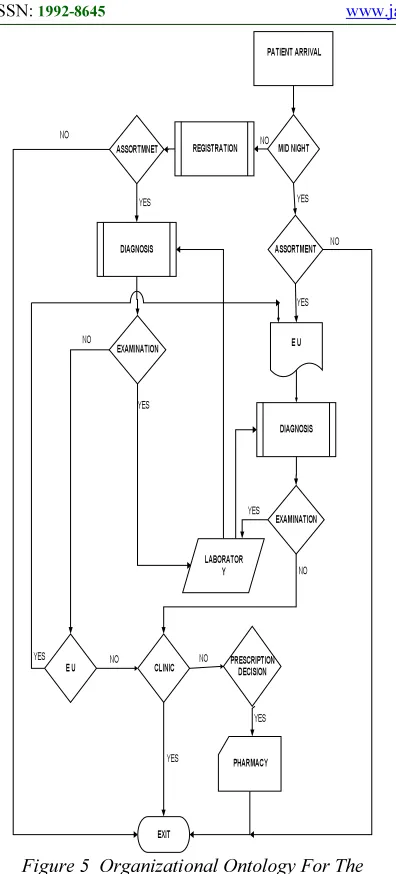
Figure 5 Organizational Ontology For The Emergency Unit
The emergency unit of the hospital operate 24 hours per day. Generally, all patients that arrived to the unit between 8:00am to 23:59pm have to go through process of registration. And depending on how urgent the situation is, a patient can skip registration and examination and proceed to EU for urgent attention.
When a patient arrived before mid night, normally he/she will be requested to register at the office. The patient or patient relative will be ask to provide certain information like name, age, address, sex, and he/she have to pay N20 for the registration. Thereafter, the patient will wait at the waiting room and a nurse will
ask him/her as many question as possible with regard to the problem, and then the nurse based on the answers and the physical situation of the problem she/he will characterise the level of the triage. This is just to allow the patient with urgent situation get attention first before the less severe patient.
From figure 5 above when a patient arrived before mid night, he has to go registration and then if everything is ok then he goes to the diagnosis room where a nurse will check his temperature, blood pressure, and heartbeat. After that a physician will provide initial examination. A patient after that has to wait for the test result in the waiting room. After the result is out there are 3 possible cases. Firstly, if the case is so serious the patient will be send to the appropriate department in the hospital for treatment. Secondly, if the case is minor then the patient will be given a prescription and then discharge from the hospital. Thirdly, in the event the patient require additional test, he/she will be ask to stay back in the EU, in order to make more laboratory test. The next step in the demonstration phase is to draw the
knowledge structure map of the
emergency unit, which will give us an insight of the relationship that exist between the actors and their roles in the unit.
4.1 Knowledge Structure Map
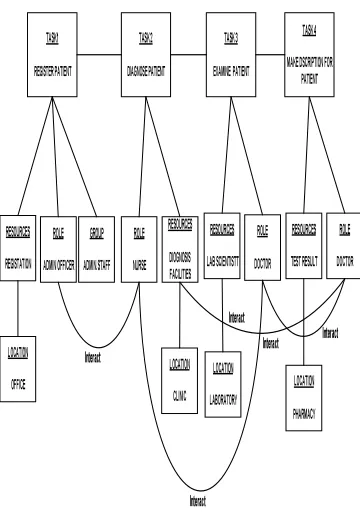
The second aspect of the demonstration is to draw the knowledge structure map of the unit. The knowledge map provides us with the details of sequencing of the tasks, sub-task and the decision makers like actors and groups that are involves and also provide us with the interaction between these actors and their roles.
204 hospital. We also interviewed some patient that once ware admitted in the emergency unit on how they see the process and what they have undergone during their stay in the unit.
We draw the initial map and call for a meeting with the staff of the unit including the Director and then display the map for them and then start criticizing on where is not correct and so on. We had serious brainstorming and series of meeting before coming up with the final knowledge map of the unit which is shown below.
TASK 2
DIAGNOSE PATIENT
TASK 3
EXAMINE PATIENT TASK1
REGISTER PATIENT
TASK 4
MAKE DSCRIPTION FOR PATIENT
RESOURCES
REGISTATION
RESOURCES
DIOGNOSIS FACILITIES ROLE
NURSE GROUP
ADMIN. STAFF ROLE
ADMIN OFFICER
ROLE
DOCTOR RESOURCES
LAB SCIENTISTT
ROLE
DOCTOR RESOURCES
TEST RESULT
LOCATION
CLINIC
LOCATION
PHARMACY LOCATION
LABORATORY LOCATION
OFFICE
Interact
Interact
Interact Interact
[image:9.595.88.268.330.587.2]Interact
Figure 6 Knowledge structure map of EU
From figure 6 above, a patient will be first diagnose by the nurse to record his/her temperature, blood pressure and weight among other things. This measurement takes place in the clinic. After that a doctor will began initial examination by requesting for some test where necessary through laboratory scientist as a resource. The final step is for the doctor to prescribe appropriate medicine to the patient after accessing the test result form the laboratory, and then the patient will move to pharmacy to take his/her prescribed medicine.
4.2 Analysis The Knowledge Map
The third step of the design and development stages of DSRM is to analyze the developed knowledge structure map and check for inconsistencies. The map in Fig. 6 indicates all the actors involve in the services of the EU and their corresponding roles. The map also indicates where a particular resource can be located in the unit, example a test is normally done in laboratory which represents the location, and prescribed medicine are collected in pharmacy. The map shows the interaction between various actors in the EU, for example a laboratory scientist interacts with Doctor, and a Nurse also interacts with the Doctor in the event of work.
From the map and interview with the staff of EU, we learnt that if a patient arrived before mid night, a Nurse has to wait for the administrative officer to forward him with registration document of the patient before he proceeds with the diagnosis. During our observation in the unit we have seen that this registration procedures is been done manually and normally takes 10 to 30 minutes depending on the communication understanding between the officer and the patient. Even though the case is emergency, but still nurse must wait for the registration exercise to complete. This queue for registration seriously affects the emergency situation in the unit, and according to the nurses interviewed the situation called for urgent redesign in order to save life.
Secondly, according to the interviews with the laboratory scientist the technician lack enough knowledge on how to carry out certain tests. This make the staff to repeat a test sometimes before ascertain the result. This may be due to lack of skills on how to use certain facilities in the laboratory. There is need to for the staff to acquire appropriate knowledge on their domain to carry out tasks efficiently by giving them a formal training.
Lastly, after a nurse diagnosis a patient the result has to be taken in a manual form to a doctor for further investigation. This process will take some time before the Doctor get the information and then starts examination. Another big problem with this is that the data might be wrong as a result of manual process of writing the result in a form. Where this information is wrong, the result of the diagnosis like blood group type, weight and age can be dangerous to the patient as the result of doctor`s examination will be based on such wrong figures.
205 systematic collection of patient`s information which can be easily shared among all unit of the emergency unit. This sharing can be in form of intranet network or enterprise information systems. The record can includes several data like medical history, demographics, medications and allergies, laboratory tests result, radiology images, and for bio-data statistics like weight and age. The systems will be design in such a way that it will represent information accurately captures the state of patient at all time. This will provide the opportunity to view the entire patient`s history at any point in time without having need to track patient`s previous record file. Therefore, this system will ensure that all data captures are accurate, legible and appropriate. It reduces the tendency for a Nurse to make mistake in giving the written data regarding a patient as there is only single, unique and modifiable file for a patient, and that file is been constantly updated when view at a late time so the issue of lost of paper form is eliminated. As a result of organizing all the information in a single file, it is therefore more efficient to extract medical data for examination as result of long term changes in a patient. And more importantly, the Doctor do not need to wait for a Nurse to bring him/her the result of diagnosis as he can immediately access them from his/her computer connected to the network.
4.3 Update Organizational Ontology
Once these recommendations above are approved, the changes recommended will be reflected in the new instantiation of the ontology. The first recommendation which was to removed/automate the registration exercise by way of allowing the patient to proceed to EU without going through the registration and diagnosis stages. This will save a lot of time and facilitate the fast tracking of the
patients in the unit. And the second
recommendation was to deploy Electronic Health Record (HER) which will eliminate the possible duplication of data and error associated with manual recording systems. In effect, the new organizational ontology of the emergency unit is shown in the Fig. 7 below:
ASSORTMENT
E U
DIAGNOSIS
EXAMINATION
PRESCRIPTION DECISION CLINIC
PHARMACY
EXIT Yes
EHR SYSTEMS ARRIVAL
Yes
No
No
Yes
Yes REGISTER
PATIENT
Update Includes
Update No
[image:10.595.307.521.86.475.2]LABORATORY
Figure 7 Proposed organizational ontology for the EU
Once a patient arrived at the emergency unit, a dedicated staff will assort him/her by confirming that the case is really urgent and at the same time the patient will be resisted using computer systems dedicated for that purpose. This registration will include all hi/her bio-data with a unique reference number that will be tagged to that patient so that any other information with regard to the patient will be added to that number. If everything is successful, the patient will move straight to the EU where a Nurse will immediately diagnose him/her by checking some information like temperature, blood pressure, blood group, and other relevant parameters that are necessary. The nurse will then update all these information in Electronic Health Record (EHR) systems which will be available to all relevant staff in the unit including Doctors, Nurses, and Radiologist.
206 patient`s reference number will immediately access all relevant information regarding the diagnosis result. For further examination, a patient will be send to laboratory for some tests. And the laboratory scientist will also update the EHR systems with the information of the tests. And this information will be made available to the entire unit for necessary action.
Depending on the result of the diagnosis and laboratory test, the Doctor will send the patient to the clinic or prescribe the appropriate medicine for him/her. From there the patient will move to the pharmacy to collect the medicine and then finally exit the emergency unit.
This process using EHR tries as much as possible to avoid large amount of storage space required in the paper based records. Among the advantages of EHR is that the cost of storage media such as paper and films is much more less than that of electronic storage media. And also the error associated with the paper work is more rampant compare to electronic media.
4.4 Evaluation
This section corresponds to the second to the last stage of DSRM, and is aim at explaining how the proposed artefact was evaluated. And then the section will also demonstrate how the artefact address the problems identified in section 1.
In order to evaluate the proposal, we used the framework proposed by [31], which is aims to help science researchers to build strategies for evaluating the outcome of a DSRM. This framework identifies what is actually evaluated, when the evaluation takes place, and how it is evaluated. The evaluation strategy entails the following steps, and is described in the following section.
i. Constructing scenarios to demonstrate the
artifact, and how to use it to solve the research
problem: in this section we have demonstrated
the artifact in an emergency unit of the Hospital where we are able to identify some transactions that are not necessary. And at the end we redesign those processes in order to improve the efficiency of the unit.
ii. Gathering feedback: we have gather feedback
from the practitioners through interviews. The practitioners also validate the proposed ontology for the emergency unit. We present a paper in a practitioner’s conference on this proposed artifact last two months and obtained
comments from the reviewers which we used as feedback for improving the proposal.
iii. The Moody and Shanks Quality Management
Framework: in this phase we try to make sure
that the staffs of the emergency unit clearly understand how the proposed process works. Only implementability factor was not tested as the unit was yet to deploy the proposed EHR systems at the time of this report.
iv. Evaluating the DSRM artifact: the proposed
artifact was evaluated using the four principles proposed by [28]. The four principles are
Abstraction, Originality, Justification and
Benefit.
5. DISCUSSION AND FUTURE WORK
Currently there are problems in most of the emergency unit of hospitals are related to time wastage in the process. To overcome these problems, this study proposes a method based on enterprise Ontology to find non value-added transactions, and redesign them to improve the healthcare management. Therefore, the method relies on a structured set of steps that include the development of enterprise models, their analysis in order to understand the essence of the organization and to find inefficiencies in transactions, the elicitation of possible improvements, their prioritization in terms of feasibility and impact, and finally the redesign of the organization.
We chose the Ontology as foundation for our study as it is deemed able to provide a better understanding of the dynamics of an organization, allows a good alignment between the enterprise design and operation, and enables a structured reengineering strategy. Furthermore, since its models are regarded coherent, comprehensive, consistent, concise and essential, it gives strength to the obtained models. The study focused on the emergency unit of the state specialist hospital, Damaturu-Nigeria as the case considering the nature of the existing problem which is highlighted in the introduction section of this paper. The study was able to identify the stages in the emergency unit that are not important and try to merge or skip them where necessary by introducing EHR in order to increase the efficiency of the unit.
207 them. One of the techniques we proposed is to automate the emergency unit by deploying EHR systems which will make it easier for the actors in the unit to access all the necessary information regarding a patient quickly and more accurately.
The two major stages that we recommend for redesign are:
i. Registration stage
When a patient arrived anytime before mid night (12:00am) he/she has to go through the process of manual registration. This registration exercise consumes a lot of time and a patient has to wait for quite some time before proceeding to the next step. And therefore, we proposed to merge this step with the next stage which is assortment. So a patient will register and at the same get assorted for possible admission in the unit and directly proceeds to EU for immediate consultation.
ii. Knowledge mismatch
The staffs of the laboratory need to acquire more knowledge on how to carry out their tasks effectively. This can be achieved by giving them formal training in their subject are.
iii. Manual recording of diagnosis and test
result
In this stage we found out that a Nurse has to record the result of the diagnosis manually and give the office attendance to take to the Doctor. This information takes quite some time before reaching the Doctor, and unless the Doctor sees this information he/she cannot proceed with the examination. The same is applied to the laboratory scientist, they also has to record the result of the tests manually in paper file and then send to the Doctor for further investigations. The process normally takes times before reaching a Doctor. So we proposed for the unit to use EHR systems which will allows the Nurses and the laboratory scientist to update their record in the computer systems and that information will be automatically be available to the Doctor. This will tremendously increase the speed of process and as much as possible reduces the error associated with manual records. the increased portability and accessibility of electronic medical records may also increase the ease with which they can be accessed and stolen by unauthorized persons or unscrupulous users versus paper medical records, as acknowledged by the increased security requirements for electronic medical records included in the Health Information
and Accessibility Act and by large-scale breaches in confidential records reported by EHR users
Handwritten paper medical records can be associated with poor legibility, which can contribute to medical errors. Pre-printed forms, the standardization of abbreviations, and standards for penmanship were encouraged to improve reliability of paper medical records. Electronic records help with the standardization of forms, terminology and abbreviations, and data input. Digitization of forms facilitates the collection of data for epidemiology and clinical studies
Further studies should be done to better quantify the impact and feasibility of the proposed improvements during the demonstration, namely by including costing models to the obtained diagrams. This can be a step towards the implementation of innovations in the healthcare system, the understanding of its costs, and also an asset to the Ontology by adding support for costing models.
There is also need to further look at how to formally represent the developed ontology using web ontology language (WOL) like protégé OWL. This will allowed for automatic updating of the developed ontology and will make it easier to detect any inconsistencies.
REFERENCES:
[1] A. Kumar and S. J. Shim, 2007. Eliminating Emergency Department Wait by BPR Implementation, Proceedings of the 2007 IEEE IEEM, page 1679-1683
[2] Kotter, J.P. 1996. Leading Change: Why Transformation Efforts Fail, Boston: Harvard Business School Press.
[3] Christensen, C.M., Grossman, J.H. and Hwang, J. 2009. The Innovator's Prescription - A disruptive solution for Health Care, New York:
McGraw Hill. 34910, 45-56
[4] Kaplan, R. and Porter, M., 2011, 'How to solve the cost crisis in health care', Harvard Business
Review.
[5] Walshe, K. and Smith, J., 2010. Healthcare
Management, Berkshire: Open University
Press.
[6] Dietz, J. and Hoogervorst, J., 2008. Enterprise
Ontology in Enterprise Engineering',
Proceedings of the 2008 ACM Symposium on
208 [7] Lifvergren, S., Gremyr, I., Hellstrom, A.,
Chakhunashvili, A. and Bergman, B., 2010. Lessons from Sweden's first large-scale implementation of Six Sigma in healthcare,
Springer, pp. 117-128.
[8] Williams, R., 1996. The costs of visits to emergency departments', The New England
Journal of Medicine, March, pp. 642-646.
[9] Jensen, K., Mayer, T., Welch, S. and Haraden, C. (2007) Leadership for Smooth Patient Flow, Chicago: Health Administration Press.
[10]Hasan Rafati, Hojat Rashidi Jahan, Mohamma Javad Hosein Pourfard, Hamid Reza Tavakoli and Shahram Tofighi, 2010. Study about the Pattern of Knowledge Management in (Glenview) Healthcare Service Provider, World
Applied Sciences Journal 8 (9): 1116-1121.
[11]Reijswoud, V., Mulder, H. and Dietz, J. 1999. Communicative Action Based Business Process and Information Systems Modelling with DEMO', International Journal of
Information Systems.
[12]Lapão, L. and Dussault, G., 2012. From policy to reality: clinical managers' views of the organizational challenges of primary care reform in Portugal', Int. J. Health Plann.
Mgmt.,230-239.
[13]Hefford, M., Crampton, P. and Macinko, J. (2005) 'Reducing health disparities through primary care reform: The New Zeland experiment', Health Policy, vol. 72, pp. 9-23. [14]K. Noraziani, A. Nurul’ Ain, M.Z. Azhim, Sara
Rekab Eslami, Bilal Drak, Sharifa Ezat W.P. and A. Siti Nurul Akma, 2013. An Overview of Electronic Medical Record Implementation in Healthcare System: Lesson to Learn, World
Applied Sciences Journal 25 (2): 323-332.
[15]M. Alavi, D.E. Leidner, 2001. Review: Knowledge Management and Knowledge
Management Systems: Conceptual
Foundations and Research Issues, MIS Quarterly 25 (1): 107–135.
[16]M.J. Eppler, 2001. Making knowledge visible through knowledge maps: concepts, elements, cases, in: C.W. Holsapple (Ed.), Handbook on Knowledge Management, Springer-Verlag, Berlin, Heidelberg, pp. 189–205.
[17]Kishore R, Zhang H And Ramesh R., 2006. Enterprise integration using the agent paradigm: foundations of multi-agent-based integrative business information systems.
Decision Support Systems 42(1): 48–78
[18]Martin J. Eppler, 2008. A Process-Based Classification of Knowledge Maps and
Application Examples,Knowledge and Process
Management Volume 15(1): 59–71 (2008)
[19]Merriam-Webster, 2012. Merriam-Webster Unabridged Dictionary, Version 2.5, [Online],
Available:HYPERLINK
"http://www.m-w.com/dictionary/ontology" http://www.m-w.com/dictionary/ontology [May 2012]. [20]Henriques, M., 2010. Enterprise Governance
and DEMO - Master Thesis, Lisbon: Instituto SuperiorTécnico
[21]J. Ferber, O. Gutknecht, F. Michel, 2003. From agents to organizations: an organizational view of multi-agent systems, Agent-Oriented Software Engineering IV: 4th
International Workshop, AOSE 2003, 2935, LNCS - Springer, pp. 214–230.
[22]J.F. H¨ubner, J.S. ao Sichman, O. Boissier, MOISE+, 2002. Towards a structural, functional, and dOntologyntic model for MAS organization, Proceedings of the First International Joint Conference on Autonomous
Agents and Multi-Agent Systems
(AAMAS'2002), Bologna, Italy.
[23]H. Zhang, R. Kishore, R. Sharman, R. Ramesh, 2007. Agile Integration Modeling Language (AIML): A Conceptual Modeling Grammar for Agile Integrative Business Information Systems, Decision Support Systems 44 (1): 266–284.
[24]M.S. Fox, M. Barbuceanu, M. Gruninger, J. Lin, 1998. An organisation ontology for enterprise modeling, in: M. Prietula, K. Carley, L. Gasser (Eds.), Simulating Organizations: Computational Models of Institutions and Groups, AAAI/MIT Press, Menlo Park CA, pp. 131–152.
[25]Pascoa, C., 2012. Organizational and Design Engineering of the Operational and Support
Dimensions of an Organization: The
Portuguese Air Force Case Study - Doctoral
Dissertation, Lisbon: Instituto Superior
Técnico
[26]Mike Uschold, Martin King, Stuart Moralee and Yannis Zorgios, 1998. The Enterprise
Ontology The Knowledge Engineering Review
, 13(Special Issue on Putting Ontologies to Use)
[27]Ken Peffers, et al., 2007. A Design Science
Research Methodology for Information
Systems Research, Journal of Management
Information Systems, 24(3): 45-78.
209 Systems Research', European Journal on
Information Systems, 20(1): 7-10.
[29]Lila Rao, Gunjan Mansingh, and Kweku-Muata Osei-Bryson, 2007. Building ontology based knowledge maps to assist business process re-engineering. Decision Support Systems, 52(3):577–589.
[30] Jan Dietz (2006). Enterprise Ontology - Theory and Methodology. Springer-Verlag Berlin Heidelberg.