BUILDING INFORMATION MODELLING (BIM) IMPLEMENTATION MODEL FOR CONSTRUCTION PROJECT DESIGN STAGE
SUZILA BINTI MOHD
A thesis submitted in
fulfilment of the requirement for the award of the Degree of Master of Science in Technology Management
Faculty of Technology Management and Business Universiti Tun Hussein Onn Malaysia
v
ABSTRACT
ABSTRAK
vii
CONTENTS
TITLE i
DECLARATION ii
DEDICATION iii
ACKNOWLEDGEMENT iv
ABSTRACT v
ABSTRAK vi
CONTENTS vii
LIST OF TABLES xiv
LIST OF FIGURES xvi
LIST OF ABBREVIATIONS xviii
LIST OF APPENDICES xx
CHAPTER 1 INTRODUCTION 1
1.1 Introduction 1
1.2 Research Background 2
1.3 Problem Statement 4
1.4 Research Questions 7
1.5 Research Aim and Objectives 7
1.6 Scope of Research 7
1.7 Significant of Research 8
1.8 Research Methodology 8
1.9 Research Organisation 10
1.10 Summary 12
CHAPTER 2 LITERATURE REVIEW 13
2.1 Introduction 13
2.3.1 BIM in the Malaysian Construction Industry 25
2.3.2 Definition of BIM 26
2.4 BIM Application in Project Design Stage 29
2.4.1 Visualise Project Models 29
2.4.2 Generate Fabrication or Shop Drawing for Various Building Systems
32
2.4.3 Utilise Project Model Parameters by Using Code Review
34
2.4.4 Preview Design Clashes Analysis 35 2.4.5 Assist in Preparing Cost Estimating 35 2.4.6 Assist in Preparing Project Scheduling 36 2.5 BIM Adaptation in Project Design Stage 37
2.6 BIM Tools in Design Stage 38
2.7 Benefits of Implementing BIM in Project Design Stage
41
2.8 Challenges in Implementing BIM 42 2.8.1 Legal or Contractual Issues Relating to BIM 43
2.8.2 Cost Issues 43
2.8.3 Skill and Knowledge Issues 44
2.8.4 Lack of Effective Strategy to Implement BIM 44 2.9 Potential Improvement of BIM Implementation in
the Construction Industry
45
2.10 Model Related to BIM and Construction Field 46 2.10.1 Capability Maturity Model (CMM) for Software 46 2.10.2 The Business Process Operation (BPO) Maturity
Model
48
2.10.3 The STEPS Model 49
2.10.4 The People Capability Maturity Model (People CMM)
49
2.10.5 The Bew-Richards BIM Maturity Model 51
2.10.6 BIM Maturity Matrix (BIm3) 52
2.10.7 Performance Measurement (PM) Migration Path Model
ix
2.10.8 Similarities Between the Models 54 2.10.9 Selection of Maturity Levels for the Research
Model
55
2.11 Theoretical Framework 59
2.12 Summary 61
CHAPTER 3 RESEARCH METHODOLOGY 62
3.1 Introduction 62
3.2 Research Purposes 62
3.3 Research Approaches 64
3.4 Research Strategies 67
3.5 Data Collection 71
3.5.1 Literature Review Related to BIM, Project Design Stage and Model Related to BIM and Construction Field
75
3.5.2 Semi-Structured Interview with Design Team 76
3.5.2.1 Respondent Selection 77
3.5.2.2 Development of Interview Questions 77
3.5.2.3 Pilot Study 78
3.6 Data Analysis Technique 80
3.6.1 Development of BIM Implementation Model for Design Team
81
3.6.2 Evaluation of Research Model 82
3.7 Summary 83
CHAPTER 4 DATA ANALYSIS AND FINDINGS 84
4.1 Introduction 84
4.2 Objectives of Interviews 84
4.3 Discussion on the Data from Interviews 85
4.3.1 Respondent’s Background 85
4.3.2 Current Practices of BIM Implementation in Project Design Stage
87
4.3.2.1 Understanding on BIM 88
4.3.2.3 Design Process for Construction Project Using BIM
98
4.3.3 The Effects of BIM Implementation in Project Design Stage
106
4.3.3.1 Issues Related to Project Design 106 4.3.3.2 Benefits of BIM Implementation in Project
Design Stage
110
4.3.4 Challenges of BIM Implementation in Project Design Stage
114
4.3.4.1 Challenges Faced by Design Team to Implement in Project Design Stage
114
4.3.4.2 Potential Improvement on BIM Implementation 120
4.4 Key Finding From Interviews 125
4.5 Summary 128
CHAPTER 5 BIM IMPLEMENTATION MODEL FOR DESIGN TEAM
129
5.1 Introduction 129
5.2 The Model: BIM Implementation for Design Team
129
5.3 Model Development Process 130
5.3.1 Step 1: Research Model Purposes 131 5.3.2 Step 2: Concept of Research Model 132 5.3.3 Step 3: Procedure of Research Model
Development
132
5.3.4 Step 4: Details of the Model Elements 133 5.4 Evaluation of the Research Model 140
5.4.2 Evaluator’s Background 141
5.4.2 Evaluation on BIM Implementation Model for Design Team Model Elements
142
5.4.3 Benefits of Using BIM Implementation Model for Design Team
145
5.4.4 Barriers to Use BIM Implementation Model for Design Team
xi
5.4.5 Improvements of BIM Implementation Model for Design Team
147
5.5 Summary 149
CHAPTER 6 CONCLUSIONS AND RECOMMENDATIONS 150
6.1 Introduction 150
6.2 Research Overview 150
6.3 Conclusion 154
6.4 Contribution of Research 155
6.5 Limitations of Research 156
6.6 Recommendations for Further Research 157
6.7 Concluding Remark 157
REFERENCES 158
APPENDICES
LIST OF TABLES
2.1 Definition of BIM. 26
2.2 Types of BIM Tools in Project Design Stage. 41
2.3 Summary of Models Similarities 55
2.4 Selection of Maturity Levels for Research Model. 56 3.1 Respondents Feedback on Interview Questions. 79
4.1 Respondents’ Backgrounds. 86
4.2 Understanding on BIM. 88
4.3 Purpose of BIM Implementation in Project Design. 90
4.4 Design Stage Activities. 94
4.5 Construction Players Involved in Project Design Stage. 95
4.6 Design Process for Project Using BIM. 98
4.7 Level of Development (LOD). 102
4.8 The use of LOD. 104
4.9 Types of BIM Tools. 104
4.10 Summary of the BIM Tools Used by Respondents. 106
4.11 Project Design Issues. 107
4.12 Benefits of BIM Implementation in Project Design Stage. 110
4.13 ‘People’ Factor. 115
4.14 ‘Process’ Factor. 117
4.15 ‘Technology’ Factor. 118
4.16 Potential Improvement to Increase BIM Implementation in Project Design Stage.
121
5.1 Details of Key Aspects of BIM Implementation Model for Design Team.
135
5.2 Evaluator’s Information. 141
xv
5.4 Model Capability. 143
5.5 Model Usability. 144
5.6 Summary of Model Elements Evaluation. 145
5.7 Benefits of Using BIM Implementation Model for Design Team. 146
5.8 Benefits of Using the Model 146
5.9 Barriers to Use the BIM Implementation Model for Design Team.
147
5.10 Barriers of Using the Model 147
5.11 Potential Improvements to Improve BIM Implementation Model for Design Team.
148
LIST OF FIGURES
1.1 Research Methodology Process. 9
2.1 Construction Project Process (Adopted from: Cooper et al., 2005; Kazi, 2005; NCCER, 2008; CIOB, 2010).
14
2.2 Activities in Project Design Stage 14
2.3 Design Team (Adopted from: Klinger and Susong, 2006; Winch, 2010; Levy, 2010).
17
2.4 Project Design Issues (Adopted from: Sambasivan and Soon, 2007; Forbes and Ahmed, 2011; Kikwasi, 2013).
22
2.5 Example of 2D Design and 3D Model. 30
2.6 Visual simulation of 4D Model for Scheduling (HSE Contractor Inc, 2013).
31
2.7 Example of 5D Model for Project Estimating (Construction Management Software (CMS), 2008).
32
2.8 General Instruction of Structural Steel Connections (Autodesk, 2007).
33
2.9 4D Structure Steel Design (Cadalyst, 2013). 34 2.10 Example of Design Clashes (Logiseek, 2013). 35 2.11 BIM Throughout a Building Life-cycle (PWD, 2011). 37 2.12 Capability Maturity Model (CMM) for Software (Paulk et
al., 1993).
47
2.13 The BPO Maturity Model (Lockamy III and McCormack, 2004).
48
2.14 The STEPS Model (Robinson et al., 2005). 49 2.15 The People Capability Maturity Model (Curtis et al., 2009). 50 2.16 The Bew-Richards BIM Maturity Model (Jayasena and
Chitra, 2013).
xvii
2.17 Performance Measurement Migration Path Model (Ahmad Latiffi et al., 2012).
53
2.18 Suggestion of Research Model 59
2.19 Theoretical Framework. 60
3.1 Research Approaches (Creswell, 2003). 64
3.2 Types of Research Strategies (Adopted from: Creswell, 2007; Saunders et al., 2007).
68
3.3 Data Collection Methods (Adopted from: Fellows and Lui, 2008; Athanasiou et al., 2010).
72
3.4 Steps of Research Model Development 82
LIST OF ABBREVIATIONS
USA - United States of America
UK - United Kingdom
ICT - Information and Communication Technology RFI - Request for Information
PWD - Public Work of Department BIM - Building Information Modelling
AEC - Architecture, Engineering and Construction FM - Facilities Management
HK - Hong Kong
UTHM - Universiti Tun Hussein Onn Malaysia NCI - National Cancer Institute
O&M - Operations and Maintenance
2D - 2-dimensional
3D - 3-dimensional
4D - 4-dimensional
5D - 5-dimensional
6D - 6-dimensional
7D - 7-dimensional
n-D - n dimensional
M&E - Mechanical and Electrical ROI - Return on Investment
MEP - Mechanical, Electrical and Plumbing
QS - Quantity Surveyor
MoE - Ministry of Education
xix
HVAC - Ventilation and Air-Conditioning CAD - Computer Aided Design
BDS - Building Description System
GLIDE - Graphical Language for Interactive Design
AEC-FM - Architectural, Engineering and Construction-Facilities Management
IBC - International Building Code
ADA - America with Disabilities Act guideline IT - Information Technology
BOA - Board of Architect
CMM - Capability Maturity Model BPO - Business Process Operation BIm3 - BIM Maturity Model
SEI - Software Engineering Institute
KM - Knowledge Management
IPD - Integrated Project Delivery PM - Performance Measurement
LIST OF APPENDICES
APPENDIX TITLE
A BIM Maturity Matrix Model B Interview Questions
CHAPTER 1
INTRODUCTION
1.1 Introduction
Construction industry is one of the contributor to the economy of Malaysia. It has contributed a total worth of MYR 194 billion to the Malaysian gross domestic product in year 2011 to 2015 (Unit Perancang Ekonomi, 2015). Other than that, it is also important in supporting social development through the provision of basic infrastructure in Malaysia (Construction Industry Development Board (CIDB), 2007). According to Unit Perancangan Ekonomi (2015), the uses of technology in the construction industry has increased the rate of Malaysia economy.
In order to manage the construction industry efficiently, information and communication technology (ICT) has provided better management solution to the construction industry. The implementation of ICT in the construction industry has become a norm since year 1990 (Forbes and Ahmed, 2011). Moreover, Forbes and Ahmed (2011) stated that ICT is a technology that encompasses computer hardware, software and communication devices of sharing and accessing information conveniently. It has been used widely to avoid construction project problems such as low productivity of construction projects, low quality of end projects, project delaying, construction cost overrun and disputes among construction players (Kadir et al., 2005; Arayici et al., 2009; Khosnava et al., 2012; Haron, 2013).
new technology such as BIM in construction projects has reduced issues on project delay, construction cost overrun, disputes among construction players; and it has increased project quality as well as productivity of construction projects (Azhar, 2011; Eastman et al., 2011; Zakaria et al., 2013).
BIM has been used widely by the architecture, engineering, construction and facilities management (AEC-FM) industry for the purpose of managing construction project life-cycle (Levy, 2010). It has also been introduced to the construction industry in many countries such as United States of America (USA), Australia, Hong Kong (HK) (Monteiro and Martins, 2013; Ahmad Latiffi and Mohd, 2014), Finland, Denmark and Norway (Eastman et al., 2011; Crotty, 2012). In Malaysia, the idea to implement BIM was introduced by the Director of Public Works of Department (PWD) in year 2007. The idea was proposed when Malaysian government are aware about the potential of BIM in avoiding construction cost overrun and project delay as well as to avoid design problems at early stage of construction project (PWD, 2013; Ahmad Latiffi et al., 2013; Zakaria et al., 2013). Since then, PWD has encouraged all construction players to implement BIM in construction projects (PWD, 2013). Correspondingly, the implementation of BIM in construction projects need to be explored in order to identify the capabilities of BIM in managing construction projects effectively.
1.2 Research Background
Adaptation of technology in the construction industry is moving rapidly towards the era of modernisation and globalisation. ICT has played a significant role in this transformation. The use of ICT permeates in various industries including in the construction industry and it is seen as a major driver for improving performance of the industry (CIDB, 2007; Eastman et al., 2011; Hosseini et al., 2012; Zhang, 2013). According to Forbes and Ahmed (2011), ICT has introduced BIM as a tool to manage construction projects effectively by reducing construction problems such as project delay, construction cost overrun and disputes among construction players.
3
construction projects have been highlighted by many construction players as a need in managing construction projects in order to reduce construction problems (Bryde, Broquetas and Volm, 2013). According to Bryde et al. (2013), there are thirty five (35) examples of BIM projects in USA, UK and France, which had been contributed positive effects to construction projects. The positive effects can be traced in terms of construction cost, project duration, project quality, communication and collaboration among construction players (Bryde et al., 2013).
Moreover, the successful of BIM in managing construction projects can be seen through several successful erected projects. These projects are the Freedom Tower in New York City, USA; Birmingham City University in UK; One Island East project in HK, and Sydney Opera House in Australia (Furneaux and Kivvits, 2008; Winch, 2010; Royal Institution of Charted Surveyor (RICS), 2013). Apart from that, there are also several construction projects in the construction industry of Malaysia were identified to be employing BIM. These projects are Sultan Ibrahim Hall (formerly known as Multipurpose Hall of Universiti Tun Hussein Onn Malaysia, UTHM) in Batu Pahat, Johor (Construction Research Institute of Malaysia (CREAM), 2012; Mohd and Ahmad Latiffi, 2013); National Cancer Institute (NCI) of Malaysia in Putrajaya (Ahmad Latiffi, Mohd and Brahim, 2014); Educity Sports Complex in Nusajaya, Johor; and Ancasa Hotel in Pekan, Pahang (PWD, 2011; Ahmad Latiffi et al., 2013; Mohd and Ahmad Latiffi, 2013).
during construction stage can be avoided earlier in pre-construction stage (Kymmell, 2008; NCCER, 2008).
Moreover, BIM can also be integrated with post-construction activities such as facilities management (FM), operations and maintenance (O&M) (Newman, 2013; Abdullah et al., 2014). The implementation of BIM in project design helps facility manager to manage FM by visualising all information in 3D model. In addition, all information in the model can be easily shared and to be used by the contractor (Sabol, 2008; Abdullah et al., 2014). BIM can also improve space management, where facility managers can use the 3D model to visualise project plan and configure space more efficiently (Sabol, 2008; Abdullah et al., 2014).
Correspondingly, the main importance of BIM implementation in project design stage lies on the use of three dimensional (3D) parametric authoring tools as object based modelling software (Mohamad Kamar, 2012). There are several types of modelling software or also known as BIM tools are used to manage project design in construction projects. These tools are such as Revit (architecture, structural, mechanical and electrical (M&E)), Bentley System (architecture, structural and M&E) and Tekla structure. The tools are capable to visualise project model, preview design clashes and generate fabrication drawing for various building systems (Azhar, 2011; Eastman et al., 2011; Ahmad Latiffi et al., 2013; Monteiro and Martins, 2013; PWD, 2013).
Utilising BIM technology allows effective and better plan for construction projects activities, which can overcome the potential errors in design, disputes among construction players, construction cost overrun and project delay (Eastman et al., 2011). BIM also has potential for improving communication, collaboration between construction players, reducing cost at every stage in construction projects and reduce safety issues in construction projects (Smith and Tardif, 2009; Cheng and Ma, 2012; Sunindijo and Zou, 2013).
1.3 Problem Statement
5
et al., 2012 and Haron, 2013). Most of the problems that were identified by Arayici et al. (2009), Forbes and Ahmed (2011), Khosnava et al. (2012) and Haron (2013) occurred due to weakness in managing project design. This shows that, project design is one of important element lead to the success of managing construction projects (Eastman et al., 2011; Memon et al., 2011). Therefore, many attempts were done by construction players especially by the design team (client, architect, structural engineer, M & E engineer and contractor) to improve quality of project design by implementing BIM (Kymmell, 2008: Forbes and Ahmed, 2011).
Nowadays, the implementation of BIM in project design stage is seen as one of the effective ways to reduce construction problems. Even though BIM implementation gives positive effects to construction projects, most of the design team is facing difficulty to implement BIM. In addition to that, some were failed to obtain the benefits of using BIM (Cheung et al., 2012; CREAM, 2014). According to Zakaria et al. (2013), most of the construction players are having difficulty to implement BIM as they do not know what, how, where, who and when to begin with BIM in construction projects especially in the Malaysia construction industry. This matters happened due to several factors, such as lack of knowledge as well as skill on BIM; cost to adopt BIM tools as well as training are expensive and lack of effective strategy to implement BIM (Furneaux and Kivvits, 2008; Arayici et al., 2012, Zakaria et al., 2013).
One of the main setbacks for the implementation of BIM in construction projects is due to lack of knowledge and skill on BIM. Construction players are required to dominate knowledge and skill on BIM before deciding to implement BIM (Eastman et al., 2011: Azhar, 2011; Ahmad Latiffi et al., 2013). Apparently, possessing relevant knowledge on BIM is important to lead construction players to the right way of implementing BIM. It will also increase awareness among construction players regarding the benefits of implementing in construction projects (Gu and London, 2010; MH Government, 2012; Zakaria et al., 2013). Meanwhile, possessing relevant skill on BIM will also guide construction players on how to manage project design, cost estimating, project scheduling, site coordination and facilities management by using BIM tools such as Revit families (Azhar, 2011; Newman, 2013).
(Furneaux and Kivvits, 2008; Eastman et al., 2011; Forbes and Ahmed, 2011). Therefore, in order to manage construction projects using BIM, construction players must ensure to gain benefits from using BIM or else all the investment on BIM will be wasted and useless.
Another factor that lead to slow adoption of BIM among construction players is due to lack of effective strategy of implementing BIM in an organisation (Arayici et al., 2012); for example: absent of a comprehensive BIM standard guideline (Zakaria et al., 2013; CREAM, 2014) and adoption model to implement BIM (Zakaria et al., 2013). Literally, there is no clear consensus on how to implement BIM in construction projects (Azhar, 2011). On top of this, there is no single BIM document that provides instruction on its application and implementation (Azhar, 2011; Zakaria et al., 2013). Continuation from the matters, many construction players have developed their own version of BIM implementation guideline. However, the informal guideline somehow has resulted in confusion among construction players, which render the construction players to feel doubted to implement BIM (Zakaria et al., 2013; CREAM, 2014).
7
1.4 Research Questions
The research questions are as follows:
(i) To what extent did construction players use BIM in project design stage? (ii) How BIM implementation in project design stage gives effect to construction
players?
(iii) What are challenges of BIM implementation in project design stage?
(iv) How to assist construction players to implement BIM in project design stage?
1.5 Research Aim and Objectives
The aim of this research is to assist construction players to implement BIM in project design stage. In order to achieve the aim, the following research objectives are established:
(i) To determine the extent to which construction players use BIM in project design stage.
(ii) To identify the effects cause from BIM implementation in project design stage to construction players.
(iii) To identify the challenges of BIM implementation in project design stage. (iv) To develop a model that could assist construction players to implement BIM in
project design stage.
1.6 Scope of Research
Moreover, all respondents involved in this research must have been involved and currently involved in projects using BIM. This is important in order to gain their understanding and experiences in managing projects using BIM. Moreover, the information also important to discover current BIM practices in Malaysian construction projects. The information is very useful to identify level of BIM implementation in Malaysian construction projects.
1.7 Significance of Research
This research is expected to contribute to design team and the construction industry with:
(i) giving recommendation to design team on how to implement BIM in project design stage in a construction project. This could increase BIM implementation in construction projects.
(ii) producing a model that could assist design team to implement BIM and get benefits of using BIM in managing construction projects.
1.8 Research Methodology
9
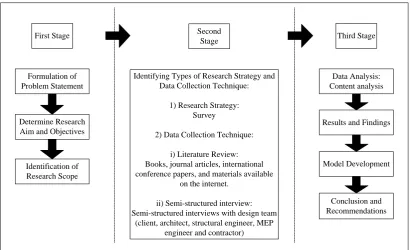
Formulation of Problem Statement
Determine Research Aim and Objectives
Identification of Research Scope
Identifying Types of Research Strategy and Data Collection Technique:
1) Research Strategy: Survey
2) Data Collection Technique: i) Literature Review: Books, journal articles, international conference papers, and materials available
on the internet. ii) Semi-structured interview: Semi-structured interviews with design team
(client, architect, structural engineer, MEP engineer and contractor)
Data Analysis: Content analysis
Results and Findings
Conclusion and Recommendations Model Development
First Stage Second
[image:24.595.114.525.69.319.2]Stage Third Stage
Figure 1.1: Research Methodology Process
Based on Figure 1.1, the research methodology process is divided into three (3) stages. The first stage is the process to identify research issues, topic selection, problem statement and research objectives. The researcher had brainstormed for research topic and had identified current issues on BIM implementation in construction projects. Moreover, the researcher has identified which construction projects in Malaysia are using BIM for the purpose of data collection.
The second stage shows types of research strategy and data collection technique used in this research. Survey is adopted in this study as the research strategy. Meanwhile, literature review and semi-structured interview were used in this study as data collection technique. The literature review is made to gain information on BIM implementation in project design stage and types of model, which related to BIM and construction field. All information on BIM and project design stage was gathered from books, journal articles, international conference papers, and materials available on the internet. Moreover, semi-structured interviews are conducted as data collection in this study to gain information from the design team on current BIM implementation in project design stage.
analysis. Both data from literature review and semi-structured interview were used for the purpose of model development. The content analysis view data representation through texts, images and expressions (Krippendorff, 2012).
Microsoft excel is used to assist researchers in analysing all the data. Conclusion and recommendation are the last chapter in this thesis. The conclusion summarised all chapters in this thesis. Meanwhile, recommendations are produced based on limitation to fulfil this study and recommendations made by the researcher in order to improve this research in the future. Details of research methodology process were discussed in Chapter 3.
1.9 Research Organisation
The research consists of six (6) main chapters. The chapters are as follows: (i) Chapter 1: Introduction
This chapter consisted of introduction to research, background of research, problem statement, research questions, research objectives, scope of research, significance of research, research methodology, research organisation and summary of the chapter.
(ii) Chapter 2: Literature Review
11
for the research model. This chapter end with explanations on theoretical framework and summary.
(iii) Chapter 3: Research Methodology
Chapter 3 discussed on research approaches, research strategies and data collection method. This is followed by methodology adopted for the research and discussion on each adopted approaches, methods used for data collection and data analysis.
(iv) Chapter 4: Results and Findings
This chapter consisted of findings from semi-structured interviews with the design team. Moreover, this chapter focused on current BIM practices in project design stage among design team. The trends of BIM implementation in project design stage are explored, which include BIM implementation in project design stage, effects of BIM implementation in project design stage, challenges of BIM implementation in project design stage and potential improvements of BIM implementation in project design stage.
(v) Chapter 5: BIM Implementation Model For Design Team
This chapter presented the establishment of the proposed model for this research. The establishment of the model was developed based on data gained from literature review and semi-structured interviews with design team. It discussed the model development process, starting from its design and followed by a description of the model. This chapter also explained the main features and content of the model.
(vi) Chapter 6: Conclusion and Recommendations
1.10 Summary
This chapter has presented the main issues of BIM implementation in project design stage and justification for the need of research on BIM in project design stage. The aim and objectives of the research are stated in this chapter. This chapter also explored about the research planning and methodology used in this study. The structure of this study is presented at the end of the chapter.
CHAPTER 2
LITERATURE REVIEW
2.1 Introduction
This chapter discussed on application of BIM in project design stage. It consisted of introduction to construction project design stage, BIM in construction projects; its definitions, history and the implementation in the Malaysia construction industry. Furthermore, this chapter also explained on BIM application, BIM tools, it benefits to construction projects, challenges to implementing BIM, future of BIM in the construction industry and adaptation of BIM in project design stage. Moreover, models development technique, which related to BIM and construction field are also discussed in this chapter. Discussion on those elements is important to identify current practices of BIM implementation in project design stage and development of model that could assist construction players to implement BIM in project design stage.
2.2 Construction Project Design Stage
Pre-construction Stage Construction
Project Stage
Activity
· Project Design
· Project scheduling · Cost Estimating · Site Coordination · Managing Materials
and Machineries
Construction Stage · Excavation of
Foundation · Framing
· Roofing and Siding · Plumbing and
Heating · Electrical Work · Interior Finishes
Post-construction Stage · Final Inspection and
[image:29.595.115.524.71.204.2]Acceptance · Project Close Out · Owner Move In · Warranty · Project Evaluation
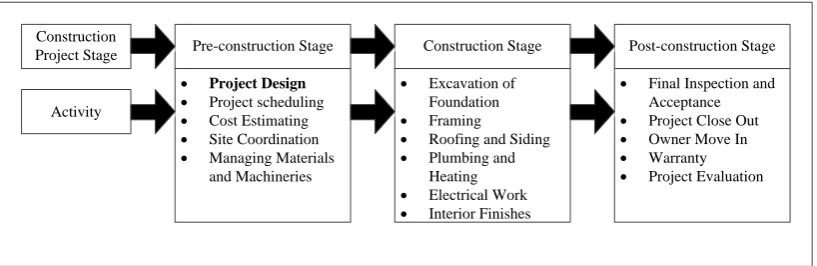
Figure 2.1: Construction Project Process (Adopted from: Cooper et al., 2005; Kazi, 2005; NCCER, 2008; CIOB, 2010)
[image:29.595.112.531.423.494.2]Based on the figure, project design is the first activity in pre-construction stage. According to Eastman et al. (2011) and Memon et al. (2011), project design is considered as an important activity in construction projects. Project design has been produced by construction players in project design stage. Eastman et al., (2011) also mentioned that, project design is an activity, which consists of all information regarding a construction project. The information are such as project size, cost and building elements. Figure 2.2 shows the main activities in project design stage.
Figure 2.2: Activities in Project Design Stage (Adopted from: Klinger and Susong, 2006; Autodesk, 2008; Jackson, 2010; Crotty, 2012)
There are four (4) main activities in project design stage shown in Figure 2.2, which are programming and feasibility which also known as conceptual design, schematic design, design development as well as construction document or also known as detail design (Klinger and Susong, 2006; Autodesk, 2008; Jackson, 2010; Crotty, 2012). Details on each activity are as follows:
(i) Programming and Feasibility Study
Programming and feasibility study are usually done prior to the design process. It also known as conceptual design process (Weiler and Scholz-Barth, 2009). The
15
information that comes out during this stage is the project size, number of rooms, the use of each space and requirement for each function (Autodesk, 2008; Jackson, 2010). According to Jackson (2010), client is responsible to brief the architect regarding his or her needs and expectation to the project. Moreover, client also needs to clarify about his or her project’s budget to architect (Autodesk, 2008; Jackson, 2010). The information on project budget is important because architect is responsible to carry out the project design based on client needs and budget (McCarthy, 2007; Jackson, 2010).
(ii) Schematic Design
Schematic design also called as preliminary design, serves to establish the general scope of project, conceptual design, scale and relationships among the component of a project (Klinger and Susong, 2006; American Institute of Architect (AIA), 2009). Moreover, the objective of schematic design is to arrive at a clearly defined, feasible concept and to present all the information in a form that achieve client understanding and acceptance (Hess et al., 2007; AIA, 2009; Autodesk, 2008).
Furthermore, schematic design information can be used to demonstrate basic spaces, scale and relationship of each building components (AIA, 2009; Autodesk, 2008). Typically documentation at the end of schematic design will include several important items such as site plan, plans for each level, all elevations, key sections, outline specification, statistical summary of design area as well as other characteristics in comparison to the programme, a preliminary construction cost estimate, and illustrative of materials (Hess et al., 2007; AIA, 2009; Autodesk, 2008).
According to Klinger and Susong (2006), schematic design is only present 20 per cent of design effort. Client has to review and leave comments toward the design produced by architect after completion of this stage. The architect needs to obtain formal client approval in writing as prove or evidence that the client had agreed with the design (AIA, 2009).
(iii) Design Development
Design development is a third activity in design stage. The main objective in design development is to provide final design of project together with building systems in the project (AIA, 2009; Autodesk, 2008). Basically, the design development activity will be continued based on client comment and approval in schematic design. The architect will develop a detailed site plans, floor plans and building sections. In this stage, others design team which are structural and MEP engineers will collaborate to complete the design development. Structural engineer will produce detail drawings regarding building structural, building specifications, type of materials, and design sections. Meanwhile, MEP engineer will produce detail drawing regarding electrical, mechanical and plumbing system for a building. All the detailed drawing will be referred to drawings, which have been produced by architect. The architect drawing is the baseline to structural and MEP engineer detail drawings (Klinger and Susong, 2006; AIA, 2009).
The deliverables of the design development stage is similar to those of schematic design (AIA, 2009). This stage is important to allow the preparation of a preliminary construction estimate. Apart from that, the primary purposes of design development is to further define and describe all important aspects of the project so that what remains is the final step of creating construction documents (AIA, 2009). Klinger and Susong (2006) stated that design development only present 50per cent of design effort. The client will review and leave he or her comments regarding the project design (AIA, 2009).
(iv) Construction Document
17
which the architect, structural and MEP engineers focus on the preparation of throughout drawings and specifications that will issue for bidding and construction of project (Reiling, 2007; AIA, 2009).
At this stage, design team has to finalise the project design (Hess et al., 2007; AIA, 2009; Autodesk, 2008). A construction document consist a set of complete drawing and accurate dimension of site plan, floor plan and elevations. The elevations also include complete information regarding detail selection of materials, complete mechanical, electrical, lighting, foundation, as well as structural drawings (Klinger and Susong, 2006; AIA, 2009; Jackson, 2010).
The construction document also needs to be reviewed and approved by the client. After obtained client’s approval, the bidding tender will begin. Construction document is important to contractor in preparing accurate cost estimate for the project. Moreover, construction project will be constructed by the contractor based on information in in construction document. According to Klinger and Susong (2006), construction documents are the 100 per cent drawings for a project.
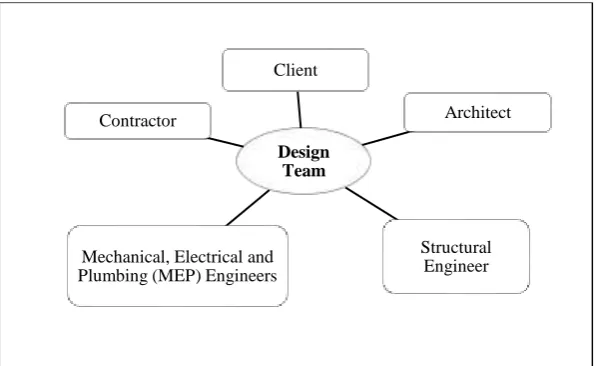
[image:32.595.170.469.483.666.2]Basically, there are several construction players involved in managing project design, which are client, architect, structural engineer, MEP engineers and contractor. They are also known as design team (Klinger and Susong, 2006; Winch, 2010; Levy, 2010). Figure 2.3 shows the design team.
Figure 2.3: Design Team (Adopted from: Klinger and Susong, 2006; Winch, 2010; Levy, 2010)
According to Klinger and Susong (2006), Winch (2010) and Levy (2010), client can be divided into two (2), which are public sector and private sector. Meanwhile,
Design Team Client
Architect
Structural Engineer Mechanical, Electrical and
contractor consists of main contractor and sub-contractor. The design team is responsible to manage project design in order to increase project quality and avoid construction problems. Details on each design team are now discussed.
(i) Client
Client is the driving force behind the construction industry. According to Lock (2003) and Winch (2010), client is a person who has capital and desire to execute a project. Client is divided into two (2) different sectors, which are public and private sectors.
Public sector consists of ministries, local authorities and statutory boards. The examples of ministries are Ministry of Education (MoE), and Ministry of Public Work. Local authorities are Public Work Department (PWD), and Urban Utilities. Examples of statutory board are Construction Industry Development Board (CIDB), and Board of Engineers (BOE). Public sector is responsible to provide free services to citizen. The examples of free services are such as road, hospitals, post-offices and schools (Kamara, Anumba and Evbuomwan, 2002; Winch, 2010).
Private sector or also known as non-government sector is a client that uses its own capital to develop own projects (Jackson, 2010). Basically, this type of client will rent their building to obtain capital and profits.
The roles of client in construction projects are to identify project needs, monitor project progress and prepare project cost. Basically, client will appoint consultants (architect, structural engineer and MEP engineer) to manage he or her construction projects. However, client also deserves to monitor the entire project progress to ensure the project runs smoothly (Abdullah, 2001; Winch, 2010).
(ii) Architect
19
(a) develop schematic, preliminary and final designs (Gahlot, 2002; Uher and Loosemore, 2004; Winkler and Chiumento, 2009).
(b) coordinate design activities of other designers (structural engineer and MEP engineers). (Gahlot, 2002; Uher and Loosemore, 2004; Winkler and Chiumento, 2009).
(c) prepare tender documentation in the form of working drawings and specification (AIA, 2009).
(d) revise contract documentation (AIA, 2009).
(e) assist in resolving design-related problems (AIA, 2009).
(f) assist in controlling quality of construction projects (AIA, 2009).
(iii) Structural Engineer
Structural engineer is responsible to plan and prepare structural design for a project (Levy, 2010). Structural engineer is responsible to prepare structural working drawing or details design based on architect drawing (Gahlot, 2002; Levy, 2010). The roles of structural engineer are as follows:
(a) A design structure was created to withstand stresses and pressures such as weather and human use. A structural engineer needs to ensure that building structures are not bending, twist and collapse because it can cause to project delay, increase construction cost, and accident on site (Gahlot, 2002; Levy, 2010).
(b) Choose the appropriate materials, such as bricks, concrete and steels to meet the design specification (Gahlot, 2002; Levy, 2010).
(c) Collaborate with other construction players such as architect to discuss on safety design and aesthetic concepts of construction (Gahlot, 2002; Levy, 2010).
(iv) Mechanical, Electrical and Plumbing (MEP) Engineers
2010). Other roles of mechanical engineer are as the following (Gahlot, 2002; Jackson, 2010; Levy 2010):
(a) Provide structural engineer with the layout of underground utilities, which include pipe sizes, types and specifications.
(b) Confer with structural engineer to ensure that building structure and roof will have sufficient structural integrity to support the weight of equipment being designed.
(c) Confer with architect to ensure that sufficient spaces are allocated for equipment installation and for routine maintenance to take place.
(d) Provide structural engineer with size and location of floor penetrations required for HVAC, plumbing, electrical ductwork, and conduit that extends from floor to floor.
An electrical engineer is in-charge to design and prepare working drawing or details design for electrical power and distribution systems during and after construction process (Gahlot, 2002; Levy 2010). Other roles of electrical engineer mentioned by Gahlot (2002) and Levy (2010) are as follows:
(a) Supervise electrician in handling electrical works and considering the safety and quality requirement.
(b) Involve in preparing electrical design starting from concept and detail design, implementation, testing and handover.
(c) Researching suitable solutions for electrical ducting and estimating costs for whole electrical projects and timescale of a project.
(d) Collaborate with other construction players such as clients, architect, QS and contractor to detect design clashes between electrical, structural, and mechanical designs.
21
and Whole Building Design Guide (WBDG) (2013), other roles of plumbing engineer are as the following:
(a) Prepare design process of fluid flow system. The process is important to facilitate piping installation during construction stage.
(b) Design plumbing system. Plumbing system requires proper design and follows official plumbing code and ensuring code compliance.
(c) Advice on ideal location and capacity for treatment plan, septic tank, sump, and general direction in which waste is to be disposed depending on topography of the land, road and public sewer location.
(d) Prepare a schematic plumbing layout and details specification for the entire plumbing works.
(v) Contractor
Contractor is a party who perform and complete a project based on tender contract. A contractor is responsible to plan, control, manage, and coordinate construction works to make sure that risks such as project delay and cost overrun could be avoided (Mosey, 2009; Health and Safety Execution (HSE), 2013). There are two (2) types of contractor, which are main contractor and subcontractor. The role of main contractor is to provide the total scope of works required in the contract. The main contractor must also control and coordinate all necessary production activities during construction stage. Subcontractor is responsible to manage tasks given by the main contractor (Boyle, 2003; Towey, 2012). Other roles of contractor in a construction project are as the following (Mosey, 2009; HSE, 2013):
(a) Plan, manage, and monitor the entire project process to avoid construction problems during construction stage.
(b) Provide labours and subcontractors to accomplish construction works. Labour need to accomplish construction works according to project drawing. Subcontractors need to accomplish construction works according to main contractor instruction.
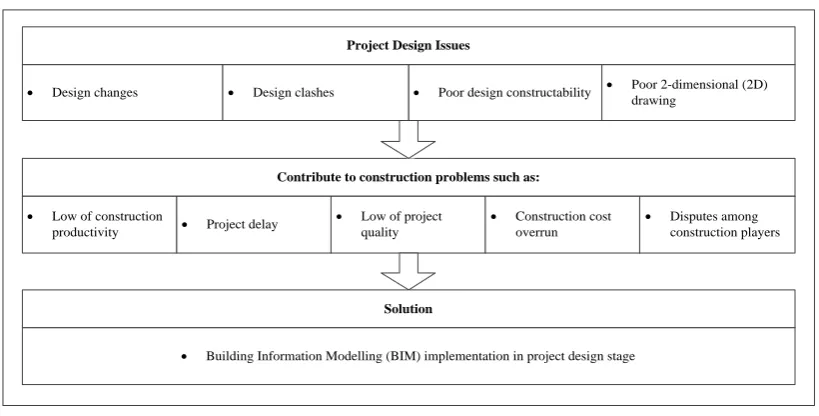
As a conclusion, design team are responsible to manage project design. The cooperation among them is important in order to avoid construction problems. According to Sambasivan and Soon (2007), Forbes and Ahmed (2011) and Kikwasi (2013), low design constructability is one of factors contribute to several construction problems such as low of construction productivity, low of project quality, project delay, construction cost overrun and disputes among construction players (Sambasivan and Soon, 2007; Forbes and Ahmed, 2011; Kikwasi, 2013). The factor contributes to construction problems need to be explored in order to avoid it during managing construction projects. Other factors contribute to construction problems, which are related to project design, are specified in Figure 2.4.
Contribute to construction problems such as:
· Low of construction
productivity · Project delay
· Low of project quality
· Construction cost overrun
· Disputes among construction players Project Design Issues
· Design changes · Design clashes · Poor design constructability · Poor 2-dimensional (2D) drawing
Solution
[image:37.595.113.523.274.482.2]· Building Information Modelling (BIM) implementation in project design stage
Figure 2.4: Project Design Issues (Adopted from: Sambasivan and Soon, 2007; Forbes and Ahmed, 2011; Kikwasi, 2013)
Based on Figure 2.4, there are four (4) factors that contribute to construction problems which are changes in project design, design clashes, poor design constructability and poor 2D drawings. Details on each factor are as follows:
(i) Changes in project design
23
overrun and disputes among construction players (Emmitt and Yeomans, 2008; Emmitt and Ruikar, 2013).
(ii) Design clashes
(a) Basically, design clashes occur between architectural, structural and MEP designs. It happened when one of the designs has not been monitored properly after the designs changes. The design errors or clashes were high risk and only can be detected by contractor during the construction stage of the project (Wang et al., 2013). The contractor will seek any solution, direction and resolution from the architect or engineers with RFI. The architect and engineer will provide a response that may or may not affect the project cost or schedule (McCarthy, 2010). However, late respond to RFI issues by contractor can cause to project delay.
(iii) Poor design constructability
(a) Constructability means prime use of construction knowledge and experiences in planning, design, procurement and field operation in order to achieve construction project objectives. Lack of design constructability is caused to construction cost overrun and quality of end product issues faced by the construction industry (Gambatese, Pocock and Dunston, 2007). Moreover, design clashes among the design disciplines (architect, structural and MEP designs) are difficult to identify and analyse. This problem can cause to low construction productivity and low of project quality (Haron, 2013).
(iv) Poor of 2D drawing
performances and productivities of design, construction, operation and maintenance process (Love et al., 2013). It can be applied in construction projects to manage construction projects stages appropriately especially project design stage. Moreover, the use of BIM in project design stage increases accuracy in preparing schematic design, design development and construction documentation.
2.3 Building Information Modelling (BIM)
Building Information Modelling (BIM) is used by construction players to increase efficiency and effectiveness in managing construction projects. It is known as an approach to manage construction projects with relief from several set of tools such as Autodesk Revit, Tekla, Vico Office, ArchiCAD and Bentley System (Robinson, 2007: Forbes and Ahmed, 2011; Monteiro and Martins, 2013). The used of the tools help construction players to manage construction projects by detecting common problems occur during construction stage such as design clashes, design changes and incomplete design specifications (Kymmell, 2008).
BIM has been utilised in construction projects to manage the continuous and availability of construction projects activities. The activities are design, cost estimating, project scheduling, site coordination and facilities management (Barrington, 2010; Eastman et al., 2011; Succar, 2013). Moreover, BIM implementation in construction projects can avoid project delay, construction cost overrun and disputes among construction players, which are client, consultants and contractors (Smith and Tardif, 2009; Forbes and Ahmed, 2011).
REFERENCES
Abdul-Rahman, H., Berawi, M. A., Berawi, A. R., Mohamed, O., Othman, M., & Yahya, I. A. (2006). Delay mitigation in the Malaysian construction industry. Journal of Construction Engineering and Management, 132(2), 125-133.
Abdul Azis, A. A., Memon, A. H., Rahman, I. A., Latif, Q. B. A. I., & Nagapan, S. (2012, September). Cost management of large construction projects in South Malaysia. In Business, Engineering and Industrial Applications (ISBEIA), 2012 IEEE Symposium on (pp. 625-629). IEEE.
Abdullah, S. A., Sulaiman, N., Ahmad Latiffi, A., & David, B. (2014). Building information modeling (BIM) from the perspective of facilities management (FM) in Malaysia.
Abdullah, N. A. (2001). Pengenalan kepada Kontrak Pembinaan. Malaysia. Universiti Teknologi Mara.
Ahmad Latiffi, A., Carrillo, P. M., Ruikar, K., & Anumba, C. J. (2010). Improving performance measurement practices in construction organisations. Retrieved July 7, 2015 from https://dspace.lboro.ac.uk/2134/11305.
Ahmad Latiffi, A., Carrillo, P. M., Ruikar, K., & Anumba, C. J. (2012). Development of Performance Measurement Migration Path For Construction Organisations. Third International Conference on Construction In Developing Countries (ICCIDC–III) “Advancing Civil, Architectural and Construction Engineering & Management” July 4-6, 2012 Bangkok, Thailand.
Ahmad Latiffi, A., & Mohd, S. (2014). Building Information Modeling (BIM) Technology In The Sultan Ibrahim Hall of UTHM. 2014 IEEE Colloquium on Humanities, Science and Engineering (CHUSER 2014).
Ahmad Latiffi, A., Brahim, J., & Fathi, M. S. (2014). The Development of Building Information Modelling (BIM) Definition. Applied Mechanics and Materials Vol. 567 (2014) pp 625-630. Online available since 2014/Jun/06 at www.scientific.net © (2014) Trans Tech Publications, Switzerland doi:10.4028/www.scientific.net/AMM.567.625.
Ahmad Latiffi, A., Mohd, S., & Brahim, J. (2014). Application of Building Information (BIM) in the Malaysian Construction Industry: A story of the First Government Project. Applied Mechanics and Materials, ISSN: 1660-9336. Ahmad Latiffi, A., Brahim, J., Mohd, S., & Fathi, M. S. (2014). Building Information
Modelling (BIM): Exploring Level of Development (LOD) in Construction Projects. Applied Mechanics and Materials, ISSN: 1660-9336.
Alaghbari, W. E., Kadir, M. R. A., & Salim, A. (2007). The significant factors causing delay of building construction projects in Malaysia. Engineering, Construction and Architectural Management, 14(2), 192-206.
America with Disabilities Act guidelines (ADA), (2010). Guidance on the 2012 ADA Standards for Accessible Design. Retrieved July 20, 2013 from http://www.ada.gov/regs2010/2010ADAStandards/Guidance2010ADAstandar ds.htm
American Institute of Architects (AIA). (2009). The American Institute of Architects Official Guide to the 2007 AIA Contract Documents. John Wiley & Sons. Anfara, V. A. & Mertz, N. T. (2014). Theoretical Framework in Qualitative Research.
United States of America: SAGE Publications, Inc.
160
Architectural Research Lab (ARL). (2012). History of BIM. Retrieved March 11, 2013, from http://www.architectureresearchlab.com/arl/2011/08/21/bim-history/.
Arayici, Y., Khosrowshahi, F., Ponting, A. M. & Mihindu, S. (2009). Towards Implementation of Building Information Modelling in the Construction Industry. International Conference on Construction, pp. 29-34.
Arayici, Y., Egbu, C. O., & Coates, P. (2012). Building information modelling (BIM) implementation and remote construction projects: issues, challenges, and critiques. Journal of Information Technology in Construction, 17, 75-92. Appa, G. M., Pitsoulis, L. & Williams, H. P. (2006), Handbook on Modelling for
Discrete Optimization. POME.
Autodesk. (2007). BIM Communication, Specification. United States of America: Autodesk, Inc.
Autodesk (2008). Autodesk BIM Communication Specification. United stated America. Autodesk, Inc. Retrieved March 28, 2013, fromhttp://au.autodesk.com/?autodownload=../orig/class_questions/thread__13 56/AutodeskAEC---Communication-Sp ecification-FINAL.pdf.
Autodesk. (2013). 3D Design, Engineering and Entertainment Software. Retrieved August 2, 2013, from http://www.autodesk.com.my/.
Ashcraft, H. W. (2008). Building Information Modelling: A Framework for Collaboration. Construction Lawyer, vol. 28.
Athanasiou, T., Debas, H. & Darzi, A. (2010). Key Topic in Surgical Research and Methodology. New York: Springer.
Azhar, S., Nadeem, A., Mok, J. Y. N. and Leung, B. H. Y. (2008) Building Information Modeling (BIM): A new paradigm for visual interactive modeling and simulation for construction projects. In Proc., First International Conference on Construction in Developing Countries, pp. 435-446.
Azhar, S. (2011). Building Information Modeling (BIM): Trends, Benefits, Risks, and Challenges for the ACE Industry. Leadership and Management in Engineering, 11, pp. 241-252.
Azhar, S., Khalfan, M., & Maqsood, T. (2012). Building information modelling (BIM): now and beyond. Australasian Journal of Construction Economics and Building, 12(4), 15-28.
Azis, A. A. A., Memon, A. H., Rahman, I. A., Latif, Q. B. A. I., & Nagapan, S. (2012, September). Cost management of large construction projects in South Malaysia. In Business, Engineering and Industrial Applications (ISBEIA), 2012 IEEE Symposium on (pp. 625-629). IEEE.
Babbie, E. (2013). The basics of social research. Cengage Learning.
Barbour, R. (2007). Introducing Qualitative Research: A Student’s Guide to the Craft of Doing Qualitative Research. Sage Publications.
Barrington, S. (2010) “Guide to BIM,” Barringtonarc, Barrington Architecture and Design Ltd, 2010.
Barlish, K., & Sullivan, K. (2012). How to measure the benefits of BIM: A case study approach. Automation in construction, 24, 149-159.
Becker, J., Knackstedt, R., & Pöppelbuß, D. W. I. J. (2009). Developing maturity models for IT management. Business & Information Systems Engineering, 1(3), 213-222.
Becerik-Gerber, B., & Rice, S. (2010). The perceived value of building information modeling in the US building industry. Journal of information technology in Construction, 15(2), 185-201.
162
Bentley System (2013). Building Information Modelling. Retreived April 29, 2013, from http://www.exactal.com/.
Bentley System. (2015). Building Information Modelling. Retreived April 29, 2015, from http://www.bentley.com/en-US/.
Bloomberg, M. R., Burney, D. J. & Resnick, D. (2012). BIM Guidelines. New York: New York Department of Design and Construction.
Boswell, K. (2013). Exterior Building Enclosures: Design Process and Composition for Innovative Facades. John Wiley & Sons.
Boyle, T. (2003). Design principles for authoring dynamic, reusable learning objects. Australian Journal of Educational Technology, 19(1), 46-58.
Brown, T., Suter, T., & Churchill, G. (2012). Basic Marketing Research. Cengage Learning.
Bryde, D., Broquetas, M., & Volm, J. M. (2013). The project benefits of building information modelling (BIM). International Journal of Project Management, 31(7), 971-980.
Bryman, A. (2004). Social Research Methods. 2nd edition. Oxford: Oxford University Press.
Bryman, A. & Bell, E. (2007). Business Research Methods. 2nd edition. Oxford: Oxford University Press.
Bryman, A., & Bell, E. (2011). Business Research Methods 3e. Oxford university press.
Bryman, A. (2012). Social Research Methods. 4th edition. Oxford: Oxford University Press.
Butcher, D. C. A. and Sheehan, M. J. (2010), “Excellent contractor performance inthe UK construction industry”, Engineering, Construction and Architectural Management, 17(1), 35-45.
Cadalyst. (2013). Computer Aided Design and Related Software. Retrieved August 13, 2013, from http://www.cadalyst.com/aec.
Carter, G., & Smith, S. D. (2006). Safety hazard identification on construction projects. Journal of Construction Engineering and Management, 132(2), 197-205.
Chambliss, D. F., & Schutt, R. K. (2012). Making sense of the social world: Methods of investigation. Sage.
Chappell, D. (2007). The JCT Minor Works Building Contractor 2005. 4th edition. UK: Blackwell Publishing.
Charted Institute of Building (CIOB), (2010). Guide to Good Practice in the management of Time in Complex Projects. United Kingdom: Blackwell Publishing.
Chen, Y., Dib, H., & Cox, R. F. (2014). A measurement model of building information modelling maturity. Construction Innovation: Information, Process, Management, 14(2), 186-209.
Cheng, J., & Ma, L. (2012). A BIM-based system for demolition and renovation waste quantification and planning. In Proceedings of the 14th International Conference on computing in Civil and Building Engineering (ICCCBE 2012), Moskow. Cheung, F. K., Rihan, J., Tah, J., Duce, D., & Kurul, E. (2012). Early stage multi-level
cost estimation for schematic BIM models. Automation in Construction, 27, 67-77.
164
Construction Management Software (CMS). (2008). Construction Estimating and Tendering Software–Corporate. Retrieved April 5, 2013 from http://www.cmscontractor.com/ConstructionSoftware/Estimating.asp
Construction Industry Development Board (CIDB), (2007). Construction Industry Master Plan Malaysia 2006-2015 (CIMP). Malaysia: Construction Industry Development.
Construction Industry Development Board (CIDB), (2013a). BIM Portal: Building Information Modelling. Retrieved November 12, 2013 from http://bimcenter.com.my/index.php/bim-news.
Construction Industry Development Board (CIDB), (2013b). Retrieved April 5, 2014 from:http://www.cidb.gov.my/index.php?option=com_content&view=article&i d=553:keynote-address-y-bhg-dato-sri-ir-dr-judin-bin-abdul-karim-chief executive-cidb-malaysia-for-international-construction-conference-2013&c tid=50:highlights&Itemid=388&lang=en.
Construction Research Institute of Malaysia, (CREAM). (2012). A Case Study of BIM Implementation in Malaysia. Retrieved March 10, 2013, from http://www.myconstructionresearch.com/index.php/publication/integrated-design-delivery-solution/file/12-bim-implementation-in-malaysia.
Construction Research Institute of Malaysia, (CREAM). (2014). Issues and Challenges in Implementing Building Information Modeling (BIM) by SME’s in the Construction Industry. Retrieved February 2, 2014 from https://www.cidb.gov.my/cidbv3/images/pdf/announcement/BIM/bim%20semi nar%20%20workshop%20for%20malaysia%20construction%20industry.pdf. Construction Research Centre (CRC). (2007). Adopting BIM for Facilities
Management: Solutions for Managing the Sydney Opera House. Brisbane, Australia: Cooperative Research Centre for Construction Innovation.
Computer Integrated Construction (CIC). (2010). BIM Execution Planning Guide Version 2.1. Pennsylvania states University.
Cooke, B. & Williams, P. (2009). Construction Planning, Programming and Control. 3rd ed. New Jersey: John Wiley and Son, Inc.
Cooper, R., Aouad, G., Lee, A., Wu, S., Fleming, A. & Kagioglou, M. (2005). Process Management in Design and Construction. United Kingdom: Blackwell Publishing.
Cooper, D & Schindler, P. (2008). Business research Method. McGraw-Hill Higher Education.
Corbin, J. & Strauss, A. (2008). Basic of Quantitative Research 3e. California, USA: Sage Publications, Inc.
Crawford, J. K. (2007). Project management maturity model. New York: Auerbach Publications.
Creswell, J. W. (2003). Research Design: Qualitative, Quantitative, and Mixed Methods Approaches. 2nd edition. California, USA: Sage Publications.
Creswell, J. W. (2007). Qualitative Inquiry and Research Design: Choosing among Five Approaches. 2nd edition. California, USA: Sage Publications.
Creswell, J. W. (2009). Research Design: Qualitative, Quantitative, and Mixed Methods Approaches. 3rd edition. California, USA: Sage Publications.
Creswell, J. W. (2012). Qualitative inquiry and research design: Choosing among five approaches. Sage publications.
Crotty, R. (2012). The Impact of Building Information Modelling: Transforming Construction. London: SPON Press.
Curtis, B., Hefley, B., & Miller, S. (2009). People Capability Maturity Model (P-CMM) Version 2.0 (No. CMU/SEI-2009-TR-003). Carnegie-Mellon Univ Pittsburgh Pa Software Engineering Inst.
166
Dore, C. & Murphy, M. (2012). Integration of Historic Building Information Modeling (HBIM) and 3D GIS for recording and managing cultural heritage sites. In Virtual Systems and Multimedia (VSMM), 2012 18th International Conference on (pp. 369-376). IEEE.
Eastman, C. & Henrion, M. (1977). GLIDE: A Language For Design Information Systems. ACM SIGGRAPH Computer Graphics 11.2 (1977): 24-33.
Eastman, C., Teicholz, P., Sacks, R. & Liston, K. (2008). BIM Handbook: A Guide to Building Information Modeling for Owners, Managers, Designers, Engineers and Constructions. 1st ed. New Jersey: John Wiley & Son Inc.
Eastman, C., Teicholz, P., Sacks, R. & Liston, K. (2011). BIM Handbook: A Guide to Building Information Modeling for Owners, Managers, Designers, Engineers and Constructions. 2nd ed. New Jersey: John Wiley & Son Inc.
Emmitt, S., & Yeomans, D. T. (2008). Specifying Buildings: A Design Manangement Perspective. New York. Routledge.
Emmitt, S., & Ruikar, K. (2013). Collaborative Design Management. New York. Routledge.
Eisenhardt, K. M., & Graebner, M. E. (2007). Theory building from cases: opportunities and challenges. Academy of management journal, 50(1), 25-32. Exactal (2013). Cost X your Estimating Solution. Retreived April 29, 2013, from
http://www.exactal.com/
Fallon, K. K. & Palmer, M. E. (2007). General Building Information Handover Guide: Principles, Methodology and Case Study Studies. United States of America: The National Institute of Standards and Technology (NIST).
Fallon, K. K. & Palmer, M. E. (2007). General Building Information Handover Guide: Principles, Methodology and Case Study Studies. United States of America: The National Institute of Standards and Technology (NIST).
Fellows, R. F., & Liu, A. M. (2009). Research methods for construction. John Wiley & Sons.
Fischer, M. & Kunz, F. (2006). The Scope and Role of Information Technology in Construction. Stanford University: Centre for Integrated Facility Engineering.
Forbes, L. H. & Ahmed, S. M. (2011). Modern Construction Lean Project Delivery and Integrated Practices. United States of America: Taylor and Francis Group, LLC.
Furneaux, C. & Kivit, R. (2008). BIM: Implications for Government. CRC for Construction Innovation. Brisbane Australia: Net Pty Ltd.
Gahlot, P. S. (2002). Construction Planning and Management. India: New Age International (P) Ltd.
Gambatese, J. A., Pocock, J. B., & Dunston, P. S. (Eds.). (2007). Constructability concepts and practice. ASCE Publications.
Gould, F. E. (2010). Managing the Construction Process: Estimating, Scheduling and Project Control. 4th ed. United States of America: Pearson Prentice Hall.
Gould, F. E. & Joyce, N. (2009). Construction Project Management. 3rd ed. New Jersey: Pearson Education Hall.
Graphisoft. (2013). ArchiCAD. Retrieved August 17, 2013 from http://www.graphisoft.com/archicad/
Grigg, N. S. (2010). Infrastructure Finance: The Business of Infrastructure for a Sustainable Future. New Jersey: John Wiley and Son, Inc.
Gill, J. & Johnson, P. (2010). Research Methods for Managers. 4th edition. London: Sage Publications, Ltd.
Gravetter, F. J. & Forzano, L. B. (2012). Research Methods for the Behavioural Sciences. 4th edition. USA: Linda Scheiber-Ganster.
168
Hair, J. F., Sarstedt, M., Ringle, C. M., & Mena, J. A. (2012). An assessment of the use of partial least squares structural equation modeling in marketing research. Journal of the Academy of Marketing Science, 40(3), 414-433.
Haron, A. T. (2013). Organisational readiness to implement building information modelling: A framework for design consultants in Malysia (Doctoral dissertation, University of Salford).
Health and Safety Execution (HSE). (2013). Using contractors: A brief guide. Retrieved April 21, 2013, from http://www.hse.gov.uk/pubns/indg368.pdf Hennink, M., Hutter, I., & Bailey, A. (2010). Qualitative research methods. Sage
Publication.
Hess, S. A., Jerome, V. B., Folk, P. D., & Holt, L. T. (2007). Design professional and construction manager law. American Bar Association.
Hosseini, M.R., Chileshe, N., Zuo, J. and Baroudi, B. (2012). Approaches for implementing ICT technologies within construction industry. Australasian Journal of Construction Economics and Building, Conference Series, 1 (2), pp. 1-12.
Hennink, M., Hutter, I. & Bailey, A. (2011).Qualitative Research Methods. London: SAGE Publications, Ltd.
HSE Contractors Inc. (2014). BIM Modelling Services. Retrieved June 12, 2013, from http://www.hsecontractors.com/services/bim-modeling-services
Illingworth, J.R. (2001). Cosntruction Methods and Planning. United States of America: Taylor & Francis Group, LLC.
International Code Council (ICC), (2007).International Code Council Online Library. Retrieved June 12, 2013, from http://publicecodes.cyberregs.com/icod/
Ishak, I. S & Alias, R. A. (2005).Designing Strategic Information Systems Planning Methodology for Malaysian Institutes of Higher Learning (ISP-IPTA). http://iacis.org/iis/2005/Ishak_Alias.pdf
Jabatan Kerja Raya (JKR) (2011). Laporan Tahunan JKR 2011. Retrieved March 12, 2013, from http://www.jkr.gov.my/var/files/File/dokumen /laporan_tahunan_jkr_2011.pdf
Jackson, B. J. (2010). Construction Management JumpStart: The Best First Step Toward a Career in Construction Management. 2nd edition. Canada: Wiley Publishing, Inc.
Jackson, B. J. (2004). Construction Management JumpStart. Canada: Wiley Publishing, Inc.
Jayasena, H. S., & Weddikkara, C. (2013, June). Assessing the BIM maturity in a BIM infant industry. In Proceedings of the Second World Construction Symposium 2013: Socio-Economic Sustainability in Construction (pp. 14-15).
Johnson, R. B. & Onwuegbuzie, A. J. (2004). Mixed Methods Research: A Research Paradigm Whose Time Has Come. American Educational Research Association. Johnson, B. & Christensen, L. (2012). Educational Research: Quantitative. Qualitative, and Mixed Approaches. 4th edition. California, USA: Sage
Publications.
Kadir M. R. A, Lee W. P., Jaafar M. S., Sapuan S. M. & Ali A. A. A. (2005). Factors affecting construction labour productivity for Malaysian residential projects. Structural Survey 23 (1), 42-54.
Kazi, A. S. (2005). Knowledge Management in the Construction Industry: A Socio-technical Perspective. United States of America: Idea Group Publishing. Klinger, M., & Susong, M. (2006). The construction project: phases, people, terms,
paperwork, processes. American Bar Association.